Original Article
A database and functional annotation of
NF-κB target genes
Yang Yang, Jian Wu, Jinke Wang
The State Key Laboratory of Bioelectronics, Southeast University, Nanjing 210096, People’s Republic of China
Received November 4, 2015; Accepted February 10, 2016; Epub May 15, 2016; Published May 30, 2016
Abstract: Backgrounds: The previous studies show that the transcription factor NF-κB always be induced by many inducers, and can regulate the expressions of many genes. The aim of the present study is to explore the database and functional annotation of NF-κB target genes. Methods: In this study, we manually collected the most complete listing of all NF-κB target genes identified to date, including the NF-κB microRNA target genes and built the database of NF-κB target genes with the detailed information of each target gene and annotated it by DAVID tools. Results: The NF-κB target genes database was established (http://tfdb.seu.edu.cn/nfkb/). The collected data confirmed that NF-κB maintains multitudinous biological functions and possesses the considerable complexity and diversity in regulation the expression of corresponding target genes set. The data showed that the NF-κB was a central regula-tor of the stress response, immune response and cellular metabolic processes. NF-κB involved in bone disease, immunological disease and cardiovascular disease, various cancers and nervous disease. NF-κB can modulate the expression activity of other transcriptional factors. Inhibition of IKK and IκBα phosphorylation, the decrease of nuclear translocation of p65 and the reduction of intracellular glutathione level determined the up-regulation or down-regulation of expression of NF-κB target genes. Conclusion: Through the analysis of 1667 distinct NF-κB target genes, it can further perfect the NF-κB signaling pathways and provide the data for building the gene expression regulatory networks and the clinical targets of diagnosis and treatment.
Keywords: NF-κB signaling pathway, target gene, database, regulatory network
Introduction
In the post-genomic era, the word for illumin- ating the rule of gene expression and regulation, and following revealing the mysteries of life from exploring human genome sequence, have become the focus of life science research in the recent years. Meanwhile, studies of gene expression regulatory networks are one of the important tasks of systems biology [1-3]. Tr- anscription factors (TFs) are proteins that bind to specific DNA sequences (cis-elements), and play the crucial roles in regulation of gene ex- pressions. Almost all of the genes in the expres-sion must be regulated by transcription factors. The collection of target genes of a transcription factor is the primary work for uncovering its functions in cells and building its transcription-al regulatory network.
NF-κB is a transcription factor first identified in lymphocyte and exists in most cell types [4].
[11]. The heterodimer of p50/p65 is the most common form of NF-κB in mammalian cells. NF-κB is sequestered in the cytoplasm as an inactivated form by its inhibitory protein IκB [11]. All the genes that are bound and regulated by NF-κB constitute the NF-κB target genes spectrum. However, currently limited by the understanding of the biological functions and the building of NF-κB regulatory networks, the spectrum of NF-κB target genes is not com- plete.
In recent years, with the development of biolo-gy experiments technolobiolo-gy and sequencing technology, there have a lot of high-throughput identification technologies of DNA-binding sites and target genes of transcription factors and biology experiments and bioinformatics analy-sis and forecasting techniques; such as: ChIP-chip [12], ChIP-PET [13], ChIP-seq [14]. These high-throughput experiments technologies can obtain hundreds of NF-κB target genes and a large number of DNA-binding sites each experiment [15-17]. The conventional experi-mental methods include: gene knockout, over-expression of the transcription factor, ChIP-PCR, EMSA, mutagenesis of the promoter/ enhancer, DNA footprinting, and so on. These experimental methods usually identify one or several target genes each experiment.
Collection of NF-κB target genes is vital to reveal the biological functions of NF-κB. NF-κB target genes are numerous, and there are sev-eral tools to predict these genes. However, due to no formula to recognize NF-κB target gen- es accurately, these computer-aided prediction are usually not right and cannot be verified by experiment. So it is necessary to collect NF-κB target genes by manually and build a database. Though there are already several databases for collecting NF-κB target genes, these databases are usually primitive, lack of detail, out of data and not full enough.
In this study, we manually collected the NF-κB direct target genes identified by the high-throughput experiments technologies and con-ventional experiment technologies after 1999 as full as possible and built the database with the specific information. Recently, microRNA (miRNA) has been demonstrated to play the important roles in gene expression regulation, we also collected the NF-κB microRNA target
genes. Moreover, we performed a functional annotation of these NF-κB target genes. Materials and methods
Collection of NF-κB target genes
We manually collected the direct target genes of NF-κB reported in publications through the searching engines of PubMed (http://www. ncbi.nlm.nih.gov/pubmed/) and Google Scho- lar (http://scholar.google.com.hk/schhp?hl=zh-CN) with the key words of NF-κB and ChIP (Chromatin Immunoprecipitation). Briefly, NF-κB activation binds to the promoter/enhancer re- gions of the given genes in vivo, and NF-κB can regulate the expression of the given genes; and then they are the direct target genes of NF-κB. Because NF-κB is an inducible transcription factor, we simultaneously collected the specific inducers, cell types, expression quantity of tar-get genes, experiment methods, references, as well as NF-κB binding domain: GGGRNNTYCC from TRANSFAC [18], GGRRNNYYCC [19], NG- GRNTTYCC [16], RGGRNNHHYY, DGGGGGTTTY, GGKRRWKBHB, GKRVTTYCCV, GKVNWTYCCV, RGGGGRWKTW and NGGGGRWDDY [20]. Building the database of NF-κB target genes
We employed the free, mature platform of Linux+Apache+MySQL+PHP to build NF-κB tar-get genes database. Briefly, Linux (CentOS V5.5) as the operating system and Apache (ver-sion, 2.2.17) as the server software, we write the data of NF-κB target genes in MySQL (5.0.77) with Perl script. We used PHP (version, 5.1.6; Hypertext Preprocessor) program to operate the MySQL database and published it on the Internet.
Gene annotation analysis
Table 1. The list of NF-κB target genes
Acute phase proteins C4A, DEFB1, DEFB4A, F3, PTX3, SAA1
Cell Adhesion Molecules ACAP2, AMIGO2, ANKIB1, ANKRD10, ANKRD46, ANKRD57, ANTXR2, ASB7, CD200, CD44, CD53, CD59, CDH1, FN1, ICAM1, ITGA5, NCAM2, NEXN, PCDH7, SELE, SELL, SELP, TNC, VCAM1
Cell Surface Receptors ADAM12, ADAM19, ADORA2A, ADORA3, AGER, CD69, CREB3L4, EGFR, EMR1, ERBB2, FPR1, GALR2, GRIN1, GRM5, KLKB1, LDLR, LEPROT, OLR1, OPRD1, OPRM1, OXTR, PIGT, PTAFR, RABEP1, SCAMP1, SCN5A, SLCO1C1, THBD, TREM2, VLDLR
Cytokines/Chemokines and their modulators
CCL1, CCL11, CCL15, CCL17, CCL19, CCL2, CCL20, CCL21, CCL22, CCL23, CCL24, CCL3, CCL4, CCL5, CCL6, CCR1, CCRL2, CX3CL1, CX3CR1, CXCL1, CXCL10, CXCL11, CXCL12, CXCL16, CXCL2, CCL28, CXCL6, CXCL8, CXCL9, CXCR4, CXCR4, CXCR5, EBI3, ICOS, IFNAB, IFNAR1, IFNB1, IFNE, IFNG, IFNGR1, IFNGR2, IFNK, IFNL1, IIGP1, IL10, IL10RA, IL10RB, IL11, IL12A, IL12B, IL12RB1, IL13, IL13RA1, IL15, IL15RA, IL1A, IL1B, IL1R1, IL1R2, IL1RAP, IL1RN, IL2, IL21, IL23A, IL27, IL32, IL4, IL4I1, IL4R, IL6, IL6ST, IL7R, IL8, IL9, LIFR, LTA, LTB, TFF3, TNF, TNFRSF10B, TNFSF10, TNFSF11, TNFSF13B, TNFSF14, TNFSF4, XCL1
Early response genes TNFAIP2, TNFAIP6, TNFAIP8
Enzymes ACADM, ACAS2L, ACO2, ACSL3, ADAMDEC1, ADAMTS6, ADSSL1, AGPS, AHCYL2, AK2, AKAP13, AKAP9, AKR1C1, ALAS1, ALG9, ALOX12B, ALOX5AP, AMPD2, AMPD3, AOAH, ARHGAP4, ARHGEF7, ARHH, ASS1, ATM, ATP10D, ATP11B, ATP1B1, ATP2C1, ATP5G1, B3GALNT1, B3GALT2, B3GNT5, B4GALT3, B4GALT4, B4GALT5, B4GALT6, BCAP, BCKDHB, BGALT15, BHMT, BLK, BLVRA, CAMK2D, CARD11, CASP3, CASP8, CAT, CBR4, CDK2, CDK6, CHD7, CHEK1, CHST11, CHST15, CHSY1, CKB, CPD, CSNK1G3, CTDSPL2, CTSK, CTSL, DAPK1, DBT, DGUOK, DHRS2, DHX9, DIO2, DNASE1L2, DUSP1, DUSP10, DUSP16, DUSP2, DUSP4, DUSP5, DUSP6, EARS2, TYMP, ECHDC1, EME1, ENPP2, ENTPD4, EXT1, EXTL2, FDXR, FGR, FLT3, FLT4, FMO5, FUCA1, FUT4, FUT7, G2E3, GALNT1, GALNT7, GBGT1, GCNT1, GFPT1, GFPT2, GGT1, GLDC, GMDS, GNB2L1, GNRH2, GPD2, GRK5, GZMB, HCK, HDAC3, HDAC5, HIPK2, HMGCR, HMGCS1, PRMT1, HS2ST1, HS3ST3A1, HS3ST3B1, HS6ST1, HSD11B1, HSD11B2, HTRA1, HTRA2, IDH1, IDH3A, IDO1, IRAK2, IRAK3, ITPKB, JAK1, JARID1B, KAT2B, KHK, KIDINS220, KLK3, KYNU, LATS2, LIMK1, LIPE, LIPG, LONP1, LTC4S, LYN, MAN1A, MAN2A1, MAP2K3, MAP3K14, MAP3K5, MAP3K7, MAP3K8, MAPK1, MAPK1IP1L, MAPK6, MAPK8, MAT2A, ME3, MGAT4A, MGLL, MKNK1, MMP1, MMP13, MMP19, MMP2, MMP3, MMP9, MOCOS, MOXD1, MPO, MPST, MTR, NAGK, NAMPT, NCF2, NDST1, NEK1, NEK2, NEK6, NEK7, NOS1, NOS2, NOX4, NUAK2, OAS2, OAS3, OTUD1, PADI1, PADI4, PAPOLG, PCK1, PDE1A, PDE4B, PELI2, PFKFB4, PGAP1, PGD, PGM2L1, PHACTR2, PHEX, PHGDH, PI4KA, PIK3CA, PIK3CB, PIK3CG, PIK3R1, PIK3R5, PIKFYVE, PIM1, PIM3, PIP4K2C, PKN2, PLA2G4C, PLA2G4C, PLA2G7, PLA2G7, PLAU, PLK1, POFUT1, POLK, POLR2A, PPAP2A, PPAT, PPIF, PPIG, PPM1E, PPP1R13L, PPP1R14C, PPP1R15A, PPP1R15B, PPP1R3B, PPP3CA, PPP3CC, PPP6C, PREPL, PRKAA1, PRKAA2, PRKAB1, PRKACB, PRKAG2, PRKCD, PRKCE, PRKD3, PSPH, PTGES, PTHLH, PTK2, PTGDS, PTPRJ, PYROXD1, QPCT, RIPK1, RIPK2, RND1, ROR2, RPS6KA4, RRAS2, RRM2B, SAT1, SENP6, SGK1, SLFN2, SLK, SMARCAD1, SMG1, SNRK, SPPL2B, SPTLC2, SRC, SRD5A1, SSH-3, ST3GAL1, ST3GAL2, ST3GAL4, ST3GAL5, ST3GAL6, ST6GAL1, ST6GALNAC6, ST8SIA1, STK17B, SUCLA2, SYNJ2, TBXAS1, TGM1, TGM2, TJP2, TLK1, TNK1, TPMT, TPO, TRPM7, TST, UBE2D2, UBE2H, UGCG, UGGT2, UGT1A1, USP31, USP34, USP36, USP38, USP47, UXS1, WARS2, XYLT2, YES1, ZAK
Growth Factors, Ligands and their Modulators
ACVR2A, BCAP29, BDNF, BLNK, BMP2, CSF1, CSF1R, CSF2, CSF3, CSF3R, CTGF, EGF, EGFR, EGR4, EREG, FGF2, FGF8, FGF16, FSTL3, HGF, HGFAC, IGF1, IGF1R, IGFBP1, MET, NOL8, OGFRL1, PDGFA, PDGFB, PDGFC, PDGFRA, RICTOR, SPP1, TGFA, TGFB1, TGFBR1, TGFBR2, THBS1, VEGFA, VEGFB, VEGFC
Immunoreceptors ALCAM, B2M, BCAP29, BDKRB1, CAMP, CCR2, CCR5, CCR7, CCR8, CD14, CD1D1, CD27, CD33, CD36, CD38, CD3G, CD40, CD40LG, CD48, CD7, CD74, CD81, CD82, CD83, CD86, CD9, CMRF35, CR2, CTLA4, CXCR1, FCGR2B, FCGR3, FCGR4, FCGRT, GNLY, HLA-A, HLA-B, HLA-DRA, HLA-E, HLA-F, ICOSL, IGHA2, IGHG3, IGHG4, IGHMBP2, IGKC, IGLL1, CADM1, IL2RA, IL8RB, LILRB2, MEFV, MHC CLASS I, MICA, MR1, MYD88, NOD2, SLC25A46, SLC39A3, SLC3A2, TLR2, TLR4, TLR8, TNFRSF10B, TNFRSF1A, TNFRSF21, TNFRSF9, TREM1
IFI44L, IFIH1, IFITM1, IFT80, INSR, IPO7, IQGAP2, IREB2, IRS2, ISG15, ITGB8, ITPR2, ITSN2, JMY, JUND, KCNH2, KCNH5, KCNJ12, KCNJ2, KCNN4, KCNQ3, KIAA0089, KIAA0140, KIAA0146, KIAA0182, KIAA0711, KIAA0776, KIAA0999, KIAA1012, KIAA1078, KIAA1377, KIAA1533, KIAA1539, KIAA1712, KIAA1731, KIAA2026, KIDINS220, KIF14, KIF15, KIF18A, KIF23, KIF3A, KIRREL2, KIT, KLHDC10, KL, KRAS, KRT34, KRT5, KRTAP1-3, KRTCAP2, LAMB1, LAMB3, LATS2, LBP, LCN2, LCP2, LGALS2, LGALS3, LHFPL2, LITAF, LMNA, LMO7, LOC100294020, LOC113655, LOC140095, LOC153364, LOC220929, LOC221710, LOC348840, LOC56920, LOC643837, LOC647979, LOC89958, LPAR1, LPP, LRBA, LRG1, LRRC17, LRRC40, LRRC8C, LRWD1, LSP1, LUM, MAC30, MADHIP, MAP2, MAPK1AP, MAPRE2, MARCKS, MAT1, MDM1, MEFV, MEK5C, MFSD8, MGC10854, MGC13010, MGC16075, MGC16664, MGC20262, MGC20446, MGC21854, MGC27085, MGC27434, MGC3113, MGC34680, MGC34695, MGC35206, MID1IP1, MKLN1, MLLT2, MLLT4, MOBKL3, MPA2L, MPHOSPH9, MS4A14, MS4A7, MT3, MTA1, MTERFD2, MTRF1, MUC1, MUC5AC, MUC5B, MX2, MYBPC3, MYBPH, MYO10, MYO5A, NAV3, NBEA, NBPF1, NDFIP1, NEK1, NEK2, NEK6, NEXN, NF1, NGB, NICAL, NIN, NINJ1, NIPBL, NKIR, NOLA1, NOTCH 1, NPAP1, NPHS1, NPTX1, NT5DC3, NTN1, NUFIP2, NUMA1, NUP98, NUPL1, OLFM4, OPRS1, OPTN, OSBPL1A, OSBPL5, ORAI1, OSBPL8, OXR1, OXSR1, P2RX4, P2RX7, P2RY8, PANX1, PAPPA, PBF, PCGF5, PCLO, PCMTD1, PCNX, PDCD6IP, PDS5B, PEO1, PGAP1, PHEMX, PHLDA1, PHLDB2, PI3, PIAS1, PIGK, PIM2, PJA2, PKM2, PLCXD3, PLDN, PLEC1, PLEKHA3, PLEKHG6, PLK1, PNKD, POMC, PPP1R9A, PRAM-1, PREPRO UPA, PRF1, PROS-TEIN, PSCD4, PSEI7, PSMA2, PSTPIP2, PTGER2, PTGER4, PTPRN2, PURB, R3HCC1, RAB18, RAB3GAP2, RABEP1, RABEPK, RABL2B, RABL3, RALGAPA1, RAP1A, RAPGEF1, RAP-GEF2, RAPGEF6, RAPH1, RARA, RARG, RARRES1, RASSF2, RB1CC1, RBBP6, RC3H2, RCAN1, RCN1, RFTN1, RGL1, RGMA, RGS12, RGS14, RGS16, RGS3, RHOB, RICH1, RIPK1, RIPK2, RMND5A, RNF13, RNF145, RNF44, ROR2, RPS15A-PS4, RPUSD2, RRAS, RRS1, RSPO3, S100A10, S100A12, S100A6, S100A9, SAMD4A, SAMD9, SAMSN1, SASH1, SBF1, SCAMP1, SCAPER, SCARB1, SCF, SCLT1, SCNN1A, SDC4, SDCBP, SEC24A, SECISBP2L, SELB, SELPLG, SEMA6D, SERPINA1, SERPINB10, SERPINB2, SERPINB8, SERPINB9, SERPINE1, SERPINE2, SFI1, SFN, SFPI1, SFRS12IP1, SGOL2, SH2B3, SH3BP1, SHCBP1, SHH, SHROOM3, SIKE1, SIPA1L1, SIRT1, SKP2, SLA, SLC11A2, SLC12A7, SLC15A3, SLC16A1, SLC17A5, SLC19A2, SLC1A2, SLC1A3, SLC22A16, SLC22A4, SLC25A10, SLC25A30, SLC25A46, SLC26A9, SLC27A3, SLC2A1, SLC2A13, SLC2A3, SLC2A5, SLC2A6, SLC37A2, SLC39A11, SLC5A5, SLC6A6, SLC7A2, SLC7A5, SLC9A2, SLC9A8, SLPI, SMARCA2, SMARCA3, SMARCAD1, SMC1B, SMC2, SND1, SNTB1, SNX1, SNX13, SNX20, SOCS2, SOCS3, SOCS4, SORBS2, SOS1, SPIRE1, SPSB1, SQSTM1, STAG1, STARD4, STC2, STIM1, STRBP, STX11, STX4, SUMO4, SUSD3, SUV420H1, SYNCRIP, T3JAM, TACC2, TAGAP, TARBP2, TAZ, TBC1D14, TBC1D23, TBL1XR1, TBL2, TCN1, TDRD7, TENS1, TET3, TFPI2, TGS, THOC1, THRAP3, TIMELESS, TIMM44, TLE1, TM7SF2, TM9SF3, TMEM106B, TMEM158, TMEM161B, TMEM176B, TMEM177, TMEM214, TMEM38B, TMPRSS2/ERG FUSION GENE, TMTC4, TMX3, TNFBBC3, TNIP1, TNPO1, TOM1, TPD52L1, TPPP, TPRA1, TRA1, TRAF1, TRAF3, TRIM33, TRIM35, TRIM5, TRIM63, TRIP10, TROVE2, TRP73, TSPAN5, TTLL1, TTYH2, TUBB2A, TUBB2A, TUSC4, TXN2, UBE2M, UBE3A, UBR3, UBXN4, UCHL1, UPK1B, VDR, VILL, VPREB, VPS13A, VPS13C, VPS37B, VPS53, VSTM2L, WDR19, WDR36, WDR4, WDR7, WDR72, WNT1, WNT10A, WNT5A, WTAP, YIPF5, YTHDC2, ZDHHC17, ZDHHC8, ZFAND3, ZFAS1, ZFP36, ZMYND8, ZNF342, ZNF450
Proteins Involved in Antigen Presentation
C2, C3, C5, CD24A, CFB, DCNP1, EEA1, ITGAX, MGEA5, NEMF, PALM, PSMB9, STEAP4, TAP1, TAPBP, UACA
Regulators of apoptosis ATG5, BAD, BAX, BBC3, BCL2, BCL2A1, BCL2L1, BID, BIK, CASP1, CD274, CFLAR, FADD, FAS, FASLG, FEM1B, GSTP1, XAF1, IER3, MCL1, MKL1, NR4A1, NUAK2, PAWR, PDCD1, PDCD5, PLAGL2, PMAIP1, SERPINB9, SH3GLB1, TNFAIP3, TNFAIP8, TNFRSF10A, TNFRSF10B, TNFSF10, XIAP
Stress response genes COX2, CYP7B1, FTH1, GADD45A, GADD45B, GADD45G, GCLC, GCLM, HSP90AA1, HSPA1A, MX1, NQO1, PKIB, PLA2G4A, PTGS2, PTPN1, PTPN7, PTPRJ, PTPRN2, RGS3, SESN3, SOD2, SPRY2
Transcription Factors
and their Modulators ACAP2, AFF3, AKAP13, ANKIB1, ANTXR2, AR, ARAP3, ARFGAP3, ARHGAP15, ARHGAP29, ARID3B, ARNT2, ATF3, ATM, B4GALT3, B4GALT4, B4GALT5, BATF, BBX, BCL3, BCL6, BCL9L, BDP1, BIRC2, BIRC3, BLM, BMP2, BNC2, BRCA2, BTG2, C14ORF106, C19ORF2, C4ORF21, C5ORF41, CBFA2T3, CBL, CBX5, CCNL1, CCRN4L, CDX1, CEBPB, CEBPD, CENPC1, CITED2, CPEB4, CREB1, CREB3L1, CREB3L4, CREB5, CREM, CSRNP1, CTNND1, CXXC5, CYP7B1, DBF4, DDHD1, DHX57, DHX9, DIDO1, DLX1, DLX2, DMBX1, DMP1, DNAJC21, DTX4, E2F1, E2F3, E2F5, E2F7, EFHD2, EGLN1, EGLN3, EGR1, EGR2, EIF2C2, ELF2, ELF3, EOMES, EP300, ETV3, ETV5, ETV6, EWSR1, FOS, FOSL2, FOXE1, FOXL1, FOXN3, FOXO1, FOXO3, FRY, FRYL, FST, FTSJ3, G2E3, GALT, GATA3, GATA6, GTF21, HDAC11, HDAC4, HECTD1, HELZ, HIF1A, HIVEP1, HLTF, HLX, HMGN1, HMGN4, HMOX1, HNRNPA3, HOXA13, HOXA5, HOXA9, HOXC4, ID2, IER2, IER5, IFI16, IGHMBP2, IKBKE, IMPA2, IRF1, IRF2, IRF4, IRF5, IRF7, JMJD1C, JMY, JUN, JUNB, JUND, KDM6B, KIT, KLF12, KLF13, KLF5, KLF6, LARP1B, LARP4, LCORL, LEF1, LEO1, LMO7, LPP, LPXN, LUC7L3, LYL1, LZTFL1, MAFB, MAFG, MAFK, MBTD1, MECOM, MED31, MEIS1, MGA, MIER1, MITF, MKL1, MLLT3, MOBKL3, MSX2, MT1F, MT2A, MXD3, MXD4, MYC, MYCBP2, NAB1, NAB2, NCOA1, NCOA7, NEBL, NFATC1, NFE2, NFE2L2, NFE2L3, NFIL3, NFKB1, NFKB2, NFKBIA, NFKBIB, NFKBIE, NFKBIZ, NKX3.1, NLRP3, NR1D2, NR2C2, NR2F6, NR4A1, NR4A2, NR5A1, NRF1, NRIP1, NUFIP2, NUMA1, NUP153, OLIG2, PAPOLG, PATZ1, PAX8, PCDH7, PCGF5, PDZD8, PER1, PHF20L1, PHF7, PHLDA1, PIAS1, PJA2, PLAGL2, PLEKHG6, PML, PNRC1, POLB, POLR1A, POLR2C, POU2F2, PPARG, PPP3CC, PPP6C, PRDM1, PRPF31, PSPH, PURB, QPCT, RB1CC1, RBAK, RBBP6, RBL1, RBM15, RBMS3, RBPJ, RC3H1, RC3H2, REL, RELB, REV3L, RFX7, RNF13, RNF145, RNF44, RRS1, RSF1, RTN4IP1, RUNX1, RUNX3, S100A10, S100A12, SCAPER, SERTAD2, SETDB2, SFPQ, SFRS12, SFRS12IP1, SFRS13A, SFRS2, SFRS2IP, SIN3A, SIX5, SLC39A11, SLC39A3, SMAD3, SMAD7, SMARCA2, SMG1, SNAI1, SNAPC3, SNTB1, SORBS2, SOX9, SP110, SPEN, SPI1, SPIB, SQSTM1, STAT1, STAT2, STAT3, STAT4, STAT5A, STAT5B, STEAP4, TAF4B, TANK, TBL1XR1, TCF12, TCF7L2, TERT, TET3, TFB2M, TFDP1, TFE3, TFEB, TGM1, THOC2, THRAP3, TINF2, TLE1, TNFAIP3, TNFSF10, TNIP3, TNRC6A, TP53, TP63, TRAF1, TRAF3, TRIM2, TRIM22, TRIM31, TRIM33, TRIM35, TRIM45, TRIM5, TRIM56, TTC3, TWIST1, TWISTNB, TXNIP, UBR3, UPB1, UPF2, WDR4, WHSC1L1, WTAP, XIAP, YY1, ZBED1, ZBTB10, ZBTB26, ZBTB44, ZC3H12A, ZC3HAV1, ZCCHC7, ZDHHC17, ZDHHC8, ZEB1, ZFC3H1, ZFP64, ZIC2, ZMYM1, ZMYM2, ZMYM4, ZNF217, ZNF239, ZNF366, ZNF439, ZNF521, ZNF529, ZNF589, ZNF638, ZNF644, ZNF678, ZNF765, ZNF770, ZNRF2
Viruses bovine foamy virus, HIV-1, the polyomavirus JC
miRNA 125B, 125B-1, 125B-1-3P, 1276, 1286, 130A, 143, 145, 146A, 150, 155, 16, 17-92, 193B, 199, 21, miR-210, miR-219-1-3P, miR-223, miR-224, miR-23A, miR-23B, miR-23B-27B-24-1, miR-2467-5P, miR-301A, miR-30B, miR-30B-3P, miR-3200-3P, miR-340-3P, miR-34A, miR-3620-5P, miR-425, miR-4454, miR-448, miR-4485, miR-449C-5P, miR-451, miR-502-5P, miR-548D-5P, miR-9-1, miRLET7A3, miRLET7I
Results
Built NF-κB target genes database
We used the searching engines of PubMed and Google Scholar obtained 274 and 994 relevant articles, respectively. We finally found 382 arti-cles that contained the NF-κB direct target genes identified by experiment methods and obtained 2267 target genes and 1667 distinct target genes after removing the duplications. All the target genes were classified by their functions and were shown in Table 1.
Then we established the database of NF-κB tar-get genes and published them in our web serv-er (http://tfdb.seu.edu.cn/nfkb/). The web site mainly included 3 pages: home page to intro-duce information and instruction of the
data-tion, induction time and detection mean. Me- anwhile, the PCR amplified object region or ChIP (Chromatin Immunoprecipitation) region is also exhibited with the counts of the specific binding motifs in the region. Clicking the hyper-link of Reference ID of the specific NF-κB target gene exhibits the specific reference.
For convenient to use, we programmed the retrieval interfaces that can search the releva- nt NF-κB target genes according to the gene symbol, cell types and subordinate species (http://tfdb.seu.edu.cn/nfkb/searchgene.php). The retrieval supports the fuzzy search for easy use.
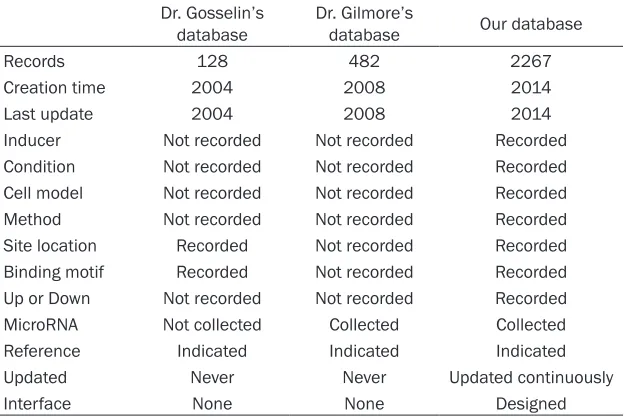
[image:5.612.91.411.84.218.2]As is known that the Rel/NF-kappaB target genes database created by Dr. Gosselin et al. (http://bioinfo.lifl.fr/NF-κB/) and the NF-κB Ta-
Table 2. The fields used in our database
Fields Meaning
Gene ID The identifier of a gene indexed by our database. Gene Symbol The official symbol of a gene defined by Gene Bank. Description Description of the gene.
Species Species of the gene sources.
Inducer The material that induce NF-κB regulating the target gene. Cell Type Cell model used to identify the target gene.
Experimental Method The experimental method for identifying the target gene. Regulation The change of expression of the target gene.
Reference ID The identifier of the reference that report the target gene.
Table 3. The main databases for NF-κB target genes
Dr. Gosselin’s
database Dr. Gilmore’s database Our database
Records 128 482 2267
Creation time 2004 2008 2014
Last update 2004 2008 2014
Inducer Not recorded Not recorded Recorded Condition Not recorded Not recorded Recorded Cell model Not recorded Not recorded Recorded Method Not recorded Not recorded Recorded Site location Recorded Not recorded Recorded Binding motif Recorded Not recorded Recorded Up or Down Not recorded Not recorded Recorded MicroRNA Not collected Collected Collected Reference Indicated Indicated Indicated Updated Never Never Updated continuously
Interface None None Designed
base, browse page to list and detail all target genes collected by this database, search page to convenient for read- er to find an interested target genes in our da- tabase.
[image:5.612.91.404.261.470.2]concentra-rget Genes database created by Dr. Gilmore et al. (http://www.bu.edu/nf-kb/the-gilmore-lab/ the-lab/) are else two NF-κB Target Genes
[image:6.612.90.375.75.314.2]data-tination possibly plays an important role in NF-κB pathway through a proteasome-inde- pendent pathway [24].
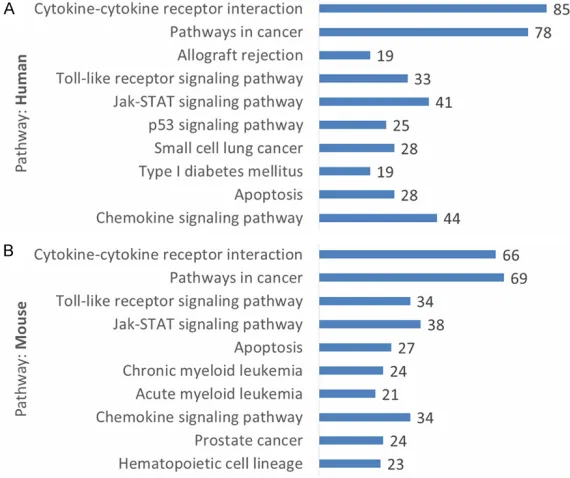
Figure 1. Top 10 KEGG significant pathways enriched by NF-κB target genes with the species of human (A) and mouse (B), respectively. The p values of all pathways were less than 0.05 (for details, please see the Additional files 1 and 2). In each plot, the pathways were aligned from top to bottom accord-ing to their p values from low to high. The count of genes that participated in related pathway was displayed next to the bars.
bases, but these databases are out of date. The database reported here has added more record of NF-κB Target Genes, updated more detail of the record and paid more attention to the data mainte-nance. Relative to the previ-ous databases, the main improvement of our database were list in Table 3.
For understanding the biolo-gical function of these targ- et genes, then we performed enrichment analysis of KEGG pathway, gene oncology (GO) annotation and GENETIC AS- SOCIATION DB DISEASE using the Database for Annotation, Visualization and Integrated Discovery (DAVID) v6.7. Be- sides, we conducted analysis for the target genes that are the transcriptional factors for other genes and analyzed the inducer of the NF-κB target gene.
NF-κB acts as a central me-diator of many important pathways
We carried out the KEGG analysis of NF-κB target ge- nes. The target genes of NF- κB involved many well-known, important pathways, such as Pathways in cancer, Apop- tosis, Jak-STAT signaling pa- thway, Acute myeloid leuke- mia, Prion diseases, Allogra- ft rejection, Glioma and the other diseases (Figure 1). It is also consistent that NF-κB is a multifunctional transcrip- tion factor. The crosstalk be- tween NF-κB pathway and other signaling pathways can determine the cell fate, which depends on the cellular con- text [23]. Meanwhile, ubiqui- Figure 2. GO terms related to stress of the NF-κB target genes. A. NF-κB
[image:6.612.91.374.409.605.2]NF-κB was a central regulator of the stress response
There were 205 inducers that can activate NF-κB, such as environmental hazards, the- rapeutic drugs, and ect. Me- anwhile, the physiological st- ress conditions and physical stresses, such as, irradiation and oxidative stress, can also activate NF-κB [25]. Further- more, the phosphorylation of the α subunit of eukaryotic initiation factor 2 (eIF2α) is necessary for induction of NF-κB transcriptional activity in response to cellular st- resses [26]. Furthermore, the functions of its target genes extend beyond the immediate immune response. Therefore, NF-κB perhaps represented a central regulator of stress responses (Figure 2).
NF-κB was a central mediator of the immune response
From the analysis, NF-κB may be a central mediator of the human immune response. It can be seen from Figure 3, both in human and mouse, NF-κB target genes partici-pate in various inflammatory response, included leucite ac- tivation, proliferation, migra-tion, chemotaxis and homeo-stasis, immune system devel-opment, innate and adaptive immune response, regulation of production of molecular mediator of immune respon- se, antigen processing and presentation, immune effec-tor process, etc.
NF-κB was a central mod-erator of cellular metabolic processes
[image:7.612.93.374.75.345.2]There were 626 NF-κB target genes involved in various me- tabolic processes (data not Figure 3. GO terms related to immune of the NF-κB target genes. A. NF-κB
target genes with the species of human involved in the biological process of immune. B. NF-κB target genes with the species of mouse involved in the biological process of immune The p values of all GO terms were less than 0.05 (for details, please see the Additional files 1 and 2). In each plot, the pathways were aligned from top to bottom according to their p values from low to high.
[image:7.612.92.375.452.641.2]shown) and 153 NF-κB target genes involved in the metabolic disorders (data not shown). Therefore, NF-κB maybe is a central moderator of cellular metabolic processes (Figure 4). The data showed these target genes can partici-pate in gene expression, nitrogen compound metabolic process, protein metabolic process and carbohydrate biosynthetic process.
NF-κB involved in bone disease, immunological disease and cardiovascular disease
It is remarkable that immunological disease, bone density, longevity, chronic obstructive
pul-monary disease, systemic lupus erythema- tosus, multiple sclerosis, myocardial infarct and many cancers associated with NF-κB (Table 4).
NF-κB can modulate the expression activity of other transcriptional factors
[image:8.612.95.521.82.297.2]There were 98 transcription factors belonged to the NF-κB target genes (Table 5), such as fosl2, elf2, elf3, stat5a, e2f7 et al. NF-κB may play the crucial roles in the organism’s tran-scriptional regulatory network.
Table 4. The NF-κB target genes with the species of human involved in the remarkable diseases
Term Count % P-value Fold Enrichment FDR
Systemic lupus erythematosus 43 0.276118924 6.1648E-12 3.002652031 1.08E-08 COPD 26 0.166955628 6.31094E-09 3.46300695 1.11E-05 Bladder cancer 35 0.224747961 9.42986E-08 2.568713946 1.65E-04 Bone density 34 0.218326591 1.97575E-06 2.328967311 3.47E-03 Colorectal cancer 60 0.385282219 2.38286E-09 2.146984791 4.18E-06 Multiple sclerosis 56 0.359596738 1.79618E-11 2.4862614 3.15E-08 Myocardial infarct 35 0.224747961 2.61553E-05 2.06339317 0.045872569 HIV 37 0.237590702 1.00333E-12 3.501562695 1.76E-09 Longevity 29 0.186219739 5.92027E-08 2.937740457 1.04E-04 Lung cancer 46 0.295383035 3.30042E-06 1.981139858 0.005789551 Lymphoma 20 0.128427406 2.54328E-06 3.1966218 0.004461406 Ovarian cancer 29 0.186219739 3.36599E-06 2.483090148 0.005904572 Pancreatic cancer 14 0.089899184 0.003245766 2.39746635 5.543515638 Prostate cancer 43 0.276118924 7.08816E-05 1.819253877 0.124269985 Stomach cancer 41 0.263276183 8.9583E-12 3.071753761 1.57E-08
Abbreviation: COPD, chronic obstructive pulmonary disease. Legend: By importing NF-κB target genes with the species of human into the Functional Annotation tool of DAVID, the diseases showing significant relevance to the imported genes were identified with the GENETIC_ASSOCIATION_DB_DISEASE. They were listed with p values corrected by Bonferroni’s multiple comparison test, false discovery rate (FDR), and fold enrichment (FE).
Table 5. The 98 transcription factors belonged to the NF-κB target genes
Class Transcription factors Beta-Hairpin-Ribbon EOMES
Helix-Loop-Helix DLX1, DLX2, DMBX1, HLX, HOXA13, HOXA5, HOXA9, MEIS1, MSX2, POU2F2, TFE3, TFEB
Lg-fold NFKB1, NFKB2, REL, STAT1
Leucine zipper CREB3L4
Leucine zipper factors ATF3, TAF4B
RHR BCL3, RELB
Tryptophan clusters IRF7
Winged helix E2F7
Winged Helix-Turn-Helix E2F1, ELF2, ELF3, EWSR1, FOXL1, IRF1, IRF2, IRF4, MGA, SPI1, SPIB
Zinc finger EGR4
Zinc-coordinating AR, BCL6, EGR1, EGR2, GATA6, KLF5, NR2C2, PPARG, PRDM1, YY1, ZEB1
Zipper-Type BATF, CEBPB, CREB1, FOSL2, JUN, JUNB, JUND, MAFB, MAFK, MYC, NFE2L2, NFIL3, TCF12
Other Alpha-Helix SOX9
[image:8.612.91.520.370.564.2]Discussion
In this study we established a most complete and most quality database of NF-κB target genes. From the related analysis for the data-base, we concluded that NF-κB acts as a cen-tral mediator of many important pathways, was a central regulator of the stress response, immune response, cellular metabolic process-es and gene regulation, and was involved in many diseases. The database is useful for the NF-κB researchers, biologists and medical scientists.
The database shows inducer sometimes deter-mined the up-regulation or down-regulation of the expression of NF-κB target genes. In human astrocytic glial cell line U-87MG, the multiple sclerosis-detrimental cytokines (TNFα, IL-1β, IL-6, and IFNγ) and PMA up-regulated the ex- pression of syncytin-1 gene; but the multiple sclerosis-beneficial cytokine IFNβ down-regu-lated the expression of syncytin-1 gene [27]. In mouse NIH-3T3 cells, the inducers doxorubicin, daunorubicin and UV-C down-regulated the expression of DMP1 gene [28]; but the inducer TNFα up-regulated the expression of DMP1 gene. Therefore, inducers determined the up-regulation or down-up-regulation of the expression of NF-κB target genes through various mech- anisms, including: inhibition of IKK and IκBα phosphorylation and the decrease of nuclear translocation of p65 [29], reduction of intracel-lular glutathione level [30].
The regulation pattern of NF-κB target genes in the diseased cells of patients and normal cells is different. And the understanding of the role of NF-κB in human diseases will contribute to the development of inhibitors of this pathway for the disease treating through their effects on IKK and NF-κB signaling [31, 32]. Meanwhile, the understanding of the NF-κB pathway inte-grated with other cell-signalling pathways also possesses the pivotal clinical significance. To sum up, it should establish the gene transcrip-tional regulatory network according to the vari-ous circumstances including the varivari-ous patho-logical conditions.
Acknowledgements
This work was partially supported by the grants from the National Important Science Research Program of China (2011CB933503, 2006- CB933205), the National Natural Science Fo-
undation of China (61171030) and the Te- chnology Support Program of Jiangsu (BE- 2012741).
Disclosure of conflict of interest
None.
Address correspondence to: Jinke Wang, The Sta- te Key Laboratory of Bioelectronics, Southeast University, Nanjing 210096, People’s Republic of China. E-mail: [email protected]
References
[1] Cooper SJ, Trinklein ND, Anton ED, Nguyen L, Myers RM. Comprehensive analysis of tran-scriptional promoter structure and function in 1% of the human genome. Genome Res 2006; 16: 1-10.
[2] Blanchette M, Bataille AR, Chen X, Poitras C, Laganière J, Lefèbvre C, Deblois G, Giguère V, Ferretti V, Bergeron D, Coulombe B, Robert F. Genome-wide computational prediction of transcriptional regulatory modules reveals new insights into human gene expression. Genome Res 2006; 16: 656-668.
[3] Kim TH, Ren B. Genome-wide analysis of protein-DNA interactions. Annu Rev Genomics Hum Genet 2006; 7: 81-102.
[4] Sen R, Baltimore D. Multiple nuclear factors interact with the immunoglobulin enhancer se-quences. Cell 1986; 46: 705-716.
[5] Sen R, Baltimore D. Inducibility of κ immuno-globulin enhancer-binding protein NF-κB by a posttranslational mechanism. Cell 1986; 47: 921-928.
[6] Tripathi P, Aggarwal A. NF-κB transcription fac-tor: a key player in the generation of immune response. Current Science 2006; 90: 519-531.
[7] Nishikimi A, Mukai J, Yamada M. Nuclear translocation of nuclear factor kappa B in early 1-cell mouse embryos. Biol Reprod 1999; 60: 1536-1541.
[8] Chen X, Kandasamy K, Srivastava RK. Differential roles of RelA (p65) and c-Rel sub-units of nuclear factor κB in tumor necrosis factor-related apoptosis-inducing ligand signal-ing. Cancer Res 2003; 63: 1059-1066. [9] Biswas DK, Cruz AP, Gansberger E, Pardee
AB. Epidermal growth factor-induced nuclear factor κB activation: a major pathway of cell-cycle progression in estrogen-receptor nega-tive breast cancer cells. Proce Natl Acad Sci U S A 2000; 97: 8542-8547.
[11] Ghosh S, May MJ, Kopp EB. NF-{kappa} B and Rel proteins: evolutionarily conserved media-tors of immune responses. Annu Rev Immunol 1998; 16: 225-60.
[12] Ren B, Robert F, Wyrick JJ, Aparicio O, Jennings EG, Simon I, Zeitlinger J, Schreiber J, Hannett N, Kanin E, Volkert TL, Wilson CJ, Bell SP, Young RA. Genome-wide location and function of DNA binding proteins. Science 2000; 290: 2306-2309.
[13] Wei CL, Wu Q, Vega VB, Chiu KP, Ng P, Zhang T, Shahab A, Yong HC, Fu Y, Weng Z, Liu J, Zhao XD, Chew JL, Lee YL, Kuznetsov VA, Sung WK, Miller LD, Lim B, Liu ET, Yu Q, Ng HH, Ruan Y. A global map of p53 transcription-factor binding sites in the human genome. Cell 2006; 124: 207-219.
[14] Robertson G, Hirst M, Bainbridge M, Bilenky M, Zhao Y, Zeng T, Euskirchen G, Bernier B, Varhol R, Delaney A, Thiessen N, Griffith OL, He A, Marra M, Snyder M, Jones S. Genome-wide profiles of STAT1 DNA association using chro-matin immunoprecipitation and massively par-allel sequencing. Nat Methods 2007; 4: 651-657.
[15] Martone R, Euskirchen G, Bertone P, Hartman S, Royce TE, Luscombe NM, Rinn JL, Nelson FK, Miller P, Gerstein M, Weissman S, Snyder M. Distribution of NF-κB-binding sites across human chromosome 22. Proc Natl Acad Sci U S A 2003; 100: 12247-12252.
[16] Lim CA, Yao F, Wong JJ, George J, Xu H, Chiu KP, Sung WK, Lipovich L, Vega VB, Chen J, Shahab A, Zhao XD, Hibberd M, Wei CL, Lim B, Ng HH, Ruan Y, Chin KC. Genome-wide map-ping of RELA (p65) binding identifies E2F1 as a transcriptional activator recruited by NF-κB upon TLR4 activation. Mol Cell 2007; 27: 622-635.
[17] Xing Y, Zhou F, Wang J. Subset of genes tar-geted by transcription factor NF-κB in TNFα-stimulated human HeLa cells. Funct integr ge-nomics 2013; 13: 143-154.
[18] Matys V, Fricke E, Geffers R, Gössling E, Haubrock M, Hehl R, Hornischer K, Karas D, Kel AE, Kel-Margoulis OV, Kloos DU, Land S, Lewicki-Potapov B,Michael H, Münch R, Reuter I, Rotert S, Saxel H, Scheer M, Thiele S, Wingender E. TRANSFAC®: transcriptional reg-ulation, from patterns to profiles. Nucleic Acids Res 2003; 31: 374-378.
[19] Nijnik A, Mott R, Kwiatkowski DP, Udalova IA. Comparing the fine specificity of DNA binding by NF-κB p50 and p52 using principal coordi-nates analysis. Nucleic Acids Res 2003; 31: 1497-1501.
[20] Wong D, Teixeira A, Oikonomopoulos S, Humburg P, Lone IN, Saliba D, Siggers T, Bulyk M, Angelov D, Dimitrov S, Udalova IA, Ragoussis J. Extensive characterization of NF-κB binding uncovers non-canonical motifs and advances the interpretation of genetic functional traits. Genome Biol 2011; 12: R70.
[21] Huang da W, Sherman BT, Lempicki RA. Systematic and integrative analysis of large gene lists using DAVID bioinformatics resourc-es. Nat Protoc 2008; 4: 44-57.
[22] Wang J, Duncan D, Shi Z, Zhang B. WEB-based GEne SeT AnaLysis Toolkit (WebGestalt): up-date 2013. Nucleic Acids Res 2013; 41 (Web Server issue): W77-83.
[23] Perkins ND. Integrating cell-signalling path-ways with NF-κB and IKK function. Nat Rev Mol Cell Biol 2007; 8: 49-62.
[24] Chen ZJ. Ubiquitin signalling in the NF-κB path-way. Nat Cell Biol 2005; 7: 758-765.
[25] Pahl HL. Activators and target genes of Rel/NF-kappaB transcription factors. Oncogene 1999; 18: 6853-6866.
[26] Jiang HY, Wek SA, McGrath BC, Scheuner D, Kaufman RJ, Cavener DR, Wek RC. Phosphory- lation of the α subunit of eukaryotic initiation factor 2 is required for activation of NF-κB in response to diverse cellular stresses. Mol Cell Biol 2003; 23: 5651-5663.
[27] Mameli G, Astone V, Khalili K, Serra C, Sawaya BE, Dolei A. Regulation of the syncytin-1 pro-moter in human astrocytes by multiple sclero-sis-related cytokines. Virology 2007; 362: 120-130.
[28] Taneja P, Mallakin A, Matise LA, Frazier DP, Choudhary M, Inoue K. Repression of Dmp1 and Arf transcription by anthracyclins: critical roles of the NF-κB subunit p65. Oncogene 2007; 26: 7457-7466.
[29] Xu C, Shen G, Chen C, Gélinas C, Kong AN. Suppression of NF-κB and NF-κB-regulated gene expression by sulforaphane and PEITC through IκBα, IKK pathway in human prostate cancer PC-3 cells. Oncogene 2005; 24: 4486-4495.
[30] Liu YC, Hsieh CW, Weng YC, Chuang SH, Hsieh CY, Wung BS. Sulforaphane inhibition of mono-cyte adhesion via the suppression of ICAM-1 and NF-κB is dependent upon glutathione de-pletion in endothelial cells. Vascul Pharmacol 2008; 48: 54-61.
[31] Kim HJ, Hawke N, Baldwin AS. NF-κB and IKK as therapeutic targets in cancer. Cell Death Differ 2006; 13: 738-747.