University of Warwick institutional repository: http://go.warwick.ac.uk/wrap
A Thesis Submitted for the Degree of PhD at the University of Warwick
http://go.warwick.ac.uk/wrap/55855
This thesis is made available online and is protected by original copyright. Please scroll down to view the document itself.
Imaging Techniques for the
Investigation of Dentinal
Hypersensitivity
Cara Gail Williams
A thesis submitted for the degree of Doctor of
Philosophy
Department of Chemistry
University of Warwick
Contents
List of Figures... vi
List of Tables... xviii
Acknowledgements ... xviii
Declaration ... xix
Abstract ... xxi
Abbreviations ... xxii
Glossary of Symbols ... xxiii
Chapter 1: Introduction
1.1 Dentinal Hypersensitivity 11.1.1 The Structure of the Tooth: Dentine and Enamel 2 1.1.2 Dentinal Hypersensitivity 3
1.1.3 Treatments for Dentinal Hypersensitivity 4
1.1.4 Sodium Alginate 5
1.2 Microscopy 1.2.1 Optical Microscopy 6
1.2.2 Scanning Electron Microscopy (SEM) 7 1.2.3 White-Light Interferometry 9
1.2.4 Laser Scanning Confocal Microscopy (LSCM) 10
1.2.5 Scanned Probe Microscopy Techniques
1.2.5.1 Atomic Force Microscopy (AFM) 12
1.2.5.2 Scanning Electrochemical Microscopy (SECM) 13
1.3 Dynamic Electrochemistry
1.3.1 Introduction 14
1.3.2 Macroelectrodes vs Ultramicroelectrodes (UMEs) 16
1.3.3 Ultramicroelectrodes: Fabrication 17
1.3.4 Cyclic Voltammetry (CV) 18
1.3.5 Ultramicroelectrode Arrays 20
1.4 Scanning Electrochemical Microscopy (SECM)
1.4.1
Introduction 221.4.2 Feedback Mode of the SECM 23
1.4.3 SECM: Probing surface topography and activity 26
1.5 Scanning Ion Conductance Microscopy (SICM)
1.5.1
Principles and Instrumentation 291.6 Carbon as an Electrode Material
1.6.1
Boron-Doped Diamond (BDD) 321.6.2 Highly Ordered Pyrolytic Graphite (HOPG) 34
1.6.3 Scanning Microcapillary Contact Method (SMCM) 34
1.7 Aims of the Thesis 35
Chapter 2: Experimental
2.1 Preparation of Tooth Surfaces
2.1.1 Dentine Sample Preparation 47
2.1.2 Setup for SECM and LSCM Studies on Dentine 49
2.3 Instrumentation
2.3.1 Cyclic Voltammetry (CV) 53
2.3.2 SECM 54
2.3.3 AFM 54
2.3.4 FE-SEM 54
2.3.5 LSCM 55
2.3.6 SICM 56
2.4 Materials 58
Chapter 3: SECM & SICM Studies of Fluid Flow through
Human and Bovine Dentine, and the Effect of Occlusion Actives
on this Flow
3.1 Introduction 60
3.2 Dentine Structure 68
3.3 Experimental Details 72
3.4 Bulk Examination of Dentine Permeability 75
3.5 Localised Examination of Dentine Permeability using SECM
3.5.1 Results and Discussion: Examination of Redox Mediators 82
3.5.2 Results and Discussion: Effect of Occlusion Actives 87
3.6 Scanning Ion Conductance Microscopy (SICM)
3.6.1 Introduction 92
3.6.1.1 Operating Modes of the SICM 92
3.6.2 Calibration of the SICM 96
3.6.3 SICM Imaging of Dentine 102
Chapter 4: Laser Scanning Confocal Microscopy (LSCM)
Studies of the Permeation of Dentine by Rhodamine B
4.1 Introduction 107
4.2 Experimental Details 111
4.3 Results and Discussion 112
4.3.1 Results and Discussion: Z-Stack Imaging of Dentinal Tubules 4.3.2 Results and Discussion: Time Series Imaging of the Flow of
Rhodamine B through Dentine, and the Effect of Treatments on this Flow
4.4 Conclusions 123
Chapter 5: Localised Dissolution of Enamel
5.1 Introduction 128
5.2 Experimental 129
5.3 Results and Discussion: Analysis of the Etch Pits 131
5.4 Simulations 139
5.5 Conclusions 143
Chapter 6: Carbon as an Electrode Material
6.1 Introduction 146
6.2 Boron-Doped Diamond (BDD) 147
6.3 BDD Microdisc Array: Experimental
6.3.3 Electrical connection to the BDD Microdisc Array 151
6.3.4 Conducting Atomic Force Microscopy (C-AFM) 152
6.3.5 Silver deposition 152
6.3.6 Electrochemical Measurements 153
6.3.7 Laser Scanning Confocal Microscopy (LSCM) 154
6.3.8 Photoluminescence Mapping 155
6.4 BDD Microdisc Array: Results and Discussion 155
6.5 Highly Ordered Pyrolytic Graphite (HOPG)
6.5.1 Introduction 172
6.5.2 Scanning Micropipette Contact Method (SMCM) 173
6.6 SMCM Studies of HOPG: Experimental
6.6.1 Materials 176
6.6.2 Electrical Contact to HOPG 176
6.6.3 Electrochemical Setup 177
6.6.4 Finite element modelling 179
6.7 SMCM: Experimental Results 180
6.8 SMCM: Simulation Results 184
6.9 Conclusions 195
List of Figures
Chapter 1: Introduction
Figure 1.01 The anatomy of the tooth, where i is the crown and ii is the root of the tooth. (a) is the enamel, (b) is dentine, (c) is the pulp, (d) is the gingiva (gum), and (e) is the bone of the jaw. (f) shows the apical foramen, where the blood and nerve supply enters the pulp.
2
Figure 1.02 Schematic showing calcium coordination in the “egg box model”. The dark circles represent the oxygen atoms involved in the coordination of the calcium ion.
5
Figure 1.03 Schematic showing photon and charged particle emission from a surface following electron bombardment. 1 = transmitted electrons, 2 = secondary electrons, 3 = backscattered electrons, 4 = Auger electrons, 5 = absorbed current, 6 = X-rays, and 7 = cathodoluminescence.
8
Figure 1.04 Schematic of a white light interferometer. White light from the light source (1) passes through a collimator (2) before being divided by a beam splitter (3). One beam reflects from the sample (4) while the other reflects from a reference mirror (5). They recombine and pass through an objective lens (6) before being detected by the camera (7).
9
Figure 1.05 The confocal principle. A laser (1) is focused by the objective lens (2) and illuminates the sample (3). Light from the focal place (red) hits the beam splitter (4) and passes through the detector pinhole (5) to the photomultiplier (6). Out-of-focus light (green and blue) is rejected by the pinhole and does not reach the photomultiplier.
11
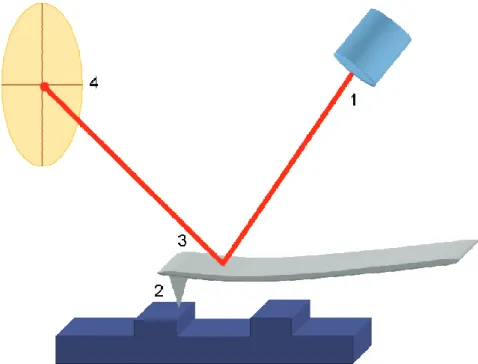
Figure 1.06 Schematic of the atomic force microscope (AFM). A laser beam (1) is shone onto the cantilever as the tip (2) scans across the surface of the sample. The laser reflects off the back of the cantilever (3) into a photodiode detector (4).
12
Figure 1.07 Processes occurring at the electrode surface. 1: electron transfer at the electrode surface; 2: Surface reactions such as adsorption/desorption; 3: chemical reactions preceding/following electron transfer; 4: mass transport of the redox active from bulk solution to/from the electrode surface.
15
Figure 1.08 Diffusion fields to (i) a macroelectrode, and (ii) a disc UME.
17
Figure 1.09 Typical shapes of cyclic voltammograms obtained at (i) a macroelectrode, and (ii) a UME.
Figure 1.11 Schematic (not to scale) of SECM feedback modes. (i) shows how hindered diffusion leads to negative feedback; (ii) illustrates regeneration of the redox mediator, which leads to positive feedback.
24
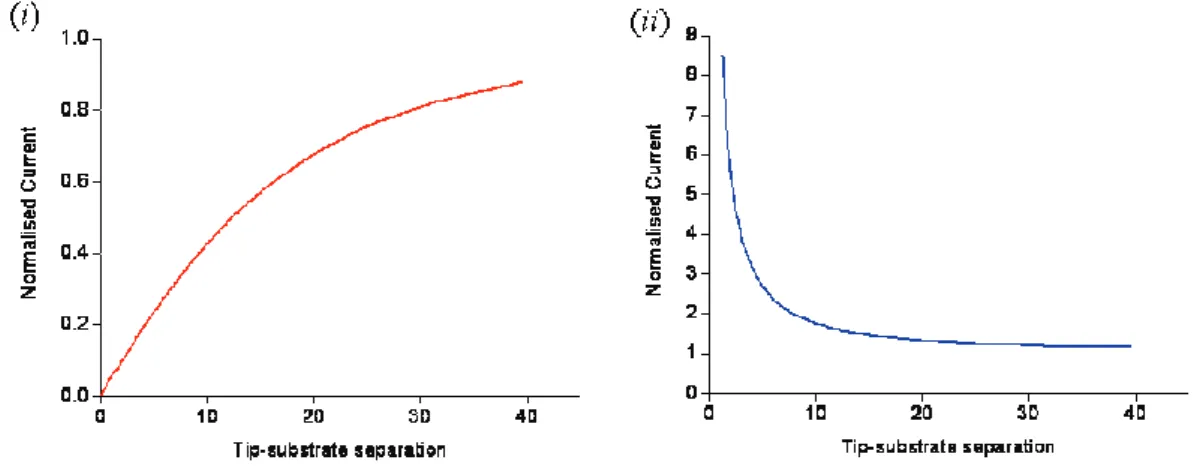
Figure 1.12 Theoretical approach curves for (i) negative feedback and (ii) positive feedback for a 25 µm diameter disc UME.
26
Figure 1.13 An illustration of the varying feedback modes of SECM. The tip is scanned at a fixed height, so the tip-substrate separation, d, and thus the current, changes as the topography of the surface changes (i-iii). Addition of convection to a porous system causes large current increases (iv). The presence of electroactive regions may also be confirmed by large increases in current (v).
27
Figure 1.14 Schematic showing the interaction of diffusion fields in the SG-TC mode of SECM.
28
Figure 1.15 Schematic showing the SICM experimental set-up. A micropipette tip containing an intra-pipette Ag/AgCl reference electrode (1) is filled with an inert electrolyte solution, as is the reservoir (2). A second Ag/AgCl reference electrode (3) sits in the reservoir and a potential is applied between the two electrodes. The magnitude of the resulting migration current that flows is dependent on the distance between the tip and the sample (4).
30
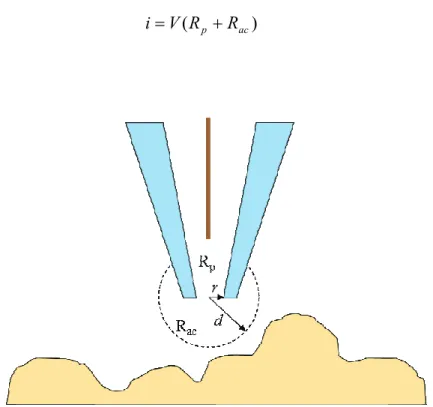
Figure 1.16 Schematic showing the resistances associated with the SICM technique. Rp is the resistance of the pipette
opening; Rac is the access resistance of the pipette. r is
the radius of the pipette and d is the tip-substrate separation.
31
Figure 1.17 (1) Schematic showing grain structure of a polycrystalline diamond film. (2) Differential boron uptake in different grains is indicated by dark and light regions. (3) The sample is processed to remove the growth and nucleation surfaces. (4) Resultant sample for investigation; note the complex interconnection of grains with different dopant densities.
33
Chapter 2: Experimental
Figure 2.01 Schematic displaying the location from which the occlusal and root discs are taken
48
Figure 2.02 Photograph showing the SECM experimental set-up. 50 Figure 2.03 Images obtained using optical microscopy showing (i)
a side view of a 10 µm diameter Pt UME, and (ii) an end-on view of the same Pt UME.
53
Figure 2.04 Schematic showing the experimental set-up for all
Chapter 3: SECM & SICM Studies of Fluid Flow through
Human and Bovine Dentine, and the Effect of Occlusion Actives
on this Flow
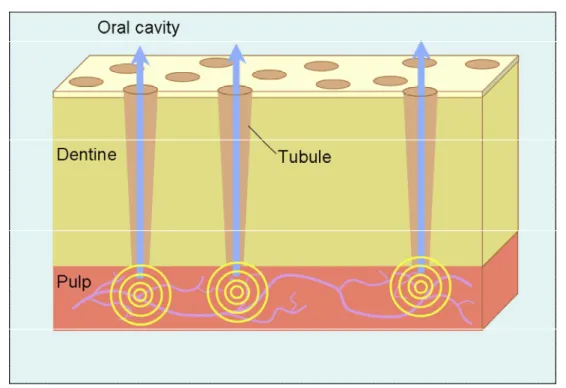
Figure 3.01 Schematic to demonstrate the hydrodynamic theory of dentinal hypersensitivity
59
Figure 3.02 Schematic showing the set-up used for hydraulic
conductance measurements. 63
Figure 3.03 Optical image of bovine dentine showing dentinal tubules. Scale bar represents 10 µm.
69
Figure 3.04 Contact-mode AFM height image showing tubule diameters of 2.61 and 1.94 μm and surface roughness of the order of 500 nm for a bovine dentine sample.
70
Figure 3.05 FE-SEM images of bovine dentine. Scale bar
represents (i) 20 μm and (ii) 5 μm. 71 Figure 3.06 FE-SEM images of bovine dentine. (i) shows the
thickness of the dentine slice (ca. 82 μm); (ii) is a higher resolution image of a region from (i), and shows microtubules (indicated by the red squares) branching normal to the pulp-enamel direction, indicated by the double-headed arrow. Scale bar represents (i) 20 μm and (ii) 2 μm.
71
Figure 3.07 A typical CV recorded using a 25 µm diameter Pt UME in a 5 mM solution of IrCl63-, containing 0.1 M
KNO3 as supporting electrolyte. Also present in
solution were HEPES buffer (20 mM) and CaCl2 (1
mM). The observed limiting current (~27 nA) is slightly higher than the expected current from theory (19.78 nA, applying a diffusion coefficient for IrCl6
3-of 8.2 × 10⁻⁶ cm s-142 ); this is probably due to a very slight error in preparing the solution (the observed current would be obtained if the solution had a concentration of 5.0001 mM).
73
Figure 3.08 A plot showing an experimental approach curve to an insulator (black) fitted to a theoretical approach curve (red) for a 25 µm diameter tip UME with RG = 10.
74
Figure 3.09 Plots of pressure vs time showing the difference in the pressure increase for dentine discs of different thicknesses.
76
Figure 3.10 Plots of pressure vs time showing the difference in the pressure increase for dentine discs etched with 3% citric acid for different time periods.
77
Figure 3.11 Plots of pressure vs time showing the difference in the pressure increase for untreated dentine compared with dentine treated with 3% alginate gel. The flow solution was 1 mM CaCl2.
electrolyte. 1 mM CaCl2 was also present in the
solution. CVs were run at a scan rate of 10 mV s-1. Increasing amounts of 3% alginate gel were added in 0.5 cm3 aliquots; black: 0 cm3 added; red: 0.5 cm3 added; dark yellow: 1 cm3 added; blue: 1.5 cm3 added;
purple: 2 cm3 added.
Figure 3.13 Pressure-time profile recorded for flow of Ru(NH3)63+
through dentine over 66 minutes. 83 Figure 3.14 Current images for the diffusion controlled reduction
of Ru(NH3)63+ as a tip UME is scanned over the
dentine surface. (i) is the image obtained with no flow, and (ii) with 3 ml/hr flow, both in the absence of Ca2+. (iii) and (iv) were both obtained in the presence of Ca2+, and are images acquired with no flow and 3 ml/hr flow respectively. The tip UME (a = 12.5 μm) was initially positioned at a distance of 7μm from the surface. The image was recorded with a tip scan rate of 10 μms-1.
84
Figure 3.15 i-t transient measured for Ru(NH3)63+ over a 20 minute
period with the tip held at a diffusion-controlled potential.
85
Figure 3.16 i-t transient measured for ferrocenemethanol over a 30 minute period
86
Figure 3.17 Large scan current images for the diffusion-controlled oxidation of IrCl63- as a tip UME is scanned over the
dentine surface. (i) is the image obtained with no flow, and (ii) with 3ml/hr flow. (iii) is the image obtained on subtraction of (i) from (ii), i.e. the image due to convection only. The tip UME (a = 12.5 μm) was initially positioned at distance of 7 μm from the surface. All images were recorded at a tip scan rate of 10 μm s-1.
88
Figure 3.18 Pressure-time profile recorded for flow of IrCl63- at a
flow rate of 3 cm3 hour-1 through dentine over 90 minutes.
89
Figure 3.19 Series of SECM images showing it/i∞ for: (i) a dentine sample with no applied pressure; (ii) the same sample after application of a pressure of 2 kPa using a gravity feed system; (iii), (iv) and (v) the same sample after 1, 2 and 3 applications, respectively, of a paste containing 3% alginate gel as a candidate active for dentinal hypersensitivity.
91
Figure 3.20 A typical SICM approach curve to a glass substrate for a 4 µm diameter micropipette, where the tip current is normalised with respect to the bulk current and plotted against the tip-substrate separation (d) expressed in tip radii (r). In this case r=2 μm. The micropipette and reservoir were both filled with 0.1 M NaCl. 2 Ag/AgCl electrodes served as the reference electrodes within the micropipette and in the reservoir.
Figure 3.21 Schematic diagram representing the resistances associated with the micropipette, where Rp is the
resistance due to the micropipette and Rac is the access
resistance of the micropipette aperture.
94
Figure 3.22 Schematic demonstrating the effect of tip oscillation on the tip current. (i) shows the effect of oscillating the tip when it is positioned far from the surface; (ii) exhibits the effect on tip current when the tip is close to the surface.
95
Figure 3.23 Figure to compare the response of the AC current (blue) and the DC current (red) for a 4 μm micropipette tip over the same approach distance (7 μm). The magnitude of the AC current (ie the first harmonic amplitude of the DC current) was measured from peak-to-peak (p2p).
96
Figure 3.24 (i) Optical and (ii) SICM image (micropipette diameter 1 µm) showing a substrate consisting of bands 5 µm in width, separated by 20 µm, that are raised 0.5 µm from the plane. The xy scale bar in both images represents 25 µm; the z scale bar for the SICM image (ii) runs from 0 (black) to 0.5 (white) µm.
97
Figure 3.25 SICM images of the raised band structure on silicon wafer, recorded with a 3.5 μm diameter micropipette under feedback utilising the first harmonic, with two different set-points. The tip was oscillated over 40 nm at a frequency of 80 Hz. The substrate had band width 5 μm and band height 0.5 μm, with a 20 μm repeating pattern. (i) and (ii) are images recorded over the same 100 × 50 μm area, with the set point of (i) approximately 0.85 μm closer to the surface than the set-point for (ii). (iii) shows the average cross section in the direction normal to the bands for (i) black and (ii) red. Lines have been shifted so that the flat areas between bands match approximately.
98
Figure 3.26 SICM image of a calibration grid consisting of 5 µm × 5 µm squares raised 180 nm from the plane. The image was recorded using a 1 μm diameter tip filled with 0.1 M NaCl. The reservoir was also filled with 0.1 M NaCl. The tip was oscillated over 40 nm at a frequency of 80 Hz. The xy scale bar represents 10 µm; the z scale bar runs from 0 (white) to 185 (black) nm.
99
Figure 3.27 Images of a calibration grid, 10 μm pitch, 180 nm depth, recorded using contact-mode AFM (i) and (ii) or and SICM (1 μm diameter pipette) (iii) and (iv). (ii) and (iv) are cross-sections of the 2-dimensional images taken from (i) and (iii), respectively. Curves in (iv) have been offset from one another in the vertical
as it scans over a step at two different set points (d1>d).
Figure 3.29 Schematic showing the path of ion flow as a pipette is positioned above a pit, either (i) offset or (ii) coaxially over a pit.. The weight of the arrow is demonstrative of the relative magnitude of the ion flux out of the pipette. NB: there will be a net flow equal and opposite to this to balance the charge.
101
Figure 3.30 An SICM image of dentine recorded using a 3µm diameter micropipette containing 0.1 M NaCl. The tip was oscillated over 40 nm at a frequency of 80 Hz.
102
Chapter 4: Laser Scanning Confocal Microscopy (LSCM)
Studies of the Permeation of Dentine by Rhodamine B
Figure 4.01 LSCM images of human dentine at (i) an excitation wavelength (λex) of 543 nm. Note there is very little
autofluorescence of dentine. (ii) On dipping the dentine into 10 μM Rhodamine B solution, the tubules become visible. (iii) At λex = 488 nm (i.e. λex for
fluorescein), dentine was seen to autofluoresce. (iv) On dipping the dentine into 10 μM fluorescein solution, the tubules become less apparent as it becomes more difficult to differentiate between them and the dentine background. The scale bar represents 20 µm in all images.
113
Figure 4.02 z-stack at 543 nm of human dentine. A section in the x-axis (*) shows the tubules are all of a similar diameter over the 20 μm stack
114
Figure 4.03 A selection of LSCM images marking the flow of rhodamine B through dentinal tubules for brushed dentine. Blue regions indicate low fluorescence; red regions represent high fluorescence. Image acquisition was started concurrently with the flow. The time indicated in the corner of each frame refers to the time at which that frame began to be recorded (~6 s image duration). The scan direction is indicated by the arrow. Images were recorded continuously in the plane parallel to, and just above, the substrate surface over a time period of 2 minutes. Each frame shows a region 460 μm x 460 μm, and the scale bar denotes 100 µm. Inset: Pressure-time data obtained during the imaging measurement (average of 4 runs).
116
Figure 4.04 Pressure-time data obtained during fluid flow through human dentine, etched in 10% citric acid, after: (a) no further treatment; (b) treatment with a commercial varnish (Cervitec®). Each plot shows the mean pressure observed for 4 fresh dentine samples.
Figure 4.05 Optical DIC micrographs of: (a) untreated dentine; and (b) dentine treated with a commercial varnish (Cervitec®) at a magnification of x200.
118
Figure 4.06 A selection of LSCM images showing the flow of rhodamine B through dentinal tubules for dentine treated with alginate paste. Black regions indicate low fluorescence; white regions represent high fluorescence. The scan was started concurrently with the flow. The time indicated in the corner of each frame refers to the time at which that frame began to be recorded. The scan direction is the same as for Fig. 2. Images were continuously recorded in the plane parallel to the substrate surface over a time period of 2 min. Each frame shows a region 460 × 460 μm. Scale bar: 100 μm. See text for description of processes occurring.
120
Figure 4.07 Black squares: Pressure–time data obtained during fluid flow through human dentine, etched in 10% citric acid, after brushing with a placebo paste. The plot shows the mean pressure observed for 4 fresh human dentine samples. Red triangles: Pressure–time data for fluid flow through human dentine, etched in 10% citric acid, and then brushed with alginate paste average of 4 data sets). The error bars for the alginate data are larger.
121
Chapter 5: Localised Dissolution of Enamel
Figure 5.01 A schematic showing the localised dissolution process. 131 Figure 5.02 An optical micrograph showing a series of etch pits
separated by 250 μm centre-to-centre. Scale bar represents 100 µm.
132
Figure 5.03 A typical set of interferometry images showing (a) a 2D view of the surface, (b) the diameter of the pit, and (c) the depth of the pit.
133
Figure 5.04 Plot showing the change in etch pit diameter with increasing experiment time. The etch solution contained 0.1 M KNO3 only. Etching was achieved by
applying a constant current of 50 nA.
134
Figure 5.05 Plot of the etch pit depth with etching time. The etch solution contained 0.1 M KNO3 only. Etching was
achieved by applying a constant current of 50 nA.
135
Figure 5.06 Plot showing the amount of material lost with increasing experiment time. The etch solution contained 0.1 M KNO3 only. Etching was achieved by
applying a constant current of 50 nA.
presence of sodium L-lactate at a concentration of 50 mM.
Figure 5.08 Plot showing the increase in pit volume with increasing etching time, in the absence (black squares) and presence (red circles) of 50 mM sodium L-lactate.
138
Figure 5.09 The effect of NaF treatment on etch pit development, as a function of etch time. The black squares represent the volume of the pits formed in the absence of NaF, while the red circles show the volumes for a surface treated with NaF.
139
Figure 5.10 Simulation domain for the axisymmetric cylindrical geometry used to model the formation of etch pits in dental enamel.
140
Figure 5.11 Plot showing experimental (black squares) and simulated (red circles) pit volumes in an etching solution containing only 0.1 M KNO3. A rate constant
of 0.3 cm s-1 was applied in the simulations.
142
Chapter 6: Carbon as an Electrode Material
Figure 6.01 Schematic showing the fabrication process for the BDD microdisc array
150
Figure 6.02 (i) is a photoluminescence (PL) image showing approximately 78 BDD microdisc electrodes. (ii) is a FE-SEM image of the same microdisc array after electrodeposition of silver from a solution containing 1 mM AgNO3 in 0.2 M KNO3. A deposition potential of
-0.2 V (vs Ag/AgCl) was applied for 60 s.
156
Figure 6.03 Cyclic voltammograms for the reduction of 10 mM Ru(NH3)63+ (in 0.1 M KCl) at the BDD microdisc
array at scan rates of 5 (lowest peak current), 10, 20, 50 and 100 (highest peak current) mV s-1-.
157
Figure 6.04 Cyclic voltammograms for the reduction of 0.1 mM Ru(NH3)63+ (in 0.1 M KCl) at the BDD microdisc
array at scan rates of 5 (lowest peak current), 10, 20, 50 and 100 (highest peak current) mV s-1-.
158
Figure 6.05 Simultaneously recorded C-AFM (i) height and (ii) conductivity images, recorded at a tip potential of -2.5 V with a 10 MΩ current limiting resistor in series, of a typical BDD microdisc electrode in the array.
160
Figure 6.06 Current – voltage curves recorded with the C-AFM tip held stationary in (i) a high conductivity region, and (ii) a low conductivity region of the BDD microelectrode shown in Figure 6.05. The solid and dashed lines represent repeat measurements recorded
in the same zone. Note that no current limiting resistor was present during these measurements.
Figure 6.07 500 μm × 500 μm SG-TC SECM image recorded for the collection of Ru(NH3)62+ electrogenerated from 5
mM Ru(NH3)63+ (in 0.2 M KNO3) at the surface of the
BDD microdisc array. The substrate potential was maintained at -0.4 V, whilst the 25 μm diameter Pt UME tip was maintained at 0.0 V. A tip-substrate separation of ca. 10 μm was employed during imaging
164
Figure 6.08 100μm × 100 μm SG-TC SECM images of an individual BDD microdisc in the array at substrate potentials of: (i) -0.4 V; (ii) -0.3 V; and (iii) -0.2 V. The 5 μm diameter Pt UME tip was held at a constant bias of 0.0 V, thus enabling collection of surface-generated of Ru(NH3)62+ from 5 mM Ru(NH3)63+ (in
0.2 KNO3) at a diffusion-controlled rate. A
tip-substrate separation of ca. 0.6 μm was employed.
165
Figure 6.09 SG-TC images of a second individual BDD microdisc electrode in the array at substrate potentials of: (i) -0.4 V; (ii) -0.3 V and (iii) -0.2 V. The experimental conditions were as for Figure 6.08, except that a tip-substrate separation of ca. 1 μm was employed.
167
Figure 6.10 Feedback approach curves recorded in the zones of high activity for the two BDD microdisc electrodes shown in Figure 6.09 (●) and 6.10(●). For all measurements, the tip was held at -0.4 V and the substrate was maintained at 0.0 V in a solution containing 5 mM Ru(NH3)63+ in 0.2 M KNO3. the solid
line is the theoretical current response for positive feedback.
168
Figure 6.11 FE-SEM images of two different electrodes within the microdisc array (electrode 1: images (i) and (ii); electrode 2: images (iii) and (iv)) after electrodeposition of Ag (60 s electrodeposition time from a solution containing 1 mM AgNO3 in 0.2 M
KNO3). Two detectors were used: (1) a conventional
SE2 detector; and (2) a high efficiency in-lens detector. The former allowed location of the Ag particles, (i) and (iii), whereas the latter allowed simultaneous imaging of the grain structure and Ag particle morphology, (ii) and (iv).
169
Figure 6.12 A selection of LSCM images of the pH-dependent fluorescence profile of fluorescein at the BDD microdisc array after application of a potential of -1.4 V in a solution containing 0.2 KNO3 and 10 μM
fluorescein, resulting in the local increase of the pH due to reduction of oxygenated water. The scan was started immediately after stepping the potential. The
parallel to the microdisc array surface over a time period of 28 s. The scale bar in the frame represents 100 μm.
Figure 6.13 Schematic showing the crystal structure of HOPG. 172 Figure 6.14 Schematic showing the principle behind the Scanning
Micropipette Contact Method (SMCM).
177
Figure 6.15 Optical image showing a 300 nm diameter micropipette approaching the HOPG surface. Scale bar represents 500 μm.
178
Figure 6.16 Typical tapping mode atomic force microscopy (AFM) images of ZYA grade HOPG. Scale bar 1 μm, height range 0 - 5 nm. (i) shows a region with a step density of 0.2 µm/µm² ; (ii) shows a region with a step density of 0.7 µm/µm².
180
Figure 617 Plot to show the fit between experimental (black) and simulated (blue and red) cyclic voltammograms for a micropipette with rp = 225 nm. The solution was FA+ (2 mM) with 0.1 M NaCl. The arrow indicates the direction of the scan. A clear fit is seen to Nernstian kinetics.
181
Figure 6.18 Linescans to show the current generated when the half-wave potential was applied at a series of points across the HOPG surface, using (a) FA+ or (b) Fe(CN)64- as
the redox mediator.
182
Figure 6.19 Plot showing a series of cyclic voltammograms recorded at consecutive points on the HOPG surface for a 550 nm diameter micropipette. Three CVs were recorded at each position. The scan rate was 150 mV s-1. The arrow indicates the direction of the scan.
183
Figure 6.20 Simulation domain for the axisymmetric cylindrical geometry used to model the micropipet system: (i) the full geometry for a uniformly active surface; and (ii) the modification when the substrate is partially active.
185
Figure 6.21 Plot of simulated data demonstrating how the steady state diffusion-limited current (normalised as described in the text) at a 1 μm radius micropipette (l = 400 µm, γ=7.5°, c*=2 mM, D = 6 ×10⁻⁶ cm2 s-1) is affected by the meniscus radius, a.
189
Figure 6.22 Plot of simulated data demonstrating how the steady state diffusion-limited current (normalised as described in the text) at a 1 μm radius micropipette (l = 400 µm, γ=7.5°, c*=2 mM, D = 6 ×10⁻⁶ cm2 s-1) is affected by the meniscus height, h.
190
Figure 6.23 Simulated cyclic voltammograms at scan rates of 20, 50, 100, 200, 500 and 1000 mV s-1 for Nernstian ET at a 1 μm radius micropipette (a=800 nm, c*=5 mM, h=200 nm, γ=7.5°). The arrow indicates the direction of the scan.
191
Figure 6.24 Simulations showing the effect of kinetics on the shape of cyclic voltammograms. Black: Nernstian response.
Red: k0 = 0.1 cm s-1. Green: k0 = 0.01 cm s-1. Blue: k0 =
0.001 cm s-1. Scan rate 100 mV s-1. The concentration of electroactive species was 5 mM, with rp = 1µm, a = 800 nm, h = 200 nm, and l = 400 µm. The arrow indicates the direction of the scan.
Figure 6.25 Simulated concentration profile within a micropipette where rp = a = 500 nm, c* = 2 mM, h = 100 nm, and l = 0.4 mm. The contour line on the magnified image shows 95% concentration.
193
Figure 6.26 Simulations showing the voltammetric responses of (i) a uniform surface with Nernstian response (red) and Butler-Volmer (black) kinetics with k0 = 0.5 cm s-1;
compared with (ii) a surface containing a 1 nm width step defect (see Figure 3 for geometry). In this latter situation the data are for Nernstian ET (red) and Butler-Volmer kinetics (black) with k0 = 0.5 cm s-1
inert basal plane. A 580 nm diameter micropipette containing 2 mM redox active species (D = 6 × 10⁻⁶
cm2 s-1) was simulated. The arrows indicate the direction of the scans. Horizontal line to aid comparison.
List of Tables
Table 2.01 Grades and suppliers of all chemicals used in the studies described within this thesis.
58
Table 3.01 Summary of results from CV experiments on the effect of adding 0.5 cm3 aliquots of 3% alginate gel to a 5 mM Ru(NH3)63- solution in the presence of 1 mM
CaCl2. The solution also contained 0.1 M KNO3.
81
Table 5.01 Boundary conditions for finite element modelling. 141
Table 6.01 The boundary conditions for the simulation of the voltammetric response of a micropipette in the contact method.
Acknowledgements
Firstly I would like to thank Prof. Julie Macpherson for all her help, patience and guidance throughout my PhD, and for seeing potential in me (no electrochemistry pun intended) when I really couldn’t see it myself. Many thanks also to Prof. Pat Unwin, for sharing his knowledge and his ever-present optimism, even when things weren’t going so well. Huge thanks must also go to Charlie Parkinson at GSK for all his support and enthusiasm during my PhD and for giving me a fantastic insight into industry.
Thanks to Sara Dale for being my singing partner in the office and a great ear to sound off to when things got hard, and to Anna Colley for her constant stream of gossip and for being a fantastic running partner. Special thanks also to Martin Edwards - your patience knows no bounds, even when I’m having my dimmest moments. You’ve helped me more over the past few years than I could even begin to tell you, and I really appreciate it. Plus of course you introduced me to Quean’s, and my palate is indebted to you for that.
To my fellow members of the C111 crew (massive), thanks for helping the days to go quickly whether experiments were going well or otherwise. To all the members of the Electrochemistry and Interfaces group, past and present, I wouldn’t have changed the past four years for anything – thank you.
Thanks must go to Neil Wilson for helpful discussions, and even the odd chocolate biscuit here and there. Thanks to Steve York for his guidance on FE-SEM and not getting annoyed when I was just forgetting something simple. Thanks to Marcus Grant and Lee Butcher for all their help with my rig setup requests, and for the frequent comic interludes. Many thanks to Peter Brindley for the enormous number of SECM cell bodies he made over the duration of my PhD.
Declaration
The work contained within this thesis is entirely original and my own work,
except where acknowledged. I confirm that this thesis has not been submitted for
a degree at another university. All Comsol simulations were developed by Martin
Edwards. All work on boron-doped diamond was carried out in conjunction with
Anna Colley. SMCM and SICM work was carried out with the help of Martin
Edwards. AFM images of HOPG were recorded by Manon Guille.
Parts of this thesis have been published as detailed below:
“Examination of the Spatially Heterogeneous Electroactivity of Boron-Doped
Diamond Microarray Electrodes”, A. L. Colley, C. G. Williams, U. D'Haenens
Johansson, M. E. Newton, P. R. Unwin, N. R. Wilson, J. V. Macpherson, Anal.
Chem. 2006, 78(8), 2539-2548.
“Laser Scanning Confocal Microscopy Coupled with Hydraulic Permeability
Measurements for Elucidating Fluid Flow across Porous Materials: Application
to Human Dentine”, C. G. Williams, J. V. Macpherson, P. R. Unwin and C.
Parkinson, Anal. Sci., 2008, 24, 437–442.
“Scanning Micropipet Contact Method (SMCM) for High Resolution Imaging of
Electrode Surface Redox Activity”, Cara G. Williams, Martin A. Edwards, Anna
“A Realistic Model for the Current Response in Scanning Ion Conductance
Microscopy (SICM) and Implications for Imaging”, Martin A. Edwards, Cara G.
Abstract
The overall aim of this thesis is to examine the underlying physical basis of dentinal hypersensitivity and to assess methods of treating this cause using imaging techniques. The scanned probe microscopy (SPM) techniques are then extended to the study of carbon-based electrode surfaces, as described in the final chapter.
The use of scanning electrochemical microscopy (SECM), combined with in situ pressure-time measurements, is described as a means to investigate the flow of fluid through human and bovine dentine, and the subsequent effect of occlusion treatments on this flow. Scanning Ion Conductance Microscopy (SICM) is also introduced as a technique for imaging dentine, with instrument design and development described, and also calibration of the technique.
Laser scanning confocal microscopy (LSCM) coupled to a constant volume flow-pressure measuring system is introduced as a new technique for the quantitative measurement of fluid flow across porous materials. The methodology described herein firstly allows a ready assessment of the general efficacy of treatments via hydraulic permeability measurements. Second, LSCM images allow the nature of the flow process and the mode of action of the treatments to be revealed at high spatial resolution. For the particular case of dentine, we demonstrate how the method allows candidate treatments to be compared and assessed.
To complement the studies into dentinal hypersensitivity, microscopic dissolution of bovine enamel is investigated. This chapter describes a novel approach, based on SECM, to promote the localised dissolution of bovine enamel, effected by the application of a proton flux to the enamel surface from a UME positioned within 5 μm of the surface, in aqueous solution. The approach results in a well-defined “acid challenge” yielding well-defined etch pits that were characterised using light microscopy and white light interferometry. The effect of etching in the presence of lactate is considered, as is the effect of treating the enamel samples with sodium fluoride prior to etching. The approach described is amenable to mass transport modelling, allowing quantitative interpretation of etch features.
Abbreviations
Abbreviation Description
AFM Atomic Force Microscopy
BDD Boron-doped diamond
CV Cyclic voltammetry /cyclic voltammogram
FE-SEM Field-emission Scanning Electron Microscopy
HOPG Highly Ordered Pyrolytic Graphite
LSCM Laser Scanning Confocal Microscopy
SECM Scanning Electrochemical Microscopy
SG-TC Substrate generation-tip collection
SICM Scanning Ion Conductance Microscopy
SMCM Scanning Microcapillary Contact Microscopy
TG-SC Tip generation – substrate collection
UME Ultramicroelectrode
Glossary of Symbols
Symbol Description
A Area of electrodea Radius of disc UME
a Contact radius of the meniscus with substrate
C Concentration
d UME-surface separation D Diffusion coefficient F Faraday’s constant h Height of the meniscus hsyrf Height of the surface
hUME Height of the UME
i Current
it Current at time t
i∞ Diffusion-limited current
j Flux
l Length of pipette
λ Wavelength
λ Pipette semi-angle
n Number of electrons
η Overpotential
R Gas constant
rpit Radius of etch pit
rp Pipette radius
Chapter 1
Introduction
The overall aim of this thesis was to examine the underlying physical basis of
dentinal hypersensitivity and to assess methods of treating this cause using
imaging techniques. Two major themes were considered; the first was the flow of
fluid through exposed dentine and methods used to retard flow, and the second
was the dissolution of the protective enamel layer which covers the porous
dentine. The latter was probed using a localised technique which employed an
ultramicroelectrode (UME) as a source of protons. The former was investigated
using scanned probe techniques and laser scanning confocal microscopy. These
scanned probe microscopy (SPM) techniques were then extended to the study of
carbon-based electrode surfaces, as described in the final chapter.
Chapter 1 briefly introduces a number of techniques and theories that were
important to the studies described herein. These are then explained in more detail
in subsequent, specific chapters. The aims of the studies in this thesis are listed at
the end of this introductory chapter.
1.1 Dentinal
Hypersensitivity
The condition of dentinal hypersensitivity, more commonly known as sensitive
teeth, affects a large proportion of the adult population. It arises from the
when enamel erodes, or gums recess, and the underlying, porous dentine
becomes exposed. As such, this thesis is concerned with two main themes: (i)
occluding open tubules to prevent the movement of fluid; and (ii) investigating
factors which affect the dissolution of dental enamel.
1.1.1 The Structure of the Tooth: Dentine and Enamel
The human tooth consists of two major sections; the crown, which projects from
the gum; and the root, which is embedded within the gum. The structure of the
tooth is shown in Figure 1.01.
Figure 1.01: The anatomy of the tooth, where i is the crown and ii is the root of the tooth. (a) is
the enamel, (b) is dentine, (c) is the pulp, (d) is the gingiva (gum), and (e) is the bone of the jaw. (f) shows the apical foramen, where the blood and nerve supply enters the pulp.
The crown is covered with enamel, the hardest substance in the body. It consists
enamel rods, each of which is shaped like a keyhole in cross-section and is ca. 5
μm in diameter. In between rods there is a region ca. 100 nm in width where the rods pack poorly and some organic material remains.2 Dentine lies centrally
between the enamel and the pulp, and makes up the bulk of the tooth. Dentine is
a hard, yellow-white, avascular tissue, consisting of ca. 70% calcium
hydroxyapatite and ca. 30% (by volume) organic component. The organic
component is made up of a variety of proteins, mainly collagen.3 Dentine acts as
a supporting material for the brittle enamel. The characteristic feature of dentine
is its permeation by closely packed tubules, usually 1-2 μm in diameter, which traverse it completely from the pulp to the enamel.4 The tubules radiate from the
pulp in a near-parallel fashion. The tubules contain cytoplasmic extensions of the
odontoblast cells. Odontoblasts are responsible for the initial formation of
dentine, and then continue to maintain it.
1.1.2 Dentinal Hypersensitivity
Dentinal hypersensitivity is a common problem within the adult population. It
has been defined as a condition “characterised by short, sharp pain arising from
exposed dentine in response to stimuli typically thermal, evaporative, tactile,
osmotic or chemical and which cannot be ascribed to any other form of dental
defect or pathology”.5 It has been estimated to affect approximately 15% of the
adult population.6 Several theories have been proposed to explain dentine
sensitivity. One of these hypotheses suggests that odontoblast processes within
dentine itself contain sections of nerve fibres, and that these effect sensitivity
rather than the nerves in the pulp. Another proposal is that nerve impulses in the
widely accepted hypothesis to date is the hydrodynamic theory of sensitivity,
first proposed in 1900.8 Supporting evidence was collected in the 1950s and
1960s.9 When the enamel is eroded or gums recess, the tubules become exposed,
and dentinal fluid flows outward due to the positive pulpal pressure in the oral
cavity. This fluid flow increases in response to tactile, thermal and osmotic
stimuli. The increased flow causes a pressure change across the dentine. This is
thought to trigger a mechanoreceptor response in the A-δ nerve fibres of the pulp. The A-δ fibres are associated with the rapid transmission of pain impulses,10 and thus pain is experienced by the sufferer.11 If the hydrodynamic
theory is to be considered plausible, then tubules must provide an open pathway
from the dentine surface to the pulpal nerve tissues. Dye penetration studies have
revealed that this is indeed the case in hypersensitive teeth.12
1.1.3 Treatments for Dentinal Hypersensitivity
The methods used to treat dentinal hypersensitivity fall into two categories.
Occlusive (blocking) treatments aim to occlude the dentinal tubules, and thus
retard outward fluid flow or stop it completely. Another approach is to swamp
the nerve fibres with K+ ions, thus preventing the pain response.13 The
mechanism of the potassium ion effect is, as yet, unclear. It has been suggested
that K+ ions exert their effect by sufficiently raising the extracellular K+
concentration to inactivate intradentinal nerves. Peacock and Orchardson14 found
the required K+ concentration to be approximately 10 mM. Hence, the K+ ions
must diffuse along dentinal tubules to achieve this concentration and
McCormack and Davies16 suggested a model involving the role of a second
messenger in the action of K+.
1.1.4 Sodium Alginate
Alginates are a family of polysaccharides produced by brown algae and
bacteria.17 They are used extensively in the food industry due to their ability to
form stable gels in the presence of divalent cations, such as calcium. This gelling
process may be exploited to occlude dentinal tubules. The mechanism of gelation
has been studied extensively. Morris et al18 showed that calcium ions induce
chain-chain associations in alginates. Calcium ions and blocks of guluronic acid
residues interact strongly and specifically. These chain-chain associations make
up the junctions responsible for gel formation. A model for these junction zones
was derived by Grant et al19, known popularly as the “egg-box model”. This is
shown schematically in Figure 1.02.
Figure 1.02: Schematic showing calcium coordination in the “egg box model”. The dark circles
In this model, pairs of helical chains are packed with Ca2+ ions positioned
between them. However, this model has been criticised as it does not agree with
commonly seen Ca2+ coordination mechanisms.20 Mackie et al21 proposed a
more realistic coordination pattern, supported by molecular modelling.
1.2 Microscopy
There have been many advances in microscopy since Anton van Leeuwenhoek
and Robert Hooke took the first steps in the field during the mid 17th century.22
Scientists now have a huge range of microscopy techniques at their disposal,
ranging from the simpler techniques, such as light microscopy, through to more
complicated scanned probe approaches. Those techniques relevant to the studies
detailed herein are introduced in this section.
1.2.1 Optical Microscopy
Probably the most well known “traditional” method of examining samples is
optical microscopy. A white light source is used to illuminate the sample, and an
image is formed via a series of magnifying lenses. The resolution of this
technique is limited by both the wavelength of the light source employed and the
numerical aperture of the objective lens used.23 Light propagates as a wave and is
thus subject to diffraction. As such, the best possible resolution achievable with
standard light microscopy is 200 nm.24
A variation on optical microscopy is Differential Interference Contrast (DIC)
passes from the source of illumination to the sample, the prism interacts with the
light to produce two separate wavefronts, termed the ordinary and extraordinary
rays. These are polarised perpendicularly to one another, with one lying slightly
offset with respect to the other. The two wavefronts then hit the sample and are
reflected to slightly varying extents. The light enters the prism once again and the
rays are recombined. A rotating analyser is then employed to highlight optical
gradients in the specimen as different colours. In the studies on dentine detailed
in this thesis, the DIC mode of the optical microscope makes it possible to obtain
an estimate of the roughness of the dentine samples. Note that DIC was not used
quantitatively here as interpreting the images can be difficult. For example, a
region that looks like a peak may indeed be a raised feature, or it may simply be
a region of high refractive index.
1.2.2 Scanning Electron Microscopy (SEM)
The development of the electron microscope represented a massive breakthrough
in microscopy. The first working (transmission) electron microscopes were
constructed by German engineers Ernst Ruska and Max Knollin 1931. Scanning
electron microscopy (SEM) as it exists today did not emerge until the mid 1960s,
with the first commercial instrument appearing in 1964.27
SEM is used to study surface structure and generally yields easily interpretable
images, in contrast with transmission electron microscope (TEM) images which
can be difficult to analyse. The electron source produces an electron beam which
is accelerated to an energy of between 1 keV and 30 keV. Condenser lenses then
specimen. A number of phenomena occur at the surface as a result of primary
electron (electrons from the beam) impact, as shown in Figure 1.03.
Figure 1.03: Schematic showing photon and charged particle emission from a surface following
electron bombardment. 1 = transmitted electrons, 2 = secondary electrons, 3 = backscattered electrons, 4 = Auger electrons, 5 = absorbed current, 6 = X-rays, and 7 = cathodoluminescence.
(Figure adapted from ref 27).
Two of these emissions (2 and 3 in Figure 1.03) are of note for SEM. In a thick
specimen, the energy of the electron beam is dissipated, which results in low
energy secondary electrons being emitted (2). Primary electrons may also collide
with atoms in the sample and deflect to the extent that they are “reflected”, or
backscattered, away from the sample (3). Scanning electron microscopes usually
have detectors for both these types of electron. Secondary electrons produce
basic topographic images; backscattered electrons can give information on the
1.2.3 White-Light Interferometry
White-light interferometry (WLI)28 is a non-destructive optical profiling method
which can be used to investigate surface topography. In a typical interferometer,
a beam splitter (a 50% reflective/50% transmitting silvered glass plate) divides
the beam into two parts, as shown in Figure 1.04. One beam is reflected from the
specimen while the other is reflected from a reference mirror. The beams
recombine and interfere as they travel towards the camera. The interferometer is
calibrated to give maximum constructive interference at the point of best focus.
The combination of the two light paths causes the production of a pattern of light
and dark bands, known as fringes.
Figure 1.04: Schematic of a white light interferometer. White light from the light source (1)
passes through a collimator (2) before being divided by a beam splitter (3). One beam reflects from the sample (4) while the other reflects from a reference mirror (5). They recombine and pass
through an objective lens (6) before being detected by the camera (7).
There are two modes of operation: Vertical scanning interferometry (VSI) and
this thesis. VSI employs a white light source and allows relatively coarse
measurements to be made. The lens scans vertically towards the sample,
allowing the height of all points of the sample to be precisely determined,
provided that all regions of the sample reflect enough light back to the lens. This
is achieved through capture of the pattern of the interference fringes at each point
on the sample. This mode of operation allows features as small as a few nm to be
discerned in tandem with larger features in the order of 102 µm. When using VSI,
it is possible to gather images as large as ~ 400 µm x 600 µm in a time frame of
~15 s. PSI allows smaller images (typically tens of µm) to be recorded in one or
two seconds. Compared with AFM, introduced in section 1.2.5.1, WLI allows
imaging of much larger areas of a sample in much shorter times. However, WLI
is restricted to samples which are sufficiently reflective, although this problem
may be overcome by coating samples with a thin layer of gold prior to imaging.
1.2.4 Laser Scanning Confocal Microscopy(LSCM)
Laser scanning confocal microscopy (LSCM) is a powerful imaging technique. A
laser is used to provide a point source of illumination, there is a point focus
within the sample, and there is a detector pinhole, and all three are confocal with
one another. These factors combine to minimise interference from lateral stray
light, and so maximise contrast in the image formed. Figure 1.05 shows a
Figure 1.05: The confocal principle. A laser (1) is focused by the objective lens (2) and illuminates the sample (3). Light from the focal place (red) hits the beam splitter (4) and passes through the detector pinhole (5) to the photomultiplier (6). Out-of-focus light (green and blue) is
rejected by the pinhole and does not reach the photomultiplier.
The basic steps involved in deriving an image using the confocal microscope
may be summarised as follows. The objective lens focuses the laser beam into an
hourglass shape. The brightest part is the waist of this hourglass, and this strikes
a specific point at a certain depth of the sample. This is achieved either by
moving the scanning stage in a raster pattern, computer controlled, or by
reflecting the laser with mirrors, effectively moving the laser beam itself. Light
emitted from this specific spot is focused to a point and passes through a pinhole.
It is detected by a photomultiplier. The pinhole rejects light that would obscure
interest. The entire plane is scanned in this manner. The spatial resolution of the
technique is ultimately governed by the wavelength of laser used.29 As a rule of
thumb, images typically take only a few seconds to acquire, although this
obviously depends upon the number of pixels recorded in the image, and the
signal-to-noise requirements.
1.2.5 Scanned Probe Microscopy Techniques
1.2.5.1 Atomic Force Microscopy (AFM)
AFM 30-32 is a technique in which topographical information is obtained by
scanning a sharp tip attached to a force sensing cantilever over a surface. A
schematic of the technique is shown in Figure 1.06.
Figure 1.06: Schematic of the atomic force microscope (AFM). A laser beam (1) is shone onto
Attractive or repulsive forces result in deflection of the cantilever. A laser beam
reflected from the back of the cantilever into a photodiode detects the
deflections. The AFM is most commonly operated in contact mode32 or tapping
mode. In the studies detailed herein the former was employed, where the sample,
attached to a very sensitive piezo positioner, is moved up or down to maintain a
constant cantilever deflection. The deflections are used to provide a
topographical map of the surface. Lateral resolution is dependent on the radius of
curvature of the apex of the tip. Commercially available silicon nitride tips, as
used in the studies detailed herein, typically have a radius of curvature of 10 – 40
nm.33 A drawback of the technique is the limited xy scan size, usually up to a
maximum of ca. 120 μm. The maximum z range is usually ca. ± 2.5 μm.
1.2.5.2 Scanning Electrochemical Microscopy (SECM)
SECM is a powerful electrochemical SPM technique which allows topographical
imaging and elucidation of electroactivity of a sample. The technique is
discussed in depth in section 1.4.
1.2.5.3 Scanning Ion Conductance Microscopy (SICM)
SICM was first reported by Hansma et al34 in 1989. It was developed to allow
high resolution imaging of biological samples under physiological solution
conditions. The technique employs a micropipette as the imaging probe, and is
1.3 Dynamic
Electrochemistry
1.3.1 Introduction
Dynamic electrochemistry is a term which encompasses all studies of the
processes occurring at the electrode/electrolyte interface. These processes require
the application of a potential to drive them. The consequent current that passes
may be analysed to elucidate a huge amount of information about the interface.
In the simplest case, the electrochemical cell is a two-electrode system. This
comprises a working electrode and a reference electrode, but may only be used
when the current flowing is less than 1 µA. The reaction of interest takes place at
the working electrode. The reference electrode has a constant potential. The
current that passes between the two electrodes is a measure of the rate of reaction
at the working electrode, as defined in equation 1.01:
nAFj
i= (1.01)
Where i is the current, n is the number of electrons transferred, A is the area of the electrode, and j is the flux. This depends on a number of processes, which are
summarised in Figure 1.07.35 Each reaction step (apart from mass transfer) has an
associated overpotential; this is the potential which must be applied to provide
enough energy to drive that particular process. The overpotential for the overall
electrode process is equal to the sum of the overpotentials of these individual
elements. The rate of the electrode reaction therefore depends upon the relative
Figure 1.07: Processes occurring at the electrode surface. 1: electron transfer at the electrode surface; 2: Surface reactions such as adsorption/desorption; 3: chemical reactions preceding/following electron transfer; 4: mass transport of the redox active from bulk solution
to/from the electrode surface. Figure adapted from reference 34.
In simple electrochemical experiments, electron transfer and mass transport are
the only pertinent steps in the reaction. Electron transfer is easily controllable by
altering the applied potential and is often very fast, and thus mass transport of the
electroactive species to the electrode surface often becomes the rate determining
step. There are three modes of mass transport; migration, convection and
diffusion. In order to simplify analysis, the effect of two of these mass transport
components is removed or made negligible. Any additional convection to that
which is present naturally due to thermal considerations may be avoided by
preventing the movement of solution in the cell; solutions are not stirred and
experiments are carried out on vibrationally-isolated tables. Migration is made
negligible by the addition of an excess of an electrochemically inert electrolyte,
and decreases the size of the electrical double layer, acting to provide an
alternative, preferable pathway for the current to flow.36 As such, diffusion is
often the limiting factor for the development of a current at the electrode, under
mass transfer controlled conditions.
1.3.2 Macroelectrodes vs Ultramicroelectrodes (UMEs)
UMEs first emerged in the early 1970s, and are defined as electrodes with a
characteristic feature in the micron or submicron range.37 UMEs have a range of
interesting and useful properties which have led to an enhancement in the variety
of experimental timescales and environments that may be studied using
electrochemically. UMEs are now used routinely for many electrochemical
applications.
The interest in UMEs arose due to their unique properties. These attributes
include (i) fast response times, free from non-faradaic contributions;38 (ii) the
capacity to measure the small currents that arise from low analyte
concentrations;39 (iii) the development of a steady-state current response under
diffusion-limited control;40 and (iv) a reduction in ohmic drop effects.41 Fast
response times to changes in applied electrode potential mean that UMEs may be
used to monitor electrochemical processes free from capacitative charging on a
microsecond timescale. This is particularly useful in the study of short timescale
homogeneous and heterogeneous electron transfer processes. In addition, the
diminutive size of the UME means that it may be used to probe small volumes, to
The size of the working electrode is an important consideration in
electrochemical experiments. First, let us look at the traditional macroelectrode,
which may have a diameter in the millimetre or centimetre range. Diffusion to
this type of electrode is predominately planar, as shown in Figure 1.08(i). In
contrast, the small size of UMEs results in extremely efficient diffusional mass
transport due to the significant contribution of radial diffusion, resulting in the
formation of a steady-state hemispherical diffusion field (in the case of a disc
electrode). This is illustrated in Figure 1.08(ii). Thus, more rapid and efficient
mass transport occurs at a UME than that at a macroelectrode. This has important
ramifications for the voltammetric response of UMEs, as discussed in section
1.3.4.
Figure 1.08: Diffusion fields to (i) a macroelectrode, and (ii) a disc UME.
1.3.3 Ultramicroelectrodes: Fabrication
A number of UME geometries have been developed and applied to various
electrochemical applications.43 These include disc electrodes,44 band
electrodes,45, 46 hemispherical or spherical mercury electrodes,47, 48 ring
electrodes,49, 50 and carbon fibre electrodes.51, 52 For the studies included herein,
the most important geometry is the disc UME. These are typically fabricated by
typically range from 2 μm to 100 μm in diameter. Characterisation is often achieved using two electrochemical techniques: cyclic voltammetry (CV), and
scanning electrochemical microscopy (SECM) in conjunction with optical
microscopy. These techniques and their application in the characterisation of
UMEs are discussed in sections 1.3.4 and 1.4, respectively.
1.3.4 Cyclic Voltammetry (CV)
Cyclic voltammetry (CV) is one of the simplest electrochemical techniques, and
is used in most electrochemical investigations to provide information on the
electrode/electrolyte interface. This technique provides an “average” response for
the surface, ie for heterogeneously active electrode surfaces, it is extremely
useful to use other techniques to characterise the interface in order to correctly
interpret the voltammetric response of the electrode.
Consider the system O + e- → R. In CV, the potential of the working electrode (in this first case, a macroelectrode) is swept from one where no reduction
occurs, E1, to one where electron transfer is driven very quickly, E2. Upon reaching E2, the direction of the sweep is reversed and the potential is scanned back to E1. At E1, no reduction occurs and so the current is zero. As the potential
increases, the rate of reduction increases, and so the current increases
approximately exponentially with increasing potential (and thus time), as
predicted by the Butler-Volmer equation.54 The current reaches a maximum
value and a peak is seen. This occurs because the current depends not only on the
of mass transport (i.e. diffusion) of reactant to the electrode surface. The fall in
current that occurs is due to an increase in the depth of the depleted region next
to the electrode and the inability of mass transfer to compete with the rate of
electron transfer. Once the sweep reaches the switching potential, E2, the
potential reverses and the reaction proceeds in the opposite direction. The
voltammogram takes the form of a mirror image of the forward sweep, but is
shifted by 59/n mV, as dictated by the Nernst equation (at 298 K). A typical
voltammogram obtained for a macroelectrode is shown in Figure 1.09(i).
Figure 1.09: Typical shapes of cyclic voltammograms obtained at (i) a macroelectrode,
and (ii) a UME.
The cyclic voltammogram observed for a UME takes a different form to that
described above for a traditional macroelectrode. Instead of the peaked reponse,
the voltammogram takes a sigmoidal shape, as shown in Figure 1.09(ii). A
maximum value of the current is observed, and the voltammogram plateaus at
this value. This is termed the diffusion-limited current. This value of the current
is maintained due to efficient replenishment of reactant at the electrode surface,
CV can be used to verify the size and quality (i.e. how well the wire is sealed
into the glass) of an ultramicroelectrode. The current expected at an
ultramicroelectrode is given by equation 1.02:
* 4nFaDc
i∞ = (1.02)
where n is the number of electrons transferred, F is Faraday’s constant, a is the
radius of the UME, D is the diffusion coefficient and c* is the bulk concentration
of the electroactive species in solution. Thus one is able to calculate the expected
current and compare it to that achieved experimentally. It is also possible to
extract information about the quality of the seal between the microwire and the
surrounding glass sheath from the shape of the CV acquired. If the seal is perfect,
a CV run at a low scan rate (ie 10 mVs-1) will take the perfect sigmoidal form, as
shown in Figure1.09 indicating hemispherical diffusion.
1.3.5 Ultramicroelectrode Arrays
Arrays of UMEs have all the interesting and useful properties of individual
UMEs, but with the added advantage of an increased current, i.e. an increased
signal-to-noise ratio, which is of great importance for systems involving trace
electroanalysis. Under certain conditions, the steady-state current at a UME array
is equal to that for a single UME multiplied by the number of electrodes in the
array. This is only true for an array of UMEs in which the individual electrodes
are spaced a distance greater than 10a apart, where a is the radius of the (disc)
distance of ca. 10a from the UME. The size of the diffusion layer increases with time, and thus high scan rates yield thin diffusion layers, whereas low scan rates
yield thick diffusion layers.
Consider an array of UMEs, as shown in Figure 1.10. If the distance between
individual UMEs is greater than 10a, then the diffusion layers will only interact
on very long timescales, and the array will have the characteristics of a single
UME, but an increased current response equal to the sum of the individual
current responses. This is illustrated in Figure 1.10(i). However, this situation is
complicated when UMEs in an array are separated by less than 10a. The
diffusion layers interact and become pseudo-planar, as shown in Figure 1.10(ii).
This results in linear diffusion, and the electrochemical response is similar to that
of a macroelectrode of the same size as the total size of the array. However, if the
scan rate is high enough, the diffusion layers have less time to develop and may
not interact.
Figure 1.10: Diffusion profile at a UME array when the individual electrodes are spaced
by (i) > 10a and (ii) <10 a.
UME arrays may be fabricated in a variety of ways55-59 and applied to research
in areas such as environmental analysis,60 biomedical applications61 and drug
on the micron scale in an insulating (or low activity) matrix may be considered as
UME arrays. Studies on such a substrate are discussed in Chapter 6
.
1.4 Scanning
Electrochemical Microscopy (SECM)
1.4.1 Introduction
Among chemical mapping techniques, scanning electrochemical microscopy
(SECM)63, 64 is particularly popular and now well established for imaging both
surface topography65 and the chemical reactivity of substrates.66 SECM utilises
an UME as a scanning probe, the response of which provides information on an
underlying substrate. When preparing a UME for use in SECM, it is important to
consider the ratio of the radius of the insulator to radius of the wire, the RG
value, as described by equation 1.03:
a r RG= insulator
(1.03)
where rinsulatoris the radius of the insulating glass sheath surrounding the wire and
a is the radius of the wire itself. Typically for SECM disc UMEs are fabricated
with an RG value of 10.
There is a growing family of SECM operation modes,67 among which the
feedback mode68 and generation/collection modes are the most used to
investigate electrode surfaces and related interfaces. In the feedback mode, the