CORPORATE MEETS STARTUP:
EXPLORING FACTORS AFFECTING
INTER-ORGANIZATIONAL KNOWLEDGE
TRANSFER
CORPORATE MEETS STARTUP:
EXPLORING FACTORS AFFECTING
INTER-ORGANIZATIONAL KNOWLEDGE
TRANSFER
MASTERTHESIS
Felix Landmesser
BEHAVIOURAL, MANAGEMENT AND SOCIAL SCIENCES
EXAMINATION COMMITTEE
Dr. Rainer Harms Dr. Raymond Loohuis Prof. Dr. Eric Schott
I
Startups are a potential source of new knowledge for corporates. Corporates are increasingly setting up startup programs to institutionalize cooperation with startups and to realize joint projects. However, promising collaborative projects often fail because knowledge cannot be transferred between startup and corporate. This paper examines factors that increase the probability of successful knowledge transfer. An abductive research approach with case studies and expert interviews was chosen. Within the framework of the elaboration, factors for knowledge transfer that have hardly been studied so far are discussed: in particular, the employees involved on the corporate side are decisive for successful knowledge transfer. Liaison or transfer managers of the startup program act as bridge builders between startup and corporate. Within the corporate, employees must be involved in projects at an early stage in order to create ownership, while prioritization and commitment must be exemplified by the management. The theoretical findings are supplemented by a checklist for users such as innovation managers.
II
1.1 Context of the Study ... 1
1.2 Problem Description and Research Goal... 3
1.3 Significance of the Topic ... 4
1.3.1 Academic Relevance ... 4
1.3.2 Practical Relevance ... 5
2. Theoretical Framework ... 5
2.1 Background Literature ... 5
2.1.1 Open Innovation: External Sources of Innovation... 5
2.1.3 From Open Innovation to Startup Collaboration ... 9
2.1.4 Traditional Corporate Engagement Models ... 9
2.1.5 New Models of Startup Engagement ... 15
2.1.6 How Startups Can Benefit from Corporates ... 21
2.1.7 The Knowledge Creation and Diffusion Startup Ecosystem ... 22
2.2 Systematic Literature Review ... 22
2.3 Results of the Literature Review ... 25
2.3.1 Technology Transfer ... 25
2.3.2 Knowledge Transfer ... 25
2.3.3 Factors affecting Knowledge Transfer ... 28
2.4 Summary and Development of Model ... 33
3. Methodology ... 35
3.1 Research Design ... 35
3.2 Case Study... 37
3.2.1 Case Descriptions ... 37
3.2.2 Data Collection ... 37
3.2.3 Main Findings and Generation of the Interview Questionnaire ... 38
3.3 Expert Interviews ... 39
3.3.1 Data Collection ... 39
3.3.2 Sampling ... 40
3.3.3 Data Analysis ... 42
3.3.4 Quality Procedures... 44
4. Results... 45
4.1 Motivation ... 45
III
4.3.2 Types of Innovation... 52
4.3.3 Commercial Relationship ... 52
4.3.4 Location ... 52
4.3.5 Knowledge Overlaps ... 53
4.3.6 Company Culture ... 53
4.3.7 Priority ... 54
4.3.8 Liaison Manager ... 55
4.3.9 Learning Intent and Absorptive Capacity ... 55
4.3.10 Encouragement... 56
4.3.11 Post-Collaboration ... 57
4.4 Success Factors and Key Learnings ... 58
4.4.1 Subcategory Startup ... 58
4.4.2 Subcategory Strategy ... 60
4.4.3 Subcategory Resources ... 62
4.4.4 Subcategory Organization ... 63
4.5 Summary ... 65
5. Discussion & Conclusion ... 66
5.1 Discussion ... 66
5.1.1. Answering the Research Question ... 66
5.1.2 The Role of Startup Program and Startup ... 68
5.1.3 The Role of The Corporate ... 69
5.1.4. Hybrid Models of Corporate Startup Engagement ... 73
5.1.5 Practical Observations Schematized: How to Improve Knowledge Transfer... 74
5.2 Conclusion ... 78
5.2.2 Limitations ... 79
5.2.3 Further Research ... 79
References ... 81
IV Corporate/Corporation
A corporate is a large company or group of companies authorized to act as a single legal entity that is separate and distinct from its owners. In this study, the term is used for all large companies of the sample.
Corporate startup engagement
There are various ways to engage with startups. Based on the works by Mocker, Bielli, and Haley (2015) and Kohler (2016) a compiled corporate startup engagement scheme includes corporate venture capital, corporate incubators, corporate accelerators, events (conferences, hackathons, awards), co-working spaces, partnerships (product co-development), platform programs, and acquisitions. These methods may differ significantly in their applicability along the startup life cycle.
The term startup program summarizes all common forms of corporate startup initiatives (i.e.
“innovation hub”, “innovation lab”, “digital lab”, “accelerator”).
Corporate startup programs
In the context of this study, corporate startup programs are defined as programs brought into being by corporates in which the cooperation between the established company and the startup goes beyond the investment level; often there are joint projects or pilot projects in which a product is cooperatively developed further or adapted. Such cooperation can be labelled as co-innovation. The most common form is an accelerator program. Accordingly, corporate startup programs include innovation hubs and digital labs. In contrast to pure acceleration programs, corporate accelerators often foster co-innovation.
The framing used in this study differs from other sources. For instance, the early established hub:raum incubator by Deutsche Telekom lists three core categories: corporate startup programs (incubators, accelerators), labs (co-innovation), and independent programs working with startups.
Incremental and radical Innovation
“Incremental innovations are minor improvements or simple adjustments in current technology” (Dewar & Dutton, 1986, p. 1423).
“Radical innovations are fundamental changes that represent revolutionary changes in
V
„An event through which one organization learns from the experience of another“ (Easterby-Smith, Lyles, & Tsang, 2008, p. 676). Within, organizations, it can be defined as “process
through which one unit (e.g., group, department, or division) is affected by the experience of
another“ (Argote & Ingram, 2000).
Knowledge Transfer Success
Knowledge transfer manifests itself through changes in the performance or knowledge of the recipient (Argote & Ingram, 2000). As a consequence, one can measure knowledge transfer success by observing changes in performance or knowledge (Argote & Ingram, 2000).
Open Innovation
The initial definition stems from Chesbrough’s seminal work in 2003. More recently, he defined open innovation as „a distributed innovation process that relies on purposively managed knowledge flows across organizational boundaries“ (Chesbrough, 2017, p. 35).
Prototype
“A prototype is any representation of a (design) idea, regardless of the medium“ and serves the dimensions of role (usefulness in user’s life), look and feel (experience using it) and
implementation (how it works) in the design of this interactive artefact“ (Houde & Hill, 1997, p. 369).
Recipient
Transferring knowledge involves both transmission and receipt (Grant, 1996). A recipient may be an individual or an organization. The recipient’s perspective has mainly been analyzed in
terms of its absorptive capacity (W. Cohen & Levinthal, 1990). Absorption „depends upon the recipient's ability to add new knowledge to existing knowledge“ (Grant, 1996, p. 111). The
recipient firm’s absorptive capacity is led by its past experiences, culture, as well as knowledge retention capabilities (Lane & Lubatkin, 1998).
Startup
VI
Figure 1. Closed innovation method ... 6
Figure 2. Open innovation method ... 6
Figure 3. Capability-based framework for open innovation ... 8
Figure 4: Typology of corporate engagement models with startups and their key goals ... 9
Figure 5. Four-phase model of incubation process ... 13
Figure 6. SLR process ... 24
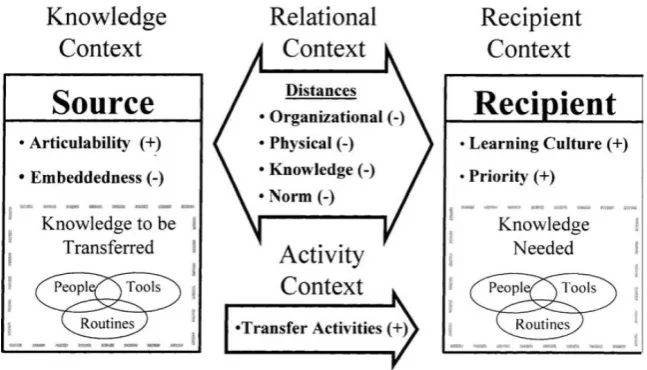
Figure 7. Factors influencing inter-organizational knowledge transfer ... 29
Figure 8. Transfer success research model ... 29
Figure 9. Basic knowledge transfer illustration based on literature review ... 34
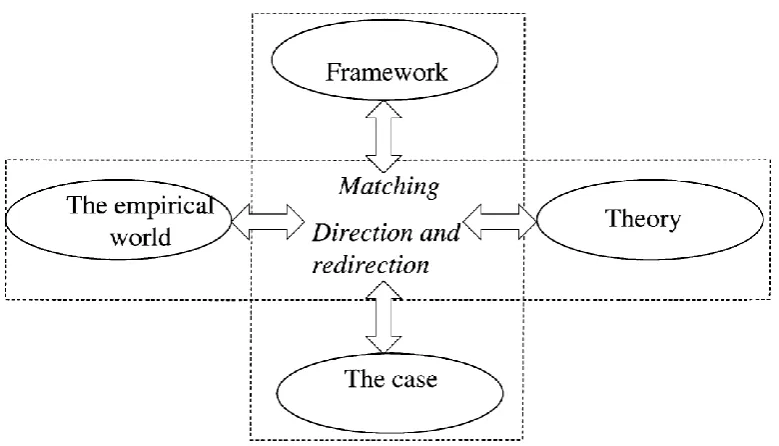
Figure 10. Systematic combining ... 36
Figure 11. Coding example ... 43
Figure 12. Revised model ... 66
Figure 13. Schematic illustration of knowledge transfer ... 74
Figure 14. Implementation process model ... 77
Table 1.Initial sample composition ... 41
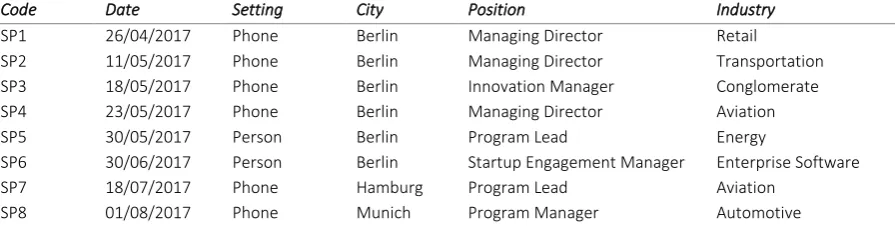
Table 2. Final list of interview partners ... 42
Table 3. Overview codes of startup program - categorization - motivation ... 45
Table 4. Overview codes of startup program – categorization - collaboration ... 47
Table 5. Overview successful projects ... 51
Table 6. Overview codes of startup program - success - startup ... 58
Table 7. Overview codes of corporate - success - strategy ... 60
Table 8. Overview codes of corporate - success - resources ... 62
VII
CVC Corporate Venture Capital
DAX German Stock Index (German: Deutscher Aktien Index)
IoT Internet of Things
KBV Knowledge-Based View
MVP Minimum Viable Product
OI Open Innovation
R&D Research and Development
SLR Systematic Literature Review
SP Startup Program
1
“Ideas are easy. Implementation is hard.”
(Kawasaki, 2004)
1. Introduction
1.1 Context of the Study
Innovation is a key driver for a corporate’s success and growth but requires new knowledge.
Over the last years new knowledge was increasingly identified outside corporate boundaries
(Hippel, 2005) with startups being a potential source of new knowledge (Dushnitsky & Lenox,
2005).
Yet startups pose a severe threat to modern corporates: Startups often develop their product
much more user-centric, they are agile and innovative. Also, the relative affordability of
technology as well as the accessibility of capital (Prats & Amigó, 2017) allow startups to offer
solutions that were a few years ago only available to corporates. Backed by venture capital,
startups have enough financial resources to enter traditional battlegrounds of big corporates
and to attack incumbents in their own habitats.
If existing businesses do not change and open to innovation, they run the risk of being replaced
by startups. The threat of becoming obsolete encourages corporates to find out how to
collaborate with pioneer startups (Kohler, 2016; Prats & Amigó, 2017).
Collaboration with startups can have many facets. While corporates traditionally engaged with
startups through equity and incubation, new mechanisms have emerged. To identify fitting
startups and set up collaboration modes embedded in an innovation strategy, a number of
corporates have established one or more type of vehicles like traditional corporate venture
capital (CVC) or units dedicated to collaboration.
The orientation and opening towards startups is a strong trend over the last decade: in a recent
study by Boston Consulting Group, 65% of 570 corporates analyzed reported having some form
of relationship with startups since 2016 (Brigl, Gross-Selbeck, Dehnert, Simon, & Schmieg,
2019).
Only one out of 30 DAX companies uses no innovation vehicle at all and 20% of DAX companies
even run all five innovation types (innovation or digital labs, accelerators, CVC, partnership
2 These innovation vehicles can be grouped as corporate startup programs built by corporates to
provide a structured set-up for collaboration with innovative startups. For this study, corporate
startup programs are defined as structured (project-based) collaborations between corporate
and startup.
Those projects may take place within the scope of existing acceleration or incubation programs.
They are phrased differently - ranging from digital lab, innovation lab, innovation hub, or
accelerator but all aim to open the corporate for startup activities. The borders between
accelerator programs and innovation labs are often fluent.
But do corporate startup programs generate value to date? Only two or three out of at that
time approximately 200 startup programs in Germany were working successfully in 2018
(Lindener, 2018). In the BCG survey, “45% of corporates and 55% of startups rated themselves
as either ‘somewhat dissatisfied’ or ‘very dissatisfied’ with the relationship”, while “in contrast,
only 8% of corporates and 13% of startups rated themselves as ‘very satisfied’” (Brigl et al.,
2019, p. 11).
A study by Capital and Infront consultancy with cross-industry startup programs found that
none of the participating programs has generated added business value for the corporate to
date (Kreimeier, 2017).
A main conclusion by the study’s authors is that startup programs represent the helplessness
of corporates to successfully innovate. The inclusion of the corporate into the startup program
to bridge startup and corporate is described as the main obstacle to success. The corporate
area leaders often see the startup programs as competitors (Kreimeier, 2017). In addition,
acquisitions of startups are regarded as financial speculation, which is hardly mediated in a
listed company.
As startup programs are a relatively new phenomenon, reasons for failure of startup programs
have hardly been investigated by researchers. Many ambitious programs might fail because
knowledge developed in great projects is not sufficiently transferred into the corporate’s
operating business (Weiblen & Chesbrough, 2015). Value is not added because of an
insufficient knowledge transfer between startups and corporates. This problem is explored in
3
1.2 Problem Description and Research Goal
Several in-depth talks with innovation experts from the Berlin startup and innovation
ecosystem during October 2016 and March 2017 as well as a case study that lasted a total of
15 months led to the identification of a key problem most corporate startup programs are
confronted with: successful collaborative projects with startups often fail due to an insufficient
knowledge transfer between corporate startup program and corporate. The corporate further
needs to possess the ability to absorb such knowledge and integrate it.
These practical observations find support in the literature: open innovation efforts involve two
critical challenges as outlined by Chesbrough (Chesbrough, 2017). First, outside-in innovation
fills a company’s innovation pipeline with new ideas but can create bottlenecks which then slow
the efforts, if the company has not developed enough capacities to process the ideas. This may
complicate the acceptance of external knowledge. Second, the outcomes must be transferred
to the business units for commercialization.
Chesbrough (2017) finds it striking “how few open innovation success stories even discuss the
transfer of the result into a downstream business unit” (p. 37). Chesbrough thus expects
“significantly more attention to be paid to the question of how to link the front end of open
innovation to the back-end businesses that must take these inputs to market” (Chesbrough,
2017, p. 37).
A case study of Siemens TTB program revealed that at least half of the program staff’s time is
dedicated towards collaborating with internal business units. That “ illustrates the importance
of interfacing internally inside large companies to make sure promising startup projects don’t
fall into the gap between the two” (Weiblen & Chesbrough, 2015, p. 76).
Putting this into numbers it was found that 81% of corporates surveyed by the well-known US
accelerator program and startup fund 500 Startups said that fewer than 25% of their pilot projects with startups have resulted in commercial deals (Younis, Desai, & Sigal, 2017). This,
however, does not necessarily relate to transfer problems but shows the difficulty of translating
promising startup projects into new business.
Based on the findings described (Chesbrough, 2017; Weiblen & Chesbrough, 2015; Younis et
al., 2017) one can formulate a concise problem statement: as corporates are forced to
4 external knowledge but often fail when it comes to efficiently transferring knowledge gained
from collaborative projects with startups and integrate it into the organization.
Such transfer may also fail when corporates establish dedicated startup programs to foster
exchange with startups.
Thus, the following main research question will lead through this paper:
What are factors affecting the transfer of knowledge between startup and corporate within the scope of a startup program?
The objective of this research is to analyze existing processes of knowledge transfer and to
elaborate on the most relevant factors in more detail. The main goal is to develop a (process)
model for interorganizational knowledge transfer and to understand organizational
mechanisms that influence transfer success.
A cross-industry research will illustrate obstacles, failures, and potential solutions for startup
programs based on expert interviews with innovation managers from corporate startup
programs in Germany.
1.3 Significance of the Topic
1.3.1 Academic Relevance
Three papers were found to be dominant in identifying success factors for knowledge transfer
(Cummings & Teng, 2003; Easterby-Smith et al., 2008; van Wijk, Jansen, & Lyles, 2008). This
elaboration extends the list of factors and develops a more recipient-centered approach.
This study also sheds light on new facets of corporate startup engagement as defined broadly
by Weiblen and Chesbrough (2015) who differentiate between traditional and modern
engagement modes. The question which underlying processes foster technology and
knowledge transfer, gained little attention in the academic world though and requires more
empirical analysis.
Studies related to (corporate) venture capital (Benson & Ziedonis, 2009; Chesbrough & Tucci,
2002), (corporate) incubation (Becker & Gassmann, 2006a; Bruneel, Ratinho, Clarysse, &
Groen, 2012; Hansen, Chesbrough, Nohria, & Sull, 2000; L. Peters, Rice, & Sundararajan, 2004),
(corporate) accelerator programs (Kanbach & Stubner, 2016; Kohler, 2016; Pauwels, Clarysse,
5 cover specific aspects of corporate startup engagement. This elaboration identifies hybrid
models of engagement that are not identified in the current literature body.
This study contributes to academic literature by: (i) identifying and addressing a specific
knowledge gap in relation to open innovation research which is the mechanisms of transferring
knowledge within an open collaboration between corporate and startup; (ii) integrating
adjacent fields of academic study like organizational theory, knowledge transfer, open
innovation, and external sources of corporate innovation; the study is also converging research
streams like the management of technology, the economics of innovation and information,
resource‐based theory, and organizational learning; and (iii) developing a theoretical
framework for knowledge transfer within the very specific context of a corporate startup
program with a new set of primary data.
1.3.2 Practical Relevance
The main contributions to practice developed by this study are: (i) the documentation and
analysis of different approaches of corporate startup engagement, particularly corporate
venturing and corporate accelerator programs; (ii) the development of a list of factors that
corporate innovation managers may rely on when building and establishing a new program; (iii)
the identification of key practices related to knowledge transfer from an expert perspective,
specifically dedicated to collaborative startup projects.
2. Theoretical Framework
2.1 Background Literature
2.1.1 Open Innovation: External Sources of Innovation
Corporates viewed internal R&D units as a key asset to gain competitive advantage. By
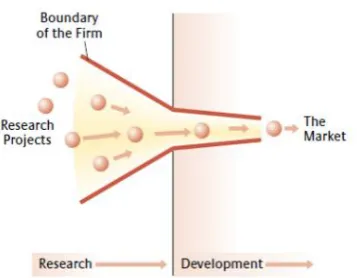
generating and developing their own ideas, they used a closed innovation model (Fig. 1). Large
corporates controlled their intellectual property and protected their ideas aggressively.
Proprietary ideas and expertise have become more difficult to protect.
With the rise of workers’ mobility, firms began to generate value by commercializing internal
ideas outside their businesses using the open innovation model (Fig. 2). Innovation flows easily
6 The open innovation paradigm assumes that firms should use both internal and external ideas
for technological advancements (Chesbrough, 2006b, p. 37). The concept has changed over the
years though.
[image:15.595.73.252.171.310.2] [image:15.595.334.500.181.308.2]
Figure 1. Closed innovation method (Chesbrough, 2003) Figure 2. Open innovation method (Chesbrough, 2003)
While initially collaborations between two organizations were examined (Chesbrough, 2003),
the concept is used today to coordinate a number of players across different phases of the
innovation process (Chesbrough, 2017). Both firms and the larger society in which these firms
are embedded, must manage innovation communities in the future. Chesbrough coins this
“Open Innovation 2.0” (Chesbrough, 2017, p. 37).
A good example for the management of innovation communities is GE’s Ecomagination
challenge. Instead of building its own expertise in green and renewable energy technologies,
GE partnered with four venture capitalists that were already experienced with this field to
invest in startups, and the Ecomagination challenge was launched.
The future of open innovation therefore could be “a future that will be more extensive, more
collaborative, and more engaged with a wider variety of participants” (Chesbrough, 2017,
p. 38). Companies that follow the open innovation paradigm may consider collaboration with
startups as a vehicle.
External innovation sourcing is the first major step in the process of developing a collaboration
and gained a lot of attention among researchers (Arora, Fosfuri, & Gambardella, 2001;
7 Researchers identified various sources of external knowledge: universities (Cassiman, Di
Guardo, & Valentini, 2009), both suppliers and customers (Grimpe & Sofka, 2009; Li &
Vanhaverbeke, 2009; Schiele, 2010), and competitors (Lim, Chesbrough, & Ruan, 2010).
There are two main motivations for sourcing external innovation: “improved efficiency through
scale economies and access to innovations (or innovation-producing capabilities) not held by
the focal firm” (West & Bogers, 2014, p. 815).
Many highly cited reviews were published as a consequence of the growing interest in open
innovation (Bogers et al., 2017; West & Bogers, 2017). For instance, Dahlander and Gann (2010)
developed a 2x2 framework of monetized/non-monetized and inbound/outbound knowledge
flows. Chesbrough and Bogers (2014) explore the growth, scope, and impact of open innovation
research.
Researchers also started to develop models of open innovation. Some key examples are listed
in the following paragraph:
Early attempts to model open innovation are based on structural categories. The categories
include culture-specific (Savitskaya, Salmi, & Torkkeli, 2010) and industry-specific (Ozman,
2011) components of processes and interactions.
Dahlander and Gann (2010) separate inbound and outbound innovation, while van de Vrande,
Jong, Vanhaverbeke, and Rochemont (2009) separate interactions of exploration and
exploitation, whereby these terms are synonymous with inflows and outflows.
Similarly, Lichtenthaler and Lichtenthaler (2009) illustrate open innovation processes as
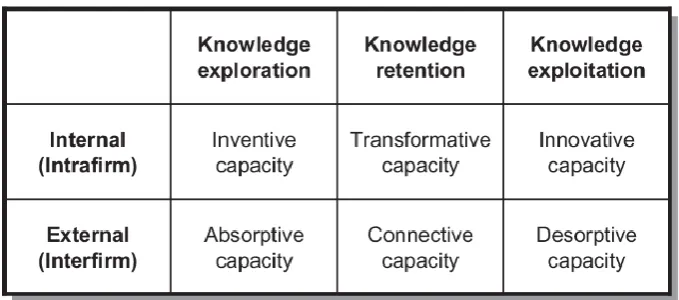
8 Figure 3. Capability-based framework for open innovation (Source: Lichtenthaler & Lichtenthaler, 2009)
Six factors are important for a firm to manage internal and external knowledge (see Fig. 3).
Inventive, absorptive, transformative, connective, innovative, and desorptive capacity are
identified as the firm's critical capabilities for managing internal and external knowledge in
open innovation processes (Lichtenthaler & Lichtenthaler, 2009).
The OI literature body was extended since 2003 and there is growing breadth of open
innovation research in other fields (Chesbrough & Bogers, 2014). The growth of the literature
body led to a clarified conceptualization of open innovation.
Open innovation is re-defined “as a distributed innovation process based on purposively
managed knowledge flows across organizational boundaries, using pecuniary
andnon-pecuniary mechanisms in line with the organization's business model” (Chesbrough & Bogers,
2014, p. 3).
Defining a clear agenda for open innovation research has been on the agenda of other reviews
(Randhawa, Wilden, & Hohberger, 2016; Tucci, Chesbrough, Piller, & West, 2016;
Vanhaverbeke, Chesbrough, & West, 2014; West & Bogers, 2014; West, Chesbrough, &
Vanhaverbeke, 2006; West, Salter, Vanhaverbeke, & Chesbrough, 2014).
Scholars suggest two major gaps in prior research: it has the tendency to ignore the importance
of business models and it has the tendency to apply the definition of innovation inconsistent
9
2.1.3 From Open Innovation to Startup Collaboration
Knowledge needed for innovations often resides outside a corporate’s boundaries
(Chesbrough, 2003; Hippel, 2005). Startups are identified as valuable sources of such
knowledge (Dushnitsky & Lenox, 2005). A number of scholars have explored the idea that
startups are likely to provide innovative ideas (Kortum & Lerner, 2001; Zingales, 2000).
The paradox of creativity and control states that improving one factor will reduce the other one
(Freeman & Engel, 2007). Creativity and agility manifest an entrepreneur’s strength; control is
typically a corporate’s strength. Whereas creativity is needed in the first phase of an innovation
process, control is rather needed in the subsequent stages.
As a consequence, collaboration between startups and corporates seems like the ultimate ratio
to improve efficiency and profitability (Freeman & Engel, 2007). The innovation flow can go in
either direction (Usman & Vanhaverbeke, 2017; Weiblen & Chesbrough, 2015).
2.1.4 Traditional Corporate Engagement Models
Startups and corporates can collaborate in many ways. Following traditional models of
corporate engagement, corporates influence through equity (Weiblen & Chesbrough, 2015).
The traditional models are venture capital and incubation (see Fig. 4). Due to the changes in
corporate innovation that is increasingly shaped by the open innovation paradigm, new
[image:18.595.132.478.520.689.2]mechanisms of corporate engagement have emerged as well.
10 New engagement models do not necessarily involve equity. Within these models, innovation
can either flow in externally or internal innovation can be complemented on a platform.
Researchers are making efforts to better understand them; some of them constructed
typologies (Kohler, 2016; Mocker et al., 2015; Weiblen & Chesbrough, 2015).
To elaborate distinguishing characteristics of corporate accelerator programs, Kohler (2016)
presents a corporate-startup engagement spectrum. Those engagement methods are
corporate hackathons, business incubators, corporate incubation, corporate venturing, and
mergers & acquisitions (Kohler, 2016).
It is hereby important to unlink business incubators and corporate incubation. While corporate
incubation basically facilitates a path to market for a corporate’s non-core innovations (Dee,
Gill, Livesey, & Minshall, 2011), business incubators provide flexible working space with
additional value (Bruneel et al., 2012). This could be, for instance, legal support. Business
incubators all aim at stimulating business creation but differ in execution: older generation
business incubators have an outdated service portfolio and less strict selection criteria (Bruneel
et al., 2012).
In his description of the engagement methods, Kohler (2016) however only presents in what
way corporate accelerators are superior but his elaboration lacks potential advantages of the
other engagement methods over corporate accelerator programs.
Furthermore, Mocker et al. (2015) classify programs to engage with startups as follows: “One
-off events (competitions such as hackathons), sharing resources (free tools; co-working space),
business support (accelerators; incubators), partnerships (product co-development;
procurement from startups), investments (corporate venturing) and acquisitions (acqui-hire
and buying startups)” (p.12).
2.1.4.1 Corporate Venturing
Corporate venture capital (CVC) provides access to a valuable pool of knowledge (Chesbrough,
2003; Dushnitsky & Lenox, 2005; Gans & Stern, 2003). CVC relates to systematically making
investments in startups (Drover et al., 2016).
CVC is distinct from traditional Venture Capital as “funds are invested by arms of corporates as
11 startups are able to at least partly gain access to startups’ technology and practices
(Chesbrough & Tucci, 2002).
CVC is thereby found to potentially complement other corporate innovation activities
(Chesbrough & Tucci, 2002). Once they invest in startups, pioneering technologies may help
corporates to develop breakthrough inventions themselves (Ahuja & Morris Lampert, 2001).
If products or services of corporate and startup are complementary, the demand for existing
or future corporate products is likely to rise and that in turn will lead to further corporate
innovation push.
Similar findings can be found in the technology alliances literature. Within alliances, knowledge
may spillover and a firm’s innovativeness is fostered (Ahuja, 2000) While direct and indirect ties
between network partners are positively associated with a firm’s innovativeness, so-called
structural holes (disconnections between a firm’s partners) are negatively associated with
innovativeness (Ahuja, 2000).
Dushnitsky and Lenox (2005) describe three channels through which corporate venture capital
facilitates learning from startups: “the due-diligence process provides the firm a unique
opportunity to learn about entrepreneurial inventions even prior to committing capital“
(p. 618). After an investment, the corporate “may learn about novel technologies by
maintaining board seats (or board observation rights) as well as utilizing dedicated liaisons”,
and “a failing venture may also constitute a learning experience to the extent that it offers
technological insights, or conversely points at market unattractiveness” (p. 618).
Hence, as certain business units or individuals of the corporate have access to the novel
technologies they review or work with, knowledge may be transferred (indirectly) from a
startup to the organization. At the post-investment stage, incumbent firms have established
organizational routines to funnel learning from startups (Dushnitsky & Lenox, 2005).
As an example, Sony Corporation introduced two distinct functions that are exclusively
responsible for transferring knowledge between the corporate and its portfolio startups
(International Business Forum, 2001). Even among very heterogeneous samples, CVC
investments were found to harness novel technology (Dushnitsky & Lenox, 2006). However,
the effect of CVC depends critically on the corporate’s internal knowledge base (Benson
12 Also, corporates that engage more consistently in startup financing than those that only
sporadically invest earn greater returns. Therefore, corporates seem to differ in their ability to
derive added benefits from investing in startups (Benson & Ziedonis, 2009).
While much research has been dedicated to the conditions and channels of knowledge transfer,
less has been conducted regarding limitations. By analyzing a sample of 1,646 startups that
received funding, Dushnitsky and Shaver (2009) explore the limitations of interorganizational
knowledge acquisition.
Dushnitsky and Lenox thereby highlight conditions under which technically viable
interorganizational relationships do not materialize. It is suggested that “many relationships do
not form because the corporate will not invest unless the entrepreneur discloses his or her
invention, and the entrepreneur may be wary of doing so, fearing imitation” (Dushnitsky
& Shaver, 2009, p. 1045).
By elaborating the “relational fit” concept, which consists of social capital and knowledge
relatedness, Weber and Weber (2007) link CVC and knowledge transfer. Following this study, a
portfolio company’s success has dual significance for the corporate: high returns for the CVC
unit and strategic potential for radical innovation (Weber & Weber, 2007).
It is further concluded that relational fit proves to facilitate knowledge transfer and creation.
That in turn positively influences organizational performance. An extensive literature review on
Corporate Venture Capital can be found in the work by Drover et al. (2016).
2.4.1.2 Corporate Incubation (Inside-Out)
Corporate incubators have emerged as a reaction to ideas or technologies that were developed
in a corporate environment but are a “misfit” with the corporate’s core business or business
model (Weiblen & Chesbrough, 2015). Within corporate incubation, those cases are brought
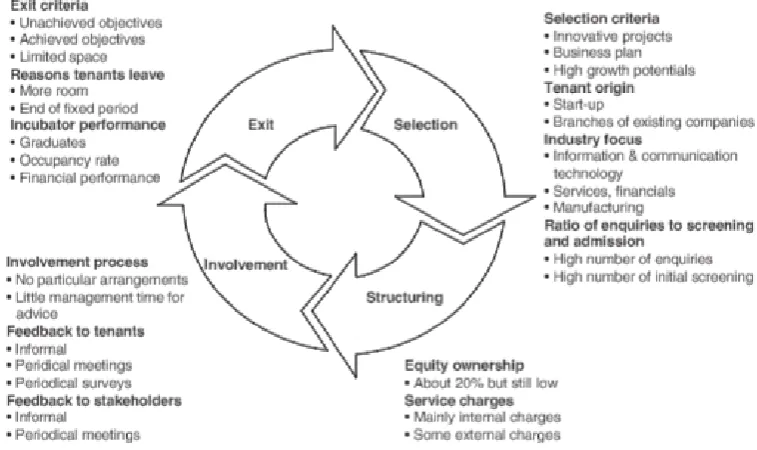
13 The startups are equipped with funding, expertise, networking, and co-location (Gassmann &
Becker, 2006; Weiblen & Chesbrough, 2015). According to Gassmann and Becker (2006),
resources that flow from the corporate incubator to a startup can be grouped into intangible
such as branding or advice and tangible like physical benefits, tangible knowledge, or financial
support.
Four basic corporate incubator types exist that differ in their source and type of technology:
fast-profit incubators, market incubators, leveraging incubators, and in-sourcing incubators
(Becker & Gassmann, 2006b). Becker and Gassmann (2006b) transferred the four-stage process
from venture capital (Lerner, Hardymon, & Leamon, 2012) and enhanced it with respect to their
knowledge aspects (see Figure 5).
In the selection phase, corporate incubators decide which technology startups they seek to
attract and later select for the program. Once a startup is chosen, both incubator and startup
must agree on the respective equity stakes. The subsequent involvement phase is the most
crucial stage of the incubation phase as incubator managers get involved. Their support differs
depending on the startup’s needs with intangible knowledge being the most important
resource (Becker & Gassmann, 2006b). The exit stage closes the incubation process; for-profit
incubators follow specific exit criteria in line with previously defined milestones and whether
[image:22.595.106.485.198.423.2]these were achieved.
14 Applying the knowledge-based view (KBV) of the firm and based on the four incubator types,
four modes of mainly tacit knowledge can be identified: entrepreneurial knowledge,
organizational knowledge, technological knowledge, and complementary market knowledge
(Becker & Gassmann, 2006b).
During the incubation process, knowledge can flow at various times and to a diverging degree.
In terms of strategic technology advancements, corporate incubators are interesting “because
they can tap a large pool of internal knowledge on business development, on markets,
customers, suppliers, and technology, while having the additional benefit of being widely
connected with external partners” (Becker & Gassmann, 2006b).
Due to the provision of resources, incubators are in general positively associated with startup
growth and early survival (Dee et al., 2011). This holds true especially for corporate incubators
(Weiblen & Chesbrough, 2015). Expensive resources can be shared in a corporate incubation
environment.
To avoid misunderstandings, one must differentiate corporate incubators and business
incubators. The research body on business incubators is large and prevails literature on
corporate incubation.
For instance, research on business incubators indicated that tangible incubation services and
networking are the most valuable elements in the early stages (McAdam & McAdam, 2008).
Overall, the importance of the incubator process was discussed extensively (Hanadi
Al-Mubaraki, 2008). A number of scholars agree that incubator objectives are the following: (1)
economic growth; (2) commercialize technology and transfer; (3) fostering entrepreneurship
climate; and (4) job creation (Abetti, 2004; Hansen et al., 2000; Hughes, Ireland, & Morgan,
2007; McAdam, Galbraith, McAdam, & Humphreys, 2006; McAdam & McAdam, 2008;
Rothaermel & Thursby, 2005a, 2005b).
Similarly, Hanadi M. Al-Mubaraki and Busler (2017) found in a study among 93 innovation and
incubation programs that fostering an entrepreneurial climate was the highest-rated goal of
the programs and strong tangible and specialized services were regarded as the most valuable
15
2.1.5 New Models of Startup Engagement
Corporates have developed new ways to engage with startups. Unlike traditional models, those
often coined “startup programs” typically do not involve corporate ownership but allow for
engagement with a larger number of startups (Weiblen & Chesbrough, 2015). Most of these
programs complement existing startup engagement mechanisms and therefore do not provide
as many resources and services as an average incubator. Hence there is a less rigid governance
process (Weiblen & Chesbrough, 2015) that keeps corporates more agile when collaborating
with startups.
2.1.5.1 Outside-in Startup Programs
This type of engagement model aims at making startups’ products and technology accessible
to the sponsoring organization. It enables startups to further elaborate on their ideas; the
sponsoring corporate gains an advantage over competitors and can enter new “hot” business
areas by benefitting from external innovation sourcing (Weiblen & Chesbrough, 2015).
Outside-in startup programs enable corporates to follow different paths Outside-in parallel through each of the
startups, which accelerates mutual learning.
Such engagement clearly represents an open innovation format: a company’s knowledge base
is enriched through the integration of customers, suppliers, or other external knowledge
sources (Enkel, Gassmann, & Chesbrough, 2009).
An outside-in process can enhance firm innovativeness (Laursen & Salter, 2006; Lettl, Herstatt,
& Gemuenden, 2006; Piller & Walcher, 2006), which is the main motive for corporates to work
with startups.
Weiblen and Chesbrough (2015) provide several examples for outside-in programs. One of
them is the Siemens Technology to Business Center (TTB). To better understand outside-in
approaches, some characteristics shall be summarized and highlighted. TTB’s mission is
pictured “as identifying early radical technologies that originate outside the Siemens universe
and providing them with a route to commercialization through Siemens” (Weiblen
& Chesbrough, 2015, p. 74).
The program has undergone three iterations since it opened its first center in Berkeley,
California. The third-generation model that has been dominant over the last years has been
16 at universities, TTB and the startup support ecosystem help spin-offs grow which makes
early-stage incubation obsolete. TTB and the startups sign a joint development agreement that states
the future exploitation of joint development and includes, for instance, IP handling, financials,
milestones (Weiblen & Chesbrough, 2015).
Managing intellectual property is often a key issue in joint projects, especially in a case like TTB
which seeks radically new products. Siemens TTB strives to sort out all intellectual property
problems when negotiating the joint development agreement with the startups.
Projects run three to 18 months and are then handed over to the business unit for
commercialization. Startups that run through such a program are usually later stage. Aside
from the joint development agreement’s cash, it is important for participating startups “to get
the Siemens brand name as a go-to market partner or a pilot customer, access to specialized
Siemens engineers, and access to new customers and markets” (Weiblen & Chesbrough, 2015,
p. 75).
It is crucial to understand how to connect program and core business. Being positioned as the
interface to the startup ecosystems, those corporate units that run the programs must bridge
the gap between startup and corporate world. Corporate managers involved have to push the
external innovations internally to increase the probability of a market launch and to ensure that
knowledge and project outcomes do not fall by the wayside (Weiblen & Chesbrough, 2015).
Hence their jobs go beyond prototyping; sustainably connecting core business and startups is
critical in an outside-in program. In the case of Siemens TTB, a formal commitment with internal
stakeholders is required: a multi-year contract is signed with a subset of all Siemens divisions
which specifies budgets, search fields, or the potential transfer.
The critical connections are described as follows:
“At the operational level, a dedicated contact person at each division and at TTB’s side is
appointed to ensure that a TTB request ends up with the right contact within the division. At
the project start, each project must have project partners within the business units of divisions
assigned. After the handover of a project, which the receiving business unit acknowledges and
commits to market launch formally, TTB stays involved as a coach and supporter—one of the
metrics tracked by TTB is revenue generation on the market from its projects.“ (Weiblen
17 TTB staff spend at least 50% of their time with the business units, the other half is directed
towards the startups. Interfacing internally in large companies is therefore identified as a key
success factor for outside-in programs (Weiblen & Chesbrough, 2015).
In a recently published Harvard Business Review article, the founder of BMW’s Venture Client
Model shares insights about its outside-in innovation approach (Gimmy, Kanbach, Stubner,
Konig, & Enders, 2017). In short, the corporate as “venture client” purchases the startup’s
technology instead of taking equity.
Only those startups that received VC funding or graduated from an accelerator program, thus
already have undergone due diligence, are offered a partnership and get their first big customer
on board. From day one of the program, startups become suppliers and receive purchase
orders based on a ‘minimum viable purchase’ (Gimmy et al., 2017). Due to the success of the
program, it is adopted by other large enterprises (Gimmy et al., 2017).
The main reason for success is the minimization of risks for all stakeholders as all parties
involved (startups, private venture capitalists and corporate) focus on what they do best. The
approach helps startups to get real-world feedback and provides them with insights on a
corporate’s workings and corporate quality, technical, and process requirements (Gimmy et al.,
2017). As one of the article’s authors is the founder of the program, the approach’s very
positive evaluation might be biased, yet the work offers in-depth insights into the development
of a corporate outside-in program.
2.1.5.2 Corporate Accelerator Programs
A sub-division of corporate outside-in programs are corporate accelerator programs.
Accelerators in general appeared mid-2000 as a response to the weaknesses of traditional
incubation models that principally provided office space and in-house support (Bruneel et al.,
2012).
As a source of inspiration for many succeeding accelerators, Y Combinator kicked off in 2005 in
Cambridge, Massachusetts. It equipped participating startups with a small amount of seed
investment as well as mentoring and opportunities to network in exchange for a minor equity
18 More than ten years later, accelerators have become an umbrella term for all sorts of programs
that offer access to funding, networking, and a service structure of mentoring (Pauwels et al.,
2016). Accelerator programs usually comprise five main characteristics:
• An application process that is open to all, yet highly competitive.
• Provision of pre-seed investment, usually in exchange for equity.
• A focus on small teams not individual founders.
• Time-limited support comprising programmed events and intensive mentoring.
• Cohorts or ‘classes’ […] rather than individual companies (Miller & Bound, 2011).
Yet the extant incubation literature body cannot sufficiently explain the functioning of
accelerators (Pauwels et al., 2016) so recently published works help understand this distinctive
incubation type.
Pauwels et al. (2016) introduce five key building blocks (program package, strategic focus,
selection process, funding structure, alumni relations), so-called “design themes”, that cluster
17 identified constructs which constitute some of the most prominent accelerator programs
across Europe.
Thereby, they found three different types of accelerators. The “Ecosystem Builder” matches
startups and corporates; the “Deal-Flow Maker” identifies investment opportunities for
investors, and the “Welfare Stimulator” stimulates economic development and startup activity
(Pauwels et al., 2016).
From a broader perspective, business accelerators can be mapped in five categories:
Independent Accelerators, Corporate Accelerators, Hybrid Accelerators, University
Accelerators, Government Accelerators (Da Silva & Gurtner, 2017). Another recent study
classifies accelerators as pre-seed accelerators, seed accelerators (startup accelerators,
business accelerators), and corporate accelerators (Frimodig & Torkkeli, 2017).
Despite the proliferation of accelerators, with an estimated number of 3000+ programs globally
run and accelerator literature available (Bliemel et al., 2016; Hochberg & Fehder, 2015; Miller
& Bound, 2011; Pauwels et al., 2016), research on the role and efficacy of these programs is
limited (Hochberg, 2016).
The literature body on corporate accelerators is very limited, too. There are just a few studies
19 and Stubner (2016) report, only three studies in peer-reviewed journals specifically introduce
corporate accelerators (Hochberg, 2016; Hochberg & Fehder, 2015; Kohler, 2016; Weiblen
& Chesbrough, 2015).
By bridging corporates and startups, “corporate accelerators provide a unique platform for
long-term growth and corporate renewal” (Kohler, 2016, p. 347). Ideally, corporate
accelerators merge two distinct worlds: the entrepreneurial speed and agility of startups and
the scope and scale of corporates.
The first corporate accelerators popped up between 2010 and 2011. They differ substantially
from the business incubators of the 1950s and the company builders of the late 1990s (S.
Cohen, 2013). Being distinct from these mechanisms, “accelerators disaggregate the financial
resources and knowledge resources previously offered by incubators and angel investors, and
provide more advice and less money than either one” (S. Cohen, 2013, p. 25).
Although used differently in different contexts, from a corporate perspective such accelerators
can be defined as time-limited programs that are open for application for startups that belong
to a certain category; also, it is not constantly run (Weiblen & Chesbrough, 2015).
This rather broad classification is extended by Kohler (2016). Kohler defines corporate
accelerators as “company-supported programs of limited duration that support cohorts of
startups during the new venture process via mentoring, education, and company-specific
resources” (Kohler, 2016, p. 348). More specifically, corporate accelerators share some main
characteristics:
• “An open application process;
• A focus on small teams and not individual founders;
• Time-limited support comprising company interactions and mentoring; and • Cohorts of startups rather than individual companies” (Kohler, 2016, p. 348).
Kohler (2016) further postulates a 4P approach (proposition, process, people, presence) for the
development and design of corporate accelerators.
Based on an empirical analysis of 13 corporate accelerator programs in Germany, Kanbach and
Stubner (2016) identified four distinct types of corporate accelerators. Three types (listening
post, value chain investor, and test laboratory) are designed based on primarily strategic
20 The listening post type is purely strategically oriented without any equity involvement. The
value chain investor type aims at identifying and developing startups with innovative products
along the corporate’s value chain; it therefore follows also a strategic orientation. The third
strategic orientation type, the test laboratory corporate accelerator’s main rationale is to
embed startups in a protected environment to test new business ideas.
The unicorn hunter corporate accelerator, however, pursues mainly financial objectives. By
investing in numerous startups, the objective is to make a financial premium (Kanbach
& Stubner, 2016). Such minority investments usually reflect the rationale of independent
accelerators.
2.1.5.3 Inside-Out Platform Startup Programs
Making startups corporate suppliers and harness a startup’s technology is the primary goal of
outside-in programs (Weiblen & Chesbrough, 2015).
This logic is reversed under the platform led approach. Corporates that seek to expand their
markets attract startups to build products, while the corporate becomes the technology
supplier. For innovating corporates, platforms have become the dominant model (Weiblen
& Chesbrough, 2015). External or industry-wide platforms are distinct from internal or
company-specific platforms, which is the other predominant platform type (Gawer &
Cusumano, 2014).
Ecosystems of companies that develop innovations and thus empower the shared platform lead
to platform innovation (Gawer & Cusumano, 2014). In an ideal platform innovation setup,
corporates can benefit from all innovations that are produced or sold via the platform. Google
and Apple are examples, where two corporates take profit from every sale that was effectuated
through their operating systems iOS and Android.
A central feature of inside-out platform programs are free offerings as they (initially) attract a
lot of startups. Weiblen and Chesbrough (2015) describe how Microsoft’s BizSpark initiative
lured more than 100,000 startups into its ecosystem by offering access to its cloud services and
free software licenses.
Platform startup programs are an emerging battleground for corporates on their mission to
21 incremental costs (Weiblen & Chesbrough, 2015). Such platforms have to capture value at
some point; simply switching from free to fee is often difficult for the sponsoring organization.
Potential problems may also stem from the monitoring of all platform members and the
internal orchestration (Weiblen & Chesbrough, 2015). Corporate platform managers not only
have to manage the external startup network, they also have to network across different
internal functions and units.
To conclude the review of startup engagement mechanisms, there is a model for every
corporate purpose, although there might be specifications to them (Weiblen & Chesbrough,
2015).
2.1.6 How Startups Can Benefit from Corporates
So far, all engagement methods have been reviewed with a focus on the corporate. Yet scholars
have also researched the startup’s perspective (Alvarez & Barney, 2001; Usman
& Vanhaverbeke, 2017; Weiblen & Chesbrough, 2015).
Collaboration with corporates is one of the most important modes for startups to participate
in open innovation (Usman & Vanhaverbeke, 2017). Prior experience of the entrepreneur on
how to deal with corporates was thereby found to have an impact on the success of the
collaboration. Startups need to negotiate collaborative agreements wisely as the relationship
is considered to be dynamic and asymmetric (Usman & Vanhaverbeke, 2017).
Within asymmetric relationships, startups feel most comfortable when being able to learn from
the experiences of other companies through a mix of direct support, multi‐company
workshops, and online access to selected materials (Minshall, Mortara, Elia, & Probert, 2008).
Specific challenges startups are facing when partnering with larger firms are reviewed by
Alvarez and Barney (2001). A major challenge concerns the different rates at which a more
mature company can learn about the startup’s technology, and the startup’s ability to imitate
the larger firm’s organizational resources (Alvarez & Barney, 2001).
Within the scope of outside-in startup programs, potential problems from a startup perspective
that may occur when engaging with corporates are usually reduced (Weiblen & Chesbrough,
2015) as the corporate establishes an interface for such joint projects. Collaborating startups
22 outside-in programs are typically project-based, dependency is lower, and the future direction
is less influenced compared to a CVC investment.
2.1.7 The Knowledge Creation and Diffusion Startup Ecosystem
Different organizations in a startup ecosystem contribute to the creation of knowledge and its
transfer to and from startups (Spender, Corvello, Grimaldi, & Rippa, 2017).
Incubators (Becker & Gassmann, 2006b; Clausen & Rasmussen, 2011), VCs (Ferrary &
Granovetter, 2009), and other so-called “boundary spanners” (Lundberg, 2013) play a key role
in transferring knowledge from startups to other stakeholders and further translate it. Such
transfer is also possible vice versa (Spender et al., 2017).
Usually, universities are regarded as the main sources for innovation (Spender et al., 2017) as
they offer knowledge about new technologies and trends, markets, or financial or legal aspects
(Rubin, Aas, & Stead, 2015). VCs and other intermediaries contribute to the system’s efficiency
through selecting and supporting startups (Ferrary & Granovetter, 2009).
In an ideal setup for exchanging knowledge, both formal and informal relationships among
participants have to be considered (Padilla-Meléndez, Del Aguila-Obra, & Lockett, 2013).
Corporates are mainly involved in the knowledge creation and diffusion through their venture
capital arms (Napp & Minshall, 2011).
2.2 Systematic Literature Review
The systematic literature review (SLR) is dedicated to the question
“What is known about interorganizational technology and knowledge transfer in general and success factors as well as organizational antecedents for knowledge transfer on the recipient
side in particular?”.
For this review, Fink’s definition is adapted: “a systematic, explicit, and reproducible method
for identifying, evaluating, and synthesizing the existing body of completed and recorded work
produced by researchers, scholars, and practitioners” (Fink, 2005, p. 3).
An effective review fosters theory development and closes knowledge gaps (Webster &
Watson, 2002). A thorough and sophisticated literature review is a pre-condition for a
23
body not only shows the commitment, but also helps to increase the researcher’s
understanding and awareness (Frank & Hatak, 2014).
However, as will be explained in chapter 3, the research design follows an approach that can
be best described as systematic combining (Dubois & Gadde, 2002, 2014). Using the systematic
combining approach, “the researcher would not be able even to identify ‘all the literature’ since
the empirical fieldwork parallels the theoretical conceptualization” (Dubois & Gadde, 2002,
p. 559). Therefore, although this review has the aim of answering the formulated question, it
does not claim to cover all the literature.
While the background literature review was centered around open innovation and corporate
engagement with startups, the following SLR is solely focused on inter-organizational
knowledge transfer and factors that support a successful transfer of knowledge.
To gain an understanding of knowledge transfer and its antecedents and success factors, the
process by Tranfield, Denyer, and Smart (2003) was applied. Following this approach, the
research has to (1) identify the research, (2) select studies, (3) conduct a study quality
assessment, (4) extract data and monitor the process, and lastly (5) synthesize data.
Several criteria for inclusion and exclusion of publications were defined: it was initially decided
to exclude articles and conference papers that were published before the year 1996 as Grant’s
seminal work was published in that year. As some papers are linked to theories published earlier
and as they represent groundbreaking findings in their fields, six exceptions were made with
regard to time frame. Those papers were identified through referencing. Only papers in English
or German were included in the review process. During the review process, no relevant papers
in German were identified so only papers in English appeared in the final selection.
For the search, the database Web of Science was employed. Google Scholar has been used to
access papers that were not accessible through the initial database search. Search
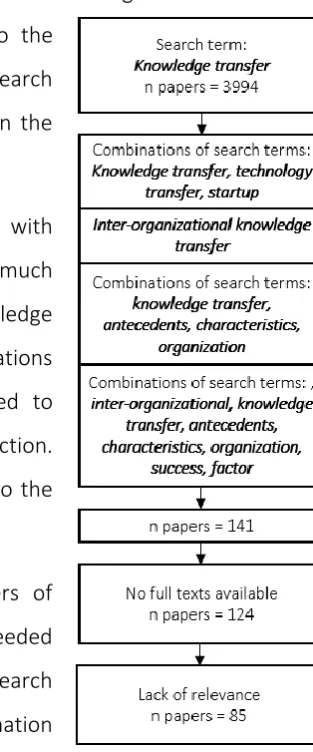
24 The application of those inclusion and exclusion criteria (see Fig. 6) using the search term
knowledge transfer led to 3994 results. It became clear that knowledge transfer has many content-related overlappings with technology transfer so the
search term was added. Also, in order to answer the research
question, knowledge had to be explored in more depth in the
context of transferring it within a startup ecosystem.
Thus, the search term startup was used in combination with
knowledge transfer and technology transfer. However, much literature screened was related to intra-organizational knowledge
transfer so only those papers that allowed for generalizations
from intra-organizational knowledge transfer that helped to
answer the search question were kept in the literature collection.
Reversing this argument, inter-organizational was added to the main search term knowledge transfer.
As those searches yielded mainly to explanatory papers of
knowledge transfer but a more exploratory approach was needed
to understand antecedents of knowledge transfer, the search
terms antecedents and characteristics were used in combination with knowledge transfer and organization. Finally, the search terms success and factors were used in different combinations with the applied search terms.
Three major reviews (Cummings & Teng, 2003; Easterby-Smith et al., 2008; van Wijk et al.,
2008) were finally used to identify missing links. This led to the identification of 141 articles. 17
had to be excluded because the full texts were not available, and it was not possible to decide
if they were relevant enough. Three papers could be screened because the authors were
contacted via Researchgate and sent the full text versions. After screening all full texts for
relevant findings that helped to answer the search question, 36 papers were excluded due to a
lack of relevance and 85 publications remained and were included in the following paragraphs
[image:33.595.357.514.105.482.2]which illustrate the SLR’s results.
25
2.3 Results of the Literature Review
2.3.1 Technology Transfer
As described in the Siemens TTB case, many corporate startup projects fail because startup and
corporate are bridged insufficiently (Weiblen & Chesbrough, 2015). Knowledge and sometimes
technology is not transferred adequately between startup and corporate. There are various
early reviews that examine the range of activities labelled knowledge transfer or technology
transfer (Bozeman, 2000; D’Este & Patel, 2007). The technology transfer field is broad and
literature ranges from internal corporate technology transfer to international technology
transfer (Tran & Kocaoglu, 2009).
The early reviews have been extended not long ago by an updated and extensive work
(Bozeman, Rimes, & Youtie, 2015). Different technology transfer literature reviews have been
published meanwhile (Adomavicius, Bockstedt, Gupta, & Kauffman, 2008; Agarwal, Echambadi,
Franco, & Sarkar, 2004; Bradley, Hayter, & Link, 2013; Protogerou, Caloghirou, & Siokas, 2013)
and guided the extensive review by Bozeman et al. (2015). It is argued, that most technology
transfer studies concern university technology transfer and IP activity (Bozeman et al., 2015).
2.3.2 Knowledge Transfer
Grant (1996) describes the characteristics of the donor firm and the recipient firm, the
attributes of the knowledge, and the knowledge transfer process itself as key for the
development of organizational learning capabilities. Those capabilities will lead to a competitive
advantage (Grant, 1996).
Argote, McEvily, and Reagans (2003) follow this logic and provide a theoretical framework for
organizing research on organizational learning and knowledge management that includes
knowledge transfer as one potential outcome.
Knowledge transfer in organizations can be defined as “process through which one unit (e.g.,
group, department, or division) is affected by the experience of another“ (Argote & Ingram,
2000, p. 151). It manifests itself through changes in the performance or knowledge of the
recipient (Argote & Ingram, 2000). As a consequence, one can measure knowledge transfer by
observing changes in performance or knowledge (Argote & Ingram, 2000).
Components of such knowledge may be tacit (un-codified); hence they are more difficult to
26 to new knowledge that is developed by other units (and hence the occupation of a central
network position) is critical (Tsai, 2001).
Further research has increased the depth of understanding and broadened the factors
identified as predictors and consequences of knowledge transfer (Argote & Fahrenkopf, 2016).
Also, new measurement approaches are examined. One interesting finding goes beyond pure
intra-organizational knowledge transfer: there is evidence that knowledge is difficult to transfer
across organizational contexts (Argote & Fahrenkopf, 2016). Likewise, similar contexts facilitate
knowledge transfer (Argote & Fahrenkopf, 2016).
Using an interfirm knowledge transfer perspective, special attention shall be drawn on
knowledge production and diffusion within a startup ecosystem. Literature in strategic
management has been dedicated to the role of resources as important drivers for a firm’s
competitive advantage.
Particularly RBV scholars have argued that knowledge has the greatest potential to produce
sustainable advantage. The capability to create, transfer, and combine knowledge in a
non-imitable way may lead to a better performance over competitors (Rumelt, 2005).
Companies may seek competitive advantage through either internal investment in research
and development (Ahuja & Katila, 2004; Aldridge, Audretsch, Desai, & Nadella, 2014; B. Peters,
2009), or formal inter-organizational linkages like networks or alliances (Aristei, Vecchi, &
Venturini, 2016; Inkpen & Tsang, 2005). Firms that form a network or alliance aim at facilitating
knowledge sharing.
The importance of network building and knowledge sharing is increasingly recognized both in
the innovation literature (West & Bogers, 2014) and in the entrepreneurship literature
(Bøllingtoft, 2012; Johanisson, 2000). Also, the ability to internally transfer knowledge is a
potential competitive advantage as it may contribute to the organizational performance and
impede knowledge transfer externally (Argote & Ingram, 2000).
Those firms that are not part of these networks are not able to maintain a competitive
advantage (Boehm & Hogan, 2014; Huang & Yu, 2011). Reversely, firms that aim at maintaining
such competitive advantage through networks need to have collaborative, relational and