Abstract—In this work it is proposed a metric to modeling a certain kind of the “lowness” of entropy that must have existed in the past with the objective of know if it is equivalent to the state of high entropy of the present, taking into account the gravitational clumping of matter both for the singularity at the big bang, as for a black hole.
The state of low entropy as a very special case of the Big Bang singularity (gravitational clumping of matter), supported by the Penrose´s Weyl curvature hypotesis ( Penrose´s WCH), is studied here by developing a standard metric to discuss whether it is possible to link to the also gravitational clumping of matter corresponding to a black hole in the classical phase-space volume (CPSV), placing such groupings in the same number of Hawking´s box and therefore, in the time.
It satisfies the Penrose's WCH detaching it from the classic phase-space volume (CPSV) that turns out to be inappropriate as WCH´s link that requires the second law of thermodynamics by the asymmetrical-time ingredient that presents the entropy in the past and in the present.
It emphasizes the need to discover a mathematical space that allow us to obtain the link between WCH and CPSV with the combination of variables that represent the past, present, high and low entropy.
Index Terms—asymmetrical-time, general relativity, Ricci
tensor, Weyl curvature hypothesis, Weyl tensor
I. INTRODUCTION
his paper discusses the idea of Roger Penrose about the low power state in the Big Bang which gives us the second law of thermodynamics, involved in his Weyl curvature hypothesis (WCH)) from thirty-three years ago [1]. Since then, although there have been numerous cosmological models, these results show that they only satisfy the WCH but have not allowed the linking of WCH and classical phase-space volume (CPSV) [2,3].
We know there is an ingredient of asymmetrical-time [1,2,7-9] with second law implications for the unification of CPSV and WCH.
Therefore, it is a priority to discover a mathematical space that complements WCH, as the CPSV turns out to be
Manuscript received March 23, 2015.
1 R. Leticia Corral Bustamante is with the Technological Institute of Cuauhtémoc City, Tecnológico Ave. S/N, 31500 Cuauhtémoc City, Chihuahua, México (corresponding author phone: 582-3609; fax: 625-581-1707 Ext. 1000; e-mail: [email protected]).
2 Marco A. Flores Trevizo was with the Technological Institute of
Cuauhtémoc City, Tecnológico Ave. S/N, 31500 Cuauhtémoc City, Chihuahua, México (e-mail: [email protected] ).
inappropriate to meet the Penrose hypothesis, not only in general relativity (GR), but also in cosmology [2,3].
With the aim of finding answers to unify the CPSV and WCH, the present study focuses on computations made in GR making use of the mathematical expression of entropy as a state of the logarithm measure of the volume [2] of matter using Ricci tensor, as well as the use of the Bekenstein-Hawking formula [2,4,9] in such tensor [4].
However, the model studied here allows to "measure the entropy", throwing results of the prevailing special state in the singularity of the Big Bang that argues the Penrose´s WCH in [2], contradicting to the CPSV.
Thus, it is inappropriate the phase-space volume occupied by the matter in the Hawking´s box to link it with Penrose`s WCH because gravity of matter introduces an additional level of unpredictability over quantum uncertainty that has not been resolved yet. To obtain entropy equivalence between past and present it is required a mathematical model not yet discovered, that clarifies the asymmetrical-time [1,2,7-9] ingredient of time.
There should be a quantum world that allows us to simultaneously measure the entropy of the past and present, like the Schrödinger´s cat scenario, alive and dead at the same time [5,6].
Asymmetrical-time [1,2,7-9] implications in measurements of entropy for study of the behavior of matter in the space-time continuum in General Relativity, is currently one of the most important issues to resolve in order to find a theory of quantum gravity [10-15] that allows unify confluence and spreading of flow lines in phase-state [13-15] in a gravitational body, according with the second law of thermodynamics, since the entropy is a quantum gravitational effect.
A strong constraint on “lowness” entropy in the big bang is that which holds that the Weyl tensor is identically zero [2,9,16-18]. In this case, as we approach the initial singularity [1,2,19-23] more and more closely, we find that Ricci tensor becomes infinite dominating near the initial singularity [2,9,24,25]. Thus Ricci dominates the initial singularity, rather than Weyl. This allows us to present arguments that have to do with the CPSV in which is discussed the high entropy by gravitational clumping in a tiny phase-space volume of Hawking´s box since point of view of Penrose [2,9,16-18].
The universe was created in a very special low entropy state with something like the Weyl0constraint and, according with Penrose [2], the entailment between WCH and R (quantum-mechanical state-vector reduction) is very strong at this respect, and everything seems to point in the same direction.
Model to Predict the Lowness of Entropy at the
Big Bang with Relativistic Equations
R. Leticia Corral Bustamante1, Marco A. Flores Trevizo2
II. MODELLING
The entropy in phase-space volume of Hawking´s box is directly proportional to the logarithm of the volume contained in phase-space point that represents the state [2]
V logS (1)
where S [JK-1] is the entropy in phase-space volume, V [m3] phase-space volume and [ JK-1] the Boltzman constant ( = 1.3806504
10-23 JK-1).While, to calculate the entropy of a black hole, was used the Bekenstein-Hawking formula [2,4,9], namely
, c G m Sbh 2 2 c G m m Sbh 2 (2)
where mGM c2[m], is the geometric mass of gravitational body, Sbh [Jkg-1 K-1] the entropy of black hole by Bekenstein-Hawking; G[Nm2kg-2] the universal gravitation constant (G = 6.67384
10-11 Nm2kg-2); M[kg], the mass of gravitational body;c
[ ms-1], the speed of light (3
108 ms-1) and[Js] the reduced Planck´s constant (1.054571726
10-34 Js).The spatial and temporal coordinates, in a 4-dimensional space, xi, i1,2,3,4; that were used to model tensors in GR are denoted
x1,x2,x3,x4
t,S,,
.t
is the temporal coordinate, S, and , are spatial coordinates that represent respectively, entropy [JK-1], energies (kinetic, potential, internal, quantized) [J] and enthalpy [Jkg-1K-1]. With the proposed metric given by
2 2 2 2 2
2 2 2
2 2
θdφ sin S dθ S dS S v exp dt S u exp ds (3)
where
s
[m], is the arc length or arch element, and u(S) and v(S) are unknown functions to be determined. The Ricci tensor non-zero components is
dS du u dS dv v dS du Su dS du Su dS u d Su dS du S S u exp S v exp S R 2 2 2 2 2 2 2 2 1 11
dS dv v dS dv v dS du Su dS du Su dS u d Su dS du S S R 21 2 2 2 2 2
22
21 2 33 S v exp S dS du u S v exp dS dv vS
R
22 44 1 S v exp S v exp dS dv vS dS du Su
R (4)
( 4)
While, the Weyl tensor non zero components is given by
1 2 2 2 2 2 2 2 2 2 2 2 2 3 1 1212 v exp dS du uS dS dv vS dS dv v dS du u S dS du u S dS u d u S dS du S u exp S C
1 2 2 2 2 2 2 2 2 2 2 2 2 6 1 1313 v exp dS du uS dS dv vS dS dv v dS du u S dS du u S dS u d u S dS du S u exp u exp C
dS dv v dS du u S dS du u S dS u d u S dS du S v exp dS dv vS dS du uS u exp v exp C 2 2 2 2 2 2 2 2 2 2 1 2 2 6 1 1414
du dS
S u
du dS
vdv dS
u S dS u d u S dS du S dS du uS v exp dS dv vS C 2 6 1 2 2 2 6 1 2 2 2 6 1 2 2 6 1 6 1 6 1 2 6 1 6 1 2323
du dS
S u
du dS
v dvdS
u S dS u d u S dS du S v exp dS dv vS dS du uS C 2 6 1 2 2 2 6 1 2 2 2 6 1 2 2 6 1 2 6 1 6 1 6 1 6 1 2424
dS dv v dS du u S dS du u S dS u d u S dS du S v exp dS dv v S dS du u S v exp C 2 2 2 2 2 2 2 2 2 2 1 2 2 3 1 3434 (5)which vanishes as follows
0 0 0 0 0 3434 1212 3434 1414 2424 1414 1313 1212 2424 2323 C C C C C C C C C C (6 )
The solutions of the Ricci tensor are given as
1 1 1 1 1 1 c c exp S S ln v , c c exp S S ln v
1 1 1 1 1 1 c c exp S ln S ln u , c c exp S ln S ln u (7)
1 2 2 2 2
2 2
2 2 2 2 2 2
2 2 2
1
dS du S v exp S dS dv v
S dS du u dS dv v dS du u S
dS du u S dS
u d u S
v exp S R
(8)
III. RESULTS´S GROUNDWORK
A. The Weyl curvature hypothesis
It is demonstrated the low entropy state at big bang in a gravitational clumping matter (singularity) in Figs. 1-3 satisfying the Penrose's WCH [1-3,9,26-30].
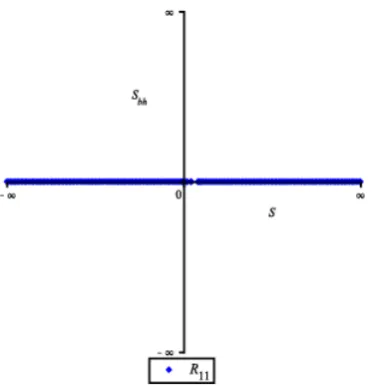
Figs. 1-3 show graphs of entropy Sbh (equation (2)) of matter using: i. uandvsolutions in non-zero component
11
R
of Ricci tensor, ii. solutions uand v and iii. the Ricci Scalar, respectively.In the limit of the space´s coordinate S, the black hole´s entropy of the matter computed with Bekenstein-Hawking formula [2,4,9], Sbh, inR11of Fig. 1, were obtained the following results: a) 0
bh
Slim S , b)
0
bh
Slim S and c)Slim0SbhFloat
. The “lowness” of entropy can be seen in a) and b) and the singularity in c).Moreover, in Fig. 2 we can observe that
uS
lim S 0
and lim v
S Float
ImS0 . Thus, Ricci.
B. Classical phase-space volume
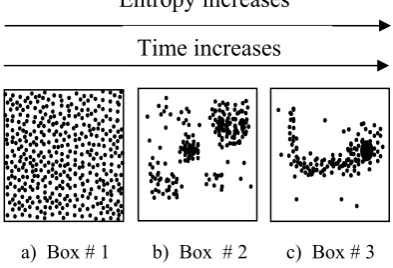
Figs.1 to 3 show results of the matter of gravitational bodies in CPSV of Hawking´s box (Fig. 4).
[image:3.595.311.554.65.579.2]As we can see in Fig. 4, increasing entropy from left to right with increasing time. In the box on the left, there is a uniform distribution of gravitational bodies representing relatively low entropy (Fig. 4 a) Box #1). As the entropy increases with time, gravitational bodies begin to clump collapsing to a black hole with maximum entropy as in Fig. 4 c) Box #3.
Fig. 1 Entropy Sbh of matter with uand v
solutions in non-zero components of Ricci tensor.
S [JK-1]
S , vSu
Ricci
a)
S [JK-1]
S , vSu
b)
[image:3.595.79.268.484.678.2]Of statistical mechanics, specifically with the Maxwell-Boltzmann theory, it is known that the entropy of a system is proportional to the natural logarithm of the number of microstates, in this case, we say the number of possible volumes, equation (2), and then we can calculate the volumes of the entropy of the material with that relationship. Knowing S [J K-1] and Boltzman constant,
, of equation (2) we have V exp
S , then calculate the volumes for negative and positive values ofS
in the Figs.1-3 (a negative value of entropy means that entropy is transferred from the system [31]), and is obtained two types of results for these values respectively: underflow and overflow for V . I interpreted Vunderflow andV overflow as tiny and huge () volumes in the phase-state.In the box 3 of Fig. 4 c) del CPSV is showed that the matter collapsed to a black hole due to the singularity (gravitational clumping matter) whose behavior observed in Figs.1-3.
As can be seen in Figs.1-3, the material is clumped together in the horizontal axis (Sbh0). This is a very special state called the “lowness” of entropy. This restriction satisfies WCH [1-3,9,26-30] and contradicts CPSV.
Then, low entropy state with huge volume (Voverflow), and low entropy with tiny volume (Vunderflow), are respectively, in total and partial contradiction with CPSV.
The quality or “lowness” of entropy produced in the big bang that gives us the second law of thermodynamics, in a huge volume (V overflow), wasn`t merely a consequence of the "smallness" of the universe at the time of the big bang as Penrose argues in [2].
IV. RESULTS
The metric used in this work allows us to obtain results that meet the requirements of: i. low entropy, and ii. tiny and huge volumes. This satisfies the Penrose's WCH [1-3,9,26-30] and contradicts the CPSV, disabling the link between WCH and CPSV that requires the second law, due to the asymmetrical-time [1,2,7-9] ingredient present in the entropy of the past and of the present. Perhaps this is because Jacob D. Bekenstein [32] found that the entropy of a black hole is proportional to its horizon area, not its volume, and because of the accuracy of the formula developed by Stephen W. Hawking [33] for their calculation.
We determined the entropy of matter with the Bekenstein-Hawking formula [2,4,9] (equation (2)) for a black hole, with
u
andv
solutions into Ricci tensor.Assuming Ricci = Energy = Mass and Emc2, 2
c E
m and taking into account that the geometric mass is mMG c2, we use mRiiG c2in equation (2). Rii are the nonzero components of the Ricci tensor.
As we can appreciate in Fig. 1, there is a singularity in 0
S in R11. This behavior persists in the R22, R33 and 44
R of the Ricci tensor but graphs are not presented here. If we consider the restriction of low entropy in the time of big bang, where
Ricci
, coupled with the factthat Weyl0 (equations (5) and (6), respectively), in Fig. 1 we can see that it fulfill the "lowness" of entropy according to the second law of thermodynamics.
Fig. 2 shows the entropy of matter (equation (2)) computed with the solutions u and v (equations (7)) of the
Ricci tensor. Again, these entropies seem to correspond with the "lowness" of entropy during the big bang to Ricci.
Fig. 3 Entropy of matter using the information carried by the Ricci Scalar for spatial coordinate S.
S [JK-1]
bh
S [Jkg-1 K-1]
Fig. 4. Classic phase-space volume of Hawking´s box as in [2,9] for gravitating bodies. Entropy and time increases from left to right in: a) box # 1 containing a uniform distribution with relatively low entropy, b) box # 2: uniformly spread system in box # 1 starts to clump, and c) box # 3: gravitational bodies clump together until maximum entropy for collapse to a black hole.
a) Box # 1
Entropy increases
c) Box # 3 b) Box # 2
[image:4.595.336.533.512.646.2]Fig. 3 shows the entropy of matter calculated with the Bekenstein-Hawking formula [2,4,9],Sbh, using the information carried by the Ricci Scalar (equations (8)).
As we can see in Fig. 3, the entropy tends to zero. In the limit, we obtain entropy with identical results to those obtained for R11in Fig. 1.
On the other hand, of equation (6), Weyl tensor is identically zero. According with Penrose [2], this is the constraint on time of Big Bang.
Here the distorting a tidal effect provided by the Weyl tensor is entirely absent. Instead there is symmetrical inward acceleration acting on any spherical surface of particles surrounding the matter (i.e., a black hole). This is the effect of the Ricci tensor, rather than Weyl. This behavior is similar to Friedmann-Robertson-Walker space-times, FRW-Model, in which Weyl0always hold [2].
It is Ricci that becomes infinite, instead of Weyl, and it is Ricci that dominates near the initial singularity, rather than Weyl.
Of equation (4) we have that:
0R i 1,2,3,4
lim ii S
Error, numeric exception: division by zero. This indicates us that there is an initial singularity in non-zero components of Ricci Tensor. This provides us with a singularity of low entropy.
Our universe was created in a very special low entropy state (agree with second law of thermodynamics), with something like the Weyl0 constraint of the FRW-Models imposed upon it [2]. This is associated with the Big Bang, which was so precisely organized in terms of the behavior of the Weyl part of the space-time curvature at space-time singularities.
The constraint obtained for Weyl0 at initial space-time singularities seems to be that confines the material to this very tiny region of phase-space. Penrose called to this assumption of constraint applied at any initial (but not final) space-time singularity: "The Weyl Curvature Hypothesis" [1-3,9,26-30] as an asymmetrical-time [1,2,7-9] ingredient.
The model studied here is satisfied for Weyl0,
Ricci and the graphics in Figs.1 to 3 indicate "lowness" of entropy as in the big bang.
After that, just a theory of quantum gravity that meets with certain requirements, could be able to solve the results here exposed, i.e., it is necessary to solve important points as the described by Penrose in [2], namely: i. Riddle space-time singularities instead of nonsensical "infinity" of the classical theory, ii. At the big bang -past singularity- quantum gravity must tell us that a condition something like
0
Weyl must hold, iii. The striking fact that the quantum gravity is blatantly asymmetrical-time [1,2,7-9] quantized theory. At the singularities inside black holes or in the possible big crunch -future singularities- we expect the
Weyl when approaching the singularity. According with Penrose [2], this is a clear indication that the quantum gravity theory is an asymmetrical-time-theory.
All cases (Figs.1 to 3) are disagree with phase-state volumes for a gravitational body mentioned above and probably have to do with the opinion of Penrose [2] about the link with the WCH and the CPSV of Howking´s box in the sense that for a "correct quantum gravity" theory (CQG),
space would be appropriate and that it is very probably that we must use a hitherto undiscovered type of mathematical space which is intermediate between the two and that has to do with the relationship between WCH and R (the state-vector reduction).
V. DISCUSSION
Although the standard metric (equation (3)) used here allows to fulfill the requirement of Penrose´s WCH that
Ricci (equation (4)) and Weyl0 (equations (5) and (6)), this does not ensure the link between WCH and CPSV. In this regard, Penrose suggests the quantum-mechanical state-vector reduction (R) as the other side of the coin of WCH instead of CPSV [2]. Figs.1-3 show the singularity (Ricci).
To meet the requirements that simultaneously satisfy WCH and CPSV, it is used the portrait of the third Hawiking´s box in CPSV (see Fig. 4), that is, in the state of highest entropy represented by the collapse of the matter to a black hole, achieved by gravitational clumpling, which already is controversial with the low entropy state required by the Big Bang, so it contradicts the Penrose´s WCH [1-3,9,26-30].
The results obtained with this model, allow me to corroborate the nonexistent link between CPSV and WCH under some questions and their possible answers. To allow comparisons of matter in the third Hawking´s box in the phase-space volume I wonder if: Is the big bang matter like the matter of a black hole? for that to comply with the gravitational clumping of matter in such box. The answer is yes, if we consider that according to the Big Bang theory, the universe was originated from a space-time singularity of infinite density mathematically paradoxical. Therefore, we meet the tiny volume in this third box, but there is the question of the magnitude of the entropy of this volume that has to be high in CPSV, and low in WCH.
How to measure a thermodynamic variable such as the entropy with the requirement of being high and low simultaneously?
Although the black hole evaporates by Hawking radiation and finally disappears, even in this state, the entropy due to the emissions produced by the hole during its evaporation increases with time, meeting with the high-entropy state of CPSV.
I say that the matter collapsed to a black hole has high entropy by gravitational clumping, satisfying the expectations of phase-state volume, while the expanded matter of the evaporated and disappeared black hole (so their emissions ceased to exist), is in an undefined state of entropy theoretically unresolved with the GR model used.
The second law of thermodynamics allows defining the sense of time, which runs in the direction in which the entropy increases. The high-entropy matter of the past turns out to be low in the present. Is it possible to find a mathematical model to link past and present getting high and low entropy at the same time, while meeting the expectations of the WCH and CPSV, respectively, in a Hawking fourth box?
(when it wasn`t evaporated) to the fourth box, should have given us a higher entropy than the 3rd box and still satisfy the concept of phase-space volume in contradiction with WCH.
Evaporation and eventual disappearance of a black hole does not contradict the second law of thermodynamics: while the entropy-area of the hole decreases, the radiation produced has very high entropy, so the total entropy always increases, which satisfies the phase-space volume and contradicts the restriction of low entropy in the big bang which includes the WCH.
Therefore, the entropy of matter that collapses to a black hole and an evaporated black hole always will be increased and always it is satisfied the CPSV in contradiction with the low entropy state that is expected must have existed in the big bang, contradicting the Penrose´s WCH [1-3,9,26-30].
VI. CONCLUSION
The GR model studied allows to predict the "lowness" of entropy at the Big Bang which gives us the second law of thermodynamics as a requirement to meet Penrose`s WCH together with the constraint where the Ricci tensor prevail rather than Weyl (which vanishes, as expected).
Although the asymmetrical-time ingredient, avoids link the CPSV with WCH, this study is a contribution at the state of art of modeling and simulation of astrophysical phenomenon according with the series of works in mathematical general relativity produced for thirty-three years ago, time in which Roger Penrose laid the foundation of his hypothesis.
I propose the need to discover a mathematical space to link past and present with low and high entropy in order to link WCH and CPSV, respectively, in which the wormholes´ theory and the phenomenon of quantum gravity become important.
REFERENCES
[1] R. Penrose. "Singularities and time-asymmetry." In General Relativity an Einstein Centenary Survey, edited by Hawking, S.W. and Israel, W. UK: Cambridge University Press, 1979, 617–629. [2] R. Penrose, The Emperor's New Mind; Oxford University Press:
Great Britain, 1989; pp 248-290, 391-482.
[3] P. Tod, Penrose's Weyl curvature hypothesis and conformally-cyclic cosmology, J. Phys.: Conf. Ser. 2010, 229, 1-5.
[4] A. Strominger, Vafa, C. Microscopic Origin of the Bekenstein-Hawking Entropy. Phys. Lett. B 1996, 379, 99-104.
[5] W. H. Zurek, Decoherence and the transition from quantum to classical, Phys. Today, 1991, 36–44.
[6] R.Carlo, Relational Quantum Mechanics. Int. J. Theor. Phys. 1996, 35, 1637–1678.
[7] L. Mersini-Houghton; R. Vaas, The Arrows of Time. A Debate in Cosmology, Mersini-Houghton L., Vaas, R., Eds.; Springer-Verlag Berlin, Heidelberg: Germany, 2012; Vol. 172, Chapter 1, pp 5-42. [8] H.D. Zeh, The Physical Basis of the Direction of Time; Springer
Berlin Heidelberg: Heidelberg, Germany, 2007; pp 135-193. [9] R. Penrose, The Road to Reality: A Complete Guide to the Laws of
the Universe; Vintage: London, UK, 2005; pp 383-439, 686-781. [10] P. S. Farrugia, R. B. Mann, T.C. Scott, N-body Gravity and the
Schroedinger Equation. Class. Quant. Grav. 2007, 24, 4647-4660. [11] S. Hossenfelder, N. Roslagstullsbacken, In Classical and Quantum
Gravity Theory, Analysis and Applications; Frignanni V.R., Ed.; Nova Publishers: Hauppauge, NY, USA, 2012; Chapter 5.
[12] S.W. Hawking, Quantum Cosmology. In Hawking, Stephen W.; Israel, Werner. 300 Years of Gravitation; Cambridge University Press: UK, 1987;pp 631–651.
[13] T. Thiemann, Loop Quantum Gravity: An Inside View. Lect. Notes Phys. 2007, 721, 185-263.
[14] R. Penrose, Newton, quantum theory and reality. In 300 years of gravity 1987a; Cambridge University Press: New York, NY, USA, 1987a; pp 34-41.
[15] F. Károlyházy, A. M. Frenkel, B. Lukás, On the possible role on gravity on the reduction of the ware function. In Quantum concepts in space and time; Penrose R., Isham C.J, Eds;. Clarendon Press: Oxford, UK, 1986; pp 109-128.
[16] D. D. Nolte, The tangled tale of phase space. Phys. Today 2010, 63(4), 33–38.
[17] T. L. Curtright, C. K. Zachos, Quantum Mechanics in Phase Space.
Asia Pac. Phys. Newslett. 2012, 1(1), 37-46.
[18] N. M. Laurendeau, Statistical Thermodynamics: Fundamentals and Applications, Cambridge University Press: New York, NY, USA, 2010; pp 23-41, 251-256.
[19] R. Goswami, P. Joshi, Spherical gravitational collapse in N dimensions. Phys. Rev. D 2008,76, 8:1–8:17
[20] M. P. Hobson, G.P. Efstathiou, A. N. Lasenby, General Relativity An Introduction for Physicists; Cambridge University Press: New York, NY, USA, 2006; Chapters 12, 13, pp 300-305, 320-325. [21] M.C. Werner, A.O. Peters, Magnification Relations for Kerr
Lensing and Testing Cosmic Censorship. Phys. Rev. D 2007, 76, 6:1–6:6
[22] S.W. Hawking, R. Penrose, The Singularities of Gravitational Collapse and Cosmology. In Proceedings of the Royal Society of London, UK, January 1970;vol. 314 no. 1519 529-548.
[23] R. Penrose. “The Question of Cosmic Censorship”. In Black Holes and Relativistic Stars, edited by Robert M. Wald. U.S.A.: The University of Chicago, 1998, 103–122.
[24] R. Penrose, W. Rindler, Spinors and space-time, Spinor and twistor methods in space-time geometry; Press Syndicate of the University of Cambridge, Ed.; Cambridge University Press: New York, NY, USA, 1986; Vol. 2, Chapter 8, pp 223-275.
[25] R. Penrose, W. Rindler, Spinors and space-time: Two-Spinor Calculus and Relativistic Fields; Landshoff, P.V., McCrea, W.H., Sciama, D.W., Weinberg, S., Eds.; Cambridge University Press: Cambridge, UK, 1984; Vol. 1, Chapters 3, 4, pp 116-241.
[26] R. Penrose, Difficulties with inflationary cosmology. In the Fourteenth Texas Symposium on Relativistic Astrophysics, New York, USA, 1990, Fenyves, E.J. Ed.; Annals of the New YorkAcad. Sci., 1989b; Vol. 571.
[27] J. Frauendiener, H. Friedrich, The Conformal Structure of Space-Time, Geometry, Analysis, Numerics, Lect Notes Phys; Frauendiener, J., Friedrich, H., Eds.; Springer-Verlag Berlin Heidelberg: New York, NY, USA, 2002; Chapters 1,5,6, pp 1-46, 113-120, 123-133 .
[28] K.P. Tod, Isotropic cosmological singularities: other matter models. Class. Quant. Grav. 2003, 20, 521-534.
[29] Stoica, Ovidiu-Cristinel. Beyond the Friedmann-Lemaitre-Robertson-Walker Big Bang singularity. Commun. Theor. Phys. 2012, 58, 613-616.
[30] S. Gallot, D. Hullin, J. Lafontaine, Riemannian Geometry, Universitext, Ed.; Springer-Verlag, Berlin Heidelberg: Heidelberg, Germany, 2004; Chapters 2,3, p 51-204.
[31] M.J. Moran, H.N. Shapiro, Fundamentals of Engineering Thermodynamics; John Wiley & Sons Inc.: USA, 2011; Chapter 6, pp 221-254.
[32] J. Bekenstein, Universal upper bound on the entropy-to-energy ratio for bounded systems. Phys. Rev. D, 1981, 23, 287-298.