Abduction for Discourse Interpretation: A Probabilistic Framework
Ekaterina Ovchinnikova USC/ISI
4676 Admiralty Way Marina del Rey, CA 90292
Andrew S. Gordon USC/ICT
12015 Waterfront Drive Los Angeles, CA 90094-2536
Jerry Hobbs USC/ISI 4676 Admiralty Way Marina del Rey, CA 90292
Abstract
Abduction allows us to model interpre-tation of discourse as the explanation of observables, given additional knowledge about the world. In an abductive frame-work, many explanations can be con-structed for the same observation, requir-ing an approach to estimate the likelihood of these alternative explanations. We show that, for discourse interpretation, weighted abduction has advantages over alternative approaches to estimating the likelihood of hypotheses. However, weighted ab-duction has no probabilistic interpretation, which makes the estimation and learning of weights difficult. To address this, we propose a formal probabilistic abductive framework that captures the advantages weighted abduction when applied to dis-course interpretation.
1 Introduction
In this paper, we explore discourse interpretation based on a mode of inference called abduction, or inference to the best explanation. Abduction-based discourse processing was studied inten-sively in the 1980s and 1990s (Charniak and Gold-man, 1989; Hobbs et al., 1993). This framework is appealing because it is a realization of the obser-vation that we understand new material by linking it with what we already know. It instantiates in discourse understanding the more general princi-ple that we understand our environment by com-ing up with the best explanation for the observ-ables in the environment. Hobbs et al. (1993) show that abductive proofs can be efficiently exploited for a whole range of natural language pragmat-ics problems, such as word sense disambiguation, anaphora and metonymy resolution, interpretation of noun compounds and prepositional phrases, and
detection of discourse relations. As applied to discourse interpretation, abduction was shown to have advantages over deduction, a more classical mode of inference (Ovchinnikova, 2012). One se-rious advantage concerns treatment of incomplete knowledge. In the cases when it is impossible to provide it with all the knowledge which is relevant for interpretation of a particular piece of text, de-ductive reasoners fail to find a prove. Instead of a deterministic yes/no proof abduction provides a way of measuring in how far the input formula was proven and which of its parts could not be proven. In the early 90s, research on abduction-based discourse processing resulted in good theoretical work and in interesting small-scale systems, but it faced three difficulties: 1) parsers were slow and not accurate enough, so that inference had no place to start, 2) inference processes were nei-ther efficient nor accurate enough, 3) nei-there was no large knowledge base designed for discourse processing applications. In the last two decades, the first of these difficulties has been addressed by progress in statistical parsing, e.g. (McClosky et al., 2006; Huang, 2008; Bos, 2011). Recently, ef-ficient reasoning techniques were developed that overcome the second difficulty (Inoue and Inui, 2011; Inoue et al., 2012b). Finally, it has been shown that there exists sufficient knowledge about the world – at a level of precision that enables its translation into formal logic – available in a variety of resources (Ovchinnikova et al., 2011; Ovchinnikova, 2012). These advances have re-cently been capitalized upon in several large-scale applications of abduction to discourse processing tasks (Inoue and Inui, 2011; Ovchinnikova et al., 2011; Ovchinnikova, 2012; Inoue et al., 2012a).
ap-proaches were proposed for estimating the likeli-hood of alternative abductive explanations: cost-based abduction (Charniak and Shimony, 1990), weighted abduction (Hobbs et al., 1993), abduc-tion based on Bayesian Networks (Pearl, 1988; Charniak and Goldman, 1989; Raghavan and Mooney, 2010), abduction based on Markov Logic Networks (Kate and Mooney, 2009).
In this paper, we show that weighted abduc-tion employing a cost propagaabduc-tion mechanism (see Section 3) and favoring low-cost explanations has certain features relevant for discourse processing that other approaches do not have (see Section 4). The main such feature is the approach to unifica-tion, i.e. associating two entities with each other, so that their common properties only need to be proved or assumed once (see Section 2). Weighted abduction favors explanations with the maximum number of unifications. Thus, it favors those ex-planations that link parts of observations together and supports discourse coherence, which is crucial for discourse interpretation.
There is not yet any work on linking weights in weighted abduction to probabilities, which makes the estimation and learning of the weights difficult. In this paper, we show that the original cost prop-agation mechanism in weighted abduction as in-formally introduced in (Hobbs et al., 1993) cannot be interpreted in terms of probabilities. However, we can still capture features of weighted abduc-tion desirable for discourse processing in a formal probabilistic framework based on Bayesian Net-works. As a result, we obtain a theoretically sound probabilistic abductive framework favoring expla-nations relevant for discourse interpretation. 2 Abduction
Abduction is inference to the best explanation. Formally, logical abduction is defined as follows: Given: Background knowledge B, observations O, where bothBandOare sets of first-order log-ical formulas,
Find:A hypothesisHsuch thatH∪B |=O, H∪ B "|=⊥, whereHis a set of first-order logical for-mulas.
Observation O is usually a conjunction of ex-istentially quantified propositions (Charniak and Goldman, 1989; Hobbs et al., 1993; Raghavan and Mooney, 2010):
∃x1, ..., xk, ..., y1, ..., yl(q1(x1, ..., xk)∧... ∧qn(y1, ..., yl)).
We extend the notion of observation by allow-ing inequalities (x "=y) as conjuncts. Sometimes inequalities follow from the natural language syn-tax. For example, if we readThere is a cat on the mat. Another cat is on the table, we immediately know that there are two different cats mentioned. This text can be logically represented as follows:
∃x1, x2, y1, y2(cat(x1)∧on(x1, y1)∧mat(y1)∧ cat(x2)∧on(x2, y2)∧table(y2)∧x1 "=x2)). Background knowledge B is a set of first-order logic formulas. In order to keep the inference process computationally tractable, B is often re-stricted to a set of Horn clauses (Charniak and Shi-mony, 1990; Hobbs et al., 1993; Kate and Mooney, 2009; Raghavan and Mooney, 2010). Thus, each background axiom has the form
P1∧...∧Pn→Q,
where all variables on the left-hand side are uni-versally quantified with the widest possible scope and all variables occurring on the right-hand side only are existentially quantified. We weaken this restriction allowing multiple literals on the right-hand side of the background axioms because of the importance of the context and compositional-ity for discourse interpretation. For example, in order to express the fact that a testing process can be called “dry run”, we use the following axiom:
∀x, y, e, z, u(process(x)∧of(x, e)∧test(e, z, u) →dry(x)∧run(x)). Breaking this axiom into two different axioms (one implying that the process is dry and the other implying that it is a run) will result in loosing the binding of the arguments ofdryandrun.
We allow inequalities (x "= y) as conjuncts in the background axioms. Inequalities can be used to represent incompatibility. For example, the ax-iom below represents the fact that the arguments of the relationparent of refer to different objects:
q(A)andH2 =p(A). We say thatp(A)explains q(A)inH2. If an atomic proposition is included
in a hypothesis (hypothesized) and not explained, then it isassumed, e.g.,q(A)is assumed inH1.
Unificationis merging of propositions with the same predicate name by assuming that their argu-ments are same.1 For example,O=∃x, y(p(x)∧ p(y)∧q(y)). Given this observation, the
proposi-tionsp(x)andp(y)are unifiable. Thus, there is a
hypothesisH=∃x(p(x)∧q(y)∧x=y).
Both operations (backchaining and unification) can be applied as many times as possible to gener-ate a possibly infinite set of hypotheses. The gen-eration of the set of hypothesesHinitialized as an empty set can be formalized as follows.
Backchaining!
n
i=1Pn→!mj=1Qj ∈BandO∧H|=!mj=1Qj
andO∧H∧!ni=1Pn%|=⊥, whereH∈ H
H:=H ∪ {H∧!ni=1Pn}
Unification
O∧H |=p(X)∧p(Y)and
O∧H∧X =Y %|=⊥, whereH ∈ H H:=H ∪ {H∧X=Y} 3 Estimating Hypothesis Likelihood Often many hypotheses can be constructed for the same observation. In order to find the best solution for our pragmatic problem, we need to choose the best, i.e. the most probable, hypothesis. Several approaches were proposed for estimating the like-lihood of alternative abductive explanations.
Charniak and Shimony (1990) propose cost-based abduction. In this framework, the likelihood of a hypothesis depends on the probability of the assumed atomic propositions to be true.
Another popular approach to abduction is based on Bayesian Networks (Pearl, 1988; Charniak and Goldman, 1989; Raghavan and Mooney, 2010). In this framework, abductive explanations are repre-sented by a directed graph constituting a Bayesian net, such that the nodes of the graph correspond to atomic predications and the edges connect expla-nations with the predications they explain. Each node has an associated conditional probability P(A|B), whereB is an explanation ofA. Given the constructed Bayesian net, the best abductive hypothesis is selected using standard methods,
1Note that the abduction unification mechanism is
differ-ent from how unification is usually understood in computer science and logic, because it allows us to assume equalities of constants.
which assign values to the unobserved nodes in the network that maximize the posterior probability of the joint assignment given the observations.
One more approach developed by (Kate and Mooney, 2009) is based on Markov Logic Net-works (MLNs) (Richardson and Domingos, 2006). In this approach, a weight is assigned to each background axiom that reflects the strength of a constraint it imposes on the set of possible worlds. The higher the weight, the lower the probabil-ity of a world that violates the axiom. An MLN can be viewed as a set of templates for construct-ing Markov networks. Originally, MLNs employ deductive reasoning. Kate and Mooney (2009) adapt MLNs for abductive inferences by intro-ducing reverse implications for every axiom in the knowledge base and adding mutual exclusiv-ity constraints on the transformed axioms.
Finally, weighted abduction (Hobbs et al., 1993) proposes a cost propagation mechanism for selecting best hypotheses. In this framework, each atomic observation is assigned a positive real-valued cost. Atomic antecedents in the back-ground axioms are assigned positive real-valued weights. If an axiom α = P → Q is applied then the cost of each newly introduced literalpin P is equal to the sum of the costs of the literals inQmultiplied by the weight ofp inα. For ex-ample, given the axiom∀x(p(x)0.9 ∧s(y)0.1 → q(x))and the observationq(A)$10, the literalp(A)
costs $10×0.9 = $9 and the literal s(y) costs $10×0.1 = $1. When two literals are unified,
the result of their unification is assigned the min-imum of their costs. For example, given the ob-servationp(x)$10 ∧p(y)$20 there is a hypothesis
x = y$10. The cost of the hypothesis is equal to the sum of the costs of the assumptions. Each uni-fication reduces the overall cost of the hypothe-sis, while an application of an axiom can increase or decrease the overall cost depending on whether its total weight is less or greater than 1. There is not yet any work on interpreting the weighted ab-duction cost propagation in terms of probabilities. Therefore the minimal cost hypothesis does not necessarily correspond to the most probable one.
that is obviously very difficult to obtain. Cost-based abduction implies that the likelihood of a hypothesis depends on the joint likelihood of the assumptions only and that the assumptions are mu-tually independent. Abduction based on Bayesian Networks implies that the truth of the literals de-pends on their direct explanations only. MNL-based abduction implies that the probability of a background axiom to hold does not depend on the observation. All mentioned framework imply that unifications always hold.
In order to successfully apply abductive infer-ence to pragmatic tasks, we should formulate the underlying independence assumptions with a good understanding of our domain of interest (in our case, it is discourse interpretation) and design a probabilistic framework correspondingly.
4 Abduction for Discourse Processing
Weighted abduction has three features, missing in other abduction-based frameworks, that are espe-cially relevant for discourse processing. In this section, we discuss these features.
Unification The first feature is related to the uni-fication inference. Weighed abduction prefers hy-potheses with the maximum number of unifica-tions. Therefore, it favors those explanations that link parts of observations together and thus sup-port discourse coherence.
Suppose we want to construct an interpretation for the sentence John composed a sonata. The verb compose has two readings, 1) the “put to-gether” reading (e.g.,The party composed a com-mittee, and 2) the “create art” reading. Suppose there are the following axioms:
1)put together(e, x1, x2)∧collection(x2)→ compose(e, x1, x2)
2) create art(e, x1, x2)∧ work of art(x2) → compose(e, x1, x2)
3)sonata(x)→work of art(x)
Axioms (1) and (2) correspond to the two read-ings ofcompose. Axiom (3) states that a sonata is a work of art. Weighted abduction favors Ax-iom (2) over (1) for the observed sentence, because unification of sonata resulting from the applica-tion of Axioms 2 and 3 with the observablesonata
reveals the implicit discourse redundancy and sup-ports linking the meanings ofcomposeandsonata. As mentioned above, weighted abduction im-plies unconditional unification. In the discourse interpretation context, unification is one of the
principal methods by which coreference is re-solved. A naive approach to coreference in an inference-based framework is to unify proposi-tions having the same predicate names unless it implies logical contradictions (Hobbs et al., 1993; Bos, 2011). However, in situations when knowl-edge necessary for establishing contradictions is missing, the naive procedure results in overmerg-ing. For example, givenO =∃x, y(animal(x)∧ animal(y)), we do not want to assume that x
equalsywhendog(x)∧cat(y)are observed. For
John runs and Bill runs, with the observations
O=∃x, y(John(x)∧run(x)∧Bill(y)∧run(y)),
we do not want to assume that John and Bill are the same individual just because they are both running. If we had complete knowledge about incompatibility (dog and cat are disjoint, people have unique first names), the overmerging prob-lem might not occur because of logical contradic-tions. However, it is not plausible to assume that we would have an exhaustive knowledge base. A proposal to introduce weighted unification is de-scribed in (Inoue et al., 2012a), where unification costs depend on the semantic relation (synonymy vs. antonymy), modality and polarity, and shared properties of the unified literals.
Observations costs The second feature con-cerns the unequal treatment of atomic observa-tions depending on their initial cost. Hobbs et al. (1993) mention that costs reflect the demand for propositions to be proved. Those propositions that are most likely to be linked referentially to other parts of the discourse are expensive to as-sume. This idea is illustrated by an example pro-vided in (Blythe et al., 2011). Suppose there are two sentences.
The smart man is tall. The tall man is smart.
The logical representation for each of them is
∃x(smart(x) ∧ tall(x) ∧ man(x)). But
cer-tain syntactic features attached to propositions (e.g., definite article) influence the probability of the propositions to be explained or assumed. In the first sentence we want to provesmart(x) to
anchor the sentence referentially. Then tall(x)
is new information to be assumed. Blythe et al. (2011) suggest having a high cost onsmart(x)
to force the proof procedure to find this referential anchor. The cost ontall(x)will be low, to allow it
the second sentence, the case is the reverse. Suppose we know that educated people are smart and big people are tall, and furthermore that John is educated and Bill is big and both of them are men. This knowledge is formalized as follows:
∀x(educated(x)→smart(x))
∀x(big(x)→tall(x))
educated(John), big(Bill), man(John), man(Bill)
In weighted abduction, the best interpretation for the first sentence is that the smart man is John, because he is educated, and the cost for assuming he is tall is paid. The interpretation to avoid is one that saysxis Bill; he is tall because he is big, and the cost of assuming he is smart is paid. Weighted abduction with its differential costs on observables favors the first and disfavors the second.
Weighted conjuncts in the antecedents The third feature of weighted abduction is related to the weights of the conjuncts in the antecedents of the background axioms. Hobbs et al. (1993) say that the weights correspond to the “semantic con-tribution” each conjunct makes to its consequent and discuss the following example:
∀x(car(x)∧no-top(x)→convertible(x))
Hobbs et al. (1993) assume thatcarcontributes more toconvertiblethanno-top, therefore the for-mer should have a higher weight forcing its ex-planation. Thus, given a convertible mentioned in text, we will probably intend to link it to some other mentioning of a car rather than to a mention-ing of an object with no top.
5 Graph Representation of Hypotheses
In this section, we introduce a formalization allow-ing us to estimate probabilities of abductive hy-potheses in Section 6. We follow (Charniak and Shimony, 1990) and represent the set of all pos-sible hypotheses as an AND/OR directed acyclic graph (AODAG).
Definition 1 An AODAG is a 3-tuple< G, l, o >,
where:
1. Gis a directed acyclic graph,G= (V, E).
2. lis a function fromV to{AND, OR}, called the label. A node labeled AND is called an AND node, etc.
3. o⊆V is a set of observed nodes.
q(x, y)
1
p(y)
Up
x=y
p(x) 2 r(x)
[image:5.595.329.505.63.311.2]s(z)
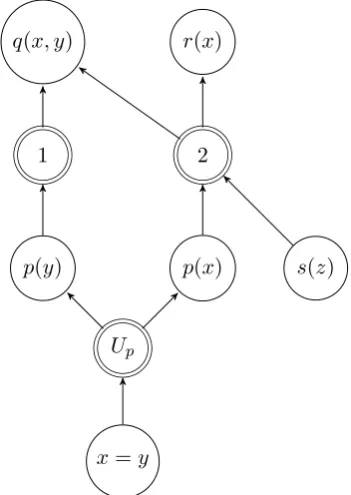
Figure 1: AODAG for the running example.
Consider an observation O = ∃x, y(q(x, y)∧ r(x))and the background knowledgeB:
1)∀y(p(y)→ ∃x(q(x, y)))
2)∀x, z(p(x)∧s(z)→ ∃y(q(x, y)∧r(x)))
The AODAG in Fig. 1 is constructed by ap-plying backchaining and unification to observation
O. The nodes marked with a double circle
repre-sent inference operations: backchaining using Ax-ioms 1 (“1” node) and 2 (“2” node) as well as uni-fication (“Up” node). Note that all operation nodes
are AND nodes. All literal nodes are OR nodes. The notationu& vis used to say thatuis an im-mediate parent ofv. In our example, node “1” is a
parent ofq(x, y)or1&q(x, y).
Definition 2 A truth assignment for an AODAG is a functionffromV to{T, F}. A truth assignment is a model if the following conditions hold:
1. Ifv∈othenf(v) =T.
2. Ifv (∈ o andv is an AND node then one of the following statements hold:
(a) f(v) =F and∃u&v:f(u) =F.
(b) f(v) =T and∀u&v:f(u) =T.
3. Ifv (∈oandvis an OR node then one of the
following statements hold:
(b) f(v) ∈ {T, F}and∀u # v : f(u) = F.
4. If∃v1, .., vnsuch that for alli∈ {1, .., n}:vi
isxi = xi+1 and∃v0 equal to x1 %= xn+1 thenf(v0)∧f(v1)∧...∧f(vn) =F. Condition 1 in Definition 2 ensures that observ-ables are true in every model. Condition 2 ensures that an operation node is true if the result of this operation is true. Otherwise, an operation node is false. Condition 3 ensures that a literal node is true if one of its explanations is true. Other-wise, it can be either true or false. We rely on the “open world” assumption, i.e., we do not assume that the knowledge base contains all possible facts about the world. Thus, assumptions can be made without explanations. Condition 4 rules out incon-sistencies that result from an equality and an in-equality of the same variables. It rules out truth assignments that assignT to both equality chains x1 =x2...=xn+1and an inequalityx1 %=xn+1.
It is easy to see that the set of hypotheses corre-sponds to the set of models of the AODAG. Given Definition 2, the truth assignment
M ={(q(x, y), T),(r(x), T),(1, T),(p(y), T), (2, F),(p(x), F),(s(z), F),(U, F),(x=y, F)}
is a model of the example AODAG. It corresponds to the hypothesis p(y) ∧r(x). The nodes in a
model that are assigned the truth valueT and have
no parents with the truth value T are called as-sumptions in this model. If u # v and both u
andv are assigned the truth value T in a model,
thenuexplainsvin this model. For example,r(x)
is an assumption in the modelM above, whereas q(x, y)is explained by Axiom 1 inM.
6 Probabilities and Independence Assumptions
Now we are ready to estimate the likelihood of ab-ductive hypotheses relevant for discourse interpre-tation. Let us associate a random variable from the set {X1, ..., Xn} with each ofv nodes in an AODAG. The variables Xi (i ∈ {1, ..., n}) take values from the set {T, F}. If f(vi) = T then
Xi=T; otherwiseXi=F. The joint probability distribution of the set{X1, ..., Xn}is as follows:
P(X1, ..., Xn) = n
!
i=1
P(Xi|πi), (1)
where Xi is conditioned on πi that denotes all other variables from the set {X1, ..., Xn} on
whichXi depends. The question is how to define
πi for eachXi. In order to do it, we need to make independence assumptions.
As discussed in Section 4, the cost propagation mechanism in weighted abduction results in the following model preferences:
1. Other things being equal, a model that results from application of more reliable axioms is favored.
2. Other things being equal, a model that con-tains more true unification nodes is favored. 3. Other things being equal, a model that
ex-plains referential observables is favored. Let us formulate independence assumptions re-flecting the above model preferences. We can use the local Markov property: each variable is condi-tionally independent of its non-descendants given its immediate parent variables. But we also need a special account for unifications, because any true unification raises the likelihood of the correspond-ing model.
One option is to say that every axiom node in an AODAG also depends on its parent unification nodes. For example, nodes 1 and 2 in the example AODAG depend on the nodeUp. However, given
more observables there could be more unifications resulting from axiom applications. For example, if we add observables(t)then the application of
Ax-iom 2 can result in one more unification (t = z). Given a set of golden AODAG models, one can compute all possible unifications resulting from a particular axiom. Alternatively, we can say that it does not matter unifications of which literals result from an axiom; the only thing that matters is how many unifications are there. In order to implement this second option, we introduce one more type of random variables associated with an AODAG:
numbUv is associated with each axiom nodev. It takes values from the setNand stands for the num-ber of true unifications that are parents ofv.
In order to account for referentiality, we intro-duce another type of random variablesRefv asso-ciated with each literal node v in an AODAG. It
takes values from the set{T, F}. Ifvis a
referen-tial observable or it has a referenreferen-tial observable as its child, thenRefv = T; otherwise Refv = F. Each axiom application depends on whether its immediate children are referential or not.
Xq(x,y)
X1
Xp(y)
XUp
Xx=y
Xp(x)
X2
Xr(x)
Xs(z)
numbU1
numbU2
Refq(x,y)
[image:7.595.76.297.65.288.2]Refr(x)
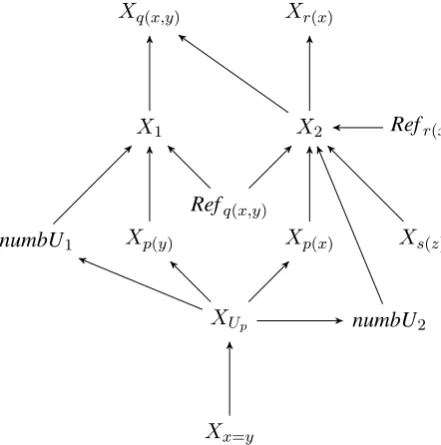
Figure 2: Bayesian network for the running exam-ple AODAG.
we introduce random variablesnumbU1,numbU2,
Refq(x,y) and Refr(x). Fig. 2 shows the
cor-responding Bayesian network for the example AODAG that has the following joint probability distribution:
P(Xx=y)∗P(XUp|Xx=y)∗P(Xp(y)|XUp)∗ P(Xp(x)|XUp)∗P(Xs(z))∗P(numbUp(y)|XUp)∗ P(X1|Xp(y), numbUp(y), Refq(x,y))∗ P(X2|Xp(x), Xs(z), numbUp(x),s(z), Refq(x,y), Refr(x))∗ P(Xq(x,y)|X1, X2)∗P(Xr(x)|X2)∗ P(numbUp(x),s(z)|XUp)∗P(Refq(x,y))∗P(Refr(x))
Now we can estimate the probability of all ab-ductive hypotheses or compute the best hypothe-sis a using standard method for computing Most Probable Explanation (Pearl, 1988) that maxi-mizes the posterior probability of the joint as-signment given the observations (values of vari-ablesXq(x,y),Xr(x),Refq(x,y),Refr(x)in our
ex-ample). If conditional probability tables need to be learned, we can use standard algorithms: Ex-pectation Maximization (Dempster et al., 1977; Langseth and Bangsø, 2001; Ramoni and Sebas-tiani, 2001) and Markov Chain Monte Carlo meth-ods (Liao and Ji, 2009).
7 Linking Costs and Weights in
Weighted Abduction to Probabilities Section 6 gives us a probabilistic approach to ab-duction that preserves the relevant discourse
inter-pretation features of weighted abduction, so now we want to see what are the relationships between weights and probabilities across these two frame-works. Consider our running example again. Sup-posecost(q(x, y)) =c1,cost(r(x)) =c2, weight
ofp(y)in Axiom 1 isw1, and weights ofp(x)and
s(z) in Axiom 2 arew2 andw3 correspondingly.
There are 5 hypotheses for the given observation. According to the cost propagation scheme, the hy-potheses are assigned the following costs.
H1=q(x, y)∧r(x)
cost(H1) =c1+c2
H2=p(y)∧r(x)
cost(H2) =w1∗c1+c2
H3=p(x)∧s(z)
cost(H3) =w2∗(c1+c2) +w3∗(c1+c2)
H4=p(y)∧p(x)∧s(z)
cost(H4) =w1∗c1+w2∗(c1+c2)+w3∗(c1+c2)
H5=p(y)∧p(x)∧s(z)∧y=x
cost(H5) =min(w1∗c1, w2∗(c1+c2)) +w3∗ (c1+c2)
The corresponding AODAG has 5 models: M1={(q(x, y), T),(r(x), T),(1, F),(p(y), F), (2, F),(p(x), F),(s(z), F),(U, F),(x=y, F)}
M2={(q(x, y), T),(r(x), T),(1, T),(p(y), T), (2, F),(p(x), F),(s(z), F),(U, F),(x=y, F)}
M3={(q(x, y), T),(r(x), T),(1, F),(p(y), F), (2, T),(p(x), T),(s(z), T),(U, F),(x=y, F)}
M4={(q(x, y), T),(r(x), T),(1, T),(p(y), T), (2, T),(p(x), T),(s(z), T),(U, F),(x=y, F)}
M5={(q(x, y), T),(r(x), T),(1, T),(p(y), T), (2, T),(p(x), T),(s(z), T),(U, T),(x=y, T)}
Our goal is to find functiongsuch that
∀i∈ {1, ..,5}:cost(Hi) =g(P(Mi)). (2)
The hypothesis cost is a sum of the assumption costs (e.g., cost(H1) = c1 +c2). Can we
de-rive costs of atomic literals from the probabilities of these literals to be assumed? The smaller the cost, the bigger the probability that the literal is assumed. The event when no axioms are applied to the literal nodev is denoted byAssume(v). If
we setgto the negative logarithm, then summing costs will be equal to multiplying probabilities:
cost(v) =−log(P(Assume(v))). (3)
Model M1 refers to the event when no axioms
are applied: Assume(q(x, y))∩Assume(r(x)).
Assume(r(x))are not independent, because Ax-iom 2 is applicable to both q(x, y) and r(x). Therefore we get the following contradiction:
cost(H1) =cost(q(x, y)) +cost(r(x)) = −log(P(Assume(q(x, y))∗P(Assume(r(x)))
#
= −log(P(Assume(q(x, y)∩Assume(r(x))) = −log(P(M1)). We cannot link the sum of costs of atomic literals to the product of the probabilities of these liter-als to be assumed, because the assumption events are not independent. Therefore we have to reject Eq. 3. Suppose we selectedc1andc2so that
c1+c2=−log(P(Assume(q(x, y))∩ Assume(r(x))) =−log(P(M1)).
Can we then link axiom weights to probabilities? ModelM3 refers to the situation when only Ax-iom 2 is applied. It has the following probability2:
P(M3) =P(X1 =F∩X2 =T∩ Xp(y)=F ∩Xp(x) =T∩Xs(z)=T∩ XUp =F|Xq(x,y) =T, Xr(x)=T).
Sincecost(H3) = (w2+w3)∗(c1+c2), we can try to linkw2+w3 to the probability of Axiom 2 to be applied. But in order to computeP(M3)the value of cost(H3) is also required to accommo-date the probability of Axiom 1 not to be applied. Thus, instead of one axiom weight for each axiom α we need to have a table of conditional weights depending on all other axioms that can be applied in combination with α. This is not the case in weighted abduction.
The discussion above shows that we need condi-tional probabilities that cannot be linked to atomic literal costs and weights, because variables as-signed to the atomic literal nodes arenot indepen-dent. The question remains open if it is possible to tune weights and costs so that least cost hypothe-ses in weighted abduction correspond to the most pragmatically relevant (and the most probable) ex-planations. This is an empirical question and the answer to it depends on a particular application.
The fact that costs and weights in weighted ab-duction cannot be linked to probabilities does not make the framework inapplicable to discourse in-terpretation or any other task. One can see costs
2For simplicity, we ignore the referential variables.
and weights as being parameters that need to be tuned in a practical setting. Inoue and Inui (2011) show that it is possible to represent weighted ab-duction as a linear constraint optimization prob-lem and learn costs and weights in a large-margin learning procedure (Inoue et al., 2012b) including unification cost learning (Inoue et al., 2012a).
However, the problem remains how to set prior values for costs and weights before starting the learning. Furthermore, it is impossible to interpret learned values, which results in the choice of the best hypothesis being unpredictable.
8 Conclusion
Abduction allows us to model interpretation of discourse as the explanation of observables given knowledge about the world. In an abductive framework, many explanations can be constructed for the same observation. Therefore, an approach to estimating the likelihood of the alternative ex-planations is required.
In this paper, we showed that the cost propa-gation mechanism in weighted abduction has ad-vantages over alternative approaches when applied to discourse interpretation. However, costs and weights in weighted abduction have no proba-bilistic interpretation, which makes their estima-tion and learning difficult. We proposed a formal framework for computing likelihood of abductive hypotheses with an account of variable inequali-ties and probabilistic unification. We discussed independence assumptions relevant for discourse processing. We showed that the cost propagation mechanism cannot be interpreted in terms of prob-abilities, but that features of weighted abduction relevant for discourse interpretation can be still captured in a probabilistic framework.
Future work concerns implementation of the probabilistic abductive framework proposed in Section 6 and its comparison with weighted ab-duction as tested on specific discourse processing tasks, such as recognizing textual entailment or coreference resolution; see (Ovchinnikova et al., 2011; Inoue et al., 2013) and (Inoue et al., 2012a) for applications of abduction to these tasks.
Acknowledgments
References
J. Blythe, J. R. Hobbs, P. Domingos, R. J. Kate, and R. J. Mooney. 2011. Implementing weighted ab-duction in markov logic. InProc. of IWCS’11, pages 55–64, Oxford, England.
J. Bos. 2011. A survey of computational semantics: Representation, inference and knowledge in
wide-coverage text understanding. Language and
Lin-guistics Compass, 5(6):336–366.
E. Charniak and R. P. Goldman. 1989. A Semantics for Probabilistic Quantifier-Free First-Order Lan-guages, with Particular Application to Story Under-standing. In N. S. Sridharan, editor,IJCAI’89, pages 1074–1079. Morgan Kaufmann.
E. Charniak and S. E. Shimony. 1990. Probabilistic semantics for cost-based abduction. InProc. of the 8th National Conference on AI, pages 106–111. A. P. Dempster, N. M. Laird, and D. B. Rubin. 1977.
Maximum likelihood from incomplete data via the
EM algorithm. Journal of the Royal Statistical
So-ciety: Series B, 39:1–38.
J. R. Hobbs, M. Stickel, D. Appelt, and P. Martin. 1993. Interpretation as abduction. Artificial Intel-ligence, 63:69–142.
L. Huang. 2008. Forest reranking: Discriminative parsing with non-local features. InProc. of ACL’08, pages 586–594.
N. Inoue and K. Inui. 2011. ILP-Based Reasoning for
Weighted Abduction. InProc. of AAAI Workshop on
Plan, Activity and Intent Recognition.
N. Inoue, E. Ovchinnikova, K. Inui, and J. R. Hobbs.
2012a. Coreference Resolution with ILP-based
Weighted Abduction. In Proc. of COLING’12,
pages 1291–1308.
N. Inoue, K. Yamamoto, Y. Watanabe, N. Okazaki, and K. Inui. 2012b. Online large-margin weight learn-ing for first-order logic-based abduction. In Proc. of the 15th Information-Based Induction Sciences Workshop, pages 143–150.
N. Inoue, E. Ovchinnikova, K. Inui, and J. R. Hobbs. 2013. Weighted abduction for discourse processing
based on integer linear programming. InPlan,
Ac-tivity, and Intent Recognition.
R.J. Kate and R. J. Mooney. 2009. Probabilistic
ab-duction using markov logic networks. In Proc. of
PAIR’09, Pasadena, CA.
H. Langseth and O. Bangsø. 2001. Parameter learning
in object-oriented bayesian networks. Ann. Math.
Artif. Intell., 32(1-4):221–243.
W. Liao and Q. Ji. 2009. Learning bayesian net-work parameters under incomplete data with domain
knowledge. Pattern Recognition, 42(11):3046–
3056.
D. McClosky, E. Charniak, and M. Johnson. 2006. Ef-fective self-training for parsing. In Proc. of HLT-NAACL’06.
E. Ovchinnikova, N. Montazeri, T. Alexandrov, J. R Hobbs, M. McCord, and R. Mulkar-Mehta. 2011. Abductive Reasoning with a Large Knowledge Base
for Discourse Processing. In Proc. of IWCS’11,
pages 225–234, Oxford, UK.
E. Ovchinnikova. 2012. Integration of World
Knowl-edge for Natural Language Understanding. Atlantis Press, Springer.
J. Pearl. 1988. Probabilistic Reasoning in Intelligent Systems: Networks of Plausible Inference. Morgan Kaufmann.
S. Raghavan and R. Mooney. 2010. Bayesian abduc-tive logic programs. InProc. of Star-AI’10, pages 82–87, Atlanta, GA.
M. Ramoni and P. Sebastiani. 2001. Robust learning
with missing data. Machine Learning, 45(2):147–
170.
M. Richardson and P. Domingos. 2006. Markov logic