Project Management Institute
The Standard for Program Management ISBN: 1-930699-54-9
–Published by: Project Management Institute, Inc. Four Campus Boulevard
Newtown Square, Pennsylvania 19073-3299 USA. Phone:Ⳮ610-356-4600
Fax:Ⳮ610-356-4647 E-mail: [email protected] Internet: www.pmi.org
©2006 Project Management Institute, Inc. All rights reserved.
‘‘PMI’’, the PMI logo, ‘‘PMP’’, the PMP logo, ‘‘PMBOK’’, ‘‘Project Management Journal’’, ‘‘PM Network’’, and the PMI Today logo are registered marks of Project Management Institute, Inc. The Quarter Globe Design is a trademark of the Project Management Institute, Inc. For a comprehensive list of PMI marks, contact the PMI Legal Department.
PMI Publications welcomes corrections and comments on its books. Please feel free to send comments on typographical, formatting, or other errors. Simply make a copy of the relevant page of the book, mark the error, and send it to: Book Editor, PMI Publications, Four Campus Boulevard, Newtown Square, PA 19073-3299 USA, or e-mail: [email protected].
PMI books are available at special quantity discounts to use as premiums and sales promotions, or for use in corporate training programs, as well as other educational programs. For more information, please write to Bookstore Administrator, PMI Publications, Four Campus Boulevard, Newtown Square, PA 19073-3299 USA, or e-mail: [email protected]. Or contact your local bookstore. Printed in the United States of America. No part of this work may be reproduced or transmitted in any form or by any means, electronic, manual, photocopying, recording, or by any information storage and retrieval system, without prior written permission of the publisher.
The paper used in this book complies with the Permanent Paper Standard issued by the National Information Standards Organization (Z39.48—1984).
Notice
The Project Management Institute, Inc. (PMI) standards and guideline publications, of which the document contained herein is one, are developed through a voluntary consensus standards development process. This process brings together volunteers and/or seeks out the views of persons who have an interest in the topic covered by this publication. While PMI administers the process and establishes rules to promote fairness in the development of consensus, it does not write the document and it does not independently test, evaluate, or verify the accuracy or completeness of any information or the soundness of any judgments contained in its standards and guide-line publications.
PMI disclaims liability for any personal injury, property or other damages of any nature whatsoever, whether special, indirect, consequential or compensatory, directly or indirectly resulting from the publication, use of application, or reliance on this document. PMI disclaims and makes no guaranty or warranty, expressed or implied, as to the accuracy or completeness of any information published herein, and disclaims and makes no warranty that the information in this document will fulfill any of your particular purposes or needs. PMI does not undertake to guarantee the performance of any individual manufacturer or seller’s products or services by virtue of this standard or guide.
In publishing and making this document available, PMI is not undertaking to render professional or other services for or on behalf of any person or entity, nor is PMI undertaking to perform any duty owed by any person or entity to someone else. Anyone using this document should rely on his or her own independent judgment or, as appropriate, seek the advice of a competent professional in determining the exercise of reasonable care in any given circumstances. Information and other stan-dards on the topic covered by this publication may be available from other sources, which the user may wish to consult for additional views or information not covered by this publication.
Contents
Notice ... iii
Foreword ... xi
Preface ... xiii
Section I—The Program Management Framework Chapter 1—Introduction ...3
1.1 Purpose ofThe Standard for Program Management ...3
1.2 What is a Program? ...4
1.3 What is Program Management? ...4
1.4 The Relationship Between Program Management and Portfolio Management ...5
1.5 The Relationship Between Program Management and Project Management ...7
1.6 Program Management in Organizational Planning ...8
1.7 Themes of Program Management ...9
1.7.1 Benefits Management ...10
1.7.2 Program Stakeholder Management ...11
1.7.3 Program Governance ...12
Chapter 2—Program Life Cycle and Organization ...17
2.1 Program Life Cycle ...17
2.2 Program Themes Across the Program Life Cycle ...19
2.2.1 Benefits Management and the Program Life Cycle ...19
2.2.2 Stakeholder Management ...20
2.2.3 Program Governance Through Phase-Gate Reviews ...20
2.3 Program Management Life Cycle Phases ...21
2.3.1 Program Governance Across the Life Cycle ...21
2.3.2 Phase One: Pre-Program Set Up ...22
2.3.3 Phase Two: Program Set Up ...24
2.3.4 Phase Three: Establish Program Management and Technical Infrastructure ...26
2.3.5 Phase Four: Deliver the Benefits ...27
2.3.6 Phase Five: Close the Program ...28
Section II—The Standard for Program Management Chapter 3—Program Management Processes ...31
3.1 Themes in the Program Management Life Cycle ...32
3.1.1 Benefits Management ...32
3.1.2 Stakeholder Management ...32
3.1.3 Program Governance ...32
3.2 Program Management Process Groups ...33
3.3 Common Program Management Process Components ...33
3.3.1 Inputs Common to Program Management Processes ...33
3.3.2 Outputs Common to Program Management Processes ...34
3.4 Initiating Process Group ...35
3.4.1 Initiate Program ...35
3.4.2 Authorize Projects ...36
3.5 Planning Process Group ...38
3.5.1 Develop Program Management Plan ...40
3.5.2 Interface Planning ...41
3.5.3 Transition Planning ...42
3.5.4 Resource Planning ...43
3.5.5 Scope Definition ...43
3.5.6 Create Program WBS ...44
3.5.7 Schedule Development ...45
3.5.8 Cost Estimating and Budgeting ...46
3.5.9 Quality Planning ...46
3.5.10 Human Resource Planning ...47
3.5.11 Communications Planning ...48
3.5.12 Risk Management Planning and Analysis ...48
3.5.13 Plan Program Purchases and Acquisitions ...49
3.5.14 Plan Program Contracting ...50
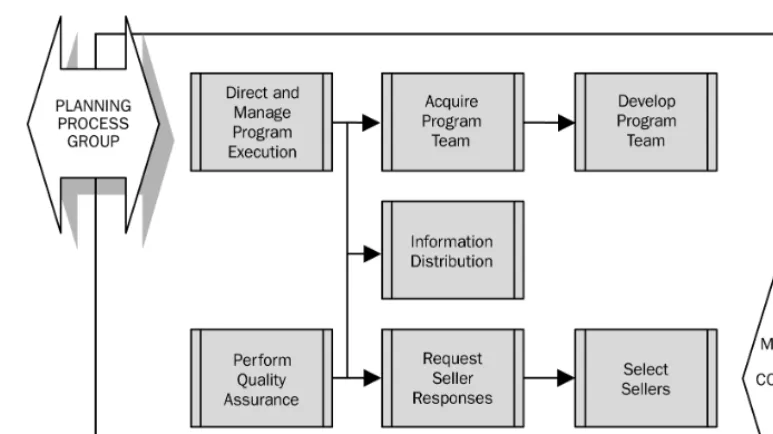
3.6 Executing Process Group ...50
3.6.1 Direct and Manage Program Execution ...51
3.6.2 Perform Quality Assurance ...52
3.6.3 Acquire Program Team ...52
3.6.4 Develop Program Team ...53
3.6.5 Information Distribution ...54
3.6.6 Request Seller Responses ...54
3.6.7 Select Sellers ...55
3.7 Monitoring and Controlling Process Group ...56
3.7.1 Integrated Change Control ...56
3.7.2 Resource Control ...56
3.7.3 Monitor and Control Program Work ...58
3.7.4 Issue Management and Control ...59
3.7.5 Scope Control ...60
3.7.6 Schedule Control ...60
3.7.7 Cost Control ...61
3.7.8 Perform Quality Control ...62
3.7.9 Communications Control ...62
3.7.10 Performance Reporting ...62
3.7.11 Risk Monitoring and Control ...63
3.7.12 Program Contract Administration ...64
3.8 Closing Process Group ...65
3.8.1 Close Program ...66
3.8.2 Component Closure ...67
3.8.3 Contract Closure ...68
3.9 Process Interactions ...68
3.10 Program Management Process Mapping ...69
Section III—Appendices Appendix A—(Reserved for documenting future updates) ...73
Appendix B—Initial Development ofThe Standard for Program Management...75
B.1 Introduction ...75
B.2 Preliminary Work ...75
B.3 DraftingThe Standard for Program Management...76
B.4 Delivering the FirstStandard for Program Management ...76
Appendix C—Contributors and Reviewers ofThe Standard for Program Management ...79
C.1 The Standard for Program ManagementProject Core Team ...79
C.2 Significant Contributors ...80
C.3 The Standard for Program ManagementProject Team Members ...80
C.4 Final Exposure Draft Reviewers and Contributors ...84
C.5 PMI Project Management Standards Program Member Advisory Group ...84
Appendix D—Program Management Tools and Techniques ...85
1. Expert Judgment ...85
2. Meetings ...85
3. Reviews ...85
4. Policies and Procedures ...86
Appendix E—Benefits Assurance and Sustainment ...87
E.1 Purpose ...87
E.2 Background ...87
E.3 Assuring and Sustaining Benefits ...88
E.4 Organizational Differences ...89
E.5 Critical Success Factors ...89
Appendix F—Program Management Controls ...91
A. Standards ...91
B. Policies and Procedures ...91
C. Program Plans ...91
D. Reviews ...92
E. Oversight ...92
F. Audits ...92
G. Contracts ...93
H. Directories and Distribution Lists ...93
I. Documentation ...93
J. Regulations ...93
Appendix G—Examples of Organizational Structuring of Programs ...95
Appendix H—Variance From or Extensions to Other Related PMI Standards ...97
H.1 Comparison ofThe Standard for Program ManagementandPMBOK威Guide— Third Edition Processes ...97
H.2 Program Differences ...99
H.3 Organizational Project Management Maturity Model ...100
Section IV—Glossary and Index Glossary ...105
1. Inclusions and Exclusions ...105
2. Common Acronyms ...105
3. Definitions ...105
List of Figures and Tables
Chapters 1–3
Figure 1-1: Program Benefits Management ...5
Figure 1-2: Portfolios, Programs, and Projects—High-Level View ...6
Table 1-1: Comparative Overview of Project, Program, and Portfolio Management ...8
Figure 1-3: Relationships Among Portfolios, Programs, and Projects ...9
Figure 1-4: A Representative Program Life Cycle ...9
Figure 1-5: Illustrative Benefits Management Approach ...11
Figure 1-6: Governance Context ...13
Figure 1-7: Program Governance Structure ...14
Figure 1-8: Governance Framework ...15
Figure 2-1: Typical Cost and Benefit Profiles Across the Generic Program Life Cycle ...18
Figure 2-2: A Representative Program Life Cycle ...18
Table 2-1: Example of a Project Life Cycle Model ...19
Figure 2-3: Program Life Cycle and Benefits Management ...20
Figure 2-4: Program Governance ...22
Figure 2-5: Pre-Program Set Up ...23
Figure 2-6: Program Set Up ...25
Figure 2-7: Establish the Program Infrastructure ...26
Figure 2-8: Deliver the Benefits ...27
Figure 2-9: Close the Program ...28
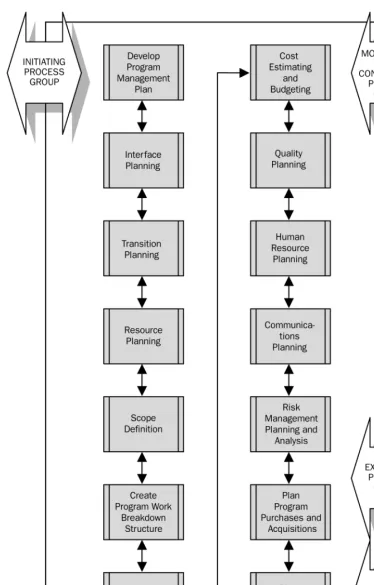
Figure 3-1: Initiating Process Group ...35
Table 3-1: Initiate Program: Inputs and Outputs ...36
Table 3-2: Authorize Projects: Inputs and Outputs ...37
Table 3-3: Initiate Team: Inputs and Outputs ...38
Figure 3-2: Planning Process Group ...39
Table 3-4: Develop Program Management Plan: Inputs and Outputs ...41
Table 3-5: Interface Planning: Inputs and Outputs ...41
Table 3-6: Transition Planning: Inputs and Outputs ...42
Table 3-7: Resource Planning: Inputs and Outputs ...43
Table 3-8: Program Scope Definition: Inputs and Outputs ...44
Table 3-9: Create Program WBS: Inputs and Outputs ...45
Table 3-10: Schedule Development: Inputs and Outputs ...46
Table 3-11: Cost Estimating and Budgeting: Inputs and Outputs ...46
Table 3-12: Quality Planning: Inputs and Outputs ...47
Table 3-13: Human Resource Planning: Inputs and Outputs ...47
Table 3-14: Communications Planning: Inputs and Outputs ...48
Table 3-15: Risk Management Planning and Analysis: Inputs and Outputs ...49
Table 3-16: Plan Program Purchases and Acquisitions: Inputs and Outputs ...49
Table 3-17: Plan Program Contracting: Inputs and Outputs ...50
Table 3-18: Direct and Manage Program Execution: Inputs and Outputs ...52
Table 3-19: Perform Quality Assurance: Inputs and Outputs ...52
Table 3-20: Acquire Program Team: Inputs and Outputs ...53
Table 3-21: Develop Program Team: Inputs and Outputs ...54
Table 3-22: Information Distribution: Inputs and Outputs ...54
Table 3-23: Request Seller Responses: Inputs and Outputs ...55
Table 3-24: Select Sellers: Inputs and Outputs ...55
Figure 3-4: Monitoring and Controlling Process Group ...57
Table 3-25: Integrated Change Control: Inputs and Outputs ...58
Table 3-26: Resource Control: Inputs and Outputs ...58
Table 3-27: Monitor and Control Program Work: Inputs and Outputs ...59
Table 3-28: Issue Management and Control: Inputs and Outputs ...60
Table 3-29: Scope Control: Inputs and Outputs ...60
Table 3-30: Schedule Control: Inputs and Outputs ...61
Table 3-31: Cost Control: Inputs and Outputs ...61
Table 3-32: Perform Quality Control: Inputs and Outputs ...62
Table 3-33: Communications Control: Inputs and Outputs ...63
Table 3-34: Performance Reporting: Inputs and Outputs ...63
Table 3-35: Risk Monitoring and Control: Inputs and Outputs ...64
Table 3-36: Program Contract Administration: Inputs and Outputs ...65
Figure 3-5: Closing Process Group ...66
Table 3-37: Close Program: Inputs and Outputs ...67
Table 3-38: Component Closure: Inputs and Outputs ...67
Table 3-39: Contract Closure: Inputs and Outputs ...68
Table 3-40: Program Management Process Groups and Knowledge Areas Mapping ...70
Appendices
Figure G-1: Relationships among Portfolios and Programs ...96Figure G-2: Program Strategic Initiative Context ...96
Table H-1: Comparison ofThe Standard for Program ManagementandPMBOK威Guide— Third Edition Processes ...98
Foreword
On behalf of the Project Management Institute (PMI威) Board of Directors, I am pleased to present The Standard for Program Management.
Project management is one of those terms with multiple meanings. For a long time it was associated only with projects, but some twenty years ago that began to change, and today it is understood to include portfolio management and program management as well.
Today the PMBOK威 Guide continues to be the de facto global standard for the project management of single projects, as well as an American National Standard. The Standard for Program Management describes a documented set of processes that represent generally recognized good practices in the discipline of program manage-ment. This significant new standard will do for programs and those working on pro-grams what the PMBOK威Guide has done for projects.
I would like to sincerely thank the globally diverse project team that worked so diligently to bring this standard to fruition. The team, which consisted of a group of 416 PMI volunteers representing 36 countries, was led by project manager David W. Ross, PMP, and assisted by deputy project manager Paul E. Shaltry, PMP. Dedicated and competent volunteers have always been the backbone of PMI’s success, and this publication is yet another example.
I trust that each of you will find this latest standard from PMI beneficial to yourself as well as to your organization.
Preface
The Standard for Program Management will provide program managers the same wealth of information that is available to project managers in ‘‘The Standard for Project Management’’ in A Guide to the Project Management Body of Knowledge (PMBOK威 Guide). The target audience for this standard includes: senior executives, portfolio managers, program managers, project managers and their team members, members of a project or program management office, managers of program managers and project managers, customers and other stakeholders, educators, consultants, trainers and researchers. The standard builds on work postulated in the Organizational Project Management Maturity Model (OPM3威).
The processes documented within this standard are generally recognized good practices and the necessary steps to successfully manage a program, and includes practices and skills such as:
● Benefits management, stakeholder management, program governance, and how these three themes are indispensable to successful program management.
● How program management can be used in organizational planning to ensure that all programs and projects are aligned with organizational objectives, efficiently coordinate work effort, and provide for the best use of resources within the pro-grams.
Introduced to provide program managers with a resource to help them achieve organizational goals, The Standard for Program Management aims to provide a detailed understanding of program management and promote efficient and effective communi-cation and coordination among various groups. With its ability to help assess the variety of factors linking projects under one program and provide the best allotment of resources between those projects, this standard is an invaluable tool for program and project managers alike.
The Standard for Program Management is organized as follows:
Chapter 1—Introduction: Provides guidelines for managing programs within an organization. It defines program management and related concepts, describes the program management life cycle and outlines related processes.
Chapter 2—Program Life Cycle and Organization: Describes some of the key life cycle considerations in the program management context.
Chapter 3—Program Management Processes: Identifies those Program Management Processes that have been recognized as generally accepted practices for most project portfolios most of the time.
Appendices A–H—Provides background information on the PMI Standards Program and The Standard for Program Management project.
Glossary—Provides clarification of key terms used in developing The Standard for Program Management.
Section I
The Program Management
Framework
Chapter 1
Introduction
Chapter 1
Introduction
The Standard for Program Management provides guidelines for managing programs within an organization. It defines program management and related concepts, describes the program management life cycle and outlines related processes. This standard is an expansion of information provided in A Guide to the Project Management Body of Knowledge (PMBOK威 Guide). The PMBOK威 Guide is the accepted standard describing the process of project management and the management of individual projects throughout their life cycle. The PMBOK威Guide briefly addresses the manage-ment of multiple projects and other activities beyond the scope of managing individual projects. Although the Organizational Project Management Maturity Model (OPM3威) addresses project, program, and portfolio management, during its development, PMI determined that additional standards were needed to address program and portfolio management in detail. This standard fulfills the need for a standard for program management.
This chapter defines and explains several key terms and provides an overview of the rest of the document. It includes the following major sections:
1.1 Purpose ofThe Standard for Program Management
1.2 What is a Program?
1.3 What is Program Management?
1.4 The Relationship Between Program Management and Portfolio Management 1.5 The Relationship Between Program Management and Project Management 1.6 Program Management in Organizational Planning
1.7 Themes of Program Management
1.1 Purpose of
The Standard for Program Management
● Project managers, to understand the role of program managers and the relationship and interface between project and program managers
● Program managers, to understand their appropriate role
● Portfolio managers, to understand the role of program managers and the relation-ship and interface between program and portfolio managers
● Stakeholders, to understand the role of program managers and how they engage the various stakeholder groups (e.g., users, executive management, client)
● Senior managers, to understand the role of executive sponsor as part of the program board/steering committee.
1.2 What is a Program?
A program is a group of related projects managed in a coordinated way to obtain benefits and control not available from managing them individually. Programs may include elements of related work (e.g., ongoing operations) outside the scope of the discrete projects in a program.
Programs and projects deliver benefits to organizations by enhancing current or developing new capabilities for the organization to use. A benefit is an outcome of actions and behaviors that provides utility to stakeholders. Benefits are gained by initiating projects and programs that invest in the organization’s future. Programs, like projects, are a means of achieving organizational goals and objectives, often in the context of a strategic plan.
The terms program and program management have been in widespread use for some time and have come to mean many different things. Some organizations and industries refer to ongoing or cyclical streams of operational or functional work as programs. The recognized disciplines of operational or functional management address this type of work; therefore, this form of program is out of the scope of this standard.
Alternatively, some organizations refer to large projects as programs. The manage-ment of large individual projects or a large project that is broken into more easily managed subprojects remains within the discipline of project management, and as such, is already covered in the PMBOK威 Guide—Third Edition. If a large project is split into multiple related projects with explicit management of the benefits, then the effort becomes a program, and this Standard for Program Management is applicable to managing that effort.
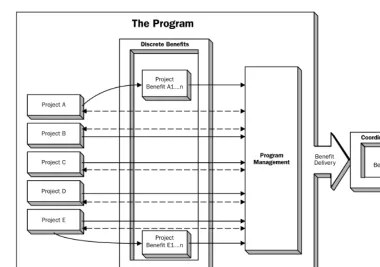
Programs, like projects, are a means of achieving organizational goals and objectives, often in the context of a strategic plan. Although a group of projects within a program can have discrete benefits, they often also contribute to consolidated benefits as defined by the program, as depicted in Figure 1-1.
1.3 What is Program Management?
Program management is the centralized coordinated management of a program to achieve the program’s strategic benefits and objectives. In addition, it allows for the application of several broad management themes to help ensure the successful accom-plishment of the program. These themes are: benefits management, stakeholder man-agement, and program governance.
pro-Figure 1-1. Program Benefits Management
gram, delivery of incremental benefits, and optimization of staffing in the context of the overall program’s needs. Projects may be interdependent because of the collective capability that is delivered, or they may share a common attribute such as client, customer, seller, technology, or resource.
A program may link projects in various other ways, including the following:
● Interdependencies of tasks among the projects, such as meeting a new regulatory requirement for the organization or delivery of an enabling service
● Resource constraints that may affect projects within the program
● Risk mitigation activities that impact the direction or delivery of multiple projects
● Change in organizational direction that affects the work of projects and their rela-tionships to other projects and work
● Escalation point for issues, scope changes, quality, communications management, risks, or program interfaces/dependencies.
Program management focuses on these project interdependencies and determines the optimal pacing for the program. This enables appropriate planning, scheduling, executing, monitoring, and controlling of the projects within the program. In essence, factors such as strategic benefits, coordinated planning, shared resources, interdepen-dencies, and optimized pacing contribute to determining whether multiple projects should be managed as a program.
1.4 The Relationship Between Program Management and
Portfolio Management
[image:19.683.120.501.57.324.2]objectives. The projects or programs of the portfolio may not necessarily be interdepen-dent or directly related.
A portfolio always exists within an organization and it is comprised of a set of current initiatives. The initiatives may or may not be related, interdependent, or properly managed as a portfolio. The portfolio may have been created by independent efforts to authorize and launch projects without regard to strategic objectives or risks. With portfolio management, the organization is able to align the portfolio to strategic objectives, approve only components that directly support business objectives, and consider the portfolio risk as a result of the mix of components in a portfolio at any one time. Components may in fact be deferred by the organization when the risk of adding one or more of them to the current portfolio would unreasonably upset the balance and exceed the risk tolerance of the organization. As a result, the portfolio of an organization represents a snap shot of its selected components, which reflects strategic management or lack thereof and affects the strategic goals of the organization. A portfolio is most likely one of the truest measures of an organization’s intent, direction, and progress. It is where investment decisions are made, resources are allocated, and priorities are identified. If a portfolio’s components are not aligned to the strategy, the organization can reasonably question why they are being undertaken. The difference can be made clearer. Portfolio management focuses on assuring that programs and projects are viewed in priority for resource allocation (i.e., people, funding) that is consistent with and aligned to organizational strategies. Programs focus on achieving the benefits aligned with the portfolio and, subsequently, organizational objectives. Figure 1-2 depicts the sometimes complex relationship between portfolios, programs, projects, and related work.
Figure 1-2. Portfolios, Programs, and Projects—High-Level View
Interactions occur between the portfolio management processes and program man-agement processes of most Program Manman-agement Process Groups. The type of interac-tion and frequency will vary depending upon the needs of the Program Management Process Group.
direction of control will be more from the portfolio domain to the program domain, whereas monitoring information will generally travel from program domain to portfolio domain. Information flowing from the program’s Initiating and Planning Process Groups will typically consist of first or early views of scope development, cost estimates, and timeline estimates.
Information flowing to the portfolio domain from the program’s Executing, Monitor-ing and ControllMonitor-ing, and ClosMonitor-ing Process Groups mainly contributes to providMonitor-ing status information, program performance reports, budget and schedule updates, earned value cost performance reports, change requests and approved changes, and escalating issues and risks. The frequency of these interactions will be dictated by the frequency of the program’s review and update cycles and the reporting requirements imposed by the portfolio management or governance team.
In summary, interactions between the program and portfolio domains fall into several categories, as follows:
● Interactions related to initiating the program
● Interactions related to providing information to the portfolio domain during the program life cycle
● Interactions related to closing the program
● Interactions related to providing changes to the program from the portfolio domain.
1.5 The Relationship Between Program Management and
Project Management
During a program’s life cycle, projects are initiated and the program manager oversees and provides direction and guidance to the project managers. Program managers coordinate efforts between projects but do not manage them. An essential program management responsibility is the identification, rationalization, monitoring, and con-trol of the interdependencies between projects; dealing with the escalated issues among the projects that comprise the program; and tracking the contribution of each project and the non-project work to the consolidated program benefits.
The integrative nature of program management processes involves coordinating the processes for each of the projects or program packages. This applies through all the Process Groups of Initiating, Planning, Executing, Monitoring and Controlling, and Closing, and involves managing the processes at a level higher than those pertaining to a project. An example of this type of integration is the management of issues and risks needing resolution at the program level, because they cannot be addressed at the individual project level.
Furthermore, processes between the program and project domains can be iterative. Planning effectively for a program first requires a top-down and then a bottom-up approach. This not only helps in obtaining relevant information at appropriate levels, but helps obtain and validate buy-in from the stakeholders of a program. This type of interaction of program-level processes with project-level processes can be found during all stages of the program life cycle. An example of such an interaction can be found during schedule development, where a detailed review of the overall schedule at the project level is needed to validate information at the program level.
interaction. Table 1-1 summarizes some of the differences between portfolios, pro-grams, and projects.
Table 1-1. Comparative Overview of Project, Program, and Portfolio Management
1.6 Program Management in Organizational Planning
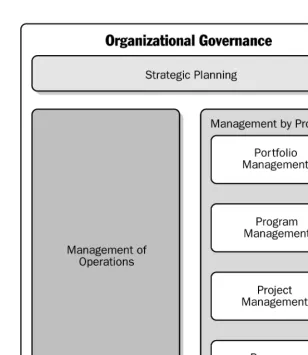
The primary context for program management within an organization is the planning and execution of organizational plans. Programs can be thought of as the highest level at which work is directed across multiple lines of business, although programs can also support narrow single lines of business or functional areas of an organization. How much success an organization will have with program management is determined by the maturity of its policies, controls, and governance that define, communicate, and align the organization’s goals.
During their life cycle, projects produce deliverables, whereas programs deliver benefits and capabilities that the organization can utilize to sustain, enhance, and deliver organizational goals.
Figure 1-3 illustrates the relationship between business initiatives in the strategic cycle and portfolios, programs and projects.
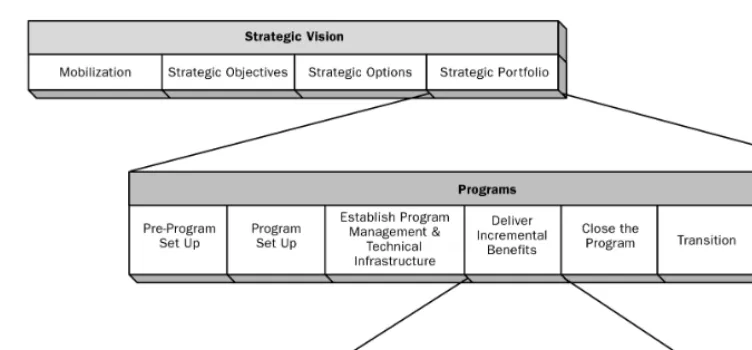
The stylized program life cycle in Figure 1-4 illustrates the nonsequential nature of program management with the mobilization of components to deliver a stream of deliverables that facilitate new operations and benefits during the program’s life cycle. Organizations address the need for change by creating strategic business initiatives to modify the organization or its products. Organizations use portfolios, programs, and projects to deliver these initiatives.
The organization must ensure that these portfolios, programs, and projects are:
● Aligned with organizational objectives or goals
● Comprised of the best mix of project investments
Figure 1-3. Relationships Among Portfolios, Programs, and Projects
Figure 1-4. A Representative Program Life Cycle
Some organizations may not use the portfolio as a top-level structure and the program may be the entity at the top of the hierarchy of projects (see Figure 1-2).
1.7 Themes of Program Management
Organizations initiate programs to deliver benefits and accomplish agreed-upon out-comes that often affect the entire organization. The organization of the program takes this into account and balances stakeholder expectations, requirements, resources, and timing conflicts across competing projects. Throughout its life cycle, an effective program encompasses many areas, however there are three broad management themes that are key to the success of a program:
● Benefits management
● Program stakeholder management
[image:23.683.115.504.276.458.2]These themes run like common threads throughout the program management life cycle. The processes described in Chapter 2 on Program Life Cycle and Chapter 3 on Program Management Processes illustrate how these themes are present at all stages.
1.7.1 Benefits Management
The first theme, benefits management as applied to programs, is the definition and formalization of the expected benefits a program is intended to deliver. This includes both tangible and intangible benefits and the planning, modeling, and tracking of intermediate and final results throughout the program life cycle. Individual projects deliver results that contribute to or enable the other projects in the program to proceed, as well as contributing to the delivery of the overall program’s expected benefits. Within organizations that have implemented portfolio management, the expected benefits will normally be formalized at the portfolio level before being delegated to the program for realization.
Benefits Management:
● Assesses the value and organizational impact of the program
● Identifies the interdependencies of benefits being delivered among various projects within the program
● Ensures that targeted benefits are specific, measurable, actual, realistic, and time-based
● Analyzes the potential impact of planned program changes on benefits outcome
● Assigns responsibilities and accountability for the actual benefits required from the program.
Benefits can be tangible or intangible. Tangible benefits are quantifiable and may relate to financial objectives. Intangible benefits (e.g., improved employee morale or customer satisfaction) are less easily quantified, however, most intangible benefits ultimately contribute to a tangible benefit (e.g., increased participation in an event or increased revenue results).
Benefits management begins in the early phases of a program’s life cycle. The benefits realization plan, drafted early and maintained throughout all phases of a program, includes:
● Definition of each benefit and how it is to be realized
● Mapping of benefits to program outcomes
● Metrics and procedures to measure benefits
● Roles and responsibilities for benefit management
● Communications plan for benefits management
● Transition of the program into ongoing operations and benefit sustainment. Benefits management ensures that the organization will realize and sustain the benefits from its investment in the program, even following the conclusion of the program life cycle. The program manager must see that the program transition activi-ties provide for continued management of program benefits within the framework of ongoing operations.
Figure 1-5. Illustrative Benefits Management Approach
1.7.2 Program Stakeholder Management
The second theme defines program stakeholders as individuals and organizations whose interests may be affected by the program outcomes, either positively or nega-tively. These stakeholders play a critical role in the success of any project or program. Stakeholders of a program can be internal or external to the organization. Within an organization, internal stakeholders cover all levels of the organization’s hierarchy. Many stakeholders provide valuable input. Stakeholders also have the ability to influ-ence programs—they can either help or hinder depending on the benefits or threats they see. The program manager must understand the position stakeholders may take, the way they may exert their influence, and their source of power. Where negative influence is possible, the program manager needs to ensure that the stakeholders see the benefits; something akin to marketing is often needed.
Key program stakeholders include:
● Program Director.The individual with executive ownership of the program or pro-grams.
● Program Manager.The individual responsible for managing the program.
● Project Managers.The individuals responsible for managing the individual projects within the program.
● Program Sponsor.The individual or group who champions the program initiative, and is responsible for providing project resources and often ultimately for delivering the benefits.
● Customer.The individual or organization that will use the new capabilities/results of the program and derive the anticipated benefits.
● Performing Organization.The group that is performing the work of the program through projects.
● Program Team Members.The individuals performing program activities.
● Project Team Members.The individuals performing constituent project activities.
● Program Management Office (PMO).The organization responsible for defining and managing the program-related governance processes, procedures, and templates, etc.
● Program Office. The organization that provides support of individual program management teams or program managers by handling administrative functions cen-trally.
Additional stakeholders may exist within the organization or external to it. Some examples of external stakeholders include:
● Suppliers affected by changing policies and procedures
● Governmental regulatory agencies imposing new policies
● Competitors and potential customers with an interest in the program
● Groups representing consumer, environmental, or other interests.
Stakeholders may also include individuals and groups who are not directly affected by the results of the program but maintain an interest in the initiative. Groups or individuals who are competing for limited resources or pursuing goals which conflict with those of the program should also be considered as stakeholders, since they can affect the program results.
Program stakeholder management identifies how the program will affect stakehold-ers (e.g., the organization’s culture, current major issues, resistance or barristakehold-ers to change, etc.) and then develops a communication strategy to engage the affected stakeholders, manage their expectations, and improve their acceptance of the objec-tives of the program.
Program stakeholder management extends beyond project stakeholder manage-ment to consider additional levels of stakeholders resulting from broader interdepen-dencies among projects. A stakeholder management plan, combined with the commu-nication plan, should deliver accurate, consistent, and timely information that reaches all relevant stakeholders as part of the communication process to facilitate a clear understanding of the issues. Communication planning and execution should focus on the proactive and targeted development and delivery of key messages, and engage-ment of key stakeholders at the right time and in the right manner.
Stakeholder management is also an important factor in implementing successful organizational change. In this context, program plans should clearly show an under-standing of and integration with generally accepted methods of organizational change management. This includes identifying the key individuals who have an interest in or will be affected by the changes and ensuring they are aware of, supportive of, and part of the change process. To facilitate the change process, the program manager must communicate to stakeholders a clear vision of the need for change, as well as the initiative’s specific objectives and the resources required. The program manager must also set clear goals, assess readiness, plan for the change, provide resources/ support, monitor the change, obtain and evaluate feedback from those affected by the change, and address issues with people who are not fully embracing the change.
1.7.3 Program Governance
The third theme, program governance, is the process of developing, communicating, implementing, monitoring, and assuring the policies, procedures, organizational struc-tures, and practices associated with a given program. The result is a framework for efficient and effective decision-making and delivery management focused on achieving program goals in a consistent manner, addressing appropriate risks and stakeholder requirements.
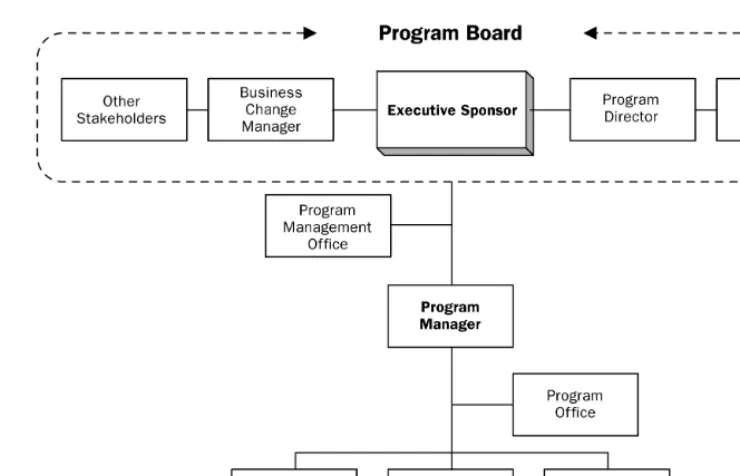
organization. A program board is a formal way to capture this executive need and forms a community or forum where the issues of the program can be managed. Although not all organizations can formalize such a structure, the practices as laid out below are common in response to the needs of program management. The program board is the group responsible for the governance of their specific program, and should be aware of any cross-program governance directives. The program board exists throughout the life of the program. The program board is sometimes referred to as the governance board or steering committee.
Figure 1-6. Governance Context
Figure 1-7. Program Governance Structure
The program board, representing the interests of the organization, provides the overarching governance and quality assurance of the program. The composition of the program board is typically a cross-functional group of senior stakeholders responsi-ble for providing guidance and decisions regarding program direction and changes affecting the program outcomes.
Specific functions of the board include, but are not limited to, the following:
● Initiation of the program
● Approval of program plans and authorizing deviations from the plans
● Review of the program’s progress, benefits delivery, and costs
● Guidance on issues that the program manager has been unable to resolve
● Assurance that resources are available for the program
● Collection of input for strategic progress reporting
● Establishment of frameworks and limits for making decisions about investments in the program
● Compliance with corporate and legal policies, procedures, standards, and require-ments.
The program board is not usually a consensus committee; the executive sponsor is the key decision maker taking advice and commitments from others within the board and program management team. Each member of the board represents key internal stakeholders and may potentially include those external to the organization impacted by the program’s outcomes.
The program board members do not work full time on the program; therefore, they place great reliance on the program management team.
Organizations may then choose to have the program management office provide support to all programs. Typically, the role of the program management office is to support individual program management teams or program managers by handling administrative functions centrally.
Figure 1-8 illustrates the hierarchy of governance and the deliverables that the roles are expected to generate for the organization.
CHAPTER 2
Program Life Cycle and
Organization
As defined in Chapter 1, programs and program management exist within a strategic context and operate as strategy implementation vehicles. The program manager must understand this wider context to be able to adapt the life cycle model and program benefits to satisfy the corresponding requirements assigned to the program.
This chapter describes some of the key life cycle considerations in the program management context. The topics include:
2.1 Program Life Cycle
2.2 Program Themes Across the Program Life Cycle 2.3 Program Management Life Cycle Phases
2.1 Program Life Cycle
Organizations and their project managers recognize that current best practice in proj-ect control involves breaking the projproj-ect into discrete stages or phases. The manage-ment of programs has the same requiremanage-ment. To ensure effective program control, the program moves through discrete, though often overlapping phases. These phases facilitate program governance, enhanced control, and coordination of program and project resources and overall risk management.
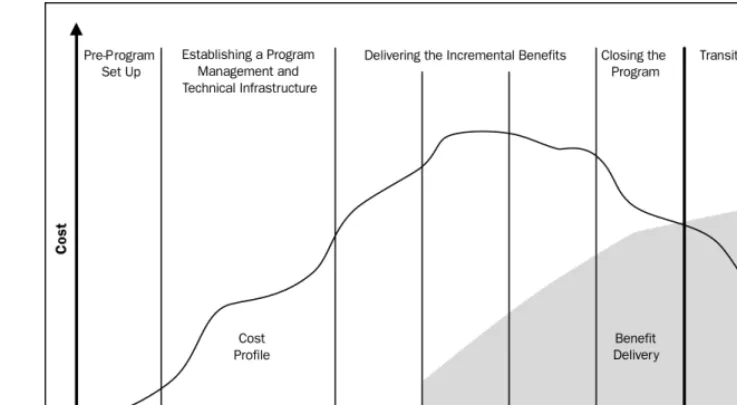
Figure 2-1. Typical Cost and Benefit Profiles Across the Generic Program Life Cycle
[image:32.683.164.533.63.265.2]some projects may produce benefits that can be realized immediately whereas other projects may deliver capabilities that must be integrated with the capabilities delivered by other projects before the associated benefits can be realized.
Figure 2-2. A Representative Program Life Cycle
The type of program being managed may influence a program’s life cycle; however, the major life cycle phases and their deliverables will remain similar. An example of this is pharmaceutical or medical device manufacturers who have to conduct extensive clinical trials (projects) during and after a product has been developed. The regulators for these industries also review the organization’s use of risk management to assess potential flaws in their products. Each of these steps will normally be run as one or more projects, or, if required, as a program.
The key distinctions between program and project life cycles are:
● Programs often have an extended life cycle as some projects transition to operations while other projects are only just being initiated.
● Projects generate discrete deliverables at the completion of their life cycle, and the resulting benefits subsequently flow into the program.
The PMBOK威Guide—Third Edition addresses the use of a project life cycle to assist in the control and management of the project deliverables. Within a program there are several projects, each following its own project life cycle. In fact, each project could use a different life cycle model, depending on the type of project. In such cases, the program manager may define a project life cycle model to create a common language among stakeholders and facilitate reporting and monitoring the status of all projects within the program.
An example of this could be:
Table 2-1. Example of a Project Life Cycle Model
2.2 Program Themes Across the Program Life Cycle
As introduced in Chapter 1, three themes permeate all activities of a program: benefits management, stakeholder management, and program governance. These themes evolve over time and require a program manager’s focus throughout each phase of the program’s life cycle.
2.2.1 Benefits Management and the Program Life Cycle
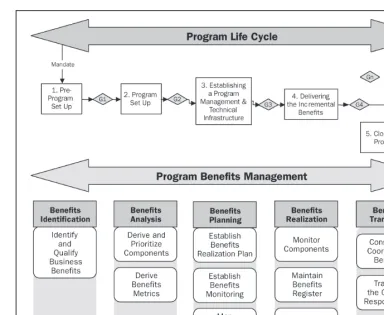
The program life cycle is designed not only to comply with the needs of corporate governance, but also to ensure that the expected benefits are realized in a predictable and coordinated manner. Benefits management requires the establishment of pro-cesses and measures for tracking and assessing benefits throughout the program life cycle. In fact, the management of program benefits has a life cycle of its own, which runs parallel to that of the program. Benefits management evolves as the program evolves through its phases. This relationship between program life cycle and the benefits management life cycle is illustrated in Figure 2-3.
To be successful, benefits management must begin when the program is initiated, in the Pre-Program Set Up and Program Set Up life cycle phases. There should be clear definition and agreement among stakeholders on the factors contributing to benefits, as well as a supporting structure and processes to help plan, manage, measure, track, and realize the benefits. The benefits expected from each project should be defined in the project business case before the project is initiated, together with the benefit tracking and assessment processes.
The Program Management and Technical Infrastructure phases should be estab-lished in such a way as to be capable of recording, tracking, and evaluating benefits in accordance with the benefits definition and assessment processes defined in the preceding phase.
Figure 2-3. Program Life Cycle and Benefits Management
in time as well as the forecast for their ongoing value, reasons for any deviations, and recommendations on how gaps can be bridged.
2.2.2 Stakeholder Management
As described in Chapter 1 (Section 1.7.2), program stakeholder management must carefully consider the interests and concerns of the often extensive stakeholder list in order to ensure program success. Program stakeholder management is a required function that starts with the identification and analysis of all stakeholders and spans all the life cycle phases of a program.
Each stakeholder can play a significant role in the success of any program. For this reason, the program management team must identify stakeholders early in the program life cycle, and then actively manage stakeholder expectations throughout all of the life cycle phases to ensure their continued support of the program.
In many instances, a change to the program environment can add or remove stakeholders; the program manager must manage the stakeholder list throughout the lifetime of the program and take appropriate actions to handle expected or actual changes.
2.2.3 Program Governance Through Phase-Gate Reviews
governance structure. The use in this way of a formal program methodology constitutes a generally accepted practice for applying governance through a program.
The phase-gate reviews are generally focused on strategic alignment, investment appraisal, monitoring and control of opportunities and threats, benefit assessment, and the monitoring of the program outcomes. In cases where the program was initiated as part of a portfolio, these reviews will be carried out within the context of the corresponding portfolio.
The phase-gate reviews, shown in Figure 2-2, are a recommended approach to aiding program control and program management, as well as facilitating program governance. Phase-gate reviews are carried out at key decision points in the program life cycle. The purpose of phase-gate reviews is to provide an objective check against the exit criteria of a completed phase to determine readiness to proceed to the next phase in the program life cycle. Phase-gate reviews also provide an opportunity to assess the program with respect to a number of strategic and quality-related criteria including:
● Program and its constituent projects are still aligned with the organization’s strategy
● Expected benefits are in line with the original business plan
● Level of risk remains acceptable to the organization
● Identified generally accepted good practices are being followed.
Phase-gate reviews are often based upon the core investment decisions within the life cycle. The focus of each phase-gate review is specific to the phase just completed by the program. Each phase-gate review functions as a ‘‘go’’ or ‘‘no-go’’ decision point on the program as a whole. In the case of phase-gate G5, shown throughout the graphics here, it is a convention to indicate confirmation of program closure.
Phase-gate reviews do not substitute for periodic program performance reviews that assess performance against expected outcomes and against the need to realize and sustain program benefits into the long term.
2.3 Program Management Life Cycle Phases
This section defines the phases of the generic life cycle introduced in Figure 2-2. These phases will apply to most programs most of the time. Between the phases are pre-defined milestones or phase-gate reviews, as introduced in the previous section. The gate numbers shown correspond to the five previously mentioned gates.
2.3.1 Program Governance Across the Life Cycle
While it is not, strictly speaking, a phase in the program management life cycle, this process spans all of the program life cycle phases. Program governance—using the governance mechanisms identified in Sections 1.7.3 on Program Governance and 2.2.3 on Governance through phase-gate review—monitors the progress of the program and the delivery of the coordinated benefits from its component projects.
Program governance provides an appropriate organizational structure and the poli-cies and procedures to support program delivery through formal program reviews facilitated by the regular and phase-gate-based oversight of deliverables, performance, risks, and issues by the program board.
Program governance is fulfilled through the following roles:
● Executive Sponsor.Responsible for creating an environment that will ensure pro-gram success
Figure 2-4. Program Governance
● Program Board or Steering Committee. Empowered to make decisions regarding program scope, budget, and schedules and to resolve escalated issues and risks
● Program Manager. Supported by any associated program office and responsible for conducting appropriate program management activities, as outlined in Chapter 3
● Project Managers.Responsible for providing accurate and timely status reports and for reporting and escalating risks and issues as they are identified.
Program governance activities are conducted through all phases of the program life cycle and require organizations to establish and enforce policies that address the following:
● Common procedures for all projects within the program
● Appropriate controls to ensure consistent application of procedures
● Approach for developing and documenting program assumptions and decisions
● Approach for managing program change
● Quantifiable measures for evaluating the success of individual projects and the program
● Common practices for capturing risks, issues, benefit measurements, and lessons learned.
These policies are most often created by the program office with input from the steering committee and project teams. The policies provide a framework for all pro-gram activities.
Phase-gate reviews provide an opportunity for senior management to ensure the initiative remains viable and continues to support the organization’s strategy. These reviews can also provide an opportunity for senior management to review critical program risks and issues. At each phase-gate review, the program may be approved to go forward to the next phase or may be cancelled. Additional review gates can be defined during the longest phase of the program, the delivering the incremental bene-fits phase, to monitor the progress of the constituent projects.
2.3.2 Phase One: Pre-Program Set Up
The primary objective of the Pre-Program Set Up phase is to establish a firm foundation of support and approval for the program.
group or executive sponsor of the program (usually a senior executive or portfolio manager) initiates the program with a mandate or program brief detailing the strategic objectives and benefits that the program is expected to deliver. This selection process may range from a very informal one to a more formal, standardized approach. As shown in OPM3威, the more mature an organization is in terms of program management, the more likely it is to have a formalized selection process.
Figure 2-5. Pre-Program Set Up
The pre-program set up phase focuses on the preparation and navigation through the selection process and typically consists of several activities:
● Understanding the strategic value of the proposed business change
● Identifying the key decision makers/stakeholders in the program selection process and their expectations and interests
● Defining the program objectives and their alignment with the organization’s strate-gic objectives
● Developing a high-level business case demonstrating an understanding of the needs, feasibility and justification of the program
● Securing approval for the program charter by getting signatures of the key stake-holders
● Appointing the program manager by the program board
● Developing a plan to initiate the program.
Program management provides a focused effort to achieve the strategic objectives of the organization. Programs are more strategic in nature than projects. As a result, in the Pre-Program Set Up phase, there is a significant need to show how the program would map to and deliver the strategic objectives through alignment of its constituent projects. Programs are generally undertaken by organizations as a catalyst for some level of change. In this case, program plans should clearly show an understanding of and integration with generally accepted methods of organizational change manage-ment.
During this phase, the program manager or executive sponsor also needs to consider and answer the question of why the expected business benefits would be best realized through a program rather than a project. There should be a clear indication of the type of program being recommended and the criteria used to arrive at the recommen-dation. The rationale used could include considerations as:
● Shared resources across projects
● Program duration
● Participation across corporate entities
● Those who are in a position to influence the selection of the program for approval or
● Those who are in a position to influence the success of the program if it is selected (i.e., those impacted by the results of the program).
The information required, and the orientation of the selection committee, may be significantly different from those of the stakeholders who will eventually benefit from the program. This fact may have an impact on the analysis and documentation required at this phase.
Once the strategic area to be addressed is clearly understood, and the stakeholders with whom communication must be established are identified, then a high-level approach or plan needs to be developed. This plan must show that the program manager clearly understands the stimuli that triggered the program, the program objectives, and how the objectives align to the organization. The high-level plan should include a clear statement of the following program components:
● Mission—why the program is important and what it needs to achieve
● Vision—what the end state will look like, how it will benefit the organization
● Values—how the program will evaluate necessary tradeoffs and balance the deci-sions to be made.
The selection criteria and materials to be provided may range from vague and informal to very detailed, specific, and formal. Typically, the following factors are considered in selecting and approving programs:
● Total available resources (i.e., funding, equipment or people)
● Preliminary budget estimates required for this program
● Benefits analysis, which identifies and plans for their realization
● Strategic fit within the organization’s long-term goals
● Risks inherent in this program.
The results from this stage of the life cycle are:
● Approval from a governing board to proceed to the next phase
● Program charter that documents the vision, key objectives, expected benefits, con-straints of the program, and any assumptions to be used for planning (key input)
● Assigned program manager
● Identification and commitment of key resources needed for planning
● A plan for the program set up phase.
2.3.3 Phase Two: Program Set Up
At this stage, the program has passed the first phase-gate review (G1) and has received ‘‘approval in principle’’ from a selection committee to proceed to program set up. A program manager has been identified and the key input into this phase—a charter defining high-level scope, objectives, visions, and constraints—has been generated.
The purpose of the Program Set Up phase is to continue to develop the foundation for the program by now building a detailed ‘‘roadmap’’ that provides direction on how the program will be managed and defines its key deliverables.
The desired outcome of this phase is approval authorizing execution of the program management plan. To achieve that outcome, the detailed program management plan contains answers to the following questions:
● What are the deliverables and when will they be ready?
● How much will it cost?
● What are the risks and issues?
● What dependencies, assumptions, and constraints are included?
Figure 2-6. Program Set Up
If the program’s components have not already been defined, this phase will deter-mine the components that need to be included with the program, as well as any feasibility studies that may need to be conducted to address program issues. Activities in this second phase could include:
● Aligning the mission, vision, and values for the program with the organization’s objectives
● Developing an initial detailed cost and schedule plan for setting up the program and outline plans for the remainder of the program
● Conducting feasibility studies, where applicable, to assess the proposed program for technical and economic feasibility, as well as ethical feasibility or acceptability
● Establishing rules for make/buy decisions as well as those for selecting subcontrac-tors to support the program
● Developing a program architecture that maps out how the projects within the program will deliver the capabilities that result in the required benefits
● Developing a business case for each project in the program which addresses the technical, investment and regulatory/legislative factors which may pertain to each project
● Communicating with stakeholders and getting support.
Key results from this stage of the life cycle revolve around the program-level Planning Processes and include:
● Scope definition and planning
● Activity definition and sequencing
● Duration estimates
● Schedule
● Procurement of external resources
● Internal/external resources/staffing allocation
● Cost estimates/budgeting
● Risk management consolidation
● Constituent component identification and definition
● Approval of the program management plan, based upon the individual business cases and supporting feasibility studies
2.3.4 Phase Three: Establish Program Management and Technical
Infrastructure
The purpose of this phase is to establish an infrastructure that will support the program and its constituent projects as they deliver the expected benefits for the program.
Figure 2-7. Establish the Program Infrastructure
Once the program has passed the second phase-gate review (G2), the program manager has a mandate to execute the program as defined by its roadmap, subject to organizational boundaries beyond which the program manager would need to reaffirm/ realign the program. In this phase, the program manager and the program team need to establish the structure in which work will occur along with the technical infrastructure to facilitate that work. More so than projects, programs usually have a supporting infrastructure in place, including the following:
● Program-specific governance areas such as processes and procedures
● Program-specific tools such as Enterprise Resource Planning (ERP), program track-ing tools, time/expense reporttrack-ing, software development tools, benefit measure-ment, monitoring and tracking, etc.
● Program facilities.
The program requires an organization to support the controlling and monitoring of the program and its projects and to make decisions for the program. The program organizational structure typically consists of:
● Program Board.Representing the interests of the organization, possibly supported by a Program Management Office that is responsible for managing cross-program governance.
● Program Manager. Representing the program team, including the corresponding project managers, possibly supported by a Program Office to assist the program manager in cross-project governance.
The key roles within this structure are:
● Executive Sponsor.Has primary responsibility to the business for delivery of benefits and who sits with the program board to make business decisions about the program.
● Program Director.Has executive ownership of the program. The program director and executive sponsor could be the same person.
● Program Manager.Responsible for managing and representing the program.
● Program Team.Responsible to develop program-level benefits.
The program structure and the relationships within the structure are defined in the program framework and customized in the program charter and plan. The key results from this phase include:
● Program team staffing
● Program office to support the program
● Program governance mechanism with approval and reporting procedures
● Program control framework for monitoring and controlling both the projects and the measurement of benefits within the program
● Facilities and other required infrastructure to support the program
● IT systems and communication technologies with the necessary support arrange-ments to sustain the program throughout its life cycle.
2.3.5 Phase Four: Deliver the Benefits
The purpose of this phase is to initiate the component projects of the program and coordinate the deliverables to create the incremental benefits.
Figure 2-8. Deliver the Benefits
At this point in the program’s life cycle, the program has passed another phase-gate review (G3) and the core work of the program—through its components—begins. This phase is therefore iterative and can be of unlimited duration, since the activities described below are repeated as often as required and the benefits are achieved in a cumulative manner. The phase ends only when the planned benefits of the program have been achieved or a decision is made to terminate the program for any other reason.
The program management team is responsible for managing this group of related projects in a consistent and coordinated way in order to achieve incremental benefits that could not be obtained by managing the projects as stand-alone efforts. The following activities are performed during this phase:
● Establishing a project governance structure to monitor and control the projects
● Initiating projects in order to meet program objectives
● Managing the transition from the ‘‘as-is’’ state to the ‘‘to-be’’ or target state
● Ensuring project managers adhere to established project management methodolo-gies
● Ensuring project deliverables meet their business/technical requirements
● Analyzing progress to plan
● Identifying environmental changes which may impact the program management plan or anticipated benefits
● Ensuring that common activities and dependencies between projects or other pro-grams in the portfolio are coordinated
● Identifying issues and ensuring corrective actions are taken
● Coordinating the efficient use of resources across the program and project activities
● Reviewing change requests and authorizing additional work as appropriate
● Setting thresholds for corrective action when realized benefits are not delivered per expectations
● Communicating with stakeholders and the program governance board.
The program manager or, for larger programs, the program management office reviews the efforts by the constituent project teams. It will be up to the program manager/PMO to determine the key intersections and critical interfaces of the project and the program.
2.3.6 Phase Five: Close the Program
The purpose of this phase is to execute a controlled closedown of the program.
Figure 2-9. Close the Program
The last phase of a program begins after a phase-gate review (G4). All program work is completed and benefits are accruing. The activities in this phase lead to the shut down of the program organization and infrastructure as well as the transition of artifacts, benefits monitoring, and on-going operations to other groups.
There are key activities that must be executed when a program arrives at the end of its life cycle to ensure that the closure is smooth and safe.
● Review status of benefits with the stakeholders and program sponsor.
● Disband the program organization.
● Disband the program team; ensure arrangements are in place for appropriate re-deployment of all human resources.
● Dismantle the infrastructure; ensure arrangements are in place for appropriate redeployment of all physical resources (e.g., facilities, equipment, etc.).
● Provide customer support assuring that guidance and maintenance will be provided in the case that an issue arises or a defect is detected after the release; this assurance is generally defined by contract.
● Document lessons learned in the organizational database so they can be referenced in the future by similar programs. Lessons learned are generally expressed as weak-nesses or areas to improve and as strengths and best practices of the performing organization to be utilized in the future.
● Provide feedback and recommendations on changes identified during the program’s life but beyond the scope of the program that may benefit the organization to pursue.
● Store and index all program-related documents to facilitate reuse in the future.
Section II
The Standard for Program
Management
Chapter 3
Program Management Processes
Program management is the centralized coordinated management of a program to achieve the program’s strategic objectives and benefits. Good program management requires visionary, entrepreneurial, and motivational zeal, combined with sound man-agement processes.
The process definitions and terminology at the program level are very similar to the processes at the project level. However, program management processes address issues at a higher level and involve less detailed project-level analysis. The program level is configured to resolve issues between projects and to enable a synergistic approach, so as to deliver program benefits. Like project management processes, program management processes require coordination with other functional groups in the organization as well as stakeholder management in general — but in a broader context.
A guiding rule for applying program management processes is to ensure that the program manager effectively delegates authority, autonomy, and responsibility for day-to-day management of the projects to the designated project managers.
Program management processes are primarily integrative in that they coordinate the outputs of various projects to derive the desired program outcomes. For this reason, the program management processes can be mapped in terms of the various Knowledge Areas outlined in the PMBOK威 Guide—Third Edition. This mapping is described in Section 3.10.
This chapter includes the following major sections:
3.1 Themes in the Program Management Life Cycle 3.2 Program Management Process Groups
3.3 Common Program Management Process Components 3.4 Initiating Process Group
3.5 Planning Process Group 3.6 Executing Process Group
3.7 Monitoring and Controlling Process Group 3.8 Closing Process Group
3.9 Process Interactions
3.1 Themes in the Program Management Life Cycle
In Chapter 1 of this standard, three major themes in program management are identi-fied and described. In this chapter, the processes that support the themes are described.
3.1.1 Benefits Management
Benefits management is one of the three major themes in program management, since programs are created to produce benefits that would not otherwise be realized. Benefits management assesses the