Click Trajectories: End-to-End Analysis of the Spam Value Chain
Kirill Levchenko
∗Andreas Pitsillidis
∗Neha Chachra
∗Brandon Enright
∗M´ark F´elegyh´azi
‡Chris Grier
†Tristan Halvorson
∗Chris Kanich
∗Christian Kreibich
†He Liu
∗Damon McCoy
∗Nicholas Weaver
†Vern Paxson
†Geoffrey M. Voelker
∗Stefan Savage
∗ ∗Department of Computer Science and Engineering †Computer Science Division University of California, San Diego University of California, Berkeley
International Computer Science Institute ‡Laboratory of Cryptography and System Security (CrySyS) Berkeley, CA Budapest University of Technology and Economics
Abstract—Spam-based advertising is a business. While it has engendered both widespread antipathy and a multi-billion dollar anti-spam industry, it continues to exist because it fuels a profitable enterprise. We lack, however, a solid understanding of this enterprise’s full structure, and thus most anti-spam interventions focus on only one facet of the overall spam value chain (e.g., spam filtering, URL blacklisting, site takedown). In this paper we present a holistic analysis that quantifies the full set of resources employed to monetize spam email— including naming, hosting, payment and fulfillment—using extensive measurements of three months of diverse spam data, broad crawling of naming and hosting infrastructures, and over 100 purchases from spam-advertised sites. We relate these resources to the organizations who administer them and then use this data to characterize the relative prospects for defensive interventions at each link in the spam value chain. In particular, we provide the first strong evidence of payment bottlenecks in the spam value chain; 95% of spam-advertised pharmaceutical, replica and software products are monetized using merchant services from just a handful of banks.
I. INTRODUCTION
We may think of email spam as a scourge—jamming our collective inboxes with tens of billions of unwanted messages each day—but to its perpetrators it is a potent marketing channel that taps latent demand for a variety of products and services. While most attention focuses on the problem of spamdelivery, the email vector itself comprises only the visible portion of a large, multi-faceted business enterprise. Each click on a spam-advertised link is in fact just the start of a long and complex trajectory, spanning a range of both technical and business components that together provide the necessary infrastructure needed to monetize a customer’s visit. Botnet services must be secured, domains registered, name servers provisioned, and hosting or proxy services acquired. All of these, in addition to payment processing, merchant bank accounts, customer service, and fulfillment, reflect necessary elements in the spam value chain.
While elements of this chain have received study in isolation (e.g., dynamics of botnets [20], DNS fast-flux networks [17], [42], Web site hosting [1], [22]), the re-lationship between them is far less well understood. Yet
it is these very relationships that capture the structural dependencies—and hence the potentialweaknesses—within the spam ecosystem’s business processes. Indeed, each distinct path through this chain—registrar, name server, hosting, affiliate program, payment processing, fulfillment— directly reflects an “entrepreneurial activity” by which the perpetrators muster capital investments and business rela-tionships to create value. Today we lack insight into even the most basic characteristics of this activity. How many organizations are complicit in the spam ecosystem? Which points in their value chains do they share and which operate independently? How “wide” is the bottleneck at each stage of the value chain—do miscreants find alternatives plentiful and cheap, or scarce, requiring careful husbanding?
The desire to address these kinds of questions empirically—and thus guide decisions about the most effec-tive mechanisms for addressing the spam problem—forms the core motivation of our work. In this paper we develop a methodology for characterizing the end-to-end resource dependencies (“trajectories”) behind individual spam cam-paigns and then analyze the relationships among them. We use three months of real-time source data, including captive botnets, raw spam feeds, and feeds of spam-advertised URLs to drive active probing of spam infrastructure elements (name servers, redirectors, hosting proxies). From these, we in turn identify those sites advertising three popular classes of goods—pharmaceuticals, replica luxury goods and counterfeit software—as well as their membership in specific affiliate programs around which the overall business is structured. Finally, for a subset of these sites we perform on-line purchases, providing additional data about merchant bank affiliation, customer service, and fulfillment. Using this data we characterize the resource footprint at each step in the spam value chain, the extent of sharing between spam organizations and, most importantly, the relative prospects for interrupting spam monetization at different stages of the process.
SectionIII describes the data sources, measurement tech-niques and post-processing methodology used in our study. SectionIVdescribes our analysis of spam activities between August and October of 2010, and the implications of these findings on the likely efficacy of different anti-spam inter-ventions, followed by our conclusions in SectionV.
II. BACKGROUND ANDRELATEDWORK
As an advertising medium, spam ultimately shares the underlying business model of all advertising. So long as the revenue driven by spam campaigns exceeds their cost, spam remains a profitable enterprise. This glib description belies the complexity of the modern spam business. While a decade ago spammers might have handled virtually all aspects of the business including email distribution, site design, hosting, payment processing, fulfillment, and customer service [33], today’s spam business involves a range of players and service providers. In this section, we review the broad elements in the spam value chain, the ways in which these components have adapted to adversarial pressure from the anti-spam community, and the prior research on applied e-crime economics that informs our study.
A. How Modern Spam Works
While the user experience of spam revolves principally around the email received, these constitute just one part of a larger value chain that we classify into three distinct stages: advertising, click support, and realization. Our discussion here reflects the modern understanding of the degree to which specialization and affiliate programs dominate the use of spam to sell products. To this end, we draw upon and expand the narrative of the “Behind Online Pharma” project [4], which documents the experience of a group of investigative journalists in exploring the market structure for online illegal pharmaceuticals; and Samosseiko’s recent overview [46] of affiliate programs, including many that we discuss in this paper.
Advertising. Advertising constitutes all activities focused
on reaching potential customers and enticing them into click-ing on a particular URL. In this paper we focus on the email spam vector, but the same business model occurs for a range of advertising vectors, including blog spam [39], Twitter spam [12], search engine optimization [53], and sponsored advertising [26], [27]. The delivery of email spam has evolved considerably over the years, largely in response to increasingly complex defensive countermeasures. In particu-lar, large-scale efforts to shut down open SMTP proxies and the introduction of well-distributed IP blacklisting of spam senders have pushed spammers to using more sophisticated delivery vehicles. These include botnets [13], [20], [56], Webmail spam [9], and IP prefix hijacking [45]. Moreover, the market for spam services has stratified over time; for example, today it is common for botnet operators to rent their services to spammers on a contract basis [40].
The advertising side of the spam ecosystem has by far seen the most study, no doubt because it reflects the part of spam that users directly experience. Thus, a broad and ongoing literature examines filtering spam email based on a variety of content features (e.g., [2], [19], [43], [57]). Simi-larly, the network characteristics of spam senders have seen extensive study for characterizing botnet membership [58], identifying prefix hijacking [45], classifying domains and URLs [14], [32], [44], [55], [56], and evaluating black-lists [47], [48]. Finally, we note that most commercial anti-spam offerings focus exclusively on the delivery aspect of spam. In spite of this attention, spam continues to be de-livered and thus our paper focuses strictly on the remaining two stages of the spam monetization pipeline.
Click support. Having delivered their advertisement, a
spammer depends on some fraction of the recipients to respond, usually by clicking on an embedded URL and thus directing their browser to a Web site of interest. While this process seems simple, in practice a spammer must orchestrate a great many moving parts and maintain them against pressure from defenders.
concentration of spam-advertised pharmacies with domains registered through a particular set of registrars who appear indifferent to complaints [28].
Name servers. Any registered domain must in turn have supporting name server infrastructure. Thus spammers must provision this infrastructure either by hosting DNS name servers themselves, or by contracting with a third party. Since such resources are vulnerable to takedown requests, a thriving market has arisen in so-called “bulletproof” hosting services that resist such requests in exchange for a payment premium [23].
Web servers. The address records provided by the spam-mer’s name servers must in turn specify servers that host (or more commonly proxy) Web site content. As with name servers, spam-advertised Web servers can make use of bul-letproof hosting to resist takedown pressure [3], [51]. Some recent interventions have focused on effectively shutting down such sites by pressuring their upstream Internet service providers to deny them transit connectivity [6].
To further complicate such takedowns and to stymie blacklisting approaches, many spammers further obfuscate the hosting relationship (both for name servers and Web servers) using fast-flux DNS [17], [41], [42]. In this ap-proach, domain records have short-lived associations with IP addresses, and the mapping infrastructure can spread the domain’s presence over a large number of machines (frequently many thousands of compromised hosts that in turn proxy requests back to the actual content server [5]). Furthermore, recently innovators have begun packaging this capability to offer it to third parties on a contract basis as a highly resilient content-hosting service [7].
Stores and Affiliate Programs. Today, spammers operate primarily as advertisers, rarely handling the back end of the value chain. Such spammers often work as affiliates of an online store, earning a commission (typically 30–50%) on the sales they bring in [46]. The affiliate program typically provides the storefront templates, shopping cart manage-ment, analytics support, and even advertising materials. In addition, the program provides a centralized Web service interface for affiliates to track visitor conversions and to register for payouts (via online financial instruments such as WebMoney). Finally, affiliate programs take responsibility for contracting for payment and fulfillment services with outside parties. Affiliate programs have proven difficult to combat directly—although, when armed with sufficient legal jurisdiction, law enforcement has successfully shut down some programs [8].
Realization. Finally, having brought the customer to
an advertised site and convinced them to purchase some product, the seller realizes the latent value by acquiring the customer’s payment through conventional payment net-works, and in turn fulfilling their product request.
Payment services. To extract value from the broadest possible customer base, stores try to support standard credit
card payments. A credit card transaction involves several parties in addition to the customer and merchant: money is transferred from theissuing bank (the customer’s bank) to the acquiring bank (the bank of the merchant) via a card association network (i.e., Visa or MasterCard). In addition to the acquiring bank, issuing bank, and card association, the merchant frequently employs the services of apayment processor to facilitate this process and act as the technical interface between the merchant and the payment system.
Card associations impose contractual restrictions on their member banks and processors, including the threat of fines and de-association; but to our knowledge little public docu-mentation exists about the extent to which the associations apply this pressure in practice nor the extent to which it plays an important role in moderating the spam business. Evidence from this study suggests that any such pressure is currently insufficient to stop this activity.
Fulfillment. Finally, a store arranges to fulfill an order1 in return for the customer’s payment. For physical goods such as pharmaceuticals and replica products, this involves acquiring the items and shipping them to the customer. Global business-to-business Web sites such as Alibaba, EC-Plaza, and ECTrade offer connections with a broad variety of vendors selling a range of such goods, including prepack-aged drugs—both brand (e.g., Viagra) and off-brand (e.g., sildenafil citrate capsules)—and replica luxury goods (e.g., Rolex watches or Gucci handbags). Generally, suppliers will offer direct shipping service (“drop shipping”), so affiliate programs can structure themselves around “just in time” fulfillment and avoid the overhead and risk of warehousing and shipping the product themselves.2Fulfillment for virtual goods such as software, music, and videos can proceed directly via Internet download.
B. Pharmacy Express: An Example
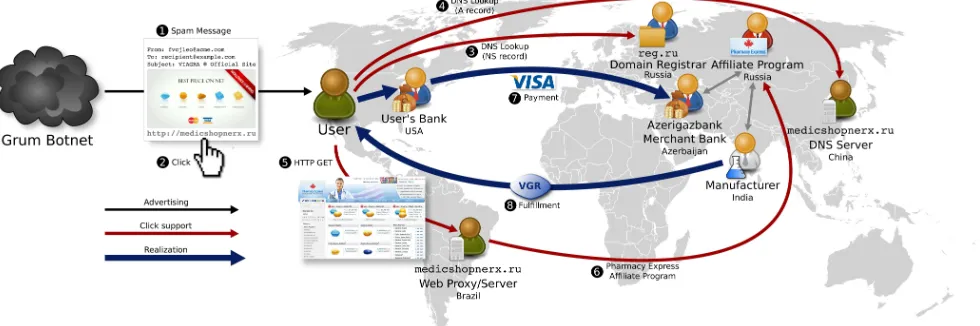
Figure 1 illustrates the spam value chain via a concrete example from the empirical data used in this study.
On October 27th, the Grum botnet delivered an email titled VIAGRAR Official Site (
Ê). The body of the mes-sage includes an image of male enhancement pharma-ceutical tablets and their associated prices (shown). The image provides a URL tag and thus when clicked (Ë) directs the user’s browser to resolve the associated domain name,medicshopnerx.ru. This domain was registered by REGRU-REG-RIPN (a.k.a.reg.ru) on October 18th (Ì)— it is still active as of this writing. The machine providing name service resides in China, while hosting resolves to a
1In principle, a store could fail to fulfill a customer’s order upon receiving
their payment, but this would both curtail any repeat orders and would lead to chargebacks through the payment card network, jeopardizing their relationship with payment service providers.
2Individual suppliers can differ in product availability, product quality,
Figure 1: Infrastructure involved in a single URL’s value chain, including advertisement, click support and realization steps.
machine in Brazil (Í). The user’s browser initiates an HTTP request to the machine (Î), and receives content that renders the storefront for “Pharmacy Express,” a brand associated with the Mailien pharmaceutical affiliate program based in Russia (Ï).
After selecting an item to purchase and clicking on “Checkout”, the storefront redirects the user to a payment portal served frompayquickonline.com(this time serving content via an IP address in Turkey), which accepts the user’s shipping, email contact, and payment information, and provides an order confirmation number. Subsequent email confirms the order, provides an EMS tracking number, and includes a contact email for customer questions. The bank that issued the user’s credit card transfers money to the acquiring bank, in this case the Azerigazbank Joint-Stock Investment Bank in Baku, Azerbaijan (BIN 404610, Ð). Ten days later the product arrives, blister-packaged, in a cushioned white envelope with postal markings indicating a supplier named PPW based in Chennai, India as its originator (Ñ).
C. Cybercrime economics
Alongside the myriad studies of the various components employed in spam (e.g., botnets, fast flux, etc.), a literature has recently emerged that focuses on using economic tools for understanding cybercrime (including spam) in a more systematic fashion, with an aim towards enabling better reasoning about effective interventions. Here we highlight elements of this work that have influenced our study.
Some of the earliest such work has aimed to understand the scope of underground markets based on the value of found goods (typically stolen financial credentials), either as seen on IRC chatrooms [10], forums [59], malware “drop-zones” [16], or directly by intercepting communications to botnet C&C servers [50]. Herley and Florˆencio critique this line of work as not distinguishing between claimed and true losses, and speculate that such environments inherently
reflect “lemon markets” in which few participants are likely to acquire significant profits (particularly spammers) [15]. While this hypothesis remains untested, its outcome is orthogonal to our focus of understanding the structure of the value chain itself.
Our own previous work on spam conversion also used empirical means to infer parts of the return-on-investment picture in the spam business model [21]. By contrast, this study aims to be considerably more comprehensive in breadth (covering what we believe reflect most large spam campaigns) and depth (covering the fullness of the value chain), but offering less precision regarding specific costs.
Finally, another line of work has examined interventions from an economic basis, considering the efficacy of site and domain takedown in creating an economic impediment for cybercrime enterprises (notably phishing) [6], [35], [36]. Molnaret al.further develop this approach via comparisons with research on the illicit drug ecosystem [34]. Our work builds on this, but focuses deeply on the spam problem in particular.
III. DATACOLLECTIONMETHODOLOGY
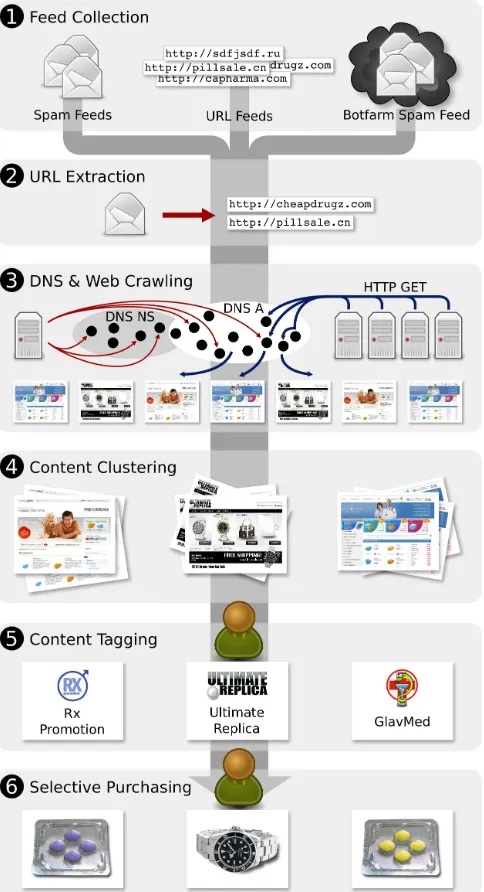
Figure 2: Our data collection and processing workflow.
for subsequent analysis in SectionIV. (StepsÎ andÏare partially manual operations, the others are fully automated.)
The rest of this section describes these steps in detail.
A. Collecting Spam-Advertised URLs
Our study is driven by a broad range of data sources of varying types, some of which are provided by third parties, while others we collect ourselves. Since the goal of this study is to decompose the spam ecosystem, it is natural that our seed data arises from spam email itself. More specifically, we focus on the URLs embedded within such email, since these are the vectors used to drive recipient traffic to particular Web sites. To support this goal, we
Feed Feed Received Distinct
Name Description URLs Domains
Feed A MX honeypot 32,548,304 100,631
Feed B Seeded honey accounts 73,614,895 35,506 Feed C MX honeypot 451,603,575 1,315,292 Feed D Seeded honey accounts 30,991,248 79,040 Feed X MX honeypot 198,871,030 2,127,164 Feed Y Human identified 10,733,231 1,051,211
Feed Z MX honeypot 12,517,244 67,856
Cutwail Bot 3,267,575 65
Grum Bot 11,920,449 348
MegaD Bot 1,221,253 4
Rustock Bot 141,621,731 13,612,815
Other bots Bot 7,768 4
[image:5.612.56.298.72.518.2]Total 968,918,303 17,813,952
Table I: Feeds of spam-advertised URLs used in this study. We collected feed data from August 1, 2010 through October 31, 2010.
obtained seven distinct URL feeds from third-party partners (including multiple commercial anti-spam providers), and harvested URLs from our own botfarm environment.
For this study, we used the data from these feeds from August 1, 2010 through October 31, 2010, which together comprised nearly 1 billion URLs. TableI summarizes our feed sources along with the “type” of each feed, the number of URLs received in the feed during this time period, and the number of distinct registered domains in those URLs. Note that the “bot” feeds tend to be focused spam sources, while the other feeds are spam sinks comprised of a blend of spam from a variety of sources. Further, individual feeds, particularly those gathered directly from botnets, can be heavily skewed in their makeup. For example, we received over 11M URLs from the Grum bot, but these only contained 348 distinct registered domains. Conversely, the 13M distinct domains produced by the Rustock bot are artifacts of a “blacklist-poisoning” campaign undertaken by the bot op-erators that comprised millions of “garbage” domains [54]. Thus, one must be mindful of these issues when analyzing such feed data in aggregate.
From these feeds we extract and normalize embedded URLs and insert them into a large multi-terabyte Postgres database. The resulting “feed tables” drive virtually all subsequent data gathering.
B. Crawler data
The URL feed data subsequently drives active crawling measurements that collect information about both the DNS infrastructure used to name the site being advertised and the Web hosting infrastructure that serves site content to visitors. We use distinct crawlers for each set of measurements.
complicated by fast flux techniques employed to minimize central points of weakness. Similar to the work of [18], we query servers repeatedly to enumerate the set of domains collectively used for click support (SectionII-A).
From each URL, we extract both the fully qualified domain name and the registered domain suffix (for example, if we see a domain foo.bar.co.uk we will extract both
foo.bar.co.uk as well asbar.co.uk). We ignore URLs
with IPv4 addresses (just 0.36% of URLs) or invalidly formatted domain names, as well as duplicate domains already queried within the last day.
The crawler then performs recursive queries on these domains. It identifies the domains that resolve successfully and their authoritative domains, and filters out unregistered domains and domains with unreachable name servers. To prevent fruitless domain enumeration, it also detects wild-card domains (abc.example.com,def.example.com, etc.) where all child domains resolve to the same IP address. In each case, the crawler exhaustively enumerates all A, NS, SOA, CNAME, MX, and TXT records linked to a particular domain.
The crawler periodically queries new records until it converges on a set of distinct results. It heuristically de-termines convergence using standard maximum likelihood methods to estimate when the probability of observing a new unique record has become small. For added assurance, after convergence the crawler continues to query domains daily looking for new records (ultimately timing out after a week if it discovers none).
Web Crawler: The Web crawler replicates the experience of a user clicking on the URLs derived from the spam feeds. It captures any application-level redirects (HTML, JavaScript, Flash), the DNS names and HTTP headers of any intermediate servers and the final server, and the page that is ultimately displayed—represented both by its DOM tree and as a screenshot from a browser. Although straightforward in theory, crawling spam URLs presents a number of practical challenges in terms of scale, robustness, and adversarial conditions.
For this study we crawled nearly 15 million URLs, of which we successfully visited and downloaded correct Web content for over 6 million (unreachable domains, blacklist-ing, etc., prevent successful crawling of many pages).3 To
manage this load, we replicate the crawler across a cluster of machines. Each crawler replica consists of a controller managing over 100 instances of Firefox 3.6.10 running in parallel. The controller connects to a custom Firefox exten-sion to manage each browser instance, which incorporates the Screengrab! extension [38] to capture screen shots (used for manual investigations). The controller retrieves batches of URLs from the database, and assigns URLs to Firefox
3By comparison, the spam hosting studies of Andersonet al.and Konte
et al.analyzed 150,000 messages per day and 115,000 messages per month respectively [1], [22].
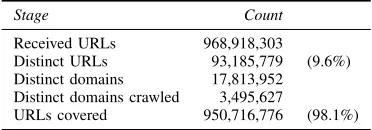
Stage Count
Received URLs 968,918,303 Distinct URLs 93,185,779 (9.6%) Distinct domains 17,813,952 Distinct domains crawled 3,495,627
[image:6.612.342.528.72.137.2]URLs covered 950,716,776 (98.1%)
Table II: Summary results of URL crawling. We crawl the regis-tered domains used by over 98% of the URLs received.
instances in a round-robin fashion across a diverse set of IP address ranges.4
Table II summarizes our crawling efforts. Since there is substantial redundancy in the feeds (e.g., fewer than 10% of the URLs are even unique), crawling every URL is unnecessary and resource inefficient. Instead, we focus on crawling URLs that cover the set of registered domains used by all URLs in the feed. Except in rare instances, all URLs to a registered domain are for the same affiliate program. Thus, the crawler prioritizes URLs with previously unseen registered domains, ignores any URLs crawled previously, and rate limits crawling URLs containing the same regis-tered domain—both to deal with feed skew as well as to prevent the crawler from being blacklisted. For timeliness, the crawler visits URLs within 30 minutes of appearing in the feeds.
We achieve nearly complete coverage: Over 98% of the URLs received in the raw feeds use registered domains that we crawl. Note that we obtain this coverage even though we crawled URLs that account for only 20% of the nearly 18 million distinct registered domains in the feeds. This outcome reflects the inherent skew in the feed makeup. The vast majority of the remaining 80% of domains we did not crawl, and the corresponding 2% URLs that use those domains, are from the domain-poisoning spam sent by the Rustock bot and do not reflect real sites (SectionIII-A).
C. Content Clustering and Tagging
The crawlers provide low-level information about URLs and domains. In the next stage of our methodology, we process the crawler output to associate this information with higher-level spam business activities.
Note that in this study we exclusively focus on businesses selling three categories of spam-advertised products: phar-maceuticals, replicas, and software. We chose these cate-gories because they are reportedly among the most popular goods advertised in spam [31]—an observation borne out in our data as well.5
4Among the complexities, scammers are aware that security companies
crawl them and blacklist IP addresses they suspect are crawlers. We mitigate this effect by tunneling requests through proxies running in multiple disparate IP address ranges.
5We did not consider two other popular categories (pornography and
Stage Pharmacy Software Replicas Total
URLs 346,993,046 3,071,828 15,330,404 365,395,278
Domains 54,220 7,252 7,530 69,002
Web clusters 968 51 20 1,039
Programs 30 5 10 45
Table III: Breakdown of clustering and tagging results.
To classify each Web site, we use content clustering to match sites with lexically similar content structure,category tagging to label clustered sites with the category of goods they sell, and program tagging to label clusters with their specific affiliate program and/or storefront brand. We use a combination of automated and manual analysis techniques to make clustering and tagging feasible for our large datasets, while still being able to manageably validate our results.
Table III summarizes the results of this process. It lists the number of received URLs with registered domains used by the affiliate programs we study, the number of registered domains in those URLs, the number of clusters formed based on the contents of storefront Web pages, and the number of affiliate programs that we identify from the clusters. As expected, pharmaceutical affiliate programs dominate the data set, followed by replicas and then software. We identify a total of 45 affiliate programs for the three categories combined, that are advertised via 69,002 distinct registered domains (contained within 38% of all URLs received in our feeds). We next describe the clustering and tagging process in more detail.
Content clustering: The first step in our process uses a clustering tool to group together Web pages that have very similar content. The tool uses the HTML text of the crawled Web pages as the basis for clustering. For each crawled Web page, it uses a q-gram similarity approach to generate a fingerprint consisting of a set of multiple independent hash values over all 4-byte tokens of the HTML text. After the crawler visits a page, the clustering tool computes the fingerprint of the page and compares it with the fingerprints representing existing clusters. If the page fingerprint exceeds a similarity threshold with a cluster fingerprint (equivalent to a Jaccard index of 0.75), it places the page in the cluster with the greatest similarity. Otherwise, it instantiates a new cluster with the page as its representative.
Category tagging: The clusters group together URLs and domains that map to the same page content. The next step of category tagging broadly separates these clusters into those selling goods that we are interested in, and those clusters that do not (e.g., domain parking, gambling, etc). We are intentionally conservative in this step, potentially including clusters that turn out to be false positives to ensure that we include all clusters that fall into one of our categories (thereby avoiding false negatives).
We identify interesting clusters using generic keywords found in the page content, and we label those clusters
withcategory tags—“pharma”, “replica”, “software”—that correspond to the goods they are selling. The keywords consist of large sets of major brand names (Viagra, Rolex, Microsoft, etc.) as well as domain-specific terms (herbal, pharmacy, watches, software, etc.) that appear in the store-front page. These terms are tied to the content being sold by the storefront site, and are also used for search engine optimization (SEO). Any page containing a threshold of these terms is tagged with the corresponding keyword. The remaining URLs do not advertise products that we study and they are left untagged.
Even with our conservative approach, a concern is that our keyword matching heuristics might have missed a site of interest. Thus, for the remaining untagged clusters, we manually checked for such false negatives, i.e., whether there were clusters of storefront pages selling one of the three goods that should have a category tag, but did not. We examined the pages in the largest 675 untagged clusters (in terms of number of pages) as well as 1,000 randomly selected untagged clusters, which together correspond to 39% of the URLs we crawled. We did not find any clusters with storefronts that we missed.6
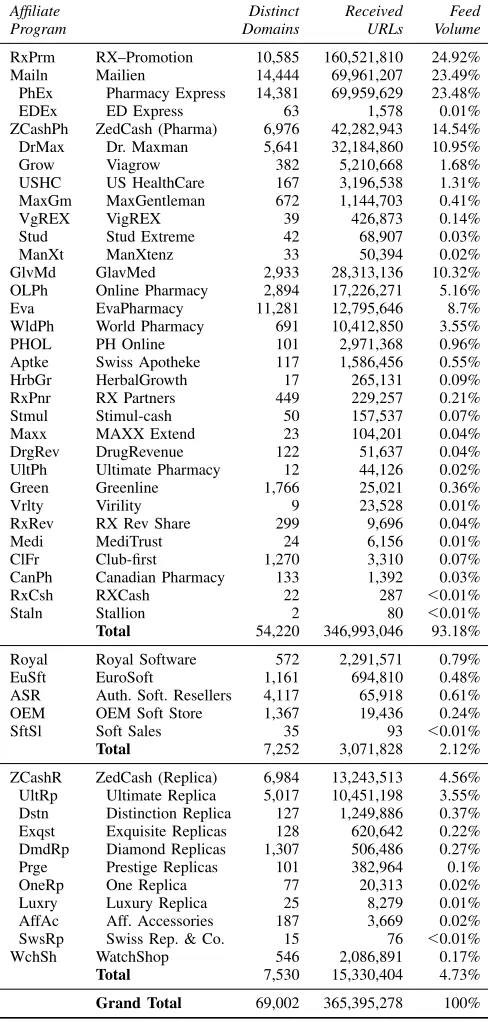
Program tagging: At this point, we focus entirely on clus-ters tagged with one of our three categories, and identify sets of distinct clusters that belong to the same affiliate program. In particular, we label clusters with specificprogram tagsto associate them either with a certain affiliate program (e.g., EvaPharmacy—which in turn has many distinct storefront brands) or, when we cannot mechanically categorize the underlying program structure, with an individual storefront “brand” (e.g., Prestige Replicas). From insight gained by browsing underground forum discussions, examining the raw HTML for common implementation artifacts, and making product purchases, we found that some sets of the these brands are actually operated by the same affiliate program. In total, we assigned program tags to 30 pharmaceutical, 5 software, and 10 replica programs that dominated the URLs in our feeds. Table IV enumerates these affiliate programs and brands, showing the number of distinct regis-tered domains used by those programs, and the number of URLs that use those domains. We also show two aggregate programs, Mailien and ZedCash, whose storefront brands we associated manually based on evidence gathered on underground Web forums (later validated via the purchasing process).7 The “feed volume” shows the distribution of the
affiliate programs as observed in each of the spam “sink” feeds (the feedsnot from bots), roughly approximating the
6The lack of false negatives is not too surprising. Missing storefronts
would have no textual terms in their page content that relate to what they are selling (incidentally also preventing the use of SEO); this situation could occur if the storefront page were composed entirely of images, but such sites are rare.
7Note, ZedCash is unique among programs as it has storefront brands
Affiliate Distinct Received Feed
Program Domains URLs Volume
RxPrm RX–Promotion 10,585 160,521,810 24.92%
Mailn Mailien 14,444 69,961,207 23.49%
PhEx Pharmacy Express 14,381 69,959,629 23.48%
EDEx ED Express 63 1,578 0.01%
ZCashPh ZedCash (Pharma) 6,976 42,282,943 14.54%
DrMax Dr. Maxman 5,641 32,184,860 10.95%
Grow Viagrow 382 5,210,668 1.68%
USHC US HealthCare 167 3,196,538 1.31%
MaxGm MaxGentleman 672 1,144,703 0.41%
VgREX VigREX 39 426,873 0.14%
Stud Stud Extreme 42 68,907 0.03%
ManXt ManXtenz 33 50,394 0.02%
GlvMd GlavMed 2,933 28,313,136 10.32%
OLPh Online Pharmacy 2,894 17,226,271 5.16%
Eva EvaPharmacy 11,281 12,795,646 8.7%
WldPh World Pharmacy 691 10,412,850 3.55%
PHOL PH Online 101 2,971,368 0.96%
Aptke Swiss Apotheke 117 1,586,456 0.55%
HrbGr HerbalGrowth 17 265,131 0.09%
RxPnr RX Partners 449 229,257 0.21%
Stmul Stimul-cash 50 157,537 0.07%
Maxx MAXX Extend 23 104,201 0.04%
DrgRev DrugRevenue 122 51,637 0.04%
UltPh Ultimate Pharmacy 12 44,126 0.02%
Green Greenline 1,766 25,021 0.36%
Vrlty Virility 9 23,528 0.01%
RxRev RX Rev Share 299 9,696 0.04%
Medi MediTrust 24 6,156 0.01%
ClFr Club-first 1,270 3,310 0.07%
CanPh Canadian Pharmacy 133 1,392 0.03%
RxCsh RXCash 22 287 <0.01%
Staln Stallion 2 80 <0.01%
Total 54,220 346,993,046 93.18%
Royal Royal Software 572 2,291,571 0.79%
EuSft EuroSoft 1,161 694,810 0.48%
ASR Auth. Soft. Resellers 4,117 65,918 0.61%
OEM OEM Soft Store 1,367 19,436 0.24%
SftSl Soft Sales 35 93 <0.01%
Total 7,252 3,071,828 2.12%
ZCashR ZedCash (Replica) 6,984 13,243,513 4.56% UltRp Ultimate Replica 5,017 10,451,198 3.55% Dstn Distinction Replica 127 1,249,886 0.37% Exqst Exquisite Replicas 128 620,642 0.22% DmdRp Diamond Replicas 1,307 506,486 0.27%
Prge Prestige Replicas 101 382,964 0.1%
OneRp One Replica 77 20,313 0.02%
Luxry Luxury Replica 25 8,279 0.01%
AffAc Aff. Accessories 187 3,669 0.02%
SwsRp Swiss Rep. & Co. 15 76 <0.01%
WchSh WatchShop 546 2,086,891 0.17%
Total 7,530 15,330,404 4.73%
[image:8.612.55.299.74.585.2]Grand Total 69,002 365,395,278 100%
Table IV: Breakdown of the pharmaceutical, software, and replica affiliate programs advertising in our URL feeds.
distribution that might be observed by users receiving spam.8
To assign these affiliate program tags to clusters, we manually crafted sets of regular expressions that match the page contents of program storefronts. For some programs,
8We remove botnet feeds from such volume calculations because their
skewed domain mix would bias the results unfairly towards the programs they advertise.
we defined expressions that capture the structural nature of the software engine used by all storefronts for a program (e.g., almost all EvaPharmacy sites contained unique hosting conventions). For other programs, we defined expressions that capture the operational modes used by programs that used multiple storefront templates (e.g., GlavMed).9 For
others, we created expressions for individual storefront brands (e.g., one for Diamond Replicas, another for Prestige Replicas, etc.), focusing on the top remaining clusters in terms of number of pages. Altogether, we assigned program tags to clusters comprising 86% of the pages that had category tags.
We manually validated the results of assigning these specific program tags as well. For every cluster with a program tag, we inspected the ten most and least common page DOMs contained in that cluster, and validated that our expressions had assigned them their correct program tags. Although not exhaustive, examining the most and least common pages validates the pages comprising both the “mass” and “tail” of the page distribution in the cluster.
Not all clusters with a category tag (“pharma”) had a specific program tag (“EvaPharmacy”). Some clusters with category tags were false positives (they happened to have category keywords in the page, but were not storefronts selling category goods), or they were small clusters cor-responding to storefronts with tiny spam footprints. We inspected the largest 675 of these clusters and verified that none of them contained pages that should have been tagged as a particular program in our study.
D. Purchasing
Finally, for a subset of the sites with program tags, we also purchased goods being offered for sale. We attempted to place multiple purchases from each major affiliate program or store “brand” in our study and, where possible, we ordered the same “types” of product from different sites to identify differences or similarities in suppliers based on contents (e.g., lot numbers) and packaging (nominal sender, packaging type, etc.). We attempted 120 purchases, of which 76 authorized and 56 settled.10
Of those that settled, all but seven products were deliv-ered. We confirmed via tracking information that two unde-livered packages were sent several weeks after our mailbox lease had ended, two additional transactions received no follow-up email, another two sent a follow-up email stating that the order was re-sent after the mailbox lease had ended,
9We obtained the full source code for all GlavMed and RX–Promotion
sites, which aided creating and validating expressions to match their templates.
10Almost 50% of these failed orders were from ZedCash, where we
and one sent a follow-up email stating that our money had been refunded (this refund, however, had not been processed three months after the fact).
Operational protocol: We placed our purchases via VPN connections to IP addresses located in the geographic vicin-ity to the mailing addresses used. This constraint is necessary to avoid failing common fraud checks that evaluate con-sistency between IP-based geolocation, mailing address and the Address Verification Service (AVS) information provided through the payment card association. During each purchase, we logged the full contents of any checkout pages as well as their domain names and IP addresses (frequently different from the sites themselves). We provided contact email addresses hosted on domain names purchased expressly for this project, as several merchants did not allow popular Web-based email accounts during the purchase process. We recorded all email sent to these accounts, as well as the domain names and IP addresses of any customer service sites provided. We also periodically logged into such sites to record the current status of our purchases. For physical goods, we always selected the quickest form of delivery, while software was provided via the Internet (here too we recorded the full information about the sites used for software fulfillment).
All of our purchases were conducted using prepaid Visa payment cards contracted through a specialty issuer. As part of our relationship with the issuer, we maintained the ability to create new cards on demand and to obtain the authorization and settlement records for each transaction. We used a unique card for each transaction.
We had goods shipped to a combination of individual residences and a suite address provided by a local com-mercial mailbox provider. We regularly picked up, tagged, and photographed shipments and then stored them in a cen-tralized secure facility on our premises. We stored software purchases on a secure hard drive, checked for viruses using Microsoft Security Essentials and Kaspersky Free Trial, and compared against other copies of the same software (including a reference version that we owned).
Legal and ethical concerns: This purchasing portion of our study involved the most careful consideration of legal and ethical concerns, particularly because this level of active involvement has not been common in the academic community to date. We worked with both our own project legal advisors and with general counsel to design a protocol for purchasing, handling, analyzing and disposing of these products within a legal framework that minimizes any risk of harm to others. While the full accounting of the legal considerations are outside the scope of this paper, most of our effort revolved around item selection and controls. For example, we restricted our pharmaceutical purchasing to non-prescription goods such as herbal and over-the-counter products, and we restricted our software purchases to items for which we already possessed a site license (also
communicating our intent with the publisher). We did not use any received products (physical or electronic) and, aside from a few demonstration lots, they are scheduled to be destroyed upon the completion of our analyses.
Finally, while these controls are designed to prevent any explicit harm from resulting through the study, a remaining issue concerns the ethics of any implicit harm caused by supporting merchants (through our purchasing) who are themselves potentially criminal or unethical. Since our study does not deal with human subjects our institutional re-view board did not deem it appropriate for their rere-view. Thus, our decision to move forward is based on our own subjective evaluation (along with the implicit oversight we received from university counsel and administration). In this, we believe that, since any such implicit support of these merchants is small (no individual affiliate program received more than $277 dollars from us), the potential value from better understanding their ecosystem vastly outweighs the potential harm.11
IV. ANALYSIS
A major goal of our work is to identify any “bottlenecks” in the spam value chain: opportunities for disrupting mone-tization at a stage where the fewest alternatives are available to spammers (and ideally for which switching cost is high as well). Thus, in this section we focus directly on analyzing the degree to which affiliate programs share infrastructure, considering both theclick support(i.e., domain registration, name service and Web hosting service) andrealization(i.e., payment and fulfillment) phases of the spam value chain. We explore each of these in turn and then return to consider the potential effectiveness of interventions at each stage.
A. Click Support
As described in Section III we crawl a broad range of domains—covering the domains found in over 98% of our spam feed URLs—and use clustering and tagging to associate the resulting Web sites with particular affiliate programs. This data, in combination with our DNS crawler and domain WHOIS data, allows us to associate each such domain with an affiliate program and its various click support resources (registrar, set of name server IP addresses and set of Web hosting IP addresses). However, before we proceed with our analysis, we first highlight the subtleties that result from the use of Web siteredirection.
Redirection: As we mentioned, some Web sites will redirect the visitor from the initial domain found in a spam message to one or more additional sites, ultimately resolving the final Web page (we call the domain for this page the “final domain”). Thus, for such cases one could choose to measure the infrastructure around the “initial domains” or the “final domains”.
11This is similar to the analysis made in our previous study of the
# Affiliate programs
# Registr
ars / # ASes
1 4 16 64 256
●
● ●
● ●
● ●
●●
● ●
● ●
● ●
● ●● ●●●●● ●
●●
●
●
●
●
●
● ●
●
● ● ●
●
● ● ● ● ● ●
●
●
●
●
● ●
● ● ● ● ●
● ●
●
● ●
●
●
0 2 4 6 8 10 12 14 16 18 20 22 24 26 28 30 32 34 36 Entity
● ●
●Web server
● ●
●DNS server
● ●
[image:10.612.55.294.72.250.2]● Registrar
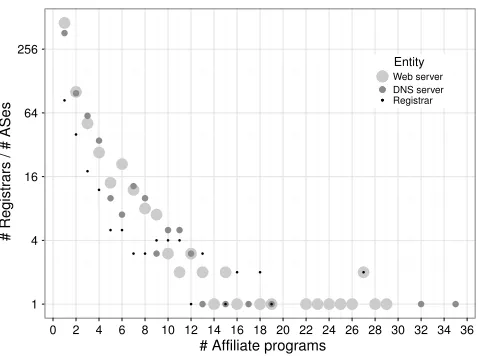
Figure 3: Sharing of network infrastructure among affiliate pro-grams. Only a small number of registrars host domains for many affiliate programs, and similarly only a small number of ASes host name and Web servers for many programs. (Note y-axis is log scale.)
To explain further, 32% of crawled URLs in our data redirected at least once and of such URLs, roughly 6% did so through public URL shorteners (e.g.,bit.ly), 9% through well-known “free hosting” services (e.g.,angelfire.com), and 40% were to a URL ending in .html (typically in-dicating a redirect page installed on a compromised Web server).12 Of the remainder, the other common pattern is
the use of low-quality “throw away” domains, the idea being to advertise a new set of domains, typically registered using random letters or combinations of words, whenever the previous set’s traffic-drawing potential is reduced due to blacklisting [24].
Given this, we choose to focus entirely on the final domains precisely because these represent the more valuable infrastructure most clearly operated by an affiliate.
Returning to our key question, we next examine the set of resources used by sites for each affiliate program. In particular, we consider this data in terms of the service organization who is responsible for the resource and how many affiliate programs make use of their service.
Network infrastructure sharing: A spam-advertised site typically has a domain name that must be resolved to access the site.13This name must in turn be allocated via a registrar,
who has the authority to shutdown or even take back a domain in the event of abuse [30]. In addition, to resolve and access each site, spammers must also provision servers to provide DNS and Web services. These servers receive network access from individual ISPs who have the authority to disconnect clients who violate terms of service policies or in response to complaints.
12In our data, we identified over 130 shortener services in use, over 160
free hosting services and over 8,000 likely-compromised Web servers.
13Fewer than half a percent use raw IP addresses in our study.
% Registrars / % ASes
% Affiliate progr
ams
0 20 40 60 80 100
0 20 40 60 80 100
Entity
Web server DNS server Registrar
Figure 4: Distribution of infrastructure among affiliate programs. Only a small percentage of programs distribute their registered domain, name server, and Web server infrastructure among many registrars and ASes, respectively.
Figure3shows that network infrastructure sharing among affiliate programs—when it occurs—is concentrated in a small number of registrars and Autonomous Systems (ASes).14 Many registrars and ASes host infrastructure for
just one or two affiliate programs, only a small number host infrastructure for many affiliate programs, and no single registrar or AS hosts infrastructure for a substantial fraction of the programs overall. (As we will see in Section IV-C however, this situation can change drastically when we weight by the volume of spam advertising each domain.) Specifically, Figure 3 shows the number of registrars (y -axis) that serve registered domains for a given number of affiliate programs (x-axis). Over 80 registrars, for instance, serve domains for a single affiliate program, while just two registrars (NauNet and China Springboard) serve domains for over 20 programs. For name servers and Web servers, it shows the number of ASes hosting servers for a given number of affiliate programs. Over 350 and 450 ASes host DNS and Web servers, respectively, for a single affiliate program; yet, just two and nine ASes host DNS and Web servers, respectively, for over 20 programs (including Ha-naro Telecom, China Communication, and ChinaNet).
Although most registrars and ASes host infrastructure for just one affiliate program, each program could still engage many such registrars to serve their domains and many such ASes to host their DNS and Web servers. Figure4 shows, though, that programs do not in general distribute their infrastructure across a large set of registrars or ASes: for most programs, each of them uses only a small fraction of registrars and ASes found in our data set. Specifically, Figure 4 shows the cumulative distribution of the fraction of registrars and ASes in our data set used by affiliate
[image:10.612.317.555.75.245.2]Bank Name BIN Country Affiliate Programs
Azerigazbank 404610 Azerbaijan GlvMd, RxPrm, PhEx, Stmul, RxPnr, WldPh
B&N 425175 Russia ASR
B&S Card Service 490763 Germany MaxGm
Borgun Hf 423262 Iceland Trust
Canadian Imperial Bank of Commerce 452551 Canada WldPh
Cartu Bank 478765 Georgia DrgRev
DnB Nord (Pirma) 492175 Latvia Eva, OLPh, USHC
Latvia Savings 490849 Latvia EuSft, OEM, WchSh, Royal, SftSl
Latvijas Pasta Banka 489431 Latvia SftSl
St. Kitts & Nevis Anguilla National Bank 427852 St. Kitts & Nevis DmdRp, VgREX, Dstn, Luxry, SwsRp, OneRp State Bank of Mauritius 474140 Mauritius DrgRev
Visa Iceland 450744 Iceland Staln
Wells Fargo 449215 USA Green
[image:11.612.70.541.73.234.2]Wirecard AG 424500 Germany ClFr
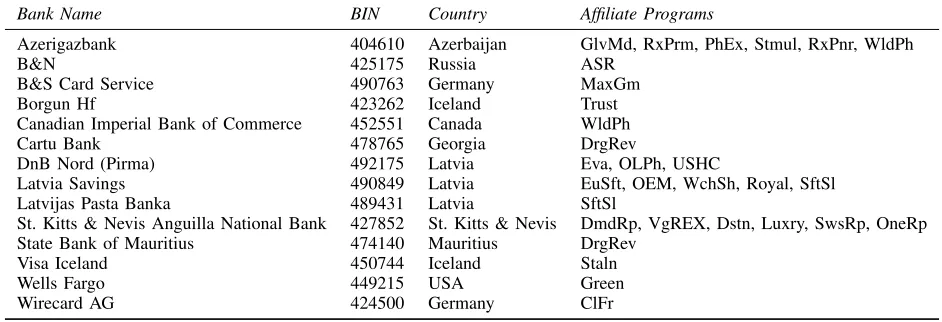
Table V: Merchant banks authorizing or settling transactions for spam-advertised purchases, their Visa-assigned Bank Identification Number (BIN), their location, and the abbreviation used in TableIVfor affiliate program and/or store brand.
programs. For 50% of the affiliate programs, their domains, name servers, and Web servers are distributed over just 8% or fewer of the registrars and ASes, respectively; and 80% of the affiliate programs have their infrastructure distributed over 20% or fewer of the registrars and ASes. Only a handful of programs, such as EvaPharmacy, Pharmacy Express, and RX Partners, have infrastructure distributed over a large percentage (50% or more) of registrars and ASes.
To summarize, there are a broad range of registrars and ISPs who are used to support spam-advertised sites, but there is only limited amounts of organized sharing and differ-ent programs appear to use differdiffer-ent subsets of available resource providers.15
B. Realization
Next, we consider several aspects of the realization pipeline, including post-order communication, authorization and settlement of credit card transactions, and order fulfill-ment.
We first examined the hypothesis that realization in-frastructure is the province of affiliate programs and not individual affiliates. Thus, we expect to see consistency in payment processing and fulfillment between different in-stances of the same affiliate program or store brand. Indeed, we found only two exceptions to this pattern and purchases from different sites appearing to represent the same affiliate program indeed make use of the same merchant bank and
15We did findsomeevidence of clear inter-program sharing in the form
of several large groups of DNS servers willing to authoritatively resolve collections of EvaPharmacy, Mailien and OEM Soft Store domains for which they were outside the DNS hierarchy (i.e., the name servers were never referred by the TLD). This overlap could reflect a particular affiliate advertising for multiple distinct programs and sharing resources internally or it could represent a shared service provider used by distinct affiliates.
same pharmaceutical drop shipper.16 Moreover, key cus-tomer support features including the email templates and order number formats are consistent across brands belonging to the same program. This allowed us to further confirm our understanding that a range of otherwise distinct brands all belong to the same underlying affiliate program, including most of the replica brands: Ultimate Replica, Diamond Replicas, Distinction Replica, Luxury Replica, One Replica, Exquisite Replicas, Prestige Replicas, Aff. Accessories; most of the herbal brands: MaxGentleman, ManXtenz, Viagrow, Dr. Maxman, Stud Extreme, VigREX; and the pharmacy: US HealthCare.17
Having found strong evidence supporting the dominance of affiliate programs over free actors, we now turn to the question how much realization infrastructure is being shared acrossprograms.
Payment: The sharing of payment infrastructure is sub-stantial. Table V documents that, of the 76 purchases for which we received transaction information, there were only 13 distinct banks acting as Visa acquirers. Moreover, there is a significant concentration even among this small set of banks. In particular, most herbal and replica purchases cleared through the same bank in St. Kitts (a by-product of ZedCash’s dominance of this market, as per the previous discussion), while most pharmaceutical affiliate programs used two banks (in Azerbaijan and Latvia), and software was handled entirely by two banks (in Latvia and Russia).
Each payment transaction also includes a standardized “Merchant Category Code” (MCC) indicating the type of goods or services being offered [52]. Interestingly, most affiliate program transactions appear to be coded correctly.
16In each of the exceptions, at least one order cleared through a different
bank—perhaps because the affiliate program is interleaving payments across different banks, or (less likely) because the store “brand” has been stolen, although we are aware of such instances.
17This program, currently called ZedCash, is only open by invitation and
Supplier Item Origin Affiliate Programs
Aracoma Drug Orange bottle of tablets (pharma) WV, USA ClFr Combitic Global Caplet Pvt. Ltd. Blister-packed tablets (pharma) Delhi, India GlvMd M.K. Choudhary Blister-packed tablets (pharma) Thane, India OLPh
PPW Blister-packed tablets (pharma) Chennai, India PhEx, Stmul, Trust, ClFr K. Sekar Blister-packed tablets (pharma) Villupuram, India WldPh
Rhine Inc. Blister-packed tablets (pharma) Thane, India RxPrm, DrgRev Supreme Suppliers Blister-packed tablets (pharma) Mumbai, India Eva
Chen Hua Small white plastic bottles (herbal) Jiangmen, China Stud Etech Media Ltd Novelty-sized supplement (herbal) Christchurch, NZ Staln Herbal Health Fulfillment Warehouse White plastic bottle (herbal) MA, USA Eva
MK Sales White plastic bottle (herbal) WA, USA GlvMd
Riverton, Utah shipper White plastic bottle (herbal) UT, USA DrMax, Grow Guo Zhonglei Foam-wrapped replica watch Baoding, China Dstn, UltRp
Table VI: List of product suppliers and associated affiliate programs and/or store brands.
For example, all of our software purchases (across all programs) were coded as 5734 (Computer Software Stores) and 85% of all pharmacy purchases (again across programs) were coded as 5912 (Drug Stores and Pharmacies). ZedCash transactions (replica and herbal) are an exception, being somewhat deceptive, and each was coded as 5969 (Direct Marketing—Other). The few other exceptions are either minor transpositions (e.g., 5921 instead of 5912), singleton instances in which a minor program uses a generic code (e.g., 5999, 8999) with a bank that we only observed in one transaction, and finally Greenline which is the sole pharmaceutical affiliate program that cleared transactions through a US Bank during our study (completely miscoded as 5732, Electronic Sales, across multiple purchases). The latter two cases suggest that some minor programs with less reliable payment relationships do try to hide the nature of their transactions, but generally speaking, category coding is correct. A key reason for this may be the substantial fines imposed by Visa on acquirers when miscoded merchant accounts are discovered “laundering” high-risk goods.
Finally, for two of the largest pharmacy programs, GlavMed and RX–Promotion, we also purchased from “canonical” instances of their sites advertised on their online support forums. We verified that they use the same bank, order number format, and email template as the spam-advertised instances. This evidence undermines the claim, made by some programs, that spammers have stolen their templates and they do not allow spam-based advertising.
Fulfillment: Fulfillment for physical goods was sourced from 13 different suppliers (as determined by declared shipper and packaging), of which eight were again seen more than once (see Table VI). All pharmaceutical tablets shipped from India, except for one shipped from within the United States (from a minor program), while replicas shipped universally from China. While we received herbal supplement products from China and New Zealand, most (by volume) shipped from within the United States. This result is consistent with our expectation since, unlike the other
goods, herbal products have weaker regulatory oversight and are less likely to counterfeit existing brands and trademarks. For pharmaceuticals, the style of blister packs, pill shapes, and lot numbers were all exclusive to an individual nominal sender and all lot numbers from each nominal sender were identical. Overall, we find that only modest levels of supplier sharing between pharmaceutical programs (e.g., Pharmacy Express, Stimul-cash, and Club-first all sourced a particular product from PPW in Chennai, while RX–Promotion and DrugRevenue both sourced the same drug from Rhine Inc. in Thane). This analysis is limited since we only ordered a small number of distinct products and we know (anecdotally) that pharmaceutical programs use a network of suppliers to cover different portions of their formulary.
We did not receive enough replicas to make a convincing analysis, but all ZedCash-originated replicas were low-quality and appear to be of identical origin. Finally, pur-chased software instances were bit-for-bit identical between sites of the same store brand and distinct across different affiliate programs (we found no malware in any of these images). In general, we did not identify any particularly clear bottleneck in fulfillment and we surmise that suppliers are likely to be plentiful.
C. Intervention analysis
Finally, we now reconsider these different resources in the spam monetization pipeline, but this time explicitly from the standpoint of the defender. In particular, for any given registered domain used in spam, the defender may choose to intervene by either blocking its advertising (e.g., filtering spam), disrupting its click support (e.g., takedowns for name servers of hosting sites), or interfering with the realization step (e.g., shutting down merchant accounts).18 But which
of these interventions will have the mostimpact?
18In each case, it is typically possible to employ either a “takedown”
Ideally, we believe that such anti-spam interventions need to be evaluated in terms of two factors: their overhead to implement and their business impact on the spam value chain. In turn, this business impact is the sum of both the replacement cost (to acquire new resources equivalent to the ones disrupted) and the opportunity cost (revenue forgone while the resource is being replaced). While, at this point in time, we are unable to precisely quantify all of these values, we believe our data illustrates gross differences in scale that are likely to dominate any remaining factors.
To reason about the effects of these interventions, we consider the registered domains for the affiliate programs and storefront brands in our study and calculate their relative volume in our spam feeds (we particularly subtract the botnet feeds when doing this calculation as their inherent bias would skew the calculation in favor of certain programs). We then calculate the fraction of these domain trajectories that could be completely blocked (if only temporarily) through a given level of intervention at several resource tiers:
Registrar.Here we examine the effect if individual
reg-istrars were to suspend their domains which are known to be used in advertising or hosting the sites in our study.
Hosting.We use the same analysis, but instead look at the
number of distinct ASs that would need to be contacted (who would then need to agree to shut down all associated hosts in their address space) in order to interrupt a given volume of spam domain trajectories. We consider both name server and Web hosting, but in each case there may be multiple IP addresses recorded providing service for the domain. We adopt a “worst case” model thatallsuch resources must be eliminated (i.e., every IP seen hosting a particular domain) for that domain’s trajectory to be disrupted.
Payments. Here we use the same approach but focused
on the role played by the acquiring banks for each program. We have not placed purchases via each domain, so we make the simplifying assumption that bank use will be consistent across domains belonging to the same brand or affiliate program. Indeed this is strongly borne out in our measurements. For the two small exceptions identified earlier, we assign banks proportionally to our measurements. Figure5plots this data as CDFs of the spam volume in our feeds that would be disrupted using these approaches. For both registrars and hosters there are significant concentra-tions among the top few providers and thus takedowns would seem to be an effective strategy. For example, almost 40% of spam-advertised domains in our feeds were registered by NauNet, while a single Romanian provider, Evolva Tele-com, hosts almost 9% of name servers for spam-advertised domains and over 10% of the Web servers hosting their content; in turn, over 60% of these had payments handled via a single acquirer, Azerigazbank.
However, these numbers do not tell the entire story. Another key issue is the availability of alternatives and their switching cost.
For example, while only a small number of individual IP addresses were used to support spam-advertised sites, the supply of hosting resources is vast, with thousands of hosting providers and millions of compromised hosts.19 The switching cost is also low and new hosts can be provisioned on demand and for low cost.20
By contrast, the situation with registrars appears more promising. The supply of registrars is fewer (roughly 900 gTLD registrars are accredited by ICANN as of this writing) and there is evidence that not all registrars are equally permissive of spam-based advertising [28]. Moreover, there have also been individual successful efforts to address malicious use of domain names, both by registries (e.g., CNNIC) and when working with individual registrars (e.g., eNom [25]). Unfortunately, these efforts have been slow, ongoing, and fraught with politics since they require global cooperation to be effective (only individual registrars or registries can take these actions). Indeed, in recent work we have empirically evaluated the efficacy ofpastregistrar-level interventions and found that spammers show great agility in working around such actions [29]. Ultimately, the low cost of a domain name (many can be had for under $1 in bulk) and ease of switching registrars makes such interventions difficult.
Finally, it is the banking component of the spam value chain that is both the least studied and, we believe, the most critical. Without an effective mechanism to transfer consumer payments, it would be difficult to finance the rest of the spam ecosystem. Moreover, there are only two networks—Visa and Mastercard—that have the consumer footprint in Western countries to reach spam’s principal customers. While there are thousands of banks, the number who are willing to knowingly process what the industry calls “high-risk” transactions is far smaller. This situation is dramatically reflected in Figure5, which shows that just three banks provide the payment servicing for over 95% of the spam-advertised goods in our study.
More importantly, the replacement cost for new banks is high, both in setup fees and more importantly in time and overhead. Acquiring a legitimate merchant account directly with a bank requires coordination with the bank, with the card association, with a payment processor and typically involves a great deal of due diligence and delay (several days
19Note, spam hosting statistics can be heavily impacted by the differences
in spam volume produced by different affiliates/spammers. For example, while we find that over 80% of all spam received in this study leads to sites hosted by just 100 distinct IP addresses, there are another 2336 addresses used to host the remaining 20% of spam-advertised sites, many belonging to the same affiliate programs but advertising with lower volumes of spam email.
20The cost of compromised proxies is driven by the market price
Registrar
% of spam
0 20 40 60 80 100
−NauNet (R
U) −Beijing Inno
vativ e (CN) −Bizcn.com (CN)
−China Spr
ingboard (CN) −eNom (US)
1 2 5 10 20 50 100
AS serving Web/DNS
0 20 40 60 80 100
−Chinanet (CN) −Ev olv
a (R O)
−Ev olva (R
O) −VLineT
elecom (U A)
1 2 5 10 20 50 100 500
Target DNS server Web server
Bank
0 20 40 60 80 100
Az
erigazbankSaint KittsDnB NordLatvia Sa vings B + NB + SWells F
argo
Visa IcelandWirecardBorgun HfState Maur
itius Car
[image:14.612.69.549.73.244.2]tu BankLatvijas P asta
Figure 5: Takedown effectiveness when considering domain registrars (left), DNS and Web hosters (center) and acquiring banks (right).
or weeks). Even for so-called third-party accounts (whereby a payment processor acts as middleman and “fronts” for the merchant with both the bank and Visa/Mastercard) we have been unable to locate providers willing to provide operating accounts in less than five days, and such providers have significant account “holdbacks” that they reclaim when there are problems.21Thus, unlike the other resources in the spam
value chain, we believe payment infrastructure has far fewer alternatives and far higher switching cost.
Indeed, our subsequent measurements bear this out. For four months after our study we continued to place orders through the major affiliate programs. Many continued to use the same banks four months later (e.g., all replica and herbal products sold through ZedCash, all pharmaceuticals from Online Pharmacy and all software from Auth. Soft. Resellers). Moreover, while many programs did change (typically in January or February 2011), they still stayed within same set of banks we identified earlier. For exam-ple, transactions with EvaPharmacy, Greenline, and OEM Soft Store have started clearing through B&N Bank in Russia, while Royal Software, EuroSoft and Soft Sales, have rotated through two different Latvian Banks and B & S Card Service of Germany. Indeed, the onlynew bank appearing in our follow-on purchases is Bank Standard (a private commercial bank in Azerbaijan, BIN 412939); RX–Promotion, GlavMed, and Mailien (a.k.a. Pharmacy Express) all appear to have moved to this bank (from Azerigazbank) on or around January 25th. Finally, one order placed with DrugRevenue failed due to insufficient funds, and was promptly retried through two different banks (but again, from the same set). This suggests that while cooperating third-party payment processors may be able to route transactions through merchant accounts at difference
21To get a sense of the kinds of institutions we examined, consider
this advertisement of one typical provider: “We have ready-made shell companies already incorporated, immediately available.”
banks, the set of banks currently available for such activities is quite modest.
D. Policy options
There are two potential approaches for intervening at the payment tier of the value chain. One is to directly engage the merchant banks and pressure them to stop doing business with such merchants (similar to Legitscript’s role with registrars [25], [28]). However, this approach is likely to be slow—very likely slower than the time to acquire new banking facilities. Moreover, due to incongruities in intellectual property protection, it is not even clear that the sale of such goods is illegal in the countries in which such banks are located. Indeed, a sentiment often expressed in the spammer community, which resonates in many such countries, is that the goods they advertise address a real need in the West, and efforts to criminalize their actions are motivated primarily by Western market protectionism.
However, since spam is ultimately supported by Western money, it is perhaps more feasible to address this problem in the West as well. To wit, if U.S. issuing banks (i.e., banks that provide credit cards to U.S. consumers) were to refuse to settle certain transactions (e.g., card-not-present transactions for a subset of Merchant Category Codes) with the banks identified as supporting spam-advertised goods, then the underlying enterprise would be dramatically de-monetized. Furthermore, it appears plausible that such a “financial blacklist” could be updated very quickly (driven by modest numbers of undercover buys, as in our study) and far more rapidly than the turn-around time to acquire new banking resources—a rare asymmetry favoring the anti-spam community. Furthermore, for a subset of spam-advertised goods (regulated pharmaceuticals, brand replica products, and pirated software) there is a legal basis for enforcing such a policy.22 While we suspect that the political challenges for