The engagement of young
people in the development
and implementation of
programmes to secure
health
A systematic review
Anna Gavine
Aixa Y. Aleman-Diaz
Candace Currie
Irene Garcia-Moya
Gerald Humphris
Antony Morgan
Author contributions to manuscript
1. Anna Gavine – main reviewer (search, screening, data extraction), main author of first draft report
2. St Andrews
a. Aixa Y. Aleman-Diaz – conceptualization, project oversight, intimately involved in the editing and final draft of report (general and policy section)
b. Candace Currie – conceptualisation, comments to draft report
c. Gerald Humphris – ensured financial support was in place to finalise this review and offered general comments in manuscript discussions
d. Antony Morgan – conceptualization, some screening, comments to v2 of report e. Irene Garcia-Moya, screening, substantial review and comments of this
manuscript
Affiliations
1 University of Dundee, School of Nursing and Health Sciences, Dundee Centre for Health And Related Research
2 University of St Andrews, School of Medicine, WHO Collaborative Centre for International Child and Adolescent Health Policy
Acknowledgements
The authors would like to thank Vivian Barnekow, Consultant and former Programme Manager for Child and Adolescent Health Development at the WHO Regional Office for Europe for her insights and support during the development phase of the project. In
addition, we appreciate the comments shared by the HBSC network during the Spring 2015 meeting where Dr Antony Morgan presented our methodology and preliminary findings. In addition, we are grateful to Dr Magaly Aceves-Martins for her comments on this
manuscript.
This review would not have been possible without Gina Martin (University of St Andrews), Jana Speth (University of Dundee), Maria Faciolince (University of St Andrews alumni and now at the London School of Economics), Karolina Kaminska (Telfer School of Management at the University of Ottawa, in affiliation with the Glasgow Caledonian University - London, and the EnRiCH Research Lab at the University of Ottawa), Ed Clark (University of St. Andrews) and Claire Simpson (University of St. Andrews) who contributed to the search, screening and extraction.
This work was funded by the University of St Andrews WHO Collaborative Centre for
Executive Summary
Participatory research approaches in which participants actively work with researchers are being increasingly recognized as being means of not only understanding how to better prevent and manage complex health problems but also empowering participants (Horowitz et al., 2009). This is contrast to traditional approaches to health promotion which are led by professionals (Harden and Oliver, 2001). Whilst the majority of programmes which employ participatory approaches have worked with marginalised adult populations (Vaughn et al., 2013), there is increasing recognition that such an approach could be utilised in child and adolescent health promotion (Wong et al., 2010). This may be partly reflective of a change in perspective on children’s status in society more generally, with children and young people now having a say in many aspects of their lives (Alderson and Morrow, 2004). Consequently, there is now a raft of published trials which involve children and young people in the
development, implementation and evaluation of interventions aiming to secure health. However, there is a lack syntheses of such studies (Patton et al., 2016). A systematic review which examines the components and effectiveness of these programmes is therefore timely.
This project therefore aims to summarise through a systematic review, the evidence base the benefits of the involvement of children and young people in the development,
implementation and evaluation of programmes aiming to secure health. This will be addressed through the following research questions:
1. What are the following characteristics of studies which involve young people in the development, implementation and evaluation of programmes aiming to secure health:
a. Study design?
b. Participants (i.e. age, gender)?
c. Setting (i.e. geographical location, demographics, school or community-based)?
d. Characteristics of the intervention (i.e. content, health focus,
theoretical/empirical basis, training, extent of young people’s and adults’ involvement)?
e. Quality of the research on which the evidence rests?
2. What is the evidence of the impact that involving young people has on programme effectiveness through outcome evaluations?
3. What are the views that young people have of being involved in the process of developing health programmes?
The methodology for this review follows the guidance detailed by the Evidence for Policy and Practice Information and Co-ordianting (EPPI) centre (EPPI-Centre, 2010). A search of ten bibliographic databases (e.g. Medline, CINAHL, ASSIA) and the grey literature was conducted. All identified studies were screened by two reviewers and were included if they met a pre-defined inclusion criteria. Data that could be used to answer the research
questions was extracted and a narrative synthesis was performed. Risk of bias for the quantitative studies was assessed using the Effective Public Health Practice Project’s quality assessment tool and trustworthiness of the qualitative studies was assessed using the EPPI centre tool.
This review identified 42 distinct studies of programmes that involved young people in one or more of: issue identification, needs assessment (i.e. investigating the issue of interest), development of the intervention (including development of materials), delivery of the intervention and evaluation of the intervention. The majority of programmes were
conducted in high income countries, although only five were conducted in the WHO Europe region. Programmes were exclusively targeted at adolescents (i.e. 10-19 year olds) and focused on a range of health topics with sexual health being the most common.
Of the included studies, the majority conducted outcome evaluations (n=34). These studies reported mixed effects, with the most consistent effects being for tobacco and healthy eating behaviours, and for knowledge of the specific health behaviour of the programme. There was no clear relationship between level of participation and programme
effectiveness. Generally, the higher quality studies involved lower levels of participation. Study quality was generally poor there was considerable heterogeneity in study design, study quality, level of participation, health focus and outcome measurement which
prohibited meta-analysis. Nevertheless, the qualitative studies suggested that young people appeared to enjoy participating in these programmes and identified a number of benefits (e.g. learning new schools, developing confidence, learning more from the programme, gaining a better understanding of their community). However, a number of barriers to participation were identified (e.g. difficulties performing in front of other students, time pressures, insufficient training, interest waning over time, logistical issues). Conversely, the following facilitators were also reported: positive relationships between young people and staff; staff that are compassionate and not authoritative, local trainers and sufficient training.
To conclude, programmes that involve young people in the implementation and
Contents
ACKNOWLEDGEMENTS 2
EXECUTIVE SUMMARY 3
1. INTRODUCTION 7
1.1 Background ... 7
1.2 Aims and Research Questions ... 8
2. METHODS 10 2.1 Eligibility Criteria ... 10
2.1.1 Programme Type ... 10
2.1.2 Study design ... 10
2.1.3 Participants ... 11
2.1.4 Outcomes ... 12
2.2 Search Methods for Identification of Studies ... 12
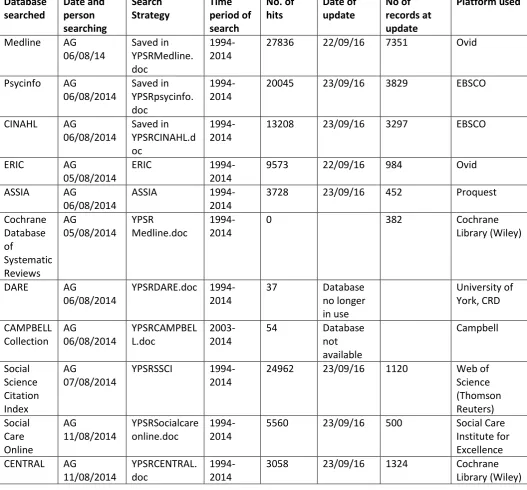
2.2.1 Electronic Bibliographic Databases ... 12
2.2.2 Grey literature ... 13
2.2.3 Personal Contacts ... 13
2.2.4 Search Terms ... 13
2.3 Data Collection and analysis ... 13
2.3.1 Study Selection ... 13
2.3.2 Data Extraction and Management ... 14
2.3.3 Risk of Bias Assessment in Outcome Evaluation ... 14
2.3.4 Quality Assessment of the Qualitative Studies ... 15
2.3.5 Data synthesis ... 15
3. Results ... 16
3.1 Results of the Search ... 16
3.2 Research Question 1: Study Characteristics ... 17
3.2.1 Research Question 1a: Study Design ... 18
3.2.2 Research Question 1b: Nature of Participants ... 19
3.2.3 Research Question 1c: Setting ... 19
3.2.5 Research Question 1e: Study Quality ... 22
3.3 Research Question 2: What is the evidence of the impact that involving young people has on health outcomes? ... 23
3.3.1. Outcome Measurement ... 23
3.3.2 Results of Outcome Evaluations ... 24
3.4 Research Question 3: What are the views that young people have of being involved in the process of developing health programmes? ... 33
3.5 Research Question 4: What are the barriers and facilitators associated with the meaningful, appropriate and effective involvement of young people? ... 34
4. DISCUSSION 36 4.1 Research Question 1. Characteristics of studies which include young people in the development or implementation of programmes aiming to secure health. ... 36
4.2 Research Question 2: What is the evidence of the impact that involving young people has on health outcomes? ... 39
4.3 What are the views that young people have of being involved in the process of developing health programmes? ... 41
4.4 Research Question 4: What are the barriers and facilitators associated with the meaningful, appropriate and effective involvement of young people? ... 42
4.5 Limitations of Review Process... 43
4.6 Implications ... 44
5. CONCLUSIONS 47 References ... 48
Appendix 1 Search Log ... 54
Appendix 2 Website Search Log... 55
Appendix 3 Search Terms ... 75
Appendix 4 Data Extraction tool ... 85
Appendix 5 Characteristics of included studies ... 110
Appendix 6 Outcome measures ... 133
1. Introduction
Participatory research approaches in which participants actively work with researchers are being increasingly recognized as being means of not only understanding how to better prevent and manage complex health problems but also empowering participants (Horowitz et al., 2009). This is contrast to traditional approaches to health promotion that are led by professionals (Harden and Oliver, 2001). Consequently there is now a raft of published trials which involve children and young people in the development, implementation and
evaluation of interventions aiming to secure health. And yet although ‘the rationale for youth engagement in health is strong, there have been few syntheses of the evidence on its effectiveness‘ (Patton et al., 2016, p.2462). A systematic review which examines the
components and effectiveness of these programmes is therefore timely. For the purpose of this review we will define health using the WHO definition of health: “health is a state of complete physical, mental and social well-being and not merely the absence of disease or infirmity” (WHO, 1948).
1.1 Background
At the heart of many participatory approaches lies the work of Paulo Freire, who argued that education and research occur within a political context with teachers/academics holding power over participants/students (see Freire, 2000). In order to address this power imbalance, approaches to research and education need to recognise the strengths of all participants and engage them in decision making (Chávez et al., 2006).
Participatory research with adults has demonstrated positive effects in tackling a range of health problems including: increasing interest in influenza vaccination in hard to reach groups (Coady et al., 2008); increasing levels of physical activity in women (Pazoki et al., 2007); and blood pressure control in adults (Brownstein et al., 2005). However, it should be noted that it is not yet clear whether success from participatory approaches can be
attributable to the fact the programmes developed may be more effective since they are designed by community experts or whether the process of participation has additional health benefits (Wallerstein and Duran, 2006).
effectiveness of different approaches and it is not clear which approach is the most effective (O’Mara-Eves et al., 2013).
Whilst the majority of programmes which employ participatory approaches have worked with marginalised adult populations (Vaughn et al., 2013), there is increasing recognition that such an approach could be utilised in child and adolescent health promotion (Wong et al., 2010). Within public health, this approach has been used in community interventions and youth development (Chávez et al., 2006). Indeed, children and young people are increasingly taking on roles as active participants in different aspects of health programmes including: defining the problem to be addressed, collecting data, using the results to design and/or implement a programme and evaluation of the programme (Checkoway and
Richards-Schuster, 2003). Such an approach contrasts with more traditional research where young people were passive in the research process (Checkoway and Richards-Schuster, 2004). This can be considered reflective of a change in perspective on children’s status in society more generally, with children and young people now having a say in many aspects of their lives (Alderson and Morrow, 2004). This change in perspective follows the publication of the United Nations Convention of the Rights of the Child (United Nations, 1989) which stipulates that children’s views must be respected and that children have a right to freedom of expression. Arguably, this could be interpreted as a need to fully enable young people to participate in research and programme development which affects them. Moreover,
children and young people have an ‘insider’ perspective (Kellett, 2005) which means that by engaging with them in research, we are working with experts (Vaughn et al., 2013).
1.2 Aims and Research Questions
To date, systematic reviews of participant involvement in trials of health interventions have focused on adults (Las Nueces et al., 2012, Cook, 2008, Salimi et al., 2012) and a lack of syntheses of such studies in adolescents has been noted by Patton et al. (2016). Whilst these did identify some positive effects, it is not clear whether these results would be applicable to children and young people. There is therefore a need to synthesise the available evidence on children and young people’s involvement in trials of health interventions in order to identify if this approach confers any health benefits for them.
programme effectiveness and crucially the strength of the evidence upon which any conclusions are based. Our goal is to inform health and social policy in this area, with a particular interest on the relevance to the WHO European Region given our centre’s partnership around child and adolescent health and development.
This project aims to summarise through a systematic review, the scientific evidence base the benefits of the involvement of children and young people in the development,
implementation and evaluation of programmes aiming to secure health. More specifically, this review will address this through the following four research questions (RQ):
1. What are the following characteristics of studies which involve young people in the development, implementation and evaluation of programmes aiming to secure health (section 3.2):
a. Study design?
b. Participants (i.e. age, gender)?
c. Setting (i.e. geographical location, demographics, school or community-based)?
d. Characteristics of the intervention (i.e. content, health focus,
theoretical/empirical basis, training, extent of young people’s and adults’ involvement)?
e. Quality of the research on which the evidence rests?
2. What is the evidence of the impact that involving young people has on programme effectiveness through outcome evaluations (section 3.3)?
3. What are the views that young people have of being involved in the process of developing health programmes (section 3.4)?
2. Methods
The methodology for this review follows the guidance detailed by the Evidence for Policy and Practice Information and Co-ordinating (EPPI) centre (EPPI-Centre, 2010). The study eligibility criteria, search strategy and methods for data extraction and analysis will now be described.
2.1 Eligibility Criteria
2.1.1 Programme Type
Studies were included if they involved young people in any aspect of the programme development, delivery or evaluation. More specifically programmes were included if they involved young people in any of the following domains:
Issue identification (i.e. actively involved in determining focus of programme); Needs assessment (i.e. conducting research to explore the issue of interest); Programme development (i.e. contributed to develop of programme and/or
materials);
Delivery of programme (i.e. facilitating or teaching sessions, outreach work); Programme evaluation (i.e. actual conduct of the evaluation).
Programmes targeting individual young people who have a specific clinical condition will be excluded. However, if the intervention aims to target risk factors for a clinical condition (e.g. diabetes, asthma) at a population level it will be included.
Programmes that involved young people in programme development, delivery or evaluation but did not have a focus on health were excluded.
2.1.2 Study design
In order to be included studies must report methods and results. Different study types will be included to best answer RQ1-4, however, all included studies must describe primary empirical research which can utilise either a quantitative, qualitative or mixed-methods design.
As RQ1 involves scoping the available evidence, any form of empirical research will be included to answer it.
contamination between groups of young people) and this review will therefore include the following study types in addition to RCTs to answer RQ2:
Quasi-randomised controlled trials (i.e. using allocation methods that are not truly random)
Cluster-randomised controlled trials Controlled before-and-after studies Interrupted time series
Observational study
For RQ3, studies that collected data on the benefits of involving young people will be included. These could take the form of focus groups, interviews, surveys or ethnographic work. These studies may either be standalone studies or may be an additional component of a bigger study which also contained an outcome evaluation, which could potentially also address RQ2.
For RQ4 either qualitative or quantitative (or mixed-methods) studies will be included. Again, these could take the form of focus groups, interviews, ethnographic work or surveys, which may be quantitative or qualitative. As for RQ3, this work may be standalone or form part of a wider study.
Case studies which provide a descriptive overview of a programme but do not report methods or results will not be included in the review.
2.1.3 Participants
Children and young people aged 5-18 years who are either a) actively involved any aspect of the programme conceptualisation, development, implementation, delivery or evaluation of a programme aiming to improve health, or b) participating in a programme in which other children or young people are actively involved any aspect of the programme
conceptualisation, development, implementation, delivery or evaluation of a programme aiming to improve health.
Children or young people who participate in a programme which has been fully developed and implemented by adults (e.g. teachers, researchers, parents) will be excluded.
2.1.4 Outcomes
Outcomes were selected based on the broad definition of health taken in this review (see WHO, 1948). Studies will be included to answer RQ2 if they assess the following outcomes:
Outcomes related to health and wellbeing (e.g. physical and mental health), health behaviour (e.g. physical activity, balanced diet) and health risk behaviours (e.g. alcohol misuse, tobacco use, illicit drug use),
Outcomes related to psychosocial wellbeing including emotional wellbeing (e.g. happiness, life satisfaction), social wellbeing (e.g. empathy or opposite of
delinquency, violence and bullying) and psychological wellbeing (e.g. resilience, self-confidence, positive focus),
Outcomes related to addressing inequalities (i.e. health inequalities, health equity, social inequalities, social deprivation, social determinants of health),
Outcomes relating to social effects of participation (i.e. social capital, social cohesion, reduced social isolation),
Outcomes relating to community benefits (community identity, sense of community, community solidarity, improvements in services),
Outcomes related to participation (i.e. perceived participation, levels of participation).
2.2 Search Methods for Identification of Studies
2.2.1 Electronic Bibliographic Databases
Journal coverage of databases was screened to identify which databases were most likely to contain articles that would be able to answer RQ1-4 and reduce duplication. This process identified the following databases as being a priority to search:
Applied Social Science Index and Abstracts (ASSIA) Campbell Collaboration (C2) databases
Cochrane Register of Controlled Trials (CENTRAL)
Cumulative Index to Nursing and Allied Health Literature (CINAHL) Database of Abstracts of Reviews of Effects (DARE)
Education Resources Information Centre (ERIC) Medline
PsycInfo
Social Care Online
Social Science Citation Index
2.2.2 Grey literature
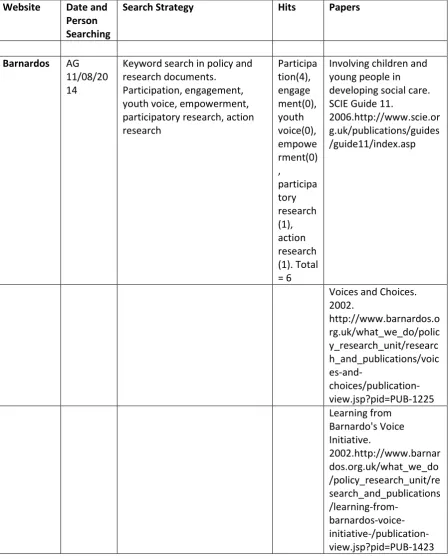
The grey literature was searched using two approaches. First, the database Open Grey was searched and secondly, websites which were identified as being relevant to youth
participation were searched for any relevant material. A list of all websites searched and the search log is presented in Appendix 2.
2.2.3 Personal Contacts
A call for evidence was put out to the Health Behaviour in School Children (HBSC) Youth Engagement group, whereby members were asked to identify any studies that they were aware of that could answer any of RQ1-4. However, there was no response to the call.
2.2.4 Search Terms
A scoping review of three databases (ASSIA, Medline, PsycInfo) was conducted to identify the most relevant search terms. As per recommendation of the Cochrane Collaboration, searches contained a combination of index terms and free text words (Lefebvre et al., 2011). To increase the specificity of the search, the free text search was limited to abstracts
(Jenuwine and Floyd, 2004). The same free text search was conducted in each database; however, as indexing varies between databases, searches were adapted accordingly for each database. The full search strategy is detailed in Appendix 3 and was developed used the following search architecture:
Population terms. Synonyms and index terms for children and adolescents, and schools were combined with the Boolean operator OR.
AND Intervention terms. Synonyms and index terms for participatory methods, youth empowerment and engagement were combined with the Boolean operator OR.
AND Outcome terms. Synonyms and index terms were combined for outcomes listed in section 2.1.4.
2.3 Data Collection and analysis
2.3.1 Study Selection
All identified studies were imported and de-duplicated using Refworks reference management software programme. Titles and abstracts were then screened by two
2.3.2 Data Extraction and Management
There was no blinding of the names of journals, authors, the institutions or results when data was being extracted. The data was extracted and study quality assessed using the relevant items of the EPPI centre’s data extraction and quality appraisal tool (EPPI-Centre, 2007), which includes sections on the following (see Appendix4 for full tool):
A. Administrative details B. Study aims and rationale C. Study Policy or Practice Focus D. Sample
E. Programme or intervention description F. Results and conclusions
G. Study Method
H. Methods –Groups (only completed if compares two groups) I. Methods – sampling strategy
J. Methods – recruitment and consent K. Methods – data collection
L. Methods – data analysis M. Quality of study – reporting
N. Quality of study – weight of evidence
Extraction using this form resulted in a large volume of data which was further reduced using a project specific data extraction tool which enabled summarisation of the following information: number of participants; number of young people involved in development of implementation; gender; age; geographical location; socioeconomic status; programme name; control programme (if applicable); theoretical/empirical basis; content of
programme; extent of young people’s participation; role of adult in the programme; programme duration; training; study design; data collection; outcomes (if applicable); results.
2.3.3 Risk of Bias Assessment in Outcome Evaluation
This tool has been recommended for use in systematic reviews of complex interventions and can be applied to RCTs and non-RCTS (Jackson and Waters, 2005).
2.3.4 Quality Assessment of the Qualitative Studies
The trustworthiness of the qualitative studies was assessed using the EPPI centre tool which includes sections on study quality assessment (EPPI-Centre, 2007).
2.3.5 Data synthesis
As anticipated, there was considerable heterogeneity in the studies with quantitative data (i.e. population, study design, programme, outcomes) and a narrative synthesis was conducted instead of a meta-analysis (Petticrew and Roberts, 2008).
The second level of data abstraction was used to provide a narrative summary of the characteristics of the included studies to answer RQ1. To summarise the extent of the participation of young people, each study was categorized as whether it included young people in the following aspects of the study: initial issue identification, needs assessment of problem, development of intervention, delivery of intervention, and evaluation of
intervention. Similarly, the extent of adult involved was assessed in the same way but included an extra category of training provision.
In order to answer RQ2 (programme effects on health-related outcomes), a standard effect size was calculated to facilitate comparisons across studies where possible (in some cases no data was presented in the study that could be used to calculate this). For continuous data, means and standard deviations (when presented) were used to calculate Cohen’s d
and the 95% Confidence Interval (CI). If means and standard deviations were not available, but other information that could also be used to calculate Cohen’s d (e.g. t or F values) was presented, this was used instead. For dichotomous data the Odds Ratio (OR) was calculated based on the number of events presented. In a few cases, studies did present an adjusted OR and this was used in preference. About half of the studies did not provide sufficient data to calculate effect sizes for some or all of the outcomes and this is denoted in the text by ‘data not available’. In these cases, the information that was provided in the papers on significance testing (e.g. p values, results from regressions analyses) is presented in Appendix 7.
3. Results
3.1 Results of the Search
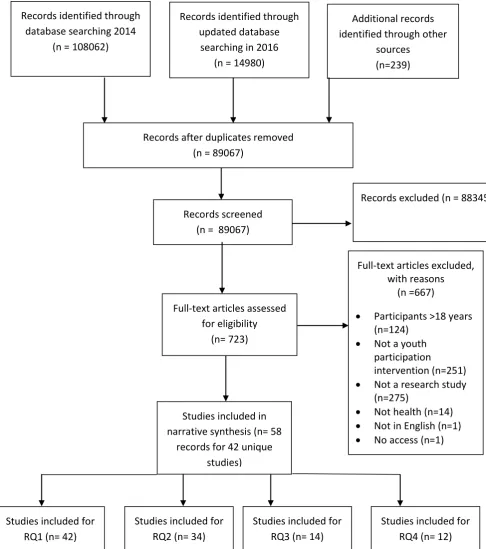
[image:17.595.79.566.178.728.2]The study selection process (i.e. identification, screening, eligibility and inclusion) is presented in the Preferred Reporting Items for Systematic Review and Meta-Analyses (PRISMA; Moher et al., 2009) flow diagram (figure 1).
Figure 1. PRISMA diagram detailing study selection process
Records after duplicates removed (n = 89067)
Records screened (n = 89067)
Records excluded (n = 88345)
Full-text articles assessed for eligibility
(n= 723)
Full-text articles excluded, with reasons
(n =667)
Participants >18 years (n=124)
Not a youth participation
intervention (n=251)
Not a research study (n=275)
Not health (n=14)
Not in English (n=1)
No access (n=1) Studies included in
narrative synthesis (n= 58 records for 42 unique
studies)
Additional records identified through other
sources (n=239) Records identified through
database searching 2014 (n = 108062)
Records identified through updated database
searching in 2016 (n = 14980)
Studies included for RQ1 (n= 42)
Studies included for RQ2 (n= 34)
Studies included for RQ3 (n= 14)
The initial database search in September 2014 identified 108062 records, however, after de-duplication this was reduced to 73852 records. The website search identified 239 records which potentially met the inclusion criteria based on title and these records were included for further screening. The updated database search conducted in September 2016 identified an additional 14980 unique records. Therefore a total of 89067 titles and abstracts were screened. Of these 723 were judged as potentially meeting the inclusion criteria or
insufficient information was available in the abstract to judge and the full text articles were retrieved. Full text screening identified 42 unique studies reported in 58 papers. Papers which reported on the same study were grouped together.
The most common reason for exclusion was that the paper was not an empirical research study (n=275). The second most common reason for exclusion was that the study was not about a programme which involved the participation of young people in its development, delivery or evaluation (n=251). Other reasons for exclusion were: participants aged over 18 years at the start of the study (n= 124), the programme was not focused on health (n=14) or the paper was not in English (n=1). Finally, one paper was excluded on the basis that we could not obtain access to it.
As RQ1 aimed to provide a scope of the literature to identify characteristics of studies that involve young people in the development, implementation and evaluation of programmes aiming to secure health all 42 studies were used to answer this question. The studies were then categorised by which of RQ 2-4 they answered, however, there was considerable overlap in this, particularly between RQ3 and RQ4. Specifically, 35 of the included studies contained outcome evaluations of programmes. However, Carroll et al. (1999) which was an outcome evaluation was excluded from RQ2. The rationale for this exclusion was it was an uncontrolled study, which only collected the data at post-test and therefore no comparison could be made between either a control group or with pre-test data. Therefore only 34 studies were used to answer RQ2.
Fourteen studies included data on young people’s views on being involved in such programmes that was used to answer RQ3. Twelve studies included data on barriers and facilitators associated with the meaningful, appropriate and effective involvement of young people which was used to answer RQ4. The results for each question will now be presented in turn.
3.2 Research Question 1: Study Characteristics
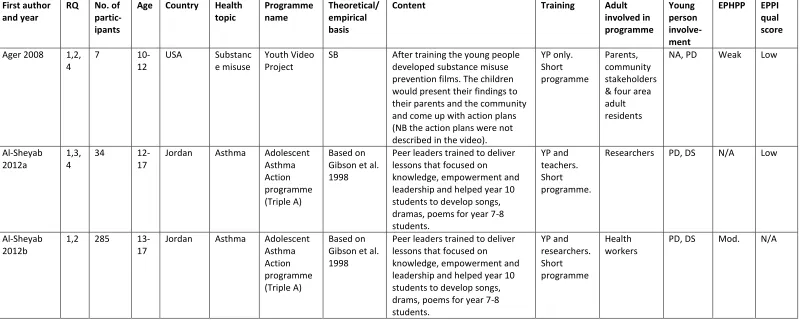
programme. The other young people were either participants receiving the programme or acted as controls. The included papers were published between 1994 and 2016. Appendix 5 provides a brief outline of the number of participants, location of intervention and content of the interventions.
3.2.1 Research Question 1a: Study Design
The majority of studies (n=35) used experimental or quasi-experimental study designs to evaluate the effectiveness of programmes and could therefore be used to answer RQ2:
10 studies used cluster randomised designs (Al-sheyab et al., 2012a, Winkleby et al., 2004, Campbell et al., 2008, Goldberg et al., 2000, Perry et al., 2009, Stephenson et al., 2004, Ozer and Douglas, 2013, Pearlman et al., 2002, Bogart et al., 2014,
Birnbaum et al., 2002);
12 studies used uncontrolled before-and-after designs (McGuire and Gamble, 2006, Coleman et al., 2011, Goslar et al., 2009, Ager et al., 2008, Midford et al., 2000, Onyango-Ouma et al., 2005, Madrigal et al., 2014, Mahat and Scoloveno, 2010, Tencati et al., 2002, Petrova et al., 2015, Woodgate and Sigurdson, 2015, O’Reilly et al., 2016);
8 studies used non-randomised controlled studies (Merakou and
Kourea-Kremastinou, 2006, Berg et al., 2009, Beshers, 2007, Bogart et al., 2011, Gibson et al., 1998, McKinney et al., 2014, Menna et al., 2015, Hamdan et al., 2005);
2 studies used a non-randomized cluster-controlled trial (Caron et al., 2004, Lindqvist et al., 2014);
1 study used an individual randomised trial (Peña et al., 2008);
1 study used an uncontrolled post-test only design (Carroll et al., 1999, N.B. excluded from RQ2);
1 study used a repeat cross-sectional design (Alstead et al., 1999)
The 14 studies which were included to answer RQ3 used a range of methods:
3 studies used semi-structured interviews (Ferrera et al., 2015, Stewart et al., 2008, Wallerstein and Sanchez-Merki, 1994);
5 studies used focus groups (Al-Sheyab et al., 2012b, Bader et al., 2007, Campbell et al., 2008, Woodgate and Sigurdson, 2015, Marko and Watt, 2011);
6 studies used questionnaires (Kohlstadt et al., 2015, Berg et al., 2009, Birnbaum et al., 2002, Hamdan et al., 2005, O’Reilly et al., 2016, Tencati et al., 2002).
(2014) conducted questionnaires which examined barriers and facilitators and Ager et al. (2008) reported the researchers’ reflections on barriers and facilitators.
3.2.2 Research Question 1b: Nature of Participants
3.2.2.1 Participants’ Age
All of the studies focused on adolescents (defined by WHO as aged 10-19 years) and none included children under the age of ten. The included studies either presented mean ages, age ranges or school grades (see Appendix 5). When only school grades were presented, age ranges were estimated based on the age of young people normally in those grades. The majority of studies (n=22) focused on older adolescents defined as the majority of participants being aged 15 years or older. Ten studies specifically focused on early adolescents, defined as the majority of students being aged 10-14 years. Nine studies included participants at any stage in adolescence and one study did not define the age of the young people included.
3.2.2.2. Participants’ Gender
The majority of studies included male and female participants. Three studies specifically included only female students (Al-Sheyab et al., 2012b, Gibson et al., 1998, Peña et al., 2008). The studies by Al-Sheyab et al. (2012b) and Gibson et al. were both conducted in female only schools and both were an evaluation of the same programme (Adolescent Asthma Action programme). The study by Peña et al. was a sexual health programme desinged specifically for female participants. Only one study included only male students and this was focused on steroid use prevention (Goldberg et al., 2000). All of the other studies included participants of both gender and the majority of studies (n=20) contained approximately balanced numbers of male and female participants. However, ten studies contained predominantly more students of one gender (defined as over two thirds of participants being either male or female). Seven of these studies included predominantly more female participants and three predominantly more male participants. Nine studies did not provide specific details on number of female and male participants.
3.2.3 Research Question 1c: Setting
3.2.3.1 Geographical Location
3.2.3.2 Context and Setting
The majority of studies were conducted in school settings (n=33). One study, specifically included continuation high schools (Winkleby et al., 2004). The other nine studies were conducted in community settings (Ager et al., 2008, Bader et al., 2007, Berg et al., 2009, Ferrera et al., 2015, Kohlstadt et al., 2015, Madrigal et al., 2014, Marko and Watt, 2011, Peña et al., 2008).
Twenty studies were conducted in low income settings. Specifically, 16 were conducted in low income communities within high income countries and four were conducted in low or low-middle income countries.
The majority of studies (n=26) either focused on targeting young people from ethnic minorities or included a diverse range of ethnic groups in the study.
3.2.4: Research Question 1d: Characteristics of the Intervention
3.2.4.1 Health Focus of Programmes
The programmes the young people participated in focused on a wide range of health-related topics (see Appendix 5), with the most frequently studied area being sexual health (n=11). Other programmes focused on the following topic areas: healthy eating (n=6), substance misuse (n=4), mental health (n=3), alcohol (n=3), tobacco (n=4), violence (n=3), asthma (n=3), physical fitness (n=2), health literacy (n=2), type II diabetes prevention (n=1), cardiovascular health (n=1), seatbelt use (n=1), diarrhoea and malaria prevention (n=1), steroid use prevention (n=1) and environmental health. In addition, one programme Ozer et al. (2013) focused on more generic life skills (i.e. empowerment, self-esteem) by tackling health-related topics of the students’ choosing. A number of programmes tackled multiple related health behaviours (i.e. alcohol and substance misuse or healthy eating and physical fitness).
3.2.4.2 Theoretical and Empirical Basis of Programmes
Some programmes reported one or more theoretical basis (see Appendix 5). Social cognitive theory (Bandura, 2001), was the most commonly cited theoretical basis with 12
planned behaviour (Ajzen, 1991), and two programmes evaluated in three studies were informed by ecological theory (Bronfenbrenner, 1992).
A considerable number of studies (n=17) were either solely informed by previous empirical work that utilised peer education approaches or used this empirical work in conjunction with a theoretical basis. Finally, 17 studies reported to have used a participatory action research (PAR) approach which was either in addition to a theoretical basis or as the sole basis.
One study developed a model of participation to involve young people in all stages of the study process and involves the following six stages: 1) Engage (i.e. connecting with the young people), 2) Identify (i.e. explore and identify issues of concern), 3) Plan (i.e. choose an issue and define a strategy, 4) Act (i.e. implement the project), 5) Research, Reflect and Reward (i.e. evaluate the effectiveness of the programme) and 6) Sustain (i.e. consider ways to continue through successive groups (Bader et al., 2007). The other studies reporting to take a participatory action approach, utilised stages similar to these to varying degrees.
3.2.4.3 Training
Training was provided for young people and/or adult facilitators. Training for the young people involved in either developing, delivering or evaluating the sessions varied
considerably. Some programmes (n=13; see Appendix 5) provided extensive training either delivered as multi-day training or multiple sessions delivered over an extended period and consisted of education sessions on the health behaviour of interest, skills for participating in the programme (e.g. team-working, leadership, communication, research, project
management) and often provided an opportunity for students to develop action plans. The duration of these programmes ranged from over six weeks of summer school (Berg et al., 2009, McKinney et al., 2014) to two day training events (Beshers et al., 2007, Campbell et al., 2008).
The majority of other programmes (n=21; see Appendix 5) provided shorter training sessions, for example two to three hour sessions delivered at several time points or a one day training event. Twelve programmes also detailed training for the adults also involved in the programme. Specifically, seven provided training for teachers, two for health workers (Al-Sheyab et al., 2012a, Wallerstein and Sanchez-Merki, 1994) and five for researchers/site staff. Four programmes did not specify any formal training for young people or adults.
3.2.4.4 Extent of Young People’s Involvement in Programme
of the intervention (including development of materials), 4) delivery of the intervention, and 5) evaluation of the intervention. Details of young people’s involvement in each study is presented in Appendix 5.
The most common component for young people to be involved was delivery of sessions (n=40). For ten of these programmes, young people’s participation was limited to
programme delivery and therefore young people were not involved in identifying the need for the programme, researching the programme, developing the programme or evaluating it Interestingly, in the largest studies young people’s involvement was limited to delivery of the programme. Only two studies did not involve young people in the delivery of sessions, and instead their input was limited to programme development and programme
development and needs assessment. Thirty-two studies involved the young people in programme development and in almost of all these, the young people were also involved in the delivery of the intervention. Only six studies involved young people in the issue
identification process and only ten involved young people in a needs assessment to research the programme. Importantly, these studies tended to describe themselves as PAR or were based upon strengths based approaches. Four studies involved young people in the evaluation of the programme. Only Berg et al. (2009) appeared to involve young people in all five components of the research process and only three studies involved young people in four components of the research process.
3.2.4.5 Adult Involvement
All of the studies involved an adult in some aspects of the programme conceptualisation and development (see Appendix 5). In only a small number of studies their role was limited to facilitating the young people to determine the focus and nature of the programme (n=6). However, the majority of other studies did involve a collaborative approach between young people and adults to programme development.
The professional role of the adults working with the young people varied between studies. Half of the studies involved a researcher in some aspect of the programme (n=22) and 17 studies which were implemented in a school setting involved a teacher in part of the programme. Other adults involved included healthcare professionals (n=9), public health workers (n=5), members of the local community (n=5), youth workers (n=4), parents (n=3) and school cafeteria staff (n=3).
3.2.5 Research Question 1e: Study Quality
2012b, Berg et al., 2009, Bogart et al., 2014, Goldberg et al., 2000, Lindqvist et al., 2014, McKinney et al., 2014, Perry et al., 2009, Petrova et al., 2015, Winkleby et al., 2004, Woodgate and Sigurdson, 2015) and the remaining 22 were judged to be weak.
Study quality was therefore considered to generally be poor. The primary issue with the weak studies was a risk of confounding due to use of non-randomized study designs and subsequent failure to account for confounding. Similarly, the use of non-randomized designs in many of the included studies also gave rise selection bias. Another important issue of concern was the frequent use of data collection tools that were not shown to be valid or reliable.
The 12 studies that consisted of or contained a qualitative component were assessed using the EPPI centre tool. Only Campbell et al. (2008) was judged to be of high quality and only two studies were judged to be medium quality (Stephenson et al., 2004, Wallerstein and Sanchez-Merki, 1994). The other nine studies were judged as low quality. The primary reason for this was insufficient information on participant recruitment, data collection and analysis methods and limited description of results (i.e. limited or no, quotations, no indication of typicality of views or outliers).
3.3 Research Question 2: What is the evidence of the impact that involving young people has on health outcomes?
3.3.1. Outcome Measurement
There was considerable heterogeneity between the 34 studies which were included to answer RQ2, both in terms of the outcomes measured and the measurement tools. Relevant information about the outcome measurement, including the strategy used for group
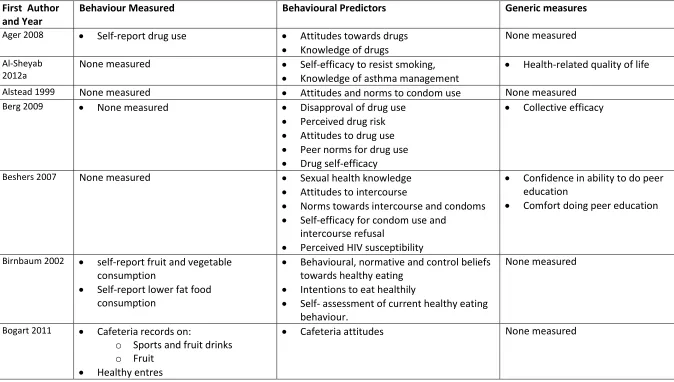
comparison is summarized in Appendix 6. This heterogeneity can partly be attributed to the different health focus across the studies. However, even between studies with the same health focus there was heterogeneity in outcome measurement with differences in the concepts measured and scales used, with a considerable proportion of authors developing their own measurements for the purposes of the study rather than using pre-existing validated scales. Outcomes could be broadly divided into those that measured actual health behaviours and those that measured predictors of behaviour (e.g. attitudes, knowledge, beliefs, self-efficacy, perceived behavioural control). In addition, some studies included non-specific measures that could be broadly grouped around the following concepts: positive youth development (e.g. self-esteem, self-efficacy, empathy); community
engagement/sense of belonging; and presentation and peer education skills; and team/leadership skills.
collected behavioural data using cafeteria records; Lindqvist et al. (2014) used text
messaging to ask participants about engagement in physical activity; Winkleby et al. (2004) measured smoking using a handheld breath monitor which measures levels of carbon dioxide; Goslar et al. (2009) asked students to observe seatbelt use upon driving to school; and Onyango-Ouma et al. (2005) observed hygiene practices.
There were also differences in how the comparisons between groups were made; a small number of studies compared the young people who had been involved in the development or implementation of the programme with either the young people who had received the programme or a control group. However, the majority of programmes included all young people receiving the programme (whether or not they were involved in the development or implementation) in the in the intervention group. Specifically, only Birnbaum et al. (2002) and Hamdan et al. (2005) made this distinction. It is therefore difficult to identify whether involvement in the programme development and implementation conferred any additional benefit beyond receiving a programme in which young people were involved in the
development and/or implementation.
3.3.2 Results of Outcome Evaluations
The study results and effect sizes (when available) are presented in Appendix 7. A narrative description of the results by outcome topic will now be presented.
3.3.2.1 Sexual health
Effects for the studies which included sexual health outcomes were mixed and tended to yield more positive results for predictors of behaviour, in particular knowledge, then actual self-reported behaviour.
Specifically, only two studies consistently reported positive significant differences in
outcomes, however, both of these studies were graded as weak. First, Mahat and Scoloveno (2010) reported significant positive effects in predictors of sexual health behaviours:
HIV/AIDs knowledge (d=0.48 (95% CI: 0.18 – 0.80)) and self-efficacy (d = 0.45 (95% CI 0.81 – 1.39). Secondly, Peña et al. (2008) reported positive changes in gender norms (OR = 2.8, 95% CI 1.2-6.2). It should also be noted that this study was judged as weak.
seniors. However, there was no significant difference in actual behaviour (i.e. postponing sexual intercourse). Pearlman et al. (2002) reported significant changes in HIV/AIDs knowledge (d=0.48 (95% CI: 0.18 – 0.80)) and perception of self as a change agent (d=0.51 (95% CI: 0.20 – 0.82)) but no significant difference in actual sexual health behaviour or generic skills (self-efficacy and knowledge of planning and presenting skills; data not provided). Conversely, Menna et al. (2015) reported significant positive effects in actual condom use (aOR = 4.73(95% CI 1.40-16.0)) but not in predictors of behaviour: HIV/AIDs knowledge aOR = 1.20(95% CI 0.77-.1.87) or willingness to go for HIV testing (aOR = 1.23(95% CI 0.75-2.02). Finally Strange et al. only reported significant positive effects for two outcomes: knowledge of STI prevention and having sexual intercourse. However, the effect sizes were all small and knowledge of STI prevention was only significant for girls at six months (aOR = 1.27 (95% CI 1.01-1.59)); and boys at 18 months (aOR = 1.31 (95% CI 1.02-1.68)), and having sexual intercourse was only significant in girls at 18 months (aOR = 0.92 (95% CI 0.75–1.11)).
Three studies did not identify any positive significant differences. Two of these studies were judged weak (Alstead et al., 1999; Beshers et al., 2007) and one as moderate (Berg et al., 2009). More specifically, Alstead et al. (1999) did not identify any significant differences in sexual behaviours (data not available); Beshers et al. did not identify any significant
differences in any predictors for sexual health behaviours (with the exception of perceived norms for condom use); and Berg et al. did not identify any significant difference in number of sexual partners.
The majority of these programmes included young people in programme development and delivery of sessions (see Appendix 5 for details). Therefore it was not possible to identify a relationship between level of engagement and impact on sexual health outcomes.
3.3.2.2 Alcohol Use/Misuse
Whilst four studies included measures of alcohol misuse, only the programme by Midford et al. (2002) exclusively focused on alcohol. Across the studies there was a lack of any consistent significant effects, particularly for alcohol behaviours. However, there were more consistent improvements in knowledge.
measure which also included substance misuse and therefore not specific to alcohol. Despite the apparent lack of impact on actual alcohol behaviours, there were more
consistent improvements in alcohol knowledge with both Midford et al. and Goldberg et al. reporting positive changes (data not available). There was no change in attitudes in the one study that included this as an outcome (Tencati et al., 2002).
Significance of effects did not appear to vary with study quality with Goldberg et al. and Berg et al. being judged as moderate and Midford et al. and Tencati et al. being judged as weak. The significant positive effects were found in the studies with lower levels of engagement of young people, with Midford et al. only involving young people in two components and Goldberg et al. only involving young people in one component (see Appendix 5 for details). Conversely, Berg et al. involved young people in five components and Tencati et al. involved young people in three components. However, given the small numbers of studies, it is not possible to draw any conclusions.
3.3.2.3 Healthy Eating
Five studies included measures on healthy eating. Generally, positive significant
differences were reported, particularly for measures of actual healthy food consumption.
Predictors of behaviour were inconsistent. Positive significant differences were reported by Bogart et al. (2011, 2014) in cafeteria attitudes, Bogart et al. (2014) also reported positive significant differences in attitudes to tap water, knowledge about healthy eating and intentions to drink water and Hamdan et al. (2005) reported improved attitudes to low fat food foods (OR = 28.86 (95% CI 7.96-104.7)) and fruit and vegetable consumption (OR = 7.35 (95% CI 3.15-17.12)), and thinking it’s cool to eat low fat foods at school (OR = 3.87 (95% CI 1.8-8.33)). Hamdan et al. also reported the less involved were more likely to report that they had not noticed more students eating low fat foods (OR = 6.57 (95% CI 3.5 – 12.33)) or that the intervention had no impact on students eating low fat food in the cafeteria (OR = 16.34 (95% CI 8.4-31.63)). However, Birnbaum et al. (2002) did not report any significant changes in either beliefs towards healthy eating, intentions to eat healthily or assessment of current healthy eating behaviour. Similarly, McKinney et al. (2014) did not report any
significant differences in healthy food knowledge (data not available) or nutrition attitudes (OR = 1.67 (95% CI 0.78-3.56)).
These studies were of variable quality with Birnbaum et al. (2002), judged as strong, two studies judged as moderate (Bogart et al., 2014, McKinney et al.) and two studies judged as weak (Bogart et al., 2011, Hamdan et al., 2005). It should be noted that the two weak studies were the only two to report positive significant differences for all outcomes. With the exception of Hamdan et al. (2005), young people’s involvement was limited to delivery of sessions +/- programme development (see Appendix 5 for details).
3.3.2.4 Physical activity
Two moderate quality studies included physical activity as outcomes and reported mixed results in terms of levels of physical activity.
Specifically, one study specifically focused on physical activity (Lindqvist et al., 2014) and reported a positive significant difference in self-reported levels of physical activity. McKinney et al. (2014) targeted healthy eating and physical activity, however, did not identify any significant differences between the intervention and control group in actual levels of physical activity (OR = 0.51 (95% CI 0.18-1.45)) or fitness attitudes (OR = 1.3 (95% CI 0.6-2.94)). Both of these studies involved limited participation of young people (see
Appendix 5 for details).
3.3.2.5 Substance Misuse
Three studies measured actual substance abuse behaviour (Berg et al., 2002; Goldberg et al., 2000; Tencati et al., 2002). Effects were mixed with Tencati et al. reporting no significant differences in marijuana use in the last 30 days in either girls (OR = 0.74 (95% CI 0.16-3.38)) or boys (OR = 1 (95% CI 0.06 -15.78)). However, Berg et al. reported a positive significant effect on marijuana use and Goldberg et al. reported a significant positive effect in substance abuse in both a combine measure with alcohol and also a separate illicit substance measure.
The two studies that measured knowledge of illicit substances reported positive effects. First, Ager et al. (2008) reported a significant positive difference at post-test (d = 2.18 (95% CI 0.75 – 3.61)). Secondly, Goldberg et al. (2000) reported a positive difference in marijuana at the first post-test only. Tencati et al. (2002) also reported significant positive effects in other predictors of behaviour in girls only: perceived incentive value and perceived self-efficacy (data not available). Berg et al. (2002) also reported a significant positive difference in perception of peer drug use (data not available).
There were no other significant differences in other predictors of substance misuse: attitudes towards drugs (Ager et al., 2008; d = 0.28 (95% CI -0.97 – 1.52)), outcome expectancies (Tencati et al., 2002; data not available), perceived policy control (Tencati et al., 2002; data not available) or perceived peer tolerance of drugs (Goldberg et al., 2000; data not available). Both Berg et al. (2002) and Goldberg et al. were judged to be of moderate quality whereas Ager et al. and Tencati et al. were judged to be low quality. The studies all involved young people to varying degrees and given the small number of studies involved, it is not possible to ascertain a clear relationship between level of involvement and programme effectiveness (see Appendix 5 for details).
3.3.2.6 Mental Health
Two studies of moderate and weak quality focused on mental health and reported mixed results, although more consistent positive effects were identified for help-seeking for mental health problems.
protective factors), perceptions of trusted adult at school and perceptions of the adult named at the session (Petrova et al., 2015); or perception of stigmatization of others for help-seeking (d = -0.19 (95% CI -0.63-0.25); O’Reilly et al., 2016). Both of these studies involved young people in programme development and delivery of sessions.
3.3.2.7 Tobacco
Generally, more positive significant effects were found for studies which focused on tobacco use prevention. All three studies which exclusively focused on tobacco reported significant positive effects in smoking behaviours.
Specifically, Campbell et al. (2008) measured proportion of weekly smokers immediately after the intervention (OR = 0·76 (95% CI 0·66–0.89)), at one year (OR = 0·82 (95% CI 0·72– 0·90)) and two years follow-up (OR = 0·72 (95% CI 0·65–0.8)), indicating a positive sustained effect. Perry et al. (2009) reported a significant positive effect in cigarette smoking, bidi smoking and any tobacco use. Winkleby et al. (2004) also identified a positive effect in smoking behaviours, however, this effect was only significant in regular smokers and not sustained at six months follow-up (data not available).
In addition, Winkleby et al. (2004) reported positive effects in predictors of smoking
behaviour: perceived incentive value (d = 4 (95% CI 3.75 - 4.25)); perceived self-efficacy (d = 2 (95% CI 1.82 – 2.18)) and outcome expectancies (d = 3 (95% CI 2.79 – 3.21)). Similarly, Perry et al. (2009) reported significant positive effects in eight predictors of behaviour (e.g. knowledge, attitudes, self-efficacy) but reported a significant negative effect in perceived prevalence of smoking and chewing tobacco. Two studies that did not focus specifically on tobacco included it as an outcome. Specifically Al-Sheyab et al. (2012a) reported a positive significant difference in self-efficacy to resist smoking (d = 7.74 (95% CI = 7-8.47)). However, Tencati et al. (2002) did not identify any significant difference in tobacco smoking in last 30 days (OR = 0.65 (95% CI 0.22-1.87)).
The three studies which focused exclusively on tobacco were generally of higher quality with two judged as moderate (Perry et al., 2009, Winkleby et al., 2004) and one as high (Campbell et al., 2008). There was no clear association between level of involvement and programme effectiveness with two studies only involving young people in delivery of sessions (Campbell et al., 2008, Perry et al., 2009), one study only involving young people in two components (Al-Sheyab et al., 2012a) and two studies involving young people in three components (Tencati et al., 2002, Winkleby et al., 2004; see Appendix 5).
3.3.2.8 Type 2 Diabetes
Only one weak study included outcomes related to type 2 diabetes (Coleman et al., 2011). These were all single item measures of knowledge and significant positive effects were identified for four out of five measures specific to diabetes (see Appendix 7 for full details). The young people were involved in programme development and delivery of sessions.
3.3.2.9 Seatbelt Use
One study reported a positive change in number of students wearing seatbelts.
Again this was only the focus of one weak study (Goslar et al., 2009) which identified a significant positive difference in the number of drivers and passengers wearing seatbelts (OR = 0.44 (95% CI 0.38 – 0.50)). Young people were involved in programme development, the delivery of the intervention and evaluation.
3.3.2.10 Steroid Use
One study generally reported positive significant changes for both behaviour and predictors of behaviour immediately after the intervention and at one year follow-up (Goldberg et al., 2000).
One moderate quality study reported significant positive differences in the following outcomes (Goldberg et al.,2000): lifetime steroid use, supplement use (one year follow-up only), intent to use steroids, ability to turn down offer of drugs, knowledge, perceived coach tolerance, perceived harms, negative attitudes to steroid users (post-test only), perceived susceptibility to harms, concern about what friends think (post-test only) and reasons for using/not using steroids (data not available). However, no significant differences were reported for normative beliefs about steroids. Young people were only involved in delivery of sessions.
3.3.2.11 Diarrhoea and Malaria Prevention
One study reported a significant positive change in knowledge but not in hygiene behaviour.
Only one weak study focused on this (Onyango-Ouma et al., 2005). Whilst a significant positive effect on hygiene knowledge was identified, there was no significant change in hygiene practices (no data available). Young people were involved in programme development and delivery of sessions.
3.3.2.12 Asthma
Specifically, positive significant differences in asthma knowledge were reported by both Gibson et al. (1998; d= 0.51 (95% CI 0.34-0.68)) and Al-Sheyab et al., 2012a (d = 8.1 (95% CI = 7.33-8.86)). In addition Al-Sheyab et al. (2012a) reported a significant positive difference in health-related quality of life (d = 9.64, (95% CI 8.75-10.53)). However, Gibson et al. did not identify any significant differences in attitudes towards asthma. The study by Al-Sheyab et al. (2012a) was judged to be moderate quality and the study by Gibson et al. was judged to be of low quality. This was the same programme and the young people were involved in programme development and delivery.
3.3.2.13 Self-esteem
Changes in self-esteem were inconsistent across the four studies which included it as an outcome measure.
Specifically, significant positive effects were reported by Peña et al. (2008; OR = 1.73, (95% CI: 1.1-2.7)) and Goldberg et al. (2000; data not available) who reported a significant positive difference at the immediate post-test only. However, neither Ozer et al. (2013; T1: d = 0 (95% CI -0.2-0.2), T2: d = 0.19 (95% CI -0.9-0.48)) or O’Reilly et al. (2016; d = 0.4 (95% CI -0.04-0.84)) identified any significant positive changes. These studies varied in quality with one study judged as strong (Ozer et al., 2013), one study judged as moderate (Goldberg et al., 2000), and two judged as weak (O’Reilly et al., 2016, Peña et al., 2008). These studies involved young people in a range of different levels of participation and it is therefore not possible to ascertain a clear relationship between level of participation and programme effectiveness (see Appendix 5).
3.3.2.14 Self-efficacy
Whilst the majority of studies which measured self-efficacy, considered it in relation to a specific health risk behaviour, three studies measured it in a more general sense and reported inconsistent results (Madrigal et al., 2014, Pearlman et al., 2002, Tencati et al., 2002).
Specifically, Tencati et al. (2002) reported a positive significant difference in female
3.3.2.15 Engagement/Sense of Belonging in Community
The four studies that included outcomes related to community engagement/sense of belonging reported limited effect.
Specifically, only McGuire and Gamble (2006) reported a significant positive effect in social responsibility (d = 0.55 (95% CI 0.07-1.04)), but did not report any impact on community belonging (d = 0.34 (95% CI -0.14-0.82)). Berg et al. (2009) reported no significant difference in collective efficacy (data not provided). Similarly, Tencati et al. (2002) did not identify any significant differences in sense of community and Madrigal et al. (2014) did not report any significant differences in three single item measures of participatory behaviour (see Appendix 7 for details). All of these studies were judged as weak. McGuire et al. only
involved young people in delivery of sessions, whereas the other three studies which did not report positive effects involved young people in three or more components.
3.3.2.16 Presentation/Delivery Skills
There were inconsistent effects on students’ comfort with delivering sessions and presenting skills from four weak studies.
Specifically, O’Reilly et al. (2016) reported a significant positive difference (d = 0.46 (95% CI 0.01-0.9)) and Beshers et al. (2007) reported significant positive differences in confidence and comfort in delivering peer education (data not available). However, Madrigal et al. (2014) did not report any difference in the number of students who had actually given a presentation to a group of people they did not know (d = 0 (95% CI -0.72-0.72)) and
Pearlman et al. (2002) did not identify any significant differences (data not available). These studies involved young people to varying degrees and given the small numbers it is not possible to ascertain whether there is a relationship between level of involvement and programme effectiveness (see Appendix 5).
3.3.2.17 Team/Leadership Skills
There was little evidence from the four studies which included measures of
leadership/team working skills (Madrigal et al., 2014, O’Reilly et al., 2016, Tencati et al., 2002, Woodgate and Sigurdson, 2015).
Only Tencati et al. (2002) identified a significant positive difference in leadership
competence and this was in boys only (data not available). Woodgate and Sigurdson (2015) did not identify significant differences in any of their measures of positive youth
-0.35-0.53)) and Madrigal et al. (2014) did not identify any significant differences in any of their three single item measures for leadership skills (see Appendix 7). Level of involvement varied between study and given the apparent lack of effect there is no clear relationship between level of involvement and programme effectiveness (see Appendix 5).
3.4 Research Question 3: What are the views that young people have of being involved in the process of developing health programmes?
A total of 14 studies contributed to data which could answer this question. Some of these studies used questionnaires to collect data for process evaluations of the programmes. One study measured students’ perceptions of the benefits of the programme (Kohlstadt et al., 2015). Three studies included measures of engagement with the programme (Campbell et al., 2008, Hamdan et al., 2005, Tencati et al., 2002). In addition, Birnbaum et al. (2002) measured perception of being a peer leader and students’ perception of the programme, O’Reilly et al. (2016) measured enjoyment of training and peer education programme and Campbell et al. (2008) how easy peers felt it was to have a conversation.
The information from the questionnaires was combined with the ten qualitative studies detailed in Section 3.2.1. Generally, young people appeared to enjoy actively taking part in health programmes and could recognise the importance of taking part (e.g. see Berg et al., 2009). Birnbaum et al. (2002) reported that the majority of students enjoyed being a peer leader and would do it again, however, 18% wished they had not been peer leader. Similarly, O’Reilly et al. (2016) reported that all students rated their enjoyment of the programme as five out of five. Tencati et al. (2002) reported that the mean number of community activities that the young people undertook increased from 2.0 to 7.7 during the intervention, suggesting that young people had engaged with the programme. Hamdan et al. (2005) reported that the young people involved in the delivery of the programme believed they were more likely to be have benefited from the programme than the young people who simply received the programme. Campbell et al. (2008) asked young people about how they felt carrying out the intervention and reported that 80% of peers found it easy to carry out.
Similarly, the results of the qualitative studies suggested that young people had enjoyed being involved (Al-Sheyab et al., 2012b, Bader et al., 2007; Ferrera et al., 2015; Woodgate and Sigurdson, 2015). However, one study by Marko and Watt (2011), did identify that at times young people felt the adult facilitators had the final say and felt they could have contributed more. Reported benefits of taking part included: strengthen college applications (Kohlstadt et al., 2015), helping others (Bader et al., 2007; Kohlstadt et al., 2015; Wallerstein and Sanchez-Merki, 1994), receiving the stipend (Kohlstadt et al., 2015); helping developed own personal interests (Kohlstad et al.); learning more from the
2007O’Reilly et al., 2016); opportunity to work with peers (Bader et al., 2007; Ferrera et al., 2015; O’Reilly et al., 2016); gaining confidence (Ferrera et al., 2015; O’Reilly et al., 2016; Wallerstein and Sanchez-Merki, 1994); opportunity to practice English (Al-Sheyab et al., 2012b); better understanding of their community (Bader et al., 2007; Ferrera et al., 2015; Stewart et al., 2008; Wallerstein and Sanchez-Merki, 1994), gains in confidence and self-efficacy (Stewart et al., 2008); feeling like a grown-up (Woodgate and Sigurdson, 2015) and development of empathy (Wallerstein and Sanchez-Merki, 1994).
3.5 Research Question 4: What are the barriers and facilitators associated with the meaningful, appropriate and effective involvement of young people?
A total of ten studies reported qualitative data (see Section 3.2.1) that was used to answer this question. This data was collected from the young people and unfortunately no studies reported results of evaluation work done with adult facilitators.
The following barriers to successful programme implementation were identified. First, Campbell et al. (2008) reported a lack of awareness of programme by non-peer leaders which may indicate that the programme is not effectively reaching other young people beyond those involved in the development or implementation. Campbell et al. also reported a decrease in engagement in intervention overtime as interest wanes which may suggest that programmes should not be overly long in duration or time consuming. Birnbaum et al. (2002) and Campbell et al. identified that insufficient training led to young people not retaining the information necessary for programme implementation. It was also reported that participation could constitute an additional pressure on top of regular schoolwork (Birnbaum et al., 2002), and therefore programmes should be cognisant of students’ workload. Similarly, Bader et al. (2007) and Marko and Watt (2011) reported that time pressures could act as a barrier. Two studies reported that having to perform in front of other young people could be difficult for some young people and may act as a deterrent to participation (Bader et al., 2007, O’Reilly et al., 2016). Some young people felt that at times adults took over from which acted as a barrier to their participation (Marko and Watt, 2011). However, as Madrigal et al. (2014) noted, sometimes the young people found it hard to keep the other young people on track and one way of potentially managing this situation is intervention from adult facilitators. Finally, a range of logistical barriers were also
reported including inconvenient meeting times (Bader et al., 2007) and transportation difficulties (Madrigal et al., 2014) and organising classes (Birnbaum et al., 2002).
2008). Sufficient and enjoyable training was identified as a facilitator by O’Reilly et al. (2016). The use of local trainers was reported to facilitate group dynamics in two studies (Al-Sheyab et al., 2012b; Ferrera et al., 2015). The importance of trainers not taking an