Available Online at www.ijpret.com
301
INTERNATIONAL JOURNAL OF PURE AND
APPLIED RESEARCH IN ENGINEERING AND
TECHNOLOGY
A PATH FOR HORIZING YOUR INNOVATIVE WORK
UNSUPERVISED SEGMENTATION OF TEXTURE IMAGES USING A
COMBINATION OF GABOR AND WAVELET FEATURE
S. M. AGRAWAL1 , S. S. PATIL2, SAGAR P. MORE3
1. Associate Professor, H. O. D. Department of Electrical Engineering.
2. M. E. (Digital Electronics) Department of Electrical Engineering (BNCOE), Pusad.
3. M. E. Student (Digital Electronics) Department of Electronics and Telecommunication (BNCOE) Pusad, (M.S.) India.
Accepted Date: 15/02/2014 ; Published Date: 01/04/2014
\
Abstract: An unsupervised method of texture classification by combining the two most commonly used multi-resolution, multichannel filters: Gabor filters and wavelet transform. A set of 8 Gabor filters and 2 wavelet filters. Daubeschies and Haar, for our analysis. The parameters (frequency, orientation and size) of the Gabor Filter bank are obtained by trial and error method, based on Visual observation of an energy measure of the response. A Fuzzy classifier has been used which use no priori knowledge of the textures and hence provides unsupervised segmentation. For comparing the performance of the feature from the Gabor filter bank, the two wavelet filters separately and a combination of all the three, the classification algorithm was kept identical. A combination of gabor and wavelet feature provides better performance compared to the Individual features alone.
Keywords: Review of related literature, Wavelet based texture segmentation literature, Classification.
Corresponding Author: MR. S. M. AGRAWAL
Access Online On:
www.ijpret.com
How to Cite This Article:
Available Online at www.ijpret.com
302 INTRODUCTION
In the field of computer vision, texture plays an important role in low-level image analysis and understanding. Its range of potential applications include analysis of remote sensing Images, industrial monitoring of product quality, medical imaging, and recently, content-based image and video retrieval. There is no formal or unique definition of texture making texture analysis is difficult and challenging problem. Classification and segmentation of texture content in digital image has received considerable attention during the past decades and numerous approach have been presented. Statical, model-based, and signal processing techniques are the most commonly used approaches.
The focus of this will be on multi-rate and multi-resolution signal processing approaches. A common denominator for most signal processing approached is that the texture image is submitted to a linear transform, filter, or filter bank, followed by some energy measure. To filtering based texture feature extraction schemes have been presented. The focus will be on filtering, keeping the other components same. Some example of filtering technique include, Gabor filter and the wavelet transform. Texture segmentation deals with identification of regions where destinate textures exist, so that further analysis can be done on the respective texture regions alone. The fuzzy C-means (FCM) classifier, which provide an unsupervised
segmentation.
BRIEF REVIEW OF RELATED LITERATURE.
Most researchers have attempted to use well-established and standard texture segmentation techniques for the identification of different texture surfaces. Most methods are based on wavelet features, MRF models, STFT features, co-occurrence matrices, geometric shape of texels and PCA analysis. A few related literature, which deal with the segmentation of textures using wavelet transform and Gabor filter are as
1) Dunn et.al. presents an algorithm to design specially tuned Gabor filters to segment images with bipartite textures. The parameter tuning of the set of Gabor filter bank is the key contribution of this approach. Results are shown mostly on simulated and a few real world samples
2) Grigorescu et.al. presents a comparative study of the different texture features based on Gabor filter bank outputs. The three features(obtained by non-linear processing) being compared are: Gabor energy, complex moments and grating cell operator features.
Available Online at www.ijpret.com
303 large, the efficiency of 1-D processing helps in reducing the computation complexity. Segmentation is edge based for this method.
BRIEF REVIEW OF WAVELET BASED TEXTURE SEGMENTATION LITERATURE.
A.Wavelet based methods have also been popular for texture segmentation
A. RCharalampidis and Kasparis use a set of new roughness features for texture segmentation and classification. Wavelets are used to extract single-scale and multiple-scale texture roughness features. These are then transformed to a rotational invariant feature vector, which has the information of texture direction. Iterative k-means algorithm has been used for segmentation and Baye’s classifier for classification. Results are shown using a large set of real world texture images.
B. Salari and Ling used a hierarchical wavelet decomposition technique for texture image segmentation. Daubechies 4-tap filters were used to decompose the original image into three detail and one approximate sun-band images. A K-means clustering algorithm was used for segmentation of the image using textural features obtained from the different bands starting from the lowest band, where coarse resolutions provide information about larger structures and fine resolution provides the details for refining the results. Results are shown on a few regular and nomogeneous real-world textures.
C. Lu et.al. proposed a method of unsupervised texture description using wavelet transform. The proposed methodology has four stages. The first stage computes a smoothed local energy of the wavelet coefficients in high-frequency bands, as features for segmentation. The second stage performs a coarse segmentation using a multithresholding technique. In the third stage, the features at different orientations and scales are fused in intra-scale and inter-scale respectively. In the last stage, ambiguously labeled pixels are integrated by inter-scale fusion to determine the number of classes. Results are shown on a few real-world images, with the use of various types of wavelet filters.
Mallet.et.al.in proposed a method to design adaptive wavelets for the purpose of classification of mineralogical spectral data. The purpose of designing adaptive wavelets was to optimize a specified discriminant criterion and reduce the dimensionality of the feature space. The choice of adaptive wavelets proved to be beneficial compared to standard wavelets such as
Daubechies or Coif let families- the classification accuracy was better. The system presented in this uses a combined representation of texture classification, based on
Gabor and wavelet features. This representation combines the discriminability of these
Available Online at www.ijpret.com
304 OVERALL METHODOLOGY
The steps of the overall methodology for texture classification are shown in Figure. The filtering stage consist of either a bank of Gabor filters or dyadic discrete wavelet transforms. The filter coefficients (responses) are post-processed using a set of non-linear functions, which compute the local energy estimates of the filtered coefficients. These non-linear functions consist of two stages: 1) subtracting the local mean and obtaining the magnitude followed by 2) smoothing by a large Gaussian function. The feature vectors computed from the local energy measure estimates are local mean and local variance, which represent local texture characteristics. These feature vectors are computed from the various filtered images and provided to the FCM to segment the texture patterns in the image. Here, user provides the desired number of lasses as an input to the classifier.
CLASSIFICATION
The unsupervised segmentation have employed for classification. The fuzzy c-means clustering (FCM) algorithm as an iterative procedure, which is described below,
1.Calculate the fuzzy cluster centers
2.Update U(l) with
3.Compare with U(l+1) in a convenient matrix norm.
Otherwise return to Step1.
(a) (b)
(c) (d)
Available Online at www.ijpret.com
305 (a) (b)
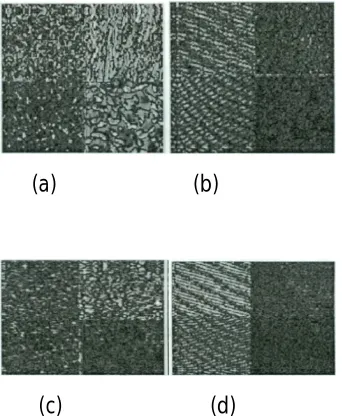
Figure.2: (a),(b) Energy of the Gabor filtered coefficients.
Where, M is the size of input data {xm; m=1,…M},C is the number of clusters, w is the fuzzy weighting exponent (1<w<∞) and U(l) is the membership func on matrix at itera on l. The value of the weighting exponent w determines the fuzziness of the clustering decision. A smallest value of w, i.e. w close to unity, will lead to a zero/one hard decision membership function, while a larger w corresponds to a fuzzier output.
While combining the Gabor and wavelet features for providing input to the FCM classifier, it necessary to ensure that the dimensionality and resolution of the feature vectors were compatible. For that 8 different Gabor filters and 2 types of wavelet transforms have used. Daubechies 8-tap and Haar gave 8 features for every pixel, which ensured equal weight age for both the filtering techniques. To ensure resolution compatibility, the wavelet features were up sampled to the same size as that of the Gabor.
CONCLUSION
The results of this method reveal that a combination of features from two different types of multi-resolution and multi-channel filters (instead of a ‘war’ between Gabor and wavelet) provides superior classification of texture images. The method combines the advantages (or feature discriminability) of both these filters to provide an improved performance. This has been the main objective and aim of this paper. One may down sample the feature vectors of the Gabor.
Filtered output and obtain feature vectors at lower resolution. However, this obviously results in poorer performance.
REFERENCES
Available Online at www.ijpret.com
306 2. D. Dunn, W. E. Higgins, J. Wakeley. Texture Segmentation Using 2-D Gabor Elementary Functions. IEEE Transactions on Pattern Analysis and Machine Intelligence, Vol.16,No.2,pp.130-149,1994.
3. Thomas P. Weldon, William E. Higgins and Dennis F. Dunn. Efficient Gabor filter design for texture segmentation. Pattern Recognition, Vol.29,No.12,pp.2005-2015,1996.