Sikorski Piotr, Szamocka Małgorzata, Meder Agnieszka, Ameryk Monika, Świątkowski Maciej. Simple sugars in fruit and the presence of colorectal cancers and polyps. Journal of Education, Health and Sport. 2017;7(12):461-474. eISSN 2391-8306. DOI
http://dx.doi.org/10.5281/zenodo.1162369
http://ojs.ukw.edu.pl/index.php/johs/article/view/5229
The journal has had 7 points in Ministry of Science and Higher Education parametric evaluation. Part B item 1223 (26.01.2017). 1223 Journal of Education, Health and Sport eISSN 2391-8306 7
© The Authors 2017;
This article is published with open access at Licensee Open Journal Systems of Kazimierz Wielki University in Bydgoszcz, Poland
Open Access. This article is distributed under the terms of the Creative Commons Attribution Noncommercial License which permits any noncommercial use, distribution, and reproduction in any medium, provided the original author(s) and source are credited. This is an open access article licensed under the terms of the Creative Commons Attribution Non Commercial License (http://creativecommons.org/licenses/by-nc/4.0/) which permits unrestricted, non commercial use, distribution and reproduction in any medium, provided the work is properly cited. This is an open access article licensed under the terms of the Creative Commons Attribution Non Commercial License (http://creativecommons.org/licenses/by-nc/4.0/) which permits unrestricted, non commercial
use, distribution and reproduction in any medium, provided the work is properly cited. The authors declare that there is no conflict of interests regarding the publication of this paper.
Received: 02.12.2017. Revised: 15.12.2017. Accepted: 31.12.2017.
Simple sugars in fruit and the presence of colorectal cancers and polyps
Piotr Sikorski, Małgorzata Szamocka, Agnieszka Meder,
Monika Ameryk, Maciej Świątkowski,
Department of Gastroenterology and Nutrition Disorders, Collegium Medicum in
Bydgoszcz, Nicolaus Copernicus University in Toruń, Poland
Keywords: colorectal cancer, polyps, fruit, simple sugar
Summary
The current knowledge based on facts provides data regarding genetic and environmental factors relevant for malignancies, including colorectal cancer (CRC) which frequently occurs in well-developed countries. CRC carcinogenesis, a process often lasting 10 to 20 years, has been elucidated.
The aim of the study was to evaluate the role of simple sugars contained in fruit in the development of colorectal cancer and polyps.
The study group consisted of 106 people aged 66 years and older. Colonoscopy screening was used as an opportunistic examination. Among people not qualified for the examination were those with diagnosed disease organic disease of the large intestine, suspected CRC, and people with poor health status due to diagnosed advanced organic diseases of essential organs. Colonoscopy screening was conducted at the Clinic of Gastroenterology and Nutrition Disorders, Collegium Medicum in Bydgoszcz.
component constituted a real risk of developing CRC in the future. In the control group, whose average age was 10 years younger, only one person was found to have cancer and other two had advanced adenomas, and while more adenomas were detected in the study group, they did not pose a significant risk of CRC.
The results obtained in the study allow us to draw the conclusion that in order to reduce the likelihood of developing colorectal cancer in older age, proper lifestyle habits should be promoted from childhood and based on rational nutrition, safe and functional food products and, inseparably, physical activity, with colonoscopy screening conducted once in ten years starting from the age of 50.
Introduction
processed food that promote the development of CRC are, e.g.,: heterocyclic amines, polycyclic aromatic hydrocarbons, nitrates from over-fertilized soil and those used for preserving food, excessive consumption of red meat and animal fats, alcohol, tobacco smoking (2,7,8). Moreover, a particularly strong influence of high BMI on the risk of developing CRC is observed. Key phenomenon in these disorders is insulin resistance. Two factors associated with obesity, i.e. high supply of simple sugars and low physical activity, contribute to this phenomenon. Different mechanisms, e.g., postprandial hyperinsulinemia, lead to an increase in the concentration of the biologically active insulin-like growth factor (IGF-1), which stimulates tumor development: intensifies the proliferation and metabolism, and inhibits the apoptosis of various cell types. This results in the generation of abnormal cells that should be eliminated from the body. Thus, insulin and IGF-1 increase the risk of CRC at the early stages of carcinogenesis. Hyperinsulinemia can also result from an excessive stimulation of pancreatic β cells in people consuming high quantities of sweets, among other things (9). The collected scientific evidence warrants identifying physical activity as an important factor reducing the risk of CRC (10).
Aim of the study
The aim of the study was to evaluate the role of simple sugars contained in fruit in the development of colorectal cancer and polyps.
Material and methods
colonoscopy screening under PBP during the period of implementation of the research project titled: “Colonoscopy screening in elderly people”.
The diet and the frequency of consumption of selected products, including fruit and vegetables, were assessed on the basis of a questionnaire prepared by the authors in cooperation with the scientific staff of the Department of Nutrition and Dietetics, Collegium Medicum in Bydgoszcz. The research survey consisted of three parts. The first part consisted of demographic data and questions about the subject’s life style. The second part regarded the subject’s health status and treatment used. The questions in this part referred to the anamnesis predominantly regarding gastrointestinal ailments, past and current diseases, family history of diseases in the first degree of kinship, as well as recreationally used substances and medicines taken. The third part of the questionnaire concerned the current dietary habits and took into account the entire adult life. Questions about the current and past dietary habits regarded the size of portions consumed and the frequency of including selected products in the diet. For practical reasons and for statistical evaluation, consumption of a given group of food products daily or a few times per week was considered as frequent, while consumption a few times a month or more rarely was considered as rare.
Results
the future. In the control group, whose average age was 10 years younger, only one person was found to have cancer and other two had advanced adenomas, and while more adenomas were detected in the study group, they did not pose a significant risk of CRC. A very important result of our study, which may provide a real benefit of colonoscopy screening for early detection of CRC in elderly people, is the significantly more frequent detection of adenomas located only on the right side of the large intestine in this age group, as compared with people aged 40–65 years. Poor preparation of the intestine for colonoscopy in our study was statistically more frequent in the study group of elderly people than in the control group. In the group of elderly people, the degree of colorectal cleansing in the 4-step ASGE and ACG scale was very good in 26.4% of subjects receiving the cleansing agent in a single dose and in only 11.5% of subjects prepared using a split dose of PEG with additional bisacodyl. Our study also revealed that elderly people often consuming vegetables had CRC and polyps less frequently than those rarely consuming vegetables.
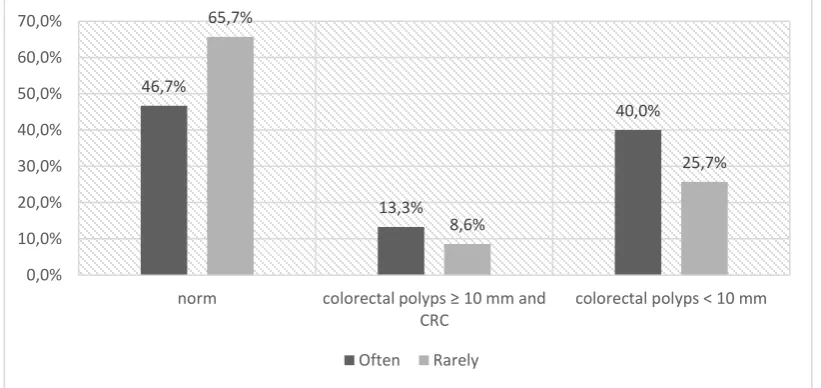
Fig. 1. Cancers and polyps ≥ 10 mm of the large intestine and the frequency of fruit consumption
People often consuming fruit much more frequently have colorectal polyps ≥ 10 mm and CRC (p=0.0027).
46,7%
13,3%
40,0% 65,7%
8,6%
25,7%
0,0% 10,0% 20,0% 30,0% 40,0% 50,0% 60,0% 70,0%
norm colorectal polyps ≥ 10 mm and
CRC
colorectal polyps < 10 mm
Fig. 2. The number of polyps detected in the large intestine and the frequency of fruit consumption
People often consuming fruit constitute a significantly smaller group of subjects with less than 2 colorectal polyps (p=0.0098).
Consumption of vegetables
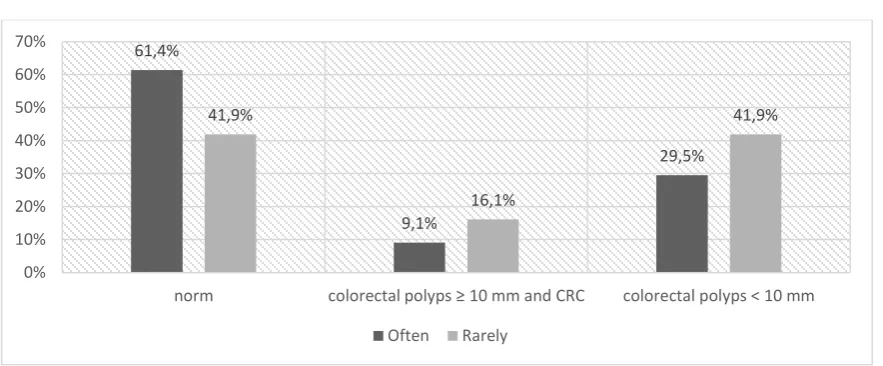
Fig. 3. Cancers and polyps ≥ 10 mm of the large intestine and the frequency of vegetable consumption
Subjects often consuming vegetables much less frequently have colorectal polyps ≥ 10 mm and CRC (p=0.0019).
71,1%
85,7%
28,9%
14,3%
0% 10% 20% 30% 40% 50% 60% 70% 80% 90%
Often Rarely
norm+1 polyp polyps ≥ 2
61,4%
9,1%
29,5% 41,9%
16,1%
41,9%
0% 10% 20% 30% 40% 50% 60% 70%
norm colorectal polyps ≥ 10 mm and CRC colorectal polyps < 10 mm
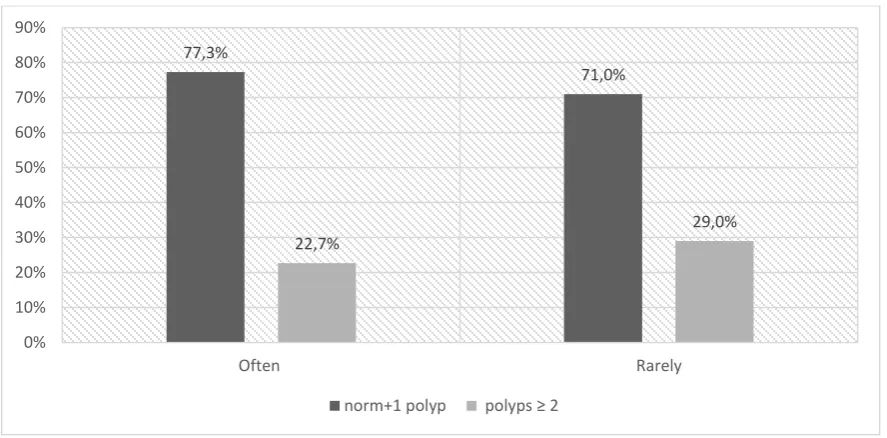
[image:6.595.70.512.426.609.2]Fig. 4. The number of detected polyps and the frequency of vegetable consumption
No statistically significant differences (p=0.3343) in the number of polyps detected in colonoscopy screening were found between people eating vegetables often and rarely.
Results and Discussion
Disease prophylaxis is defined as actions or health programs designed not only to prevent the occurrence of diseases by eliminating risk factors, but also to stop the progress of disease and reduce their negative consequences, such as disability and premature deaths. Primary prophylaxis aims to minimize the exposure to factors that increase the risk of developing a disease or to reduce the likelihood of occurrence of the disease or health disorder, and is focused on the entire population, with particular regard to the so-called risk groups. It predominantly includes education aimed to modify lifestyle and recommends heath-promoting behavior (7). Cancers, both in Poland and the rest of Europe, are among the most common causes of premature deaths. The theory of carcinogenesis recognized for several decades is a continuous process which can be divided into three basic steps:
- Initialization, i.e. occurrence of the first irreversible mutation. The original mutant cell is defined as the cancer stem cell. It is characterized by a permanent ability to self-renew and a poor ability to differentiate. Cancer stem cells constitute only a few percent of all cells forming tumor mass. The rest of tumor cells are the so-called descendant cells that in time become incapable of further divisions;
77,3%
71,0%
22,7%
29,0%
0% 10% 20% 30% 40% 50% 60% 70% 80% 90%
Often Rarely
- Promotion, i.e. accumulation of genetic and epigenetic alterations leading to the conversion of the mutated cell into a cancer cell, i.e. a cell undergoing uncontrolled divisions. This step can take up to a few years.
- Progression, during which the tumor develops, acquires the ability to infiltrate tissues and metastasize to distant organs. This process can take a few months to a few years (4).
Institute for Cancer Research agreed that dietary plant fiber is a factor protecting against the development of CRC because of its biological properties and the results of clinical studies (5). According to our study, elderly people who often eat fruit much more frequently develop CRC and polyps, including synchronous polyps. The results of our study are not in accordance with observations made by most researchers in this topic, although there are published scientific papers declaring no impact of greater consumption of fruit on the reduction of the incidence of CRC. Park Y et al., in a prospective cohort study with 700,000 subjects showed that greater consumption of plant fiber from fruit and vegetables has an opposite effect on the development of CRC than expected (18). Koushik A et al., in their published meta analysis, demonstrated that low fruit and vegetable consumption correlated significantly with a higher incidence of rectal cancer. However, diet rich in these products did not significantly reduce the overall risk of developing CRC (19). Our study is retrospective and includes a small group of people, therefore the obtained results cannot be used to draw long-term conclusions. Nevertheless, it should be noted that it regards an elderly population of Poles. This group of people in Poland until, on average, 40 years of age had access to only a few species of fresh fruit that were available for only a few months per year. Access to vegetables for consumers in Poland before 1989 was better compared to that for fruit, and in the winter many vegetables would additionally be consumed in a pickled form. Most commonly, studies of the impact of food and nutrition on human health consider vegetables, fruit and plant fiber as one food product. In our study, we assessed the impact of fruit and vegetables on the development of CRC separately. Fruit and vegetables differ in, e.g., the content of simple sugars and dietary fiber. Because of the higher content of simple sugars, consumption of fruit should be limited to 1–2 large apples per day. Unlimited consumption of fruit, especially by people with overweight and obesity, can lead to an increase in their body weight. This is not only due to the greater caloric load of fruit, which varies from 40 kcal/100 g to 95 kcal/100 g, but also due to their frequent intake of 300 g and more per day. Fruit should not be substituted with fruit juices. For example, consumption of fruit corresponding to 100 kcal per day includes: half of an avocado, an average banana, 2 small pears, 2 medium-sized apples, 2 kiwi fruit, 4 tangerines, 2 small oranges, 10 plums, 20 strawberries, 30 grapes, 40 cherries and 830 g of watermelon. When arranging diet, one should remember that only fruit with a glycemic index of no more than 50 should preferably be consumed (20).
vegetables may contribute to discomfort in the abdominal cavity due to tympanites. Such people may consider these fruit and vegetables as unhealthy and eliminate them from their diet. Healthy vegetables are those that contain, e.g., potassium, such as potatoes, beans, tomatoes, beets, soy, zucchini, spinach, lentils. In turn, crucifers are an excellent source of vitamin C, both in the fresh and pickled form. Vegetables from this group contain large quantities of folates, group B and E vitamins, and among primary minerals are sulfur, manganese, molybdenum, iodine, cobalt, selenium and chromium; furthermore: calcium, iron, zinc and potassium. Crucifers also contain proteins constituting a valuable source of the amino acids methionine and lysine (20). There is some evidence linking CRC with consumption of simple carbohydrates. Gnagnarella et al., based on meta analysis of research papers, provided evidence that food products with a high glycemic load and/or glycemic index are associated with a greater risk of development of adenoma and CRC. Insulin is responsible for this phenomenon, not only due to its mutagenic properties, but primarily due to fact that it increases the concentration of bioactive insulin-like growth factor (IGF) 1 (21). In our study, we analyzed the dietary habits regarding the current and past consumption of fruit and vegetables by people reporting for colonoscopy screening at the age of 66 years and older. We also noted that these food products should be assessed separately, not collectively as in many scientific publications, because fruit and vegetables differ significantly in the content of individual nutrients. In our study, we particularly focused on the impact of simple sugars, that are present in greater quantity in fruit than in vegetables, on the development of polyps and CRC. Based on the rich literature and our observations, it can be concluded that an optimal diet with health-promoting, preventive, or even therapeutic properties against CRC is not based on individual nutrients, but rather on reasonably composed menus that include a safe and well-selected set of food products, as well as appropriate methods of their preparation.
Conclusions
The results obtained in the study allow us to draw the conclusion that in order to reduce the likelihood of developing colorectal cancer in older age, proper lifestyle habits should be promoted from childhood and based on rational nutrition, safe and functional food products and, inseparably, physical activity, with colonoscopy screening conducted once in ten years starting from the age of 50.
References
1.Winter P. et al.: Epigenetics and chromatin modifications. Short lectures. Genetics. editors, PWN. Warsaw, 2003; 374-81
2.Song M. et al.: Nutrients, Foods and Colorectal Cancer Prevention. Gastroenterology. 2015; 148(6): 1244-1260
3.Hamilton S. et al.: World Health Organisation Clasification of Tumours. Pathology and Genetics of Tumours of the Digestive Tract. IARC Press: Lyon. 2000:104
4. Orłowska J. i wsp.: Gruczolaki ząbkowane i polipowatość hyperplastyczna a rak jelita grubego. Borgis. postępy Nauk Medycznych. 2009 (2): 111-117
5.Jackson A.: Word Cancer Research Fund / American Institute for Cancer Research. Food, Nutrition, Physical Activity, and the Prevention of Colorectal Cancer. Colorectal Cancer.2011. Report.
6.Calvert P.: The genetics of colorectal cancer. Ann Intern Med.; 2002; 137: 603-612 7.Chan A. et al.: Primary Prevention of Colorectal Cancer. Gastroenterology. 2010; 138(6): 2029-2043
8.Teixeira M. et al.: Primary prevention of Colorectal Cancer: Myth or reality. World J Gastroenterol. 2014; 20(41): 15060-15069
9.Kang H. et al.: Visceral Obesity and Insulin Resistance as Risk Factors for Colorectal Adenoma: A Cross-Sectional, Case – Control Study. Am. J. Gastroenterol. 2010; 105: 178– 187.
10.Wolin K. et al.: Physical activity and colon cancer prevention: a meta-analysis. Br J Cancer. 2009;100: 611-616
11.Reguła J.: Narodowy program zwalczania nowotworów: Program badań przesiewowych dla wczesnego wykrywania raka jelita grubego, w zakresie wykonywania badań kolonoskopowych w 2014 i 2015 r. w systemie zapraszanym; www.mz.gov.pl, Warszawa, 03.06.2014 r.
13.Szamocka M i wsp.: Nawyki żywieniowe, a występowanie gruczolaków i raków w kolonoskopii przesiewowej u osób w wieku 65+. J. Educ. Health Sport.2017;5(7):76-94. 14.Burkitt D.: Related disease – related cause? Lancet. 1969; 2: 1229 – 1231
15.Fuchs C. et al.: Dietary fiber and the risk of colorectal cancer and adenoma in women. N Engl J Med. 1999; 340: 169 – 176
16.Pietinen P. et al.: Diet and risk of colorectal cancer in a cohort of Finnish men. Cancer Couses Control. 1999; 10: 387 – 396.
17. Aune D. et al.: Dietary fiber, whole grains, and risk of colorectal cancer: systematic review and dose-response meta-analysis of prospective studies. BMJ 2011; 343: d6617. 18.Park Y. at al.: Dietary fiber intake and risk of colorectal cancer: a pooled analysis of prospective cohort studies. JAMA. 2005; 294 (22): 2849–2857
19.Koushik A. et al.: Fruits, vegetables, and colon cancer risk in a pooled analysis of 14 cohort studies. J Natl Cancer Inst. 2007; 99: 1471-83
20.Jarosz M. i wsp.:Normy żywienia dla populacji Polski. Instytut Żywienia i Żywności.Warszawa.2017