University of New Orleans University of New Orleans
ScholarWorks@UNO
ScholarWorks@UNO
University of New Orleans Theses and
Dissertations Dissertations and Theses
12-17-2010
The Use of Experiential Groups in the Training of Group Workers:
The Use of Experiential Groups in the Training of Group Workers:
Student Attitudes and Instructor Participation
Student Attitudes and Instructor Participation
Pierre Betsy St.
University of New Orleans
Follow this and additional works at: https://scholarworks.uno.edu/td
Recommended Citation Recommended Citation
St., Pierre Betsy, "The Use of Experiential Groups in the Training of Group Workers: Student Attitudes and Instructor Participation" (2010). University of New Orleans Theses and Dissertations. 1277.
https://scholarworks.uno.edu/td/1277
This Dissertation is protected by copyright and/or related rights. It has been brought to you by ScholarWorks@UNO with permission from the rights-holder(s). You are free to use this Dissertation in any way that is permitted by the copyright and related rights legislation that applies to your use. For other uses you need to obtain permission from the rights-holder(s) directly, unless additional rights are indicated by a Creative Commons license in the record and/ or on the work itself.
The Use of Experiential Groups in the Training of Group Workers: Student Attitudes and Instructor Participation
A Dissertation
Submitted to the Graduate Faculty of the University of New Orleans in partial fulfillment of the requirements for the degree of
Doctor of Philosophy in
Counselor Education
by
Betsy K. St.Pierre
B. A., Nicholls State University, 2003 M. S., Nicholls State University, 2005
ii
DEDICATION
iii
ACKOWLEDGEMENTS
To my husband, Bobby Joe, my son, Harrison, and my parents Gil and Diane Kiff, Thank you for sacrificing time with me and giving me the support and encouragement I needed
to finish my goal. Your unconditional love was always my backbone.
To Dr. Herlihy,
Thank you for your sharing your extensive knowledge of ethics and always being there to lend a helping hand. Your support and kind words will not be forgotten.
To Dr. Watson,
Thank you for your continued support and belief that I could finish this journey.
To Dr. Romano,
Thank you for always being a positive, thoughtful influence. Your words of encouragement pushed me to achieve my goals.
To Dr. Paradise, My Chair and Methodologist,
iv
TABLE OF CONTENTS
LIST OF TABLES……….………...
ABSTRACT ……….
CHAPTER ONE: INTRODUCTION ……….…….………....
Student Experience………...……….……....…... Ethical Considerations……….. General Research Questions ………..……….. Assumptions of the Study………. Definition of Terms………...
CHAPTER TWO: REVIEW OF THE LITERATURE ……….……...
Current Methods in Group Work Training ……….. The Use of Experiential Methods in Counselor Education ……….. Models of Group Work Training and Ethical Considerations ………. The Impact of Group Work Training on Student Experience ……….….
CHAPTER THREE: METHODOLOGY ………
Purpose of this Study ……….………….. Research Questions ………...………... Characteristics of the Sample ………... Instrument Development ……….. Data Collection Plan ………..……….. Data Analysis ………...
CHAPTER FOUR: RESULTS……….
Research Questions………... Research Question 1………. Research Question 2………. Tests of Hypothesis………... Test of Hypothesis 1……… Test of Hypothesis 2……… Test of Hypothesis 3……… Test of Hypothesis 4……… Test of Hypothesis 5……… Test of Hypothesis 6……… Test of Hypothesis 7………
v
Summary………..
CHAPTER FIVE: DISCUSSION………
Discussion of Findings……….. Discussion of Findings for Research Question 1………. Discussion of Findings for Research Question 2………. Discussion of Findings for Hypothesis 1………. Discussion of Findings for Hypothesis 2………. Discussion of Findings for Hypothesis 3………. Discussion of Findings for Hypothesis 4………. Discussion of Findings for Hypothesis 5………. Discussion of Findings for Hypothesis 6………. Discussion of Findings for Hypothesis 7………. Limitations……… Implications for Counselor Educators and Instructors of the Group Work Course……….. Implications for Future Research……….. Conclusions………...
REFERENCES ……….
APPENDICES ……….
Appendix A: Survey of Student Attitudes and Instructor Participation in Experiential Groups………... Appendix B: Permission from Dr. Rebecca Anderson ……… Appendix C: IRB Approval Letter……… Appendix D: First Electronic Message to Participants ………... Appendix E: Second Electronic Message to Participants ……… Appendix F: Final Electronic Message to Participants ………
vi
LIST OF TABLES
Table 1 Frequency Distribution of Participants by Sex……….
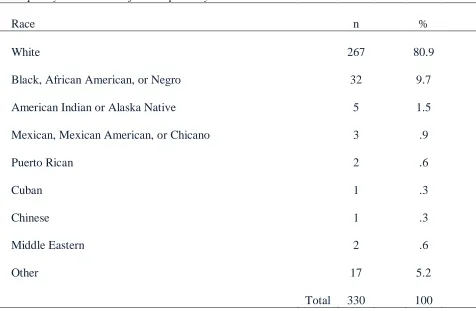
Table 2 Frequency Distribution of Participants by Race………
Table 3 Instrument Development – Survey of Student Attitudes and Instructor Participation in Experiential Groups ……….
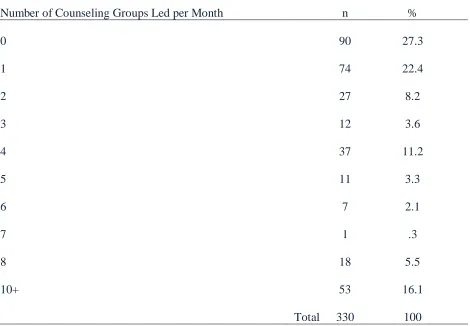
Table 4 Frequency Distribution for Number of Counseling Groups Led per Month…...
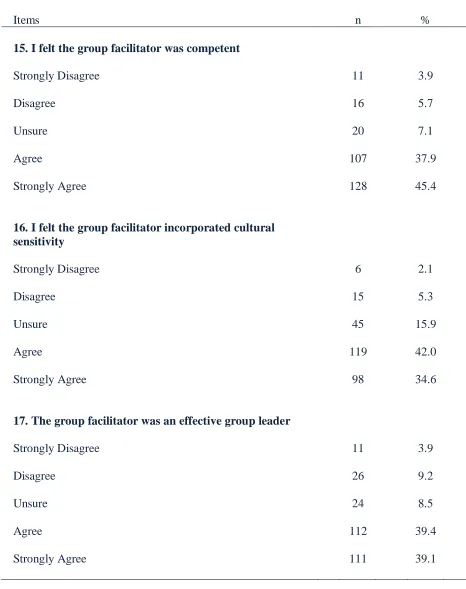
Table 5 Frequency Distribution for Section III – Ethical Concerns in the Experiential Group………
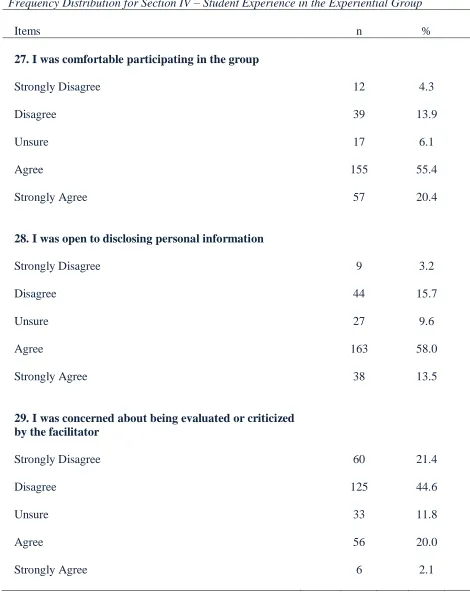
Table 6 Frequency Distribution for Section IV – Student Experience in the Experiential Group………
Table 7 Frequency of Instructor facilitating Experiential Component……….
Table 8 Frequency Distribution of Academic Role of the Instructor of the Group Work Course………...
Table 9 Frequency Distribution of Instructor Observation of Experiential Group……..
Table 10 Frequency Distribution of Feedback Given to Instructor Regarding
Experiential Group………..
Table 11 Frequency Distribution of Academic Role of the Facilitator of the
Experiential Group………..
Table 12 Knowledge of Experiential Group Facilitator Prior to Membership in
Experiential Group………..
Table 13 Participants Knowledge of Role of Facilitator of Experiential Group Prior to the Experiential Group……….
Table 14 Experience While Participating in the Experiential Group………..
Table 15 St.Pierre Data Compared to Data from the Survey Conducted by Anderson and Price (2001)………
Table 16 Means, Standard Deviations, and Statistical Results for Hypothesis 1……….
vii
Table 18 Means, Standard Deviations, and Statistical Results for Hypothesis 3……….
Table 19 Means, Standard Deviations, and Statistical Results for Hypothesis 4……….
Table 20 MANOVA Results for Hypothesis 5……….
Table 21 ANOVA Results for Follow-Up Tests on Hypothesis 5………
Table 22 Means, Standard Deviations, and Statistical Results for Hypothesis 6……….
Table 23 Means, Standard Deviations, and Statistical Results for Hypothesis 7……….
Table 24 Themes of Open-Ended Question Inviting Comment on Personal Experience in the Experiential Group……….
Table 25 Themes of Open-Ended Question Seeking Recommendations to Improve Experiential Group Component………
91
93
98
103
105
106
112
viii Abstract
Both the Council for Accreditation of Counseling and Related Education Programs
(CACREP) and the Association for Specialists in Group Work (ASGW) require counselor
education programs to provide experiential training to group workers (CACREP, 2009; ASGW,
2000). However, no specific models are given to counselor educators to implement the
experiential component. Only two research studies have examined the overall structure and type
of instructor involvement commonly used in counselor training programs (Anderson & Price,
2001; Merta, Wolfgang, & McNeil, 1993). In addition, researchers have documented ethical
concerns in the use of experiential training methods (Davenport, 2004; Furr & Barret, 2000; Riva
& Korinek, 2004) including the role of dual relationships, confidentiality, and competency.
Student experience of the experiential training is impacted by both the structure of the
experiential group and the ethical pitfalls associated with each (Goodrich, 2008). Thus, the
purpose of this study was to determine the current models of group work and how the structure
of these models impacted student attitudes toward ethical concerns of dual relationships,
confidentiality, and competency and overall student experience.
Members of the American Counseling Association (ACA) who had graduated with their
master’s degree in the past five years were asked to respond to the Survey of Student Attitudes
and Instructor Participation in Experiential Groups online survey. The findings of this study
suggested that the most common group work training model is to have a full-time faculty
member both instruct the group work course and facilitate the experiential group. In addition,
concern over ethical issues was found to be an important component in student’s comfort level
ix
counselor. These results do not support the findings of Anderson and Price (2001) which
suggested a growing trend of group work instructors not being both the facilitator of the
experiential group and the instructor of the course. However, the findings do support previous
research which indicated that ethical concerns do negatively impact student involvement in the
experiential group (Davenport, 2004; Hall, Hall, Harris, Hay, Biddulph, & Duffy, 1999).
1 CHAPTER 1
INTRODUCTION
An essential element of counselor training programs is the training of group workers
(Furr & Barret, 2000; Goodrich, 2008; Guth & McDonnell, 2004; Killacky & Hulse-Killacky,
2004). As a result of the implementation of training standards by the Council for Accreditation
of Counseling and Related Education Programs (CACREP, 2009) and the Association for
Specialists in Group Work (ASGW, 2000), most master’s level counseling training programs
require at least one course in group counseling. The training standards for both organizations
call for an instructional and experiential component. The instructional component provides the
academic foundation for group leadership and is taught using didactic teaching methods;
whereas, the experiential component is designed to enhance the impact of the instructional
component by introducing students to group theory, process, and dynamics through direct
experience as a group member in a group activity (CACREP, 2009; Hensley, 2002).
A widely accepted way to meet the need for an experiential group component is some
type of personal group experience (see Connolly, Carns, & Carns, 2005; Falco & Bauman, 2004;
Fall & Levitov, 2002; Lennie, 2007; Osborn, Daninhirsch, & Page, 2003). Participating in an
experiential component serves multiple purposes for students including gaining a greater
understanding of the experiences of their future clients, increasing their self-awareness by
allowing them to easily transfer skills learned in group work to the outside world (Yalom, 1995),
and providing an opportunity to have an emotional and personal experience which allows them
2
The experiential component in group work has been defined in a variety of ways. It has
been called a laboratory group (Davenport, 2004), personal development group (Lennie, 2007),
and an experiential group (Furr & Barret, 2000). Regardless of the name of the experiential
component, the goal of counselor educators is to increase the student’s cognitive and affective
understanding of the group participation experience (Conyne & Bemak, 2004).
Effort has been devoted to explaining how the experiential component differs from other
training methods such as training groups and therapy groups. Merta, Wolfgang, and McNeil
(1993) attempted to explain the difference between experiential groups and therapy groups by
stating that in experiential group members self disclose and work on personal issues, like in
therapy groups, but not at the expense of learning group process and skills. Further, Yalom
described the difference between experiential and therapy groups by stating, “A training group,
though it is not a therapy group, is therapeutic in that it offers the opportunity to do therapeutic
work” (1995, p. 522). Furthermore, training group participants only play simulated situations,
unlike experiential group participants who self disclose personal information. Students
participating in training groups only “act” as participants by assuming a “safe/non-personal”
role, whereas students in the experiential group are participants in the group. Only the
experiential group offers first-hand understanding of the growth potential gained through
participating in the group process (Berg, Landreth, & Fall, 1998). Together, these comparisons to
other forms of group work help to define the experiential component in group work training.
Both CACREP and ASGW have described the minimum coursework and experiential
requirements when teaching group work. In the standards established by CACREP (2009), a
3
group leadership, theories of group counseling and group counseling methods, and direct
experience as a group member for a minimum of 10 clock hours. Additionally, ASGW, in its
Professional Standards for the Training of Group Workers (2000), requires group work courses
to provide training in seven core areas along with knowledge and skill objectives for each. The
core training standards include: knowledge and scope of practice, assessment of group members,
planning and implementation of group interventions, leadership and co-leadership, evaluation,
ethical practice, best practice, and diversity-competent practice. ASGW, like CACREP (2009),
requires students to observe and/or participate as a group member and/or group leader for a
minimum of 10 hours; however, neither association provides instruction on how to structure or
implement these requirements.
In an effort to show best practices, counselor educators over the years have published
their teaching models for group counseling instruction in various counseling journals. Some
authors offer conceptual models of how they have structured their own group counseling course
based on professional standards developed by ASGW. For example, Guth and McDonnell
(2004) have published a developmental model for group counseling courses that meets specific
ASGW core training competencies for group workers. The authors provided a conceptual
framework to help guide other counselor educators and they proposed a process of evaluating the
degree to which programs are meeting current training standards.
Some authors have offered concrete examples of how to structure and format a course in
group work. Furr and Barret (2000) have suggested dividing a single group work course into
two sections in order to limit the number of students participating in the experiential component.
4
process. For the remainder of class, one section participates in group skills training while the
second section participates in an experiential group. At midsemester, the two sections switch,
thus allowing all students an opportunity to participate in the experiential group while
maintaining proper group size. Osborn, Daninhirsch, and Page (2003) used a similar approach to
Furr and Barret (2000) when structuring a humanistically-based experiential component. The
authors suggested offering multiple sections of the group course in order to limit the number of
students participating in the experiential component. Both of these formats are examples of how
to structure a group work course and maintain proper group size.
Other researchers offer non-traditional ways to expand on the experiential group.
Connolly, Carns, and Carns (2005) conducted a study comparing a traditional discussion-based
experiential component to an activity-based experiential component. The activity-based
experiential group involved traditional classroom experiential activities and completion of an
outdoor challenge course. The challenge course consisted of a series of physical obstacles which
required students to work as a group in order to finish. The researchers believed that an
activity-based group is a viable resource for educating graduate students on the theory and practice of
group work using experiential techniques. Adding an activity-based experiential component to a
course in group work is not typical in counselor education programs; however, it may provide an
optional opportunity for additional group leadership training.
Hatch and McCarthy (2003) examined the use of challenge courses in which students, as
part of their group work course, completed a series of challenging activities in a wilderness
setting that encouraged them to work as a team both physically and mentally. The authors
5
experiential activities, it may accelerate bonding among members and may serve as a valuable
tool for setting the stage for individual and group growth. The challenge course participation can
foster a non-threatening environment of teamwork and cooperation which can be drawn upon by
group members in later parts of the classroom experiential activities. By adding an additional
activity, such as the challenge course, educators may help to develop the bond of group members
and help transition students from the didactic portion of the group work class into the
experiential component. Together, these best practices of teaching the experiential component in
group work add to the knowledge base of the counselor education framework.
Student Experiences
The purpose of the experiential component of group work training is to promote further
understanding of the process of group work. According to the ASGWBest Practice Guidelines
(1998), counselors should be competent in seven areas of group work: (1) nature and scope of
practice, (2) assessment of group members and the ecological systems in which they function, (3)
the planning of group interventions with sensitivity to environmental contexts and impacts of
diversity, (4) the implementation of specific group interventions, (5) concepts and practices
governing leadership and co-leadership, (6) evaluation, and (7) ethical practice, best practice, and
diversity-competent practice.
Kottler (2004) has advocated that the only way to teach graduate students to be
competent group leaders is to give them the opportunity to experience the group and practice
leading the group under supervision. Participating in the group experience calls for graduate
students to disclose personal information, be open to new experiences, and be willing to address
6
group work training, graduate students may have a strong reaction to their experience; however,
there is little research completed on the students’ attitudes toward experiences of the experiential
component of their group counseling course. Some of the research that has been completed
suggests that not all students enjoy or benefit from the experiential component. Davenport
(2004) conducted an informal survey of master’s degree students to assess the impact of the
experiential group. She found that many students had a negative experience due to concerns of
confidentiality and dual relationships. Students reported feeling like they had learned little from
the group because no one was willing to take risks and deal with heavy affective issues. One
reason given for not taking risks was concern over sharing personal information which could
make them appear “unhealthy” to the professor. Davenport also found that students had negative
experiences due to concerns over the competency of the facilitator of the experiential component,
especially when the facilitator was a graduate student. This research finding suggests that
student experience may be impacted by the dual roles held by the facilitator of the experiential
component.
Some research data suggest that the experience of participating in the experiential
component of group training can be harmful. Irving and Williams (1995) believed that not all
individuals benefit from the experiential component in group work and some may even be
damaged by it. In order to gain a better understanding of specifically who would benefit or be
damaged, the researchers studied the relationship between the learning styles of graduate
students and their group experiences. The learning styles were identified as (1) Activists: those
who engross themselves in the here-and now and believe in teamwork, (2) Reflectors: those who
7
their activity is part of a bigger picture and has purpose, and (4) Pragmatists: those who like to
see the practical uses of their learning experiences. The researchers reported that all learning
styles expressed concern over safety and vulnerability; however, students identified as theorists
and reflectors found the experiential component uncomfortable while those identified as activists
felt the group was destructive. Overall, the researchers concluded that participant experiences in
group work were perceived differently due to differences in learning styles.
Similarly, Hall, Hall, Harris, Hay, Biddulph, and Duffy (1999), conducted a study on the
long-term outcomes of small-group work for counselor development. All 92 participants were
graduates of either a Master’s degree program or held a Diploma in human relations or
counseling studies who graduated within 21 years of the study. All the survey respondents were
involved in the direct application or training of counseling. In the survey, participants were
asked to circle “feeling words” they attributed to their experience as a group member. The
results indicated that 12.4% of the participants felt uncomfortable, hurt, challenged, and battered,
while 2.2% of participants reported suffering from long-term psychological distress. Although
the percentage of graduate students reporting being adversely affected was small, it is worrisome
that the required participation in group work training harmed those being trained to help others
(Hall, et al.).
Anderson and Price (2001) argued that while student well-being should be carefully
monitored, the feelings of discomfort or fear associated with participation in an experiential
group should not be construed negatively. Discomfort will only help students to become more
aware of the emotions and feelings of future clients when entering therapy and their fears of
8
Kline, Falbaum, Pope, Hargraves, and Hundley (1997), 23 master’s degree students enrolled in a
group work course were randomly assigned to three experiential groups each facilitated by a
male doctoral student. They utilized two qualitative questionnaires in order to gain insight into
student experience in the experiential group and understanding of the experiential groups’
relevance in group work training. The researchers found that although participants reported the
experiential group created feelings of anxiety and overall discomfort, they also described it as a
positive experience that promoted personal awareness and growth. Similarly, in the study
conducted by Hall et al. (1999), where 92 participants were surveyed to determine the long-term
outcomes of small-group work, although participants reported both short-term and long-term
psychological stress, they also acknowledged the experience of participating in small-group work
as deeply meaningful and personally significant. It is unclear, however, as to whether or not
these participants processed their feelings of psychological stress and meaningfulness
immediately after the course or after a considerable amount of time had passed. The data
collected by Hall et al. did not identify what group format was used in the participant’s group
work course; therefore the reader is not able to determine if the format of the group was related
to the participant’s level and duration of stress. It is surprising that, after determining that a
small percentage of graduate students are “damaged” by their participation in the experiential
component, more research on student attitudes and experiences has not been completed. As a
result, continued research is needed on the immediate and long-term attitudes of graduate
9
Ethical Considerations
In an effort to meet CACREP standards of teaching an experiential component in group
work, counselor educators require students to participate in a personal group experience
(CACREP, 2009). Despite the benefits of an experiential component to group skills training,
ethical concerns related to dual relationships, confidentiality, and competency of the group
facilitator are frequently encountered (Anderson & Price, 2001). Many counselor educators have
written extensively on the need to minimize these ethical concerns, especially those related to
dual relationships, in order to foster a comfortable environment for students (Goodrich, 2008).
Although these ethical concerns are inherent in teaching a small group experience (Fall &
Levitov, 2002; Furr & Barret, 2000), their occurrence and frequency often depend on the
structure of the course. One of the main variants in the structure of the experiential component is
the role of the group facilitator. The group facilitator can be a faculty member, doctoral student,
or adjunct professor who may or may not be the teacher of the didactic portion of the course.
Often, a full-time faculty member leads the experiential component in group work (Davenport,
2004). An inherent ethical dilemma in this situation is the dual relationship between the
professor and the student and concerns over the student’s privacy. According to Anderson and
Price (2001), students are in a vulnerable position because of the power differential between the
student and the professor. The power differential is even greater when the professor serves as
evaluator of the student’s performance and facilitator of the group thus being knowledgeable
about sensitive information disclosed by students. Students may feel unduly pressured to
disclose information in an effort to “perform” and receive a good grade. The 2005 ACA Code of
self-10
disclosure and that the evaluative components of the experiential training experience do not
depend on the student’s level of self-disclosure.
Also, the self-disclosure of the student can have ramifications for the instructor.
CACREP (2009) requires that faculty review the progress of students each semester. The review
of the student causes a conflict of interest for the instructor of the experiential group. If the
instructor has pertinent information related to the student but is was obtained in the experiential
group, faculty may be concerned about violating student confidentiality (Furr & Barrett, 2000).
Sometimes, an adjunct professor is hired by the program to teach either the didactic and
experiential component of the group work course or just the experiential component. When the
adjunct professor serves as both facilitator of the group and evaluator of student performance, the
same ethical dilemmas exist, such as student privacy and power differential. However, when an
adjunct professor teaches only the experiential component, there may be fewer ethical pitfalls.
Students may feel more willing to disclose personal information knowing that the facilitator is
not responsible for assigning grades in the course. In addition, students may feel more open to
the group process because they do not have to be worried about being seen as unhealthy by
full-time faculty.
Universities that have both master’s degree and doctoral programs often have doctoral
students conduct or co-lead the experiential component of the master’s level group class in order
to minimize the dual relationship between faculty and students. However, there are ethical
dilemmas associated with this practice, including competency of the doctoral group leaders and
dual relationships between doctoral students and master’s students. The 2005 ACA Code of
11
having a doctoral student facilitate these groups, master’s degree students ponder whether the
facilitator is capable of handling their personal information competently or confidentially
(Davenport, 2004). In an informal study conducted by Davenport (2004), a student reported an
incident which had occurred in a previous experiential group where the doctoral student
facilitator had to report a case of child abuse based on information shared by a group member. It
appeared to the student that the doctoral student facilitator was in a difficult situation with
regards to being supportive to the group member and fulfilling his/her own ethical obligations to
report the child abuse. The student felt the faculty was at fault for expecting the doctoral student
to be competent to handle the situation. Are instructors expecting too much of doctoral students
when assigning them to lead a group of advanced students? Kottler (2004) believed instructors
may be delegating responsibility to doctoral students who do not have enough experience and
expertise. Leading a group of psychologically sophisticated students through their resistances
and fears of loss of privacy can be a daunting challenge (Davenport, 2004).
Merta, Wolfgang, and McNeil (1993) have contended that concern over ethical dilemmas
contributed to a great deal of variety in determining how experiential groups are structured.
Merta et al. surveyed 272 master’s-level programs and found five general approaches to
structuring experiential groups. These approaches included (a) the instructor as the group
facilitator (39%); (b) the instructor was not involved in the experiential group and did not receive
feedback about students’ attendance and participation (8%); (c) the instructor was not involved
in the experiential group but did receive feedback on attendance and participation (19%); (d) the
experiential group was not led by the instructor but the instructor either observed or participated
12
Although the approach of having the instructor double as the group facilitator can lead to
concern over dual relationships between the instructor and students, it was the most common
structure of a group work course. In contrast to data collected by Merta et al., a study by
Anderson and Price (2001) suggested that instructors are more vigilant about avoiding dual
relationships. Only 3% of students indicated that their instructor led their experiential group
compared to 39% surveyed by Merta et al. Goodrich (2008) noted that additional follow-up
studies are needed to further the research completed by both Merta et al. and by Anderson and
Price to determine the current trends in how courses in group counseling are structuring the
experiential component. Are counselor educators continuing to minimize dual relationship
concerns by not having full-time faculty members facilitate the experiential group as noted by
Anderson and Price (2001)? In addition, it appears that more research is needed to explore how
the type of facilitator and their level of involvement in the experiential group impact the
experiences of group workers in training.
General Research Questions
The following research questions examined the current models of group work training,
specifically the experiential component, and how the differences in these models impacted
student experience regarding ethical concerns and comfort level.
1. What are the current models of group work training in use by U.S. counseling
programs?
2. Do the data support the findings of Anderson and Price (2001) in which group work
instructors were increasingly vigilant about avoiding dual relationships by not
13
3. What are the current attitudes of counselors toward the ethical concerns of dual
relationships, confidentiality, and competency in the experiential component of a
master’s level group work course?
4. To what extent do counselors perceive that their learning of group process was
impacted by concerns over these ethical issues?
5. Are there differences between experiential groups facilitated by full-time faculty,
adjunct faculty, and doctoral students, and to what extent do these differences impact
student experience or student comfort level?
Assumptions of the Study
A basic assumption of this research was that the Survey of Student Attitudes and
Instructor Participation in Experiential Groups that was created for this study by the researcher
is valid and accurately measures masters’ level counselors attitudes and experiences as they
pertain to the experiential component in their first master’s level group work course.
Also, the participants who completed the Survey of Student Attitudes and Instructor
Participation in Experiential Groups were master’s level counselors and members of the
American Counseling Association (ACA) who represented a valid sampling of students who
have had the experience of participating in an experiential group.
Additionally, it is assumed that the participants who completed the survey have
completed a group work course in which they participated in an experiential component and that
14
Definition of Terms
ACA – American Counseling Association: A professional and educational organizational that is
dedicated to the growth and advancement of the counseling profession by providing leadership
training, publications, continuing education, and advocacy services to professional counselors
(ACA, 2009).
AEE – Association for Experiential Education: A professional association dedicated to
supporting the professional development, theoretical advancement, and the evaluation of
experiential education in order to achieve a more just and compassionate world (AEE, 2010).
ASGW – Association for Specialists in Group Work: A division of the American Counseling
Association (ACA) that supports counseling professionals who specialize in group work and
seeks to extend counseling through the use of group process (ASGW, 2010).
CACREP – Council for Accreditation of Counseling and Related Education Programs: An
accrediting body that is dedicated to promoting quality and excellence in counselor education
through the development of preparation standards and the accreditation of professional
preparation programs (CACREP, 2010).
Challenge course: An experiential, action-based activity which requires a group effort to
physically overcome obstacles in an outdoor or wilderness setting in order to facilitate trust and
solidarity between individuals (Connolly, Carns, & Carns, 2005).
Dual relationships: This occurs in group work when the leader of the group component holds
multiple roles or responsibilities with the group members (Goodrich, 2008). It is common in the
15
Experiential education: The Association for Experiential Education (AEE) defines experiential
education as a “philosophy and methodology in which educators purposely engage with learners
in direct experience and focused reflection in order to increase knowledge, develop skills, and
clarify issues” (Association for Experiential Education, 2009).
Experiential group component: A component of a course in group work implemented as a result
of the requirements by both ASGW and CACREP which state that students must observe and/or
participate as a group member and/or leader for a minimum of 10 hours.
Group workers: The Association for Specialists in Group Work (ASGW) defines group workers
as “mental health professionals who use a group modality as an intervention when working with
diverse populations (ASGW, 2007, p.1).
Professional competence: It is defined in the ACA Code of Ethics (2005) (C.2.a.) as being
“based on their (counselor) education, training, supervised experience, state and national
16 CHAPTER 2
REVIEW OF THE LITERATURE
The purpose of this chapter is to examine the research and literature related to the
experiential component of group work training and how the ethical dilemmas associated with
implementing the experiential component impact student experience. This chapter is organized
into four sections that build a conceptual framework for examining the evolution of using
experiential education in group work training. In the first section, the current methods used in
group work training are examined. The second section provides an outline for the use of
experiential education in counselor education. In the third section, the models of group work
training and their ethical implications are examined. In the fourth section, the impact of group
work training on student experience is analyzed.
Current Methods in Group Work Training
Training in group counseling typically includes four components: academic, observation,
experiential, and supervision (Barlow, 2004; Dies, 1980; Riva & Korinek, 2004). In the
academic component, learning fundamental counseling skills is imperative to student
development (Barlow, 2004). One of the most common training methods for learning basic
counselor communication skills is Allen Ivey's Microcounseling Model or MC Model (Hawley,
2006). In the MC Model, students are trained in 13 skill sets: (1) ethics and multicultural
competence, (2) attending behaviors, (3) open and closed questions, (4) client observation, (5)
encouraging, paraphrasing, and summarization (6) reflection of feeling, (7) clinical interview
structure, (8) confrontation, (9) focusing, (10) reflection of meaning, (11) influencing skills, (12)
skill-17
based training model, students receive written information about the skill, observe the skill, and
then practice the skill (Ivey & Ivey 2003). The efficacy and application of the MC model has
been researched in over 450 studies (Daniels & Ivey, 2007) and has proven to be effective in
teaching basic counseling skills to students (Kuntze, van der Mole, & Born, 2009).
Although skill-based techniques were first applied to teaching individual counseling
skills, several authors have discussed the application of Ivey’s MC Model for the training of
group counselors (Harvil, Masson & Jacobs, 1983; Pearson, 1985). Particularly, Toth and
Stockton (1998) proposed a six stage skill based model for training group counselors. All six
stages are conducted in one to two 2 ½ hour sessions for each counseling intervention. Stage 1 is
an experiential component in which students are broken into small groups and given the
opportunity to take turns leading a discussion group. This exercise is videotaped as a baseline to
be used as an instructional tool in a later stage. Stage 2 is a didactic component in which
information on the counseling skill, such as examples of the skill in action, are given to students
in written form. In stage 3, students view videotaped vignettes of advanced graduate students
using the specific interventions and written examples given in stage 2. In stage 4, students are
asked to role-play the intervention they observed in the vignette using the exact wording found in
their skill description. The goal of this stage is to give students the opportunity to deliver the
intervention in a pre-scripted form. Stage 5 is an observational component in which students
view the taped experiential component from stage 1 and provide feedback on when and how the
intervention could have been used. In stage 6, students return to their small group and continue
the discussion from stage 1. Students are instructed to use the intervention learned in previous
18
Model to the training of group workers using their 6 stage model raises the self-efficacy of
students by encouraging students to practice skills while strengthening their positive
self-perceptions.
The Skilled Group Counseling Training Model or SGCTM (Buser, 2008) is another
model which applies Ivey’s MC Model to teaching group workers basic counseling skills. When
utilizing SGCTM, instructors train students in three stages: (1) exploring – the identification of
problems; (2) understanding – the development of group goals; and (3) acting – the activities
group members utilize to achieve those goals. The focus of SGCTM is to teach both low-level
skills, such as being empathetic and responsive, and high-level skills including immediacy and
appropriate self-disclosure (Smaby, Maddux, Torres-Rivera, & Zimmick, 1999). In a study
conducted by Smaby, Maddux, Torres-Rivera, and Zimmick (1999), researchers compared gains
in skill acquisition between students who received training in SGCTM as part of a group
counseling class and those who participated in a conventional group counseling class.
Participants included 78 master’s degree students from two universities; 63 students were
enrolled in the experimental group and randomly divided into 4 sections while 15 students were
enrolled in the control group. A survey developed by the researchers based on the SGCTM was
used to assess participants group counseling skills. The results of the survey indicated that
students in the experimental group who received SGCTM training demonstrated greater
improvement in both microcounseling and advanced skills compared to those students who did
not receive SGCTM training. The researchers argued that these findings indicated that not only
19
high level skills can be learned by master’s degree students prior to the supervised internship
experience.
Another important element of the academic component is building a foundation of group
theory, particularly Yalom’s (1970, 2005) theory of group work. Among Yalom’s many
contributions to the field of group work, perhaps the most salient is the description of the
therapeutic factors and the focus on the here-and-now. Yalom (1970) described 11 curative
factors, later renamed therapeutic factors, which are essential to therapeutic change: Instillation
of hope, universality, imparting information, altruism, the corrective recapitulation of the
primary family group, development of socializing techniques, imitative behavior, interpersonal
learning, group cohesiveness, catharsis, and existential factors. Although the therapeutic factors
describe how group members experience change in group therapy, they are also relevant to
students’ development as group work counselors. For example, Gillam (2004) suggested that
students experience the therapeutic factor of universality as they realize they share the same
initial apprehensions about their ability to be effective group leaders. In addition, students are
able to directly experience the power of imitative behavior and interpersonal learning as a result
of small group work. Counselor educators who structure and implement didactic and
experiential experiences with focus on the therapeutic factors will have a positive impact on
student growth and development (Gillam, 2004).
Yalom (2005) advocated for the use of the here-and-now focus in group therapy. He
described the process of the here-and-now as two-fold: the group focuses on immediate events
20
the processing of the here-and-now experience take place in order for group members to transfer
their learning of the experience to situations outside of the group (Yalom, 2005).
The second component in training group workers is the observational learning process. A
key component in this process is the use of modeling (Riva, 2004). Bandura theorized and
empirically validated that people learn by watching others perform specific behaviors (Bandura
& Walters, 1963). In the context of counselor education, students learn leadership skills by
observing others leading a small group experience. Riva (2004) believed that the instructor in a
group course models behaviors that students will have an “in the moment” opportunity to
observe and learn. Killacky and Hulse-Killacky (2004) suggested that modeling effective group
counseling skills in all components of group worker training will strengthen the learning process
for students. Bandura (1982) also proposed that peer modeling is a powerful tool in increasing
self-efficacy. As students watch peers engage in learning and conducting group counseling
skills, they will feel motivated to practice and achieve this skill.
Another component in the observational learning process is the use of live or videotaped
demonstrations by “master” therapists (Barlow, 2004). Barlow (2004) suggested that this
practice makes it is easier for beginning students to privately assess their own strengths and
weaknesses and to compare and contrast therapists skills and styles. In addition, Toth and
Stockton (1998) believed that the use of live or videotaped vignettes is important because
students are able to observe targeted behaviors in action and increase their self confidence in
replicating those behaviors. Videotapes of student performance can also be used in the
observational learning process. Toth and Stockton (1998) utilized an observational component
21
the class and used to identify missed opportunities to utilize specific interventions. These
student videotapes were shown in addition to videotapes of “master” therapists in order for
students to see their growth as they learned additional skills.
Process observation is a common method of training group workers (Cox, Banez,
Hawley, & Mostade, 2003, Orr & Hulse-Killacky, 2006). Process observation occurs when a
student, acting as the process observer, watches the dynamics of a group occur and later
articulates to the group what group dynamics and behaviors were observed. Cox et al. (2003)
proffered that the benefits of process observation are twofold – the process observer becomes
aware of group process and the group receives constructive feedback which improves their
group’s process. Orr and Hulse-Killacky (2006) expanded on the application of process
observation by examining how it encourages the transfer of learning in group members. They
have asserted that all group members can become process observers as they begin to see how
things happen in the group while experiencing what is happening in the group. When these
individual experiences are shared, the combined learning experience can be applied to learning
experiences outside of the classroom.
The third component in training group workers is the experiential component. Typically,
the experiential component is a conducted as a small-group experience often called a laboratory
group or task group. The experiential component allows students to experience being a group
member and/or leading a group. Yalom (2005) has stated that groups serve as a social
microcosm, allowing group members to relate the work learned in the group setting to their lives
beyond the group experience. It is essential for students to complete the experiential component
22
review of the literature indicated that no new research has been conducted in the past nine years
to show the most common practices for structuring or implementing the experiential component.
In the most recent research study, Anderson and Price (2001) found that 97% of students
indicated that their group work course instructor did not lead their experiential group. As a
result, the researchers suggested the most common way to structure the experiential component
is to have another qualified group leader, not the instructor of the group work course, facilitate
the group apart from the academic component.
The use of process notes in the experiential component can be used to enhance the group
process (Falco & Bauman, 2004). Falco and Bauman (2004) conducted a study using process
notes as a group counseling technique in the experiential component of a master’s level group
work course. The process notes were comprised of narratives of each session which included
unspoken observations and comments made by group members and comments regarding the
group process. In this study, the process notes were taken by the facilitator or co-facilitator of
the group and distributed to group members before the next group meeting in order to give
continuity to the group and prompt reflection on the last session. The authors report that through
responses to a questionnaire gathered after the final meeting, all 17 group members agreed on the
usefulness of using process notes as a group counseling technique. Group members reported that
the process notes assisted them in focusing in on salient issues and helping them to remember
thoughts and feelings from the previous sessions. One limitation to the use of process notes as
used by Falco and Buaman (2004) is that they were written by the facilitator of the group, not by
group members. Group members did not have the opportunity to serve as the process observer.
23
serve as part of the observation component to group worker training and continue the thread of
transfer of learning to other experiences.
Haberstroh, Parr, Gee and Trepal (2006) expanded on the use of written process notes by
Falco and Buauman (2004) through the use of interactive E-journaling. In the study, both group
members and the group facilitator submitted an open-ended email describing their thoughts,
emotions, and experiences from the previous group session to all group members and the
instructor. Through the use of semi-structured interviews of group members, the authors found
the use of E-journaling allowed group members to reflect upon and share thoughts that emerged
between group sessions, voice unfinished business, and continue the group experience in their
home environment. As noted by the authors, as students became more skilled at writing
reflections as a group member, they became more knowledgeable about group work, specifically
group stages and therapeutic factors.
Although the experiential component has typically been viewed as a separate component
in the teaching of group work, it is possible to incorporate aspects of the experiential component
into the academic component. Riva and Korinek (2004) believed that a group course “ provides
an avenue where instructors can demonstrate effective group leadership behavior through a
conscious use of modeling techniques and class members can experience what it is like to be in a
group and be a group member” (p. 56). The authors suggested using typical group interventions
such as modeling, setting norms, and facilitating voice in the classroom setting in order to mimic
the workings of a task group. Killacky and Hulse-Killacky (2004) went one step farther and
suggested that generic group competency skills should be infused in coursework across the
24
action, and closure in each class meeting or over the course of the semester. By expanding group
competency skills into other courses besides group work, the authors believed students will
become more effective group workers in a variety of settings with diverse populations.
The fourth component in training group workers is the role of supervision. Within the
counseling profession, supervision is recognized as essential to group leader development
(Granello & Underfer-Babalis, 2004). The Association for Specialists in Group Work
recommends that during master’s level practicum and internships, students spend one quarter of
their direct-service hours in supervised leadership or co-leadership of group work (ASGW,
2000). Some of the most recent research conducted on supervision includes examination of
supervision models to increase cognitive complexity (Granello & Underfer-Babalis, 2004) and
multicultural competence (Lassiter, Napolitano, Culbreth, & Kok-Mun, 2008; Ober, Granello, &
Henfield, 2009), the addition of computer-based supervision (Vaccaro & Lambie, 2007) and the
experiences of group supervisors (Okech & Rubel, 2009) and group supervisees (Linton, 2003).
In supervision, all three previous components of training (academic, experiential, and
observation) come together as students recall their experience as a group member, contemplate
their confidence as a group leader, and combine theory with interventions (Barlow, 2004).
In addition to the four components, the use of a conceptual framework when teaching
group work is vital. Bemak and Conyne (2004) suggested using an ecological perspective in
which a group is viewed as a living social system and the focus in on the characteristics of the
group members. “The ecological perspective uses ecological concepts from biology as a
metaphor with which to describe the reciprocity between persons and their
25
in which they live out their lives" (Sands, 2000, p. 187). The Association for Specialists in
Group Work (ASGW) defines group work as “a broad professional practice involving the
application of knowledge and skill in group facilitation to assist an interdependent collection of
people to reach their mutual goals which may be intrapersonal, interpersonal, or work-related”
(ASGW, 2000). Bemak and Conye (2004) argue that the concepts of interdependence and
mutuality are salient to the ecological perspective and therefore provide a good fit for teaching
ecologically-centered group work. They provide a model for teaching ecologically-centered
group work which is organized into three steps. In step 1 (Planning ecologically-centered group
work) students design group plans which take relevant contextual factors into account such as
purpose, setting, methods, leader role, and evaluation. In step 2 (Performing
ecologically-centered group work) students are provided the opportunity to become a group member and
group leader or co-leader through an experiential group. The authors stressed that gaining
knowledge about groups is not sufficient in itself; students must gain practical knowledge about
groups by experiencing the dynamics of a group first-hand. In step 3 (Processing
ecologically-centered group work) students create meaning from their experience and learn the importance of
outcome evaluation or the degree to which group participation promoted a good fit between the
group, its members, and the environment.
Orr and Hulse-Killacky (2006) built on the research of Conyne and Bemak (2004) by
introducing the concepts of voice, meaning, mutual construction of knowledge, and transfer of
learning. They asserted that these concepts establish cohesion and interconnectedness among
group members, key concepts in applying the ecological perspective to group work training. Orr
26
permission, and ability to share their own unique perspectives on the world around them” (p.
190). Meaning occurs when members value this voice and begin to create their own meaning
within the group. Members then move towards mutual construction of knowledge which is
based on the combined experiences of group members. Last, transfer of knowledge occurs when
members are able to apply knowledge learned from this experience to future similar experiences.
The Use of Experiential Methods in Counselor Education
The Association for Experiential Education (AEE) defines experiential education as a
“philosophy and methodology in which educators purposely engage with learners in direct
experience and focused reflection in order to increase knowledge, develop skills, and clarify
issues (Association for Experiential Education, 2009). AEE outlines basic principles of
experiential education including: (1) that learners are engaged intellectually, emotionally,
socially, and physically; and (2) that the results of the learning are personal and form the basis
for future experience and learning. AEE also states that the term “educator” is meant to include
therapist, facilitator, and counselor. Using this definition in relation to the field of counselor
education, instructors can use experiential methods as a valid way to assist students in gaining
direct experience of group work.
Starting in the 1960s, counseling programs began offering student training groups in
which the activities were purely experiential, with little theory or model-driven applications
(Ward, 2004). Ward (2004) further reported that this approach to teaching counselors in training
was consistent with the prevailing principle of that time which argued that only insight-based
experiences and understanding were valuable in training group experiences. It soon became
27
understand group process. Starting in the 1970s, the practice of teaching group work had
undergone a transformation where content of group theory and process was combined with
experiential activities to achieve both cognitive and affective understanding in students (Conyne
& Bemak, 2004). One of the major contributors in the transformation of teaching group work
has been the Association for Specialists in Group Work (ASGW). ASGW was founded in the
early 1980’s “to promote quality in group work training, practice, and research (ASGW, 2009).
In the ASGW Best Practice Guidelines (ASGW, 2007), the association describes seven
areas that every counselor must know about group work: nature and scope of practice;
assessment of group members and the ecological systems in which they function; the planning of
group interventions with sensitivity to environmental contexts and impacts of diversity; the
implementation of specific group interventions; concepts and practices governing leadership and
co-leadership; evaluation; and ethical practice, best practice, and diversity-competent practice.
In addition, it is required that students complete a minimum of 10 clock hours (20 clock hours
are recommended) of experiential work where students are able to observe or directly experience
group work as a member or a leader. The experiential group is a way for students to demonstrate
competency in group work in both knowledge and skill areas (Wilson, Rapin, & Haley-Banez,
2004). Fall and Levitov (2002) agreed that competent group leadership training requires both the
acquisition of knowledge and adequate opportunity to experience and apply knowledge in
personal and practical ways. In other words, students must learn by doing.
Although the ASGW Best Practice Guidelines (ASGW, 2007) require either the
observation or experience of group leadership, but not both, many researchers are adamant about
28
Fall and Levitov (2002) believe that something is lost in translation between watching someone
else lead a group and personally engaging with members and feeling the power of the group.
They compare participating in the experiential group to taking a driver’s education course. Just
as watching the instructor drive will not help the student to learn the necessary skills for driving,
watching a group leader conduct a group will not help students learn the necessary skills for
group leadership. Kottler (2004) agrees with Fall and Levitov (2002), stating that he does not
know how to teach students to lead group without giving them the opportunity to experience
group and practice leading groups.
In addition to learning effective group leadership skills, the experiential group provides
an opportunity to have an emotional and personal experience as a group member. Students will
be able to personally experience the theory and process of group work they previously only had
the chance to learn about in the didactic portion of the class (Anderson & Price, 2001). They
will personally understand the feelings associated with disclosing personal information and the
power of the group to facilitate change. As a result, participating in the experiential group helps
students to acquire a better understanding of the experiences their future clients will have as
group members (Yalom, 1995). The experiential group can also give personal understanding to
the growth potential gained through the group process (Berg, Landreth, & Fall, 1998). This is
accomplished when students gain meaningful learning and develop a sense of self as a group
member. This sense of one’s self as a group member can lead to increased self-awareness of
one’s personal characteristics such as personal style, talking too much, and physical behavior
(Pistole, Kinyon, & Keith, 2008). This knowledge can be transferred to student’s life outside of
29
Other disciplines such as nursing have utilized experiential group components in their
training programs to achieve understanding of group concepts and self-awareness relevant to
personal and professional growth (Pistole, Kinyon, & Keith, 2008). Pistole, Kinyon, and Keith
(2008) examined how experiential groups facilitate undergraduate nursing students’ learning
group knowledge and skills. Twenty-two undergraduate nursing students who had enrolled in a
psychiatric /mental health psychosocial course, volunteered to participate in the experiential
group. The participants were randomly divided into three groups with each group facilitated by
two doctoral level counseling students. Each group met for 90 minutes for six group sessions
with the purpose of interacting and discussing group-initiated topics and group concepts. This
study did not utilize a control group and all 3 experimental groups received the same treatment.
Two questionnaires were used in the study: (1) a nursing questionnaire given pre-test and
post-test based on nursing learned goals and (2) a counseling scale developed by the authors to
examine learning in a course linked experiential group. Pistole et al. found that the experiential
group promoted nursing learning goals of building rapport, providing effective patient care
through practicing therapeutic communication, and knowledge of group dynamics and group
process. In addition, as a result of participating in an experiential group, nursing students
believed their self-awareness, interpersonal relating, and ability to give and receive feedback had
increased. As a result, the researchers argued that the use of experiential groups is an option for
teaching group concepts to nursing students. This study highlights the ability of the experiential
group, even when conducted in another discipline, to provide a personal growth experience to
30
Some researchers have attempted to find alternatives to the traditional experiential group
component which is typically conducted in an academic setting. Connolly, Carns, and Carns
(2005) conducted a study which compared a traditional academic experiential component in a
group counseling course to an activity-based laboratory group. All 20 participants were students
enrolled in a group counseling course at Texas State University-San Marcos. Ten participants
were randomly assigned to the traditional, discussion based experiential group which primarily
focused on here-and-now experiences and group interaction based on the work of Yalom (2005).
The remaining 10 participants were assigned to the activity-based group where experiential
activities were completed along with a challenge course. The authors described the challenge
course as an experiential, action-based model which required some physical activity and group
effort to overcome obstacles in an outdoor or wilderness setting. The data from the study
indicated that an activity-based group is a viable resource for educating graduate students on the
theory and practice of group work using experiential techniques. The activity based-group can
also be used in addition to instead of a replacement of the traditional discussion based
experiential component. The challenge course can be facilitated before the experiential
component in order to help students become more cohesive and therefore more open to
disclosure and risk taking (Hatch & McCarthy, 2003).
The experiential component is an important teaching tool when training group workers.
A survey conducted by Orlinsky, Botermans, and Ronnestad (2001) reported that counselors
believe that experiential learning is one of the most salient factors in terms of their development.
The ASGW concurs by requiring that a student enrolled in a counseling program receive 10
31
however, does not specify how students receive this experience. In order to develop a group
course which requires an experiential component, professors have looked to the literature to find
models which fit their counseling program’s needs. Despite the need for continuing knowledge
of the various models used in developing the experiential component, little research has been
completed on which models most frequently are used by counseling programs.
Models of Group Work Training and Ethical Implications
There are several models or formats counselor education programs can utilize when
facilitating the experiential group. In the first model, the course instructor both facilitates the
group and grades the experience (Davenport, 2004). In the second model, the group course is
divided into two sections: didactic and experiential group. The course instructor of the didactic
section responsible for determining grades is not the facilitator of the experiential group (Furr &
Barrett, 2000). In a third model, students participate in a therapy or personal growth group of
their choice outside of the classroom with no connection to the counseling program (Hensley,
2002). All of the models have varying formats (Osborn, Daninhirsch, & Page, 2003; Hensley,
2000; Pistole et al., 2008) which have unique advantages and limitations.
When the course instructor both facilitates the group and grades the experience, a dual
relationship may exist between the professor and the student. Students are in a vulnerable
position because of the power differential between the student and the professor (Anderson &
Price, 2001). The power differential is even greater when the professor serves as evaluator of the
student’s performance and facilitator of the group because the professor becomes knowledgeable
of sensitive information disclosed by students. Students may feel unduly pressured to disclose
32
occur when the course instructor changes roles from teacher to facilitator. The American
Counseling Association (ACA, 2005) Code of Ethics (F.10.d.) states that counselor educators
should avoid relationships with students that “may compromise the training experience or grades
assigned.”
Within this format, there can be variability depending on whether a full-time faculty
member or an adjunct faculty member is the course instructor who is both grading the experience
and facilitating the experiential group. When the course instructor is a full-time faculty
member, this person may have already formed a personal bond or relationship with students
enrolled in the course. This may cause additional dual relationships in the group. The student
may be viewed as receiving favoritism in the experiential group because of the prior relationship
with the full-time faculty member. In addition, students may feel apprehensive about their
self-disclosures being reported to other full-time faculty and being seen as “unhealthy” (Furr &
Barrett, 2000; Pistole et al., 2008). Yalom (2005) agreed that when the group facilitator is
operating in a dual role, the group members are more likely to be restricted and guarded. If the
course instructor is an adjunct professor, students may be less concerned about their personal
disclosures being reported to full-time faculty. Also, there is less of a chance that students will
have already formed a personal relationship with an adjunct faculty member.
One advantage to the course instructor both facilitating the experiential group and
grading the experience is that the course instructor is able to directly see the application of skills
learned in the didactic portion of the course in the experiential component. If the course