Geschke Center
Doctor of Nursing Practice (DNP) Projects Theses, Dissertations, Capstones and Projects
Fall 12-18-2015
Using a Strategic Model for Professional
Development: The Importance of Evidence-Based
Competencies as a Foundation for Professional
Practice.
Peggi B. Winter
University of San Francisco, [email protected]
Follow this and additional works at:https://repository.usfca.edu/dnp Part of theNursing Administration Commons
This Project is brought to you for free and open access by the Theses, Dissertations, Capstones and Projects at USF Scholarship: a digital repository @ Gleeson Library | Geschke Center. It has been accepted for inclusion in Doctor of Nursing Practice (DNP) Projects by an authorized administrator of USF Scholarship: a digital repository @ Gleeson Library | Geschke Center. For more information, please [email protected].
Recommended Citation
Winter, Peggi B., "Using a Strategic Model for Professional Development: The Importance of Evidence-Based Competencies as a Foundation for Professional Practice." (2015).Doctor of Nursing Practice (DNP) Projects. 55.
Using a Strategic Model for Professional Development: The Importance of Evidence-Based Competencies as a Foundation for Professional Practice.
Peggi Winter, DNP(c), MA, RN, CENP, NE-BC University of San Francisco
Committee Members:
K.T. Waxman, DNP, MBA, RN, CNL, CENP Marjorie Barter, EdD, RN, CNL, CENP
Acknowledgments
To my classmates, all of you, for the once in a lifetime experience, but especially to JoAnne, who not only encouraged me but also made me laugh out loud and Diane who knew when we both needed virtual hugs. You two are the best!
To my family, Matt and Sarah, Sean and Maureen, Miles and Eva, who always said the right things when I didn’t think I could do this. And Mary Beth and Maureen, who checked in
regularly just to say how proud they were of me.
To Eric, thank you for using your talents to make my work look so much better. And especially to Michele and Dillon, who watched me sit for hours at a computer, giving me the confidence to pursue this dream, and letting me out of a million household chores. Thank you for editing all my papers with the red pen, feeding me, and not minding if we went on shorter walks, my love and gratitude to both of you.
And lastly, to my dad and mom who stressed from an early age the importance of education.
Table of Contents
Section I. Title and Abstract
Title ... 1
Acknowledgments ... 2
Abstract ... 6
Section II. Introduction Background Knowledge ... 9
Local Problem ... 10
Intended Improvement and Purpose of the Change ... 11
Review of the Evidence ... 14
Conceptual and Theoretical Framework ... 21
Section III. Methods Ethical Issues ... 26
Setting ... 27
Planning the Intervention ... 29
Implementation of the Project ... 37
Planning the Study of the Intervention ... 40
Methods of Evaluation ... 41
Analysis ... 47
Section IV. Results Program Evaluation and Outcomes ... 48
Table of Contents (cont.)
Relation to Other Evidence ... 52
Barriers to Implementation/Limitations ... 53
Interpretation ... 54
Conclusion ... 55
Section VI. Other Information Funding ... 56
Section VII. References ... 57
Section VIII. Appendices Appendix A ... 62
Appendix B ... 63
Appendix C ... 64
Appendix D ... 65
Appendix E ... 71
Appendix F ... 75
Appendix G ... 76
Appendix H ... 80
Appendix I ... 85
Appendix J ... 86
Appendix K ... 87
Appendix L ... 89
Appendix M ... 90
Appendix O ... 92
Appendix P ... 121
Appendix Q ... 123
Appendix R ... 135
Appendix S ... 136
Appendix T ... 137
Appendix U ... 139
Appendix V ... 140
Abstract
A nursing professional practice model (PPM) is designed to provide a framework for how nursing practices, communicates, leads, collaborates, and provides the highest quality of care as we navigate the complex healthcare system. An infrastructure for learning, competency, and performance needs to be integrated into this model as a foundation for accelerating business and clinical initiatives, promoting standardization, and sharing successful practices. It is now, more than ever, a necessity to have a well-trained, highly competent nursing workforce. Simply having the knowledge and the skill to do a job is insufficient; rather, it is implied that a
competency has an action attached to it that verifies what is achieved by that action. This paper describes the process that a large healthcare system used to design a 5-year strategy for
Section II. Introduction
In the subject large healthcare system, the world of nursing is large and multifaceted. Nurses comprise the single largest profession within the organization. The provision of nursing care is in all settings, from acute care hospital floors to physician offices and retail clinics, and from large ambulatory centers to patients’ homes. Nurses work across the continuum of care –
from labor and delivery for those welcoming new life to hospice care for those coping with end-of-life decisions. Nurses provide prevention and wellness programs for children and healthy adults and care management for seniors with chronic conditions. Nurses are also found in all areas of the organization – from administration, human resources, and marketing to finance and legal, and from government relations to research and innovation. These roles help shape and execute decisions regarding all facets of strategy and management of the organization. That is why in 2010, a nursing professional practice model (PPM) was designed to provide a united voice and a framework for how nursing practices, communicates, and collaborates to provide the highest quality of care. This vision for nursing stands at the center for the provision of high-quality healthcare:
Nurses advance the art and science of nursing in a patient-centered healing environment through our professional practice and leadership – Extraordinary Nursing Care, Every Patient, Every Time.
unite, and guide our nursing workforce. The PPM was developed to ensure consistency for nursing practice across the continuum. This framework guides our nurses as they provide quality care, collaborate with interdisciplinary work teams, and contribute to the profession of nursing.
Background Knowledge
In the center of the system’s nursing PPM is the patient and family. The
nurse-patient/family relationship is the cornerstone of nursing practice and leverages the powerful role relationships play in creating a caring and healing environment. The six nursing values
embedded in the practice and underscoring our work are professionalism, patient and family centric, compassion, teamwork, excellence, and integrity. Within the model are four pillars that organize the work: quality and safety, leadership, professional development, and
research/evidence-based practice. This infrastructure establishes practices, processes, and
systems through which our vision is achieved. It lays the foundation that makes transformational practice possible and aligns nursing with the organization’s mission. The model reflects the environments we practice in and help create, namely, caring environment, collaborative work environment, and healing environment. It also depicts what nursing bring s to the organization in total health, healthy communities and population health (Appendix A).
The nursing PPM is designed to standardize and move nursing practice forward and is the framework that translates nursing theories to practice. With the use of the model, we strive to establish practices, processes, and systems through which the vision is achieved. The model becomes the foundation to transform practice and aligns nursing with the organization’s mission.
health of our patients and the communities we serve. Our leadership has made it clear that key to achieving this mission is affordability, together with our continued focus on high-quality care and service. We lower costs while delivering the best possible care through our commitment to drive performance through our people, embracing growth opportunities, and leading change at local and national levels.
There are also pressures from outside our organization. The shifting and increasing expectations of our patients are primary. The increasing need to meet the patient where they are along the healthcare continuum needs to be in partnership with the patient. We are dealing with the challenges and opportunities offered by technology. Never before have so many
technological and informatics options been available to providers and patients. Properly used and applied, technology has the potential to significantly improve the health of individuals, communities, and populations. Care must be taken to make sure technology does not drive nursing practice, but that technology augments it. Finally, we are confronted with a host of policy decisions, ranging from detailed regulatory reporting requirements to the rollout of the 2010 Patient Protection and Affordable Care Act (ACA). The ACA has generated
unprecedented growth in several areas of the organization, making it challenging to provide consistent, high quality services to patients.
Local Problem
Never has it been more important to align on shared goals of leadership,
has been done in silos, with each working independently to achieve the desired outcome of quality patient care.
Alignment helps us standardize practice where there is evidence and elevate professional nursing. The ultimate aim is that, regardless of where patients enter the system, they would receive the same care, eliminating unwarranted variation. Alignment in support of the model would ensure that practice is consistent regardless of where it takes place within the healthcare system, thereby, minimizing variations that can create risk, such as gaps in care, missed or overlooked needs, or incomplete care.
Intended Improvement and Purpose of the Change
Intended Improvement
Professional development is the educational and experiential journey every nurse takes to gain the knowledge, skills, and judgment required to practice as a professional nurse. The aim of this project, through a collaborative of regional education leaders, is to transform the work of professional development by designing a 5-year strategy in alignment with all seven regions in the organization. Consequently, the process described in this project will result in a competency model, which will provide a framework and foundation for the other components of professional development and a professional development strategy.
Strategic priorities were identified as foundational to the goal of keeping nurses
began to set a foundation to explore the evaluation and adoption of several components of the toolkit into the recruitment and orientation of a region for evaluation of possible contributions to retention, as well as a supportive nursing practice environment.
The project or process will be evaluated through short-term and long-term goals.
Short-term goals.
o Evaluation of the competency toolkit
o Implementation of a pilot in a region comprised of several hospitals to build the
components of the toolkit into the recruitment process and the orientation curriculum
Long-term goals.
o Retention/turnover statistics for hard-to-recruit/retain positions
o Practice Environment Scale of the Nursing Work Index (PES-NWI) (Lake, 2007)
Within a complex integrative system, work is always evolving and moving as standards and practices change. The culture of an organization can either hinder or support acceleration in change and the flexibility to adapt (Nelson & Burns, 2005). Consequently, the process described in this project will evaluate the changing components within an organizational culture that inhibit movement to a high-performing level in support of a professional practice model.
The Director of Professional Development for National Patient Care Services leads this project, which is a national role within the health system. This project is also supported by the National Nursing Professional Development Committees (NNPDC) which is comprised of regional directors of nursing professional development that make decisions about the education and training which affects the organization.
The intentionis toprioritize the components of the Nursing Professional Development Specialist Practice model, and begin to align and embed, the highest priority within the current work and the work for the future (Appendix B). Unanimously, the regional stakeholders felt that adopting evidence-based competencies across the seven regions and working with regional professional development directors to integrate these nursing competencies into the practice setting was the foundational first step. We could then begin to build the roles needed for current practice, retention, and those anticipated to be necessary for the nurse of the future.
It has been increasingly challenging for a large healthcare system to not have common competencies across the continuum. For example, problems arise when there are no agreed upon competencies to build roles of the future in our nursing workforce. In order to prepare and
position our existing nurses to provide care in this evolving healthcare system, a workforce team was formed to provide a strategy that moves us towards the goal of conceptualizing new roles for the registered nurse (RN). The members of the group are representative of nursing and work of this group is multifaceted, but the group agreed that standardized competencies are a necessary foundation on which to build new nursing roles.
The workforce team is working in partnership with nursing to support their strategy and avoid work duplication. Their work supports nursing professional practice by building on the work of professional development and using evidence-based competencies as foundational in moving the work forward. Initiatives of this group will be integral to the outcomes of the professional development strategy.
incumbent staff? The toolkit was prepared in collaboration with the directors of education in the region and within the Plan-Do-Study-Act (PDSA) framework.
The second TOC question involves the work of the workforce team. After discussion with the members of the team and sharing the toolkit, the competencies have not yet surfaced as the foundation of related work. Therefore, the second TOC question is: Will the competencies be used by the workforce team as a foundation for the future roles of nursing?
The third TOC question is about the satisfaction and retention of hard-to-recruit positions. The question is: Will using components of the toolkit create improved work satisfaction and increase the retention rate, especially with hard-to-retain positions?
Review of the Evidence
The project focus was to design a strategy to support professional practice from the perspective of professional development. As a result of the strategy work, the development of competency domains became the priority and foundation of the process. Professional practice models (PPM) and competency were the focus of the evidence and literature reviews.
Evidence Supporting a Professional Practice Model to the Nursing Profession
An evidence question was formulated using the population, intervention, comparative intervention, outcomes components, and time method (PICOT) (Melynk, Fineout-Overholt, Stillwell, & Williamson, 2010). The PICOT was as follows: P = registered nurses, I = use of a professional practice model, C = the value of the use of a model(s), O = key components of PPM, and T = 1996 to 2015. The search question was: What is the significance of a professional practice model to the profession of nursing? Key words used were nursing professional practice model, Magnet, outcomes, implementation, and professional development. A search was
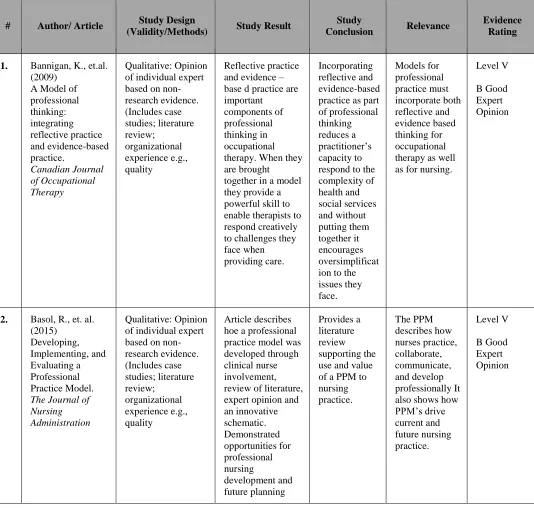
nursing journals between 2001 and 2015. This search produced 1,050 articles, which were narrowed down to 250 relevant to the topic and then further narrowed down to 83 articles. Thirteen articles relevant to the topic were critically appraised using Johns Hopkins Evidence-Based Practice Research Appraisal (JHEBPRA) (White & Poe, 2010) and entered into an evidence table (Appendix C and D).
For the last 40 years, nursing has had many conversations about the relevance of a PPM, and it is clear that most nurses continue to judge them as irrelevant (Meehan, 2012). Not
practicing from a model, however, undermines the idea of nursing as a professional discipline. But with nurses feeling powerless to implement professional values in some settings, Meehan states that their ability to sustain their practice relies on relevant knowledge or relevant nursing models and those theories that they generate. Models must be found or developed that engage and strengthen nurses and provide direction for their practice. A PPM depicts nursing values and defines the structure and processes that support nurses to control their own practice and deliver care (Meehan, 2012; Slayter, Coventry, Twig, & Davis, 2015). Krautscheid (2014) provides a definition for nursing accountability that is linked to a PPM, which can help with continued research. Krautscheid describes a model as being a framework for lifelong learning, maintaining competency, and upholding both quality patient care outcomes and standards of the profession. A PPM is a theoretical framework for the profession’s practice and is usually grounded in well-established nursing concepts, such as shared governance or relationship-based care. Sometimes there is a theory, as the caring or comfort theory, connected with the model (Basol, Hilleren-Listerud, & Chmielewski, 2015; Slayter et al., 2015).
necessitates not only a roadmap, but also a compass to find the way in the new age of change in delivery systems. According to Roussel & Swansberg (2009), a practice model is essential for providing scope and standards to guide the work of not only staff but also nursing management. A PPM can provide greater focus on safety, quality relationships, and healing environments. One of the most important reasons to implement a PPM is to improve the quality and safety of patient care and to improve the nursing work environment. Creating a nursing PPM can also serve to create a culture of safety and an agenda for improving safety outcomes in healthcare (Hoffart & Woods, 1996; Roussel & Swansberg, 2009). If nursing is truly a profession, an environment must be developed to support it (Roussel & Swansberg, 2009).
Other allied professionals use PPMs to guide their practices, such as occupational therapy and social work. According to Bannigan and Moores (2009), models for occupational therapists must incorporate both reflective and evidence-based thinking. When their practice is brought together in a model, it provides a powerful framework to enable therapists to respond creatively to challenges they face when providing care (Bannigan & Moores, 2009). According to Manuel, Mullen, Fang, Bellamy, and Bledsoe (2009), commonalities in performance are found across agencies for social workers who use models. Although there is a need to take into account the culture and context of the settings, organizational readiness should always be part of the introduction of the model (Manuel et al., 2009).
Bruheim, Woods, Smeland, and Nortvedt (2014) state that nurses who use a PPM to guide their care have demonstrated increased confidence in their provision of the best available
care to their patients, a deeper reflection about their practice, excitement about the influence they
may have in moving nursing practice forward, and a sense of being more valued and respected
confidence that patients are being provided patient-centered care based on the best scientific
evidence. In addition, using models has shown to result in more equal partnership and increased
collaboration between nurses and other practitioners within interdisciplinary teams (Bruheim et al., 2014).
Murphy, Hinch, Llewellyn, Dillon, and Carlson (2011) discussed another PPM, which provided a process to align with a clinical advancement system. This practice model spoke to the involvement of others in the organization to support a shared governance model, while promoting effective integration with a medical center’s organization. This showed how a model could be used to change a process and a culture (Murphy et al., 2011). Another use of a PPM is within a Magnet™ system. Tinkham (2013) spoke about the “Forces of Magnetism” and the
requirements to adopt a professional practice model and a shared governance structure that assists the organization in providing the necessary evidence and outcomes needed for Magnet designation. The development and use of a PPM can help create an environment of increasing job satisfaction, teamwork, and respect among caregivers (Tinkham, 2013).
Competency Domains / Competency Models
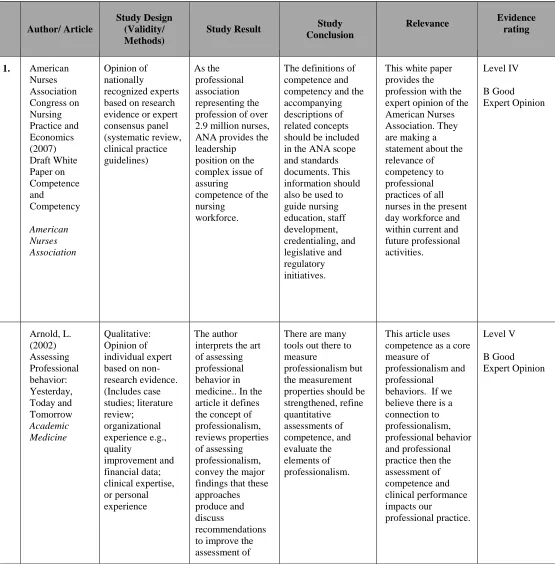
The search question was: What evidence exists for the relevance and use of competency and competency models to support professional practice? Key words were: competency and professional practice. A search was conducted using CINAHL and Fusion. Limiters were English, peer-reviewed journals between 2000 and 2015. This search produced 1,256 articles, which were narrowed down to 80 relevant to the topic. Seven articles relevant to the topic were critically appraised and entered into an evidence table (Appendix C and E).
The word “competent” is understood to mean a professional is qualified, capable, and
able to understand and perform in an appropriate and effective manner (Meier, 1993). Simply having the knowledge and the skill to do a job is insufficient, rather it is implied that a
competency has an action attached to it that verifies what is achieved by that action. The attainment of competency also requires judgment, decision-making, and critical thinking (Rodolfa et al., 2005). What a person brings to the job, does in the job, and the outcomes the person in the job achieves are all elements of competency. In the article, A Cube Model for Competency Development: Implications for Psychology Educators and Regulators, Rodolfa et al. (2005) defined competency as the capacity to integrate effectively the knowledge base, skills, personal and professional values and ethics, attitudes, and profession-specific factors into professional practice, defined by populations served, problems addressed, procedures used, and service settings. The authors present concepts in this article that are transferrable to the
models and competency domains for the nursing workforce. It was through the elements described in this model that the differing roles for current nurses and the nurses of the future were identified as foundational to professional competency domains.
Del Bueno (2001) relates job satisfaction to competencies, since they set the foundation for the role within recruitment, assessment, and selection. They are also important in employee performance management, in training and development, and play a key role in career and workforce planning efforts (Del Bueno, 2001).
Using a competency-based approach within an organization ensures that organization-funded training and professional development activities are cost-effective, goal-oriented, and productive (Lenberg, 2000). This approach documents the employee’s acquisition of the skills, knowledge, safety, and other procedures relating to each task. Competency-based approaches reduce cost of medical errors caused by poor performance or miscommunication of job
expectations and improve communication between employees and management. It is also a way to increase internal employee mobility, providing the organization with greater ability to scale
and flex, as needed. Competency-based approaches provide clarification for performance appraisals and create a roadmap for succession planning. These factors create a greater level of satisfaction of individuals within the organization (Lenberg, 2000).
Arnold (2002) states that competence should be used to strengthen the assessment of professional behavior by creating domains that embed traits of humanism, self-assessment, and self-reflection, as well as altruism, duty, empathy, and ethical decision-making. All are
is a connection between professionalism, professional behavior, and professional practice then the assessment of competence and clinical performance impacts nursing’s professional practice (Arnold, 2002).
Lenberg’s (2000) article, Redesigning Expectations for Initial and Continuing Competence for Contemporary Nursing Practice, calls for nursing to change its culture by creating and implementing the level of competence in professional practice required by a host of stakeholders. This is a time for increased collaboration, creativity, and flexibility in order to change the existing system to one that insures competent practice and quality care (Lenberg, 2000).
Whittaker, Carson, and Smolenski (2000) justify the decision to have identified
competencies for an organization, which can provide a framework for academic partnership and assist in developing continuing experiences that reflect foundational and professional
competencies. According to the American Nurses Association (ANA, 2007) Congress on Nursing Practice and Economics, the definition of competence and competency are built on several assumptions:
The public has a right to expect nurses to demonstrate competence throughout their
careers.
The nursing profession must shape and guide any process assuring nurse competence.
Regulatory bodies define minimal standards for regulation of practice to protect the
public.
Employers are responsible and accountable to provide an environment conducive to
competent practice.
Assurance of competence is the shared responsibility of the profession, individual
nurses, regulatory bodies, employers, and other key stakeholders.
Competence is definable, measurable, and can be evaluated.
Context determines what competencies are necessary.
The measurement criteria are the competence statements for each standard of nursing
practice and of professional performance.
Through these assumptions, the ANA links the competence of a nurse to their professional practice, while putting responsibility for continuing competence on the individual nurse.
Conceptual and Theoretical Framework
Two related theoretical and conceptual frameworks informed this project: (a)
The Institute for Healthcare Improvement (IHI) Framework for Spread and (b) Everett Roger’s Diffusion of Innovations Theory.
Framework for Spread
on a small scale, and if they are easily observable (Cooley & Kohl, 2006). The spread framework’s key components are leadership, better ideas, set-up, the social system, communication, knowledge management, and measurement and feedback (Appendix F).
Leadership. As with any large initiative, there needs to be support or sponsorship from senior leaders in the organization. The work has to support a strategic initiative and be in alignment with the goals of the initiative. This work is part of the nursing strategy and is
endorsed by the National Nursing Leadership Council (NNLC), which is a group of senior nurse executives within all seven regions of the organization. The NNLC’s role is to provide guidance on initiatives, standardization of evidence-based practices, and to make decisions on issues that affect nursing across the continuum. The NNLC members are the sponsors for this work, while the regional professional development leaders, supported by a national group, are responsible for the agenda and spread.
Better ideas. Better ideas is defined as the project’s new ideas and their relative benefit to other ideas (Nolan & Schall, 2007). This will help present the case for acceptance more positively. In the organization, there has never been agreement on the desired competencies of a nurse. Each region, and sometimes each facility or setting, had different competencies which were skill- and role-based. When beginning work on nursing roles for the future, a gap was identified between current organizational alignment on competencies and how competencies need to change to support jobs for the future in nursing. This knowledge helped solidify this project and provide building blocks as a better idea and was agreed on by all stakeholders.
(Nolan & Schall, 2007). The set-up for spread began in meetings, where all the regions were involved in the process of identifying components of a 5-year professional development strategy and agreeing on the components and the priorities of the components.
Communication. Communication is the method to share awareness and information about the new idea. Communication is part of the foundation of the social system. It is ensuring that as many parts of the system are connected with the new idea as possible. The goal is to make participants aware of the purpose of the initiative and then be ready to provide support to make it happen (Nolan & Schall, 2007). In this case, all-new initiatives must first have approval from the NNLC, the chief nurse executives in the hospital-based regions, and the Professional Development Council. After approval from these groups, the initiative is ready to be embedded in new and existing processes. Through the communication plan, we will be targeting three groups for the roll-out: nurse managers, professional development leaders, and nurse recruiters.
Knowledge management and measurement and feedback. Both of these components are used to monitor progress and improve the strategy. They are essential components for spread. Knowledge management takes the best methods within the organization and uses them to spread, while measurement and feedback collects data about the process and outcomes in order to monitor and make adjustments to the process (Nolan & Schall, 2007). In this project, a toolkit was designed for the use of primary stakeholders and professional development leaders. The toolkit was designed and sent to professional development leaders in all regions for
evaluation. The communication for the professional development leaders was that the document was for their use and would be evaluated and changed to reflect their insight into the tool.
competencies. The toolkit was updated to reflect the indicated changes and is now available on the organization’s nursing website for spread.
Roger’s Diffusion of Innovation Theory
Roger’sDiffusion of Innovation Theory is the foundation of the Framework for Spread.
Rogers defines it as the process through which an innovation is communicated through
participants of a social system (Rogers, 2003). There are four main elements in the Diffusion of Innovation. The first is innovation, which he defines as “an idea, practice, or project that is perceived as new by an individual or other unit of adoption” (Rogers, 2003, p. 12). The second
element of the diffusion process is communication channels. Rogers defines this as a process in which participants create and share information with one another in order to reach mutual
understanding. The communication channel process includes an idea or practice between at least two people as a way to share information. Third, time is an element that has to be closely
monitored and last is the social system. Rogers defines a social system as a group of related individuals who have a shared problem and have agreed on the pursuit of a common goal.
These four elements were in place to begin the professional development strategy work. The innovation or idea was the strategy work itself and was done at a meeting of individuals from all seven regions who came together over a 4-day period to strategize and prioritize how they would support the professional practice of nursing and the nursing strategy through professional development. Thus, the framework to begin the acceptance of outcomes from this process was in place.
potential rate at which they may adopt the innovation. This begins with the innovators, those who love change and are known to be on the cutting edge. Early adopters are mostly leaders in a social system and have possibly been part of the innovative process. Early adopters take a little more time than innovators to convince but can be more easily convinced of the value of the innovation. Late majority are a bit more skeptical about the idea and its possible outcomes. Laggards are the last group and are more skeptical than the late majority and want to make sure the idea works before they choose to adopt it (Rogers, 2003).
Section III. Methods
Ethical Issues
The ethical issues regarding the implementation of this project are about how we think about competencies and who is accountable for the continuing competence of the nursing staff. This includes how we determine if a nurse is competent and assuring objective assessment of competence. Ethical dimensions of competency determination include job determination for the nurse, prevention of harm to the patient and the organization’s responsibility to both.
It is tempting to say that competence is entirely the responsibility of the individual, but one must consider the ethical role of the organization in the process. Is it necessary for leaders to establish national competencies for nursing and justify the rationale for the specific competence? It will be necessary to gain support within the regions to deliver the message of accountability and responsibility to provide safe care to our patients and establish within the culture of a framework for the continued competence of our nurses and managers. Is it the role of the individual nurse, professional associations, employers, or certifying agencies to assure that nurses are competent, or is it the responsibility and accountability of all?
The initiation of this policy for professional practice in every region will require that we address the underlying issues of keeping nurses competent and our patient’s safe. How we
define responsibility and accountability for the individual nurse and the employer will assist us to operationalize the policy.
those results. In alignment with this the statement, the employer is also responsible for giving the nurse the authority and accountability for achievement of those outcomes. It is the
responsibility of the employer to educate staff to the definitions of accountability and
responsibility, as well as setting the stage for expectations and providing a framework for the development of behaviors, while limiting confusion and challenges rising within the healthcare setting (Krautscheid, 2014). Failure to provide accountability and responsibility to the staff could result in poor nursing practice and less than competent nursing performance. It
demonstrates that nurses who engage in professional accountability and are responsible for their practice engage in lifelong learning, quality patient care, increased competence, and continue to uphold the standards of the nursing profession (Krautscheid, 2014).
This is an era of lifelong learning and commitment to continuing education for all healthcare clinicians in this ever-changing practice environment. Leaders, at every level, are ethically bound to hold our nurses accountable for competent performance through annual competency reviews and performance evaluations that are objective and clinically sound.
Leaders and the organization are also bound to provide assistance in obtaining and sustaining the competency of the staff before any disciplinary actions ensue.
There were no other identifiable ethical issues or conflicts of interest noted for this project. A Project Determination form was submitted for approval by the faculty and program chair (Appendix G).
Setting
owns outpatient facilities in multiple states and contracts for hospital services in areas in which it does not own hospitals. The company is comprised of three different organizations: a health plan, hospitals and clinics, and the medical groups. Nurse executives from two of the three entities (hospital and clinics and medical groups) take part in an national nursing leadership council, which sets the strategic direction for nursing organization-wide by uniting and aligning over 50,000 nurses under one unifying vision, set of values, and PPM. A corporate office department, National Patient Care Services (NPCS), staffs this nursing executive leadership council. The NPCS is a program office with a staff of 20 professionals, including four nurses. The Chief Nursing Officer and Vice President of NPCS for the company leads this department.
The National Nursing Leadership Council (NNLC) sets the strategic direction for nursing through designing and adopting innovative care delivery models, spreading and coordinating successful practices across the continuum, and influencing state and national policy. These executive nurses drive accountability for standardizing and elevating nursing practice, with the ultimate goal of raising organization performance.
A decision to require all the nursing strategy workgroups to formulate a plan in support of professional practice was recommended to the NNLC by NPCS and was approved
unanimously. The workgroups mirror the pillars on the PPM – professional development, quality and safety, research, and evidence-based practice and leadership.
that had been in existence for various periods of time before coming together for the strategy work. Between seven and ten individuals participated in each of the four workgroups, primarily RNs who had varying degrees of responsibility in the strategy work.
The success of the project and progress toward the objective were in large part due to a 4-day face-to-face planning meeting. This was the first time members of the existing groups had the opportunity to communicate on such a personal, one-to-one basis. The approach supported a framework for spread and also created early adopters, since the participants were part of this innovative process.
Planning the Intervention
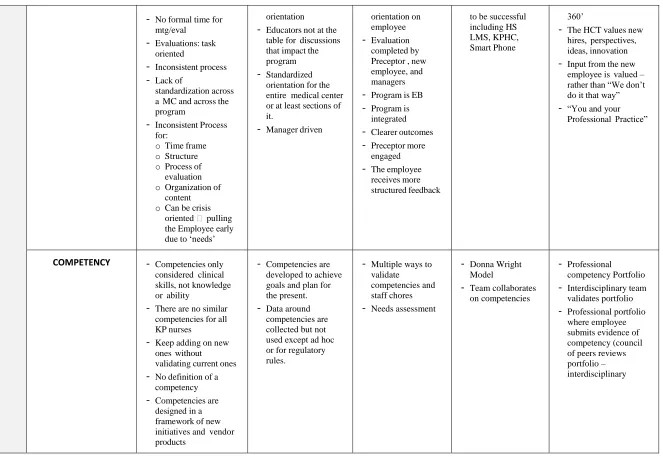
The purpose of this intervention was to show how using the framework of the High Performance Programming (HPP) model (Nelson & Burns, 2005), along with components of the Nursing Professional Development Specialist Practice model (NPDSP) (ANA, 2010), can be used to design a strategy for nursing professional development (Appendix B and H). This process allowed us to identify the current organizational level of practice within professional development, prioritize each component, and design and prioritize an operational strategy to move professional development towards a higher performance level. During this 4-day event, the directors were asked to define the components within the NPDSP model and compare them to the HPP model levels. Each component was defined according to the NPDSP, using the levels of the framework. Consensus was reached within each level, providing the foundation for
movement to the next.
High Performance Programming Model
Nelson and Burns’ (2005) framework, the HPP model, assists in organizational
developmental level. This model is part of a larger body of work, Transforming Work, (Adams, 2005), which explores the concept of transformational change and identifies associated
principles, dynamics, and technologies. Adams (2005) moves the conversation from the traditional practice of organizational development to organizational transformation. Understanding and acknowledging the different performance levels helps organizations
recognize the current state of performance and engenders an opportunity to create action steps to advance to the next level (Adams, 2005). This framework addresses the culture of an
organization and how leaders can modify their frame of reference to support change. This model can be applied to individuals, the organization, or to specific work units (Wolf, Finlayson & Hayden, 2014). Another framework component discusses ways in which we adapt to changes arising from the dynamic nature of the environments within and external to healthcare. Change is inevitable; to meet the needs of our patients and the healthcare system, we can either embrace and influence the change or passively allow it to evolve. The HPP model encompasses five developmental levels: reactive, responsive, proactive, progressive, and high performing
Reactive level. The reactive organization is one of survival and operating in the past. It is characterized by affixing blame, force-fed communication, top-down leadership, and
fragmented infrastructure (Nelson & Burns, 2005). There is little ownership by staff, which feels the organization is responsible for their practice. The staff sees the strategic direction of the organization as management’s role. The environment of professional development is paper- and classroom-based, face-to-face, and prescriptive. It is teacher-driven and rewarded for volume, not value. Professional development may appear to be content-rich, but is low in interactivity, heavily reliant on slides and scripted presentations. Educators’ tolerance for and ability to change is limited, and their approaches may be characterized by rigidity. Technology is paper-based and checklist-driven. Duplicate programs and unconnected systems are the norm. The educator role is directive, pedagogical, maternal, and co-dependent. It is task-oriented, educator-focused, and linear. The role of the educator is as a performer or someone who finds gratification in delivering monologues (Nelson & Burns, 2005).
Responsive level. The responsive organization is operating in the present, with a hierarchical structure and a leadership style of coaching. It is focused on near-term goals and motivates with rewards, which leadership helps to develop and implement (Nelson & Burns, 2005). The responsive organization is characterized by cohesive teamwork and the ability to adapt to solve problems. In this environment, the manager still owns most issues based on needs that lack clarity and are not necessarily aligned. Learners are passive and feel no
in the practice of learning. Their role focuses on managing the education exchange. The responsive stage of performance is comfortable for individuals in the organization and may feel like an acceptable level to remain at.
Proactive level. Proactive organizations are future-oriented. They are strategic, goal-oriented and focused on the greater good and results. Emphasis on the bottom line decreases. Organizational structure is matrixed, and leaders have trust and mutual respect for each other. Learners take responsibility for their own success (Nelson & Burns, 2005). The environment of professional development has less variety for learning, but it is more intentional and
incorporates more coordinated learning solutions, which include follow-up and follow-through. Clinical support is actively present at the point-of-care. There are standard competencies for the role of the nurse, and other competencies are connected to practice workflow. Educators’ success is measured by learners’ ability to apply the skill. Learning is consultative, and the educator’s role is one of facilitator and coach (Nelson & Burns, 2005).
Progressive level (proactive plus). Quantitative and qualitative performance scores reflect value-driven professional nursing practice. The organization is on a course toward global holistic high standards of excellence. Universal buy-in exists and is embedded in the culture. In this level there might be an incident which propels the organization to the high performing level. This could be the adoption of a new model, a culture change, or a new leadership focus (Nelson & Burns, 2005).
Ownership and accountability makes it easier to do the right thing. Learning is shared among team participants, and there is an explicit and coherent message around quality, metrics,
improved communication, and ongoing evaluation. The environment is dynamic, integrated, and linked to business success. Immediate, real-time data and feedback are designed with patient input. The role of educators is to manage complexity, and they are master facilitators of learning that is focused on business outcomes, performance, and organizational objectives. Learning is valued as an end unto itself and transforms practice to excellence. Educators function as coaches and are characterized by rich and integrative dialogue, creativity, and wisdom (Nelson & Burns, 2005).
Nursing Professional Development Specialist Practice Model
In 2010, a new approach and elements were formulated by the National Nursing Staff Development Organization (NNSDO), a professional organization of the American Nurses Association, to design a model to operationalize a professional development system composed of inputs, throughputs, and outputs. This is known as the Nursing Professional Development Specialist Practice Model (NPDS) (Appendix B). Inputs are defined as what the learner and the educator bring to the process. Learners bring their beliefs, attributes, experience, educational level, career goals, engagement, and empowerment. Educators collaborate across the
organization, assess organizational needs, and facilitate continuous learning based on
development/role transition, research and scholarship, and in-service education. All are grounded in evidence-based practice and practice-based evidence. Outputs are growth and professional role competence. Arrows indicate the model’s fluidity and interrelationships
between elements. The NPDSP model is a foundational pathway to help nurses in professional development guide their practice. Applying the HPP model (Nelson & Burns, 2005) to
developmental processes or core components of the NPDSP model provides a process for
assessing the current state and developing strategies to evolve to the next stage, with the ultimate goal of high performance.
The framework addresses the culture of an organization and how as leaders we can affect our frame of reference towards change. How organizations adapt to change in the internal and external environment of healthcare continues to affect the other component of the strategy model. Even though we know change is inevitable to meet the needs of our patients and the healthcare system, organizations can either embrace and influence the change or aimlessly allow it to evolve. This process allowed us to identify our current level, prioritize each component, and design an operational strategy to move professional development towards a high performing level while supporting professional practice. The professional development group prioritized each of the seven components and decided the top three would be competencies, academic partnerships, and orientation.
The professional development group also agreed to accept the definition of competencies as processes that are used to demonstrate the knowledge, skills, and attitudes necessary to
healthcare systems to support an environment of development and continuous learning (ANA, 2010).
Prior to the second 2-day intensive session in December 2014, we began looking at extant competency models, starting with those that were evidence-based, proven to support the nurse in practice, and built on the PPM. Five competency models were chosen to explore a framework to inform a dialogue with members of the session participants, who consisted of the national
nursing professional development committee, the chief nurse executives, the executive nurse leaders, and organized labor partners. The five models are: Quality, Safety, and Education for Nurses (QSEN); Nurse of the Future (NOF); Institute of Medicine (IOM); Accreditation Model for Graduate Education (ACGME); and the American Nurses Association Standards of
Professional Practice (Appendix I). These models were socialized, and comments were synthesized for discussion with regional professional development representatives.
At the second 2-day intensive session, we also discussed the competency domains, their definitions, and the possible frameworks to display them. We discussed the intersection of the competencies with the other three strategies’ pillars and our workforce initiatives. The outcome was the development of a competency framework. Within the framework, the decision was made to have both professional and foundational competency domains. The group designated professional competencies as those specific to the role of the nurse in this organization and foundational competencies as those which are essential to the practice of nursing, as well as the basic level necessary for seeking admission to practice at this organization as a professional nurse (Appendix J).
The nurse will be proficient in these competency domains. There is differentiation in
competencies among practicing nurses at various levels, and competence is developed over a continuum and can be measured.
The competency domains are designed to be applicable across all care settings and to
encompass all patient populations across the lifespan.
Nurse educators in the practice setting will need to use a different set of knowledge
and teaching strategies to effectively integrate the competency domains into curriculum.
There are two distinct competency domains: foundational and professional.
Foundational competency domains are the building blocks for what nurses do or exemplify. They are primarily taught through professional development, either through academic education or as a part of lifelong learning. Professional
competency domains are the knowledge, skills, and abilities necessary for successful practice in nursing at the organization and are at the core of orientation, job
descriptions, and clinical skills.
The knowledge skills and abilities of the foundational domains have implications for
the professional domains. As the profession advances in both the art and science of nursing, these changes will be reflected in the foundational competency domains and then integrated into the professional competency domains, resulting in the
development of new competencies.
The foundational and professional competency domains for the different levels of
moving more effectively through the educational system into the practice environment.
As a result of these guidelines, the National Nursing Professional Development Committee will work to align and embed both the foundational and professional competencies into the current practice environment to provide a framework for the work of the future.
Implementation of the Project
The project implementation was divided into the four sequential components based on Roger’s Diffusion Theory. Rogers defines diffusionas a process by which an innovationis
communicated through certain channels over timeamong the members of a social system (Rogers, 2003). There are four main elements in this theory: innovation, communication channels, time dimensions, and social systems.
Innovation: An idea perceived as new by the individual. An evidence-based
competency framework standard to all regions.
Communication channels: A means by which messages get from one individual to
another. The Competency Toolkit would represent this.
Time dimensions: There are three dimensions of time 1) the time it takes from the
knowledge to the attitude about a process, 2) the time it takes for the early adopters to adopt these new ideas, and 3) the rate an idea is adopted by the social system (Rogers, 2003). Innovators are the members of the professional development leaders who developed the competency framework, and the early adopters are those who have volunteered to pilot pieces of the toolkit. The time monitored is the time it takes for the entire social system to adopt this new process.
doing problem solving in the pursuit of a common goal. This social system is nursing leaders in support of the nursing strategy within the organization, which will enable us to align standardized practices where there is evidence and elevate professional nursing.
Communication Matrix Plan
A communication plan was developed in preparation for the launch of the toolkit. Three distinctive messages were designed for the major stakeholders, nurse managers, professional development leaders, and nurse recruiters.
Core statement. The organization is launching a new toolkit that will be accessible
online as a web-enabled tool. One of the goals of this tool is to improve our recruitment and
retention metrics for positions that are difficult to fill and result in higher than average turnover. The tool is also for use with the incumbent staff and general nursing roles in the organization. Competency-based frameworks have been shown to increase the level of satisfaction of the workforce and support fewer errors and a higher quality of and safe experience for patients. It provides clarification or performance appraisals and creates a roadmap for succession planning. These factors support greater satisfaction of individuals within the organization and can lead to increased retention (Lenberg, 2000).
Strategic initiative. Recruiting and retaining the best people will contribute to the organization’s nursing strategic plan: extraordinary nursing care, every patient, every time.
Stakeholders
The stakeholders in this venture are the professional development leaders, recruiters, and nurse managers.
Nurse managers. Interviewing can be either a fruitful or futile experience. In an interview you are assessing or evaluating applicants for the skills needed to function
successfully, but you are also looking for nurses who have a strong foundation to build on. You are busy running clinical areas and handling a million tasks on an average day. Let the
components of this toolkit help you screen for the right candidate and know that the results are carried through in the orientation of the new staff member. The behavioral interviewing tool can be delivered to your email system, so you can look through the assessment and get an idea of how this applicant will fit into or help change the culture on your unit. The behavioral
interviewing method has been proven to reduce the rate of turnover, and this system can give you time back to focus on the most important thing – patient care (Hanna, 2008) (Appendix K).
Professional development leaders. It is very important that we all embrace the national competency domains we decided on in 2014. The challenge is how we begin to embed the competencies and align them with the practices of the organization. This competency toolkit is a guide that can help us do that. Introduce the behavioral interviewing questions to your managers and then tell them how other tools in the toolkit will help support that strong message in
orientation and prepare the new nurse for the practice environment. As a result of selecting the best nurse for the job and then customizing training, we will reduce the possibility and expense incurred by turnover or off-boarding an employee, which includes the cost to hire a replacement, transition costs, and the cost of unit or team disruption. As part of our national workforce plan, this tool will help us prepare for jobs of the future. With the strong foundation to build on, we can be ready to move our nurses into new roles required to care for our patients (Appendix L).
employees. As hiring begins to increase as baby boomers retire, the skills and experience of a recruiter are critical. Recruiters will be judged on who they bring into and how they contribute to the company. Let this competency tool reduce subjectivity, save you time and effort, and deliver a screened and qualified candidate to the nurse manager. We should no longer evaluate your performance on how many recruiters it took to hire X numbers of employees, but on what percentage of employees who are performing and still at the company after two years (Appendix M).
The author also sent a questionnaire to the professional development leaders and received feedback and ratings about which components they would like to see in the toolkit (Appendix N). An online presentation of a draft of the competency toolkit was delivered to a small subset of professional development leaders by the author. The presentation reviewed the design, presentation, and evaluation of the resources and tools. Three practicing directors of
professional development received a copy of the initial toolkit for their review. One director presented the toolkit to the facility education directors for their input.
Competency Toolkit
The toolkit is composed of eight documents. Four documents were relevant to the project as it relates to competency and professional practice and use of educational foundations for recruitment and orientation: (a) the competency domain model, (b) behavioral interviewing tools, (c) competency self-assessment, and (d) nursing competencies and case studies (Appendix O).
Planning the Study of the Intervention
A Gantt chart was constructed early in the intervention process (Appendix P). The chart was divided into five areas reflective of the work: (a) the 5-year strategy for professional
competency model, (d) the timeline for the competency toolkit, and (e) the adoption of components of the toolkit into the recruitment and orientation curriculum of a hard-to-recruit position in 2016 by one region. That last process will not be available for evaluation until 2017, when the components are built into the curriculum. Retention results will be available 16 to 24 months later.
Part of the plan for the competency toolkit adoption was the development of a business case that the proposed region can use to capture the reasoning and potential for proposing this project to their senior leaders. The development of this business case was developed as an important mechanism to promote change and to maximize validity of the project (Appendix Q).
Methods of Evaluation
User Feedback
Online surveys were created for two target audiences to evaluate the documents in the toolkit: professional development leaders and staff and workforce members who would be using some of the documents to design roles of the future. Survey participation was voluntary. Twelve people participated in the survey. Each survey was constructed for completion after the review of the document. This information was compiled for each and then compiled in
aggregate (Appendix R). The results of the survey were then incorporated into the final document.
SWOT Analysis
A strength, opportunity, weakness, and threat analysis (SWOT) was done to develop a strong business strategy by making sure we had considered all of our strengths and weaknesses,
embed these competencies using the toolkit. Strengths and weaknesses are internal to the
organization. This includes those resources and experiences readily available, such as financial,
human resources, and processes in the organization that will either support or detract from this
initiative. Opportunities and threats are external to the organization and are factors we might
want to take advantage of, address, or mitigate, such as market trends, funding and the political
environment of the organization. (Appendix S).
Northwest Pilot
One method of evaluating the usefulness of the toolkit is the implementation of a pilot to
demonstrate a return on investment through the retention of a hard-to-recruit and retain position.
Through the use of the competency toolkit, we will align with the foundational competencies that each individual nurse would need to possess at a level consistent with the roles for which they are applying. At the same time, we will provide a change in hiring practices, capturing
information about the knowledge level of both the foundational and professional competencies and then building a development plan for each nurse. This information will be used to
objectively evaluate whether the applicant possesses these competencies and at what level. This change in the screening process and orientation curriculum would facilitate a successful fit and could positively affect the turnover rate in nursing by evaluating the individual’s foundational competency domains of leadership, ethics, communication, and technology-enabled care and professionalism.
In order to build the culture of professionalism within our nurses, nursing leaders feel it is
important to have a stable management workforce who believe in the nursing strategy, mission,
and values and possess a high level of the foundational competencies. One of those positions is
role in the day-to-day activity in the outpatient setting and has a great impact on both nursing
staff and patient care. Currently, there is a need to attract, recruit, and maintain this position,
which is challenging due to such variables as responsibilities, salaries, labor challenges, and
increased workload. Retention for this position is 16 to 18 months, and the average days to
recruit of 90 to 120. Given the sheer numbers of nurses that are projected to be needed in the
future ambulatory setting, discussion of the costs of turnover and benefits of retention of RN
assistant administrators is of utmost importance to maintain the consistent culture we are
developing.
Throughout 2016 and 2017, there will be an evaluation of the toolkit with the support of the regional directors of education and other stakeholders. Because of the high turnover of these positions, the Northwest region will be the pilot for the toolkit. While this is not a panacea for the complex recruitment and retention challenges of this position, it has been used as a tested methodology for improving hiring results. Nurses whose belief and behavior systems appear congruent with our organizational culture feel more competent and are more satisfied. They will likely have a better chance of working well in the existing environment. Nurses who fail to fit into the existing workplace environment generally leave to find a work environment or culture
which is more congruent with their own values and beliefs (Hanna, 2008).
Armed with the information in this project, professional development leaders will be able to present their case for change, articulate the vision, and describe the benefits for use of these competency components in their organization. Justification will be based on retention and nurse satisfaction Performance will be measured on standard indicators over a 2-year period. The baseline measure will be at the beginning of orientation and analyzed in comparison of
that the pilot for the RN assistant administrators can be self-funded through cost avoidance, savings due to recruitment and turnover costs.
The curriculum design team will:
Complete current state analysis and learning needs assessments (for nurse
administrators).
Cross-walk the assessments against the core competencies for all nurse, as defined by
National Patient Care Services.
Determine which of the tools should/could be used for onboarding/orientation to their
new role and incorporated into the onboarding/orientation programs.
Determine which of the tools should/could be used for development of current nurse
administrators and identify steps needed for implementation.
Develop a project plan, timelines, and measures for this work.
Budgetary return on investment plan for the Northwest pilot. The cost of embedding this tool into the recruitment and orientation of this group of nurses is nominal compared to the returns for using the screening process and components of the toolkit. The start-up cost of this pilot is $8,750 in 2015, $6,400 in 2016, and an annual maintenance cost of $2,700 beginning in 2017. Based on historical turnover rates, in July of 2017, 18 months after the start of the
assumption. Given the relatively low ongoing annual maintenance costs, the region can
confidently expect a positive return on an ongoing basis after the pilot phase. A sample business case for the approval and implementation of a pilot program for the designated region is included in the business case appendix (Appendix Q).
Comprehensive Budgetary Return on Investment and Cost Benefit Analysis
The aforementioned budget for the Northwest region contains only the incremental costs for their region. The costs incurred to develop the organization-wide strategy must be amortized over the broader organization. The assumption in this comprehensive budgetary return on
investment is that after the successful pilot in the Northwest, there will be willingness for the other six regions to develop curriculum, which embeds and aligns the components of the competency toolkit into the recruitment and retention efforts for hard-to-retain positions.
One of the goals of this project was the design of a 5-year strategy for professional
development. Realizing this goal resulted in the design and development of organizational
competencies that were approved by the executive nursing leaders within the organization.
Evidence shows that competency-based approaches reduce the cost of medical errors caused by poor performance or miscommunication of job expectations and improve communication between employee and management. It is also a way to increase internal employee mobility, providing the organization with greater ability to scale and flex, as needed. It provides clarification or performance appraisals and creates a roadmap for succession planning. These factors support greater satisfaction of individuals within the organization and can lead to increased retention (Lenberg, 2000).
convey the message to the professional development consultants within the organization, so they
could use the components of the toolkit to recruit, educate, and ultimately, retain new employees,
as well as inform the incumbent employees. The strategy was to work with regional professional development leaders to integrate nursing competencies into the practice setting by providing a competency toolkit for the use of regional educators.
The benefits of this toolkit of information is that it provides customizable templates and forms, including definitions, applicability in the inpatient and outpatient settings, evidence-based competencies, and scenarios to assist with transferring knowledge focused on the particular work setting. The templates are adaptable, allowing for efficient implementation of standardized concepts and usage within specific areas or specialties.
The estimated project costs are divided into three separate sections: the 4-day, face-to-face strategy sessions; the development of the competency toolkit; and the startup cost of a pilot project using the toolkit components to affect retention. The strategy session was a 2-day event in August and December of 2014. The total cost was $124,240, including participants’ travel and lodging. The competency toolkit development and design costs were $16,350 in 2015, and the projected pilot costs for utilizing components of the toolkit is $8,750 in fourth quarter 2015. Both the competency toolkit and the pilot have projected costs in 2016 and 2017, which include a 2% inflation factor assigned to the projected costs for those years (Appendix T).
$138,000. If the average cost to replace the position is 1.3 times the salary, the average cost to replace a nurse would be $179,400. Assuming only 20% of the benefit of retaining a nurse accrues to this project, the benefit of retaining an individual nurse is $35,800. Using the same assumptions, to calculate the benefit of retaining three employees in each of the seven regions (21), there is a positive return on investment of $751,800. If 21 nurses stay in the system that would have otherwise left, the turnover rate is reduced to 15%. The breakeven is 15 nurses or the total cumulative cost for this project divided by the $35,800 of retention benefit per nurse (Appendix U).
Analysis
Both quantitative and qualitative data were collected from the participants to evaluate the toolkit components. The responses were collected through Survey Monkey online survey
Section IV. Results
Program Evaluation and Outcomes
There were four documents in the competency toolkit that were the focus of the evaluation: the Nursing Professional Competencies and the Case Studies, the Competency Domain Model, the Competency Self-Assessment, and the Behavioral Interviewing for Foundational Competencies (Appendix O). Twelve professional development leaders and educators reviewed the documents, as well as four members of the national patient care department.
The Nursing Professional Competencies and the Case Studies component rated 3.2 on a 4-point scale. This tool is for the use of the educators to thoroughly describe the professional competencies of collaborative care, informatics, quality and safety, research and evidenced based practice, and resource utilization. The tool defines each domain, provides questions for learning, and then gives a scenario or case study for discussion. The case studies are meant to be used in orientation, continuing education, and huddle messages and can be a leader-led or self-taught learning tool (Appendix O).
The Competency Domain Model rated a 3.8 on a 4-point scale. The competency domain model is a design framework that helps to depict the five foundational competency domains and the five professional competency domains. The model is set up in such a way that the learner is able to click on the competency and then is taken to a table that gives examples of the
knowledge, skills, and ability needed to successfully meet this competency. It further defines the competency in a way that the learner is able to understand how they can achieve success