AN INVESTIGATION INTO CIRCLE DANCE
AS A MEDIUM TO PROMOTE OCCUPATIONAL
WELL-BEING
ANA LUCIA BORGES DA COSTA
A thesis submitted in partial fulfilment of the
requirements of the University of Bolton
for the degree of Doctor of Philosophy
1
Table of Contents
Table of figures ... 7
Acknowledgements ... 9
Dedication ... 10
PhD Thesis Abstract ... 11
Prologue ... 13
Chapter 1 Introduction ... 15
Contextualising circle dance ...16
1.1 Motivation for conducting the investigation ...19
1.2 The rationale for the investigation ...19
1.3 Research questions ...22
1.4 Structure of the thesis ...23
1.5 Chapter 2 Occupational therapy, circle dance and well- being .... 26
2.1 The conceptual foundation of occupational therapy ...27
1.1.1 Defining occupational therapy and occupational science ...27
1.1.2 Conceptualising occupation ...29
2.1.2.1 Meaningful occupation ...33
2.1.2.2 Understanding occupation from other perspectives ………35
2.1.3 The influence of the social model of health on occupational therapy practice ...40
2.1.4 The use of artistic and leisure occupations ...44
2.2 Conceptualising circle dance ...49
2.2.1 The structure of the circle dances ...49
2.2.2 The symbol of the circle ...51
2.2.2.1 Defining the concept of symbol ...51
2.2.2.2 The collective unconscious and the archetypes ....52
2
2.2.3 The establishment of the Circle Dance movement and
its network ...58
2.2.4 The pedagogical component of circle dance ...65
2.3 Well-being: perspectives and contextualisation within occupational therapy and occupational science ...72
2.3.1 Well-being and physical activity ...73
2.3.2 Well-being, leisure and dance ...74
2.3.3 Well-being, folk dance and circle dance ...79
2.4 The synergy between occupational therapy, circle dance and well-being: some propositions ...81
Chapter 3 Methodology ... 84
3.1Approach to research ...84
3.2 Theoretical paradigm ...85
3.3 Qualitative research strategy ...86
3.3.1 The Grounded Theory Method: origins, historical context and methodological approaches ...87
3.3.1.1 Historical context ...88
3.3.1.2 Methodological approaches ...90
3.3.2 The use of grounded theory in occupational therapy and occupational science ...92
Chapter 4 Data and method ... 94
4.1 Ethical considerations ...94
4.1.1 Ethical challenges ...95
4.1.2 Ethical approval ... 100
4.1.3 Gaining informed consent ... 100
4.1.3.1 Invitation to take part in the study ... 100
4.1.3.2 Prior to the interview ... 101
4.1.3.3 During the interview ... 101
4.1.3.4 After the interview ... 102
4.1.4 Data management ... 102
3
4.1.4.2 Transcriptions ... 103
4.2 Access to the field ... 104
4.2.1 Sampling... 105
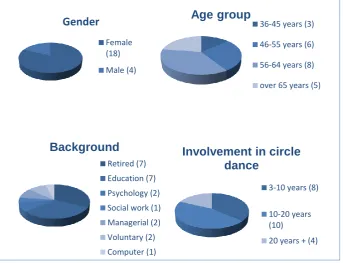
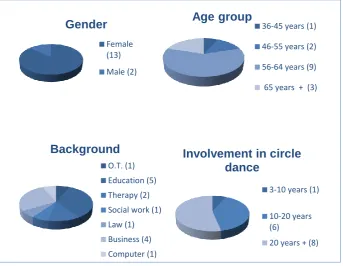
4.2.2 Respondents ... 109
4.3 Data collection method: in-depth interviews ... 111
4.3.1 Negotiations in the relationship between researcher and respondent... 112
4.3.2 “Capturing voices”: the role of the interviewer ... 113
4.3.3 Form of contact ... 115
4.3.4 Format of the interviews ... 116
4.3.5 Field notes, memo-writing, research diary ... 117
4.4 Researcher’s perspective ... 117
4.5 The process of data analysis ... 120
4.6 Establishing evaluation criteria ... 129
4.7 Overview of the theoretical model ... 131
Chapter 5 “I can’t imagine life without it” : the experience of the participants ... 134
5.1 Unique experience of being engaged in circle dance ... 135
5.1.1 Self-investment, self-development ... 135
5.1.2 Feeling transformed ... 138
5.1.3 Feeling transported ... 141
5.1.4 Spiritual dimension of circle dance ... 143
5.2 Feeling part of the ethos of circle dance ... 145
5.2.1 Supportive environment ... 146
5.2.2 Fostering connections ... 148
5.3 Teaching impacting on circle dance experience... 152
5.3.1 Providing a positive and enjoyable experience ... 152
5.3.2 Meeting the individual’s and the group’s needs ... 158
5.4 Circle dance helping to overcome difficulties in life ... 161
4
Chapter 6 “Opening that door…” : the experience of circle dance
teachers ... 167
6.1 Becoming a circle dance teacher ... 168
6.1.1 Motivation ... 168
6.1.2 Pathways to becoming a circle dance teacher ... 171
6.1.3 Developing teaching skills ... 174
6.2 Facilitating processes... 177
6.2.1 Being a facilitator ... 177
6.2.2 Facilitating learning processes ... 179
6.2.3 Structuring the sessions ... 182
6.2.4 Integrating newcomers ... 186
6.3 Teachers’ perceptions of the impact of circle dance on the participants ... 189
6.3.1 Characteristics of the participants ... 189
6.3.2 The perceived benefits of circle dance ... 192
6.4 Summary ... 198
Chapter 7 Providing quality: the perspectives of teacher training coordinators ... 199
7.1 Designing the course ... 200
7.1.1 Motivation ... 200
7.1.2 Shaping the training ... 202
7.2 Learning about teaching and leading ... 203
7.2.1 Being a circle dance teacher ... 204
7.2.2 Learning and teaching ... 205
7.2.3 Leading and facilitating ... 208
7.3 Giving and receiving feedback ... 212
7.4 Summary ... 215
Chapter 8 “There is a place for everybody” : the core category . 216 8.1 Circle dance incorporating diversity ... 217
8.2 Circle dance creating possibilities ... 223
5
Chapter 9 Discussion and conclusion ... 227
9.1 Discussion ... 227
9.1.1 The experience of circle dance participants: meanings, purposes and perceived benefits of circle dance ... 228
9.1.2 The pedagogy of circle dance facilitating a sense of achievement of occupational well-being ... 233
9.1.3 The experiences, background and motivation of circle dance teachers... 237
9.1.4 The contribution of teacher training coordinators towards the pedagogy of circle dance ... 239
9.1.5 The subjective occupational experience of people who engage in circle dance ... 241
9.2 Conclusion ... 244
9.2.1 The theoretical model in practice and its contribution to knowledge... 244
9.2.2 Implications for occupational therapy practice ... 249
9.2.3 Implications for practice in the circle dance network .. 251
9.2.4 Limitations and future research ... 251
9.2.5 Evaluating the research ... 254
9.2.5.1 Credibility ... 254
9.2.5.2 Originality ... 256
9.2.5.3 Resonance ... 257
9.2.5.4 Usefulness ... 259
9.2.6 Reflections on the doctoral journey ... 260
References ... 262
Appendix 1 University Ethical Approval ... 282
Appendix 2 Cover letter, Participant Information Sheet, Informed Consent Form ... 287
Appendix 3 Table respondents’ demographic information ... 291
Appendix 4 Interview questions participants ... 296
Appendix 5 Interview questions teachers ... 298
6
7
Table of figures
Figure 1 The three domains: occupational therapy, circle dance and well-being .26
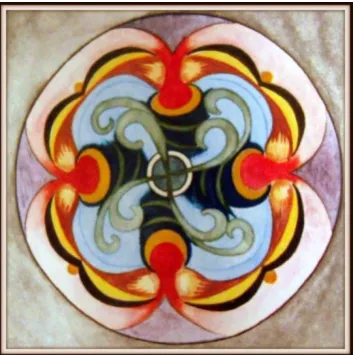
Figure 2 Example of mandala (Source: Jung, 1968, picture 6, following p. 292) ..54
Figure 3 Bernhard Wosien and Nora Vesco performing Cinderella by Serge Prokofieff, Dresden 1951 (Source: B. Wosien, 2000, p.25) ...59
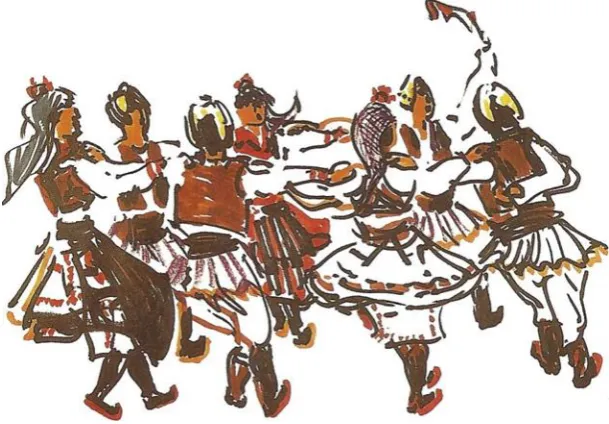
Figure 4 Bernhard Wosien’s drawing – Macedonian circle dance (n.d.) (Source: B. Wosien, 2000, p.99) ...60
Figure 5 Bernhard Wosien teaching at the Marburg University in 1974 (Source: B. Wosien, 2006, p.10) ...61
Figure 6 Bernhard Wosien and his daughter Maria-Gabriele Wosien, Sacred Circle Dance Festival 1982, Findhorn (Source: B.Wosien, 2006, p. 42) ...63
Figure 7 Bernhard Wosien with a group of circle dancers in Findhorn, 1985 (Source: B.Wosien, 2006, p.40) ...65
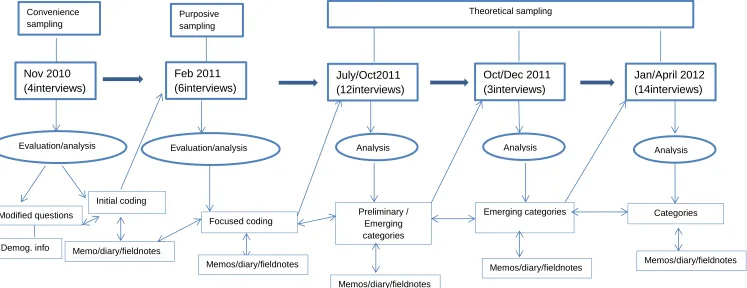
Figure 8 The Grounded Theory Process ... 108
Figure 9 Participants’ profile ... 109
Figure 10 Teachers’ profile ... 110
Figure 11 Coordinators’ profile ... 110
Figure 12 Focused coding - participants (Code Matrix Browser - MAXQDA / January 2011) ... 124
Figure 13 Process of coding ... 125
Figure 14 Clustering ... 127
Figure 15 The three major categories and the core category: the theoretical model ... 133
Figure 16 Participants’ major category and its sub-categories ... 135
Figure 17 Teachers’ major category and its sub-categories ... 167
8
9
Acknowledgements
The completion of this dissertation symbolises a significant milestone in my life. It is the fruit of many years working as an occupational therapist and a circle dance teacher, and is imbued with my passion for understanding the world from multiple points of view. As a path of transformation and growth, this PhD has enriched my life professionally, academically and personally.
This journey could not have been possible without the guidance, support and inspiration of many people. First and foremost, I would like to express my sincere gratitude to the director of my studies, Dr Robert Snape, for his continuous and excellent support and guidance, for sharing his immense knowledge and expertise and for encouraging me to believe in myself. I am most grateful for the guidance and encouragement of my supervisor Professor Jerome Carson, who took a keen interest in my project and whose mentorship gave me the confidence to persist with the final stages of my research. Special thanks to Professor Carole Truman for her enthusiasm for this project and her unique contribution to this study. Thanks to the Centre for Research for Health and Wellbeing, University of Bolton, for funding my PhD research.
I am also extremely grateful to all the respondents who gave so generously of their time in order to participate in this study and for sharing their experiences with openness, honesty and inspiration. To those in the circle dance network both in the U.K. and Brazil who directly and indirectly contributed to this study.
10
To my husband, John, for supporting me unconditionally in this journey, for his love, his care and his unwavering support. I would like to express my immense gratitude for his competent and constructive revisions and for his words of encouragement which were instrumental to my growth and progression with each milestone. To our beautiful daughter, Gabriela, who embraces life with passion, joy, happiness and curiosity and makes all my days bright and sunny. As a source of inspiration and nourishment, I cannot thank you both enough. To my mother, Clarice, for her unconditional love, support and words of encouragement – she has been with me every step of the way. To my brothers, Paulo and Mauricio, for their kind support throughout.
Dedication
11
PhD Thesis Abstract
Circle dance, which derives from the tradition of folk dances, is a popular form of dance and is practised worldwide. As a form of meaningful physical and leisure activity, circle dance can be explored in the context of occupational therapy principles and practices to promote health and well-being. However, to date, the synergy between circle dance, occupational therapy and well-being has yet to be explored. This research develops an understanding of the complexity and meanings attributed to circle dance and its impact on occupational well-being and considers how pedagogic practice might facilitate a sense of well-being in participants.
Using a constructivist approach to grounded theory (Charmaz, 2006), thirty nine in-depth interviews with participants, teachers and coordinators of teacher training programmes from the circle dance network in the United Kingdom (U.K.) were undertaken. The process of simultaneous data collection and analysis culminated in the development of three major categories, representing the meanings and experiences of circle dance participants, teachers and training coordinators. From the intersection of the three major categories, a core category was generated and named by an in-vivo code “There is a place for everybody”. The findings of this study suggest that engagement in circle dance creates meaning and can influence people’s health and well-being; they also highlight the important role that pedagogical practice plays in enriching the experience of the participants and in sustaining occupational engagement and continued involvement.
12
13
Prologue
The inspiration to undertake this doctoral journey goes back to 1992 when I first encountered circle dance during a work experience placement in Italy1. Circle dance has, since then, impacted on my life, both personally and professionally. I also believe that lifelong learning is fundamental for my own development and growth as an individual and as a professional. This has ultimately led me to pursue a doctoral pathway which has helped me to understand circle dance from a different angle, gain a deeper knowledge of this topic and, therefore, has enriched my practice, both as an occupational therapist and as a circle dance teacher.
I have undertaken this study essentially from the perspective of three identities: from that of an occupational therapist, of a circle dancer teacher (and circle dancer) and that of a researcher. As an occupational therapist, working with people in the field of mental health for over twenty four years, I have been led to believe that occupations give structure, form and meaning to what people do and to what they are and therefore can have an impact on their sense of well-being. I consider it fundamental practice to explore and to attempt to understand what motivates people to engage in different occupations and to discover how they find meaning and satisfaction in their daily lives. Furthermore, I have always been interested in exploring the value of group activities and shared occupations which can elucidate elements such as sense of belonging, inclusion and participation. As a circle dancer and circle dance teacher, I was interested in understanding and exploring the dynamic process and complexities of this form of dance in order to increase my understanding of a topic which has inspired my practice and my personal life. Moreover, as an occupational therapist teaching circle dance, I
1
14
wanted to explore the pedagogical element of circle dance and its impact on people’s sense of well-being.
From the perspective of a qualitative researcher, I wanted to immerse myself in the experiences of circle dancers in order to understand the meanings they attribute to them and to explore the impact of this occupation on people's lives. This study was influenced by a constructivist grounded theory approach (Charmaz, 2006) and is also congruent with both the occupational therapy training which I undertook at the University of São Paulo, Brazil (from 1985 to 1988) and my practice as an occupational therapist since then, which was embedded in principles of multi-realities and partial truths (Denzin and Lincoln, 2005).
I have also embarked on this doctoral journey with my own personal attitude of being reflective and open to challenges which led me to develop new ways of understanding a highly relevant and meaningful occupation (circle dance) both personally and professionally.
15
Chapter 1 Introduction
The significance of well-being, both at individual and community levels, has long been a topic of research and interest from an interdisciplinary perspective, including the fields of social sciences, occupational therapy, occupational science, psychology and leisure studies. In all these fields there is a growing recognition that the concept of well-being is multifaceted and complex.
The foundation of occupational therapy advocates a link between occupation and well-being (Wilcock, 2006). At the core of occupational therapy lies the use of occupation as an agent of individual and collective change and the belief that people are innately active beings who benefit from engaging in meaningful occupations (Hasselkus, 2002; Wilcock, 2006; 2007; Polatajko and Townsend, 2007; Hammell, 2008; Kielhofner, 2008). This concept encompasses the idea that through being active, we learn about ourselves, develop skills, maintain our physical and mental health, interact with others and construct and transform our reality (Finlay,1997; Peloquin, 2011). A contemporary occupational therapy philosophy based on the social model of health is embedded in a broader concept of occupation, which emphasizes the importance of the balance between productivity, self-care and leisure, placing its impact on the promotion of health and well-being in a wider context. From this perspective, delivering and broadening occupation-focused practice to extend opportunities for all people to achieve their potential and improve their sense of well-being should be prioritised (Kronenberg et al., 2005; Wilcock, 2006).
16
2000; Graham, 2002; Froggett and Little, 2012), to date, have explored dance as an occupation which could influence people’s sense of well-being. Circle dance, in particular, remains an unexplored vehicle for promoting well-being through occupational therapy.
This study explores the connection between circle dance, occupational therapy and well-being. In order to introduce the topic of my research, I will briefly contextualise dance and circle dance. Next I will discuss my motivation for conducting the study. Finally I will present the rationale for the study before outlining the aims and objectives of this investigation. The structure of the thesis will be presented at the end of this chapter.
Contextualising circle dance
1.1
Dance is the language of movement and the body, a complete and complex language, which enables individuals to manifest their essence, their culture and their history. It is a way of physically integrating movement, expression, thoughts and feelings and, as a non-verbal language, of communicating meanings and of expressing what cannot be described with words. Dance can also be defined as human behaviour that consists of expressive movements that are purposeful, culturally defined, intentionally rhythmical, frequently accompanied by music, with aesthetic value, and symbolic potential (Hanna, 1998). As a language of transformation, dance can be instrumental in facilitating the individual’s creative potential, raising self-awareness, enhancing communication, encouraging personal growth and social interaction (Chorodow, 1991).
17
still one and the same thing”: before human beings expressed their experience of life through materials, they did so with their own body (p.3). As an ancient form of expression, dance is acknowledged as being present throughout the history of humankind and as being part of all societies. Dance, like all art-forms, is a result of human beings’ need for self-expression; it is part of one’s nature, as old as human beings’ actual existence. The significance of dance for humankind throughout history has been explored by various researchers and theorists (Sharp, 1924; Sachs, 1937; Boucier, 1987; Portinari, 1989; M.G. Wosien, 1992). As a highly complex human activity, dance has served many purposes and still does: communal, religious, recreational, educational, social, theatrical, therapeutic, traditional / cultural. It has developed a multiplicity of styles, forms and movements, from classical ballet to modern dance, folk dance, circle dance to dance therapy, dance education, which proliferate, prosper, decline and change according to social, cultural and historical context.
18
group formations such as dancing in a circle or in lines. As a shared occupation, the integration and inclusion of the participants is a fundamental aspect of circle dance (Borges da Costa, 2012). As a taught occupation, circle dance involves a pedagogic component which can be explored in order to understand its influence on the participants’ experience.
In the U.K. the Circle Dance movement was instigated by a former German ballet master, choreographer and researcher of folk dances, Bernhard Wosien (2006), following an event in October 1976, at the Findhorn Community2, Scotland, where he was invited to teach a compilation of folk dances and to present his ideas related to the use of this form of dance in communities3. Since then, the movement has been disseminated throughout the U.K. and other European countries as well as world-wide. Currently, the Circle Dance network includes groups which are active in Africa, Australia, Europe, North America and South America.
In the U.K. there are approximately 270 circle dance teachers, offering regular sessions of circle dance to local communities, workshops and events. Two teacher training programmes provided by experienced teachers are available. The Circle Dance network has its own journal, The Grapevine4, and a not-for-profit company, Circle Dance Friends Company Limited5 (Thompson, 2011). Around 260 regular circle dance groups are listed in The Grapevine in addition to workshops and events. Long term involvement is usually one feature of this group activity.
2 Findhorn Community is a “spiritual community, ecovillage and an international centre for holistic education” founded 50 years ago (Findhorn Foundation, n.d.)
3
Other aspects of the roots of the Circle Dance movement will be further explored in chapter 2. 4
The first edition was published in 1984 (Roberts, 2011). At the present time, there are around 580 subscribers in the U.K. alone (there are also international subscribers).
5
19
Motivation for conducting the investigation
1.2
This research has evolved from my experience as an occupational therapist, working in the field of mental health for over twenty four years, and as a circle dance teacher for the past eighteen years, in a clinical setting as well as in non-clinical settings and community groups. As an occupational therapist, I have always been interested in how to facilitate people’s engagement in meaningful occupations and how this can contribute to their sense of well-being. Reflecting on my practice has led me to question what meanings people attribute to this form of dance and what their motivation and aspirations are which lie behind their participation. Having first introduced circle dance to the curriculum of occupational therapy at the University of São Paulo in 1995 (Borges da Costa, 1998) and having later added a regular extra-curricular circle dance class for health professionals there, I was led to enquire about the pedagogy of circle dance and the impact of this form of dance on people’s occupational experience. These two aspects, the experiential nature of circle dance and its pedagogic elements, provide the foundation for the aims and objectives of the investigation, which will be discussed in more detail in the next chapter.
The rationale for the investigation
1.3
20
promotion of health and well-being. In this context, circle dance can be a modality which occupational therapists can use to enable people to be physically engaged in active occupations. As a shared occupation, circle dance requires the participants to work as a group, towards a common goal; it cannot be performed satisfactorily by an individual and the collective aspect is fundamental to making it happen. Hence, it can provide an opportunity for developing and maintaining connections with others, fostering a sense of belonging and improving one’s sense of well-being (Wilcock, 2006; Hammell, 2009a).
The links between circle dance, occupational therapy and well-being have yet to be fully explored. Circle dance may provide a new avenue for extending services into health-promoting physical activity programmes in the community. In this context, circle dance used as a physically active leisure occupation in clinical settings as well as in non-institutional settings and community groups, could generate satisfaction and provide an opportunity to enhance self-esteem, motivation and socialization. As a meaningful and fulfilling occupation, it can, ultimately, help people to achieve a sense of occupational well-being (Borges da Costa, 2012).
21
which the occupational experience of participating in circle dance can be prioritised socially and culturally contextualised at the present time.
22
Research questions
1.4
Reviewing what has been researched provides insight into aspects that have not received attention in the academic field (Hocking, 2000). In this context, the links between circle dance, occupational therapy and well-being have yet to be fully explored. This investigation reflects a contemporary trend of occupational therapy and occupational science, which embraces practices beyond the clinical setting and considers the importance of meaningful occupation for all. I would argue that the pedagogical aspects of circle dance would facilitate the engagement of people in a meaningful physical occupation, improving their sense of well-being. By providing a study which prioritises the subjective occupational experience of participants of circle dance and explores the relationship of this occupation with well-being, I hope to respond to the need for further research in the context of occupational therapy and occupational science in order to extend the knowledge of the dynamic process involved in occupations (Hocking, 2000; 2009; Kronenberg et al., 2005; Wilcock, 2006; 2007; Hammell, 2008).
The central research question for this study is:
A. What are the subjective occupational experiences of people who engage in circle dance?
The sub-research questions are as follows:
1. How do participants perceive the benefits of circle dance as a medium to promote occupational well-being?
a. What are the meanings and purposes that participants attribute to circle dance?
23
2. To what extent could circle dance pedagogy facilitate a sense of achievement of occupational well-being?
a. What are the experiences, background and motivation of circle dance teachers?
b. To what extent does circle dance teaching facilitate a qualitative sense of achievement of occupational well-being amongst participants?
Structure of the thesis
1.5
This first chapter introduces the research topic and sets the scene for the study, the motivation for conducting the study, a brief overview of circle dance and its relevance to occupational therapy. The rationale for the study is discussed and the research questions are outlined.
Chapter 2 explores the three domains pertaining to this study - occupational therapy (O.T.), circle dance and well-being. Divided into three main sections, this chapter discusses and defines these territories and delineates the working concepts and the perspectives relevant to this study. It also reviews the literature available in these areas, identifying their potential contribution to this investigation and the gaps in knowledge.
24
To finalise the chapter, an overview of the use of grounded theory in occupational therapy and occupational science is given.
Chapter 4 focuses on the data and methods applied in this study. The ethical procedures are outlined at the beginning of the chapter, followed by data management procedures. Access to the research field is presented in the next sub-section, including the sampling strategies and the characteristics of the respondents. The methodological procedures of data collection and data analysis applied throughout the research are defined. This chapter also presents a reflection of the position of the researcher and the criteria selected to evaluate the research. Closing this chapter, an overview of the theoretical model is provided.
Chapters 5, 6, 7 and 8 report the findings of the study. Chapter 5 presents the experience of the participants, the meanings and purposes they attributed to circle dance, and reveals how the participants perceived the benefits of circle dance. Chapter 6 reflects the experience of circle dance teachers and incorporates aspects relevant to the didactic elements, and includes the motivational factors for becoming circle dance teachers and their perceived roles. Chapter 7 represents the viewpoints of the teacher training coordinators. The core category, representing the culmination of the perspectives of the participants, teachers and coordinators, is discussed in chapter 8.
25
26
Chapter 2 Occupational therapy, circle dance
and well- being
This chapter presents the theoretical framework within which the research was conducted. This study addresses the interplay between three main domains: occupational therapy (O.T.), circle dance and well-being (figure 1) by investigating the perceived benefits of this form of physical activity, understanding its complexity, and exploring the pedagogy of circle dance and its impact on the participants’ experiences. In order to clarify these territories and define the working terms adopted, the three domains will be presented and the available literature will be discussed, with the intention of drawing some propositions related to the synergy between them.
Figure 1 The three domains: occupational therapy, circle dance and well-being
O.T.
Circle
Dance
Well-being
27
2.1 The conceptual foundation of occupational
therapy
The primary intention of this section is to explore some of the principles and concepts of occupational therapy which are relevant to the study of circle dance and to define the working terms adopted. A definition of occupational therapy will be presented in order then to discuss the conceptualisation of occupation, the central element of the profession; a working definition of the term will be given. Considerations related to the influence of the social model of health on occupational therapy practice will be presented in order to address the use of artistic and leisure occupations, where circle dance can be located in terms of categorisation, and to review the literature available.
1.1.1
Defining occupational therapy and occupational
science
Occupational therapy is a client-centred health profession concerned with promoting health and well-being through occupation. The meaning and purpose that people place on occupation and activities are crucial to improving their quality of life and realising their fullest potential (Creek, 2003). It encompasses the idea that the engagement of an individual in purposeful, meaningful and fulfilling occupations should lead to feelings of well-being, providing also a positive impact on one’s self-esteem, motivation and socialization (Wilcock, 2006). The World Federation of Occupational Therapy (2012) states that:
28
occupations they want to, need to, or are expected to do, or by modifying the occupation or the environment to better support their occupational engagement (WFOT, 2012).
The discipline of occupational therapy was created and named at the end of 19th century and early 20th century (Law et al., 1998). As a relatively new profession, it has evolved and is still growing worldwide. A contemporary perspective of the profession incorporates practices in all areas within a more inclusive framework, incorporating approaches to health promotion and well-being, to social and cultural themes and to reflective and critical thinking (Townsend 1997a, 1999; Law et al., 1998; Wilcock, 1998b; 2006; Christiansen, 1999; CAOT, 2002; Creek, 2003; Hammell, 2004; COT 2006; 2008; Doble and Santha, 2008; Kielhofner, 2008; Polatajko and Townsend 2007). A comprehensive definition has been proposed by Creek (2003):
An approach to health and social care that focuses on the nature, balance, pattern and context of occupations and activities in the lives of individuals, family groups and communities. Occupational therapy is concerned with the meaning and purpose that people place on occupations and activities and with the impact of illness, disability, social deprivation or economic deprivation on their ability to carry out those occupations and activities. The main aim of occupational therapy is to maintain, restore or create a balance, beneficial to the individual, between the abilities of the person, the demands of her/his occupations in the areas of self-care, productivity and leisure and the demands of the environment (Creek, 2003, p.56).
29
occupational science is defined as “…the study of the human as an occupational being including the need for and capacity to engage in and orchestrate daily occupations in the environment over the lifespan” (Yerxa et al. ,1990, p.7). Occupational science can also be defined as “the rigorous study of humans as occupational beings” (Wilcock, 2006, p.343). Fundamental for the founders of this discipline was to provide a foundational knowledge for occupational therapy, investigating occupation “as it related to both ability and disability” (Molke et al., 2004, p.270). The meaning of occupation is of primordial importance and relevance for both occupational therapy and occupational science. However, it has been conceptualised and used in different ways; there is no single definition which could construct a strong and unified theory of occupation. For some scholars, this fact opens the possibility of extending the scope of research related to occupations and continuing to explore the complexity of the term as well as the experience of being engaged in occupations (Yerxa et al., 1990). Hence, it is relevant to present an overview of the definitions used in the context of occupational therapy and occupational science in order then to clarify the working concept adopted for this investigation.
1.1.2
Conceptualising occupation
As a multifaceted concept, occupation can be defined from different perspectives and approaches. A generic definition describes occupation as a “job or
30
occupational therapists tend to refer to ‘activity’ and ‘occupation’ as being synonymous. However, the term ‘activity’ refers to “the state or quality of being active” (Collins English Dictionary, 2010), whereas ‘occupation’ “includes the use of activity but also implies involvement in what is being done” (Creek, 1990, p.22). Activity can be also defined as “the basic unit of a task” (CAOT, 1997, p.33). Pierce (2001) suggests a distinct differentiation between occupation and activity as follows: the first term is defined as “a person’s personally constructed, one-time experience within a unique context”; the latter, as “a more general, culturally shared idea about a category of action” (p.138). As a central concept in occupational therapy and occupational science, many theorists and scholars have defined occupation from different perspectives. Adopting a comprehensive viewpoint, Law et al. (1997) state that:
Occupation refers to groups of activities and tasks of everyday life, named, organized and given value and meaning by individuals, and a culture. Occupation is everything that people do to occupy himself or herself, including looking after himself or herself (self-care), enjoying life (leisure), and contributing to the social and economic fabric of their communities (productivity) (p.34).
Reed and Sanderson (1980) define occupation as “any activity which engages a person’s resources of time and energy and is composed of skills and values” (p.29). Kielhofner (1980) extends this concept highlighting the meaningful component of the definition:
31
Johnson (1973) acknowledges value and self-worth when conceptualising occupation as “any goal-directed activity meaningful to the individual and providing feedback about his worth and value as an individual and about his interrelatedness to others” (p.234). Creek (2003) adds the role of the structure provided when people engage in occupation and social identity: “occupation defines and organises a sphere of action over a period of time and is perceived by the individual as part of his/her personal and social identity” (p.55).
Bringing an important theoretical contribution within occupational therapy and occupational science fields, Ann Allart Wilcock (1993; 1998a; 1998b; 2006) proposed a model - ‘An Occupational Perspective of Health’ - in which occupation is considered “a central aspect of the human experience” (1993, p.17). In 1998, at the World Federation of Occupational Therapists Congress in Montreal, Wilcock (1998a) presented a keynote address putting forward a definition of occupation based specifically upon meaning “as a synthesis of doing, being, and becoming” (p.249) and discussing the relationship between occupation and health. For Wilcock (1993), occupation is primordial for human existence, as “it enables individuals to utilise their biological capacities and potential, and thereby flourish” (p.23). In this context, occupation is defined as:
All that people need, want, or are obliged to do; what it means to them; and its ever-present potential as an agent of change. It encapsulates doing, being and becoming(Wilcock, 2006, p. 343).
32
think, to reflect and, to simply exist” and to find meaning in what they do (Wilcock, 1998a, p.250). The ‘becoming’ aspect is related to “the notions of potential and growth, of transformation and self-actualisation” (1998a, p.251). As a result of Wilcock’s research into the trilogy of “doing, being and becoming”, a fourth element – ‘belonging’ – was included as “the contextual element of the connectedness of people to each other as they do and of the major place of relationship within health”(Wilcock, 2007, p.5).
This definition opens the possibility to incorporate a variety6 of occupations related to everyday life, considering their meaning and purposes for individuals and to realise their transformative component (Wilcock, 1998a, p.249). This conceptualisation expands the role of occupation beyond therapeutic tools and suggests that “doing, being and becoming are integral to health and well-being for everyone and to occupational therapy philosophy, process and outcomes, because together they epitomise occupation” (Wilcock, 1999, p.10). In this context, circle dance couldbe defined as a purposeful and meaningful occupation which can have an impact on people’s lives. Hence, it seems appropriate to adopt this definition for this investigation. For the purpose of this study, circle dance will be then defined as a human occupation which encapsulates the elements of doing, being, becoming and belonging.
The concept of meaningful occupation will be explored in the next section as it represents one of the core concepts in occupation therapy and occupational science. As the one of the aims of this study is linked with an exploration of the meanings of circle dance, is relevant to clarify this concept, which will be also pursued further at different points of the thesis.
6
33 2.1.2.1 Meaningful occupation
As a basic term in occupational therapy and occupational science, ‘meaningful occupation’ has been explored by many scholars (Nelson, 1988; 1996; Crabtree, 1998; Hasselkus, 2002; Hammell, 2004; Wilcock, 2006; Pemberton and Cox, 2011; 2013) with the intention of theorising this important concept. Hasselkus (2002) proposed that “occupation is a powerful source of meaning in our lives, meaning arises from occupation and occupation arises from meaning” (p.14). Other theories of occupation, in particular the theory of the human need for occupation articulated by Wilcock (1998b; 2006), reflect clearly the idea that meaning and everyday occupation are essentials for life. Coherent with this perspective, Crabtree (1998) states that it is the nature of humans to make meaning from occupation.
34
Focussing on the meanings of occupation, Hammell (2004) proposed that “occupation might be best understood, not as divisible activities of self-care, productivity and leisure, but as dimensions of meaning” (p.297). In this context, it is proposed that the components of “doing, being, becoming and belonging” (Wilcock, 1998a) can be used to describe these dimensions. Similarly, Hasselkus (2002) highlighted that the components of “being” and “becoming”, in particular, can be strongly linked with the notion of meaning of occupation. Furthermore, Pemberton and Cox (2013) suggest that time should be seen as “a dimension of being” (p.4). From this perspective, occupational therapists need to consider the temporal aspects related to occupations as broader than just the linear measure of time, shifting “from the clock time perspective of time use to a dynamic event time paradigm animated by tempo and temporality” (p.13). These conceptualisations appear to be relevant for this study as they can shed light into some aspects related to the meaning people attributed to circle dance.
35
individual can “experience the spiritual within a religious context, but also outside of it” (CAOT, 1997, p.3).
Theoretical interpretations of spirituality have been carried out for occupational therapy practice. For Urbanowski and Vargo (1994) spirituality “may be defined as the experience of meaning in everyday life” (p.89), emphasising “what people do in their lives, and how they experience these activities” as the essence of spirituality (p.91). Hammell (2001) proposes that the term “intrinsicality” is more appropriate than “spirituality” to refer to the source of meaning. Intrinsicality is “influenced by environmental context, constitutes the essence of the self; the source of volition and self-determination and of choices based upon personal values and priorities” (p.193). Furthermore, Hammell (2001) states that this term facilitates recognition of the personal dimensions of meaning which inform occupational choices and are expressed and experienced through occupation (p.192).
2.1.2.2 Understanding occupation from other perspectives
36
Other theories have also contributed to the understanding of the concept of occupation. For the purpose of this study, the theory of ‘flow’ (Csikszentmihalyi, 1975) and ‘serious leisure’ (Stebbins, 2007) will be explored due to their relevance and contribution to the relationship between occupation and health and also to study the meaning of the experience of occupation. These concepts appear also appropriate for exploring the meanings of circle dance.
Flow
The concept of ‘flow’ was developed by a psychologist, Mihalyi Csikszentmihalyi (1975; 1992) to explain ‘optimal experience’. ‘Flow’ is a subjective psychological state that occurs when one is totally engaged in an activity7 and is present under the following set of conditions: sense of competence in executing the activity; requirement of concentration; clarity of goals of the activity; immediate feedback from the activity; sense of deep, focused involvement in the activity; sense of control in completing the activity; loss of self-consciousness during the activity; sense of time is truncated during the activity (1990, pp.48-67). Certain activities such as “making music, rock climbing, dancing, sailing, chess and so forth are designed to make optimal experience easier to achieve. They have rules that require the learning of skills, they set up goals, they provide feedback, they make control possible” (Csikszentmihalyi, 1992, p.72). It is relevant to note for this study that, for Csikszentmihalyi (1992), physical activities contribute to ‘optimal experience’ as they involve body and mind and dance, in particular, “is probably the oldest and the most significant, both for its universal appeal and because of its potential complexity” (p.99).
37
The theory of ‘flow’ has evolved over the past 30 years. Many studies have been conducted by Csikszentmihalyi and his associates (Csikszentmihalyi and McCormack, 1986; Csikszentmihalyi and Csikszentmihalyi, 1988; Csikszentmihalyi and Hunter, 2003) as well as by other theorists and scholars. In the field of occupational therapy and occupational science, flow as a phenomenon can help “to understand how occupation may help people attain the highest level of well-being” (Wright , 2004, p.73) and to study the meaning of the experience of occupation. ‘Flow’ (Csikszentmihalyi, 1993) has also been acknowledged by Wilcock (2006) as compatible with her approach (p.183).
Serious leisure
The concept of ‘serious leisure’ has become a dominant notion in leisure studies over the past 30 years. Its principal exponent Robert A. Stebbins defines serious leisure as:
…the systematic pursuit of an amateur, hobbyist, or volunteer core activity that people find so substantial, interesting, and fulfilling that, in the typical case, they launch themselves on a (leisure) career centered on acquiring and expressing a combination of its special skills, knowledge, and experience (Stebbins, 2007, p.5).
self-38
enrichment, regeneration or renewal of self, feelings of accomplishment, enhancement of self-image, social interaction and sense of belonging); unique ethos and social world; and an attractive personal and social identity (Stebbins, 2007, pp.11-13). The rewards of serious leisure are defined as follows:
Personal rewards: personal enrichment; actualization; self-expression; self-image; self-gratification; re-creation (regeneration) of oneself; financial return.
Social rewards: social attraction; group accomplishment; contribution to the maintenance and development of the group (Stebbins, 2007, p.14).
The Serious Leisure Perspective is a theoretical framework designed to understand and classify leisure activities. Stebbins (2007) also defines two other forms of leisure thus: ‘casual leisure’ and ‘project-based leisure’. Casual leisure, in contrast to serious leisure and conceptualised at the same time of serious leisure (1982), has been defined as “an immediately, intrinsically rewarding, relatively short-lived pleasurable core activity, requiring little or no special training to enjoy it” (2007, p.38). Project-based leisure is a concept developed in 2005 (Stebbins, 2005) and related to “a short-term, moderately complicated, either one-shot or occasional, though infrequent, creative undertaking carried out in free time” (Stebbins, 2007, p.43). Out of the three forms of leisure, the concept of ‘serious leisure’ appears to be the most apt for exploring the meanings and purposes of circle dance in people’s lives.
39
Occupation devotion is a strong, positive attachment to a form of self-enhancing work, where the sense of achievement is high and the core activity (set of basic tasks) is endowed with such intense appeal that this work and leisure become virtually one and the same (Stebbins, 2004, p.9).
This concept incorporates six criteria: the valued core activity must be profound; it must offer significant variety and must also offer significant opportunity for creative or innovative work, as a valued expression of individual personality; the would-be devotee must have reasonable control over the amount and disposition of time put into the occupation (the value of freedom of action); the would-be devotee must have both an aptitude and a taste for the work in question; the devotees must work in a physical and social milieu that encourages them to pursue often and without significant constraint the core activity (Stebbins, 2004, p. 9). It is important to note that parallels between the characteristics / criteria of serious leisure and devotee work can be drawn, suggesting that both concepts “occupy a great deal of common ground” (Stebbins, 2009, p. 23).
40
2.1.3
The influence of the social model of health on
occupational therapy practice
It is important to recognize that different viewpoints have influenced the use of occupation as a therapeutic tool. In the ambit of health, where the discipline of occupational therapy has been mainly situated, it is essential to acknowledge the historical influence of the biomedical model, based on the positivist paradigm, and the social model of health. For the purpose of this study, the impact of the latest influence on the profession will be presented as it provides a useful framework from which to develop a critique of the potential contribution of circle dance to well-being and it is also consistent with my practice as an occupational therapist.
The challenge of the social model of health to the biomedical developed in the 1970’s in response to increased awareness of the underlying social, environmental and economic causes of poor health. An important marker of this period was the International Conference on Primary Health Care held by the World Health Organization (WHO) and the United Nations Children’s Fund (UNICEF) in September 1978, which highlighted “the need for urgent action of all governments, all health and development workers, and the world community to protect the health of all people of the world” (WHO, n.d., p.1).
41
1986; 1997; 1998; Wilcock, 2006). With this new vision, health promotion, social justice and equity, and their profound influence on public health, occupational therapy was also challenged to extend its scope from the personal / clinical to the social and to adopt a critical approach, beginning with a “comprehension of the macrostructure that defines the ethical, social, cultural, economic and political boundaries” and which is concerned with the well-being of people, both individually and collectively (Galheigo, 2005, p.95). In this context, the concept of occupation was revised:
…beyond being meaningful, an occupation should promote personal, professional and social transformation and should contribute to humanizing and improving the quality of people’s life (Magalhães and Galheigo, 2010, p.119).
The new field of occupational science was developed in the late 1980s, focussing on the study of humans as occupational beings, the purpose of occupation being centred on survival and health and how humans realise a sense of meaning through occupation (Yerxa et al., 1990; Wilcock 2006). It considers why people engage in occupation and seeks an understanding of how occupations are organised and the skills necessary to undertake different occupations (Wilcock, 2001). In this context, contemporary and innovative practices should be occupation-based and explore not only clinical settings but extend their scope of intervention to reach communities and to address themes such as occupational needs and occupational opportunities for all (Kronenberg et al., 2005; Wilcock 2006; Kronenberg et al., 2011).
By the mid 1990s, person-environment-occupational performance models8 had been generated by occupational therapists, collaborating occupational therapy
8
42
academics or national occupational therapy associations, sharing a common belief in occupation as an essential part of human life, which contributes to health and well-being and which also considers fundamental the subjective aspects of experience which contribute to personal meaning and quality of life (Hagedorn, 2001). These models of practice, reflecting theories of occupation, define occupation mainly in the ambit of three categories9: self-care, productivity and leisure (Hammell, 2009a). Patterns of occupation, satisfaction, occupational opportunities as well as the importance of a balance between self-care, productivity and leisure and its impact on promotion of health and well-being are some of the themes addressed by these models of practice.
In the past decade, occupational therapists have started to seek alternative ways to conceptualize occupation, which are more inclusive, addressing societal and political needs, and providing an evidence-based foundation for practice (Galheigo, 2005; Jonsson and Persson, 2006; Jonsson, 2008; Hammell, 2009a; Pemberton and Cox, 2011; 2013). Hammell (2009a) proposes a theoretical understanding of occupation based on dimensions of occupational experienceand provisionally labelled as: ‘restorative occupations’, ‘occupations fostering belonging, connecting and contributing’, ‘engaging in doing occupations’ and ‘occupations reflecting life continuity and hope for the future’.These categories or dimensions should reflect the “intrinsic needs for meaning, purposes, choice and control, and a positive sense of self-worth that occupational therapists have identified as important to human well-being” (p.112). The temporal aspect of occupations and the need to address balance and rhythm are discussed by Pemberton and Cox (2011, 2013). The authors suggest that the modern pace of life has been heavily dominated by the notion of clock time, “leading people away
Occupational Performance in the Environment (Hagedorn, 2000);Creek (2003); Polatayko and Townsend (2007).
9
43
from the concept of rhythm and harmony, the need for balance between work, rest and play” (Pemberton and Cox, 2011, p.83). From this perspective, occupational therapists have an important role within the context of health promotion in helping people to redesign their lifestyle in order to enhance their quality of life and sense of well-being and “introducing new occupational strategies that seek to slow the pace of life and focus on the harmony of our body’s natural rhythms” (p.83). Based on a qualitative study, Jonsson (2008) offers a new direction in categorizing occupation. Seven experience-based categories of occupation were identified based on the narratives of the participants: engaging, basic, social, relaxing, regular, irregular and time-killing. The category of ‘engaging occupations’ is very relevant for this theoretical framework as being “both significantly contributing to well-being and a necessary part of a person’s occupation” (p.6). The common characteristics of this category were described as follows:
…infused with positive meaning and experienced as highly meaningful; involved intense participation both in duration and regularity; consisted of a coherent set of activities; had evolved into a commitment or responsibility; involved a community of people who shared a common interest; gave an identity for the individual; were often narrated as analogues(p.5).
The concept of ‘engaging occupations’ was also defined as having a link with the concept of serious leisure (Stebbins, 2007) however they can be present in all arenas and not exclusively leisure (Jonsson, 2008).
44
2.1.4
The use of artistic and leisure occupations
The use of artistic and leisure occupations in occupational therapy has evolved, particularly in the field of mental health, and has been embedded in different conceptual frameworks. From the beginning of the profession, the therapeutic use of occupations was influenced by the concepts of the moral treatment10 in the 18th century. The elemental aspect of the treatment attempted to divert the focus away from the neuropsychiatric disorder through engagement in occupation. In this context, any occupation, including the artistic and leisure ones, could be used for this purpose: diversion (Rebeiro, 1998). It is important to highlight that this aspect of using occupation exclusively as a diversion, without considering its meaning for the individual, has unfortunately been perpetuated. For many authors, this is possibly one of the reasons why occupational therapists, with the advent of reductionism, were drawn to other disciplines and focused solely on functional activities for rehabilitation purposes (Kielhofner and Burke, 1977; Wilcock and Steeden, 1999). However, the idea of using occupation as a diversion was challenged as early as the 19th century. Adolph Meyer (1977), an American psychiatrist, discussed the importance of meaningful occupation as central for the occupational therapy intervention. He believed that a balance between personal and domestic activities of daily living, work and leisure activities was fundamental for the success of the treatment; therefore the role of the occupational therapist was to provide opportunities, thereby enabling people to achieve this balance, by involving the clients in decision making (Meyer, 1977; Mayers, 2000). Later, other influences beyond occupational therapy, such as the Arts and Crafts movement (Friedland, 2003; Wilcock, 2006; Ikiugu and Ciaravino, 2007) and psychodynamic theory (Fidler and Fidler, 1963; Cramer-Azima, 1982 ;
10
45
Finlay, 1997; Lloyd and Papas, 1999) also had an impact on the use of artistic and leisure occupations in different ways.
With the increasing prominence of the social model of health, the therapeutic use of artistic and leisure occupations within occupational therapy has been revised under the concept of meaningful occupation and their importance in promoting health and well-being. Contemporary practices, in which occupational therapy philosophy is embedded in a broader concept of occupation, highlight the importance of the balance between self-care, productivity and leisure and its impact on promotion of health and well-being (Kronenberg et al., 2005; Wilcock, 2006).
Recent research studies in the U.K. have explored the therapeutic properties of artistic and leisure activities in various fields of practice. In a qualitative study, Bedding and Sadlo (2008) investigating the experience of retired people participating in art classes in the community using a phenomenological approach have described the participants’ lived experience. They demonstrated that participants have valued the experience of attending art classes, as they perceived, an enhancement of their sense of well-being and an opportunity for social interaction and learning. Griffiths and Corr’s (2007) cross-sectional survey of occupational therapists working in mental health revealed that creative activities were perceived to enhance intrapersonal and interpersonal skills to facilitate personal growth. However, further research is necessary to discuss the implications and recommendations for practice. The concept of ‘flow’
46
for adults. This has highlighted that the use of this form of activity represented an important “vehicle of choice and engagement” for the clients, improving their sense of self-confidence and providing an opportunity for them to develop new skills (Griffiths, 2008, p.49).
The concept of leisure as an occupation and its implication for practice has not been easily defined and agreed upon by occupational therapists. An important contribution within the profession has been made by Primeau (1996). He supports the idea that the notion of work and leisure are “culturally bound” (p.569); therefore, occupational therapy practice should transcend this dichotomy by using a client-driven leisure definition, prioritising the experience and meaning attributed by the client to a given occupation. Suto (1998) has explored leisure from the perspective of a subjective experience, a complex phenomenon with three elements: time, occupation and experience. Suto (1998) emphasises the significant contribution of theories outside the profession, such as serious leisure
(Stebbins, 2007) and flow (Csikszentmihalyi, 1975; 1992), to enhance the theoretical framework. Within the occupational therapy domain, Suto (1998) advocates that the Occupational Performance Process (CAOT, 1997) provides “conceptual and practice guidelines for occupational performance issues that include leisure occupations” and that future development of leisure assessments should be based on this model (p.277).
47
amongst the research participants, derived mainly from the combination of the challenging aspects inherent in the nature of the occupation, creating opportunities to experience ‘flow’, and the supportive environment in which the occupation was situated. Exploring university students’ experience of participating in a leisure-based choir, a qualitative study revealed that feelings of accomplishment, the positive affect on mood and the sense of community and social bonding were considered by the respondents as motivational factors for continuing involvement (Jacob et al., 2009).
48
satisfaction. This quantitative study suggests the potential use of this tool in occupational therapy but it also highlights, as do the other studies already cited, the importance of further research to develop a theoretical framework linking leisure and occupational therapy (Di Bona, 2000).
49
2.2 Conceptualising circle dance
For the purpose of this study, circle dance is defined as a human, purposeful and meaningful occupation which encapsulates the elements of “doing, being, becoming and belonging” as proposed by Wilcock (2006). As one of the types of dance which have evolved through time, circle dance is a revival of a very ancient art form, which for thousands of years has allowed different cultures and peoples to express themselves in movement in a variety of ways. Historically, the circle is the earliest space form11 in dancing; there is evidence of circle dances in many traditions being performed by people from every continent (Sachs, 1937). Modern circle dance derives from the tradition of folk dance and the repertoire includes traditional dances from different countries and cultures in addition to contemporary choreographies. Self-expression is not the primary aim and the process of learning movements and positions takes place within a social and cultural context. In a community performance a “non-ego-bounded experience is learned through others in a social environment” (Norris, 2001, p.120).
In this section, I will initially discuss the structure of the circle dances and the symbol of the circle before presenting the establishment of the Circle Dance movement and its network. The pedagogical component of circle dance will be discussed at the end of this section.
2.2.1
The structure of the circle dances
The participants hold hands in a circle and repeat a pattern of steps, following the rhythm dictated by the music and related to specific dances. The choreographies
11
50
range from simple to complex arrangements of steps, from traditional folk dances to choreographed ones, and can involve different group formations such as dancing in a circle or in lines. According to Cecil Sharp (1924), the exponent of the folklore revival in England, folk dances are often mistakenly described as a very simple type and/or imperfectly developed. Some of them are undoubtedly very simple; however these dances contain basic elemental types of steps from which more complex ones have been developed. Other folk dances are extremely complex and highly developed in structure, steps, movements and figures (Sharp, 1924). Maria-Gabriele Wosien (1995) suggests that the traditional dances of Europe, from the point of view of their symbolism and mythological images, may reveal behind their structure a “timeless spiritual tradition”. Furthermore, due to the simplicity of the repeated basic dance patterns, this tradition is still just as vibrant today (p.35). In this context, folk dance patterns can elicit a “new and unique experience in the dancers”, as the steps, style, movement, formation and music bring a different message related to the experience of “being in the body…being in the community” (Shannon, 2001, p.48). Participation in folk dance can also contribute towards an experience of belonging to something larger than oneself. In this context, it can be seen as a shared text as specific knowledge and qualities are exchanged through bodily participation coming from the music, the postures, physical contact and social contact (Norris, 2001).
51
dance but also to the circle dance movement. This will be further explored in the section 2.2.3.
2.2.2
The symbol of the circle
It is relevant to explore the symbol of the circle as this is the form that the dances present in their basic choreographies. The study of symbolism is very wide-ranging; however, for the purpose of this study, I have chosen the psychological approach of Professor Dr. Carl Gustav Jung (1875-1961), Swiss psychiatrist and founder of analytical psychology, as my point of reference in order to illuminate the meanings behind the symbol of the circle.
2.2.2.1 Defining the concept of symbol
52
Symbols can be characterised as cultural or universal. A cultural symbol relates to a specific period of history and can represent or express “eternal truths” for a particular culture or religion. These symbols have been transformed and consciously elaborated and, therefore, have their meanings related to specific cultures (Jung, 1977, p.253). By contrast, universal symbols, or natural symbols, are defined as spontaneous manifestations which transcend history, time and culture. These symbols (ones which are the most important and the most relevant for this study as they include the circle) are collective in their nature and origin, deriving from the unconscious contents of the psyche12 (Jung, 1977, pp.253-254). In order to explore this idea, it is important to briefly discuss two fundamental and correlated concepts developed by Jung (1968) – namely, the collective unconscious and the archetypes, as they will help to better conceptualise the symbol of the circle.
2.2.2.2 The collective unconscious and the archetypes
The collective unconscious is a fundamental concept developed by Jung (1967; 1968) to refer to the universal contents and modes of behaviour which are common to all individuals, representing “a common psychic substrate” (p.3-4). The collective unconscio