Energy Consumption Balanced Topology Variable
Routing Algorithm for WWSN in Disaster Rescue
Scenarios
https://doi.org/10.3991/ijoe.v15i07.10043
Lincong Zhang, Xueyi Chen (*) Shenyang Ligong University, Shenyang, China
[email protected] Kefeng Wei
Northeastern University, Shenyang, China
Shen Kan Engineering and Technology Corporation, Shenyang, China
Wenbo Zhang, YongxinFeng Shenyang Ligong University, Shenyang, China
Abstract—In recent years, the Wearable Wireless Sensor Network
(WWSN) has become one of the most popular networks used in disaster and emergency scenarios. We propose a routing algorithm named Energy Consump-tion Balanced Topology Variable (ECB-TV) on the body of users in WWSN. In the ECB-TV algorithm, network topology can be variable according to the change of network state. A multi-hop topology is used in normal situation and the network will switch to single-hop topology at once when an abnormal event happens. We also design a novel multi-hop routing algorithm for multi-hop to-pology where we select the node with the highest energy balance factor as next hop node. Energy balance factor is innovatively designed by simultaneously taking into account both energy consumption of transmitting and receiving nodes, which can balance the energy consumption of sensor nodes well. The simulation results show that the proposed ECB-TV algorithm has better perfor-mance in terms of lifetime in normal situations and delay in abnormal situa-tions.
Keywords—Wearable wireless sensor network, topology variable, routing al-gorithm, energy consumption balance
1
Introduction
effi-cient, and easy to deploy, and can be used as an emergency network in disaster and emergency situations to accurately predict and manage rescue operations and ensure the safety of personnel [12-14].
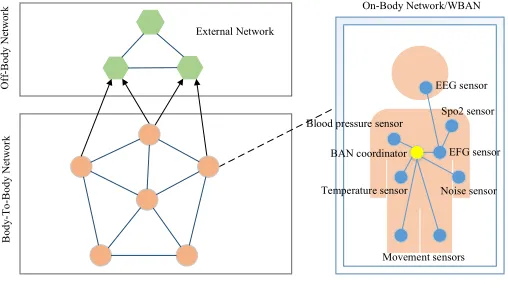
The structure of the WWSN network is shown in Figure 1.
Fig. 1. The WWSN architecture
As shown in Fig. 1, the wearable wireless sensor network (WWSN) is mainly composed of On-Body Network/Wearable Body Area Network (WBAN), Body-To-Body Network, and Off-Body-To-Body Network [1]. WBAN refers to the communication be-tween the sensor nodes and the coordinator; Body-to-Body network refers to the communication among different WBANs; and Off-Body Network refers to the com-munication between the coordinator of each WBAN and other external networks.
In WBAN, because of the need to monitor different positions of the human body, the wearable device may be in any position of the human body. On the one hand, the path loss rate of data propagation in the Non-Line of Sight (NLOS) is very high (for example, the sending node is on the back and the receiving node is on the chest). Therefore, some nodes cannot directly communicate with the coordinator, which requires proper routing to ensure data transmission. On the other hand, the distances of sensor nodes to the coordinator is different, and the energy consumption is not balanced, potentially leading to the earlier death of individual nodes and affecting the information monitoring of the human body. In addition, unlike traditional WSNs [15-17], due to being worn on the human body, the excessively high transmission power of the wearable device may cause large radiation, thereby affecting human health. Most importantly, in emergency scenarios, once the data monitored by a sensor node is abnormal, the network needs to react quickly to transmit abnormal data with higher reliability and lower latency. In conclusion, appropriate routing is required between the sensor nodes and the coordinator, which can not only ensure information trans-mission and node life, but also quickly respond to abnormal conditions in disaster and emergency scenarios.
At present, previous works have studied the routing algorithm in WBAN. Peng Y. et al. proposed a routing optimization algorithm based on power control, allowing the wearable sensors to make better use of energy and reduce power when not being used.
Of f-B ody N et w or k Spo2 sensor EFG sensor Noise sensor Blood pressure sensor
In this way, the energy can be saved and the sensor can work for a longer period of time. However, they did not consider the reaction to emergency situations [18]. Based on batch-based clustering and routing protocols, Khalid A. et al. proposed a Balanced Power-Aware Clustering and Routing protocol (BPA-CRP), which provided an ap-propriate processing rule for node death. The algorithm allows the death of sensors without date loss and will not bring damage to the network, ensuring that the wireless sensor can work well in an emergency [19]. Wan Z. et al. proposed an energy-efficient multi-level adaptive clustering routing algorithm for underwater wireless sensor networks, guaranteeing that the sensor nodes can be used for rescue in extreme environments [20]. Literature [21] and [22] proposed a routing algorithm based on energy-efficient clusters in WSN. In order to save energy, this distributed algorithm increases the lifetime of the network by calculating the remaining energy, the distance from the base station, and the number of nodes. The above-mentioned works proposed solutions for energy consumption and/or emergency situations. However, the previous works do not simultaneously solve the issues of energy-saving and emergency strate-gy.
In this paper, we propose an Energy Consumption Balanced Topology Variable Routing algorithm (ECB-TV) in WBAN. When the network works properly, the mul-ti-hop topology is selected, and the next hop of the sensor node is selected according to the energy balance factor to ensure that the energy consumption of the sensor nodes is balanced. Otherwise, when the network is abnormal, the network structure is changed to a single-hop topology to guarantee low latency of data transmission.
The remainder of this paper is organized as follows. In Section 2, we formulate the problems of sensor node energy consumption and topology switching. The proposed routing algorithm is proposed in Section 3. The simulation results are shown in Sec-tion 4. Finally, this paper is concluded in SecSec-tion 5.
2
Description of the Problem
2.1 Notation
To simplify the description of the problem, we first introduce the following nota-tions:
𝑁𝑁"#: packet size sent by the wearable sensor node 𝑖𝑖 to the node 𝑗𝑗 is 𝑁𝑁# bit;
𝐸𝐸'(𝑁𝑁"#, 𝑑𝑑"#): energy consumed by node 𝑖𝑖 to send a packet of 𝑁𝑁# bits to node 𝑗𝑗;
𝐸𝐸-(𝑁𝑁"#): energy consumed by the wearable sensor node 𝑖𝑖 to receive a packet of 𝑁𝑁# bits;
𝐸𝐸./.01: total energy consumption of the intermediate forwarding sensor nodes (in-cluding energy consumption for transmitting and receiving);
𝑑𝑑2: distance threshold between two nodes, and 𝑑𝑑2= 4558967;
𝑑𝑑"#: distance between sensor node 𝑖𝑖 and sensor node 𝑗𝑗;
𝑒𝑒;<: power amplification factor in the energy consumption model of channel;
𝑒𝑒.?: energy consumption factor for wireless transmitter of the wearable sensor node;
𝑒𝑒@?: energy consumption factor for wireless receiver of the wearable sensor node;
𝑃𝑃5: energy balance factor;
𝐸𝐸"_@5=0"C: remaining energy of the wearable sensor node 𝑖𝑖.
2.2 Energy consumption model
In a WBAN, the energy consumed by node 𝑖𝑖 to send a packet of 𝑁𝑁"# bits to node 𝑗𝑗 can be calculated according to Eq. (1):
𝐸𝐸'D𝑁𝑁"#, 𝑑𝑑"#E = F𝑁𝑁"#𝑒𝑒.?+ 𝑁𝑁"#𝑒𝑒;<𝑑𝑑"# H, 𝑑𝑑
"#< 𝑑𝑑2
𝑁𝑁"#𝑒𝑒.?+ 𝑁𝑁"#𝑒𝑒;<𝑑𝑑"#H, 𝑑𝑑"#≥ 𝑑𝑑2 (1) Because the height and width of the human body are limited, the energy consump-tion model we adopt is proporconsump-tional to 𝑑𝑑"#H.
The energy consumed by the receiving node 𝑗𝑗 to receive a packet of 𝑁𝑁"# bits is shown in Eq. (2), where 𝑒𝑒@? is the wireless receiver energy consumption coefficient of the sensor node 𝑗𝑗.
𝐸𝐸-D𝑁𝑁"#E = 𝑁𝑁"#𝑒𝑒@? (2) For those wearable sensor nodes selected as forwarding nodes, their energy con-sumption includes receiving energy concon-sumption and transmitting energy consump-tion. This can be expressed in Eq. (3):
𝐸𝐸./.01= 𝐸𝐸'D𝑁𝑁"#, 𝑑𝑑"#E + 𝐸𝐸-D𝑁𝑁"#E = 𝑁𝑁"#𝑒𝑒.?+ 𝑁𝑁"#𝑒𝑒;<𝑑𝑑"#H + 𝑁𝑁"#𝑒𝑒@? (3)
2.3 Description of the problem
When the wearable sensor node does not detect an abnormality, the WBAN adopts a multi-hop tree topology for data transmission. Assuming that the maximum com-munication radius between the coordinator and the sensor node, and between the sen-sor and the sensen-sor node are 𝑑𝑑2, and the distance between the sensor node and the coordinator node is 𝑑𝑑", the communication method of the sensor node can be given in Eq. (4):
Communication method = WCommicate with coordinator node, 𝑑𝑑"≤ 𝑑𝑑2
We use 𝜀𝜀" to indicate the state of the information detected by sensor node 𝑖𝑖. 1 de-notes that the sensor information is normal, while 0 signifies that the information is abnormal, as shown in Eq. (5).
𝜀𝜀"= W 1, the information is normal0, the information is abnormal (5)
The network status is represented by φ, which is determined by Eq. (6). When the data of all sensor nodes in the network are normal, the network is normal, φ=1. Oth-erwise, as long as the data of any one sensor node is abnormal, the network abnormal-ity is determined, φ= 0.
𝜑𝜑 = W1 𝜀𝜀"= 1, ∀𝑖𝑖
0 𝜀𝜀"= 0, ∀𝑖𝑖 (6)
In addition, the state of the sensor nodes can be divided into three types, as shown in Eq. (7), where S represents the state of the node.
• S=1 indicates that the node is in an active state. At this time, the remaining energy of the sensor node is greater than the set threshold value 𝐸𝐸g, and it can either transmit its own perceived data or forward the data of other nodes as an intermedi-ate node;
• S= 0 specifies that the node is in the reserved state. At this time, the remaining energy of the sensor node is less than or equal to the set energy threshold. There-fore, it only sends the data perceived by itself, and cannot forward the data of other nodes as the intermediate node;
• S= -1 indicates that the node is in a dead state. At this time, the remaining energy of the sensor node is 0. The sensor node has died and will no longer continue to work.
𝑆𝑆 = i1, 𝐸𝐸0, 𝐸𝐸""> 𝐸𝐸≤ 𝐸𝐸gg
−1, 𝐸𝐸"= 0
(7)
3
Energy Consumption Balanced Topology Variable Routing
Algorithm (ECB-TV)
The ECB-TV routing algorithm proposed in this paper mainly includes two parts: topology switching and next hop selection. Topology switching refers to selecting a multi-hop tree topology in the normal state of the network, and switching to a single-hop topology when an abnormality occurs in the network. The network topology switching is shown as Algorithm 1.
Algorithm 1. Topology Switching Input: 𝜀𝜀", ∀𝑖𝑖
Output: 𝜑𝜑 Initiate 𝜑𝜑 = 1; for i=0 to N if𝜀𝜀"= 0; 𝜑𝜑 = 0; elsegoto 2; end if end for Output𝜑𝜑.
Next hop selection refers to the sensor node being selected as the next hop, ena-bling the network energy to be balanced under a multi-hop tree structure. The detailed algorithm is shown in Algorithm 2.
Algorithm 2. Next hop selection Input: 𝐸𝐸", 𝑑𝑑";
Output: next hop 𝑁𝑁𝑒𝑒𝑁𝑁𝑁𝑁";
for i=0 to N if 𝐸𝐸"=0 then 𝑆𝑆"= −1;
else if0 < 𝐸𝐸"≤ 𝐸𝐸gthen 𝑆𝑆"= 0;
else 𝑆𝑆"= 1; ∅ ← 𝑛𝑛";
end if end for
∀𝑖𝑖 if 𝑑𝑑"≤ 𝑑𝑑then
𝑁𝑁𝑒𝑒𝑁𝑁𝑁𝑁"← 𝑐𝑐𝑐𝑐𝑐𝑐𝑐𝑐𝑑𝑑𝑖𝑖𝑛𝑛𝑐𝑐𝑁𝑁𝑐𝑐𝑐𝑐;
else ∀𝑛𝑛#∈ ∅,
If𝑑𝑑#≤ 𝑑𝑑" (𝑗𝑗 ≠ 𝑖𝑖) then
Taking the node 𝑐𝑐𝑐𝑐𝑐𝑐𝑚𝑚𝑐𝑐𝑁𝑁𝑝𝑝5# of the maximum 𝑝𝑝5 as the next hop node, i.e.,
𝑁𝑁𝑒𝑒𝑁𝑁𝑁𝑁"← 𝑐𝑐𝑐𝑐𝑐𝑐𝑚𝑚𝑐𝑐𝑁𝑁𝑝𝑝5#; end if
end if
nodes available in the network to verify whether the distance from the node to the coordinator is less than the threshold 𝑑𝑑. If yes, the sensed information data is directly transmitted to the coordinator node, that is, the next hop node is a coordinator. Here, 𝑁𝑁𝑒𝑒𝑁𝑁𝑁𝑁" indicates the next hop node of the current node. Otherwise, if the distance from the current node to the coordinator is greater than the threshold 𝑑𝑑, then it is first nec-essary to find a node closer to the coordinator than the current node in the set of sur-rounding nodes. After this, find the node with the largest 𝑝𝑝5 as the next hop node among these nodes. Here, we define 𝑝𝑝5 as the energy balance factor, and its can be expressed in Eq. (8):
𝑝𝑝5= 𝛼𝛼yyz_{z_Ä8ÅzÇ(|z},~z})+ 𝛽𝛽yy}_Ä8ÅzÇ}_Ñ(|z}) (8)
where 𝐸𝐸"_@5=0"Cand 𝐸𝐸#_@5=0"C are the remaining energy of the wearable sensor node
𝑖𝑖 and 𝑗𝑗, respectively; 𝐸𝐸"_'(𝑁𝑁"#, 𝑑𝑑"#)is the energy consumed to transmit the packet of
𝑁𝑁"# bits; 𝐸𝐸#_-(𝑁𝑁"#) is the energy consumed by the sensor node 𝑗𝑗 to receive the packet of 𝑁𝑁"# bits; and α and β are weight coefficients. In traditional energy consumption balanced routing algorithms, the node with the maximum energy is selected as the next hop. However, this method does not consider the impact of the current packet to transmit on both the energy consumption of transmitting and receiving nodes. There-fore, we design the energy balance factor to balance the energy consumption of all nodes in the network.
4
Simulation and Analysis
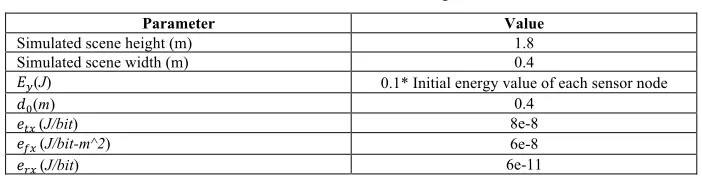
The WBAN studied in this paper consists of 15 sensor nodes and 1 coordinator. We study and analyze the multi-hop topology and single-hop topology models, re-spectively. The parameters of the energy, transmission rate, and transmitted packet size of each sensor node are shown in Table 1.
Table 1. Parameter setting
Parameter Value
Simulated scene height (m) 1.8
Simulated scene width (m) 0.4
𝐸𝐸á(J) 0.1* Initial energy value of each sensor node
𝑑𝑑2(m) 0.4
𝑒𝑒.?(J/bit) 8e-8
𝑒𝑒;?(J/bit-m^2) 6e-8
𝑒𝑒@?(J/bit) 6e-11
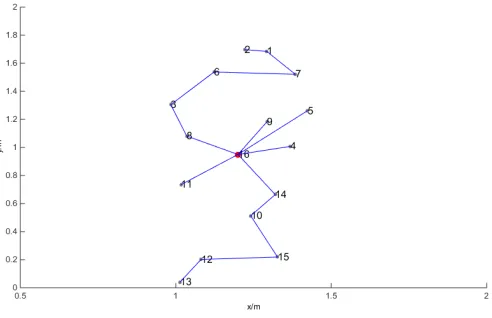
Fig. 2. Topological connectivity diagram of WBAN
Fig. 3. Routing path diagram of WBAN in the normal state
Fig. 4. The routing path diagram of WBAN in abnormal state
Figure 4 shows the routing path diagram of the ECB-TV routing algorithm when an abnormality is detected in the WBAN. When the information data collected by any wearable sensor node in the WBAN exceeds the normal range, the WBAN switches the network mode, and all sensor nodes directly communicate with the coordinator node in a single hop until the entire WBAN dies. By switching the network topology mode, abnormal information can quickly reach to the coordinator node. Therefore, it can be detected as soon as the life safety of the rescue personnel is threatened.
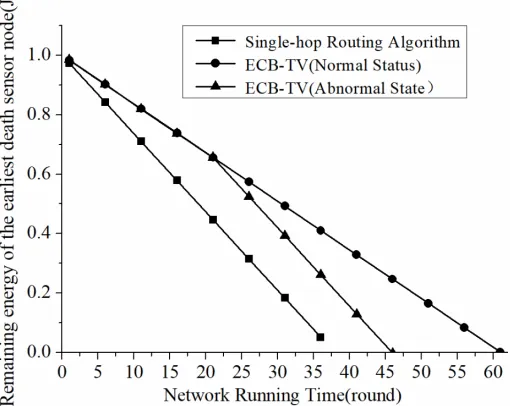
Figure 5 shows the remaining energy of the earliest death sensor nodes in the WBAN under different algorithms. When the WBAN adopts the single-hop routing algorithm, the first dead node appears at approximately the 37th round. When the ECB-TV routing algorithm is adopted, if the WBAN is in a normal state, the first dead node appears at about the 60th round. If some abnormality occurs at roughly the 21st round in the WBAN, the first dead node appears at about the 46th round. In summary, as long as the WBAN adopts multi-hop routing (including normal and abnormal scenarios), the node death time is later than that of the single-hop routing, that is, the node energy consumption is more balanced.
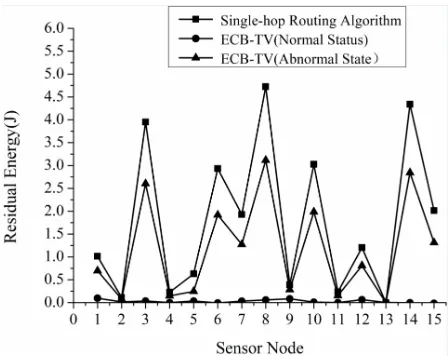
Fig. 6. A comparison of the remaining energy of sensor node
Fig. 7. A comparison of total remaining energy of all wearable sensor nodes
abnormal data, the ECB-TV routing algorithm constantly maintains a reliable routing path with energy balance for data transmission. Therefore, when the first dead node occurs, each sensor node dies almost simultaneously, and the remaining energy of each node is almost zero. It can be seen that the WBAN switches to a single-hop route because of an abnormal situation, potentially causing unbalanced energy consumption to a certain extent. However, compared with the single-hop routing algorithm, most sensor nodes still maintain a relatively balanced energy consumption except for some sensor nodes. Hence, the life cycle of the entire WBAN can be extended to some extent.
Figure 7 is a comparison of the total remaining energy of all wearable sensor nodes in the WBAN when the first dead node occurs in the WBAN. When the single-hop routing algorithm is applied, all the wearable sensor nodes in the WBAN have the most total energy remaining and die as early as possible. This means that unbalanced energy consumption causes some nodes to die too early, but at this time, other sensor nodes still have a large amount of energy remaining. The ECB-TV routing algorithm can satisfactorily solve this problem, especially when there is no abnormality in the network. When the entire network dies, the remaining energy of all wearable sensor nodes is almost zero, which can suitably balance the energy consumption of all sensor nodes, thus extending the life cycle of the entire WBAN.
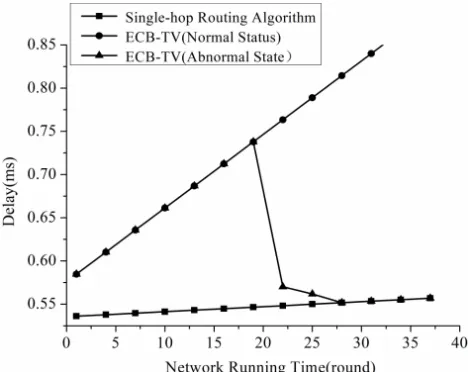
Fig. 8. A comparison of total delays of WBAN
about the 28th round caused by topology switching. After the 28th round, the impact of topology switching on the delay disappears and the delay of ECB-TV in abnormal state is the same as sing-hop routing algorithm. It can be seen that the ECB-TV rout-ing algorithm can be quickly transmitted to the coordinator node in an abnormal situa-tion, so that the rescue personnel whose life safety is threatened can be rescued in a timely manner.
5
Conclusion
This paper proposes an ECB-TV routing algorithm, which can take multi-hop rout-ing and srout-ingle-hop routrout-ing for the normal state and abnormal states of the network, respectively, and considers the energy balance of sensor nodes in multi-hop routing. The simulation results show that multi-hop routing can effectively balance the energy consumption of sensor nodes, prolonging the network lifetime. In abnormal states, the single-hop routing can transmit the abnormal information with a shorter delay, allow-ing the rescue personnel to be rescued in a timely manner if his or her safety is threat-ened.
6
Acknowledgement
This work is supported by the National Natural Science Foundation of China (61501308), Science and technology research project of Liaoning Provincial Depart-ment of Education (LG2016/6), Postdoctoral Research Station project of Shenyang Ligong University (2016), Special Foundation of Doctoral Program of Shenyang Ligong University(2015), Key Laboratory Open Foundation of Shenyang Ligong University (2014, 2017), Liaoning Fourth Batch of Distinguished Professor Project (2014), Liaoning BaiQianWan Talents Program (2016), Liaoning Natural Science Foundation (20170540793), Distinguished Professor Project in Liaoning Province (2017), Program for Liaoning Innovative Research Team in University (2017).
7
References
[1]Alam M M, Ben Hamida E. Surveying Wearable Human Assistive Technology for Life and Safety Critical Applications: Standards, Challenges and Opportunities [J]. Sensors, 2014, 14(5):9153. https://doi.org/10.3390/s140509153
[2]Shiliang L, Lixin L, Hanming L, et al. Design and Implementation of the Remote Monitor-ing and Management System for Cardiovascular Patients in the Community Hospital Based on IOT Technology [J]. Software Engineering, 2017.
[3]Heikenfeld J, Jajack A, Rogers J, et al. Wearable sensors: modalities, challenges, and pro-spects [J]. Lab on a Chip, 2018, 18. https://doi.org/10.1039/C7LC00914C
[5]Negra R, Jemili I, Belghith A. Wireless Body Area Networks: Applications and Technolo-gies [J]. Procedia Computer Science, 2016, 83:1274-1281. https://doi.org/10.1 016/j.procs.2016.04.266
[6]Zhao Z, Huang S, Cai J. Energy Efficient Packet Transmission Strategies for Wireless Body Area Networks with Rechargeable Sensors[C]// Vehicular Technology Conference. IEEE, 2018:1-5.
[7]Koulali M A, Kobbane A, El Koutbi M , et al. Dynamic power control for energy harvest-ing wireless multimedia sensor networks[J]. Eurasip Journal on Wireless Communications & Networking, 2012, 2012(1):158-0. https://doi.org/10.1186/1687-1499-2012-158
[8]Mansouri Benssassi E, et al. Wearable assistive technologies for autism: opportunities and challenges [J]. IEEE Pervasive Computing, 2018, 17(2):11-21. https://doi.org/10.1 109/MPRV.2018.022511239
[9]Zhang S, Seyedi A. Harvesting Resource Allocation in Energy Harvesting Wireless Sensor Networks [J]. Computer Science, 2013.
[10]Majumder S, Mondal T, Deen M J. Wearable Sensors for Remote Health Monitoring [J]. Sensors, 2017, 17(1). https://doi.org/10.3390/s17010130
[11]Mansouri Benssassi E, Gomez J C, Boyd L A E, et al. Wearable assistive technologies for autism: opportunities and challenges [J]. IEEE Pervasive Computing, 2018, 17(2):11-21. https://doi.org/10.1109/MPRV.2018.022511239
[12]Rios R, Lopez J. Exploiting Context-Awareness to Enhance Source-Location Privacy in Wireless Sensor Networks [J]. Computer Journal, 2018, 54(10):1603-1615. https://doi.org/10.1093/comjnl/bxr055
[13]Antolín D, Medrano N, Calvo B, et al. A Wearable Wireless Sensor Network for Indoor Smart Environment Monitoring in Safety Applications [J]. Sensors, 2017, 17(2):365. https://doi.org/10.3390/s17020365
[14]Alam M M, Hamida E B. Wearable Wireless Sensor Networks: Applications, Standards and Research Trends [M]// ECT Based on WSNs Current Research and Future Applica-tions-CRC Press. 2015.
[15]Kumar A, Baksh R, Thakur R K, et al. Data Aggregation in Wireless Sensor Networks[J]. International Journal of Online Engineering, 2018, 12(11):28.
[16]Jia H, Zheng J, Wang G, et al. On the Localization Algorithm of Wireless Sensor Network and Its Application [J]. International Journal of Online Engineering (iJOE), 2017, 13(03): 40-51. https://doi.org/10.3991/ijoe.v13i03.6858
[17]Zhang Z, Xu G, Zhang P, et al. Personalized Recommendation System Based on WSN[J]. International Journal of Online Engineering (iJOE), 2016, 12(10):91-6. https://doi.org/10.3 991/ijoe.v12i10.6207
[18]Yi Peng, Song Zhang. A power optimized routing algorithm for wireless body area net-work [J]. Electronic Science and technology, 2018(7).
[19]Khalid A, Darabkh Mohammad Z, El-YabroudiAli H, El-Mousa. BPA-CRP: A balanced power-aware clustering and routing protocol for wireless sensor networks [J]. Ad Hoc Networks 2018(1):155-171.
[20]Wan Z, Liu S, Ni W, et al. An energy-efficient multi-level adaptive clustering routing al-gorithm for underwater wireless sensor networks [J]. Cluster Computing, 2018(2):1-10. https://doi.org/10.1007/s10586-018-2376-8
[21]Awan K M, Ali A, Aadil F, et al. Energy efficient cluster based routing algorithm for wire-less sensors networks[C]// International Conference on Advancements in Computational Sciences. IEEE, 2018:1-7.
8
Authors
Lincong Zhanghas received the PhD. degree in communication and information systems from Northeastern University, Shenyang, China. She is currently an associate professor in the School of Information Science and Engineering, Shenyang Ligong University, Shenyang, China. Her research interests include converged fiber-wireless access network, wearable wireless sensor network, and next generation passive optical network (e-mail:[email protected]).
Xueyi Chenis currently working toward the M.S. degree in Shenyang Ligong University, Shenyang, China. His research interests include converged fiber-wireless access network and wearable wireless sensor network (e-mail: [email protected]).
Kefeng Wei is currently working toward the Ph.D. degree in Northeastern Univer-sity, Shenyang, China, and he is also a staff of Shen Kan Engineering and Technology Corporation, MCC., Shenyang, China. His research interests include converged fiber-wireless access network and wearable fiber-wireless sensor network (e-mail: [email protected]).
Wenbo Zhang has received the PhD. degree from Northeastern University, Shen-yang, China. He is currently a professor in the School of Information Science and Engineering, Shenyang Ligong University, Shenyang, China. His research interests is wireless sensor network (e-mail: [email protected]).
Yongxin Feng has received the PhD. degree from Northeastern University, Shen-yang, China. She is currently a professor in the School of Information Science and Engineering, Shenyang Ligong University, Shenyang, China. Her research interests is wireless network (e-mail: [email protected]).