OPEN BADGES AND ALTERNATIVE CREDENTIALING
Betty Hurley
SUNY Empire State College; [email protected]
Abstract
While badges have existed for many years, open digital badges are relatively new. The open badge became more prominent with the Mozilla digital badge project which began in 2011. Open badges are far more than a single image; they include information about criteria as well as the individual's documentation “baked” into the badge. These open badges have the potential to revolutionize how learning is credentialed. Although documenting learning in many different formats, the badges themselves are fully online and therefore possess all the advantages of a fully online presence. In this article, further detail about open badges as well as examples will be given. In addition, the potential and future of open badges will be discussed.
KEY WORDS: badges, credentialing, informal learning, digital, open
1. INTRODUCTION
Few would deny that the educational landscape is shifting. With the increased cost of a “traditional” higher education consisting of four years in residence, some are questioning the wisdom of beginning a career with what often appears to be insurmountable debt. Books such as Academically Adrift (Arum and Roska, 2011) are questioning the benefit of obtaining a bachelor's degree at all. In addition, lifelong and lifewide learning have become the norm, as many occupations require current, updated knowledge and skills.
to provide training for academic institutions and businesses. Learners who successfully complete a course can display a digital badge on their LinkedIn site, like an academic version of a Boy or Girl Scout badge.
Similar badges are being used worldwide. A recent report in June 2016 co-published by the University Professional and Continuing Education Association, Inc. (UPCEA) and Pearson supports a trend toward the use of alternative credentials, including digital badges (Fong et al., 2016). Of the 190 higher education institutions they surveyed, one in five reported already using digital badges, and over sixty percent saw alternative credentialing as an important strategy for their organizations' futures. Fong et al. defined alternative credentials as “competencies, skills, and learning outcomes derived from assessment-based, non-degree activities and aligned to specific, timely needs in the workplace” (2016). Another example of a program making use of badges is The Open Learn program (2017), a part of the British Open University in which learners attain badges that can be shared on LinkedIn, Facebook, Twitter, or on the Mozilla backpack (OpenLearn.com). Another model is that of Joyce Seitzinger, a co-facilitator of Open Badges of Australia and New Zealand (OBANZ). She is the founder of Academic Tribe, a network of connected education specialists and learning designers that collaborate on innovative education projects. Their motto is: the network is more powerful than the node. Her recent TedX talk (2015) is available on YouTube, and is a general summary of what open badges are and their potential.
Open badges are part of an emerging movement in DIY (Do It Yourself) Education. Millions of learners are now paying for certificates from Coursera. The current situation makes posting credentials from informal learning platforms such as Coursera in a coherent manner challenging. However, projects are appearing that have the potential to make open badges informative, credible and competitive with credentials from formal educational institutions. The intent of this paper is to identify some of these innovative projects and identify possible next steps.
2. OPEN BADGING
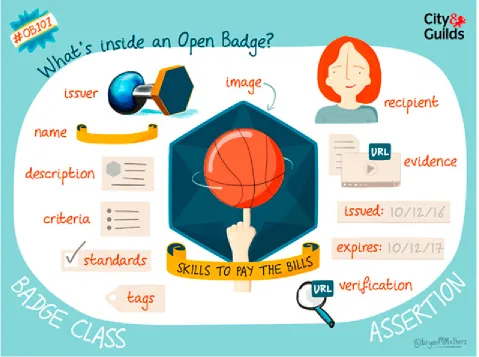
FIG. 1: “What's Inside an Open Badge?”, by @bryanMMathers. Licenced under CC-BY-ND
Through its product, Acclaim, Pearson allows respected brands to promote learning achievements through a standardized and verified platform. Two major users of the platform are Open EdX (https://open.edx.org) and P2PU (https://badges.p2pu.org/en/ about). The Mozilla backpack still exists and, recently, DigitalMe, a not-for-profit organization, has taken on further development of the backpack for Mozilla (Riches, 2016). DigitalMe (http://www.digitalme.co.uk/credly/) is committed to the original main goal for the Mozilla backpack—to provide badge owners to place their badges in an open environment not tied with any specific corporation. In addition, Mozilla and the MacArthur Foundation were joined by IMS Global to continue the open badges project. IMS Global's goal was to continue to work toward the development of an ecosystem that supports an open architecture for the documentation of learning from a wide range of resources. As of 2017, Mozilla has stepped back from the project and the MacArthur funded projects have ended; IMS Global has taken over the openbadges.org website.
Another major event happened in early 2017—the release of OpenBadges Version 2.0. Belshaw, in a June 2017 blog entry (Belshaw, 2017), provides the best non-technical description of the changes. The most important change is the ability to attach more information to the badge itself, including general information about the badge (identified as the badge “class”) as well as documentation provided by the learner that supports their meeting the criteria for the badge (called an “assertion”). Many badge providers that had been using the Mozilla backpack have moved to this new version.
3. EXAMPLES
Digital badges have become popular for teacher development. One example is the New Tech Network (NTN). The NTN model is based on problem-based learning (PBL) and focuses on teaching and assessing 21st century skills, technology use in the classroom, and the unique culture that empowers students by allowing them to be connected to and engaged with their school, teachers, and peers.
each stage of the program and then end with the attainment of a mastery badge. Other universities are utilizing badges for their faculty development. Texas Wesleyan University, for example, offers three levels of badges: one for taking a workshop; one for applying that knowledge, and the final badge for teaching another person that skill (http://www.txwescetl.com/badges-2-0/). Some programs have experimented with digital badges, only to then phase them out. UC Davis, in 2012, began using badging as part of its program in Sustainable Agriculture and Food Systems, but by 2014, they stopped their use of badges. It was not clear what had led to the end of digital badging for this program, but a number of badging projects ended after start-up funding had ended.
Other institutions, however, remain committed to badging. Carnegie Mellon has an extensive badging program for computer programming (http://www.cs2n.org/certifications). The site states, “Whether you are an individual, or an educator, anyone can obtain a CS-STEM Certifications. Most certification are made available for everyone and self-paced, study at your own convenience. Earn badges as you study course materials, then take an online examination at the end.”
Another natural use of digital badges is with younger students. After school K-12 programs in Boston and Providence have been providing digital badges for students who meet certain criteria (http://bostonbeyond.org/initiatives/digital-badges/). The badges are in: communication, critical thinking, engagement in learning, perseverance and teamwork. Offering young adults badges helps them gain confidence in their abilities and is helpful on their entry-level resumes to potential employers and colleges/universities. The Makewaves platform (www.makewav.es) focuses on badging for children, creating a safe environment for them to learn and interact. One of the activities they can engage with involves Shakespeare, partnering with the International Space Station, graphic arts, and a variety of other topics. Teachers can use this platform to track student progress and showcase exceptional student skills. Penn State offers digital literacy badges. They are linked to Bloom's taxonomy. They are available outside the college community through one's Google, Twitter or Facebook account (http://sites.psu.edu/informationliteracybadges/). Companies and industries have also adopted open badges. The National Wood Flooring Association has developed badges, using Credly, for their online training program: http://associationsnow.com/2017/02/new-money-close-gap-digital-badging/. IBM has been praised for its Open Badges program, which began in 2015 and is based on gaming. The results have been impressive. They have seen: 125% increase in new participants; 226% increase in course completion rates; 694% increase in course exam pass rates; and 64% increase in product trial downloads (Lester, 2016).
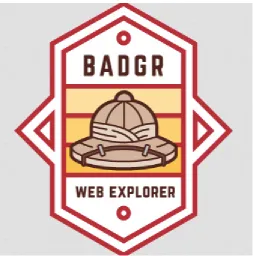
had basic skills for navigating the web. This badge is displayed in Figure 2 and can be viewed at the Badgr site.
FIG. 2: Web Navigator Badge issued to Betty Hurley
There have been a number of projects that produced helpful resource pages on badging. OBHE (Open Badges in Higher Education) completed its project in 2016, but has a web site with examples and helpful articles: https://sites.google.com/site/openbadgesinhigher education/home.
4. THE FUTURE
What is the future of badging? The Urban Institute wrote a position paper on 2016 advocating for the use of digital badges to document the achievement of workforce skills (Spaulding and Johnson). Programs such as LRNG are working to put this goal into reality (https://www.lrng.org/about). There are 11 LRNG cities in the United States. These cities are committed to networking resources to help especially disadvantaged youth achieve their passion. As indicated above, the Department of Education is eager to fund such projects that provide innovative credentialing opportunities for underserved populations that do not have the social or financial resources to attend a typical college/university.
The Education Design Lab is working with colleges and universities to develop a prototype for using badges to document the achievement of 21st century skills that employers most want. http://eddesignlab.org/badgingchallenge/ According to their web site, 21st Century Skills Badge Earners:
• demonstrate a deep understanding of the skill and the core sub-competencies and can
identify why the skill matters, the perceived “market value” of the skill, how it connects to other 21st century skills and liberal arts disciplines, and the application of the skill in the workplace and how that may differ from an academic setting;
• analyze their use and application of the skill and how it connects to their strengths and weaknesses;
• utilize associated assessments (self, other, skill specific) to create a growth plan;
• demonstrate significant intentional practice of the skill and its sub-competencies that goes beyond the daily routine; and
• demonstrate growth and/or transformation through clear articulation of the learning and development journey
They are working with a small number of schools to establish the prototype and a protocol for the badges.
Another approach is being attempted by BadgeMaker in the UK (https://wearesnook.com/ badgemaker-update/). BadgeMaker is a plug-in for Moodle for badging.
Although there are lots of projects occurring, open badging has yet to gain a critical mass of users. Employers continue to be confused by what an open badge means and many higher education administrators remain unimpressed. However, change may very well come from users rather than an organized approach from higher education and policy makers. Learners and employers are becoming less impressed with the outdated transcript model which has existed for many decades. The fully online open badge, which contains within it important information about the skills attained as well as examples of learner work, provides the path to a paradigm shift in the credentialing of learning.
5. INNOVATIVE MODELS FOR DOCUMENTATION
How can one use technology for storing badge information? The MIT Media Lab and Learning Machine have been working on a collaborative project for issuing official credentials, also known as certificates, onto the Bitcoin blockchain (Jagers, 2016). Arthur Levine, President of the Woodrow Wilson National Fellowship Foundation, is advocating a classification of competencies. He states (Smolenski, 2016):
What we really need to do is achieve common definitions of competencies. What we really have to do is create the equivalent of the DSM in psychiatry: the Diagnostic and Statistical Manual of Mental Disorders. It offers a common language and standard criteria for classifying mental illnesses. We need that for competencies. When we talk about competencies, we have to be talking about the same thing, or it's just another buzzword. We have to develop assessments that measure student progress and attainment of the standards or the outcomes and help us prescribe to students what it is they need to do in order to achieve those competencies.
Another ongoing project is the Credential Transparency Initiative. Below is an excerpt from their web site (http://www.credentialtransparencyinitiative.org):
George Washington University's Institute of Public Policy (GWIPP), Workcred – an
affiliate of the American National Standards Institute (ANSI), and Southern Illinois University (SIU) are leading the Credential Transparency Initiative to create greater coherence and transparency in the U.S. credentialing marketplace. Funded by Lumina
Foundation, the initiative will develop common terms for describing key features of
credentials; create a voluntary, web-based registry for sharing the resulting information; and test practical apps (software applications) for employers, students, educators, and other credential stakeholders.
and much more. The registry will include all kinds of credentials – from educational degrees and certificates to industry certifications, occupational licenses, and micro-credentials. The initiative will develop a Credential Directory app, which will allow registry users to access the websites of participating credential issuers, build customized directories of credentials based on their own criteria, and publish the results. Other apps in development are intended to enable employers to communicate their credentialing requirements; support the review of competency-based resumes; and assist colleges and certification organizations to develop and write more transparent and assessable competency statements based on employer requirements. The goals are transparency and clarity, and to help align credentials with the needs of students, job seekers, workers and employers.
These innovative models for registering credentials face a mighty and slow-moving challenger in traditional higher education, but the need for these innovative credentialing practices will only increase over time.
6. A NATIONAL DIALOG
In October 2015, some 200 individuals representing 170 organizations met for a National Summit on Credentialing. Three organizations convened the summit – the Corporation for a Skilled Workforce (CSW), the Center for Law and Social Policy (CLASP) and the Lumina Foundation. The supported project is called Connecting Credentials (http://connecting credentials.org/).
The concerns center around a “fragmented dysfunctional credentialing system that's out of sync with 21st century needs” (Lumina Foundation, 2016). The summit and the Connecting Credentials project acknowledge that much collaboration is needed to come to a system that will serve 21st century learners.
Several key components are essential in any new system:
• Centered on learning: moving from accumulation of credit hours to demonstrating competency
• Equitable: since those who are hurt most by our current system are those who have the least
• Dynamic: so credentials awarded are relevant in the job market and can adapt to changing demands in real time
• Scalable: for system-wide change
• Supportive of innovation: entrepreneurs are needed to make this happen
The congruence of these components with the attributes of open badges is striking. Badges are all about competencies. A goal stated in many of the current digital badging projects is to increase equity. Digital badges are inherently dynamic and the Mozilla backpack protocol supports transparency and scalability. Evidence of this last point is that even Pearson's product, Acclaim, follows the Mozilla framework.
7. CONCLUSION
The time is right for moving credentialing into the 21st century, as education moves closer to what some are calling fluid learning–that is, “learning tailored for and controlled by individuals as they expand their knowledge, fluidly moving across learning contexts, interacting with others.” (Falconer et al, 2013). Many organizations have expressed commitment to this project. The challenge of this undertaking is clear, but the benefits are obvious and far-reaching. Challenges include providing clarity amidst projects that are moving in many different directions. Benefits include the ability to document learning that comes naturally from our networked world.
Digital badges fit perfectly with the goals of all current credentialing projects. Hopefully, there will be much more to report on this complex project in the coming years.
REFERENCES
Arum, R. and Roksa, J. (2011). Academically adrift: Limited learning on college campuses, Chicago: University of Chicago Press.
Belshaw, D. (2016), Open Badges: Trusted, Portable Digital Credentials. Retrieved July
10, 2017 from https://www.youtube.com/watch?v=Nh1PhPWra9w
Belshaw, D. (2017), Providing Some Clarity on open Badges 2.0. Retrieved July 15, 2017
from http://dougbelshaw.com/blog/2017/06/14/open-badges-2/
Botoroff, K. (2016), “WSOI's Carl Davis Receives New Tech Network Facilitator
Certification”. Retrieved April 10, 2017 from http://am1050.com/2016/wsois-carl-davis-
receives-new-tech-network-facilitator-certification/
Educause Learning Initiative (2017), “Seven Things You Should Read About Microcredentialing/Digital Badging”. Retrieved July 20, 2017 from https://library.educause. edu/~/media/files/library/2017/7/elir1704.pdf
Fong, J., Janzow, P., and Peck, K. (2016), Demographic Shifts in Educational demand and the Rise of Alternative Credentials. Retrieved August 20, 2016 from http://upcea.edu/wp- content/uploads/2017/05/Demographic-Shifts-in-Educational-Demand-and-the-Rise-of-Alternative-Credentials.pdf
Grant, Sheryl L. (2014), What Counts As Learning: Open Digital Badges for New Opportunities. Irvine, CA: Digital Media and Learning Research Hub.
Heimerl, J. (2016), “What Are Digital Badges?” Retrieved July 20, 2017 from https://online. cuw.edu/blog/what-are-digital-badges/
Hickey, D., Willis, J., and Quick, J. (2016), “Where Badges Work Better.” Retrieved July 20, 2017 from https://sites.google.com/site/openbadgesinhighereducation/where-badges-work-better
Jagers, C. (2016), “Verifiable Credentials on the Blockchain”. Retrieved August 10, 2016 from https://medium.com/learning-machine-blog/blockchain-credentials-b4cf5d02bbb7#. tu7ub2rgn
Lester, D. (2016), “Open Badges: Reimagining the credential space with significant, unintended benefits.” Retrieved July 20, 2017 from https://www.trainingindustry.com/ezine/ current-issue/open-badges-reimagining-the-credential-space-with-significant-unintended-benefits.aspx
Lumina Foundation (2106), “Connecting Credentials”. Retrieved July 20, 2016 from http://connectingcredentials.org/wp-content/uploads/2016/01/Summit-Synthesis-Paper.pdf MacArthur Foundation (2013), “What is a Badge?” Retrieved July 20, 2016 from https:// youtu.be/RDmfE0noOJ8
Muilenburg, L. and Berge, Z., Eds. (2016). Digital Badges in Education. Routlege.
National Summit on Credentialing (2016), “Connecting Credentials”. Retrieved August 20, 2016 from
http://connectingcredentials.org/wp-content/uploads/2016/04/Summit-Synthesis-Paper.pdf
OpenLearn (2017), “Why Study a Free Course on OpenLearn?” Retrieved July 20, 2017 from http://www.open.edu/openlearn/about-openlearn/try#Badged%20open%20courses Pain, P. (2013), “Have Credential, Will Travel.” Retrieved September 20, 2016 from https://www.insidehighered.com/news/2013/09/25/stackable-credentials-energy-industry-take-texas
Riches, T. (2016), “Backpack to the Future?” Retrieved July 20, 2017 from https://medium. com/digitalme-an-open-badge-adventure/backpack-to-the-future-eb66c5c67d5a
Smolenski, N. (2016), “A DSM for Achievement.” Retrieved July 20, 2017 from https:// medium.com/learning-machine-blog/a-dsm-for-achievement-9e52fd881428
Spaulding, S. and Johnson, M. (2016), “Realizing Employment Goals for Youth Through Digital Badges.” Retrieved July 20, 2016 from https://www.urban.org/sites/default/files/ publication/80241/2000772-realizing-employment-goals-for-youth-through-digital-badges-lessons-and-opportunities-from-workforce-development.pdf
U.S. Department of Education (2015), “Department of Education Launches Educational Quality Through Innovative Partnerships (EQUIP) Experiment to Provide Low Income Students with Access to New Models of Education and Training”. Retrieved July 20, 2016 from http://www.ed.gov/news/press-releases/fact-sheet-department-education-launches- educational-quality-through-innovative-partnerships-equip-experiment-provide-low-income-students-access-new-models-education-and-training