52
In vitro
antioxidant activity of coumarin compounds by DPPH, Super oxide
and nitric oxide free radical scavenging methods
Patel Rajesh M.*1 and Patel Natvar J.2
1. Department of Pharmaceutical Biotechnology, S.K. Patel College of Pharmaceutical
Education & Research, Ganpat University, Kherva-382711, Gujarat, India.
2. Department of Pharmacology, S.K. Patel College of Pharmaceutical Education &
Research, Ganpat University, Kherva-382711, Gujarat, India.
*Corresponding author: [email protected]
ABSTRACT:
Many coumarins and their derivatives exert coagulant, tumor, viral,
anti-inflammatory and antioxidant effects, as well as anti-microbial and enzyme inhibition
properties. The different substituents in the coumarin nucleus strongly influence the
biological activity of the resulting derivatives. Although some coumarins have been
already characterized to evoke a particular biological activity, the challenge would be
the design and synthesis of new derivatives with high specific activity against different
forms of free radicals and define their mechanism of action to achieve new therapeutic
drugs against disorders results from oxidative damage. The present research work
highlights the current progress in the development of coumarin scaffolds for drug
discovery as novel anti-oxidant agents. The major challenges about coumarins include
the translation of current knowledge into new potential lead compounds and the
repositioning of known compounds for the treatment of oxidative disorders. In present
article, various coumarin compounds were evaluated for in vitro antioxidant activity by
DPPH, Super oxide and nitric oxide free radical scavenging assay methods. From results
of DPPH, super oxide and nitric oxide methods, it found that compound I and II
displayed strong antioxidant (P < 0.001) activity compared to the ascorbic acid.
Keywords: Antioxidant activity, DPPH, free radical scavenging.
INTRODUCTION:
Free radicals of different forms are constantly generated for specific metabolic
requirement and quenched by an efficient antioxidant network in the body. When the
generation of these species exceeds the levels of antioxidant mechanism, it leads to
oxidative damage of tissues and biomolecules, eventually leading to disease conditions,
53
more complex related derivatives have recently drawn much attention due to its broad
pharmacological activities include bacterial, thrombotic and vasodilatory,
anti-mutagenic, lipoxygenase and cyclooxygenase inhibition, scavenging of reactive oxygen
species, and anti-tumourigenic, appears to be based on the coumarin nucleus.[2,3]
Many coumarin derivatives have special ability to scavenge reactive oxygen species
(ROS)—free radicals, such as hydroxyl radicals, superoxide radicals or hypochlorous
acid, and to influence processes involving free radical-injury. [1] They have also been
found to inhibit lipid peroxidation and to possess vasorelaxant, anti-inflammatory and
anticoagulant activities. The recognition of key structural features within coumarin
family is crucial for the design and development of new analogues with improved
activity and for the characterization of their mechanism of action and potential side
effects. The coumarins are extremely variable in structure, due to the various types of
substitutions in their basic structure, which can influence their biological activity. In
view of the considerable importance of the coumarins and its derivatives, the present
work is aimed for testing of target compounds for their free radical scavenging activity
by using DPPH, super oxide and nitric oxide free radical scavenging methods.
MATERIALS AND METHODS:
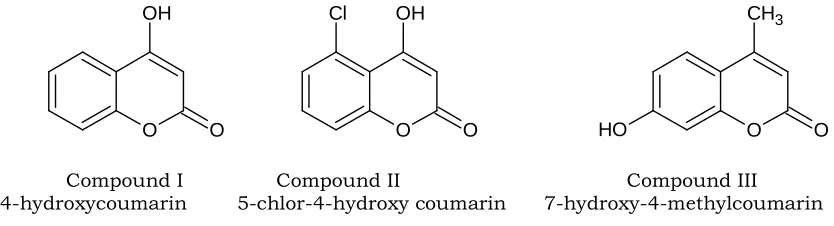
Coumarin compounds were procured from Rankem Laboratory, Delhi (Figure 1) and
prepared various concentrations with DMSO.
Chemicals
1,1-Diphenyl-2-picryl hydrazyl (DPPH), Griess reagent and Dimethyl sulphoxide were
obtained from MP Biomedicals Ltd., USA, Nitroblue tetrazolium (NBT), Riboflavin,
Ascorbic acid and sodium nitroprusside were obtained from SD fine chemicals Ltd.,
India. Deoxy ribose was obtained from Merck India.ethylene diamine tetra acetic acid
(EDTA), ferrous sulphate, trichloro acetic acid, Hydrogen peroxide (H2O2), mannitol,
potassium dihydrogen phosphate, potassium hydroxide, phenazine methosulfate were
of analytical grade and obtained from Ranbaxy fine chemicals.
Determination of Anti oxidant activity
DPPH radical scavenging activity
The DPPH assay method is based on the reduction of DPPH, a stable free radical. The
free radical DPPH.with an odd electron gives a maximum absorption at 517 nm (purple
colour). When Antioxidants react with DPPH., which is a stable free radical becomes
54
antioxidant) and is reduced to the DPPHH and as consequence the absorbance’s
decreased from the DPPH. Radical to the DPPH-H form (figure 2), results in
decolorization (yellow colour) with respect to the number of electrons captured [2]. More
the decolorization more is the reducing ability. This test has been the most accepted
model for evaluating the free radical scavenging activity of any new drug. When a
solution of DPPH is mixed with that of a substance that can donate a hydrogen atom,
then this gives rise to the reduced form (Diphenylpicrylhydrazine; non radical) with the
loss of this violet colour (although there would be expected to be a residual pale yellow
colour from the picryl group still present)[3].
O O
OH
O O
OH Cl
O O CH3
O H
Compound I Compound II Compound III
4-hydroxycoumarin 5-chlor-4-hydroxy coumarin 7-hydroxy-4-methylcoumarin
Fig. 1 Structures of coumarin compounds
The scavenging reaction between (DPPH.) and an antioxidant (H-A) was shown in figure
2. 4.3 mg of DPPH (1, 1-Diphenyl –2-picrylhydrazyl) was dissolved in 3.3 ml methanol;
it was protected from light by covering the test tubes with aluminum foil. 150 µl DPPH
solution was added to 3ml methanol and absorbance was taken immediately at 517nm
for control reading. 50 µl of various concentrations of coumarin compounds as well as
standard compound (Ascorbic acid) were taken and the volume was made uniformly to
150 µl using methanol. Each of the samples was then further diluted with methanol up
to 3ml and to each 150 µl DPPH was added. Absorbance was taken after 15 min. at
517nm using methanol as blank on UV-visible spectrometer Shimadzu, UV-1601,
Japan. The IC50 values for each drug compounds as well as standard preparation were
calculated. The DPPH free radical scavenging activity was calculated using the following
formula:
% scavenging = [Absorbance of control - Absorbance of test
55
The effective concentration of sample required to scavenge DPPH radical by 50% (IC50
value) was obtained by linear regression analysis of dose-response curve plotting
between %inhibition and concentrations [12].
(DPPH) + H-A → DPPH-H + A
(Purple) (Yellow)
Fig. 2 Reactions of DPPH (free radical) to DPPH (Non radical)
Super oxide free radical scavenging activity
Super oxide is biologically important as it can form singlet oxygen and hydroxyl radical.
Overproduction of super oxide anion radical contributes to redox imbalance and
associated with harmful physiological consequences. Super oxide anion are generated
in PMS-NADH system by the oxidation of NADH and assayed by the reduction of NBT
resulting in the formation of blue formazan.
100 µl of Riboflavin solution [20 µg], 200 µl EDTA solution [12mM], 200 µl methanol
and 100 µl NBT (Nitro-blue tetrazolium) solution [0.1mg] were mixed in test tube and
reaction mixture was diluted up to 3 ml with phosphate buffer [50mM]. The absorbance
of solution was measured at 590nm using phosphate buffer as blank after illumination
for 5 min. This is taken as control. 50 µl of different concentrations of coumarin
compounds as well as standard preparation were taken and diluted up to 100 µl with
methanol. To each of these, 100 µl Riboflavin, 200 µl EDTA, 200 µl methanol and 100 µl
NBT was mixed in test tubes and further diluted up to 3 ml with phosphate buffer.
Absorbance was measured after illumination for 5 min. at 590 nm on UV visible
spectrometer Shimadzu, UV-1601, Japan. The IC50 value for each compound as well as
standard preparation were calculated. [5-6, 8, 13-14, 15-18]
% scavenging/Inhibition = [Absorbance of control - Absorbance of test
56
Nitric oxide free radical scavenging activity
Nitric oxide (NO.) has also been involved in a variety of biological functions, including
neurotransmission, vascular homeostasis, antimicrobial, and antitumor activities.
Despite the possible beneficial effects of NO., its contribution to oxidative damage is also
reported. This is due to the fact that NO. can react with superoxide to form the
peroxynitrite anion, which is a potential oxidant that can decompose to produce OH.
and NO.. The procedure is based on the principle that, sodium nitro-prusside in
aqueous solution at physiological pH spontaneously generates nitric oxide which
interacts with oxygen to produce nitrite ions that can be estimated using Griess
reagent. Scavengers of nitric oxide compete with oxygen, leading to reduced production
of nitrite ions. Large amounts of NO. may lead to tissue damage.
50 µl of each of the concentrations of coumarin compounds previously dissolved in
DMSO, as well as ascorbic acid (standard compound) were taken in separate tubes and
the volume was uniformly made up to 150 µl with methanol. To each tube 2.0 ml of
sodium nitroprusside (10 mM) in phosphate buffer saline was added. The solutions
were incubated at room temperature for 150 minutes. The similar procedure was
repeated with methanol as blank which served as control. After the incubation, 5 ml of
griess reagent was added to each tube including control. The absorbance of
chromophore formed was measured at 546 nm on UV-visible spectrometer Shimadzu,
UV-1601, Japan. Ascorbic acid was used as positive control. The IC50 value for each test
compounds as well as standard preparation were calculated [6-8, 19-23].
% scavenging/Reduction = [Absorbance of control - Absorbance of test
sample/Absorbance of control] X 100
RESULTS AND DISCUSSION:
DPPH free radical scavenging activity
One of the quick methods to evaluate antioxidant activity is the scavenging activity on
DPPH, a stable free radical and widely used index .In the DPPH Free radical scavenging
activity, three coumarin compounds I, II and III were evaluated for their free radical
scavenging activity with ascorbic acid as standard compound. The IC50 was calculated
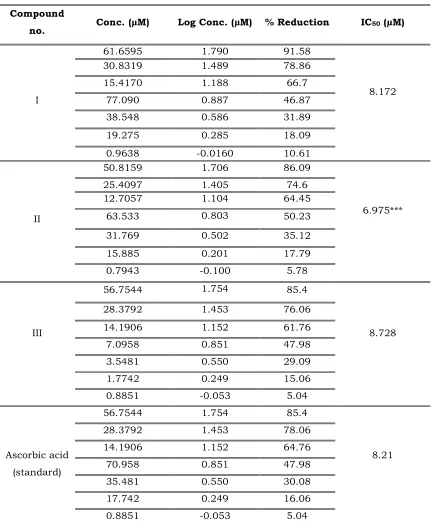
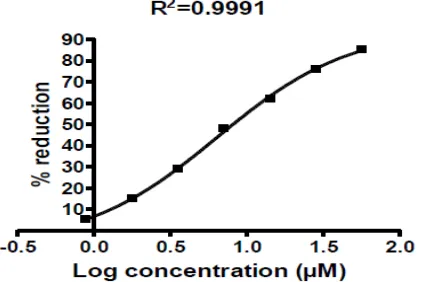
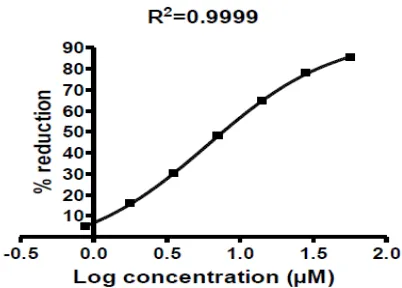
for each counarin compounds as well as ascorbic acid as standard and summarized in
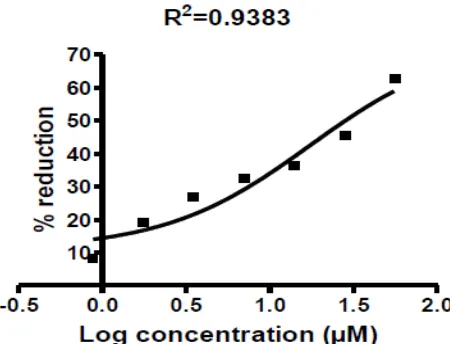
table 1 and graphically represented in figure 3-6. The scavenging effect increased with
the increasing concentrations of test compounds. The IC50 value for coumarin
compounds were 799.83 µM, 712.85 µM and 872.97 µM for compounds I, II and III
57
except compound III. From the results of DPPH, It showed that all three coumarin
compounds are equally effective as antioxidant compared to ascorbic acid.
Table 1. DPPH free radical scavenging activity of coumarin compounds
Compound
no. Conc. (µM) Log Conc. (µM) % Reduction IC50 (µM)
I
61.6595 1.790 91.58
8.172
30.8319 1.489 78.86
15.4170 1.188 66.7
77.090 0.887 46.87
38.548 0.586 31.89
19.275 0.285 18.09
0.9638 -0.0160 10.61
II
50.8159 1.706 86.09
6.975***
25.4097 1.405 74.6
12.7057 1.104 64.45
63.533 0.803 50.23
31.769 0.502 35.12
15.885 0.201 17.79
0.7943 -0.100 5.78
III
56.7544 1.754 85.4
8.728
28.3792 1.453 76.06
14.1906 1.152 61.76
7.0958 0.851 47.98
3.5481 0.550 29.09
1.7742 0.249 15.06
0.8851 -0.053 5.04
Ascorbic acid
(standard)
56.7544 1.754 85.4
8.21
28.3792 1.453 78.06
14.1906 1.152 64.76
70.958 0.851 47.98
35.481 0.550 30.08
17.742 0.249 16.06
0.8851 -0.053 5.04
Table 1 showed the IC50 values of coumarin compounds compared with ascorbic acid,
58
Fig. 3 Log concentration (µM/ml) vs % reduction for compound I by DPPH free
radical scavenging assay method
Fig. 4 Log concentration (µM/ml) Vs % reduction for compound II by DPPH free
radical scavenging assay method
Fig. 5 Log concentration (µM/ml) Vs % reduction for compound III by DPPH free
59
Fig. 6 Log concentration (µM/ml) Vs % reduction for ascorbic acid by DPPH free
radical scavenging assay method
Coumarins recognized as possessing potent anti oxidant activity are also strong
scavengers of DPPH. DPPH is relatively stable nitrogen centered free radical that easily
accepts an electron or hydrogen radical to become a stable diamagnetic molecule. DPPH
radicals react with suitable reducing agents as a result of which the electrons become
paired off forming the corresponding hydrazine. The solution therefore loses colour
stoichometrically depending on the number of electrons taken up. Substances capable
of donating electrons/hydrogen atoms are able to convert DPPH (Purple) into their
non-radical form 1, 1-diphenyl-2- picrylhydrazine (Yellow), a reaction which can be followed
spectrophotometrically. Free radical scavenging activity of the coumarin compounds is
concentration dependent, as the concentration of the test compounds increases, the
radical scavenging activity increases and lower IC50 value reflects better protective
action. From results, it may be postulated that coumarin compounds I, II and III were
able to reduce the stable free radical DPPH to the yellow-colored
diphenylpicrylhydrazine exhibiting better free radical scavenging activity than the
standard antioxidant Ascorbic acid. Structure activity relationship study showed that
the anti oxidant activity of these coumarin derivatives could be attributed to electron
donating nature of the substituents like –OH, -CH3 and –Cl on coumarin scaffold,
reduce free radical DPPH and prevent the damage of cell. The more hydrogen donors,
the stronger is the anti oxidant activity. These anti oxidants should display anti oxidant
activity if one or more the groups like –OH, -CH3 are free, since they are known to be
good hydrogen donors [24, 25].
Super oxide free radical scavenging activity
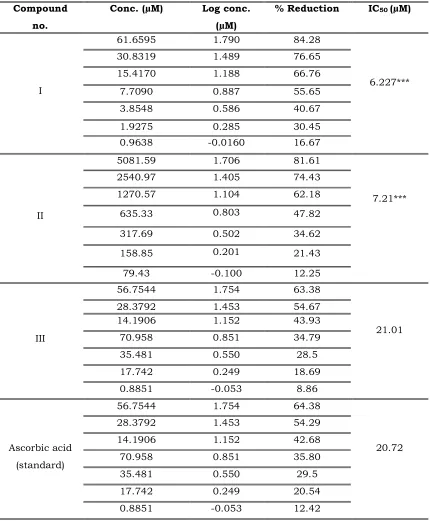
Super oxide free radical scavenging activity was performed with three coumarin
60
compounds and standard compound. The IC50 for Compound I, II and III were
641.21µM, 722.77µM and 2079.69 µM respectively and for ascorbic acid, it was
2051.16 µM. Compounds I and II have potent anti oxidant activity than compound III
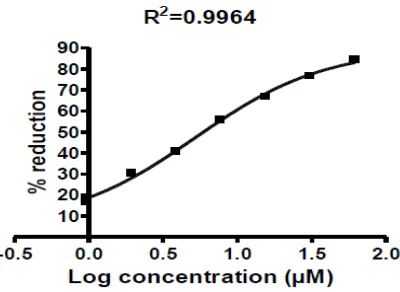
comparable to ascorbic acid at low IC50. Results are summarized in table 2 and
graphically represented in figure 7 to 10. From the graph, it was observed that as
concentration increases, the % scavenging is increasing linearly for all three compounds
and ascorbic acid (standard preparation), revealed by the regression analysis.
In-vitro super oxide radical scavenging activity is measured by riboflavin/light/NBT
(Nitro blue tetrazolium) reduction. The method is based on generation of super oxide
radical by auto oxidation of riboflavin in presence of light. Super oxide is biologically
important as it can form singlet oxygen and hydroxyl radical. Overproduction of super
oxide anion radical contributes to redox imbalance and associated with harmful
physiological consequences. The super oxide radical reduces NBT to a blue colored
formazan that can be measured at 560 nm. From results, it was found that the
compounds I, II and III showed potent free radical scavenging activity compared to the
ascorbic acid (standard) at low IC50. These coumarin compounds are electron donors
due to the presence of electron donating substituents groups like –OH, -CL and –CH3 at
different positions of coumarin scaffold. This compound donated their electrons to the
superoxide and scavenges them to prevent their further interaction with NBT followed
by inhibition of formation of blue colored formazan product [26].
Nitric oxide scavenging activity
Nitric oxide scavenging activity was performed with three coumarin compounds and
ascorbic acid as standard compound and the reductive potential of all three compounds
and standard preparations exhibited dose dependent activity (figure 11-14). The IC50
was calculated for coumarin compounds found more significant than ascorbic acid. The
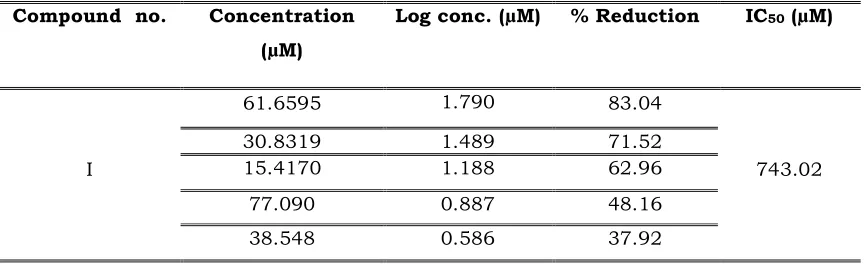
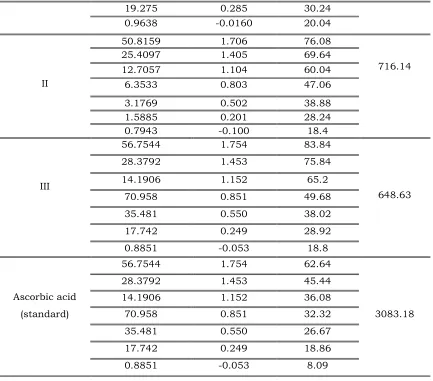
IC50 of compounds I, II and III were 743.02, 716.14 and 648.63 respectively which were
found lower than IC50 of ascorbic acid (3083.18 µM). Results are tabulated in table 3
and graphically represented in figure 11-14. From the graph, it was observed that as
concentration increases, the % scavenging is increasing linearly for all three compounds
and ascorbic acid (standard preparation) (figure 11-14), which revealed by the
regression analysis. From results, it confirmed that the compound III showed potent
anti oxidant activity than I and II. All three coumarin compounds showed good anti
61
Table 2. Super oxide free radical scavenging activity for coumarin compounds and
ascorbic acid
Compound
no.
Conc. (µM) Log conc.
(µM)
% Reduction IC50 (µM)
I
61.6595 1.790 84.28
6.227***
30.8319 1.489 76.65
15.4170 1.188 66.76
7.7090 0.887 55.65
3.8548 0.586 40.67
1.9275 0.285 30.45
0.9638 -0.0160 16.67
II
5081.59 1.706 81.61
7.21***
2540.97 1.405 74.43
1270.57 1.104 62.18
635.33 0.803 47.82
317.69 0.502 34.62
158.85 0.201 21.43
79.43 -0.100 12.25
III
56.7544 1.754 63.38
21.01
28.3792 1.453 54.67
14.1906 1.152 43.93
70.958 0.851 34.79
35.481 0.550 28.5
17.742 0.249 18.69
0.8851 -0.053 8.86
Ascorbic acid
(standard)
56.7544 1.754 64.38
20.72
28.3792 1.453 54.29
14.1906 1.152 42.68
70.958 0.851 35.80
35.481 0.550 29.5
17.742 0.249 20.54
0.8851 -0.053 12.42
Table 2 represents the IC50 value found for various coumarin compounds by super
oxide free radical scavenging activity, ***p <0.001 compared with IC50 value of ascorbic
62
Fig. 7 Log concentration (µM/ml) vs % reduction for compound I by super oxide
free radical scavenging assay method
Fig. 8 Log concentration (µM/ml) vs % reduction for compound II by super oxide
free radical scavenging assay method
Fig. 9 Log concentration (µM/ml) vs % reduction for compound III by super oxide
63
Fig. 10 Log concentration (µM/ml) vs % reduction for ascorbic acid by super oxide
free radical scavenging assay method
Nitric oxide is an important chemical mediator generated by endothelial cells,
macrophages, neurons and involved in the regulation of various physiological
processes. Excess concentration of nitric oxide is implicated in the cytotoxic effects
observed in various disorders like AIDS, cancer, alzheimer’s and arthritis. Oxygen
reacts with the excess NO to generate nitrite and peroxy nitrite anions, which act as free
radicals. From results of Nitric oxide method, it proved that coumarin compounds I, II
and III are equally effective as anti oxidant compared to the ascorbic acid. These
compounds compete with oxygen to react with NO and thus inhibit the generation of
the nitrite and peroxy nitrite anions. This attribute of these compounds may be due to
the electron donating nature of the substituents groups like –OH at the 4th position
(compound I), -CL and –OH at the 5th and 7th position(compound II), -CH3 at 7th
position(compound III) of 1,2-benzopyrone nucleus [24, 27].
Table 3. Nitric oxide free radical scavenging activity for coumarin compounds
Compound no. Concentration
(µM)
Log conc. (µM) % Reduction IC50 (µM)
I
61.6595 1.790 83.04
743.02
30.8319 1.489 71.52
15.4170 1.188 62.96
77.090 0.887 48.16
64
19.275 0.285 30.24
0.9638 -0.0160 20.04
II
50.8159 1.706 76.08
716.14
25.4097 1.405 69.64
12.7057 1.104 60.04
6.3533 0.803 47.06
3.1769 0.502 38.88
1.5885 0.201 28.24
0.7943 -0.100 18.4
III
56.7544 1.754 83.84
648.63
28.3792 1.453 75.84
14.1906 1.152 65.2
70.958 0.851 49.68
35.481 0.550 38.02
17.742 0.249 28.92
0.8851 -0.053 18.8
Ascorbic acid
(standard)
56.7544 1.754 62.64
3083.18
28.3792 1.453 45.44
14.1906 1.152 36.08
70.958 0.851 32.32
35.481 0.550 26.67
17.742 0.249 18.86
0.8851 -0.053 8.09
Table 3 represents the IC50 value found for various coumarin compounds by nitric oxide
free radical scavenging activity,***p <0.001 compared with IC50 value of ascorbic acid
Fig. 11 Log concentration (µM/ml) Vs % Reduction for compound I by nitric oxide
65
Fig. 12 Log concentration (µM/ml) Vs % Reduction for compound II by nitric oxide
free radical scavenging assay method
Fig. 13 Log concentration (µM/ml) Vs % Reduction for compound III by nitric
oxide free radical scavenging assay method
Fig. 14 Log Concentration (µM/ml) Vs % Reduction for ascorbic acid by Nitric
66
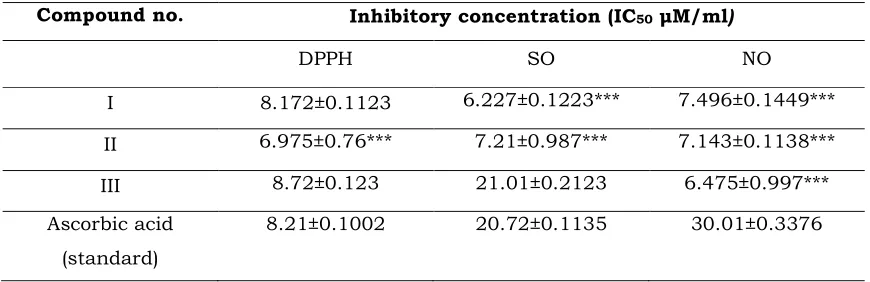
Table 4. Inhibitory concentrations (IC50 µM/ml) of procured coumarin compounds by DPPH, super oxide and nitric oxide method
Compound no. Inhibitory concentration (IC50 µM/ml)
DPPH SO NO
I 8.172±0.1123 6.227±0.1223*** 7.496±0.1449***
II 6.975±0.76*** 7.21±0.987*** 7.143±0.1138***
III 8.72±0.123 21.01±0.2123 6.475±0.997***
Ascorbic acid
(standard)
8.21±0.1002 20.72±0.1135 30.01±0.3376
Table 4 showed IC50 of coumarin compounds compared with ascorbic acid, ***P < 0.001
vs. ascorbic acid
CONCLUSION:
In vitro antioxidant activity was carried out with 4-hydroxy-, 5-chloro-4-hydroxy and
7-hydroxy-4-methyl coumarin derivatives by DPPH free radical scavenging method, Super
oxide method and Nitric oxide method. The IC50 value was determined for each
compound. From results of DPPH, Super oxide and Nitric oxide methods, it found that
compound I and II displayed strong antioxidant activity compared to the ascorbic acid
and it suggested that these compounds could have great importance as therapeutic
agents in preventing or slowing the progress of aging and age associated oxidative stress
related degenerative diseases. Compound III is also showed good anti oxidant activity.
ACKNOWLEDGEMENTS:
Author is thankful to Across chemicals Ltd. for providing the coumarin compounds for
experimental work. Author is also grateful to MP Biomedical Ltd, USA for DPPH and
griess reagents to carry out experimental work. Moreover author is also thankful to Dr.
N.J. Patel, a research supervisor and also head of our research institute.
REFERENCES:
1. Gutteridge JMC. Free radicals in Disease Processes: A Compilation of cause and
consequence. Free radic. Res. Comm 1995; 19: 141.
2. Mohammad I., Zafar I., Javid H, Hidayat H, Manzoor A, Asma E, Muhammad I.C.
Chemical constituents and antioxidant activity of Geranium Wallichianum. Rec.
67
3. Bondet V., Brand-Williams W., Berset C. Kinetics and mechanisms of antioxidant
activity using the DPPH• free radical method. Food Science and Technology. 1997;
30: 609-615.
4. Hui Y., Protiva P., Roberto G.R., Bei J., Scott B., Margaret B.J., Kurt A.R.,
Bernard I.W., Edward J.K. Antioxidant and cytotoxic isoprenylated coumarins from
Mammea americana. Planta Med. 2005; 71: 852-860.
5. Bum-Chun L., So Y.L., Lee H.J., Gwan-Sub S., Jin-Hui K., Jin-Hwa K., Young-Ho
C., Dong-Hwan L., Hyeong-Bae P., Tae-Boo C., Dong C.M., Yeo P.Y., Jin T.H.
Anti-oxidative and Photo-protective effects of coumarins isolated from Fraxinus
chinensis. Arch PharmRes. 2007; 30(10): 1293-1301.
6. Jain P.K., Agrawal, R.K. Antioxidant and free radical scavenging properties of
developed mono- and polyherbal formulations. Asian J. Exp. Sci. 2008; 22(3):
213-220.
7. Mohammad A.E., Seyed M.N., Seyed F.N., Bahramian F., Bekhradnia A.R.
Antioxidant and free radical scavenging activity of H. officinalis L. var. angustifolius,
V. odorata, B. hyrcana and C. speciosum. Pak. J. Pharm. Sci. 2010; 23(1): 29-34.
8. Lahvale, Manish S., Mishra S.H. Evaluation of free radical scavenging activity of
Butea monosperma Lam. Indian Journal of Experimental Biology. 2007;45:
376-384.
9. Thuong, P.T., Tran M.H., Tran M.N., Do T.H., Byung S.M., Seung J.K., Kang T.S.,
Choi J.S., Kihwan B. Antioxidant activities of coumarins from korean medicinal
plants and their atructure–activity Relationships. Phytother. Res. 2010; 24:101–
106.
10.Nikhat F. Satynarayana D. Subhramanyam E.V.S. Isolation, Charectrisation and
Screening of Antioxidant Activity of the Roots of Syzygiumcuminii (L) Skeel. Asian J.
Research Chem.2009; 2(2): 218-221.
11.Andre T., Sawadogo R.W., Noufou O., Jean-Theophile B., Innocent P.G., Germaine
O.N., Evaluation of antioxidant activity, total phenolic and flavonoid contents of
Entada Africana Guill. et. Perr. (Mimosaceae) organ extracts. Research Journal of
Medical Sciences 2010; 4(2):81-87.
12.Iranshahi M., Askari M., Sahebkar A., Hadjipavlou-Litina D. Evaluation of
antioxidant, anti-inflammatory and lipoxygenase inhibitory activities of the
prenylated coumarin umbelliprenin. DARU.2009; 17(2): 99-103.
13.Pandey M., Sonker K., Kanoujia J., Koshy M.K., Saraf S.A. Sida Veronicaefolia as a
Source of Natural Antioxidant, International Journal of Pharmaceutical Sciences
68
14.Cuendet M., Hostettmann K., Potterat O. Iridoid glucosides with free radical
scavenging properties from Fagraea blumei. Helvetica Chimi. Acta. 1997; 80(8):
1144-1152.
15.Korycka-Dahl M., Richardson M. Photogeneration of superoxide anion in serum of
bovine milk and in model systems containing riboflavin and aminoacids. J. Dairy
Sci. 1978; 61: 400–407.
16.Pervaiz S., Clement M. Superoxide anion: oncogenic reactive oxygen species? Int. J.
Biochem. Cell Biol. 2007; 39: 1297–1304.
17.Valentao P., Fernandes E., Carvalho F., Andrade P.B., Seabra R.M., De Lourdes
B.M. Studies on the antioxidant activity of Lippia citriodora infusion: scavenging
effect on superoxide radical, hydroxyl radical and hypochlorous acid. Biol Pharm
Bull 2002; 25: 1324–1327.
18.Furuno K., Akasako T., Sugihara N. The contribution of the pyrogallol moiety to the
superoxide radical scavenging activity of flavonoids. Pharm. Bull. 2002; 25; 19-23.
19.Nathan C.F., Hibbs J.J.B. Role of nitric oxide synthesis in macrophage antimicrobial
activity. Curr. Opin. Immunol. 1991; 3: 65–70.
20.Pacher P., Beckman J.S., Liaudet L. Nitric oxide and peroxynitrite: In health and
disease. Physiol. Rev.2007; 87(1): 315–424.
21.Ebrahimzadeh M.A., Nabavi S.F., Nabavi S.M. Antioxidant activities of methanol
extract of sambucus ebulus L. flower. Pak. J. Biol. Sci.2009; 12(5): 447-450.
22.Sreejayan N., Rao M.N.A. Nitric oxide scavenging activity by curcuminoids. J Pharm
Pharmacol. 2009; 47: 105-107.
23.Marcocci L., Maguire J.J., Droy L.M.T., Packer L. The nitric oxide scavenging
property of Ginkgo biloba extract EGB 761. Biochim Biophys Res Commun. 1994;
201: 748-755.
24.Hashem F.A. Investigation of free radical scavenging activity by ESR for coumarins
isolated from Tecoma radicans. J. Med.Sci. 2007; 7(6): 1027-1032.
25.Cao G. Sofic E. Prior R. Antioxidant capacity of tea and common vegetables. J. Agric
Food Chem. 1996; 44: 3426-31.
26.Wang W.K., Park H.S., Ham I., Oh M., Namkoong H., Kim H.K., Hwang D.W., Hur,
S.Y., Kim T.E., Park Y.G., Kim J.R., Kim J.W. Natural compounds, fraxin and
chemically structurally related to fraxin protect cells from oxidative stress. Exp. Mol.
Med.2005; 37: 436–446.
27.Milan C., Maja M., Bojan S., Has-Schon E., Valentina R. Synthesis and antioxidant
activity of some new coumarinyl-1,3-thiazolidine-4-ones. Molecules.