This is an open access journal, and articles are distributed under the terms of the Creative Commons Attribution-Non Commercial-ShareAlike 4.0 License, which allows others to remix, tweak, and build upon the work non-commercially, as long as appropriate credit is given and the new creations are licensed under the identical terms.
© 2018 Journal of Advanced Pharmacy Education & Research | Published by SPER Publication
67
Analysis of patients` satisfaction through implementing the
urban family physician program in Babol County
Ghasem Abedi
1, Asghar Nadighara
2*,Ehsan Abedini
2, Bahram Tahmasbi
1, Mohammad Ghanbari
3,
Farideh Rostami
41 Associate Professor, Faculty of Health, Health Sciences Research Center, Mazandaran University of Medical Sciences, Sari, Iran, 2 Health Sciences Research Center,
Mazandaran University of Medical Sciences, Sari, Iran, 3 Expert in charge of health education, Vice-Chancellor in Health Affairs, Babol University of Medical Sciences, Babol,
Iran, 4 MSc in Health Care Management, Health Sciences Research Center, Mazandaran University of Medical Sciences, Sari, Iran.
Correspondence:Asghar Nadighara, Health Sciences Research Center, Mazandaran University of Medical Sciences, Sari, Iran. E-mail:[email protected]
ABSTRACT
Background and purpose: The main goal of family physician implementing is delivering the qualified and comprehensive health care services to people due to their satisfaction. This study aimed with Analysis of patients` satisfaction through implementing the urban family physician program in Babol county. Materials and methods: In this applied and cross-sectional study, 800 patients were sampled through multi-stage random method among extra samples in Babol county and data were collected by a researcher-designed questionnaire with 6 dimensions and 30 items included; services, services delivery, services accessibility, physicians, assistants and image each of them with 5 items. Its validity confirmed through experts and its reliability verified by internal consistency calculating for each dimension included; 0.84, 0.86, 0.92, 0.79, 0.83, 0.85. Results: Results showed that patients were satisfied from services, services delivery, services accessibility, physicians and image except assistants (p<0.001). Factor analysis showed that services with standard coefficient and t-value (0.51, 14.07), services delivery (0.50, 12.68), services accessibility (0.54, 14.28), physicians (0.62, 17.09), assistants (0.67, 20.82) and image (0.45, 10.39) are effective factors on the patients` satisfaction. Conclusion: According to above, services, services delivery, services accessibility, physicians, assistants and image are factors which more taking attention to, family physician could be more successful to increase patients` satisfaction and improve their health.
Keywords: Satisfaction, patient, family physician.
Introduction
Nowadays, all of solutions and methods of improving performance in many sectors of services systems have been concentrated on the interests and wishes of customers and customer satisfaction has been mentioned as a growth, profitability and organizational changes factor [1]. Therefore,
healthcare services centers and institutions are not excepted of this rule and they must prepare profitable and needed services to
achieve customers` satisfaction[2]. The one of solutions and health
system plans is providing health services through the family physician's plan as one of the most important ways of increasing patients` access and equitable benefit by all people to the health services [3]. It emphasized accompanied with healthcare services
package consist of a system of care, disease control, screening and generally, comprehensive healthcare services with timely provision for patients [4]. The family physician is obliged to
provide services of high quality, comprehensive and tailored to people's needs to provide, maintain and health promotion of the individual, the family and the community and is responsible for the physical, mental and social health promotion of population
[5]. Because nowadays, along with the development of technology
and industry, man`s expectations as customers receiving the services or goods have been risen. Therefore, the progress of Organizations depends on changing needs of the customers and their satisfaction [6]. Patients` satisfaction is one of the most
important indicators of success assessing in providing health care services [7-10] because satisfied patients have more participation in Access this article online
Website: www.japer.in E-ISSN: 2249-3379
How to cite this article: Ghasem Abedi, Asghar Nadighara,Ehsan Abedini, Bahram Tahmasbi, Mohammad Ghanbari, Farideh Rostami.Analysis of patients` satisfaction through implementing the urban family physician program in Babol County. J Adv Pharm Edu Res 2018;8(4):67-72.
the process of treatment. In addition, the satisfaction reflects the judgment of patients about the quality of services. Service quality and patient satisfaction are very important concepts in the field of patient right [11], In other words, the satisfaction of consumers
is an extent to which they feel their needs and expectations provided by therapeutic- health services providers [12, 13]. The
results of a study showed that the implementation of family physician plan led to the better quantity and quality of health services provided, and more attention payment to the real needs of people [14]. Raeissi and colleagues showed that the highest and
lowest amount of satisfaction had been related to “cost payment rate” and “trust to the family physician performance”, respectively [4]. Studies have shown that a good communication
skill of doctors is one of the key components in patients` satisfaction [15, 16]. Numerous studies has been taken in our
country regarding the patients` satisfaction from implementation of the family physician plan but certainly, this important problem has not been assessed from various aspects. Therefore, what amount it contemplated more, it will be accessed more findings and information to the authorities, institutions and healthcare services centers. Present study done about the patients` satisfaction from implementation of the urban family physician in the Babol County. Therefore, that through this way, to be determined the strengths and weaknesses of family physician executive centers.
Materials and Methods
In this descriptive and cross-sectional study, 800 patients selected through random multi-stages sampling method among of more samples in Babol County. Data compilation method was base of research-made questionnaire according to study goals that consist of 30 items in six dimensions; services, services delivery, services accessibility, physician staff, assistant staff and image each of them with 5 items. Its validity verified through experts and its reliability confirmed by internal consistency (Cronbach`s alpha) calculated for each dimension base on a primary sample of 25 participants` answer sheet and included of services (0.84), services delivery (0.86), services accessibility (0.92), physician staff (0.79), assistant staff (0.83) and image (0.85). Central and
dispersion indices used for data description and to determine the impact of each of dimensions of the satisfaction, factor analysis; standard coefficients and t-values been used. To review the adequacy of the model, some indices such as Chi-square, NFI, CFI,
GFI, AGFI, RMSEA, IFI and PNFI used through structural equation
modeling (LISREL).
Results
Findings showed that 458 participants were females (57.2%) and the other were males 342 (42.8%). 236 patients (29.6%) had academic degree, 189 (26.3%) diploma and 375 patients (44.1%) lower than diploma. 287 cases (35.1%) had health insurance, 496 cases (62%) social security and 22 cases (2.9%) had not any assurance. Obtained satisfaction in any dimension of
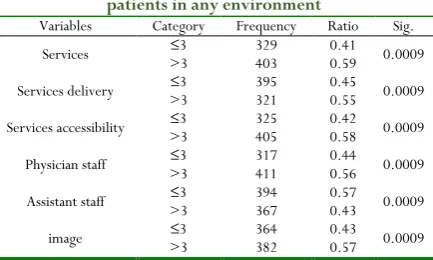
family physician plan checked out through binominal test with cut point 3. In this test, proportion of people with equal or less than 3 points (dissatisfaction) compares with those more than 3 points (satisfaction). If the significant amount is less than 0.05, the hypothesis of equality of the ratio of these two category, declined and according to the ratio of the acquisition, it is determined whether the satisfaction of patients has been achieved or not (table 1).
Table 1: Binominal test for review of satisfaction ratio patients in any environment
Variables Category Frequency Ratio Sig. Services >3 ≤3 329 403 0.41 0.59 0.0009
Services delivery >3 ≤3 395 321 0.45 0.55 0.0009
Services accessibility >3 ≤3 325 405 0.42 0.58 0.0009
Physician staff >3 ≤3 317 411 0.44 0.56 0.0009
Assistant staff >3 ≤3 394 367 0.57 0.43 0.0009
image >3 ≤3 364 382 0.43 0.57 0.0009
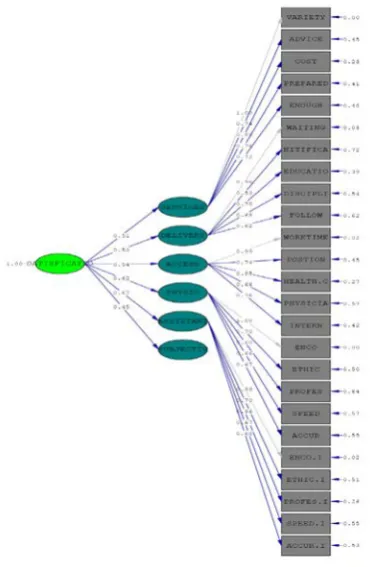
Figure 1: Original research model in the mode of standard coefficients
Table 2: Results of explaining the factors affecting patients ' satisfaction of family physician based on factor analysis
Variable Standard factor loading coefficient T R2 Result
Services 0.51 14.07 0.23 significant Services delivery 0.50 12.68 0.21 significant Services accessibility 0.54 14.28 0.24 significant Physician staff 0.62 17.09 0.33 significant Assistant staff 0.67 20.82 0.50 significant Image 0.45 10.39 0.14 significant
According to table 2, standard factor loading coefficient and t value of services variable equals 0.51 and 14.07 (larger than 1.96), respectively. Also for services delivery equals 0.50 and 12.68 (larger than 1.96), services accessibility equals 0.54 and 14.28 (larger than 1.96), physician staff equals 0.62 and 17.09 (larger than 1.96), assistant staff equals 0.67 and 20.82 (larger than 1.96) and finally, image equals 0.45 and 10.39 (larger than 1.96). Thus, from the perspective of patients, all mentioned factors have a significant effect on patients` satisfaction. In a comparison between the factors explaining patients` satisfaction from family physician plan, that one has a much larger standard coefficient is more effective, so the assistant staff and physician staff were factors in the first and second priority.
As shown in figure 1 from patients` viewpoint, «services variety» and «adequacy of services» with standard factor loading 1.00 and 0.72, play the most and the least role in services explaining, respectively. «Waiting time management» and «how accurate information» with standard factor loading 0.96 and 0.55, play the most and the least role in services delivery explaining, respectively. «Adequate spent time for work» and «accessibility to assistant staff» with standard factor loading 1.00 and 0.65, play
the most and the least role in services accessibility explaining, respectively. «How to deal with » and «professional knowledge» with standard factor loading 1.00 and 0.64, play the most and the least role in physician staff explaining, respectively. «How to deal with » and «speed to do» with standard factor loading 0.99 and 0.64, play the most and the least role in assistant staff explaining, respectively. «Welfare equipment» and «staff appearance» with standard factor loading 0.98 and 0.72, play the most and the least role in image explaining, respectively. Finally, review of model adequacy showed that 𝑐𝑐ℎ𝑖𝑖2 and df equals to 880.99 and 269,
respectively. So 𝑐𝑐ℎ𝑖𝑖𝑑𝑑𝑑𝑑2 equals to 3.27 that is an acceptable value. All of other fitness indicators such as RMSEA (0.069), NNFI
(0.82), NFI (0.84), AGFI (0.71), IFI (0.88) and RMR (0.09) are acceptable, too.
Discussion
The present study assessed the factors defining patients` satisfaction from the implementation of the urban family physician plan in Babol County. The results showed that patients ' satisfaction was achieved in all cases such as services, services delivery, services accessibility, physician staff and image except assistant staff. Systematic review of Moosazadeh and colleagues showed that the healthcare recipients evaluated the family physician plan from aspects such as accessibility, how to deal with, preparation, services continuity, timeliness, knowledge and skills, payment, and paramedical services between 0% to 87% [17]. Research of Al Odhayani and khawaja showed that the
patients, usually express their satisfaction through factors such as complaints, physicians performance and quality of services they received [18]. Conceicao and colleagues found that some factors
such as services accessibility, services efficiency, effectiveness, continuity of care, adequacy of time spent for counseling, services timeliness, and relationship between patient and doctor in of time spent for counseling, timeliness of service and the relationship between physician and patient are very important in patients` satisfaction [19].
This study showed that patients are satisfied from family physician services. «Services variety» and «services adequacy» play the most and the least role in services explanation from patients` viewpoint. Ebrahimipour and colleagues` study showed that all patients in their survey satisfied from family physician [20]
and aligned with this research. Fallahi and colleagues` research showed that more than half of participants in the study satisfied from family physician plan [21]. Kersine and Ropret from Slovenia
reported that the most of patients participated in research, satisfied from family physician services [22].
The present study showed that «Waiting time management» and «how accurate information» play the most and the least role in services delivery explaining, respectively. Nasrollapour and colleagues showed that therapeutic and health services delivery led to patients` satisfaction in northern Iran [23]. Azizi and
study of Ebrahimipour and colleagues showed that the most patients are consent from family physician services but they have not satisfaction from how accurate information in treatment process [20]. Nemati and colleagues showed that more than half of
patients satisfied from family physician services [25]. Mohammadi
and Shoghli showed that the ability to correct and on time provision of services had an important effect on patients` satisfaction [26]. A study in the United States showed that
reduction in the waiting time and the quality of medical care had the highest effect on patients ' satisfaction [27] that aligned with
present study.
The present study showed that patients satisfied from services accessibility. «Adequate hours for work» and «accessibility to assistant» play the most and the least role in services accessibility explaining, respectively. In this case, Alibabaei and colleagues showed that there is a high satisfaction among patients from services accessibility [28]. Farzadi and colleagues believed that free
delivery and accessibility of family physician services led to patients` satisfaction and reduction in services accessibility led to dissatisfaction [29]. Nemati and colleagues showed that how to
healthcare accessibility of patients has a significant effect on patient satisfaction. On the other hand, the lowest amount of patients` satisfaction related to assistant staff accessibility and therapeutic personnel [25]. In a study of Van Dermal and
colleagues in the United Kingdom, it is determined that the patients ' satisfaction relate to various factors such as adequacy of time spent for counseling and treatment and access to related services [30].
Present study showed that the patients satisfied from physicians. «How to deal with» and «professional knowledge» plays the most and the least role in physician staff explaining. Nemati and colleagues showed that more than half of patients satisfied from family physician [25]. Ebrahimipour and colleagues mentioned that
the highest patient satisfaction with physician communication dimension related to physicians` confidant and reliability towards confidential documents of patients` medical information and the lowest satisfaction related to the patient's participation in therapeutic process [20]. Geneau and colleagues showed that a
successful relationship between physician and patient is one of the basic features in medical activities and family affairs. In addition, the most effective relationship between physician and patient achieve when physician completely perceive the cause of dissatisfaction and complaint of patient and diagnose them well
[31].
Present study showed that patients do not have the consent from assistant staff whereas «How to deal with » and «professional knowledge» plays the most and the least role in physician staff explaining, respectively. Kalroozi and colleagues concluded that patients` highest dissatisfaction from nurses related to the lack of sufficient time allocated for giving information about the program and the therapeutic process. Whereas talk with nurses and get further information can reduce patients` anxiety and give them more comfortable feeling [32]. Zahiri and Taheri found that
personnel`s professional skills and respect to the patients` believes can increase their satisfaction [33]. Based on the original
paper in Sweden in the field of burn patients` satisfaction, it found that mean scores given to the relationship quality of nurses with patients is significantly higher than other criteria [34].
Mrayyan and colleagues found a significant relationship between patients` overall satisfaction of hospital services with satisfaction from nursing and residency services [35].
Present study showed that the patients have consent from image created by the family physician and the respective team. «Welfare equipment» and «staff appearance» play the most and the least role in image explaining, respectively. Finally, review of model adequacy showed that chi2 and df equals to 880.99 and
269, respectively. In this regard, Doaei and colleagues concluded that the nurses ' communication skills have the most effect in patients` perception and creation of a favorable image of hospital
[36]. Seidi and colleagues indicated that the condition of the
physical space might become a good foundation to close to the therapeutic standards and patients ' satisfaction [37]. Omidvari and
colleagues showed that welfare facilities are effective in attracting patient satisfaction [38]. The study of Odhayani and Khawaja
showed that the lowest patients` satisfaction related to the facilities of study in the waiting room [18] that do not align with
present study. According to the results of research proposed that more studies done on the causative factors influencing patient satisfaction of family physician services until more unknown items identified and use to increase patient satisfaction.
Acknowledgement
This study has been fulfilled through research design (project code: 1493) with financial support from Mazandaran medical sciences university. Therefore, research authors sincerely appreciate and acknowledge from research deputy of Mazandaran medical sciences university and all physicians and nurses that help to do this research.
References
1. Abedi G, Rahmani, Z., Abedini, E., Rostami, F. Surveying the impact of services marmeting mix components (7Ps) on patients` disposition toward the public & private hospital of Sari city. Journal of Hospital. 2013;13(4):9.
2. R. N. A comparison of patient satisfaction with medical care - nursing and the public in selected hospitals Amol. Journal of Urmia Nursing and Midwifery Faculty 2014;9(3):8.
3. Karimi I SA, Anbari Z. A comparative study on equity in access to health services in developed countries and designing a model for Iran. Journal of Arak University of Medical Sciences. 2010;12(4):13.
5. Health Do. Ministry of Health and Medical Education. Family medicine and Referral System in Islamic Republic of Iran. 2007.
6. Sabahi-Bigdeli M MS, Jedi TS, Momeni O, Navabi FS. Identify and ranking factors affecting on quality of family physician program services by using the Kano model in Kashan -2009 Knowledge & Health Journal 2010; 5:1. 7. Al-Abri R A-BA. Patient Satisfaction Survey as a Tool
Towards Quality Improvement. Oman Med J. 2014;29(1):5.
8. Al Yousif N HH, Mhakluf MMED. Health Care Services utilization and satisfaction among elderly in Dubai, UAE and some Associated Determinants. Middle East Journal of Age and Ageing. 2014;11(3):9.
9. Adamu H OM. Patient Satisfaction with Services at a General Outpatient Clinic of a Tertiary Hospital in Nigeria. British Journal of Medicine & Medical Research. 2014;4(11):22.
10. Galhotra A SS, Gupta S, Goel NK. A cross-sectional study on patient satisfaction toward services received at rural health center, Chandigarh, North India. Ann Trop Med Public Health. 2013; 6:5.
11. Abedi Gh, Azimehr L, Rostami F, Mohammadi S. Applying a model of patient's right in the state hospital, Sari, Iran. International Journal of Collaborative Research on Internal Medicine and Public Health. 2012; 4:103-110.
12. Albalushi RM SM, Kolahilnt AA. Client’s Satisfaction with Primary Health Care in Muscat. J Prev Med. 2012;3(10):5. 13. Abedi G, Ebadattalab I, Rostami F. Analyzing Quality Gap of Nursing Services in the Selective Academic Hospitals. International Journal of Collaborative Research on Internal Medicine and Public Health.2012;7(10):1809–15. 14. Motlagh ME, Nasrollahpour Shirvani, D., Ashrafian Amiri,
H., Kabir, M.J., Shabestani Monfared, A., Moudi, S., Nahvijui, A. Health team members` satisfaction from family physicians` performance in medical sciences universities of North provinces of Iran. Bimonthly Journal of Urmia Nursing and Midwifery Faculty. 2011;9(3):8.
15. Shukla AK YV, Kastury N. Doctor-Patient
Communication: An Important but Often Ignored Aspect in Clinical Medicine. JIACM. 2010;11(3):4.
16. Levinson W LC, Epstein RM. Developing physician communication skills for patient-centered care. Health Aff (Millwood). 2010;29(7):9.
17. Moosazadeh M, Abedi, Ghasem, Farshidi, Fereshteh, Naghibi, Seyed Abolhasan, Rostami, Farideh, Afsharimoghaddam, Amin. Satisfaction Rate of Service Recipients and Providers of Rural Family Physician Program in Iran: A systematic Review and Meta-analysis. J Mazandaran Univ Med Sci. 2015;25(131):16.
18. Al Odhayani A, Khawaja, Rajab Ali Patient’s Satisfaction: Insight into Access to Service, Interpersonal Communication and Quality of Care Issues. Middle East Journal of Family Medicine. 2014;12(8):7.
19. Conceicao C CA, Craveiro I, Blaise P, Van Leberghe W, ferrinho P. Managing the performance of family physicians in Portuguese national health system. Human Resources for health development Journal 2000; 4:10.
20. Ebrahimipour H, Vejdani, M., Vafaee-najar, A.,
Nejatzadegan, Z., Amini, AR., Vejdani, M., Nezamdoust, F. Patients Satisfaction from Family Physicians in Health Centers Affiliated with Sabzevar University of Medical Sciences with EUROPEP -2012. The Journal of Yazd Health Faculty. 2014;13(6):10.
21. Fallahi A, Nemat Shahrbabaki, Babak, Hashemian, Masoomeh Assessment of client satisfaction with family physician and its relationship with physician demographic variables in health care centers of Jiroft County. Medical Sciences Journal of Zanco. 2015:12.
22. J. K. An evaluation of patient satisfactionwith family practice care in Slovenia. Int J Qual Health Care 2000;12(2):5.
23. Nasrollahpour shirvani D AAH, Kabir MJ, Shabestani Monfared A. To evaluate the quality of family physician program in Northern Provinces of Iran. Reported Research project of Babol University of Medical Sciences. 2009. 24. Azizi J KJM, Hojat M. Assessment of darab county
villagers’ satisfaction with family doctor functions from different aspects. Journal of Fasa University of Medical Sciences. 2012;2(3):6.
25. Nemati F, Mohammadnejad, E., Tabatabaei, A., Ehsani, S.R., Sajjadi, A., Hajiesmaeilpoor, A. Satisfaction rate of hospitalized patients in teaching hospitals with presented services. Journal of Medical Ethics. 2014;7(28):22. 26. Mohammadi A SA. Quality of primary health care in health
centers and homes in the city of Zanjan. Journal of Zanjan University of Medical Sciences. 2008;26(65):10.
27. Boudreaux ED dAS, Wood K, Jones GN. Predictors of emergency department patient satisfaction: stability over 17 months. Academic emergency medicine. 2004;11(1):8. 28. Alibabaei R, Sadeghi, A., Vahidi, R. GH., Akaberi, A.
Determination of Quality of Services Provided by Family Physician Team from Recipients' Perspective in Ajabshir City. Journal of Health and Hygiene. 2014;5(2):12. 29. Farzadi F, Maftoon, F., Aeinparast, A., Azin, SA.,
Omidvari, S., Jahangiri, K., Sedighi, Z., Ebadi, M., Montazeri, A., Vahdaninia, MS. People`s satisfaction from health- therapeutic services and effective factors: Health from Iran`s people viewpoint. Payesh. 2011;10(3):8. 30. Van Dermal M DS, Diarra S. North- South exchange and
professional development: experience from Mali and France. family practice. 2007; 24:6.
31. Geneau R LP, Pineault R, Paul A. Primary care practice a la carte among GPs: using organizational diversity to increase job satisfaction. Published by oxford university Press. 2007;24(2):7.
health centers in Tehran 2008-2009. Journal of Army Nursing faculty of Islamic Republic of Iran. 2010;10(2):6. 33. Zahiri R TM. Satisfaction of the clients to rural and urban
health centres under the cover of the University of Markazi Medical Sciences and health services. Faculty of Health magazine and Health Research Institute. 2010; 8:12. 34. Wikehult B KM, Willebrand M. Patient satisfaction with
burn care 1-6 years after injury. Burns. 2008;34(6):8. 35. Mrayyan M. Jordanian nurses’ job satisfaction, patients’
satisfaction and quality of nursing care. Int Nurse Rev. 2006; 53:7.
36. Doaei H SM, Ahmadzadeh S. Effect of Customers’ Perception from Human Capital on Image of Customers
about Hospital. Health Information Management. 2013;9(7):12.
37. Seidi M, Heidary, Akram, Khorramy-Rad, Ashraf,
Ahmary-Tehran, Hoda Comparative Study of Patient Satisfaction, Physical Space and Medical Equipment between Governmental and Private Hospitals. Iran Journal of Nursing. 2009;22(59):9.