GSJ: Volume 7, Issue 9, September 2019, Online: ISSN 2320-9186
www.globalscientificjournal.com
THE IMPACT OF TEAM TEACHING ON ACADEMIC PERFORMANCE OF
LEARN-ERS IN LINEAR PROGRAMMING: A Case of Grade Eleven Pupils at Ndola Girls’
National Technical School.
Enock Chali Chibwe1* Helena Nayar Kumar2
1. Ndola Girls’ National Technical School, P.O. Box 71301, Ndola, Zambia
2. School of Mathematics and Natural Sciences, Copperbelt University,Jambo Drive, Kitwe Copperbelt Province 44370, Zambia
* E-mail of the corresponding author: [email protected]
This paper is part of the first author’s masters thesis supervised by the second author.
Abstract
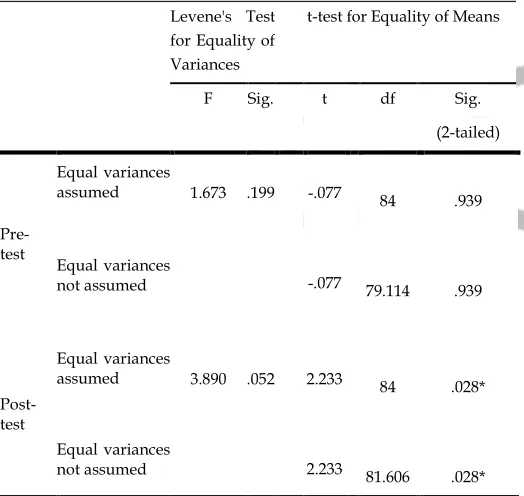
This paper investigated the impact of team teaching on the academic performance of learners in linear programming among the grade 11 pupils at Ndola Girls’ National Technical School using a pre – test post – test quasi-experimental re-search design. The study population was purposively drawn from 200 grade 11 pupils. Random selection of participants into groups was not possible as classes were already established by the school. Nevertheless, the two intact classes were randomly selected out of three using simple random sampling procedures. Thereafter, the two randomly selected intact classes were randomly assigned with the status of being an experimental group and a control group by tossing a coin. The participants in the experimental group (n = 44) were team taught by three teachers while those in the control group (n = 43) were taught by a single teacher. Data collection instruments included a self – constructed achievement test con-sisting of linear programming questions of the Examinations Council of Zambia Ordinary Level, and a questionnaire which collected data pertaining to learners’ perception towards team teaching of the experimental group. The research questions were answered using the mean, standard deviation and the percentages, while the research hypothesis was tested using the independent group t – test. Results of the study showed that there was no significant difference between the pre – test mean scores of the experimental and the control group [p = 0.939 (two tailed) > 0.05]. However, the findings did not only reveal that there was a statistically significant difference in the academic achievement of pupils in linear pro-gramming between the post – test mean scores of the two classes [p = 0.028 (two tailed) < 0.05] but also showed that the majority questionnaire respondents expressed preference for team teaching over the traditional teaching method. It was concluded, therefore, that the significant difference in learner achievement was attributed to different teaching formats.
Key words: Academic performance, linear programming, team teaching; traditional (conventional) teaching.
1 BACKGROUND
TO
THE
STUDY
The study was intended to establish the impact of team teach-ing on the academic performance of Grade Eleven learners at Ndola Girls’ National Technical School in a Mathematics topic known linear programming.
1.1 The values of learning Mathematics
Mathematics is remarkably perceived to hold a central place in the school curriculum globally, thereby being a compulsory subject (Mwape and Musonda, 2014). This is because it plays a profound role in the development and improvement of an individual learner’s intellectual and cultural competences (Yasoda, 2009; CDC, 2013). It is also a bedrock and an indis-pensible tool for modern scientific and technological ad-vancement (CDC, 2013; Kafata and Mbetwa, 2016). Mathemat-ics is pursued both for a variety of practical purposes in real life situations as well as in other fields of basic and applied sciences such as business, natural sciences, politics, sports, medicine, engineering to mention but a few (CDC, 2013; Munawar, 2014; Mwape and Musonda, 2014; Project 2061 Chapter 2). Thus, Mathematics enhances the learners’ unde r-standing of the world around and prepares them for further education.
Nonetheless, the performance of learners in the subject during the national examinations in many countries has consistently remained below average (KNEC, 2008; Mwape and Musonda, 2014; ECZ, 2016). Several Examinations Council of Zambia (ECZ) General Performance Analysis Reports have highlight-ed that linear programming is one of the topics in which learners have continued to underperform during the national examinations at Ordinary Mathematics Level (ECZ, 2012; ECZ 2014; ECZ, 2015; ECZ, 2016).
1.2 Linear Programming
Linear programming is one of the main applications of Math-ematics used in business and social sciences. Linear pro-gramming is obviously made up of two words; linear and programming. The term linear indicates that the relationships between the dependent variable y and independent variable x arising from the conditions are presented by straight lines (Catherine, 2008). That is, the relationships are of the form y = ax + b, where a and b are constants. In the context of this piece of work, the word programming entails that decisions are systematically arrived at (Steven, 2007).
Alexander (2011) defined linear programming as a mathemat-ical technique for finding optimal solutions to real world problems that can be expressed using linear equations and inequalities. It is called ‘programming’ because the goal of the calculations helps one choose a ‘program’ of action. A linear program consists of a set of variables, a linear objective func-tion indicating the contribufunc-tion of each variable to the desired outcome, and a set of linear constraints describing the limits on the values of the variables. Catherine (2008) noted that the function of linear programming is to either maximise or min-imise a linear function, subject to certain conditions repre-sented by linear inequalities. As such, the ‘solution’ to a linear program is a set of values for the problem variables that
re-sults in the best - the largest or the smallest - value of the objective function and yet is consistent with all the constraints (Steven, 2007; Catherine, 2008; Alexander, 2011). Simply put, linear programming is a mathematical approach to allocate scarce resources to competing activities in an optimal manner, when the problem can be expressed using a linear objective function and linear inequality constraints. Problems of this nature arise most often in fields such as production planning, distribution of goods, economics and construction among others (Catherine, 2008).
The development of linear programming has been a major innovation in decision making under conditions of uncertain-ty (Catherine, 2008). Historically, development in linear pro-gramming is driven by its applications in economics and management. It stems from the invention of the Simplex method by G. B. Dantzig in 1947during the Second World War, out of the necessity of solving military logistic problems and it remains one of the most used mathematical techniques in today’s modern societies (Catherine, 2008; Geraldo, 2015). Hence, linear programming enables learners to become real-world problem solvers (CDC, 2013). Despite this, it is evi-denced that learners hardly perform well in linear program-ming related problems during national examinations (ECZ 2014; ECZ, 2015; ECZ, 2016).
1.3 General causes of learner underperformance
Among numerous factors that have been cited as general causes of poor academic performance in Mathematics are lack of relevant pedagogical and subject content competence in teachers (Zakaria et al, 2012; George, 2016). These negatively affect the manner in which teaching and learning activities are structured and implemented during lessons by teachers, lead-ing to poor academic performance by learners. In fact, it has been observed that the learning outcomes of any education programme are quite often a reflection of what goes on in a classroom in form of teaching and learning (Osuala, et al, 2015; Madhuri and Meghna, 2016). This may justify why so many learners with different learning abilities have been fail-ing over the years at Ordinary Level Mathematics to apply linear programming concepts, especially when it comes to questions involving formulation of mathematical models and interpretation of the solution (ECZ, 2016). Definitely, this calls for new innovative pedagogical interventions, one of which is team teaching (Folker et al, 2009; Madhuri and Meghna, 2016). Since teaching is a learned and a learning profession (Ministry of Education, 1996: 15), team teaching provides formal mech-anisms for teacher collaboration with a view to improve the quality of instructions by enriching their individual relevant pedagogical and content competence (Sheanoka and Jay, 2012).
1.4 Team Teaching
Team Teaching has contextually been described differently by different scholars and it has, in practice, numerous different formats (Osuala et al, 2015). Consequently, Carpenter et al
GSJ© 2019
(2007) suggested that team teaching was not easily defined. On the general level, team teaching is a method of coordinat-ed classroom instruction involving two or more qualificoordinat-ed coordinat- ed-ucators working together in order to guide an individual learner or a group of learners toward achieving a set of learn-ing outcomes (Suman, 2014; Madhuri and Meghna, 2016). It involves a group of teachers working together in terms of planning, conducting and evaluating the learning activities for the same group of learners (Osuala et al, 2015). In addition, Carpenter et al (2007) and Hanusch et al (2009) noted various grades of team teaching, ranging from teachers dividing up lecture blocks between or among them (the serial approach) to teachers continually planning, presenting, and evaluating lectures together (the collaborative approach).
Team teaching is sometimes referred to as co – teaching, co – enrolment, collaborative teaching or cooperative teaching (Carpenter et al, 2007; Hanusch et al, 2009). As a matter of his-torical interest, the concept of team teaching emerged around 1950. According to Madhuri and Meghna (2014), Harvard University was the first institution to initiate an internship plan in 1955 under which five teacher trainers were required to serve simultaneously under the supervision of an experi-enced teacher. The second landmark in team teaching is the project in Lexington (1957 - 1964), which was influenced by insights gained in the Harvard programme. From the United States of America, it got transferred to England around 1965 and it reached its peak in most parts of the western world in the 1970s.
The concept of team teaching is not new in Zambia as it has been effective in traditional and informal ways since time immemorial. For instance, the concept has been effective in preparing someone for marriage as well as disciplining of children in the Zambian traditional set up among others. The researcher was of the view that team teaching also occurs within and outside schools when teachers talk often about their professional work. However, the concept is relatively new in the Zambian Education System as it was reportedly formally introduced as ‘part of teacher education reforms of 1998’ (Mbulo, 2015: 1).
To date, many scholars have advocated the use of team teach-ing as a method of instruction delivery in institutions of learn-ing, based on the assumption that it can lead to an overall improvement in the academic performance of learners as well as professional growth of teachers (Partridge & Hallam, 2005; Madhuri and Meghna, 2014; Osuala et al, 2015).
1.5 Problem Statement
Ordinary Level Mathematics Examinations Council of Zambia (ECZ) Chief Examiners’ Reports have for many years consi st-ently highlighted that linear programming is one of the topics in which candidates usually perform unsatisfactorily during national examinations (ECZ 2013; ECZ 2016). It has also been stressed that it is one of the topics mostly shunned by candi-dates and that even the majority of a few who attempt to an-swer the examination questions involving linear
program-ming fail to score maximum allocated marks. Challenges gen-erally faced in linear programming involve finding the ine-qualities representing a given region, shading the wanted or unwanted, using the search line to determine the maximum and minimum values, and applying knowledge of linear pro-gramming in real life situations.
The same can be said about the academic performance of learners in linear programming at Ndola Girls’ National Technical School. It is one of the most unpopular topics among the learners. Analysis of especially mock examination results for the past three years has indicated that very few pupils choose to tackle linear programming questions espe-cially if the question is in Paper Two (4024/2) Section B. The trend is similar in Mathematics Paper One (4024/1), where learners are supposed to attempt all the questions. Learners usually leave blank spaces on linear programming related problems.
The continued underperformance of pupils in linear pro-gramming may not only impact negatively on the academic future of the individual learners but also of the nation as well. This is because linear programming, according to Catherine (2008) and Geraldo (2015), has remained one of the most used mathematical techniques in today’s modern societies and r e-lates so well with other topics such as Statistics and Probabil-ity, among others. It is widely applied in business and entre-preneurship, economics, management and construction to mention but a few. Thus, possessing sufficient knowledge in linear programming is likely to enable one become real – world problem solver. As enshrined in the Zambia’s Vision 2030, the country needs citizens who are competent enough to allocate available scarce resources to competing activities in an optimal manner which is the underlying principle of linear programming.
Lack of relevant pedagogical and content competence among teachers has been cited as the general cause of pupils’ poor performance in linear programming. As a result, among sev-eral new pedagogical interventions, team teaching has been identified. However, despite the team teaching concept being formally in practice for about the last four decades, there is relatively scant empirical written evidence on its results con-cerning its impact on learner performance in linear program-ming (Carpenter et al, 2007; Mbulo, 2015). In addition, a com-prehensive review of the available empirical studies on the impact of team teaching on the academic achievement of learners hardly confirms its proponents or opponents (Carpenter et al, 2007). Therefore, there is little well docu-mented information, if any, to verify if team teaching can im-prove the academic performance of learners in linear pro-gramming. The current piece of work would, thus, help to establish the effect of team teaching on the academic perfor-mance of learners in linear programming.
ventions such as introduction of remedial lessons and the
en-hancement of Continuing Professional Development (CPD) activities at departmental level have been implemented. However, these remedies have not yielded the desired results as the problem of poor performance in linear programming still remains a challenge. Thus, the current research study would attempt to specifically address poor academic perfor-mance in linear programming.
1.6 Rationale
The seemingly growing general public concerns and criticism over the quality of teaching in Mathematics in Zambia (ECZ, 2016) stress the need for teachers to be innovative in their methods of teaching. As a result, this study would provide an understanding of one of such innovative teaching strategies (team teaching) with the view to improve the practice of teachers for enhanced academic achievements of learners. Several scholars have amply underscored the existence of a symbiotic relationship between teaching and learning; as the result, teachers must take teaching very seriously, if at all they have the interests of their pupils at heart (Folker et al, 2009). That is, the modes of teaching adopted by teachers and the quality of instruction given to the learners have a significant influence on the way learners learn or the way learners go about learning. This implies that the challenges learners face in learning that impedes their academic achievement may be addressed by the teachers adopting a variety of innovative teaching strategies. There is a general perception among many researchers that team teaching is one of such innovative teaching methods (Ibegbu, 2010; Osuala et al, 2015). Neverthe-less, the impact of team teaching may be explained on the basis of comparative achievement of learners in a team-taught class and the traditionally (conventional) taught class
1.7 Significance of the Study
The study is significant because it may help practising teach-ers of mathematics in schools improve the quality of their teaching approach as team teaching may prove to be one of the effective teaching strategies. It may also help the Educa-tional Standards Officers and teacher educators to ensure that teacher education standards are improved. Additionally, the study may help School Administrators at any level to estab-lish teams of teachers to solve problems concerning learners experiencing difficulties in school and discuss academic standards and create positive relationships with parents. Fur-thermore, policy makers may use the findings of the study to come up with more appropriate policies for the betterment of the education system in the country which may lead to the improvement of the Zambian economy. For research purpose, the study will add to existing academic literature on team teaching.
1.8 Limitations of the study
The results of this research work were limited by its reliance on a single case study. As suggested by Tichapondwa (2013), a case research study is a very useful tool of investigating
phenomena in their natural settings. He, however, cautioned that a single case design, such as the current one, was limited by its inherent challenges in generalising the research results statistically.
It must be pointed out that, although the results of this study might not be generalised, the case study presented in this pa-per provides valuable empirical data on team teaching and the data collected might be fully representative of the position of the desired respondents.
1.9 Scope of the Study
This research study was restricted to the following:
1. Grade eleven pupils of 2017 at Ndola Girls’ National Technical School only.
2. The team of only four teachers of Mathematics at Ndola Girls’ National Technical School.
3. Only one Mathematics topic (Linear Programming). 1.10 Research Objectives
The following were the main and specific research objectives, respectively:
1.10.1 Main Objective
To determine whether there are differences in the academic performance of learners in linear programming taught by team teaching and those taught with the traditional (conven-tional) method.
1.10.2 Specific Objectives
1. To evaluate the difference between the pre – test mean performance scores of the team taught and the conven-tionally (tradiconven-tionally) taught group of grade eleven pu-pils at Ndola Girls’ National Technical School in linear programming.
2. To compare and contrast the post – test mean perfor-mance scores of the team taught and the conventionally (traditionally) taught group of grade eleven pupils at Ndola Girls’ National Technical School in linear pro-gramming.
3. To determine the difference between the pre – test and post – test performance scores of the team taught and the conventionally (traditionally) taught group of grade elev-en pupils at Ndola Girls’ National Technical School in linear programming.
4. To find out the perceptions of the team taught class to-wards team teaching at Ndola Girls’ National Technical School.
1.11 Research Questions
In line with the main and specific research objectives, the fol-lowing were the main and specific research questions respec-tively:
1.11.1 Main Research Question
What is the impact of team teaching on academic
perfor-GSJ© 2019
mance of grade eleven learners at Ndola Girls’ National Technical School in linear programming?
1.11.2 Specific Research Questions
In achieving the aforementioned specific objectives, four questions were posed for the study and they were as outlined below:
1. What is the difference between the pre – test mean per-formance scores of the team taught and the conventional-ly (traditionalconventional-ly) taught group of grade eleven pupils at Ndola Girls’ National Technical School in linear pr o-gramming?
2. What is the difference between the post – test mean per-formance scores of the team taught and the conventional-ly (traditionalconventional-ly) taught group of grade eleven pupils at Ndola Girls’ National Technical School in linear pr o-gramming?
3. What is the difference between the pre – test and post – test performance scores of the team taught and the con-ventionally (traditionally) taught group of grade eleven pupils at Ndola Girls’ National Technical School in linear programming?
4. What are the perceptions of the grade eleven learners in the team taught class towards team teaching at Ndola Girls’ Technical School?
1.12 Hypotheses
In order to find out the impact of team teaching on the aca-demic performance of learners in this study, the following research and null hypotheses were framed:
Research Hypothesis (H1): There is a statistical difference in the academic performance of learners in linear programming between team taught class and traditionally taught class at Ndola Girls’ National Technical School.
Null Hypothesis (Ho): There is no statistical difference in the academic performance of learners in linear programming be-tween team taught class and traditionally taught class at Ndo-la Girls’ National Technical School.
1.13 Operational Definitions
The definition of terms is of great importance in understand-ing any research study. Therefore, the terms below are de-fined according to the meaning assigned to them in the con-text of this study.
1. Team teaching: team teaching may be said to operate where at least two teachers cooperate, deliberately and methodically, in planning, presentation and evaluation of the teaching and learning process. As a result, individual teachers sacrifice some of their autonomy, pool their re-sources and – a vital feature of team teaching – accepts joint responsibility for the teaching of groups of students (Madhuri and Meghna, 2016).
2. Performance: this refers to the achievement in a stand-ardized series of education tests at school, college or
uni-versity. In this study, the performance of the grade eleven pupils at Ndola Girls’ National Technical School in linear programming was measured using a Mathematics test which was developed by the researcher in consultation with the teachers who participated in this study, and an expert in setting Examinations Council of Zambia Ordi-nary Level Mathematics.
3. Grade Eleven Pupils: In this study, grade eleven pupils are the 11th graders at Ndola Girls’ National Technical
School during the 2017 academic year. According to the Zambian Education System, the 11th grade is considered
as the 11th standard of the school system which includes
learners who are approximately aged 17.
2.0 LITERATURE REVIEW
2.1 Constructivists Learning Theory
This study was based on the constructivist learning theory. This is because constructivist learning theory is about how people learn and it contends that the only effective type of classroom instruction is that which leads to cognitive devel-opment of learners for improved academic performance (Mcleod, 2018). Derived from the work of developmental psy-chologists, constructivist theorists emphasize how individuals actively construct knowledge and understanding. The theory fundamentally argues that all knowledge is constructed from a base of prior knowledge. It says that people construct their own understanding and knowledge of the world through experiencing things and reflecting on those experiences. It presumes that prior knowledge and experiences play a signif-icant role in learning and form the basis for subsequent ac-tions (Eggen & Kauchak, 2013). The constructivist learning theories of Jean Piaget and Lev Vygotsky underpin the con-cept of classroom team teaching as an effective means to im-prove academic performance of learners.
Piaget’s Cognitive constructivist theory of learning describes ‘how learners develop cognitive abilities [and] proposes that humans cannot be given information, in which they immedi-ately understand and use. Instead, learners must construct their own knowledge. They build their knowledge through experience,’ (Clark, 2010: 01). This theory informed this study that effective learning of linear programming is supposed to be an active process and should provide authentic real life learning experiences.
For instance, one simple way of making learners actively in-volved in learning linear programming is by creating demo-cratic, interactive learner – centred experiences where pupils are able to learn from their own errors. The teacher’s role in this situation is not only to observe and assess but to also en-gage with the learners while they are completing tasks, going round marking and posing questions to the learners for the promotion of higher order reasoning. Prompt feedbacks and feed forwards by using errors observed to inform the learners of progress made to their understanding and changes in ideas is of great significance in a Piagetian classroom. This may be a challenge in an overcrowded learning environment where teacher – pupil ratio is too high. Apart from just attending to each learner’s challenges while in class, it is much easier for the team of teachers to give learners a lot of hand – on, mind – on after class activities such as projects, homework and other linear programming assignment as the team may manage to provide prompt feedbacks. These meaningful interactions and engagement, among others, would enable the learners use the adaptation processes for their enhanced academic perfor-mance in linear programming.
Piaget’s learning theory promotes the provision of authentic real life linear programming tasks which would help them connect mathematics to real life experiences. In the formation of mathematical model, the team teachers are better placed to provide much richer tasks that are relevant to the learners’ daily experience because of diverse level of expertise and ex-perience. It was the view of the researcher that this kind of learning environment is suitable for improved teaching and learning of linear programming.
Similarly, a social constructivist view of learning envisions teamwork as a new way of not only learning for pupils but also as a new way of planning and teaching for teachers (Roya et al, 2015). Vygotsky’s social constructivist theory provides the theoretical structure for considering teamwork as a social process in which knowledge is constructed from discussion among group members (Mbulo, 2015; Roya et al, 2015). Social constructivist theory proposes that cognitive develop-ment is strongly linked to the input from others. It emphasiz-es the social contexts of learning, and that knowledge is mu-tually built and constructed. Barbara and Tambora (2008:03) observed that ‘Vygotsky’s theory suggests that we learn first through person – to – person interactions and then individu-ally through internalization process that leads to deep under-standing.’ The emphasis here is that interaction and dialogue with others are the catalysts for knowledge acquisition. Mcleod (2018) hinted that Vygotsky believed that social inter-action is an indispensable aspect in the process of knowledge building and construction as he argued that knowledge grows directly out of the interaction and dialogue with others. It was Vygotsky’s understanding that knowledge is first constructed in a social environment and then appropriated by individuals (Eggen & Kauchak, 2013). The Zone of Proximal Development concept precisely underscores the continual interplay be-tween the individual learners and others. It forecasts learning
as a socially constructed experience involving more capable people guiding those less capable to understand ideas beyond their developmental level. According to Mbulo (2015), Vygot-sky believed that it is through social interaction and working together that a modern-day society can be developed.
Suffice to say that even though the Zone of Proximal Devel-opment is usually discussed in relationship to the develop-ment of children, the concept has been extended to include associations among adults and it is applicable to the team of teachers jointly working together in terms of planning, con-ducting and evaluating the learning activities for the same group of learners with a view to improving their academic performance. This kind of collaboration among teachers pro-vides valuable opportunities for individual teachers especial-ly those who may be lacking in terms of pedagogy and subject content to learn to improve their quality of classroom instruc-tion which in turn is likely to impact positively on the aca-demic performance of learners (Walsh, 2012). This is because Vygotsky theorised that man learns through social engage-ments with others and that knowledge construction is a so-cial, collaborative venture (Mbulo, 2015). The underlying as-sumption about team teaching is that meaning and knowledge are co – constructed.
There several other similarity between the two theories of cognitive development. For example, Piaget believed that development occurs because the child is an active learner. In other words, the child must actively organize new infor-mation with existing inforinfor-mation to obtain a state of equilib-rium (Eggen & Kauchak, 2013). Vygotsky agreed with Piaget on this account, theorizing that children are actively involved in the learning and development process because they pro-vide feedback to the adult or teacher about their level of un-derstanding (Eggen & Kauchak, 2013). Both believed that na-ture does play a significant role in what individuals learn. It is from this background that they were both considered, in this current study, critical to the improvement of academic per-formance of learners in linear programming.
2.2 Approaches to Team Teaching
Apart from the description of team teaching given in the pre-vious chapter, it is important that team teachers have a clear understanding of various team teaching approaches before selecting one to use in a classroom as there are lots of options when it comes to this teaching approach. Several team teach-ing models have been identified by some scholars. These models can take place in a number of forms and settings (Sheanoka and Jay, 2012). Since no one particular model is meant to be used exclusively, Mbulo (2012) stressed on the importance of understanding each of the models. In order to give an insight into the variations, in relations to other schol-ars, approaches presented by Friend and Cook (2006), are ex-plained along with views of other authors. According to Friend and Cook (2006), there are six models of team teaching namely, one teach/ one observe, one teach/ one drift (assist), parallel teaching, station teaching, alternative teaching and
GSJ© 2019
teaming.
2.2.1 One teach/ One Observe
This model occurs when one teacher leads instruction to the whole group of learners while the other gathers detailed ob-servation regarding learners’ academic progress, behavior or social skills, and/or responsiveness to teacher directions (Mbulo, 2012). Notable observations are also made as far as the presentation of the lesson is concerned and how the lesson can be improved upon. These gathered data form the basis for instructional decision-making during the evaluation phase of the lesson.
One of the merits of this model is that ‘teachers are not only able to provide students with their distinct skills in order to meet their individual needs, but they are also better able to make true observations of student engagement during the learning process’ (Sheanoka and Jay, 2012:9). Nonetheless, this team teaching approach may not offer learners an oppor-tunity to receive additional instructional support during les-son time.
2.2.2 One teach/ One Drift (One Teach/One Assist)
According to Friend and Cook (2006), this model is much like the one teach/one observe, but it involves the other teacher more. When one teacher is teaching, the other teacher is drift-ing throughout the classroom, checkdrift-ing for understanddrift-ing or providing one-to-one instruction to learners who clearly need it. Several advantages of this model have been noted. Some of them are that one teach/ one drift enables re – teaching op-portunities, formative assessment of learners, individualized attention to learners and provides immediate feedback to both learners and teachers. On the other side, some of the disadvantages of the model under discussion are that it en-courages unequal teaching roles, individual learners may feel victimized, it may distract some learners and it may cause learner dependency on supporting teachers.
2.2.3 Parallel Teaching
In parallel teaching, the classroom is split, either randomly or with intention, and each teacher takes half and simultaneous teach of the same information but in different ways. This low-ers the pupil - teacher ratio and allows for more hands-on learning, peer interaction, and verbal responses (Sheanoka and Jay, 2012). It must be noted that the splitting of the class-room with intention may be based on the skills levels, behav-iour, learning styles, assessment results and multiple intelli-gences (Friend and Cook, 2006). With this scenario, both teachers must plan adequately and know the content suffi-ciently in order to ensure that both groups of learners receive quality instruction at the same time. Sheanoka and Jay (2012) sounded cautions of parallel teaching which are to ensure that both teachers have the same content mastery, cover the same material and specificity, pace themselves, and manage the noise level among the groups.
2.2.4 Station teaching
When using this model, teachers divide responsibility for in-structional content. They divide the class into groups (ran-domly or intentionally) with each group working on a differ-ent activity that contributes to the attainmdiffer-ent of one or more learning outcomes for all students (Friend and Cook, 2006). Teachers collaborate in setting up learning stations in the classroom that students rotate through, with teacher assis-tance. In most cases, a third station is added for the learners to work independently or with a partner.
Some of the merits of station teaching are that both teachers share planning and content delivery, it lowers pupil – teacher ratio, individualized attention, it is appropriate for all grade levels and it equals the teacher status within the classroom because both teachers are taking on an active role. However, the cautions of station teaching are pacing, noise, can take a number of days for completion, and greater differentiation (Sheanoka and Jay, 2012).
2.2.5 Alternative Teaching (Differentiated Lesson)
In alternative teaching, the classroom is split like in parallel teaching, except in this model one teacher is working with learners who need help with more remedial material in order to catch up. One teacher teaches a small group of learners while the other teaches the whole class (Friend and Cook, 2006). Sheanoka and Jay (2012:11) noted that this model may be highly effective for learners with special educational needs because it includes remediation, review, skills assessment, extra practice, pre and re – teaching, reduction of group size and extended activities. The major concerns of this model are that it may risk stigmatizing the learners and likely to create a feeling of isolation from class. This is because same learners for the groups are likely to be selected and used repeatedly for remediation. However, this may be reduced by carefully varying the groups.
2.2.6 Teaming
This model allows both teachers involved in team teaching to share equally in planning and delivering all components of academic instruction. Both teachers teach a large group by standing side-by-side. This approach is usually referred to as having ‘one brain in two bodies’ while others call it ‘tag team teaching’ (Friend and Cook, 2006).
The majority of teachers consider this to be the most satisfy-ing way to team teach. This is because both teachers are seen as knowledgeable and it models collaboration and coopera-tion. It accommodates different points of view, change of fo-cus and immediate clarification during the lesson (Friend and Cook, 2006). However, it requires mutual commitment, trust, collaboration and compatibility as it could be distracting to both the teachers and learners.
were planning together. During lesson presentation, only one
teacher was leading the instruction while the other two were taking back seats, making notable observations. However, at the point of marking the learners’ work given during the le s-son, the observing teachers were assisting the teacher leading the instruction in marking. As a team, they were going round the class marking the work, offering guidance and clarifica-tion to the learners who might be facing challenges. The three teachers were also jointly marking any after-class assignment given to the pupils. This worked harmoniously well because all the teachers were involved in the adequate preparation of each and every lesson. When evaluating the lesson, the obser-vations made were providing the basis for discussion espe-cially in areas where the team would have done better. Such feedbacks were taken into positive consideration when the team were preparing for the following lesson to be presented by another teacher from the group as the teachers were taking turns.
This blended model was adopted because the jointly working together of the teachers involved in the planning, conducting and evaluation of lessons created a richer learning environ-ment not only for the pupils but also for the teachers. It is im-portant to note that the improvement of teachers’ pedagogical and subject content pedigree derived from this approach is essential to the enhancement of the academic performance of learners in linear programming. Furthermore, this approach provided an opportunity for learners to receive additional help during marking sessions from observing teachers. It also minimised distraction as additional help was mainly given to the learners when individual work was being marked by the team of teachers. This helped to offer individualized attention to learners during linear programming lessons.
2.5 Review of similar studies
As far as the researcher’s knowledge is concerned, there was relatively very limited literature on the impact of team teach-ing on the academic performance of learners in linear pro-gramming. The researcher, however, was of the view that the review of related studies conducted even on other topics or subjects would sufficiently be representative of the obtaining situations in different countries including Zambia.
2.5.1 Related studies conducted outside Africa
Carpenter (2007) conducted a study entitled ‘Testing the eff i-cacy of team teaching.’ The research was carried out to exa m-ine the differences between team taught and the traditionally taught sections of a graduate introductory course on research and statistics in terms of student perceptions and achieve-ment at the University of Colorado, United States of America. Factor analysis of survey data confirmed three factors: com-fort with research and statistics, the relationship of research and statistics to work and interest in research and statistics. Pre – test and post – test survey and achievement data were gathered, as were demographic data. T – test and MANCOVA results indicated no significant achievement differences based on teaching format, a significant pre – post difference for all
students on one factor (comfort with research and statistics), and only one significant difference (relationship between work and research and statistics) based on learning environ-ment.
The findings of the study indicated to have posted a signifi-cant pre – post tests for all the students on the research and statistics factor but no significant achievement differences based on the teaching format. Statistics and linear program-ming are both spatial in nature. For instance, they both deal with the coordinates system and involve graphical represen-tation of mathematical models of the given information. Car-penter’s (2007) study would be of great significance to justify or dispute the findings of the current study.
The mixed findings of this study might have been affected by two notable observations made by the researcher. These were non-randomization of the participants and sample character-istics’ differences. Non – randomization of participants would make external validity tenuous (Tichapondwa, 2013). On the other hand, the team-taught class mainly consisted of pre – services teachers while the traditionally taught class involved substantively more working professionals who were pursuing further studies. The implication of this is that the mixed re-sults may not be attributed to the teaching formats but the characteristics difference of the control and experimental groups.
From this background, the current study had taken into con-sideration the importance of addressing the non – randomiza-tion as well as the sample characteristic difference. This study used the quasi – experimental of non – randomized equiva-lent groups. This is because the subjects who participated in the research could not be manipulated, by randomization, as in pure experimental study. The nature of the study did not allow for random assigning of subjects for treatment as the learners learned in intact classes and according to their School Master Timetables. As for the sample characteristics differ-ence, all the subjects were grade eleven (11) pupils of Ndola Girls’ National Technical School and only the two classes i n-volved in this study learnt linear programming during this study. Based on the findings of this study, although was con-ducted at a different learning environment, Carpenter’s study could be adapted well in Zambian secondary schools.
Another related study reviewed was conducted by Munawar (2014). The study explored the impact of team teaching on the eighth (8th) grade learners’ achievement in mathematics. The experiment was conducted using Four – Group on 118 learn-ers in a public sector school in Punjab province, Pakistan. Two volunteer teachers of mathematics from the sampled school and the second researcher participated in the experiment. Two data collection instruments were used. The Mathematics Achievement Test (MAT) was used to measure the academic achievement of learners in their ability of conceptual under-standing, procedural knowledge and problem solving. MAT items were selected from the Mathematics item pool of Na-tional EducaNa-tional Assessment System (NEAS) Pakistan. The second data collection item in this study was a Collaborative
GSJ© 2019
Mathematics Teaching Module (CMTM). This included two content strands, Algebra and Geometry. The duration of the study was thirty-seven (37) days. Data were analyzed using descriptive and inferential statistics such as mean, independ-ent sample t – test and 2 X 2 ANOVA. The results of the ex-periment revealed that team teaching had significant positive impact on learners’ conceptual learning achievement particu-larly on their conceptual understanding and procedural knowledge. Munawar (2014) suggested that further studies be conducted on female students of public schools.
The focus areas of the study conducted by Munawar (2014) were the impact of team teaching on the conceptual under-standing and procedural knowledge of learners in Algebra and Geometry. The importance of conceptual understanding and procedural knowledge to this study cannot be over-looked. This is because, according to Micheal et al (2011), mathematical competency of learners in linear programming rests on developing the understanding of concepts and the knowledge of procedure. Furthermore, both conceptual un-derstanding and procedural knowledge have been hypothe-sized to contribute to learners’ ability to solve a range of pro b-lems flexibly and effectively.
One of the major characteristics of linear programming is that it is procedural. For instance, the graphical method for solv-ing linear programmsolv-ing problems in two unknowns is as fol-lows (1) define the variables, (2) define the constraints, (3) define the objective function (the function which is to be max-imised or minmax-imised), (4) graph the feasible region, (5) find the coordinates of the corner points, and (6)substitute the co-ordinates of the corner points into the objective function to see which gives the optimal value (Nkhata, et al, 2008). This pro-cedural knowledge is measured usually by giving learners unfamiliar linear programming problems with a feature that requires either recognition that the known procedure is rele-vant or minimal adaptation of known procedure to accom-modate the unfamiliar feature of the problem (Micheal et al, 2011).Therefore, the research findings of Munawar (2014) would be of great importance in interpreting the findings of the current study.
The study was carried out in a public school, which situated in rural area of Sargodha and suggested for a further research studies be conducted on female learners from a public school. The school type and location were similar to the suggested one as the current study was conducted at a government girls’ school situated in Ndola rural. In terms of theory, Munawar’s (2014) study employed Solomon’s Four – group experimental research design. This has been suggested as a better way of minimizing the threats, subject characteristics, instrumental decay, testing, maturation, and regression, to internal validity of the experiment. It allows the two groups involved in the study to benefit from the two methods under investigation (Tichapondwa, 2013).
Scholars such as Madhuri and Meghna (2014) also carried out a similar study in Rewari district of Haryana, India. It was
undertaken in order to find out the effectiveness of team teaching on the academic performance of 9th graders in Sci-ence. Out of 50 learners, 12 were selected purposively in the experimental group and 12 were in the control group. These groups were classified according on the basis of intelligence and socio – economic status. The research method used to conduct the study was a pre – test post – test quasi experi-mental design in which two groups were administered the pre – test by self – constructed achievement in Science. The experimental group was taught by a team of two Science teachers and control group by traditional method. The same post – test was administrated on both the groups and a t – value was equated. Results of the study revealed that there was a significant positive effect of team teaching on the aca-demic achievement of students in Science. One of the high-lighted educational implications of the study was that team teaching strategy could be applicable to other subjects like Mathematics.
The findings of the study would be applied to the current study. Firstly, as observed by two scholars, the quality of teaching linear programming is mainly dependent on the competency of the teacher of mathematics as well as the teaching method used by the teacher to teach the learners as it is a case with Science. Secondly, the relationship between Mathematics and Science has been studied since ancient time and is characterized by strong interdependence. The project 2061 pointed out that Science and mathematics both tries to discover general patterns and relationships of concepts, and that Mathematics is an essential tool for Science. For instance, Mathematics is a chief language in which scientific laws are expressed. As such, the fundamental building block of Science is the algebraic equation. This is because Science uses the lin-ear equations as a mathematical model to define the relation-ship between one or more factors in real world. Linear equa-tions and inequalities are used to represent many different types of scientific processes, and often employ a variety of mathematical functions to create suitable models. Graphical representations also play an important role in both Science and linear programming.
Among the studies reviewed, it was only Madhuri and Me-ghna (2014) who used two tests to classify the two groups. One of the two instruments is socio – economic status scale which was constructed and standardized by Rajbir and Ra-dhey Shayam. This test was developed in Hindi and English for both rural and urban people. The other instrument was a group general ability test which was constructed by Jalota and was published in 1972.
view that the intelligence tests are inadequate in forecasting non-test and non-academic activities but are still used to make those presumptions about the individuals’ academic abilities (Cohen & Swerdlik, 2010). Others feel the tests can be less accurate when it comes to long term predictions because many of them are not controlled or monitored. Some also feel that individuals are capable to have more cognitive abilities than the intelligence testing measures (Schmitt et al, 2009). According to the American Psychological Association (APA), there are several large gaps of research and contradictions when it comes to intelligence testing related to socioeconomic status. Tests are consistently being revamped and altered to fit various needs across multiple avenues (American Psycho-logical Association, 2004). In addition, there has been also several research projects that assert practical intelligence based on socioeconomic status that show different scores among different statuses (Schmitt et al, 2009).
Based on the review of related literature on use of intelligence and socio – economic status scale in research, the researcher decided against incorporating them in his study. Although in the study under review, the scholars used two different tests to ascertain the socio – economic status and intellectual capac-ities of learners respectively, the current researcher is of the view that the results emanating from the general mental abil-ity instrument might be affected by time lapse. Whether the intelligence tests of similar scales may be used in Zambian secondary schools without adaptation is yet to be confirmed and depends on the perception of the investigator.
Lastly but not the least, a theoretical and empirical investiga-tion of teacher collaborainvestiga-tion for school improvement and stu-dent achievement in public elementary schools was reviewed. This study was conducted by Yvonne and Roger (2007) in the United States of America. The background of the study was that a review of literature demonstrated that schools were frequently called upon to improve by developing high levels of teacher collaboration. At the same time, there was paucity of research investigating the extent to which teachers’ collab o-rative school improvement practices were related to learner achievement. The purpose of the study was to review the lit-erature and empirically test the relationships between a theo-retically driven measure of teacher collaboration for school improvement and learner achievement. The survey data were drawn from a sample of 47 elementary schools from a large urban school district located in the Midwestern, with 452 teachers and 2536 fourth grade pupils. Hierarchical Linear Modeling (HLM) was the primary analytic method. Survey data were collected approximately 2 months before students took the mandatory state assessments, which provided the scale scores that served as dependent variables in this re-search. HLM accounted for the nested nature of the data (students nested in schools).
This was a naturistic study that employed secondary data analysis. There was no intervention, treatment, or randomiza-tion. Naturally occurring differences in teachers’ levels of co
l-laboration were measured, and statistical controls for school social context were employed. At the student level, the study employed controls for children’s social and academic bac k-grounds. In terms of data collection and analysis, data were obtained from teachers and students in the sampled schools. Teacher data were obtained via a survey assessing teacher collaboration. Student data were collected from the central administrative office of the school district for all students who attended sampled schools during the year in which the teach-ers were surveyed.
The results of HLM analyses indicated that fourth – grade pupils had higher achievement in mathematics and reading when they attended schools characterized by higher levels of teacher collaboration for school improvement. The two schol-ars suggested that the results of the study provided prelimi-nary support for effort to improve student achievement by providing teachers with opportunities to collaborate on issues related to instruction and professional development. They also recommended for more research on the effects of differ-ent types of collaborative practices using more represdiffer-entative samples.
This study provided a naturalistic approach to investigating the effect of team teaching on the academic performance of learners. It substantiated the perception that team teaching is not only good for teacher professional development, but it is also positively related to the improvement of learner perfor-mance. However, the design, costs and effect of this kind of approach questioned its applicability in the Zambian second-ary school set up.
2.5.2 Related research studies conducted in Africa
All of the similar studies reviewed here were from Nigeria as the availability of such studies in other African countries was scanty. This confirmed the sporadic application of team teach-ing not only in Zambia but also other African countries. Nkechi et al (2015) examined the effects of Team Teaching Approach (TTA) on the achievement of students in English language comprehension and how the effects vary across gender. The study employed non-randomized pretest-posttest control group quasi experimental design. Intact classes were therefore assigned to the experimental and control groups. The population consisted of 5,171 senior secondary two stu-dents made up of 2,407 males and 2,764 females in Onitsha education zone of Anambra State, Nigeria. A total of 189 stu-dents (97 males and 92 females) randomly selected from four public secondary schools constituted the sample. Two of the schools selected were used as experimental group while the other two were used as the control group. Two research ques-tions and three hypotheses guided the study. Data were col-lected with one comprehension passage. Data generated were analyzed using mean and standard deviation to answer the research questions while Analysis of Covariance (ANCOVA) was used to test the hypotheses. The major findings showed that the students taught English language comprehension with team teaching approach achieved significantly higher
GSJ© 2019
than those of the control group who were taught with single teacher teaching approach. The female students in TTA group achieved significantly higher than their male counterparts. Based on the finding of this study, it was recommended that team teaching approach should be adopted as a more effec-tive approach to teaching and learning English language comprehension in public secondary schools to enhance aca-demic achievement of students in the subject.
The findings of this study were relevant to the current study. The scholars emphasized that comprehension in English is a skill of extracting meanings from print. It means understand-ing the writer’s meaning or the information intended to be conveyed. Understanding takes place when the writers and the readers make the same meaning. According to the study, team teaching impacted positively on the comprehension skills of learners such as setting purpose, reading with ques-tions, identifying main ideas, identifying details, perceiving relationships between ideas, using background knowledge and reading critically. These were essential skills as well in understanding linear programming.
Linear programming cannot be learned without being under-stood. It has its own vocabulary which includes mathematical symbols. One of the most challenging areas of Linear pro-gramming tasks for learners during national examinations was the construction of a mathematical model (ECZ, 2016). This was because Mathematical models, according to Nkhata et al (2008), consist of a system of linear inequalities which are formed from word problems. Therefore, precise formation of mathematical models requires a skill of extracting meanings from the word problem to construct the intended system of linear inequalities. That is why Nkhata et al (2008:2) empha-sized that ‘learners should pay special attention to the expre s-sions especially which change the sense of the inequalities.’ Such expressions are ‘at least’, ‘at most’, ‘not less than’, ‘no more than’ to mention but a few. The failure by learners to develop the much needed comprehension skills in linear pro-gramming would entail that the improvement of the academ-ic performance of learners in linear programming remains a challenge.
Clement et al (2017) conducted a study to investigate the Ef-fect of Collaborative Instructional Strategy (CIS) on Students’ Achievement in Secondary School Chemistry in Benue State, Nigeria. Its design was quasi-experimental. Its population was 6,400 Senior Secondary School students of 301 govern-ment-approved co-educational schools in Benue State. The study sample was 216 students of 4 schools within the three Educational Zones of the state. Purposive sampling was used to select 4 out of 6 schools. Random sampling, by tossing a coin, was used to sample 2 schools for experimental group while the remaining 2 served as control group. 2 research questions and 2 hypotheses guided the study. Instrument for data collection was Chemistry Achievement Test. It was de-veloped and validated by 3experts; its reliability coefficient, Kuder-Richardson, K-R 21, was 0.85. Means were used to an-swer research questions while ANCOVA was used to test
hypotheses. Students of CIS had significantly greater mean achievement score than those of Traditional Lecture Method (TLM) and there was no significant difference in mean achievement scores due to gender of CIS. Thus, CIS was more effective in enhancing students’ achievement than TLM, and was gender friendly. It was recommended that trainings be organized on use of CIS for Secondary School Chemistry teachers.
This was the only study which was carried out at senior sec-ondary school level. The study applied well to the current study as both Chemistry and Mathematics belong to the same family of Science, Technology, Engineering and Mathematics (STEM) subjects. In the Zambian context, Chemistry syllabus offers a context in which mathematical skills and techniques may be applied in a relevant and more meaningful way. CDC (2013) stated that study of Chemistry through this syllabus therefore strengthens the applications of Mathematics. Some of the mathematics techniques where learners need to be competent are; plotting graphs from given data, interpreting charts and graphs and recognizing and using the relationship between length, surface area and volume and their units on metric scales. These areas of mathematical competence are derived linear programming. Thus, the applicability of the study conducted by Clement et al (2017) to this current study was out of question.
Akpan et al (2010) investigated the effects of team teaching on students’ performance in Introductory Technology is seco nd-ary schools in Akwa Ibom State of Nigeria. This was a pre – test post – test non randomized quasi experimental design. A total of 361 Junior Secondary School students were randomly selected from four schools. Data for this study was collected using Introductory Technology Achievement Test (ITAT) which was developed and validated by the researchers. Stu-dents who were taught Introductory Technology through team teaching approach performed significantly better than the students who were taught by a single instructor. It was recommended, therefore, that every reasonable effort should be made to encourage teachers to adopt team teaching ap-proach in the process of teaching Introductory Technology. Introductory Technology was an integrated subject. It com-prised of Woodwork, Metalwork, Technical Drawing, Auto Mechanics, and Electricity and electronics. Majority teachers who were teaching this subject then had specialized in one or two component areas of the subjects. Therefore, team teaching was used as a means of bring about an intellectual exchange of ideas necessary to sharpen their expertise with the view to improving learner performance. From the study under dis-cussion, the findings revealed that team teaching had positive impact on the academic performance of learners.
vancement of technology. For instance, linear programming has contributed greatly to the design of computer hardware and programming techniques. These include simulations whose design features and operating conditions can be varied as a means of finding optimum designs. Another example of an engineering application of linear programming would be maximizing profit in a factory that manufactures a number of different products from the same raw material using the same resources. The constraints would be decided by the amounts of raw materials available. Thus, Introductory Technology and linear programming are related in that they form the ba-sis for further training in technology. They also stimulate cre-ativity and spatial awareness in learner
s.
From the foregoing analysis, it was clear that research on ef-fects of team teaching on the academic performance learners was generally emerging and inconclusive especially in Africa and more particularly in Zambian education system. The re-searcher had little information, if any, concerning a related research studies which were carried out in Zambia. Therefore, it was also imperative then that the study was conducted seeking to bring light on the impact of team teaching on the academic performance of learners in linear programming at Ndola Girls’ National Technical School.
3.0 RESEARCH METHOD
This study adopted a mixed research approach in order to strengthen its findings. Though quantitative in nature, two different data collection techniques were used to get comple-menting information on the same research objective as each technique could collect unique information (Tichapondwa, 2013).
3.1 Description of study area
The research study was conducted at Ndola Girls’ National Technical Secondary School. The school was opened on 2nd June 2008 and is the first girls’ national technical school in Zambia. It is situated in Ndola urban area, about 20 Kilome-tres from Ndola District Business Centre, about 6 kilomeKilome-tres away from the Ndola – Kitwe Dual Carriage Way. It shares boundary with Dag Hammarskjold Memorial Site and about 800 metres away from the site where the Copperbelt Interna-tional Airport is being constructed.
Ndola Girls’ National Technical School is fully Government of the Republic of Zambia (GRZ) funded school and it draws pupils across the country. It was principally established as a response to the inherent need to close the gender imbalance by equipping the girl child with necessary knowledge to pur-sue Natural Sciences and technical courses at tertiary level. The School Motto is ‘Academic excellence through creative skills.’ The Mission Statement of the school is anchored on creating a conducive academic environment through con-structive skills, enabling the girl child invent, discover and acquire life sustaining skills.
Statistically, in 2017 the school staffing level at the time of the
study stood at 45. That is, 19 female teachers and 26 male teachers. The school had over 40 non-teaching staff, as well. In addition, the school had two streams for Grade Eight (8), three streams for Grade Nine (9), Ten (10) and Twelve (12) respectively, while the Grade Eleven (11) classes had four streams. The school population was approximately 600. Ndo-la Girls’ National Technical School was chosen as a study site because that is where the problem under investigation was identified.
3.2 Study population and participants
The study population was purposively drawn from the grade eleven pupils at Ndola Girls’ National Technical School. This group of individuals had at least one thing in common and was targeted knowing very well that it did not represent the wider population but simply itself (Cohen et al, 2007; Kombo, 2009). Eighty - seven (87) pupils from two Grade 11 classes out of three took part in this study. The class which was tak-ing Additional Mathematics was excluded from the partici-pants as they were assumed by the researcher to be, generally, academically advantaged. This is because it was a streamed class.
3.3 Sampling procedure
The sampling procedure was based on the three grade eleven (11) classes at Ndola Girls’ National Technical School. Ra n-dom selection of subjects into classes (groups) was not possi-ble as classes were already established by the School Admin-istration. However, the two intact classes were randomly se-lected using Simple Random Sampling procedures (Lottery Method) so that the selection of classes depended purely on chance and no personal bias was involved. Thereafter, the two randomly selected intact classes were randomly assigned with the status of being an experimental group and a control group by tossing a coin.
3.4 Access to participants and confidentiality
The study participants were accessed through the School Administration and consent was sought through the school authority since the target population constituted largely learners below the age of 18. The questionnaires were com-pleted with assurances of anonymity and the achievement tests (on which learners did write their names) were not linked to the survey responses. The data collected in this study was used for the intended purpose only and the names of the respondents had been kept anonymous and confiden-tial.
3.5 Data collection instruments
The data collection instruments employed in this study were a mathematics test and a five – point Likert scale question-naire which bore the options and weight as Strongly Agree (SA) – 5, Agree (A) – 4, Not Sure (NS) – 3, Disagree (D) – 2 and Strongly Disagree (SD) – 1 for positively skewed items, but for the negatively skewed items, the reverse was the case. The Mathematics test was developed by the teachers partici-pating in the study in consultation with a trained
Examina-GSJ© 2019