ISSN 2307-4523 (Print & Online)
© Global Society of Scientific Research and Researchers http://ijcjournal.org/
Automatic Plant Detection Using HOG and LBP Features
With SVM
Mohammad Aminul Islam
a*, Md. Sayeed Iftekhar Yousuf
b, M. M. Billah
ca,b,c
Bangladesh Agricultural University, Mymensingh-2202, Bangladesh
a
Email: [email protected]
bEmail: [email protected] cEmail: [email protected]
Abstract
Plants play a vital role in the cycle of nature. Plants are the only organisms which produce food by converting
light energy from the sun. They also help in maintaining oxygen balance on earth by emitting oxygen and
taking carbon dioxide. They have plenty of use in medicine and industry. But plant species are vast in number.
To identify this large number of existing plant species in the world is a tedious and time-consuming task for a
human. Hence, an automatic plant identification tool is very useful even for experienced botanists to identify the
vast number of plants. In this paper, we proposed a technique to identify the plant leaf images. For training and
testing, we used a publicly available dataset called Flavia leaf dataset. Histogram of Oriented Gradients (HOG)
and Local Binary Pattern (LBP) are used to extract features and multiclass Support Vector Machine (SVM) is
applied to classify the leaf images. We observed that the accuracy of HOG+SVM with HOG feature extraction
using cells size of 2 x 2, 4 x 4 and 8 x 8 are 77.5%, 81.25% and 85.31 respectively. The accuracy of LBP+ SVM
is 40.6% and the combination of HOG and LBP based features with SVM achieved 91.25% accuracy. The
experimental results indicate the effectiveness of HOG+LBP with SVM over HOG+SVM and LBP+SVM
techniques.
Keywords: Plant Detection; HOG; LBP; SVM.
1.Introduction
Plants are the most precious part of the life of all the organisms living on the earth. We called earth a green
planet because of the existence of plants. They provide us fresh oxygen to breathe and reduce pollution level by
taking carbon dioxide. Plants produce food by converting light energy from the sun and we depend directly or
indirectly on plants for their supply of food.
---
They also provide shelter for many of the other organism. Fuel like coal, natural gas and gasoline also made
from plants that lived millions of years ago. Plants also a major source of medicine. Hence, a good
understanding of plants is necessary to explore the genetic relationship of the plant. Plants are vast in number.
According to Maarten J. M. and his colleagues [1], all over the world, there are currently described and accepted
the number of plant species is 374,000 of which approximately 308,312 are vascular plants, with 295,383
flowering plants. To identify the plant, people generally use leaf, flower, stem, and fruit and so on. Among
them, plant leaves are of great importance to the botanists as they have discriminant feature. Therefore, it is very
tedious and time-consuming task to identify and recognize this large number of plant species, which is generally
done by a botanist. Therefore an automated plant identification system is necessary to identify the plant species
from the leaf which may be useful for botanist as well as foodstuff and medicine [2] and for species
identification and preservation [3].
A number of techniques have been proposed to identify plants from leaf images. Miao and his colleagues [4]
classified rose based on evidence-theory-based method. Wang and his colleagues [5] and Du and his colleagues
[6] proposed a moving median center hypershpere classifier to identify the leaf images. In another method, Du
and his colleagues [7] proposed a dynamic programming algorithm for leaf shape matching. Im and his
colleagues [8] proposed a method to identify the Maple leaves using the shapes of the leaves. Wang and his
colleagues [9] presented a technique to recognize the plant leaf using shape features. To extract the shape
characterization, they used centroid-contour distance curve and object eccentricity. The eccentricity is used to
rank the leaf images. The problem of the above method is that they only focused on the contour of leaf and
neglect other features such as leaf vein, leaf dent and so on. Zhang B. and Zhang H. [10] proposed a clustering
method to retrieve tobacco leaf images from standard tobacco leaf database based on leaf shape, color, and
texture. But they give lack of representation of domain features of leaves. Wu and his colleagues [11] used
aspect ratio, leaf dent, leaf vein and invariant moment to identify 6 species of plants. In another paper Wu and
his colleagues [12] classified 32 different kinds of plants based on aspect ratio, ratio or perimeter to the diameter
of leaf, and vein features.
In this study, we propose a novel technique to classify the plant based on leaf images. Our main improvements
are on feature extraction. In feature extraction, we used Histogram of Oriented Gradients (HOG) and Local
Binary Pattern (LBP) features. After that, those features are inputted into multiclass Support Vector Machine
(SVM) to classify the plant leaves. We tested our technique on Flavia leaf dataset [12]. Our experiment shows
that HOG+LBP with SVM performed better than individual HOG+SVM or LBP+ SVM method.
We organized the rest of this paper as follows: Section 2 discusses the proposed method, section 3 presents the
result and discussion and section 4 presents the conclusion and further work.
2. Background Study
Most studies use shape, texture, color, venation or mixture of these features to identify the plants. Neto and his
colleagues [33] used shape to identify young soybean, sunflower, redroot pigweed, and velvetleaf plants. They
proposed a leaf shape based plant species recognition system using Moving Median Center (MMC) hypershpere
classifier to classify plants. In their technique, the shape is extracted using geometrical calculation and moment
invariants. Aakif and Khan [13] proposed an algorithm by using geometrical calculation, Fourier descriptors,
and SDF to identify the plants based on their leaves. Cope and Remagnino [14] classified plant leaves from their
margins using Dynamic Time Warping (DTW).
Texture is a major feature to identify the plants. It describes the surface of the leaf. Backes and Bruno [15] used
textural features to classify the plant leaf images. They modeled texture as a surface and multi-scale fractal
dimension is applied over the surface. Cope and his colleagues [16] proposed a method for comparing and
classifying plants based on leaf texture. He used Gabor co-occurrences to extract the textural feature. Rashed
and his colleagues [17] proposed a technique to classify and recognize plants based on textural features. He used
Learning Vector Quantization (LVQ) together with the Radial Basis Function (RBF). Olsen and his colleagues
[18] used rotation and a scale variant Histograms of Oriented Gradients (HOGs) to extract textural features set
to classify the leaf images.
Venation also an important feature to classify the leaf images. Charters and his colleagues [19] proposed a
descriptor called EAGLE combining with SURF features to classify the leaf images. Larse and his colleagues
[20] designed a legume varieties recognition system based on leaf venation. They used Hit or Miss Transform
(UHMT) to segment the vein pattern and LEAF GUI to extract the set of features. Grinblat and his colleagues
[21] used deep learning for plant identification using vein morphological patterns. They used UHMT to extract
the vein patterns and Convolutional Neural Network (CNN) to train these features.
Chaki and his colleagues [22] proposed a technique to identify 31 classes of leaves by using a combination of
texture and shape features. To extract texture features they used Gabor filter and gray level co-occurrence matrix
(GLCM) while the shape of the leaf is extracted by using curvelet transform coefficients with invariant
moments. Mouine and his colleagues [23] used advanced SC, hough, fourier, and edge oriented histogram to
extract the shape and textural features to classify the leaf images. Beghin and his colleagues [24] proposed a
method for plant leaf classification using shape and textural features. They extracted the shape based features
using contour signature and calculated the dissimilarities using Jeffrey-divergence measure. The textural
features are extracted from orientations of edge gradients.
3. Methodology
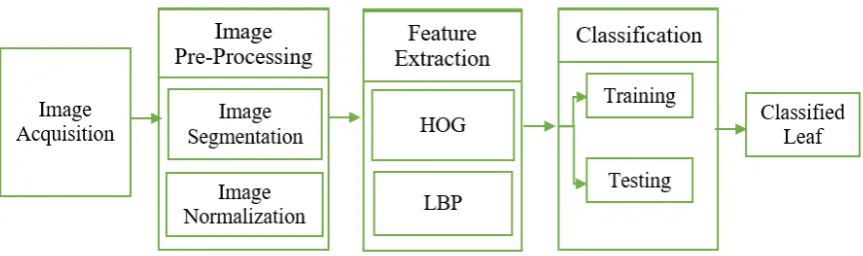
Our proposed technique is shown in Figure 1. It consists of three phases: preprocessing, feature extraction and
classification. In preprocessing, we segmented the leaf from background then we normalized it. Feature
extraction consists of extracting the different features from leaves using HOG and LBP method. These features
become the input vector of the Support Vector Machine (SVM) in the classification stage. SVM classifies the
leaf based on the extracted features. We now discuss all of the steps in detail below.
3.1 Image preprocessing
3.1.1 Image Segmentation
In image segmentation, the input RGB leaf image is first converted into grayscale image using the Equation (1).
gray= 0.2989*R+0.5870*G+0.1140*B (1)
Where, R, G, B correspond to the color of the pixel respectively. After that, we convert the grayscale image into
a binary image by using the global thresholding technique [25]. We used the valley between two peaks as our
threshold value.
Figure 1: Block diagram of our proposed system.
3.1.2 Image Normalization
Image normalization involves rotating a leaf so that its tip at the top, maintaining the angle between the major
axis of the leaf and frame is zero, keeping the centroid of the leaf and frame is same, and maintaining the fixed
frame size of all the sample images regardless of the size of the leaf and resolution of the image [13]. In our
proposed method, we have fixed the frame size of the image to 134*100 pixels and we used the Equation (2) to
rotate the leaf around its centroid.
�𝑥𝑥𝑦𝑦�= �𝑐𝑐𝑐𝑐𝑐𝑐𝑐𝑐𝑐𝑐𝑠𝑠𝑠𝑠𝑐𝑐−𝑐𝑐𝑠𝑠𝑠𝑠𝑐𝑐𝑐𝑐𝑐𝑐𝑐𝑐𝑐𝑐 � �𝑋𝑋𝑌𝑌�+ �𝑡𝑡𝑥𝑥𝑡𝑡 𝑦𝑦�
(2)
Where X, Y represents the original coordinates of the images, θ is the angle between the leaf and frame, tx and
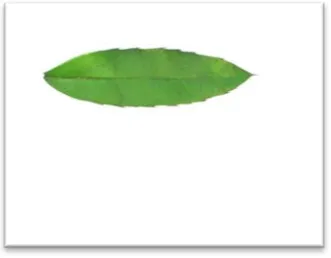
ty are the displacements along the x-axis and y-axis. An example is shown in Figure 2. Figure 2(a) shows the
original image with a size of 1600x1200 pixels and Figure 2(b) shows the normalized image with the size of
100*134 pixels.
3.2 Feature Extraction
In our proposed technique, we used Histogram of Oriented Gradients (HOG) and Local Binary Pattern (LBP)
3.2.1 Histogram of Oriented Gradients (HOG)
One of the popular method of feature extraction is Histogram of Oriented Gradients (HOG) [26]. In this method,
an image is described by a set of local histograms. Then, the occurrences of gradient orientation is accumulated
(a) Originial Image (1600*1200 pixels) (b) Normalized Image (100*134 pixels)
Figure 2: Image Normalization Example.
in a small spatial localized portions of the image referred as cell. The subsequent concatenation of 1-D
histograms produces the features vector. Let the intensity value of the image to be analyzed is L. If the image is
divided into N x N cells of size then the orientation ϴx, y of the gradient in each pixel is calculated by using the
Equation (3) [27].
𝛳𝛳𝑥𝑥,𝑦𝑦= tan−1 𝐿𝐿(𝑥𝑥,𝑦𝑦+1)−𝐿𝐿(𝑥𝑥,𝑦𝑦−1)
𝐿𝐿(𝑥𝑥+1,𝑦𝑦)−𝐿𝐿(𝑥𝑥−1,𝑦𝑦) (3)
The successive orientation𝛳𝛳𝑖𝑖𝑗𝑗, i=1……..N2 belonging to the same cell j are quantized and accumulated into an
M-bins histogram. Then, we ordered all the histograms and accumulated into a unique HOG histograms which
is our HOG features.
3.2.2 Local Binary Pattern (LBP)
One of the simple and efficient method of texture feature extraction is Local Binary Pattern (LBP) introduced by
Ojala and his colleagues [28]. LBP used each pixel as a threshold, then transferred its 3 x 3 neighborhood into
an 8-bit binary code (Figure 3).
Figure 3: LBP Operator
variations in this way is 2P. When in variation, there exist at most 2 times of 0 to 1 or 1 to 0, the binary pattern
is called uniform LBP and is denoted by 𝐿𝐿𝐿𝐿𝐿𝐿(𝑃𝑃,𝑅𝑅)𝑢𝑢2 . The number of uniform pattern in a sampling density P is P2
– P + 2. In our proposed system, we used uniform LBP to extract the feature of leaves.
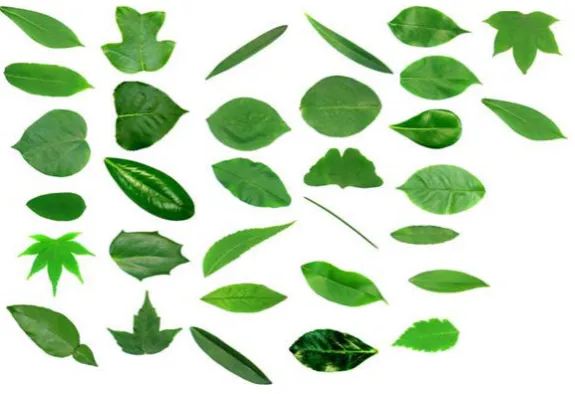
Figure 4: Samples of Flavia leaf dataset.
3.3 Classification
In our proposed method, we used multiclass Support Vector Machine for classification.
3.3.1 Support Vector Machine (SVM)
SVM is a popular classification tool used for pattern recognition and other classification problems [29]. SVM
uses a hyperplane to separate a training sample using the decision function of Equation (4) [30].
𝑓𝑓(𝑥𝑥) =𝑐𝑐𝑠𝑠𝑠𝑠𝑠𝑠 (𝑤𝑤.𝑥𝑥) +𝑏𝑏 (4)
Where w is a weight vector and b is the threshold value. Using the Equation (5), b is minimized to maximize the
margin w ϵ ƒ, which can be expressed as a quadratic optimization problem shown in Equation (6).
𝑦𝑦𝑖𝑖(𝑤𝑤.𝑥𝑥𝑖𝑖) +𝑏𝑏 ≥1 (5)
min𝑤𝑤,𝑏𝑏 12‖𝑤𝑤‖2 (6)
In nonlinearly separable cases an additional stack variable is added with the risk of overfitting (Equation 7).
𝑦𝑦𝑖𝑖(𝑤𝑤.𝑥𝑥𝑖𝑖) +𝑏𝑏 ≥1− ξ𝑖𝑖 (7)
min 𝑤𝑤,𝑏𝑏,ξ 1
2⟦𝑤𝑤⟧2𝑤𝑤+𝐶𝐶 � ξ𝑖𝑖 1
𝑖𝑖=1
(8)
Where C is a constant which determines the trade-off between training error and the complexity term.
A SVM maps a set of training vector into a high dimensional space ƒ via a nonlinear map Ф:𝑅𝑅𝑛𝑛→ƒ and the
condition for perfect classification is shown in Equation (9).
𝑦𝑦𝑖𝑖(𝑤𝑤.Ф(𝑥𝑥𝑖𝑖)) +𝑏𝑏 ≥1− ξ𝑖𝑖 (9)
For each training sample xi, Ф(𝑥𝑥𝑖𝑖)is only substituted.
SVM is a binary classifier which classifies data into two different classes. When the problem of classification
involves more than two classes, as it is in our study of plant identification, multiclass SVM is used. There are
several techniques to deal with multiclass classification. In our method, we used one-vs-one technique [31,32].
In this technique k (k-1) / s classifier is constructed where each classifier is trained on data from two classes. For
training data from the jth classes, we used the Equation (10).
min𝑤𝑤,𝑏𝑏,ξ12�𝑤𝑤𝑖𝑖𝑗𝑗�𝑇𝑇𝑤𝑤𝑖𝑖𝑗𝑗+𝐶𝐶 � ξ 𝑡𝑡 𝑖𝑖𝑗𝑗
𝑡𝑡
(𝑊𝑊𝑠𝑠𝑗𝑗)𝑇𝑇
(10)
4. Result and Discussion
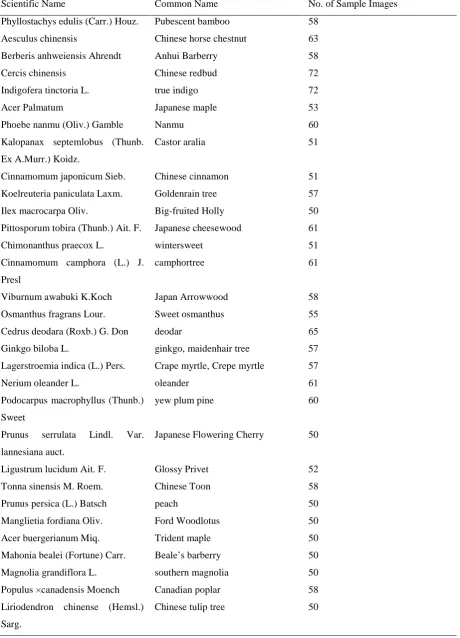
To implement our proposed system we used Flavia leaf dataset. This dataset contains 1907 scans of leaves of 32
species. We used 40 images per species as our training set and 10 images per species as our testing set. Detail
description of Flavia leaf dataset is shown in Table 1 and some leaf images of this flavia dataset is shown in
Figure 4.
The size of our dataset leaf images is 1600 x 1200 pixels. To extract feature using the HOG descriptor we first
resize the images into 134*100 pixels by preserving its aspect ratio. We randomly split the dataset into two sets,
one set is used for training and one set is used for testing. For training and testing, we used 40 and 10 leaf
images for each species respectively.
In our experiment, we used three different cell size: 2x2, 4x4 and 8x8, to extract the HOG descriptors from leaf
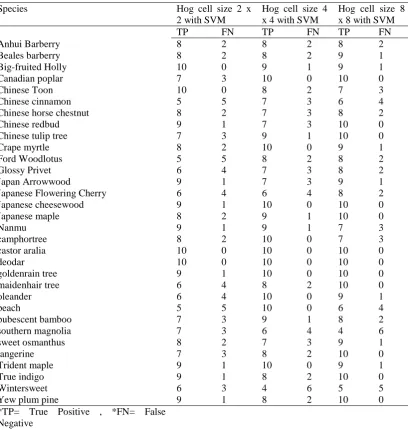
images. Table 2 lists the detail classification result of different HOG descriptor with SVM and the overall
accuracy of this descriptor is shown in Table 3. We observed that for plant detection HOG descriptor with cell
Table 1: Details Description of Flavia Leaf Dataset
Scientific Name Common Name No. of Sample Images
Phyllostachys edulis (Carr.) Houz. Pubescent bamboo 58
Aesculus chinensis Chinese horse chestnut 63
Berberis anhweiensis Ahrendt Anhui Barberry 58
Cercis chinensis Chinese redbud 72
Indigofera tinctoria L. true indigo 72
Acer Palmatum Japanese maple 53
Phoebe nanmu (Oliv.) Gamble Nanmu 60
Kalopanax septemlobus (Thunb.
Ex A.Murr.) Koidz.
Castor aralia 51
Cinnamomum japonicum Sieb. Chinese cinnamon 51
Koelreuteria paniculata Laxm. Goldenrain tree 57
Ilex macrocarpa Oliv. Big-fruited Holly 50
Pittosporum tobira (Thunb.) Ait. F. Japanese cheesewood 61
Chimonanthus praecox L. wintersweet 51
Cinnamomum camphora (L.) J.
Presl
camphortree 61
Viburnum awabuki K.Koch Japan Arrowwood 58
Osmanthus fragrans Lour. Sweet osmanthus 55
Cedrus deodara (Roxb.) G. Don deodar 65
Ginkgo biloba L. ginkgo, maidenhair tree 57
Lagerstroemia indica (L.) Pers. Crape myrtle, Crepe myrtle 57
Nerium oleander L. oleander 61
Podocarpus macrophyllus (Thunb.)
Sweet
yew plum pine 60
Prunus serrulata Lindl. Var.
lannesiana auct.
Japanese Flowering Cherry 50
Ligustrum lucidum Ait. F. Glossy Privet 52
Tonna sinensis M. Roem. Chinese Toon 58
Prunus persica (L.) Batsch peach 50
Manglietia fordiana Oliv. Ford Woodlotus 50
Acer buergerianum Miq. Trident maple 50
Mahonia bealei (Fortune) Carr. Beale’s barberry 50
Magnolia grandiflora L. southern magnolia 50
Populus ×canadensis Moench Canadian poplar 58
Liriodendron chinense (Hemsl.)
Sarg.
Table 2: Classification result of different HOG descriptor with SVM
Species Hog cell size 2 x
2 with SVM
Hog cell size 4 x 4 with SVM
Hog cell size 8 x 8 with SVM
TP FN TP FN TP FN
Anhui Barberry 8 2 8 2 8 2
Beales barberry 8 2 8 2 9 1
Big-fruited Holly 10 0 9 1 9 1
Canadian poplar 7 3 10 0 10 0
Chinese Toon 10 0 8 2 7 3
Chinese cinnamon 5 5 7 3 6 4
Chinese horse chestnut 8 2 7 3 8 2
Chinese redbud 9 1 7 3 10 0
Chinese tulip tree 7 3 9 1 10 0
Crape myrtle 8 2 10 0 9 1
Ford Woodlotus 5 5 8 2 8 2
Glossy Privet 6 4 7 3 8 2
Japan Arrowwood 9 1 7 3 9 1
Japanese Flowering Cherry 6 4 6 4 8 2
Japanese cheesewood 9 1 10 0 10 0
Japanese maple 8 2 9 1 10 0
Nanmu 9 1 9 1 7 3
camphortree 8 2 10 0 7 3
castor aralia 10 0 10 0 10 0
deodar 10 0 10 0 10 0
goldenrain tree 9 1 10 0 10 0
maidenhair tree 6 4 8 2 10 0
oleander 6 4 10 0 9 1
peach 5 5 10 0 6 4
pubescent bamboo 7 3 9 1 8 2
southern magnolia 7 3 6 4 4 6
sweet osmanthus 8 2 7 3 9 1
tangerine 7 3 8 2 10 0
Trident maple 9 1 10 0 9 1
True indigo 9 1 8 2 10 0
Wintersweet 6 3 4 6 5 5
Yew plum pine 9 1 8 2 10 0
*TP= True Positive , *FN= False Negative
Table 2: Classification Accuracy of different HOG descriptor
HOG cell Size Accuracy (%)
2 x 2 77.5%
4 x 4 81.5%
8 x 8 85.3%
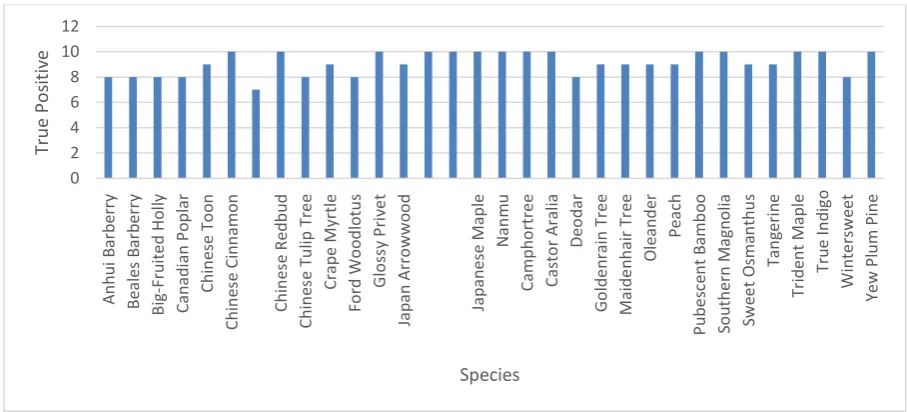
We also extracted LBP features from the leaf images than feed into SVM. Figure 5 shows the result of LBP with
SVM and the accuracy result is 40.6%. Which means LBP features can also contribute to plant leaf contribution.
Classifier. The classification result is shown in Figure 6. We observed that the overall accuracy of plant leaf
detection increase significantly and the accuracy is 91.25%. The experimental result shows the effectiveness of
plant leaf image detection by combining the feature of HOG and LBP with multiclass SVM.
Figure 5: Result of LBP+SVM for plant detection.
Figure 6: Result of HOG+LBP feature with SVM
5. Conclusion
In this paper, we present a novel technique to detect plant leaf images by combining HOG and LBP features and
then classify the leaves using Multiclass Support Vector Machine (SVM). We carried out our experiment on a
publicly available dataset called Flavia Leaf Dataset. We applied different HOG descriptor and found that HOG
descriptor with cell size 8 x 8 performed better than HOG descriptor with cell size 2 x 2 and 4 x 4. Besides we
can see that LBP features with SVM accuracy is 40.6%. Then we combined HOG 8 x 8 cell size descriptor with
LBP features and feed into SVM and the overall detection accuracy is 91.25%. The experimental shows the
References
[1] Christenhusz, Maarten JM, and James W. Byng. “The number of known plants species in the world and
its annual increase”. Phytotaxa 261.3 (2016): 201-217.
[2] J. X. Du, X. F. Wang, and G. J. Zhang. “Leaf shape based plant species recognition”. Applied
mathematics and computation, 185(2):883–893, 2007.
[3] A. Hong, G. Chen, J. Li, Z. Chi, and D. Zhang. “A flower image retrieval method based on roi feature”.
Journal of Zhejiang University-Science A, 5(7):764– 772, 2004.
[4] Z. Miao, M.-H. Gandelin, and B. Yuan. “An oopr-based rose variety recognition system”. Engineering
Applications of Artificial Intelligence, vol. 19, 2006.
[5] X.-F. Wang, J.-X. Du, and G.-J. Zhang. “Recognition of leaf images based on shape features using a
hypersphere classifier”. in Proceedings of International Conference on Intelligent Computing 2005, ser.
LNCS 3644. Springer, 2005.
[6] J.-X. Du, X.-F. Wang, and G.-J. Zhang. “Leaf shape based plant species recognition”. Applied
Mathematics and Computation, vol. 185, 2007.
[7] J.-X. Du, D.-S. Huang, X.-F. Wang, and X. Gu. “Computer-aided plant species identification (capsi)
based on leaf shape matching technique”. Transactions of the Institute of Measurement and Control,
vol. 28, 2006.
[8] C. Im, H. Nishida, T.L. Kunii. “Recognizing plant species by leaf shapes – a case study of the Acer
family”, Proc. Pattern Recog. 2 (1998) 1171–1173.
[9] Wang Z, Chi Z, Feng D, Wang Q. “Leaf Image Retrieval with Shape Features”. Lecture Notes in
Computer Science 1929. In: Laurini R ed. Advances in Visual Information Systems. Berlin:
Spring-Verlag, 477~487.
[10] Zhang B, Zhang H: “Content Based Image Retrieval of Standard Tobacco Leaf Database”. Computer
Engineering and Application.2002.07:203~205.
[11] Q. Wu, C. Zhou, & C. Wang. “Feature Extraction and Automatic Recognition of Plant Leaf Using
Artificial Neural Network”. Avances en Ciencias de la Computacion, pp. 5-12, 2006.
[12] S. G. Wu, F. S. Bao, E. Y Xu, Y-X. Wang, Y-F. Chang, & Q-L. Xiang. “A Leaf Recognition
Algorithm for Plant Classification Using Probabilistic Neural Network”. IEEE 7th Interantional
Symposium on Signal Processing and Information Technology, Cairo, 2007.
(2015) 66–75.
[14] J.S. Cope, P. Remagnino. “Classifying plant leaves from their margins using dynamic time warping”,
in: International Conference on Advanced Concepts for Intelligent Vision Systems, Springer, 2012, pp.
258–267.
[15] A.R. Backes, O.M. Bruno. “Plant leaf identification using multi-scale fractal dimension”, in:
International Conference on Image Analysis and Processing, Springer, 2009, pp. 143–150.
[16] J.S. Cope, P. Remagnino , S. Barman , P. Wilkin . “Plant texture classification using Gabor
co-occurrences”. in: International Symposium on Visual Computing, Springer, 2010, pp. 669–677 .
[17] M. Rashad , B. El-Desouky , M.S. Khawasik . “Plants images classification based on textural features
using combined classifier”. Int. J. Comput. Sci. Inf. Technol. 3 (4) (2011) 93–100.
[18] A. Olsen, S. Han, B. Calvert, P. Ridd, O. Kenny. “In situ leaf classification using histograms of
oriented gradients”, in: International Conference on Digital Image Computing, 2015, pp. 1–8 .
[19] J. Charters, Z. Wang, Z. Chi, A.C. Tsoi, D.D. Feng. “EAGLE: a novel descriptor for identifying plant
species using leaf lamina vascular features”. in: ICME-Work- shop, 2014, pp. 1–6.
[20] M.G. Larese, R. Namías, R.M. Craviotto, M.R. Arango, C. Gallo, P.M. Granitto. “Automatic
classification of legumes using leaf vein image features”, Pattern Recognit. 47 (1) (2014) 158–168.
[21] G.L. Grinblat, L.C. Uzal, M.G. Larese, P.M. Granitto. “Deep learning for plant identification using
vein morphological patterns”. Comput. Electron. Agric. 127 (2016) 418–424.
[22] J. Chaki, R. Parekh, S. Bhattacharya. “Plant leaf recognition using texture and shape features with
neural classifiers”, Pattern Recognit. Lett. 58 (2015) 61–68.
[23] S. Mouine, I. Yahiaoui, A. Verroust-Blondet. “Advanced shape context for plant species identification
using leaf image retrieval”. in: Proceedings of the 2nd ACM International Conference on Multimedia
Retrieval, 2012, p. 49 .
[24] T. Beghin , J.S. Cope , P. Remagnino , S. Barman. “Shape and texture based plant leaf classification”.
in: International Conference on Advanced Concepts for Intelligent Vision Systems, Springer, 2010, pp.
345–353 .
[25] Gitelson, A. A., Kaufman, Y. J., Stark, R., & Rundquist, D. (2002). “Novel algorithm for remote
estimation of vegetation fraction”. Remote Sensing of Environment, 80, 76e87, Elsevier.
[27] Carcagnì, Pierluigi, et al. “Facial expression recognition and histograms of oriented gradients: a
comprehensive study.” SpringerPlus 4.1 (2015): 645.
[28] T. Ojala, M. Pietikäinen, D. Harwood. “A comparative study of texture measures with classification
based on featured distribution”. Pattern Recognition 29 (1) (1996) 51–59.
[29] Sarraf, Saman. “Binary Image Segmentation Using Classification Methods: Support Vector Machines,
Artificial Neural Networks and Kth Nearest Neighbours”. International Journal of Computer (IJC). 24.
56-79.
[30] Camargo, A., and J. S. Smith. “Image pattern classification for the identification of disease causing
agents in plants.” Computers and Electronics in Agriculture 66.2 (2009): 121-125.
[31] Hsu, C.W., Lin, C.J., 2002. “A comparison of methods for Multi-class Support Vector Machines.”
IEEE Transaction on neural networks 13 (2), 415–425.
[32] Angulo, C., Parra, X., Catala, A., 2003. K-SVRC. “A Support Vector Machine for multiclass
classification”. Neurocomputing 55, 57–77.
[33] J.C. Neto , G.E. Meyer , D.D. Jones , A.K. Samal , Plant species identification us- ing elliptic fourier