Int. J. Nanosci. Nanotechnol., Vol. 13, No. 3, Sept. 2017, pp. 203-218
Electrochemical Behavior and Determination
of Phenylephrine at the Multi-Walled Carbon
Nanotubes/ionic Liquid Nanocomposite
Modified Electrode in the Presence of
Acetaminophen
Biuck Habibi*, Zahra Ayazi and Firooz Zalvand
Electroanalytical Chemistry Laboratory, Department of Chemistry, Faculty of Sciences, Azarbaijan Shahid Madani University, Tabriz 53714-161, Iran.
*Corresponding author: [email protected] (Received: 04 September 2016 and Accepted: 07 November 2016)
Abstract
A simple and high sensitive electrochemical method was developed for determination of phenylephrine (PHE) in the presence of acetaminophen (AC) at the carbon-ceramic electrode modified by multi-walled carbon nanotubes/ionic liquid nanocomposite (MWCNTs/IL/CCE). Cyclic voltammetry (CV) and differential pulse voltammetry (DPV) and chronoamperometry methods were used for electrochemical studies and measurements, respectively. The obtained results show that the MWCNTs/IL/CCE exhibited high electrocatalytic activity towards the oxidation of PHE. Under the optimum conditions, the anodic peak current in DPV is linear to the PHE concentration over the ranges of 3×10⁻⁷ M-100×10-6 M with a correlation coefficient of 0.998 and detection limit of 1.7×10⁻⁷ M. DPV was also used for simultaneous determination of PHE and AC in the same conditions. The stability, reproducibility and repeatability of the modified electrode were investigated and obtained relative standard deviations show that the MWCNTs/IL/CCE has excellent stability, reproducibility and repeatability. Finally, the nanocomposite modified electrode was effectively applied for determination of PHE and AC in some real samples without any interference.
Keywords. Multi-walled carbon nanotubes, Ionic liquid, Nanocomposite, Carbon-ceramic electrode, Phenylephrine, Acetaminophen.
1. INRODUCTION
Phenylephrine (PHE) [(R )-2-methylamino-1-(3-hydroxyphenyl) ethanol hydrochloride], is an alpha-adrenergic (sympathomimetic) agent which stimulates alpha-adrenergic receptors, produces pronounced vasoconstriction and decreases the volume of nasal mucosa. PHE is in a class of medications called nasal decongestants which work by reducing swelling of the blood vessels in the nasal passages without stimulating effects on the central nervous system [1]. It is incorporated in a number of pharmaceutical preparations either alone or, more frequently, associated with other
[4]. The necessity to ensure the quality of pharmaceutical polydrugs (PHE and AC), and consequently the safety and efficacy of the final marketed product, and determination of PHE and AC in biological fluids, have led to the development and evaluation of techniques that can reduce the time and cost of analysis. Electrochemical methods, owing to their relatively low cost,
efficiency, high sensitivity, and ease of operation are suitable for simultaneous electrochemical determination of PHE and AC. In spite of publishing many papers about the individual electrochemical determination of the PHE [5-8] and AC [9-13], only one paper reported for the electrochemical simultaneous determination of these drugs, in which a chemically modified electrode based on
nickel phosphate nanoparticles modified carbon paste electrode (Ni-NP/CPE) was employed for the simultaneous determination of paracetamol, phenylephrine hydrochloride and chlorpheniramine maleate in pharmaceutical samples [14]. On the other hand, although there are lots of analytical methods for simultaneous determination of PHE and AC, most researchers have focused on non-electrochemical methods and only a work devoted to electrochemical
simultaneous determination of PHE and AC.
Hence, it is desirable and need more investigations to develop the new and efficient electrochemical methods which are simple, sensitive, selective and less expensive methods for the determination of PHE and AC.
In this work, we report for the first time, the application of multi-walled carbon nanotubes/ionic liquid nanocomposite modified carbon-ceramic electrode (MWCNTs/IL/CCE) for the study of the electrochemical behavior of PHE and simultaneous determination of PHE and AC. Basically, by combining the advantages of (I) CCE, which has high conductivity, relative chemical inertness, wide operational voltage window, good mechanical properties, physical rigidity, amenable chemical or biological modification and stability in various solvents [15], (II) MWCNTs, because of their unique physical and electronic properties, such as high
different electrochemical techniques. But, the main target of this work was to develop an efficient electrochemical sensor for the simultaneous determination of PHE and AC. Theelectrooxidation of AC was also studied at the MWCNTs/IL/CCE and it was shown that the anodic peaks for the electrooxidation of PHE and AC could be well resolved. By this way, the advantages of the MWCNTs and present IL integrate with the favorable electrochemical characteristics of carbon-ceramic electrode and consequently excellent properties such as high electrocatalytic properties, high stability and ease of fabrication are obtained for the preparation of a sensitive and selective electrochemical sensor for the simultaneous determination of PHE and AC and their determination in real samples.
2. EXPERIMENTAL 2.1. Chemicals
MWCNTs with a 95% purity (10-20 nm diameters) and 1μm length were obtained from Nanolab (Brighton, MA 02135). Room temperature ionic liquid [1-ethyl-3-methyl imidazolium tetrafluoroborate (EMI-BF4)],
methyl trimethoxy silane (MTMOS), phenylephrine, acetaminophen and other chemicals were purchased from Merck or Fluka and used without any further purification. Phosphate buffer solutions, 0.1 M of different pH value were prepared from stock solutions of 0.1 M H3PO4, NaH2PO4,
Na2HPO4 and NaOH. Doubly distilled water
was used throughout the experiments. Real samples including acetaminophen-codeine tablets, and exacold tablets were supplied from Kharazmi Pharmaceutical Iran) and Poursina Pharmaceutical (Tehran-Iran) respectively.
2.2. Apparatus
The electrochemical experiments were carried out using an AUTOLAB PGSTAT-100 (potentiostat/galvanostat) equipped with
a USB electrochemical interface and driven by a GPES 4.9 software package (Eco Chemie, The Netherlands) in conjunction with a three-electrode system and a personal computer for data storage andprocessing. A three-electrode cell system composed of a saturated calomel electrode (SCE) as the reference electrode, a platinum wire as the auxiliary electrode, and the nanocomposite modified electrode as the working electrode was employed for the electrochemical studies. Scanning electron microscopy (SEM) was performed on a LEO 440i Oxford instrument.
2.3. Procedures
2.3.1. Preparation of the Bare CCE
The bare carbon ceramic electrode was prepared according to the procedure described by Lev and co-workers [15] by mixing 0.6 mL MTMOS, 0.9 mL methanol and 0.6 mL hydrochloric acid (0.1 M). This mixture was magnetically stirred for 20 min, after which 0.3 g graphite powder was added and the resultant mixture was stirred for additional 15 min. A 5 mm length of a Teflon tube (3-4 mm inner diameter) was filled with the sol-gel carbon mixture, hand pressed and dried under ambient conditions (25 ◦C). A copper wire was inserted through the composite end of the working electrode to establish electrical contact.
2.3.2. Modification of CCE Surface with MWCNTs
2.3.3. Preparation of the CCE Modified with MWCNTs/IL Nanocomposite
For preparation of the carbon-ceramic electrode modified with MWCNTs/IL nanocomposite, first, 3.0 mg of MWCNTs and 6.0 µL of EMI-BF4 were mixed using
pestle and mortar for 15 min until a homogeneous black gel was obtained. After that, 0.1 mg MWCNTs/IL gel was transferred into an unfilled Teflon tube (3-4 mm inner diameter) to get a very thin gel film at the end of tube. Then, the remaining empty part of the Teflon tube was filled with the sol-gel carbon mixture, hand pressed and dried under ambient conditions (25 ◦C). A copper wire was also inserted through the composite end of the electrode to establish electrical contact. The resulting modified electrode was referred as MWCNTs/IL/CCE.
3. RESULTS AND DISCUSSION 3.1. Characterization of MWCNTs/IL/CCE
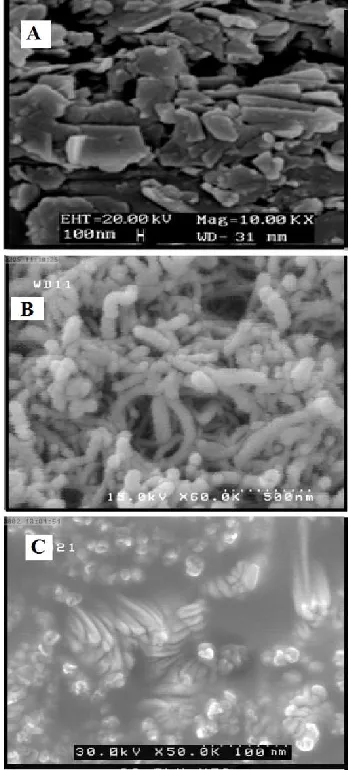
Figure 1 displays the surface morphology of the unmodified CCE (image A), MWCNTs/CCE (image B) and MWCNTs/IL/CCE (image C). It is evident that the surface morphology of the bare CCE is dense, scaly and has high porosity. Image B shows the SEM image of the same electrode after MWCNTs casting on the surface of CCE. The MWCNTs film was uniformly coated on the CCE surface and formed a spaghetti-like porous reticular formation. While, SEM image of MWCNTs/IL/CCE (C) is different from image B and also image A. The MWCNTs are untangled after being treated with the IL and a uniform film appeared and the surface of electrode was completely covered by nanocomposite modifier (MWCNTs/IL).
In order to electrochemical characterization of the nanocomposite modified electrode such as stability, reproducibility and electroactive real surface area which are extremely important for a modified electrode, the common reference
compound, potassium hexacyanoferrate (III)/(II) system, [Fe(CN)63-/4-], was used.
The obtained results (not shown here) confirm that the MWCNTs/IL/CCE has high electrocatalytic activity against to Fe(CN)6 3-
oxidation/reduction in compared with the bare CCE. The real surface area of the MWCNTs/IL/CCE were also estimated in Fe(CN)63-/4- solution according to the
Randles-Sevcik equation by cyclic voltammetry. The calculated electroactive real surface area for the MWCNTs/IL/CCE
Figure 1. SEM images of (A) bare CCE, (B) MWCNTs/CCE and (C) MWCNTs/IL/CCE.
[29]. The significant increase in electroactive surface area suggests that the MWCNTs/IL is promising for electrochemical applications. In addition, the stability and also the reproducibility of the of the modified electrode were investigated by cyclic voltammetry of Fe(CN)63-/4- ions.
Working stability of the modified electrode was verified by electrochemical behavior of a Fe(CN)63-/4- after successive sweeps of
CVs. The peak current of 5.0 m mol L−1 Fe(CN)63-/4- remaining at the
MWCNTs/IL/CCE surface was almost 98% of its initial value after 100 cycles in electrolyte solution and no significant decrease was observed after replacing the electrolyte used for 100 repetitive cycles with fresh solution. Also, the storage stability of the chemically modified electrode was very good. It was found to have reserved (97%) its initial activity for more than 10 days when kept in air at room temperature. In order to study the reproducibility of the electrode preparation procedure, four independent CCEs were modified with MWCNTs/IL. CVs of prepared modified electrodes in 5.0 mM Fe(CN)63-/4- solution were recorded. The
RSD value of measured cathodic peak currents was about 1.7%.
3.2. Electrochemical Behavior of PHE at the MWCNTs/IL/CCE
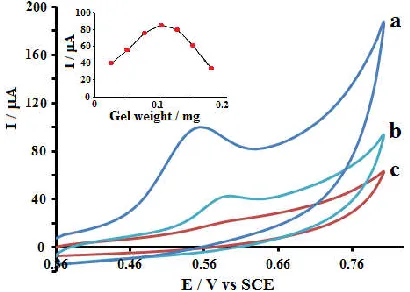
Figure 2 shows the cyclic voltammograms (CVs) of PHE (3 mM) on the bare CCE, MWCNTs/CCE and MWCNTs/IL/CCE in 0.1 mol L−1 phosphate buffer solution (PBS, pH 8.0) at a scan rate of 50 mV s−1. As shown, the oxidation processes of PHE on the bare and both modified carbon-ceramic electrodes are irreversible, while the anodic peak current on the modified CCE by MWCNTs/IL nanocomposite (curve a) is greatly enhanced compared to the MWCNTs/CCE (curve b) and bare CCE (curve c). Oxidation of PHE
on the bare CCE was occurred at potential of 0.61 V with anodic peak current about 5 µA. At the same time as its electro-oxidation on the MWCNTs/CCE and MWCNTs/IL/CCE was performed at potential of 0.58 V with anodic peak current about of 20 µA and at potential of 0.54 V with anodic peak current of 80 µA, respectively. Consequently, it is obvious that the anodic peak potential was shifted to the less positive potentials and also the anodic peak currents wereenhanced
Figure 2. CVs of 3.0 mM PHE at the MWCNTs/IL/CCE (a), MWCNTs/CCE (b) and bare CCE (c) in phosphate buffer solution (0.1 mol L-1, pH=8.0). Inset is the effect of the amount of the MWCNTs/IL nanocomposite gel at the CCE surface on anodic peak current of PHE.
provide higher real electroactive surface area which was also proved by CVs of MWCNTs/IL/CCE in the presence of Fe(CN)63-/4- probe ions. On the other hand,
this could be ascribed to the synergistic effect of IL and MWCNTs. ILs can extract many molecules, thus it can enhance the current response of analytes, Fe(CN)6
3-/4-probe ions and PHE, to a great extent [32, 33]. On the other hand, the immidazolium-based ILs could interact with carbon nanotubes through π-π interactions, which makes the entangled MWCNTs bundles form much finer bundles [30]. This is expected to improve the electrochemical catalysis property of MWCNTs.
3.3. Optimization of the Amount of the Modifier
Electrocatalysis property of modified electrodes is influenced by modifier film thickness which deposited on their surface. It was observed that the MWCNTs/IL nanocomposite gel thickness influences the electrochemical response of the modified electrode towards PHE. This effect was investigated by depositing different amounts of MWCNTs/IL nanocomposite gel on the CCE surface and the results from the oxidation of PHE are presented in inset of Figure 2. Accordingly, an increase in anodic peak current height was observed by increase of deposited MWCNTs/IL gel up to 0.1 mg but after that anodic peak current was decreased by more increase of deposited modifier amount. This results are attributed to the decrease of electrode surface conductivity by increase of modifier film thickness and low specific surface area when low volumes of modifier suspension was deposited on the electrode surface. Therefore, 0.1 mg of MWCNTs/IL gel was used for the modification of CCE surface for the rest of experiments.
3.3.1. PH Effect
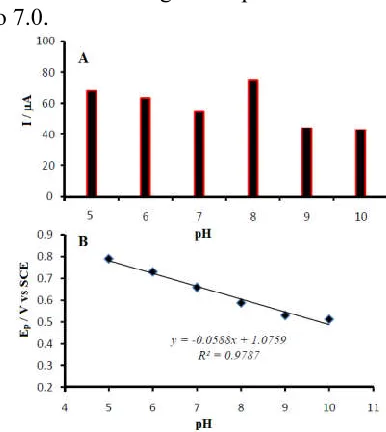
The effect of pH on the oxidation of PHE at the MWCNTs/IL/CCE was investigated in the pH ranges of 5.0 to 10.0 of the 0.1 mol L−1 phosphate buffer solution (PBS), in the presence of PHE at concentration level of 3 mM. The effect of pH on the oxidation peak current and peak potential of the PHE were shown in Figure 3A and 3B (CVs at a scan rate of 50 mV s−1), respectively. Accordingly, the oxidation peak potential and also peak current are dependent to the pH value which is an evident for dependence of electro-oxidation reaction mechanism to the proton concentration. The effect of pH on the oxidation peak current of PHE may be attributed to the influence of pH on the charge property and charge density of PHE and nanocomposite on the surface of electrode. As shown in Figure 3A, the oxidation peak current gradually decreased with the increasing of the pH value from 5.0 to 7.0.
Figure 3. pH effect on the electrochemical behavior of PHE on the MWCNTs/IL/CCE: (A) histogram of the anodic peak currents of 3.0 mM PHE at scan rate of 50 mV s-1 in CV method vs. pH and (B) and plot of anodic peak potentials vs. pH.
conversely increased. Therefore, considering the sensitivity of PHE determination, a pH value of 8.0 was chosen for the subsequent analytical experiments. On the other hand, a linear shift of oxidation peak potential towards negative potential with an increasing pH indicated that protons were directly involved in the oxidation of PHE (Figure 3B). The linear relationship can be obtained with following equation: Ep =
-0.0588 pH + 1.0759, R2 = 0.9787. A slope of 0.0588 V per pH unit [34] is approximately close to the theoretical value of 0.0576 V pH-1, indicating that the electron transfer was accompanied by an equal number of protons in electrode reaction [35]. Thus, it may conclude that the electrode reaction of PHE was accompanied by one proton and one electron.
3.3.2. Scan rate Effect
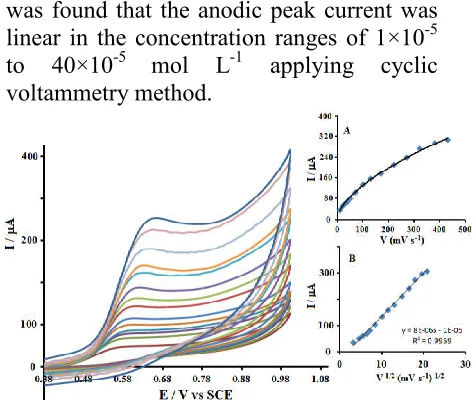
The effect of scan rate on the electrochemical oxidation of PHE at the MWCNTs/IL/CCE was investigated and the obtained results are shown in Figure 4. It is obvious that the anodic peak current of PHE increased gradually with the increase of the scan rate (inset A). The anodic peak current was linearly proportional to the square root of scan rate in the range of 10 to 450 mV s−1 (inset B), suggest a typical diffusion-controlled electrode process. The linear regression equations was expressed as Ip/μA
= 8.0×10⁻⁶ υ1/2 / (V s-1)-10.0×10⁻⁵ with a correlation coefficient (R2) of 0.9959. Moreover, the oxidation peak potential of PHE was shifted towards more positive potential when the scan rate was increased, suggesting a kinetic limitation in the reaction between nanocomposite modified electrode and PHE.
3.4. Electrochemical Determination of PHE
Under the optimum analytical conditions, the determination of PHE in different concentrations was performed. It
was found that the anodic peak current was linear in the concentration ranges of 1×10⁻⁵ to 40×10-5 mol L-1 applying cyclic voltammetry method.
Figure 4. Effect of scan rate on the electro-oxidation of 3.0 mM PHE at the MWCNTs/IL/CCE in ranging from 10 to 450 mV s-1. Insets: (A) plots of anodic peak currents vs. scan rate (υ) and (B) plots of anodic peak currents vs. square root of scan rate (υ1/2).
When the PHE concentration exceeded to 40×10-5 mol L-1, the curve began to obey another calibration equation in the concentration range of 40×10-5 to 300×10-5 mol L-1. The detection limit was estimated to be 6×10⁻⁶ mol L-1 (S/N = 3).
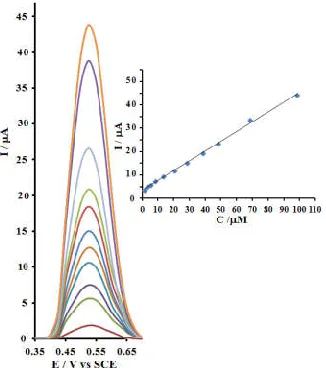
Since differential pulse voltammetry (DPV) has much higher current sensitivity than cyclic voltammetry, this technique was also used to determination of PHE in order to reach the lower limit of detection. In DPV, in addition to higher current sensitivity the charging current contribution to the background current is negligible. In this method, there is a good linear relationship between anodic peak current, Ip,
solution was measured by DPV method via a special modified electrode through five evaluations and also every few hours within a day, the RSD of the anodic peak current was 1.2% and 1.8% (n=5), respectively, indicating that the present modified electrode features good reproducibility. Similarly, to estimate the repeatability of the prepared modified electrode, four independent modified electrodes were applied to determine 5.0×10⁻⁵ mol L-1 PHE and the calculated RSD was about 2.8%, which reveals an excellent repeatability for the electrode preparation procedure. On the other hand, after several days of repetitive use, the response of the same modified electrode decreased only slightly (3-6%). This indicates that the electrode is very stable in PHE determination. These results prove high stability and notable repeatability and reproducibility of the present modified electrode which was planned as a sensor for the PHE determination.
Figure 5. DPVs of PHE at various concentrations: 3 to 100 M. Inset: Plot of
anodic peak currents vs. PHE
concentration. Pulse amplitude: 70 mV and pulse width: 50 ms.
3.5. Electrochemical Behavior of AC at the MWCNTs/IL/CCE
The electrochemical behavior of AC was studied on the modified and bare CCEs and
the obtained results (Figure 6) revealed that the oxidation-reduction reaction of AC on the MWCNTs/IL (curve a) and MWCNTs (curve b) modified carbon-ceramic electrodes [3 mM AC and 0.1 mol L−1 phosphate buffer solution (pH=8.0)] at a scan rate of 50 mV s−1 was reversible, while on the bare CCE (curve c) the cathodic peak was not observed. Moreover, it is clear that modification of CCE has influence on the anodic and cathodic peak height and peak potential. The best result is obtained when MWCNTs/IL/CCE was applied, in which the hybrid properties of MWCNTs/IL nanocomposite can improve AC oxidation-reduction peak potential and peak current.
Figure 6. CVs of 3.0 mM AC at the MWCNTs/IL/CCE (a), MWCNTs/CCE (b) and bare CCE (c), in phosphate buffer solution (0.1 M, pH=8.0) at scan rate of 50 mV s-1.
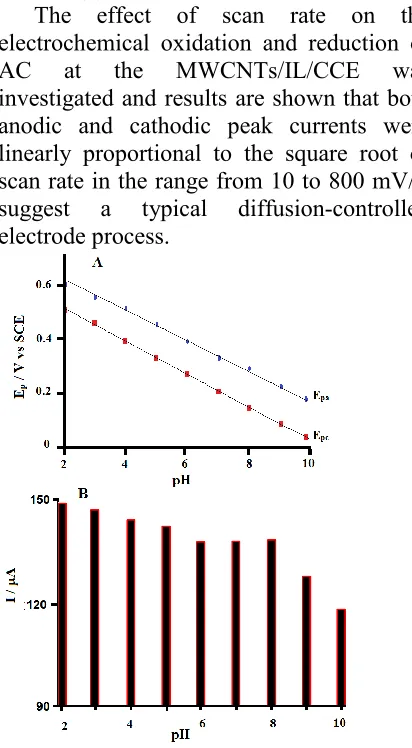
when the pH is 7.0-8.0 and then drops when the pHs are higher than 8.0, thus in the round of neutral pH is remained constant. Also it was found that anodic and cathodic peak potentials shifted less positively with the increase of pH from 2 .0 to 10.0. A linear relationship can be obtained with slope of 0.057 V per pH unit for anodic peak potential [34], from which m/n value of 1 is estimated, suggested that the proton-transfer number (m) is equal to the electron-transfer number (n).
The effect of scan rate on the electrochemical oxidation and reduction of AC at the MWCNTs/IL/CCE was investigated and results are shown that both anodic and cathodic peak currents were linearly proportional to the square root of scan rate in the range from 10 to 800 mV/s, suggest a typical diffusion-controlled electrode process.
Figure 7. (A) Plots of anodic and cathodic peak potentials vs. pH and (B) plots of anodic peak currents vs. pH on the cyclic voltammetry of 3.0 mM AC at the MWCNTs/IL/CCE in different pH. scan rate of 50 mV s-1.
3.6. Chronoamperometric Study of PHE and AC at the MWCNTs/IL/CCE
Chronoamperometry technique was always employed by researchersto study the mass transfer kinetics in the electro-catalytic processes [36]. In the present study, chronoamperometry experiments was performed by stepping the working electrode, MWCNTs/IL/CCE, potential at 0.2 and 0.6 V for studying the mass transfer kinetics of PHE, while in the case of AC the electrode potential was stepped at 0.2, 0.4 and then back to 0.2 V, respectively. Chronoamperograms of AC and PHE in different concentrations are represented in (Figure 8A and 8B, respectively). The net transient current varied linearly with the minus square roots of time (Figure 8C and 8D respectively for AC and PHE). This confirms that the electro-oxidation processes are diffusion-controlled in the bulk of solution for both analytes. Using the slope of these lines, the diffusion coefficient of PHE and AC can be obtained based on Cottrell’s equation [36]:
I = nFAD1/2Cπ -1/2t-1/2
Where I is the net transient current, D is the analyte diffusion coefficient, and C is the analyte concentration. The mean value of the diffusion coefficient for PHE and AC were found to be 6.43 × 10⁻⁵ and 3.76 × 10⁻⁴ cm2 s-1, respectively.
3.7. Electrochemical Investigation of PHE in the Presence of AC at the MWCNTs/IL/CCE
Figure 8. (A) Chronoamperograms obtained in the presence of AC over the concentration ranges of 0.05, 0.1, 0.2 and 0.4 mM. The potential steps were 0.2, 0.4 and 0.2 V. (B) Chronoamperograms recorded in the presence of PHE over the concentration ranges of 0.05, 0.1, 0.2 and 0.4 mM. The potential steps were 0.2 and 0.6 V. (C) Dependency of the net transient current on the minus square roots of time for AC. (D) Dependency of the net transient current on the minus square roots of time for PHE.
maximum separation of PHE and AC anodic peak potentials and also maximum and stable anodic peak currents for oxidation of PHE and AC were achieved when the sample pH value was adjusted on 8.0. Therefore, this pH value was used for the rest of experiments.
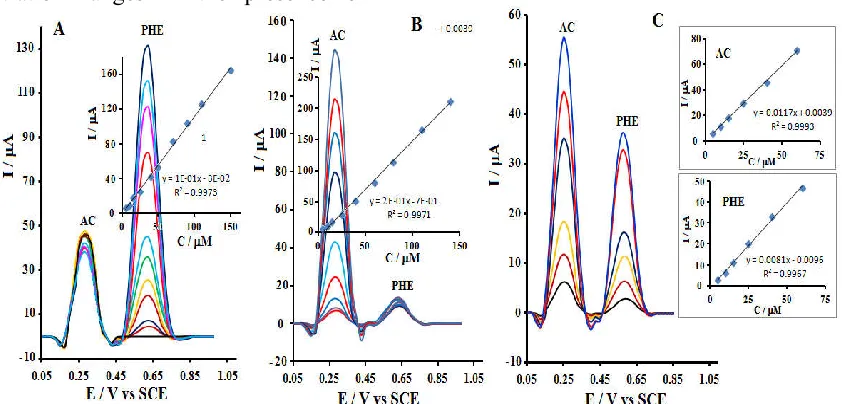
Figure 9 shows the CV (A) and DPV (B) curves of PHE and AC on the MWCNTs/IL/CCE in phosphate buffer solution (pH=8.0). The DPV and CV curves show well-defined separate peaks for PHE and AC. Accordingly, the anodic peaks of PHE and AC are separated completely and the anodic peak currents of PHE and AC can be detected simultaneously.
As mentioned in introduction, the main purpose of the present study is to determine PHE selectively in the presence of different concentrations of AC and vice versa. Therefore, in the following section we carefully examined the signal of 15 µM AC
PHE (0.5 mM) and AC (0.5 mM) at the same electrode. Pulse amplitude: 70 mV and pulse width: 50 ms.
in the presence of increasing concentrations of PHE in electrolyte solution [Figure 10A: DPVs of the AC (15 M) in the presence PHE of at different concentrations (5, 10, 15, 25, 40, 50, 70, 90, 110 and 150 M of PHE, respectively from small to large), pH=8.0]. As can be seen, no significant change in the anodic peak current of AC was observed by varying the concentrations of PHE, while the anodic peak currents of the PHE increased linearly with increasing its concentrations (inset of Figure10A). Figure 10B [DPVs of the PHE (15 M) in the presence of AC at different concentrations (5, 10, 15, 25, 40, 60, 80, 110 and 140 M, respectively from small to large), pH=8.0] shows the selective determination of PHE in the presence of AC. As can be seen from the inset of Figure 10B, the anodic peak currents of AC increase linearly with increasing its concentration. These results revealed that MWCNTs/IL/CCE is highly suitable for the selective determination of PHE in a wide concentration ranges in the presence of
various concentrations of AC and vice versa. Also, if the concentrations of PHE and AC in solution are increased synchronously, the anodic peak currents of PHE and AC increase accordingly, as shown in Figure 10C. On the other hand, it was found that, when the concentrations of both drugs increase simultaneously, both compounds exhibit separately oxidation current peaks, without interfering each other. Thus, it can be concluded that the proposed method and prepared sensor can be successfully applied for the simultaneous determination of PHE and AC at the optimum conditions by the DPV method. That's mean, it is obvious that the presence of AC has no effect on the determination of PHE and linear calibration graphs were obtained for PHE and AC in the concentration range of 5×10⁻⁶ to 60×10−6 mol L-1.
3.8. Interferences Study
To investigate the effect of possible interferences in the determination of PHE and AC through the present modified electrode, various biological compounds and ions were added to 0.1 M phosphate buffer solution (pH=8.0) in the presence of 30 µM
10, 15, 25, 40, 60, 80, 110 and 140 M), Inset: plot of anodic peak currents vs. AC concentration. (C) DPVs of different concentrations of PHE (5, 10, 15, 25, 40 and 60M) and AC (5, 10, 15, 25, 40 and 60M) in the same solution. Insets: plot of anodic peak currents vs. PHE and AC concentrations. Pulse amplitude: 70 mV and pulse width: 50 ms.
PHE and same concentration of AC. As for the common interferences in biological and other real samples in the determination of PHE and AC, 10-fold concentration of interfering compounds were added to the PHE and AC solution and the resulted error in their determination was calculated. If the tolerance limit is taken as the maximum concentration of the interference species, which caused an approximately 5% relative error, no interference effect was observed [37-42]. Considering this rule, possible interference of the common substances such as ascorbic acid (AA), dopamine (DA), and some anions [43-45] and cations [46-67] such as Cl-, NO3-, Mg2+, Cu2+, Na+, Al3+,
Cd2+, and CO32- on the determination of the
PHE and AC was evaluated. The obtained results were tabulated in Table 1. As can be seen, the present nanocomposite modified electrode has good selectivity towards determination of PHE and AC and there is
no considerable interference on behalf of investigated species.
3.9. Determination of PHE in Real Sample
As a practical application, the MWCNTs/IL modified carbon-ceramic electrode was used to determine the PHE content in different exacold tablets through the application of the standard addition method. In this regard, 1 mL of exacold tablet solutions were added to 10 ml volumetric flasks, then various volumes of the PHE standard solutions were added and finally the all solutions were reached to the volume by addition of phosphate buffer solution. The anodic peak current in DPV was used for determination of PHE in prepared solutions and calibration curve was instructed accordingly. It was found that the DPV of the sample solution exhibited only one peak at about 0.56V (vs. SCE), which is associated with the oxidation of PHE. The
Table 1. Determination errors (%) of PHE and AC in the presence of 10-fold concentration of interfering species.
Studied species DA AA Mg2+ Cu2+ Al3+ Cd2+ Na+ NO
3- Cl- CO3
2-Determination error (%) 5 5 4 3 4 3 2 1 3 4 DA: dopamine, AA: Ascorbic acid
concentration of PHE in various exacold tablet samples were calculated by extrapolation of calibration curve, and the results were tabulated in Table 2.
3.10. Determination of AC in Real Sample
The MWCNTs/IL modified carbon-ceramic electrode was also used to determine the AC concentration in
acetaminophen-codeine tablets with different content of AC applying standard
Table 2. Determination of PHE in exacold tablets applying standard addition
method using DPV method (n=4).
Sample PHE
(Declared) (mg L-)
Found (mg L-1)
Recovery (%)
1 0.60 0.57±0.02 95.5±2.8
2 0.80 0.78±0.03 97.5±3.7
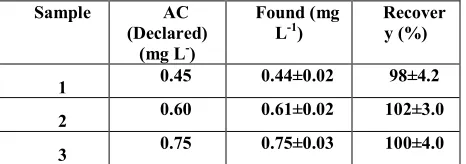
addition method. For this purpose, 1 mL of acetaminophen-codeine tablet solution was added to 10 ml volumetric flasks, then various volumes of standard solution of the AC was added and finally the solutions was reached to the volume by addition of phosphate buffer solution (pH=8.0). The calibration curve was obtained by determination of AC in various solutions applying DPV method. The concentration of AC in various acetaminophen-codeine tablet samples were calculated by extrapolation of calibration curve, and the obtained results were presented in Table 3.
Table 3. Application of developed method for determination of AC in acetaminophen-codeine tablets using DPV
method (n=4).
Sample AC
(Declared) (mg L-)
Found (mg L-1)
Recover y (%)
1 0.45 0.44±0.02 98±4.2
2 0.60 0.61±0.02 102±3.0
3 0.75 0.75±0.03 100±4.0
4. CONCLUSION
A simple, fast, reproducible and direct procedure was used for fabrication of
multi-walled carbon nanotubes/ionic liquid modified carbon-ceramic electrode. Use of a revisable couple (K3[Fe(CN)6]) as an
electrochemical probe shows that the MWCNTs/IL nanocomposite on CCE has good chemical and electrochemical stability and it can be used as a chemically modified electrode to explore the electrochemistry and to use for electrocatalytic oxidation of PHE. PHE oxidation can be performed on the MWCNTs/IL/CCE and it produces an anodic peak at about 0.56 V (vs. SCE) in 0.1 M phosphate buffer solution (pH 8.0). The anodic peak is suitable for the determination of PHE, and the peak current in different voltammetric methods is linear to its concentrations over a certain ranges. In addition, the experimental results reported here have clearly indicated that PHE can be determined simultaneously in the presence of AC and vice versa. Finally, this procedure can be applied for thedetermination of PHE and AC in real samples.
ACKNOWLEDGMENT
The authors gratefully acknowledge the research council of Azarbaijan Shahid Madani University for financial support.
REFERENCES:
1. Desjardins, P.J., Berlin, R.G. (2007) "Efficacy of phenylephrine", Brit. J. Philos. Sci., 64: 555-556.
2. Knochen, M.S., Giglio, J. (2004) "Flow-injection determination of phenylephrine hydrochloride in pharmaceutical dosage forms with on-line solid-phase extraction and spectrophotometric detection", Talanta, 64: 1226-1232.
3. El-Hawary, M.B., Khayyall, M.T., Isaak Z. (1985) "Handbook of Pharmacology", The. Scientific Book Center, Presee Cairo, S.O.P.
4. Gerbino, P.P. (2005) "Remington: The Science and Practice of Pharmacy", Philadelphia P. A. Lippincott Williams & Wilkins.
5. Qu, S., Pei, S. Zhang, S. (2013) "Electrochemical Behavior and Determination of Phenylephrine at Silicate Nanotubes Modified Electrode", J. Chinese Chem. Soc., 60: 1181-1185.
6. Gholivand, M.B., Malekzadeh, G. Torkashvand, M. (2013) "Enhancement effect of sodium-dodecyl sulfate on the anodic stripping voltammetric signal of phenylephrine hydrochloride at carbon paste electrode", J. Electroanal. Chem., 704: 50-56.
7. Zhu, Y.-h., Zhang, Z.-l., Zhao, W., Pang D.-w. (2006) "Voltammetric behavior and determination of phenylephrine at a glassy carbon electrode modified with multi-wall carbon nanotubes", Sensor. Actuat. B: Chem., 119: 308-314.
9. Habibi, B., Jahanbakhshi, M., Pournaghiazar, M.H. (2011) "Electrochemical oxidation and nanomolar detection of acetaminophen at a carbon-ceramic electrode modified by carbon nanotubes: a comparison between multi walled and single walled carbon nanotubes", Microchim. Acta, 172: 147-154.
10. Wang, B., Li, Y., Qin, X., Zhan, G., Ma, M., Li, C. (2012) "Electrochemical fabrication of TiO2
nanoparticles/[BMIM] BF4 ionic liquid hybrid film electrode and its application in determination of
p-acetaminophen",Mater. Sci. Engin.: C,. 32: 2280-2285.
11. Li, M., Jing, L., (2007) "Electrochemical behavior of acetaminophen and its detection on the PANI-MWCNTs composite modified electrode", Electrochim. Acta, 52:3250-3257.
12. Manjunatha, R., Nagaraju, D.H., Suresh, G.S., Melo, J.S., D’Souza, S.F., Venkatesha, T.V. (2011) "Electrochemical detection of acetaminophen on the functionalized MWCNTs modified electrode using layer-by-layer technique",Electrochim. Acta, 56: 6619-6627.
13. Jinchun, S., Ji, Y., Junfen, Z., Juan, T., Li, Z. (2011) "Graphite oxide film-modified electrode as an electrochemical sensor for acetaminophen",Sensor. Actuat. B: Chem., 155: 220-225.
14. Samadi-Maybodi, A., Nejad-Darzi, S.K.H., Ilkhani, H. (2011) "A new sensor for determination of paracetamol, phenylephrine hydrochloride and chlorpheniramine maleate in pharmaceutical samples using nickel phosphate nanoparticles modified carbon past electrode",Anal. Bioanal. Electrochem., 3: 134-145.
15. Lev, O., Wu, Z., Bharathi, S., Glezer, V., Modestov, A., Gun, J., Rabinovich, L., Sampath, S. (1997) "Sol-gel materials in electrochemistry",Chem. Mater., 9: 2354-2375.
16. Esmaeili, E., Rashidi, A.M., Jafari-Jozani, Kh. (2014) "Cerium-Promoted PtRu/MWNTs As the Anode Catalyst for Methanol Electro-Oxidation", Int. J. Nanosci. Nanotechnol., 10: 67-78.
17. Mohammad-Rezaei, R., Razmi, H. (2016) "Preparation and Characterization of Reduced Graphene Oxide Doped in Sol-Gel Derived Silica for Application in Electrochemical Double-Layer Capacitors", Int. J. Nanosci. Nanotechnol., 12: 233-241.
18. Gooding, J.J. (2005) "Nanostructuring electrodes with carbon nanotubes: A review on electrochemistry and applications for sensing",Electrochim. Acta, 50: 3049-3060.
19. Khani, H., Rofouei, M. K., Arab, P., Gupta, V.K., Vafaei, Z. (2010) “Multi-walled carbon nanotubes-ionic liquid-carbon paste electrode as a super selectivity sensor: Application to potentiometric monitoring of mercury ion(II)”, J. Hazard. Mater., 183: 402-409.
20. Goyal, R. N., Gupta, V.K., Chatterjee, S. (2010) “Voltammetric biosensors for the determination of paracetamol at carbon nanotube modified pyrolytic graphite electrode”, Sensor. .Actuat. B: Chem., 149: 252-258.
21. Armand, M., Endres, F., MacFarlane, D.R., Ohno, H., Scrosati, B. (2009) "Ionic-liquid materials for the electrochemical challenges of the future", Nature Mater., 8: 621-629.
22. Wei, D., Ivaska, A. (2008) "Applications of ionic liquids in electrochemical sensors", Anal. Chim. Acta, 607: 126-135.
23. Price, B.K., Hudson, J.L., Tour, J.M. (2005) "Green chemical functionalization of single-walled carbon nanotubes in ionic liquids", J. Amer. Chem. Soc., 127: 14867-14870.
24. Karimi-Maleh, H., Fallah Shojaei, A., Tabatabaeian, K., Karimi, F., Shakeri, S., Moradi, R. (2016) “Simultaneous determination of 6-mercaptopruine, 6-thioguanine and dasatinib as three important anticancer drugs using nanostructure voltammetric sensor employing Pt/MWCNTs and 1-butyl-3-methylimidazolium hexafluoro phosphate”, Biosen. Bioelectron., 86: 879-884.
25. Fukushima, T., Kosaka, A., Ishimura, Y., Yamamoto, T., Takigawa, T., Ishii, N., Aida, T. (2003) "Molecular ordering of organic molten salts triggered by single-walled carbon nanotubes", Science, 300:2072-2074.
26. Bavandpour, R., Karimi-Maleh, H., Asif, M., Gupta, V.K., Atar, N., Abbasghorbani, M. (2016) “Liquid phase determination of adrenaline uses a voltammetric sensor employing CuFe2O4 nanoparticles and room temperature
ionic liquids”, J. Molecul. Liquids, 213: 369-373.
27. Chaudhary, G.R., Bansal, S., Saharan, P., Bansal, P., Mehta, S. K. (2013) "Applications of Surface Modified Ionic Liquid/Nanomaterial Composite in Electrochemical Sensors and Biosensors", BioNanoScience, 3: 241-253. 28. Hadiyan, P., Rouhollahi, A., Adibi, M., Mortazavi, S. (2015) "Covalent Modification of Glassy Carbon Electrode with an Imidazolium based Methoxysilyl Ionic Liquid Nanoparticles: Application in Determination of Redox System", Int. J. Nanosci. Nanotechnol., 11: 53-57.
29. Habibi, B., Jahanbakhshi, M., Pournaghi-Azar, M.H. (2012) "Voltammetric and amperometric determination of hydrogen peroxide using a carbon-ceramic electrode modified with a nanohybrid composite made from single-walled carbon nanotubes and silver nanoparticles", Microchim. Acta, 177: 185-193.
31. Liu, X., Ding, Z., He, Y., Xue, Z., Zhao, X., Lu, X. (2010) "Electrochemical behavior of hydroquinone at multi-walled carbon nanotubes and ionic liquid composite film modified electrode", Colloid. Surface B, 79: 27-32. 32. Liu, H., He, P., Li, Z., Sun, C., Shi, L., Liu, Y., Zhu, G., Li, J. (2005)" An ionic liquid-type carbon paste electrode and its polyoxometalate-modified properties", Electrochem. Commun., 7: 1357-1363.
33. Tomé, L.I.N., Catambas, V.R., Teles, A.R.R., Freire, M.G. Marrucho, I.M., Coutinho, J.A.P. (2010) "Tryptophan extraction using hydrophobic ionic liquids", Sep. Purif. Technol., 72: 167-173.
34. Huang, K.-J., Xu, C.-X., Sun, J.-Y., Peng, L. (2009) "Electrochemical Oxidation of Tryptophan and Its Analysis in Pharmaceutical Formulations at a Poly (Methyl Red) Film-Modified Electrode", Anal. Letters, 43: 176-185. 35. Nicholson, R.S., (1965) "Theory and Application of Cyclic Voltammetry for Measurement of Electrode Reaction Kinetics", Anal. Chem., 37: 1351-1355.
36. Bard, A. J., Faulkner, L.R. (2001) "Electrochemical Methods", New York: JohnWiley and sons.
37. Gupta V.K., Jain, S., Khurana, U. (1997) “A PVC-based pentathia-15-crown-5 membrane potentiometric sensor for mercury”, Electroanalysis, 9: 478-480.
38. Goyal, R.N., Gupta, V.K., Bachheti, N. (2007) “Fullerene-C60-modified electrode as a sensitive voltammetric
sensor for detection of nandrolone-An anabolic steroid used in doping”, Anal. Chim. Acta, 597: 82-89.
39. Gupta, V.K., Nayak, A., Singhal, S.A.B. (2011) “Recent Advances on Potentiometric Membrane Sensors for Pharmaceutical Analysis”, Comb. Chem. High T. Scr., 14: 284-302.
40. Jain, R., Gupta, V.K., Jadon, N., Radhapyari, K. (2010) “Voltammetric determination of cefixime in pharmaceuticals and biological fluids”, Anal. Biochem., 407:79-88.
41. Srivastava, S.K., Gupta, V.K., Dwivedi, M.K., Jain, S. (1995) “Caesium PVC–crown (dibenzo-24-crown-8) based membrane sensor”, Anal. Proc. Anal.Commun., 32: 21-23.
42. Gupta, V.K., Karimi-Maleh, H., Sadegh, R. (2015) “Simultaneous Determination of Hydroxylamine, Phenol and Sulfite in Water and Waste Water Samples Using A Voltammetric Nanosensor”, Int. J. Electrochem. Sci., 10: 303-316.
43. Prasad, R., Gupta, V.K., Kumar, A. (2004) “Metallo-tetraazaporphyrin based anion sensors: regulation of sensor characteristics through central metal ion coordination”, Anal.Chim. Acta, 508: 61-70.
44. Gupta, V.K., Goyal, R.N., Sharma, R.A. (2008) “Anion recognition using newly synthesized hydrogen bonding disubstituted phenylhydrazone-based receptors: Poly(vinyl chloride)-based sensor for acetate”, Talanta,76: 859-864. 45. Gupta, V.K., Mergu, N., Kumawat, L. K., Singh, A. K. (2015) “A reversible fluorescence “off-on-off” sensor for sequential detection of aluminum and acetate/fluoride ions”, Talanta 144: 80-89.
46. Gupta, V.K., Jain, A.K., Maheshwari, G., Lang, H., Ishtaiwi, Z. (2006) “Copper(II)-selective potentiometric sensors based on porphyrins in PVC matrix”, Sensor. Actuat.. B,Chem., 117: 99-106.
47. Gupta, V.K., Singh, A.K., Mehtab, S., Gupta, B. (2006) “A cobalt(II)-selective PVC membrane based on a Schiff base complex of N,N′-bis(salicylidene)-3,4-diaminotoluene”, Anal. Chim. Acta, 566: 5-10.
48. Gupta, V.K., Jain, A.K., Kumar, P. (2006) “PVC-based membranes of N,N ′-dibenzyl-1,4,10,13-tetraoxa-7,16-diazacyclooctadecane as Pb(II)-selective sensor”, Sensor Actuator. B,Chemical, 120: 259-265.
49. Gupta, V.K., Jain, A.K., Kumar, P., Agarwal, S., Maheshwari, G. (2006) “Chromium(III)-selective sensor based on tri-o-thymotide in PVC matrix”, Sensor. Actuat. B:Chem., 113: 182-186.
50. Jain, A.K., Gupta, V.K., Singh, L.P., Raisoni, J.R. (2006) “A comparative study of Pb2+ selective sensors based on derivatized tetrapyrazole and calix[4]arene receptors”, Electrochim. Acta, 51:2547-2553.
51. Gupta, V.K., Singh, A.K., Al Khayat, M., Gupta, B. (2007) “Neutral carriers based polymeric membrane electrodes for selective determination of mercury (II)”, Analy. Chim. Acta, 590: 81-90.
52. Gupta, V.K., Jain, A.K., Chandra, S. (2003) “Chemical sensor for lanthanum(III) determination using aza-crown as ionophore in poly(vinyl chloride) matrix”, Anal. Chim. Acta, 486:199-207.
53. Gupta, V.K., Chandra, S., Mangla, R. (2002) “Dicyclohexano-18-crown-6 as active material in PVC matrix membrane for the fabrication of cadmium selective potentiometric sensor”, Electrochim. Acta, 47: 1579-1586. 54. Gupta, V.K., Mangla, R., Khurana, U., Kumar, P. (1999) “Determination of Uranyl Ions Using Poly(vinyl chloride) Based 4-tert-Butylcalix[6]arene Membrane Sensor”, Electroanalysis, 11:573-576.
55. Jain, A.K., Gupta, V.K., Singh, L.P., Khurana, U. (1997) “Macrocycle Based Membrane Sensors for the Determination of Cobalt(II) Ions”, Analyst, 122: 583-586
59. Gupta, V.K., Jain, A. K., Maheshwari, G. (2007) “Aluminum(III) selective potentiometric sensor based on morin in poly(vinyl chloride) matrix”, Talanta, 72: 1469-1473.
60. Gupta, V.K., Ganjali, M.R., Norouzi, P., Khani, H., Nayak, A., Agarwal, S. (2011) “Electrochemical Analysis of Some Toxic Metals by Ion-Selective Electrodes”, Crit. Rev. Anal. Chem., 41:282-313.
61. Gupta, V.K., Jain, A.K., Agarwal, S., Maheshwari, G. (2007) “An iron (III) ion-selective sensor based on a μ-bis(tridentate) ligand”, Talanta, 71: 1964-1968.
62. Gupta, V.K., Jain, A.K., Singh, L.P., Khurana, U. (1997) “Porphyrins as carrier in PVC based membrane potentiometric sensors for nickel (II)”, Anal. Chim. Acta, 355: 33-41.
63. Jain, A.K., Gupta, V.K., Khurana, U., Singh, L.P. (1997) “A new membrane sensor for UO ions based on 2-hydroxyacetophenoneoxime-thiourea-trioxane resin”, Electroanalysis, 9: 857-860.
64. Srivastava, S.K., Gupta, V.K., Jain, S. (1995) “Determination of lead using a poly(vinyl chloride)-based crown ether membrane”, Analyst, 120: 495-498.
65. Gupta, V.K., Mergu, N., Kumawat, L.K., Singh, A.K. (2015) “Selective naked-eye detection of Magnesium (II) ions using a coumarin-derived fluorescent probe”, Sensor. Actuat. B: Chem., 207: 216-223.
66. Gupta, V.K., Singh, A.K. Kumawat, L.K. (2014) “Thiazole Schiff base turn-on fluorescent chemosensor for Al3+ ion”, Sensor. Actuat. B: Chem., 195: 98-108.