http://www.sciencepublishinggroup.com/j/ijnfs doi: 10.11648/j.ijnfs.20170606.13
ISSN: 2327-2694 (Print); ISSN: 2327-2716 (Online)
Effects of Combined Processing Methods on Protein
Qualities of Pigeon Pea (
Cajanus cajan
) Flour Samples
Using Rat Feeding
Arukwe Dorothy Chinomnso
*, Nwanekezi Emmanuel Chidi, Okorie Stanislaus Udeze
Department of Food Science and Technology, Imo State University, Owerri, Nigeria
Email address:
[email protected] (A. D. Chinomnso)
*Corresponding author
To cite this article:
Arukwe Dorothy Chinomnso, Nwanekezi Emmanuel Chidi, Okorie Stanislaus Udeze. Effects of Combined Processing Methods on Protein Qualities of Pigeon Pea (Cajanus cajan) Flour Samples Using Rat Feeding. International Journal of Nutrition and Food Sciences. Vol. 6, No. 6, 2017, pp. 228-236. doi: 10.11648/j.ijnfs.20170606.13
Received: July 27, 2017; Accepted: August 14, 2017; Published: October 26, 2017
Abstract:
Combined effects of different processing methods of pigeon pea on the protein qualities of formulated diets using rat feeding were investigated. Eight sets of diets were formulated from pigeon pea flour sample that was soaked (control i.e. diet SoPPF), soaked and boiled (diet SoBPPF), soaked and fermented (diet SoFPPF), soaked, boiled and fermented (dietSoBFPPF), soaked and sprouted (diet SoSpPPF), soaked, sprouted and boiled (diet SoSpBPPF), soaked, sprouted and fermented
(diet SoSpFPPF) and soaked, sprouted, boiled and fermented (diet SoSpBFPPF). The formulated diets were subjected to
proximate analysis. A 14-day rat feeding experimental study was conducted to assess the combined effects of sprouting, boiling and fermentation of pigeon pea on the protein utilization in rats. The albino rats were divided into eight sets for consumption of the eight sets of diets. The formulated diets proximate results showed that the proteins are above that recommended by PAG (1971) for weaning foods. The feed intake and weight gain/loss results showed that rats fed diet SoSpFPPF had the highest feed intake and highest percentage weight gain (11.62g and 20.3%) followed by rats fed on diet
SoSpBFPPF. Protein qualities result showed that rats fed diet SoSpFPPF had the highest nitrogen intake, nitrogen balance,
apparent digestibility, PER, NPU and BV. Therefore, combined soaking/sprouting/fermentation and soaking /sprouting /boiling/fermentation are the best methods of processing pigeon pea.
Keywords:
Protein Quality, Formulated Diets, Rat Feeding, Feed Intake, Weight Gain1. Introduction
Legumes are rich in protein and can be used to substitute for the animal protein that has become scarce and unaffordable by the poor majority of the populace. Legume flour has been reported to be very useful and can be utilized to overcome the problem of shortage of animal protein [23]. Nutritionists have equally advocated for increased consumption of food legumes [21]. Many nutritious foods are produced in Nigeria from legumes like cowpea that are widely cultivated. The popularity of cowpea tends to obscure the importance of other legumes [7].
Pigeon pea is a legume commonly referred to as “fiofio” in the south eastern part of Nigeria. Studies have shown that it
has high protein content and its protein is rich in lysine – a sulphur containing amino acid which is limited in other legumes and cereals.
their potential for use in improving protein consumption in human diets and alleviating the problem of protein malnutrition can be achieved. Different researchers have worked on effect of individual processing techniques such as boiling [11], sprouting [14] and fermentation [6] on the nutritional values of some legumes. There has not been any published work to evaluate the combined effects of sprouting, boiling and fermentation on the protein quality of pigeon pea flour using rat feeding.
2. Materials and Methods
2.1. Materials Collection
The pigeon pea (Cajanus cajan) seeds for this research were purchased from Ahiaohuu market in Aba, Abia State. The chemicals used were obtained from Food Science and Technology laboratory, Imo State University, Owerri and National Root Crops Research Institute, Umudike, Umuahia. The animals for the nutritional study were obtained from the Veterinary department, University of Nigeria, Nsukka.
2.2. Sample Preparation
Sixteen kilograms of pigeon pea seeds were sorted to remove dirt and other foreign particles after which they were washed. The grains were then soaked in water (1:3v/v) for 3 hours using a large container and the water drained off.
2.2.1. Production of Soaked Pigeon Pea Flour (Control) Two (2) kilograms of the soaked grains were dehulled and dried in an oven at 60°C for 7 hours. The dried seeds were milled into flour using disc attrition mill (Asiko All, Addis Nigeria). The flour was then sieved with standard sieve (1.0mm mesh) and packaged in polyethylene bag for further studies.
2.2.2. Production of Soaked and Boiled Pigeon Pea Flour Two (2) kilograms of the soaked grains were dehulled and boiled in water for 1 hour at 100°C. The water was drained and the seeds dried in an oven at 60°C for 7 hours. The dried seeds were milled into flour using disc attrition mill (Asiko All, Addis Nigeria). The flour was then sieved with standard sieve (1.0mm mesh) and packaged in polyethylene bag for further studies.
2.2.3. Production of Soaked and Fermented Pigeon Pea Flour
Two (2) kilograms of the soaked grains were dehulled, crushed, wrapped in plantain leaves and allowed to ferment for 4 days. After fermentation, the grains were dried in an oven at 60°C for 7 hours. The fermented dried cotyledons were milled into flour with disc attrition mill (Asiko All, Addis Nigeria) and standard 1.0mm mesh sieved before packaging in polyethylene bag for further studies.
2.2.4. Production of Soaked, Boiled and Fermented Pigeon Pea Flour
Two (2) kilograms of the soaked grains were boiled with water for 1 hour and the water drained off. The grains were wrapped in plantain leaves and allowed to ferment for 4 days as described by [17]. After fermentation, the seeds were dehulled and dried in an oven at 60°C for 7 hours. The dried seeds were milled into flour using disc attrition mill (Asiko All, Addis Nigeria). The legume flour were sieved with standard sieve (1.0mm mesh) and packaged in polyethylene bag for further studies.
2.2.5. Production of Soaked and Sprouted Pigeon Pea Flour
Sprouting was carried out according to the method described by [3]. Eight (8) kilograms of the soaked grains were spread in a single layer on a moistened jute bag and allowed to germinate (sprout) at room temperature for 3 days. During this time, the grains were sprayed with water at intervals of 12 hours until the last day of sprouting. After sprouting, the seeds were dehulled and rootlets removed. Then the cotyledons were divided into four portions of 2kg each. Then the portion (2kg) for the production of soaked and sprouted pigeon pea flour were dried in an oven at 60°C for 7 hours and milled into flour using a disc attrition mill (Asiko All, Addis Nigeria) and 1.0 mm mesh sieved before packaging into polyethylene bag for further studies.
2.2.6. Production of Soaked, Sprouted and Boiled Pigeon Pea Flour
Two (2) kilograms of the sprouted pigeon pea seeds were boiled for 1 hour with water at 100°C, drained and dried in an oven at 60°C for 7 hours. The dried sprouted boiled cotyledons were milled with disc attrition mill (Asiko All, Addis Nigeria), sieved with standard sieve (1.0mm mesh) and packaged in polyethylene bag for further studies.
2.2.7. Production of Soaked, Sprouted and Fermented Pigeon Pea Flour
Two (2) kilograms of the sprouted dehulled grains were wrapped in plantain leaves and allowed to ferment for 4 days as described by [17]. After fermentation, the cotyledons were dried in an oven at 60°C for 7 hours and milled into flour with disc attrition mill (Asiko A11, Addis Nigeria) and standard 1.0mm mesh sieved before packaging in polyethylene bag for further studies.
2.2.8. Production of Soaked, Sprouted, Boiled and Fermented Pigeon Pea Flour
mesh sieved before packaging in polyethylene bag for further studies.
3. Experimental Diet Formulation
Eight sets of diets were prepared from the pigeon pea flour samples processed by different methods. The diets were used for nutritional studies by feeding them to Albino rats. The diets were formulated using soaked pigeon pea flour (SoPPF)
(control); soaked and boiled pigeon pea flour (SoBPPF);
soaked and fermented pigeon pea flour (SoFPPF); soaked,
boiled and fermented pigeon pea flour (SoBFPPF); soaked
and sprouted pigeon pea flour (SoSpPPF); soaked, sprouted
and boiled pigeon pea flour (SoSpBPPF); soaked, sprouted
and fermented pigeon pea flour (SoSpFPPF) and soaked,
sprouted, boiled and fermented (SoSpBFPPF) pigeon pea
flour. The ingredients which were included in the formulation of the diets were corn starch, vegetable oil, common salt, dried pumpkin leaves (ugu) and vitamins/minerals premix. Equal weights of the respective ingredients were used for the diets formulations.
The ingredients for each diet were thoroughly mixed in the dried form. Equal volume of water (75cl) was added in each of the diets. Each diet was formed into dough with help of the added water. The respective doughs were moulded manually into pellets and dried for 7h at 60°C in an oven (Model – MC – 1110K Gallenkamp). The dried pellets were packed in well labeled polyethylene bags and stored at room temperature for rat feeding experiment.
4. Animal Feeding Experiment
Fifty six (56) male weaned rats of the albino Wistar strain with average initial weights range of 48 – 55g were obtained from the Veterinary department of University of Nigeria, Nsukka. The rats were divided into eight groups of seven rats each based on their body weight and each group was fed each of the diets. Each group of rats was housed in a metabolic wire-mesh-bottomed cage equipped to separate urine and faeces. The eight cages were placed in a room at a range of temperature 25°C - 33°C. The rats were weighed before they were allowed to have access to the diets. Drinking water was provided with nipple drinkers and the test diets were supplied in troughs. The experimental animals received feed and water ad libitum. Carmine red was used as fecal marker at the beginning and end of the experiment. The rats were fed for 11 days plus the period of acclimatization of 3 days. Food intake and weight of the animals were recorded every other day for 11 days after the 3 days of acclimatization. Weighed diets (100g) for each group were given daily and unconsumed or left over diet were collected. Food intake and body weight gain/loss were recorded. Complete daily collection of faeces and urine were done during the 5 - day nitrogen balance study for each group of rats. Urine were collected in sample bottles, preserved in 0.1 N HCl to prevent loss of ammonia and stored in a refrigerator until analyzed
for urinary nitrogen. Faeces of rats in the eight groups were pooled for each group, dried at 85°C for 4 hours, weighed and ground into fine powder and stored for faecal nitrogen determination. The concentration of nitrogen in the test diet, faeces and urine were estimated by the Kjeldahl [2] method. The parameters that were determined and calculated were food intake, weight gain/loss, biological value (BV), apparent digestibility (AD), net protein utilization (NPU), protein efficiency ratio (PER), nitrogen balance, nitrogen intake, faecal nitrogen, digested nitrogen and urinary nitrogen.
5. Results and Discussion
5.1. Proximate Composition of Diets Formulated from Pigeons Pea Flour Samples Processed by Different Methods
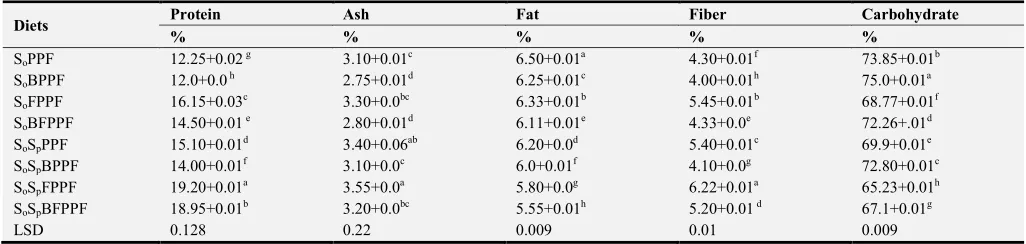
The results of the proximate composition of formulated diets from pigeon pea flour samples processed by different processing methods are shown in Table 1. The result showed that the protein contents ranged from 12.0–19.20% (Table 1). The Protein Advisory Group (PAG) guidelines of [24] recommended a minimum protein content of at least 15% (on a dry weight basis), fat levels of up to 10%, moisture 5% to 10% and total ash not more than 5% for infants and preschool children [10]. The protein values for some of the formulated diets produced with these pigeon pea flours SoSpFPPF, SoSpBFPPF, SoSpPPF and SoFPPF fall
within the acceptable range of recommendations given with exception of the diets formulated with these pigeon pea flours SoPPF, SoBPPF, SoBFPPF and SoSpBPPF which were
below the standard for protein. This implies that some diets from some of the pigeon pea flours were higher in protein content than the diet from the standard pigeon pea flour (SoPPF). Protein is necessary for growth and repair of worn
out tissues.
The fat content of the formulated diets ranged from 5.55 – 6.50% and were below the standard (10%). This could be an advantage in the diets are to be stored as they will have longer shelf-life due to lower fat contents. All fats and fat containing foods contain some unsaturated fatty acids and hence are potentially susceptible to oxidative rancidity [15]. Also, the low fat content of the formulated diets was due to lower vegetable oil incorporated into the diets.
The ash content of the formulated diets ranged from 3.10 – 3.55% (Table 1). All the formulated diets in this study contained total ash which was not more than 5% as recommended for infants or preschool children. Ash is a measure of quantity of mineral in a food.
Table 1. Proximate Composition of Diets Formulated from Pigeon Pea Flour Samples Processed By Different Methods.
Diets Protein Ash Fat Fiber Carbohydrate
% % % % %
SoPPF 12.25+0.02 g 3.10+0.01c 6.50+0.01a 4.30+0.01f 73.85+0.01b
SoBPPF 12.0+0.0 h 2.75+0.01d 6.25+0.01c 4.00+0.01h 75.0+0.01a
SoFPPF 16.15+0.03c 3.30+0.0bc 6.33+0.01b 5.45+0.01b 68.77+0.01f
SoBFPPF 14.50+0.01 e 2.80+0.01d 6.11+0.01e 4.33+0.0e 72.26+.01d
SoSpPPF 15.10+0.01d 3.40+0.06ab 6.20+0.0d 5.40+0.01c 69.9+0.01e
SoSpBPPF 14.00+0.01f 3.10+0.0c 6.0+0.01f 4.10+0.0g 72.80+0.01c
SoSpFPPF 19.20+0.01a 3.55+0.0a 5.80+0.0g 6.22+0.01a 65.23+0.01h
SoSpBFPPF 18.95+0.01b 3.20+0.0bc 5.55+0.01h 5.20+0.01 d 67.1+0.01g
LSD 0.128 0.22 0.009 0.01 0.009
Values are means ± Standard deviations from the means (on dry weight basis). Means with different letter within a column are significantly different (p<0.05). LSD= Least significant difference.
Key:
SoPPF diet=Diet formulated from soaked pigeon pea flour (control) SoBPPF diet=Diet formulated from soaked and boiled pigeon pea flour SoFPPF diet=Diet formulated from soaked and fermented pigeon pea flour SoBFPPF diet=Diet formulated from soaked, boiled and fermented pigeon pea flour SoSpPPF diet=Diet formulated from soaked and sprouted pigeon pea flour SoSpBPPF diet=Diet formulated from soaked, sprouted and boiled pigeon pea flour SoSpFPPF diet=Diet formulated from soaked, sprouted and fermented pigeon pea flour SoSpBFPPF diet=Diet formulated from soaked, sprouted, boiled and fermented pigeon pea flour
5.2. Average Daily Feed in Take of the Formulated Diets Per Rat and the Percentage Weight Gain
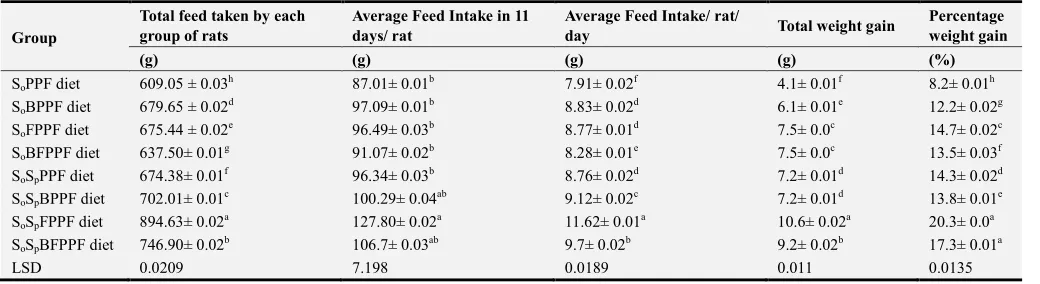
The average daily intake of the feeds per rat fed on diets formulated from pigeon pea flour samples are shown in Table 2. The average feed intake/rat/day ranged from 7.19 – 11.62g. There were significant differences (p<0.05) in the daily feed-intakes of the rats. The highest daily feed- intake (11.6g) was recorded for the group of rats fed on SoSpFPPF
diet followed by group of rats fed on SoSpBFPPF diet (9.7g).
The least feed intake per day perrat (7.19g) was recorded for the group of rats fed the diet produced from the control flour sample, SoPPF. This showed that diet formulated from
combined soaked/sprouted/fermented pigeon pea flour (SoSpFPPF) was consumed most by the experimental rats
while the diet formulated from soaked pigeon pea flour, control (SoPPF) was the least consumed. This could be
because the SoSpFPPF diet formulated with
sprouted/fermented pigeon pea flour was more palatable to the rats. [4] had noted that feed intake is associated with nitrogen source, palatability, flavour and essential amino acids rather than nitrogen levels. This result showed that SoSpFPPF diet made from sprouted/fermented pigeon pea
flour had the necessary nutrients required by the rats for growth. It is important to note that food intake determine the level of nitrogen intake in the body. Therefore, increased food intake as a result of feeding the rats with SoSpFPPF and
SoSpBFPPF diets was an indication of increased nitrogen
intake. The amount of food consumed also influence nitrogen retention or nitrogen balance.
There were significant differences (p<0.05) in the percentage weight gain among the rats fed with the various diets which were formulated from the pigeon pea flour samples (Table 2). The percentage weight gain for the rats ranged from 8.2 – 20.3%. The highest percentage weight gain
(20.3%)was recorded for rats that were fed on the diet that was formulated from flour sample SoSpFPPF followed
closely by the rats fed on the diet that was formulated from flour sample SoSpBFPPF with percentage weight gain of
17.3%. The lowest percentage weight gain (8.2%) was recorded for rats fed on diet made from control flour sample SoPPF. This result showed that weight gain was influenced
by the quantity of diet consumed and the quality of the protein constituents of the diets as shown in the results (Table 1). Meaning that flour sample SoSpFPPF had highest protein
in terms of quantity and quality and that the use of combined processes (sprouting and fermentation) in production of pigeon pea flour was responsible for the high quantity and high quality of the flour protein. Protein is required for growth, healthy living and maintenance or production of tissues and cells of the body.
The rats fed on the diet that was formulated from combined sprouted/fermented pigeon pea flour had increased growth more than the other experimental rats on the other diets formulated from the pigeon pea flours that were prepared with other processing methods. This is an indication that the diet SoSpFPPF (formulated from combined sprouted/fermented
pea flour (SoPPF) and those diets that the pigeon pea seeds
were boiled (except SoSpBFPPF) recorded less growth when
compared to rat fed on the other formulated diets. This was evidenced by the low percentage weight gain recorded for the group of rats fed on them. This might be due to the lower protein content recorded for them in the proximate
composition analysis of the formulated diets (Table 1). The high weight gain recorded for the diets formulated with sprouted/boiled/fermented flour sample (SoSpBFPPF) could
be because the high level protein generated by the combined sprouting and fermentation processes was not drastically reduced by the boiling process.
Table 2. Average Feed Intake Per Day and Percentage Weight Gain Per Rat.
Group
Total feed taken by each group of rats
Average Feed Intake in 11 days/ rat
Average Feed Intake/ rat/
day Total weight gain
Percentage weight gain
(g) (g) (g) (g) (%)
SoPPF diet 609.05 ± 0.03h 87.01± 0.01b 7.91± 0.02f 4.1± 0.01f 8.2± 0.01h
SoBPPF diet 679.65 ± 0.02d 97.09± 0.01b 8.83± 0.02d 6.1± 0.01e 12.2± 0.02g
SoFPPF diet 675.44 ± 0.02e 96.49± 0.03b 8.77± 0.01d 7.5± 0.0c 14.7± 0.02c
SoBFPPF diet 637.50± 0.01g 91.07± 0.02b 8.28± 0.01e 7.5± 0.0c 13.5± 0.03f
SoSpPPF diet 674.38± 0.01f 96.34± 0.03b 8.76± 0.02d 7.2± 0.01d 14.3± 0.02d
SoSpBPPF diet 702.01± 0.01c 100.29± 0.04ab 9.12± 0.02c 7.2± 0.01d 13.8± 0.01e
SoSpFPPF diet 894.63± 0.02a 127.80± 0.02a 11.62± 0.01a 10.6± 0.02a 20.3± 0.0a
SoSpBFPPF diet 746.90± 0.02b 106.7± 0.03ab 9.7± 0.02b 9.2± 0.02b 17.3± 0.01a
LSD 0.0209 7.198 0.0189 0.011 0.0135
*Mean daily feed intake of seven rats, means with different superscript letter within a column are significantly different (p<0.05) SoPPF diet: Rats Fed on Feeds Formulated From Soaked Pigeon Pea Flour
SoBPPF diet: Rats Fed on Feeds Formulated From Soaked and Boiled Pigeon Pea Flour SoFPPF diet: Rats Fed on Feeds Formulated From Soaked and Fermented Pigeon Pea Flour SoBFPPF diet: Rats Fed on Feeds Formulated From Soaked, Boiled and Fermented Pigeon Pea Flour SoSpPPF diet: Rats Fed on Feeds Formulated From Soaked and Sprouted Pigeon Pea Flour SoSpBPPF diet: Rats Fed on Feeds Formulated From Soaked, Sprouted and Boiled Pigeon Pea Flour SoSpFPPF diet: Rats Fed on Feeds Formulated From Soaked, Sprouted and Fermented Pigeon Pea Flour SoSpBFPPF diet: Rats Fed on Feeds Formulated From Soaked, Sprouted, Boiled and Fermented Pigeon Pea Flour
5.3. Protein Qualities of Pigeon Pea Flour Samples Processed by Different Methods Using Rat Feeding
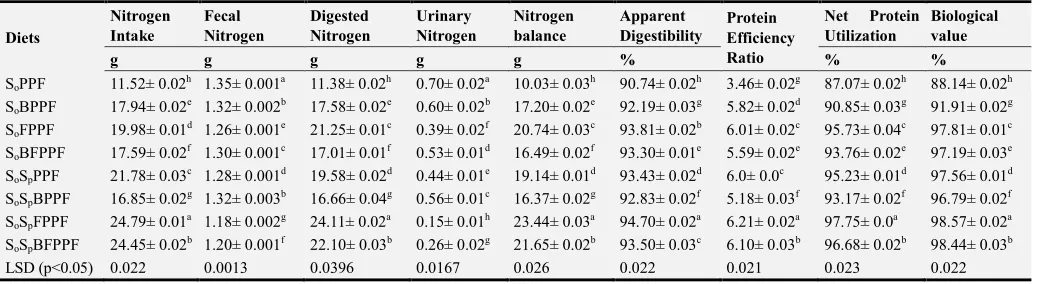
The results of the protein quality of pigeon pea flours processed using different methods are shown in Table 3. The nitrogen intake ranged from 11.52 – 24.79g. There were significant differences (p<0.05) in the nitrogen intakes of the experimental rats. The highest nitrogen intake (24.79%) was recorded for the rats fed with diet that was formulated with soaked, sprouted and fermented pigeon pea flour (SoSpFPPF)
and they were followed by rats fed with diets formulated from soaked, sprouted, boiled and fermented pigeon pea flour - SoSpBFPPF (24.45g), rats fed on diets formulated with
soaked and fermented pigeon pea flour - SoFPPF (21.78g)
and rats fed on diets formulated from soaked and sprouted pigeon pea flour – SoSpPPF (19.98g). The lowest nitrogen
intake (11.52g)was recorded for the rats fed with the control diet formulated from soaked pigeon pea flour (SoPPF) and
second, third and fourth lowest nitrogen intakes were recorded for the rats fed on diets formulated with soaked, sprouted and boiled pigeon pea flour (SoSpBPPF), rats fed on
diets formulated with soaked, boiled and fermented pigeon pea flour (SoBFPPF) and rats fed on diets formulated with
soaked and boiled pigeon pea flour (SoBPPF) with nitrogen
intake values of 16.85g, 17.59g and 17.94g respectively. This result showed that the nitrogen intake of the rats fed the diet processed with the pigeon pea flour which was subjected to combined soaking/sprouting/fermentation recorded the
highest nitrogen intake. And there was general increase in the nitrogen intake of all the rat groups fed the respective diets that were formulated from the pigeon pea flours which were respectively processed by sprouting, fermentation and combined sprouting/fermentation processing methods. The reason for the increments in nitrogen intake could be due to the increased nitrogen consumption as these processes individually increased the protein (nitrogen) content of the flours their diets were formulated with. The diet prepared with SoSpFPPF flour sample contained the highest protein
percent and highest food intake was recorded by the rats fed with this diet. This was followed by the diet prepared with SoSpBFPPF flour sample (Tables 1 and 2).
The result equally showed that the rats fed on the control and the boiled diets with exception of SoSpBFPPF) had low nitrogen
intake. This might be due to low nitrogen consumption by the rats from the diets. The rats fed on these diets equally recorded low food intake and low weight gain (Table 2).
The faecal nitrogen content of the group of rats fed with formulated diets from pigeon pea flour processed with different methods ranged from 1.18 – 1.35g. There were significant differences (p<0.05) in the faecal nitrogen content of the rats fed on the diets with the exception of rats fed on diet SoBPPF and SoSpBPPF which were similar. The highest
faecal nitrogen (1.35g) was recorded for rats fed on the control diet (SoPPF) and this was significantly different (p
(1.20g). The rats fed on fermented and sprouted diets equally recorded low faecal nitrogen while the rats fed on the other boiled diets recorded higher faecal nitrogen. The faecal nitrogen of the rats indicates the level of digestibility of the diets. The low faecal nitrogen recorded for rats fed on diets formulated with SoSpFPPF, SoSpBFPPF, SoFPPF and SoSpPPF
flour samples showed that they were more digestible while the high faecal nitrogen recorded for rats fed on diets
formulated with SoPPF (control), SoBPPF, SoBFPPF and
SoSpBPPF flour samples showed that they were less
digestible. [22] stated that high faecal nitrogen of rats indicates low nitrogen digestibility and utilization. The low faecal nitrogen recorded for rats fed on diets formulated with SoSpFPPF, SoSpBFPPF, SoFPPF and SoSpPPF flour was
significant in their high nitrogen retention or nitrogen balance.
Table 3. Protein Quality Characteristics of Rat Diets Formulated with the Pigeon Pea Flour Samples.
Diets
Nitrogen Intake
Fecal Nitrogen
Digested Nitrogen
Urinary Nitrogen
Nitrogen balance
Apparent Digestibility
Protein Efficiency Ratio
Net Protein Utilization
Biological value
g g g g g % % %
SoPPF 11.52± 0.02h 1.35± 0.001a 11.38± 0.02h 0.70± 0.02a 10.03± 0.03h 90.74± 0.02h 3.46± 0.02g 87.07± 0.02h 88.14± 0.02h SoBPPF 17.94± 0.02e 1.32± 0.002b 17.58± 0.02e 0.60± 0.02b 17.20± 0.02e 92.19± 0.03g 5.82± 0.02d 90.85± 0.03g 91.91± 0.02g SoFPPF 19.98± 0.01d 1.26± 0.001e 21.25± 0.01c 0.39± 0.02f 20.74± 0.03c 93.81± 0.02b 6.01± 0.02c 95.73± 0.04c 97.81± 0.01c SoBFPPF 17.59± 0.02f 1.30± 0.001c 17.01± 0.01f 0.53± 0.01d 16.49± 0.02f 93.30± 0.01e 5.59± 0.02e 93.76± 0.02e 97.19± 0.03e SoSpPPF 21.78± 0.03c 1.28± 0.001d 19.58± 0.02d 0.44± 0.01e 19.14± 0.01d 93.43± 0.02d 6.0± 0.0c 95.23± 0.01d 97.56± 0.01d SoSpBPPF 16.85± 0.02g 1.32± 0.003b 16.66± 0.04g 0.56± 0.01c 16.37± 0.02g 92.83± 0.02f 5.18± 0.03f 93.17± 0.02f 96.79± 0.02f SoSpFPPF 24.79± 0.01a 1.18± 0.002g 24.11± 0.02a 0.15± 0.01h 23.44± 0.03a 94.70± 0.02a 6.21± 0.02a 97.75± 0.0a 98.57± 0.02a SoSpBFPPF 24.45± 0.02b 1.20± 0.001f 22.10± 0.03b 0.26± 0.02g 21.65± 0.02b 93.50± 0.03c 6.10± 0.03b 96.68± 0.02b 98.44± 0.03b
LSD (p<0.05) 0.022 0.0013 0.0396 0.0167 0.026 0.022 0.021 0.023 0.022
Mean + Standard deviation (7 albino rats). Means with different letter within a column are significantly different (p<0.05). LSD= Least significant difference.
Key:
SoPPF diet = diet formulated from soaked pigeon pea flour (control) SoBPPF diet= diet formulated from soaked and boiled pigeon pea flour SoFPPFdiet =diet formulated from soaked and fermented pigeon pea flour
SoBFPPF diet = diet formulated from soaked, boiled and fermented pigeon pea flour SoSpPPF diet= diet formulated from soaked and sprouted pigeon pea flour SoSpBPPF diet= diet formulated from soaked, sprouted and boiled pigeon pea flour SoSpFPPF diet = diet formulated from soaked, sprouted and fermented pigeon pea flour SoSpBFPPF diet = diet formulated from soaked, sprouted, boiled and fermented pigeon peaflour
There were significant differences (p<0.05) in the digested nitrogen values which ranged from 11.38 – 24.11g. The highest digested nitrogen value (24.11g) was recorded for rats fed on diet SoSpFPPF followed by those fed on diet
SoSpBFPPF (22.10g), rats fed on diet SoFPPF (21.25g) and
SoSpPPF (19.58g) respectively. The lowest digested nitrogen
(11.38g)was recorded for rats fed on the control diet (SoPPF)
followed by rats fed on diet SoSpBPPF (16.66g), rats fed on
diet SoBFPPF (17.01g) and rats fed on diet SoBPPF (17.58g)
respectively. Rats fed on diet SoSpFPPF which was
formulated with sprouting/fermentation pigeon pea flour sample had the highest digested nitrogen followed by those fed on diets SoSpBFPPF, SoFPPF and SoSpPPF. Rats fed on
diet SoSpFPPF equally had high nitrogen intake and low
faecal nitrogen followed by rats fed on diet SoSpBFPPF. The
highest digested nitrogen recorded for diet SoSpFPPF was due
to its highest nitrogen intake which was higher than those of the other diets. Furthermore, the highest digested nitrogen in diet SoSpFPPF probably was due to its highest apparent
digestibility. [8] Had reported some improvement in the protein digestibility of sprouted and fermented blends. They attributed this to the activities of proteolytic enzymes during sprouting and fermentation which resulted to degradation of the protein into simpler proteins, polypeptides and amino acids, thus enhancing digestibility of the diets. Conversely,
the lower digested nitrogen recorded for diet SoPPF (control)
and other boiled diets might be due to their low nitrogen intake of rats fed with these diets.
The urinary nitrogen ranged from 0.15 – 0.70g. There were significant differences (p<0.05) in the urinary nitrogen of rats fed on the formulated diets. The highest urinary nitrogen (0.70g) was recorded for rats fed on diet SoPPF (control)
followed by rats fed on diet SoBPPF (0.60g), rats fed on diet
SoSpBPPF (0.56g) and rats fed on diet SoBFPPF (0.53g)
respectively. The lowest urinary nitrogen (0.15g)was recorded for rats fed on diet SoSpFPPF (0.15g) followed by
rats fed on diet SoSpBFPPF (0.26g), rats fed on diet SoFPPF
(0.39g) and rats fed on diet SoSpPPF (0.44g) respectively.
The low urinary nitrogen observed for rats fed the diets which were formulated with pigeon pea seeds which were either subjected to sprouting, fermentation or combination of sprouting and fermentation processes could be due to their high digested nitrogen. The low faecal and urinary nitrogen released by rats fed the above diets might be the reason for the high nitrogen balance, apparent digestibility, net protein utilization and biological value. [20] Reported that low urinary nitrogen and low faecal nitrogen indicates high protein quality of fed diets. On the other hand, high urinary nitrogen recorded for rats fed on the control diet, SoPPF and
nitrogen values, low nitrogen intake, low apparent digestibility, etc.
There were significant differences (p<0.05) in the nitrogen balance of rats fed on the formulated diets. The highest value of nitrogen balance (23.44g)was recorded for rats fed on diet SoSpFPPF followed by those of rats fed on diet SoSpBFPPF
(21.65g), diet SoFPPF (20.74g) and diet SoSpPPF (19.14g)
respectively. The lowest nitrogen balance (10.03g) was recorded for rats fed on diet SoPPF (control), diet SoSpBPPF
(16.37g), diet SoBFPPF (16.49g) and diet SoBPPF (17.20g)
respectively. The rats with the highest nitrogen retention (nitrogen balance) were the group fed on diet formulated from pigeon pea flours which were processed by combination of sprouting and fermentation processes (SoSpFPPF). This
shows that diet SoSpFPPF induced higher nitrogen retention
in the experimental rats than the other diets because it had better pattern of essential amino acids. Furthermore, rats fed on diet SoSpFPPF recorded the highest protein in the
proximate analysis, highest food intake (nitrogen intake) and highest percentage weight gain in the experimental rats which reflected in its high nitrogen balance. Conversely, rats fed the control diet, SoPPF and those fed the other boiled
blends with exception of SoSpBFPPF recorded low nitrogen
balance. This might be due to their lower digestible nitrogen, nitrogen intake and apparent digestibility.
There were significant differences (p<0.05) in the apparent digestibility of the formulated diets. The apparent digestibility ranged from 90.74 – 94.70%. The highest value (94.70%) was recorded for rats fed on diet SoSpFPPF which
was significantly (p<0.05) higher than those of rats fed on diet SoSpBFPPF (93.50%), diet SoFPPF (93.81%) and diet
SoSpPPF (93.43%) respectively. The lowest apparent
digestibility (90.74%) was recorded for rats fed on diet SoPPF (control) which was significantly (p 0.05) lower than
those of rats fed on diets SoBPPF (92.19%), SoSpBPPF
(92.83%) and SoBFPPF (93.30%) respectively. This result
showed that diets SoSpFPPF and SoSpBFPPF had the highest
apparent digestibilities. Digestibility is a measure of protein hydrolysis. These diets (SoSpFPPF and SoSpBFPPF) also
recorded the least in antinutritional contents. The high protein digestibility of these diets might be due to their low levels of antinutrients (tannins and trypsin inhibitors) found in them since trypsin inhibitors and tannins are said to be responsible for the poor digestibility of dietary proteins [18]. The high apparent digestibility recorded for the diet (SoSpFPPF) formulated with combined sprouted/fermented
pigeon pea flour accounted for the good growth performance of the rats in the feeding experiment. On the other hand, the low apparent digestibility recorded for the boiled diets (SoBPPF) and control diet (SoPPF) could be due to higher
presence of trypsin inhibitors and haemagglutinins which hampers protein digestibility and decreased nutrient absorption respectively.
There were significant differences (p<0.05) in the protein efficiency ratio of the groups of rats fed with the formulated diets. The highest protein efficiency ratio (PER) (6.20) was recorded for rats fed on diet SoSpFPPF followed by rats fed
on diets SoSpBFPPF (6.10), SoFPPF (6.01) and SoSpPPF (6.0)
respectively. There were no significant differences (p<0.05) in PER of rats fed on diets SoFPPF and SoSpPPF. The lowest
PER (3.46) was recorded for rats fed on diet SoPPF (control)
followed by rats fed on diets SoSpBPPF (5.18), SoBFPPF
(5.59) and SoBPPF (5.82) respectively. PER are influenced
by food intake and body weight gain. Rats fed with diet SoSpFPPF recorded the highest PER and the group of rats had
the highest food intake and percentage weight gain (Table 3). This was closely followed by rats fed with diet SoSpBFPPF.
The high PER exhibited by rats fed on diets SoSpFPPF and
SoSpBFPPF indicated that combined sprouting/fermentation
process generated an improved pattern of amino acids whichwas utilized by the rats for the synthesis of tissue protein. The rats fed the control diet (SoPPF) and boiled diets
(with exception of SoSpBFPPF) recorded low PER compared
to rats fed the other diets. This could be due to low protein in the diet, their low food intake and low average percentage weight gain. The Protein Advisory Group (PAG) guidelines recommended a PER of not less than 2.3 for weaning food [24]. All the diets in this study exceeded the PAG recommendation for protein. This implies that the test diets for this study were high in protein.
There were significant differences (p<0.05) in the net protein utilization (NPU) of the rats fed on the formulated diets. The NPU ranged from 87.07 – 97.75%. The highest NPU (97.75%) was recorded foe rats fed on diet SoSpFPPF
followed by rats fed on diets SoSpBFPPF (96.68%), SoFPPF
(95.73%) and SoSpPPF (95.23%) respectively. The lowest NPU
(87.07%) was recorded for rats fed on diet SoPPF (control)
followed by rats fed on diets SoBPPF (90.85), SoSpBPPF
(93.17%) and SoBFPPF (93.76%) respectively. The result of
rat feeding showed that diet (SoSpFPPF) formulated from
pigeon pea flour that was processed by combination of sprouting and fermentation processing methods had the highest net protein utilization. This means that diet SoSpFPPF had
better pattern of amino acids followed by diet SoSpBFPPF.
This result was in agreement with the report of [8] who reported high NPU for combined sprouted/fermented sorghum, cowpea and groundnut blends. The result also showed that the NPU values of the control diet (SoPPF) and the boiled diets
(except SoSpBFPPF) were lower than the NPU of the diets
whose flours were produced by sprouting, fermentation and combined sprouting/fermentation processes. The reason for this might be due to deficiency in essential amino acids of the diets. The diet from combined sprouted/fermented pigeon pea flour had better growth promoting quality on the experimental animals than the other diets.
There were significant differences (p<0.05) in the biological value (BV) of the rats fed on the formulated diets. The BV ranged from 88.14 – 98.57%. The highest BV (98.57%) was recorded for rats fed on diet SoSpFPPF
followed by those fed on diets SoSpBFPPF (98.44%), SoFPPF
(97.81%) and SoSpPPF (97.56%) respectively. The lowest BV
(88.14%) was recorded for rats fed on diet SoPPF (control)
followed by rats fed on diets SoBPPF (91.91%), SoSpBPPF
showed that rats fed on diet SoSpFPPF which was formulated
from combined sprouted/fermented pigeon pea flour had the highest BV followed by diet SoSpBFPPF. The reason for their
high biological values could be because of the high protein content of the flours they were formulated from (Table 1) and the diets’ high apparent digestibility values. This result is in agreement with the work of [8] who reported high BV for
combined sprouted/fermented sorghum, cowpea and
groundnut blends. BV measures the efficiency of utilization of absorbed nitrogen [13]. According to [16], a protein material is said to be of good nutritional quality when its biological value (BV) is high (i.e. 70 – 100%). Protein quality is a measure of the balance of the amino acid that are absorbed and utilized for growth and other purposes [12]. The BV of all the diets studied were higher than the recommended value of 75% for children by [24]. The BV of diet SoSpFPPF was the highest recorded for this study
followed by diet SoSpBFPPF. BV is usually higher than NPU.
The very high BV for the diets produced from combined sprouted/fermented flours indicate adequate complementation of amino acid in the diet and it is therefore recommended as the best processing method for pigeon pea flour.
6. Conclusion
This study indicated that the combined
soaking/sprouting/fermentation and the combined
soaking/sprouting/boiling/fermentation improved digestibility and protein qualities of the pigeon pea flour samples. This was further proved by the high growth performance of the experimental animals, the high PER, NPU and BV. Therefore, the combined soaked/sprouted/fermented and combined soaked/sprouted/boiled/fermented formulated diets served better for weaning the albino rats than the other diets and are recommended as the best methods of processing pigeon pea flour.
References
[1] Akeredolu, P., Addo, A. A. and Akeredolu, O. A. (2005). Clinical evaluation of pearl millet conophor weaning mix as supplementary food for Nigerian children. Brazillian Arch. Bio. Technol. 48: 531–536.
[2] AOAC (2005). Official Methods of Analysis International. 18th Edition. Association of Official Analytical Chemists, USA.
[3] Ariahu, C. C., Ukpabi, U. and Mbajunwa, K. O. (1999). Production of African breadfruit (Treculia Africana) and soyabean (Glycine max) seed based food formulations. 1: Effects of germination and fermentation on nutritional and organoleptic quality. Plant Foods Hum. Nutr. 54: 123–266.
[4] Chikwendu, N. J. and Obizoba, J. C. (2003). Nutritive evaluation of protein quality of ground bean (Kerstingiellageocarpa) based diets. Nigerian Journal of Nutritional Science vol. 24: 64–67.
[5] De Silva, S. S., Shim, K. F. and Khim Ong, A. (1990). An
evaluation of the method used in digestibility estimation of a dietary ingredient and comparisons on external and internal markers and time of faeces collection in digestibility studies in the fish Oreochomisaureus (Steindachner). Reproduction, Nutrition, Development 30: 215–216.
[6] Edema, M. O. and Sanni, A. (2006). Microorganisms population of fermenting maize meal for sour maize bread production in Nigeria. Niger. J. Microbiol. 20(2): 937–946.
[7] Ezueh, M. I. (1977). Cultivation and utilization of minor food legumes in Nigeria. Tropical Grain Legume Bulletin 10: 227.
[8] Falmata, A. S., Modu, S., Badau, H. D., Babagana, M. and Bintu, B. P. (2014). Formulation and evaluation of complementary weaning food prepared from single and combined sprouted/fermented local red sorghum (S. bicolor) variety blended with cowpea (Vigna unguiculata) and groundnut (Arachishypogea). Int. J. Biotechnol. Food Sci. vol. 2(8): 149-55.
[9] FAO/WHO Codex Alimentarius (1982). Vol. IX Codex Standards for foods for special dietary uses including foods for infants and children and related code of hygienic practices 1st ed. Rome, pp. 15–58.
[10] FAO/WHO/UNU (1985). Energy and Protein Requirements. Reports of a Joint FAO/WHO/UNU. Experts Consultation WHO Tech. Report Series. 742. WHO Geneva.
[11] Farris, D. G. and Singh, U. (1990). Pigeon pea nutrition and products. In: Y. L. Nene et al. The pigeon pea. Petencheru A. P. 502324, India ICRISAT pp. 467.
[12] Friedman, M. and Cuq, J. L. (1988). Chemistry, analysis, nutritional value and toxicology of tryptophan. J. Agric. Food Chem. 36: 1079–1093.
[13] Hackler, L. R. (1977). Methods of measuring protein quality. A review of bioassay procedures. Cereal Chemistry 54(4): 984–995.
[14] Henry, C. J. K. and Massey, D. (2001). Micronutrient Changes during food processing and storage. Crops Post Harvest Programme (CPHP) – Issue paper, 5 December 2001.
[15] Ihekoronye, I. A. and Ngoddy, P. O. (1985). Integrated Food Science and Technology for the Tropics. Macmillan Publishers Ltd. London.
[16] Ijarotimi, S. O. and Keshinro, O. O. (2011). Determination of Amino acid, Fatty acid, mineral, Functional and choking properties of Germinated and fermented popcorn (Zea mays) everta) flour. European Journal of Food Research and Review 1(2): 102–122.
[17] Ikemefuna, C. (1998). Scialert. net/fulltext/%3F doi. Accessed 10 August 2014.
[18] Liener, I. E. (1980). Heat labile antinutritional factors. In: Advances in Legume Science (Eds. Summerfield, R. J. and Bunting, A. H.). Kew London, Royal Botanic Gardens, pp. 157-170.
[19] Mbaeyi, I. E. and Onweluzo, J. C. (2010). Effect of sprouting and pre-gelatinization on the physicochemical properties of sorghum-pigeon pea composite blend used for the production of breakfast cereal. J. Tropical Agric. 2: 234-239.
[21] Oloyo, R. A. (2004). Chemical and nutritional quality changes in germinating seeds of Cajanuscajan L. Food Chemistry 85: 497–502.
[22] Onweluzo, J. C. and Nwabugwu, C. C. (2009). Fermentation of millet and pigeon pea seeds for flour production. Effect of composition and selected functional properties. Pak. J. Nutr. 8(6): 737-744.
[23] Oshodi, A. A. and Ekperigin, N. M. (1989). Functional properties of pigeon pea flour (Cajanuscajan). Food Chem. 34: 187.
[24] PAG (1971). Protein Advisory Group of the United Nations Guidelines no. 8: Protein rich mixtures for use as weaning foods. New York: Food and Agricultural Organization of the United Nations/World Health Organization/United Nations Children’s Funds. Pp. 1–7.