Evaluation and Development of Potentially Better Practices to
Prevent Neonatal Nosocomial Bacteremia
Howard W. Kilbride, MD*; Richard Powers, MD‡; David D. Wirtschafter, MD§; Michael B. Sheehan, MD*; Dianne S. Charsha, RNC, MSN, NNP储; Meena LaCorte, MD¶; Neil Finer, MD#; and
Donald A. Goldmann, MD**
ABSTRACT. Objective. Six neonatal intensive care units (NICUs) that are members of the Vermont Oxford National Evidence-Based Quality Improvement Collabo-rative for Neonatology collaborated to reduce infection rates. There were 7 centers in the original focus group, but 1 center left the collaborative after 1 year. The objec-tive of this study was to develop strategies to decrease nosocomial infection rates in NICUs.
Methods. The process included a comprehensive lit-erature review, internal practice analyses, benchmark studies, and development of practical experience through rapid-cycle changes, subsequent analysis, and feedback. This process led to 3 summary statements on potentially better practices in handwashing, approach to nosocomial sepsis evaluations, and central venous catheter manage-ment.
Results. These statements provide a basis for an
evidence-based approach to lowering neonatal intensive care unit nosocomial infection rates.
Conclusions. The 2-year process also led to changes in the culture and habits of the institutions involved, which should in turn have long-term effects on other aspects of quality improvement. Pediatrics 2003;111:e504 –e518. URL: http://www.pediatrics.org/cgi/content/full/111/4/ e504; nosocomial infection, handwashing, line manage-ment, blood cultures, collaborative quality improvemanage-ment, NIC/Q 2000.
ABBREVIATIONS. NICU, neonatal intensive care unit; NI, noso-comial infection; PBPs, potentially better practices; ELBW, ex-tremely low birth weight; VON, Vermont Oxford Network; NIC/Q 2000, Neonatal Intensive Care Quality Improvement Col-laborative Year 2000; CONS, coagulase-negative staphylococcus; IV, intravenous; CAT, critically appraised topic; PDSA, plan-do-study-act; CRBSI, catheter-related blood stream infection; VLBW, very low birth weight.
KEY POINTS OF ARTICLE
• Six neonatal intensive care units (NICUs) collabo-rated in developing strategies to decrease nosoco-mial infection (NI) rates.
• The process included a comprehensive literature
review, internal process analysis, and benchmark studies.
• Summary statements were developed for poten-tially better practices (PBPs) in handwashing, nos-ocomial sepsis evaluation, and central venous catheter management.
• The collaborative, multidisciplinary approach is multifaceted and leads to a more complete analy-sis than literature review alone.
APPLYING LESSONS LEARNED TO PRACTICE • Summary statements from a group of
collaborat-ing NICUs provided a basis for evidence-based approaches to lowering infection rates.
• The process of developing summary statements can lead to changes in culture and habits at the participating institutions.
• Benchmarking seemed to offer the best opportu-nity for determining which specific practice could reduce infection rates.
• Improvement teams should focus on using multi-ple sources of evidence to develop small changes in practice that can be made safely and tailored to local cultures.
C
urrent perinatal management techniques have resulted in greater survival for extremely low birth weight (ELBW) infants.1However, these infants are at risk for severe short- and long-term morbidities associated with prematurity. Complica-tions include nosocomial bacteremia, which is in-versely related to gestational age and frequently ac-companies other complications (eg, chronic lung disease, necrotizing enterocolitis).2,3 Most NICUs have established protocols to prevent hospital-ac-quired sepsis because this complication is associated with longer length of hospital stay, higher mortality, and greater cost of care.3Infection control personnel who are responsible for the NICU monitor trends in birth weight or gestational age–specific NI rates, which are then compared with national data (Noso-comial Infection Surveillance System).4 For institu-tions participating in the Vermont Oxford Network (VON), outcome data for infants ⱕ1500 g birth weight are tracked on an annual basis and compared with data from other institutions or with pooled network data.In 1998, a group of VON participant institutions began a collaborative effort to develop NICU quality improvement programs, with a completion date of 2
From the *Children’s Mercy Hospitals and Clinics, University of Missouri, Kansas City School of Medicine, Kansas City, Missouri; ‡Oakland’s Chil-dren’s Hospital, Oakland, California; §Kaiser Foundation Hospital, Los Angeles, California;储Baylor University Medical Center, Dallas, Texas; ¶The Brooklyn Hospital Center, Brooklyn, New York; #University of California, San Diego Medical Center, San Diego, California; and **Children’s Hospital, Boston, Harvard Medical School, Boston, Massachusetts.
Received for publication Aug 13, 2002; accepted Oct 24, 2002.
years; this effort became known as the Neonatal Intensive Care Quality Improvement Collaborative Year 2000 (NIC/Q 2000). The goal was to implement a program of neonatal quality improvements through rapid-cycle changes within the NICU.5VON data showed important variations from institution to institution in the rate of neonatal complications, in-cluding NIs. Representatives from 6 institutions that had significantly higher rates of NI than others within the VON chose to focus their collaborative efforts on this complication, hoping to lower their rates to levels comparable to those of others. The problem of late-onset nosocomial sepsis seemed to be an appropriate focus for their work. This article summarizes the process that the 6 institutions used to initiate quality improvement changes to reduce nosocomial sepsis and describes the continuous quality improvement changes that resulted at each participating institution.
METHODS
Each of the 6 institutions was represented by 2 to 5 individuals from the disciplines of medicine, nursing, infection control, respi-ratory therapy, and pharmacy. Approximately every 6 months, these representatives met to share findings with each other and members of other study groups participating in NIC/Q 2000 project. Members also held conference calls every 1 to 2 months and held numerous discussions via e-mail using a dedicated list-serv.
To begin the process, the group examined the VON reported data on total NIs. The specific focus became bacteremia caused by coagulase-negative staphylococcus (CONS), which was the etio-logic agent for 64% of patients with nosocomial bacteremia. The goal was a 50% reduction in CONS bacteremia in infants⬍1500 g birth weight.* Group members, with the assistance of a pediatric
infection control expert (D.A.G.), “brainstormed” the topic and identified several areas of care that might be related to risk of infections, including intravenous (IV) line placement and care, nutrition practices, skin care, respiratory care, and handwashing. In addition, noting that although CONS is a frequent cause of late-onset neonatal infection the agent also may be a skin contam-inant, the group concluded that incomplete skin preparation, in-adequate blood volume for culture, and other factors related to diagnostic accuracy were important to address.
During the ensuing 6 months, members from each institution reviewed the literature on the areas of care identified as related to risk of NI, in addition to searching for other possible factors. The literature was reviewed by each institution using the critically appraised topic (CAT) method,6and all institutions shared their
findings and discussed the implications. To expedite the process and maximize group agreements, a professional facilitator (Han-nah King) was provided by the NIC/Q 2000 project.
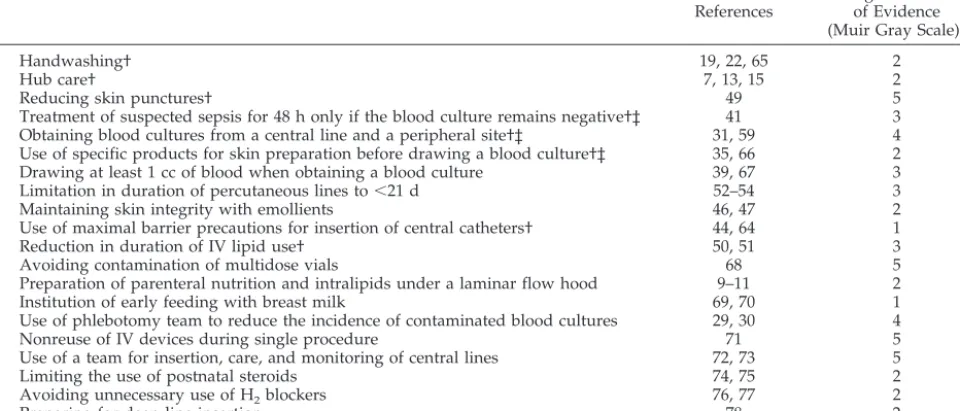
As the investigative process began, the habit of change was being instilled in each institution through encouragement to im-plement those practices that seemed to be justified by published evidence. NICU staff were encouraged to choose changes that were suited to their environment and represented the best oppor-tunity for improvement in their unit. These changes were imple-mented using the plan-do-study-act (PDSA) model promoted by the NIC/Q 2000 project. Experiences with these changes were shared and with the evidence from the literature served as the basis for selection of an extensive list of clinical practices that could theoretically have an impact on infection rates. Twenty PBPs with evidence-based support from the CAT method were priori-tized (Table 1).
Questionnaires
After these investigations, at the second meeting, the group assessed the possible change areas and developed a questionnaire that focused on skin care, methods of sepsis diagnosis, central line care, and IV lipid use. The questions were to be answered by each of the 6 institutions in the group, detailing attitudes, policies, practice, and outcomes. The institutions were asked to complete the questionnaire with multidisciplinary input and report staff differences in perceptions and practices. Questions sought evi-dence of approach rather than specific data, and they were de-signed to be answered with readily available information.
The questionnaire responses were collated and distributed to all 6 institutions to provide a basis for additional discussion. The responses to some questions were uniform and consistent with evidence from the literature. These questions were deemed not helpful in identifying strategies for improvement. In other areas
*Definition of CONS infection based on VON criteria (VON Database Manual of Operations, 2000) included 1) coagulase-negative staphylococcus recovered after 3 days of age from a blood culture obtained from a central line, a peripheral blood sample, or cerebral spinal fluid; 2) signs of gener-alized infection; and 3) treatment with 5 days or more of intravenous antibiotics after the cultures were obtained.
TABLE 1. Suggested PBPs
PBP Selected
References
Highest Class of Evidence (Muir Gray Scale)*
Handwashing† 19, 22, 65 2
Hub care† 7, 13, 15 2
Reducing skin punctures† 49 5
Treatment of suspected sepsis for 48 h only if the blood culture remains negative†‡ 41 3 Obtaining blood cultures from a central line and a peripheral site†‡ 31, 59 4 Use of specific products for skin preparation before drawing a blood culture†‡ 35, 66 2 Drawing at least 1 cc of blood when obtaining a blood culture 39, 67 3
Limitation in duration of percutaneous lines to⬍21 d 52–54 3
Maintaining skin integrity with emollients 46, 47 2
Use of maximal barrier precautions for insertion of central catheters† 44, 64 1
Reduction in duration of IV lipid use† 50, 51 3
Avoiding contamination of multidose vials 68 5
Preparation of parenteral nutrition and intralipids under a laminar flow hood 9–11 2
Institution of early feeding with breast milk 69, 70 1
Use of phlebotomy team to reduce the incidence of contaminated blood cultures 29, 30 4
Nonreuse of IV devices during single procedure 71 5
Use of a team for insertion, care, and monitoring of central lines 72, 73 5
Limiting the use of postnatal steroids 74, 75 2
Avoiding unnecessary use of H2blockers 76, 77 2
Preparing for deep line insertion 78 2
* Scale is 1 to 5, highest to lowest evidence.79
with marked variations in practice, such as the timing of the insertion of central lines in ELBW infants, responses were believed to be helpful in identifying PBPs.
The questionnaire also helped each institution to examine bet-ter its own practices. Those who used a multidisciplinary ap-proach in answering the questions learned more about their vari-ations in perceptions and practices. Often a practice was found to be different from the unit policy. One institution found that de-spite a policy of antiseptic use to prepare the skin before line placement, some practitioners were using sterile water alone to place umbilical catheters in ELBW infants. At least 2 institutions made immediate changes in practice from the ideas generated during discussion of the questionnaire. For example, 1 unit learned that other units had a system for delivering IV lipids from the pharmacy that avoided entry into the line. That unit was able to implement this change immediately. Another unit found that some practitioners performed significantly more sepsis evalua-tions than others. That unit also had 1 of the highest false-positive blood culture rates, suggesting that a more rigorous approach to sepsis evaluations might lower the infection rate.
The questionnaire was then simplified and used during bench-mark visits to gather data that could be compared with data from the 6 collaborating units. Because there were apparent variations among the units in the way that sepsis evaluations were com-pleted and lines were managed, the revised questionnaire focused on these aspects of care.
Benchmark Visits
After refining the list of PBPs and clarifying practices at collab-orating institutions, representatives from each institution ar-ranged to visit sites identified as “better performers” in regard to NI. Institutions to be visited had been identified by VON as having NI rates in the lowest quartile for at least 2 years in a row. Specific sites were selected on the basis of 1) proximity, 2) desire to host a visit, 3) willingness to share information, 4) multidisci-plinary completion of the preliminary questionnaire, and 5) dem-onstrated awareness of efforts to reduce risk of NI. Three of 4 institutions contacted were visited.
Before the visits were scheduled, preliminary discussions oc-curred between team members and key individuals at the bench-mark facilities. On the basis of responses to the preliminary ques-tionnaire, additional questions were drafted to be explored at the visit. Multidisciplinary team members were selected for each visit depending on questions being addressed, including physicians, staff nurses, neonatal nurse practitioners, respiratory therapists, pharmacists, epidemiologists, and administrators. The visits usu-ally lasted a day and a half and involved collaborative meetings between members of like disciplines as well as the entire group, nursery walk-throughs, and case management reviews.
Evidence of the implementation of the PBPs identified by the group was observed at each site visited. Additional PBPs were also identified on the basis of reports of staff at the benchmark institution or observations by site visitors. PBPs implemented in at least 2 benchmark sites were considered to be especially impor-tant. Some practices that had been discussed as possible PBPs before the benchmark visits seemed to be less important than others to the success of the benchmark units in achieving low infection rates, and they were deemphasized in the group’s final statements. These included use of special handwashing products and emollients, management of IV lipids, and systemic steroid use.
Variation in the implementation of PBPs was evident among the benchmark institutions. For instance, at 1 institution, phlebot-omy teams were used to standardize the approach to drawing blood and obtaining blood cultures. At another institution with a limited number of attending physicians and no residents or neo-natal nurse practitioners, standard approach to sepsis workups seemed to be facilitated because the number of staff members was small. These observations led to the conclusion that a systematic approach to the workup and diagnosis of sepsis is important in lowering infection rates. In fact, most of the superior-performing sites had specific protocols (eg, barrier precautions during line change) and consistent care plans (eg, sepsis workup criteria) to minimize or manage nosocomial sepsis assessment, emphasizing the importance of a unit-based, organized approach to this prob-lem. In addition, each benchmark site viewed sepsis as a negative occurrence rather than “a rite of passage” for high-risk infants in
the NICU, emphasizing the importance of practitioners’ percep-tions of sepsis.
Rapid-Cycle Improvements
In the literature reviews, internal audits, benchmarking, and discussions, the group used systems thinking to break the overall goal of reducing CONS infections into 3 key categories of care: methods of diagnosing infections, handwashing, and IV line care. Within each of these general categories, specific measurable aims were identified and PBPs were grouped according to which aim they addressed. These aims led to small tests of change, imple-mented as rapid-cycle improvement projects at each of the 6 institutions (if they had not previously been done). The resulting experience at each institution was reported at group meetings or through the listserv. Results communicated were both qualitative and quantitative, including feasibility or acceptance of a practice by multiple disciplines within the institution.
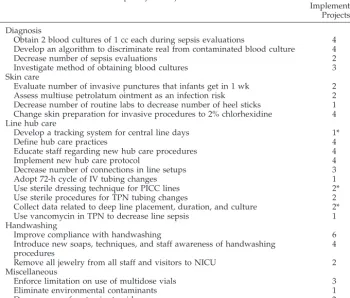
Table 2 shows the 24 rapid-cycle projects implemented at the 6 institutions. Eleven of the 24 cycles were implemented at ⬎2 institutions. Although the cycles were often similar, results could not be directly compared from one unit to the other because the quantifiable outcomes differed somewhat. (Outcome data de-pended on the convenience of collection and acceptance by the disciplines involved at each institution, making uniformity diffi-cult to achieve.) These shared experiences made it possible to determine the most meaningful interventions from the broad list initially identified. Fifteen (63%) of the 24 projects were not di-rectly related to the group’s final summary statements, although they were believed to be important facets of the management of NI.
RESULTS
The 20 PBPs initially generated by the group (Ta-ble 1) were prioritized in a collaborative manner, and 8 PBPs were chosen for emphasis (Table 3). To char-acterize better the relatedness between practices, the group developed broad statements to address larger perspectives, incorporating many of these PBPs. The 3 final summary statements and additional priori-tized practices are given below.
PBPs to Lower Neonatal CONS Nosocomial Bacteremia
Reducing Line and Line Connections (Hubs) Contamination Will Decrease Risk of Bacterial Entry and Nosocomial Bacteremia
Line setups should be designed so as to minimize the number of ports/connections. Each port of entry and connector must be viewed as an independent opportunity for line contamination. The intuitive no-tion that minimizing entry points will reduce oppor-tunities for violating technique is strengthened by a prospective randomized clinical trial in which a sig-nificantly higher rate of catheter-related bloodstream infection (CRBSI) events was associated with the use of triple-lumen catheters than with single-lumen catheters.7Latex or silicone membrane ports are rec-ommended because they do not require opening to provide access, and they can be cleaned thoroughly before entry. Manufacturers’ representatives have confirmed site visit observations that line setups in NICUs, in contrast to adult ICUs, are highly variable. Standardization of these configurations represents a potential opportunity for improvement.
with the manufacturer’s recommendations (eg, after obvious breakdown or accumulation of excessive bloody residue). Parenteral nutrition and lipid emul-sion changing intervals have been reviewed and commented on previously.7–11No studies have spe-cifically addressed the interval for changing access ports. Benchmark NICUs reported that they left them on indefinitely unless they had obvious breakdown or seemed to have accumulated excessive bloody residue (the latter was frequently noted at sites that implemented “closed” systems using “needleless” appliances).
When accessing a latex/silicone membrane port or a connector, the following are considered essential technique: 1) wash hands; 2) establish a sterile work-space, eg, a sterile gauze surface; 3) prepare the access port with alcohol, using sufficient friction and allowing the surface to dry; or 4) prepare all surfaces to be connected, using sufficient friction and allow-ing the surfaces to dry (unless the connector beallow-ing used is fresh from its sterile packaging). CAT review
established that the microorganisms found coloniz-ing catheter hubs were frequently the same as those isolated from catheter tips and bloodstream in pa-tients classified as having CRBSI.12In addition, pro-grams that used measures for decreasing hub con-tamination had significantly lower CRBSI rates.13,14 Salzman et al15found that 99% hub decontamination was achieved by mechanical friction, and the remain-der of the decontaminating process was accom-plished most effectively by the use of 70% alcohol. In vitro evidence suggests that swabbing the inside of a connecting hub with an alcohol swab or applicator decreases hub contamination15; however, the group found only occasional indications that the practice is used and had little enthusiasm for recommending this technique without additional study. Observa-tions at benchmark sites showed uniform compliance with the principles of hub care, although they were often so ingrained that they were not even articu-lated as essential techniques. This is confirmed by the fact that hub care techniques were not noted specif-ically or assigned the highest priority among the many PBPs described during the initial collaborative improvement project.16
Compliance-enhancing measures include continu-ing efforts to ensure adequate initial traincontinu-ing to per-form the procedures, provision of adequate supplies for their execution, and ongoing programs to encour-age and monitor their implementation. Several re-ports describe successful programs to reduce CRBSI rates.14,17,18 Their common features include multidi-TABLE 2. Rapid-Cycle Projects Implemented by NI Reduction Group
Rapid-Cycle Project No. of Centers
Implementing Projects
Diagnosis
Obtain 2 blood cultures of 1 cc each during sepsis evaluations 4 Develop an algorithm to discriminate real from contaminated blood culture 4
Decrease number of sepsis evaluations 2
Investigate method of obtaining blood cultures 3
Skin care
Evaluate number of invasive punctures that infants get in 1 wk 2 Assess multiuse petrolatum ointment as an infection risk 2 Decrease number of routine labs to decrease number of heel sticks 1 Change skin preparation for invasive procedures to 2% chlorhexidine 4 Line hub care
Develop a tracking system for central line days 1*
Define hub care practices 4
Educate staff regarding new hub care procedures 4
Implement new hub care protocol 4
Decrease number of connections in line setups 3
Adopt 72-h cycle of IV tubing changes 1
Use sterile dressing technique for PICC lines 2*
Use sterile procedures for TPN tubing changes 2
Collect data related to deep line placement, duration, and culture 2*
Use vancomycin in TPN to decrease line sepsis 1
Handwashing
Improve compliance with handwashing 6
Introduce new soaps, techniques, and staff awareness of handwashing procedures
4
Remove all jewelry from all staff and visitors to NICU 2 Miscellaneous
Enforce limitation on use of multidose vials 3
Eliminate environmental contaminants 1
Decrease use of systemic steroids 2
PICC indicates peripherally inserted central catheter; TPN, total parenteral nutrition. * Additional institution had implemented change before introduction of NIC/Q 2000.
TABLE 3. Eight Prioritized PBPs
Increased compliance with hand hygiene standards Improved accuracy of the diagnosis of bacteremia
Reduced line and line connection (hub) bacterial contamination Maximal barrier precautions for central line placement Increased use of emollients to improve skin integrity* Decreased number of skin punctures
Decreased duration of IV lipid infusion Decreased duration of central venous line use
mensional programs that ensure adequate staff train-ing and equipment, ongotrain-ing incentives to encourage program compliance, and means to monitor compli-ance. Site visits to benchmark units reinforced these points: benchmark unit personnel were very much aware of their excellent results and the ways in which their individual efforts to comply with unit line setup/entry procedures contributed to these ex-cellent results. Unit cohesion around these practices was observed to be very high and epitomized imple-mentation of the concept of “unit culture” as a nec-essary ingredient for successful practice of a care process, especially when that process requires fre-quent daily repetitions, often for weeks to months, by many different personnel.
Hand Hygiene Is the Primary Means to Limit Potential Colonization and NIs in High-Risk Newborns
Purpose
Hands of hospital personnel can transmit organ-isms that cause NIs.19The microflora of skin consists of resident and transient microorganisms. The tran-sient microflora represent recent contaminants, and these can be pathogens acquired from colonized or infected patients. Transient microflora survive only a limited period of time on the hands. The resident microflora survive and multiply on the skin.20
Handwashing with soap can remove most tran-sient microflora, because the organisms are superfi-cial. Resident microflora and antimicrobial-resistant bacteria usually are not removed by plain soap but require products that contain antimicrobial agents.21 Effective handwashing in the intensive care nursery should achieve mechanical removal of transient mi-croflora and chemical removal of resident mimi-croflora.
Process
Hands must be washed before and after contact with the patient, any equipment that comes in con-tact with the patient, or any contaminated objects in the environment. If gloves have been used, hands should be washed on their removal. Hands should be washed by rigorously rubbing together for at least 10 to 15 seconds with either chlorhexidine gluconate or triclosan handwashing agents.21 These 2 agents are relatively fast acting and have broad Gram-neg-ative and Gram-positive spectra. Chlorhexidine glu-conate has particularly effective residual antimicro-bial activity.
Alcohol-based, waterless rubs may be used when patient contact is urgently needed and there is no sink easily available.22 These products contain 60% to 70% alcohol with emollients to reduce the drying effect of alcohol. Alcohol-based waterless rubs are as effective as handwashing if the hands are not soiled. Enough alcohol-based rub must be placed on the hands to allow 10 to 15 seconds of washing before the product evaporates. Soap and water handwash-ing is recommended in conjunction with use of wa-terless rubs. Most product information recommends that hands be washed with soap and water at least after every 10 to 15 uses of alcohol-based rubs to reconstitute the residual soap action against bacteria.
Also, skin irritation and dryness are less, fostering improved hand hygiene compliance.23
Scrub brushes do not seem to be more effective than antiseptic soap alone for hand hygiene,24 and they are no longer recommended for an initial wash. Scrubbing the hands with a brush removes valuable squamous cells that protect the hands. When squa-mous cells are removed, skin breakdown occurs at a much more rapid pace. The current recommendation for the initial wash in the intensive care nursery is to wash the hands long enough to remove adequately all soil and transient microorganisms from the hands. Vigorously wash hands, paying attention to all surfaces around finger tips and arms to elbows. Nails should be cleaned thoroughly, and no brace-lets, watches, or rings should be worn.
Lotions that are compatible with specified hand-washing agents are important factors in hand hy-giene. Dryness and dermatitis can result from re-peated handwashing. These can lead to breaks in the epidermis, where microorganisms can be harbored. Irritation of the skin also leads to decreased compli-ance with handwashing policy as a result of discom-fort when using handwashing agents. Lotions should be easily accessible and used frequently. Lotions that contain petroleum or other oil emollients should be avoided. Petroleum jelly has been shown to be ac-ceptable from a microbiologic point of view, but concerns have been raised about the potential for petroleum-based lotion to weaken latex gloves and cause an increase in permeability. Attention should be paid to the interaction between lotion and soap, because inactivation of the antibacterial properties is possible with the wrong agent.
A recent study of an outbreak of pseudomonas in the NICU suggests that long or artificial nails may increase the microbial load on hands, particularly Gram-negative bacteria.25The American Academy of Pediatrics and the American College of Obstetricians and Gynecologists Guidelines for Perinatal Care and the Association of Operating Room Nurses recom-mend that nails be kept short and artificial nails not be worn.25,26
Compliance
Continuing education, monitoring, reporting, and feedback to staff on behavior and infection surveil-lance data will improve compliance and effective-ness of handwashing practices.27,28 Continual vigi-lance in reminding staff to wash their hands is necessary. Reminders can be education programs, clever signs throughout the nursery, and individual prompting.
Standardized Assessment of NIs Will Limit Unnecessary Antibiotic Treatment of Contaminated Blood Cultures (False Positives)
Blood cultures should be obtained from 2 periph-eral skin punctures or a periphperiph-eral skin puncture and a central catheter hub. This conclusion is supported by published articles on the routine use of multiple blood cultures and contamination of blood cultures in adults.29,30A contaminated blood culture is often diagnosed when only 1 of 2 cultures is positive, although inconsistent growth could also represent bacteremia with a low concentration of organisms. The use of blood cultures from central catheters is helpful in that it avoids a skin puncture and often helps to determine whether there is a central line infection.31,32 Results of a recent study suggest that the differential time to positivity (2 hours more) be-tween the catheter blood and the peripheral blood may be a reliable tool for identifying CRBSI.31 One institution in the group initiated a rapid-cycle im-provement project before the PBP was reached. They were able to obtain 2 blood cultures in 64% to 85% of infants, and learned that 1 of 3 to 1 of 2 of all sepsis evaluations yielded a single positive and a single negative blood culture, suggesting contamination. Physicians used this information to decrease the use of antibiotics.
When preparing for blood culture, the site should be cleaned to remove soiling, and the remaining microorganisms on the skin should be chemically killed. Skin preparation may be a 1- or 2-stage pro-cedure involving 10- to 30-second swabbing of skin and allowing the agents to dry.33,34 Alcohol, povi-done iodine, tincture of iodine, and chlorhexidine have been shown to be effective. The quality of skin preparation is believed to be important in reducing contamination of blood cultures. The literature31 supports rigor in the procedure, and all of the bench-mark sites put special or unique emphasis on this process. The procedures done at the benchmark sites differed, but they were performed consistently at each site. There was no consensus on the specific prepping agent to be used. In adult randomized trials, tincture of iodine has been found to be associ-ated with lower contamination rates than povidone iodine.35 No studies have been done in neonates. There is concern that increased absorption of iodine using tincture of iodine may cause thyroid dysfunc-tion.36
A limited number of highly trained individuals will use better and more standardized technique than a large number of variably trained individuals.29,30,37
At 2 of the benchmark sites, a limited number of individuals drew blood cultures. In 1 site, the phle-botomists were the attending neonatologists, and in the other they were respiratory therapists. This rec-ommendation, although strongly supported, has not been undertaken by any of the 6 collaborating insti-tutions because implementation involves substantial shift in training, responsibilities, and culture.
Evidence indicates that a minimum volume of 1 mL of blood is required to detect bloodstream infections. The volume of blood drawn should be
documented. In 2 studies, blood cultures were more likely to be positive when at least 1 cc of blood was obtained.38,39 One of the benchmark sites routinely drew 2 to 4 mL for blood cultures. The recommen-dation to record the volume of blood culture was the consensus of the group. This information is rarely available, but it could be clinically useful.
Treat suspected sepsis for 48 hours only. If the blood culture remains negative, then empiric treat-ment need only last 48 hours.40,41Ancillary tests such as the C-reactive protein42 and white blood count and immature-to-total neutrophil ratio43 may be helpful to distinguish a false-positive from a true-positive culture.
Additional PBPs
The following 5 PBPs were identified by the group. They are listed separately rather than as part of the summary statements because they are more concise and stand alone as individual practices.
Use Maximal Barrier Precautions for Insertion of Central Catheters
Maximal barrier precautions require the use of sterile cap, mask, gown, gloves, and drape. The ra-tionale for this practice is the reduction of contami-nation during insertion of an indwelling catheter. The benefits of this approach have been demon-strated in prospective randomized trials with adult critical care patients. Raad et al44compared maximal barrier precautions with the use of sterile gloves and a small drape only and showed that the rate of infection in the group using only sterile gloves and drape was 3 times that of the group using maximal precautions. In a second randomized controlled trial, Mermel et al45studied maximal barrier precautions during the insertion of pulmonary artery catheters and also showed a significant effect of this practice on the reduction of CRBSI. Although the majority of institutions in the group used this practice, at least 1 had not yet adopted it and the practice was not universally implemented, even at the benchmark sites. Given the weight of the evidence, the obvious likelihood of catheter contamination during insertion without maximal barrier precautions and the vari-ability in practice among NICUs, this practice was adopted as a PBP by the group.
Selected Use of Topical Application of Preservative-Free Ointment in Preterm Infants
that emollients have a place in maintaining skin in-tegrity, but routine application for intact skin is un-necessary and the risks may outweigh the benefits.
Decrease the Number of Skin Punctures
Venipunctures, arterial punctures, IV line starts, and heel sticks provide opportunities for microflora colonizing the skin to be introduced into the blood-stream. It follows that reducing the number of skin punctures should reduce these opportunities. One unpublished retrospective study showed a positive correlation between⬎5 peripheral IV stick attempts in a 48-hour period and the incidence of bactere-mia.49 One institution in the group decreased the mean number of total sticks per patient per week from 45 to 25 over a 2-month period and decreased bloodstream infections per 1000 line days from 5.7 to 3.1 in the same period.
Reduce the Duration of IV Lipid Use
Several animal studies suggest that IV lipids are immunosuppressive, are easily contaminated, and support the growth of fungi and bacteria. There are also reports of epidemics and isolated cases related to contamination in human patients. There are 2 retrospective analyses of the relationship of lipids to sepsis in 590 very low birth weight (VLBW) infants, with 83 episodes of bacteremia.50,51Of the numerous variables reflecting possible risk for CONS bactere-mia, only 2 were shown to be significant by condi-tional logistic regression, IV lipid use, and surgically or percutaneously placed central catheters.50There is evidence of an association between duration of IV lipid use and bacteremia, and the group believed that along with the practices observed at benchmark sites, this evidence was strong enough to recommend lim-iting the use of IV lipids. Because lipids are a critical part of parenteral nutrition in premature infants, they remain an essential part of early management. Clinicians must balance the risk of infection against the benefit of enhanced caloric intake when deciding how early to curtail the use of IV lipids.
Limit the Number of Days That Percutaneous Deep Lines Are in Place to⬍21
Despite measures aimed at reducing the risk of infection from deep lines, the risk cannot be reduced to 0. Several retrospective cohort analyses have shown a correlation between use and duration of deep lines and the incidence of sepsis in neo-nates.52–54In the largest of the studies, by Chathas et al,52the duration of silastic deep lines was correlated with the incidence of sepsis, and the authors showed that 21 days was the critical point after which the risk for sepsis became significant. Most VLBW infants will be close to full enteral calories by 21 days of age, so this target of 21 days is feasible and it was there-fore chosen by the group as a suggested guideline in overall management of VLBW infants. Other impor-tant strategies are necessary to achieve this target, such as early introduction of trophic feeds with breast milk, consistent advancing of feeding vol-umes, and removal of the deep lines in some infants before full enteral calories are actually reached.
DISCUSSION
The collaborative multidisciplinary approach taken to determine ways to reduce bacteremia rates was complex and multifaceted and led to a more complete analysis than would have been possible with a simple review of the literature. Participating institutions investigated possible practices related to infection risk, performed detailed literature review with the development of CATs, reviewed personal data and experience, had repeated multidisciplinary discussions, and promoted ongoing collaboration. Each institution performed these activities indepen-dently and then shared findings. In some cases, 1 institution would repeat what had previously been done by another. When the groups met for review, similar evidence was presented but from the unique perspectives of each institution.
The process was not intended as a scientific study of the determinants of NI, and individual NICUs did not attempt to determine exactly which factors could be proved to reduce NIs. The focus, rather, was on using multiple sources of evidence to develop small changes in practice that could be made safely and were tailored to the local culture and practice of each institution. The term “potentially better practices” was used to indicate that the suggested changes were not proven as “better,” but there was some evidence in their support. Development of the summary state-ments (listed in Appendix B) allowed collaborators to weave together the PBPs into a broader perspec-tive and to indicate the relaperspec-tive importance, utility, training barriers, and costs of the practice changes. The summary statements also served as an educa-tional tool for introduction of the changes to person-nel who were not aware of the details of the studies. Finally, the summary statements conveyed the mes-sage that NI would not be resolved by a single in-tervention or the actions of a single person; rather, a planned set of interventions by many disciplines over an extended time frame would be necessary to reach the ultimate goal. The process that led to the summary statements involved the 4 key habits inte-gral to the NIC/Q 2000 project5: 1) the habit of change, 2) the habit of systems thinking, 3) the habit of collaborative learning, and 4) the habit of evi-dence-based medicine.
Habit for Change
Personnel at each institution learned the impor-tance of making change in practice to improve out-comes. Helping personnel understand the impor-tance of unit culture was a first step in gaining acceptance of new ideas.55 The units that were less hierarchical and more collaborative found this easier to accomplish.
Habit for Systems Thinking
Habit for Collaborative Learning
Mechanisms through which centers could share experience and knowledge were critically important in pushing the process forward. The professional facilitator was extremely helpful in focusing and aligning interinstitutional activities. Ongoing com-munication supported work at each institution not only by providing necessary information but also by providing “team” motivation. At the local level, mul-tidisciplinary teams were formed to plan and imple-ment PDSA cycles. Sharing ideas and experience with other institutions kept the process exciting. Be-cause of geographic diversity and time constraints, listserv e-mail was the most efficient way to commu-nicate among units.
Traditional continuous quality improvement re-quires focused study of each possible change ele-ment, often with long-term data review.5 Time in those studies is usually measured in months. In this project, the focused PDSA cycles, which were often implemented in weeks, involved multiple small tri-als, which were important in generating the priori-tized list of PBPs. Prompt feedback through shared outcome data were important to motivate providers in each unit to keep on track.
Habit for Evidence-Based Medicine
The practices outlined in the final summary state-ments have not been proved to lower infection through prospective trials comparing them to alter-native strategies. However, the evidence compiled in this project suggests that these practices should be important for lowering NI rates. Practicing evidence-based medicine is an important goal for each of the units participating in this project.56 However, evi-dence from randomized clinical trials was not avail-able for many of the medical and nursing practices addressed. Evaluation of the literature on these prac-tices was difficult and often required subjective in-terpretation. Collaborators relied on one another to achieve an impartial, comprehensive review in de-veloping the CATs, although, in the final analysis, some practices had more literature-based support than others. Collaborating with an infection control expert helped the group to place the neonatal litera-ture review into the larger framework of NI in med-ical practice. Using data from the literature, the group developed proposed practice changes that could be trialed through PDSA cycles. The results of these cycles then became additional evidence and, for some practices, the best evidence available.
Benchmarking seemed to offer the best opportu-nity for determining which specific practices would have the greatest impact in reducing infection rates. However, the outcomes of some practices were dif-ficult to interpret because each benchmark site seemed unique, and policies and practices often could not be generalized from one unit to another. Benchmark visits certainly played a large role in prioritizing practices that are important in reducing NIs. However, some PBPs with support from evi-dence in the literature had not been implemented at the benchmark sites. It is possible that if these PBPs
were initiated, infection rates could be even further improved at the benchmark sites. However, it is also possible that the impact of a PBP may be offset by other practices or attitudes of the unit. The 1 finding common to the benchmark sites was the practitio-ners’ attitude regarding their roles in lowering NI. Providers at benchmark sites acknowledged that NI rates could be modified by changes in their prac-tices—an attitude that must be developed before real changes can occur.
The PBPs that were developed as part of this col-laboration are not surprising in light of general in-fection control recommendations.57However, many frequently referenced infection control guidelines do not give specific evidence for neonatal care.58,59 Fur-thermore, although handwashing is a well-estab-lished principle of infection control,57–59 the data suggest that staff often ignore recommendations in this area.60In this project, collaborators sought prac-tical ways to enhance effective hand hygiene in the NICU setting. The focus of the PBPs on line care grew out of epidemiologic studies of neonatal infec-tion. Recent reviews concluded that 88% of nosoco-mial bloodstream infections were associated with umbilical or central venous catheters, and in 56% to 57% of these infections, the etiologic agent was CONS.4,61Antisepsis during catheter placement and management have routinely been included in recom-mendations to prevent NIs.62,63 The hub care state-ments in this project give specific guidance for an important aspect of that care. Additional refinements in the recommendations have been made as addi-tional evidence has become available in the literature (references from the years 2000 and 2001 have been added since the completion of the collaborative). This evolution of recommendations suggests the need for continuing review and reassessment of guidelines when additional outcome evidence be-comes available.
A multitask approach that involved changing many practices at once—similar to the approach taken by this collaborative— has been successful in preventing line-associated infections in an adult in-tensive care setting.18In that study, the investigators provided clinicians with a detailed protocol for line insertion and tubing changes, including hub care, and additional education regarding handwashing.18 During the 2-year study period, nosocomial blood-stream infections were decreased by⬎50%. Sherertz et al64also found that a systematic approach to max-imal barrier precautions improved compliance and reduced CRBSI.
Review articles addressing neonatal NIs empha-size the difficulty in separating true septicemia or bacteremia from contaminated blood cultures, par-ticularly when the identified organism is a part of normal skin flora.3In 1 Australian study of neonatal NIs, 57% of positive cultures were determined to be contaminated.2These authors recommended the use of ancillary tools to improve diagnostic accuracy, which is consistent with the PBPs recommended in this project.
CRBSI. Because the scope of the collaborative was limited, suggested PBPs did not include possible re-spiratory sources of infection, which may be related to nosocomial sepsis as well as acquired pneumo-nia.4,57 Like IV catheters, endotracheal tubes may facilitate the introduction of microorganisms to a normally sterile area, posing infection risks for the newborn.4,57,63 Reducing the duration of endotra-cheal tube use, adhering to sterile precautions with ventilator tubing and during tracheal suctioning, and addressing factors that inhibit pulmonary toilet (se-dation, immobilization) are important in preventing respiratory infections.4,57Additional PBPs could be developed in these areas.
ACKNOWLEDGMENTS
We thank Cindy Olson Burgess, RN, at Children’s Mercy Hos-pital for assistance with compilation of data for this manuscript; Jim West and Lynda Mayer, RN, MHA, at Kaiser Foundation Hospital, Los Angeles, for continuing administrative support; and Hannah King for facilitation, without which this project would not have been completed.
REFERENCES
1. Stevenson DK, Wright LL, Lemon JA, et al. Very low birth weight outcomes of the National Institute of Child Health and Human Devel-opment Research Network, January 1993 through December 1994.Am J Obstet Gynecol.1998;179:1632–1639
2. Khadilkar V, Tudehope D, Fraser S. A prospective study of nosocomial infection in a neonatal intensive care unit.J Paediatr Child Health.1995; 31:387–391
3. Fanaroff AA, Korones SB, Wright LL, et al. Incidence, presenting fea-tures, risk factors, and significance of late onset septicemia in very low birth weight infants.Pediatr Infect Dis J.1998;17:593–598
4. Gaynes RP, Edwards JR, Jarvis WR, et al. Nosocomial infections among neonates in high-risk nurseries in the United States.Pediatrics.1996;98: 357–361
5. Plsek PE. Quality improvement methods in clinical medicine.Pediatrics.
1999;103(suppl):203–214
6. Sauve S, Lee HW, Meade MD, et al. The critically appraised topic: a practice approach to learning critical appraisal.Ann R Coll Phys Surg Can.1995;28:396 –398
7. McCarthy MC, Shives JK, Robison RJ, et al. Prospective evaluation of single and triple lumen catheters in total parenteral nutrition.J Parenter Enteral Nutr.1987;11:259 –262
8. Matlow AG, Kitai I, Kirpalani H, et al. A randomized trial of 72- versus 24-hour intravenous tubing set changes in newborns receiving lipid therapy.Infect Control Hosp Epidemiol.1999;20:487– 493
9. Brier KL, Latiolais CJ, Schneider PJ, et al. Effect of laminar airflow and clean-room dress on contamination rates of intravenous admixtures.
Am J Hosp Pharm.1981;38:1144 –1147
10. Miller RC, Grogan JB. Incidence and source of contamination of intra-venous nutritional infusion systems.J Pediatr Surg.1973;8:185–190 11. Thompson B, Robinson LA. Infection control of parenteral nutrition
solutions.Nutr Clin Pract.1991;6:49 –54
12. Mueller-Premru M, Gubina M, Kaufmann ME, et al. Use of semi-quantitative and semi-quantitative culture methods and typing for studying the epidemiology of central venous catheter-related infections in neo-nates on parenteral nutrition.J Med Microbiol.1999;48:451– 460 13. Segura M, Alvarez-Lerma F, Tellado JM, et al. A clinical trial on the
prevention of catheter-related sepsis using a new hub model.Ann Surg.
1996;223:363–369
14. Maas A, Flament P, Pardou A, et al. Central venous catheter-related bacteraemia in critically ill neonates: risk factors and impact of a pre-vention programme.J Hosp Infect.1998;40:211–224
15. Salzman MB, Isenberg HD, Rubin LG. Use of disinfectants to reduce microbial contamination of hubs of vascular catheters.J Clin Microbiol.
1993;31:475– 479
16. Horbar JD, Rogowski J, Plsek PE, et al. Collaborative quality improve-ment for neonatal intensive care.Pediatrics.2001;107:14 –22
17. Sitges-Serra A, Hernandez R, Maestro S, et al. Prevention of catheter sepsis: the hub.Nutrition.1997;13(4 suppl):30S–35S
18. Eggimann P, Harbarth S, Constantin MN, et al. Impact of a prevention
strategy targeted at vascular-access care on incidence of infections ac-quired in intensive care.Lancet.2000;355:1864 –1868
19. Pittet D, Hugonnet S, Harbarth S, et al. Effectiveness of a hospital-wide programme to improve compliance with hand hygiene. Infection Con-trol Programme.Lancet.2000;356:1307–1312
20. Larson EL. APIC guideline for handwashing and hand antisepsis in health care settings.Am J Infect Control.1995;23:251–269
21. Ehrenkranz NJ, Alfonso BC. Failure of bland soap handwash to prevent hand transfer of patient bacteria to urethral catheters.Infect Control Hosp Epidemiol.1991;12:654 – 662
22. Pittet D. Improving compliance with hand hygiene in hospitals.Infect Control Hosp Epidemiol.2000;21:381–386
23. Boyce JM, Kelliher S, Vahlande N. Skin irritation and dryness associated with two hand-hygiene regimens: soap-and-water hand washing versus hand antisepsis with an alcohol hand gel.Infect Control Hosp Epidemiol.
2000;21:442– 448
24. Loeb MB, Wilcox L, Smaill F, et al. A randomized trial of surgical scrubbing with a brush compared to antiseptic soap alone.Am J Infect Control.1997;25:11–15
25. Moolenaar RL, Crutcher JM, San Joaquin VH, et al. A prolonged out-break of pseudomonas aeruginosa in a neonatal intensive care unit: did staff fingernails play a role in disease transmission?Infect Control Hosp Epidemiol.2000;21:80 – 85
26. Pottinger J, Burns S, Manske C. Bacterial carriage by artificial versus natural nails.Am J Infect Control.1989;17:340 –344
27. Tibballs J. Teaching hospital medical staff to handwash.Med J Aust.
1996;164:395–398
28. Kretzer EK, Larson EL. Behavioral interventions to improve infection control practices.Am J Infect Control.1998;26:245–253
29. Schifman RB, Strand CL, Meier FA, et al. Blood culture contamination: a College of American Pathologists Q-Probes study involving 640 insti-tutions and 497,137 specimens from adult patients.Arch Pathol Lab Med.
1998;122:216 –221
30. Weinbaum FI, Lavie S, Danek M, et al. Doing it right the first time: quality improvement and the contaminated blood culture.J Clin Micro-biol.1997;35:563–565
31. Blot F, Nitenberg G, Chachaty E, et al. Diagnosis of catheter-related bactaeremia: a prospective comparison of the time to positivity of hub-blood versus peripheral-blood cultures.Lancet.1999;354:1071–1077 32. Brun-Buisson C, Abrouk F, Legrand P, et al. Diagnosis of central venous
catheter-related sepsis.Arch Intern Med.1987;147:873– 877
33. Mylotte JM, Tayara A. Blood cultures: clinical aspects and controversies.
Eur J Clin Microbiol Infect Dis.2000;19:157–163
34. Fleischer W, Reimer K. Povidone-iodine in antisepsis—state of the art.
Dermatology.1997;195(suppl 2):3–9
35. Little JR, Murray PR, Traynor PS, et al. A randomized trial of povidone-iodine compared with povidone-iodine tincture for venipuncture site disinfection: effects on rates of blood culture contamination.Am J Med.1999;107: 119 –125
36. Gordon CM, Rowitch DH, Mitchell ML, et al. Topical iodine and neo-natal hypothyroidism.Arch Pediatr Adolesc Med.1995;149:1336 –1339 37. Gibb AP, Hill B, Chorel B, et al. Reduction in blood culture
contamina-tion rate by feedback to phlebotomists.Arch Pathol Lab Med.1997;121: 503–507
38. Jawaheer G, Neal TJ, Shaw NJ. Blood culture volume and detection of coagulase negative staphylococcal septicaemia in neonates.Arch Dis Child Fetal Neonatal Ed.1997;76:F57–F58
39. Schelonka RL, Chai MK, Yoder BA, et al. Volume of blood required to detect common neonatal pathogens.J Pediatr.1996;129:275–278 40. Durongpisitkul K, Gururaj VJ, Martin CF. The appropriateness of early
discharge of hospitalized children with suspected sepsis.J Fam Pract.
1997;44:91–96
41. Garcia-Prats JA, Cooper TR, Schneider VF, et al. Rapid detection of microorganisms in blood cultures of newborn infants utilizing auto-mated blood culture system.Pediatrics.2000;105:923–927
42. Benitz WE, Han MY, Madan A, et al. Serial serum C-reactive protein levels in the diagnosis of neonatal infection. Pediatrics. 1998;102(4). Available at: www.pediatrics.org/cgi/content/full/102/4/e41 43. Manroe BL, Weinberg AG, Rosenfeld CR, Browne R. The neonatal blood
count in health and disease. I. Reference values for neutrophilic cells.
J Pediatr.1979;95:89 –98
44. Raad II, Hohn DC, Gilbreath BJ, et al. Prevention of central venous catheter-related infections by using maximal sterile barrier precautions during insertion.Infect Control Hosp Epidemiol.1994;15:231–238 45. Mermel LA, McCormick RD, Springman SR, et al. The pathogenesis and
46. Lane AT, Drost SS. Effects of repeated application of emollient cream to premature neonates’ skin.Pediatrics.1993;92:415– 419
47. Nopper AJ, Horii KA, Sookdeo-Drost S, et al. Topical ointment therapy benefits premature infants.J Pediatr.1996;128:660 – 669
48. Edwards WH, Connor JM, Soll RF. The effect of Aquaphor original emollient ointment on nosocomial sepsis rates and skin integrity in infants of birth weight 501 to 1000 grams.Pediatr Res.2001;49:388A 49. Grant P, Chng C, Sanchez P. Relationship to skin puncture: attempts for
IV placement to primary bacteremia in a NICU. Abstract presentation. APIC 24th Annual Conference; June 1997; New Orleans, LA 50. Avila-Figueroa C, Goldmann DA, Richardson DK, et al. Intravenous
lipid emulsions are the major determinant of coagulase-negative staph-ylococcal bacteremia in very low birth weight newborns.Pediatr Infect Dis J.1998;17:10 –17
51. Freeman J, Goldmann DA, Smith NE, et al. Association of intravenous lipid emulsion and coagulase-negative staphylococcal bacteremia in neonatal intensive care units.N Engl J Med.1990;323:301–308 52. Chathas MK, Paton JB, Fisher DE. Percutaneous central venous
cathe-terization. Three years’ experience in a neonatal intensive care unit.
Am J Dis Child.1990;144:1246 –1250
53. Cairns PA, Wilson DC, McClure BG, et al. Percutaneous central venous catheter use in the very low birth weight neonate.Eur J Pediatr.1995; 154:145–147
54. Durand M, Ramanathan R, Martinelli B, et al. Prospective evaluation of percutaneous central venous silastic catheters in newborn infants with birth weights of 510 to 3,920 grams.Pediatrics.1986;78:245–250 55. Baker GR, King H, MacDonald JL, Horbar JD. Using organizational
assessment surveys for improvement in neonatal intensive care. Pediat-rics. 2003;111(suppl):e419 – e425
56. Soll RF, Andruscavage L. The principles and practices of evidence-based neonatology.Pediatrics.1999;103(suppl):215–224
57. Hushins WC, Goldmann DA. Nosocomial infections. In: Feigen RD, Cherry JD, eds.Textbook of Pediatric Infectious Disease.Philadelphia, PA: WB Saunders Co; 1998:2545–2585
58. Department of Health. Guidelines for preventing infections associated with the insertion and maintenance of central venous catheters.J Hosp Infect.2001;47:S47–S67
59. Mermel LA, Farr BM, Sherertz RJ, et al. Guidelines for the management of intravascular catheter-related infections.Infect Control Hosp Epidemiol.
2001;22:222–242
60. Albert RF, Condie F. Handwashing patterns of medical intensive care units.N Engl J Med.1981;304:1465–1466
61.Vermont Oxford Network Annual Database Summary. Burlington, VT: Ver-mont Oxford Network; 1999
62. Mermel LA. Prevention of intravascular catheter-related infections.Ann Intern Med.2000;132:391– 402
63. The EPIC Project: Developing national evidence-based guidelines for preventing healthcare associated infections. Phase 1: guidelines for preventing hospital-acquired infections.J Hosp Infect. 2001;47(suppl).
Available at: www.doh.gov.uk/hai/epic.htm
64. Sherertz RJ, Ely EW, Westbrook DM, et al. Education of physicians-in-training can decrease the risk for vascular catheter infection.Ann Intern Med.2000;132:641– 648
65. Doebbeling BN, Stanley GL, Sheetz CT, et al. Comparative efficacy of alternative hand-washing agents in reducing nosocomial infections in intensive care units.N Engl J Med.1992;327:88 –93
66. Strand CL, Wajsbort RR, Sturmann K. Effect of iodophor vs iodine tincture skin preparation on blood contamination rate.JAMA.1993;269: 1004 –1006
67. Ilstrup DM, Washington JA. The importance of volume of blood cul-tured in the detection of bacteremia and fungemia.Diagn Microbiol Infect Dis.1983;1:107–110
68. Wilson JP, Cobb DB. Updating your multiple-dose vial policy: the background.Hosp Pharmacy.1998;33:427– 432
69. Lucas A, Cole TJ. Breast milk and neonatal necrotising enterocolitis.
Lancet.1990;336:1519 –1523
70. Schanler RJ, Shulman RJ, Lau C. Feeding strategies for premature infants: beneficial outcomes of feeding fortified human milk versus preterm formula.Pediatrics.1999;103:1150 –1157
71. Perucca R.Intravenous Therapy. Clinical Principles and Practice. Philadel-phia, PA: WB Saunders; 1995:385
72. Bishop-Kurylo D. The clinical experience of continuous quality im-provement in the neonatal intensive care unit.J Perinat Neonatal Nurs.
1998;12:51–57
73. Puntis JWL, Holden CE, Smallman S, et al. Staff training: a key factor in reducing intravascular catheter sepsis.Arch Dis Child.1990;65:335–337 74. Stoll BJ, Temprosa M, Tyson JE, et al. Dexamethasone therapy increases infection in very low birth weight infants.Pediatrics.1999;104(5). Avail-able at: www.pediatrics.org/cgi/content/full/104/5/e63
75. Yeh TF, Lin YJ, Hsieh WS, et al. Early postnatal dexamethasone therapy for the prevention of chronic lung disease in preterm infants with respiratory distress syndrome: a multicenter clinical trial. Pediatrics.
1997;100(4). Available at: www.pediatrics.org/cgi/content/full/100/ 4/e3
76. Driks MR, Craven DE, Celli BR, et al. Nosocomial pneumonia in intu-bated patients given sucralfate as compared with antacids or histamine type 2 blockers.N Engl J Med.1987;317:1376 –1382
77. Saiman L, Ludington E, Pfaller M, et al. Risk factors for candidemia in neonatal intensive care unit patients. The National Epidemiology of Mycosis Survey study group.Pediatr Infect Dis J.2000;19:319 –324 78. Maki DG, Ringer M, Alvarado CJ. Prospective randomised trial of
povidone-iodine, alcohol, and chlorhexidine for prevention of infection associated with central venous and arterial catheters.Lancet.1991;338: 339 –343
2003;111;e504
Pediatrics
Dianne S. Charsha, Meena LaCorte, Neil Finer and Donald A. Goldmann
Howard W. Kilbride, Richard Powers, David D. Wirtschafter, Michael B. Sheehan,
Nosocomial Bacteremia
Evaluation and Development of Potentially Better Practices to Prevent Neonatal
Services
Updated Information &
4
http://pediatrics.aappublications.org/content/111/Supplement_E1/e50
including high resolution figures, can be found at:
References
4#BIBL
http://pediatrics.aappublications.org/content/111/Supplement_E1/e50
This article cites 70 articles, 10 of which you can access for free at:
Subspecialty Collections
http://www.aappublications.org/cgi/collection/neurology_sub
Neurology
sub
http://www.aappublications.org/cgi/collection/fetus:newborn_infant_
Fetus/Newborn Infant
following collection(s):
This article, along with others on similar topics, appears in the
Permissions & Licensing
http://www.aappublications.org/site/misc/Permissions.xhtml
in its entirety can be found online at:
Information about reproducing this article in parts (figures, tables) or
Reprints
http://www.aappublications.org/site/misc/reprints.xhtml
2003;111;e504
Pediatrics
Dianne S. Charsha, Meena LaCorte, Neil Finer and Donald A. Goldmann
Howard W. Kilbride, Richard Powers, David D. Wirtschafter, Michael B. Sheehan,
Nosocomial Bacteremia
Evaluation and Development of Potentially Better Practices to Prevent Neonatal
http://pediatrics.aappublications.org/content/111/Supplement_E1/e504
located on the World Wide Web at:
The online version of this article, along with updated information and services, is
by the American Academy of Pediatrics. All rights reserved. Print ISSN: 1073-0397.