Therapeutics and Clinical Risk Management
Dove
press
O R i g i n a l R e s e a R C h
open access to scientific and medical research
Open access Full Text article
effectiveness of pharmacist dosing adjustment
for critically ill patients receiving continuous
renal replacement therapy: a comparative study
sai-Ping Jiang1
Zheng-Yi Zhu2
Xiao-liang Wu3
Xiao-Yang lu1
Xing-guo Zhang1
Bao-hua Wu1
1Department of Pharmacy, the First
affiliated hospital, 2Department of
Pharmacy, Children’s hospital, College of Medicine, Zhejiang University, hangzhou, 3intensive Care Unit, the
First affiliated hospital, College of Medicine, Zhejiang University, hangzhou, People’s Republic of China
Correspondence: Bao-hua Wu Department of Pharmacy, the First
Affiliated Hospital, College of Medicine,
Zhejiang University, 79 Qingchun Road, hangzhou, 310003, People’s Republic of China
Tel/Fax +86 571 8723 3411 email [email protected]
Background: The impact of continuous renal replacement therapy (CRRT) on drug removal is complicated; pharmacist dosing adjustment for these patients may be advantageous. This study aims to describe the development and implementation of pharmacist dosing adjust-ment for critically ill patients receiving CRRT and to examine the effectiveness of pharmacist interventions.
Methods: A comparative study was conducted in an intensive care unit (ICU) of a university-affiliated hospital. Patients receiving CRRT in the intervention group received specialized pharmacy dosing service from pharmacists, whereas patients in the no-intervention group received routine medical care without pharmacist involvement. The two phases were compared to evaluate the outcome of pharmacist dosing adjustment.
Results: The pharmacist carried out 233 dosing adjustment recommendations for patients receiv-ing CRRT, and 212 (90.98%) of the recommendations were well accepted by the physicians. Changes in CRRT-related variables (n=144, 61.81%) were the most common risk factors for dosing errors, whereas antibiotics (n=168, 72.10%) were the medications most commonly associated with dosing errors. Pharmacist dosing adjustment resulted in a US$2,345.98 ICU cost savings per critically ill patient receiving CRRT. Suspected adverse drug events in the intervention group were significantly lower than those in the preintervention group (35 in 27 patients versus [vs] 18 in eleven patients, P,0.001). However, there was no significant differ-ence between length of ICU stay and mortality after pharmacist dosing adjustment, which was 8.93 days vs 7.68 days (P=0.26) and 30.10% vs 27.36% (P=0.39), respectively.
Conclusion: Pharmacist dosing adjustment for patients receiving CRRT was well accepted by physicians, and was related with lower adverse drug event rates and ICU cost savings. These results may support the development of strategies to include a pharmacist in the multidisci-plinary ICU team.
Keywords: pharmacist interventions, drug dosing adjustment, adverse drug event, cost saving, CRRT
Introduction
Continuous renal replacement therapy (CRRT) is better tolerated by hemodynamically
unstable patients1 in intensive care units (ICUs). It is frequently used for patients who
are most unstable regardless if the insult is acute (ie, acute kidney injury) or in those with chronic renal failure. Several methods of CRRT currently exist, but the most com-mon modalities used in ICUs are continuous venovenous hemofiltration, continuous
venovenous hemodialysis, and continuous venovenous hemodialfiltration.2
CRRT provides considerable benefits to critically ill patients through gentle removal of excess metabolic waste products and the return of normal electrolyte and
Therapeutics and Clinical Risk Management downloaded from https://www.dovepress.com/ by 118.70.13.36 on 27-Aug-2020
For personal use only.
Number of times this article has been viewed
This article was published in the following Dove Press journal: Therapeutics and Clinical Risk Management
Dovepress
Jiang et al
acid/base balance,3 but it can also cause alterations in drug
clearance. Drugs predominantly eliminated by the kidneys
often undergo substantial removal during CRRT.4 Factors
that influence plasma drug concentration during CRRT include the drug properties, mode of CRRT, and the severity of illness related to residual renal function and liver
func-tion.4 Moreover, a patient may undergo different modalities
(diffusion, convection, or both) as well as changes in blood and ultrafiltration flows, and the prescribed dose can differ
from the current dose during the ICU stay.5 For these reasons,
pharmacokinetics for critically ill patients receiving CRRT are complicated, and drug dosing adjustment is essential.
Pharmacist dosing adjustment for patients receiving CRRT may be advantageous, but no prior studies were found on the topic. In this study, the drug dosage of patients receiving CRRT was adjusted by an ICU clinical pharmacist who specializes in dosing adjustment for such patients. The purpose was to introduce and evaluate the pharmacist dosing adjustment process and subsequent outcomes. This article discusses: 1) the type of dosing adjustments the pharmacist carried out, 2) whether specialized dosing adjustments for patients receiving CRRT were well accepted by physicians, and 3) the additional value the pharmacist brought through full-time dosing adjustment for patients receiving CRRT, such as influence on drug and ICU hospitalization cost, length of ICU stay, and mortality in ICU.
Materials and methods
setting
This study was carried out in the medical and surgical ICU of The First Hospital, College of Medicine, Zhejiang University, Hangzhou, People’s Republic of China. The medical staff of the closed-format, 33-bed ICU consisted of state-certified intensivists, ICU fellows and residents, registered nurses, respiratory therapists, a full-time critical care pharmacist, and two pharmacy residents. CRRT was routinely conducted by a CRRT group with kidney disease physicians. CRRT was mainly performed by means of continuous venovenous hemo-filtration using a PrismaFlex machine (Hospal, Meyzieu, France) with an AN69 hemofilter (PrismaFlex M100 set). The ultrafiltration rate was set at a range of 1,500–3,000 mL/hour in predilution mode.
study design and patients
A single-centered, two-phased (intervention/No-intervention) design was conducted. The no-intervention phase was carried out between July 2011 and December 2011 (184 days). A total of 103 patients receiving CRRT were treated without
involv-ing pharmacists for drug dosinvolv-ing adjustment; these patients provided baseline information before pharmacist intervention. The intervention phase was carried out between January 2012 and June 2012 (181 days). A total of 106 patients receiv-ing CRRT were subjected to specialized pharmacy dosreceiv-ing follow-up by a full-time, experienced pharmacist and two pharmacy residents in the ICU. These patients formed the intervention group.
Patients were included in the study if they were admitted to the ICU, diagnosed with acute kidney injury or chronic
renal failure, received CRRT, and were $18 years old.
Patients were excluded if they did not meet all the aforemen-tioned inclusion criteria. Ethical approval was obtained from the Research Review Committee of the hospital.
Pharmacist drug dosing adjustment
The pharmacist and pharmacist residents completed 2 weeks of training before the study was started. The training included reviewing all pertinent literature, completing patient assess-ments, and reviewing eligible patients with the present authors. During the intervention period, the pharmacists assessed the patients receiving CRRT daily during ICU rounds, and then made dosage adjustment interventions when needed. Patients who were not seen during ICU rounds were assessed after the rounds, and recommendations were made to physicians and nurses at that time. All interventions made by the pharmacist were verbal and recorded in a specially designed pharmacist intervention form. This form included the following patient details: baseline demographic charac-teristics (sex, age, and diagnosis), renal function, mode of CRRT, blood flow rate, ultrafiltration rate, length of CRRT time per day, dosage adjustment recommendations, and the acceptance of recommendations. An acceptance rate greater than 80% was considered well accepted by physicians.
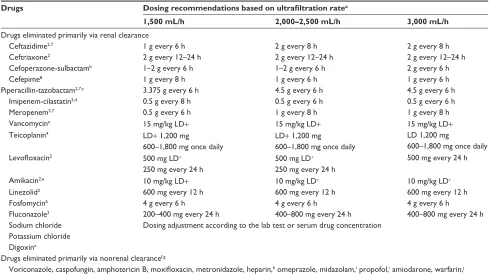
Dosing adjustments for patients receiving CRRT are complicated because of the heterogeneity among individual patients and the absence of practice guidelines. To overcome this problem, we either adjusted the drug dosage based on therapeutic drug monitoring or made a pocket-sized card (Table 1) for the clinical pharmacist during rounds. The pocket-sized card contained the dosing adjustment recommendations for patients receiving CRRT according to reliable and current
literature.2,4,6–10 These recommendations were reviewed and
approved by a professor of clinical pharmacy and a senior ICU specialist before the intervention phase was started. The
dosing adjustment also considered the following factors11
that influenced drug elimination during the pharmacy dosing follow-up process: 1) patient-related variables, namely protein
Therapeutics and Clinical Risk Management downloaded from https://www.dovepress.com/ by 118.70.13.36 on 27-Aug-2020
Dovepress Pharmacist drug dosing adjustment
Table 1 Recommended drug dosing in critically ill patients receiving continuous renal replacement therapy
Drugs Dosing recommendations based on ultrafiltration ratea
1,500 mL/h 2,000–2,500 mL/h 3,000 mL/h
Drugs eliminated primarily via renal clearance
Ceftazidime2,7 1 g every 6 h 2 g every 8 h 2 g every 8 h
Ceftriaxone2 2 g every 12–24 h 2 g every 12–24 h 2 g every 12–24 h
Cefoperazone-sulbactamb 1–2 g every 6 h 1–2 g every 6 h 2 g every 6 h
Cefepime8 1 g every 8 h 1 g every 6 h 1 g every 6 h
Piperacillin-tazobactam2,7,c 3.375 g every 6 h 4.5 g every 6 h 4.5 g every 6 h
imipenem-cilastatin2,d 0.5 g every 8 h 0.5 g every 6 h 0.5 g every 6 h
Meropenem2,7 0.5 g every 6 h 1 g every 8 h 1 g every 8 h
Vancomycine 15 mg/kg lD+ 15 mg/kg lD+ 15 mg/kg lD+
Teicoplanin4 lD+ 1,200 mg
600–1,800 mg once daily
lD+ 1,200 mg
600–1,800 mg once daily
lD 1,200 mg
600–1,800 mg once daily
Levofloxacin2 500 mg lD+
250 mg every 24 h
500 mg lD+
250 mg every 24 h
500 mg every 24 h
amikacin2,e 10 mg/kg lD+ 10 mg/kg lD+ 10 mg/kg lD+
linezolid2 600 mg every 12 h 600 mg every 12 h 600 mg every 12 h
Fosfomycin6 4 g every 6 h 4 g every 6 h 4 g every 6 h
Fluconazole2 200–400 mg every 24 h 400–800 mg every 24 h 400–800 mg every 24 h
sodium chloride Dosing adjustment according to the lab test or serum drug concentration Potassium chloride
Digoxine
Drugs eliminated primarily via nonrenal clearancef,g
Voriconazole, caspofungin, amphotericin B, moxifloxacin, metronidazole, heparin,h omeprazole, midazolam,i propofol,i amiodarone, warfarin,j
aminophylline, etc
Notes: special consideration: if CRRT system is discontinued or switched to another mode of renal replacement therapy, dosages should be adjusted to the patient’s intrinsic renal function or to the new mode of renal replacement therapy. ait is assumed that patients have normal hepatic function and are anuric; bavailable commercially in a fixed
ratio of 500 mg to 500 mg; cavailable commercially in a fixed ratio of 4 g to 0.5 g; davailable commercially in a fixed ratio of 250 mg to 250 mg; eserum drug concentrations
should be monitored (trough level: vancomycin 10–15 mg/ml; amikacin 5–10 mg/ml; digoxin 0.8–2.0 ng/ml; aminophylline); fthe renal clearance of a drug is less than
25%–30% of total body clearance; gdrug dosing similar with normal renal function patients, dosing adjustments do not have to be considered; hdosing adjustment according to
activated partial thromboplastin time; idosing adjustment according to Ramsay sedation scale; jdosing adjustment according to international normalized ratio.
Abbreviations: CRRT, continuous renal replacement therapy; h, hours; lD+, loading dose.
level, volume of distribution, residual renal function, and liver function; 2) CRRT-related variables, namely mode of CRRT, blood flow rate, ultrafiltration rate, and length of CRRT time per day; and 3) drug-related variables, namely molecular weight of drug, protein binding, and degree of renal clearance.
Outcome measurement and definitions
At the end of the study, the no-intervention and intervention groups were compared to evaluate the outcomes of pharmacist interventions; the variables compared included length of ICU stay, mortality in ICU, ICU drug and hospitalization costs per admission, and the occurrence of adverse drug events (ADEs). Length of ICU stay refers to the number of days in the ICU from admission to discharge. ICU hospitalization cost is defined as all costs in the ICU, including the costs of drugs, examinations, nursing care, and pharmacist care (postinter-vention phase). Costs in Chinese currency were converted toUS dollars (exchange rate, 6.3 Yuan = $1 US).
ADEs were evaluated according to preventability, cau-sality, and severity. Preventable ADEs were defined as any
injury associated with medication errors.12,13 The Naranjo
algorithm14 was used to assess the causal relationship between
the suspected drug and the event. The seriousness of ADEs was evaluated based on the definition of the State Food and Drug Administration. Serious ADEs are those that “result in death, a life-threatening condition, initial or extended hospitalization, persistent or significant disability, cancer, and congenital abnormalities.” ADEs that did not meet this defini-tion but still required treatment were defined as significant. Events that did not require treatment were defined as mild
or nonsignificant.12,13
Data collection and statistical analysis
After patient discharge, all patient medical records from both phases were reviewed by an ICU specialist and a pharmacist resident, both of whom were blinded to the patients’ alloca-tion status. The recorded data included the following patient details: baseline characteristics such as admission diagnosis, sex, age, weight, renal function, and Acute Physiology and
Chronic Health Evaluation II (APACHE II) scores;15 length
Therapeutics and Clinical Risk Management downloaded from https://www.dovepress.com/ by 118.70.13.36 on 27-Aug-2020
Dovepress
Jiang et al
Table 2 Patient characteristics
Parameter No-intervention Intervention P value
Patients, n Male Female
103 57 46
106 61 45
0.61
age, years 61.3±16.9 58.9±17.3 0.28
Weight, kg 63.4±19.7 59.6±21.3 0.42
aPaChe ii score15 22.8±8.9 21.4±10.2 0.73
admission creatinine concentration, mmol/l
260.44±119.78 267.11±109.99 0.44
admission urea concentration, mmol/l
22.53±12.19 21.78±8.57 0.30
admission diagnosis, n (%) Pneumonia and/or
aRDs
23 (22.81) 25 (23.58) 0.39
septic shock 20 (19.30) 17 (16.04) 0.41
ChF/pulmonary edema
18 (17.54) 21 (19,81) 0.38
Cardiac/aortic surgery
9 (8.77) 7 (6.60) 0.48
gastrointestinal surgery
9 (8.77) 15 (14.15) 0.17
MODs 14 (14.04) 9 (8.49) 0.21
Othersa 23 (22.81) 27 (25.47) 0.31
length of CRRT
treatment, h 91.13±89.52 85.92±96.96
0.28
Drugs used in iCU, n 9.18±3.7 9.92±4.18 0.41
Notes: Data are expressed as n (%) or mean ± standard deviation. aincluding
cerebrovascular accident, trauma, severe pancreatitis, hyperkalemia, and hypercalcemia. Abbreviations: aRDs, adult respiratory distress syndrome; ChF, congestive heart failure; CRRT, continuous renal replacement therapy; h, hours; iCU, intensive care unit; MODs, multiple organ dysfunction syndrome; n, number; aPaChe ii: acute Physiology and Chronic health evaluation ii.
of CRRT; length of ICU stay; death in the ICU; number of drugs used in the ICU; drug costs; ICU hospitalization costs; and occurrence of ADEs. Any ADE issue detected was discussed by the ICU specialist and the pharmacist; if a consensus was reached, the issue was considered an ADE.
All collected data were entered into the statistical analysis software (SPSS© Version 19.0; IBM Corporation, Armonk, NY, USA) for analysis. Comparisons between the pre- and postintervention phases with regard to patient characteristics, APACHE II scores, and admission creatinine and urea con-centrations were made by Student’s t-test for continuous vari-ables, nonparametric Mann–Whitney U test for non-normal distribution values, and chi-squared test for categorical data.
P,0.05 was considered statistically significant.
Results
Patient characteristics
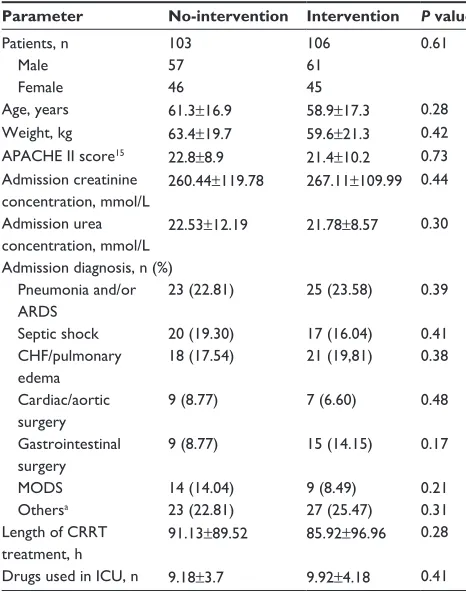
Table 2 shows the patient characteristics of each group. The two groups were well matched in terms of age, sex, weight, APACHE II scores, number of drugs used in the ICU, admission diagnosis,
and creatinine and urea concentrations (P.0.05). Patients in
both groups received about 85–95 hours of CRRT therapy on
average (91.13 hours versus [vs] 85.92 hours, P=0.28).
implementation of pharmacist
dosing adjustment
Pharmacist dosing adjustment recommendations were recorded in the intervention group and categorized as follows: incorrect loading dose (23, 9.87%), incorrect maintenance dose for patients receiving CRRT 24 hours a day (41, 17.59%), unchanged dosing or incorrect dosing adjustment when CRRT was converted from 24 hours a day to less than 24 hours a day (73, 31.33%), unchanged dosing or incorrect dosing adjustment when the CRRT mode was changed (9, 3.86%), unchanged dosing or incorrect dosing adjustment when the ultrafiltrate rate was changed (12, 5.15%), unchanged dosing or incorrect dosing adjustment when CRRT was changed to intermittent hemodialysis (IHD) or peritoneal dialysis (PD) (17, 9.29%), unchanged dosing or incorrect dosing adjustment when CRRT was discontinued (33, 14.16%), and drug dosing without consideration of residual renal function (25, 10.73%). The pharmacist made 233 dosing adjustment recommenda-tions for the 106 patients in the intervention group, and 212 (90.98%) of these recommendations were accepted by the physicians; thus, the recommendations were considered to be well accepted. The most common reason for pharmacist dosing adjustment was when CRRT was converted from 24 hours a day to less than 24 hours a day (73, 31.33%). A typical example was that of piperacillin/tazobactam, which was still prescribed as 4.5 g every 6 hours even when the CRRT length was switched from 24 hours to 12 hours daily.
analysis of drugs related
with dosing errors
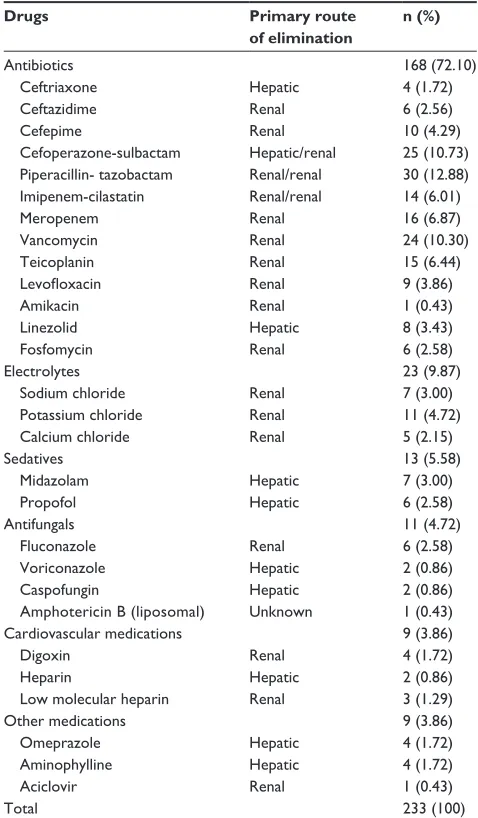
Table 3 shows the types of drug most frequently involved in dosing errors. Antibiotics were the most common drug to be misdosed (168, 72.10%) in the intervention group, followed by electrolytes (23, 9.87%), sedatives (13, 5.58%), antifungals (11, 4.72%) and cardiovascular medications (9, 3.86%). Among the medications implemented by pharmacist dosing adjustment, 72.10% of them were mainly eliminated by the kidneys; the other 27.90% were cleared via hepatic or other metabolic pathways.
Outcomes of pharmacist interventions
Table 4 presents the clinical and economic outcomes after pharmacist dosing adjustment for patients receiving CRRT. There was no significant difference in the length of ICU stay
Therapeutics and Clinical Risk Management downloaded from https://www.dovepress.com/ by 118.70.13.36 on 27-Aug-2020
Dovepress Pharmacist drug dosing adjustment
Table 3 Type of drugs with most dosing errors
Drugs Primary route
of elimination
n (%)
antibiotics 168 (72.10)
Ceftriaxone hepatic 4 (1.72)
Ceftazidime Renal 6 (2.56)
Cefepime Renal 10 (4.29)
Cefoperazone-sulbactam hepatic/renal 25 (10.73) Piperacillin- tazobactam Renal/renal 30 (12.88)
imipenem-cilastatin Renal/renal 14 (6.01)
Meropenem Renal 16 (6.87)
Vancomycin Renal 24 (10.30)
Teicoplanin Renal 15 (6.44)
Levofloxacin Renal 9 (3.86)
amikacin Renal 1 (0.43)
linezolid hepatic 8 (3.43)
Fosfomycin Renal 6 (2.58)
electrolytes 23 (9.87)
sodium chloride Renal 7 (3.00)
Potassium chloride Renal 11 (4.72)
Calcium chloride Renal 5 (2.15)
sedatives 13 (5.58)
Midazolam hepatic 7 (3.00)
Propofol hepatic 6 (2.58)
antifungals 11 (4.72)
Fluconazole Renal 6 (2.58)
Voriconazole hepatic 2 (0.86)
Caspofungin hepatic 2 (0.86)
amphotericin B (liposomal) Unknown 1 (0.43)
Cardiovascular medications 9 (3.86)
Digoxin Renal 4 (1.72)
heparin hepatic 2 (0.86)
low molecular heparin Renal 3 (1.29)
Other medications 9 (3.86)
Omeprazole hepatic 4 (1.72)
aminophylline hepatic 4 (1.72)
aciclovir Renal 1 (0.43)
Total 233 (100)
Abbreviation: n, number.
Table 5 Comparison of adverse drug events between the no-intervention group and the no-intervention group
Parameter No-intervention
n (%)
Intervention n (%)
P value
Preventability Preventable Unpreventable 19 (54.28) 16 (45.71) 5 (27.77) 13 (72.22) 0.03 0.18 Causality highly Probable Possible 15 (42.86) 11 (31.43) 9 (25.71) 5 (27.78) 7 (38.89) 6 (33.33) 0.02 0.26 0.21 seriousness serious Significant Insignificant 7 (20.00) 17 (48.57) 11 (31.43) 3 (16.67) 8 (44.44) 7 (38.89) 0.11 0.02 0.19 Main drug class related aDes
antibiotics electrolytes Cardiovascular drugs sedatives Others 12 (34.29) 9 (25.71) 6 (17.14) 3 (8.57) 5 (14.29) 6 (33.33) 4 (22.22) 3 (16.67) 3 (16.67) 2 (11.11) 0.03 0.28 0.19 0.68 0.16
Total 35 (100) 18 (100) ,0.001
Abbreviations: aDe, adverse drug event; n, number.
Table 4 Clinical and economic outcomes after pharmacist dosing adjustment for critically ill patients receiving CRRT
Parameter No-intervention Intervention P value
Mortality, n (%) 31 (30.10) 29 (27.36) 0.39
length of iCU stay, days
Mean (sD) 8.93±8.96 7.68±7.63 0.26
Median 8.1 7.3
antibiotics cost, $Us/case Mean (sD) Median 2,321.09±1,453.52 1,934.58 1,531.30±1,092.36 1,354.37 0.013
Drug cost,* $Us/case Mean (sD) Median 3,935.94±3,790.63 3,062.70 2,710.47±2,773.81 1,871.82 0.026
iCU hospitalization cost Mean (sD)
Median 10,462.53±9,004.418,419.68
8,116.55±8,959.2 6,932.85
0.031
Note: *including antibiotics and other drug costs.
Abbreviations: $Us, Us dollars; CRRT, continuous renal replacement therapy; iCU, intensive care unit; n, number; sD, standard deviation.
and mortality in ICU between the no-intervention group and
the intervention group (8.93 days vs 7.68 days [P=0.26]
on average; 30.10% vs 27.36% [P=0.39], respectively).
However, pharmacist dosing adjustment resulted in drug cost savings of 31.1% per patient without affecting length
of stay or mortality, from $3,935.94 to $2,710.47 (P=0.026),
and antibiotics accounted for 64.47% of all drug cost sav-ings, which was about $789.79 savings per patient (from
$2,321.09 to $1,531.30, P=0.013). Table 5 also shows the ICU
hospitalization cost savings. The presence of an ICU phar-macist resulted in $2,345.98 (from $10,462.53 to $8,116.55,
P=0.031) savings per patient receiving CRRT. Given that the
study lasted for 1 year and a total of 209 patients (103 patients in the no-intervention group and 106 patients in the interven-tion group) receiving CRRT were subjected to pharmacist dosing adjustment, the possible savings for all patients in 1 year can be estimated to be around $490,309.82.
Table 5 illustrates that among the 103 patients in the no-intervention group, 27 (26.21%) patients had a sus-pected ADE out of a total of 35 events. This number was significantly lower in the intervention group, which had
18 events in eleven (10.37%) patients (P,0.001). When the
preventability of events was evaluated, 19 events were pos-sibly preventable in the no-intervention group vs five in the
intervention group (P=0.03). The major cause of preventable
events was overdose, which resulted in 17 preventable events in the no-intervention group and three in the intervention group. Regarding the seriousness of events, the majority
Therapeutics and Clinical Risk Management downloaded from https://www.dovepress.com/ by 118.70.13.36 on 27-Aug-2020
Dovepress
Jiang et al
of identified ADEs caused significant injury (48.6% in the preintervention period and 44.4% in the postintervention period) to the patients involved; the number of these ADEs
differed significantly between the two study groups (P=0.02).
Examples of serious ADEs included generalized convul-sion by cefepime overdose, intestinal bleeding caused by heparin, and frequent ventricular premature beats by toxic digoxin. Antibiotics were the first medications to cause ADEs, 12 (34.29%) in the no-intervention group and six (33.33%)
in the intervention group (P=0.03).
Discussion
Since the available literature on the removal of individual drugs through CRRT is limited, correct drug dosing in ICU patients receiving CRRT is difficult. Also, the results can-not be generalized because of the wide variation in CRRT techniques and settings and the heterogeneity of the patient
population.16,17 The clinical situation for critically ill patients
may also rapidly change over time. Therefore, drug dosing in patients receiving CRRT should be individualized. Engaging the services of a pharmacist who specializes in drug dosing monitoring for patients receiving CRRT may improve drug dosing errors and subsequent outcomes.
The evaluation of pharmacist dosing adjustment is based on several important factors. The pharmacist made 233 dosing optimizing recommendations in the intervention group, among which 90.98% were accepted by physicians. Our results concurred with several studies indicating that pharmacists are well recognized as a crucial member in a multidisciplinary ICU team, due to the complementary pharmacotherapeutic knowledge provided by clinical
phar-macists.18,19 The most common dosing adjustment
recom-mendation that occurred in this study was related to changes in CRRT length per day. Other common reasons for dosing adjustment recommendations included changes to the CRRT mode or the ultrafiltrate rate, switching CRRT to IHD/PD, or CRRT discontinuation. The variables affecting drug elimination during CRRT for critically ill patients with renal failure can be broadly divided into three categories: patient-related variables, CRRT-patient-related variables, and drug-patient-related
variables.11 Our results demonstrated that changes in
CRRT-related variables (144, 61.81%) during a patient’s ICU stay were the most common risk factors for dosing errors.
Table 3 shows that antibiotics were associated with the highest rate of dosing errors. One reason for this finding is that the majority of critically ill patients receiving CRRT might experience complications of infections and thus require antibiotics. Another very important reason is that antibiotics
such as beta-lactams and glycopeptides are primarily cleared by the kidneys and may undergo substantial removal during CRRT. Thus, dosing adjustments are frequently required, but appropriate dosing is infrequently achieved. If the renal clearance of a drug is normally less than 25%–30% of the total body clearance, drug removal by CRRT slightly influ-ences the total body clearance and dosing adjustments need
not be considered.4 However, members of the ICU medical
team still made 27.90% dosing errors on medications that do not require dosing adjustments; these errors were possibly associated with the physicians being unfamiliar with the phar-macokinetics of the prescribed medications. The involvement of a pharmacist with the medical team may help the team to better understand the prescribed medications.
It is reported that critically ill patients with kidney injury
were 13 times more likely to have an ADE.19 That the
par-ticipation of pharmacists in clinical rounds may lower the
frequency of ADEs is evidenced by several studies.18,20,21
Similar results were found in this study; the presence of a pharmacist for dosing adjustment of critically ill patients with CRRT reduced the incidence of ADEs by 1.94 times. ADEs detected in the intervention group are possibly related with overdose events that happened when the pharmacists were absent, whereas the higher rate of drug overdoses in the no-intervention group are possibly related to drug doses remaining unchanged when changes to the CRRT treatment warranted adjustments.
Pharmacist dosing adjustments could also lead to cost savings for patients receiving CRRT. Our results indicated that ICU pharmacists can produce savings of about $2,345.98 per critical patient receiving CRRT, and could probably lead to a total savings of around $490,309.82 in 1 year. The phar-macist cost savings for a patient receiving CRRT may con-stitute two main portions. First, some of the drugs prescribed were expensive, and dosage adjustment led to substantial savings. These drugs included imipenem/cilastatin, mero-penem, piperacillin/tazobactam, cefepime, and fluconazole. Second, optimized dosing for an ICU patient receiving CRRT may reduce or prevent extra costs resulting from drug therapy failure and ADEs, namely extra drug acquisition, laboratory tests, medical materials, and nursing time. Although a num-ber of studies have reported actual values corresponding to
critical care pharmacist cost savings,22–24 those pertaining to
patients receiving CRRT are limited.
This study has several limitations. The design (no-intervention and intervention phase) is clearly not as robust as a randomized prospective trial, and therefore could be biased by a number of causes. However, major
Therapeutics and Clinical Risk Management downloaded from https://www.dovepress.com/ by 118.70.13.36 on 27-Aug-2020
Dovepress Pharmacist drug dosing adjustment
potential confounding factors that may affect the outcomes, such as the severity of illness, length of CRRT, and the number of drugs used in the ICU, were compared between the no-intervention and intervention groups. No significant difference was found in terms of APACHE II scores, renal function, length of CRRT, and number of drugs used in the ICU. The second limitation was there may have been some disparity in the way that the ADEs were assessed; to minimize this difference, the same couple of reviewers, who were blinded to the patients’ allocation, were consulted during ADE assessment. Finally, the economic results in this study were obtained from an ICU based on the Chinese medical system. Costs and savings may differ among the institution or region, and may be an additional limitation of this study.
Conclusion
This study demonstrated that changes in CRRT-related variables during a patient’s ICU hospitalization are the most common risk factors for CRRT drug dosing errors. The inclusion of a pharmacist who specializes in dosing adjustment for patients receiving CRRT is well accepted by physicians, and is associated with lower ADE rates and cost savings. These results may support the development of strategies to optimize drug dosing in patients receiving CRRT.
Acknowledgments
This work was sponsored by National Nature Science Foun-dation of China under contracts 81301611 and 81121002 and the public health scientific research fund of the China Ministry of Health under contract 201002021.
Disclosure
The authors report no conflicts of interest in this work.
References
1. Joy MS, Matzke GR, Armstrong DK, Marx MA, Zarowitz BJ. A primer on continuous renal replacement therapy for critically ill patients. Ann
Pharmacother. 1998;32(3):362–375.
2. Trotman RL, Williamson JC, Shoemaker DM, Salzer WL. Antibiotic dosing in critically ill adult patients receiving continuous renal replace-ment therapy. Clin Infect Dis. 2005;41(8):1159–1166.
3. Prowle JR, Schneider A, Bellomo R. Clinical review: Optimal dose of continuous renal replacement therapy in acute kidney injury. Crit Care. 2011;15(2):207.
4. Bugge JF. Pharmacokinetics and drug dosing adjustments during con-tinuous venovenous hemofiltration or hemodiafiltration in critically ill patients. Acta Anaesthesiol Scand. 2001;45(8):929–934.
5. González de Molina FJ, Ferrer R. Appropriate antibiotic dosing in severe sepsis and acute renal failure: factors to consider. Crit Care. 2011;15(4):175.
6. Choi G, Gomersall CD, Tian Q, Joynt GM, Li AM, Lipman J. Principles of antibacterial dosing in continuous renal replacement therapy. Blood
Purif. 2010;30(3):195–212.
7. Seyler L, Cotton F, Taccone FS, et al. Recommended β-lactam regimens are inadequate in septic patients treated with continuous renal replace-ment therapy. Crit Care. 2011;15(3):R137.
8. Churchwell MD, Mueller BA. Drug dosing during continuous renal replacement therapy. Semin Dial. 2009;22(2):185–188.
9. Thompson AJ. Drug dosing during continuous renal replacement therapies. J Pediatr Pharmacol Ther. 2008;13(2):99–113.
10. Matzke GR, Aronoff GR, Atkinson AJ Jr, Bennett WM, Decker BS, Eckardt KU, et al. Drug dosing consideration in patients with acute and chronic kidney disease-a clinical update from Kidney Disease: Improv-ing Global Outcomes (KDIGO). Kidney Int. 2011;80(11):1122–1137. 11. Glossop A, Seidel J. Dosing regimes for antimicrobials during con-tinuous veno-venous haemofiltration (CVVH). J Intensive Care Soc. 2008;9(2):160–165.
12. Gavaza P, Brown CM, Lawson KA, Rascati KL, Steinhardt M, Wilson JP. Pharmacist reporting of serious adverse drug events to the Food and Drug Administration. J Am Pharm Assoc (2003). 2012;52(5): e109–e112.
13. Nebeker JR, Barach P, Samore MH. Clarifying adverse drug events: a clinician’s guide to terminology, documentation, and reporting. Ann
Intern Med. 2004;140(10):795–801.
14. Nebeker JR, Hurdle JF, Hoffman J, Roth B, Weir CR, Samore MH. Developing a taxonomy for research in adverse drug events: potholes and signposts. Proc AMIA Symp. 2001:493–497.
15. Park SK, Chun HJ, Kim DW, Im TH, Hong HJ, Yi HJ. Acute Physiol-ogy and Chronic Health Evaluation II and Simplified Acute PhysiolPhysiol-ogy Score II in predicting hospital mortality of neurosurgical intensive care unit patients. J Korean Med Sci. 2009;24(3):420–426.
16. Schetz M. Drug dosing in continuous renal replacement therapy: general rules. Curr Opin Crit Care. 2007;13(6):645–651.
17. Roberts DM, Roberts JA, Roberts MS, et al; RENAL Replacement Therapy Study Investigators. Variability of antibiotic concentrations in critically ill patients receiving continuous renal replacement therapy: a multicentre pharmacokinetic study. Crit Care Med. 2012;40(5): 1523–1528.
18. Montazeri M, Cook DJ. Impact of a clinical pharmacist in a multidisciplinary intensive care unit. Crit Care Med. 1994;22(6): 1044–1048.
19. Kane-Gill SL, Kirisci L, Verrico MM, Rothschild JM. Analysis of risk factors for adverse drug events in critically ill patients*. Crit Care Med. 2012;40(3):823–828.
20. Kucukarslan SN, Peters M, Mlynarek M, Nafziger DA. Pharmacists on rounding teams reduce preventable adverse drug events in hospital general medicine units. Arch Intern Med. 2003;163(17):2014–2018. 21. Mergenhagen KA, Blum SS, Kugler A, et al. Pharmacist- versus
phy-sician-initiated admission medication reconciliation: impact on adverse drug events. Am J Geriatr Pharmacother. 2012;10(4):242–250. 22. Kopp BJ, Mrsan M, Erstad BL, Duby JJ. Cost implications of and
potential adverse events prevented by interventions of a critical care pharmacist. Am J Health Syst Pharm. 2007;64(23):2483–2487. 23. Klopotowska JE, Kuiper R, van Kan HJ, et al. On-ward participation of
a hospital pharmacist in a Dutch intensive care unit reduces prescrib-ing errors and related patient harm: an intervention study. Crit Care. 2010;14(5):R174.
24. Kane SL, Weber RJ, Dasta JF. The impact of critical care pharmacists on enhancing patient outcomes. Intensive Care Med. 2003;29(5): 691–698.
Therapeutics and Clinical Risk Management downloaded from https://www.dovepress.com/ by 118.70.13.36 on 27-Aug-2020
Therapeutics and Clinical Risk Management
Publish your work in this journal
Submit your manuscript here: http://www.dovepress.com/therapeutics-and-clinical-risk-management-journal Therapeutics and Clinical Risk Management is an international,
peer-reviewed journal of clinical therapeutics and risk management, focusing on concise rapid reporting of clinical studies in all therapeutic areas, outcomes, safety, and programs for the effective, safe, and sustained use of medicines. This journal is indexed on PubMed Central, CAS,
EMBase, Scopus and the Elsevier Bibliographic databases. The manuscript management system is completely online and includes a very quick and fair peer-review system, which is all easy to use. Visit http://www.dovepress.com/testimonials.php to read real quotes from published authors.
Dovepress
Dove
press
Jiang et al
Therapeutics and Clinical Risk Management downloaded from https://www.dovepress.com/ by 118.70.13.36 on 27-Aug-2020