Implementation of Evidence-Based Potentially Better Practices to
Decrease Nosocomial Infections
Howard W. Kilbride, MD*; David D. Wirtschafter, MD‡; Richard J. Powers, MD§; and
Michael B. Sheehan, MD*
ABSTRACT. Objective. Six neonatal intensive care units (NICUs) that are members of the Vermont Oxford National Evidence-Based Quality Improvement Collabo-rative for Neonatology collaborated to reduce infection rates. There were 7 centers in the original focus group, but 1 center left the collaborative after 1 year. Nosocomial infection is a significant area for improvement in most NICUs.
Methods. Six NICUs participating in the Vermont Oxford Network made clinical changes to address 3 areas of consensus: handwashing, line management, and accu-racy of diagnosis. The summary statements were widely communicated. Review of the literature, internal assess-ments, and benchmarking visits all contributed to ideas for change.
Results. The principle outcome was the incidence of coagulase-negative staphylococcus bacteremia. There was an observed reduction from 24.6% in 1997 to 16.4% in 2000.
Conclusions. The collaborative process for clinical quality improvement can result in effective practice changes.Pediatrics2003;111:e519 –e533. URL: http://www. pediatrics.org/cgi/content/full/111/4/e519; nosocomial in-fection, handwashing, line management, blood cultures, collaborative quality improvement, NIC/Q 2000.
ABBREVIATIONS. NI, nosocomial infection; VON, Vermont Ox-ford Network; CONS, coagulase-negative staphylococcus; PBPs, potentially better practices; NICU, neonatal intensive care unit; PDSA, plan-do-study-act.
KEY POINTS OF ARTICLE
• All participating sites began with hand hygiene
improvements.
• Vascular line management was recognized as
an-other key element in reducing infection.
• Improved accuracy of infection diagnosis is
needed because of problems with contaminated
blood culture.
• It was helpful to quantify the impact of infections
including impact on length of stay and cost.
APPLYING LESSONS LEARNED TO PRACTICE
• Multiple issues may require resolution before
pro-gram changes can be initiated.
• Ongoing evaluation is an important component of
the change process.
• Public relations is an important aspect of the
ed-ucation process around new practices.
N
osocomial bacteremia is a significant
contrib-utor to neonatal morbidity and mortality.
1The frequency of this complication varies
among neonatal units and seems to be related, at
least in part, to management decisions and practice
style.
2Investigations have suggested that selected
interventions could lower the risk of nosocomial
in-fections (NIs).
3,4As described in an earlier report, 6 institutions
participating in the Vermont Oxford Network (VON)
entered into a 2-year collaborative with the goal
of reducing by 50% coagulase-negative
staphylococ-cus (CONS) bacteremia for infants
⬍
1500 g birth
weight.
5Bacteremic events caused by CONS were
targeted because this organism is known to be the
most frequent cause of neonatal NI.
1To accomplish
this objective, multidisciplinary teams representing
each of the 6 institutions collaborated to develop lists
of potentially better practices (PBPs) thought to be
related to lowering infection rates. The PBPs were
prioritized. As appropriate, PBPs were joined
to-gether into larger perspectives referred to as
“sum-mary statements.” The sum“sum-mary statements
ad-dressed hand hygiene, line management, and
accuracy of diagnosis. The participating institutions
implemented and documented their changed
prac-tices. This article describes the implementation at
different institutions, obstacles that were
encoun-tered, and the effects on clinical processes and NI
rates.
METHODS
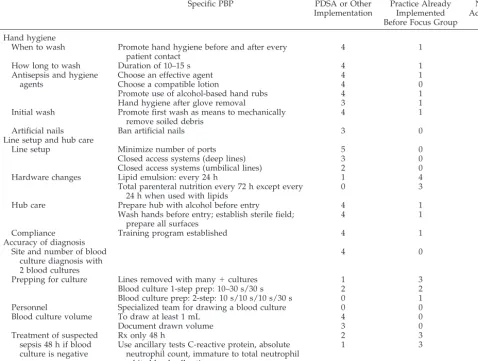
Each participating institution made clinical changes to address the 3 areas of consensus: hand hygiene, line management, and accuracy of diagnosis. As shown in Table 1, not all PBPs were undertaken by every institution. Some practices had previously been incorporated as routine care at several hospitals. PBPs were given different priority at different hospitals. All recognized the importance of handwashing and either were already performing or changed to the PBPs in this area. “Hub care” practices were implemented eventually in all 6 participating units, although in 1, implementation was delayed until after this project was com-pleted.
Line standardization was assessed and adopted in 5 of the 6 units. However, in most units, implementation of “closed system”
From the *Children’s Mercy Hospitals and Clinics, University of Missouri, Kansas City School of Medicine, Kansas City, Missouri; ‡Kaiser Foundation Hospital, Los Angeles, California; and §Children’s Hospital Oakland, Oak-land, California.
Received for publication Aug 13, 2002; accepted Oct 24, 2002.
access was deferred or was only partially implemented. At 3 hospitals, closed access was implemented for deep venous lines. Only 2 hospitals implemented closed access with their umbilical lines. One group described inadequate hardware as a barrier, forcing several product changes and delays in implementation. The “accuracy of diagnosis” was variably addressed by the units and depended on the perception of need for changes in this area. Not all units seemed to have the same level of difficulty with contaminated blood cultures and overuse of antibiotics. The 2 units that implemented most of these changes had identified differences in the frequency of sepsis evaluations between them-selves and the benchmark hospitals. Although a specialized phle-botomy team was developed as a PBP based on benchmarking, this was not implemented in any unit. This may be explained in part by the fact that the PBP would have required large changes in residency training and use of bedside nursing personnel that were not considered warranted. See Table 1 for details.
Implementation of Specific Summary Statements
Hand Hygiene
Handwashing (mechanical removal of organisms from hands) is considered a key aspect of hand hygiene (elimination of organ-isms from hands). Because spread of organorgan-isms by hand contact is universally accepted as the leading means of dissemination of infectious agents, hand hygiene was adopted by the group as a first priority in lowering infection rates.6Both the Centers for
Disease Control and Prevention and the American Hospital Asso-ciation recommend routine handwashing before and after each patient contact, although compliance with this recommendation has always been problematic.7The PBP on hand hygiene
empha-sized the importance of vigorously washing hands 10 to 15 sec-onds before and after all patient contacts, after using gloves dur-ing patient care, and when in contact with patient equipment.
Improving compliance with hand hygiene presented unique challenges to participating institutions. When performed correctly before and after each patient contact, appropriate handwashing involves as many as 100 actions throughout the day. Even if everyone is supremely motivated, high workloads can generate a need for handwashings that, if conducted for the recommended duration, can exceed the time available for patient care.8 The
activity also involves participation of personnel from multiple disciplines, who work throughout the institution and have vary-ing exposure to NICU goals and policy.
After review of the literature, the participating institutions recognized that improved compliance with current protocols was the first and most important goal. It was hypothesized that edu-cation, monitoring, and feedback to staff would modify behavior, resulting in improved compliance and effectiveness. At each in-stitution, the first step was to conduct a baseline assessment of compliance with existing policy. All NICUs in the country have standing policies on handwashing with varying adherence to the policy. All units in the group to assess baseline compliance, which was universally reported as low by group members, used audit tools designed locally.
The second step was a campaign of education, using the doc-umented incidence of poor compliance as a motivator to help staff adopt a higher level of commitment. The results of the baseline studies were disseminated through educational in-service ses-sions, e-mails, handouts, and demonstrations. At this stage, par-ticipating institutions not only reinforced the rationale for com-plying with existing policies but also capitalized on the discussions generated by negative results to introduce changes in policy. Most changes were directed at techniques to improve the frequency of handwashing while addressing concerns regarding skin breakdown and sensitivity to antisepsis agents.
The third phase involved repeated assessments of compliance after the initial campaign, usually in the form of small audits
TABLE 1. Summary of PDSA Cycles Performed to Address the Summary Statements (5 Centers Reporting)
Specific PBP PDSA or Other
Implementation
Practice Already Implemented Before Focus Group
No Action
Hand hygiene
When to wash Promote hand hygiene before and after every patient contact
4 1 0
How long to wash Duration of 10–15 s 4 1 0
Antisepsis and hygiene agents
Choose an effective agent 4 1 0
Choose a compatible lotion 4 0 1
Promote use of alcohol-based hand rubs 4 1 0
Hand hygiene after glove removal 3 1 1
Initial wash Promote first wash as means to mechanically remove soiled debris
4 1 0
Artificial nails Ban artificial nails 3 0 2
Line setup and hub care
Line setup Minimize number of ports 5 0 0
Closed access systems (deep lines) 3 0 2
Closed access systems (umbilical lines) 2 0 3
Hardware changes Lipid emulsion: every 24 h 1 4 0
Total parenteral nutrition every 72 h except every 24 h when used with lipids
0 3 2
Hub care Prepare hub with alcohol before entry 4 1 0
Wash hands before entry; establish sterile field; prepare all surfaces
4 1 0
Compliance Training program established 4 1 0
Accuracy of diagnosis Site and number of blood
culture diagnosis with 2 blood cultures
4 0 1
Prepping for culture Lines removed with many⫹cultures 1 3 1
Blood culture 1-step prep: 10–30 s/30 s 2 2 1
Blood culture prep: 2-step: 10 s/10 s/10 s/30 s 0 1 4
Personnel Specialized team for drawing a blood culture 0 0 5
Blood culture volume To draw at least 1 mL 4 0 1
Document drawn volume 3 0 2
Treatment of suspected sepsis 48 h if blood culture is negative
Rx only 48 h 2 3 0
Use ancillary tests C-reactive protein, absolute neutrophil count, immature to total neutrophil white blood cell ratio
performed publicly to serve as reminders for staff, who became aware that they were being observed. In other cases, units devised methods using new personnel or rotating residents to obtain ob-jective information without observational bias.
The fourth phase was feedback to staff on the data from these intermediate assessments. This was usually given as periodic up-dates on progress or lack of improvement. The feedback also involved exchange of information and processing of successful and unsuccessful strategies to introduce change.
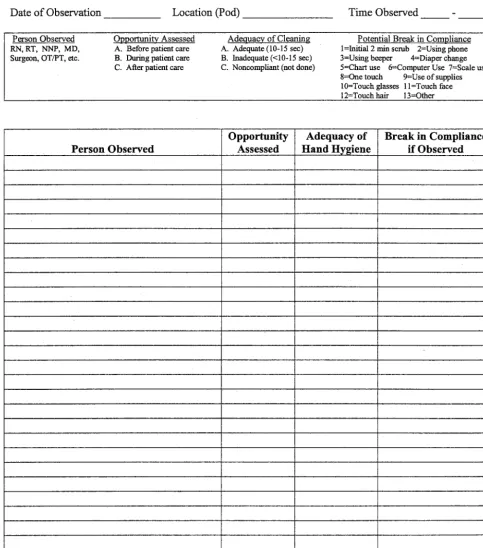
The audits of handwashing compliance were the most common and perhaps the most important tools for changing behavior. Units initially developed their own audit tools. The rapid deploy-ment of these tools enabled units to identify quickly the areas where improvement was necessary and provide feedback in a timely manner to staff. The downside to this decentralized ap-proach was the inability to measure compliance for the group as a whole, because data were not obtained uniformly. In an attempt to achieve uniformity, at the end of the 18-month collaboration, a
single tool was adopted by the group9and used by all
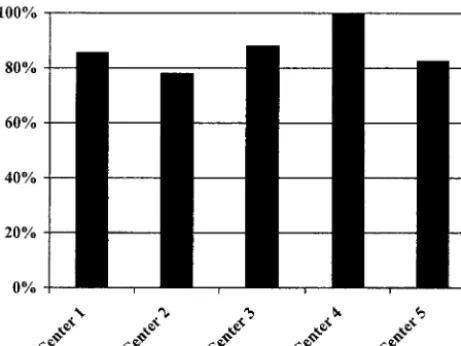
participat-ing institutions (Fig 1). This audit tool was administered durparticipat-ing the first quarter of 2001 at the 5 institutions that remained in the collaborative. In using the tool, observations were made anony-mously by a single untrained observer in the NICU. Compliance was defined as appropriate use of antiseptic agent at handwashing opportunities, before and after each contact with a patient. Results of the audit showed 78% to 100% compliance (Fig 2). Preinterven-tion baseline data were not available at all units for comparison. The handwashing changes incorporated by group members were the result of a literature review and discussion among the groups. Most units adopted similar changes in the following areas: 1) initial wash, 2) interval wash, and 3) elimination of jewelry and artificial nails.
Initial wash
The traditional practice was to perform a 3- to 5-minute scrub using a brush on entry to the unit. When evidence that
discour-aged this practice was disseminated, this was an important step in improving compliance. It provided better credibility for hand-washing “enthusiasts,” because they were less likely to be seen as advocates of policies that were unpopular, unenforceable, or in-effective. An initial wash of 15 to 60 seconds replaced the former practice. Brushes were recommended only for parents or staff who had heavily soiled hands.
Interval wash
This became the primary focus because it represented the area with the greatest noncompliance and potential for improvement. Barriers to compliance included skin breakdown from repeated friction and application of antisepsis agents, lack of time, involve-ment of multiple disciplines, and human nature. Strategies to overcome these barriers included introduction of new antisepsis agents: 2% chlorhexidine instead of 4% chlorhexidine, the addition of 3% triclosan at the sinks for staff with chlorhexidine-sensitive
skin, and use of lotions that were compatible with the antibacterial agents.
Some units added waterless alcohol gels at the bedside to enhance compliance when sinks were not readily accessible and time between patients was limited.10One unit performed 5
simul-taneous PDSA cycles to evaluate different alcohol products before making a decision. Once the new agents had been introduced, ongoing educational efforts were made using posters, e-mail mes-sages, newsletters, instructional pamphlets, and videos. A novel product used by several units was Glo Germ, a substance that when applied to hands of staff demonstrates the efficacy of hand-washing. This product clearly showed staff the effects of improper handwashing techniques. As mentioned above, serial audits with feedback to the staff were an important strategy for enhancing compliance.
The question of when handwashing was necessary came under scrutiny during this project. It was clearly necessary to wash between patient contacts, but it was not clear why it was required when a provider touched the top of the incubator or side of the ventilator. Discussion of these issues led to the concept of a “clean touch” zone that surrounds an infant’s incubator or crib. Providers were asked to practice hand hygiene when contacting or leaving the areas contiguous to the infant. A PDSA cycle implementing the “clean touch” policy is provided for illustration in Fig 3.
Elimination of jewelry and artificial nails
Eliminating use of hand and arm jewelry and artificial nails met with opposition in all units. These practices represent personal lifestyles of NICU staff, and changes in them extend beyond the workplace (eg, elimination of stylish nails or switching to a simple wedding band). In some areas of the country, acrylic nails are an especially popular accessory worn by many members of NICU staff. The infection control officers and nurse managers provided evidence linking NI with these practices. This was an important first step in achieving buy-in. In 1 unit, however, staff were willing to accept elimination of artificial nails only after several occur-rences of pseudomonas NIs.11 In some units, unequivocal unit
policies created and enforced by the unit manager became the last resort in achieving compliance with elimination of jewelry and artificial nails. This is the least desirable strategy because author-itative enforcement of policies in 1 area often leads to a negative and subversive reaction in other areas and undermines staff’s positive attitude toward responsible individual behavior in reduc-ing infection.
Line Management
Epidemiologic studies indicate that neonatal NIs, particularly those as a result of CONS, are frequently associated with indwell-ing catheters.12Organisms that colonize catheter hubs are often
the same as those isolated from the catheter tips or blood of infants who have a diagnosis of catheter-related sepsis.13The frequency of
line entry affects the incidence of catheter-related sepsis.14
Decon-taminating hubs at the time of entry or connection with rubbing (friction) and alcohol will decrease colonization15 and result in
lower rates of bacteremia.16Because the evidence strongly
sug-gests that the design and management of vascular lines can play a significant role in lowering the risk of nosocomial bacteremia, the PBP included several PBPs directed at these issues.
The summary statement5recommended that line setups should
provide access using the minimum number of ports. Breaks into the line should be reduced by adhering to recommendations that lipid infusions be changed only once every 24 hours. Parenteral fluids with amino acids should be changed once every 48 to 72 hours. Connectors and hubs need not be changed at other times unless there is breakdown or signs of residue. Finally, the most important PBP relates to antisepsis maneuvers surrounding hub entry or disconnection. At the time of entry, the operator, after first properly performing hand hygiene and establishing a sterile field, should rub the hub vigorously with alcohol. Implementation sug-gestions included provision of adequate supplies, a training pro-gram, and evaluation and monitoring tools.
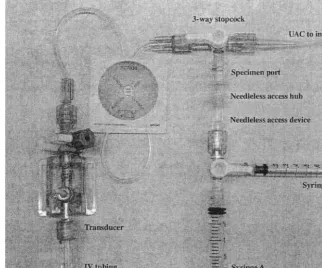
The vascular line setup and care objectives required units to address several complex and ubiquitous components of medical and nursing practice. These included standardization of line set-ups, ways to implement “closed” vascular systems (including umbilical lines), and line entry techniques (termed “hub care process”). The tasks related to implementing these PBPs were particularly daunting because current intravenous hardware and procedures for neonatal use are not standardized.
Each unit noted that it was time consuming and challenging to review, clarify, and then modify their many existing practices in light of the summary statement. These challenges were com-pounded when units sought to address the mechanics and pro-cesses necessary to implement “closed vascular access systems” for umbilical catheters. In addition, material management issues relating to hardware availability, product compatibility, stocking procedures, and communication required resolution. When access to a new provider was required, units had to overcome prohibi-tions against buying materials not provided by the hospital’s buying consortia.
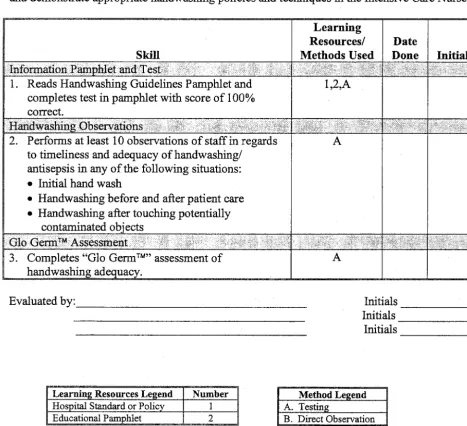
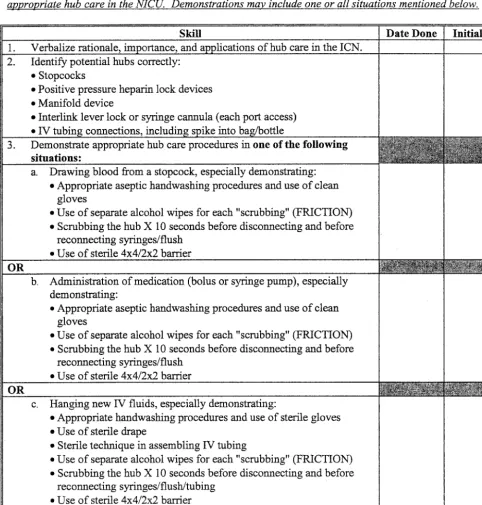
Significant efforts were required to develop (or revise) policies and procedures, staff education modules, skills teaching laborato-ries, competency tests (usually also requiring incorporation into the nurses’ and respiratory therapists’ annual performance eval-uation processes, see Fig 4), and visual cues to reinforce the desired process (note the “hub care” logo in Fig 5). A PDSA cycle to address “closed access” is shown in Fig 6. Figure 7 shows the audit tool for line standardization and management.
The first unit to adopt these changes distributed its materials electronically. As units made additional improvements and refine-ments, materials were recirculated back among the members.
The units rolled out new practices after announcements and other attention-getting events. Different communication styles were used by each of the units, reflecting local conditions and “unit cultures.”
Finally, the means to monitor compliance and complications were addressed. Each unit included individual competency test-ing as part of their line and hub care program, both in the initial training phase and later as part of a collaborative-wide, postimple-mentation assessment. Usually, an aggregate score was calculated and displayed after postimplementation testing. Later, using a common “hub care” indicator, 5 collaborating units tested a ma-jority of their staff from 1 month to 1 year after implementation. Four units reported aggregate competency scores between 90% and 100% for their staffs. The remaining unit found only a 57% competency score. Some units adopted a targeted approach to their reinforcement efforts, such as monitoring line setups daily for all infants with birth weights⬍1000 g (see Fig 6 “Act-Cycle” and Fig 7). This enabled reinforcement of compliance and educa-tion in real time (“one-on-one” process control) and also enabled the collection and distribution of aggregate trending data.
Accuracy of Diagnosis
The objective of this collaborative was to decrease the incidence of CONS bacteremia. CONS, as a component of normal skin flora, may contaminate blood cultures and lead to a false-positive iden-tification of bacteremia. The definition of CONS infection was that of the VON. It requires a positive culture from blood or cerebral spinal fluid, signs of generalized infection, and treatment with 5 days or more of antibiotics.5Because considerable variation occurs
in blood-drawing practices and clinical interpretation of the sig-nificance of positive blood cultures, measured rates of CONS
bacteremia may include both true CONS infections and false positives (contaminated blood cultures).
False-negative interpretation may occur when an inadequate specimen of blood is obtained.17Therefore, the participating units
developed a PBP to assist in more accurately defining “true”
infection. This PBP emphasized the site and number of blood cultures, preparing for blood culture, personnel performing blood cultures, volume of blood for culture, discontinuation of antibiot-ics, and ancillary tests.1It was recognized that a more accurate
diagnosis of CONS bacteremia might not decrease the incidence of
true bacteremia, but it would lower the reported rate by decreas-ing inclusion of false positives. This was considered desirable because the subsequent overtreatment of these infants may lead to secondary morbidity.18,19
The first PBP implemented in this area related to obtaining 2 blood cultures with each nosocomial sepsis evaluation. Objections to implementation primarily related to excessive blood removal and skin punctures for extremely low birth weight infants. These concerns had to be addressed at the outset (Fig 8). The approach had to be flexible to allow for limited blood drawing for the most fragile newborns. However, for most infants, obtaining dual cul-tures was an acceptable risk. Feedback to nurses and physicians led to routine implementation of the practice as nurse phleboto-mists and physicians observed that the results of the double cultures were used to make better antibiotic treatment decisions. Five units implemented policies on obtaining double blood cul-tures. Some of the policies emphasized that the second blood culture should be obtained from a central line, to avoid the issue of multiple skin punctures. Two units designed decision trees that called for central line cultures and protocols for dealing with positive cultures, including line removal with repeated positive cultures.20
Improved skin preparation before drawing a blood culture was addressed by 2 units in new policies that changed the manner of skin preparation. The other units reviewed and reinvigorated existing phlebotomy procedures. The consensus reached was that the precise technique of preparing the skin was not as important as the rigor with which the chosen technique was used. Data suggest that 1 mL is the optimal sample volume for maximizing the yield when culturing blood. The major objections to obtaining this volume were the actual volume of blood that had to be removed and the technical difficulties of obtaining 1 mL of blood with every peripheral phlebotomy. Four units initiated policies regarding drawing this volume of blood. Two units conducted PDSAs to facilitate implementation (Fig 9). After the PDSA cycles, 1 unit noted that 92% of cultures had a volume of 1 mL or greater. The discontinuation of antibiotics at 48 hours when blood cul-tures were negative was considered important in limiting antibi-otic exposure and decreasing the need for vascular access to deliver antibiotics. Most of the units reported that their previous practice was compatible with this PBP, but 3 reemphasized this practice with new policies and the development of the decision trees discussed above. Ancillary tests, such as C-reactive protein21
and various white blood cell indices, were implemented in 1 unit to aid diagnosis and treatment decisions. Other units reported that these tests were already being used.
The practice of having a specialized team draw blood cultures was not implemented in any unit, despite evidence that such a team reduces the rate of contaminated blood cultures.22The major
reasons for nonimplementation were cost and the requirement for substantial change in unit culture.
Multidisciplinary staff in all 6 units considered and discussed the PBPs. The response of each unit depended on its existing practices and culture. Some of the PBPs had already been estab-lished and required no action or perhaps only reinforcement of existing policies. Most of the units, however, developed more comprehensive policies or decision trees that contained several of the PBPs (Fig 10).
RESULTS
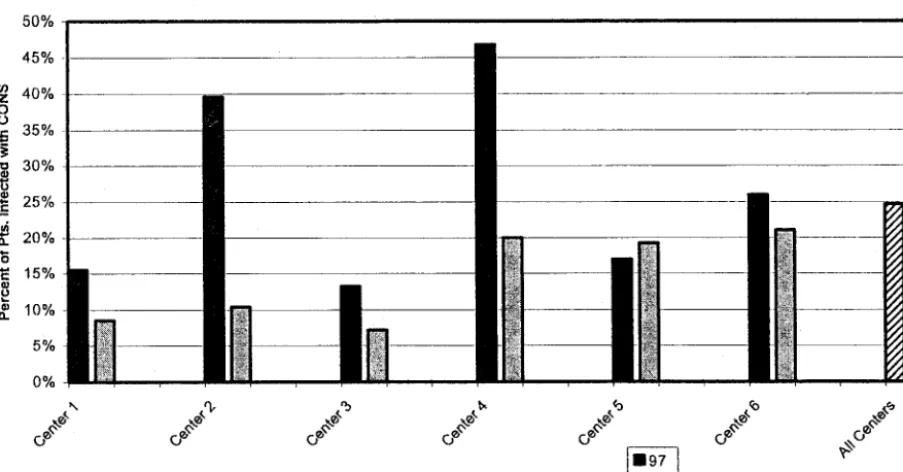
The principal outcome measure was the incidence
of CONS bacteremia. In 1997, the last year before the
initiation of the cooperative, the mean incidence of
CONS bacteremia for the collaborating institutions
was 24.6%. For the 6-month period ending in
Decem-ber 2000, the mean incidence was 16.4% (relative risk:
0.67; 95% confidence interval: 0.51– 0.87). Figure 11
shows the changes in incidence of CONS bacteremia
in the 6 participating institutions.
DISCUSSION
This quality improvement collaborative resulted in
the development of evidence-based summary
state-ments directed at lowering rates of NI in NICUs. The
statements were widely communicated and became
the basis for multiple changes in clinical practices in
the collaborating institutions. Review of the
litera-ture, internal assessments, and benchmarking all
contributed ideas for change and identified practice
options, with levels of evidence for each. Through
small change cycles, involving monitored
implemen-tations, subsequent analysis, and shared experiences,
collaborators quickly clarified priorities and began to
understand the obstacles that needed to be
ad-dressed for success. Often, the data generated from
trials at 1 institution became the strongest evidence
available for making change decisions at the others.
Each unit began PDSA changes with hand hygiene
practices. All addressed this issue, and
approxi-mately 80% of the hand hygiene PBPs were
imple-mented throughout the focus group. Unit
handwash-ing policies were recognized as the cornerstone for
reducing nosocomial bacteremia. Because of the
ubiquitous nature of handwashing, units with
suc-cessful implementation of a handwashing policy
were observed to have a philosophy of
accountabil-ity, embodied in the statement that “nosocomial
in-fection is not an entitlement in our unit.” Thus, the
occurrence of an infection represented a failure, not a
natural event, in the hospital course of a preterm
infant. The group observed this commitment in
sev-eral of the benchmark hospitals where avoidance of
NI and almost ritualistic handwashing were a part of
the unit culture.
The collaborating institutions also recognized the
importance of vascular line management in altering
the rate of nosocomial bacteremia in the NICU. Each
unit addressed hub care. The reduction of vascular
line entry points was investigated by all, although
not successfully accomplished by all.
Interinstitu-tional collaboration was made difficult by lack of
standardization of nomenclature and hardware for
vascular access devices. Supply issues emerged with
the hospitals’ unique purchasing contracts, which
limited the availability of some equipment.
At the same time, the situation in California was
confounded by the requirement to implement
“needleless” access systems, without provision of the
means to do that in neonatal settings (eg, umbilical
lines). In addition, this aspect of clinical care has not
been widely investigated in randomized trials that
provide clear evidence of which practices are
effica-cious in lowering infection rates, particularly in
neo-natal care. Thus, the experiences of this collaborative
often represent the best available evidence.
The third PBP addressed improved accuracy of
diagnosis. Members of the collaborative recognized
that some CONS bacteremia may represent
contam-inated blood cultures. Improved techniques to obtain
specimens were reviewed by all units, some of which
adopted changes even without PDSA involvement.
When collaborating units shared information
regard-ing the frequency of contaminated cultures, those
with the fewest identified false positives were noted
to have the highest antibiotic usage. This suggested
that at some units, clinicians were reluctant to label a
positive blood as false, thus perhaps unnecessarily
“treating” some infants with antibiotics. In these
units, practices to improve clarification of CONS
bac-teremia were given high priority. In other units, PBPs
about diagnosis accuracy were not targeted for initial
changes.
Although many of the PBPs were unique, the
im-plementation processes for all navigated a similar
course. All had to overcome similar challenges,
fol-lowing the pattern described by Geertsma
23in his
assessment of practice behavior changes. Before the
PDSA cycles were initiated, it was necessary to
edu-cate unit staff about high NI rates. It quickly became
evident that if staff did not see the importance of
making change, then introduction of new procedures
would not be possible. The impact of NIs on patient
outcomes, including length of stay and costs, and the
importance of staff behavior in lowering the risks of
infection were emphasized early in the process. A
large number of providers were involved in almost
all of the targeted behavior changes. With hand
hy-giene practices and line management issues, all of the
staff nurses, many physician providers, and
person-nel who frequented but were not directly assigned to
the NICU needed to become aware of the altered
practice.
Once the unit was primed for change, multiple
issues often required resolution before a program
could be initiated. For example, line setup needed to
be understood, hub care needed to be defined, and
alternatives needed to be described and evaluated
before the simultaneous change of so many
inte-grated practices was begun. The PDSA cycle model
allowed for division of the task into many discrete
components. In each unit, groups of 4 or more people
addressed each of these components of the change
agenda and worked simultaneously.
Involvement of so many staff facilitated
participa-tion in the change process and developed advocates
of change among the staff. Change would not have
been possible without the commitment of all
disci-plines working in the nursery. Everyone interfacing
with the infants needed to participate actively in the
new hand hygiene procedures. Observational tools
to assess compliance had to apply to both the
phy-sician and the nursing staff. It was important that all
staff felt a part of the team fighting to lower the risk
of infection. Although hub and line care were
pri-marily provided by nurses, medical leadership
par-ticipated. Physicians emphasized the importance of
these changes and provided positive feedback when
procedures were done well.
Initial successes were reinforced so that other staff
who were less open to change became more excited
about the process. Public relations became an
impor-tant aspect of the project, particularly in making
change “fun.” Posters emphasizing hand hygiene or
“hub care” were colorful and usually in cartoon
form. When Glo Germ was used to teach about
hand-washing, it was not used punitively. It allowed staff
to laugh at their colorful hands, emphasizing the
need to be more complete in rubbing with the next
attempt.
Although these efforts worked well for limited
issues, widespread staff involvement and buy-in
were possible only with clear and frequent
commu-nications. Information was disseminated through
e-mail, in-service sessions, regularly scheduled
meet-ings, newsletters, open discussions, and posters. No
1 approach was successful for all institutions because
cultures and structures differed. At 1 hospital with a
personal computer available at each bedside, staff
nurses routinely accessed e-mail notices. At another,
Fig 10. Example of 1 unit’s policy for evaluating NIs.
e-mails were largely ignored and written memos and
meeting announcements were much more widely
used.
In addition to changing staff attitudes and
knowl-edge base, interventions sometimes required
struc-tural change. For instance, 1 institution modified a
computer order entry screen to facilitate the
phlebot-omist’s entry on the site and quantity of the blood
draw, data necessary for assessing the diagnostic
accuracy of blood cultures. As noted above, when
addressing line management, lack of standardization
of equipment made interinstitutional collaboration
difficult. In some cases, the changes could not occur
until new products were purchased. However,
change was aided by the free communication
be-tween institutions, usually involving administrative
as well as medical personnel.
Evaluation was an important component of the
change process. The PDSA cycle methodology
rein-forced the need to evaluate the impact of each
inter-vention trial and readjust it as required.
Intermedi-ary process goals were used, and both individual
and group feedback were provided to motivate
con-tinuous improvement. Unit-wide feedback was also
a common feature of successfully implemented
prac-tice changes.
On the basis of the currently available data, this
quality improvement collaborative seems to have
been a success. Certainly, clinical processes were
suc-cessfully changed in the 6 units. Hand hygiene
com-pliance measures showed improvement. Line setups
were reevaluated and standardized, and nursing
competency scores relating to line management
im-proved. More rigorous criteria for the diagnosis of
CONS infections were adopted in several units.
Per-haps most important, preliminary data suggest an
overall decline in nosocomial bacteremia in the
par-ticipating units, from 26% to 16%. The differing
im-provement rates for CONS bacteremia between units
might reflect unit differences in the commitment of
personnel and the time available for implementing
changes. However, the differences may also reflect
that the cause of NIs is related to many processes and
practices of care, which vary among units. This
col-laborative may have addressed predominant factors
in some units but not in all.
The collaborative involved collectively thousands
of hours of work. Initially, development and
priori-tization of the PBPs was done. Subsequently,
imple-mentation of the changes on the various services had
to be completed. Associated with this investment has
come an apparent decline in CONS NIs in the 6
collaborating NICUs. It has not been proved which,
if any, of the interventions is responsible for the
decreased rate of infection. In 1 institution, the
de-cline in the infection rate may be related to more
focused diagnosis, with less contamination and
over-treatment of false positives. However, for most of the
NICUs, it seems that the actual risk of NI from CONS
decreased during the project period. This experience
supports the importance of multi-institutional,
mul-tidisciplinary collaboration for quality improvement
in neonatal care.
REFERENCES
1. Fanaroff AA, Korones SB, Wright LL, et al. Incidence, presenting fea-tures, risk factors, and significance of late onset septicemia in very low birth weight infants.Pediatr Infect Dis J.1998;17:593–598
2. Gaynes RP, Edwards JR, Jarvis WR, et al. Nosocomial infections among neonates in high-risk nurseries in the United States.Pediatrics.1996;98: 357–361
3. Eggimann P, Harbarth S, Constantin MN, et al. Impact of a prevention strategy targeted at vascular-access care on incidence of infections ac-quired in intensive care.Lancet.2000;355:1864 –1868
4. Maas A, Flament P, Pardou A, et al. Central venous catheter-related bacteraemia in critically ill neonates: risk factors and impact of a pre-vention programme.J Hosp Infect.1998;40:211–224
5. Kilbride HW, Powers R, Wirtschafter DD, et al. Evaluation and devel-opment of potentially better practices to prevent neonatal nosocomial bacteremia.Pediatrics.2003;111(suppl):e504 – e518
6. Pittet D, Hugonnet S, Harbarth S, et al. Effectiveness of a hospital-wide programme to improve compliance with hand hygiene. Infection Con-trol Programme.Lancet.2000;356:1307–1312
7. Boyce JM. It is time for action: improving hand hygiene in hospitals.
Ann Intern Med.1999;130:153–155
8. Hugonnet S, Pittet D. Hand hygiene revisited: lessons from the past and present.Curr Infect Dis Rep.2000;2:484 – 489
9. Sharek PJ et al. Effect of an evidence-based hand washing policy on hand washing rates and false-positive coagulase negative staphylococ-cus blood and cerebrospinal fluid culture rates in a level III NICU.
J Perinatol.2002;22:137–143
10. Pittet D. Improving compliance with hand hygiene in hospitals.Infect Control Hosp Epidemiol.2000;21:381–386
11. Moolenaar RL, Crutcher JM, San Joaquin VH, et al. A prolonged out-break ofPseudomonas aeruginosain a neonatal intensive care unit: did staff fingernails play a role in disease transmission?Infect Control Hosp Epidemiol.2000;21:80 – 85
12. Baltimore RS. Neonatal nosocomial infections.Semin Perinatol.1998;22: 25–32
13. Mueller-Premru M, Gubina M, Kaufmann ME, et al. Use of semi-quantitative and semi-quantitative culture methods and typing for studying the epidemiology of central venous catheter-related infections in neo-nates on parenteral nutrition.J Med Microbiol.1999;48:451– 460 14. McCarthy MC, Shives JK, Robison RJ, et al. Prospective evaluation of
single and triple lumen catheters in total parenteral nutrition.J Parenter Enteral Nutr.1987;11:259 –262
15. Salzman MB, Isenberg HD, Rubin LG. Use of disinfectants to reduce microbial contamination of hubs of vascular catheters.J Clin Microbiol.
1993;31:475– 479
16. Segura M, Alvarez-Lerma F, Tellado JM, et al. A clinical trial on the prevention of catheter-related sepsis using a new hub model.Ann Surg.
1996;223:363–369
17. Mermel LA, Maki DG. Detection of bacteremia in adults: consequences of culturing an inadequate volume of blood.Ann Intern Med.1993;119: 270 –272
18. Ballow CH, Schentag JJ. Trends in antibiotic utilization and bacterial resistance. Report of the National Nosocomial Resistance Surveillance Group.Diagn Microbiol Infect Dis.1992;15:37S– 42S
19. Calil R, Marba ST, von Nowakonski A, Tresoldi AT. Reduction in colonization and nosocomial infection by multiresistant bacteria in a neonatal unit after institution of educational measures and restriction in the use of cephalosporins.Am J Infect Control.2001;29:133–138 20. Craft A, Finer N. Nosocomial coagulase negative staphylococcal (CoNS)
catheter-related sepsis in preterm infants: definition, diagnosis, prophy-laxis, and prevention.J Perinatol.2001;21:186 –192
21. Bomela HN, Ballot DE, Corg BJ, Cooper PA. Use of C-reactive protein to guide duration of empiric antibiotic therapy in suspected early neonatal sepsis.Pediatr Infect Dis J.2000;19:531–535
22. Gibb AP, Hill B, Chorel B, et al. Reduction in blood culture contamina-tion rate by feedback to phlebotomists.Arch Pathol Lab Med.1997;121: 503–507
23. Geertsma RH, Parker RC Jr, Whitbourne SK. How physicians view the process of change in their practice behavior.J Med Educ.1982;57:752–761 24. Larson EL. APIC guideline for handwashing and hand antisepsis in
health care settings.Am J Infect Control.1995;23:251–269
25. Pittet D, Dharan S, Touveneau S, Sauvan V, Perneger TV. Bacterial contamination of the hands of hospital staff during routine patient care.
Arch Intern Med.1999;159:821– 826
26. Kretzer EK, Larson EL. Behavioral interventions to improve infection control practices.Am J Infect Control.1998;26:245–253