S Y S T E M A T I C R E V I E W
Open Access
Computerized clinical decision support systems
for chronic disease management: A
decision-maker-researcher partnership systematic review
Pavel S Roshanov
1, Shikha Misra
2, Hertzel C Gerstein
3,4, Amit X Garg
5, Rolf J Sebaldt
3, Jean A Mackay
6,
Lorraine Weise-Kelly
6, Tamara Navarro
6, Nancy L Wilczynski
6and R Brian Haynes
3,4,6*, for
the CCDSS Systematic Review Team
Abstract
Background:
The use of computerized clinical decision support systems (CCDSSs) may improve chronic disease
management, which requires recurrent visits to multiple health professionals, ongoing disease and treatment
monitoring, and patient behavior modification. The objective of this review was to determine if CCDSSs improve
the processes of chronic care (such as diagnosis, treatment, and monitoring of disease) and associated patient
outcomes (such as effects on biomarkers and clinical exacerbations).
Methods:
We conducted a decision-maker-researcher partnership systematic review. We searched MEDLINE,
EMBASE, Ovid
’
s EBM Reviews database, Inspec, and reference lists for potentially eligible articles published up to
January 2010. We included randomized controlled trials that compared the use of CCDSSs to usual practice or
non-CCDSS controls. Trials were eligible if at least one component of the non-CCDSS was designed to support chronic
disease management. We considered studies
‘
positive
’
if they showed a statistically significant improvement in at
least 50% of relevant outcomes.
Results:
Of 55 included trials, 87% (n = 48) measured system impact on the process of care and 52% (n = 25) of
those demonstrated statistically significant improvements. Sixty-five percent (36/55) of trials measured impact on,
typically, non-major (surrogate) patient outcomes, and 31% (n = 11) of those demonstrated benefits. Factors of
interest to decision makers, such as cost, user satisfaction, system interface and feature sets, unique design and
deployment characteristics, and effects on user workflow were rarely investigated or reported.
Conclusions:
A small majority (just over half) of CCDSSs improved care processes in chronic disease management
and some improved patient health. Policy makers, healthcare administrators, and practitioners should be aware that
the evidence of CCDSS effectiveness is limited, especially with respect to the small number and size of studies
measuring patient outcomes.
Background
Chronic conditions present patients, practitioners, and
healthcare systems with some unique demands,
includ-ing recurrent visits, adherence to complex care plans,
long-term disease and treatment monitoring, behavior
modification, and patient self-management. For the
many patients with multiple co-morbidities [1],
overlapping or diverging care plans may further
compli-cate these processes.
Computerized clinical decision support systems
(CCDSSs) may help practitioners meet the requirements
of chronic care. These systems analyze a patient
’
s
char-acteristics to provide tailored recommendations for
diag-nosis, treatment, patient education, adequate follow-up,
and timely monitoring of disease indicators. For
exam-ple, Holbrook
et al
. [2,3] gave providers and diabetic
patients access to a web-based system that offered care
advice, allowed monitoring of diabetes risk factors, and
* Correspondence: [email protected]3
Department of Medicine, McMaster University, 1280 Main Street West, Hamilton, ON, Canada
Full list of author information is available at the end of the article
tracked key care targets. As with any health
interven-tion, however, rigorous testing is warranted to
deter-mine whether CCDSSs improve chronic care processes
and patient outcomes.
In our previous review of the effects of CCDSSs [4],
we analyzed 100 randomized and non-randomized
stu-dies published until September 2004, 40 of which
assessed the effects of CCDSSs on disease management.
Of these 40 studies, 37 measured processes of care of
which 62% (23) showed an improvement, and 27
mea-sured patient outcomes of which 19% (5) showed an
improvement. The quality of the studies varied widely,
but improved over time.
Many new randomized controlled trials (RCTs) have
been published in this field since our previous work,
potentially documenting important advances.
Recogniz-ing that the management of chronic disease has unique
characteristics, we wished to review the impact of
CCDSSs on the quality and effectiveness of chronic care.
We had the opportunity to include the perspectives of
senior hospital managers and front-line healthcare
practi-tioners to ensure that relevant data were extracted and
summarized
–
a level of stakeholder engagement that has
not been included in other reviews [5-8].
Methods
We previously published the details of our review
proto-col, openly accessible at
http://www.implementa-tionscience.com/content/5/1/12[9]. These methods are
briefly summarized here, along with details specific to
this review of CCDSSs for chronic disease management.
Research question
Do CCDSSs improve chronic disease management
pro-cesses or patient outcomes?
Partnering with decision makers
We conducted this review in partnership with
indivi-duals responsible for implementing CCDSSs in our
region [9]. Decision makers, both managers and
clini-cians, met with the review team periodically to discuss
direction and specific details for the data extraction,
analysis, presentation and interpretation of results.
Search strategy
Full details of our search strategy are in our review
proto-col [9]. In summary, we searched MEDLINE, EMBASE,
Ovid
’
s Evidence-Based Medicine Reviews, and Inspec until
6 January 2010, and reviewed the reference lists of
included RCTs and relevant systematic reviews. We
screened articles for eligibility in two stages: a duplicate,
independent review of titles and abstracts followed by a
duplicate, independent, full-text review of potentially
eligi-ble articles, with a third reviewer resolving disagreements.
Study selection
We selected RCTs of a CCDSS used by a health care
provider for management of chronic conditions,
pub-lished up to 6 January 2010 in any language that
mea-sured CCDSS impact on processes of care or patient
outcomes. We included RCTs in any language that
com-pared patient care with a CCDSS to routine care
with-out a CCDSS and evaluated clinical performance (
i.e
., a
measure of process of care) or a patient outcome.
Addi-tionally, to be included in the review, the CCDSS had to
provide patient-specific advice that was reviewed by a
healthcare practitioner before any clinical action. Studies
were excluded if the system was used solely by students,
only provided summaries of patient information,
pro-vided feedback on groups of patients without individual
assessment, only provided computer-aided instruction,
or was used for image analysis. Trials included in our
previous review [4] were included if they were eligible.
Trials of CCDSSs for managing narrow therapeutic
index medications used in some chronic conditions
(such as warfarin in atrial fibrillation [10]) were not
included in this review, but are discussed in our review
for therapeutic drug monitoring and dosing.
Data extraction
To meet the needs of our management and clinical
part-ners, we extracted study characteristics (
e.g
., study
design, size, setting, authorship, funding, and year of
publication) and system characteristics (
e.g
., integration
with other systems, user interface elements, methods of
data entry and delivery of recommendations, target
users, and implementation details such as pilot testing
and user training). Disagreements were resolved by a
third reviewer or by consensus. We contacted primary
authors to provide missing data and to assess the
accu-racy of the extracted data; 78% (43/55) provided input.
For the remaining trials, a trained reviewer assessed the
extraction form against the full-text to confirm accuracy.
Assessment of study quality
Using a 10-point scale, pairs of reviewers independently
evaluated the selected trials on five dimensions of
qual-ity, including concealment of allocation, appropriate
unit of allocation, appropriate adjustment for baseline
differences, appropriate blinding of assessment, and
ade-quate follow-up [9]. We used a 2-tailed Mann-Whitney
U test to compare methodologic scores between trials
published before the year 2000 and those published later
to determine if trial quality has improved with time.
Assessment of CCDSS intervention effects
such as diagnosis, treatment, and monitoring of disease.
Examples of patient outcomes included changes in
blood pressure, clinical events and health-related quality
of life. We judged a CCDSS effective if it produced a
statistically significant (
p
< 0.05) improvement in a
pri-mary chronic disease outcome or in
≥
50% of multiple
relevant pre-specified outcomes. We considered primary
any outcome that trial reports described as
‘
primary
’
or
‘
main.
’
If authors did not designate a primary outcome,
we considered the outcome used to calculate the trial
’
s
sample size to be primary, if reported. When there were
no pre-specified outcomes, the system was considered
effective if it produced an improvement in
≥
50% of all
reported chronic disease outcomes. Our assessment
cri-teria are more specific than those used in our 2005
review [4]; therefore, the assignment of effect was
adjusted for some trials included in the review.
Data synthesis and analysis
We summarized data using proportions, medians, and
ranges. Denominators vary in some proportions because
not all trials reported relevant information. All analyses
were carried out using SPSS, version 15.0. We did not
attempt a meta-analysis because of study-level
differ-ences in participants, clinical settings, disease conditions,
interventions, and outcomes measured.
We conducted a sensitivity analysis to assess the
pos-sibility of biased results in studies with a mismatch
between the unit of allocation (
e.g
., clinicians) and the
unit of analysis (
e.g
., individual patients without
adjust-ment for clustering). We compared success rates
between studies with matched and mismatched analyses
using chi-square for comparisons. No differences in
reported success were found for either process of care
outcomes (Pearson X
2= 1.41,
p
= 0.24) or patient
out-comes (Pearson X
2= 1.45,
p
= 0.23). Accordingly,
results have been reported without distinction for
mismatch.
Results
Figure 1 shows a flow diagram of included and excluded
trials. We identified 166 trials of CCDSSs and Cohen
’
s
for reviewer agreement on trial eligibility was 0.93 (95%
confidence interval [CI], 0.91 to 0.94). In this review, we
included 71 publications describing 55 trials (33% of
total) about management of chronic diseases [2,3,11-79].
Thirty-eight included studies contributed outcomes to
both this review and other CCDSS interventions in the
series; three studies [30,53,62] to four reviews, 12 studies
[21,25,28,31-33,42-44,51,52,54,55,57-61,74] to three
reviews,
and
23
studies
[2,3,11,12,18,19,23,27,
35-38,40,41,45,46,48-50,56,67,71-73,77,79] to two
reviews; but we focused here on outcomes relevant to
the management of chronic disease.
Summary of trial quality is reported in Additional file
1, Table S1; system characteristics in Additional file 2,
Table S2; study characteristics in Additional file 3, Table
S3; outcome data in Table 1 and Additional file 4, Table
S4; and other CCDSS-related outcomes in Additional
file 5, Table S5.
Study quality
Additional file 1, Table S1 presents details of our
meth-odological quality assessment. Of the 55 trials, 53%
reported
adequate
concealment
of
allocation
[2,3,13,18,20,27,29,31-34,37,39,40,47-58,60-67,72-75];
78% showed no differences in baseline characteristics
between study groups or adjusted accordingly
[2,3,11-13,18-21,23-25,28,29,34,36,38-58,60-67,70-72,74-76,78,79]; 53% allocated entire wards or practices to
each study group
[11,12,14-18,25,28-35,37,39,46-49,51,54-59,62-64,67,70,73,76-79]; all except one used
objective outcomes or blinding of outcome assessments
[23]; and 60% achieved a
≥
90% follow-up rate for their
unit of analysis [11-13,18-24,27,30,35,36,39,40,46,
47,50-55,59-62,65-70,73,74,76,77]. The overall quality of
trials was good (median methods score, 8; ranging from
2 to 10) and improved with time (median methods
score before versus after year 2000, 7 versus 8, 2-tailed
Mann-Whitney U = 137;
p
= 0.005), possibly because
early trials often failed to conceal allocation or to
achieve adequate follow-up.
Records identified through database searching
(n = 14,794)
Screening
Included
Eligibilit
y
Identification
Additional records identified from previous review (n = 86) and through other sources (n = 72)
Records after duplicates removed (n = 14,188)
Records screened (n = 14,188)
Records excluded (n = 13,859)
Full-text articles assessed for eligibility
(n = 329)
Full-text articles excluded, with reasons (n = 163) 74 Not RCTs 50 Did not evaluate CCDSS 14 Supplemental reports 9 Severe methodological flaws 7 Did not meet CCDSS definition 4 Did not report outcomes of interest
4 Only abstract published 1 Included in previous review Studies included in review
series (n = 166)
Studies included in this review (met chronic disease management
criteria) (n = 55)
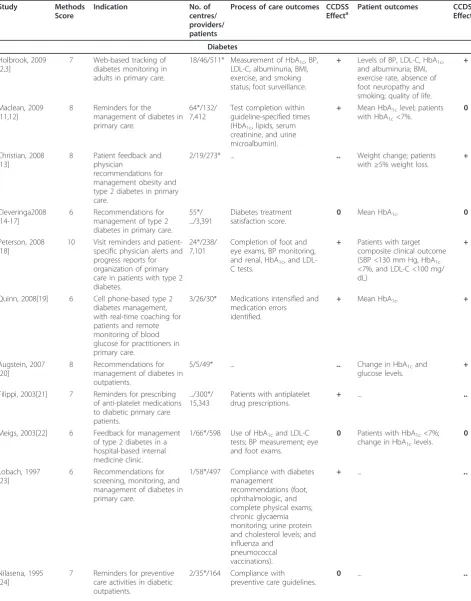
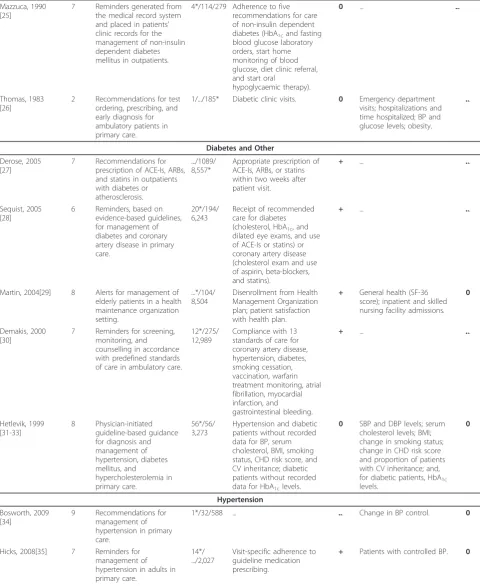
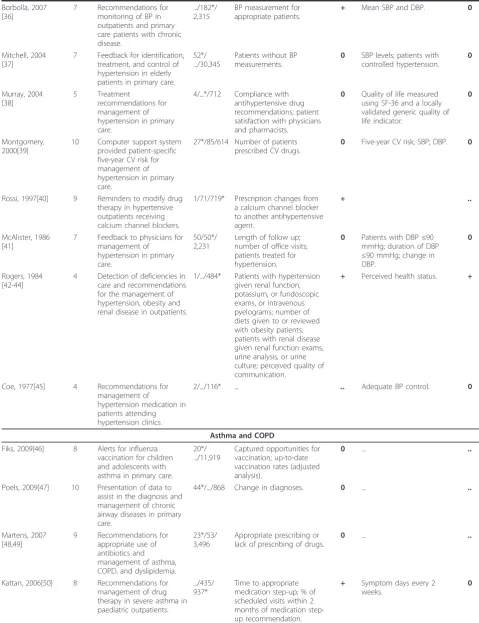
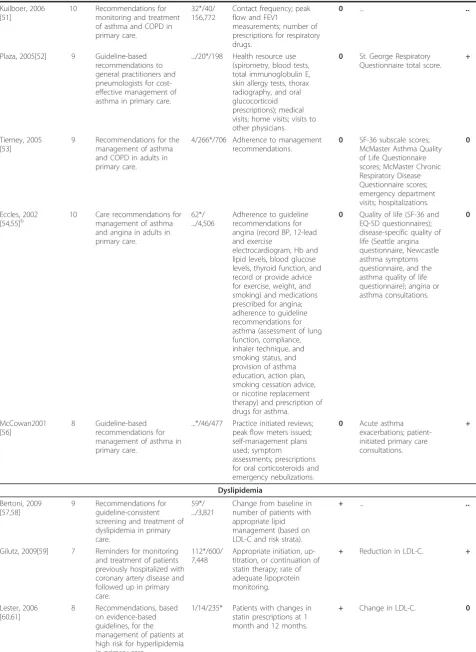
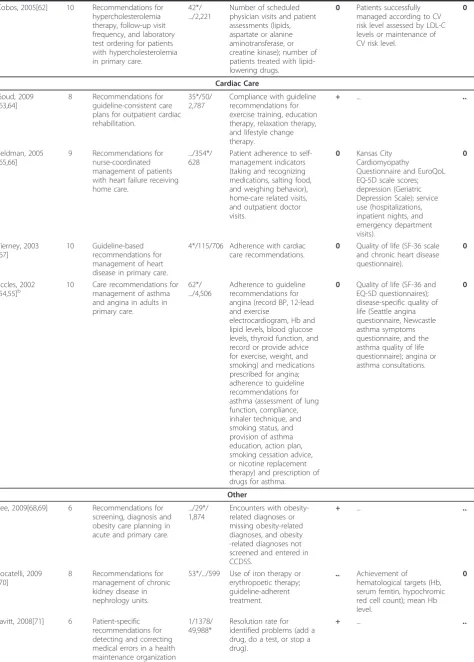
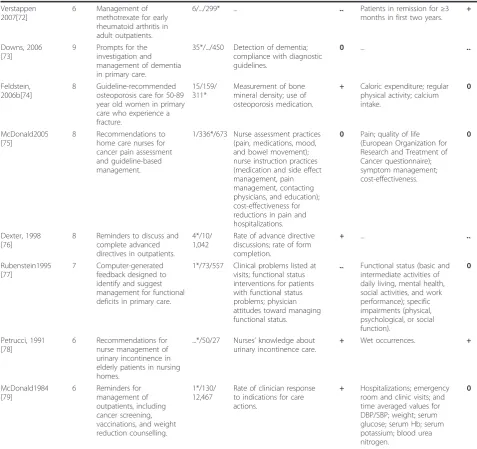
Table 1 Results for CCDSS trials of chronic disease management
Study Methods
Score
Indication No. of
centres/ providers/ patients
Process of care outcomes CCDSS Effecta
Patient outcomes CCDSS Effecta
Diabetes
Holbrook, 2009 [2,3]
7 Web-based tracking of diabetes monitoring in adults in primary care.
18/46/511* Measurement of HbA1c, BP, LDL-C, albuminuria, BMI, exercise, and smoking status; foot surveillance.
+ Levels of BP, LDL-C, HbA1c, and albuminuria; BMI, exercise rate, absence of foot neuropathy and smoking; quality of life.
+
Maclean, 2009 [11,12]
8 Reminders for the management of diabetes in primary care.
64*/132/ 7,412
Test completion within guideline-specified times (HbA1c, lipids, serum creatinine, and urine microalbumin).
+ Mean HbA1clevel; patients with HbA1c<7%.
0
Christian, 2008 [13]
8 Patient feedback and physician
recommendations for management obesity and type 2 diabetes in primary care.
2/19/273* ... ... Weight change; patients
with≥5% weight loss.
+
Cleveringa2008 [14-17]
6 Recommendations for
management of type 2 diabetes in primary care.
55*/ .../3,391
Diabetes treatment satisfaction score.
0 Mean HbA1c. 0
Peterson, 2008 [18]
10 Visit reminders and patient-specific physician alerts and progress reports for organization of primary care in patients with type 2 diabetes.
24*/238/ 7,101
Completion of foot and eye exams, BP monitoring, and renal, HbA1c, and LDL-C tests.
+ Patients with target composite clinical outcome (SBP <130 mm Hg, HbA1c <7%, and LDL-C <100 mg/ dL).
+
Quinn, 2008[19] 6 Cell phone-based type 2 diabetes management, with real-time coaching for patients and remote monitoring of blood glucose for practitioners in primary care.
3/26/30* Medications intensified and medication errors identified.
+ Mean HbA1c. +
Augstein, 2007 [20]
8 Recommendations for
management of diabetes in outpatients.
5/5/49* ... ... Change in HbA1cand
glucose levels.
+
Filippi, 2003[21] 7 Reminders for prescribing of anti-platelet medications to diabetic primary care patients.
.../300*/ 15,343
Patients with antiplatelet drug prescriptions.
+ ... ...
Meigs, 2003[22] 6 Feedback for management
of type 2 diabetes in a hospital-based internal medicine clinic.
1/66*/598 Use of HbA1cand LDL-C tests; BP measurement; eye and foot exams.
0 Patients with HbA1c<7%; change in HbA1clevels.
0
Lobach, 1997 [23]
6 Recommendations for
screening, monitoring, and management of diabetes in primary care.
1/58*/497 Compliance with diabetes management
recommendations (foot, ophthalmologic, and complete physical exams; chronic glycaemia monitoring; urine protein and cholesterol levels; and influenza and
pneumococcal vaccinations).
+ ... ...
Nilasena, 1995 [24]
7 Reminders for preventive care activities in diabetic outpatients.
2/35*/164 Compliance with preventive care guidelines.
Table 1 Results for CCDSS trials of chronic disease management
(Continued)
Mazzuca, 1990 [25]
7 Reminders generated from the medical record system and placed in patients’ clinic records for the management of non-insulin dependent diabetes mellitus in outpatients.
4*/114/279 Adherence to five recommendations for care of non-insulin dependent diabetes (HbA1cand fasting blood glucose laboratory orders, start home monitoring of blood glucose, diet clinic referral, and start oral
hypoglycaemic therapy).
0 ... ...
Thomas, 1983 [26]
2 Recommendations for test ordering, prescribing, and early diagnosis for ambulatory patients in primary care.
1/.../185* Diabetic clinic visits. 0 Emergency department visits; hospitalizations and time hospitalized; BP and glucose levels; obesity.
...
Diabetes and Other
Derose, 2005 [27]
7 Recommendations for
prescription of ACE-Is, ARBs, and statins in outpatients with diabetes or atherosclerosis.
.../1089/ 8,557*
Appropriate prescription of ACE-Is, ARBs, or statins within two weeks after patient visit.
+ ... ...
Sequist, 2005 [28]
6 Reminders, based on evidence-based guidelines, for management of diabetes and coronary artery disease in primary care.
20*/194/ 6,243
Receipt of recommended care for diabetes (cholesterol, HbA1c, and dilated eye exams, and use of ACE-Is or statins) or coronary artery disease (cholesterol exam and use of aspirin, beta-blockers, and statins).
+ ... ...
Martin, 2004[29] 8 Alerts for management of elderly patients in a health maintenance organization setting.
...*/104/ 8,504
Disenrollment from Health Management Organization plan; patient satisfaction with health plan.
+ General health (SF-36 score); inpatient and skilled nursing facility admissions.
0
Demakis, 2000 [30]
7 Reminders for screening, monitoring, and counselling in accordance with predefined standards of care in ambulatory care.
12*/275/ 12,989
Compliance with 13 standards of care for coronary artery disease, hypertension, diabetes, smoking cessation, vaccination, warfarin treatment monitoring, atrial fibrillation, myocardial infarction, and
gastrointestinal bleeding.
+ ... ...
Hetlevik, 1999 [31-33]
8 Physician-initiated guideline-based guidance for diagnosis and management of hypertension, diabetes mellitus, and
hypercholesterolemia in primary care.
56*/56/ 3,273
Hypertension and diabetic patients without recorded data for BP, serum cholesterol, BMI, smoking status, CHD risk score, and CV inheritance; diabetic patients without recorded data for HbA1clevels.
0 SBP and DBP levels; serum cholesterol levels; BMI; change in smoking status; change in CHD risk score and proportion of patients with CV inheritance; and, for diabetic patients, HbA1c levels.
0
Hypertension
Bosworth, 2009 [34]
9 Recommendations for
management of hypertension in primary care.
1*/32/588 ... ... Change in BP control. 0
Hicks, 2008[35] 7 Reminders for
management of hypertension in adults in primary care.
14*/ .../2,027
Visit-specific adherence to guideline medication prescribing.
Table 1 Results for CCDSS trials of chronic disease management
(Continued)
Borbolla, 2007 [36]
7 Recommendations for
monitoring of BP in outpatients and primary care patients with chronic disease.
.../182*/ 2,315
BP measurement for appropriate patients.
+ Mean SBP and DBP. 0
Mitchell, 2004 [37]
7 Feedback for identification, treatment, and control of hypertension in elderly patients in primary care.
52*/ .../30,345
Patients without BP measurements.
0 SBP levels; patients with controlled hypertension.
0
Murray, 2004 [38]
5 Treatment
recommendations for management of hypertension in primary care.
4/...*/712 Compliance with antihypertensive drug recommendations; patient satisfaction with physicians and pharmacists.
0 Quality of life measured using SF-36 and a locally validated generic quality of life indicator.
0
Montgomery, 2000[39]
10 Computer support system provided patient-specific five-year CV risk for management of hypertension in primary care.
27*/85/614 Number of patients prescribed CV drugs.
0 Five-year CV risk; SBP; DBP. 0
Rossi, 1997[40] 9 Reminders to modify drug therapy in hypertensive outpatients receiving calcium channel blockers.
1/71/719* Prescription changes from a calcium channel blocker to another antihypertensive agent.
+ ...
McAlister, 1986 [41]
7 Feedback to physicians for management of
hypertension in primary care.
50/50*/ 2,231
Length of follow up; number of office visits; patients treated for hypertension.
0 Patients with DBP≤90 mmHg; duration of DBP
≤90 mmHg; change in DBP.
0
Rogers, 1984 [42-44]
4 Detection of deficiencies in care and recommendations for the management of hypertension, obesity and renal disease in outpatients.
1/.../484* Patients with hypertension given renal function, potassium, or fundoscopic exams, or intravenous pyelograms; number of diets given to or reviewed with obesity patients; patients with renal disease given renal function exams, urine analysis, or urine culture; perceived quality of communication.
+ Perceived health status. +
Coe, 1977[45] 4 Recommendations for
management of
hypertension medication in patients attending hypertension clinics.
2/.../116* ... ... Adequate BP control. 0
Asthma and COPD
Fiks, 2009[46] 8 Alerts for influenza vaccination for children and adolescents with asthma in primary care.
20*/ .../11,919
Captured opportunities for vaccination; up-to-date vaccination rates (adjusted analysis).
0 ... ...
Poels, 2009[47] 10 Presentation of data to assist in the diagnosis and management of chronic airway diseases in primary care.
44*/.../868 Change in diagnoses. 0 ... ...
Martens, 2007 [48,49]
9 Recommendations for
appropriate use of antibiotics and management of asthma, COPD, and dyslipidemia.
23*/53/ 3,496
Appropriate prescribing or lack of prescribing of drugs.
0 ... ...
Kattan, 2006[50] 8 Recommendations for
management of drug therapy in severe asthma in paediatric outpatients.
.../435/ 937*
Time to appropriate medication step-up; % of scheduled visits within 2 months of medication step-up recommendation.
+ Symptom days every 2 weeks.
Table 1 Results for CCDSS trials of chronic disease management
(Continued)
Kuilboer, 2006 [51]
10 Recommendations for
monitoring and treatment of asthma and COPD in primary care.
32*/40/ 156,772
Contact frequency; peak flow and FEV1
measurements; number of prescriptions for respiratory drugs.
0 ... ...
Plaza, 2005[52] 9 Guideline-based
recommendations to general practitioners and pneumologists for cost-effective management of asthma in primary care.
.../20*/198 Health resource use (spirometry, blood tests, total immunoglobulin E, skin allergy tests, thorax radiography, and oral glucocorticoid prescriptions); medical visits; home visits; visits to other physicians.
0 St. George Respiratory Questionnaire total score.
+
Tierney, 2005 [53]
9 Recommendations for the management of asthma and COPD in adults in primary care.
4/266*/706 Adherence to management recommendations.
0 SF-36 subscale scores; McMaster Asthma Quality of Life Questionnaire scores; McMaster Chronic Respiratory Disease Questionnaire scores; emergency department visits; hospitalizations.
0
Eccles, 2002
[54,55]b 10 Care recommendations formanagement of asthma and angina in adults in primary care.
62*/ .../4,506
Adherence to guideline recommendations for angina (record BP, 12-lead and exercise
electrocardiogram, Hb and lipid levels, blood glucose levels, thyroid function, and record or provide advice for exercise, weight, and smoking) and medications prescribed for angina; adherence to guideline recommendations for asthma (assessment of lung function, compliance, inhaler technique, and smoking status, and provision of asthma education, action plan, smoking cessation advice, or nicotine replacement therapy) and prescription of drugs for asthma.
0 Quality of life (SF-36 and EQ-5D questionnaires); disease-specific quality of life (Seattle angina questionnaire, Newcastle asthma symptoms questionnaire, and the asthma quality of life questionnaire); angina or asthma consultations.
0
McCowan2001 [56]
8 Guideline-based recommendations for management of asthma in primary care.
...*/46/477 Practice initiated reviews; peak flow meters issued; self-management plans used; symptom
assessments; prescriptions for oral corticosteroids and emergency nebulizations.
0 Acute asthma
exacerbations; patient-initiated primary care consultations.
+
Dyslipidemia
Bertoni, 2009 [57,58]
9 Recommendations for
guideline-consistent screening and treatment of dyslipidemia in primary care.
59*/ .../3,821
Change from baseline in number of patients with appropriate lipid management (based on LDL-C and risk strata).
+ ... ...
Gilutz, 2009[59] 7 Reminders for monitoring and treatment of patients previously hospitalized with coronary artery disease and followed up in primary care.
112*/600/ 7,448
Appropriate initiation, up-titration, or continuation of statin therapy; rate of adequate lipoprotein monitoring.
+ Reduction in LDL-C. +
Lester, 2006 [60,61]
8 Recommendations, based
on evidence-based guidelines, for the management of patients at high risk for hyperlipidemia in primary care.
1/14/235* Patients with changes in statin prescriptions at 1 month and 12 months.
Table 1 Results for CCDSS trials of chronic disease management
(Continued)
Cobos, 2005[62] 10 Recommendations for
hypercholesterolemia therapy, follow-up visit frequency, and laboratory test ordering for patients with hypercholesterolemia in primary care.
42*/ .../2,221
Number of scheduled physician visits and patient assessments (lipids, aspartate or alanine aminotransferase, or creatine kinase); number of patients treated with lipid-lowering drugs.
0 Patients successfully managed according to CV risk level assessed by LDL-C levels or maintenance of CV risk level.
0
Cardiac Care
Goud, 2009 [63,64]
8 Recommendations for
guideline-consistent care plans for outpatient cardiac rehabilitation.
35*/50/ 2,787
Compliance with guideline recommendations for exercise training, education therapy, relaxation therapy, and lifestyle change therapy.
+ ... ...
Feldman, 2005 [65,66]
9 Recommendations for
nurse-coordinated management of patients with heart failure receiving home care.
.../354*/ 628
Patient adherence to self-management indicators (taking and recognizing medications, salting food, and weighing behavior), home-care related visits, and outpatient doctor visits.
0 Kansas City Cardiomyopathy
Questionnaire and EuroQoL EQ-5D scale scores; depression (Geriatric Depression Scale); service use (hospitalizations, inpatient nights, and emergency department visits).
0
Tierney, 2003 [67]
10 Guideline-based recommendations for management of heart disease in primary care.
4*/115/706 Adherence with cardiac care recommendations.
0 Quality of life (SF-36 scale and chronic heart disease questionnaire).
0
Eccles, 2002
[54,55]b 10 Care recommendations formanagement of asthma and angina in adults in primary care.
62*/ .../4,506
Adherence to guideline recommendations for angina (record BP, 12-lead and exercise
electrocardiogram, Hb and lipid levels, blood glucose levels, thyroid function, and record or provide advice for exercise, weight, and smoking) and medications prescribed for angina; adherence to guideline recommendations for asthma (assessment of lung function, compliance, inhaler technique, and smoking status, and provision of asthma education, action plan, smoking cessation advice, or nicotine replacement therapy) and prescription of drugs for asthma.
0 Quality of life (SF-36 and EQ-5D questionnaires); disease-specific quality of life (Seattle angina questionnaire, Newcastle asthma symptoms questionnaire, and the asthma quality of life questionnaire); angina or asthma consultations.
0
Other
Lee, 2009[68,69] 6 Recommendations for
screening, diagnosis and obesity care planning in acute and primary care.
.../29*/ 1,874
Encounters with obesity-related diagnoses or missing obesity-related diagnoses, and obesity -related diagnoses not screened and entered in CCDSS.
+ ... ...
Locatelli, 2009 [70]
8 Recommendations for
management of chronic kidney disease in nephrology units.
53*/.../599 Use of iron therapy or erythropoetic therapy; guideline-adherent treatment.
... Achievement of hematological targets (Hb, serum ferritin, hypochromic red cell count); mean Hb level.
0
Javitt, 2008[71] 6 Patient-specific recommendations for detecting and correcting medical errors in a health maintenance organization setting.
1/1378/ 49,988*
Resolution rate for identified problems (add a drug, do a test, or stop a drug).
Table 1 Results for CCDSS trials of chronic disease management
(Continued)
Verstappen 2007[72]
6 Management of
methotrexate for early rheumatoid arthritis in adult outpatients.
6/.../299* ... ... Patients in remission for≥3
months in first two years.
+
Downs, 2006 [73]
9 Prompts for the investigation and management of dementia in primary care.
35*/.../450 Detection of dementia; compliance with diagnostic guidelines.
0 ... ...
Feldstein, 2006b[74]
8 Guideline-recommended
osteoporosis care for 50-89 year old women in primary care who experience a fracture.
15/159/ 311*
Measurement of bone mineral density; use of osteoporosis medication.
+ Caloric expenditure; regular physical activity; calcium intake.
0
McDonald2005 [75]
8 Recommendations to
home care nurses for cancer pain assessment and guideline-based management.
1/336*/673 Nurse assessment practices (pain, medications, mood, and bowel movement); nurse instruction practices (medication and side effect management, pain management, contacting physicians, and education); cost-effectiveness for reductions in pain and hospitalizations.
0 Pain; quality of life (European Organization for Research and Treatment of Cancer questionnaire); symptom management; cost-effectiveness.
0
Dexter, 1998 [76]
8 Reminders to discuss and complete advanced directives in outpatients.
4*/10/ 1,042
Rate of advance directive discussions; rate of form completion.
+ ... ...
Rubenstein1995 [77]
7 Computer-generated
feedback designed to identify and suggest management for functional deficits in primary care.
1*/73/557 Clinical problems listed at visits; functional status interventions for patients with functional status problems; physician attitudes toward managing functional status.
... Functional status (basic and intermediate activities of daily living, mental health, social activities, and work performance); specific impairments (physical, psychological, or social function).
0
Petrucci, 1991 [78]
6 Recommendations for
nurse management of urinary incontinence in elderly patients in nursing homes.
...*/50/27 Nurses’knowledge about urinary incontinence care.
+ Wet occurrences. +
McDonald1984 [79]
6 Reminders for
management of outpatients, including cancer screening, vaccinations, and weight reduction counselling.
1*/130/ 12,467
Rate of clinician response to indications for care actions.
+ Hospitalizations; emergency room and clinic visits; and time averaged values for DBP/SBP; weight; serum glucose; serum Hb; serum potassium; blood urea nitrogen.
0
Abbreviations: ACE -I, angiotensin converting enzyme inhibitor; ARB, angiotensin receptor blockers; BMI, body mass index; BP, blood pressure; CCDSS, computerized clinical decision support system; CHD, coronary heart disease; COPD, chronic obstructive pulmonary disease; CV, cardiovascular; DBP, diastolic blood pressure; Hb, haemoglobin; LDL, low-density lipoprotein; SBP, systolic blood pressure.
*Unit of allocation. a
Outcomes are evaluated for effect as positive (+) or negative (-) for CCDSS, or no effect (0), based on the following hierarchy. An effect is defined as≥50% of
relevant outcomes showing a statistically significant difference (2p< 0.05):
1. If a single primary outcome is reported,in which all components are applicable, this is the only outcome evaluated.
2. If >1 primary outcome is reported, the≥50% rule applies and only the primary outcomes are evaluated.
3. If no primary outcomes are reported (or only some of the primary outcome components are relevant) but overall analyses are provided, the overall analyses are evaluated as primary outcomes. Subgroup analyses are not considered.
4. If no primary outcomes or overall analyses are reported, or only some components of the primary outcome are relevant for the care area, any reported prespecified outcomes are evaluated.
5. If no clearly prespecified outcomes are reported, any available outcomes are considered.
6. If statistical comparisons are not reported,‘effect’is designated as not evaluated (...).
b
CCDSS and study characteristics
Additional file 2, Table S2 describes CCDSS design and
implementation characteristics. Denominators vary
because not all trials reported on all features considered.
Fifty-nine percent (32/54) of CCDSSs were integrated
with electronic medical records [2,3,14-18,21-23,25,
26,28,29,31-40,42-44,46,48,49,51,53-55,60-64,67,73,74,76-,79], and 17% (8/47) were also integrated with
compu-terized physician order entry systems [22,29,36,
38,46,48,49,53,60,61]. Fifty-three percent (25/47)
auto-matically obtained data needed to give recommendations
from electronic medical records [2,3,18,21-23,25,
28,34-36,38,40,46,48,49,51,53-55,60-64,67,73,74,76,79];
36% (17/47) relied on practitioners to enter the data
[2,3,14-17,23,30,39,41,45,48,49,52-58,67-69,72,75]; and
26% (12/47) used research staff for this purpose
[18,24,36,41,47,50,59,65,66,72,75,77,79]. Advice was
pro-vided at the time of care in 85% of trials (46/54)
[2,3,13-18,20-28,30-36,38-40,42-49,51-59,62-70,73-79]
most often on a desktop or laptop computer (51%; 26/
51) [2,3,14-17,21,22,28,30,34-39,46-49,51,53-56,62-64,67,
70,72-74] or by existing non-prescribing staff (22%; 11/
51) [18,23-26,30,40,42-44,71,76,79]. Fifty-three percent
(29/54) provided advice to other healthcare practitioners
in addition to physicians [2,3,11,12,14-18,22,23,25,26,
28-36,38,40,45-47,53,57-59,63,64,67,71,73,76,77,79] and
15% (8/55) directly advised patients in addition to
prac-titioners [2,3,11-13,18,19,29,41,74]. Sixty-four percent
(25/39) of systems were pilot tested [11-19,22,23,26,28,
31-34,36,37,39,46,47,50,51,56,59-61,63,64,67,72,77] and
healthcare professionals were trained to use them in
72% (34/47) [2,3,11-17,19-22,25,29-33,35,36,38,39,46-61,
63,64,67-69,73,77,78]. Reports rarely described the
CCDSS user interface characteristics.
Seventy-three percent of trials (40/55) declared that at
least one author was involved in the development of the
system
[2,3,11-13,18,19,22-26,28,30,34,36,38-51,53-61,63,64,67--70,72,73,76,77,79] and three trials indicated that all
authors were independent of development [14-17,
31-33,78].
Additional file 3, Table S3 provides further details of
the CCDSS intervention, care setting, study funding
source, and year of publication. Trials included a total
of 7,335 practitioners (median, 72; ranging from 5 to
1,378 [when reported]) caring for 381,562 patients
(median, 719; ranging from 27 to 156,772 [when
reported]) in 974 clinics (median, 13; ranging from 1 to
112 [when reported]) across 705 distinct sites (median,
4; ranging from 1 to 112 [when reported]). Eight trials
did not report their source of funding [21,26,36,
40,71-73,75]. Of the remaining 47, 74% (n = 35) were
publicly funded, 17% (n = 8) were conducted with only
private funds, [14-17,19,27,48,49,52,60-62,70], and 9% (n
= 4) were conducted with a combination of private and
public funding [20,29,54,55,75]. The earliest trial was
published in 1977 [45], but over one-half (62%) were
published after our previous search in September 2004
[2,3,11-20,27-29,34-37,46-53,57-66,68-75].
CCDSS effects
Table 1 summarizes the effects of all systems for
improving process of care and patient outcomes and
Additional file 4, Table S4 provides further detail
regarding systems and individual outcomes selected for
evaluation.
Eighty-seven percent (48/55) of trials measured effects
on chronic disease management processes [2,3,11,12,
14-19,21-33,35-44,46-69,71,73-76,78,79], and 52% (25/
48) demonstrated improvement [2,3,11,12,18,19,
21,23,27-30,35,36,40,42-44,50,57-61,63,64,68,69,71,73,74-,76,78,79]. Sixty-five percent (36/55) measured impact
on
patient
outcomes
[2,3,11-20,22,29,31-39,
41-45,50,52-56,59-62,65-67,70,72,74,75,77-79] and 31%
(11/36) of these demonstrated benefit on measures such
as health-related quality of life, rates of hospitalization,
unscheduled care visits, and a host of disease-specific
clinical outcomes [2,3,13,18-20,42-44,52,56,59,72,78].
Diabetes
Thirteen trials described systems primarily supporting
diabetes care (median quality score, 7; ranging from 2 to
10) [2,3,11-26]. Fifty-five percent (6/11) reported
improvements in processes of care including treatment
and monitoring [2,3,11,12,18,19,21,23], while 62.5% (5/8)
reported improvements in corresponding patient
out-comes including blood pressure, HbA
1c, and low-density
lipoprotein (LDL) cholesterol [2,3,13,18-20]. The seven
trials published since 2005 appeared to show success
more consistently: four of five improved the process of
care [2,3,11-13,18-20], and five of seven improved
patient outcomes [2,3,13,18-20].
Systems in five diabetes trials targeted patients in
addition to practitioners [2,3,11-13,18,19]. Of these, all
four trials that measured process effects demonstrated
benefit [2,3,11,12,18,19], and four reported improvement
in patient outcomes [2,3,13,18,19].
Several recent trials were conducted in primary
community clinics whereas most previous trials were
conducted in hospitals. For example, in two trials
conducted across multiple practices, CCDSSs
pro-vided patient-specific reminders during visits and
notified at-risk patients of their care targets and
upcoming appointments [2,3,11,18]. Both trials
demonstrated improvements in composite process
measures comprising timely completion of foot and
eye exams, and monitoring of blood pressure, HbA
1c,
showed improvements in corresponding composite
patient outcomes.
Diabetes and other conditions
CCDSSs in five trials (median score, 7; ranging from 6
to 8) provided recommendations for a host of
condi-tions in conjunction with diabetes, including
dyslipide-mia, hypertension, obesity, and heart failure [27-33].
Their effects on diabetes outcomes could not be
iso-lated. All five measured process of care, and 80% (4/5)
found improvements [27-30]. Only one measured
corre-sponding patient outcomes, but showed no benefit
[31-33].
Hypertension
The 10 trials focusing primarily on hypertension
management (median score, 7; ranging from 4 to 10)
were older, with 70% (7/10) published before 2005
[34-45].
Eight of 10 trials assessed impact on process of care
using measures such as adherence to recommendations
for blood pressure control [35-44], patient satisfaction,
and number of scheduled care visits, and four
demon-strated improvements [35,36,40,42-44].
In contrast to diabetes systems, however, hypertension
systems showed little or no patient benefit. Of the nine
trials that reported patient outcomes, such as blood
pressure and health-related quality of life [34-39,41-45],
only one found benefit [42-44]. This multi-component
system improved patients
’
perceived health status by
giving suggestions for the management of hypertension,
obesity, and renal disease. The trial, however, was of
poor quality (methods score 4), and the nature of the
intervention prevented isolating effects related to
hypertension.
Dyslipidemia
Four trials evaluated systems that focused primarily on
dyslipidemia [57-62]. All were conducted in primary
care settings and published after 2005 (median quality
score, 8.5; ranging from 7 to 10).
Three trials measured effects on process of care and
demonstrated improvements in lipid monitoring and
treatment [57-61], but only one of three trials
mea-suring patient outcomes found a benefit [59]. This
CCDSS generated patient-specific reminders that
were mailed to primary care physicians and nurses;
highlighted the patient
’
s risk factors, lipoprotein
values, and current medications; and recommended
initiation or adjustment of lipid-lowering treatment
when appropriate. The trial detected improvements in
blood lipid monitoring and treatment management, as
well
as
relative
reductions
in
patients
’
LDL
cholesterol.
Asthma and chronic obstructive pulmonary disease
(COPD)
The nine trials of systems supporting asthma care were
of excellent quality (median score, 9; ranging from 8 to
10) and relatively new (7/9 published after September
2004), but the systems were generally ineffective [46-56].
All trials measured effects on process of care (including
rates of spirometry, thorax radiography, IgE levels, and
allergy testing; medication prescriptions and influenza
vaccinations; and use of rescue medications) but only
one demonstrated benefit [50].
Two of five trials measuring patient outcomes found
an impact [52,56]. One system delivered asthma
recom-mendations in primary care, made prognostic
predic-tions by matching patients to similar known cases, and
allowed users to print self-management plans for their
patients [56]. The trial demonstrated a reduction in
acute asthma exacerbations and patient-initiated primary
care visits. Another system delivered guideline
recom-mendations to general practitioners and pneumologists,
and proved to be more cost effective at improving
qual-ity of life than usual asthma care [52].
Three asthma systems also gave advice for
manage-ment of COPD [48,49,51,53]. All of these measured
pro-cess of care but detected no effects. One trial also
measured patient outcomes but did not show benefit
[53].
Cardiac care
Systems in four methodologically strong trials (median
score, 9.5; ranging from 8 to 10) focused on heart failure
[65,66], cardiac rehabilitation [63,64], ischemic heart
dis-ease [67], and angina [54,55]. All measured process of
care using adherence to guideline recommendations but
only one found benefit [63,64]. The CCDSS for cardiac
rehabilitation used electronic medical records and needs
assessment data to generate recommendations for
exer-cise training, education, lifestyle change, and stress
man-agement [63,64]. The trial demonstrated improved
guideline adherence, but patient outcomes were not
stu-died. The other three trials measured effects on quality
of life as a patient outcome, but none found benefit
[54,55,65-67].
Other care
the other improved likelihood of remission in patients
with early rheumatoid arthritis through CCDSS-guided
management of methotrexate [72].
Costs and practical process related outcomes
Four trials used cost-effectiveness as an outcome (see
Additional file 4, Table S4) [14-17,52,65,66,75]. Only
one trial demonstrated improvement to patient
out-comes overall, and the CCDSS was also more
cost-effec-tive than usual asthma care [52].
Additional file 5, Table S5 summarizes cost-related
findings of the 12 trials that statistically compared costs
of care between the study groups: six reported no
differ-ence
with
CCDSS
compared
to
usual
care
[14-17,29,38,52,67,75], four reported savings with the
CCDSS [11,12,50,62,71], and two reported that the
CCDSS increased some costs [65-67].
In addition to process of care and patient outcomes,
we looked for effects on user satisfaction and workflow
(see Additional file 5, Table S5). Only seven trials
reported a formal effort of assessing user satisfaction: 3
found users satisfied overall [19,28,63,64], one found
them unsatisfied [54,55], and the remaining three
showed mixed results [2,3,31-33,56]. The authors of five
other studies commented that users were satisfied in
informal evaluations [13,18,36,59,72].
Two trials made formal attempts to measure systems
’
impact on user workflow and reported mixed results
[23,63,64].
Discussion
This review was done in partnership with key decision
makers to summarize the effectiveness of clinical
deci-sion support technology for the management of chronic
conditions. We considered studies
‘
positive
’
if they
showed a statistically significant improvement in at least
50% of relevant outcomes. CCDSSs often improved the
process of patient care. When assessed, effects on any
patient outcomes were rarely found, but may have been
underestimated: 56% of trials reporting these outcomes
declared
them
primary
[11-20,22,29,34,35,38,50,52,56,59-62,67,70,72], and the
remaining trials may not have been large enough or
long enough to detect such outcomes. No study showed
convincing evidence of benefit for major patient
outcomes.
Nevertheless, results from recent diabetes
manage-ment trials are encouraging. Several of these systems
were deployed in general community practice and those
that engaged both patients and providers were
consis-tently effective. These systems may become increasingly
popular with the advent of patient-controlled electronic
medical records. Systems addressing several conditions,
including but not limited to diabetes, generally improved
care but only one measured patient outcomes [31-33]
(no effect). In dyslipidemia, systems improved lipid
monitoring and treatment, but only one reduced blood
lipids [59]. The few dyslipidemia trials were recent and
may represent a promising area for future research.
Conversely, most trials in hypertension measured
patient outcomes and almost never found benefits, and
only some showed improvements in the process of care.
Asthma and COPD systems mostly failed to show
effec-tiveness, despite being tested in recent, high-quality
trials. The small collection of trials in heart failure,
ischemic heart disease, cardiac rehabilitation, and angina
also rarely show effects, with improvement only in
reha-bilitation processes. The remaining systems, too diverse
to group, often improved care processes but were
sel-dom found to benefit patients.
While systems in diabetes appear to achieve success
with respect to patient outcomes more often than
sys-tems in asthma and hypertension, we did not
pre-spe-cify this comparison and, given the play of chance and
many possible confounders, we cannot confidently
assert that the pattern is real. It is plausible that the
effectiveness of CCDSS recommendations at improving
patient outcomes for some indications is limited by the
absence of high-quality clinical evidence in that area.
Even the most scientifically sound recommendations,
however, will fail to improve health outcomes if
patients do not adhere to prescribed treatments
–
a very
common problem [80]. Unfortunately, our suggestions
regarding the discrepancy remain purely speculative
because studies did not explore reasons for failure, and
we do not have enough trials to test these hypotheses
reliably.
The growing use of CCDSSs and their potential for
benefit and harm highlight the importance of evaluating
these systems in well-conducted randomized clinical
trials. The increase in number and quality of trials is
encouraging, but results remain mixed, and few trials
investigated the mechanisms behind their findings.
Care-ful description of study and system design in trial
reports, as well as assessments of effectiveness and
acceptability of system features, would support progress
in this area.
The benefits we can expect from the use of
compu-terized decision support are not clear. Policy makers
promoting the use of CCDSS, as well as healthcare
administrators and practitioners considering local
implementation, should be aware that the evidence of
CCDSS effectiveness is limited, especially with respect
to the small number and size of studies of patient
out-comes. Further, evidence of benefit comes mainly from
a few
‘
trail blazer
’
institutions with much in-house
informatics expertise, evaluating home-grown systems
developed over many years. As a result, trials in this
review may not represent the effects in less technically
endowed settings or from commercially available
sys-tems, the capabilities of which have been shown to
vary greatly [81].
Our review has some potential limitations. Great
het-erogeneity in CCDSS design, purpose, and targets for
evaluation prevented us from conducting a
meta-analy-sis. Instead, we used a binary measure of effect, where
we considered studies
‘
positive
’
if they showed a
statisti-cally significant improvement in at least 50% of relevant
outcomes. Thus, some of the studies we considered to
show no effect found improvement on a minority of
sec-ondary or non-prespecified outcomes. These findings
could be real but could also be due to
post hoc
unplanned analyses and multiple testing. Readers should
refer to the Methods section for a more detailed
account of our effect assessment.
We were unable to assess the risk of publication bias
in this literature. Given that most systems were studied
by their own developers, we suspect that publication
bias is likely, and even our findings of modest effects
may overestimate the true likelihood of seeing benefit
from CCDSSs.
Our method of summarizing the evidence by vote
counting inflates the risk of Type 2 error [82] and
should generally be approached with caution. However,
our results remain essentially unchanged from our
2005 review [4] and are comparable to another major
review conducted by Kawamoto and colleagues [83],
and a recent
‘
umbrella
‘
review of high-quality
sys-tematic reviews of CCDSSs in hospital settings [84].
Another recent review of reminder systems [5] (a
sub-set of CCDSS) summarized evidence by effect size
meta-analysis and qualified the impact of these
inter-ventions as falling below the thresholds of clinical
importance. Given the similar conclusions of these
other systematic reviews and the risk of publication
bias in the CCDSS literature, we have little reason to
believe that our methods underestimate the benefit
from these systems.
Finally, we observed improvements in the quality of
trials over time but this trend may have resulted from
better reporting in more recent studies.
Conclusions
CCDSSs can improve chronic disease management
pro-cesses and, in some cases, patient outcomes. Recent
trials in diabetes care show the most promising results.
The mechanisms behind systems
’
success or failure
remain understudied. Future trials with clear
descrip-tions of system design, local context, implementation
strategy, costs, adverse outcomes, user satisfaction, and
impact on user workflow will better inform CCDSS
development and decisions about local implementation.
Additional material
Additional file 1: Table S1. Study methods scores for trials of chronic disease management. Methods scores for the included studies.
Additional file 2: Table S2. CCDSS characteristics for trials of chronic disease management. CCDSS characteristics of the included studies.
Additional file 3: Table S3. Study characteristics for trials of chronic disease management. Study characteristics of the included studies.
Additional file 4: Table S4. Results for CCDSS trials of chronic disease management. Details results of the included studies.
Additional file 5: Table S5. Costs and CCDSS process-related outcomes for trials of chronic disease management. Cost and CCDSS process-related outcomes for the included studies.
Acknowledgements
The research was funded by a Canadian Institutes of Health Research Synthesis Grant: Knowledge Translation KRS 91791. The members of the Computerized Clinical Decision Support System (CCDSS) Systematic Review Team included the Principal Investigator, Co-Investigators, Co-Applicants/ Senior Management Decision-makers, Co-Applicants/Clinical Service Decision-Makers, and Research Staff. The following were involved in collection and/or organization of data: Jeanette Prorok, MSc, McMaster University; Nathan Souza, MD, MMEd, McMaster University; Brian Hemens, BScPhm, MSc, McMaster University; Robby Nieuwlaat, PhD, McMaster University; Shikha Misra, BHSc, McMaster University; Jasmine Dhaliwal, BHSc, McMaster University; Navdeep Sahota, BHSc, University of Saskatchewan; Anita Ramakrishna, BHSc, McMaster University; Pavel Roshanov, BSc, McMaster University; Tahany Awad, MD, McMaster University. Nicholas Hobson, DiplT, Chris Cotoi, BEng, EMBA, and Rick Parrish, DiplT, at McMaster University provided programming and information technology support.
Author details
1
Health Research Methodology Program, McMaster University, 1280 Main Street West, Hamilton, ON, Canada.2University of Toronto, 1 Kings College Circle, Toronto, ON, Canada.3Department of Medicine, McMaster University, 1280 Main Street West, Hamilton, ON, Canada.4Hamilton Health Sciences, 1200 Main Street West, Hamilton, ON, Canada.5Department of Medicine, Department of Epidemiology and Biostatistics, University of Western Ontario, 1151 Richmond Street, London, ON, Canada.6Health Information Research Unit, Department of Clinical Epidemiology and Biostatistics, McMaster University, 1280 Main Street West, Hamilton, ON, Canada.
Authors’contributions
acquired, analyzed, and interpreted data; and critically revised the manuscript. LWK and TN acquired data and drafted the manuscript. NLW acquired, analyzed, and interpreted data; provided administrative, technical, or material support; and provided study supervision. All authors read and approved the final manuscript.
Competing interests
RBH, PSR, SM, HCG, AXG, RJS, JAM, NMS, LWK, and TN received support through the Canadian Institutes of Health Research Synthesis Grant: Knowledge Translation KRS 91791 for the submitted work. PSR was also supported by an Ontario Graduate Scholarship, a Canadian Institutes of Health Research Strategic Training Fellowship, and a Canadian Institutes of Health Research‘Banting and Best’Master’s Scholarship. Additionally, PSR is a co-applicant for a patent concerning computerized decision support for anticoagulation, which was not discussed in this review, and has recently received awards from organizations that may benefit from the notion that information technology improves health care, including COACH (Canadian Organization for Advancement of Computers in Healthcare), the National Institutes of Health Informatics, and Agfa HealthCare Corp. RJS is the owner of Fig.P Software Incorporated, which develops and sells a chronic disease management system that is not a subject of this review. HCG has/had financial relationships with the following organisations in the previous three years: Sanofi Aventis, GlaxoSmithKline, Eli Lilly, Novo Nordisk, Astra Zeneca, BMS, Roche, Bayer, Janssen Ortho, Solvay, BI, Servier. RBH is acquainted with several CCDSS developers and researchers, including authors of papers included in this review.
Received: 5 April 2011 Accepted: 3 August 2011 Published: 3 August 2011
References
1. Fortin M, Bravo G, Hudon C, Vanasse A, Lapointe L:Prevalence of multimorbidity among adults seen in family practice.Ann Fam Med2005,
3(3):223-228.
2. Holbrook A, Thabane L, Keshavjee K, Dolovich L, Bernstein B, Chan D, Troyan S, Foster G, Gerstein H:Individualized electronic decision support and reminders to improve diabetes care in the community: COMPETE II randomized trial.CMAJ2009,181(1-2):37-44.
3. Holbrook A, Keshavjee K, Lee H, Bernstein B, Chan D, Thabane L, Gerstein H, Troyan S, COMPETE II Investigators:Individualized electronic decision support and reminders can improve diabetes care in the community.
AMIA Annu Symp Proc2005, 982.
4. Garg AX, Adhikari NK, McDonald H, Rosas-Arellano M, Devereaux PJ, Beyene J, Sam J, Haynes RB:Effects of computerized clinical decision support systems on practitioner performance and patient outcomes: a systematic review.JAMA2005,293(10):1223-1238.
5. Shojania KG, Jennings A, Mayhew A, Ramsay C, Eccles M, Grimshaw J:Effect of point-of-care computer reminders on physician behaviour: a systematic review.CMAJ2010,182(5):E216-E225.
6. Pearson SA, Moxey A, Robertson J, Hains I, Williamson M, Reeve J, Newby D:Do computerised clinical decision support systems for prescribing change practice? A systematic review of the literature (1990-2007).BMC Health Serv Res2009,9:154.
7. Durieux P, Trinquart L, Colombet I, Nies J, Walton R, Rajeswaran A, Rege Walther M, Harvey E, Burnand B:Computerized advice on drug dosage to improve prescribing practice.Cochrane Database Syst Rev2008, ,3:
CD002894.
8. Berner ES:Clinical decision support systems: State of the art. AHRQ Publication No 09-0069-EFRockville, Maryland: Agency for Healthcare Research and Quality; 2009.
9. Haynes RB, Wilczynski NL, the Computerized Clinical Decision Support System (CCDSS) Systematic Review Team:Effects of computerized clinical decision support systems on practitioner performance and patient outcomes: methods of a decision-maker-research partnership systematic review.Implement Sci2010,5:12.
10. Fihn SD, McDonell MB, Vermes D, Henikoff JG, Martin DC, Callahan CM, Kent DL, White RH:A computerized intervention to improve timing of outpatient follow-up: a multicenter randomized trial in patients treated with warfarin. National Consortium of Anticoagulation Clinics.J Gen Intern Med1994,9(3):131-139.
11. MacLean CD, Gagnon M, Callas P, Littenberg B:The Vermont Diabetes Information System: a cluster randomized trial of a population based decision support system.J Gen Intern Med2009,24(12):1303-1310. 12. MacLean CD, Littenberg B, Gagnon M:Diabetes decision support: initial
experience with the Vermont diabetes information system.Am J Public Health2006,96(4):593-595.
13. Christian JG, Bessesen DH, Byers TE, Christian KK, Goldstein MG, Bock BC:
Clinic-based support to help overweight patients with type 2 diabetes increase physical activity and lose weight.Arch Intern Med2008,
168(2):141-146.
14. Cleveringa FG, Gorter KJ, van den Donk M, Rutten GE:Combined task delegation, computerized decision support, and feedback improve cardiovascular risk for type 2 diabetic patients: a cluster randomized trial in primary care.Diabetes Care2008,31(12):2273-2275.
15. Cleveringa FGW, Gorter KJ, van den Donk M, Pijman PLW, Rutten GEHM:
Task delegation and computerized decision support reduce coronary heart disease risk factors in type 2 diabetes patients in primary care.
Diabetes Technol Ther2007,9(5):473-481.
16. Cleveringa FG, Welsing PM, van den Donk M, Gorter KJ, Niessen LW, Rutten GE, Redekop WK:Cost-effectiveness of the diabetes care protocol, a multifaceted computerized decision support diabetes management intervention that reduces cardiovascular risk.Diabetes Care2010,
33(2):258-263.
17. Cleveringa FGW, Minkman MH, Gorter KJ, van den Donk M, Rutten G:
Diabetes Care Protocol: effects on patient-important outcomes. A cluster randomised non-inferiority trial in primary care.Diabetes Med2010,
27(4):442-450.
18. Peterson KA, Radosevich DM, O’Connor PJ, Nyman JA, Prineas RJ, Smith SA, Arneson TJ, Corbett VA, Weinhandl JC, Lange CJ, Hannan PJ:Improving diabetes care in practice: findings from the TRANSLATE trial.Diabetes Care2008,31(12):2238-2243.
19. Quinn CC, Clough SS, Minor JM, Lender D, Okafor MC, Gruber-Baldini A:
WellDoc™mobile diabetes management randomized controlled trial: change in clinical and behavioral outcomes and patient and physician satisfaction.Diabetes Technol Ther2008,10(3):160-168.
20. Augstein P, Vogt L, Kohnert KD, Freyse EJ, Heinke P, Salzsieder E:
Outpatient assessment of Karlsburg Diabetes Management System-based decision support.Diabetes Care2007,30(7):1704-1708.
21. Filippi A, Sabatini A, Badioli L, Samani F, Mazzaglia G, Catapano A, Cricelli C:
Effects of an automated electronic reminder in changing the antiplatelet drug-prescribing behavior among Italian general practitioners in diabetic patients: an intervention trial.Diabetes Care2003,26(5):1497-1500. 22. Meigs JB, Cagliero E, Dubey A, Murphy-Sheehy P, Gildesgame C, Chueh H,
Barry MJ, Singer DE, Nathan DM:A controlled trial of web-based diabetes disease management: the MGH diabetes primary care improvement project.Diabetes Care2003,26(3):750-757.
23. Lobach DF, Hammond W:Computerized decision support based on a clinical practice guideline improves compliance with care standards.Am J Med1997,102(1):89-98.
24. Nilasena DS, Lincoln MJ:A computer-generated reminder system improves physician compliance with diabetes preventive care guidelines.Proc Annu Symp Comput Appl Med Care1995, 640-645. 25. Mazzuca SA, Vinicor F, Einterz RM, Tierney WM, Norton JA, Kalasinski LA:
Effects of the clinical environment on physicians’response to postgraduate medical education.Am Educ Res J1990,27(3):473-488. 26. Thomas JC, Moore A, Qualls PE:The effect on cost of medical care for
patients treated with an automated clinical audit system.J Med Syst 1983,7(3):307-313.
27. Derose SF, Dudl JR, Benson VM, Contreras R, Nakahiro RK, Ziel FH:Point of service reminders for prescribing cardiovascular medications.Am J Manag Care2005,11(5):298-304.
28. Sequist TD, Gandhi TK, Karson AS, Fiskio JM, Bugbee D, Sperling M, Cook EF, Orav EJ, Fairchild DG, Bates DW:A randomized trial of electronic clinical reminders to improve quality of care for diabetes and coronary artery disease.J Am Med Inform Assoc2005,12(4):431-437.
Nichol K, Woolliscroft J, Henderson WG:Improving residents’compliance with standards of ambulatory care: results from the VA Cooperative Study on Computerized Reminders.JAMA2000,284(11):1411-1416. 31. Hetlevik I, Holmen J, Krüger O:Implementing clinical guidelines in the
treatment of hypertension in general practice. Evaluation of patient outcome related to implementation of a computer-based clinical decision support system.Scand J Prim Health Care1999,17(1):35-40. 32. Hetlevik I, Holmen J, Kruger O, Kristensen P, Iversen H:Implementing
clinical guidelines in the treatment of hypertension in general practice.
Blood Press1998,7(5-6):270-276.
33. Hetlevik I, Holmen J, Krüger O, Kristensen P, Iversen H, Furuseth K:
Implementing clinical guidelines in the treatment of diabetes mellitus in general practice. Evaluation of effort, process, and patient outcome related to implementation of a computer-based decision support system.Int J Technol Assess2000,16(1):210-227.
34. Bosworth HB, Olsen MK, Dudley T, Orr M, Goldstein MK, Datta SK, McCant F, Gentry P, Simel DL, Oddone EZ:Patient education and provider decision support to control blood pressure in primary care: a cluster randomized trial.Am Heart J2009,157(3):450-456.
35. Hicks LS, Sequist TD, Ayanian JZ, Shaykevich S, Fairchild DG, Orav EJ, Bates DW:Impact of computerized decision support on blood pressure management and control: a randomized controlled trial.J Gen Intern Med 2008,23(4):429-441.
36. Borbolla D, Giunta D, Figar S, Soriano M, Dawidowski A, de Quiros FG:
Effectiveness of a chronic disease surveillance systems for blood pressure monitoring.Stud Health Technol Inform2007,129(Pt 1):223-227. 37. Mitchell E, Sullivan F, Watt G, Grimshaw JM, Donnan PT:Using electronic patient records to inform strategic decision making in primary care.Stud Health Technol Inform2004,107(Pt2):1157-1161.
38. Murray MD, Harris LE, Overhage JM, Zhou XH, Eckert GJ, Smith FE, Buchanan NN, Wolinsky FD, McDonald CJ, Tierney WM:Failure of computerized treatment suggestions to improve health outcomes of outpatients with uncomplicated hypertension: results of a randomized controlled trial.Pharmacotherapy2004,24(3):324-337.
39. Montgomery AA, Fahey T, Peters TJ, MacIntosh C, Sharp DJ:Evaluation of computer based clinical decision support system and risk chart for management of hypertension in primary care: randomised controlled trial.BMJ2000,320(7236):686-690.
40. Rossi RA, Every NR:A computerized intervention to decrease the use of calcium channel blockers in hypertension.J Gen Intern Med1997,
12(11):672-678.
41. McAlister NH, Covvey HD, Tong C, Lee A, Wigle ED:Randomised controlled trial of computer assisted management of hypertension in primary care.Br Med J (Clin Res Ed)1986,293(6548):670-674. 42. Rogers JL, Haring OM, Goetz JP:Changes in patient attitudes following
the implementation of a medical information system.QRB Qual Rev Bull 1984,10(3):65-74.
43. Rogers JL, Haring OM, Wortman PM, Watson RA, Goetz JP:Medical information systems: assessing impact in the areas of hypertension, obesity and renal disease.Med Care1982,20(1):63-74.
44. Rogers JL, Haring OM:The impact of a computerized medical record summary system on incidence and length of hospitalization.Med Care 1979,17(6):618-630.
45. Coe FL, Norton E, Oparil S, Tatar A, Pullman TN:Treatment of hypertension by computer and physician-a prospective controlled study.J Chronic Dis 1977,30(2):81-92.
46. Fiks AG, Hunter KF, Localio AR, Grundmeier RW, Bryant-Stephens T, Luberti AA, Bell LM, Alessandrini EA:Impact of electronic health record-based alerts on influenza vaccination for children with asthma.Pediatrics 2009,124(1):159-169.
47. Poels PJ, Schermer TR, Thoonen BP, Jacobs JE, Akkermans RP, de Vries Robbe PF, Quanjer PH, Bottema BJ, van Weel C:Spirometry expert support in family practice: a cluster-randomised trial.Prim Care Respir J2009,
18(3):189-197.
48. Martens JD, van der Weijden T, Severens JL, de Clercq PA, de Bruijn DP, Kester AD, Winkens RA:The effect of computer reminders on GPs’ prescribing behaviour: a cluster-randomised trial.Int J Med Inform2007,
76(Suppl 3):S403-S416.
49. Martens JD, van der Aa A, Panis B, van der Weijden T, Winkens RA, Severens JL:Design and evaluation of a computer reminder system to
124:617-623.
50. Kattan M, Crain EF, Steinbach S, Visness CM, Walter M, Stout JW, Evans Iii R, Smartt E, Gruchalla RS, Morgan WJ:A randomized clinical trial of clinician feedback to improve quality of care for inner-city children with asthma.
Pediatrics2006,117(6):e1095-e1103.
51. Kuilboer MM, van Wijk MA, Mosseveld M, van der Does E, de Jongste JC, Overbeek SE, Ponsioen B, van der Lei J:Computed critiquing integrated into daily clinical practice affects physicians’behavior–a randomized clinical trial with AsthmaCritic.Methods Inf Med2006,45(4):447-454. 52. Plaza V, Cobos A, Ignacio-Garcia JM, Molina J, Bergonon S, Garcia-Alonso F,
Espinosa C, Grupo Investigador A:[Cost-effectiveness of an intervention based on the Global INitiative for Asthma (GINA) recommendations using a computerized clinical decision support system: a physicians randomized trial].Med Clin (Barc)2005,124(6):201-206.
53. Tierney WM, Overhage JM, Murray MD, Harris LE, Zhou XH, Eckert GJ, Smith FE, Nienaber N, McDonald CJ, Wolinsky FD:Can computer-generated evidence-based care suggestions enhance evidence-based management of asthma and chronic obstructive pulmonary disease? A randomized, controlled trial.Health Serv Res2005,40(2):477-497. 54. Eccles M, McColl E, Steen N, Rousseau N, Grimshaw J, Parkin D, Purves I:
Effect of computerised evidence based guidelines on management of asthma and angina in adults in primary care: cluster randomised controlled trial.BMJ2002,325(7370):941.
55. Rousseau N, McColl E, Newton J, Grimshaw J, Eccles M:Practice based, longitudinal, qualitative interview study of computerised evidence based guidelines in primary care.BMJ2003,326(7384):314. 56. McCowan C, Neville RG, Ricketts IW, Warner FC, Hoskins G, Thomas GE:
Lessons from a randomized controlled trial designed to evaluate computer decision support software to improve the management of asthma.Med Inform Internet2001,26(3):191-201.
57. Bertoni AG, Bonds DE, Chen H, Hogan P, Crago L, Rosenberger E, Barham AH, Clinch CR, Goff DC Jr:Impact of a multifaceted intervention on cholesterol management in primary care practices: guideline adherence for heart health randomized trial.Arch Intern Med2009,
169(7):678-686.
58. Rosenberger EL, Goff DC Jr, Blackwell CS, Williams DT, Crago OL, Ellis SD, Bertoni AG, Bonds DE:Implementing a palm pilot intervention for primary care providers: lessons learned.Contemp Clin Trials2009,
30(4):321-325.
59. Gilutz H, Novack L, Shvartzman P, Zelingher J, Bonneh DY, Henkin Y, Maislos M, Peleg R, Liss Z, Rabinowitz G, Vardy D, Zahger D, Ilia R, Leibermann N, Porath A:Computerized community cholesterol control (4C): meeting the challenge of secondary prevention.Israel Med Assoc J 2009,11(1):23-29.
60. Lester WT, Grant RW, Barnett GO, Chueh HC:Randomized controlled trial of an informatics-based intervention to increase statin prescription for secondary prevention of coronary disease.J Gen Intern Med2006,
21(1):22-29.
61. Lester WT, Grant R, Barnett GO, Chueh H:Facilitated lipid management using interactive e-mail: preliminary results of a randomized controlled trial.Stud Health Technol Inform2004,107(Pt 1):232-236.
62. Cobos A, Vilaseca J, Asenjo C, Pedro-Botet J, Sanchez E, Val A, Torremade E, Espinosa C, Bergonon S:Cost effectiveness of a clinical decision support system based on the recommendations of the European Society of Cardiology and other societies for the management of