Improving Efficiency of Automation Testing Using Cloud Computing
Priyanka Patil, Jayashree Shinde ,Ameya ParkarMCA Student of VESIT (Mumbai University) Maharastra-India. MCA Student of VESIT (Mumbai University)Maharastra-India.
Assistant Professor, MCA Dept,VESIT, Maharastra –India.
Abstract—Testing is one of the important steps
inSoftware development life cycle to maintain the quality of the software. Automating the testing helps in making the process faster with lesser efforts and time, more efficient, reusable. Cloud helps in making automation platform independent and help in carrying out majority of the tasks simultaneously. This article describes combination of both Automation and cloud computing to achieve growing complexities and versatile number of devices/user interfaces supported by the organizations.
Index Terms— Testing, Automation Testing, cloud computing, testing on cloud.
I. INTRODUCTION
Testing is very lengthy process but also a very important process to be carried out to make sure that the software works as expected with no errors. Testing involves many types of testing that are rather time consuming like regression, load, stress etc. these kinds of testing are repetitive and hence automating such test cases helps in saving considerable amount of time and efforts and makes the process faster. Automation testing can be done using Cloud computing, this uses the cloud infrastructure for software testing which provides solution for challenges like, limited test budget, meeting deadlines, high costs per test, large number of test cases, and little or no reuse of tests and geographical distribution of users Moreover ensuring high quality service delivery and avoiding outages. It helps in providing unlimited storage; quick availability of the infrastructure with scalability, flexibility and availability of distributed testing environment reduce the execution time of testing of large applications and lead to cost-effective solutions.
II. AUTOMATION TESTING
Some Software testing tasks are time consuming and requires considerable amount of manual efforts like regression, in regression testing the functionality which was previously working needs to be tested
once new code is delivered therefore every time when there are changes in the code regression testing needs to be done to check whether the previously working functions are still working properly.
Below are few approaches for test automation
Code-driven testing:The public (usually) interfacesto classes, modules or libraries with a variety of input arguments to validate that the results that are returned are correct.
Graphical user interface testing:A
testingframework generates user interface events such as keystrokes and mouse clicks, and observes the changes that result in the user interface, to validate that the observable behavior of the program is correct.
API driven testing:A testing framework that uses
aprogramming interface to the application to validate the behavior under test. Typically API driven testing bypasses application user interface altogether.
III. AUTOMATION PROCESS
Test cases which are high risk test cases, executed repeatedly, difficult, tedious, time consuming to run manually
Steps involved in Automation process
Test tool selection:Largely depends upon thetechnology the application is built on.
Define the scope automation:It is very important
todefine the scope of the testing which can be done by considering important business features, common functionalities across applications, technical feasibility, complexities of test cases
Planning designing and
development:Automationstrategy and plan is created
that includes
Automation tools selected Framework design and its features
In-Scope and Out-of-scope items of – automation
Schedule and Timeline of scripting and execution
Deliverables of automation testing
Test Execution
Automation Scripts are executed during this phase. The scripts need input test data before there are set to run. Once executed they provide detailed test reports
Maintenance
As new functionalities are added to the System under Test with successive cycles, Automation Scripts need to be added, reviewed and maintained for each release cycle. Maintenance becomes necessary to improve effectiveness of Automation Scripts.
IV. AUTOMATION BENEFITS Cheaper: on the whole it is cheaper to pay
oncerather than paying multiple times for same work
Faster:After initial effort of writing tests has
beenundertaken, automated tests are performed much faster
Reliable:When test cases are written all the steps
areexecuted even if they are repeated many times and hence no step is missed
Reduced risks:Even when the developers changethe
originally automated test case will help finding any defects introduced by new developers.
More Versatile:It is manually impossible to
createand check more than 10 thousand users, but in automation that can be possible in less than a minute.
Repeatable and reusable:software can be tested
indifferent versions or different browsers and for regression test cases can be reused.
Increased coverage:Test suite is created to
coverevery feature in the application.
V. CLOUD COMPUTING
Cloud computing relies on sharing computing resources rather than having local servers or personal devices. It provides network based services, which appear to be provided by real server hardware but are actually served up by virtual hardware, simulated by software running on one or more real machines. These virtual servers can be scaled without affecting the end user. It maximizes the effectiveness of the shared resources and provides device and location independence.
We can make use of infrastructure as a service (IaaS) model for implementing Automation using cloud. IaaS provides virtual machines and other resources as services
The capability provided to the consumer is to provision processing, storage, networks and other fundamental computing resources where the consumer is able to deploy and run arbitrary software, which can include operating systems and applications. The consumer does not manage or control the underlying cloud infrastructure but has control over operating systems, storage and deployed applications; and possibly limited control of select networking components
VI. CLOUD BENEFITS
Cost Efficiency:This is the biggest advantage
ofcloud computing, achieved by the elimination of the investment in stand-alone software or servers. By leveraging cloud’s capabilities, companies can save on licensing fees and at the same time eliminate overhead charges such as the cost of data storage, software updates, management etc.
Convenience and continuous availability:
Public clouds offer services that are available wherever the end user might be located. This approach enables easy access to information and accommodates the needs of users in different time zones and geographic locations.
Backup and Recovery
The process of backing up and recovering data is simplified since those now reside on the cloud and not on a physical device. The various cloud providers offer reliable and flexible backup/recovery solutions. In some cases, the cloud itself is used solely as a backup repository of the data located in local computers.
Resiliency and Redundancy
A cloud deployment is usually built on a robust architecture thus providing resiliency and redundancy to its users
Scalability and Performance
Scalability is a built-in feature for cloud deployments. Cloud instances are deployed automatically only when needed and as a result, you pay only for the applications and data storage you need. Hand in hand, also comes elasticity, since clouds can be scaled to meet your changing IT system demands.
Quick deployment and ease of integration
A cloud system can be up and running in a very short period, making quick deployment a key benefit. On the same aspect, the introduction of a new user in the system happens instantaneously, eliminating waiting periods.
Device Diversity and Location Independence
Cloud computing services can be accessed via a plethora of electronic devices that are able to have access to the internet.
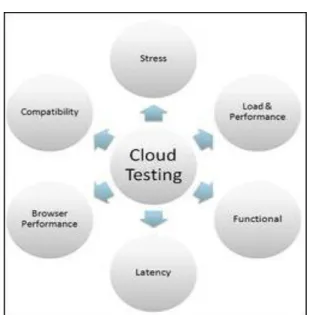
VII. TESTING AND ITS TYPES THAT CAN BEAUTOMATED ON CLOUD
Figure 1. Automation Testing Stress
Stress Test is used to determine ability of application to maintain a certain level of effectiveness beyond breaking point
Load
Load testing of an application involves creation of heavy user traffic, and measuring its response.
Performance
Finding out thresholds, bottlenecks & limitations is a part of performance testing.
Functional
Functional testing of both internet and non-internet applications can be performed using cloud testing.
Compatibility
Using cloud environment, instances of different Operating Systems can be created on demand, making compatibility testing effortless.
Browser performance
To verify application's support for various browser types and performance in each type can be accomplished with ease. Various tools enable automated website testing from the cloud.
Latency
Cloud testing is utilized to measure the latency between the action and the corresponding response for any application after deploying it on cloud.
Steps for cloud testing
Figure 2. Steps for Cloud Testing
VIII.NEED FOR THEAUTOMATION IN CLOUD
-Manual testing is very much time consuming costly and it is not possible to check each and every thing manually
-Difficult to test multi lingual sites manually
-Automation does not require manual intervention and hence can be kept to run for overnight.
-provides cross browser testing actual desktop does not contain the latest version of browser it can be tested on the virtual machine.
-Automation testing requires the least intervention, if any kind of manual intervention is done during automation the automation does not run correctly and hence nothing else can be done on that machine , hence when virtualized many virtual desktops can be run simultaneously running more than 1000 test cases also allowing to do another tasks on the local desktop.
Cost Effective:Total Cost of Ownership in
cloudbased automation tools is very less compared to traditional test automation tools. Cloud based tools do not involve expensive per seat licensing costs and typically have less hardware requirements. This implies minimal capital expenditure and depreciation costs. Cloud based tools offer high reusability of test components. They are highly scalable which make them ideal for load and performance testing scenarios. Pay as you use offers the advantage of effortlessly scaling up and down the cloud usage as per your testing requirements.
Benefits of Virtualization:Cloud based tools bringin
the benefits of virtualization. They enable companies to make optimal use of their resources with the result that testing is more flexible and efficient. As applications become increasingly complex, virtualization brings in the benefit of resource sharing with reduced capital costs.
More collaboration: Cloud based automation
toolsmake it possible for teams spread across different locations to easily collaborate with each other. Testers can easily test from different locations and access test reports from anywhere in the world without the pain of uploading and downloading them.
Testing is quicker:Automation tools, in general,offer
advantages of high productivity and shorter test cycles. Cloud based automation tools bring the additional advantages of quick set up and tool deployment. Unlike traditional tools, they do not involve a lengthy set up and installation process. Testing can begin almost immediately from anywhere in the world. Software upgrades are seamless with minimal or no downtime.
Reduced IT management effort:Cloud based
toolscut down a lot of the IT management tasks inherent to traditional tools like installation, licensing, adding/replacing users, and simultaneous implementation of upgrades in systems across geographies etc. With less IT management to do, employees can focus on core activities that can make a difference to a company’s business.
Distributed cloud testing:Cloud-based
softwareapplications could be used from geographically distributed locations. This geographic distribution, and consequently, a variety of ISPs providing the service, needs to be simulated for realistic testing. There are commercial distributed test simulation services that have servers around the globe on
these services to increase the quality of the test plans .
Multi-tenancy testing:Cloud-based
softwareapplications could have multi-tenancy that is subject to separation of clients at various levels and combinations – separate Web servers, separate database servers or data separation at the database level on the same server. Test plans may need to be designed to account for these and design in appropriate tests for these.
Mobile platforms:Smart phones and tablets arerapidly joining the ranks of laptops and desktops where cloud-based applications are accessed. Many organizations are happy with mobile Web versions of the user interface for cloud-based software applications.
Multi-tenancy testing:Cloud-based
softwareapplications could have multi-tenancy that is subject to separation of clients at various levels and combinations – separate Web servers, separate database servers or data separation at the database level on the same server. Test plans may need to be designed to account for these and design in appropriate tests for these.
Cloud portability testing:When private clouds
aremixed with public clouds, portability of the cloud-based application cannot be taken for granted. Test plans should include testing the high level functionality to ensure Cloud portability. Sometimes even in private clouds
Infrastructure Independence: The
wholeinfrastructure can be used based on the requirements on cloud and no need to do huge amounts of setup , the cost for implementing the infrastructure is also reduced as any infrastructure can be used on demand using cloud
Cloud-delivered testing tools are rapidly becoming commonplace in performance and load testing. This provides the full value of pay as you use and much greater scaling capacity than traditional tools. In addition, the use of device clouds for testing applications on devices has driven broader adoption of cloud testing tools and is helping drive greater adoption for functional testing via the cloud.
X. AUTOMATION TOOLS USED
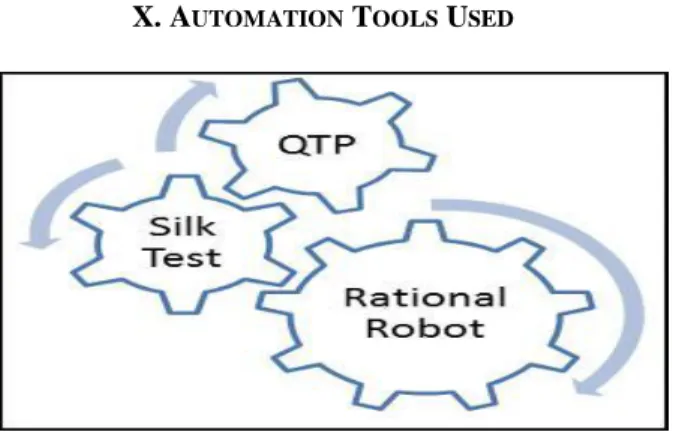
Figure 3. Automation Tools QuickTest Professional (QTP)
HP’s Quick Test Professional (QTP) is a software that facilitates Automation Testing for software applications – Functional and Regression testing to be more specific. QTP comes with a user interface that can be considered an Integrated Development environment (IDE) for the test itself. The IDE has various features that aid the tester to develop a comprehensive script which would successfully validate the purpose of the test.
Some of the important aspects of QTP:
1. It uses VB Script as its scripting language. (A scripting language is one that gets interpreted at run time)
2. QTP runs only in a windows environment. 3. The current version of QTP is 11.0 (Latest version Unified Functional Testing – UFT 11.5)
4. The technologies it supports are Web, Java .Net, SAP, Oracle, Siebel, PeopleSoft, Web Services, and many major languages. Although some of the older versions don’t support all the technologies listed.
Rational Robot:
It is an IBM tool used to automate regression, functional and configuration tests for client server, e-commerce as well as ERP applications. It can be used with Rational Test Manager which aided in Test Management Activities
Some another aspects
-Rational Administrator Use to create and manage Rational projects, which store your testing information.
-Rational TestManager Log Use to review and analyze test results.
-Object Properties, Text, Grid, and Image
Comparators Use to view and analyze the results of verification point playback.
-Rational SiteCheck Use to manage Internet and intranet Web sites.
Selenium:
It’s an open source Web Automation Tool. It supports all types of web browsers. Despite being open source its actively developed and supported
Selenium components
Selenium IDESelenium IDE is a completeintegrated development environment (IDE) for Selenium tests. It is implemented as a Firefox Add-On, and allows recording, editing, and debugging tests. It was previously known as Selenium Recorder.
Selenium client APIAs an alternative to writingtests in Selenese, tests can also be written in various programming languages. These tests then
communicate with Selenium by calling methods in the Selenium Client API. Selenium currently provides client APIs for Java, C#, Ruby and Python. Selenium Remote ControlSelenium
RemoteControl (RC) is a server, written in Java, that accepts commands for the browser via HTTP. RC makes it possible to write automated tests for a web application in any programming language, which allows for better integration of Selenium in existing unit test frameworks
XI. CONCLUSION
Cloud-based software application testing have some additional characteristics compared to non-cloud-based ones. These pose additional challenges but with a systematic, comprehensive approach to test planning, these could be handled appropriately. It provides various benefits like cross browser compatibility, cross platform compatibility, portability, infrastructure independence etc. In growing versatility of the tools and complex application testing using automation in cloud is one very important part in testing future.
XII. ACKNOWLEDGMENT
We take this opportunity to express our profound sense of gratitude and respect to all those who helped
us throughout the duration of this project. I express my sincere gratitude and thankfulness towards Prof. Amey Parker of our Master of Computer Application department.
We are grateful for the co-operation & valuable suggestions rendered by all the staff members of various departments.
We are grateful to all our friends for providing critical feedback & support whenever required
XIII. REFERENCES
[1]. Agile ALM author Michael Hütterman., “Automation in ALM: The Many Flavors of Automation”
[2]. Mark Fewster & Dorothy Graham, “Software Test Automation: Effective use of test execution tools”,
[3].Kees Blokland: Test architect at Polteq, Martin Pol: Test Architect at Polteq, Jeroen Mengerink: Test consultant, Teacher, Researcher at Polteq, “Testing Cloud Services: How to test SaaS, PaaS and IaaS.
[4]. (2013) The wikipedia website. [Online]. Available:
http://en.wikipedia.org/wiki/Cloud_computing
[5]. (2013) The IEEE website. [Online]. Available: http://www.ieee.org/
First Author: Priyanka Patil
Third year student, MCA VESIT Phone number: 9821028379
Second Author:Jayashree Shinde
Third year student, MCA VESIT Phone number: 9920801382
Third Author: Ameya Parkar
Assistant Professor, MCA, VESIT Phone number: 9869444697