THE EFFECTS OF PROLONGED SITTING AND MENTAL STRESS: A SYNAPSE TO CEREBROVASCULAR FUNCTION
Jade Blackwell
A thesis defense submitted to the faculty at the University of North Carolina at Chapel Hill in partial fulfillment of the requirements for the degree of Master of Arts in the Department of
Exercise and Sports Science (Exercise Physiology).
Chapel Hill 2020
Approved by: Lee Stoner
ABSTRACT
Jade Blackwell: The Effects of Prolonged Sitting and Mental Stress: A Synapse to Cerebrovascular Function
(Under the direction of Lee Stoner)
Acute bouts of prolonged sitting and stress may lead to cerebrovascular disruptions. This study evaluated the effects of prolonged (2hrs) sitting and mental stress on cerebrovascular function. Six participants (42.8 [7.7] y, 33% F, 24.8 [1.4] kg/m2) were randomized to sit for 2hrs (LONG) or 20min (SHORT) prior to receiving a mental stressor. Brain Pulse Wave Velocity (brainPWV) was measured using a Transcranial Doppler. Executive function was assessed using the Trail Making Test (TMT), and Verbal Fluency Test (VFT). brainPWV increased by 11.1 cm/s after 2hrs of uninterrupted sitting, although it was not statistically significant (P=0.329, ES: 0.45). There was a significant condition effect (P=0.004, ES: -0.99) for brainPWV pre vs. post mental arithmetic test. There were no significant differences between conditions for the TMT (P=0.282, ES: 0.49), and VFT (P=0.907, ES: 0.50). Prolonged sitting combined with mental stress does increase brainPWV, however it has no effect on executive function.
KEY WORDS
ACKNOWLEDGEMENTS
To the Dept. of Exercise and Sport Science at the University of North Carolina at Chapel Hill- Thank you for giving me the opportunity to receive a graduate education in Exercise Physiology, and to the faculty who have provided me with the tools to succeed.
Thank you to my advisor, Dr. Lee Stoner for guiding me through this thesis process. His guidance, support, and knowledge has been key to my development during my Masters degree, and also my acceptance into the Physiological Sciences PhD program at the University of Arizona. And to my committee members: Dr. Erik Hanson and Dr. Paul Geiger, thank you for your help and contributions during the design phase of my thesis.
I would also like to thank the participants in this study for their commitment to advancing cerebrovascular research - I truly appreciated your time and patience.
TABLE OF CONTENTS
LIST OF TABLES ... ix
LIST OF FIGURES ... x
LIST OF ABBREVIATIONS ... xi
CHAPTER I: INTRODUCTION ... 1
ASSUMPTIONS, DELIMITATIONS & LIMITATIONS ... 1
ASSUMPTIONS ... 1
DELIMITATIONS ... 2
LIMITATIONS ... 2
CHAPTER II - REVIEW OF LITERATURE ... 3
WHAT IS SEDENTARY BEHAVIOR, AND WHY IS IT IMPORTANT? ... 3
WHAT IS MENTAL STRESS, AND WHY IS IT IMPORTANT? ... 4
KEY GAPS IN KNOWLEDGE ... 5
CHRONIC EVIDENCE: SEDENTARY BEHAVIOR AND CEREBROVASCULAR HEALTH ... 5
KEY GAPS IN KNOWLEDGE ... 5
WHAT DOES A BRAIN NEED TO MAINTAIN ITS HEALTH? ... 6
ACUTE MECHANISMS: PROLONGED SITTING AND CEREBROVASCULAR FUNCTION ... 6
ACUTE MECHANISMS: STRESS AND CEREBROVASCULAR HEALTH ... 8
GAP IN KNOWLEDGE: INTERACTION BETWEEN PROLONGED SITTING AND MENTAL
STRESS ... 10
IMPLICATIONS/WHY IS THIS STUDY NEEDED? ... 11
METHODOLOGICAL CONSIDERATIONS ... 11
STUDY DESIGN CONSIDERATIONS ... 12
MEASUREMENT CONSIDERATIONS ... 12
POPULATION/SAMPLING ... 14
STATISTICAL CONSIDERATIONS ... 14
OTHER CONSIDERATIONS ... 15
SEX AS A BIOLOGICAL FACTOR ... 15
ETHNICITY/RACE ... 15
POTENTIAL CHALLENGES & ALTERNATIVE STRATEGIES ... 16
SUMMARY ... 16
WHAT IS KNOWN ... 16
WHAT IS NOT KNOWN ... 16
CRITICAL NEED ... 17
WHAT THIS STUDY WILL ADD ... 17
CHAPTER III: METHODOLOGY ... 18
PARTICIPANTS ... 18
EXPERIMENTAL DESIGN ... 18
EXPERIMENTAL VISITS 1 & 2 ... 20
EXPERIMENTAL MEASURES ... 21
PRIMARY OUTCOME: BRAIN PULSE WAVE VELOCITY ... 21
SECONDARY OUTCOME: EXECUTIVE FUNCTION ... 21
MECHANISTIC OUTCOME: MEMORY RECALL & BRAIN FOG ... 22
RANDOMIZATION ... 23
SAMPLE SIZE ... 23
QUALITY CONTROL ... 23
DATA MANAGEMENT AND STATISTICAL ANALYSIS ... 24
CHAPTER IV: RESULTS ... 25
PARTICIPANTS ... 25
CONTROL DATA: MOVEMENT ANALYSIS ... 26
RESPONSES TO PROLONGED UNINTERRUPTED SITTING ... 26
RESPONSE TO MENTAL STRESS: SHORT VS PROLONGED SITTING ... 26
CHAPTER V: DISCUSSION ... 31
LIMITATIONS AND STRENGTHS ... 31
COMPARISON TO LITERATURE ... 32
BRAIN PULSE WAVE VELOCITY ... 32
EXECUTIVE FUNCTION ... 33
BRAIN FOG ... 34
CONCLUSIONS ... 36
APPENDIX A: MEDICAL HISTORY QUESTIONNAIRE ... 37
APPENDIX B: INFORMED CONSENT ... 39
APPENDIX C: REMINDERS PACKET ... 46
APPENDIX D: SLEEP DIARY ... 51
APPENDIX E: MEMORY RECALL AND VERBAL FLUENCY INSTRUCTIONS ... 52
APPENDIX F: BRAIN FOG SCALE ... 53
APPENDIX G: MENTAL ARITHMETIC TEST ... 54
APPENDIX H: VISUAL ANALOG SCALE ... 56
LIST OF TABLES
TABLE 1. Participant Characteristics………...25
TABLE 2: Seated Brain Fog Pre vs. Post Sit Only……….…………..26
TABLE 3: Response to Mental Arithmetic Test……….………...27
LIST OF FIGURES
FIGURE 1. Proposed mechanism for the combined effect of prolonged sitting and mental stress on cerebrovascular function ………...10 FIGURE 2. Overview of the experimental visits: SHORT and LONG conditions for
cerebrovascular and executive function measurements………...19
FIGURE 3. CONSORT Diagram……….25
FIGURE 4. Brain Pulse Wave Velocity response across 2 hours of sitting………...26 FIGURE 5. Full Recovery of Brain Pulse Wave Velocity in Response to the Mental Arithmetic
LIST OF ABBREVIATIONS
ADRD Alzheimer’s & Related Dementia’s
ANS Autonomic Nervous System
AS Arterial Stiffness
baPWV Brachial-Ankle Pulse Wave Velocity
BF Blood Flow
bfPWV Brachial-Femoral Pulse Wave Velocity brainPWV Brain Pulse Wave Velocity
CA Cerebral Autoregulation
CBF Cerebral Blood Flow
CCA Common Carotid Artery
ccPWV Carotid-Cerebral Pulse Wave Velocity cfPWV Carotid-Femoral Pulse Wave Velocity CMD Cardiometabolic Disease
CML Cardiometabolic Laboratory
CNS Central Nervous System
CONSORT Consolidated Standards of Reporting Trials
CV Cardiovascular
CVD Cardiovascular Disease
EF Executive Function
FMD Flow-Mediated Dilation
HPA Hypothalamic-Pituitary-Adrenal Axis HVLT Hopkins Verbal Learning Test
LONG 2 hours of uninterrupted sitting MAT Mental Arithmetic Test
MCA Middle Cerebral Artery MRI Magnetic Resonance Imaging
MVPA Moderate-Vigorous Physical Activity
PS Prolonged Sitting
PWV Pulse Wave Velocity
RPE Rate of Perceived Exertion
SB Sedentary Behavior
SD Standard Deviation
SHORT 20min of uninterrupted sitting SNS Sympathetic Nervous System
TCD Transcranial Doppler
TMT Trail-Making Test
CHAPTER I: INTRODUCTION
Prolonged sitting (PS) has gained attention over the past decade due to the sitting epidemic that takes place in the workplace.1,41 Participating in a sedentary lifestyle is common due to occupation, technology and vehicle transportation. Sedentary behavior (SB) has been shown to be a risk factor for cardiovascular disease (CVD) and all-cause mortality. Additionally, a sedentary lifestyle has been linked to chronic cognitive dysfunction, thus playing a role in the appearance of Alzheimer’s Disease and Related Dementia’s (ADRD)5. The current research demonstrates that chronic SB is associated with a reduction in brain volume2 and a decline in cognition, in particular executive function (EF).3-4 Although, there is a level of uncertainty in the mechanism(s) connecting repeated acute SB exposure to chronic cerebrovascular complications. A potential pathway, and one that has been suggested to link bouts of PS to central and
peripheral cardiovascular (CV) complications, is blood flow (BF).6
Furthermore, very few studies have explored this potential pathway, but those who have, found that acute bouts of PS result in a reduction in total brain BF and middle cerebral artery BF also declines.6 This information lays the groundwork for future studies to look at the interaction of PS and modifiable health-defying factors.
The long term goal is to recommend motion changes during sedentary behavior to
To achieve this, the study compared a short (20min) bout of sitting with a mental stressor [SHORT] and an uninterrupted 2 hour sitting period with a mental stressor [LONG]. The
SHORT visit lasted approximately 60min, and the LONG was a total of 2.5 hours to ensure we captured an effect on cerebrovascular and executive function. We hypothesized that (1)
prolonged sitting alone will impair cerebrovascular function, and (2) LONG will exacerbate the effects of mental stress on brainPWV and executive function compared to SHORT. These findings may result in a public health message regarding sedentary behavior and stress or inspire future research questions.
Aim 1: Explore the effects of prolonged sitting on cerebrovascular function.
Aim 2: Explore the combined effects of prolonged sitting mental stress on cerebrovascular and executive function.
In middle-aged (35-59 y), healthy (free of Cardiometabolic disease), active (>90 minutes a week of moderate intensity exercise) subjects, we will compare the effects of a mental stressor over a brief 20 minute sitting condition [SHORT] and a 2 hour uninterrupted bout of sitting with a stressor [LONG]. It is expected that a mental stressor with the addition of lengthened bout of sitting will result in a decrease in cerebrovascular function.
ASSUMPTIONS, DELIMITATIONS & LIMITATIONS ASSUMPTIONS
1. Subjects will follow pre-assessment guidelines.
2. Pre-assessment guidelines are adequate to control for baseline changes in outcomes. 3. All subjects will answer the medical history questionnaire truthfully.
DELIMITATIONS
1. Subjects will not move throughout testing protocol, i.e. no bathroom breaks or stretching. 2. All subjects will have similar dietary intake prior to and during both testing sessions. 3. All subjects will engage in sedentary behavior.
LIMITATIONS
1. Cognitive tests may increase cerebral perfusion.
2. There might be a learning effect for the mental stressor and cognitive tests between the conditions (SHORT and LONG).
CHAPTER II - REVIEW OF LITERATURE
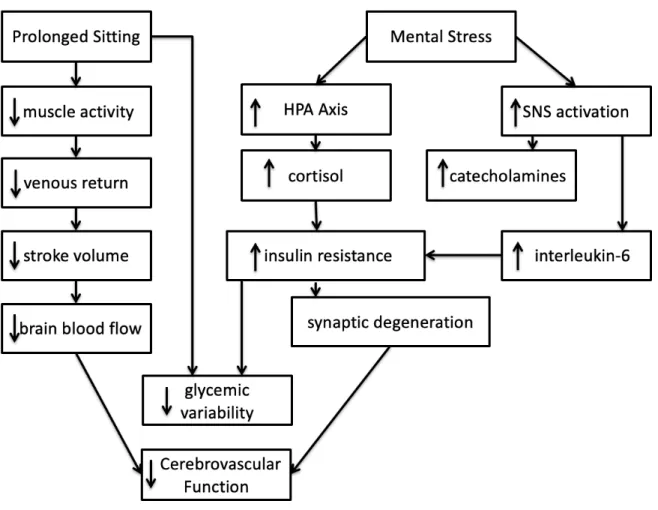
The literature was examined in an attempt to bridge the gap of knowledge that currently exists between the effects of sedentary behavior on executive function and evaluate the acute effects of mental stress on cerebrovascular function. The following review outlines the current findings in the literature concerning prolonged sitting and mental stress. The effects of prolonged sitting and mental stress are broken down by the importance of each stimuli, followed by chronic and acute evidence to highlight the mechanisms by which prolonged sitting and mental stress affect cerebrovascular function. A proposed mechanism for the combined effects of sitting and a mental stressor will also be explored (Figure 1).
WHAT IS SEDENTARY BEHAVIOR, AND WHY IS IT IMPORTANT?
As a society there has been a movement towards convenience, and as a result less physical movement, thus sedentary behaviors have developed. Prolonged sitting is arguably the sedentary behavior most frequently practiced, with adults typically spending 50-70% of their waking hours sitting down.7 This can be contributed to the westernization of society and how the environment in which we live in affects our lifestyle choices. The ease of access to
Sedentary behavior is defined as any waking behavior characterized by an energy expenditure ≤1.5 METs while in a sitting or reclining posture.8 The increase in sedentary behavior is said to increase cardiometabolic risk independent of moderate/ vigorous physical activity (MVPA – PA that requires more than 3 or more METs).8,13 This increase in
cardiometabolic risk,11-12 may also correlate with detrimental effects in cognition.3-4,9-10
With that, it is known that cognitive function declines over time with sedentary behavior and that cardiovascular health is negatively affected both chronically and acutely. This data lends support to the possibility of cognitive function being augmented during short, acute bouts of prolonged sitting. Though the mechanisms are not fully understood, chronic and acute declines in cognitive function and cardiovascular health during prolonged sitting may be affected by decreases in blood flow (BF). Fortunately, several cardiovascular measures, such as BF, can be measured noninvasively with high reliability and validity. For this reason, if cognitive dysfunction does occur with an acute bout of prolonged sitting, a relatively simple study may provide a partial explanation for dysfunction. In addition, interventions to mitigate cognitive dysfunction may be further explored and become useful for populations with lifestyle demands favoring sedentary behaviors such as prolonged sitting.
WHAT IS MENTAL STRESS, AND WHY IS IT IMPORTANT?
person. As well as this, a growing body of research has suggested that acute stress may impair executive functions.85-87 This is thought to occur due to stress having the ability to relocate executive function resources in order to deal with the stressor. This outlook demonstrates the importance of mental stress and how this study could modulate the response it has on
cerebrovascular function.
KEY GAPS IN KNOWLEDGE
It is not known how stress impacts the cardiovascular system, in particular the effects it has at the level of the brain. The aim of this study was to close the gap by identifying acute stress as a modifiable behavioral risk factor for cerebrovascular function.
CHRONIC EVIDENCE: SEDENTARY BEHAVIOR AND CEREBROVASCULAR HEALTH
In older adults, chronic SB has been associated with reductions in brain volume2,15 and cognitive function decline.3-4,16-17 Considering there are no effective long-term pharmacological therapies for the treatment or prevention of (ADRDs), SB is likely an important modifiable risk factor.
KEY GAPS IN KNOWLEDGE
WHAT DOES A BRAIN NEED TO MAINTAIN ITS HEALTH?
Normal brain function is inter-dependent on the regulation of cerebral blood flow (CBF) and glucose disposal, both of which may become impaired with prolonged sitting, and arguably mental stress. Regulating CBF is complex, with dependence on adequate venous return to ensure maintenance of total brain BF, cerebral autoregulation (CA) to maintain CBF over a range of perfusion pressures and microcirculatory recruitment to maintain perfusion.18-19
ACUTE MECHANISMS: PROLONGED SITTING AND CEREBROVASCULAR FUNCTION
A number of physiological responses to SB can lead to a decrease in brain BF and risk for dementia, along with a host of other neurodegenerative and cerebrovascular diseases. Excessive sitting time, particularly if accompanied by lack of leg skeletal muscle activity, can promote venous pooling and decreased total brain BF, and lead to impaired glycemic control.20-21 Glycemic control is dependent on adequate delivery and uptake, especially by skeletal muscle. In order for glucose to be taken up by skeletal muscle, glucose has to attach to a glucose transporter (GLUT4), which can be stimulated by insulin, or by skeletal muscle contractions.22-23
Cerebrovascular
impairment of CBF and CA may create an athero- and arterio-sclerotic environment in the brain analogous to what occurs in the periphery. Additionally, prolonged exposure to hyperglycemia and repeated exposure to hypoglycemia can damage the microvasculature, impair brain structure and function, and impair cognitive function.27-28
Vascular
Repeated exposure to prolonged sitting, defined as an acute bout of sedentary behavior (>30 minutes), may directly compromise whole body CV health. Previously, a study found that just 3 hours of sitting resulted in a significant impairment in shear rate and superficial femoral artery flow mediated dilation (FMD).29 FMD is widely believed to reflect nitric oxide-mediated endothelium-dependent vascular function.30 Blunted FMD is suggestive of impaired
macrovascular endothelial function but could also be the result of an attenuated reactive hyperemia impaired microvascular function.31 Restaino et. al were able to find that prolonged sitting reduces lower leg micro- and macrovascular function.32
Restaino et al. then established that sitting-induced leg endothelial dysfunction is mediated by a reduction in shear stress,32 and several preventative measures were soon found to prevent this reduction in endothelial function caused by prolonged sitting.35 Shear stress is the force produced by blood physically moving along endothelial cells on the vessel wall, i.e. shear stress is dependent on blood flow.33 The BF induced shear stress acts on the vascular
endothelium, the inner-most lining of blood vessels, and initiates release of nitric oxide.34 The absence of shear stress leads to increased resistance from constricted vessels, decreasing blood flow and impairing vascular function.
Further support that sitting-induced leg endothelial dysfunction is mediated by a
40% in the legs after just 1.5 hours of sitting.36 A proposed mechanism for this large decrease in blood flow is a decrease in muscle “pump” activity.37 If the muscles in the legs are inactive while in a seated position for a long period of time, blood will pool in the lower extremities. When blood pools in the lower limbs, there is less venous return, which will impair cardiac output. Subsequently, the vessels will constrict to maintain blood pressure. When the vessels constrict, there is an increased resistance to local blood flow. The local resistance is increased by clotting factors36 accumulating in these regions due to slow moving blood. This increase in resistance reduces blood flow, thus there is a decrease in blood volume and flow for the body to use. Summary
Previous research has found that during periods of prolonged sitting, blood pools in the lower limbs due to the lack of muscle contractions facilitating venous return, leading to reduced overall peripheral blood flow as a result of decreased stroke volume.37 The decrease in stroke volume leads to a decline in brain blood flow6, which in turn can result in an increase in cell death.70 The increase in cell death is also a result of a decrease in muscle activity through
impaired glycemic variability (Figure 1). With studies suggesting that prolonged sitting has such negative effects on systemic vasculature, it poses the question whether it will have similar responses at the cerebral level.
ACUTE MECHANISMS: STRESS AND CEREBROVASCULAR HEALTH
A stressor activates the autonomic nervous system (ANS), which produces a fight-or-flight response and affects the cardiovascular system, due to the impact on visceral functions.42 An increase in sympathetic nervous system (SNS) activation stimulates the release of cortisol from the hypothalamic-pituitary-adrenal (HPA) axis. The HPA axis is an intertwining of the central nervous system (CNS) and endocrine system that releases glucocorticoids, such as cortisol, in response to stress. The secretion of cortisol is part of a normal homeostatic response to acute stress in that it acts at the hormonal level to initiate the release of insulin, thus increase blood glucose and return to systemic homeostasis via a negative feedback mechanism.43
However, problems arise with repeated exposure to stress, as the HPA axis will not have a refractory period under chronic stressors. This is because the system habituates to the stressor, and HPA axis activation will be sustained. With continued HPA axis activation, the heightened cortisol secretion produces an inflammatory response, and may contribute to worsening the metabolic and insulin sensitivity and inducing a higher prevalence cardiometabolic disease (CMD) and cerebrovascular complications.40,44
KEY GAPS IN KNOWLEDGE
Figure 1: A theoretical view of the combined effect between prolonged sitting and mental stress on cerebrovascular function.
GAP IN KNOWLEDGE: INTERACTION BETWEEN PROLONGED SITTING AND MENTAL STRESS
Combined, mental stress and prolonged sitting may produce an augmented cardiovascular response, which could arguably hinder cerebral microvasculature.45-46 Stress is linked to
CMD. However, the interaction between each of these variables has not yet been studied in regard to their effect on cerebrovascular function. The following sub-section expands on the implications of the combined stimuli and why the study is needed.
IMPLICATIONS/WHY IS THIS STUDY NEEDED?
There has been a limited amount of studies completed that examine the acute effects of prolonged sitting on cerebrovascular function. However, multiple studies have demonstrated that sedentary behaviors have discouraging effects the central and peripheral CV system.26,47 These impairments include vascular function, endothelial dysfunction and changes in blood
pressure.29,31,47 Despite these known responses to prolonged sitting, it is unknown whether similar reactions take place at the cerebral level. As well as this, there have been few studies that look at the effects of mental stress on cerebrovascular function,14,39-40,42 but nothing to denote an
interaction with certain lifestyle behaviors. Therefore, it is important to consider the acute effects of prolonged sitting and mental stress on cerebrovascular function.
METHODOLOGICAL CONSIDERATIONS
In order to test the interaction these stimuli have on cerebrovascular and executive
function; several methodological considerations were sought out. Two major considerations were internal and external validity. Internal validity refers to whether the effects observed in the study are due to manipulation of the independent variable. Whereas, external validity represents the generalizability of the study, thus the appropriate subjects and study design. These
STUDY DESIGN CONSIDERATIONS
There were many study designs to choose from, with pros and cons to each design, which means there was a need to understand the differences in order to come to a conclusion on the appropriate choice. With this being a Master’s Thesis, considerations of time and the availability of the subject population were taken into account. Therefore, a randomized crossover design was chosen with two experimental conditions mental stress with a brief (20min) sitting period
[SHORT], and mental stress with a prolonged (2 hours) uninterrupted bout of sitting [LONG]) preceded by a familiarization session. An undergraduate lab assistant randomly assigned the conditions during the familiarization session.
MEASUREMENT CONSIDERATIONS Brain Pulse Wave Velocity
There are a handful of imagining techniques to examine blood flow to the brain.
Magnetic Resonance Imaging (MRI) is arguably the one most commonly used to noninvasively capture cerebral blood flow, but this comes at a huge cost. However, the Transcranial Doppler (TCD) ultrasound is readily available to provide noninvasive, real-time measures of blood velocity. However, brain pulse wave velocity (brainPWV) is relatively new and novel non-invasive technique to assess cerebral arterial stiffness. Arterial stiffness (AS) refers to the
condition of blood vessels, thus reduced elasticity i.e. increased stiffening is an indicator that the vessel wall is damaged. Arterial stiffness measurements have become a focal point in the ability to measure vascular health and be used as preventative tool of cardiovascular and
Cognitive Tests
Cognitive or Executive Function (EF) is an umbrella term for the neurologically-based skills involving processes that all have to do with managing oneself and one's resources in order to achieve a goal.50 Although largely responsible for productivity in every-day living, EF may be decreased by the sedentary behaviors adopted due to lifestyle demands. However, declines in EF would decrease the work capacity of individuals in sedentary jobs ranging from students to full-time employed persons.
There are a handful of cognitive tests that could have been used in order to assess
cognition. A previous systematic review by Falck et. al,51 looked at thirteen different measures of cognition were used to assess the association between sedentary behavior and cognitive function. The following areas were examined: memory, executive function, processing speed, and
perceptual organizing and planning. With several measures being used, it meant that the relationship between sedentary behavior and cognition was unclear.
For the purpose of this thesis, both Trails A & B Making Test were used to assess the two aspects of EF: processing speed and task-switching ability. Falck et al. recommended use of the Trail Making Test - Task B for executive function to allow for comparisons across future studies.51 Tests of verbal fluency have been employed traditionally in laboratory settings to measure EF, and also as a means to investigate frontal and temporal lobe activation.52-54 TMT and VFT were administered at the end of the SHORT and LONG conditions in order to reduce any chance of it affecting the vascular measurements taken during the experimental visits. Memory Recall
(HVLT) is widely recognized as a brief test of memory,91 thus we used a modified version, which incorporated a word list from the HVLT and administered a 6 word recall pre- and post- test. As for brain fog, there is no known reliable and valid objective measure of brain fog so we subjectively measured brain fog using a modified Borg Rate of Perceived Exertion (RPE) scale. Mental Arithmetic Test
In order to induce a heightened stress response, we selected an established laboratory stress test that is known to probe participants and essentially ‘stress them out’.59,60 The Mental Arithmetic Test (MAT) is a serial subtraction task, where participants are asked to subtract the number “13” of “7” repetitively starting from “1079” as quickly as possible. During this task, a metronome was set at a frequency of 2 Hz to elicit time and pressure.
POPULATION/SAMPLING
Healthy, middle-aged adults (35-59yrs old) were recruited for the study to ensure complete brain development. Using middle-aged adults could provide potential confounding variables, such as menopause. This will be taken into consideration in order to make it easier to draw direct conclusions on the effects of prolonged sitting and mental stress.
STATISTICAL CONSIDERATIONS
For this study, a repeated measures analysis was appropriate. First, we considered a multivariate test, but with a few time points for assessing brainPWV, it would have been
Mixed Model ANOVA handles repeated measures and missing data (by dropping that one missing time point). Additionally, we recognized that many subjects will start at different intercepts. The best statistical test that can handle these considerations is a Mixed Model ANOVA. The independent variable for the study will be time (20, 120). T-tests will be performed to compare across time points or condition for all variables.
OTHER CONSIDERATIONS SEX AS A BIOLOGICAL FACTOR
Although it is known that men and women vary in their path by which they can attain CVD risk factors, it should not be ruled out that sex differences exist in cerebrovascular function. The power of this study was not sufficient to determine whether there are race/ethnicity and cerebrovascular impairment risk interactions.
ETHNICITY/RACE
This study attempted to recruit a racially diverse sample; however, the power of this study was not sufficient to determine whether there are race/ethnicity and cerebrovascular impairment risk relations.
GENERALIZABILITY
POTENTIAL CHALLENGES & ALTERNATIVE STRATEGIES
For 1+ year prior to start of data collection, all research assistants involved were well-trained with the usage of all laboratory equipment. Strategies were implemented amongst the research team ‘a priori’ to ensure proper functioning of equipment and recruitment/retainment of subjects.
Participation in exercise prior to the experimental day was controlled due to sensitive vascular and metabolic measures taken during the study. Current literature eludes to most pre-testing guidelines should include a 24-hour abstinence from exercise. Therefore, this approach was taken for this study.
SUMMARY
WHAT IS KNOWN
Independently prolonged sitting and mental stress have a negative impact on
cerebrovascular health. Stress is linked to impairment via sympathetic activation: leading to metabolic complications. And prolonged sitting provokes similar metabolic alterations that are often seen at the atherosclerotic level.
WHAT IS NOT KNOWN
CRITICAL NEED
This research is incredibly applicable to society’s workforce as the acute effects of prolonged sitting on cerebrovascular function are arguably unbeknown, and in conjunction, the effect of stress on such functioning has yet to be observed.
WHAT THIS STUDY WILL ADD
CHAPTER III: METHODOLOGY
This study was in accordance with CONSORT (Consolidated Standards of Reporting Trials) guidelines.63 Ethical approval was obtained from the University of North Carolina at Chapel Hill Institutional Review Board, and all participants provided written informed consent to participate in the study.
PARTICIPANTS
Ten 35-59 year old healthy adults were recruited for the study from the University of North Carolina at Chapel Hill campus and surrounding Chapel Hill area. Exclusion criteria included: less than 90 minutes of structured exercise a week, smokers, any known cardio-metabolic disorders, pregnant women, and currently taking medication known to affect cardiovascular function.
EXPERIMENTAL DESIGN
This study was a randomized crossover design with two experimental conditions:
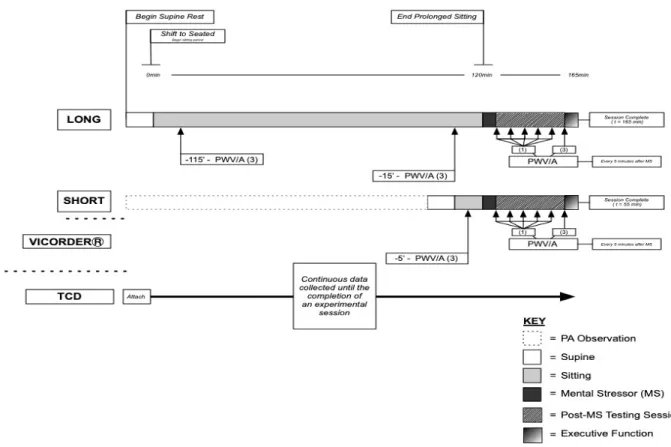
Figure 2: An overview of the experimental visits: SHORT and LONG conditions for
cerebrovascular and executive function measurements.
PRE-ASSESSMENT & FAMILIARIZATION
Prior to testing, subjects filled a medical history questionnaire (Appendix A) and informed consent (Appendix B). During the familiarization session, each subject was given an accelerometer (ActiSleep +; ActiGraph LLC, Fort Walton Beach, FL) to go on their
EXPERIMENTAL VISITS 1 & 2
Participants arrived to the CML between 7:00 and 10:00 AM fasted (for Visit 2: 2-10 days following the prior visit). Participants were fasted and refrained from caffeine intake for at least 12 hours, and alcohol and vigorous physical activity for at least 24 hours prior to arrival. Upon arrival, subjects filled out a sleep diary (Appendix D) from the night before and were then asked to rest for 10min in a supine position. During these 10min the subject was fitted with pressure cuffs, which were randomized for which side of the body they would go on.
Both experimental conditions began when subjects were brought to an upright, seated position using an Armedica AM353 Hi-lo Treatment Table (Tiger Medical, TIGER#TM83695) with feet flat on the ground with approximately 90 degrees of knee flexion. The angle of recline of the chair was measured, as well as the distance from the bottom of the chair to the ground to ensure equivalent chair placement for the second visit. The subjects were read the modified HVLT (Appendix E) and asked to rate their level of fogginess (Appendix F).
During the SHORT visit, subjects completed a brief 20min sitting period. For the LONG condition, subjects sat for 2 hours while watching a non-stimulating documentary.
Water Intake and Restroom
Water intake and excretion were monitored during both testing sessions, and if the participants had to get up in one testing session, he or she was asked to do so in the second testing session.
EXPERIMENTAL MEASURES
PRIMARY OUTCOME: BRAIN PULSE WAVE VELOCITY
Brain PWVwas measured using continuous bilateral TCD (ST3, Spencer Technologies). The data was acquired continuously (50 Hz) using an analog-to digital convertor (PowerLab 30, ADInstruments). This is novel technique for measuring cerebral arterial stiffness, which is independent of diastolic blood pressure and age.64 However, it can be calculated in the segment between common carotid artery (CCA) and the ipsilateral middle cerebral artery (MCA), then divided by the pulse transit time of those two points using TCD.
SECONDARY OUTCOME: EXECUTIVE FUNCTION
number ‘‘2’’ then second letter ‘‘B’’ and so on.65 Results for both TMT A and B were reported in seconds and totalled.
Tests of verbal fluency evaluate an individual’s ability to retrieve specific information within restricted search parameters.66 The two subtests are (1) semantic fluency, and (2) phonemic fluency. The total number from each test were summed and equated to the subjects’ cognitive performance.
MECHANISTIC OUTCOME: MEMORY RECALL & BRAIN FOG
To explore the effects of prolonged sitting and mental stress on memory, a simple memory test was given. We modified the Hopkins Verbal Learning Test (HVLT) due to testing being time sensitive. Participants were read a list of 6 words from the HVLT at a rate of 1 word every 2 seconds as soon they were seated upright (Pre-Sit) and were asked to recall the 6 words at the end of each experimental visit. It is important to clarify that we did not use the HVLT, we modified a word list from it. While this is not a validated and reliable measurement, it was a simple and quick way to explore the effects of sitting and mental stress on memory.
RANDOMIZATION
The randomization procedure was performed by a research assistant. Participants were randomized into either SHORT or LONG condition for the first visit. This was done prior to the familiarization session using an online randomization software (www.randomizer.org).
SAMPLE SIZE
The measurement of brain pulse wave velocity had not been done before, which meant the direction or magnitude of the effect was unknown. However, based on previous studies, we have been able to detect a change score of 0.3-0.4m/s with 18 subjects.89 Calculations to
determine the minimum sample size were based on brachial-femoral pulse wave velocity (bfPWV). We conducted a power calculation based on reported normal values for bfPWV in healthy people aged 40-49 that maintained an average PWV of 7.5 m/s.71 Using magnitude-based inference, to estimate the sample size required to detect the smallest detrimental (or beneficial) effect in a cross-over study, with the maximum chances of a type 1 and 2 error set at 5% (i.e. very unlikely), approximately eighteen participants were required.
QUALITY CONTROL
DATA MANAGEMENT AND STATISTICAL ANALYSIS
All statistical procedures were completed with Jamovi v0.9 (Jamovi, UK). The α-level was set a prior at 0.05 for all statistical procedures. Descriptive statistics and mechanistic outcomes were collected to compare similarities amongst the sample group and to eliminate the potential for extraneous covariates. Answering the research question required a mixed model ANOVA. Statistical models observed for changes in the primary (brainPWV) and secondary (EF) outcomes within conditions (Pre-Sit, Sit-End, Pre-MAT, Post-MAT) and between
conditions (SHORT vs. LONG at similar time points). Mechanistic outcomes were used to assist in discussions of physiological responses to MS and PS. Effect sizes will be calculated as
Cohen’s d, where <0.20 is considered to be a small, > 0.20 to < 0.50 a moderate, and > 0.60 a large effect. For the mixed models Cohen’s d will be calculated as the effect of condition (β) or time (β) from linear mixed models divided by the baseline SD. Raw data is presented as
CHAPTER IV: RESULTS
PARTICIPANTS
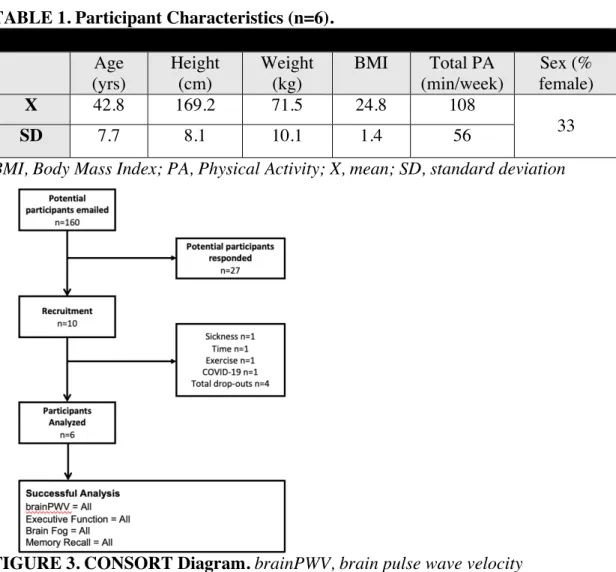
10 participants were recruited, however 4 dropped out for various reasons (Figure 3). Six participants (42.8 [7.7] y, 33% F, 24.8 [1.4] kg/m2) were successfully analyzed. Participants self-identified as Caucasian (n=5) and African American (n=1). Subject demographics are shown in Table 1.
TABLE 1. Participant Characteristics (n=6). Age
(yrs)
Height (cm)
Weight (kg)
BMI Total PA (min/week)
Sex (% female)
X 42.8 169.2 71.5 24.8 108
33
SD 7.7 8.1 10.1 1.4 56
BMI, Body Mass Index; PA, Physical Activity; X, mean; SD, standard deviation
CONTROL DATA: MOVEMENT ANALYSIS
Adherence to pre-assessment guidelines for the experimental conditions was confirmed using accelerometry (ActiGraph LLC).
RESPONSES TO PROLONGED UNINTERRUPTED SITTING
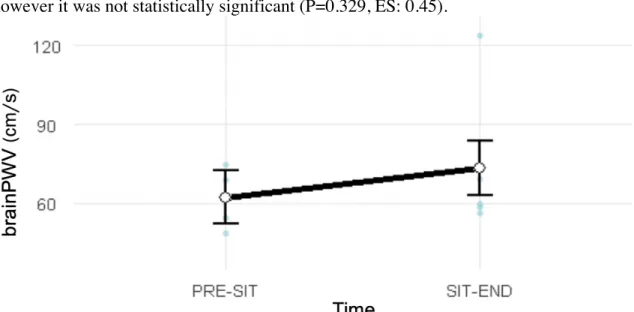
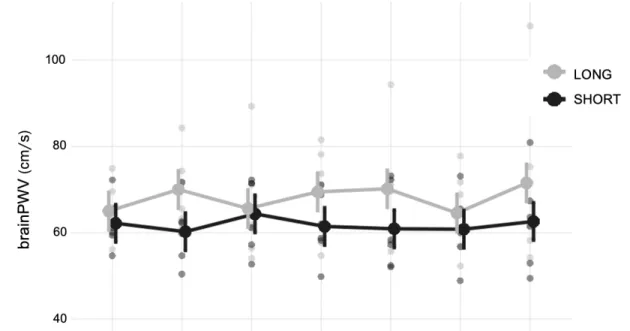
Figure 4 shows that brainPWV increased by 11.1 cm/s with prolonged (2 h) sitting alone, however it was not statistically significant (P=0.329, ES: 0.45).
FIGURE 4. Brain Pulse Wave Velocity response across 2 hours of sitting. brainPWV, brain pulse wave velocity; PRE-SIT, pre-2hr uninterrupted sitting; SIT-END, post-2hr uninterrupted sitting
Table 2 shows that brain fog significantly increased (P=0.042, ES: -1.11) with 2 hr of uninterrupted sitting.
TABLE 2. Seated: Brain Fog Pre. vs. Post Sit Only (n=6).
Mean (SD)
Outcome Condition Pre Post P value
Brain Fog LONG 2.33 (2.1) 4 (1.7) 0.042
Table 3 shows there was no significant difference (P=0.495, ES: -0.39) in response to the mental arithmetic test (MAT) between conditions. The Visual Analog Scale was used to measure the participants level of distress post-MAT. A higher score on the Visual Analog scale represents an increased level of distress.
TABLE 3. Response to Mental Arithmetic Test (n=4).
Outcome Condition Mean (SD) P value Effect Size
Visual Analog
LONG 4.50 (1.0)
0.495 -0.39
SHORT 4.00 (1.4)
Figure 5 illustrates the mixed model data for brainPWV in response to the MAT across the 30min recovery period. There was no interaction effect (P=0.494), as well as a
non-significant time effect (P=0.323). However, there was a non-significant condition effect (P=0.031, ES: -1.05). The maximum increase in recovery (post-mat to post-30) was 1.4cm/s for LONG, and 2.2cm/s for SHORT. Note: circles on figures indicate observed scores.
sitting-mental stress; SHORT, 20min sitting-sitting-mental stress; PRE-MAT, pre-sitting-mental arithmetic test; POST-MAT, end of mental arithmetic test; POST-5, 5min post- mental arithmetic test; POST-10, 10min post- mental arithmetic test; POST-15, 15min post- mental arithmetic test; POST-20, 20min post-mental arithmetic test; POST-30, 30min post-mental arithmetic test
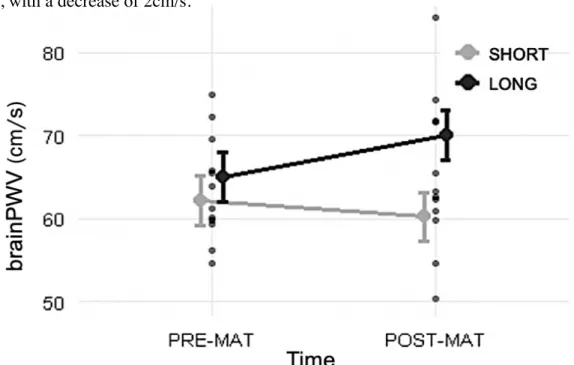
There was no differences in baseline brainPWV. Considering the small sample size, we also decided to test the brainPWV response to just pre vs. post MAT (Figure 6). There was no interaction effect (P=0.080, ES: -0.54), as well as a non-significant time effect (P=0.239, ES: 0.35). However, there was a significant condition effect (P=0.004, ES: -0.99). Given that the interaction effect was closer to significance, we reported the change for each condition. Overall, brainPWV was higher for LONG, which had a mean brainPWV of 67.5cm/s (95% CI: 61.2 to 73.9), with an increase of 5cm/s. For SHORT, the mean brainPWV was 61.1cm/s (95% CI: 54.8 to 67.5), with a decrease of 2cm/s.
Figure 7 shows the brain fog changes across conditions immediately after MAT. There was no interaction effect (P=0.430). There was also a non-significant time effect (P=0.074), as well as a non-significant condition effect (P=0.105, ES: -0.49).
FIGURE 7. Change in Fogginess Across Both Conditions Post Mental Arithmetic Test. LONG, 2 hr sitting-mental stress; SHORT, 20min sitting-mental stress; PRE-SIT, pre-sitting protocol; SIT-END, end of sitting; POST-MAT; end of mental arithmetic test
TABLE 4. Seated: Trails, Verbal Fluency and Memory Recall (n=6).
Outcome Condition Mean (SD) P value
Trail Time (s) LONG 48.66 (20.2)
0.282
SHORT 76.24 (75.2)
Fluency (words correct)
LONG 44.33 (18.6)
0.907
SHORT 45.00 (15.2)
Memory Recall (words correct)
LONG 4.83 (1.7)
0.636
SHORT 4.33 (2.4)
CHAPTER V: DISCUSSION
The purpose of this study was to evaluate the combined effects of prolonged sitting and mental stress on cerebrovascular function. Our first aim was to explore the effects of prolonged sitting on cerebrovascular function, and we found that brainPWV increased after 2 hours of uninterrupted sitting, although it was not statistically significant. As well as this, brain fog increased after 2 hours of uninterrupted sitting. The second aim was to explore the combined effects of prolonged sitting and mental stress on cerebrovascular, and executive function. Here we found that brainPWV increased with the LONG condition. However, there was no significant difference between conditions for the Trail-Making Test or Verbal Fluency Test.
LIMITATIONS AND STRENGTHS
To better contextualize the discussion, the limitations and strengths of the current study must be stated. First, the generalizability of this study is low as we used a group of healthy, active middle-aged adults. However, we did elect to recruit this homogenous group to minimize the confounding influence of age and cardiometabolic diseases. Second, brain fog was a
subjective measurement, which may present some bias. However, there is no comparable
resulted in an increase in perceived brain fog. Third, although the SHORT and LONG conditions were randomized, there may have been a learning effect between sessions as the same tests of function were used. Finally, we were arguably not adequately powered to examine any outcomes of cerebrovascular function as the sample size was based on central pulse wave velocity
measurement due to the undetermined direction or magnitude on the effect of brainPWV. Although this study has a few limitations, it also has several strengths, including the first look into how prolonged sitting and mental stress affects brain PWV. This helps to expand the non-invasive methodological toolbox as a means of measuring cerebrovascular function in the brain. Also, trial conditions were standardized for potential confounders such as diet, physical activity, and sleep. Lastly, external validity was maintained due to the time-matching of the mental stressor between both experimental conditions.
COMPARISON TO LITERATURE BRAIN PULSE WAVE VELOCITY
increased PWV could be an indicator of a higher risk for cerebrovascular incidents, such as ischemic stroke76.
Recently, Fu et al. explored a novel non-invasive technique known as carotid-cerebral PWV (ccPWV) to measure the segment between the common carotid artery (CCA) and middle cerebral artery (MCA).64 When interpreting these findings, vascular anatomy at the base of the brain should be considered. The carotid and vertebrobasilar arteries form a circle of
communicating arteries known as the Circle of Willis, and the blood pumped from the heart passes through the common and internal carotid arteries into the circle via the middle cerebral artery (MCA).
The purpose of this study was to determine whether mental stress combined with prolonged (2 hours) sitting disrupts cerebrovascular function. We found there to be a condition effect, but no time effect, which contributed to a lack of interaction. Given that the interaction effect was close to significance, we looked at each condition separately and saw that brainPWV increased. This increase in brainPWV suggested that stress combined with a bout of prolonged sitting may impair cerebrovascular function. However, no known studies have looked at the effects of sedentary of behavior and associated lifestyle factors on brainPWV. Nonetheless, These findings compliment previous studies that have looked at sedentary behavior in central AS, which found that central AS increases with sedentary behavior independent of age,77 and more appropriately, after a short bout of sitting.78-80
EXECUTIVE FUNCTION
prolonged sitting. A possible explanation could be our subjects’ ability to autoregulate in order to maintain perfusion of the prefrontal cortex.18 For the current study, we selected to administer both the Trail Making Test and Verbal Fluency Test as they are widely recognized assessments of executive function.51,65-66 Additionally, both tests are relatively short tests - thereby minimizing mental stimulation and confounding of our vascular measurements. It should also be considered these tests may not have been challenging enough for the participants, and there may been a learning effect between conditions. That being said, standardized instructions were also read aloud prior to administering the test, and the research team did not allow for practice sessions, but it should be known that the participants received the exact same tests across both conditions.
BRAIN FOG
While executive function did not deteriorate with sitting, brain fog did. There was a significant difference in fogginess between pre vs. post prolonged (2 hours) sitting. Based on the brain fog scale used, participants experienced “a little foggy” pre-sitting, to “moderately foggy” post 2 hours of uninterrupted sitting. Although participants were healthy, active and free of cardiometabolic disorders, they were fasted for both testing sessions, which may help to explain why brain fog increased in the LONG session. This might be due to the fasted state, but more appropriate, a result in the lack of muscle contraction in the lower limbs due to 2 hours of
IMPLICATIONS
While previous studies have associated chronic sedentary behavior with reductions in brain volume2 and cognitive dysfunction,3 less is known about the connection between repeated acute sedentary behavior exposure to chronic cerebrovascular complications and how lifestyle factors, such as acute stress, may impact these complications. As well as this, there are limited studies that have looked at non-invasive techniques as a means of measuring cerebrovascular function.
This study assessed cerebrovascular function using a new non-invasive technique: brain pulse wave velocity. A previous study found that an increased PWV could be an indicator of a higher risk for cerebrovascular incidents, such as ischemic stroke.76 Findings from this study indicate that brainPWV increases with acute stress when combined with prolonged sitting. This method indicates the burden that is placed on the brain due to an increase in forward travelling waves as a result of acute exposure to prolonged sitting and mental stress, which could lead to damage of microvasculature over time.
Contrary to expected, executive function did not worsen in either experimental
conditions. Although there is a growing body of research to suggest otherwise, as acute stress may delegate executive function resources in order to deal with the stressor.85-87 The new information from this study could expand the non-invasive technique toolbox as a means of assessing cerebrovascular function.
cerebral autoregulation and prefrontal cortex perfusion simultaneously to help further understand the effects of prolonged sitting on cerebrovascular function.
CONCLUSIONS
The purpose of this study was to determine whether a mental stressor combined with a bout of prolonged (2 hours) sitting leads to a decrease in cerebrovascular function when
compared to a mental stressor combined with a brief period of sitting (20min). We found that a mental stressor combined with prolonged sitting increases brainPWV, thus cerebrovascular dysfunction. Future studies are warranted to see if similar results would occur if replicated in the workplace, as well as both a younger and older population, to further contribute to the
APPENDIX A: MEDICAL HISTORY QUESTIONNAIRE
Department of Exercise and Sport Science Medical History Questionnaire Screening
Subject:__________________________ Cell Phone #:______________ Patient History
YES NO
1. Do you have any health problems at the present time? _____ _____ 2. If yes, please describe:
3. Have you ever been told you have heart trouble? _____ _____ 4. If yes, please describe:
5. Do you ever get pain in your chest? _____ _____
6. Do you ever feel light-headed or have you ever fainted? _____ _____ 7. If yes, please describe:
8. Have you ever been told that you have high blood pressure? _____ _____ 9. If yes, please describe:
10. Have you ever had difficulty breathing at rest or with exertion? _____ _____ 11. If yes, please describe:
12. Have you ever been treated for infectious mononucleosis, hepatitis, pneumonia, or another infectious disease during the past year? _____ _____ 13. If yes, name the disease:
14. Have you ever been treated for or told you might have diabetes? _____ _____ 15. Have you ever been treated for low blood sugar? _____ _____ 16. Have you ever experienced heat stroke or heat exhaustion? _____ _____ 17. If yes, when?
18. Are you now taking any pills, medications, or supplements? _____ _____ 19. If yes, please list:
20. Have you had any recent (within 1 year) difficulties with your:
a. Feet _____ _____
b. Legs _____ _____
Menstrual Cycle
21. What was the start date of your most recent menstrual cycle? __________ Family History
22. Has anyone in your family (grandparent, father, mother, and/or sibling) experienced any of the following?
a. Sudden death _____ _____
b. Cardiac disease _____ _____
c. Marfan’s syndrome _____ _____
Activity History
23. During your early childhood (to age 12) would you say you were:
Very active ____ Quite active____ Moderately active____ Seldom active____ 24. During your adolescent years (age 13-18) would you say you were:
Very active ____ Quite active____ Moderately active____ Seldom active____ 25. Did you participate in:
a. Intramural high school sports? _____ _____ b. Community sponsored sports? _____ _____ c. Varsity high school sports? _____ _____ d. Active family recreation? _____ _____ 26. Since leaving high school, how active have you been?
Very active ____ Quite active____ Active____ Inactive____
27. Have you previous participated in strength training _____ _____ 28. Do you participate in any moderate to vigorous activity at present? _____ _____ 29. If yes, please list:
Activity Frequency Duration Intensity
30. Whom shall we notify in case of emergency? Name:
Phone: (Home) (Work)
APPENDIX B: INFORMED CONSENT
University of North Carolina at Chapel Hill Consent to Participate in a Research Study Adult Participants
Consent Form Version Date: 12/05/19
IRB Study # 19-1843
Title of Study: The Combined Effects of Prolonged Sitting and Mental Stress on Vascular and Cerebrovascular Function in Middle-Aged Adults
Principal Investigator: Blackwell, Jade
Principal Investigator Department: Exercise and Sport Science
Principal Investigator Phone number: (919) 962-0396
Principal Investigator Email Address: [email protected]
Faculty Advisor: Lee Stoner
Faculty Advisor Contact Information: (919) 962-0534
CONCISE SUMMARY
We are looking to examine the vascular, cerebrovascular response to mental stress with or without prior exposure to prolonged sitting while also observing executive function. It is
currently unknown whether (1) prolonged sitting and mental stress have systemic vascular health effects (2) whether sitting and mental stress impairs blood flow to the brain and perfusion of the prefrontal cortex (3) how mental stress affects vascular function and cerebrovascular function, and (4) what specific mechanisms explain these changes. The devices used in this study are non-invasive and no known adverse events have occurred with use of the stated devices. The findings from this study may result in a public health message regarding sedentary behavior and stress, and will help elucidate the mechanisms behind acute vascular, cerebrovascular, and cognitive dysfunction during prolonged sitting.
What are some general things you should know about research studies?
You are being asked to take part in a research study. To join the study is voluntary.
You may choose not to participate, or you may withdraw your consent to be in the study, for any reason, without penalty.
study before it is done will not affect your relationship with the researcher, your health care provider, or the University of North Carolina-Chapel Hill. If you are a patient with an illness, you do not have to be in the research study in order to receive health care.
Details about this study are discussed below. It is important that you understand this information so that you can make an informed choice about being in this research study.
You will be given a copy of this consent form. You should ask the researchers named above, or staff members who may assist them, any questions you have about this study at any time.
What is the purpose of this study?
The purpose of this research study is to (1) Explore the cardiovascular effects of mental stress with and without a bout of prolonged sitting on cerebrovascular function, and (2) Explore the effects of mental stress with and without a bout of prolonged sitting on vascular function.
Are there any reasons you should not be in this study?
You should not be in this study if you have known cardiovascular or metabolic diseases (e.g. Congestive heart failure, peripheral artery disease, type I and II diabetes, etc.), you smoke tobacco, take medications known to affect cardiovascular function (e.g. beta-blockers, ACE inhibitors) or you are pregnant.
How many people will take part in this study?
There will be approximately 20 people in this research study.
How long will your part in this study last?
Should you wish to participate in the study, you will be required to attend the Applied
Physiology Laboratory at University of North Carolina at Chapel Hill on three occasions. The first visit will last approximately 35 minutes, the CON visit lasts approximately 60 minutes and the SMS approximately 160 minutes.
What will happen if you take part in the study?
If you would like to take part in the study, you would be required to visit the Applied Physiology Laboratory at UNC, Chapel Hill on three occasions. See below for overall study design:
Visit 1 - The first visit will be a familiarization session during which all experimental procedures will be described to you in full. You will provide informed consent before the study begins, then complete a brief questionnaire on your medical history to ensure you are eligible for this study. If you meet the requirements, we will then show you how each device is prepared for this study, how it functions and where it will be placed on the body for data collection. No data will be collected during this session for further analysis. The following devices will be used for study purposes:
• Transcranial Doppler (TCD) – A headset snugly placed on top of the head
• Ultrasound Probe – Small probe lightly placed over several arteries running up the neck to assess blood flow to the brain
• Near-Infrared Spectroscopy (NIRS) – Small probe (about 1 x 3 inches in size) placed on the forehead
• Non-invasive Blood Pressure cuff (NIBP)– Device wrapped around the wrist with small cuffs encircling the middle and index fingers
This visit should take approximately 35 minutes.
Visit 2 & 3 - During the experimental visits (CON and SMS), you will be required to rest quietly for a period of 10 minutes in a supine (lying) position, During the CON visit, you will undergo a brief 20min sitting period. Measures of cardiovascular function will be taken by the
VICORDER® and Ultrasound devices. For the SMS condition, you will be asked to sit still and quietly for 2 hours while watching a non-stimulating documentary. Measures of cardiovascular function will be taken by the VICORDER® and Ultrasound devices at the beginning and 10 minute before the cessation of the sitting period. At the end of the sitting period in each
experimental condition we will then conduct a Mental Arithmetic Test (MAT). Data collections procedures will be completed again for the VICORDER® and Ultrasound devices. Finally, a battery of cognitive will be conducted after data collection is complete.
Prior to attending the Lab for visits 2 & 3, you will have to perform the following pre-assessment guidelines:
• Fasted (> 12 hours), consuming only water.
• No caffeine consumption 12 hours prior to testing
• No vigorous exercise 24 hours prior to testing.
• No alcohol consumption 24 hours prior to testing.
Pregnancy tests will be done on all females who might be able to get pregnant at the start of the study. The research team will pay for these pregnancy tests.
The total time commitment that will be required from you is approximately 265 minutes. Following the analysis of your data, we will happily provide a summary of your results in comparison to the group means.
What are the possible benefits from being in this study?
There is no direct benefit to participation.
What are the possible risks or discomforts involved from being in this study?
Breach of confidentiality will be minimized by limiting the number of research team members in the laboratory during any testing session. By needing key card access to the laboratory, we are limiting the number of individuals not on the research team who have access to the lab. Those who do have key card access are exercise physiology professors, PhD candidates, and Master’s candidates, and selected undergraduate students who are directly associated with the study and have performed all necessary trainings regarding sample handling, laboratory procedures, and confidentiality. All participants within the study are coded with an individual ID and no names will be identified in any document besides a master key document. This master key document will be kept in a locked drawer in the Cardiometabolic Laboratory within the Applied Physiology Laboratory.
The devices used in this study are non-invasive and there are no accounts of severe injury due to exposure to the stated devices. Physical harm due to participation in this study is likely very minimal:
VICORDER® - The system requires the placement of pressure cuffs over several arteries for the collection of PWV/A data. Pressure cuffs will only be inflated underneath a level of 65 mmHg. Physical harm or discomfort is unlikely and include, but are not limited to:
Risk 1: Discomfort/unease: Infrequent (1 – 10%) – Application of a slight pressure over the carotid artery may impose a sense of unease for the participant. However, the light pressure used for this experimental protocol will in no way significantly damage cardiovascular structure or place the participant in danger. Investigators will make certain that communication on the procedures during testing session are clearly conveyed to the participant for comfort and safety.
Near-infrared spectroscopy (NIRS): Risk of injury or discomfort is extremely low due to this device. Possible physical harms are, but not limited to:
Risk 1: Eye damage/irritation: Rare (<1%) – Please do not, at any point, stare into the light emitted from the NIRS probe
Risk 2: Skin heating and irritation: Rare (<1%) – Wearing the NIRS probe for extended periods of time at once can theoretically lead to a warm feeling at the area where the probe is placed. However, this risk is minimal because the light emitted from this probe is not powerful enough to heat the skin. If you let the investigators know of any discomfort due to the probe, we will follow manufacturer guidelines to ensure the device is functioning correctly.
Transcranial Doppler (TCD): Data collection from this system requires the affixation of a headpiece to the participant. Risk of injury due to this device is extremely low. Possible harms may include, but are not limited to:
What if we learn about new findings or information during the study?
You will be given any new information gained during the course of the study that might affect your willingness to continue your participation.
How will information about you be protected?
Hard copies of any identifiable information will be stored in a locked file cabinet within an access-controlled laboratory in Fetzer Hall (Applied Physiology Lab) at the University of North Carolina at Chapel Hill campus. Only members of the research team will have access to the cabinet. Any electronic files with identifiable information will be kept separate in password protected files on password protected computers that will be accessible to only members of the research team. Upon completion of the study, all data will be transferred to an electronic storage device, files will become password protected, and all hard copies will be shredded.
Participants will not be identified in any report or publication about this study. We may use de-identified data and/or specimens from this study in future research without additional consent. Although every effort will be made to keep research records private, there may be times when federal or state law requires the disclosure of such records, including personal information. This is very unlikely, but if disclosure is ever required, UNC-Chapel Hill will take steps allowable by law to protect the privacy of personal information. In some cases, your information in this research study could be reviewed by representatives of the University, research sponsors, or government agencies (for example, the FDA) for purposes such as quality control or safety.
What will happen if you are injured by this research?
All research involves a chance that something bad might happen to you. If you are hurt, become sick, or develop a reaction from something that was done as part of this study, the researcher will help you get medical care, but the University of North Carolina at Chapel Hill has not set aside funds to pay you for any such injuries, illnesses or reactions, or for the related medical care. The Sponsor of the study, Dr. Lee Stoner, has agreed to pay all reasonable medical expenses for the treatment of reactions, illnesses or injuries related to the use of the study drug/device, defects in the manufacture of the study drug/device, or as a direct result of properly performed study tests and/or procedures, except to the extent such expenses are due to the negligence of the study staff or due to your current disease or condition unless it is made worse because you are taking part in this study.
The Sponsor has not set aside funds to pay for lost wages or any other losses or expenses. Any costs for medical expenses not paid by the Sponsor will be billed to you or your insurance company. You may be responsible for any co-payments and your insurance may not cover the costs of study related injuries.
By signing this form, you do not give up your right to seek payment or other rights if you are harmed as a result of being in this study.
What if you want to stop before your part in the study is complete?
You can withdraw from this study at any time, without penalty. The investigators also have the right to stop your participation at any time. This could be because you have had an unexpected reaction, or have failed to follow instructions, or because the entire study has been stopped.
Will you receive anything for being in this study?
You will be compensated for your time. After each completed experimental session (Visit 2 & 3), you will receive a $50 Visa gift card. You will be compensated $100 in total for being in this study.
Will it cost you anything to be in this study?
It will not cost you anything to be in this study.
What if you are a UNC student?
You may choose not to be in the study or to stop being in the study before it is over at any time. This will not affect your class standing or grades at UNC-Chapel Hill. You will not be offered or receive any special consideration if you take part in this research.
What if you are a UNC employee?
Taking part in this research is not a part of your University duties and refusing will not affect your job. You will not be offered or receive any special job-related consideration if you take part in this research.
What if you have questions about this study?
You have the right to ask, and have answered, any questions you may have about this research. If you have questions about the study (including payments), complaints, concerns, or if a research-related injury occurs, you should contact the researchers listed on the first page of this form.
What if you have questions about your rights as a research participant?
All research on human volunteers is reviewed by a committee that works to protect your rights and welfare. If you have questions or concerns about your rights as a research subject, or if you would like to obtain information or offer input, you may contact the Institutional Review Board at 919-966-3113 or by email to [email protected].
Participant’s Agreement:
______________________________________________________ Signature of Research Participant
____________________ Date
______________________________________________________ Printed Name of Research Participant
______________________________________________________
Signature of Research Team Member Obtaining Consent ____________________ Date
_____________________________________________________ Printed Name of Research Team Member Obtaining Consent
APPENDIX C: REMINDERS PACKET
The Cardiometabolic Laboratory (CML) would like to thank you for agreeing to participate in the research study entitled:
The Combined Effects of Prolonged Sitting and Mental Stress on Vascular and Cerebrovascular Function in Middle-Aged Adults
Please read these instructions in their entirety before the end of today! This packet we are providing you will provide all the necessary instructions to follow to ensure your participation in this study allows the research team to answer the questions we’re asking for this study.
Purpose and Introduction to This Study
We, Jade Blackwell and Jake Diana, are the primary investigators for this study for the completion of our master’s thesis under the guidance of Dr. Lee Stoner, Assistant Professor here at the University of North Carolina at Chapel Hill.
Here at the Cardiometabolic Laboratory (CML) our research team studies the changes to the cardiovascular system in response to different behaviors and actions like
prolonged sitting, mental stress, food consumption, and much more.
The purpose of this study is to better understand how extended periods of sitting affect the internal cardiovascular response to a standardized mental arithmetic test.
The Procedure of This Study
You will only be required to come back to the CML for two additional visits:
1. Control (CON) visit – Time commitment approximately 35 minutes
2. Sitting-Mental Stress (SMS) visit. – Time commitment approximately 195 minutes
We are requiring 20 middle-aged adults to complete this study in its entirety. Depending on which subject number you are, you will be required to complete the CON and SMS visit in a specific order:
Your Subject ID is SMS