R E V I E W
Open Access
The effects of caffeine, nicotine, ethanol, and
tetrahydrocannabinol on exercise performance
Dominik H Pesta
1,3, Siddhartha S Angadi
4, Martin Burtscher
3and Christian K Roberts
2*Abstract
Caffeine, nicotine, ethanol and tetrahydrocannabinol (THC) are among the most prevalent and culturally accepted drugs in western society. For example, in Europe and North America up to 90% of the adult population drinks coffee daily and, although less prevalent, the other drugs are also used extensively by the population. Smoked tobacco, excessive alcohol consumption and marijuana (cannabis) smoking are addictive and exhibit adverse health effects. These drugs are not only common in the general population, but have also made their way into elite sports because of their purported performance-altering potential. Only one of the drugs (i.e., caffeine) has enough scientific evidence indicating an ergogenic effect. There is some preliminary evidence for nicotine as an ergogenic aid, but further study is required; cannabis and alco-hol can exhibit ergogenic potential under specific circumstances but are in general believed to be ergolytic for sports per-formance. These drugs are currently (THC, ethanol) or have been (caffeine) on the prohibited list of the World Anti-Doping Agency or are being monitored (nicotine) due to their potential ergogenic or ergolytic effects. The aim of this brief review is to evaluate the effects of caffeine, nicotine, ethanol and THC by: 1) examining evidence supporting the ergogenic or ergolytic effects; 2) providing an overview of the mechanism(s) of action and physiological effects; and 3) where appropri-ate, reviewing their impact as performance-altering aids used in recreational and elite sports.
Keywords:Common drugs, Doping, Performance enhancement, Anti-doping
Introduction
Caffeine, nicotine, ethanol and tetrahydrocannabinol (THC) are widely consumed substances in today’s society [1,2]. Drugs such as smoked tobacco, excessive alcohol or cannabis pose a serious problem for public health and the health care system [3]. Further, these substances are also related as they are or have been on the Prohibited List of the World Anti-Doping Agency (WADA) or are moni-tored due to their potential performance-altering effect and misuse in sport [4]. It is therefore important to characterize these substances with respect to their physio-logical mode of action as well as their potential to alter performance, as these substances are not only of signifi-cant importance for the general public but also for com-petitive athletes. The purpose of this brief review is to provide an overview of the evidence supporting the ergo-genic or ergolytic effects of the most prevalent drugs in western society.
Caffeine Overview
Apart from water, tea and coffee are among the most popular beverages worldwide. The main pharmacologic-ally active substance in both is the purine alkaloid of the xanthines class, 1,3,7,-trimethylxanthine or caffeine. Ac-cording to European and North American statistics, ~90% of the adult population consider themselves as daily coffee users with an average daily caffeine con-sumption of about 200 mg or 2.4 mg/kg/day (about 2 cups of coffee) [5]. It is therefore considered the world’s most widely consumed pharmacologically active sub-stance. Caffeine is both water and fat soluble and is quickly distributed in the body after absorption mainly by the small intestine and the stomach with peaking plasma levels after 15–120 min and a half-life of about 5–6 hours with individual variation [6]. Due to its lipophilic nature, caffeine also crosses the blood–brain barrier [7], and is metabolized by the liver into para-xanthine, theophylline, and theobromine [8].
* Correspondence:[email protected]
2
Exercise and Metabolic Disease Research Laboratory, Translational Sciences Section, School of Nursing, University of California, Los Angeles, CA, USA Full list of author information is available at the end of the article
Mechanism of action
Caffeine most likely exerts its performance enhancing effect on the human body mainly by five mechanisms:
1. Antagonism of adenosine [9]. Due to its close chemical resemblance of adenosine, caffeine blocks adenosine receptors (mainly A1and A2Areceptor
subtypes), thereby competitively inhibiting its action [10]. Caffeine can decrease cerebral blood flow [11] as well as antagonize A1, A2Aand A2Badenosine
receptors in blood vessels, thereby reducing
adenosine-mediated vasodilatation and consequently decrease myocardial blood flow [12].
2. Increased fatty acid oxidation: increased lipolysis leads to decreased reliance on glycogen use [13]. Caffeine switches the substrate preference from glycogen to fat by increasing hormone sensitive lipase (HSL) activity and inhibition of glycogen phosphorylase activity [14].
3. Caffeine acts as a nonselective competitive inhibitor of the phosphodiesterase enzymes [15].
Phosphodiesterases hydrolyze the phosphodiesterase bond in molecules such as cyclic adenosine
monophosphate (cAMP), inhibiting the breakdown of cAMP. cAMP activates lipolysis by activating HSL and is an important molecule in the epinephrine cascade [16]. It further activates protein kinase A, which in turn can phosphorylate a number of enzymes involved in glucose and lipid metabolism [17].
4. Increased post-exercise muscle glycogen accumula-tion: enhanced recovery by increased rate of glyco-gen resynthesis following exercise [18]. Battram et al. reported that caffeine ingestion has no effect on glycogen accumulation during recovery in recre-ationally active individuals [19]. Pedersen et al. recently reported that caffeine (8 mg/kg body weight) co-ingested with carbohydrates (CHO) increases rates of postexercise muscle glycogen accumulation compared with consumption of CHO alone in well-trained athletes after exercise-induced glycogen depletion [20]. Although this issue needs further study in different populations (untrained, trained) and at different time points (during exercise or recovery), caffeine added to postexercise CHO feeding seems to have the potential to improve glycogen resynthesis.
5. Mobilization of intracellular calcium: It has been shown that caffeine can enhance calcium release from the sarcoplasmic reticulum [21] and can also inhibit its reuptake [22]. Via this mechanism, caffeine can enhance contractile force during submaximal contractions in habitual and
nonhabitual caffeine consumers [23]. Intracellular calcium favors the activation of endothelial nitric
oxide synthase, which increases nitric oxide [24]. Some of the ergogenic effects of caffeine might therefore as well be mediated partly by effecting the neuromuscular system and increasing contractile force [25]. There is, however, still controversy about the translation of results from in vitro studies on muscle preparations to caffeine dose and calcium release in vivo (see below).
As for many pharmacological substances, there is gen-erally more than one potential mechanism explaining the ergogenic effects. This is also true for caffeine which might affect both the central nervous system (CNS) and skeletal muscle [26]. Although questionable, a potential downside is that caffeine also has diuretic properties which can exert ergolytic effects during prolonged en-durance events [27]. Caffeine intake at very high doses (>500–600 mg or four to seven cups per day) can cause restlessness, tremor and tachycardia [28].
Effects on performance
measurements were applied, Graham et al. [43] did not find altered CHO or fat metabolism, at least in the moni-tored leg. Further research is needed to evaluate the effect of caffeine on lipolysis, especially during higher exercise intensities.
Augmented post-exercise recovery by increased rates of muscle glycogen resynthesis has been observed [18,20]. Pedersen et al. [20] found higher rates of muscle glycogen accumulation after the co-ingestion of caffeine with CHO during recovery in highly trained subjects. This might, at least in part, be mediated by the activa-tion of AMP-activated protein kinase (AMPK) [44] as it is involved in the translocation of glucose transporter 4 (GLUT4) to the plasma membrane. This mechanism enables the cell to take up glucose from the plasma and store it as glycogen. Not only does caffeine impact endurance, it has also been reported to benefit cognitive function and fine motor skills [45]. While the perform-ance enhancing effects of caffeine in moderate-to-highly trained endurance athletes are quite clear and well docu-mented, its effects on anaerobic, high-intensity tasks are less well investigated. Whereas caffeine supplementa-tion did not yield significant performance increases in a Wingate test in untrained subjects [46,47], Mora-Rodriguez et al. [48] report that caffeine ingestion of 3 mg/kg could counter reductions in maximum dynamic strength and muscle power output on the morning (2.5– 7.0%) thereby increasing muscle performance to the levels found in the afternoon. Especially with regard to anaerobic performance caffeine’s adenosine receptor blocking effect in the CNS may be important [30]. A possible explanation for the diverging effect of caffeine on anaerobic perform-ance is that caffeine seems to benefit trained athletes who show specific physiological adaptations whereas perform-ance gains in untrained subjects might be lost or masked by a high variability in performance.
It has been shown that coffee, by containing phenolic compounds such as chlorogenic acids, elicits metabolic ef-fects independent of caffeine [49]. These compounds may have the potential to antagonize the physiological re-sponses of caffeine. The question therefore remains whether ingesting the same amount of caffeine via a food source (e.g. energy bar or coffee) is as effective as ingesting isolated caffeine in the form of a tablet. As mentioned above, the performance enhancing effect of caffeine is very clear. Only a few studies, however, have shown a positive effect of coffee on performance. Whereas some studies found enhanced performance after coffee consumption [50-53], others did not [49,54,55].
One of the earlier works by Costill et al. [53] reported increases in time trial performance of competitive cy-clists only in the coffee trial group (containing 330 mg caffeine 1 h prior to exercise) but not in the decaffein-ated coffee trial.
Graham et al. [49] studied exercise endurance in run-ners after ingestions of a caffeine (4.45 mg/kg BW) or placebo capsule with water or either decaffeinated coffee, decaffeinated coffee with added caffeine or regular cof-fee. The authors found that only caffeine significantly improved running time to exhaustion at 75% VO2max but neither did regular coffee or decaffeinated coffee plus caffeine. Based on these results, the authors specu-lated that some component(s) in coffee possibly interfere with the ergogenic response of caffeine alone.
This is in opposition to Hodgson et al. [52] who looked at time trial performance in trained subjects after administration of caffeine (5 mg caffeine/kg BW), coffee (5 mg caffeine/kg BW), decaffeinated coffee and placebo one hour prior to exercise. The authors report similar significant increases of ~5% in time trial performance in both the caffeine and the coffee supplemented group with no effects in the decaf or placebo group. The au-thors conclude that coffee consumed 1 h prior to exer-cise, at a high caffeine dose improved performance to the same extent as caffeine.
One reason for the disparity of the two studies men-tioned above might be the different performance tests used. Whereas Graham et al. used a time to exhaustion test which reportedly can exhibit a coefficient of variation as high as ~27% [56], Hodgson et al. used a time trial which have been shown to be more reproducible. It has also been speculated by Hodgson et al. [52] that due to lower statistical power, Graham et al. [49] were not able to detect a difference between caffeine and coffee ingestion on performance. At this point, both coffee and caffeine ex-hibit a performance enhancing effect. Further research will hopefully extend our understanding on this issue.
Another reason for the widespread use of caffeine within the exercise community might be its small but significant analgesic effect [57], possibly mediated by augmenting plasma endorphin concentrations [58]. It is also established that caffeine reduces the rate of per-ceived exertion during exercise [59], suggesting that ath-letes are able to sustain higher intensities but do not perceive this effort to be different from placebo conditions.
WADA status
From 1962 to 1972 and again from 1984 to 2003 caffeine was on the WADA banned list, with a concentra-tion >12 μg/ml in the urine considered as doping. Caffeine has been demonstrated to be ergogenic at doses lower than those doses that result in a urine concentra-tion of 12μg/ml, and higher doses appear to exhibit no additional performance-enhancing effect [17]. During the second banned period, many athletes tested positive for caffeine. The sanctions ranged from warnings up to 2 year suspensions (maximum penalty, usually only 2–6 months). Since 2004, caffeine has been removed from the prohibited list, however, it is still part of WADAs monitoring program (stimulants - in competi-tion only) in order to monitor the possible potential of misuse in sport. According to WADA, one of the rea-sons caffeine was removed from the Prohibited List was that many experts believe it to be ubiquitous in bever-ages and food and that having a threshold might lead to athletes being sanctioned for social or dietary consump-tion of caffeine [62]. Furthermore, caffeine is metabo-lized at very different rates in individuals [63] and hence urinary concentrations can vary considerably and do not always correlate to the dose ingested. In addition, caf-feine is added to a wide range of popular food products [64] such as coffee, tea, energy drinks and bars, and chocolate.
Summary
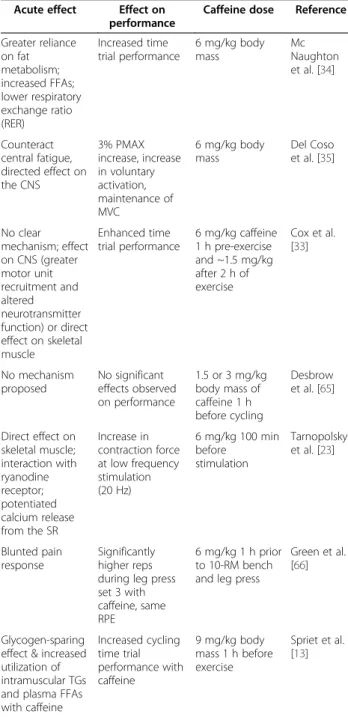
In summary, caffeine, even at physiological doses (3–6 mg/kg), as well as coffee are proven ergogenic aids and as such–in most exercise situations, especially in endurance-type events – clearly work-enhancing [26]. It most likely has a peripheral effect targeting skeletal muscle metabol-ism as well as a central effect targeting the brain to en-hance performance, especially during endurance events (see Table 1). Also for anaerobic tasks, the effect of caffeine on the CNS might be most relevant. Further, post-exercise caffeine intake seems to benefit recovery be increasing rates of glycogen resynthesis.
Nicotine Overview
Nicotine or 3-(1-methyl-2-pyrrolidinyl)pyridine is a nat-urally occurring alkaloid and one of the most widely used psychostimulants in the world [67]. Cigarettes are the most common source of nicotine. Smoked tobacco contains additional harmful constituents and chemicals, which have detrimental effects on the respiratory system [68]. Due to worldwide smoking restrictions, the tobacco industry has developed a number of smokeless alternatives, often containing much higher nicotine con-centrations than regular cigarettes. These represent an
alternative for some athletes as they do not pose a risk of adversely affecting the respiratory system.
Mechanism of action
In general, nicotine has a psychostimulatory effect on the CNS at low doses via enhancing the actions of nor-epinephrine and dopamine in the brain [69]. At higher Table 1 Summary of the effects of caffeine on
performance
Caffeine
WADA status: now being monitored (stimulants - in competition only), banned from 1962 to 1972 and again from 1984 to 2003 at
urinary caffeine concentrations >12μg/ml
Acute effect Effect on performance
Caffeine dose Reference
Greater reliance on fat metabolism; increased FFAs; lower respiratory exchange ratio (RER)
Increased time trial performance
6 mg/kg body mass
Mc Naughton et al. [34]
Counteract central fatigue, directed effect on the CNS
3% PMAX increase, increase in voluntary activation, maintenance of MVC
6 mg/kg body mass
Del Coso et al. [35]
No clear mechanism; effect on CNS (greater motor unit recruitment and altered neurotransmitter function) or direct effect on skeletal muscle
Enhanced time trial performance
6 mg/kg caffeine 1 h pre-exercise and ~1.5 mg/kg after 2 h of exercise
Cox et al. [33]
No mechanism proposed
No significant effects observed on performance
1.5 or 3 mg/kg body mass of caffeine 1 h before cycling
Desbrow et al. [65]
Direct effect on skeletal muscle; interaction with ryanodine receptor; potentiated calcium release from the SR
Increase in contraction force at low frequency stimulation (20 Hz)
6 mg/kg 100 min before
stimulation
Tarnopolsky et al. [23]
Blunted pain response
Significantly higher reps during leg press set 3 with caffeine, same RPE
6 mg/kg 1 h prior to 10-RM bench and leg press
Green et al. [66]
Glycogen-sparing effect & increased utilization of intramuscular TGs and plasma FFAs with caffeine
Increased cycling time trial performance with caffeine
9 mg/kg body mass 1 h before exercise
doses, however, nicotine enhances the effect of serotonin and opiate activity, exerting a calming and depressing effect [70]. Nicotine-induced stimulation of the sympa-thetic nervous system leads to increased heart rate and blood pressure [71], cardiac stroke volume and output [72] and coronary blood flow [73]. Although the results are conflicting and some authors report increases in cutaneous blood flow and skin temperature [74], others report a decrease in cutaneous blood flow and subse-quent decline in skin temperature associated with nicotine consumption [75,76]. These differences in cuta-neous blood flow are possibly related to differences in nicotine administration. Both snus and nicotine gums enable nicotine to diffuse across the mucous membranes and are taken up by the bloodstream or, when inhaled, diffuses across the alveolar membrane of the alveoli, and enters the bloodstream. Although the amount of nico-tine inhaled is lower than with conventional cigarettes, the use of electronic cigarettes is becoming more and more popular [77]. However, the amount taken up by smokeless tobacco users tends to be much greater than by smoking. Once in the bloodstream, nicotine is quickly (within seconds) delivered to the brain, where it inter-acts with neural nicotinic acetylcholine receptors (nAChRs). It is metabolized by the liver cytochrome P450 enzyme system and has a half-life of approximately 2 hours [78]. Upon binding of ACh or its exogenous lig-and nicotine, the ion channel is opened lig-and causes an influx of sodium and calcium (Ca2+). This local increase in intracellular Ca2+ can alter cellular functions [79]. A mechanism termed Ca2+-induced Ca2+ release can fur-ther boost intracellular calcium upon activation of nAChR [80]. In vitro experiments using human neutro-phils showed a dose-dependent rise in intracellular Ca2+ levels of 700% over baseline at a concentration of 10-2M nicotine [81]. In numerous pathways, Ca2+ acts as an intracellular messenger, setting the stage for nAChRs as potent candidates to influence a variety of Ca2+-dependent neuronal processes, such as neurotransmitter release, syn-aptic plasticity or gene transcription.
Effect on performance
While it is clear that smoking can lead to the develop-ment of respiratory, cardiovascular, and skin diseases as well as a number of tobacco-related cancers [82] there are other forms of application such as the use of alterna-tive smokeless tobacco (snus), which is gaining popular-ity among athletes [83] as it bypasses the respiratory system. Snus and cigarette consumers show similar peak blood nicotine levels after use with a tendency for higher cotinine levels in the former [84].
Nicotine activates the sympathoadrenal system, which leads to increased heart rate, contractility, vasoconstriction and a rise in blood pressure and the level of circulating
catecholamines during light exercise [85]. Nicotine also in-creases muscle blood flow [86] and lipolysis due to en-hanced circulating levels of norepinephrine and epinephrine as well as direct action on nicotinic choliner-gic receptors in adipose tissue [87]. The effects exerted by nicotine may be beneficial in a wide variety of sports and it is suggested that nicotine is abused by athletes [83]. Ac-cording to Marclay [88], cumulative exposure to nicotine metabolites were found in 26% - 56% of urine samples that were subjected to screening for tobacco alkaloids. After correcting for exposure to second-hand smoke, 15% of the athletes were considered active nicotine consumers. Among athletes, this is high considering the WHO’s 25% worldwide estimate of smoking prevalence. It can be hy-pothesized that the metabolites stem mostly from smoke-less tobacco due to the adverse effects of conventional cigarettes for athletes, which most severely affects athletes engaging in endurance type sports [89].
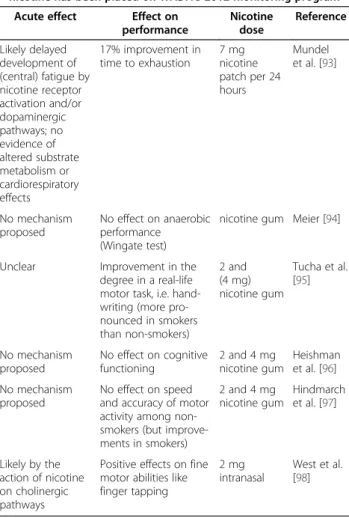
Further, a large number of human and animal studies have found nicotine-induced improvements in several aspects of cognitive function, including learning and memory [90], reaction time [91] and fine motor abilities (see Table 2). Studies addressing the question of a direct performance enhancing effect of nicotine are rare but will be summarized here. Sports most affected include ice hockey, skiing, biathlon, bobsleigh, skating, football, basketball, volleyball, rugby, American football, wrestling and gymnastics. These sports seem to gain performance benefits from the stimulating effect of nicotine as evi-dent from the use of other prohibited stimulants accord-ing to the Anti-Dopaccord-ing Database [92]. Muendel et al. [93] found a 17% improvement in time to exhaustion after nicotine patch application compared to a placebo without affecting cardiovascular and respiratory parame-ters or substrate metabolism. In this sense, nicotine seems to exert similar effects as caffeine by delaying the development of central fatigue as impaired central drive is an important factor contributing to fatigue during ex-ercise. To date, no improvement on anaerobic perform-ance (Wingate test) has been reported (see Table 2).
transdermal patch and consult their physician if signs or symptoms arise. Reducing exercise intensity and dur-ation for the first 1–2 weeks until potential side effects are known might also help to minimize toxicity. To re-duce increased exercise-inre-duced drug absorption, ath-letes are encouraged to avoid exercising in extreme environmental and temperature conditions, wear appro-priate breathable sports garments and drink plenty of fluids to prevent dehydration [99].
Additionally, although nicotine may have ergogenic potential, it is also highly addictive, reportedly as addict-ive as heroin and cocaine [100]. Therefore, detrimental effects on motor performance can be altered after a short abstinence duration. Burtscher et al. [101] noted that motor performance declines in heavy smokers after a short period of abstinence appears, this decline being similar to the motor symptoms of Parkinsonism. The ab-stinence symptoms are ameliorated by cigarette smok-ing. It is important to consider the concerning addictive
potential with following deterioration of motor perform-ance upon abstinence. Interestingly, however, it was noted that moderate and vigorous exercise led to signifi-cant reductions of the desire to smoke among abstaining smokers, possibly via reductions in cortisol [102]. A recent meta-analysis showed that exercise has the poten-tial to acutely reduce cigarette cravings and could there-fore be a promising strategy to attenuate withdrawal symptoms in smokers [103]. It is also important to men-tion that the vasoconstricmen-tion mediated by nicotine could limit exercise performance in a hot environment. As skin blood flow increases during exercise to transfer heat impaired nicotine-induced skin blood flow may be ergolytic.
A recent meta-analysis conducted by Heishman and colleagues clearly suggests significant effects of nicotine on fine motor abilities, including attention and memory [104]. Participants of the studies included in the meta-analysis were mainly nonsmokers, therefore avoiding confounding of nicotine withdrawal. Considering the im-portance of cognition in sport, such an optimization of neurobiological function in our view seems to be benefi-cial for a variety of sports such as sport games or track and field. Finally, nicotine’s effect on increased pain tol-erance might be of advantage in a wide variety of sports [105]. More research will hopefully fill the gap to further evaluate nicotine’s effects on exercise performance.
WADA status
Based on observations of possible extensive smokeless nicotine consumption among certain athletes [106], a recent report by Marclay et al. [88] from the Swiss Laboratory for Doping Analyses in Lausanne caught the interest of the sporting community and the WADA. Thereafter, discussions within WADA took place in the List Committee which is a subcommittee of the Health, Medical and Research Committee. Dr. Arne Ljungqvist, chairman of the Health, Medical and Research Commit-tee, reports that WADA wants to know more about the use of nicotine in sports. Once the prevalence is known, WADA will discuss a potential ban. Ljungqvist also re-ports that the IOC has already monitored nicotine as far back as 30 years ago in collaboration with the anti-doping laboratory in Cologne, and did not report abusea. Since this time, smokeless tobacco and other nicotine delivery systems that might be appealing to the sporting community have entered the market. As a reaction, WADA has included nicotine, categorized as a stimulant and ‘in-competition only’ in its 2013 monitoring pro-gram [4]. For this purpose, WADA [4] reports:“WADA, in consultation with signatories and governments, shall establish a monitoring program regarding substances which are not on the Prohibited List, but which WADA Table 2 Summary of the effects of nicotine on
performance
Nicotine
WADA status: in order to detect potential patterns of abuse, nicotine has been placed on WADA’s 2012 monitoring program
Acute effect Effect on performance
Nicotine dose
Reference
Likely delayed development of (central) fatigue by nicotine receptor activation and/or dopaminergic pathways; no evidence of altered substrate metabolism or cardiorespiratory effects
17% improvement in time to exhaustion
7 mg nicotine patch per 24 hours
Mundel et al. [93]
No mechanism proposed
No effect on anaerobic performance (Wingate test)
nicotine gum Meier [94]
Unclear Improvement in the degree in a real-life motor task, i.e. hand-writing (more pro-nounced in smokers than non-smokers)
2 and (4 mg) nicotine gum
Tucha et al. [95]
No mechanism proposed
No effect on cognitive functioning
2 and 4 mg nicotine gum
Heishman et al. [96]
No mechanism proposed
No effect on speed and accuracy of motor activity among non-smokers (but improve-ments in smokers)
2 and 4 mg nicotine gum
Hindmarch et al. [97]
Likely by the action of nicotine on cholinergic pathways
Positive effects on fine motor abilities like finger tapping
2 mg intranasal
wishes to monitor in order to detect patterns of misuse in sport”.
Detection
Nicotine use can be detected in urine samples based on its major metabolites (cotinine, trans-3-hydroxycotinine, nicotine-N0-oxide and cotinine-N-oxide) and tobacco alkaloids (anabasine, anatabine and nornicotine) which can be used as an indicator of a person’s exposure to nicotine as suggested by Marclay et al. [88].
Summary
In summary, nicotine seems to have ergogenic potential. Athletes appear to benefit from activation of the sym-pathoadrenal system with increased catecholamine re-lease and subsequent increases in muscle blood flow and lipolysis. One component of nicotine action seems to act via a central mechanism (by nicotine receptor activation and/or dopaminergic pathways; see Table 2). There is evidence for the abuse of nicotine by athletes. Although the sale of snus is illegal within the European Union [107], anecdotal observations by coaches and research from Scandinavia shows a high prevalence of snus use among athletes [83,108]. It might therefore be reason-able to assume that smoking cigarettes will not be an issue for athletes. Instead, as there are several nicotine alternatives many of the negative effects of cigarettes can be circumvented.
Ethanol (alcohol) Overview
Alcohol (ethanol; here referred to as alcohol or EtOH) is and has been one the most commonly consumed and abused drugs for a substantial period in human history. Alcohol is a dependence-producing drug which affects a host of organ systems and one that increases the risk of morbidity and mortality from different diseases when abused [109]. Indeed, some authors have suggested that alcohol is harmful similar to drugs such as heroin or cocaine and that excessive alcohol consumption is a serious world-wide health risk [110]. Although the detri-mental effects of alcohol on human physiology are well known, even elite athletes consume alcohol. When look-ing at the effects of alcohol on overall health, it is, however, important to distinguish between chronic, moderate alcohol consumption versus alcohol abuse.
Alcohol consumption and sport have been inextricably linked since ancient times when alcohol was considered the elixir of life [111]. To some extent that may be true, given that a substantial body of epidemiological evidence shows that moderate ingestion of alcohol may reduce the risk of cardiovascular disease [112]. The link be-tween alcohol consumption and mortality is subject to a J-shaped curve i.e. improved longevity with moderate
consumption with increasing intake resulting in greater mortality risk [113]. Indeed, dietary guidelines from the American Heart Association recommend moderation of alcohol intake as it has been associated with a lower risk of cardiovascular events [112].
Alcohol use is fairly widespread among the athletic population with 88% of intercollegiate American athletes reporting the use of alcohol [114]. It is also noteworthy that many athletes consume alcohol prior to sports events [115]. However, it is important to note that scien-tific evidence suggests that the consumption of alcohol has some detrimental effects on exercise performance [109,114]. It is fairly obvious that it is unlikely for com-petitive athletes to be alcohol abusers and most perform-ance studies have focused on the acute ergolytic effects of EtOH consumption. The chronic studies merely reinforce the point that EtOH is profoundly ergolytic in the long term setting. They also serve to reinforce that chronic EtOH use can be toxic to cardiac and skeletal muscle.
Mechanism of action
Chronic alcohol abuse has significant detrimental effects on the human cardiac muscle [116] and one of the puta-tive mechanisms via which alcohol may induce cardiac dysfunction is through the induction of increased oxida-tive stress. Interestingly, exercise training blunted the oxidative damage observed in a rat model of chronic al-cohol consumption [117]. The authors suggest that exer-cise training results in an up-regulation of cardiac antioxidants which may in turn reduce the deleterious effects of chronic alcohol induced oxidative stress.
Acute alcohol use can also have effects on cardiovas-cular determinants of exercise performance. Lang et al. [118] examined the effects of acute alcohol administra-tion on left ventricular contractility using echocar-diography and found that alcohol had a significant depressant effect on the myocardium. Specifically, acute alcohol consumption resulted in a decreased end-systolic pressure-dimension slope and reduced velocity of myocardial fiber shortening [118].
excitation-contraction coupling and diminishing muscular per-formance [123].
Muscle capillary density is closely related to the oxida-tive capacity of skeletal muscle [124]. Greater capillary density also allows for a greater surface area for gas ex-change and delivery of metabolic substrates. Long term al-cohol consumption is associated with the development of alcoholic myopathy which is characterized by a reduction in skeletal muscle capillarity [125]. Exercise training, how-ever, appears to attenuate these adverse changes [126].
Epidemiological data suggest that moderate alcohol con-sumption is associated with many salutary changes in blood coagulation and fibrinolysis. However, compelling experimental evidence is lacking and often conflicting [109]. Alcohol can also lead to significant post-exercise perturbations in levels of clotting factors. Moderate post-exercise alcohol consumption resulted in significantly elevated levels of Factor VIII at 5 and 22 hours during the post-exercise milieu [127]. Both circulating catechol-amine and vasopressin levels have been implicated in up-regulation of Factor VIII [109]. These factors in turn, have been implicated in the pathogenesis of atherosclerosis in prospective studies [128].
Alcohol and exercise may interact with each other to induce disorders in platelet aggregation which are asso-ciated with an elevated risk of cardiovascular and cere-brovascular events. Alcohol intoxication has been shown to be linked to cerebrovascular infarctions in a few case-control studies [129,130]. However, the exact patho-logical mechanisms of the same are currently unknown.
Alcohol consumption following athletic participation is commonly observed and may be associated with disor-ders in platelet aggregation. El-sayed et al. [131] demon-strated that alcohol ingestion following exercise was associated with a marked increase in platelet count 1-hour following exercise. Platelet aggregation induced by adenosine diphosphate was found to be reduced when exercise was followed by alcohol consumption [131]. Thus, it appears that ingestion of a moderate quantity of alcohol is associated with delayed recovery of platelet aggregation. It is important to note however, that the performance impact of ethanol consumption mediated post-exercise coagulopathy is unknown.
Acute alcohol consumption is associated with the de-terioration of psychomotor skills. A significant difference exists in injury rates between drinkers and non-drinkers in athletic populations. Athletes that consume alcohol at least once a week have almost a 2-fold higher risk of in-jury compared to non-drinkers and this elevated inin-jury rate holds true for the majority of sports examined [114]. The exact mechanisms that may be responsible for the elevated risk of injury are unknown.
Alcohol may also interfere with the body’s ability to re-cover from injury. Barnes et al. [132] examined the
effects of 1 g/kg body weight alcohol consumption on recovery from eccentric exercise-induced muscle injury. The authors measured peak and average peak isokinetic and isometric torque produced by the quadriceps. Alco-hol consumption was associated with significantly greater decreases in torque production (40-44%) 36 hours into recovery. The authors concluded that the consump-tion of a moderate amount of alcohol after damaging ex-ercise magnified the loss of muscle force production potential.
Finally, there is some evidence to suggest that chronic alcohol consumption may result in a positive energy bal-ance and a potentially obesogenic state. Tremblay et al. [133] reported that chronic alcohol consumption did not result in a reduction in lipid intake and that a dietary regimen that provided a large fraction of energy in the form of alcohol increased the risk for a positive energy balance in a free-living state. It appears that alcohol may have a fat-sparing effect [134] similar to that of carbohy-drates and may cause fat gain. Suter et al. [135] sug-gested that alcohol could result in excess body fat gain especially in the upper body. There is some evidence to suggest that obese individuals may be more susceptible to weight gain and the hyperlipidemic effects of alcohol consumption as compared to lean individuals [136]. This is in contrast to epidemiological studies that report a negative association between alcohol consumption and adiposity [137]. This may be explained by the induction of unregulated futile metabolic cycles that appear to signifi-cantly aid in the disposal of excess calories [138]. In gen-eral, it appears that the effects of alcohol on body weight are controversial and it is likely that moderate consump-tion of alcohol that replaces calories from carbohydrates and fat is unlikely to result in weight gain [139].
Effects on performance
acute ethanol ingestion resulted in a ~4% reduction in average cycling power output during a 60 minute time-trial. However, the detrimental effect of alcohol on aer-obic performance seems to be dose dependent with a threshold of 20 mmol/L, upon which the effect becomes significant [143]. Consumption of alcohol 24 hours prior to exercise has also been shown to reduce aerobic per-formance by 11% [114]. Some studies have failed to show reductions in exercise performance following alco-hol consumption [144,145]. However, this may be due to limitations in their experimental design as well as type of exercise used. For instance, the lack of ergolytic effects on exercise performance during bicycle ergom-eter testing may be due to the fact that using a station-ary bicycle ergometer does not place significant motor coordination demands as compared to running.
Alcohol can also impair recovery following exercise. It has been shown that alcohol can impair glycogen resyn-thesis after prolonged cycling [146]. More importantly, alcohol seems to interfere with protein synthesis, most likely by suppressing the mTOR pathway, which is critical to facilitate repair and hypertrophy following strength training [147].
Although alcohol seems to have an overall ergolytic effect on exercise performance, a well-known athlete re-portedly consumed alcohol before a ski downhill compe-tition [148]. This is potentially a dangerous precedent especially since alcohol has significant effects on execu-tive functions such as judgment and decision making while also having significant adverse effects on motor control and coordination. This has to be considered in sports requiring a high level of boldness (downhill ski-ing, downhill mountain biking) and may have implica-tions for pre-participation testing. In addition, the effects of an alcohol-induced hangover are poorly quantified and as such are relatively unknown and subject to fur-ther investigation in humans.
WADA status
Alcohol is prohibited in-competition only and it is pro-hibited in the following sports: aeronautic, archery, auto-mobile, karate, motorcycling and powerboating. Until 2010, modern pentathlon was also included in this list.
Detection
Detection is conducted by breath or blood analysis. The limit (blood tests) eligible for a doping violation is 0.10 g/L.
Summary
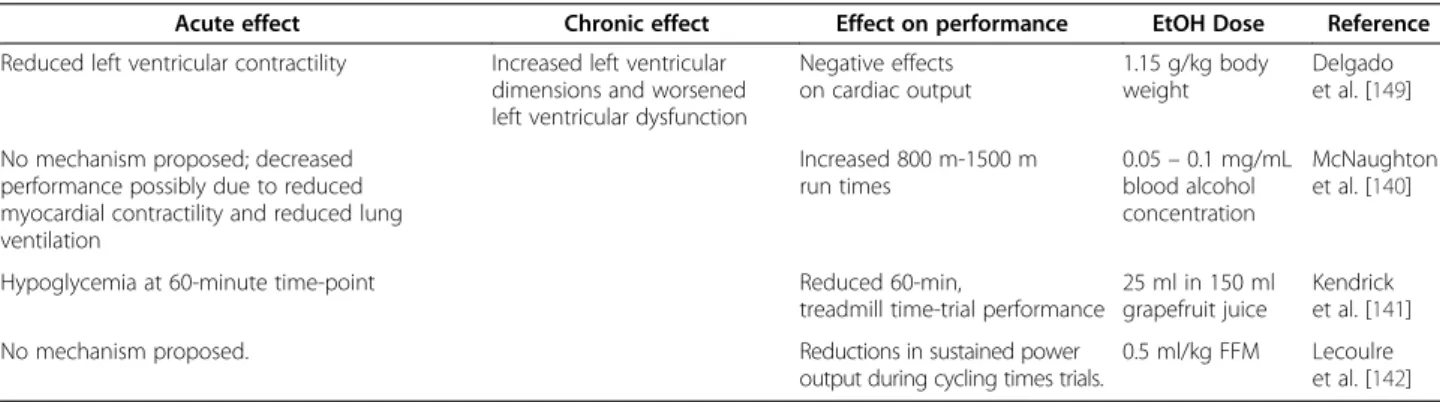
Alcohol is the most commonly consumed drug in athletic communities. The American College of Sports Medicine (ACSM) concludes in its position stand that alcohol con-sumption adversely affects psychomotor skills and exercise performance while resulting in minimal reductions in max-imal oxygen consumption (see also Table 3). The ACSM also recommends that if an athlete must consume alcohol, that they should refrain from alcohol consumption for at least 48 hours prior to competition. Chronic alcohol abuse is associated with significant impairments in cardiac and skeletal muscle. It also slows post-exercise recovery by inhi-biting protein synthesis. Thus, alcohol is a uniformly ergo-lytic agent that has significant detrimental effects on exercise performance and that use of the same during com-petitive activity should be minimized for athlete safety and so as to maximize athletic performance.
Tetrahydrocannabinol Overview
Cannabis (Cannabis sativa) is known for its widespread use worldwide. In total, more than 400 different com-pounds, distributed by 18 chemical groups, including its most active substance Δ9-THC have been detected in different species of cannabis plants. Consumption of THC-containing cannabis products, such as marijuana
Table 3 Summary of the effects of alcohol on performance
Alcohol
WADA status: alcohol is prohibited by WADA in competition only. The doping violation threshold is 0.10 g/L. As of 2013, alcohol is banned in the following sports: aeronautics (FAI), archery (FITA), automobile (FIA), karate (WKF), motorcycling (FIM) and powerboating
(UIM)
Acute effect Chronic effect Effect on performance EtOH Dose Reference
Reduced left ventricular contractility Increased left ventricular dimensions and worsened left ventricular dysfunction
Negative effects on cardiac output
1.15 g/kg body weight
Delgado et al. [149]
No mechanism proposed; decreased performance possibly due to reduced myocardial contractility and reduced lung ventilation
Increased 800 m-1500 m run times
0.05–0.1 mg/mL blood alcohol concentration
McNaughton et al. [140]
Hypoglycemia at 60-minute time-point Reduced 60-min,
treadmill time-trial performance
25 ml in 150 ml grapefruit juice
Kendrick et al. [141]
No mechanism proposed. Reductions in sustained power output during cycling times trials.
(herbal cannabis) and hashish (resinous cannabis) are commonly consumed in the form of cigarettes or even in small pipes. In addition, dronabinol, a THC synthetic product, has been approved in many countries to treat medical conditions such as HIV and cancer. The wide-spread popularity of use of substances derived from can-nabis, such as marijuana among young athletes has led to its high detection frequency. In 2012, 7.6 million indi-viduals 12 years of age or older used marijuana on 20 or more days in the past month [150].
Mechanism of action
The structure of THC was described long before its re-ceptors, CB1 and CB2were discovered. CB1, which has been primarily found in the CNS, likely explains the cen-tral psychotropic effects of marijuana [151]. CB2 recep-tors, on the other hand, are mainly found in sensory tissue mediating an analgesic effect [152]. Anandamide, an endogenous ligand binds to these receptors. Anande-mide, however, appears to also signal via other receptors than CB1and CB2. Future studies should investigate the effects of exercise on the cannabinoid receptor system and how this is modulated by marijuana use. Numerous cannabimimetics (cannabis receptor agonists) are being developed that have similar pharmacologic effects but limited negative side effects. However, illicit cannabimi-metics such as Spice and K2 (synthetic cannabis) with dangerous side effects are on the rise, which is a con-cerning issue [153].
Effects on performance
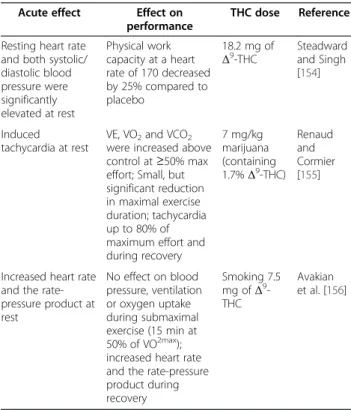
The ergogenic effects of marijuana are questionable, as its performance enhancing effect, if any, has yet to be established. Along these lines, very few studies have tested the effects of marijuana on performance. One of the first studies to evaluate the effects of marijuana smoking on exercise performance was performed by Steadward and Singh [154], who tested the effects of marijuana smoking compared to placebo on several indi-ces of exercise performance. Resting heart rate and both systolic and diastolic blood pressure were significantly elevated at rest after marijuana consumption compared to both control and placebo. Although there was no sig-nificant decrease in grip strength, physical work capacity at a heart rate of 170 decreased by 25% compared to pla-cebo. Renaud and Cormier [155] tested subjects 10 min after smoking a marijuana cigarette (containing 1.7% of Δ9
-THC) of 7 mg/kg of body weight, and noted a slight, but significant decrease in cycle ergometry time to ex-haustion. Avakian et al. [156] demonstrated that double-blind administration of marijuana as 7.5 mg of Δ9-THC or placebo did not affect blood pressure, ventilation or oxygen uptake during submaximal exercise (15 min at 50% of Vo2max), however did increase heart rate and the
rate-pressure product at rest and during both exercise and recovery. Tashkin et al. [157] hypothesized that the decrease in exercise performance may be due to its chronotropic effect leading to achievement of maximum heart rate at reduced workloads. Furthermore, detrimen-tal effects on other aspects of performance have also been demonstrated. When subjects were acutely given THC orally (215 µg/kg) acutely, significant deficits in gen-eral performance, standing steadiness, reaction time and psychomotor performance were observed over a 5 hour period post-ingestion [158]. Interestingly, in a case report [159], it was documented that in a patient with asthma, a condition characterized by bronchoconstriction, smoking marijuana prior to exercise testing led to bronchodilation and no defect in pulmonary function [160,161]. Thus, if there is any positive effect of marijuana, it likely only indir-ectly improves performance.
It is conceivable that cannabis may reduce an athlete’s feelings of pre-competition stress and anxiety as a result of the euphoric effect it may produce. Also, because can-nabis diminishes alertness and has relaxing and sedative properties, use may be driven by the effects of relax-ation, well-being and improved sleep quality. For ex-ample, it has been reported that relaxing, pleasure, and improved sleeping were the main motives to use canna-bis [162], with the rationale that adequate sleep and being relaxed before competition may lead to optimal perform-ance. However, due to the trade-off of decreased exercise performance, possibly secondary to increases in heart rate and blood pressure, which may alter perceived exertion, marijuana may be considered an ergolytic agent.
WADA status
The International Olympic Committee included canna-bis in the banned substance list beginning in 1989 and since 2004 the World Anti-Doping Agency has prohib-ited its use for all sports competition [163]. Cannabi-noids are substances prohibited in-competition only.
Detection
Summary
Overall, it appears that cannabis does not have ergogenic potential in sports activities and thus, its inclusion on the banned list is likely a function of its illicitness. As cannabis smoking impairs exercise and psychomotor per-formance (such as sedative effect, slower reaction times and other psychomotor effects), its ability to serve as an ergogenic aid has been questioned, and is generally con-sidered to be an ergolytic drug (see also Table 4). This is likely due to increase in heart rate and blood pressure, decline of cardiac output and reduced psychomotor activ-ity that have been demonstrated in prior studies.
Drug interactions
Alcohol acts as a depressant and caffeine as a stimulant of the CNS. If the two substances are consumed to-gether, the psychostimulatory effect of caffeine seems to antagonize the depressive effect of alcohol via incom-plete antagonism. Indeed, ingestion of a combination of alcohol and caffeine showed no significant difference from placebo when simple reaction time the amplitude of the evoked potentials was assessed [168]. However, the subject’s feeling of intoxication persisted.
The interaction of caffeine with cannabis seems to be more complex. When caffeine and cannabis were given to rats, memory deficits induced by THC were not at-tenuated but actually exacerbated [169]. This might have to do with the interaction of caffeine with adenosine A1 receptors that also modulate cannabinoid signaling in the hippocampus.
In the presence of nicotine, caffeine exhibits a shorter half-life and faster metabolism [170]. Ethanol on the other hand has been shown to slow caffeine metabolism and in-creases its half-life [171]. Co-ingestion of caffeine and nicotine exhibit additive effects on cardiovascular parame-ters such as blood pressure during baseline conditions but less than additive effects during conditions of physical and mental stress and sympathoadrenal stimulation [172].
The section on interactions of drugs is not exhaustive but demonstrates that even for these highly prevalent and socially accepted drugs there are potential interactions. Before drawing conclusions from drug interactions, ques-tions arise such as: is the time to peak psychomotor effect of either drug altered in the presence of the other? Does the magnitude of the peak blood concentration change for either drug in the presence of the other? More studies are needed to validate drug interactions and to address these questions in a performance-related context. In the view of the high prevalence of these drugs this task would provide relevant information.
Conclusion and perspectives
The physiological effects of the above mentioned sub-stances are well established. However, the ergogenic
effect of some of the discussed drugs may be ques-tioned and one has to consider the cohort tested for every specific substance. However, only caffeine has enough strength of evidence to be considered an ergogenic aid. Cannabis and alcohol are ergolytic for sports performance, and nicotine needs confirmation with further research. It is well known that there is intersubject variability in response to every drug [173]. Also, every consumer has to understand poten-tial side effects as well as possible interaction effects, if multiple drugs are consumed. Future research with diverse combinations over a longer duration will be needed to establish the safety and efficacy of drugs and ergogenic dietary aids. Educating societal aware-ness of the potential dangers from drug intake is of paramount importance. For nicotine, WADA will need to if it wants to move the substance from the monitoring program to the Prohibited List in order to curtail wide-spread use of smokeless tobacco in sports. Apart from the ergogenic effect of nicotine, this would underscore WADA’s effort following the ban of THC to promote a drug-free sport. Whether ergogenic or not, the addictive potential of a drug should always be considered.
Table 4 Summary of the effect of THC on performance
TETRAHYDROCANNABINOL
WADA status: the International Olympic Committee included cannabis in the banned substance list beginning in 1989 and since
2004 the World Anti-Doping Agency has prohibited its use for all sports competition [163]
Acute effect Effect on performance
THC dose Reference
Resting heart rate and both systolic/ diastolic blood pressure were significantly elevated at rest
Physical work capacity at a heart rate of 170 decreased by 25% compared to placebo
18.2 mg of Δ9
-THC
Steadward and Singh [154]
Induced tachycardia at rest
VE, VO2and VCO2 were increased above control at≥50% max effort; Small, but significant reduction in maximal exercise duration; tachycardia up to 80% of maximum effort and during recovery
7 mg/kg marijuana (containing 1.7%Δ9-THC)
Renaud and Cormier [155]
Increased heart rate and the rate-pressure product at rest
No effect on blood pressure, ventilation or oxygen uptake during submaximal exercise (15 min at 50% of VO2max); increased heart rate and the rate-pressure product during recovery
Smoking 7.5 mg ofΔ9 -THC
Endnote a
Personal communication
Abbreviations
Ach:Acetylcholine; AMPK: Adenosine monophosphate-activated protein kinase; BW: Body weight; cAMP: Cyclic adenosine monophosphate; CHO: Carbohydrates; CNS: Central nervous system; EtOH: Ethanol; FFA: Free fatty acid; FFM: Fat-free mass; GLUT4: Glucose transporter 4; HSL: Hormone sensitive lipase; IOC: International Olympic Committee; nAChR: nicotinic acetylcholine receptor; THC: Tetrahydrocannabinol; WADA: World Anti-Doping Agency.
Competing interests
The authors declare that there have no competing interests.
Authors’contributions
DHP, SSA, MB and CKR have made substantial contributions to ideas, conception and design of the review and have been involved in drafting the manuscript and revising it critically for important intellectual content. All authors have read and have given final approval of the version to be published.
Acknowledgements
This project was supported by the Austrian Science Fund (FWF), project number J 3267.
Author details
1
Department of Internal Medicine, Yale University School of Medicine, New Haven, CT, USA.2Exercise and Metabolic Disease Research Laboratory, Translational Sciences Section, School of Nursing, University of California, Los Angeles, CA, USA.3Department of Sports Science, Medical Section, University Innsbruck, Innsbruck, Austria.4Healthy Lifestyles Research Center, School of Nutrition and Health Promotion, Arizona State University, Phoenix, AZ, USA.
Received: 4 October 2013 Accepted: 2 December 2013 Published: 13 December 2013
References
1. Crocq MA:Alcohol, nicotine, caffeine, and mental disorders.Dialogues Clin Neurosci2003,5:175–185.
2. Robinson JH, Pritchard WS:The role of nicotine in tobacco use.
Psychopharmacology (Berl)1992,108:397–407.
3. Sturm R:The effects of obesity, smoking, and drinking on medical problems and costs.Health Aff (Millwood)2002,21:245–253. 4. WADA:WADA - World Anti Doping Agency.Montreal; 2013.
5. Chou T:Wake up and smell the coffee. Caffeine, coffee, and the medical consequences.West J Med1992,157:544–553.
6. Statland BE, Demas TJ:Serum caffeine half-lives. Healthy subjects vs. pa-tients having alcoholic hepatic disease.Am J Clin Pathol1980,73:390–393. 7. McCall AL, Millington WR, Wurtman RJ:Blood–brain barrier transport of
caffeine: dose-related restriction of adenine transport.Life Sci1982, 31:2709–2715.
8. Campbell ME, Grant DM, Inaba T, Kalow W:Biotransformation of caffeine, paraxanthine, theophylline, and theobromine by polycyclic aromatic hydrocarbon-inducible cytochrome(s) P-450 in human liver microsomes.
Drug Metab Dispos1987,15:237–249.
9. Holtzman SG, Mante S, Minneman KP:Role of adenosine receptors in caffeine tolerance.J Pharmacol Exp Ther1991,256:62–68.
10. Ribeiro JA, Sebastiao AM:Caffeine and adenosine.J Alzheimers Dis2010, 20(Suppl 1):S3–S15.
11. Cameron OG, Modell JG, Hariharan M:Caffeine and human cerebral blood flow: a positron emission tomography study.Life Sci1990,47:1141–1146. 12. Namdar M, Schepis T, Koepfli P, Gaemperli O, Siegrist PT, Grathwohl R,
Valenta I, Delaloye R, Klainguti M, Wyss CA,et al:Caffeine impairs myocardial blood flow response to physical exercise in patients with coronary artery disease as well as in age-matched controls.PLoS One
2009,4:e5665.
13. Spriet LL, MacLean DA, Dyck DJ, Hultman E, Cederblad G, Graham TE: Caffeine ingestion and muscle metabolism during prolonged exercise in humans.Am J Physiol1992,262:E891–E898.
14. Rush JW, Spriet LL:Skeletal muscle glycogen phosphorylase a kinetics: effects of adenine nucleotides and caffeine.J Appl Physiol2001, 91:2071–2078.
15. Umemura T, Ueda K, Nishioka K, Hidaka T, Takemoto H, Nakamura S, Jitsuiki D, Soga J, Goto C, Chayama K,et al:Effects of acute administration of caffeine on vascular function.Am J Cardiol2006,98:1538–1541. 16. Chesley A, Hultman E, Spriet LL:Effects of epinephrine infusion on
muscle glycogenolysis during intense aerobic exercise.Am J Physiol
1995,268:E127–E134.
17. Graham TE:Caffeine and exercise: metabolism, endurance and performance.Sports Med2001,31:785–807.
18. Taylor C, Higham D, Close GL, Morton JP:The effect of adding caffeine to postexercise carbohydrate feeding on subsequent high-intensity interval-running capacity compared with carbohydrate alone.Int J Sport Nutr Exerc Metab2011,21:410–416.
19. Battram DS, Shearer J, Robinson D, Graham TE:Caffeine ingestion does not impede the resynthesis of proglycogen and macroglycogen after prolonged exercise and carbohydrate supplementation in humans.
J Appl Physiol2004,96:943–950.
20. Pedersen DJ, Lessard SJ, Coffey VG, Churchley EG, Wootton AM, Ng T, Watt MJ, Hawley JA:High rates of muscle glycogen resynthesis after exhaustive exercise when carbohydrate is coingested with caffeine.
J Appl Physiol2008,105:7–13.
21. Supinski GS, Deal EC Jr, Kelsen SG:The effects of caffeine and theophylline on diaphragm contractility.Am Rev Respir Dis1984,130:429–433. 22. Endo M:Calcium release from the sarcoplasmic reticulum.Physiol Rev
1977,57:71–108.
23. Tarnopolsky M, Cupido C:Caffeine potentiates low frequency skeletal muscle force in habitual and nonhabitual caffeine consumers.J Appl Physiol2000,89:1719–1724.
24. Echeverri D, Montes FR, Cabrera M, Galan A, Prieto A:Caffeine’s Vascular mechanisms of action.Int J Vasc Med2010,2010:834060.
25. Tarnopolsky MA:Effect of caffeine on the neuromuscular system– potential as an ergogenic aid.Appl Physiol Nutr Metab2008,33:1284–1289. 26. Goldstein ER, Ziegenfuss T, Kalman D, Kreider R, Campbell B, Wilborn C,
Taylor L, Willoughby D, Stout J, Graves BS,et al:International society of sports nutrition position stand: caffeine and performance.J Int Soc Sports Nutr2010,7:5.
27. Osswald H, Schnermann J:Methylxanthines and the kidney.Handb Exp Pharmacol2011,200:391–412.
28. Nawrot P, Jordan S, Eastwood J, Rotstein J, Hugenholtz A, Feeley M:Effects of caffeine on human health.Food Addit Contam2003,20:1–30. 29. Paluska SA:Caffeine and exercise.Curr Sports Med Rep2003,2:213–219. 30. Davis JK, Green JM:Caffeine and anaerobic performance: ergogenic value
and mechanisms of action.Sports Med2009,39:813–832.
31. Tarnopolsky MA:Caffeine and endurance performance.Sports Med1994, 18:109–125.
32. Woolf K, Bidwell WK, Carlson AG:The effect of caffeine as an ergogenic aid in anaerobic exercise.Int J Sport Nutr Exerc Metab2008,18:412–429. 33. Cox GR, Desbrow B, Montgomery PG, Anderson ME, Bruce CR, Macrides TA,
Martin DT, Moquin A, Roberts A, Hawley JA, Burke LM:Effect of different protocols of caffeine intake on metabolism and endurance performance.
J Appl Physiol2002,93:990–999.
34. Mc Naughton LR, Lovell RJ, Siegler JC, Midgley AW, Sandstrom M, Bentley DJ:The effects of caffeine ingestion on time trial cycling performance.
J Sports Med Phys Fitness2008,48:320–325.
35. Del Coso J, Estevez E, Mora-Rodriguez R:Caffeine effects on short-term performance during prolonged exercise in the heat.Med Sci Sports Exerc
2008,40:744–751.
36. Greer F, Friars D, Graham TE:Comparison of caffeine and theophylline ingestion: exercise metabolism and endurance.J Appl Physiol2000, 89:1837–1844.
37. Gonzalez JT, Stevenson EJ:New perspectives on nutritional interventions to augment lipid utilisation during exercise.Br J Nutr2012,107:339–349. 38. Donsmark M, Langfort J, Holm C, Ploug T, Galbo H:Contractions activate
hormone-sensitive lipase in rat muscle by protein kinase C and mitogen-activated protein kinase.J Physiol2003,550:845–854.
40. Ivy JL, Costill DL, Fink WJ, Lower RW:Influence of caffeine and carbohydrate feedings on endurance performance.Med Sci Sports
1979,11:6–11.
41. Nehlig A, Debry G:Caffeine and sports activity: a review.Int J Sports Med
1994,15:215–223.
42. Fredholm BB, Battig K, Holmen J, Nehlig A, Zvartau EE:Actions of caffeine in the brain with special reference to factors that contribute to its widespread use.Pharmacol Rev1999,51:83–133.
43. Graham TE, Helge JW, MacLean DA, Kiens B, Richter EA:Caffeine ingestion does not alter carbohydrate or fat metabolism in human skeletal muscle during exercise.J Physiol2000,529(Pt 3):837–847.
44. Egawa T, Hamada T, Kameda N, Karaike K, Ma X, Masuda S, Iwanaka N, Hayashi T:Caffeine acutely activates 5′adenosine monophosphate-activated protein kinase and increases insulin-independent glucose transport in rat skeletal muscles.Metabolism2009,58:1609–1617. 45. Foskett A, Ali A, Gant N:Caffeine enhances cognitive function and skill
performance during simulated soccer activity.Int J Sport Nutr Exerc Metab
2009,19:410–423.
46. Collomp K, Ahmaidi S, Audran M, Chanal JL, Prefaut C:Effects of caffeine ingestion on performance and anaerobic metabolism during the Wingate test.Int J Sports Med1991,12:439–443.
47. Lorino AJ, Lloyd LK, Crixell SH, Walker JL:The effects of caffeine on athletic agility.J Strength Cond Res2006,20:851–854.
48. Mora-Rodriguez R, Garcia Pallares J, Lopez-Samanes A, Ortega JF, Fernandez-Elias VE:Caffeine ingestion reverses the circadian rhythm effects on neuromuscular performance in highly resistance-trained men.
PLoS One2012,7:e33807.
49. Graham TE, Hibbert E, Sathasivam P:Metabolic and exercise endurance effects of coffee and caffeine ingestion.J Appl Physiol1998,85:883–889. 50. McLellan TM, Bell DG:The impact of prior coffee consumption on the
subsequent ergogenic effect of anhydrous caffeine.Int J Sport Nutr Exerc Metab2004,14:698–708.
51. Wiles JD, Bird SR, Hopkins J, Riley M:Effect of caffeinated coffee on running speed, respiratory factors, blood lactate and perceived exertion during 1500-m treadmill running.Br J Sports Med1992,26:116–120. 52. Hodgson AB, Randell RK, Jeukendrup AE:The metabolic and performance
effects of caffeine compared to coffee during endurance exercise.
PLoS One2013,8:e59561.
53. Costill DL, Dalsky GP, Fink WJ:Effects of caffeine ingestion on metabolism and exercise performance.Med Sci Sports1978,10:155–158.
54. Butts N:Effect of caffeine ingestion on cardiorespiratory endurance in men and women.Res Q Exerc Sport1985,56:301–305.
55. Lamina S, Musa DI:Ergogenic effect of varied doses of coffee-caffeine on maximal aerobic power of young African subjects.Afr Health Sci2009, 9:270–274.
56. Jeukendrup A, Saris WH, Brouns F, Kester AD:A new validated endurance performance test.Med Sci Sports Exerc1996,28:266–270.
57. Derry CJ, Derry S, Moore RA:Caffeine as an analgesic adjuvant for acute pain in adults.Cochrane Database Syst Rev2012,3, CD009281. 58. Grossman A, Sutton JR:Endorphins: what are they? How are they
measured? What is their role in exercise?Med Sci Sports Exerc1985, 17:74–81.
59. Doherty M, Smith PM:Effects of caffeine ingestion on rating of perceived exertion during and after exercise: a meta-analysis.Scand J Med Sci Sports
2005,15:69–78.
60. Van Soeren MH, Sathasivam P, Spriet LL, Graham TE:Caffeine metabolism and epinephrine responses during exercise in users and nonusers.
J Appl Physiol1993,75:805–812.
61. Mottram DR:Drugs in sport.2nd edition. London; New York: E. & F.N. Spon, an imprint of Chapman & Hall; 1996.
62. Prohibited list - questions and answers.http://www.wada-ama.org/en/ Resources/Q-and-A/2012-Prohibited-List/.
63. Fenster L, Quale C, Hiatt RA, Wilson M, Windham GC, Benowitz NL:Rate of caffeine metabolism and risk of spontaneous abortion.Am J Epidemiol
1998,147:503–510.
64. Temple JL:Caffeine use in children: what we know, what we have left to learn, and why we should worry.Neurosci Biobehav Rev2009,
33:793–806.
65. Desbrow B, Barrett CM, Minahan CL, Grant GD, Leveritt MD:Caffeine, cycling performance, and exogenous CHO oxidation: a dose–response study.Med Sci Sports Exerc2009,41:1744–1751.
66. Green JM, Wickwire PJ, McLester JR, Gendle S, Hudson G, Pritchett RC, Laurent CM:Effects of caffeine on repetitions to failure and ratings of perceived exertion during resistance training.Int J Sports Physiol Perform
2007,2:250–259.
67. Boutrel B, Koob GF:What keeps us awake: the neuropharmacology of stimulants and wakefulness-promoting medications.Sleep2004, 27:1181–1194.
68. Amann M:Pulmonary system limitations to endurance exercise performance in humans.Exp Physiol2012,97:311–318.
69. Clark MA, Finkel R, Rey JA, Whalen K:Lippincott’s Illustrated Reviews: Pharmacology.Baltimore/Philadelphia: Lippincott Williams & Wilkins; 2008.
70. Silvette H, Hoff EC, Larson PS, Haag HB:The actions of nicotine on central nervous system functions.Pharmacol Rev1962,14:137–173.
71. Narkiewicz K, van de Borne PJ, Hausberg M, Cooley RL, Winniford MD, Davison DE, Somers VK:Cigarette smoking increases sympathetic outflow in humans.Circulation1998,98:528–534.
72. Irving DW, Yamamoto T:Cigarette smoking and cardiac output.Br Heart J
1963,25:126–132.
73. Bargeron LM Jr, Bing RJ, Castellanos A, Ehmke D, Gonlubol F, Siegel A: Effect of cigarette smoking on coronary blood flow and myocardial metabolism.Circulation1957,15:251–257.
74. Usuki K, Kanekura T, Aradono K, Kanzaki T:Effects of nicotine on peripheral cutaneous blood flow and skin temperature.J Dermatol Sci1998, 16:173–181.
75. Sorensen LT, Jorgensen S, Petersen LJ, Hemmingsen U, Bulow J, Loft S, Gottrup F:Acute effects of nicotine and smoking on blood flow, tissue oxygen, and aerobe metabolism of the skin and subcutis.J Surg Res
2009,152:224–230.
76. Leow YH, Maibach HI:Cigarette smoking, cutaneous vasculature, and tissue oxygen.Clin Dermatol1998,16:579–584.
77. Goniewicz ML, Kuma T, Gawron M, Knysak J, Kosmider L:Nicotine levels in electronic cigarettes.Nicotine Tob Res2013,15:158–166.
78. Benowitz NL, Jacob P 3rd, Jones RT, Rosenberg J:Interindividual variability in the metabolism and cardiovascular effects of nicotine in man.
J Pharmacol Exp Ther1982,221:368–372.
79. Barik J, Wonnacott S:Molecular and cellular mechanisms of action of nicotine in the CNS.Handb Exp Pharmacol2009,192:173–207. 80. Sharma G, Vijayaraghavan S:Modulation of presynaptic store calcium
induces release of glutamate and postsynaptic firing.Neuron2003, 38:929–939.
81. Ryder MI:Nicotine effects on neutrophil F-actin formation and calcium release: implications for tobacco use and pulmonary diseases.Exp Lung Res1994,20:283–296.
82. Taioli E:Gene-environment interaction in tobacco-related cancers.
Carcinogenesis2008,29:1467–1474.
83. Martinsen M, Sundgot-Borgen J:Adolescent elite athletes’cigarette smoking, use of snus, and alcohol.Scand J Med Sci Sports2012. DOI: 10.1111/j.1600-0838.2012.01505.x.
84. Holm H, Jarvis MJ, Russell MA, Feyerabend C:Nicotine intake and dependence in Swedish snuff takers.Psychopharmacology (Berl)1992, 108:507–511.
85. Walker JF, Collins LC, Rowell PP, Goldsmith LJ, Moffatt RJ, Stamford BA:The effect of smoking on energy expenditure and plasma catecholamine and nicotine levels during light physical activity.Nicotine Tob Res1999, 1:365–370.
86. Weber F, Anlauf M, Muller RD:Changes in muscle blood flow after smoking a cigarette determined by a new noninvasive method.Eur J Clin Pharmacol1989,37:517–520.
87. Andersson K, Arner P:Systemic nicotine stimulates human adipose tissue lipolysis through local cholinergic and catecholaminergic receptors.
Int J Obes Relat Metab Disord2001,25:1225–1232.
88. Marclay F, Grata E, Perrenoud L, Saugy M:A one-year monitoring of nico-tine use in sport: frontier between potential performance enhancement and addiction issues.Forensic Sci Int2011,213:73–84.
89. Alaranta A, Alaranta H, Patja K, Palmu P, Prattala R, Martelin T, Helenius I: Snuff use and smoking in Finnish olympic athletes.Int J Sports Med
2006,27:581–586.