RELIGION MADE FLESH: MODERNITY, IDEOLOGY, AND THE NEW SCIENCES OF THE BRAIN
Andrew Ali Aghapour
A dissertation submitted to the faculty of the University of North Carolina at Chapel Hill in partial fulfillment of the requirements for the degree of Doctor of Philosophy in the Department
of Religious Studies in the College of Arts and Sciences.
Chapel Hill 2017
Approved by: Randall Styers Lauren Leve Todd Ochoa
© 2017
ABSTRACT
Andrew Ali Aghapour: Religion Made Flesh: Modernity, Ideology, and the New Sciences of the Brain
(Under the direction of Randall Styers)
Since the turn of the twenty-first century, the human brain has become a unique and popular explanatory object. Drawing on concepts from the recent boom of the neurosciences, scholars and popular writers have sought to explain various cultural phenomena—including gender, politics, and religion—as the products of underlying cognitive processes. The human brain represents a unique rhetorical device because it serves as a bridge, in such explanations, between human culture and the seemingly objective laws of nature.
This dissertation analyzes brain-based explanations of religion, with a focus on the recent research program known as the cognitive science of religion. It frames the cognitive science of religion as the most recent in a series of historical attempts to essentialize religion, or explain the fundamental truth of religion by identifying a single element that transcends the local
specificities of language, culture, and history. Through a series of close readings, this dissertation demonstrates how cognitive theories of religion posit a cognitive fundament where the absolute truth of religion might reside.
ACKNOWLEDGEMENTS
This dissertation project grew out of questions that I first asked as an undergraduate at the College of Charleston explored at Cambridge University and UNC-Chapel Hill. Luckily, over these ten years I’ve discovered more questions than answers, more friendships than arguments, and more laughter than I could have ever anticipated. I could not have written this dissertation without the training, support, and friendship that I have received from a remarkable group of people.
First and foremost, I would like to thank my doctoral advisor, Randall Styers, for his selfless support and guidance over the last eight years. To this day I am still amazed that such a remarkable thinker and writer could be so generous a mentor (and, frankly, so good a cook). Randall, you are the best of us. Thank you for giving me more than I could ever hope to give back.
This dissertation was written for a group of scholars who have both trained and inspired me: Randall Styers, Lauren Leve, Todd Ochoa, Mary-Jane Rubenstein and Barry Saunders. Thank you all for serving on my committee and providing me with your insights, questions, and feedback. Each of you will forever represent for me a model of intellectual excellence. Sitting among you at the same table was, and always will be, an honor.
Thank you to all of my teachers. I am especially thankful to a group of professors at the College of Charleston who went out of their way to support me as a thinker, writer, and teacher. I was first welcomed to Religious Studies by Meg Cormack and John Huddlestun, and then
turned him into careful thinker. Thank you, Zeff, for giving me more opportunities—and glorious meals—than I can count, though I must insist that the next one is on me. Elijah Siegler drove me to my first academic conference and is now a favorite friend to see each year at the AAR. I was also supported at the college and over the years by philosophers Sheridan Hough, Christian Coseru, and Todd Grantham. I will always remember Glebe Street fondly.
I would like to express my deep gratitude to the Religious Studies program at UNC-Chapel Hill. The faculty of the department have been very kind to me over the years. I will miss my hallway chats with Yaakov Ariel, Brandon Bayne, Jess Boon, Jonathan Boyarin, Carl Ernst, Juliane Hammer, Jodi Magness, and Brendan Thornton. I would have been lost in many a bureaucratic labyrinth without the assistance and patience of Hope Toscher, Myra Quick, Cathy Ashworth, and Tracey Cave. Thank you to the Perry family for their generous travel award given through the department, and to the University of North Carolina at Chapel Hill its financial support, especially in my final year. Special thanks to Brenda Denzler, whose copyediting and moral support helped bring this to the finish line.
I would also like to thank a number of graduate students at UNC-Chapel Hill whose friendships have been dear to me: Ilyse and Kevin Morgenstein Fuerst, Stephanie Gaskill, Matthew Hotham, Sam Kessler, Lenny Lowe, Helen Orr, Travis Proctor, Kenny Richards, Shannon Schorey, Jenna and David Supp-Montgomerie, Stan Thayne, and Brook Wilenksy-Lanford. I am especially thankful to my dear friend Leif Tornquist, who was the first to welcome me to North Carolina and has been a pillar of support ever since.
grateful to my friend Michael Schulson, whose seemingly limitless generosity over the years included a close reading of this dissertation’s first chapter.
TABLE OF CONTENTS
LIST OF FIGURES……….x
INTRODUCTION……….……….………...….……….1
Religion Made Flesh………...……….3
Defining Religion……….8
Religion, Science, and the Conflict Thesis………...……….18
Epistemological Pluralism and the Richness of Being.……….………23
Thesis and Outline……….30
CHAPTER 1: NATURE, CULTURE, AND THE HUMAN SUBJECT……….…….33
Nature, Culture, and the Human Subject……….………..35
The Microscopy of Beauty……….47
The Microscopy of Difference………..……….57
The Birth and Journey of a Scientific Fact………..………….…………...……….…….60
Staging and Isolation……….……….64
Existing Evidence, Hypothesis, and Artificial Definitions………...….66
Research, Conclusions, and Culture in the Lab……….70
CHAPTER 2: THE COGNITIVE SCIENCE OF RELIGION AND THE METAPHYSICS OF CONSILIENCE……….…….76
Faces in Places………...………79
Axiom 1: The human brain is like an ancient toolbox………...………86
Axiom 3: Neurobiological reductionism brings scientific objectivity
to the study of religion……….………...…94
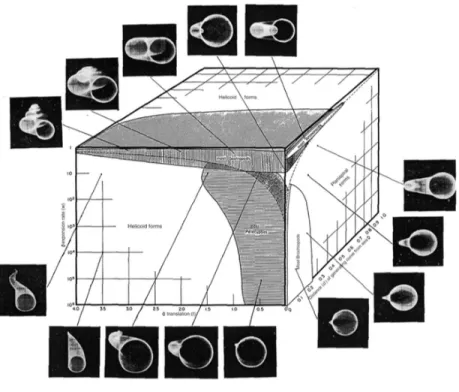
Introducing Morphospace……….………..……..…….…..101
The Byproduct Model and the Birth of Gods…..……..……..……..……..……..……..106
CSR’s Artificially Stabilized Brain…..……..……..……..……..……..……..……...…114
The Metaphysics of Consilience…..……..……..……..……..……..……..……..……..123
CHAPTER 3: ARTIFICIAL DISTINCTIONS AND COGNITIVE ESSENCES…….……….133
The Cognitive Naturalness of Religion…..……..……..……..……..……..……....……135
The Cognitive Unnaturalness of Science…..……..……..……..…...…..……..……..…145
Artificial Definitions and Cognitive Borders………...……148
Defending the Conflict Thesis……..………..…….160
Artificial Definitions and Epistemological Traps………166
CHAPTER 4: RELIGION’S COGNITIVE DEFENDERS……….173
Sui Generis Religion and the Two-Headed Monster………...…………174
Transcendence Chicken………….………..183
From Computation to Connection………..……….187
Neuroplasticity, Reality, and Enhancement……….194
Neuroplastic Explosives……….………..200
CONCLUSION………205
LIST OF FIGURES
Figure 1.1 – Florence Colgate’s face, before and after analysis………48
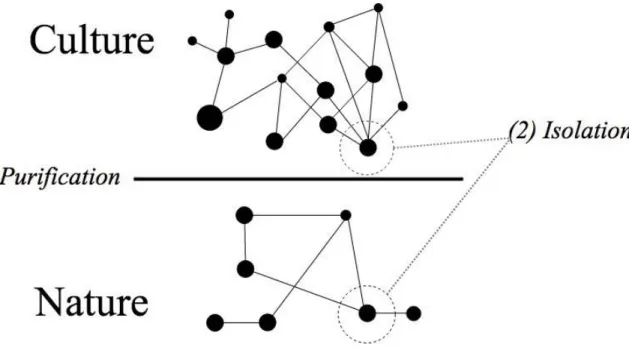
Figure 1.2 – Microscopy, Steps One and Two: Purification and Isolation………49
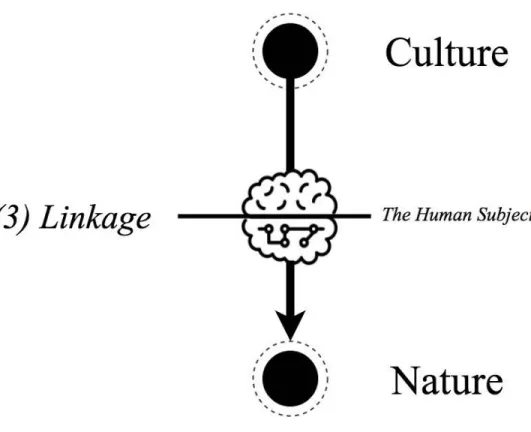
Figure 1.3 – Microscopy, Step Three: Linkage…..……….…………..51
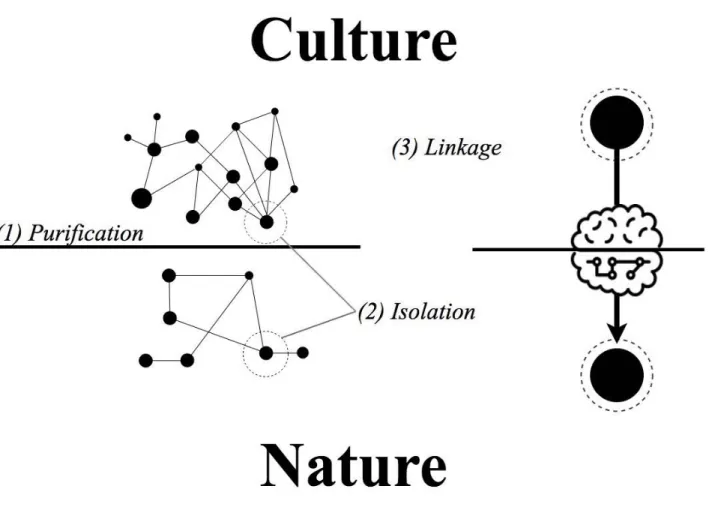
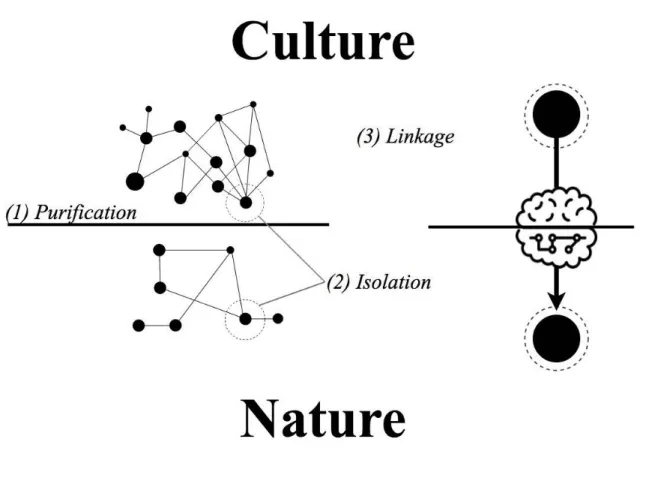
Figure 1.4 – Microscopy in Three Steps………...54
Figure 2.1 – “Robin’s Sinking Feeling II”….………...……….80
Figure 2.2 – “smile”……….……….…………...………..80
Figure 2.3 – Three Steps of Microscopy………86
Figure 2.4 – “Disciplines Defined by a Level of Analysis”.……….99
Figure 2.5 – Raup’s three axes of shell shapes………102
Figure 2.6 – Raup’s 1966 morphospace model of shell shapes………..……….103
Figure 2.7 – Waddington’s Landscape……….……….………..…………104
Figure 2.8 – Evolutionary Fitness Landscape………..…………105
Figure 2.9 – CSR’s Microscopy of Gods and Cognitive Fundament………..121
Figure 3.1 – Anomalies in McCauley’s Naturo-Cognitive Matrix………..158
INTRODUCTION
In the 2011 BBC documentary, Secrets of the Superbrands, presenter Alex Riley attended the opening of a London Apple store and observed a number of decidedly religious overtones.1 Apple’s blue-shirted employee “preachers,” he reported, had whipped the “glassy-eyed” technology fans into an “evangelical frenzy.” Riley suspected that there might be something deeply religious about Apple fandom, and with the help of modern neuroscience he was able to put this hypothesis to the test. Riley and his film crew found an Apple super-fan—World of Apple editor Alex Brooks—and enlisted a team of neuroscientists to study his brain. Brooks was placed into an MRI scanner and shown pictures of various mp3 players, computers, and
technological gadgets. The goal of the experiment, Riley reported, was to determine whether Apple products uniquely activated specific parts of Brooks’s brain that would indicate a religious dimension to his psychological devotion to the brand. According to the MRI images, Brooks was indeed “religious” about Apple fandom: his brain showed patterns of activity when viewing Apple products that were very similar to the brain activity of religious practitioners who were shown religious imagery. According to Dr. Gemma Calvert, the expert who led the experiment, technology brands “exploit the brain areas that have evolved to process religion.”2 But which “religious” part of Alex Brooks’s brain was being exploited?
1 Secrets of the Superbrands, presented by Alex Riley (BBC Productions, 2011), accessed March 5, 2016, http://www.bbc.com/news/business-13416598.
According to Calvert it was the visual cortex, the part of the brain that processes visual information. When Brooks was shown Apple products, Calvert reports in the BBC documentary, the MRI showed “much more activity in the visual cortex, [indicating] enhanced sort of visual attention.”3 In other words, Brooks focused more on pictures of Apple products than he did on other technological gadgets. Yet this should have come at no surprise. At the time of the MRI study, Alex Brooks was running an Apple news website, making a living tracking product releases, and trading rumors about upcoming designs. “Enhanced visual attention” should be expected in the brain of any expert who is engaged with an image related to his or her trade, whether he or she is a cell biologist, a fashion designer, or an airline pilot. Previous MRI research, in fact, had identified a specific “visual expertise” region of the visual cortex by scanning the brains of bird watchers and car experts. This specialized brain region responds to any sensory input that a person perceives as a distinct individual rather than as part of a general category—activating, for example, when a bird watcher is shown a bird but not when they are shown a car (unless they happen to be the rare double-enthusiast of both birds and cars).4
At most, then, Calvert’s experiment would seem to indicate that World of Apple editor Alex Brooks was interested in Apple products. Why, then, did she and BBC presenter Alex Riley together conclude that Apple was exploiting parts of the brain that evolved to process religion? In a separate study, they argued, a similar pattern was found in “very religious” persons who were shown religious versus nonreligious images. Religious people, in other words, have a “visual expertise” region in their brains just like Brooks does. At face value, it is no surprise that these “very religious” persons would perceive certain religious images to be distinct and
3 Ibid.
significant. Calvert and Riley’s discovery was not news. Yet, nonetheless, it went viral. In the weeks that followed the documentary’s release, hundreds of news websites and blogs reported on the neuroscientific link between Apple fandom and religion. The story was both provocative and reassuring. Science, it seemed, had objectively verified a widespread suspicion about Apple enthusiasts. An MRI scan had peered into Brooks’s innermost private thoughts and experiences and discovered religion, as if it had been lying there waiting in the back of his skull. This dissertation is about the twenty-first century quest to locate religion in the brain. It seeks to explain why, whenever we go searching for religion in the flesh, it is always in the first place we look.
Religion Made Flesh
The popular and sensationalist 2011 story that Apple products induce religious
experiences is one example of a twenty-first century genre that I will call “brain-based facts.” Every day, it seems, there are new discoveries about the cognitive underpinnings of social and cultural phenomena. Spiritual retreats, we are told, function by resetting the brain’s dopamine and serotonin levels;5 political conservatives are more emotional than liberals because they have hyperactive amygdalae;6 religion is, objectively speaking, an opiate of the masses.7 As Davi Johnson Thornton argues, such facts carry unique rhetorical force because they carry the
5 Ian Johnston, “Religious retreats can change the chemicals in your brain, discover scientists,” Independent, March 23, 2017, accessed March 27, 2017,
http://www.independent.co.uk/news/science/religious-retreats-chemicals-change-brain-scientists-jesuits-catholic-christian-ignatius-loyola-a7646436.html.
6 Sarah Fox, “The neuroscience of politics: what your brain says about your vote,” Science Blog, March 1, 2016, accessed March 2, 2016, http://thebrainbank.scienceblog.com/2016/03/01/the-neuroscience-of-politics-what-your-brain-says-about-your-vote/.
authoritative weight of science.8 Brain-based explanations of social groups or cultural practices carry with them the aura of revolutionary scientific discovery, as if the fundamental truth about political conservatives or spiritual retreats has finally been revealed. Yet these fundamental truths rarely tell us something new; they almost always have the effect of validating preexisting stereotypes and dominant social norms. We all knew that there was something religious about Apple fandom, but what was before just a fuzzy intuition is now an objective fact.
This peculiar quality of brain-based facts is an artifact of the modern nature/culture divide, or the separation of nature and culture into two distinct ontological zones. Bruno Latour defines this separation as ongoing intellectual work: moderns are surrounded by nature/culture hybrids, but we continuously purify them into natural or social entities. This, Latour argues, has been essential to the production of scientific facts. We create facts out of social and cultural materials—government funding, human languages, calibrated machines—and then purify them, assigning them to the order of nature as if they were untouched by human hands.9 Thus, after the epistemological rupture in Western thought known as the death of God, nature became a
substitute fundament—a realm of transcendent truths unmediated by human language or culture. From within this modern mindset, brain-based explanations of culture stand out as both uniquely powerful and delightfully subversive. They are powerful because they seem to anchor an element of culture to the fundamental order of nature, the realm that moderns associate with absolute truth. The naturalized brain operates in such explanations as an epistemological bridge between nature and culture. This helps to explain why brain-based explanations also carry the
8 Davi Johnson Thornton, Brain Culture: Neuroscience and Popular Media (London: Rutgers University Press, 2011), 4-5.
aura of being subversive. The magnetic fields and radio waves of Calvert’s MRI machine did not just pass through Alex Brooks’s skull, they also traversed modernity’s constitutional border. Brain-based explanations of culture always seem to be delivered with a burlesque wink. We moderns know that nature and culture are supposed to be kept separate, and so we are delighted by certain kinds of nature/culture hybrids—especially those that validate our stereotypes or worldviews.
This dissertation investigates recent efforts to render religion in the flesh. Over the past
two decades there has been a boom in biocognitive accounts of religion, representing a
substantial influx of concepts and methods from brain science into the field of religious studies.
The predominant biocognitive research program, known as the cognitive science of religion (or
CSR), has renewed the nineteenth-century project of naturalizing religion. CSR explains
religious concepts and practices as the byproducts of evolved psychological mechanisms that all
humans share. Religious beliefs are so powerful, CSR scholars argue, because they activate
certain hardwired cognitive systems that operate automatically, beneath the threshold of our
conscious awareness. (Thus, just as Alex Brooks does not need to turn on his brain’s visual expertise system—he just sees Apple products in finer detail—so too do religious persons believe certain concepts automatically.) Like the BBC’s Alex Riley and Dr. Gemma Calvert, CSR scholars believe that by studying the brain they are able to peer directly into the order of nature, discovering truths that are unmediated by culture. This, however, is a trap. This
Within the field of religious studies, the brain has become the focal point of heated
debates about the future of the discipline. In recent years, advocates of CSR have argued that
cognitive science represents the only legitimate way forward for religious studies, a field that
they argue has devolved into hyper-post-modernist jargon ever since it became apparent that
“religion” was an intellectual category with no essential meaning or referent. If religious studies reorganizes itself around the naturalized brain, these CSR advocates claim, it can finally
establish legitimate intellectual bedrock.10 These intellectual efforts are once again grounded in the distinctively modern notion of nature-as-fundament, which casts reductionism as the singular route towards absolute truth. This dissertation locates the brain as the latest in a series of
phenomena deemed essential to religion by self-declared intellectual reformers, interrogating the perennial attempt to locate a universal aspect of religion that transcends the specificities of language, culture, and history.
Finally, at an abstract level, this project is about Apollonian dreams and nightmares. In The Birth of Tragedy, Friedrich Nietzsche describes the origin of Greek tragedy as an outcome of the struggle between two opposing impulses or drives, each named a Greek god that represented them. Apollo, the god of rationality or reason, embodies the drive towards distinction and individuation. Dionysus, the god of irrationality and chaos, embodies the drive towards
transgression, excess, and the destruction of individuality. Thus the Apollonian drive is to draw and maintain boundaries, where the Dionysian drive is to transgress or destroy them. Although these two drives are in one sense opposed to one another, Nietzsche argued, they coexist within
any work of art or human soul, with one perhaps dominating the other.11 In its crude renderings, the Apollonian drive is often depicted as rigid, uncreative, and violent. This overlooks the important point that, for Nietzsche, Apollo is a dreamer. “As the god of all image-making
energies,” Nietzsche writes, Apollo is also the god of prophesy, dream-experience, and the “inner world of fantasy.”12 The Apollonian drive is to reach a higher truth, Nietzsche argues, the perfect version of our only partially-intelligible everyday reality. The risk of this drive, he continues, is that the dream-image may “become pathological, so that, in the worst case, the semblance would deceive us as if it were crude reality.”13 Thus the Apollonian drive is primarily a creative
impulse, one that dreams a more perfect representation of reality than is perhaps even possible. This drive only turns violent and rigid when it attempts to impose its dream-image over and against reality.
This dissertation is, on the one hand, about the Apollonian dreams of those who create brain-based explanations of religion. It is about the novel and persuasive explanatory strategies, concepts, and conclusions that twenty-first century Apollonians have constructed to make religion more intelligible. Out of respect for these dreamers I have attempted—perhaps
quixotically—to represent the works of CSR scholars, psychologists, theologians, and thinkers as generously and accurately as possible. This dissertation is therefore, in part, a salute to
Apollonian dreamers. On the other hand, this is a project about Apollonian nightmares. Set in the aftermath of post-modernity and the discursive turn in religious studies, it is about a group of
11 Raymond Guess and Ronald Speirs, introduction to The Birth of Tragedy and Other Writings, by Friedrich Nietzsche (Cambridge: Cambridge University Press, 1999), x-xi.
Apollonians who, by attempting to essentialize religion, have made an explanatory goal out of a categorical impossibility. In a critical, Dionysian mode I have attempted to demonstrate how biocognitive explanations of religion can turn pathological, attending to the artifice and erasure required to impose these dream-images onto an overly abundant and dynamic reality. This dissertation is therefore about the Apollonian nightmare of multiplicity and the cognitive fundament that was dreamt up to escape it.
Defining Religion
What do we mean when we say, “religion”? In colloquial use, the word refers to cultural traditions such as Christianity, Islam, Buddhism, and so on. However, as Craig Martin argues in his 2012 Critical Introduction to the Study of Religion, this colloquial meaning falls short as an official definition of religion.14 Definitions typically describe distinctive attributes of a thing that are common across all individuals. We define a tiger as a very large solitary cat with black stripes and a yellow-brown coat because, with very rare exceptions, all tigers share these attributes. This definition is helpful because it distinguishes a unique category of beings, since there are no other cat species with these distinctive features. This method of formulating a definition fails when applied to religion because, as many scholars of religion have observed, there are no features or attributes that are uniquely common to all of the traditions that we typically deem religions.15 Religious traditions themselves are too diverse and varied for there to be any universal feature. Even the most common elements that we associate with religion—supernatural agents, rituals, belief systems—are far from universal.
14 Craig Martin, A Critical Introduction to the Study of Religion (Sheffield, UK: Equinox, 2012), 1.
Furthermore, many elements that would seem uniquely common to religion are also found in traditions and communities that we would deem secular or non-religious. Liberalism and existentialism are belief systems. Many non-religious people believe in ghosts and endow supernatural status to athletes and celebrities. Ritualistic behavior is just as likely to be found at the doorway of a mosque or the locker room of a football stadium. This is sometimes referred to as the “football problem” of defining religion: a definition of religion that is broad enough to encompass everything we colloquially consider religious will inevitably include so-called secular things, like football; conversely, a definition narrow enough to exclude secular things will
necessarily foreclose a number of religious traditions.
There is a long tradition in religious studies of responding to this definitional impasse by proposing a new definition of religion that somehow cuts through these issues and arrives at the true essence of religion. Others have taken a different approach, focusing instead on the history of the very category of religion. This group of scholars ushered in what has been called the “discursive turn” in the study of religion, a shift based on the understanding that the word “religion” has no essential referent. It is, rather, an intellectual category that has shifted over the course of Western intellectual history in relation to various events, discoveries, social
institutions, power dynamics, and intellectual projects.
“Religion” is a relatively recent term. It emerged in the sixteenth century as an anthropological tool for describing the various peoples encountered during European
inventories of cultural topics that could be compared and ordered.16 Meanwhile, amidst the European wars of the sixteenth and seventeenth centuries following the Protestant Reformation, intellectuals at home were seeking out solutions to what they saw as the categorical problem of religious disputes: that contradicting claims about absolute truth do not have any transcendent criteria for solution.17 Once the category of religion migrated back to European metropoles, it was taken up by seventeenth-century peacemakers who wished to confine religion to an element of culture like any other. The recent fissures in European Christianity and the discovery of non-European peoples had created a crisis of intellectual authority. This was solved, as Peter Harrison documents in “Religion” and The Religions in the English Enlightenment, by recasting religion to fit emerging rationalist methods of investigation. “Religion” was transformed to be about beliefs, and the truthfulness of conflicting beliefs could now be judged by the recent and much-vaunted scientific method.18
Due to these and other social and economic factors, by the late seventeenth century European intellectuals generally shared the concept of “natural religion,” defined as a universal and innate set of beliefs and practices across the globe. Peoples around the world were thought to have religion, though only some beliefs could be right. During this period the anthropological project of describing natural religion highlighted similarities, sought out universal truths, and explained away differences as either historical idiosyncrasies or the results of degeneration.19 As
16 Jonathan Z. Smith, “Religion, Religions, Religious,” in Critical Terms for Religious Studies, ed. Mark Taylor, (Chicago: University of Chicago Press, 1998), 269-271.
17 J. Samuel Preus, Explaining Religion: Criticism and Theory from Bodin to Freud (Oxford: Oxford University Press, 1996), xiv.
18 Peter Harrison, “Religion” and the Religions in the English Enlightenment (Cambridge: Cambridge University Press, 2002), 2.
Charles Taylor argues, “natural religion” emerged in concert with new conceptions of social life that would gradually come to be associated with “secularism.” The “secular” was a category originally developed within Latin Christendom to describe profane time, in contrast with the eternal. Over the course of the seventeenth century, the lower “secular” order of this Christian profane/transcendent dyad came to be understood as a realm that needed good social and political order based on rational principles. Some religion was thought to be helpful for this project, so long as it was purged of superstition and fanaticism.20
During the eighteenth century, the search for natural religion shifted to naturalistic investigation, which utilized similar methods but transposed religion from the supernatural into the realm of natural history.21 This shift can be seen in two books published a century apart. An important formulator of “natural religion” was Lord Herbert of Cherbury. In his 1624 book On Truth, as it is Distinguished from Revelation, the Probable, the Possible, and the False, Herbert argued that certain “common notions” of religion could be validated as universal and therefore authentic: namely, that God is eternal, good, just, wise, and blessed.22 Just over a century later in 1757, David Hume argued in his Natural History of Religion that religion is the product of human psychology. In our uncivilized, “barbarous” natural state humans faced brutal conditions and were subject to the chaos of storms, disasters, disease, and attacks. Humans, Hume argued,
20 Charles Taylor, “The Polysemy of the Secular,” Social Research 76, no. 4 (Winter 2009): 1143-1150.
21 Smith, “Religion, Religions, Religious,” 273.
anthropomorphize that which we do not understand; we managed our fear of the unknown by attributing random events to divine agency.23
Over the course of the eighteenth and nineteenth centuries, the Western category of “religion” continued to develop in concert with other modern concepts like “science,” “magic,” and “modernity” itself. In his 2004 book Making Magic: Religion, Magic, and Science in the Modern World, Randall Styers documents the co-ideation of “religion,” “science,” and “magic,” highlighting three profound epistemic changes that shaped these modern intellectual categories:
First, through the course of the Reformation and the Enlightenment, religion came increasingly to be seen as properly a matter of the private intellect, a view deeply informed by generations of religious reform—and particularly by Protestant polemics against Catholic ritual and devotional practices. Coupled with this development was the astounding proliferation of capitalism and modern science, social practices sharing related forms of mechanistic and rationalized manipulation of the material world. Finally, the late nineteenth century saw the consolidation of European control over much of Asia and Africa, and colonial conquest and exploitation gave rise to new forms of scholarly analysis of “primitive” culture.24
Thus numerous aspects that seem definitional to religion—like, for example, sacredly held beliefs about things beyond this world—either came into being or became uniquely associated with religion at specific historical intersections of political, social, and economic power. Even our commonsense understanding of contemporary “world religions”—a list that usually includes Judaism, Christianity, Islam, Buddhism, Hinduism, and Confucianism—is rooted in the
particulars of history. As Tomoko Masuzawa documents in The Invention of World Religions, this conceptual framework was initially developed in the nineteenth-century European academy
23 David Hume, Dialogues and Natural History of Religion, ed. J. C. A. Gaskin (Oxford: Oxford University Press, 1993), 136-142.
and quickly became a means of differentiating, totalizing, and depoliticizing non-European cultures.25
It is clear that “religion” is not a word that points to a stable thing in the world, like a tiger or a kitchen sink. One of the most important outcomes of the discursive turn in religious studies is the understanding that there is no essence to religion—no universal feature or fundamental element that anchors this word to the world. “Religion,” rather, is a shifting category that has been deployed to describe cultural phenomena, social groups, mental states, and material practices in various configurations according to the particular aims and interests of those doing the defining. Like “novella” and “retail,” “religion” can be a useful term for dividing up the world, but it lacks cross-cultural and trans-historical specificity because of its
idiosyncratic modern European origins. Thus, as Talal Asad famously demonstrated in his critique of Clifford Geertz’s proposed universal definition of religion, it would be a category mistake to attempt any definition of all religions across cultures and historical periods.26 This would be like entering a heated debate about whether an ancient papyrus scroll was a novel or a novella: anachronistic, and not particularly useful.
Another significant consequence of the discursive turn is the recognition that our contemporary understanding of religion is itself a product of history. Drawing on the
contemporary philosophy of science, Peter Harrison points out that objects of study are shaped to a large degree by the techniques and assumptions that are used to investigate them. “Religion,” he argues, was cut to fit the scientific method. It was constructed along rationalist lines, for
example, with a focus on beliefs that could be compared and evaluated based on their
correspondence to truth.27 Barbara Herrnstein Smith, too, underlines how the category of religion is often constructed selectively for particular purposes. “It is not clear that the term ‘religion’ names a coherent set of phenomena at all,” she argues, or whether it is not “a shifting artifact of the various disciplines and discourses that take it as their nominal subject.”28
As David Chidester observes, recent histories of the study of religion—including works by Harrison, Preus, and other historians of religion that I have cited—have been preoccupied with the internal intellectual development of the category within European academic
disciplines.29 Yet, as Chidester and other scholars have observed, the discipline of comparative religion emerged not just out of the armchair observations of Enlightenment thinkers, but also out of a violent history of colonial conquest and domination. The study of religion, Chidester argues, was entangled with “power relations of frontier conflict, military conquest and resistance, and imperial expansion.”30
A number of alternative histories of religion have demonstrated the ways that European theories of religion were embedded in the conquest and control of colonized populations, as well as the reification and othering of so-called “world religions.”31 Curators of the Buddha, for
27 Harrison, “Religion” and the Religions in the English Enlightenment, 1-3.
28 Barbara Herrnstein Smith, Natural Reflections: Human Cognition at the Nexus of Science and Religion (New Haven: Yale University Press, 2009), 27.
29 David Chidester, Savage Systems: Colonialism and Comparative Religion in Southern Africa (Charlottesville, VA: University Press of Virginia, 2006), xiii.
30 Ibid.
example, a collection of essays edited by Donald S. Lopez Jr., demonstrates how a variety of Buddhisms were not passively discovered by European explorers and sinologists, but actively invented under distinct colonial conditions ranging from European metropoles to Tibet.32 A number of scholars have similarly described Hinduism as a religious tradition invented within the British colonial context.33 David Chidester warns, however, against giving too much weight to European imperial ambitions. Religious categories were not purely invented by colonial agents, he reminds us, but rather “emerged through complex interrelations, negotiations, and mediations between alien and indigenous intellectuals.”34 The academic study of religion involved exchanges and relationships, in other words, between European scholars, colonial agents, and so-called indigenous peoples, as well as a variety of other actors and institutions, each with its own sets of interests and powers.35
(Cambridge: Harvard University Press, 2010), 145-157; and Julie Kalman, Orientalizing the Jew: Religion, Culture, and Imperialism in Nineteenth-Century France (Bloomington, IL: Indiana University Press, 2017).
32 Donald S. Lopez Jr., ed., Curators of the Buddha (Chicago: University of Chicago Press, 1995).
33 See, for example, Robert E. Frykenberg, “Constructions of Hinduism at the Nexus of History and Religion,” Journal of Interdisciplinary History 23, no. 3 (1993): 523-550; Robert A. Yelle, The Language of Disenchantment: Protestant Literalism and Colonial Discourse in British India (Oxford: Oxford University Press, 2013); Gauri Viswanathan, “Colonialism and the Construction of Hinduism,” in The Blackwell Companion to Hinduism, ed. Gavin Flood (Malden, MA:
Blackwell, 2003); and Esther Block, Marianne Keppens, and Rajaram Hedge, eds., Rethinking Religion in India: The Colonial Construction of Hinduism (London: Routledge, 2010).
34 David Chidester, Empire of Religion: Imperialism and Comparative Religion (Chicago: University of Chicago Press, 2014), 18.
Thus, as a category, “religion” has been tooled for a number of tasks in a variety of circumstances. For sixteenth-century missionaries “religion” was an anthropological repository for cataloging encounters with the New World; for early Enlightenment intellectuals it was a means to oust absolute truth claims from the social order; for self-declared modernists it served as a foil for distinguishing between old and new ways of thinking and acting; in the hands of colonial agents it was a tool for managing social bodies; for indigenous groups it has been a means of gaining political recognition; and in contemporary universities besieged by budget cuts it has helped to justify an academic field as a seemingly unique object of study.36 This history helps to explain religion’s distinct double-valence in our language as a something that is simultaneously particular and ubiquitous. On the one hand, religion seems to involve almost every dimension of human life and experience: beliefs, rituals, identity formations, material practices, clothing, commodities, ethical propositions, origins stories, textual practices, types of space, and all sorts of things dead, alive, and in-between. Simultaneously, and in keeping with the rationalist comparative method that helped shape it, religion appears to be shot through with core properties that can unite this sprawl of features that vary so widely across time and space.
As Wilfred Cantwell Smith argues in his pioneering 1978 book The Meaning and End of Religion, the evolution of the concept of religion was a process of reification, of “mentally making religion into a thing, [and] gradually coming to conceive it as an objective systematic entity.”37 The shape of this objective-seeming entity—of religion as we know it today—was
36 Some scholars have called for abandoning the term religion all together, though this debate goes beyond the scope of this dissertation. See, for example, Timothy Fitzgerald, The Ideology of Religious Studies (Oxford: Oxford University Press, 2000).
drawn gradually by successive generations of self-interested parties. Like a political district shaped by the gerrymandering of a previous generation, “religion” is an artificial configuration that silently perpetuates itself by seeming real.
Religion may be a product of reification but, as Daniel Dubuisson argues in his 2007 book, The Western Construction of Religion: Myths, Knowledge, and Ideology, it has also in a sense become real. Once this complex intellectual construction was formed, Dubuisson argues, it became a network of ideas, relationships, and practices that played a foundational role in the constitution of Western culture.38 To point out that a particular ideology about religion—say, that religion is fundamentally about privately held beliefs—is socially constructed is not to say that it is not real. Ideology can produce practices, social structures, and sincerely held beliefs. Given these circumstances, Dubuisson argues, the study of religion requires nuance. Religion as it is practiced and understood today must be acknowledged as real, but we cannot consider it as we would other intellectual or artistic creations of the west—such as existentialism or cubist painting—because it has already been inculcated in a universalist anthropological paradigm to produce norms, models, and reference points by which all other cultures can be measured and evaluated.39
For the purposes of this dissertation I will endorse Dubuisson’s description of religion as a reified intellectual category that configures bodies, institutions, discourses, and subjects. What religion lacks in essence it makes up for in effects; it is as socially constructed as a brick wall (very much so) and as real as those who dream it. Based on the insights of the discursive turn in religious studies, one of this project’s operating assumptions is that essentializing religion
involves rhetorical work. Since there is no fundamental attribute, core elements, or ultimate truth about religion, those who attempt to assign religion an essence will inevitably face an array of exceptions and anomalies that need to be organized and contained. To essentialize religion is to select, curate, exclude, police, and hunt. Moreover, in our particular intellectual moment, those who essentialize religion do so against the grain of prevailing scholarship. Over the course of researching biocognitive texts I have attended to this kind of rhetorical work, since this offers insights into the ideological construction of religion.
Religion, Science, and the Conflict Thesis
There is a widespread notion in contemporary Western society that there is a single, universal scientific method and that, when it is deployed properly, this method will produce pure truths that perfectly reflect the state of nature. This conception of science is significantly flawed for three reasons. First, it ignores the diversity of scientific practice as it occurs “on the ground.” As contemporary historians and anthropologists of science have documented, the disciplines that we label scientific involve such a wide range of theories, methods, vocabularies, communities, technologies, and virtues that they cannot be coherently unified into any single epistemology or metaphysics. The sciences, in other words, are too heterogeneous for there to be a single
scientific method. Second, this understanding of science overlooks the fact that scientific
forms of knowledge to map the various phenomena that surround us.40 Despite these flaws, contemporary debates about religion and the brain revolve around the understanding that science, done properly, is a method for revealing the absolute truths of nature. This is in part due to
modern assumptions about the nature/culture divide, which I will discuss in detail in chapter one, and in part due to the legacy of a nineteenth-century ideology known as the “conflict thesis.”
Randall Styers describes in Making Magic how, during the latter decades of the nineteenth century, a range of Western thinkers struggled to explain and define the modern cultural formations around them.41 One key binary that emerged during this period was that of religion and science, which appeared to Western thinkers as antagonistic foils of one another. Frank M. Turner notes that between 1750 and 1870—from the publication of the French Encyclopédie to the works of Nietzsche and Darwin—the perceived relationship of science and religion in the West passed from “fruitful co-operation and modest tensions to harsh public conflict, a situation that many observers have since come incorrectly to assume to be a
permanent fact of modern cultural life.”42 According to Turner, this “conflict thesis,” or the view that religion and science are fundamentally opposed institutions competing for power and
adherents, emerged within particular cultural conditions in Victorian Britain. These conditions
40 See, for example, Steven Shapin, Never Pure: Historical Studies of Science as If It Was Produced by People with Bodies, Situated in Time, Space, Culture, and Society, and Struggling for Credibility and Authority (Baltimore: Johns Hopkins University Press, 2010); Peter Galison and David J. Stump, eds., The Disunity of Science: Boundaries, Contexts, and Power (Stanford: Stanford University Press, 1996); and Paul Feyerabend, Conquest of Abundance: A Tale of Abstraction Versus The Richness of Being, ed. Bert Terpstra (Chicago: University of Chicago Press, 1999).
41 Styers, Making Magic, 25.
included the widespread generational rejection of British theologies, in which natural theologians combined intricate theological explanations of nature with arguments supporting the
contemporary British social and political status quo; the recent expansion of public education, which created a new turf for conquest; and an intellectual atmosphere of social and political confidence made possible by an increasingly powerful publishing industry.43
The conflict thesis quickly took off and became widely popular in late nineteenth-century Western thought. It was popularized by two books—John William Draper’s 1874 History of the Conflict between Religion and Science and Andrew Dickson White’s 1896 A History of the Warfare of Science with Theology in Christendom—that both criticized organized religion and celebrated science, framing the conflict between them as one that would have an inevitable victor.44 Colin A. Russell outlines four chief issues that were considered to be in contention. First, religion and science were thought to be epistemologically at odds. It became increasingly clear during the late nineteenth century that scientific knowledge could no longer be seamlessly integrated into religion. Just as Copernicus had displaced the earth from the center of the solar system, so too were a number of eighteenth- and nineteenth-century sciences producing accounts of nature that proved scripture to be inaccurate. Thus religion and science were considered to be in a fundamental conflict over issues like the age of the earth and the origins of humanity.45
Second, religion and science were thought to promote fundamentally different
methodologies for studying the world. Science is based on “facts,” the longstanding theory goes,
43 Ibid., 87-110.
44 Colin A. Russell, “The Conflict of Science and Religion,” in Science and Religion: A
Historical Introduction, ed. Gary B. Ferngren (Baltimore: John Hopkins University Press, 2002), 3-4.
where religion is concerned with matters of “faith.” Naturalism, Russell points out, goes back to the Middle Ages, but it was revived in nineteenth-century Britain as a means to deny the right of the church to interfere with the progress of science by introducing theological considerations into scientific debates.46 This division would also serve religionists well, as it carved out a special private realm where science could stake no claim. Thus the notion that religion concerns private matters of faith, where science involves public discourse about facts, amounted to something of an epistemological detente. As I will demonstrate in chapter four, biocognitive accounts of religion have provoked strenuous critiques from theological quarters in part because they trespass this peacetime border. The third potential zone of conflict between religion and science is that of ethics. Many Victorians opposed Darwin for fear that his theories would lead to the law of the jungle, and still today many critics consider science to be fundamentally devoid of moral or ethical value. Finally, religion and science are thought to compete for social power, jostling for adherents to their mutually exclusive worldviews.47
The conflict thesis is widely perceived by contemporary historians to be an inadequate historical tool, “so blunt,” in Colin Russell’s words, “that it is more damaging than
serviceable.”48 The conflict thesis overlooks and obscures the diversity within, and overlap between, science and religion. It ignores, for example, that religious elements were integral to the early modern study of nature in England, where natural history was frequently pursued from religious motives, based on religious presuppositions, and internally ordered according to
theological principles of design.49 The conflict thesis also depends on monolithic conceptions of religion and science. This overlooks the fact that, like any other social institutions, both religion and science incorporate practices involving imported knowledge. Religious traditions often involve annual cycles of rituals coordinated with the solar year, and must therefore have recourse to astronomical knowledge; scientific communities have a long history of modeling aspects of religious practice, such as the use of “witnessing” to establish the public character of early experimental science.50 In short, the conflict thesis depends on overly simplistic models of two heterogeneous and entangled entities.
Nonetheless, the conflict thesis lingers today. As I will discuss in chapter four, the notion that science and religion are monolithic opposing forces can support seemingly disparate
teleological narratives. Religion’s debunkers and defenders alike portray the brain as an epistemological battle zone between the two entities. For naturalistic debunkers, the conflict thesis renders religion singular, something that can be naturalized in one final blow. For religion’s defenders, the conflict thesis helps to depict science as a singular, aggressive enemy that can be prevented from capturing religion’s true essence. Others consider religion and science to have reached a detente, endorsing Stephen Jay Gould’s notion of “non-overlapping
magisteria,” which holds that religion and science simply occupy different turfs: science concerns the empirical constitution of the universe, where religion concerns ethical values and the spiritual meanings of life.51 Yet, as John Hedley Brooke points out in his groundbreaking
49 Peter Harrison, “‘Science’ and ‘Religion’: Constructing the Boundaries,” The Journal of Religion, 86 (2006): 84-85.
50 Richard G. Olson, Science and Religion, 1450-1900 (Baltimore: Johns Hopkins University Press, 2004), 4-5.
Religion and Science: Some Historical Perspectives, this still reifies religion and science, protecting religion from naturalistic explanation by limiting it to private beliefs and values.52
In the writing of this dissertation I have assumed that there is no fundamental relationship between religion and science because each entity is too complex to lend itself to any simplistic historical meta-narrative. Nonetheless, the conflict thesis resembles the category of religion in the sense that it has tangible effects. One of the central arguments of this dissertation is that contemporary biocognitive explanations and defenses of religion are still configured by the conflict thesis, committed as they are to the notion that religion and science are monolithic and oppositional entities.
Epistemological Pluralism and the Richness of Being
In his unfinished manuscript, Conquest of Abundance: A Tale of Abstraction Versus the Richness of Being, the late philosopher Paul Feyerabend argues that Western scientists and philosophers are on a “search for reality” based on a metaphysics of concealment.53 They believe that the important ingredients of the world are hidden, Feyerabend argues, and that these
ingredients form a more genuine and uniform reality that underlies the chaotic world of everyday experience. In Nietzsche’s terms, Western metaphysics reflects the Apollonian dream of a
higher, more perfect order of truth. Feyerabend criticizes what he calls “unitarian realism,” or the metaphysical proposition that there is an absolute reality that conforms to a single, coherent order:
So far a unitarian realism claiming to possess positive knowledge about Ultimate Reality has succeeded only by excluding large areas of phenomena or by declaring, without
52 John Hedley Brooke, Religion and Science: Some Historical Perspectives (Cambridge: Cambridge University Press, 1991), 42-51.
proof, that they could be reduced to basic theory…. An ontological (epistemological) pluralism seems closer to the facts and to human nature.54
The notion of an absolute, coherent, and more genuine reality, in other words, does not match with our existing knowledge of the universe. It rather seems to be a dubious metaphysical proposition assumed by self-declared discoverers of ultimate truths.
This dissertation investigates how concepts from the contemporary brain sciences have been mobilized in the search for the ultimate reality of religion. Like Feyerabend’s unitarian realists, today’s biocognitive theorists of religion claim to possess positive knowledge about the fundamental truth of religion, but they succeed only by first essentializing religion—excluding “large areas of phenomena” in the process—and then declaring that their cut-to-fit version of religion can be reduced entirely to the workings of the brain. One of the main tasks of this dissertation is to show how contemporary conversations about religion and the brain are structured around a shared epistemological framework. This framework, which I trace back to the beginnings of the intellectual era of modernity, is based on numerous faulty assumptions: that religion and science each have an “essence,” or a concealed set of intrinsic properties that span their iterations across time and space; that nature and culture are distinct ontological zones; that the scientific study of nature can yield absolute truths that reflect genuine reality as it exists beyond the surface; and that reductionist explanations, which identify underlying causal mechanisms that give rise to a phenomenon, are more valuable than any other form of interpretation or description.
Contemporary cognitivists are by no means the first to seek out the ultimate truth of religion by attempting to look beyond mere appearances. In part due to its inherent categorical ambiguity, religion has long been approached as a messy phenomenon in need of clearing up.
Various phenomena have been deemed essential to religion over the past three centuries: religious belief, understood as a pre-discursive and qualitatively unique mental state, was
emphasized by nineteenth-century theologians and scholars including William James;55 religious experience, variously known as “pure consciousness,” “mystical experience,” or “experience of the holy,” was considered a transcendent, pan-cultural phenomenon by perennial philosophers of the nineteenth- and twentieth-centuries;56 and psychological neurosis was famously posited by Freud as the true underlying cause of religion’s patterned rites and ceremonies.57 These are but a few examples of the impulse in Western thought to identify one element of religion that spans and animates all of the world’s religious traditions.
Such accounts posit a truth to religion that transcends the specificities of language,
culture, and history, and they often do so by positing a pre-discursive, inner cognitive state where religion might reside. For Donald Lopez, our lingering “belief in belief” leads religion to be “represented as something that derives from belief, as something with external manifestations that can ultimately be traced back to an inner assent to a cognitive proposition, as a state of mind that produces practice.”58 This is problematic, he argues, because it isolates just one element of religion that is specific to modern Protestant Christianity and privileges it as genuine and fundamental. Robert Sharf similarly argues that the rhetoric of religious experience “tacitly posits a place where signification comes to an end… a substantive if indeterminate terminus for
55 Donald S. Lopez Jr., “Belief” in Critical Terms for Religious Studies, ed. Mark Taylor, (Chicago: University of Chicago Press, 1998), 21-35.
56 Robert H. Sharf, “Experience” in Critical Terms for Religious Studies, ed. Mark Taylor, (Chicago: University of Chicago Press, 1998), 94-116.
the relentless deferral of meaning.”59 This ignores evidence that human experiences—including those deemed “religious” or “mystical”—are shaped by a person’s cultural environment,
intellectual training, personal history, language, worldview, and other particular local factors. Against this impulse to essentialize religion, I approach religion and the brain with a constructivist, non-reductive intellectual framework that calls for epistemological pluralism in light of the multiplicity of being. Since this framework informs my analysis of—and proposed alternatives to—biocognitive theories of religion, I will briefly define some key terms. In describing my approach as constructivist, I follow Barbara Herrnstein Smith, who defines constructivism as a
particular way of understanding the relation between what we call knowledge and what we experience as reality. In contrast to the understanding of that relation generally referred to as ‘realism’, constructivist accounts of cognition, truth, science and related matters conceive the specific features of what we experience, think of and talk about as ‘the world’ (objects, entity-boundaries, properties, categories and so forth) not as prior to and independent of our sensory, perceptual, motor, manipulative and
conceptual-discursive activities but, rather, as emerging from or, as it is said, ‘constructed by’ those activities… In contrast to referentialist views of language, constructivist accounts of truth conceive it not as a matter of a match between, on the one hand, statements or beliefs and, on the other, the autonomously determinate features of an altogether external world (Nature or Reality), but, rather, as a situation of relatively stable and effective mutual coordination among statements, beliefs, experiences and practical activities.60
Constructivism, Herrnstein Smith continues, recognizes the mutual determination of concepts, perceptual-cognitive dispositions, and material practices. Knowledge, according to this view, does not amount to the simple discovery of pre-existing truths. Facts are not stumbled upon, like
59 Sharf, “Experience,” 113.
chairs in dark kitchens, but are rather made by social collectives with shared ideas, assumptions, definitions, interpretive training, systems of measurement, and epistemic values.61
In the writing of this dissertation I have approached biocognitive research under the assumption that knowledge is made, since this facilitates the investigation of facts as the products of human imagination, cooperation, observation, and labor. To be clear, however, describing a particular fact as constructed is not—from the constructivist’s perspective—a damning accusation. For the constructivist, all knowledge is made. The intellectual value of a statement or theory, therefore, cannot be determined based on its correspondence to some separate, fundamental reality. One must turn to other modes of evaluation, such as, for example, analysis of a theory’s internal coherence or its correspondence to existing data.
I have also approached this project with a non-reductive perspective towards religion. In following with Manuel Vásquez, I consider my epistemological framework non-reductive insofar as it highlights “complexity, inter-level connectivity, emergence, situated knowledge, and relative indeterminacy and openness against monocausal, unidirectional, and totalizing explanatory schemes.”62 Reductionism privileges “downward explanation,” or the description of phenomena as the emergent products of smaller, simpler relationships. Prominent advocates of reductionism conceive of the universe as an ontological ladder that becomes more complex as one moves upwards, from particles to molecules, cells, organisms, social groups, and so on. The most robust explanations, these advocates claim, are those that reduce a phenomenon from one level to the
61 Ibid., 8. See also Steven C. Ward, Reconfiguring Truth: Postmodernism, Science Studies, and the Search for a New Model of Knowledge (New York: Rowman and Littlefield Publishers, Inc., 1996); and Jan Golinksi, Making Natural Knowledge: Constructivism and the History of Science (Chicago: University of Chicago Press, 2005).
simpler processes of the level beneath it. For example, the blooming of a flower might be reduced to the biological operations of cells, and the operation of cells might be further reduced to the language of chemistry or physics.
While reductionism is a useful approach for describing many simple physical systems, it also forfeits attention to a variety of other causal dynamics. Large and complex phenomena can exert downward force, for example, as when social institutions organize and shape individual bodies. Furthermore, current understandings of the universe indicate that causality cannot be simplified to the deterministic interaction of isolated forces. As theoretical physicist and philosopher Karen Barad argues, it would be a mistake to assume that the primary ontological unit of being is an independent object with inherent properties, since any such unit is already influenced and determined by other forces. Rather, Barad argues, our universe is composed of entangled phenomena—of ontologically inseparable, inter- and intra-acting agencies.63 I therefore approach religion with the understanding that the concepts, beliefs, practices, and communities that we associate with the term are dynamically co-determined, forming complex causal networks that defy the simplistic model of a uni-directional ontological ladder. To be clear: reductionism is a valuable explanatory approach that is useful for explaining particular elements of religious phenomena. I have written this dissertation not as an anti-reductionist, but rather as a pluralist who views reductionism as one approach among many.
This project describes the ongoing production of unitarian metaphysics against—and within—the plurality of being. I am indebted to Mary-Jane Rubenstein, whose Worlds Without End: The Many Lives of the Multiverse has served as a model for investigating what Rubenstein
calls “multiplicity,” or the creative interplay of order and chaos, of unity and difference, and of singularity and plurality.64 I approach scientific truth claims as sites of such interplay.
As Victoria Pitts-Taylor notes, philosophies of science have until recently fallen into two camps: “naturalized philosophy,” which treats empirical research as more or less neutral
information; and social constructionism, which treat scientific concepts and objects as
themselves the products of discourse.65 While social constructionists do not deny the existence of material realities, they nonetheless adopt what Barbara Herrnstein Smith calls a “professional ontological agnosticism,” bracketing—to the best of their ability—any assumptions about reality as it “really is.”66 Constructivists like Herrnstein Smith may often point to the complex plurality that a particular theory or hypothesis might overlook, but done carefully this form of critique does not make any ontological commitments; it makes no claims “beyond” our constructions of truth but rather indicates the failure of the critiqued hypothesis to adequately account for a certain set of additional truths.
Yet it has become increasingly clear, Pitts-Taylor notes, that one need not choose between uncritical scientific realism and ontological agnosticism.67 As Diana Coole and Samantha Frost argue, one can “accept social constructionist arguments while also insisting that the material realm is irreducible to culture or discourse and that cultural artifacts are not arbitrary vis-a-vis
64 Mary-Jane Rubenstein, Worlds without End: The Many Lives of the Multiverse (New York: Columbia University Press, 2014), 18-19.
65 Victoria Pitts-Taylor, The Brain’s Body: Neuroscience and Corporeal Politics (Durham, NC: Duke University Press, 2016), 19.
nature.”68 Outlining of his epistemology of pragmatism, William James argues that truth is not an inherent property of an idea, but rather a process. “Truth happens to an idea,” writes James, it “becomes true, is made true by events.”69 I agree with James, but would add, following Barad, that this process entangles discourse and materiality at once. In this dissertation I approach religion and the brain in similar terms: as dynamic phenomena consisting of both culture and flesh.
Thesis and Outline
Drawing on original research and building upon existing scholarship from science studies, religious studies, and critical theory, this dissertation argues that contemporary biocognitive accounts of religion are configured by a nineteenth-century epistemological framework that divides nature and culture into two distinct ontological zones. The rhetorical power of brain-based reductionism, the search for religion’s cognitive essence, and the fear that the brain sciences will explain religion away, I argue, are all intellectual artifacts of modernity.
This dissertation contributes to contemporary scholarship in two important ways. First, it demonstrates how preexisting ideologies about religion and science have reproduced themselves in contemporary scholarship by shaping researchers’ investigative methods, explanatory objects, and perceptions of new data. Second, and relatedly, it nuances contemporary conversations about interdisciplinary collaboration between the sciences and the humanities by interpreting religion as a shifting site of dynamic interplay between biology and culture.
Chapter one explores how the brain has been conceptualized within a series of
68 Diana Coole and Samantha Frost, “Introducing the New Materialisms,” in New Materialisms: Ontology, Agency and Politics, ed. Samantha Frost and Diana Coole (Durham, NC: Duke University Press, 2010), 27.
first century efforts to naturalize elements of human subjectivity, including beauty, sexuality, and religious belief. Building on concepts from Friedrich Nietzsche, Michel Foucault, and Bruno Latour, I argue that these efforts are rooted in a modern conception of the human subject that situates the brain as a bridge between the otherwise divided realms of nature and culture. I then analyze one particular brain-based fact—the claim that analytic thinking promotes religious disbelief—and trace its construction back to the laboratory, demonstrating how this modern conception of the brain enabled a team of psychologists to smuggle ideologies about religion into the seemingly objective realm of neuroanatomy.
The second chapter analyzes the cognitive science of religion (CSR), the recent and most prominent biocognitive research program in the field of religious studies. I demonstrate how CSR’s paradigmatic model of an ancient, modular human brain enables CSR scholars to construct a “cognitive fundament”—a natural substrate where the absolute truth of religion resides. I also investigate CSR advocates’ calls for the “vertical integration” of religious studies into a single regime of universal knowledge, framing this quest for “consilience” as Apollonian nostalgia for the transcendent truths of a bygone era.
scholars attend to the intellectual histories informing their objects of analysis.
In chapter four I turn from biocognitive explanations of religion to theological defenses against biocognitive reductionism. I compare and contrast two distinct intellectual strategies for defending religion. The first major theological responses to CSR defended religion’s status as an irreducible, sui generis phenomenon and accused biocognitivists of epistemological overreach. More recently, a second group of authors have argued that the scientific concept of
neuroplasticity legitimizes religion by proving that it is physically—and therefore
ontologically—real. Analyzing four representative texts, I frame these two rhetorical strategies as symmetrical responses to the perception that biocognitive explanation threatens religion’s transcendence: one that defends religion’s place in the heavens; and another that grafts transcendence down onto the earth.
CHAPTER 1: NATURE, CULTURE, AND THE HUMAN SUBJECT
At the time of this writing, a Google news search of the two keywords “religion” and “brain” yields over a half-million results. Every day, it seems, there are new discoveries about the biocognitive underpinnings of religion. Over just the last three days, the news media tells me, scientists have discovered three new facts about religion: that spiritual retreats reset the brain’s reward systems by changing dopamine and serotonin levels;1 that atheists and highly religious people are together the least likely to fear death;2 and that, as far as your brain is concerned, religion is a lot like an opiate.3
Religion is just one of the topics addressed by the recent boom of popular neuroscience. Discoveries about the brain are now regularly invoked to sell new secrets of sex, health, and economic success. Popular neuroscience continually promises breakthrough insights into human identity and experience, frequently explaining people in terms of “brain types.” Psychopaths, we
1 Ian Johnston, “Religious retreats can change the chemicals in your brain, discover scientists,” Independent, March 23, 2017, accessed March 27, 2017,
http://www.independent.co.uk/news/science/religious-retreats-chemicals-change-brain-scientists-jesuits-catholic-christian-ignatius-loyola-a7646436.html.
2 “Atheists and highly religious people fear death the least: study,” Deccan Chronicle, March 26, 2017, accessed March 27, 2017,
http://www.deccanchronicle.com/lifestyle/health-and-wellbeing/260317/atheists-and-highly-religious-people-fear-death-the-least-study.html.