DROPOUT RISK FACTORS PREDICTING HISPANIC EIGHTH GRADE STUDENTS’ SELF-PERCIEVED POSSIBILITY OF
GRADUATING FROM HIGH SCHOOL
Diana Bethard Lys
A dissertation submitted to the faculty of the University of North Carolina at Chapel Hill in partial fulfillment of the requirements for the degree of Doctor of Education
in the School of Education.
Chapel Hill 2007
Approved By:
ABSTRACT
Diana B. Lys: DROPOUT RISK FACTORS PREDICTING HISPANIC EIGHTH GRADE STUDENTS’ SELF-PERCIEVED POSSIBILITY OF GRADUATING FROM HIGH
SCHOOL
(Under the direction of Dr. Xue Lan Rong)
The purpose of this study was to investigate the perceptions Hispanic eighth grade students have of school and schooling factors as they prepare to transition to high school. Findings from this study will help educators identify the problems and issues related to students’ self-perceived possibility of graduating from high school.
Several factors, including high school and career aspirations, academic preparation, perceptions of teachers and instruction, school organization, perceptions of the social and cultural contexts, the home-school connection, and after school employment, were
investigated. Socio-demographic, immigration, and academic variables were also studied. The additive model of acculturation, through the lens of school satisfaction, provided a framework for examining the factors, and their interrelationships related to Hispanic students’ self-predicted ability to complete high school.
iv
from high school revealed significant gender differences. Four variables, gender, home language, having a sibling who dropped out of school, and after school employment, proved to be the strongest predictors of a student’s perception of their possibility of completing high school.
ACKNOWLEDGEMENTS
My relationship with my advisor, Dr. Xue Lan Rong, has spanned twelve years and two degrees at the University of North Carolina at Chapel Hill. She has been my mentor, my guide, my cheerleader, and my drill sergeant. It is with great respect that I express my gratitude to Dr. Rong for her tireless efforts and unwavering direction toward accomplishing this goal. Thank you. I would also like to express my appreciation for my committee members, Drs. Frank Brown, Barbara Day, Oliver Johnson, and William Malloy.
My family is the foundation upon which all of my success is built. To my parents, Joyce and Kim Lys, I thank you for instilling in me the drive to accomplish my goals, in spite of the obstacles that might arise. To my husband, Neil Morrison, I thank you for the loving support you have given me throughout this process. Without your support and
encouragement it would have been very easy to let this dream go. Thank you for helping me to achieve this dream, and so many others. To my son, Ian David Morrison, I thank you for allowing me to work at the kitchen table and still be able to watch you and Daddy play.
I extend my sincere thanks to my former teaching colleagues who assisted in the survey administration for this dissertation and to my current colleagues who supported the completion of this dissertation and make work a pleasure.
vi
TABLE OF CONTENTS
LIST OF TABLES... x
LIST OF FIGURES ... xii
ABBREVIATIONS ... xiii
CHAPTER 1 ... 1
INTRODUCTION ... 1
Purpose and Significance of the Study ... 2
Research Questions... 8
Terms ... 9
CHAPTER 2 ... 11
REVIEW OF THE LITERATURE ... 11
The Additive Model of Acculturation... 11
Socio-Demographic Variables ... 15
High School and Career Aspirations... 16
Perceptions of Teachers and Instruction ... 18
School Organization... 22
Perceptions of the Social and Cultural Context ... 26
Home-School Relationship ... 29
Critique of the Literature ... 32
CHAPTER 3 ... 35
RESEARCH METHODOLOGY... 35
Introduction... 35
Purpose... 35
Population ... 37
Sample and Data Collection... 45
Instrumentation ... 47
Instrument Reliability... 48
Data Analysis ... 52
Limitations of the Study... 54
CHAPTER 4 ... 55
RESULTS AND ANALYSIS... 55
Part I. Descriptive Statistics Results for Socio-demographic Characteristics of Eighth Grade Hispanic Students... 58
Gender... 58
Age... 58
Nativity ... 58
Siblings ... 59
Free and Reduced Lunch Status... 60
Part II. Results for Research Question 1... 63
Part III. Results for Research Question 2... 70
viii
Perceptions of Teachers and Instruction (F3) ... 72
School Organization (F4)... 75
Social and Cultural Context Factor (F5)... 78
Home-School Connection Factor (F6)... 81
After School Employment Factor (F7) ... 84
Analysis of Academic Backgrounds... 85
Days Absent from School... 85
Time Spent on Homework... 85
Grades... 86
EOG Testing... 86
Grade Retention... 86
Analysis of Language Items... 89
Analysis of Extracurricular Activities Items... 92
Part IV. Results for Research Question 3 ... 93
Subsection A ... 94
Subsection B ... 96
Subsection C ... 98
Subsection D ... 100
Subsection E... 102
CHAPTER 5 ... 105
DISCUSSIONS AND IMPLICATIONS... 105
Summary and Discussion of Results... 105
Summary and Discussion of Research Question 1A... 106
Summary and Discussion of Research Question 1B... 107
Summary and Discussion of Research Question 2A... 108
Summary and Discussion of Research Question 2B... 111
Summary and Discussion of Research Question 3A... 113
Summary and Discussion of Research Question 3B... 117
Suggestions for School Policy ... 119
Suggestions for Teachers ... 124
Limitations of the Study and Implications for Future Research ... 127
APPENDIX A... 130
CONSENT FORMS... 130
APPENDIX B ... 139
SURVEY INSTRUMENT... 139
APPENDIX C ... 147
ITEM FREQUENCIES AND RELIABILITY COEFFICIENTS ... 147
x
LIST OF TABLES
Table
1.1 Student Populations and Dropout Events... 3
3.1 Eighth Grade Student Population by Race/Ethnicity and Gender, Woods County Schools, 2006-07... 39
3.2 Five Year Dropout Event Rate Comparison Grades 7-12... 41
3.3 Dropout Events, Grades 7-9, by Grade Level, 2004-05... 42
3.4 Dropout Events, Grades 7-9, by Race/Ethnicity and Gender, 2004-05... 44
3.5 Instrument Factor Reliabilities... 51
4.1 Chapter 4 Organization... 56
4.2 Descriptive Statistics of Socio-demographic Characteristics of the Sample... 61
4.3 Survey Results – Item 14 – “I worry that I will not graduate from high school.”... 64
4.4 Survey Results - High School and Career Aspirations Factor (F1)... 66
4.5 One-Way Analysis of Variance for the Dropout Variable by Gender... 69
4.6 One-Way Analysis of Variance for F1 by Gender... 69
4.7 Survey Results – Academic Preparation Factor (F2)... 71
4.8 Survey Results – Perceptions of Teachers and Instruction Factor (F3)... 73
4.9 Survey Results – Perceptions of School Organization Factor (F4)... 76
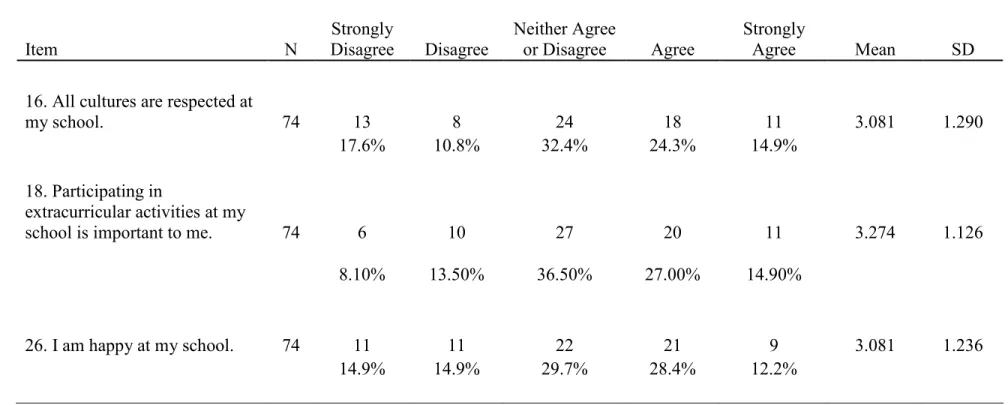
4.10 Survey Results – Perceptions of the Social-Cultural Context (F5)... 79
4.11 Survey Results – Perceptions of Home-School Connections Factor (F6)... 82
4.12 Survey Results – After School Employment Factor (F7)... 84
4.13 Academic Background Items... 87
4.15 Extracurricular Activities Items... 92 4.16 Multiple Regression Analysis of Socio-demographic Variables
and the Self-predicted High School Graduation Variable... 95 4.17 Multiple Regression Analysis of Immigration Related Variables
and the Self-predicted High School Graduation Variable... 97 4.18 Multiple Regression Analysis of Academic Background Variables
and the Self-predicted High School Graduation Variable... 99 4.19 Multiple Regression Analysis of School & Schooling Related Factors
and the Self-predicted High School Graduation Variable... 101 4.20 Multiple Regression Analysis of Variables found Significant in Previous Analyses
xii
LIST OF FIGURES Figure
ABBREVIATIONS
CHAPTER 1
INTRODUCTION
Communities throughout the United States value the education students attain in our public schools. Americans, therefore, are disappointed when students fail to graduate. In the past, dropping out was considered a failure of the individual, but today a new paradigm is emerging that views high school dropouts also as a product of their school’s social and cultural environment (Davison Aviles, et al., 1999; Pallas, 2002; Rumberger, 1993). Today, students who choose to, or are forced to, drop out of school are somewhat different,
culturally and linguistically, than students who were dropouts a generation ago. The increased enrollment of immigrant students in America’s public schools is paralleled by a growing number of dropouts. Research literature suggests that previous dropout prevention initiatives may not yield equal success with the new immigrant student population,
particularly with Hispanic students. Furthermore, more current research reveals that the transition between middle school and high school is a pivotal juncture for potential dropouts and deserves additional research to elucidate its complexities (Lan & Lanthier, 2003; Lee & Burkam, 2003). Educators must understand the immigrant student’s experience in America’s public schools, the importance of the transitions from middle to high school, their
Purpose and Significance of the Study
From all over the world, immigrants and their families are arriving in the United States in pursuit of the American dream. Immigrants from Mexico and Latin America are one of the fastest growing minority groups in the United States. In 2000, Hispanics
3 Table 1.1
Student Populations and Dropout Events – 2004-2005
North Carolina Woods County
Total Student Population 1347177 26159
Total Hispanic Population 101380 3079
Hispanic Population % 7.50% 14.18%
Total Dropout Events 20175 325
Total Hispanic Dropout Events 1716 57
Hispanic Dropout % 8.51% 17.54%
Source. Event dropout data collected from the 2004-05 North Carolina State Department of Public Instruction Dropout Report.
events accounted for 17.54% of the dropouts in the district, (NC Public Schools, 2006). While efforts to improve the overall dropout rates in North Carolina’s public schools have shown gains in recent years, the findings of the Annual Dropout Event Report from the North Carolina Public Schools (2006) illustrate some of the challenges the state continues to face. Couple the above average dropout rates for most minority groups in the state with the fact that one-third of all dropout events occur during the ninth grade year and it is clear that educators must focus their attention on the middle school to high school transition.
The transition from middle school to high school can be a traumatic passage for students, particularly for immigrant students. The smaller, nurturing, team oriented
5
research indicates that middle school, not high school, is the pivotal point in the dropout experience and preparing middle school students for the transition is critical in terms of how students make adjustment at their ninth grade (Daisey & Jose-Kampfer, 2002; Frymier, 1997; Rumberger, 1993; Lee & Burkam, 2003). Lan and Lanthier (2003) specifically cite the need for additional research on the transition period from middle school to high school and its complexities as a means of understanding the needs of students at risk of dropping out of high school.
The purpose of this study, therefore, is to investigate the perceptions Hispanic eighth grade students have of school and schooling factors as they prepare to transition to high school and the factors that may influence their self-perceived likelihood of graduating from high school. Findings from this study will help middle school educators identify the problems and issues related to students’ self-perceived possibility of graduating from high school before students enter into high school. Middle schools, then, can help students
prepare themselves for a smoother adjustment for high school academic life and reinforce the enthusiasm with which they anticipate the move. Adopting the additive model of
acculturation as its theoretical framework, with the belief that acculturation is a more inclusive approach than classic assimilation for linguistic minority students, and using this model to assess student school satisfaction, this study looks for ways to understand what factors may best predict eighth graders’ confidence in terms of high school completion.
Theoretical Framework
and culture and finding ways to incorporate elements of the culture of their adopted home. In the United States, educators may adopt the additive model by understanding different cultural values as they relate to home, school, and community and encouraging students to maintain the language and culture of their native land. The additive model does not attempt, as the subtractive model of acculturation would, to assimilate and to strip away the heritage cultures and languages of students as they enter and study in American schools. Rather, the additive model focuses on the entire student and the factors that may affect his/her success in school. The additive model, due to its inclusive nature and constructivist base, provides a framework for investigating the instructional, social, cultural, and individual factors related to the high dropout rates among Hispanic students (Cummins, 1993; Gibson, 1995). Considering that public schools are the main forum for introducing immigrant students to American society, it is essential that educators understand the acculturation process and incorporate additive strategies in their policies, procedures, and most importantly, in their classrooms.
The model developed to represent the theoretical framework is presented in Figure 1. The model was developed based on the work of Cummins (1993) and Gibson (1995). It represents the ways assimilation and acculturation theories interact in schools and are indicative of the adoption of either a subtractive or additive model. The adoption of the additive or subtractive model in schools will be revealed in how students perceive their schools and schooling and how satisfied they are in school. Schools that operate in a
subtractive mode have students who are less satisfied in school and lack a sense of belonging in school (Valenzuela, 1999). Schools that adopt the additive model of acculturation
7
who feel connected to and satisfied in their schools (Cummins, 1993; Gibson, 1995; Valenzuela, 1999).
Figure 1.1
Theoretical Framework Model
Source. (Cummins, 1993; Gibson, 1995; Valenzuela, 1999).
Assimilation Acculturation
Subtractive Model Additive Model
Research Questions
Three major research questions are asked and answered in this dissertation: Research Question 1A: How do eighth-grade Hispanic students perceive their possibility of graduating from high school and what are their high school and career aspirations (Factor 1)?
Research Question 1B: Do the perceptions stated in Research Question 1A differ across gender lines?
Research Question 2A: How do eighth-grade Hispanic students perceive the six School and Schooling related factors pertinent to the self-perceived possibilities of
graduating from high school? These six factors include perceptions of academic preparation (Factor 2), teachers and instruction (Factor 3), school organization (Factor 4), social-cultural context (Factor 5), home-school connection (Factor 6), and after school employment (Factor 7).
Research Question 2B: How do eighth-grade Hispanic students perceive their academic backgrounds, home language, and extracurricular activities?
Research Question 3A: Which variables (socio-demographic, academic backgrounds, immigration, and extracurricular activities) and factors (F1-F7) stated in Research Questions 1A, 2A, and 2B significantly predict the Hispanic eighth graders self-perceived possibilities of graduating from high school?
9 Terms
1. School dropout – According to the State Board policy (HSP-Q-001) of North Carolina, a dropout is “any student who leaves school for any reason before graduation or completion of a program of studies without transferring to another elementary or secondary school (NC Public Schools, 2006).” Dropout rates are controversial and of particular political interest. Pallas (2002) defines the three commonly used dropout rates: the event dropout rate, the status dropout rate, and the cohort dropout rate. This study will focus on event dropout rates, which report the number of students that “leave school before
completion in a particular time period, typically a single year (Pallas, 2002).” The event dropout rate is often reported to allow for comparison over time.
2. Additive model of acculturation – The additive model of acculturation seeks to add the language and culture of the adopted country, here the United States, to the immigrant student’s repertoire. The immigrant students’ heritage language and culture is valued and true bilingualism and a blend of cultures is the goal (Gibson, 1995; Valenzuela, 1999).
3. Subtractive model of acculturation – Also termed by Gibson (1995) a replacement model of acculturation. Schools force immigrant students to relinquish their heritage
languages and culture in favor adopting English and American culture. Little or no effort is made to maintain the heritage language and culture and it is valued, at best, only as a tool for teaching English and introducing America culture.
5. Hispanic – According to the US Census Bureau (2006), “Hispanics or Latinos are those people who classified themselves in one of the specific Spanish, Hispanic, or Latino categories listed on the Census 2000 questionnaire -"Mexican, Mexican Am., Chicano," "Puerto Rican", or "Cuban"-as well as those who indicate that they are "other
Spanish/Hispanic/Latino.” This study uses the term “Hispanic” based on the suggestion from the dissertation committee.
6. Acculturation – “Acculturation is the process of culture change and adaptation that occurs when individuals with different cultures come into contact (Gibson, 1995).” One culture is not replaced by the other and a blending of the two may occur.
7. Assimilation – “Assimilation, on the other hand, is the process whereby individuals of one society or ethnic group are incorporated or absorbed culturally into another. It implies replacing one’s old identity with a new identity. At the individual level the former culture is lost (Gibson, 1995).”
8. Immigrant – “The term immigrant refers to the various categories of persons who have moved to this country for work or residence, including refugees, undocumented aliens, and migrant workers, as well as voluntary immigrants who arrive with permanent visas in hand (Gibson, 1995).”
9. Variable – A variable is an individual item from the survey instrument used in the data analysis.
CHAPTER 2
REVIEW OF THE LITERATURE
In order to meet the needs of immigrant students and to ensure that they will graduate from high school, educators must understand the immigrant student’s
experience in America’s public schools, including both the acculturation process and the transition from middle school to high school. Research literature reveals that the reasons for failing to complete high school are related to numerous factors. These factors include the socio-demographic variables, high school and career aspirations, academic
preparation, perceptions of teachers and instruction, school organization, perceptions of the social and cultural contexts, the home-school connection, and after school
employment. The additive model of acculturation provides a framework for examining the factors, through the lens of school satisfaction, and their interrelationships related to Hispanic students’ self-predicted ability to complete high school. It is essential to investigate these factors at the point that eighth grade students face the transition from middle school to high school. While schools cannot resolve all of the issues relevant to Hispanic students’ dropout problem, schools can provide support for Hispanic students by adopting an additive model of acculturation, monitoring their satisfaction with school, exhibiting more caring for these at-risk students, and addressing the factors that influence the decision to drop out of school.
The Additive Model of Acculturation
needs of Hispanic students at risk of dropping out, such as ESL programs and migrant education programs that focus adult migrant worker literacy, are positive steps, but not fully comprehensive. Tutoring programs, peer mentoring, and Saturday Academies are focused solely on the academic achievements of students and their success on high-stakes tests, like the North Carolina End of Grade and End of Course exams. However,
Hispanic students also need other guidance and support for their social, cultural and linguistic needs. Acknowledging Hispanic students’ home culture and community relationships also helps educators have a better understanding of the dropout related problems in a broader context. In summary, educators must understand the process of acculturation and how it affects student achievement.
13
additive model encourages schools to embrace the diversity in their student populations without sacrificing students’ heritage culture and language (Cummins, 1993; Gibson, 1995; Ogbu & Simmons, 1998). Application of the additive model to the school organization and the school social cultural environment creates a positive learning experience for Hispanic students that manifests itself in positive school satisfaction ratings.
Traditionally, schools have maintained a subtractive model of schooling which held the assimilation of immigrant students into American culture as its main goal. Gibson (1995) defines assimilation as “the process whereby individuals of one society or ethnic group are incorporated or absorbed culturally into another (p. 90).” Educators widely accept the process of assimilation after witnessing wave after wave of immigrant groups discarded their heritage culture and became Americanized. Since assimilation worked for certain immigrant groups at some time period in our history, educators assumed it to work for all immigrant groups at all times. Therefore, they gave little attention to the possible negative consequences of the rapid Americanization process. Straight-line assimilation models contend that as each generation becomes more
language relates to how well it facilitates the acquisition of English as the new language. Bilingual classes using the heritage language as an “instructional strategy” to develop English fluency fail to nurture the development of true bilingual and bicultural students. In practice, subtractive acculturation is analogous to a complete and rapid assimilation as it denudes the ELL’s heritage language and replaces it with English.
15
American culture and its schools. Their efforts will be rewarded with school satisfaction surveys in which Hispanic students report feeling appreciated and supported in school.
Socio-Demographic Variables
Students’ individual characteristics, such as age, nativity, and generational status may affect their success in school. While their population is increasing rapidly, other demographics factors illustrate the complexities of the Hispanic dropout population. Male Hispanic students drop out of school at higher rates overall, but in certain contexts, female Hispanic students are more at-risk (Mayer, 2004; Olatunji, 2005). Student age and nativity are important factors linked to dropout rates. Students who enroll in U.S. schools before age 14 or who have foreign-born parents are more likely to complete high school than students who enroll in U.S. schools after age 14 or are second or third
generation Americans (Krashen, 1998; Lee, 2001; Wojtkewicz & Donato, 1995). Second-generation immigrant students may have more difficulties adapting to the new school culture than their first generation counterparts (Louie, 2001; Waters, 1994). First generation immigrant students tend to adopt an additive model of acculturation and are able to blend their heritage and adoptive cultures successfully whereas second-generation immigrant students often find their heritage culture in conflict with the subtractive forces in schools, such as the “English only” movement (Gibson, 1995).
Certain demographic factors, such as family structure, garner much attention in the attempt to identify students at risk of dropping out. In general, dropouts tend to come from low socio-economic backgrounds where parental education level is also low
Spanish, are found in Hispanic homes which may account for lower levels of school readiness (Krashen, 1998). Hispanic students tend to have large families and students from large families where an older sibling has dropped out of school are more likely to also drop out (Sui-Chu & Willms, 1996; Teachmen, Paasch, & Carver, 1996).
Furthermore, while supervision at home may be higher in Hispanic families because many mothers work in the home caring for children, the larger size of Hispanic families may lead to less quality time for each child (Sui-Chu & Willms, 1996). High mobility among Hispanic families is also considered a risk factor, as is their legal immigration status in the United States (Rumberger & Larson, 1998; Midobuche, 2001; Teachmen, Paasch, & Carver, 1996).
High School and Career Aspirations
While much research has focused on the demographic characteristics of dropouts, a growing body of research is examining the psychological factors involved in the
17
minority students it may seem impossible to acquire an understanding of academic English within as little as two years. Students who experience failure in school develop a sense of helplessness that impacts the level of effort put forth on future assignments. Low achievers that receive disingenuous attention from teachers tend to react negatively, blaming their poor performance on a lack of effort, and begin to disassociate with
schooling (Juarez, 2001).
Motivation in school, or the lack thereof, is another psychological factor related to dropouts. Some immigrant students have an internal academic motivation that drives them to success. This intrinsic motivation may originate in their heritage culture or from their status as first generation immigrant students (Sui-Chi & Willms, 1996; Waters, 1994; Wojtkiewicz & Donato, 1995). However, for many Hispanic students at risk of dropping out of school, the motivation to succeed in school decreases over time. Lack of success on school assignments and the growing feeling of helplessness decrease
motivation to continue trying in school (Juarez, 2001). Instructional methods that ignore the modalities and learning styles of potential dropouts further decrease motivation and interest in academics.
success (Valencia, 1994). Participants ranked persistency, responsibility, and
attentiveness as the most important personal attributes for success in school. Successful minority students note the role motivation plays in their academic success. Valencia (1994) found that of five motivational variables, the desire for a better job and advanced study were found to be most motivating for successful Hispanic college students.
One way to support students’ high aspirations as they transition from middle school to high school is to implement quality, comprehensive transition programs. Such programs support students through high school campus visits and summer bridge
programs prior to the start of high school (Cushman, 2006; Mizelle, 2005). Linking middle school students and ninth grade students with older, mentor students has been shown to ease the transition to high school and support the skills needed for high school success (Cushman, 2006). Once in high school, students benefit from small, sheltered learning communities in which students develop strong relationships with peers and teachers, where their interests and aspirations are nurtured (Conchas, 2001; Gibson & Benijez, 2002; Mizelle, 2005; Cushman, 2006, McIntosh & White, 2006).
Perceptions of Teachers and Instruction
19
Schools that adopt a subtractive model tend to view instruction through a singular pedagogy. Classrooms instruction in this model is teacher-centric and the maintenance of control is paramount. Cummins (1993) relates teacher-centric instruction to a
transmission model of instruction where instruction is teacher controlled from the presentation of material to the assessment of mastery. The teacher is seen as the keeper of knowledge, leading students “towards the achievement of instructional objectives (Cummins, 1993, p. 111).” Direct instruction is viewed as the best way to teach English to ELLs in an effort to catch them up to their peers. Lecture, student worksheets, and objective assessments are the norm. Instruction focuses on the surface features of language, including spelling and decoding, rather than helping ELLs develop a deeper understanding of the English language (Cummins, 1993).
The additive model of acculturation offers Hispanic English language learners a more positive and well-rounded educational experience. In terms of language, the additive model is an ally of the English language learner. Whereas the subtractive model seeks to replace the heritage language of linguistic minority students, the additive model embraces it. Rather than use the heritage language as an instructional tool, true bilingual programs, such as some of the dual-language programs currently operated in several elementary schools in North Carolina, develop bilingual and bicultural students with verbal and written abilities in both languages (Gibson, 1995). The additive model also involves the culture of the Hispanic ELL. While many schools do not fulfill a true vision of multicultural education, the additive model encourages schools to preserve and,
diverse cultural identities. “Students’ school success appears to reflect both the more solid cognitive/academic foundation developed through intensive (first language) instruction and the reinforcement of their cultural identity (Cummins, 1993, p. 108).” The additive model provides students with culturally competent instruction and the opportunity to become comfortable and successful in American society without surrendering their heritage culture.
As a result, instructional methods flourish in schools adopting an additive model of acculturation. The additive model facilitates the use of dialogue to establish a caring teacher-student relationship (Cummins, 1993; Noddings, 1994). Dialogue establishes a trusting relationship between English language learners and their teachers, and from there a reciprocal teaching relationship can develop (Cummins, 1993; Freire, 1970).
Reciprocal teaching models make teachers the facilitators of learning rather than the keepers of knowledge as in the subtractive model. Dialogue between teacher and student and among peers helps ELL to develop a deeper, more meaningful, understanding of the English language. Teachers in the additive model integrate language development throughout the subject areas in ways that motivate students to learn and empower them to set lofty learning goals (Cummins, 1993).
21
additive model would encourage teachers to play upon the individual strengths of each student. Allowing ELL students to express their knowledge and mastery of a topic in alternative assessments will empower students to take control of their learning. For Hispanic ELLs, reciprocal teaching methods and multiple intelligence strategies create a more positive learning environment for student success and happiness in school.
A more constrained curriculum has been linked to lower dropout rates for all racial/ethnic groups (Lee & Burkam, 2003). Researchers found limited course offerings to narrower the range of content teachers had to cover and allowed them more time to develop innovative instructional strategies that would appeal to all students, particularly those at-risk of dropping out of school. Additionally, reforms to curriculum and
instructional methods should include the desire to motivate students to become invested in their learning. By implementing a more challenging curriculum and raising school and teacher expectations, the faculty at Wallace-Rose Hill High School also learned to teach in ways that motivated students to apply themselves, take more advanced courses in mathematics and science, and take on a senior project of the student’s choice (Case study, 1999). “I know this assignment is tough, but my project is on a topic I chose. I don’t mind working hard on it,” reported one student at Wallace-Rose Hill High School. Students also received more detailed feedback from their teachers and credible feedback is essential to promoting self-efficacy and sustaining motivation.
sensitivity within the school climate and create a more multicultural learning
environment (Gay, 2000). In Wayman’s (2002) study, although the majority of students perceived that teachers liked all of the students the same, over 25% of participants “felt that teachers liked students of non-Hispanic white descent better then students of Mexican American descent.” Students who perceive bias in schools and believe their teachers do not care about them are more likely to feel pushed out of school. Wayman’s (2002) research supports the assertion that dropping out is the culminating result of dissatisfaction with the school environment and perceptions of teachers is a key element. This dissatisfaction is associated with the subtractive model. When the additive model of acculturation is adopted, teachers value students and their efforts in school and increases student achievement and test scores are seen as personal growth and development
(Kratzer, 1996). The individual’s well-being is linked to the well-being of the school and when students dropout, it is a failure of the school, not simply the individual.
School Organization
23
their needs (Davison Aviles, et al., 1999). Hispanic students attempt to seek guidance and assistance navigating through American schools, but these remedial and alternative programs leave students to find their own ways. The movement of Hispanic students into such programs is suspect and may be correlated to increased dropout rates for Hispanic students (Davison Aviles, et al., 1999).
The subtractive model leaves its mark on school organization in less obvious ways as well. School policies, part of the organizational framework of schools, are usually codified only in English and are often not translated into other languages. Spanish-speaking, Hispanic students and parents are unaware of important school policies, such as attendance and graduation requirements, and the grave effect these policies have on students. Failure to notify Hispanic students of these policies is an example of Valenzuela’s (1999) “subtractive schooling.” Many students may feel uncomfortable approaching school counselors about attendance policies and graduation requirements and by the time students realize the consequences it is often too late to rectify the situation (Ochoa, et al., 1994). Students feel helpless, unable to make up missed work and catch up with their classes, and, as dreams of graduation begin to fade, many Hispanic students decide to drop out of school (Davison Aviles, et al., 1999). In this way the school organization subtracts opportunities from Hispanic students by not communicating school policies and graduation requirements.
indicated that many Hispanic dropouts reported that their English as a Second Language (ESL) classes left them on their own to find answers to questions about class material and school policies (Davison Aviles, et al., 1999). The self-paced and self-guided, remedial design of ESL classes denies Hispanic ELLs the support and guidance they need in school, and unfortunately for many Hispanic students, ESL classes are the only academic support they receive (Davison Aviles, et al., 1999). Tracking ELLs into remedial ESL classes also isolates minority students from the rest of the student population and may exclude them from experiences that could enrich their education, such as cultural events, intramurals, or other extracurricular opportunities (Noddings, 1994). Furthermore, many remedial ESL classes fail to incorporate differentiated instructional strategies that would capitalize on the innate talents and abilities of English language learners. In summary, a subtractive model of school organization negatively impacts student groupings,
instructional programs, and extracurricular activities for all students.
By comparison, an additive school organization facilitates the success of Hispanic ELLs, and all students, by creating a supportive learning environment. Additive models of school organization provide a school structure that is caring and collegial (Conchas, 2001; Noddings, 1994). Successful programs for Hispanic ELL, like the Migrant
Education Program (MEP) and Medical Academy, created a safe haven for ELL students within the larger school setting (Conchas, 2001; Gibson & Bejinez, 2002). Both
25
students; all while supporting students as they ventured out from the MEP (Gibson & Bejinez, 2002). The program also encouraged students to maintain their heritage language and culture while developing their English language skills and peer
relationships with students from diverse backgrounds (Gibson & Bejinez, 2002). The Medical Academy’s focus on careers in the health professions gave students a joint purpose and sense of community (Conchas, 2001). From the safe haven of the Medical Academy, the scaffolding support of the program followed students beyond the program into other classes and school activities. The reassurance provided by these school-within-a-school programs acted as a safety net for Hispanic student who might otherwise be severely at-risk for dropping out of school. The growing trend toward instituting separate ninth grade academies seeks to provide the same type of support as students transition from middle school to high school.
The transition from a traditional middle school to a traditional high school in the United States requires students to acclimate to totally different school organization structures. Students often move from the comfortable confines of middle schools into larger high schools with impersonal, anonymous hallways and intensive block
care and support they need to succeed academically (Davison Aviles, et al., 1999;
Rumberger, 1993). Conversely, when block scheduling is used to create a school-within-a-school learning environment, such as a ninth grade academy or MEP, for Hispanic students, students are able to use the time to build support networks, work more closely with teachers, and develop a sense of belonging in school (Conchas, 2001; Gibson & Benijez, 2002; Vaznuagh, 1995). Hispanic students may find the scaffolding support provided by such programs comfortable and satisfying and it may help to lessen the effect of other, possibly detrimental, school policies such as attendance requirements, ability tracking, delayed schooling, high-stakes testing, and anti-social promotion measures (Conchas, 2001; Davison Aviles, et al., 1999; Ochoa, 1994; Our Nation, 1996).
Perceptions of the Social and Cultural Context
The social and cultural context encompasses a multitude of factors related to the social and cultural lives of students. It considers the interactions students have with their peers, involvement with other student groups and extracurricular activities, and their overall sense of belonging in schools. The acculturation model adopted by the school influences the social and cultural interactions of Hispanic students. Schools that adopt the additive model will be more inclusive of diverse cultures and have more satisfied students. The degree of positive or negative social interactions eventually impacts the Hispanic student’s self-perceived possibility of completing high school.
27
learning environment. Conchas (2001) reports that ELL students in a general academic program failed to develop peer relationships outside of their ethnic group because their social learning environment isolated them from other students. Students who worked in isolated academic tracks also failed to develop peer inter-ethnic relationships across academic tracks because their programs were based more on a sense of competition than collegiality (Conchas, 2001). The lack of peer relationships for immigrant students may dissuade many Hispanic students from participating in extracurricular activities such as drama or athletics. Davison Aviles, et al., (1999) found that Hispanic dropouts were discouraged from participating in extracurricular activities by the cost or not having the “correct” clothes. Interestingly, those dropouts continued to encourage siblings and peers still in school to find ways to get involved in school, further acknowledging the
importance of the sense of belonging and participation in school (Davison Aviles, et al., 1999).
possibly dropping out of schools and joining gangs (Suarez-Orozco& Suarez-Orozco, 1995).
Rooted in the school social and cultural environment, and noted as psychological factors related to dropping out of school, are locus of control and bias and racism. Research literature indicates that dropouts have an external locus of control and may feel helplessness to improve their academic situation (Lan & Lanthier, 2003). Students in a San Diego dropout prevention program describe having little control over their time in and out of school (Ochoa, 1994). Participation in gangs and working long hours in after-school jobs may bring students a sense of control over their lives that they do not find in school (McNeal, 1997; Suarez-Orozco & Suarez-Orozco, 1995). Compounding external locus of control issues is the bias and racism minority students experience in school. Cultural conflicts in the schools manifest in many ways, from the ways teachers interact with student, to the language the teacher uses in class (Delpit, 1995; Midobuche, 2001; Ogbu & Simmons, 1998). Bias in school need not be directly aimed at minority students, but only perceived to exist, for students to feel its impact (Wayman, 2002). Any bias present in school, from teachers, administrators, or other school officials, may negatively affect a student’s psychological well-being in school.
29
Gibson & Bejinez, 2002; Noddings, 1994). When teachers express caring and have high academic expectations for English language learners, students perceive the caring and their teacher’s support improves their happiness and sense of belonging in school (Ochoa, 1994). Students who feel valued as part of the school social community by teachers and peers exhibit increased personal growth and academic achievement, are more satisfied at school, and are more likely to perceive their ability to graduate from high school with enthusiasm and optimism (Kratzer, 1996).
The friendly and caring school social environment is also promoted for Hispanic ELL in the additive model by providing scaffolding support as part of the structural elements in the school’s organization, including ninth grade academies. Conchas (2001) describes a school within a school program for students at a racially diverse high school that met the needs of its Hispanic ELLs while allowing all students to experience academic success. The program’s design emphasized positive teacher-student relationships and a learning environment that favored collegiality over competition (Conchas, 2001). ELL students were encouraged to work with students from different racial and ethnic backgrounds and developed friendships as a result. Students in the program were also united by a common vision of future career paths and the sense of community that developed within the program. The structure of the program fostered academic achievement and the development of peer relationships, both of which are positive factors in reducing the rate of high school dropouts.
In terms of the home-school relationship, the additive model is more inclusive of the ways in which immigrant parents support their children’s education. Schools that adopt an additive model are more willing to incorporate immigrant views of schooling into their own. Rather than expect immigrant parents to interact with schools in the same manner as American parents, the additive model encourages schools to broaden their definitions of parental involvement. Immigrant parents value the work students do in school differently than American parents. Hispanic families see work as a contribution to the family, through caring for family members or helping the family business, and
completing school work is an extension of these values (Orellana, 2001). Between immigrant parents and children a reciprocal sense of duty exists and drives students to succeed in school. Hispanic parents view their job as providing a home and a good life for their children and the children are expected to perform well in school (Louie, 2001). Schools that adopt an additive model identify these reciprocal relationships and value the contributions that immigrant parents make to their children’s education. The more connected a family is with the school, the more likely a student is to be optimistic about their ability to complete high school. (Teachman, Paasch, & Carver, 1996).
31
strong foundation for academic success, including a good home, clothing, and food (Orellana, 2001). Yet, American schools want to assimilate immigrant parents and have them participate in school in the way American parents do. When immigrant parents do not volunteer, are unable to be class mothers, do not work at fundraisers, or fail to join the PTA and chaperone class field trips, school officials assume that they do not care about their children’s education (Gibson, 1995; Lopez, 2001). The subtractive model devalues the impact and influence immigrant parents can have on their children’s education, leads to dissatisfied students and parents, and creates an unwelcoming atmosphere for immigrant parents when they do engage in school activities.
Many community factors impact the decision for Hispanic youth to drop out of school. Some immigrant communities view education differently than Hispanic
After School Employment
Older Hispanic students may also feel the pull of employment to aid their family. In Hispanic families, work outside of the home is considered a contribution to the family (Orellana, 2001). While working less than twenty hours per week may be manageable for these students, working more than twenty hours, in certain job sectors, places Hispanic students at clear risk of dropping out of school (McNeal, 1997). Teenage employment has been found to lead to increased dropout rates, particularly for female Hispanic students (Olatunji, 2005).
In Hispanic families, work in and outside of the home that contributes to the well-being of the family is greatly valued and schooling may or may not be a part of the equation (Orellana, 2001). Ideally, high school employment should be limited to certain job sectors and limited to no more than twenty hours per week in order to allow students to concentrate on school work and still participate in extracurricular activities (McNeal, 1997). Some Hispanic youth find a sense of belonging outside of the family and school by seeking employment or membership in gangs (Suarez-Orozco & Suarez-Orozco, 1995).
Critique of the Literature
While the research literature on high school dropouts is rich in its examination of national data, it fails to put a local face on the dropout crisis. Many researchers
33
may help local school districts to identify potential dropouts in their schools, but other more localized indicators may be overlooked if school leaders fail to examine their own student populations. Family and demographic risk factors identified nationally may lose their applicability at a local level and fail to help schools keep students on track to graduate. Researchers (Balfanz & Legters, 2004) are now focusing on “constellations of school based predictors that educators can use to construct early-warning systems and head off dropout problems (Viadero, 2006).” This study aims to bring nationally
identified risk factors to the local level and suggest ways that school systems can identify potential dropouts earlier and provide them more academic and social support.
Additionally, many studies (Rumberger, 1995; Lee & Burkam, 2003; Lan & Lanthier, 2003; Olatunji, 2005; Teachman, Paasch, & Carver, 1996) are limited by their datasets to identifying dropout predictors at tenth grade, and lose applicability when addressing earlier grades, including ninth grade and middle school. Many students in these samples dropped out before they could be included in the study because they dropped out before ninth grade or before entering tenth grade (Lee & Burkam, 2003). Several researchers (Daisy & Jose-Kampfer, 2002; Lan & Lanthier, 2003; Lee & Burkam, 2003) cite the need for additional dropout research before tenth grade,
Another critique of the current dropout research is the lack of diversity it
possesses. Dropouts represent all racial and ethnic groups, yet many research studies that utilize national data sets treat dropouts as a homogeneous group, their common trait being that they did not graduate. It is essential to disaggregate the data of dropouts to
determine if certain nationally identified risk factors disproportionately affect certain groups of students. Few patterns emerge when looking at dropout data across
racial/ethnic groups. Additional research is needed to determine the dropout risk factors that influence various ethnic groups. The goal of this study is to determine which school and schooling factors exhibit significant influence on Hispanic eighth grade students and add to the research literature about this ethnic and age group.
CHAPTER 3
RESEARCH METHODOLOGY Introduction
This chapter depicts the research methods and procedures of the study. It is divided into sections regarding the purpose of the study, the research questions,
population, sample and data collection, instrumentation, data analysis, and limitations of the study. The sections about the purpose of the study and research questions outline the goals and objectives of the research. The population section identifies the targeted student population, which is followed by a description of the sample and data collection procedures. The instrumentation section summarizes the creation of the survey
instrument and its internal consistency. The data analysis section describes the statistical methods used to address the research questions. Lastly, the limitations of the study are addressed.
Purpose
The research literature pertaining to the Unites States’ dropout issues indicates several factors hypothesized to be potential dropout predictors. The presence of these factors in a middle school population may indicate a higher likelihood of dropping out of school as the students’ transition from middle school to high school. These factors relate to individual socio-demographic backgrounds, high school and career aspiration,
additive model of acculturation, through the lens of school satisfaction, this study sought to investigate how middle school students perceive these relevant areas as they prepare to enter high school and if any of these areas (factors) better predict their self-perceived possibilities of graduating from high school.
Three major research questions are asked and answered in this dissertation:
Research Question 1A: How do eighth-grade Hispanic students perceive their possibility of graduating from high school and what are their high school and career aspirations (Factor 1)?
Research Question 1B: Do the perceptions stated in Research Question 1A differ across gender lines?
Research Question 2A: How do eighth-grade Hispanic students perceive the six School and Schooling related factors pertinent to the self-perceived possibility of graduating from high school? These six factors include perceptions of academic preparation (Factor 2), teachers and instruction (Factor 3), school organization (Factor 4), social-cultural context (Factor 5), home-school connection (Factor 6), and after school employment (Factor 7).
37
Research Question 3A: Which variables (socio-demographic, academic backgrounds, immigration, and extracurricular activities) and factors (F1-F7) stated in Research
Questions 1A, 2A, and 2B significantly predict the Hispanic eighth graders self-perceived possibilities of graduating from high school?
Research Question 3B: Which of the above-stated variables and factors are most prevalent in terms of predicting Hispanic eighth graders’ self-perceived possibilities of graduating from high school in the future?
Population
The Woods County Schools district is a public school system located in the Piedmont region of North Carolina. The county has several large towns, including Edwards, Herrington, and Latham, the county seat. Bisected by Interstate 95, the rapid growth and development on the western side of the county continues in sharp contrast to the slow development of the more rural and agrarian eastern side. During the 2004-05 school year the system enrolled more than 26,000 students, including more than 3,000 Hispanic students (NC Public Schools, 2006). Currently, there are 2,169 students enrolled in the eighth grade in the Woods County Schools, 287 of those students are Hispanic.
39
Source. Data collected from Woods County Schools, Membership by Grade/Ethnic/Sex Code, October 3, 2006.
Table 3.1
Eighth Grade Student Population by Race/Ethnicity and Gender, Woods County Schools, 2006-07
Males Females Total
White 682 685 1367
Black 221 214 435
Hispanic 144 143 287
Multiracial 26 37 63
Asian 6 4 10
American Indian 7 0 7
Woods County Schools has actively sought to improve its dropout rate. Dropout prevention coordinators and school counselors specifically assigned to identify and support at risk students are currently in place. Other school systems in North Carolina with similarly sized student populations, such as Alamance-Burlington Schools,
Buncombe County Schools, New Hanover County Schools, Onslow County Schools, and Robeson County Schools, have experienced similar challenges in reducing their event dropout rates. Table 3.2 indicates that during the 2004-05 school year the school
system’s event dropout rate for grades seven through twelve fell below the state average for the first time since 2000. Recently reported graduation rates rank Woods County above the North Carolina state average in terms of the number of high school freshman who graduate in four years; in Woods County Schools 74.5% of students graduated in four years as compared to 68.1% for the state average (Hui, 2007).
41 Table 3.2:
Five Year Dropout Event Rate Comparison Grades 7-12
2000-2001
2001-2002
2002-2003
2003-2004
2004-2005
Woods County 4.09 4.23 3.67 3.43 3.08
Alamance-Burlington 4.02 3.54 3.66 3.53 3.75
Buncombe County 3.94 4.01 3.38 3.63 3.51
New Hanover County 3.71 3.37 3.38 3.66 3.66
Onslow County 3.73 3.55 2.99 2.90 3.07
Robeson County 7.23 5.21 5.59 5.43 4.80
North Carolina 3.86 3.52 3.23 3.29 3.23
Table 3.3
Dropout Events, Grades 7-9, by Grade Level, 2004-05 School Number of Dropout Events Middle Schools 7th Grade 8th Grade 9th Grade
Middle School A 0 1 0
Middle School B 0 0 0
Middle School C 2 1 0
Middle School D 1 2 0
Middle School E 1 1 0
Middle School F 2 0 0
Middle School G 0 0 0
Middle School H 0 2 0
Middle School I 0 0 0
Middle School J 0 0 0
Middle School K 3 2 0
Middle School L 0 6 0
Middle School M 2 5 0
High Schools
High School A 0 0 22
High School B 0 0 9
High School C 0 0 5
High School D 0 0 40
High School E 0 0 12
High School F 0 0 20
High School G 0 0 18
Total 11 21 126
Total Dropout Events, Grades 7-9 158 Percentage of all WCS Dropout Events 44%
43
Strong patterns emerge when the event dropout data in Woods County Schools is disaggregated by race/ethnicity and gender. Table 3.4 indicates the number of dropout events by race/ethnicity and gender for grades seven through nine for the 2004-05 academic year. Dropout event data from grades seven and eight confirm that while the actual numbers are very low they can be translated into high dropout rates for some groups. Closer examination of seventh and eighth grade Hispanic middle school
students, male and female, indicated a dropout rate above two percent. Ninth grade data indicated that African American males, Hispanic males, and Hispanic females are most at risk of dropping out, with ninth grade dropout rates of 11.3%, 16.4%, and 11%,
Table 3.4
Dropout Events, Grades 7-9, by Race/Ethnicity and Gender, 2004-05
School Number of Dropout Events
Middle Schools White Males White Females Black Males Black Females Hispanic Males Hispanic Females
Total Students, Grades 7-8a 1392 1311 504 431 277 238
Middle School A 1 0 0 0 0 0
Middle School B 0 0 0 0 0 0
Middle School C 1 0 0 0 1 1
Middle School D 0 0 2 0 1 0
Middle School E 1 0 0 0 0 1
Middle School F 0 1 0 1 0 0
Middle School G 0 0 0 0 0 0
Middle School H 1 1 0 0 0 0
Middle School I 0 0 0 0 0 0
Middle School J 0 0 0 0 0 0
Middle School K 0 1 0 0 2 2
Middle School L 1 0 1 0 3 1
Middle School M 3 0 2 2 0 0
Total 7-8 Event Dropouts 8 3 5 3 7 5
% of All WCS Event Dropouts 2.2% 0.8% 1.4% 0.8% 2.0% 1.4%
Dropout Rates, Grade 7-8 0.06% 0.02% 1.0% 0.07% 2.5% 2.1%
High Schools
Total Students, Grade 9a 755 637 257 199 122 92
High School A 8 3 2 2 3 3
High School B 3 3 0 0 1 2
High School C 1 2 1 1 0 0
High School D 9 4 11 6 9 2
High School E 5 0 7 0 0 0
High School F 9 2 4 1 3 1
High School G 6 3 4 0 4 2
Total Ninth Grade Dropouts 41 17 29 10 20 10
% of All WCS Dropout Events 11.5% 4.8% 8.1% 2.8% 5.6% 2.8%
Dropout Rates, Grade 9 5.4% 2.7% 11.3% 5.0% 16.4% 11%
Grade 7-9 Summary
Total Student Pop., Grades7-9a 2147 1948 761 630 400 330 % of Total Student Population 8.2% 7.4% 2.9% 2.4% 1.5% 1.3%
Total Event Dropouts, Grades 7-9 49 20 34 13 27 15
% of Event Dropouts, Grades 7-9 38.6% 15.7% 26.8% 10.2% 21.3% 11.8%
Dropout Rates, Grades 7-9 2.3% 1.0% 4.5% 2.1% 6.8% 4.5%
45 Sample and Data Collection
This study sought to survey all eighth grade students in the Woods County Schools in order to determine how these students perceive school and their possibility of dropping out. The sampling frame was provided by the Woods County Schools student information management system and additional detail was provided by the middle school principals following a presentation at one of their monthly meetings. Although it is a convenient sample, it provided an available target population for the researcher. The inquiry about conducting the research project was approved by the central administration of the Woods County Schools. The researcher then approached the middle school
principals and presented the project at a monthly principals meeting. The principals were asked to participate in the study and to share the project with their eighth grade teachers. The middle school principals assisted by providing lists of eighth grade homeroom teachers and their total class enrollments.
Using the homeroom information provided by each middle school principal, packets of survey materials were prepared for each homeroom teacher and delivered to the school contact designated by the school principal. Homeroom teachers were asked to distribute the contents of the packets to students in their homerooms. The packet
homeroom teachers by the researcher and responses entered in SPSS Version 13.0 for data analysis.
Two data collections were conducted in twelve Woods County middle schools. Four hundred and four eighth grade students participated in the study, approximately 20% of the eighth grade student population in the Woods County Schools system. However, if the special education students and students who were absent on that data collection days are taken into account, the participation rates will reach 25%, an acceptable average return rate for a survey study (Kalton, 1983). This slightly lower response rate may be attributed to several possible factors, including the time of year of the survey administration and the considerably high everyday absence rate among the eighth graders in many schools, and possibly the manner in which the project was relayed by the principals to their faculties.
In total, 404 students returned parental permission forms and student assent letters, and subsequently completed the survey questionnaire. Student demographic and academic data were gathered on the survey instrument in addition to student perceptions of school and schooling as related to the seven factors pertinent to the self-perceived likelihood of completing high school. Of the 404 participants in the study, 18% (n = 74) identified themselves in the Hispanic racial/ethnic group. Because this study focuses specifically on Hispanic students in regard to their perceptions of school and schooling, the cases in which students identified themselves as Native American, Asian or Pacific Islander, African American or Black, or White were excluded from the data analysis.
47
Hispanic students only. The research literature reveals that many Hispanic students already perceive unfair treatment in school and society due to their families’ immigration status, language, and ethnicity and segregating Hispanic eighth grade students for this study might lead to skepticism or even negative perceptions of teachers and
administrators (Wayman, 2002; Delpit, 1995; Midobuche, 2001; Gay, 2000; Kratzer, 1996). Additionally, while the survey instrument does not ask students about their legal immigration status, it does inquire about nation of birth of the participants and their parents. If only Hispanic students had been targeted for this study it may have led the students to be suspicious about the intentions of the study and led to more students opting not to participate in the study or providing untruthful responses. Sample characteristics for the Hispanic cases are presented in Table 4.2 in Chapter 4.
Instrumentation
The instrument was designed to gather student demographic data and to address how middle school students perceive school and schooling. Parts of the instrument format and content related to student perceptions were gathered from Ochoa (1994) and Davison Aviles, et al. (1999). Input on the layout and wording of the instrument was received from experts in research methodology and statistics (C. Maahs-Fladung, personal communications, Fall 2006). Additionally, the Student School Satisfaction survey for the Woods County Schools was compared to the new instrument to identify any items that overlapped between the two instruments.
individual academic preparation and future aspirations, perceptions of teachers and instruction, perceptions of school organization, perceptions of the school social and cultural environment, the home-school connection, and after school employment. These seven areas along with student socio-demographic characteristics, academic background, immigration related variables, and extracurricular activities have been identified through established national research literatures. The first section of the instrument included forty-five items designed on a five-point Likert scale. The second section of the
instrument gathered student demographic and academic data, including home language, grades, time spent on homework, and extracurricular activities. The complete instrument is presented in Appendix B.
Instrument Reliability
First, item 14 was designated to create a variable measuring students’
self-perception of the possibility of graduating from high school. Item 14 stated, “I worry that I will not graduate from high school,” yielded average scores of 3.027 (n=74 and SD = 1.443).
The items used to determine students’ perceptions of school and schooling were grouped into seven factors. The internal consistency of the instrument was
49
analysis. The rest of the items were clustered into seven factors and details for these factors are given below.
The high school and career aspirations factor (F1) addressed how students look toward the future and see their potential success in high school and future career paths. A sample item for this factor is “Graduating from high school is a priority for me.” An acceptable Cronbach’s alpha of 0.675 (M = 3.971, SD = 0.647) was reported for the internal consistency of the seven items that make up this factor.
The individual academic preparation factor (F2) related to the students
perceptions of their academic accomplishments. The reliability of the four items that comprise this factor was acceptable (Q= 0.520, M = 3.800, SD = 0.578). A sample item from this factor was “I am challenged by my school work.”
Classroom instruction and teacher support was measured by the perceptions of teachers and instruction factor (F3). Five items were grouped to create this factor. The internal consistency of the factor was acceptable (Q= 0.738. M = 3.397, SD = 0.768). A sample item from this factor was “My teachers believe in me.”
Attendance policies and class scheduling are two of the issues addressed in the perceptions of school organization factor (F4). The nine items that form this factor yield 0.642 for the Cronbach’s alpha for internal consistency (M = 3.485, SD = 0.545). A sample item from this factor was “Punishment for breaking school rules is applied fairly at my school.”
of 0.566 (M = 2.932, SD = 0.644) was reported for the internal consistency for the six items that comprise this factor.
The home-school-community relationship factor (F6) was examined next. The six items in this factor measured the connectedness of the students’ home and school lives. The internal consistency of this factor was acceptable (Q= 0.650, M = 2.896, SD = 0.689). A sample item from this factor was “My parents visit my school often during the year.”
The final factor (a single item) addresses the after school employment in which many students engage. The main item for this factor (F7) is “I need to earn money to help my family financially.” Survey responses yielded an average score (M = 2.667, SD = 1.205).
51 Table 3.5
Instrument Factor Reliabilities
Factor Name FactorCode Items Included ReversedItems FactorMean Factor SD
Reliability (Cronbach's
alpha) Reliability ANOVA
High School
Graduation - Item 14 DV 14 14 3.027 1.443
High School & Career
Aspirations F1
11, 20, 25, 29, 30,
34, 39 34 3.971 0.647 0.675 F = 4.590, p < 0.001
Academic Preparation F2 2, 6, 41, 42 6 3.800 0.578 0.520 F = 17.261, p < 0.001
Perceptions of Teachers
& Instruction F3 1, 4, 10, 13, 35 3.397 0.768 0.738 F = 3.592, p=0.007
School Organization F4
3, 12, 19, 21, 22,
24, 43, 44, 45 3.485 0.545 0.644 F = 15.949, p < 0.001
Perceptions of
Social-Cultural Context F5 5, 9, 15, 16, 18,26 5 2.932 0.644 0.566 F = 6.107, p < 0.001
Perceptions of
Home-School Connections F6
23, 32, 33, 36, 37,
38 23 2.896 0.689 0.650 F = 21.262, p < 0.001
After School