Potential Economic Benefit of
Treatment for Severe Traumatic Brain Injury in Uganda
By
Lauren Simpson
A Master’s Paper submitted to the faculty of the University of North Carolina at Chapel Hill
in partial fulfillment of the requirements for the degree of Master of Public Health in
the Public Health Leadership Program
Chapel Hill 2012
Advisor
Date
Second Reader
Table of Contents
Abstract ... 3
Severe Traumatic Brain Injury in East Africa: Systematic Review ... 5
Introduction ... 5
Methods ... 7
Results ... 9
Discussion ... 14
References ... 15
Table 1 ... 17
Potential Economic Benefit of Treatment for Severe Traumatic Brain Injury in Uganda: Research Master’s Paper ... 18
Introduction ... 18
Methods ... 20
Results ... 24
Discussion ... 25
References ... 28
Table 1 ... 30
Table 2 ... 31
Abstract
Background Traumatic brain injury (TBI) is a leading cause of death and disability worldwide. Although the majority of the global burden of disease likely occurs in low- and middle-income countries, particularly in sub-Saharan Africa, there is a paucity of data surveillance and analysis reporting on incidence rate, morbidity, mortality, and economic costs attributable to traumatic brain injury.
Methods A systematic review of all of the epidemiological studies published on TBI in East Africa over the past decade and assessed the available data from those studies was performed. We used a prognostic model to estimate outcomes of conservative and neurosurgical treatment for severe TBI data from a cohort of patients at the national referral hospital of Uganda in the capital city of Kampala during a 13-month study period. To evaluate the long-term impact of treatment for severe TBI, averted DALYs were calculated and converted to dollars using the human capital approach and the value of a statistical life (VSL) approach. This cohort was then used as a representative sample for assessing severe TBI-related benefit for all of Uganda
using a combination of this data and explicit assumptions.
Results From May 2008 to June 2009, 127 cases of severe TBI were treated at New
Mulago Hospital averting 1,448 DALYs [0,0,0], 1,075 DALYs [3,1,0.04], or 974 DALYs [3,1,0.03]. Using the human capital approach, the economic benefit of intervention ranged from
approximately $1.3 million to $1.7 million. The VSL approach estimated an economic benefit of $282,902 to over $11 million. The health benefit of severe TBI for all Ugandans was estimated at between about 11,000 and 17,000 averted DALYs per year with an annual potential
economic benefit of $15 million to $20 million using the human capital approach and $3.3 million to $130 million using the VSL approach.
Severe Traumatic Brain Injury in East Africa: Systematic Review
Introduction
The World Health Organization reports that traumatic brain injury (TBI) is a leading cause of global morbidity and mortality, resulting in death or hospitalization for at least 10 million people and contributing to an estimated 425 years of healthy life lost due to disability (YLDs) per 100,000 people every year.1-3 Yet, this reported global burden of TBI is only an approximation. Accurate measures of the burden of disease attributable to TBI worldwide are not available due to the lack of systematic data collection, particularly in developing countries, many of which are in Sub-Saharan Africa. Moreover, countries that systematically collect injury data often
undercount the two extremes of TBI, mild and severe.4 Mild TBI does not manifest clear symptoms and patients often do not present to health care facilities in resource poor settings where access is an issue. Similarly, severe traumatic brain injuries often result in death prior to patient arrival to a health care facility, particularly if pre-hospital care is not present.
Furthermore, there are not internationally accepted standards defining what constitutes disability resulting from head trauma.2
For the purposes of this assessment, TBI is defined as trauma to the head that results in brain concussion, skull fracture, brain damage with clear neurological deficits and clinically observable cognitive deficits, post-traumatic amnesia, neurological sequelae and/or any
Road traffic injuries are the leading cause of TBI worldwide.6 Developing countries, such as those in East Africa, currently have the highest disease burden of TBI due to massive growth in motor vehicle numbers, higher numbers of people injured per crash, poor enforcement of traffic safety regulations, inadequate public health infrastructure, and poor access to health
services.1,2,7 These countries are also known to experience worse outcomes and higher mortality rates associated with severe TBI when compared to high- and middle-income countries.8,9 Given its predilection for young adults and projected increase in incidence within the next decade, TBI death and disability will continue to affect the most productive sector of the sub-Saharan African workforce.1
Due to lack of standardized TBI surveillance systems in most countries throughout the world, data on the global burden of disease attributable to TBI are based on expert-derived estimates. Therefore in 2006, the World Health Organization called for increased efforts to strengthen evidence-based data collection on regional epidemiology in order to improve
measures for prevention and intervention.1 Hence, in order to assess what information exists in
Methods
Setting
A literature review was undertaken to determine the epidemiology of traumatic brain injury (TBI) within the East African Community (EAC). In 2000, the EAC, which consists of Tanzania, Kenya, Uganda, Rwanda, and Burundi, established to intensify political, economic, and social collaboration. Generally, these low-income developing countries in sub-Saharan Africa have similar geographic and demographic features as well as comparable burdens of disease.
Searches and Selection Process
Sources were obtained via MEDLINE searches using the MeSH major topic term “Craniocerebral Trauma/epidemiology”, which includes brain injuries, closed head injuries, penetrating head injuries, traumatic intracranial hemorrhages, skull fractures, and others. Results were reviewed by titles and abstracts. Full-length articles were obtained and analyzed
when they seemed pertinent to the study question and when meta-analyses and systematic reviews included international cohorts. Additional sources were obtained from searches for
Quality Assessment
Results
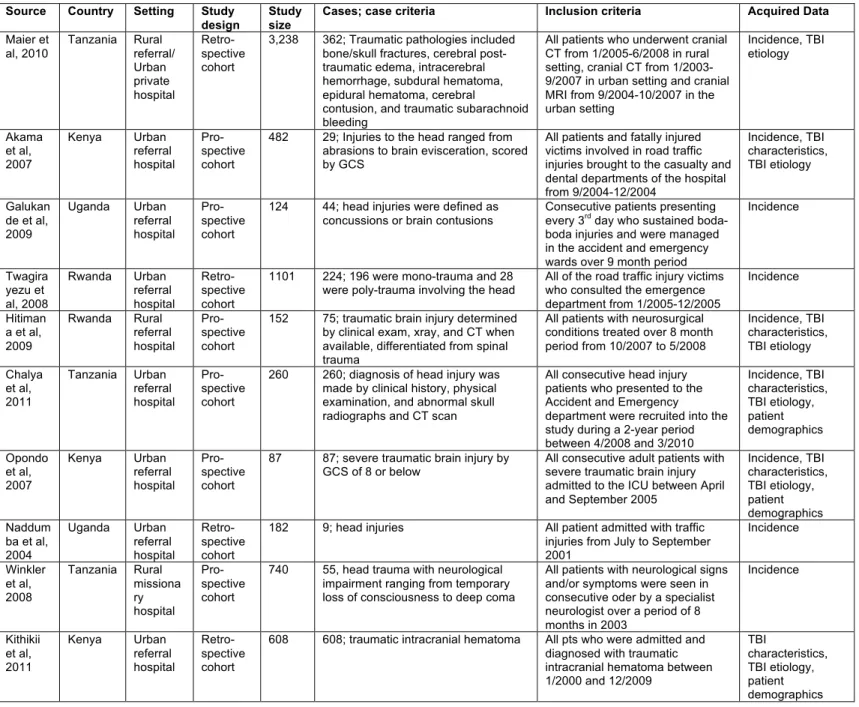
An initial MEDLINE search yielded 1,798 English articles published after January 2002, which were reviewed by title and abstract to yield 179 articles involving an African population. Two articles obtained from this search studied an East African population and addressed TBI.13,16 Six articles were obtained from African journal website searches.10,11,14,15,17,19 An additional two articles were obtained after being identified in reference sections.12,18 Of the ten studies used, three took place in Tanzania, three took place in Kenya, two took place in
Uganda, two took place in Rwanda, and none took place in Burundi. A brief description of each study, including country, setting, study design, number of patients, case criteria, inclusion criteria, and result section data was used for is summarized in Table 1. Variation in study design and inclusion criteria necessitates cautious comparison.
Incidence
None of the studies reported overall hospital incidence, however many studies reported
the incidence of TBI among other subpopulations. Chalya et al. found that head injury patients presenting to a Tanzanian urban referral hospital represented 21% of 12,140 trauma patients
over a 2-year period.15 In Tanzania, Maier et al. found that among patients receiving cranial CT scans, 10.3% had traumatic pathologies in the urban private hospital setting and 21.6% had traumatic pathologies in the rural referral hospital setting.13 At the same rural hospital, prior to becoming a referral hospital and obtaining a CT scan, head trauma represented 6% of all
hospital in Uganda had head injuries,12 which by 2009 increased to over 35% of boda-boda injury patients presenting with head injury.10 Rwanda’s national referral hospital found that 18% of road traffic injury patients presented with head injury as mono-trauma while an additional 2% experienced poly-trauma involving the head.11 Another Rwanda study found that traumatic brain injury represented 49.3% of all neurosurgical admissions.14
TBI Characteristics
Several studies reported on the severity of TBI in admitted patients. For the purposes of this review, mild TBI is GCS of 13 through 15, moderate TBI is GCS of 9 through 12, and severe TBI is a GCS of 8 or below. Of patients with head injury from a road traffic accident, 52% were reported as mild TBI, whereas 31% were reported as moderate TBI, and 17% were reported as severe TBI at a Kenyan urban referral hospital.16 In the same hospital, 39% of traumatic
intracranial hematomas caused mild TBI, 33% of traumatic intracranial hematomas caused moderate TBI, and 24% of traumatic intracranial hematomas caused severe TBI. The mortality
rates for mild, moderate, and severe TBI in these patients were 3%, 11%, and 59%
respectively.19 In a Tanzanian urban referral hospital, 66% of patients sustained a mild TBI, 20%
of patients sustained a moderate TBI, and 14% of patients sustained a severe TBI. The
mortality rates for these patients were 14%, 24%, and 62% respectively.15 Hitimana et al. found that 47% of neurosurgical head injury patients had mild TBI, 9% had moderate TBI, and 28% had severe TBI at a Rwandan rural referral hospital. The mortality rates for these patients were 0%, 14%, and 52% respectively.14 In a Kenyan study that only investigated severe traumatic brain injury, a mortality rate of 54% was reported.17
intracerebral hematomas, and 7% had subarachnoid hemorrhage.15 In addition, 42% of TBI patients presented with a history of loss of consciousness, 19% of TBI patients presented with a systolic blood pressure (SBP) of 90 mmHg or below, and 14% sustained additional injuries that were severe (Injury Severity Score, ISS ≥ 16). Mortality, which occurred in 11% of patients, was found to be significantly associated with extremes of age, comorbid conditions, severe ISS, severe TBI by GCS, SBP < 90 mmHg, loss of consciousness duration, need for ICU admission, and space occupying lesion on CT scan.15 Of patients admitted to a Kenyan urban referral hospital with a diagnosis of traumatic intracranial hematoma, 48% had extradural hematoma, 42% had subdural hematomas, 28% had skull fractures, 21% had intracranial hemorrhage, and 8% had brain contusions. A history of a loss of consciousness, which occurred in 67% of these patients, along with poor GCS and extremes of age were significantly associated with mortality in these patients.19
TBI Etiologies
Many studies reported that road traffic injuries caused the majority of TBI in urban settings but this was not necessarily the case in rural settings. Medical records of cranial CT
hospital, 59% of patients experienced severe TBI due to a motor vehicle injury, while 32% and 2% experienced severe TBI due to assaults and falls, respectively.17 In the same hospital, traumatic intracranial hematomas were caused by assault, motor vehicle collisions, and falls in 28%, 15%, and 14% of patients, respectively.19
Many studies investigated TBI etiology as it relates to TBI incidence and mortality. According to Akama et al., head injury was the predominant cause of death among those fatally injured following a road traffic accident; it was identified as the sole cause of death in 14% of fatally injured patients and a contributor to the cause of death in an additional 22% of fatally injured patients. Of these patients, 48% had SDH, 29%, had skull fractures, 23% had brain contusions/lacerations, and 6% had brain evisceration on autopsy. Also, pedestrians
represented more head injury cases (55%) than either passengers (24%) or drivers (21%).16 In rural Rwanda, Hitimana et al. found that 71% of road traffic injuries resulted in TBI and among all neurosurgical pathology etiologies, road traffic injuries accounted for the most deaths (44%). In this study population, 15% of falls, 9% of assaults, and 3% of other incidents (e.g. landslide,
sports) resulted in head injury. Of note, 79% of TBI patients were admitted within 24 hours of injury/symptom onset, while 16% were admitted within one week and 5% were admitted after 2
weeks.14
Patient Demographics
to 60 year olds who represented 21% of patients, and patients over 60 years old who
Discussion
This systematic review sought to analyze the data regarding the epidemiology of TBI in East Africa within the past decade. Variation between countries, hospital settings, and inclusion criteria complicate extrapolation, however, some themes were observed. Patients with TBI represented a substantial proportion of traumatic and neurological pathology in these hospitals. Most patients presented to the hospital with mild TBI as opposed to moderate or severe TBI. Road traffic injuries resulted in a significant amount of TBI morbidity and mortality, especially in urban settings. Also, males and young to middle-aged individuals were disproportionately affected by TBI. The distribution of TBI severity and associated mortality rates among patients presenting for admission to the hospital was likely affected by accessibility, affordability, awareness, and availability of pre- and in-hospital care. Much of the data presented here is consistent with the epidemiology of TBI in other developing low- and middle-income countries in Sub-Saharan Africa.4,20-22
Although this compilation of data is interesting and informative, this systematic review is
limited by contextual variety, methodological shortcomings of studies, and lack of
generalizability. This review highlights the need for demographic surveillance tools, including
References
1. World Health Organization. Neurological disorders : public health challenges. Geneva: World Health Organization; 2006.
2. Hyder AA, Wunderlich CA, Puvanachandra P, Gururaj G, Kobusingye OC. The impact of traumatic brain injuries: a global perspective. NeuroRehabilitation. 2007;22(5):341-353.
3. Langlois JA, Rutland-Brown W, Wald MM. The epidemiology and impact of traumatic brain injury: a brief overview. The Journal of head trauma rehabilitation. Sep-Oct
2006;21(5):375-378.
4. Kraus JF, McArthur DL. Epidemiologic aspects of brain injury. Neurol Clin. May 1996;14(2):435-450.
5. Bener A, Omar AO, Ahmad AE, Al-Mulla FH, Abdul Rahman YS. The pattern of traumatic brain injuries: a country undergoing rapid development. Brain injury : [BI]. Feb 2010;24(2):74-80.
6. Peden M, Scurfield R, Sleet D, et al. World Health Organization World Report on Traffic Injury Prevention. 2004;
http://www.who.int/violence_injury_prevention/publications/road_traffic/world_report/en/index.ht ml. Accessed 12 Apr 2012.
7. Nantulya VM, Reich MR. The neglected epidemic: road traffic injuries in developing countries. Bmj. May 11 2002;324(7346):1139-1141.
8. Georgoff P, Meghan S, Mirza K, Stein SC. Geographic variation in outcomes from severe traumatic brain injury. World Neurosurg. Aug-Sep 2010;74(2-3):331-345.
9. Harris OA, Bruce CA, Reid M, et al. Examination of the management of traumatic brain injury in the developing and developed world: focus on resource utilization, protocols, and practices that alter outcome. J Neurosurg. Sep 2008;109(3):433-438.
10. Galukande M, Jombwe J, Fualal J, Gakwaya A. Boda-boda injuries a health problem and a burden of disease in Uganda: a tertiary hospital survey. East and Central Afr J Surg.
July/Aug 2009;14(2):33-37.
11. Twagirayezu E, Teteli R, Bonane A, Rugwizangoga E. Road traffic injuries at Kigali University Central Teaching Hospital, Rwanda. East and Central Afr J Surg. March/April 2008;13(1):73-76.
12. Naddumba EK. A cross-sectional retrospective study of boda boda injuries at Mulago Hospital in Kampala, Uganda. East and Central Afr J Surg. 2004;9(1):44-47.
13. Maier D, Doppler M, Gasser A, et al. Imaging-based disease pattern in a consecutive series of cranial CTs and MRIs in a rural and an urban Tanzanian hospital: a comparative, retrospective, neuroradiological analysis. Wien Klin Wochenschr. Oct 2010;122 Suppl 3:40-46.
14. Hitimana J, Perez M, Kinasha A, Kakande I. Clinical presentation and outcome of neurosurgical conditions at Butare Teaching Hospital, Rwanda. East and Central Afr J Surg.
March/April 2009;13(1):50-56.
15. Chalya PL, Kanumba ES, Mabula JB, Giiti G, Gilyoma JM. Aetiological spectrum, injury characteristics, and treatment outcome of head injury patients at Bugando Medical Centre in north-western Tanzania. Tanzania Journal of Health Resources. 2011;13(1):93-102.
16. Akama MK, Chindia ML, Macigo FG, Guthua SW. Pattern of maxillofacial and associated injuries in road traffic accidents. East Afr Med J. Jun 2007;84(6):287-295.
17. Opondo EA, Mwangombe NJM. Outcome of severe traumatic brain injury at a critical care unity: a review of 87 patients. The Annals of Afr Surg. Nov 2007;1:3-9.
18. Winkler AS, Mosser P, Matuja W, Schmutzhard E. Neurological disorders in rural Africa: a systematic approach. Afr J Neuro Sci. 2008;27(2):19-29.
19. Kithikii KP, Githinji KJ. Risk factors related to hospital mortality in Kenyan patients with traumatic intracranial haematomas. East Cent Afr J Surg (Online). 2011;Find at:
20. Solagberu BA. Spinal cord injuries in Ilorin, Nigeria. West African Journal of Medicine.
2002;21(3):230-232.
21. Nell VB, D. S. O. Epidemiology of Traumatic Brain Injury in Johannesburg-II. Morbidity, Mortality and Etiology. Social Science Medicine. 1991;33(3):289-296.
Table 1. Description of sources included in the mini-systematic review
Source Country Setting Study design
Study size
Cases; case criteria Inclusion criteria Acquired Data
Maier et al, 2010
Tanzania Rural referral/ Urban private hospital Retro-spective cohort
3,238 362; Traumatic pathologies included bone/skull fractures, cerebral post-traumatic edema, intracerebral hemorrhage, subdural hematoma, epidural hematoma, cerebral
contusion, and traumatic subarachnoid bleeding
All patients who underwent cranial CT from 1/2005-6/2008 in rural setting, cranial CT from 1/2003-9/2007 in urban setting and cranial MRI from 9/2004-10/2007 in the urban setting Incidence, TBI etiology Akama et al, 2007
Kenya Urban referral hospital
Pro-spective cohort
482 29; Injuries to the head ranged from abrasions to brain evisceration, scored by GCS
All patients and fatally injured victims involved in road traffic injuries brought to the casualty and dental departments of the hospital from 9/2004-12/2004
Incidence, TBI characteristics, TBI etiology
Galukan de et al, 2009
Uganda Urban referral hospital
Pro-spective cohort
124 44; head injuries were defined as concussions or brain contusions
Consecutive patients presenting every 3rd day who sustained
boda-boda injuries and were managed in the accident and emergency wards over 9 month period
Incidence
Twagira yezu et al, 2008
Rwanda Urban referral hospital
Retro-spective cohort
1101 224; 196 were mono-trauma and 28 were poly-trauma involving the head
All of the road traffic injury victims who consulted the emergence department from 1/2005-12/2005
Incidence
Hitiman a et al, 2009
Rwanda Rural referral hospital
Pro-spective cohort
152 75; traumatic brain injury determined by clinical exam, xray, and CT when available, differentiated from spinal trauma
All patients with neurosurgical conditions treated over 8 month period from 10/2007 to 5/2008
Incidence, TBI characteristics, TBI etiology Chalya et al, 2011
Tanzania Urban referral hospital
Pro-spective cohort
260 260; diagnosis of head injury was made by clinical history, physical examination, and abnormal skull radiographs and CT scan
All consecutive head injury patients who presented to the Accident and Emergency department were recruited into the study during a 2-year period between 4/2008 and 3/2010
Incidence, TBI characteristics, TBI etiology, patient demographics Opondo et al, 2007
Kenya Urban referral hospital
Pro-spective cohort
87 87; severe traumatic brain injury by GCS of 8 or below
All consecutive adult patients with severe traumatic brain injury admitted to the ICU between April and September 2005
Incidence, TBI characteristics, TBI etiology, patient demographics Naddum
ba et al, 2004
Uganda Urban referral hospital
Retro-spective cohort
182 9; head injuries All patient admitted with traffic injuries from July to September 2001
Incidence
Winkler et al, 2008
Tanzania Rural missiona ry hospital Pro-spective cohort
740 55, head trauma with neurological impairment ranging from temporary loss of consciousness to deep coma
All patients with neurological signs and/or symptoms were seen in consecutive oder by a specialist neurologist over a period of 8 months in 2003
Incidence
Kithikii et al, 2011
Kenya Urban referral hospital
Retro-spective cohort
608 608; traumatic intracranial hematoma All pts who were admitted and diagnosed with traumatic intracranial hematoma between 1/2000 and 12/2009
TBI
Potential Economic Benefit of Treatment for Severe Traumatic Brain Injury in Uganda:
Research Master’s Paper
Introduction
Traumatic brain injury (TBI) is a leading cause of morbidity and mortality, resulting in death or hospitalization for at least 10 million people every year.1,2 Globally, TBI contributes to an estimated 425 years of healthy life lost due to disability (YLDs) per 100,000 annually, making it the foremost cause of death and disability in people under the age of 40 years old. As of 1996, worldwide approximately 57 million people were living with TBI serious enough to require at least one hospitalization.1-3 The largest burden of disease attributable to TBI is in low- and middle- income countries (LMICs), particularly those within sub-Saharan Africa. Increasing trends in incidence of TBI in these countries are due to greater population density and higher rates of injury.1,3 Limited health care access and resources further exacerbate TBI death and disability. For example, an estimated 15% of incident skull fracture injury patients receive treatment in sub-Saharan Africa compared to 90% in high-income countries.4 LMICs are also known to experience worse outcomes and higher mortality rates associated with severe TBI,
defined by a Glasgow Coma Scale (GCS) score from 3 to 8, when compared to high- and middle-income countries.5,6 Given its predilection for young adults and projected increase in incidence within the next decade, TBI death and disability will continue to affect the most productive sector of the sub-Saharan African workforce.3
reduce the significant economic burden posed by TBI in low and middle income countries (LMICs). Unfortunately, standardization of treatment across a wide variety of settings is complicated by severe resource limitations within many of the countries that are
disproportionately affected.6 This reality necessitates evidence-based decision making in
resource allocation prioritization and health care sector planning. Cost-effectiveness analysis is a mechanism used by policymakers in many countries and the World Health Organization for determining whether the initiation or continuation of a medical or surgical intervention is
providing benefit that is reasonably proportional to cost.10,11 Although interventions focusing on infectious disease (e.g. immunizations) have been traditionally emphasized throughout the global health community for their low benefit to cost ratios, recent evidence suggests that surgical treatment and emergency care for potentially disabling traumatic injuries are comparably cost-effective.12-14
While the economic burden on TBI in the United States has been extensively studied,15 we are not aware of any studies assessing the potential economic impact of treatment for TBI in
a sub-Saharan African (SSA) or other LMIC. For this study, we used a cohort of patients with severe TBI at the primary national hospital in Uganda as a case study to evaluate the benefit in
Methods
Setting and Subjects
New Mulago Hospital is a 1,500-bed national referral hospital located in Kampala, which is the largest city and capital of Uganda. It serves approximately 1.6 million people living in Kampala residents and 1.5 million people living in neighboring districts and beyond.16 Since 2007, the hospital has benefited from a twinning program with Duke University Medical Center and Duke Global Health Institute called the Duke Global Health PLUS (Placement of Life-changing and Usable Surplus) Program. The Duke Global Health PLUS Program provided contextually appropriate anesthesia machines, hemodynamic monitoring equipment, and
surgical equipment for the five elective operating rooms, a recovery room, and an intensive care unit (ICU) at New Mulago Hospital. Additionally, the program began training camps run by Duke neurosurgeons, anesthesiology personnel, surgical operating room nurses and technicians, ICU specialists, recovery and floor nurses and clinical engineers. Annual training camps and
continuing medical educations (CME) courses are held for four of Uganda’s five neurosurgeons,
in addition to Ugandan anesthesiology personnel, nurses, and clinical engineers.
A 13-month period from May 2008 to June 2009 was selected as a representative
sample of patients with severe TBI (n=127) who were treated through the efforts of the New Mulago Hospital faculty and staff with support from the Duke Global Health PLUS Program. We performed secondary analysis of data collected through retrospective clinical surveillance on all patients who received conservative and surgical treatment for severe TBI, defined by a
Trauma Foundation guidelines. Therefore we assumed that all patients were treated in adherence to these guidelines to the extent possible given limitations associated with the resource setting.17 We scored each patient using the core International Mission for Prognosis and Analysis of Clinical Trials in TBI (IMPACT) model, which is an international, externally validated prognostic model that provides the probability of outcomes at 6 months following treatment by GOS category (i.e mortality represented by GOS 1, unfavorable outcome represented by GOS 2-3, and favorable outcome represented by GOS 4-5).18
Quantification of Averted DALYs
The DALY is a health parameter that measures premature mortality and morbidity associated with an illness or disease, where one DALY represents one year of healthy life lost. DALYs are calculated by adding years lost due to disability (YLD) to years of life lost (YLL) using the following basic formulas: DALYs = YLD + YLL, where YLD = I x D x DW, YLL = N x LD, I = incident cases, D = duration of illness, DW = disability weight (i.e. expert-derived
determinations of social preferences and valuations of health ranging from 0 to 1, where 0 represents complete health and 1 represents death), N = number of deaths and LD is life
expectancy at age of death. For the purpose of sensitivity analysis, DALY calculations are frequently modified to take into account discounting (i.e. factoring in preference for health in the present relative to health in the future) and age-weighting (i.e. factoring in relative value for a year of health life depending on age). By calculating the difference between DALYs in a cohort of treated individuals and DALYs in a cohort of counterfactual untreated individuals, averted DALYs are provided as a measure of the premature death and disability averted by treatment.19
on GOS category probabilities predicted using the IMPACT core model.18 Disability weights were determined for each GOS category using World Health Organization (WHO) definitions of disability weighting.20 The disability weight for GOS-1, that is death, is 1; GOS-2 and GOS-3, characterized by vegetative state and severe disability respectively, have a combined disability weight of 0.8275; and the most favorable outcome, GOS-4 and GOS-5, representing moderate disability and good recovery respectively, have a combined disability weight of 0.203. For simplification, outcome-associated disability weights were applied immediately at the age of the severe TBI diagnosis as opposed to 6 months following the severe TBI diagnosis as predicted by the IMPACT core model.18 Duration of illness was assumed to be the mean Ugandan life expectancy at the age of death.21 As recommended in the DALY literature, we calculated unweighted averted DALYs with no age-weighing or discounting (i.e. DALYs[0,0,0]); weighted averted DALYs with an age weighting factor that peaks at 25 years (β=0.04) and a 3% discount rate (i.e. DALYs[3,1,0.04]); and weighted averted DALYs with an age weighting factor peaking at two-thirds of mean Ugandan life expectancy during the study period (β=0.03) and a 3%
discount rate (i.e. DALYs[3,1,0.03]).22
Quantification of Economic Benefit
The potential benefits attributable to treatment for severe TBI were translated into economic terms using two methodologically sound approaches. Economists advocate
unweighted [0,0,0] and weighted [3,1,0.04] averted DALYs, respectively. The mean Uganda GNI per capita was calculated from the World Bank data.24
The VSL approach represents a more generous estimate of economic benefit that reflects the amount of money a group of people is willing to pay to reduce premature mortality. As such, the VSL approach takes the value of welfare into consideration more so than the value of productivity produced by the human capital approach.23,25,26 Uganda, like many LMICs, does not report a VSL, thus country-specific VSL was estimated using of the VSL in the USA using the following formula: VSL(Uganda) = VSL(USA)*[GNI(Uganda)/GNI(USA)]IE-VSL, where VSL(USA) is $8.3 million (in 2012 USD),27,28 GNIs(USA) is $46,380 (in 2012 USD) and
GNI(Uganda) is $1,180 (in 2012 USD),24 and IE-VSL is income elasticity of VSL (IE-VSL of 0.55 estimates the upper limit and IE-VSL of 1.5 estimates the lower limit of VSL).23,29 We then calculated the economic benefit with the VSL approach using the following formula: Economic benefit = V*avertedDALYs(3,1,0.03), where V is the constant value of a statistical life year.25,29
To estimate broader health and economic benefit, we calculated the average averted
DALYs and economic gain per patient for each method by dividing the total averted DALYs and economic benefit by the number of patients in each group. Assuming the New Mulago Hospital
Results
Clinical Data
One hundred twenty-seven patients received treatment for severe TBI at New Mulago Hospital from May 2008 to June 2009. The mean age at treatment was 26 years and 69% of the patients were under the age of 40 years (n=88). Road traffic accidents (68%) and assault (17%) accounted for the majority of cases. Of the 28 patients who underwent neurosurgery, half received craniotomies, 8 received craniectomies, and 6 received burr holes. The in-hospital surgical mortality rate was 53%. Sixteen surgical patients (57%) were discharged or died with improved GCS scores (i.e. greater than 8). The majority of patients were treated conservatively (n=99); 18% of conservatively treated patients died before discharge and 84% were discharged or died with improved GCS scores.
Averted DALYs and Economic Benefit
One hundred twenty-seven cases of severe TBI were treated at New Mulago Hospital
averting 1,448 DALYs [0,0,0], 1,075 DALYs [3,1,0.04], or 974 DALYs [3,1,0.03] (Table 1). Using the human capital approach, the economic benefit of intervention ranged from
Discussion
To our knowledge, this study is the first to attempt quantification of the health and economic benefits of conservative and neurosurgical treatment for severe TBI in an LMIC or in SSA. Traumatic brain injury is a leading cause of loss of life and function in the developing world. Consistent with the findings in our study, the majority of TBI in countries worldwide is caused by road traffic injuries.31 LMICs have the highest disease burden of TBI due to massive growth in motor vehicle numbers, higher numbers of people injured per crash, poor enforcement of traffic safety regulations, inadequate public health infrastructure, and poor access to health services.1,3,32 Moreover, our study demonstrated TBI’s predilection for males and young adults, who are the most productive sector of the developing world workforce. Given the growing incidence of TBI, and understanding of the health and economic burden associated with TBI is paramount.3
Data on the burden of disease attributable to TBI in SSA are based on expert-derived estimates due to lack of standardized TBI surveillance systems in most countries throughout the
world. Increased data collection efforts are required in order to strengthen our understanding of the most pressing problems affecting LMICs. In the present study, we used the data from a
cohort of patients at the national referral hospital of Uganda to evaluate the long-term impact of treatment for severe TBI during a 13-month study period. This cohort was used as a
economic benefit of $3.3 million (VSL approach) for patients treated all throughout Uganda over the course of 13-months.
The present study is limited by its reliance on a set of assumptions. Long-term data was not available for any of the patients, which necessitated the use of a predictive model. While the IMPACT models have been externally validated and are widely used, other prognostic models have been shown to be more accurate for cohorts with TBI in LMICs.18,33,34 However, our data set contained an inadequate amount of detail to fill in all of the variables necessary to compute outcome probabilities using these other models. Another limitation is the lack of published literature investigating the effects of severe TBI on the life expectancy of Ugandans. While severe TBI has been shown to confer an increased risk of mortality in high-income countries, the practical effect that this may have on premature mortality given poorer general health and shorter life expectancies remains unclear.30,35 Also, many studies that assess the economic benefit associated with treatment include the treatment cost per averted DALY, however, inadequate cost data prevented us from doing so.25,29 Finally, the limitations associated with
using averted DALYs as an appropriate measure of avoidable morbidity and mortality, have been well-documented elsewhere.36,37
Conclusions
References
1. Hyder AA, Wunderlich CA, Puvanachandra P, Gururaj G, Kobusingye OC. The impact of traumatic brain injuries: a global perspective. NeuroRehabilitation. 2007;22(5):341-353.
2. Langlois JA, Rutland-Brown W, Wald MM. The epidemiology and impact of traumatic brain injury: a brief overview. J Head Trauma Rehabil. Sep-Oct 2006;21(5):375-378.
3. World Health Organization. Neurological disorders : public health challenges. Geneva: World Health Organization; 2006.
4. Lopez AD, Disease Control Priorities Project. Global burden of disease and risk factors. New York, NY; Washington, DC: Oxford University Press; World Bank; 2006.
5. Georgoff P, Meghan S, Mirza K, Stein SC. Geographic variation in outcomes from severe traumatic brain injury. World Neurosurg. Aug-Sep 2010;74(2-3):331-345.
6. Harris OA, Bruce CA, Reid M, et al. Examination of the management of traumatic brain injury in the developing and developed world: focus on resource utilization, protocols, and practices that alter outcome. J Neurosurg. Sep 2008;109(3):433-438.
7. Stein SC, Georgoff P, Meghan S, Mizra K, Sonnad SS. 150 years of treating severe traumatic brain injury: a systematic review of progress in mortality. J Neurotrauma. Jul 2010;27(7):1343-1353.
8. De Silva MJ, Roberts I, Perel P, et al. Patient outcome after traumatic brain injury in high-, middle- and low-income countries: analysis of data on 8927 patients in 46 countries. Int J Epidemiol. Apr 2009;38(2):452-458.
9. Haglund MM, Kiryabwire J, Parker S, et al. Surgical capacity building in Uganda through twinning, technology, and training camps. World J Surg. Jun 2011;35(6):1175-1182.
10. Jamison DT, World Bank., Disease Control Priorities Project. Disease control priorities in developing countries. 2nd ed. New York, NY; Washington, DC: Oxford University Press; World Bank; 2006.
11. Cost-Effectiveness Analysis. In: Jamison DT, Breman JG, Measham AR, et al., eds.
Priorities in Health. Washington (DC)2006.
12. Gosselin RA, Heitto M. Cost-effectiveness of a district trauma hospital in Battambang, Cambodia. World journal of surgery. Nov 2008;32(11):2450-2453.
13. Gosselin RA, Maldonado A, Elder G. Comparative cost-effectiveness analysis of two MSF surgical trauma centers. World journal of surgery. Mar 2010;34(3):415-419.
14. McCord C, Chowdhury Q. A cost effective small hospital in Bangladesh: what it can mean for emergency obstetric care. International journal of gynaecology and obstetrics: the official organ of the International Federation of Gynaecology and Obstetrics. Apr 2003;81(1):83-92.
15. Finkelstein EA, Corso PS, Miller TR. The Incidence and Economic Burden of Injuries in the United States. New York: Oxford University Press; 2006.
16. African Development Bank Group. Improvement of Health Services Delivery at Mulago Hospital and in the City of Kampala: Environmental and Social Management Plan (ESMP) Summary. 2011; http://www.afdb.org/en/documents/ - c. Accessed 11 July, 2012.
17. Guidelines for the management of severe traumatic brain injury. J Neurotrauma. 2007;24 Suppl 1:S1-106.
18. Steyerberg EW, Mushkudiani N, Perel P, et al. Predicting outcome after traumatic brain injury: development and international validation of prognostic scores based on admission characteristics. PLoS Med. Aug 5 2008;5(8):e165; discussion e165.
20. Murray CJ. Quantifying the burden of disease: the technical basis for disability-adjusted life years. Bull World Health Organ. 1994;72(3):429-445.
21. World Health Organization. Global Health Observatory Data Repository: Life tables (Uganda). 2009; http://apps.who.int/ghodata/?vid=720. Accessed 11 July, 2012.
22. The World Bank. Life expectancy at birth, total (years).
http://data.worldbank.org/indicator/SP.DYN.LE00.IN. Accessed 11 July, 2012.
23. Viscusi WK, Aldy JE. The value of a statistical life: a critical review of market estimates throughout the world. J Risk Uncertain. 2003;27:5-76.
24. The World Bank. GNI per capita, PPP (current international $).
http://data.worldbank.org/indicator/NY.GNP.PCAP.PP.CD/countries. Accessed 11 July, 2012.
25. Alkire B, Hughes CD, Nash K, Vincent JR, Meara JG. Potential economic benefit of cleft lip and palate repair in sub-Saharan Africa. World J Surg. Jun 2011;35(6):1194-1201.
26. Corlew DS. Estimation of impact of surgical disease through economic modeling of cleft lip and palate care. World journal of surgery. Mar 2010;34(3):391-396.
27. Environmental Protection Agency. Value of a statistical life analysis and environmental policy: a white paper for presentation to science advisory board - environmental economics advisory committee.
http://yosemite.epa.gov/ee/epa/eerm.nsf/vwRepNumLookup/EE-0483?OpenDocument Accessed 11 July, 2012.
28. Environmental Integrity Project. EIP report: cost of deaths from 18 coal-fired power plants' pollution higher than value of electricity generated.
http://www.environmentalintegrity.org/news_reports/06_07_2012.php. Accessed 11 July, 2012.
29. Warf BC, Alkire BC, Bhai S, et al. Costs and benefits of neurosurgical intervention for infant hydrocephalus in sub-Saharan Africa. Journal of neurosurgery. Pediatrics. Nov 2011;8(5):509-521.
30. World Bank. Uganda: World Development Indicators. (2010); data.worldbank.org/country/uganda. Accessed 12 Jun, 2012.
31. Peden M, Scurfield R, Sleet D, al. e. World Health Organization World Report on Traffic Injury Prevention. 2004;
http://www.who.int/violence_injury_prevention/publications/road_traffic/world_report/en/i ndex.html. Accessed 12 April, 2012.
32. Nantulya VM, Reich MR. The neglected epidemic: road traffic injuries in developing countries. Bmj. May 11 2002;324(7346):1139-1141.
33. Perel P, Arango M, Clayton T, et al. Predicting outcome after traumatic brain injury: practical prognostic models based on large cohort of international patients. Bmj. Feb 23 2008;336(7641):425-429.
34. Petroni G, Quaglino M, Lujan S, et al. Early prognosis of severe traumatic brain injury in an urban argentinian trauma center. J Trauma. Mar 2010;68(3):564-570.
35. Ventura T, Harrison-Felix C, Carlson N, et al. Mortality after discharge from acute care hospitalization with traumatic brain injury: a population-based study. Arch Phys Med Rehabil. Jan 2010;91(1):20-29.
36. Anand S, Hanson K. Disability-adjusted life years: a critical review. J Health Econ. Dec 1997;16(6):685-702.
Table 1. Total DALYs averted from severe TBI treatment at New Mulago Hospital
Table 1. Total DALYs averted from severe TBI treatment at New Mulago Hospital Treatment Cases Total DALYs Averted
DALYs [3,1,0.04] DALYs [0,0,0] DALYs [3,1,0.03]
Conservative 99 952 1286 860
Neurosurgical 28 123 162 114
Table 2. Economic benefit of severe TBI at New Mulago Hospital (in USD)
Table 2. Economic benefit of severe TBI at New Mulago Hospital (in USD)
Methodology Lower Limit Upper Limit
Conservative
Human Capital $1,123,360 $1,517,480
VSL $249,791 $9,818,041
Neurosurgical
Human Capital $145,140 $192,340
VSL $33,112 $1,301,461
Total
Human Capital $1,268,500 $1,708,640
Table 3. Economic gain per patient (in USD)
Table 3. Economic gain per patient (in USD) Methodology Lower Limit Upper Limit Conservative
Human Capital $11,347.07 $15,328.08 VSL $2,523.14 $99,172.13 Neurosurgical
Human Capital $5,183.57 $6,869.29 VSL $1,182.57 $46,480.75 Total