...
Is the delivery of supplemental oxygen via the Vapotherm 2000i (Vapotherm, Inc., Stevensville, MD) superior to delivery via standard nasal cannula
in the treatment of postoperative hypoxemia, defined as an Sa02 < 94% on room air?
A Study Design
By
Juliann Cotter Hobbs
A Master's Paper submitted to the faculty of the University of North Carolina at Chapel Hill in partial fulfillment of the requirements for the degree of Master
of Public Health in the Public Health Leadership Program.
Chapel Hill
2005
ABSTRACT
Surgical patients commonly experience postoperative, post-extubation hypoxia, which may require re-intubation. Endotracheal intubation and mechanical ventilation are associated with a number of complications, such as laryngotracheal injury, patient discomfort, ventilator-associated pneumonia and ventilator-associated lung injury. Avoiding reintubation postoperatively would help to prevent these complications in hypoxemic postoperative patients.
There is some evidence that noninvasive ventilation, particularly
continuous positive airway pressure (CPAP), is effective in treating postoperative hypoxemia. The Vapotherm 2000i (Vapotherm, Inc., Stevensville, MD) is anew, noninvasive device that delivers high-flow, warmed and humidified oxygen via nasal cannula in a way that mimics CPAP. Recent evidence supporting the use of CP AP in the treatment of postoperative hypoxemia suggests that V apotherm might also be effective in select postoperative patients, allowing them to avoid re-intubation. The following paper includes a systematic review of the literature dealing with the use of noninvasive ventilation to treat postoperative hypoxemia, as well as the literature concerning the V apotherm 2000i.
A research plan is described for a pilot study examining the safety and feasibility of using the V apotherm 2000i in relatively healthy adults with
OUTLINE
1. INTRODUCTION
2. SYSTEMATIC REVEW OF THE LITERATURE a. Methods for Literature Review
b. Results of Literature Review i.Postoperative Hypoxemia
ii. Complications of Intubation and Mechanical Ventilation
iii.Noninvasive Positive Pressure Ventilation (NIPPV) iv.Studies ofNIPPV in Postoperative Patients
1. Randomized Controlled Trials of CP AP 2. Case Series of CP AP
v.Studies ofVapotherm vi. Equipment Investigations 3. RESEARCH PLAN
a. Research Design i.Patient Population
1. Sample Size 2. Inclusion Criteria 3. Exclusion Criteria ii.Recruitment and Consent iii.Jntervention
iv. Criteria for Intubation v. Outcome Measures b. Statistical Analysis c. Results
i.Table 1. Patient Demographics ii.Table 2. Outcome Measures 4. DISCUSSION
5. REFERENCES 6. APPENDIX
a. Table 1. Studies of CPAP in Postoperative Patients b. Table 2. Studies ofVapotherm
INTRODUCTION
Surgical patients conunonly experience postoperative, post-extubation hypoxia that, while generally transient, may require re-intubation. There is some evidence that noninvasive ventilation, particularly continuous positive airway pressure (CPAP), is effective in treating postoperative hypoxemia. The Vapotherm 2000i (Vapotherm, Inc., Stevensville, MD) is a new, noninvasive device that delivers high-flow, warmed and humidified oxygen via nasal cannula. While not a ventilator itself, the Vapotherm mimics CP AP in its mode of oxygen delivery. Recent evidence supporting the use of CP AP in the treatment of postoperative hypoxemia suggests that Vapotherm might also be effective in select postoperative patients, allowing them to avoid re-intubation. Because of its ability to warm and humidify, the Vapotherm can deliver oxygen at higher
tolerable flow rates than CP AP. Additionally, the warming feature, unavailable with CP AP, allows the use of Vapotherm in the treatment of postoperative hypothermia. The ability to deliver flow rates of oxygen higher than those tolerable with CP AP, traditional nasal cannula or face mask could make the V apotherm a superior treatment for postoperative hypoxemia. This paper presents a systematic review of the literature to inform a research plan for a pilot study examining the feasibility of using the Vapotherm 2000i to decrease the rate of re-intubation among relatively healthy adult patients at UNC Hospitals who experience postoperative hypoxemia.
-SYSTEMATIC REVIEW OF THE LITERATURE
Methods for Literature Review
A PubMed search was conducted March 31, 2005 using the search terms "noninvasive positive pressure ventilation" and "postoperative hypoxemia." It was limited to humans and included all years for which PubMed has data. This search returned only one result. A second search using the same limits and the search terms "noninvasive positive pressure ventilation" and "postoperative respiratory failure" returned 11 articles. The majority of articles addressed the use of noninvasive positive pressure ventilation (NIPPY) in patients with acute respiratory failure secondary to chronic disease, such as COPD or asthma. However, review of those papers and their reference lists revealed a number of articles regarding the use of NIPPY in patients with postoperative respiratory failure. References to abstracts alone were excluded. The search yielded a total of 5 articles, which are summarized in Table 1 in the Appendix. Another PubMed search using the term "V apotherm" returned 2 articles. One of those was an equipment investigation. The other is summarized in Table 2 in the Appendix.
Additionally, 31 abstracts, published in the November, 2004 issue of
Results of Literature Review (see Appendix Tables 1 - 2)
Postoperative Hypoxemia
"Hypoxemia" can be defined by a number of measurements taken on room
air, such as partial pressure of oxygen (P02)::;: 60 torr, arterial oxygen saturation
(Sa02) ::;: 90%, or arterial partial pressure of oxygen I fraction of inspired oxygen
ratio (Pa02/Fi02)::;: 200. The hypothesized explanations for postoperative
hypoxemia include the loss of functional alveolar units due to atelectasis, as well
as ventilation/perfusion mismatch.u Estimates of the incidence of postoperative
hypoxemia vary, partly because more inclusive outcomes such as postoperative pulmonary complications may include a number of more specific processes such as atelectasis, pneumonia, and pulmonary embolism? The incidence of
postoperative pulmonary complications has been estimated to be 5-1 0% among all
surgical patients and 4-22% among abdominal surgical patients.3 Postoperative
hypoxemia is estimated to occur in 30-50% of patients undergoing abdominal
surgery and 8-1 0% of those patients may require intubation and mechanical
ventilation.'· 2 Some authors distinguish between early postoperative arterial
hypoxemia (EP AH), which occurs within hours after surgery, and late
postoperative arterial hypoxemia (LP AH). Among all surgical patients, the
incidence ofEPAH is 41-55%. The incidence ofLPAH is 41-50% among
patients who have undergone major abdominal or thoracic surgery.4
-Complications of Intubation and Mechanical Ventilation
Endotracheal intubation and mechanical ventilation are associated with a number of complications, such as laryngotracheal injury, patient discomfort, ventilator-associated pneumonia (V AP) and ventilator-associated lung injury (VALI).5·7 VALl includes: I) barotrauma, which may lead to pneumothorax,
pneumoperitoneum, or pneumomediastinum; 2) volutrauma, which may lead to pulmonary edema; 3) atelectrauma, and 4) biotrauma, which results in release of inflammatory mediators. 6 Thus, avoiding prolonged intubation or reintubation postoperatively would help to prevent these complications in hypoxemic postoperative patients.
Noninvasive Positive Pressure Ventilation (NIPPV)
A number of alternatives to intubation and mechanical ventilation exist. The International Consensus Conferences in Intensive Care Medicine defines the term noninvasive positive pressure ventilation (NIPPY) as "any form of
reviewed by Hess (2004),9 Abou-Shala eta! (1996),10 Meyer and Hill (1994)11 and Evans (200Il
Considering the evidence supporting the use ofNPPV to treat ARF resulting from chronic disease, it follows that NIPPY could be effective in the treatment of postoperative respiratory failure. Unfortunately, few studies have been conducted specifically looking at postoperative patients. The existing literature is reviewed below.
Studies of NIPPV in Postoperative Patients
Randomized Controlled Trials of Continuous Positive Airway Pressure
(CPAP)
A recent randomized controlled trial conducted in Italy1 supports the use ofNIPPV in postoperative respiratory failure. Squadrone eta!. (2005)
randomized 209 postoperative patients to either a control treatment, oxygen via Venturi mask at an FiOz of 0.5, or the intervention, oxygen at an Fi02 of 0.5 plus
CPAP at 7.5 em H20. The subjects were elective abdominal surgery patients who developed hypoxemia in the postoperative period, defined by a Pa02/Fi02 ratio less than 300 after extubation and a one-hour screening test breathing
supplemental oxygen through a Venturi mask at an FiOz of0.3. Thus, these authors drew an arterial blood gas (ABG) on each subject.
Squadrone et al. defined extensive exclusion criteria for their study population (Appendix Table I), thus limiting their trial to relatively healthy patients without significant underlying cardiovascular or respiratory disease.
-7-Specifically, patients with a history of asthma or COPD were excluded. The primary outcome in this trial was incidence of intubation. Secondary outcomes included length of stay in the ICU, length of hospital stay, and incidences of pneumonia, infection, sepsis and mortality. The trial showed that the rate of intubation was higher in the control group (10%) than in the CPAP group (1%) (p=0.005). In fact, the trial was stopped early because the efficacy of CP AP was superior to that of oxygen alone. Patients treated with CP AP also had lower incidences of pneumonia (RR 0.19; 95% CI 0.01-0.76), infection (RR 0.27; 95% CI 0.07-0.94) and sepsis (RR 0.22, 95% CI0.04-0.99), and spent less time in the intensive care unit (1.4 days compared to 2.6 days, p=0.09).
those who have other types of surgery may be at higher risk for respiratory failure and CP AP may work differently in those patients. On the other hand, patients who undergo abdominal procedures may be at higher risk for respiratory failure d ue to mec amca 1mpaument. h . 1. . 12
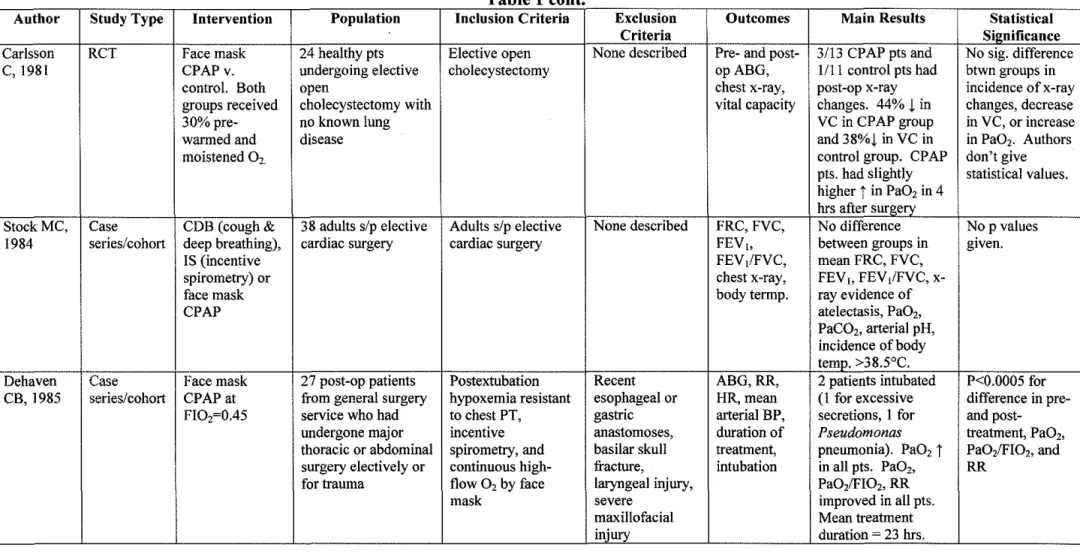
Carlsson et al.13 conducted a randomized controlled trial comparing supplemental oxygen by face mask with CP AP delivered by the same face mask as prophylactic treatment for pulmonary complications after abdominal surgery. They randomized twenty-four healthy patients undergoing elective open
cholecystectomy to receive either pre-warmed, moistened oxygen at 30%, or CPAP with 30% pre-warmed, moistened oxygen. None of the patients had underlying lung disease. Outcome measures included pre- and post-operative measurements of arterial blood gases and vital capacity, as well as pre- and post-operative chest x-rays. The investigator measuring vital capacity and collecting samples for ABG was not masked to treatment group as the treatment is visible. The investigator interpreting chest x-rays was, however, masked to treatment group.
Carlsson et a!. found that 3 out of 13 patients in the CP AP group and 1 out of 11 patients in the comparison group had changes in their chest x-rays. Patients in the CPAP group showed an average of 44% decrease in vital capacity after surgery, while the control group had an average decrease of38%. After surgery, Pa02 values were slightly higher in the CP AP group. While the authors do not
give specific values, they state that none of these differences between groups were statistically significant.
-9-There are a number of problems with this trial. First, the sample size is small. Second, the only inclusion criterion was having undergone elective open cholecystectomy. Third, the authors state that none of the patients had known lung disease, but they do not define any other exclusion criteria. Fourth, no statistical values are given. Finally, subjects were only followed through 24 hours after surgery. Adverse outcomes which can occur after 24 hours postoperatively and which may be related to intubation and mechanical ventilation, such as pneumonia, are not discussed.
Stock et al.14 conducted a small randomized study comparing three modes of respiratory therapy in postoperative patients: CP AP by face mask, incentive spirometry (IS) and cough/deep breathing (CDB). They randomized 38 adults scheduled for elective cardiac surgery to one of the three treatments. Therapy was started 2 hours after extubation. Outcomes included postoperative functional residual capacity (FRC), forced vital capacity (FVC), forced expiratory volume in one second (FEV 1), FEV 1/FVC ratio, chest x-ray and body temperature. Lung
function tests were conducted 2, 24, 48 and 72 hours after extubation. Chest x-rays were taken 24 and 72 hours postoperatively. Body temperature was measured every 6 hours for 72 hours after surgery.
The results showed no differences between any of the groups in mean FRC, FVC, FEV~o or FEV1/FVC. There also were no differences in x-ray
This study had a small sample size and poorly defined inclusion and exclusion criteria. The authors do not address whether investigators were masked to treatment, but the absence of masking is likely since it is difficult to mask an investigator when respiratory therapies are involved. Subjects were followed for 72 hours after extubation. Follow-up throughout the hospital stay may have provided more data regarding late outcomes related to intubation and mechanical ventilation, such as pneumonia. One possible explanation of the findings in this study is that the patients were treated prophylactically, instead of after the development of hypoxemia or respiratory failure. It is possible that one or more of these modes oftherapy might be more effective in patients who have already developed respiratory difficulty.
Case Series of CP AP
Dehaven et al.15 report a case series in which they treated 27 patients with postoperative hypoxemia with CPAP via face mask at an FI02 of0.45. All of the patients came from the general surgery service and had undergone major thoracic or abdominal surgery either electively or for trauma. They all developed post-extubation hypoxemia that was resistant to chest physical therapy, incentive spirometry and continuous high-flow oxygen by face mask. Criteria for exclusion in the series included recent esophageal or gastric anatomoses, basilar skull
fracture, laryngeal injury, and severe maxillofacial injury. Outcomes measures were pre- and post-treatment arterial blood gases, respiratory rate, heart rate and
-mean arterial blood pressure, as well as duration of treatment and incidence of intubation.
The authors report that Pa02, Pa0z/FI02, and respiratory rate improved
significantly in all patients after initiation of treatment (p<0.0005). Heart rate and mean arterial blood pressure did not change significantly after treatment. The mean duration of treatment with CPAP was 23 hours. Two of27 patients required intubation: one for excessive secretions and one for Pseudomonas pneumonia.
duration of treatment was 23
±
14 hours, but they do not define total follow-up time.Another case series is reported by Smith et a!. (1980). 16 These
investigators treated with CPAP by face mask 44 patients with mild-to-moderate acute respiratory insufficiency. Subjects were both postoperative and trauma patients. Inclusion criteria included acute respiratory insufficiency and progressive deterioration of arterial oxygenation that was resistant to oxygen therapy, coughing, deep breathing and chest physical therapy. Patients had to be awake, cooperative and breathing spontaneously. They also had to be either normo- or hypocapnic, have stable cardiovascular status, and demonstrate a Pa02/FI02 ratio less than 300. Exclusion criteria are not described. Outcomes
were pre- and post treatment arterial blood gases and respiratory rate, as well as incidence of intubation.
All patients showed an increase in PaOz after treatment with CP AP. The mean Pa02/FI02 ratio increased from 171
±
42 to 300±
68. One patient wasintubated after developing respiratory academia. There were no significant changes in arterial pH or respiratory rate
This study included both postoperative and trauma patients and,
unfortunately, the authors do not mention how many were postoperative, which limits the applicability of this study to patients with postoperative hypoxemia. There is significant potential for selection bias as the authors do not describe the process of selecting subjects for inclusion in the series, nor do they describe exclusion criteria or duration of follow-up.
13-Studies of Vapotherm (please see Appendix for a picture of the device)
The Vapotherm 2000i is neither a ventilator nor a CPAP machine, but its mechanism of oxygen delivery mimics CP AP. Other devices cannot deliver oxygen or air at rates above 6 liters per minute (lpm) because such high flow is uncomfortable for the patient, dries out the airway, and can damage the airway epithelia.17 The Vapotherm 2000i, on the other hand, can safely and comfortably deliver gases up to 50 lpm. In addition to providing high flow, the Vapotherm 2000i is capable of humidifying and warming the delivered gases up to 100% humidity and above body temperature. These characteristics of the device allow its use in the treatment of a variety of disease processes.
High flow optimizes gas exchange and reduces work of breathing in chronic lung disease, such as COPD, while humidity and warmth improve oxygenation in conditions such as croup, asthma, and cystic fibrosis. The
Vapotherm is able to deliver warm air directly to the body core, which is valuable in the treatment of hypothermia. Based on these attributes, the device has
potential as a treatment for postoperative hypoxemia. A number of abstracts and case reports have been published about the benefits of the Vapotherm in various settings. However, the role of the Vapotherm is still being explored and no large trials have been conducted.
One published pilot study examined the feasibility of using the V apotherm MT-3000 to treat radiation-induced xerostomia. Criswell and Sinha18 randomized 8 patients to the standard treatment for xerostomia, a bedside cool air
cannula from the Vapotherm MT -3000. After 2 weeks on the devices, subjects
underwent a 1-week washout period and then crossed over to the other device for
a 2-week treatment trial. Outcomes included objective assessment of xerostomia
symptoms by physical exam, as well as patient-reported subjective assessment of
symptoms using the Walizer Mouth Dryness Questionnaire. The authors found
no significant differences between the two devices. The relevance of this study to
the use of the Vapotherm in postoperative hypoxemia is limited for several
reasons. First, the Criswell study used a different model ofVapotherm. Second,
their study was very small and dealt with a different disease process. Third, the
devices were being operated at home by patients, as opposed to being used in a
more controlled setting and operated by trained personnel. Finally, the authors
report that adherence to the study protocol was poor. Nevertheless, Criswell and
Sinha do not report any adverse events resulting from use of the V apotherm, other
than dislike of the device's noise and "being tethered to the nasal cannula."
A number of abstracts and case reports describe the benefits of V apotherm
in various settings. The first case series19 describes four patients treated with
Vapotherm. The patients included: 1) a 16 month-old with respiratory distress
secondary to pneumonia who would not tolerate an oxygen mask; 2) a 14 year-old
with respiratory distress due to severe asthma for whom standard treatment with
Albuterol was ineffective; 3) a 3 month-old extubated after cardiac surgery who
developed severe atelectasis; and 4) a 2 Y:. year-old with respiratory synctial virus
(RSV) and bronchiolitis who was initially treated with BiPAP but could not
expectorate because of the mask. The goal for each patient was treatment of their
-respiratory distress while avoiding intubation. All patients showed improved markers of respiratory distress (heart rate, respiratory rate, and Sa02), as well as
improved comfort and decreased work of breathing. No patient required intubation.
The second abstract comes from investigators in the UNC Hospitals Bum Unit.2
°
Cairns et al. describe the case of a 12 month-old female with 8%cutaneous burns and inhalation injury who developed respiratory distress after extubation. In order to avoid re-intubation, she was placed on Vapotherm delivering 50% oxygen at 15 lpm. Her heart rate, respiratory rate and breath sounds improved rapidly, as did her sedation requirements. She was weaned to room air over five days and discharged.
Martinez-Gomez and Lefkowit~1 state that Vapotherm is used in the neonatal intensive care unit (NICU) at Wilford Hall Medical Center. They report the case of a 3 month-old former 25-week infant who developed respiratory distress after extubation. Multiple therapies were initiated, including blow-by, hood, mask CPAP and standard CPAP, but none was successful andre-intubation was considered. The infant was found to have significant swelling, as well as a vocal cord granuloma, resulting in an airway only 1 x2 mm wide. Vapotherm treatment was initiated with 100% oxygen at 6 lpm. The infant remained extubated and, at the time of publication, had been extubated for one month and was on standard nasal cannula ready for discharge.
edema, dyspnea, increased SaOz, and high respiratory rate on post -operative day 3 after a left pneumonectomy. His respiratory distress did not improve on a double-aerosol mask, nor on a non-rebreather mask with nasal cannula in series at 6 lpm. The patient was placed on Vapotherm nasal cannula with 100% oxygen at 20 lpm and subsequently developed improved oxygen saturation. He remained extubated and was later weaned to nasal cannula at 3 lpm.
Sanchez and Sabato (2004i3 present the successful use ofVapotherm in a series of seven neonates with respiratory failure who were failing treatment with nasal continuous positive airway pressure (nCP AP). These authors report commonly using nCPAP in neonates at their institution and describe the
complications associated with the therapy, including nasal septal trauma and the need for sedation. Infants entered in their trial were failing nCP AP, defined by at least one of the following criteria: 1) SPOz < 88 despite nCP AP > 8 em H20 on Fi02 > 0.60; 2) agitation believed to be caused by the nCPAP device and
requiring increased sedation; 3) unacceptable work of breathing while on nCPAP; or 4) nasal trauma or breakdown. All patients were started on Fi02 of 0.60 at 5
lpm. Flow was then adjusted based on work of breathing and respiratory rate. Fi02 was weaned to maintain the Sp02 between 88-96%.
The authors found that 7 neonates, ranging in gestational age from 26-3 8 weeks (all but one premature), required decreased FiOz and less sedation, and showed decreased PaC02• The authors report that the Vapotherm nasal cannula
was not associated with nasal trauma. They also report one 710 gram infant who failed V apotherm treatment, but did well with nCP AP.
17-Hewitt eta!. (2004i4 report the use ofVapotherm to rewarm a previously healthy 50 year-old male construction worker who, in January of2004, fell20-25 feet into a ditch where he then lay for approximately 2 hours in 40-45 degree water. Upon arrival in the Emergency Department, a Foley catheter probe revealed his body temperature to be 95°F. The patient was treated with a Bair Hugger warming device and warmed IV fluids. However, after 1 hour, his temperature had only risen to 95.8°. He was then placed on the Vapotherm delivering 30 lpm at an Fi02 of 21% and heated to 102°, keeping the Bair Hugger
in place. Warmed IV fluids were discontinued. After 45 minutes, the patient's body temperature had increased to 98.1 °. Throughout treatment, the patient did not complain of discomfort from the warmed, high flow gas. He was treated with Vapotherm for 2 hours and was discharged 3 days later following work-up and observation for his injuries.
Brennan et a!. (2004
i
5 report using Vapotherm as an alternative to nCP AP in the treatment of obstructive sleep apnea and nocturnal oxygen desaturation in an obese 52 year-old male with a BMI of 50.3 and a history of noncompliance with nCP AP. The patient was placed on the V apotherm nasal cannula at 40 lpm35% blended Fi02, and 100% relative humidity. During 7.5 hours overnight, the
patient had an average Sa02 of 96% and his SaOz was greater than 90% during
Equipment Investigations
Waugh and Granger6 conducted an equipment investigation comparing the temperature and relative humidity of gases delivered by two nasal
cannula/humidifier devices -the Vapotherm 2000i and the Salter Labs (Salter Labs, Arvin, CA) non-heated nasal cannula and bubble humidifier. Humidity and temperature measurements were collected by a digital psychrometer from each unit set at 5, 10 and 15lpm. They found that the Vapotherm 2000i delivered gases at 99.9% relative humidity at 3 7°C and the Salter Labs device delivered gases between 72.5 - 78.7% relative humidity at room temperature. The Salter
Labs device does not have a heating mechanism and therefore delivers gases at ambient temperature. Waugh and Granger concluded that both devices meet the equipment humidification standards set by the American Association for
Respiratory Care and both are acceptable options for high-flow oxygen therapy. Several abstracts have been published describing various equipment investigations involving Vapotherm. Walsh (2004i6 attached the Neopuff
system, used to deliver controlled flow and pressure to infants, to the Vapotherm system in order to warm and humidifY the air delivered by the Neopuff. He found that combining the systems allowed warming and humidification of gases,
without interfering with the Neopuff s function.
Polston (2004i7 used the Vapotherm to deliver Heliox, a mixture of 70% helium and 30% oxygen, and found that attaching the Vapotherm did not affect Heliox tank life but allowed delivery of the gases at body temperature and saturated humidity. Newhart (2004i8 experimented with combining Vapotherm
19-with the Datex-Ohmeda INOvent, a device used to deliver inhaled nitric oxide and used for patients with pulmonary hypertension and refractory hypoxemia. He found that addition of the Vapotherm did not interfere with INOvent function at flow rates up to 30 lpm. Newhart suggests that higher flow rates or smaller cannulas could lead to excessive pressure in the INOvent system.
RESEARCH PLAN
There is strong evidence supporting the use of noninvasive ventilation in the treatment of acute respiratory failure due to chronic disease, but there are limited data regarding its use to treat postoperative hypoxemia. Vapotherm is a mode of noninvasive ventilation similar to CPAP, but because it is so new, there is little data supporting its use in any form of respiratory failure. However,
considering that CP AP and other forms of NIPPY are effective at treating hypoxia related to complex chronic diseases, which involve multiple mechanisms of respiratory compromise, it seems logical that NIPPY might be effective for treating postoperative respiratory failure, which is usually due to transient
preparation for future studies of the effectiveness of this device in a broader
population of postoperative patients.
Research Design
Patient Population
Sample Size
The target sample size for this study will be 90 subjects. This is based on
a calculation seeking to achieve a confidence level of 95% and 90% power to
detect a 4% difference in oxygen saturation. Using a goal of 95% confidence and
80% power, the sample size would be 68 subjects.
Inclusion Criteria
Criteria for emollment in this study will include postoperative,
post-extubation respiratory distress, defined by an Sa02 < 94% on room air, measured
by pulse oximetry. Subjects will be between the ages of 18 and 80 and will have
undergone general anesthesia. There will not be a protocol for induction and
maintenance of anesthesia. Rather, the type of anesthesia will be at the discretion
of the anesthesiologist. Patients will have undergone elective (non-emergency)
surgery and will come from the following services: general surgery, orthopedics,
gynecological, urological and plastic surgery.
Exclusion Criteria
Criteria for exclusion from the study will include: 1) chronic respiratory
disease such as COPD or asthma; 2) Sleep disorders such as obstructive sleep
-apnea; 3) sepsis and/or preoperative infection; 4) BMI > 40; 5) tracheostomy; 6)
trauma to the face or neck; 7) chest wall abnormalities; 8) history of congestive
heart failure, unstable angina, syncope or myocardial infarction within the
previous 6 months; 9) emergency surgery; and 1 0) other conditions identified
during the preoperative evaluation that are believed to be potentially
life-threatening or capable of causing respiratory failure.
Recruitment and Consent
The Department of Anesthesiology at UNC conducts preoperative
evaluations on all inpatient surgical patients, as well as high-risk outpatient
surgical patients. Lower risk patients who are not in-house are evaluated by their
surgeon. In order to recruit patients who meet inclusion and exclusion criteria,
surgeons from the general surgery, orthopedics, gynecological, urological and
plastic surgery services will be asked to recommend eligible patients for the study
during preoperative visits. At the conclusion of the visit, a trained research
assistant will ask if the patient is interested in participating in the study. If so, the
patient will be screened for eligibility based on the inclusion and exclusion
criteria described above. Eligible subjects will be consented and enrolled.
Intervention
Postoperative patients will have an initial arterial oxygen saturation (Sa02)
measured on room air and then continuously monitored during their stay in the
time during their stay in the P ACU will be randomized to either the intervention, oxygen via the Vapotherm 2000i, or the control treatment, standard oxygen therapy via nasal cannula at 2 lpm, which corresponds to an Fi02 between 28-30%. The primary difference between these two therapies is that the Vapotherm device delivers warmed, humidified gases at higher flow rates. All patients will be followed throughout their hospital stay in order to monitor re-intubation and other outcome measures.
Criteria for Intubation
Patients will be intubated and mechanically ventilated if, at any time during the study, intubation is clinically indicated for one or more of the following reasons: I) airway protection (in the case of seizure, coma, etc.); 2) management of secretions; 3) hemodynamic instability; 4) the patient is expected to require long-term ventilatory support, such as in the development of ARDS; or 5) other emergent conditions judged by the P ACU team to indicate intubation.
Outcome Measures
The primary outcome measures will be the change in Sa02 measured by pulse oximetry and the incidence of re-intubation. Secondary outcomes will include ICU stay length (if applicable), hospital stay length, and incidences of pneumonia, infection, sepsis and mortality. Adverse events will be documented for both groups.
-23-Statistical Analysis
The sample size calculation was done using the "rule ofthumb" for sample size calculation for studies about means in two groups described by Dawson and Trapp.29 In this calculation based on a 95% confidence level, the ratio of the standard deviation to the difference to be detected (a I J.Lt - J.12) is squared and multiplied by a number corresponding to the desired power of the study. For a study with 90% power, the multiplier is 20 and for 90% it is 15. Based on the oxyhemoglobin dissociation curve, the desired clinically significant difference in oxygen saturation was 4%. The standard deviation for Sa02 used
was 6%.30
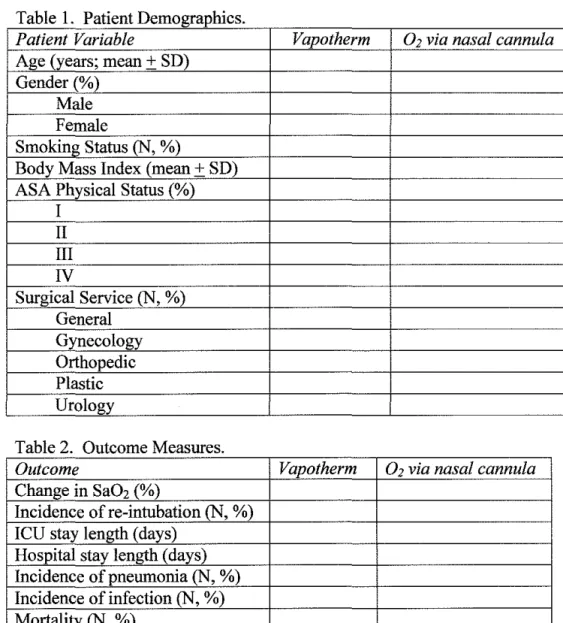
Patient demographic variables and outcome variables will be analyzed as depicted in Tables 1 and 2 below. Differences in demographic variables between groups will be analyzed by comparing means and standard deviations for age, and by percentages of the total for gender, smoking status, body mass index, ASA physical status and surgical service. The outcome variables will be analyzed for differences between the control (02 via nasal cannula) and intervention
Results
Table 1 Patient Demographics
Patient Variable Vapotherm 02 via nasal cannula Age (years; mean+ SD)
Gender(%) Male Female
Smoking Status (N, %)
Body Mass Index (mean+ SD) ASA Physical Status(%)
I II III IV
Surgical Service (N, %) General
Gynecology Orthopedic Plastic Urology
Table 2 Outcome Measures
Outcome Vapotherm 02 via nasal cannula
Change in SaOz (%)
Incidence ofre-intubation (N, %) ICU stay length (days)
Hospital stay length (days) Incidence of pneumonia (N, %) Incidence of infection (N, %) Mortality (N, %)
-25-DISCUSSION
This study will examine the feasibility and effectiveness of the V apotherm device, compared with standard oxygen therapy via nasal cannula, at treating postoperative hypoxemia and preventing re-intubation in relatively healthy surgical patients. The proposed study will track more outcomes than previous investigations, ranging from oxygen saturation measured by pulse oximetry to mortality, and will follow subjects for adverse events until they are discharged from the hospital. While there is limited evidence supporting the use of the Vapotherm in specific settings, it is FDA-approved and is very similar to standard oxygen therapy via nasal cannula. The main difference is that the V apotherm is able to warm and humidify gases, which allows increased flow rates.
In any investigation of a new device there is the possibility of equipment failure. In the case of the V apotherm, there are three ways that the device might fail. These include failure of the warming mechanism, failure ofthe
However, this complication is equally likely with other forms of NIPPY, including nasal cannula and face mask. Additionally, like all postoperative patients, the subjects in this study will be closely monitored by the PACU staff. They will be cared for by a nurse or resident with experience caring for
postoperative patients and their oxygen saturation will be monitored constantly until discharge from the PACU.
Several additional safety measures are built into the study design. First, a protocol will be in place which specifically defines criteria for re-intubation so that any patient may be intubated if the physician believes that the subject's respiratory status is compromised. Second, the selection of94% as the cut-off Sa02 maximizes patient safety by identifYing early those patients at risk of progressing to severe hypoxemia. Most clinicians consider an Sa02 less than 90% to indicate hypoxemia. This level of hemoglobin saturation corresponds to an arterial P02 of 60 torr at normal body temperature and pH. The choice of an Sa02 of 90% or a P02 of 60 torr as the cut-off point is based on the
oxyhemoglobin dissociation curve. This curve is influenced by numerous parameters, including body temperature, pH, PC02, and 2,3-DPG concentration.
However, when those parameters are within the normal range, the curve is S-shaped and flattens out at about 90% saturation. This means that above 90% hemoglobin saturation, very large increases in POz are required to make small changes in hemoglobin saturation. On the other hand, below 90%, the curve has a steep slope such that small changes in SaOz indicate larger changes in POz. This means that once a patient's Sa02 reaches 90%, they are in danger of rapidly
-27-progressing to severe hypoxemia. Choosing 94%, where the curve is still
relatively flat, as the cut-off for this study provides more safety for the subjects by catching at-risk patients before they reach the steep, rapidly falling part of the curve.
The use of SaOz as the measure of oxygenation raises certain issues. Many studies of ventilation, such as that by Squadrone et al., use the Pa02/Fi02
ratio or Pa02 as the outcome measure. This requires drawing an arterial blood sample for blood gas analysis. While this might be simple in patients who already have an arterial line in place for surgery, it would subject other patients to an additional, painful, invasive procedure that is accompanied by its own risks of infection and bleeding. Since the subjects for this study will be relatively healthy, they are less likely to need an arterial line for monitoring during surgery and would thus require an additional arterial puncture in the PACU. An arterial blood gas analysis would provide more data on oxygenation than an SaOz since it includes P02, PC02, pH and HC03-, but it is more invasive, while SaOz is a reliable, non-invasive measure of oxygenation.
The validity ofthis study could potentially be threatened by selection bias. It is designed such that the surgeons initially recommend subjects for the study, rather than the anesthesiologists who will be taking care of the patients
postoperatively and making decisions about oxygenation and the need for re-intubation. This presents several issues. First, the surgeons are less invested in the study since its results are not related to their work or the way that they treat patients. Postoperative hypoxemia affects their patients, but it is the
anesthesiology team that identifies and treats problems with oxygenation and ventilation in the postoperative period. As a result, surgeons will likely be less motivated to identify and recommend subjects than would an anesthesiologist. Second, because the surgeons are probably less familiar with the treatment of postoperative hypoxemia and with the Vapotherm in particular, they might be hesitant to enroll their patients in the study. This could lead to an overall small sample or to the recruitment of only the healthiest, lowest risk patients. Third, there might be a difference between surgeons from the different departments in how interested and motivated they are to recommend subjects. Motivating
surgeons to identify and suggest potential subjects to the research assistant will be an important step in the start-up phase of this study.
Selection bias could also be introduced by the physicians and nurses in the PACU. While a study team member will identify subjects eligible for the study based on Sa02, the ultimate decision about patient care lies with the P ACU staff.
This presents the opportunity for those doctors and nurses to choose not to enroll patients based on their perception ofthe patient's status or their own familiarity
-29-with the Vapotherm. For example, a team member might decide not to enroll a patient with a low Sa02 because he or she is not familiar with the Vapotherm device, is worried about the patient's respiratory status, or is more comfortable using a standard nasal cannula. Appropriate training regarding use of the V apotherm and the study protocol among the P ACU staff will be imperative for the success of this study.
The proposed study seeks to determine the feasibility of the use of V apotherm in the treatment of postoperative hypoxemia. While there is little existing evidence supporting use of the Vapotherm in specific settings, there are abstracts reporting its successful use to treat various conditions, including
environmental exposure-related hypothermia and respiratory distress secondary to infection, chronic disease, inhalation injury and postoperative atelectasis. These reports do not provide sufficient evidence to change current standards of care, nor will the proposed study. However, this feasibility investigation may help to further define the role of the Vapotherm, specifically in the treatment of postoperative hypoxemia.
Should the results show a benefit of the Vapotherm among relatively healthy subjects with postoperative hypoxemia, future studies could evaluate its effectiveness among an expanded patient population at higher risk of
postoperative respiratory distress, such as those with chronic lung diseases like COPD and asthma. Other studies might further investigate the use of the
may also have a role in the treatment of acute exacerbations of chronic respiratory illness.
-REFERENCES
1. Squadrone V, Coha M, Cerutti E, et a!. Continuous positive airway pressure for treatment of postoperative hypoxemia: A randomized controlled trial. JAMA. 2005;293:589-595.
2. Wetterslev J, Hansen EG, Kamp-Jensen M, Roikjaer 0, Kanstrup IL. Pa02 during anaesthesia and years of smoking predict late postoperative
hypoxaemia and complications after upper abdominal surgery in patients without preoperative cardiopulmonary dysfunction. Acta Anaesthesia/ Scand.
2000;44:9-16.
3. Wong DH, Weber EC, Schell MJ, Wong AB, Anderson CT, Barker SJ. Factors associated with postoperative pulmonary complications in patients with severe chronic obstructive pulmonary disease. Anesth Ana/g. 1995;80:276-284.
4. Kjaergaard S, Rees SE, Nielsen JA, Freundlich M, Thorgaard P, Andreassen S. Modelling ofhypoxaemia after gynaecological laparotomy. Acta Anaesthesia/ Scand. 2001;45:349-356.
5. Stauffer JL, Olson DE, Petty TL. Complications and consequences of endotracheal intubation and tracheotomy. A prospective study of 150 critically ill adult patients. Am J Med. 1981;70:65-76.
6. Cooper SJ. Methods to prevent ventilator-associated lung injury: A summary. Intensive Crit Care Nurs. 2004;20:358-365.
7. Lorente L, Lecuona M, Martin MM, Garcia C, Mora ML, Sierra A. Ventilator-associated pneumonia using a closed versus an open tracheal suction system. Crit Care Med. 2005;33:115-119.
8. Evans TW. International consensus conferences in intensive care medicine: Non-invasive positive pressure ventilation in acute respiratory failure.organisedjointly by the american thoracic society, the european respiratory society, the european society of intensive care medicine, and the societe de reanimation de langue francaise, and approved by the A TS board of directors, december 2000. Intensive Care Med. 2001;27:166-178.
9. Hess DR. The evidence for noninvasive positive-pressure ventilation in the care of patients in acute respiratory failure: A systematic review of the
literature. Respir Care. 2004;49:810-829.
11. Meyer TJ, Hill NS. Noninvasive positive pressure ventilation to treat respiratory failure. Ann Intern Med. 1994;120:760-770.
12. Xue FS, Li BW, Zhang GS, et al. The influence of surgical sites on early postoperative hypoxemia in adults undergoing elective surgery. Anesth Ana/g. 1999;88:213-219.
13. Carlsson C, Sonden B, Thylen U. Can postoperative continuous positive airway pressure (CP AP) prevent pulmonary complications after abdominal surgery? Intensive Care Med. 1981;7:225-229.
14. Stock MC, Downs JB, Cooper RB, et al. Comparison of continuous positive airway pressure, incentive spirometry, and conservative therapy after cardiac operations. Crit Care Med. 1984;12:969-972.
15. Dehaven CB,Jr, Hurst JM, Branson RD. Postextubation hypoxemia treated with a continuous positive airway pressure mask. Crit Care Med.
1985;13:46-48.
16. Smith RA, Kirby RR, Gooding JM, Civetta JM. Continuous positive airway pressure (CPAP) by face mask. Crit Care Med. 1980;8:483-485.
17. Waugh JB, Granger WM. An evaluation of2 new devices for nasal high-flow gas therapy. Respir Care. 2004;49:902-906.
18. Criswell MA, Sinha CK. Hyperthermic, supersaturated humidification in the treatment of xerostomia. Laryngoscope. 2001;111:992-996.
19. Frick J, Sabato K, Flori H. Vapotherm: A simple device becomes a simple solution in the PICU. Respir Care. 2004;49:1392.
20. Cairns B, Haithcock J, Short K, Byerly F. Use of high flow nasal cannula on a pediatric bum patient with inhalation injury who failed extubation -case report. Respir Care. 2004;49:1369.
21. Martinez-Gomez R, Lefkowitz B. Case report: Successful extubation of a former premature infant using vapotherm high-flow therapy after multiple attempts using conventional methods. Respir Care. 2004;49: 1375.
22. Manning L, Dominy L, Nguyen V, Mullins MD. High flow oxygen via nasal cannula during respiratory insufficiency following pneumonectomy. Respir Care. 2004;49: 1368.
23. Sanchez F, Sabato K. Very high flow nasal cannula - alternative to NCPAP in select ICN patients? Respir Care. 2004;49:1373.
24. Hewitt MJ, Duke, James H. "Red", Brasseaux B, Wilson J, Miles R, Khalil I. A case study: Utilizing the vapotherm 2000i high flow nasal cannula
-33-system to rewarm a nonintubated hypothermic trauma patient. Respir Care. 2004;49: 1368.
25. Brennan T, Gluck E, Werner P. Case report: Vapotherm use in
preventing nocturnal oxygen desaturation in severe obesity. Respir Care. 2004;49. 26. Walsh BK. Evaluation ofvapotherm 20001 for humidification of the neopuff infant resuscitator. Respir Care. 2004;49: 1385.
27. Polston ST, Kim IK. Heliox (70/30 He/02) via the vapotherm 2000i. Respir Care. 2004;49:1392.
28. Newhart J. Delivery of nitric oxide via vapotherm. Respir Care. 2004;49: 1398.
29. Dawson B, Trapp RG. Basic & Clinical Biostatistics. 4th ed. New York: Lange Medical Books/McGraw-Hill; 2004.
30. Kline JA, Nelson RD, Jackson RE, Courtney DM. Criteria for the safe use of D-dimer testing in emergency department patients with suspected
pulmonary embolism: A multicenter US study. Ann Emerg Me d. 2002;39: 144-152.
31. Kallstrom TJ, American Association for Respiratory Care (AARC). AARC clinical practice guideline: Oxygen therapy for adults in the acute care facility--2002 revision & update. Respir Care. 2002;47:717-720.
32. Lutter N, Urankar S, Kroeber S, Kozma E, Schuettler J. Reliability of third generation pulse oximeters in the PACU with respect to motion and low perfusion. Available at:
Appendix
Table 1. Studies of CPAP in Postoperative Patients
Author Study Intervention Population Inclusion Criteria Exclusion Criteria Outcomes Main Results Statistical
Type Significance
[Squadrone RCT Control-02 209 patients sip Elective abdominal Age >80 or <18; NYHA functional I-rate of Rate of p- 0.005
v, 2005
via Venturi elective surgery requiring class II, III or IV; valvular heart intubation. 2- intubation#I] mask at abdominal laparotomy and disease, h/o dilated cardiomyopathy; ICU stay length, higher in
Fi0,~0.5. surgery from >90min. viscera implanted pace maker; unstable angina; hospital stay control group
Intervention - Piedmont exposure. MI or cardiac surgery within 3 months; length, (I 0 patients,
o,
at FiO, ~o.5 Intensive Care Pa0,1Fi02 :::_300 hlo COPD, asthma, or sleep disorders; incidences of 10%) than inplus CPAP~7 .5 Units Network after extubation and pre-op infection, sepsis, or both; pneumonia, CPAP group
cmH20 (Italy) !-hour screening test BMI<40; tracheostomy, infection, sepsis, (I patient,
breathing through a facial/neck/chest wall abnormalities; and mortality 1%).
Venturi mask at an required emergency surgery; undergone
FiO, ~ 0.3. AAA repair, chemotherapy, or immunosuppressive therapy within previous 3 months; If
pre-randomization arterial pH <7.30 with
arterial C02 >50mmHg; arterial 02
sat.<80% on maximal Fi02; signs of
acute MI; SBP<90mmHg under optimal fluid therapy; presence of criteria for ARDS; Hgb<7; serum
albumin <3; creatinine>3.5; or
Glasgow Coma Score<l2.
--Table 1 cont
.
Author Study Type Intervention Population Inclusion Criteria Exclusion Outcomes Main Results Statistical
Criteria Significance
Carlsson RCT Face mask 24 healthy pts Elective open None described Pre- and post- 3/13 CPAP pts and No sig. difference
c, 1981 CPAPv. undergoing elective cholecystectomy opABG, 1111 control pts had btwn groups in
control. Both open chest x-ray, post-op x-ray incidence of x-ray
groups received cholecystectomy with vital capacity changes. 44% t in changes, decrease
30%pre- no known lung VC in CPAP group in VC, or increase
warmed and disease and 38%t in VC in in Pa02. Authors
moistened 02. control group. CPAP don't give
pts. had slightly statistical values.
higher i in Pa02 in 4
hrs after surgery
Stock MC, Case COB (cough& 38 adults s/p elective Adults s/p elective None described FRC,FVC, No difference No p values
1984 series/cohort deep breathing), cardiac surgery cardiac surgery FEV~> between groups in given.
IS (incentive FEV/FVC, mean FRC, FVC,
spirometry) or chest x-ray, FEV~> FEV,IFVC,
x-face mask bodytermp. ray evidence of
CPAP atelectasis, Pa02,
PaC02, arterial pH,
incidence of body temp. >38.5°C.
Dehaven Case Face mask 27 post-op patients Postextubation Recent ABG,RR, 2 patients intubated P<O.OOOS for
CB, 1985 series/cohort CPAP at from general surgery hypoxemia resistant esophageal or HR, mean (1 for excessive difference in
pre-FI02~0.45 service who had to chest PT, gastric arterial BP, secretions, 1 for and
post-undergone major incentive anastomoses, duration of Pseudomonas treatment, Pa02,
thoracic or abdominal spirometry, and basilar skull treatment, pneumonia). Pa02 i Pa02/FI02, and
surgery electively or continuous high- fracture, intubation in all pts. Pa02, RR
for trauma flow 02 by face laryngeal injury, PaO,IFI02, RR
mask severe improved in all pts.
maxillofacial Mean treatment
Table 1 cont.
Author Study Intervention Population Inclusion Criteria Exclusion Outcomes Main Results Statistical
Type Criteria Si2nificance
SmithRA, Case Face mask 44 trauma and post- ARI and progressive deterioration of None ABG, 1 pt intubated for P<0.005 for
1980 series CPAP op pts w/ mild-mod. arterial oxygenation resistant to 0, described Pa02/FI02, acidemia, Pa02 j in all change in
acute respiratory coughing, deep breathing, and chest PT. RR, pts. Pa02/FI02 j from Pa0z/FI02
insufficiency ( ARI) Awake, cooperative, spontaneously intubation 171±42 to 300±68.
breathing, norma- or hypocapnic, No significant change
Pa02/FI02<300, stable cardiovascular in pHa or RR.
Table 2. Studies ofVapotberm
Author Study Type Intervention Population Inclusion Exclusion Outcomes Main Results Statistical
Criteria Criteria Si~nificance
Criswell Randomized, Standard cool 8 ENT pts with h/o head /neck cancer Age :0: 18; Stating that Physical exam No significant n/a
MA, controlled, air bedside capable of xerostomia using objective differences between
2001 crossover humidification completing 3 was not a xerostomia scale; devices.
pilot study system v. clinic visits; problem; life subjective
hyperthermic, completion expectancy < assessment of
supersaturated of:O: 5000 3 months; xerostomia
humidification cGy external planned (Walizer Mouth
via nasal beam radiotherapy, Dryness
cannula radiation to chemotherapy Questionnaire);
(Vapotherm oral cavity or surgery VAS measuring
MT-3000) or during study; dryness, speaking
oropharynx active disease and swallowing;
:0:4 months limiting patient reports of
before study ability to overall impression
entry; participate. of devices.
persistent, symptomatic radiation-induced
xerostomia.
Frick J, Case Series NIPPY via Pt. A- 16 rnlo w/respiratory distress n/a n/a Intubation, No patient was n/a
2004 Vapotherm 2° to pneumonia, would not tolerate 02 markers of intubated, all showed
(abstract) mask. respiratory distress improved markers of
Pt. B- 14 y/o w/ respiratory distress (HR, RR, 02 sat), respiratory distress,
2 o severe asthma, baseline therapy comfort, work of improved comfort,
(cont. Albuterol) ineffective. breathing decreased work of
Pt. C - 3 m/o Post-op/post-extubation breathing.
Table 2 cont
Author Study Type Intervention Population Inclusion Exclusion Outcomes Main Results Statistical
Criteria Criteria Significance
Cairns B, Case Report NIPPY with 12 m/o female with 8% cutaneous n/a n/a intubation Patient was not re- n/a
2004 Vapotherm burns and inhalation injury, developed intubated, weaned to
(abstract) respiratory distress after extubation. room air after 5 days
of treatment and discharged.
Martinez- Case Report NIPPY with >3 m/o former 25-week twin failed n/a n/a intubation Patient remained n/a
Gomez Vapotherm extubation to blow-by, hood, mask extubated.
R, 2004 CPAP or standard CPAP and required !
(abstract) re-intubation. Vapotherm treatment
started at 6 lpm and 1.0 Fi{},. Infant remained extubated.
Manning Case Report NIPPY with 64 y/o male with b/o COPD, stage III n/a n/a intubation Patient was not n/a
L, 2004 Vapotherm large cell carcinoma sip L intubated, weaned to
(abstract) pneumonectomy, developed traditional NC 3 lpm
pulmonary edema, dyspnea, decreased within 48 hours.
Sa02, and high RR on post-op day 3,
did not improve with double-flow aerosol mask or NRB mask with NC in series at 6 lpm. Patient placed on Vapotherm NC 20 lpm,37°C, 100% Fi02
Sanchez Case Series NIPPY with 7 neonates (26-38 weeks gestation) Failing n!a Fi02, sedation All required decreased n/a
F,2004 Vapotherm with respiratory failure who failed therapy with requirements, Fi02, less sedation, and
(abstract) standard treatment with nCPAP. nCPAP I ABG showed decreased
PaC02•
Hewitt Case Report NIPPY with 50 y/o previously healthy construction n/a n/a Body Body temperature n/a
MJ,2004 Vapotherm worker who fell 20-25 feet into a ditch temperature increased from 95.8° to
(abstract) and lay for 2 hours in 40-45° water, 98.1 o after 45 minutes.
failed treatment with warmed IV fluids and Bair Hugger
Brennan Case Report NIPPY with 52 y/o male with b/o OSA, BMI-50.3, n/a n/a Sa02, episodes Average Sa02-96%, 6 n!a
T, 2004 Vapotherm noncompliant with nCPAP of apnea and episodes of apnea, 28
(abstract) hypopnea episodes ofhypopnea .