N’Djamina Johnson 1 | P a g e TAKERS:
An Interactive Online Module to Improve Health Outcomes in Pediatric Chronic Kidney Disease
Patients
By
N’Djamina A. Johnson
A Master’s Paper submitted to the faculty of the University of North Carolina at Chapel Hill in partial
fulfillment of the requirements for the degree of Master of Public Health in the Public Health
Leadership Program
Chapel Hill
2013
___________________________________ Advisor ___________________________________
Date
___________________________________ Second Reader
N’Djamina Johnson 2 | P a g e Table of Contents
Acknowledgements 3
Abstract 4
Introduction 5
Figure 1: Health Care Transition Planning Algorithm for Youth 6
Literature Review 7
Table 1: Inclusion Criteria for Literature Review 7
Search Strategy 7
Analysis of Health Games 8
Discussion 20
Table 2: Summary of Health Games 22
Overview 23
Context 25
Table 3: Healthy People 2020 Goals Related to Chronic Kidney Disease 25
Theoretical Framework 27
Figure 2: Chronic Care Model 28
Figure 3: Health Belief Model 28
Goals & Objectives 30
Program Implementation 31
Figure 4: TAKERS Study Design & Timeline 32
Table 4: TAKERS Logic Model 34
Figure 5: TAKERS Logic Model Prezi 35
Rationale and Approach to Evaluation 36
Evaluation Study Design 38
Evaluation Methods 39
Evaluation Planning Tables 40
IRB Considerations 44
Dissemination Plans 45
Discussion 46
Appendix 50
UNC TRXANSITION ScaleTM 51
STARX Transition Readiness Survey 56
Morisky 8 General Medication Adherence Scale 60
Medical Passport Survey 61
REALM (Rapid Estimate of Adolescent Literacy in Medicine) 63
Newest Vital Sign (Nutrition Label Test) 64
N’Djamina Johnson 3 | P a g e Acknowledgements
I would like to thank the following individuals for their advice and support during the
process of writing this Master’s paper.
Dr. Maria Ferris – for your inspiring commitment to your patients, your work, your family and
your mentees (like me). This project is only one of the many ways I see you pouring your
heart into building a better future for your patients.
Dr. Diane Calleson – for all the work you have put into making this year of program planning
so enjoyable and educational. All the best.
Dr. Diane Pozefsky, Sai Vennam, Matthew Pittman, and Ameem Shaik – for all the amazing
work you have put into making this idea a reality with your computer science talent.
The TRXANSITION Team at UNC Kidney Center – for doing so much work with the
TAKERS question database, especially Kristi Bickford and Nicole Fenton for leading this
effort and helping me complete the IRB.
PUBH 746 Classmates – for being a source of great ideas and unique ways to make change
through programs in health care (and amazing potlucks).
Devante’ Robinson – last but not least my best friend and fiancé for supporting me through
N’Djamina Johnson 4 | P a g e Abstract
Over 15% of children in the United States and 17.2% of children in North Carolina have
special health care needs. These children and adolescents (youth) need assistance with
transitioning from family-centered pediatric care to independent adult medical care; however, in
2009 less than half of them received the services they needed for a successful transition. Health
care transition is vital to decreasing the morbidity and mortality of youth with chronic diseases.
The University of North Carolina (UNC) Kidney Center is currently working to expand its health
care transition preparation services for youth to meet these needs by developing the TAKERS
online module. TAKERS is an acronym for Take your Meds, Ask questions, Know your
condition, Eat healthy, Read labels and Seek support.
The goal of TAKERS is to help youth ‘take control’ of their chronic kidney disease which
will improve their transition from pediatric to adult care and increase their self-efficacy. Several
studies of computerized serious games have been shown to increase healthy eating habits,
increase nutrition knowledge, increase positive health behaviors, and improve health outcomes.
The theoretical framework of TAKERS is based on the Chronic Care Model to address health
care needs and the Health Belief Model to address self-efficacy.
TAKERS will include educational components that will teach the key principles of
transition through several online activities. Several components have yet to be developed;
however, the UNC Computer Science students have created a “Space TAKERS” component of
the module, which will be played on the computer. The participants will be evaluated at
baseline, after completing TAKERS, and every 6-12 months after completing TAKERS to
determine the effect of TAKERS on improvement of transition. The patients involved in this
study will likely also be cross-enrolled in the longitudinal study being conducted by Dr. Maria
N’Djamina Johnson 5 | P a g e Introduction
Over 15% of children in the United States and 17.2% of children in North Carolina have
special health care needs (Child and Adolescent Health Measurement Initiative, 2010). Children
with special health care needs include those who have mental, physical, emotional or medical
conditions that have been diagnosed by a physician. In previous decades, most of these
children did not live to see adulthood; however, with the advancement of medical care, they are
surviving and becoming active members of society (White, 2012). These children and
adolescents now need assistance with transitioning from family-centered pediatric care to
independent adult medical care; however, in 2009 less than half of them received the services
they needed for a successful transition (CAHMI, 2010; White, 2012).
With this need in mind, the American Academy of Pediatricians, American Academy of
Family Physicians and the American College of Physicians – American Society of Internal
Medicine (2002) developed a consensus statement with several goals to for physicians who
provide care to young adults to improve their transition from pediatric to adult care. This
statement advocated several guidelines including identifying core knowledge and skills required
to provide health care transition services and involving young adults in the transition process
(American Academy of Pediatrics, American Academy of Family Physicians and American
College of Physicians - American Society of Internal Medicine, 2002). This group of
professional organizations published updated recommendations in 2011 which includes an
algorithm (Figure 1) to clarify specific steps and strategies to facilitate the transition (American
Academy of Pediatrics et al., 2011). Figure 1 includes only Part A of the algorithm. Part B gives
N’Djamina Johnson 6 | P a g e Figure 1: Health Care Transition Planning Algorithm for Youth. (American Academy of Pediatrics, 2011)
Health care transition is vital to decreasing the morbidity and mortality of adolescents
and young adults (youth) with chronic diseases. For patients with transplanted organs, the
survival of transplant is one of the most important predictors of patient survival (Shemesh et al.,
N’Djamina Johnson 7 | P a g e been reported up to 53% (Watson, 2005). In a retrospective cohort study, youth in the transition
period with liver transplants also demonstrated decreased compliance (Annunziato et al., 2007).
In another retrospective study, youth with Diabetes Mellitus that did not have a structured
transition process had higher Hemoglobin A1Cs than those that had a structured transition
process (Cadario et al., 2009). Youth with rheumatologic diseases such as Systemic Lupus
Erythematous and Juvenille Idiopathic Arthritis had increased disease activity during transition
(Hersh et al., 2009).
The University of North Carolina (UNC) Kidney Center is currently working to expand its
health care transition preparation services for youth to meet these needs by developing the
TAKERS online module. TAKERS is an acronym for Take your Meds, Ask questions, Know
your condition, Eat healthy, Read labels and Seek support. The purpose is to help youth with
chronic conditions ‘take control’ of their chronic kidney disease which will allow them to have a
better transition from pediatric to adult care.
Literature Review
This literature review serves to inform my program planning to increase the efficacy of
TAKERS and inform the development of online program elements. Therefore, I sought to
answer the following question: does pairing patient education with interactive online or computer
games produce positive behavior change and/or improve health outcomes in youth with chronic
conditions?
Search Strategy
I searched for articles in PubMed using the following search terms: (game OR games
OR gaming) AND (youth OR teens OR adolescents OR adolescence OR teen OR child OR
children) AND (chronic disease OR chronic diseases OR asthma OR diabetes OR sickle cell)
AND (assessment OR evaluation OR impact). The inclusion criteria are listed in Table 1 below.
N’Djamina Johnson 8 | P a g e This search only led me to one
article that I could use. Therefore, I
changed the limit to include articles
published since January 2000, but limited
the results to only include randomized
trials. This produced 2 more articles. This
search also produced systematic reviews and literature reviews of health games and theory that
I will use for background information.
I then searched for journals available at UNC that focused on Health Care and Gaming,
which led me to a journal called “Games for Health.” I used the same search terms I used in
PubMed without any restrictions on time of publication. I did not find any articles about specific
games that fit my inclusion criteria, but I did find a systematic review published in 2012
(Rahmani & Boren, 2012). I used the 3 most recent articles on educational games that were
reviewed in that paper (Baranowski et al., 2011; Pempek & Calvert, 2009; Peng, 2009).
Analysis of Health Games (see Table 2: Summary of Health Games) “Escape from Diab” and “Nanoswarm: Invasion from Inner Space”
“Escape from Diab” (Diab) and “Nanoswarm: Invasion from Inner Space” (Nano) were
two computer games developed for obese 10-12 year old minority children to promote physical
activity and healthier food choices (Baranowski et al., 2011). The children were recruited in
Houston, Texas via radio station ads targeted at ethnic minorities, particularly parents of
African-American and Hispanic children. The inclusion and exclusion criteria mainly ensured
that the children were obese, not physically active, did not have medical conditions that would
hinder changes in diet, and could speak and understand English.
After recruitment and exclusions, the children were randomized to the treatment group or
the control group. There were no statistically significant demographic differences between the Online or computer games
Purpose of intervention is to educate and/or produce positive health behavior change Target population: children or young adults Main outcome: effect of intervention on behavior change and/or education retention
Written in English
Access to article for free via UNC
N’Djamina Johnson 9 | P a g e treatment group and the control group; however there were some differences in diet, BMI and
physical activity despite randomization (Baranowski et al., 2011).
The treatment group included 103 children who played Diab, took a test, and then
played Nano (Baranowski et al., 2011). Each of the nine 40 minute sessions with Diab and then
Nano included attaining mastery in goal setting and anticipatory problem solving. Each session
encouraged behavioral change via personalized motivational messages. The goal behavior
menu was tailored to dietary or physical activity behaviors of each individual player. The control
group included 50 children who were given knowledge-enhancing internet activities (Baranowski
et al., 2011). Part 1, called “Good Food and Play Make a Balanced Day,” focused on physical
activity, diet and obesity. Part 2, called “Dish it Up,” focused on nutrition.
The blinded data collectors were trained to adhere to very specific procedures for
measuring height, weight, and triceps skinfolds (Baranowski et al., 2011). They used standard
tools for all measurements such as an accelerometer to measure physical activity levels. Most
other outcomes such as 24-hour dietary recall were measured by self-report. Though they did
employ a social desirability scale to determine if data may be skewed based on social
desirability.
The results showed that the children playing Diab and Nano increased fruit and
vegetable consumption by about 0.67 servings per day (p<0.018) but there was not a significant
difference in water consumption, moderate-to-vigorous physical activity, or body composition
(Baranowski et al., 2011). However, it is important to note that though there was an increase in
fruit and vegetable consumption, it was still below minimum daily requirements for children.
Also, in children’s and parent’s questionnaires, 80-90% of children said that they enjoyed
playing the game.
Overall this was a very well designed and executed study. Each intervention provided
N’Djamina Johnson 10 | P a g e (Baranowski et al., 2011). They also provided increasing monetary incentives for each follow-up
(baseline, after Diab, after Nano, and 2 months later). After 153 children were randomized 10
dropped out or were lost to follow up from each group (treatment and control) by the end of the
trial; therefore, it is unlikely that selection bias is caused from this attrition. The blinded and
trained data collectors, standardized equipment, and strict guidelines on correct measurements
minimized measurement bias. Though data that is supplied by self-report may be untrue based
on social desirability, the researchers tried to address this by incorporating a social desirability
scale which had an alpha of 0.81 at baseline. However, self-reported data is still subject to
recall bias, which cannot be full avoided. The researchers controlled the statistical model for
potential confounding variables including demographic characteristics, social desirability of
response, and duration of game play. Though this study has a small sample size, its design
and execution makes it internally valid. The external validity may be limited to minority
populations since that was the target enrollment for this study.
This study provided evidence that tailored, interactive, educational computer gaming
aimed at improving health of obese minority children may be effective in encouraging healthier
food choices, but not very effective in increasing physical activity or causing changes in body
composition (Baranowski et al., 2011).
Pac-Man-type Advergame
An advergame is a computerized or online game that functions mainly as an
advertisement for food products (Pempek & Calvert, 2009). In this study, the researchers
developed two variations of an advergame modeled after Pac-Man to evaluate how advergames
can affect choices of healthy or unhealthy snack choices in low-income African-American
children. This cross-sectional study recruited low-income African American students from 5
metropolitan area elementary schools in Washington, D.C. (Pempek & Calvert, 2009). The
N’Djamina Johnson 11 | P a g e The game developed by the researchers featured a healthy version and an unhealthy
version (Pempek & Calvert, 2009). The healthy version awarded points for getting Pac-Man to
eat healthy snacks (ex: banana and carrots) and deducted points for eating unhealthy snacks
(ex: potato chips and chocolate candy bar). The unhealthy version did exactly the opposite:
rewarded unhealthy snacks, and deducted points for healthy snacks. The children were
randomized into one of three groups: 1) children played the healthy version of the game then
chose a snack, 2) children played the unhealthy version of the game then chose a snack, 3) the
control group chose a snack first and then played the healthy version of the game. The snack
choices presented to the children before or after game play were identical to the foods pictured
in the game for Pac-Man to eat. All 30 students participated with no drop-outs.
This study showed that children who played the healthy version of the advergame
selected significantly more healthy snacks than those who played the unhealthy version
(Pempek & Calvert, 2009). In the control group, 60% of the students chose at least one healthy
snack. There was not a statistically significant difference between the control and the unhealthy
or healthy group. Twenty-seven of the 30 children reported that they “really liked” the game,
two “liked” it and one did not answer. Nineteen of children reported that the difficulty of the
game was “just right,” five said it was easy,” five said it was “hard,” and one child did not
answer.
This study is of good to fair quality; however, information is missing to be able to critically
appraise it. First, there is no detailed information on the participants to determine any significant
differences among the three groups. Also, the researchers did not describe the inclusion or
exclusion criteria to appropriately evaluate for selection bias. Though there were no drop-outs
and no loss to follow-up, there is not much detail about the selection process in order to fully
evaluate for selection bias. Since the exposure was very similar for all 3 groups, the researcher
N’Djamina Johnson 12 | P a g e minutes, there is only a low risk for measurement bias. The researchers attempted to control for
confounders by getting an equal number of boys and girls, randomizing them into the 3 groups,
and having each child play the game twice and chose snacks individually rather than in a group
(Pempek & Calvert, 2009).
The internal validity of this study is good even though it is a very small sample size.
Their snack choices are likely related to their game play since it was such a controlled
environment. However, it is the controlled environment that leads me to doubt the external
validity of this study. The average way in which a 9 or 10 year old choses a snack does not
involve the presence of a researcher, game play and answering questions before choosing a
snack. Also, this study is targeted toward low-income African American children. Therefore, the
results may only be best applied to that demographic group.
This study is an example of how a very short, minimally graphic health game can
produce immediate behavior change in low-income African-American children (Pempek &
Calvert, 2009). However, it does not provide any long-term data on these choices. It also
provides evidence that online food advertising could have a positive or negative effect on
children’s food selection.
Right Way Café
The Right Way Café is a computerized game used to promote a healthy diet for young
adults (undergraduate students at Michigan State University) by attempting to increase nutrition
knowledge, self-efficacy of healthy eating and perceived benefits; while decreasing perceived
barriers to healthy eating and trigger the individual’s intentions to be on a healthy diet (Peng,
2009). The 42 participants (32 women) were recruited from 2 large undergraduate classes and
then randomized to the treatment group or the control group. The mean age of participants was
N’Djamina Johnson 13 | P a g e The treatment group participated in the Right Way Café, and the control group did not do
any intervention (Peng, 2009). The Right Way Café allows the participant to choose a
character, and build characteristics into this character that are similar to the participant such as
height, weight, and level of physical activity. Based on their inputs, tailored eating information is
presented (such as daily caloric intake). The player must then chose food items to eat for the
week, at which time immediate feedback is given on the benefits and/or harms of different food
choices. At the end of the simulated week, the character will gain or lose weight and receive
appropriate feedback about the direction and speed of weight gain or loss to help make better
decisions for the next week. The entire game simulates 3 weeks, and took most participants a
mean time of 42 minutes to complete.
All participants were given a pre-test, post-test and a 1 month follow-up test (Peng,
2009). The follow-up test had a high attrition rate of 20%. This included 7 individuals from the
control group and 1 individual from the intervention group. They tested individuals on their
knowledge of the food pyramid and general nutrition knowledge. They also included question
items about each participant’s self-efficacy of healthy eating, self-efficacy for veggie and fruit
consumption, perceived benefits of healthy eating, and perceived barriers of healthy eating.
The players also evaluated the game on a 7-item scale. It is interesting to note that they did not
include any questions on actual behavior changes.
The results showed that controlling for the pre-test, nutrition knowledge, the treatment
group had a significantly greater score on food pyramid knowledge than the control group at
posttest after controlling for the pre-test (p<0.05) (Peng, 2009). However, retention was low, as
both groups had a decrease in knowledge at the one month follow up testing. Also, after
controlling for the pre-test scores, the treatment group had a significantly higher score in
N’Djamina Johnson 14 | P a g e Contrary to expected results, the perceived barriers for treatment group had a slight increase,
and the control group had slight decrease.
The game was evaluated on a scale of 1 to 7 on the following indicators: interesting
(mean-M, 5.85 standard deviation - SD 1.18), well designed (M 5.75, SD 1.16), learned
something useful (M 6.00, SD 1.26), was a credible source of information (M 5.64, SD 1.24),
tailored to individual (M 5.63, SD 0.81), easy to navigate (M 5.64, SD 0.83), and interface was
user friendly (M 5.64, SD 0.83) (Peng, 2009). Also, there was a positive correlation between
enjoyment of game and several other variables including self-efficacy and healthy eating
intention (r=0.59).
Similar to the previous intervention, this study also does not include information on
participant characteristics or exclusion/inclusion criteria (Peng, 2009). They also had a high
attrition rate though they did try to take this into account by running a series of analyses under
different assumptions. In addition, all of their participants were educated young adults
(undergraduate students), most of whom were female. All of these factors add to the high risk
for selection bias and its external validity is also limited. Though their questionnaires seem to
be reliable (low measurement bias) based on their alpha levels above 0.80, the absence
questions on behavior changes were left out of the questionnaire—especially on the 1 month
follow-up, is a major aspect of this study that is missing.
Overall this study is of fair quality. It is well grounded in Health Behavior Theory, and
produced results that are in line with theories suggesting that behavior change will come from
this intervention (Peng, 2009). However, more follow-up is needed with further questioning on
actual behavior changes that may have resulted from this intervention.
This study showed that a personalized intervention on healthy eating can increase
nutrition knowledge and self-efficacy (Peng, 2009).
N’Djamina Johnson 15 | P a g e Watch, Discover, Think, Act is an interactive multi-media computer game to enhance
self-management skills and thereby improve asthma outcomes in inner city youth in Houston,
Texas (Bartholomew et al., 2000). The participants were recruited from four Pediatric clinics
that served inner city African-American and Hispanic Youth. The inclusion criteria were age
6-17, moderate to severe asthma, English-speaking, and no chronic disease other than asthma.
The children were randomized to play the game at a pediatricians visit or to control
group which was usual care (Bartholomew et al., 2000). After losing 38 children to follow-up,
133 children participated in the study with a mean age of 11.5, 86 males and 47 females. This
sample was 45.9% Hispanic, 49.6% African American and 4.6% other race/ethnicity. All of the
children’s asthma was classified by child’s physician as moderate to severe.
Watch, Discover, Think, Act was developed after performing a needs assessment based
on gaps in pediatric asthma care, especially for inner-city minority children at the time
(Bartholomew, Shegog et al., 2000; Bartholomew et al., 2000) After reviewing the literature on
health education and promotion, they decided to focus their intervention on reducing
hospitalizations, emergency room visits, daytime and nighttime symptoms, and increased
school attendance and performance using two categories of behavior change: asthma-specific
behaviors (taking meds, removing environmental triggers, etc.) and self-regulatory processes
(monitoring behavior and symptoms, comparing with the standard, identifying a problem, trying
and evaluating a solution). They decided to use symbolic modeling as a principle method to
elicit change in child’s knowledge and skills, self-efficacy, outcome expectations and attributions
(Bartholomew, Shegog et al., 2000).
Watch, Discover, Think, Act is an adventure game in which the player makes choices to
manage the game character’s asthma in order to improve asthma specific and self-regulatory
skills (Bartholomew, Shegog et al., 2000). In the game, the main character could match the
N’Djamina Johnson 16 | P a g e protagonist’s asthma were tailored to be like those of the participant. An older child serves as a
coach to model decision-making. They can play in a “watch and discover” mode to identify
symptoms and ensure appropriate preventative care and predict environmental triggers. They
then “think” to discover if there is a problem based on symptoms and other cues. They can
then “act” to find a solution to the problem, and determine if it was effective.
The baseline information was retrieved from parent or primary care taker and the child
during clinic visit of enrollment (Bartholomew, Gold et al., 2000). Parents and children were
interviewed about asthma management, knowledge of asthma, etc. with a pre-test and a
post-test. For the child, this included measurements of the child self-efficacy, self-management,
knowledge of asthma management, and child knowledge of self-regulatory steps. To measure
health outcomes, they asked parents about their child’s symptoms over past 3 months using the
Usherwood Symptom Questionnaire (baseline alpha 0.93). Hospitalization and Emergency
Room visits were also measured via parent report over the past year.
Though there is a large volume of data reported in the results section of this study, the
primary summary is that the intervention was associated with fewer hospitalizations, better
symptom scores, increased functional status, greater knowledge of asthma management, and
better child self-management behavior (Bartholomew, Gold et al., 2000). In the evaluation of
the program, they measured implementation, program appeal, and progress evaluation of the
children (Bartholomew, Shegog et al., 2000; Bartholomew, Gold et al., 2000). To measure
program appeal, they asked the children what they would tell their best friend and other children
with asthma about the program. Ninety-seven percent of the children said that they would tell
their friends that the game was fun and educational. To measure the progress of child, they
recorded it on a scale of 1 to 5 with 1 being “needing assistance” and 5 being “engaging in the
game.” Ninety-four percent of children needed assistance getting started with the game and
N’Djamina Johnson 17 | P a g e Overall, the quality of this study was good. It was well grounded in theories of behavior
change, and was the product of extensive literature review and application of key needs of a
population (Bartholomew, Shegog et al., 2000). The characteristics of the population described
in Table 1 showed that there were no significant differences between the control group and the
intervention group after randomization (Bartholomew, Gold et al., 2000). Selection bias was
minimal as attrition did not differ between the groups. The measures via questionnaire had
alpha levels above 0.80, which indicated relative reliability and lower measurement bias.
However, some recall bias is present since several measures were self-reported or reported by
parents such as hospitalizations and emergency room visits in the past year. Also, age may be
a confounding factor since certain parts of the post-test were open-ended questions. Many
children under 9 had difficulty answering those questions, and there was a positive correlation
with age and correct answers for the open ended questions. Internal validity is good in this
study since it was well designed and implemented (Bartholomew, Gold et al., 2000). The
external validity, however, may be limited due to the minority, low-income population targeted in
this intervention.
This study gives strong evidence for the efficacy of interactive health interventions paired
with primary care visits in low-income, minority children with asthma. Health outcomes,
behavioral outcomes, and knowledge level improved when compared to usual care
(Bartholomew, Gold et al., 2000).
Asthma Control
Asthma Control is a computerized multi-media software program that that was
developed to teach inner city children aged 3 – 12 years old about asthma and its management
(Homer et al., 2000). After a 10 month enrollment period at a hospital-based primary care clinic
in Boston and an affiliated neighborhood health center, 137 families were consented and
N’Djamina Johnson 18 | P a g e were 3 – 12 years old and had outpatient visits, ED visits, and/or inpatient admissions for
asthma in the year before enrollment. Children were excluded if they had a second major
chronic illness with pulmonary component, resided outside of Boston, or were involved in other
trials or protocols related to asthma. According to population characteristics depicted in Table
1, there were no statistically significant difference between the treatment group and the control
group.
The treatment group and control group were both instructed to visit the clinic three times
(Homer et al., 2000). The treatment group would play Asthma Control during that visit, and the
control group would get written educational materials with a research assistant or play a
non-educational game. Asthma Control was a graphic display of a child going through simulated
daily events. The game focused on monitoring, allergen identification, use of medications, the
use of health care services, and maintenance of normal activity. The object of the game is to
help the main character, Spacer, who is a superhero with asthma. The child must help Spacer
get through 3 home and 3 outdoor activities while keeping his asthma under control. In order to
complete the game successfully, the children have to make asthma management decisions that
are available in their daily lives like taking rescue medications, pre-medicating before exercise,
and avoiding environmental allergens.
The primary outcome, obtained by parent report, was acute health care use, including
emergency department and outpatient use (Homer et al., 2000). Secondary outcomes included
parental report of asthma symptom severity, child functional status, child’s school absences,
satisfaction with care, and parental and child knowledge of asthma. The parents were
surveyed monthly by telephone to gather this information. Also, parents and children were
assessed before and after each computer game to learn impressions of the computer game and
assess their knowledge and understanding of asthma. A researcher also observed the child
N’Djamina Johnson 19 | P a g e playing the game. Finally, there was an exit questionnaire mailed to all participants 9 months
after enrollment.
Both groups showed substantial improvement in all outcomes during the follow-up period
(Homer et al., 2000). There were substantial reductions in emergency department and
unscheduled office visits for asthma, reported asthma severity, and the impact of asthma on
parental personal time in both groups. Parents in both groups also reported improvements in
child behavior and use of peak flow meters. There was no significant difference demonstrated
between the 2 groups in outcomes except that the group that used Asthma Control had
increased asthma knowledge. All of the participants in the Asthma control group stated that
they enjoyed playing the program. Parents enjoyed the videos, but children thought that they
just interfered with the gaming.
Overall this was a very well designed and executed study. The exclusion and inclusion
criteria did not appear to create a selection bias and 80% of control and 75% of treatment group
completed the questionnaire at 9 months after the start of the intervention (Homer et al., 2000).
There were no significant baseline differences in those who completed the survey and those
who did not. Therefore, this selection bias is minimal in this study. Measurement was relatively
equal, valid and reliable. However, there were only 61% of enrolled families who returned for
more than 1 visit even though they were required to come for three (57% control 63% treatment
group). There was no statistically significant difference in the number of visits in each group.
As with the other studies, social desirability and recall bias may have an effect on the results as
well.
Also, this study recruited most patients at a visit in which they were following up after an
exacerbation or were currently dealing with an exacerbation (Homer et al., 2000). This may be
part of the reason why both groups had such great improvements in outcomes. Internal validity
N’Djamina Johnson 20 | P a g e better if all of the participants would have responded to the follow-up survey. The external
validity may be limited to inner-city children with moderate to severe asthma.
This did not produce results that showed that gaming was more effective than traditional
methods of health education (Homer et al., 2000). However, it does show that computerized
health education can improve knowledge of asthma, and that health education in general could
have an important positive impact on health outcomes in inner city children.
Discussion
All of these reviewed studies used program elements that could be applied to TAKERS.
First, many of them incorporated personalized components. Diab and Nano provided goal
behavior tailored to the diet and physical activity of the participant and personalized motivational
messages (Baranowski et al., 2011). Right Way Café allowed the player to personalize their
gamer to be more like themselves (Peng, 2009). With TAKERS, a tailored personalization is
outside of the expertise of the TAKERS team members; however, TAKERS will allow learners to
choose which line of education or questioning fits their educational needs. For example, those
suffering from uncontrolled hypertension will be able to choose education about this topic while
others can skip it.
Also, Right Way Café offered immediate feedback to the gamer on food choices (Peng,
2009). In one component of the TAKERS module, players will be given immediate feedback on
correct and incorrect choices to guide their future answer choices and increase knowledge
retention.
Self-efficacy was a topic discussed and tested by several of the trials (Bartholomew,
Shegog et al., 2000; Homer et al., 2000; Peng, 2009). Self-efficacy is a key component of the
Health Behavior model, the same theory on which TAKERS is based. To ensure validated
measures, members of the TAKERS team may contact the authors of these studies for their
N’Djamina Johnson 21 | P a g e The evaluation components of these games were also informative. Though the
evaluation focused on enjoyment, the researchers also asked questions about the level of
difficulty, ease of navigation, and overall design of the game (Baranowski et al., 2011; Pempek
& Calvert, 2009; Peng, 2009). This information will be included in the evaluation component of
N’Djamina Johnson 22 | P a g e
Summary of Intervention Main Results Program Evaluation
(Baranowski et al., 2011)
The treatment group played Diab and Nano, which were two computer games developed for obese 10-12 year old minority children to promote physical activity and healthier food choices. The control group was given internet-based educational material on diet and exercise.
Children playing Diab and Nano increased fruit and vegetable
consumption by about 0.67 servings per day (p<0.018) but there was not a significant difference in water consumption, moderate-to-vigorous physical activity, or body composition
Based on parent’s and children’s questionnaires, 80-90% of children stated that they enjoyed playing the game.
(Pempek &
Calvert, 2009)
The researchers developed an advergame modeled after Pac-Man to evaluate how advergames can affect snack choices in low-income African-American children.
Group1: healthy game then snack choice Group 2: unhealthy game then snack choice Group 3: control group, snack then healthy game
Ninety percent of healthier game participants chose at least one healthier snack while only 10% chose at least one healthy snack in the unhealthy game (p=0.001). There was no statistically significant difference between control group and either game.
90% of the children reported that they “really liked” the game (n=27), 7% “liked” it (n=2), 1 child did not answer. 63% of children reported that the difficulty of the game was “just right” (n=19), 17% said it was “easy” (n=5), 17% said it was “hard”
(Peng, 2009) The Right Way promoted a healthy diet for young adults (undergraduate students) by attempting to increase nutrition knowledge, increase self-efficacy of healthy eating, trigger the individual’s intentions to be on a healthy diet, increase perceived benefits of healthy eating, and decrease perceived barriers to healthy eating.
The Right Way Café was effective in teaching nutrition and weight
management knowledge, increasing self-efficacy, perceived benefits of healthy eating, and intention to be on a healthy diet.
Both groups decreased in nutrition knowledge at 1 mo., but the treatment group still had greater self-efficacy.
Individuals found the game interesting, well designed, easy to navigate, they felt that they learned something useful, the information was credible and tailored to individual. There was a positive correlation between enjoyment of game and self-efficacy.
(Bartholomew, Shegog et al., 2000;
Bartholomew et al., 2000)
Watch, Discover, Think, Act is an interactive multi-media computer game to enhance children’s self-management skills with their asthma and thereby improve asthma outcomes in minority, inner city children.
Intervention was associated with fewer hospitalizations, better symptom scores, increased functional status, greater knowledge of asthma management, and better child self-management behavior.
94% of children needed
assistance with the game at some point.
97% of the children said that they would tell their friends that the game was fun and educational.
(Homer et al., 2000)
Asthma Control is a computerized multi-media software program that that was developed to teach inner city children about asthma and its management. It was compared with children who were given written educational materials with a research assistant as the control group.
There were substantial reductions in emergency department and unscheduled office visits for asthma, reported asthma severity, and the impact of asthma on parental personal time in both groups. The only significant difference between the 2 groups is that the group that used Asthma Control had increased asthma knowledge.
All of the participants in the Asthma control group stated that they enjoyed playing the program. Parents enjoyed the videos, but children thought that they just interfered with the gaming.
N’Djamina Johnson 23 | P a g e Overview
Several studies of computerized serious games have shown to increase healthy eating
habits, increase nutrition knowledge, increase positive health behaviors, and improve health
outcomes (Baranowski et al., 2011; Bartholomew, Shegog et al., 2000; Homer et al., 2000;
Peng, 2009; Wang & Chiou, 2011). Several studies have also shown that there are common
misunderstandings about chronic kidney disease and that education can improve health
outcomes such as better blood pressure control, improved diet adherence, and better
management of phosphorus and calcium levels (Li et al., 2011; Lingerfelt & Thornton, 2011;
Wright, Wallston, Elasy, Ikizler, & Cavanaugh, 2011). UNC has developed a validated tool to
measure transition readiness called the UNC TRXANSITION ScaleTM (see Appendix). This
scale tests patients on several topics including improving adherence health behaviors,
knowledge of chronic kidney disease to dietary requirements and medications.
Adherence is the “extent to which a person’s behavior corresponds with the agreed
recommendations of a health-care provider in terms of taking medications, following a
recommended diet and/or executing lifestyle changes” (Kugler, Maeding, & Russell, 2011). In a
systematic review of adherence rates of dialysis patients, rates of adherence to oral medications
ranged from 3-80%, with more than half of the studies having non-adherence rates greater than
or equal to 50% (Schmid, Hartmann, & Schiffl, 2009). This is particularly important in patients
with kidney transplants because rejection leads to deterioration of physical functioning and
increased psychological and emotional suffering of patients (Nicholas, Picone, & Selkirk, 2011).
Also, fluid retention (from non-adherence to fluid intake recommendations) results in increased
morbidity and mortality in dialysis patients (Aliasgharpour, Shomali, Moghaddam, &
Faghihzadeh, 2012).
In addition to focusing addressing the need for youth-focused transition services,
TAKERS Master’s Paper N’Djamina Johnson 24 | P a g e Health Literacy is defined as the “cognitive and social skills which determine the motivation and
ability of individuals to gain access to, understand and use information in ways which promote
and maintain good health” (Lai, Ishikawa, Kiuchi, Mooppil, & Griva, 2013). The need for
improving health literacy is important because about 20% of individuals in the United States
speak a language other than English at home and 1 in 11 individuals have limited English
proficiency, which is the ability to speak English less than “very well” (Bailey, Sarkar, Chen,
Schillinger, & Wolf, 2012). Results from UNC Kidney Center testing indicated that 65% of
patients had difficulty understanding directions on a prescription label. In a study of literacy
using nutrition labels, 41% of participants received limited literacy/numeracy scores on the food
label test (Weiss et al., 2005).
In several studies, low literacy has been associated with poor self-management in
patients with end-stage renal disease and several adverse health outcomes such as increased
non-adherence to medications and increased preteen smoking and alcohol use (Dewalt,
Berkman, Sheridan, Lohr, & Pignone, 2004; Lai, Ishikawa, Kiuchi, Mooppil, & Griva, 2013). One
study found that those with low literacy were more likely to complicate multi-drug regimens
which could lead to non-adherence and unintentional drug misuse (Wolf et al., 2011). An
observational study showed that those with limited health literacy were more likely to miss
dialysis treatments, use emergency care, and be hospitalized related to their kidney disease
(Green et al., 2013).
Increasing self-efficacy is also an important goal since it has been shown to be an
important factor in causing positive behavior change, reducing stress, improving quality of and
improving health measures such as blood pressure and anemia of those with chronic kidney
disease (Glanz, 1997; Moattari, Ebrahimi, Sharifi, & Rouzbeh, 2012).
It is with these needs in mind that TAKERS is being developed to improve youths’
transition to adult care, their health literacy (by improving their ability to read nutrition and
TAKERS Master’s Paper N’Djamina Johnson 25 | P a g e improved health outcomes for these young adults long term as the aforementioned studies have
shown.
Context
There are several international, national, state and local goals to improve transition of
youth from pediatric to adult medical care. A landmark article published by the World Health
Organization brought light to the growing concern of adherence to therapies to improve health
outcomes (Sabaté, 2003), which is a key component of transition. Also, the United Nations
Convention on the Rights of the Child encouraged participation and influence of children (with
appropriate levels of cognitive ability) in the decision-making processes of their families,
schools, and health care (Nicholas, Picone, & Selkirk, 2011). Two main components of
TAKERS are encouraging adherence to therapy and the involvement of children and young
adults in their health care maintenance.
TAKERS is consistent with national goals to improve adolescent health care transition as
noted in Healthy People 2020 goals listed in Table 2 (U.S. Department of Health and Human
Services, 2012b). The Centers for Disease Control and Prevention also developed a National
Action Plan to Improve Health Literacy which outlines seven goals to help develop and
disseminate health and safety information that is accurate, accessible, and actionable (U.S.
Department of Health and Human Services, 2010). As noted previously, one of TAKERS’ main
goals is to improve health literacy (by improving their ability to read nutrition labels and
prescription labels) of young adults and their parents.
Healthy People 2020 Goals Related to Chronic Kidney Disease CKD–7 Reduce the number of deaths among persons with chronic kidney disease CKD–8 Reduce the number of new cases of end-stage renal disease (ESRD)
DH–5 Increase the proportion of youth with special health care needs whose health care provider has discussed transition planning from pediatric to adult health care Table 3: Healthy People 2020 Goals Related to Chronic Kidney Disease (U.S. Department of Health and Human Services, 2012b).
North Carolina created a document to highlight the importance of cultivating adolescents’
TAKERS Master’s Paper N’Djamina Johnson 26 | P a g e Locally, there is a website that is a resource for those interested in transition resources that also
advocates for the advancement of evidence-based transition practices (Healthcare transition
research, n.d.). Dr. Maria Ferris, a pediatric nephrologist at the UNC Kidney Center, is the
leading force in this initiative. TAKERS is consistent with both of these initiatives in that it is an
educational module aimed at improving transition services.
Acceptability
Providers will likely be receptive to TAKERS since it requires very little to no effort on
their part. All of the modules are online, so the patients (or parent of patients) may simply come
to the physician with questions to be clarified, but will not need further guidance from their
provider. The acceptability to program recipients is likely to be high based on survey data from
adolescents with chronic diseases (Betz, Redcay, & Tan, 2003; Nicholas, Picone, & Selkirk,
2011). Based on a survey administered to adolescents with a wide variety of chronic diseases,
adolescents wanted more information about their condition and more youth-centered transition
services (Betz, Redcay, & Tan, 2003). In a survey administered to children and adolescents
aged 7 – 18 years old with kidney grafts, adolescents were paradoxically reliant on, but
frustrated by parental involvement (Nicholas, Picone, & Selkirk, 2011). TAKERS will allow the
participants to fill in their gaps in knowledge, and gain skills that will allow them to be more
independent from their parents in caring for their health.
Financial Resources
The Renal Research Institute will provide financial resources to fund incentives such as
movie tickets, iTunes gift cards, and allow for the use of tablets to complete TAKERS during
dialysis. In the long term, the incentives may not be available; therefore, participation may wane.
If the program proves successful, grant funding may continue to support TAKERS in order to
continue to provide the TAKERS module for free.
TAKERS Master’s Paper N’Djamina Johnson 27 | P a g e With the help of dieticians, residents, and online resources, I am currently developing the
TAKERS question database. Student volunteers that Dr. Diane Pozefsky (UNC Computer
Science Professor) recruited in the UNC computer science department are using this as a
project for an upper level computer science class at UNC. Several difficulties may arise.
Though the product that the computer science students are developing is quite amazing, there
are other aspects of TAKERS that will need other developers to produce. This resource has yet
to be identified. Also recruitment of participants may take longer than expected. Therefore, if
TAKERS starts after the students graduate, and we run into technical difficulties, the students
may not be available to help. Drs. Pozefsky and Ferris will provide continuity as the computer
science students and I graduate so that TAKERS will continue to improve chronic kidney
disease patient outcomes.
Stakeholders
The stakeholders for TAKERS are Dr. Maria Ferris, Dr. Diane Pozefsky, primary care
physicians, patients, and their parents at UNC Kidney Center. Later, if this project is able to be
generalized to other pediatric chronic health conditions, it will apply to all pediatric specialists,
pediatricians, patients, and their parents. Dr. Maria Ferris is leading the project, so she is very
involved in the development of TAKERS. The patients will be involved in focus groups to
participate in the planning. Other stakeholders will be involved in the planning as they provide
feedback while the intervention is running.
Theoretical Framework
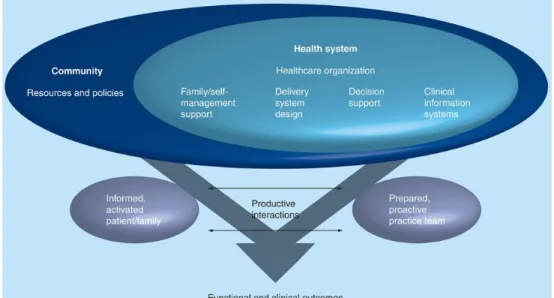
The Chronic Care Model and the Health Belief Model are the theoretical frameworks on
which TAKERS is based. In the Chronic Care Model, TAKERS aims to help produce the
“informed activated patient/family” as shown in Figure 2. The Health Belief Model is the method
by which TAKERS will attempt to cause behavior change in the “informed activated
patient/family.” In this model, one’s beliefs about their health problem are vital in determining
TAKERS Master’s Paper N’Djamina Johnson 28 | P a g e (Glanz, 1997). TAKERS attempts to improve each category shown in the Health Belief Model
(Figure 3), including the “knowledge” in the “modifying factors,” all of the “individual beliefs,” and
“cues to action” to improve health outcomes and encourage behavior change (Champion &
Skinner, 2008; Glanz, 1997; Smith et al., 2010).
Figure 2: Chronic Care Model. (Brinkman & Epstein, 2011)
Figure 3: Health Belief Model. (Champion & Skinner, 2008)
Though TAKERS participants will be diagnosed with chronic kidney disease (CKD),
they will have different perceptions of their susceptibility to complications from CKD and severity
of their CKD (see Figure 3) (Glanz, 1997). Therefore, the module will present information about
how common certain complications are in patients with CKD. It will also include an evaluation of
their own risk based on their current eating habits, compliance with medications, and other
TAKERS Master’s Paper N’Djamina Johnson 29 | P a g e who have had negative consequences from non-adherence, and then supply recommendations
to avoid specific actions to prevent those consequences.
The beliefs that each participant has about the effectiveness of taking action, such as
adherence to medications, is called the perceived benefits (Glanz, 1997). In this part of the
module, TAKERS will compare the negative stories of young adults mentioned previously with
stories of young adults who have had positive consequences from adhering to dietary and
medication requirements. The part of the module will encourage specific actions to gain positive
consequences.
With many patients with CKD, there are many perceived barriers, or beliefs about the
material and psychological costs of taking action (Thomas-Hawkins & Zazworsky, 2005).
TAKERS will present specific strategies to overcome these barriers (Gordon, Prohaska, Gallant,
& Siminoff, 2009; Smith et al., 2010). The fifth key concept is incorporating cues to action.
TAKERS will include specific strategies to create cues to action for remembering to take
medications, drink the appropriate levels of fluids, and adhere to their recommended nutritional
recommendations (Gordon, Prohaska, Gallant, & Siminoff, 2009; Smith et al., 2010).
Lastly, the module will aim to improve an individual’s self-efficacy or confidence in one’s
ability to take action. In one study, a positive correlation was found between self-care ability and
self-efficacy (Bag & Mollaoglu, 2010). In another study, children were empowered to more
effectively estimate their phosphate intake and it significantly improved the management of their
phosphate levels (Ahlenstiel, Pape, Ehrich, & Kuhlmann, 2010). Some teenagers and young
adults with chronic kidney disease still rely on their parents to meet the needs of their chronic
kidney disease (Nicholas, Picone, & Selkirk, 2011). However, this module will improve
self-efficacy by providing education about their condition, the importance of each step it takes to
extend the life of their kidney, and the consequences of action or lack of action. TAKERS will
also suggest tips to encourage goal-setting, reinforce information they have learned previously,
TAKERS Master’s Paper N’Djamina Johnson 30 | P a g e Goals & Objectives
Goal: The goal of TAKERS is to improve the health outcomes of youth with chronic kidney disease by improving their transition from pediatric medical care to adult medical care,
improving of the ability to read a food label by patients and their parents, and increasing
self-efficacy.
In order to achieve the objectives listed below, all participants will complete the TAKERS
curriculum. The effectiveness of the TAKERS module will be evaluated with the tools listed
below at baseline, at the completion of TAKERS curriculum, and periodically (approximately
every 6 – 12 months) until the end of the study 24 months from initiation.
Short Term Objectives
1. After completing TAKERS, all participants will improve their readiness for transition.
UNC TRXANSITION Scale TM: At least 80% of participants will earn an at least an
8/10.
TAKERS pre/post-test: At least 80% of participants will earn at least an 80% on the
post-test.
STARX Transition Readiness Survey: At least 80% of patients will respond with at
least 3 out of 5 on each section of the survey.
Morisky 8 General Medication Adherence Scale: At least 80% of participants will
have a score of 5 or less.
Medical Passport: All participants will have a medical passport. The medical
passport survey will demonstrate that they carry and use their medical passport
when needed.
TAKERS Master’s Paper N’Djamina Johnson 31 | P a g e REALM (Rapid Estimate of Adolescent Literacy in Medicine): This will only be used
to assess baseline literacy level and to compare performance on the Newest Vital
Sign test
Newest Vital Sign- a Food Label: At least 70% of patients will improve their ability to
read a food label based on the score of at least at least 4.
Prescription Label Test: Goal to be determined (Assessment not yet created).
3. After completing TAKERS, all participants will increase their level of self-efficacy.
Health Behavior Survey: Goal to be determined (Validated assessment being
requested).
Long Term Objectives
As long as patients remain in the TRXANSITION database, longitudinal data may be
collected on their health outcomes periodically to follow-up on the following long term objectives:
1. Participants will have discussed transitioning from pediatric care to adult care with their
health care provider (Child and Adolescent Health Measurement Initiative, 2010; U.S.
Department of Health and Human Services, 2012a)
2. Patients will have more positive transition outcomes such as improved knowledge about
their condition/diet, self-management skills, carrying their medical passport.
3. Patients will maintain higher scores than baseline on the UNC TRXANSITION Scale TM and
STARX Transition Readiness Survey among other measures used previously if time allows
for the completion of other methods of evaluation.
Program Implementation
The goal of TAKERS is to improve health outcomes of pediatric patients with chronic
kidney disease by improving their transition from pediatric medical care to adult medical care,
improving the ability to read food labels, and increasing self-efficacy. In order to accomplish
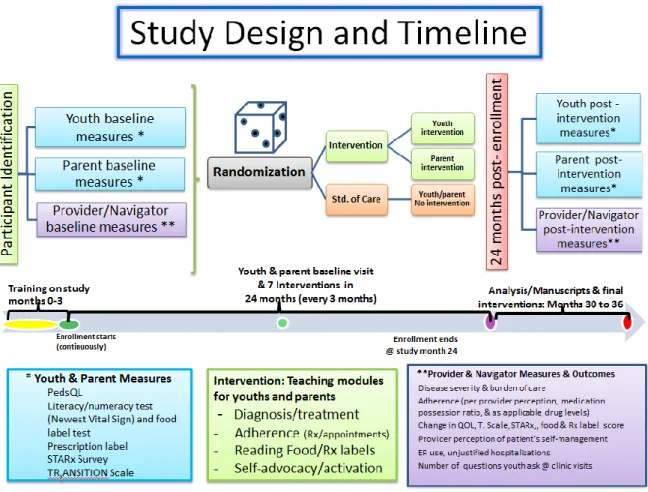
TAKERS Master’s Paper N’Djamina Johnson 32 | P a g e However, first, I must develop TAKERS online module in collaboration with UNC Computer
Science Department students and faculty. After IRB approval, recruitment will begin and be
ongoing for 24 months. In order to add video, pictures, and qualitative data to TAKERS, I will
conduct focus groups and visit dialysis units. As patients are enrolled, the research assistants
will create medical passports for the participants so they can keep vital information about their
condition on hand. Before they begin TAKERS, participants will take several baseline
assessment measures described in the Goals & Objectives section which will be repeated
periodically. After completion of TAKERS, research assistants will continue to follow
participants for the duration of the study, up to 24 months. In the last year of the program, the
research team will analyze the data to determine outcomes of TAKERS. A more detailed
timeline is shown in Figure 3.
TAKERS Master’s Paper N’Djamina Johnson 33 | P a g e TAKERS will include educational components that will teach the key principles of
transition through several online activities. This component has yet to be developed. However,
the UNC Computer Science students are creating the Space TAKERS component of the
module, which will be played on the computer. This game will include multiple choice questions
that will appear first as easy questions. As the player answers more questions correctly, the
level of difficulty of questions will increase until the database of questions is exhausted. The
answers choices will be asteroids floating around in space. The player must aim a space gun at
the correct answer and shoot the answer with accuracy. The player can increase the difficulty
of the game by causing the asteroids to move faster and increasing the speed of the
ammunition.
The Renal Research Institute has provided funding for this project to purchase tablets
and other resources needed to implement this project such as incentives for participants. Dr.
Maria Ferris has created the budget for this project, as it is a long term project which will last at
TAKERS Master’s Paper N’Djamina Johnson
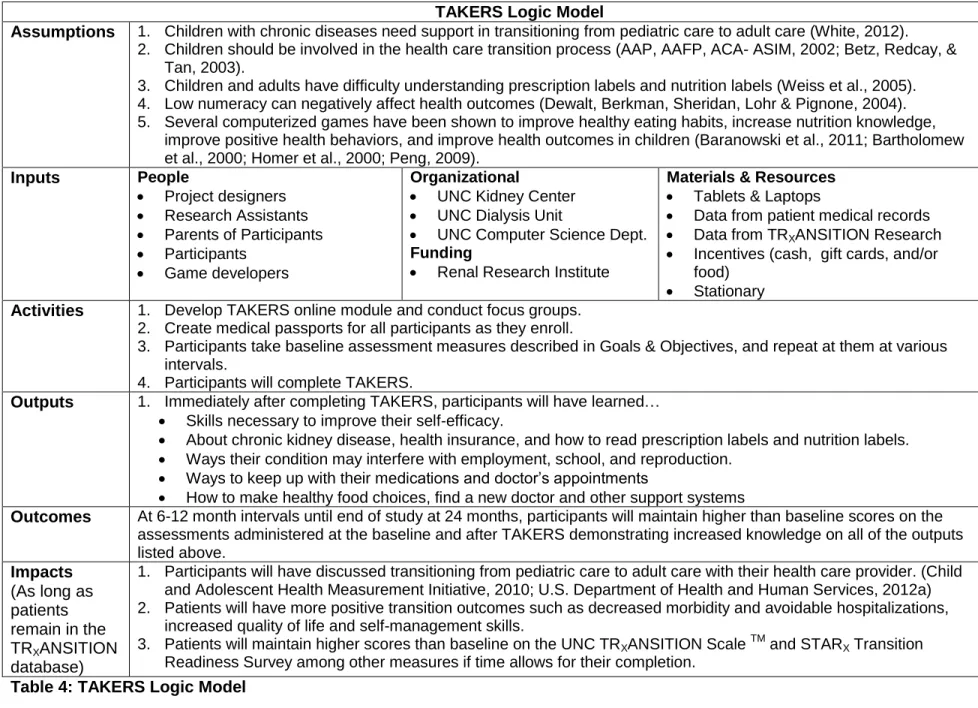
34 | P a g e TAKERS Logic Model
Assumptions 1. Children with chronic diseases need support in transitioning from pediatric care to adult care (White, 2012). 2. Children should be involved in the health care transition process (AAP, AAFP, ACA- ASIM, 2002; Betz, Redcay, &
Tan, 2003).
3. Children and adults have difficulty understanding prescription labels and nutrition labels (Weiss et al., 2005). 4. Low numeracy can negatively affect health outcomes (Dewalt, Berkman, Sheridan, Lohr & Pignone, 2004). 5. Several computerized games have been shown to improve healthy eating habits, increase nutrition knowledge,
improve positive health behaviors, and improve health outcomes in children (Baranowski et al., 2011; Bartholomew et al., 2000; Homer et al., 2000; Peng, 2009).
Inputs People
Project designers Research Assistants Parents of Participants Participants
Game developers
Organizational
UNC Kidney Center UNC Dialysis Unit
UNC Computer Science Dept.
Funding
Renal Research Institute
Materials & Resources
Tablets & Laptops
Data from patient medical records Data from TRXANSITION Research Incentives (cash, gift cards, and/or
food) Stationary Activities 1. Develop TAKERS online module and conduct focus groups.
2. Create medical passports for all participants as they enroll.
3. Participants take baseline assessment measures described in Goals & Objectives, and repeat at them at various intervals.
4. Participants will complete TAKERS.
Outputs 1. Immediately after completing TAKERS, participants will have learned… Skills necessary to improve their self-efficacy.
About chronic kidney disease, health insurance, and how to read prescription labels and nutrition labels. Ways their condition may interfere with employment, school, and reproduction.
Ways to keep up with their medications and doctor’s appointments
How to make healthy food choices, find a new doctor and other support systems
Outcomes At 6-12 month intervals until end of study at 24 months, participants will maintain higher than baseline scores on the assessments administered at the baseline and after TAKERS demonstrating increased knowledge on all of the outputs listed above.
Impacts (As long as patients remain in the TRXANSITION database)
1. Participants will have discussed transitioning from pediatric care to adult care with their health care provider. (Child and Adolescent Health Measurement Initiative, 2010; U.S. Department of Health and Human Services, 2012a) 2. Patients will have more positive transition outcomes such as decreased morbidity and avoidable hospitalizations,
increased quality of life and self-management skills.
3. Patients will maintain higher scores than baseline on the UNC TRXANSITION Scale TM and STARX Transition Readiness Survey among other measures if time allows for their completion.
TAKERS Master’s Paper N’Djamina Johnson
35 | P a g e Figure 5: TAKERS Logic Model Prezi. View this Prezi at http://prezi.com/user/ndjaminaand view “TAKERS Logic Model or type in the following URL
TAKERS Master’s Paper N’Djamina Johnson 36 | P a g e Rationale and Approach to Evaluation
Rationale for Evaluation
According the Centers for Disease Control and Prevention (CDC), the three main
reasons for creating an evaluation plan are for rending judgment (accountability), facilitating
improvements (program development), and knowledge generation (transferability)(Centers for
Disease Control and Prevention, 2011). This rationale for creating an evaluation plan also
applies to TAKERS. First, evaluating TAKERS will help all stakeholders stay accountable to the
goals and plans put forth in the program plan. The evaluation will also help inform those
currently developing the program and receiving feedback to improve the program while it is
being conducted. The development and implementation of TAKERS will be an iterative process
that will require feedback in order to continuously improve its effectiveness. Lastly, this project
is likely to be published. Therefore, effectiveness data will be of value in the publication. An
ultimate goal of the project is that the lessons learned will be transferable to others who would
like to develop similar programs at other institutions.
Another general reason that the evaluation plan will be important is because TAKERS
has several different evaluation tools that the researchers plan to employ, and the evaluation
plan will help to describe each tool for all those involved. It will encourage transparency with
participants and stakeholders.
It is with these evaluation goals in mind, that I decided that it will be necessary to
perform two types of evaluation: an implementation evaluation and an outcome evaluation. It
will be important to determine how implementation can be improved during and after TAKERS,
and it will be important to know if TAKERS is reaching its intended outcomes.
Evaluator
TAKERS would benefit from an internal evaluator with consultation from an external
evaluator. An internal evaluator would know the key areas in which the effectiveness of the
TAKERS Master’s Paper N’Djamina Johnson 37 | P a g e stakeholders to get their feedback and suggestions for improvement. However, an external
evaluator will be further removed from the program and may be able to have objective
evaluation in areas that may not occur to me. In addition, the external evaluator would have
more access to resources, broader expertise in evaluation and perhaps with online learning (W.
K. Kellogg Foundation, 2004).
There are several key skills that could be helpful to the internal and external evaluators.
First, cross cultural programs need cultural sensitivity and need to be skilled with incorporating
different perspectives (W. K. Kellogg Foundation, 2004). TAKERS will likely eventually be
translated into Spanish; and therefore, speaking Spanish would be helpful though not
necessary. Some ability to incorporate Latino culture and demonstrate cultural competence in
the evaluation and working relationship would be very useful. Also, the development of this
program is a team effort, and the evaluation will be also. Therefore, team management skills
would be very helpful in coordinating the evaluation efforts, particularly for the internal evaluator.
Stakeholders
The stakeholders that need to be involved in the evaluation are Dr. Maria Ferris, the
participants, participants’ parents, and to some extent the Renal Research Institute (RRI).
Since the patients involved in this study will likely also be cross-enrolled in the longitudinal study
being conducted by Dr. Maria Ferris with measuring TRXANSITION outcomes, some goals and
evaluation methods may need to be used for all patients so that they information can be used
for both studies. Dr. Ferris is continuously involved in the progress of TAKERS for this reason.
The participants and participants’ parents need to be involved since they will be using
the program. If they deem the program not useful, not interesting, or do not want to participate
for some other reason, the researchers need to be aware of that information since the program
is intended for their use. The participants will be involved by periodic questionnaires about the
ease of use, enjoyment, and usefulness of the program. There will likely also be focus groups