i
Abstract:
Background: Neonatal mortality is a major contributor to childhood mortality in the developing world. In Nicaragua, neonatal mortality rates have been slow to improve despite significant improvements in childhood mortality over the last 2 decades. As in many parts of Latin America, disparities in neonatal mortality between rural and urban areas in Nicaragua are significant. Studies have demonstrated that the implementation of evidenced-based bundles of care reduces neonatal mortality,and widespread implementation of training in these practices may improve outcomes in resource-limited areas. A challenge for many health authorities is how to implement these guidelines at scale. Helping Babies Breathe (HBB) and Essential Care for Every Baby (ECEB) are two simplified, low fidelity training programs that could be used to improve newborn care in rural regions of Nicaragua. Other elements of implementation, including monitoring and evaluation, continuous quality improvement (CQI) and supportive supervision, may be necessary adjuncts for implementation.
Objective: To pilot an HBB-ECEB implementation package using HBB-ECEB training combined with monitoring and evaluation, CQI and supportive supervision in rural Nicaragua. We hypothesized that evidence-based newborn care practices and critical short-term outcomes would improve.
Methods: We employed an HBB-ECEB implementation package in the rural municipalities of El Ayote and Santo Domingo. We used a pre-post data collection design. Following a period of baseline data collection from June to August 2015, all providers were trained in HBB-ECEB using a train-the trainer model. Representatives from each health center were also trained in CQI using a QI workbook. An external supportive supervisor conducted monitoring and evaluation and QI coaching. Data on newborn care processes and short-term outcomes were continuously collected from facility medical records and analyzed using standard run charts. Home visits were conducted to determine breastfeeding rates at 60 days.
Results: There were 444 institutional births and 24 home births during the study period (June 2015-May 2016). No neonatal deaths occurred. Following the HBB-ECEB implementation package, cord care improved (pre-intervention median 73%; post-intervention shift to ≥96%) and early skin-to-skin care improved (pre-intervention median 0%; post-intervention shift to
≥76%). Rates of administration of tetracycline and vitamin K were high pre-intervention (median 98% and 100%) and remained unchanged. Early initiation of breastfeeding increased with a pre-intervention median of 40% and post-pre-intervention shift to ≥88% through April 2016, though declined to 38% in May 2016. The percentage of mothers reporting exclusive breastfeeding at 60 days of life increased from 9.5% to 19% post-intervention.
ii
Table of ContentsABSTRACT i
TABLE OF CONTENTS ii
ACKNOWLEGEMENTS iv
INTRODUCTION 1
Objective 4
METHODS 4
Study Design 4
Catchment Area and Study Population 5
The Intervention 6
Data Collection 8
Outcomes, Sample Size and Analytic Techniques 10
Approvals and Consent 11
Responsibilities of the Student 11
RESULTS 11
DISCUSSION 13
Conclusions 18
FIGURE 1: Births by Location 19
FIGURE 2: Run Chart Data on Newborn Processes of Care 20
FIGURE 3: Rates of Exclusive Breastfeeding Pre- and Post-Training 21
APPENDIX 1: Helping Babies Breathe, Action Plan 22
APPENDIX 2: Essential Care for Every Baby, Action Plan 23
APPENDIX 3: Infant Study form IS01 24
APPENDIX 4: Infant Study form IS02 25
APPENDIX 5: Table of subsequent HBB-ECEB trainings 26
iii
APPENDIX 7: Nicaragua Map 28
APPENDIX 8: Systematic Review 29
APPENDIX 9: PRISMA Diagram 38
APPENDIX 10: Table of Included Studies 39
Abbreviations 40
iv
ACKNOWLEGEMENTS
I would like to thank all those who aided in bringing this project to life, both in the U.S. and in Nicaragua. In Nicaragua, I want to especially thank Dr. Laura Parajon and Dr. David Parajon, whose humility and selflessness are truly inspirational. Their organization, Amos Health and Hope, remind those most vulnerable that they are not forgotten. To Ana Williams, Ann Marie Castleman,and Amelia Ward, thank you for all of the hard work, sweat and tears that I know went into making this project what it continues to be today. Ann Marie and Ana Williams, I wish you the very best as your own careers blossom, and I look forward to the day when we work together again. Thank you to Dr. Jackie Patterson, it has been a pleasure to grow and discover together both personally and professionally.
A special thank you to Dr. Carl Bose, whose enthusiasm and knowledge made me want to achieve more. Your constant encouragement and subtle suggestions have allowed me to grow into the more confident person I am today. I feel so blessed to have you as mentor and role model. Dr. Wayne Price, thank you for allowing me the opportunity to further my education and providing an unparalleled silent patience that forced me to self-reflect and make decisions on my life and career, even when it seemed I needed redirection. Dr. Matthew Laughon, thank you for your continued support and advice, even as my interests shifted. Thank you to Dr. Melissa Bauserman, whose door seemed always open, practical advice bountiful, and a smile always ready. Also, a thank you to my master’s paper advisor Dr. Sue Tolleson-Rinehart for her
palpable enthusiasm for teaching. You have guided me into realms of interpretation and policy I never dared to enter and further inspire me to make time for those side interests in life- be it wood working or painting.
INTRODUCTION
Neonatal mortality, defined as death within the first 28 days of life, is the main contributor to
childhood mortality in the developing world, accounting for over 40% of deaths under 5
years-of-age in 2010 (Liu, et. al 2012; Blencowe et al. 2013).Over 90% of neonatal deaths occur in low
or low-middle income countries (LICs or LMICs)(Liu, et. al 2012; Blencowe et al. 2013). While
the rates of death under 5 years have improved dramatically in the last decade, neonatal death
rates have declined at a much slower rate, making the reduction of neonatal mortality a priority.
Similar trends exist in Nicaragua where the estimated mortality rate in 2006/2007 among
children under 5 years-of-age was 35 per 1,000 live births, less than half the rate of 72 per
1,000 live births in 1992/3 (INIDE & MINSA 2008). Unfortunately, the neonatal mortality rate,
estimated at 16 per 1,000 live births, has remained nearly the same since the 1990s. Another
feature of child mortality in Nicaragua is the disparity between rates in rural and urban areas.
Infant mortality (death before 1 year-of-age) is approximately 43 per 1,000 live births in the rural
regions of Nicaragua near the Atlantic coast, almost twice the rate of 24 per 1,000 live births in
urban areas(INIDE & MINSA 2008).
Nearly all neonatal deaths are attributable to three main causes: complications of preterm birth,
birth asphyxia, and infection(Oza, Lawn, Hogan, Mathers & Cousens 2015). Evidence supports
the effectiveness of over 20 perinatal and newborn health practices in reducing neonatal
mortality(Bhutta, Darmstadt, Hasan & Haws 2005). Most of these practices are included in the
bundle of care recommended by the World Health Organization (WHO) and, together, are often
called essential newborn care (ENC). Many health authorities have understood the value of
implementing these interventions in the care of all newborns and have adopted ENC guidelines
as their standard of care. The Nicaraguan Ministry of Health (MINSA) recommends a set of
2
Although evidence suggests that implementation of ENC may dramatically improve outcomes in
resource-limited areas, there remains uncertainty about how best to achieve this goal at scale
(Carlo et al. 2010). This is particularly challenging in remote areas where care is delivered by
both public and private health providers. Implementation in these areas may improve with the
use of educational programs that are simplified, adaptable to the local environments, and
deliverable using a train-the-trainer model.
A variety of training programs in neonatal resuscitation has been developed as a means of
improving neonatal mortality in LICs and LMICs by reducing deaths from birth asphyxia. In
2010, a private-public consortium led by the American Academy of Pediatrics (AAP) introduced
a simplified, low-cost curriculum for teaching newborn resuscitation in resource-limited areas,
Helping Babies Breathe (HBB; see Appendix 1 for action plan outlining content). This low-fidelity program uses small group demonstration, paired learning, and simulation as a teaching model
and a train-the-trainer strategy for dissemination. Implementation of HBB appears to reduce
rates of early neonatal death presumably due to birth asphyxia. The program’s implementation,
however, is not associated with reducing death after the first day of life (Msemo et al. 2013;
Goudar at al. 2013). Deaths beyond the first days of life result primarily from other causes (e.g.
prematurity and sepsis) (Bhutta et al. 2014; Perez, Pena, Persson & Kallestal 2011). It seems
likely that the training programs with greatest effect on overall mortality will be those that
address all causes of neonatal mortality.
In 2010, the WHO developed a training program based on their recommendations for ENC. This
program is resource intensive, including the extensive use of projection of digital images, and is
therefore not ideal for the environments and resources in many LICs and LMICs. The barriers
3
for training birth attendants in resource-limited areas. To address this need and avoid some of
the handicaps of the WHO training program, a group of educators and neonatal care specialists
in North America, in collaboration with international experts, developed a simplified, low fidelity
educational program, Essential Care for Every Baby (ECEB; see Appendix 1 for action plan
outlining content).
One newborn care practice that significantly lowers mortality is early and exclusive
breastfeeding. A recent systematic review reported a more than 40% reduction in all cause
neonatal mortality and infection-related neonatal mortality when breastfeeding was initiated
within one hour after birth(Debes, Kohli, Walker, Edmond & Mullany 2013). The ECEB
curriculum has specific content to promote early and exclusive breastfeeding. Promotion of
exclusive breastfeeding may be particularly important in Nicaragua, where rates of exclusive
breastfeeding during early infancy are low. Fewer than half of two month-old infants are
exclusively breastfed,and the proportion of exclusive breast fed infants falls with increasing age
(INIDE & MINSA 2008).
The ECEB program was developed primarily for the education of facility-based medical
professionals. However, the program’s success may be enhanced by the education of all
providers. In rural Nicaragua, this would include community-based, non-medical health
promoters. Recent systematic reviews demonstrate improvements in household practices, care
seeking, and perinatal and newborn outcomes in community settings when community health
workers deliver packages of care for maternal and newborn care (Carlo et al. 2010). The ECEB
program may be an ideal training program for health promoters because portions of the
curriculum can be used to prepare health promoters to help families provide improved newborn
4
Evidence also suggests that other elements of implementation are necessary to improve
outcomes, including monitoring and evaluation, maintenance of knowledge and skills,
continuous quality improvement (CQI) and supportive supervision (NASEM 2015; Rowe, de
Savigny, Lanata, & Victoria 2005). Adding these elements of implementation to education may
increase the likelihood of sustainable changes in practice.
Objective
The overall goal of this project was to improve newborn care, including exclusive breastfeeding
practices, and subsequently reduce neonatal mortality, in rural Nicaragua. In order to achieve
this goal, we tested the effectiveness of a strategy for sustainable implementation of the Helping
Babies Breathe (HBB) and Essential Care for Every Baby (ECEB) programs in rural regions of Nicaragua. We hypothesized that newborn care would be improved by training newborn care
providers in these programs. In addition, we planned to facilitate the translation of knowledge
and skills into practice by also training providers in quality improvement (QI) methodologies
using a newly-developed QI workbook.
METHODS
Study Design
This was a pilot study to test the effectiveness of training providers of maternal and newborn
care in two rural regions of Nicaragua using HBB, ECEB and a novel QI workbook followed by
supportive supervision. We use the term “pilot” because the sample size was relatively small,
and because we chose a convenience sample taking into consideration practical issues, such
as funding and time constraints, rather than on estimates needed to demonstrate a change in
5
The study was a population-based, prospective interventional study conducted in two phases. In
the first phase, we collected baseline data describing selected newborn care practices and
outcomes. This period of data collection was followed by an intervention that included HBB and
ECEB training, the introduction to QI methods and a QI workbook and supportive supervision,
followed by continuation of data collection.
Catchment Area and Study Population
The study’s catchment area included communities within the municipalities of Santo Domingo of
the Chontales Department and El Ayote of the Región Autónoma del Atlántico Sur (RAAS)
Department (see Appendix 7). Health care in these communities is provided by one SILAIS, the
government-sponsored local system of primary care responsible for health centers and posts
within its region, located in Juigalpa. Most obstetrical care is provided in two health centers,
one in each municipality. There are 2 to 3 health posts associated with each of these health
centers; these provide preventive outpatient care. The majority of deliveries occur at the health
centers. Mothers may occasionally deliver at health posts when transportation to the health
center is not possible. To facilitate delivery in the health centers, mothers who reside at great
distance from a health center or post may live in casas maternas (maternal homes) close to the
health center during the weeks prior to their estimated date of delivery, although some decline
this opportunity and deliver at home. Home deliveries are attended by midwives or traditional
birth attendants from the surrounding communities. Home delivery is more common in the El
Ayote municipality compared to the Santo Domingo municipality. Community health promoters,
lay-persons residing in each community who have limited medical training, assist with maternal
newborn care by providing counseling of families on recommended perinatal care practices.
Community health promoters receive training in basic health counselling, postpartum outpatient
6
The study population included women and their live born newborns, who delivered within the
catchment area during the study period (June 2015 through May 2016). This included women
who delivered in either of the area’s health centers or posts. It also included women who
delivered at home in select communities in the El Ayote municipality as outlined below.
The Intervention
The primary element of the intervention was education of newborn care providers in the
catchment area using the HBB and ECEB programs. These programs are based on
evidenced-based newborn care practices recommended by the WHO. HBB outlines care in the immediate
newborn period and emphasizes requisite care during the “golden minute” (the first minute after
birth), including steps of immediate neonatal resuscitation (see Appendix 1 for HBB Action
Plan). ECEB is a program that outlines the subsequent steps in newborn care (see Appendix 2
for ECEB Action Plan).
In this study, we modified ECEB content to conform to the current Nicaraguan Ministry of Health
(MINSA) recommendations. The modifications included the insertion of the national
recommendations for cord care (chlorhexidine 4%) and eye care (tetracycline 1% solution).
Spanish versions of HBB and ECEB were provided by the American Academy of Pediatrics, and
these materials were further adapted so that they were culturally appropriate, including the
alteration of skin tones of illustrations as well as alterations of some attire.
After baseline data collection (see below), we trained all newborn care providers in the
participating communities using a train-the-trainer model. Our goal was to train all personnel
who participated in the care of mothers and infants, both medical professionals and lay workers.
In the first level of training, Dr. Laura Parajon, the Medical Director of AMOS (the
7
trained a cadre of Master Trainers. These included six personnel from AMOS. These Master
Trainers became the trainers for the next level of training.
The next level of training was at a regional workshop in Juiglapa. The trainers included the
Master Trainers and one additional trainer from the United States. The trainees included two
providers from each study health center and selected personnel from the SILAIS. At the request
of the SILAIS director, two providers from each of eight additional health centers in the SILAIS
region also participated, though continued data collection in these areas was not planned. For
HBB-ECEB training, trainees were assembled into groups of six providers per one trainer.
Training occurred over three days, one day for HBB training and two days for ECEB training. In
addition to their training in HBB-ECEB, we prepared trainees to become teachers of the
programs in recognition of their subsequent responsibility to teach the program within each of
their facilities. In total, 23 facility-based trainers from the 10 SILAIS municipalities, including 2
each from El Ayote and Santo Domingo, were trained.
Finally, we provided training in QI methodology in conjunction with HBB-ECEB training during
the third day of training. This half-day session emphasized basic quality improvement
methodology, including the collection and interpretation of data. We introduced the QI Workbook
as a resource for further training and conduct of QI initiatives in the facility.
Over the 2 months following their training (August to October 2015), the two facility-based
providers from El Ayote and Santo Domingo who participated in the regional training, trained all
of the maternal and newborn care providers in their health centers. They were assisted and
supervised in their training by a Supportive Supervisor, a nurse hired by the project. Although
8
providers in the health centers was divided into 2 to 3 days. An additional 7 physicians and 12
nurses were trained in El Ayote, and 5 physicians and 10 nurses were trained in Santo Domingo
between August and October 2015 (see Appendix 5). Additionally, 3 Master Trainers from
AMOS and 3 MINSA staff members went to the communities in El Ayote and trained 23
midwives in HBB-ECEB much later in the study period (in February 2016) over a 2-day period.
AMOS Master Trainers also trained community health promoters in the parts of ECEB most
relevant to continued education of families, specifically as it related to the modified ECEB parent
guide (see Appendix 6 for parent guide).
Data Collection
Phase 1: Pre-Intervention Data Collection
Two months prior to HBB-ECEB training (June to July 2015), we collected baseline data
describing births within the catchment area. All data were entered into a digital data collection
system on a computer dedicated for that purpose within each health center. Community
Coordinators abstracted data from the medical charts at each health center and posts within the
catchment area using Infant Study form IS01 (see Appendix 3). Community Coordinators were
specially-trained health promoters employed by the study; they did not participate in patient
care. Each municipality had one Community Coordinator responsible for the collection of data.
Baseline data describing home births in El Ayote was collected by the midwife or traditional birth
attendant at each birth. Following completion, community health promoters collected the study
forms and delivered them to the Community Coordinator at one of the health centers. The
9
During scheduled home visits at 7-, 30- and 60-days, community health promoters collected
outcome data, including deaths following discharge and breastfeeding practices using Infant
Study form IS02 (see Appendix 4). Community health promoters conducted home visits in
selected communities of El Ayote and Santo Domingo. This visits occurred within communities
where AMOS was already well-established and trusted or those in relatively close proximity to
the health centers. We trained Community Coordinators, midwives and traditional birth
attendants and community health promoters on methods of data collection prior to initiation of
baseline data collection.
Phase 2: Post-Intervention Data Collection
Following HBB/ECEB training, data was again collected in the same fashion as in phase 1. All
data were entered into a digital data collection system on a computer dedicated for that purpose
within each health center.
Community health promoters conducted three visits to the homes of live-born infants at
approximately 7-, 30- and 60-days after birth in select communities in the Santo Domingo and El
Ayote area. However, during phase 2, the home visits served the dual purpose of collecting data
using Infant Study form IS02 (Appendix 4) and continuing the education of families on
recommended newborn care. The community health promoters educated families on the
continued care of the newborn according to ECEB guidelines in accordance with MINSA
recommendations. They were trained in select portions of ECEB such that they would be able to
recognize “red flags” and counsel families to seek further medical care for the infant if necessary
10
Outcomes, Sample Size and Analytic TechniquesThe primary outcome in the determination of effectiveness of the implementation of essential
newborn care practices using HBB and ECEB training and the introduction of QI methods was
exclusive breastfeeding at 60 days following birth. Our hypothesis was that this implementation
strategy would increase the absolute rate of exclusive breastfeeding at 60 days by 30%.
Although the sample size was determined by practical constraints (i.e. the number of births
during a defined study period), we predicted that the sample would be sufficient to detect large
improvements in rates of exclusive breastfeeding. The size needed to detect absolute changes
in exclusive breastfeeding rates are listed below, assuming a baseline exclusive breastfeeding
rate of approximately 35%8 using 80% power and 5% significance:
Absolute change (%) Sample size needed
5% 1,469
10% 373
20% 95
30% 40
Secondary outcomes included the following process measures: 1) early and continuous
skin-to-skin care (during the first hour after birth), 2) eye care (tetracycline), 3) cord care
(chlorhexidine), and 4) early initiation of breastfeeding within 1 hour of birth; and outcome
measures: 1) rates of hypothermia (less than 36.5° C) at one hour following birth, and 2)
neonatal mortality.
We analyzed process measures and hypothermia continuously using run charts.Data points
11
Medians were created from baseline data for comparison. Significant changes in measureswere identified by “shifts” and “trends.” Shifts were defined by six or more consecutive points
above or below the median. Trends were defined as a series of five or more points all directed
in the same direction (Perla, Provost & Murray 2011).
Approvals and Consent
The institutional review boards at The University of North Carolina (UNC) and the Universidad
Nacional Autónoma de Nicaragua in Leon (UNAN Leon) reviewed the study. We obtained
waivers of written consent from participants from both boards.
Responsibilities of the Student (Dr. Perez)
The study was a joint effort of the UNC, AMOS, MINSA, and the UNAN Leon. As the study
principal investigator, I had specific responsibilities. I created the study protocol and was
responsible for establishing partnerships in Nicaragua. I obtained “buy-in” from key stakeholders
for the project prior to the study’s implementation, including the Ministry of Health in Nicaragua,
and aided in applying for institutional review board approvals. I collaborated with representatives
from each of these organizations in the development of the protocol, implementation of the
study and monitoring and evaluation of the study. I created the data collection forms that were
translated into the digital/electronic database. I was also responsible for training Master trainers
in Nicaragua. Along with AMOS personnel, I analyzed and interpreted the data.
RESULTS
During the study period, 444 institutional births and 24 home births occurred, the majority of
them in El Ayote (Figure 1). The majority of facility births occurred in the health centers with 1
12
neonatal deaths occurred, nor did any neonatal death occur following a home birth, although weknow of the death of one infant at 35 days following a home birth.
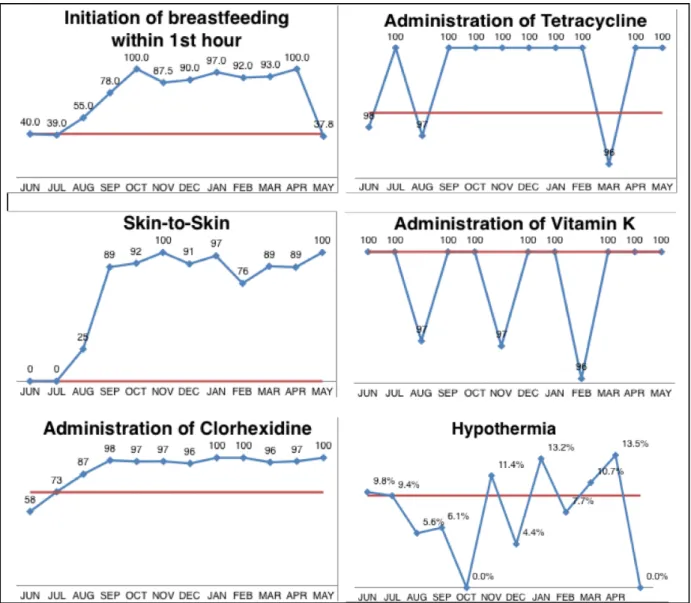
Following implementation of the HBB-ECEB package, compliance with newborn care practices
at health facilities increased or remain unchanged. Appropriate cord care using chlorhexidine
increased significantly with a post-training shift to ≥96% compared to the pre-training median of
73% (Figure 2). Rates of administration of tetracycline and vitamin K were high pre-training, with
pre-training medians of 98% and 100% respectively, creating stiff ceiling effects for any
post-training change. These high compliance rates persisted after-post-training with no shifts or trends
noted. Post-training compliance with recommended eye care using tetracycline ranged from
96-100% and vitamin K administration 96-96-100%. Early skin-to-skin care and early initiation of
breastfeeding within the first hour of life had the largest improvements. Early skin-to-skin
experienced a post-training shift to ≥76% compared to the pre-training median of 0%. Early
initiation of breastfeeding was similarly improved after training, evidenced by a shift from a
pre-training median of 40% to a post-pre-training rate ≥88% until May 2016, when the rate of early
breastfeeding returned to 38%. The number of infants with hypothermia varied around a
pre-training median of 8% without significant shifts or trends, with a post-pre-training range from 0% to
13%. Continuous run chart data are displayed in Figure 2.
Of note, there were a number of missing data. Missing data from medical records was highest
pre-intervention for the processes of skin-to-skin care and early initiation of breastfeeding. There
were 49 infants for whom there was no documentation of when breastfeeding was initiated for
75 births captured pre-intervention (65%). Thirty-seven of the 75 infants (49%) were missing
data on whether skin-to-skin care was performed pre-intervention. For the processes of Vitamin
K administration, tetracycline administration, and chlorhexidine application, data was missing for
13
in 2 of 75 infants (3%) pre-intervention. Post-intervention, documentation of skin-to-skin careand initiation of breastfeeding improved. Data detailing early initiation of breastfeeding and
skin-to-skin care was missing from 23 (7%) and 41 (13%), respectively, of 325 charts reviewed.
Vitamin K administration, tetracycline administration, and chlorhexidine application as well as
initial temperature remained well documented post-intervention. Missing data was excluded
from the run charts.
Home visits for 7-, 30- and 60-day newborn follow-up were limited in number and were
conducted in a convenience sample of selected families. Twenty-three home visits took place
before training and 50 home visits occurred after training. Follow-up to 60-days occurred for 22
of 23 infants pre-training and 43 of 50 infants post-training. Exclusive breastfeeding rates were
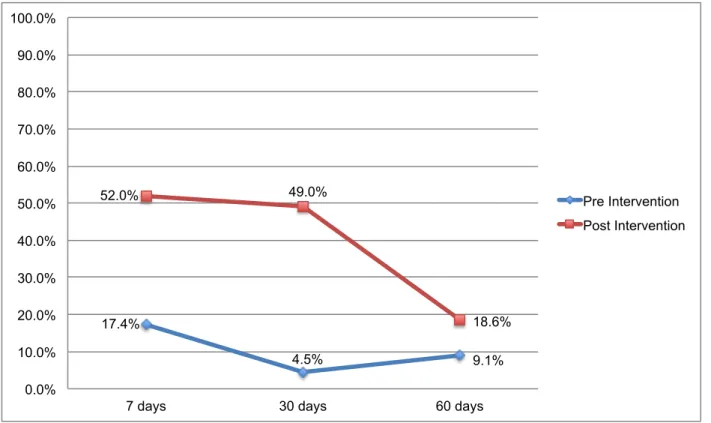
estimated from these home visits. The percentage of mothers reporting exclusive breastfeeding
increased from 17.4% to 52% at 7 days (RR 1.72; 95% CI 1.22 to 2.43, p=0.002), from 4.5% to
49% at 30 days (RR 1.87; 95% CI 1.40 to 2.50, p<0.0001) and from 9.1% to 19% 60 days (RR
1.12; 95% CI 0.92 to 1.36, p>0.05) following birth during the pre-intervention compared to the
post-intervention period (Figure 3). Despite these improvements, exclusive breastfeeding rates
steadily declined from 7 days to 60 days both before and after the intervention.
A QI project was not initiated during the study period. At present, QI activity has been limited to
formation of a QI team and identification of gaps in quality; other activities are forthcoming.
DISCUSSION
As in many other areas of Latin America, Nicaragua has made significant strides to improve
newborn care and reduce neonatal and infant mortality (Perez et al. 2011). However,
improvement in neonatal survival has lagged behind improvement in overall child survival, and
14
tested a strategy to improve newborn care in rural regions of Nicaragua through training usingthe HBB and ECEB programs and a novel QI program based on a workbook and supportive
supervision. We hypothesized that this strategy would be an effective way to improve health
outcomes in the rural regions of Nicaragua and reduce health outcome disparities between rural
and urban areas. Further, we speculated that this strategy might be a model for implementation
of newborn care practices in other countries in the region.
In the short-term, the project was successful. There were improvements or at least no change in
rates of compliance with recommended newborn care practices following the intervention. Most
notable were significant improvements in maternal-newborn skin-to-skin care immediately
following birth and in early initiation of breastfeeding (within the first hour following birth). These
improvements were noted soon after training, and compliance with both of these practices was
sustained during the 8 months following training. We suspect that one explanation for the
sustained improvements in skin-to-skin care and early breastfeeding can be attributed to
motivation of providers to improve compliance with these practices; a goal expressed by
providers at the completion of the regional training workshop. Additionally, although appropriate
cord care with chlorhexidine was relatively high at baseline, a significant post-training shift
occurred. We suspect that some of this improvement was attributable to improved availability of
the chlorhexidine. We observed high baseline compliance with the administration of tetracycline
for eye care and vitamin K. Importantly, the intervention did not reduce compliance with these
practices.
Although rates of skin-to-skin care and early initiation of breastfeeding, practices that are known
to increase the likelihood of exclusive breastfeeding in infancy, increased after the intervention,
rates of exclusive breastfeeding remained undesirably low. Further, the significant increase in
15
not persist, and there was no significant difference pre- and post-intervention by 60-days afterbirth. There was a steady decline in exclusive breastfeeding rates from nearly 50% at 7 days to
less than 20% at 60 days following birth in the period after the intervention. We conclude that
the beneficial effects of early newborn care practices that are known to increase the subsequent
rates of breastfeeding are outweighed by other, later factors that are barriers to breastfeeding.
National Nicaraguan data would have predicted at least 6 deaths in our birth cohort, yet no
neonatal deaths were reported. The majority of our data described care and outcomes that
occurred within the facility and, thus, only during the duration of hospitalization of the mother
and infant. We had 30- and 60-day outcomes on only about 10% of the birth cohort. Therefore,
we cannot account for deaths after discharge from the facility in the remainder of the cohort. We
did not have outcome data on infants who were transferred to a higher-level facility for care and,
because all very low birthweight infants were referred for care, it is possible that some of them
died. Finally, although we attempted to collect data describing all births in the catchment area
during the study period, it is possible that some home births were not reported, and therefore
deaths following these births would not have been counted.
This study had a number of limitations. Because of practical constraints, we were able to
conduct follow up visits and capture outcome data in a small subset of the study population. The
catchment area was large and sparsely populated. Homes at furthest distance from the health
centers, where our staff were positioned, were in areas where roads were poor and there was
little to no public transportation; thus, we could not afford to collect data in these regions. The
percentage of the study population seen in follow-up was small and potentially biased.
Outcomes after discharge are estimates based on this small sample and should be interpreted
16
Another limitation of the study was the method of data collection. Data were collected byabstraction from the medical record. Data were sometimes missing, and the quality of the data
was always dependent on the care provider. We discovered by occasional observation some
inconsistencies between information recorded and observed. It is possible that some activities
recorded as completed in the record were not being performed, or conversely were performed
but not recorded. Also, we could not be certain that when the record indicated that a practice
was performed that it was performed correctly. An alternative method of data collection would
have been to base all data collection on direct observations. This alternative would have been
prohibitively expensive. Also, observation may influence practice and may confound study
results.
We monitored key processes of care and selected facility-based outcomes continuously for a
period of approximately 10 months following the training of providers. Improvements in the
processes and outcomes persisted throughout this period, with one exception. We cannot be
certain that this quality of care will continue. Knowledge and skills acquired during HBB and
ECEB training may decline over time, as has been observed following other training programs
(NASEM 2015; Rowe et al. 2005). Also, staff turnover at the facilities may result in providers
without adequate knowledge and skills. In April of 2016, a significant number of providers at El
Ayote were transferred to other facilities and were replaced with new providers. These new
providers were not trained in HBB and ECEB. We believe that these changes explain the
decline in the rate of EIBF observed in May. Repetitive low-dose simulated training and periodic
refresher training has been shown to reduce early neonatal mortality following HBB training.3 We believe that a similar strategy will be necessary to sustain improvements following our
17
The intervention also included introduction to QI methods and a QI workbook. We anticipatedthat the workbook would guide facility-based improvements activities, and that the supportive
supervisor would facilitate these activities. During the study period, QI activities did not proceed
beyond the formation of a QI team. The lack of further involvement in QI may have resulted from
the absence of a detectable gap in quality in facility-based care, and this may have resulted
from the choice of processes of care and outcomes selected for monitoring. It is possible that
monitoring other processes (e.g. use of bag/mask ventilation) or outcomes (e.g. timing of cord
clamping) might have revealed a gap in quality and a potential focus of a QI project.
The undesirably low rates of exclusive breastfeeding and the declining rate with advancing
postnatal age represents a significant gap in quality. In fact, improving rates of exclusive
breastfeeding was the overall goal of this project. We had hoped that improving the early
initiation of breastfeeding, support of breastfeeding during subsequent postpartum care in the
birth facility (both elements of ECEB) and the engagement of community health workers in
continuing to support breastfeeding would result in improved rates of exclusive breastfeeding
beyond the neonatal period. Although our follow up data suggest that the intervention may
improve these rates, they remain unacceptably low. It is clear that improving this outcome will
depend upon additional interventions in the community. Discovering barriers to exclusive
breastfeeding and developing an improvement strategy is ongoing.
We believe that our intervention may be a model for improving facility-based newborn care
practices. While country-specific policies, demographics and geography may influence
successful implementation of similar project elsewhere, the structure of the current project lends
itself well to further implementation in other rural areas. The project highlighted the potential
success of private and public partnerships, and a manner in which in-country and international
18
providers to improve newborn care practices undoubtedly aided in the improvement incompliance with recommended newborn care practices.
Conclusions
Our study demonstrates that essential newborn care practices can be improved in facilities in
resource-poor communities using a train-the-trainer cascade to implement the HBB and ECEB
programs. This strategy led to improvements in a number of care practices with low compliance
rates prior to training. However, improvement in care practices known to increase the likelihood
of exclusive breastfeeding during infancy did not result in acceptable rates at 30- and 60-days
following birth. Strategies to understand and overcome barriers to exclusive breastfeeding will
be required to improve this outcome.
We describe an implementation strategy that may be a model for programs in other rural,
resource-limited areas. The key elements of the strategy included engagement of collaborating
partners; in our project this included an established non-governmental organization and the
Ministry of Health. We adapted the educational material so that it was compliant with local
recommendations for care, culturally appropriate and context specific. Finally, we provided
supportive supervision within the facilities. This additional resource, although somewhat costly,
19
20
21
FIGURE 3. Rates of Exclusive Breastfeeding Pre- and Post-Training
17.4%
4.5% 9.1%
52.0% 49.0%
18.6%
0.0% 10.0% 20.0% 30.0% 40.0% 50.0% 60.0% 70.0% 80.0% 90.0% 100.0%
7 days 30 days 60 days
22
23
24
25
26
APPENDIX 5: Table of Subsequent HBB-ECEB Trainings
Municipality Dates Total
people trained Health Center Staff Type of Provider Health Posts Staff Type of Provider Training Facilitator El Ayote (1 Health Center & 3 Health Posts)
10/18 – 10/21/15 16 9 3 doctors
6 nurses
7 2 doctors
5 nurses
4 AMOS staff
2 MINSA staff (nurses)
10/29 – 10/30/15 3 - - 3 2 doctors
1 nurse
1 AMOS staff
Santo Domingo (1 Health Center & 2 Health Posts)
8/25 – 8/28/15 14 6 3 doctors
3 nurses
8 2 doctors
6 nurses
4 AMOS staff
27
28
29
APPENDIX 8: Systematic Review
INTRODUCTION
Neonatal mortality is the main contributor to childhood mortality in the developing world
(Liu, et. al 2012; Blencowe et al. 2013). It is defined as death within the first 28-day of life and is
expressed as the number of deaths per 1,000 live births. Nearly all neonatal deaths are
attributable to three main causes: complications of premature birth, birth asphyxia, and infection
(Oza, et al. 2015). Training in neonatal resuscitation and other elements of basic newborn care
may effectively reduce deaths from these causes. However, educational program
implementation and assessment can be challenging, especially in rural communities where
complications of birth leading to neonatal deaths are most likely to occur.
The interventions most likely to improve neonatal mortality revolve around the education
and training of families and providers. Additionally, the greatest reduction in neonatal mortality is
likely to be appreciated by the integration of resuscitation training into training in other aspects
of basic newborn care. The introduction of such interventions as a comprehensive package
might decrease neonatal deaths significantly.
Trials assessing the efficacy of educational programs are challenging. Educational
programs are often complex with important variations in implementation strategies (including
train-the-trainer strategies), persons being trained (medical professional, birth attendants, or
families) and content of materials, amongst other things. Additionally, assessment in the areas
where most deaths are likely occurring, e.g. rural communities, can be topographically and
fiscally challenging. Due to such complexities, systematic studies assessing the effect of
community-based educational programs on neonatal and infant health are few, and the ideal
mechanism for implementation of such programs remains ill-defined.
Latin America and the Caribbean offer a unique setting to trial such educational
programs. Although national neonatal and infant mortality rates demonstrate significant
30
disparities persist between urban and rural areas (Casas, Dachs & Bambas 2001). Rural areasare often isolated and neonatal deaths are most likely in these areas (Lawn, Gravett, Nunes &
Rubens 2010). Fortunately, the infrastructure of many Latin American and Caribbean countries
offer the support of health interventions, including educational programs.
In this systematic review, I will review existing evidence for the implementation of
community-based educational programs in Latin American and Caribbean countries as a
mechanism to improved neonatal and infant mortality. We investigated outcomes including
neonatal or infant death, infection, hypothermia, or other morbidities. Secondary outcomes,
such as breastfeeding rates or educational outcomes, were not included as their relation to
ultimate outcomes of the neonates and infants was undetermined.
METHODS:
Research question
The primary question of this review was: What are the effects of implementing
community-based educational and/or training programs on Latin American and Caribbean
neonatal and/or infant mortality?
Criteria for selection of studies
I included original trials, including randomized and nonrandomized trials irrespective of
year of publication, with sufficient data published in English or Spanish for inclusion eligibility.
We included studies whose subjects included live born infants up to 1 year-of-age born in the
community or basic health facilities. Infants born in tertiary care facilities such as neonatal
intensive care units were excluded.
We included studies evaluating educational or training programs compared to other
standard of care as determined by historical context or current national standard. We excluded
31
of prophylactic systemic antibiotics. We also excluded studies without any educational ortraining component to the intervention for patients, patients’ families and/or for providers.
Outcome measures of interest included neonatal mortality or infant mortality. We
excluded studies whose outcomes were limited to the educational attainment of trainees, such
as pre- and post-training assessments. We also excluded studies exclusively reported
secondary outcomes such as exclusive breastfeeding rates, anthropometrics such as low birth
weight, or other morbidities. We excluded these studies as such secondary outcomes cannot be
linked to the primary outcome of death.
We included studies that evaluated stillbirths, neonatal mortality or infant mortality in the
community or primary health facilities in Latin America and/or the Caribbean. We excluded
studies evaluating outcomes in tertiary care or referral centers such as neonatal intensive care
units.
Search methods for identification of studies
I performed a systematic search of the literature using Pubmed, EMBASE, and EBSCO (global
health) from their establishment through March 15th, 2015. Filters were used to maximize original research with limitations set to exclude reviews, editorials, or erratums as possible. A
medical librarian helped to develop a search strategy using appropriate search terms. The
search used the following combination of keywords: ("neonatal health" OR "infant health" OR
32
Panama OR Panama Canal Zone OR South America OR Argentina OR Bolivia OR Brazil OR Chile OR Colombia OR Ecuador OR French Guiana OR Guyana OR Paraguay OR Peru OR Suriname OR Uruguay OR Venezuela) AND (program* OR implement* OR program evaluation [MeSH]). I used broad search terms to maximize results as a limited number of studies were expected. Individual country names were included in the search as broader terms such as “LatinAmerica” and “Caribbean” had limited results. Language was restricted to English or Spanish.
No date limits were applied to the search.
Study selection and analysis
One reviewer (Dr. Perez) determined inclusion for full text review of abstracts and titles
obtained by the search. Although two reviewers would be ideal, I performed this review solitarily
as part of my research project. Eligible studies as determined by full text review were included in
the systematic review. The quality of the study, research design, analysis and results were
abstracted from included studies.
RESULTS:
Study Characteristics
After removal of duplicate studies, I found 631 articles from the search. From the 631
articles screened, 548 citations were determined to be irrelevant due to reasons including wrong
patient population, wrong study design, wrong setting, wrong country, and wrong intervention(s)
reported within the abstract. In total, we reviewed 84 full-text articles for eligibility. Of these, 80
articles did not meet eligibility criteria for inclusion in the systematic review. In total, we identified
4 full-text articles for inclusion in this systematic review (Appendix 9). One of the studies was a
multi-country pre-/post- design study with cluster randomization, including sites in Guatemala
and Argentina (Carlo et al. 2010). Another study described numerous interventions in different
33
design to evaluate the intervention in Guatemala and Brazil (Garces et al. 2012; Edmond,Pollock, da Costa, Maranhao, & Macedo 2002). Of note, the study in Guatemala was part of the
larger multi-country, study but was published separately. There were no additional trials
identified through bibliographic citations or other references. See Appendix 10 for a summary of
included studies.
Intervention Characteristics
Interventions varied between studies. Two of the studies, noting 1 was a part of the
other, evaluated outcomes after training local birth attendants from rural areas in Guatemala
and Argentina in the WHO ENC course using a train-the-trainer model (Carlo et al. 2010;
Garces et al. 2012). The WHO ENC course teaches basic newborn resuscitation, routine care of
the newborn and care of common newborn illnesses. One study described “MotherCare”
demonstration projects in Bolivia and Guatemala, noting these projects vary in each location
and are broadly described in the study (Kwast 1996). In Bolivia, the project focused on the
empowerment of women, improvement of perinatal care and family planning, as well as the
training of birth attendants, women and husbands “on safe birth practices” (Kwast 1996, p. 49).
In Guatemala, the MotherCare project aimed to improve quality of perinatal care through
standards and protocols, train 400 traditional birth attendants to recognize perinatal
complications and to make appropriate referrals, and encourage compassionate treatment for
birth attendants and women referred to health facilities (Kwast 1996). There was no detailed
description on the specifics of how these programs were implemented or how the training
occurred. Another study evaluated a “ProNatal” program, a complex program with numerous
interventions mostly focused on the improvement in access and quality of health facilities,
though also included a segment for the education of nursing and medical students in the
34
described, and the amount of content, if any, on neonatal care, was unknown. Thus, only 2 ofthe 4 included studies described the details of the training.
Participant Characteristics
The two studies evaluating the effects of the WHO ENC program included neonates with
birthweight ≥ 1500 grams, both stillbirths and live born infants (Carlo et al. 2010; Garces et al.
2012). Participant characteristics were poorly described or not described in the remaining 2
studies (Edmond et al. 2002; Kwast 1996).
Reported Outcome Measures
There was significant variation in reported outcomes, though all 4 included studies
reported mortality outcomes such as stillbirths, early neonatal mortality, perinatal mortality, or
infant mortality. Outcomes described in the 2 studies evaluating MotherCare projects and the
ProNatal program had incomplete data (Edmond et al. 2002; Kwast 1996). The large,
multi-country study evaluating the ENC program did not separate reported outcomes by multi-country, thus
reported outcomes were an average from the 6 included countries, including Argentina and
Guatemala as well as the Democratic Republic of the Congo, India, Pakistan, and Zambia
(Carlo et al. 2010). The study derived from the multi-country study describes outcomes from
Guatemala only (Garces et al. 2012).
Three studies reported the outcome of stillbirth and/or perinatal death, defined as
stillbirths plus early neonatal deaths (Carlo et al. 2010; Garces et al. 2012; Edmond et al. 2002).
In 2 studies, stillbirths declined significantly after the intervention (Carlo et al. 2010; Garces et
al. 2012). Perinatal deaths declined in 2 of the 3 studies (Garces et al. 2012; Kwast 1996),
noting 1 of these did not detail the number of stillbirths contributing to the perinatal mortality rate
35
The other study attributed the reduction in perinatal mortality largely to the decline in stillbirths(Garces et al. 2012).
Early neonatal mortality, defined as death within the first 7 days of life, was reported in 2
of the studies, noting one was derived from the other (Carlo et al. 2010; Garces et al. 2012).
Early neonatal mortality was unchanged compared to baseline in both studies. A third study
refers to a decline in early neonatal death among infants born to women referred to health
facilities, though fails to provide data (Kwast 1996). The ProNatal study reported infant mortality
as the primary neonatal outcome, with data derived from national the national registry (Edmond
et al. 2002). As a result, infant mortality estimations were reported to be unreliable due to
underregistration of infant deaths, though rates were suspected to be improved
post-intervention after a later period of more accurate reporting.
Overall, 2 of the 4 included studies had significant limitations in outcome reporting. The 2
studies with more complete data reporting were related, with 1 being a parent study of the other.
DISCUSSION
I evaluated published studies looking at the effects of educational or training programs
on neonatal and infant mortality outcomes in Latin American and Caribbean countries. I
identified that education of providers on neonatal care appears to result in a reduction in
stillbirths, though does not appear to affect perinatal or early neonatal mortality within the first 7
days. Although other educational programs may exist, training in newborn resuscitation and
care, such as through WHO ENC program or HBB, appears a critical component in improving
stillbirths. The descriptions of the training component of the programs were severely limited in 2
of the 4 studies. There were no studies evaluating long-term sustainability of the educational
programs. Unfortunately, there are little data to guide specific implementation strategies.
Stillbirths make up a significant number of perinatal deaths in LICs and LMICs (Lawn,
36
reduction in stillbirths was demonstrated after training in the WHO ENC program in 2 of thestudies (Carlo et al. 2010, Garces et al. 2012). Unfortunately, the decline in stillbirths did not
translate to a reduction in later neonatal death in these studies. This is consistent with a
subsequent study of HBB in Tanzania and India, noting a reduction in stillbirths and/or early
neonatal death within 24 hours without a reduction in neonatal mortality rates (Msemo et al.
2013; Goudar et al. 2013). Content of HBB and ENC is very similar, and both programs use a
train-the-trainer model. However, there appears to be another component to training and
implementation that is crucial for improvements in neonatal mortality or longer-term outcomes.
Some temperance is justified given possible underreporting of deaths, a common
concern in rural communities in LICs and LMICs. As a result, many studies rely on survey data
rather than vital registration data to capture deaths (Lawn et al. 2010). Training programs may
improve reporting of deaths, and baseline data collection prior to the intervention may reduce
the variation in reporting of deaths. Two of the included studies collected baseline data and
post-intervention data (Carlo et al. 2010; Garces et al. 2012). However, the remaining 2 studies
relied heavily on national registries for determining mortality outcomes, making interpretation of
their findings more challenging (Edmond et al. 2002; Kwast 1996).
The ideal strategy for training and implementation remains unknown. As previously
stated, the 2 included studies demonstrating improvement in stillbirths utilized a train-the-trainer
model. This strategy may offer the additional advantage of leaving local trainers to propagate
the program and, ideally, continue training. In this way, a train-the-trainer model may improve
sustainability. However, specific advantages to a train-the-trainer model on the sustainability of
outcome improvements are lacking in the literature. Training is likely only a fraction of what
leads to improvement, and evidence suggests that continued monitoring and evaluation,
maintenance of knowledge, CQI training, and supportive supervision are additional critical
37
that with the addition of such elements, neonatal and infant mortality may improve beyondperinatal outcomes such as stillbirth.
In summary, although there is limited data in regards to educational programs’ effects on
neonatal outcomes in Latin America, training in neonatal resuscitation and basic care using a
train-the-trainer model may decrease stillbirths in Latin America. Such training has not been
shown to improve neonatal mortality, however. More information regarding the effects of CQI
and education on CQI in conjunction with ENC training will be available soon. Investigators are
conducting demonstration trials using a novel QI workbook to be used in conjunction with HBB
and ECEB training. Data obtained from these trials in conjunction with similar ongoing studies
on training programs, such as HBB and ECEB, will help guide appropriate implementation
strategies for the continued improvement of neonatal and infant outcomes.
CONCLUSIONS
In resource-limited settings in Latin America, training in neonatal resuscitation and basic
newborn care may offer a mechanism to reduce stillbirths. Currently, there is no evidence to
support such programs reducing overall neonatal or infant mortality. Additionally, there is little
evidence on ideal mechanisms for long-term sustainability. Although evidence-based
interventions exist, namely as they pertain to basic newborn care, it is unclear which programs,
if any, are most effective in Latin America and the Caribbean. Future areas of research could
include effectiveness studies to determine implementation strategies, target population to be
38
Appendix 9: PRISMA Diagram
659 Studies Found
28 Duplicates Removed
631 Studies Screened
548 Studies Excluded
84 Studies Assessed for
Full-Text Eligibility
3
Wrong setting
80 Studies Excluded:
26
Wrong Outcome
13
Wrong Intervention
1
Wrong Language
26
Wrong Study Design
5
Wrong Patient Population
6
Not Original
Research/Review
39
APPENDIX 10: Table of Included Studies
Source Patient Population/
Countries
Intervention Trial Design Outcomes Results
Carlo WA, et al. 2010
ENC: 57,643 infants NRP: 62,366 infants Infants ≥1500 grams & ≥ 28 weeks gestation
Rural areas of Argentina, Democratic Republic of Congo, Guatemala, India, Pakistan & Zambia)
Train-the-Trainer model
1.WHO ENC program 2.NRP training (except in Argentina) Physicians, nurses, birth attendants, and mothers trained
Pre-/Post- design, cluster-randomized controlled triali
Primary- Early neonatal death, all causes (within 7 days) Secondary- Stillbirths & perinatal mortality
After ENC:
Decreased stillbirths (RR 0.69; 95% CI 0.54, 0.88, p=0.003)
No change in early neonatal deaths (RR 0.99; 95% CI 0.81, 1.22) No change in perinatal mortality (RR 0.85; 95% CI 0.70, 1.02)
After NRP:
No change in stillbirths, early neonatal death or perinatal mortalty Garces A, et al. 2012
(Guatemala)
*Part of Carlo WA, et.al trial above)
4798 infants Infants ≥1500 grams Rural Guatemala
Train-the-Trainer model
1.WHO ENC program Physicians, nurses, & birth attendants
Pre-/Post- design, prospective trial
Primary- Early neonatal death, all causes (within 7 days) Secondary- Stillbirths & perinatal mortality
Decreased stillbirths (RR 0.40; 95% CI 0.25, 0.64) No change in early neonatal deaths (RR 1.05; 95% CI 0.7, 1.57) Decrease in perinatal mortality (RR 0.72; 95% CI 0.54, 0.97)
Edmond A, et al. 2002 (Brazil)
Number not reported, though national birth registration with 2420 births in the area
Rural Brazil
ProNatal project: Open antenatal clincs, maternity facilities, family planning clinic, breastfeeding clinic, improvement of children’s services and clinics, introduction of community health agents, & teaching in public health & pediatrics to nursing and medical students in the community
Pre-/Post-design, prospective trail
Undefined, though data reported for maternal, infant and child mortality and morbidities as well as
demographics
Changes in infant mortality initially reported as inaccurate for “underregistration” Later data collection with improvent in infant mortality without any data reported
Kwast B. 1996 (Bolivia & Guatemala)
Number not reported
Rural Bolivia & Guatemala
MotherCare project Bolivia: Development of women’s groups, & perinatal action protocols for birth attendants and women, training of birth attendants, women and husbands, & strengthening of referral resources MotherCare project Guatemala: Train 400 birth attendants, implementation of protocols for perinatal complications, and sensitization of providers to women and birth attendants
Non-randomized trial (Guatemala)
Ongoing prospective trial (Bolivia)
Undefined, though outcomes reported for perinatal mortality (Bolivia & Guatemala) & early neonatal deaths (Guatemala)
40
ABBREVIATIONS
LIC – Low income countries
LMIC - Low-middle income countries
AAP – American Academy of Pediatrics
HBB – Helping Babies Breathe
ECEB – Essential Care for Every Baby
WHO – World Health Organization
ENC – Essential Newborn Care
MINSA – Ministry of Health
QI – Quality Improvement
CQI – Continuous Quality Improvement
SILAIS – Local Health System in Nicaragua
41
REFERENCES
Bhutta, Z. A., Darmstadt, G. L., Hasan, B. S., & Haws, R. A. (2005). Community-based interventions for improving perinatal and neonatal health outcomes in developing countries: a review of the evidence. Pediatrics. 2005; 115(S2): 519-617.
Bhutta, Z. A., & Black, R. E. (2013). Global Maternal, Newborn, and Child Health—So Near and Yet So Far. New England Journal of Medicine. 2013; 369(23):2226-2235.
Bhutta ZA, Das JK, Bahl R, et al. for The Lancet Newborn Interventions Review Group and The Lancet Every Newborn Study Group. (2014). Can available interventions end preventable deaths in mothers, newborn babies, and stillbirths, and at what cost? Lancet 2014; published online May 20. http://dx.doi.org/10.1016/S0140-6736(14)60792-3.
Blencowe, H., Vos, T., Lee, A. C., Philips, R., Lozano, R., Alvarado, M. R., ... & Lawn, J. E. (2013). Estimates of neonatal morbidities and disabilities at regional and global levels for 2010: introduction, methods overview, and relevant findings from the Global Burden of Disease study. Pediatric Research,74(S1), 4-16.
Carlo, W. A., Goudar, S. S., Jehan, I., Chomba, E., Tshefu, A., Garces, A., ... & Wright, L. L. Newborn-care training and perinatal mortality in developing countries. New England Journal of
Medicine, 2010: 362(7); 614-623.
Casas JA, Dachs JN, Bambas A. Health disparities in Latin America and the Caribbean: the role of social and economic determinants. Equity and health. 2001;8:22-49.
Debes, A. K., Kohli, A., Walker, N., Edmond, K., & Mullany, L. C. (2013). Time to initiation of breastfeeding and neonatal mortality and morbidity: a systematic review. BMC Public
Health, 13(3), 1-14.9
Emond A, Pollock J, Costa ND, Maranhão T, Macedo A. The effectiveness of community-based interventions to improve maternal and infant health in the Northeast of Brazil. Revista
Panamericana de Salud Pública. 2002;12(2):101-10.
Garces A, Mcclure EM, Hambidge M, Krebs NF, Mazariegos M, Wright LL, Moore J, Carlo WA. Training traditional birth attendants on the WHO Essential Newborn Care reduces perinatal mortality. Acta obstetricia et gynecologica Scandinavica. 2012; 91(5):593-7.
Godar, S. S., Somannavar, M. S., Clark, R., Lockyer, J. M., Revankar, A. P., Fidler, H. M., ... & Singhal, N. (2013). Stillbirth and newborn mortality in India after helping babies breathe training. Pediatrics, 131(2), e344-e352.
Instituto Nacional de Informacion de Desarrollo & Ministerio de Salud Nicaragua (INIDE & MINSA). Encuesta Nicaraguense de Demografia y Salud. (2008). Available at:
http://www.inide.gob.ni/endesa/Endesa_2006/InformeFinal06_07.pdf. Accessed 1 April 2016.
Kwast BE. Reduction of maternal and perinatal mortality in rural and peri-urban settings: what works?. European Journal of Obstetrics & Gynecology and Reproductive Biology.
42
Lawn JE, Gravett MG, Nunes TM, Rubens CE, Stanton C. Global report on preterm birth and stillbirth (1 of 7): definitions, description of the burden and opportunities to improve data. BMC pregnancy and childbirth. 2010. 23;10(S1):1-22.Liu, L., Johnson, H. L., Cousens, S., Perin, J., Scott, S., Lawn, J. E., ... & Black, R. E. (2012). Global, regional, and national causes of child mortality: an updated systematic analysis for 2010 with time trends since 2000. The Lancet, 379(9832), 2151-2161.
Msemo, G., Massawe, A., Mmbando, D., Rusibamayila, N., Manji, K., Kidanto, H. L., ... & Perlman, J. (2013). Newborn mortality and fresh stillbirth rates in Tanzania after helping babies breathe training. Pediatrics, 131(2), e353-e360.
National Academies of Sciences, Engineering, and Medicine (NASEM) 2015. Improving quality of care in low- and middle-income countries: Workshop summary. Washington, DC: The National Academies Press.
Oza S, Lawn JE, Hogan DR, Mathers C, Cousens SN. Neonatal cause-of-death estimates for the early and late neonatal periods for 194 countries: 2000–2013. Bull World Health Organ 2015;93:19–28| doi: http://dx.doi.org/10.2471/BLT.14.139790
Pérez W, Peña R, Persson LÅ, Källestål C. Tracking progress towards equitable child survival in a Nicaraguan community: neonatal mortality challenges to meet the MDG 4. BMC public health. 2011;11(1): 455. pp 1-7.
Perla RJ, Provost LP, and Murray SK. (2011). The run chart: a simple analytical tool for learning from variation in healthcare processes. BMJ Qual Saf. 2011; 20: 46-51. doi:
10.1136/bmjqs.2009.037895
Rowe AK, de Savigny D, Lanata CF, Victora CG. How can we achieve and maintain high-quality performance of health workers in low-resource settings?. The Lancet. 2005 Sep