SAJCH AUGUST 2012 Vol. 6 No. 3 67
S
S
A
J
ou
rna
l of Child H
ea
lth
S
A
J
ou
rna
l of Child H
ea
lth
HOT TOPICS
In the year 2000, 189 member countries of the United Nations committed themselves to eight goals towards the development and well-being of their nations. Th ese goals are called Millenium Development Goals (MDGs). Th e fourth goal (MDG4) aims to reduce the mortality rate in children under the age of 5 years (U5MR) by two thirds between 1990 and 2015. Infants less than 1 month old account for about 40% of deaths of children under the age of 5 years
globally.1 Achieving MDG4 will therefore need to include reducing
deaths during the neonatal period. Th e goal of reducing U5MR by two thirds for neonatal deaths in South Africa meant reducing the neonatal mortality rate (NMR) from 21/1 000 live births in 1998 to 7/1 000 by 2015. In order to achieve this, all neonatal deaths need to be scrutinsed by focusing on mortality rates and pathological and health system causes of neonatal deaths. Of paramount importance, however, would be looking at interventions that could impact signifi cantly on reducing these deaths. In this article we discuss the mortality rates in South Africa, the rest of the world and Africa, and discuss causes and interventions that can be implemented to reduce these deaths in South Africa.
Neonatal mortality rates in South Africa:
sources of information
In South Africa only the Department of Home Aff airs (DHA) reports on all neonatal deaths (fi rst 28 days of life) in the country, including those from both the public and private health sectors. Th e vital registration data collected by the DHA are analysed and published by Statistics South Africa (StatsSA), but with a 2-year delay. Th e data to be published in 2012 will therefore include deaths up to 2010. Even though vital registration for South Africa is often incomplete for the year because of under-reporting and delayed or late registration, the NMR from StatsSA is probably the best approximation available.
Th e other sources of information on neonatal deaths are mainly from the public sector and tend to focus on the early neonatal period (fi rst 7 days of life) and not the whole neonatal period (fi rst 28 days of life). Th ese sources are the District Health Information System (DHIS) and the Perinatal Problem Identifi cation Programme (PPIP). Another possible source of information on neonatal deaths are the Demographic Health Surveys. Th ese have only been conducted in 1998 and in 2003, and there have been concerns about their quality; there is therefore some reluctance to use their fi ndings.
Trends in neonatal mortality rates
According to StatsSA, the NMR for the country is 14/1 000 live births. Th is is lower than the NMR for 2009 reported by Oestergaard
et al.2 of 18.8/1 000 live births, with a 95% uncertainty range of
16.1 - 23.8/1 000 live births, and that reported by World Health
Organization for 2009, which was 19/1 000 live births.3 Th is
diff erence is probably because the NMRs from the abovementioned reports are calculated using the U5MR. Although vital registration for South Africa is often incomplete for the year, the NMR from StatsSA is probably closer to the true NMR than the ones listed above.
A number of sources have reported on trends in NMR in South Africa. Th e data from StatsSA have shown that there has been no
change in NMR from 2001 to 2008 (Fig. 1).4 Th is is in agreement
with the 6th Saving Babies report on perinatal care in South Africa,5
which is based on data from the PPIP and has also shown that the early neonatal mortality rate (ENMR) has remained the same from 2000 to 2009 for all weight categories (Fig. 2). Oestergaard et al. also reported that there has been no improvement in NMR in South
Africa over the last 20 years (1990 - 2009).2
It is estimated that globally the NMR decreased from 33.2 to 23.9 per 1 000 live births between 1990 and 2009, a reduction of 28%, or 1.7%
per year.2 Low-income countries showed the lowest reduction of 17%,
compared with 40% in high-income countries. Of the 10 countries with a reduction of more than 68%, the majority were high-income countries. In Africa, the countries that had the greatest reduction in NMR were from northern Africa, while those with the lowest reduction were in sub-Saharan Africa. Of only 8 countries with an increase in the NMR from 1990 to 2009, 5 were from Africa and comprised South Africa, Congo, Zimbabwe, Chad and Cameroon, while other countries in sub-Saharan Africa have seen reductions in NMR ranging from 1% to 30% over the 20-year period (1990 - 2009). In South Africa, therefore, we are not doing well in reducing neonatal deaths.
Reducing neonatal deaths in South Africa – are we
there yet, and what can be done?
Fig. 1. Trends in early neonatal mortality rates (ENMR), late neonatal mortal-ity rates (LNMR) and neonatal mortalmortal-ity rates (NMR) per 1 000 live births in South Africa from 1999 to 2008 according to StatsSA.4
68 SAJCH AUGUST 2012 Vol. 6 No. 3
Neonatal deaths according to type of hospital
in South Africa
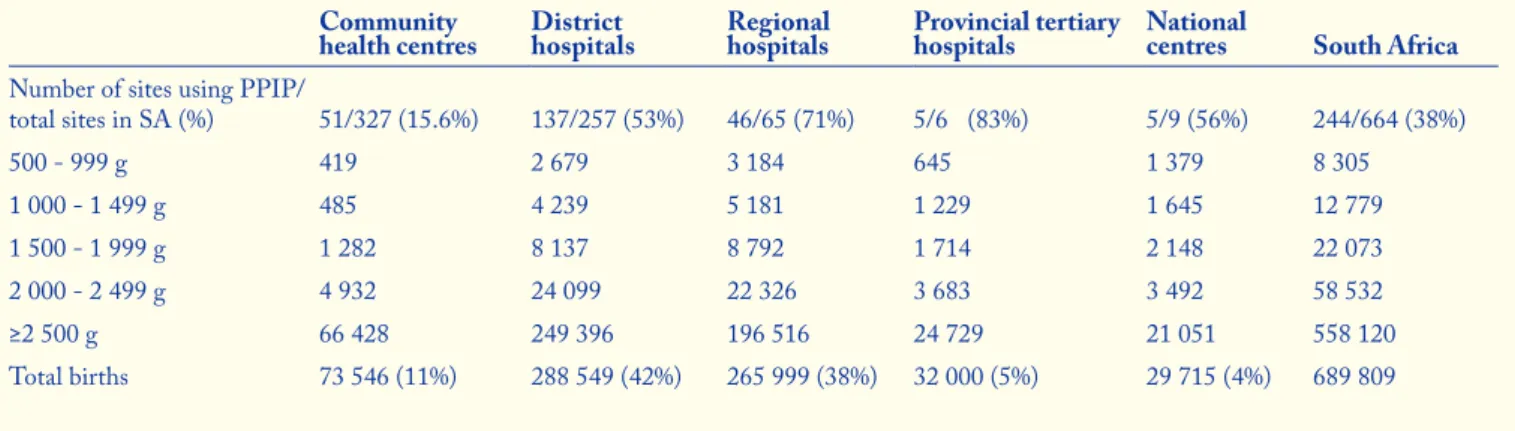
Numbers of neonatal deaths vary according to type of hospital. The 6th perinatal care survey reported that 46% and 39% of early neonatal deaths occurred in district and regional hospitals, respectively. This is partly due to the fact that most of the births occur in these hospitals
(Table 1).6 Rates of early neonatal deaths vary according to
birth-weight categories and group of hospitals. Most deaths occur in low-birth-weight infants. Generally, babies born weighing more than 1 000 g have a greater chance of survival than those who weigh less than 1 000 g in all hospitals. However, even for babies bigger than 1 000 g, who are expected to have a good chance of survival, district
hospitals have a higher ENMR than other hospitals (Table 2).6
Health system factors contributing to
neonatal deaths
Neonatal conditions are responsible for about 30% of the U5MR in Africa. Prematurity and asphyxia are in the top 5 causes of U5MR, following on HIV/AIDS, acute respiratory infections and diarrhoeal
diseases.3 The mortality reviews have identified that a number of
deaths related to prematurity and asphyxia could be prevented. The top 5 modifiable healthcare worker-associated and administrator-associated factors contributing to neonatal deaths in South Africa are listed in Table 3. These factors highlight the problems in our health system. The numbers of avoidable factors related to the health system were much greater in district hospitals compared with other hospitals.
Table 3 shows that the quality of care is substandard in many hospitals. This is also supported by the high perinatal care index in many hospitals shown in Fig. 3. The perinatal care index (PCI) is calculated as perinatal mortality rate divided by low birth weight rate. It has been validated as a true measure of the quality of care: the higher the index,
the poorer the care.8 It should be below 1 for community health centres
(CHCs) and below 2 for all hospitals. It is concerning that the PCI for district hospitals in South Africa is above 2.
Interventions
Improving intrapartum and immediate postnatal care
for all infants
It is evident that reducing neonatal deaths in South Africa will require increased effort to be put towards assisting district and regional hospitals, especially in managing low-birth-weight babies.
Table 1. Numbers of births and deaths according to group of hospitals and weight categories among the sites using the PPIP Community
health centres District hospitals Regional hospitals Provincial tertiary hospitals National centres South Africa
Number of sites using PPIP/
total sites in SA (%) 51/327 (15.6%) 137/257 (53%) 46/65 (71%) 5/6 (83%) 5/9 (56%) 244/664 (38%)
500 - 999 g 419 2 679 3 184 645 1 379 8 305
1 000 - 1 499 g 485 4 239 5 181 1 229 1 645 12 779
1 500 - 1 999 g 1 282 8 137 8 792 1 714 2 148 22 073
2 000 - 2 499 g 4 932 24 099 22 326 3 683 3 492 58 532
≥2 500 g 66 428 249 396 196 516 24 729 21 051 558 120
Total births 73 546 (11%) 288 549 (42%) 265 999 (38%) 32 000 (5%) 29 715 (4%) 689 809
Table 2. Early neonatal mortality rates (/1 000 live births) according to birth-weight category and group of hospitals Community health
centers hospitalsDistrict Regional hospitals Provincial tertiary hospital National centres
All weight categories 3 12.5 12.9 15.4 17.8
>1 000 g 1.9 9.9 8.9 10.0 9.0
500 - 999 g 443 451 503 490 364
1 000 - 1 499 g 109 243 147 113 61
1 500 - 1 999 g 20 65 38 34 25
2 000 - 2 499 g 4.1 14.1 10.2 9.7 10.8
2 500 g 0.9 4.9 4.8 4.5 3.8
Table 3. Factors identified as probably avoidable in neonatal deaths in South Africa7
Administrator related
Prematurity Intrapartum hypoxia
1. Inadequate facilities/ equipment
2. No NICU bed with ventilator 3. Lack of transport from home 4. Personnel not sufficiently
trained
5. No syphilis screening
1. Inadequate facilities/ equip-ment
2. Insufficient nurses
3. No accessible NICU bed with ventilator
4. Anaesthetic delay 5. Lack of transport
Health worker related
Prematurity Intrapartum hypoxia
1. Management inadequate 2. Delays in referring patient 3. No antenatal steroids 4. Inadequate monitoring 5. Resuscitation inadequate
1. Fetal distress monitored but not detected
2. Prolonged second stage with no intervention
3. Fetal distress not detected and not monitored
4. Delays in referring patient 5. Poor progress, partogram not
SAJCH AUGUST 2012 Vol. 6 No. 3 69
Interventions to reduce neonatal deaths in South Africa should include improvements in obstetric care and immediate care of the newborn after birth. It has been reported that basic emergency obstetric care (BEmOC) (providing antibiotics, oxytocics, anticonvulsants, removal of placenta and retained products, assisted vaginal delivery and newborn care in healthcare centres) and comprehensive emergency obstetric care (CEmOC) (providing those listed under BEmOC, blood transfusion, caesarean sections and care to sick and low-birth-weight newborns in district hospitals) and skilled birth care
can reduce intrapartum deaths by 25 - 85%.9 Providing skilled birth
attendants and increasing capacity to provide CEmOC by providing equipment and training in CEmOC in Burkina Faso improved the perinatal mortality rate from 33 to 27.5/1 000 live births
(odds ratio (OR) 0.75, 95% confi dence interval (CI) 0.70 - 0.8).10
Access to CEmOC can be improved by bringing facilities closer to communities, but where this is not possible maternity waiting homes should be provided for those women who stay far from facilities that conduct births and do not have transport. Most births in South Africa occur in district hospitals, many of which are located in rural areas where transport to the hospital is not easily available, so waiting maternity homes would be well suited for these areas and would play a major role in reducing intrapartum hypoxia-related deaths.
At birth, about 5 - 10% of newborns need some assistance with
breathing and only 1% require extensive resuscitation.11 Th e
assistance or resuscitation required at birth can be divided into three parts: (i) immediate basic care – drying, providing warmth, assessing whether the baby is crying, and tactile stimulation (fl icking or tapping the sole of the foot); (ii) basic neonatal resuscitation – in addition to the above, maintaining the airway through positioning and suctioning if there are secretions and providing bag mask ventilation; and (iii) advanced neonatal resuscitation, which includes supplemental oxygen, chest compressions, endotracheal intubation and administering medication in addition to basic resuscitation. It is estimated that immediate basic care can reduce intrapartum deaths by 10%. Training in neonatal resuscitation has been reported to reduce deaths in babies with intrapartum asphyxia by 30% (relative risk (RR) 0.70, 95% CI 0.59 - 0.84), and early neonatal deaths by
38% (RR 0.62, 95% CI 0.41 - 0.94).11 Th e need for assistance or
resuscitation at birth is not always predictable, so all nurses and doctors involved in obstetric and neonatal care should be trained in at least immediate care of the newborn and basic neonatal resuscitation. Training on its own will not be adequate without provision of the equipment required for resuscitation, so all labour wards, delivery rooms and neonatal/paediatric wards should be provided with appropriate equipment to resuscitate newborns with intrapartum asphyxia. Provision of resuscitation equipment must be accompanied by plans to replace equipment or parts of the equipment that are found not to be in working condition or are lost. A survey conducted by the National Perinatal Morbidity and Mortality Committee revealed that of the 94 district hospitals and 24 regional hospitals surveyed, 63 (67%) and 6 (24%), respectively, did not have a resuscitation bag,
which is an important equipment required for resuscitation. Th ere is therefore an urgent need to get equipment to all healthcare facilities in South Africa.
Interventions to reduce neonatal deaths due to
prematurity and asphyxia
In order to reduce neonatal deaths, more emphasis must be placed on preventing preterm birth and intrapartum asphyxia, and managing them when they do occur. Th ese two conditions account for more than 50% of neonatal deaths.
Interventions to prevent deaths due to prematurity
Th e common causes of deaths in preterm infants are respiratory distress syndrome (RDS), sepsis and intraventricular haemorrhage (IVH). Eff orts to reduce deaths due to prematurity should therefore focus on these conditions.
A Cochrane review has reported that antenatal steroids given to mothers who are in preterm labour at a gestation of <34 weeks signifi cantly reduces the incidence of RDS by 34% (RR 0.66, 95% CI 0.59 - 0.73), and that of neonatal deaths by 31% (RR 0.69, 95%
CI 0.58 - 0.81).12 Studies on antenatal steroids and RDS conducted
in middle-income countries reported an even greater reduction
in neonatal deaths at 53% (RR 0.47, 95% CI 0.35 - 0.64).13 Th e
other benefi t of using antenatal steroids is that they also reduce the incidence of IVH by 46% (RR 0.54, 95% CI 0.43 - 0.69), and that
of necrotising enterocolitis by 54% (RR 0.46, 95% CI 0.29 - 0.74).12
Antibiotic treatment of women with preterm rupture of membranes
reduces neonatal infections by 32% (RR 0.68, 95% CI 0.58 - 0.87).14
High coverage of antenatal steroid use in pregnant mothers with anticipated preterm birth and use of antibiotics in mothers with preterm rupture of membranes could therefore have a signifi cant impact in reducing prematurity-related neonatal deaths in South Africa.
Reducing prematurity-related deaths through providing appropriate postnatal care
Preterm infants are at high risk of developing hypothermia because they do not have enough energy stores and brown fat to produce heat. Hypothermia is an independent risk factor for mortality – the
more severe the hypothermia, the greater the mortality.15 Methods
used to reduce hypothermia start in the delivery room and continue in the nursery. Th e delivery room should be warm, and babies should be dried immediately (except for preterm infants less than 28 weeks, as it has been shown that not drying these babies and covering them with plastic wraps reduces the incidence of hypothermia on admission). For babies who are not critically ill, skin-to-skin care has been shown to reduce the incidence of hypothermia. For those who are critically ill, both incubators and radiant warmers have been shown to be eff ective in preventing hypothermia, though radiant warmers have been associated with increased fl uid losses.
Fig. 3. Perinatal care index for the diff erent hospitals, comparing the periods 2006 - 2007 and 2008 - 2009.
S
A
J
ou
rna
l of Child H
ea
lth
S
A
J
ou
rna
l of Child H
ea
lth
J
ou
rna
l of Child H
ea
lth
Emphasis must be placed on
providing adequate medical
and nursing staff, with
appropriate training and
equipment, before
considering wide use of
70 SAJCH AUGUST 2012 Vol. 6 No. 3
Babies with RDS are likely to develop hypoxia and will therefore need supplemental oxygen. Too little oxygen is associated with high mortality, while too much is associated with morbidities such as retinopathy of prematurity and chronic lung disease. Providing these patients with supplemental oxygen that is adequate to reduce mortality and prevent morbidity is therefore crucial. The aim should be to maintain pulse oximeter saturations between 88% and 93%. All patients requiring supplemental oxygen should be monitored with a pulse oximeter.
In addition to oxygen, some respiratory support is often needed. Previously most babies with respiratory distress were managed with intubation and ventilation. Clinical studies have reported that these patients do well without intubation and ventilation if they are provided with continuous positive airway pressure (CPAP) soon after
birth.16-18 CPAP has been shown to reduce the need for intubation
and mechanical ventilation by 38% (RR 0.72, 95 CI 0.56 - 0.91), and reduces death or respiratory failure by 35% (RR 0.65, 95% CI
0.52 - 0.81).19 Pieper et al. reported that use of CPAP in preterm
infants reduced mortality by 50% compared with oxygen alone.20 It
is important to note that CPAP has a greater impact if used early rather than later. Early use of CPAP reduces the need for intubation for ventilation by 45% (RR 55, 95% CI 0.32 - 0.96) when compared
with late use of CPAP.21 In a study reported from one of the public
hospitals in South Africa by Kirsten et al., early use of CPAP in extremely low-birth-weight infants was associated with survival
rates that were similar to those seen in developed countries.22 The
advantages of using CPAP over invasive mechanical ventilation are that it is simple to use, does not need specialised intubation skill and is non-invasive, which makes it an appropriate mode of ventilation that can be used outside the neonatal intensive care unit environment. In patients who do not respond to CPAP, the intervention that has also been shown to reduce mortality is surfactant replacement therapy. Administration of natural surfactant is associated with a
32% reduction in mortality (RR 0.68, 95% CI 0.57 - 0.82).23 Timing
of administration of rescue surfactant therapy is important, as it has been shown that early administration of surfactant (within 2 hours of birth) is associated with better outcomes than delayed use, with a
13% reduction in mortality (RR 0.87, 95% CI 0.77 - 0.99).24
In summary, in order to reduce deaths due to prematurity, clinicians must play a major role through implementing evidence-based interventions. The clinicians include doctors working in obstetrics, midwives with basic and/ or advanced training, paediatrics/neonatal nurses, and doctors working in nurseries/neonatal wards. Avoidable factors in the health system have to be eliminated, and administrators need to ensure that equipment, consumables and space are provided to enable the clinicians to provide the appropriate care.
Preventing deaths due to intrapartum asphyxia
Avoidable factors related to asphyxia-related deaths included inadequate or inappropriate management during labour and inadequate resuscitation of the neonate, highlighting the need for adequate training in obstetric and immediate neonatal care discussed above. A number of patients who have peripartum asphyxia will develop brain injury, presenting with hypoxic ischaemic encephalopathy despite adequate resuscitation. Asphyxia complicated by moderate to severe encephalopathy has devastating outcomes such as death, cerebral palsy or abnormal neurodevelopmental outcome.
After resuscitation, a window of opportunity exists to reduce further brain injury. One of the interventions that have been shown to be effective in reducing brain injury after asphyxia is therapeutic hypothermia. Animal studies have shown that inducing hypothermia to levels of 32 - 34ºC, starting within 6 hours after the insult and continuing for 72 hours, is associated with a lower incidence of brain
injury.25 A meta-analysis of randomised clinical trials reported that
therapeutic hypothermia reduced the mortality rate by 22% (RR 0.78, 95% CI 0.66 - 0.93), cerebral palsy in survivors by 31% (RR 0.69, 95% CI 0.54 - 0.89), and combined outcome of death and/or
severe disability by 19% (RR 0.81, 95% CI 0.71 - 0.93).26
The limitation of using therapeutic hypothermia in developing countries or low-resource settings is the cost associated with acquiring the equipment used to induce hypothermia and the type of care these babies can require during use of therapeutic hypothermia. Secondly, in developing countries asphyxia may occur against a background of high incidences of fetal/neonatal infection and growth retardation, which potentially also affect neurodevelopmental outcome and
the response to induced hypothermia.27 A number of studies have
reported on the use of less expensive methods to induce hypothermia
in developing countries, namely a fan,28 a solid ice cap29,30 and ice gel
packs.30-33 The effect of these less expensive methods on mortality and
long-term neurodevelopmental outcome needs to be studied further. Based on the available evidence, the use of therapeutic hypothermia in South African hospitals should be encouraged, but it should only be used in babies who meet the criteria according to the published clinical trials and should be implemented only in hospitals with the necessary infrastructure and equipment, and where clinicians are available and trained to look after critically ill neonates. All patients treated with induced hypothermia must be followed up to assess its impact on mortality and long-term neurological outcome in low-resource settings.
In our efforts to reduce neonatal deaths due to intrapatum asphyxia, it should be noted that basic and comprehensive emergency obstetric care and neonatal resuscitation rather than therapeutic hypothermia should be our primary focus point. The emphasis must be placed on providing adequate nursing and medical staff in our labour and delivery wards and neonatal wards, with appropriate training and equipment, before considering wide use of labour-intensive and expensive specialist options.
Conclusion
South Africa is one of the countries in which neonatal mortality has remained the same or increased over the last 20 years. The major causes of neonatal deaths are related to prematurity and intrapartum hypoxia. A number of interventions have been shown to reduce neonatal deaths, and if implemented on a wider scale, they could reduce neonatal deaths significantly. They include providing basic and comprehensive emergency obstetric care, use of antenatal steroids for women in preterm labour, training in immediate care of the newborn and neonatal resuscitation, and post-resuscitation management and ongoing neonatal care (e.g. CPAP), especially to babies who are born preterm.
S Velaphi, MB ChB, FCPaed
Department of Paediatrics, Faculty of Health Sciences, University of the Witwatersrand, Johannesburg
N Rhoda, MB ChB, FCPaed
Department of Paediatrics, Faculty of Health Sciences, University of Cape Town
Corresponding author: S Velaphi ([email protected])
References
1. Lawn JE, Cousens S, Zupan J. 4 million neonatal deaths: when? Where? Why? Lancet 2005;365:891-900. [http://dx.doi.org/10.1016/S0140-6736(05)71048-5]
SAJCH AUGUST 2012 Vol. 6 No. 3 71
3. World Health Organization. World Health Statistics 2011. Geneva: World Health Organization, 2011.
4. Bradshaw D, Laubscher R, Nannan N, Nicol E. Stillbirths and neonatal deaths according to Statistics South Africa. In: National Perinatal Mortality and Morbidity Committee (NaPeMMCo) Triennial Report 2008-2010 , p. 28. http:// www.doh.gov.za/docs/reports/2011/perireport (accessed 10 August 2012). 5. Greenfield D, Rhoda N, Pattinson RC. Ten years of the National Perinatal
Care Surveys. In: Pattinson RC, ed. Saving Babies 2008-2009: Seventh Report on Perinatal Care in South Africa. Pretoria: Tshepesa Press, 2011:46. 6. Pattinson B, Velaphi S, Hardy B, Moran N, Stein W, for the Saving Babies
Technical Task Team. Overview. In: Pattinson RC, ed. Saving Babies 2006-2007: Sixth Perinatal Care Survey of South Africa. Pretoria: Tshepesa Press, 2009:1-6.
7. Pattinson RC, for PPIP users. Overview. Neonatal deaths. In: Pattinson RC, ed. Saving Babies 2008-2009: Seventh Report on Perinatal Care in South Africa. Pretoria: Tshepesa Press, 2011:33-35.
8. Pattinson RC. Introduction, methods and definition of the survey. In: Pattinson RC, ed. Saving Babies: A Perinatal Care Survey of South Africa. Durban: Medical Research Council, 2000:1-7.
9. Lee AC, Cousens S, Darmstadt GL, et al. Care during labor and birth for the prevention of intrapartum-related neonatal deaths: a systematic review and Delphi estimation of mortality effect. BMC Public Health 2011;11 Suppl 3:S10. [http://dx.doi.org/10.1186/1471-2458-11-S3-S10]
10. Hounton S, Byass P, Brahima B. Towards reduction of maternal and perinatal mortality in rural Burkina Faso: communities are not empty vessels. Glob Health Action 2009;May 7:2. [http://dx.doi.org/10.3402/gha.v2i0.1947] 11. Lee AC, Cousens S, Wall SN, et al. Neonatal resuscitation and immediate
newborn assessment and stimulation for the prevention of neonatal deaths: a systematic review, meta-analysis and Delphi estimation of mortality effect. BMC Public Health 2011;11 Suppl 3:S12. [http://dx.doi.org/10.1186/1471-2458-11-S3-S12]
12. Roberts D, Dalziel S. Antenatal corticosteroids for accelerating fetal lung maturation for women at risk of preterm birth. Cochrane Database Syst Rev 2006;CD004454. [http://dx.doi.org/10.1002/14651858.CD004454.pub2] 13. Mwansa-Kambafwile J, Cousens S, Hansen T, Lawn JE. Antenatal steroids
in preterm labour for the prevention of neonatal deaths due to complications of preterm birth. Int J Epidemiol 2010;39 Suppl 1:i122-i133. [http://dx.doi. org/10.1093/ije/dyq029]
14. Cousens S, Blencowe H, Gravett M, Lawn JE. Antibiotics for pre-term pre-labour rupture of membranes: prevention of neonatal deaths due to complications of pre-term birth and infection. Int J Epidemiol 2010;39 Suppl 1:i134-i143. [http://dx.doi.org/10.1093/ije/dyq030]
15. Mullany LC, Katz J, Khatry SK, LeClerq SC, Darmstadt GL, Tielsch JM. Risk of mortality associated with neonatal hypothermia in southern Nepal. Arch Pediatr Adolesc Med 2010;164:650-656.
16. Morley CJ, Davis PG, Doyle LW, Brion LP, Hascoet JM, Carlin JB. Nasal CPAP or intubation at birth for very preterm infants. N Engl J Med 2008;358:700-708. [http://dx.doi.org/10.1056/NEJMoa072788]
17. Finer NN, Carlo WA, Walsh MC, et al. Early CPAP versus surfactant in extremely preterm infants. N Engl J Med 2010;362:1970-1979.
18. Carlo WA. Gentle ventilation: the new evidence from the SUPPORT, COIN, VON, CURPAP, Colombian Network, and Neocosur Network trials. Early Hum Dev 2012;88 Suppl 2:S81-S83. [http://dx.doi.org/10.1016/S0378-3782(12)70022-1]
19. Ho JJ, Subramaniam P, Henderson-Smart DJ, Davis PG. Continuous distending pressure for respiratory distress syndrome in preterm infants. Cochrane Database Syst Rev 2002;CD002271.
20. Pieper CH, Smith J, Maree D, Pohl FC. Is nCPAP of value in extreme preterms with no access to neonatal intensive care? J Trop Pediatr 2003;49:148-152. [http://dx.doi.org/10.1093/tropej/49.3.148]
21. Ho JJ, Henderson-Smart DJ, Davis PG. Early versus delayed initiation of continuous distending pressure for respiratory distress syndrome in preterm infants. Cochrane Database Syst Rev 2002;CD002975. [http://dx.doi. org/10.1002/14651858.CD002975]
22. Kirsten GF, Kirsten CL, Henning PA, et al. The outcome of ELBW infants treated with NCPAP and InSurE in a resource-limited institution. Pediatrics 2012;129:e952-e959. [http://dx.doi.org/10.1542/peds.2011-1365]
23. Seger N, Soll R. Animal derived surfactant extract for treatment of respiratory distress syndrome. Cochrane Database Syst Rev 2009;CD007836. [http:// dx.doi.org/10.1002/14651858.CD007836]
24. Yost CC, Soll RF. Early versus delayed selective surfactant treatment for neonatal respiratory distress syndrome. Cochrane Database Syst Rev 2000;CD001456.
25. Gunn AJ, Gunn TR, Gunning MI, Williams CE, Gluckman PD. Neuroprotection with prolonged head cooling started before postischemic seizures in fetal sheep. Pediatrics 1998;102:1098-1106. [http://dx.doi. org/10.1542/peds.102.5.1098]
26. Edwards AD, Brocklehurst P, Gunn AJ, et al. Neurological outcomes at 18 months of age after moderate hypothermia for perinatal hypoxic ischaemic encephalopathy: synthesis and meta-analysis of trial data. BMJ 2010;340:c363. [http://dx.doi.org/10.1136/bmj.c363]
27. Wilkinson DJ, Thayyil S, Robertson NJ. Ethical and practical issues relating to the global use of therapeutic hypothermia for perinatal asphyxial encephalopathy. Arch Dis Child Fetal Neonatal Ed 2011;96:F75-F78. [http:// dx.doi.org/10.1136/adc.2010.184689]
28. Horn A, Thompson C, Woods D, et al. Induced hypothermia for infants with hypoxic- ischemic encephalopathy using a servo-controlled fan: an exploratory pilot study. Pediatrics 2009;123:e1090-e1098. [http://dx.doi.org/10.1542/ peds.2007-3766]
29. Horn AR, Woods DL, Thompson C, Eis I, Kroon M. Selective cerebral hypothermia for post-hypoxic neuroprotection in neonates using a solid ice cap. S Afr Med J 2006;96:976-981.
30. Horn AR, Joolay Y, Tooke L, Harrison MC. A servo-assisted gel-pack cooling method for newborn infants with hypoxic-ischemic encephalopathy. J Trop Pediatr 2012;58:236-238. [http://dx.doi.org/10.1093/tropej/fmr069] 31. Robertson NJ, Nakakeeto M, Hagmann C, et al. Therapeutic hypothermia
for birth asphyxia in low-resource settings: a pilot randomised controlled trial. Lancet 2008;372:801-803. [http://dx.doi.org/10.1016/S0140-6736(08)61329-X]
32. Thomas N, George KC, Sridhar S, Kumar M, Kuruvilla KA, Jana AK. Whole body cooling in newborn infants with perinatal asphyxial encephalopathy in a low resource setting: a feasibility trial. Indian Pediatr 2011;48:445-451. [http:// dx.doi.org/10.1007/s13312-011-0076-z]
33. Horn AR, Harrison MC, Linley LL. Evaluating a simple method of neuroprotective hypothermia for newborn infants. J Trop Pediatr 2010;56:172-177. [http://dx.doi.org/10.1093/tropej/fmp089]