Intermittent Preventive Therapy in Pregnancy and
Incidence of Low Birth Weight in Malaria-Endemic
Countries
Jordan E. Cates, PhD, Daniel Westreich, PhD, Holger W. Unger, MRCOG, PhD, Melissa Bauserman, MD, MPH, Linda Adair, PhD, Stephen R. Cole, PhD, Steven Meshnick, MD, PhD, and Stephen J. Rogerson, MBBS, DTM&H, FRACP, PhD, for the Maternal Malaria and Malnutrition (M3) Initiative
Objectives.To estimate the impact of hypothetical antimalarial and nutritional in-terventions (which reduce the prevalence of low midupper arm circumference [MUAC]) on the incidence of low birth weight (LBW).
Methods. We analyzed data from 14 633 pregnancies from 13 studies conducted across Africa and the Western Pacific from 1996 to 2015. We calculated population intervention effects for increasing intermittent preventive therapy in pregnancy (IPTp), full coverage with bed nets, reduction in malaria infection at delivery, and reductions in the prevalence of low MUAC.
Results.We estimated that, compared with observed IPTp use, administering 3 or more doses of IPTp to all women would decrease the incidence of LBW from 9.9% to 6.9% (risk difference = 3.0%; 95% confidence interval = 1.7%, 4.0%). The intervention effects for eliminating malaria at delivery, increasing bed net ownership, and decreasing low MUAC prevalence were all modest.
Conclusions.Increasing IPTp uptake to at least 3 doses could decrease the incidence of LBW in malaria-endemic countries. The impact of IPTp on LBW was greater than the effect of prevention of malaria, consistent with a nonmalarial effect of IPTp, mea-surement error, or selection bias. (Am J Public Health.2018;108:399–406. doi:10.2105/ AJPH.2017.304251)
L
ow birth weight (LBW;<2500 g) remains a significant global healthcon-malaria-endemic countries, up to 1 in 4 pregnant women are infected with malaria, while up to 20% of women of childbearing age in LMICs suffer undernutrition (body mass index [BMI; defined as weight in ki-lograms divided by the square of height in meters]<18.5).2,5,7Although these 2 factors are highly prevalent in LMICs, interventions for them are often evaluated independently. Our group, the Maternal Malaria and Mal-nutrition (M3) Initiative, has endeavored to
better understand this coburden of malaria infection and malnutrition during pregnancy. Specifically, in a recent study in which we used data pooled from 13 studies across Africa and the Western Pacific, we found that women who were both infected with malaria and malnourished were at greater risk of delivering a LBW infant than their un-infected, well-nourished counterparts. However, there was no conclusive evidence of synergistic interaction between the 2 risk factors for LBW (i.e., the effects of malaria infection and nutritional status of the mother on LBW were independent of each other).8
Although results from this study were informative for furthering our understanding of the biological mechanisms that affect fetal growth and development, policymakers would benefit from knowing how many cases of LBW could be prevented by interventions targeting malaria infection and maternal malnutrition. WHO policy for malaria prevention during pregnancy includes insecticide-treated bed nets, intermittent preventive treatment during pregnancy (IPTp), and prompt and effective case man-agement.9Intermittent preventive treatment during pregnancy may also prevent LBW by preventing other infections because of its antibacterial properties, and by possible im-pacts on maternal nutritional status.6 Cur-rently, IPTp is recommended as repeated
ABOUT THE AUTHORS
Jordan E. Cates, Daniel Westreich, Stephen R. Cole, and Steven Meshnick are with the Department of Epidemiology, University of North Carolina-Chapel Hill (UNC). Holger W. Unger is with the Department of Medicine at the Doherty Institute, The University of Melbourne, Parkville, Victoria, Australia. Melissa Bauserman is with the Department of Pe-diatrics, Division of Neonatal-Perinatal Medicine, School of Medicine, UNC. Linda Adair is with the Department of Nutrition, UNC. Stephen J. Rogerson is with the Department of Medicine at the Doherty Institute, The University of Melbourne.
Correspondence should be sent to Jordan E. Cates, 4770 Buford Hwy NE, Chamblee Campus, Building 106, Atlanta, GA 30341 (e-mail: [email protected]). Reprints can be ordered at http://www.ajph.org by clicking the“Reprints”link.
This article was accepted November 15, 2017. doi: 10.2105/AJPH.2017.304251 cern,affectingmorethan25millioninfants
annually.1,2Lowbirthweightisassociated withamarkedincreaseininfantmortalityand contributestolong-termmorbidity.1In2012, theWorldHealthOrganization(WHO) endorsedatargetof30%reductioninthe incidenceofLBWby2025.Asof2014,the GlobalNutritionReportfoundthattherewas littleprogressgloballytowardthisgoal.3 In-terventionsinlow-andmiddle-income countries(LMICs)topreventLBWhavethe potentialtoproducesubstantialpublichealth effects,rangingfromimprovedcognitive developmenttoenhancedneonatal survival.1,2
a stronger effect on LBW than malaria in-fection at enrollment in this data set.8 Presence of malaria parasites in peripheral blood or in the placenta at delivery was assessed with light microscopic examination of a Giemsa-stained peripheral or placental smear or placental histology (active or past infection) or both.17
Information on how many doses of IPTp women received was available for 92% of the study population, and self-reported bed net ownership at study enrollment was ascer-tained in 9 of the 13 studies. Bed net own-ership did not distinguish between untreated and insecticide-treated bed nets, although most recent studies will have included the latter. Currently, the WHO recommends IPTp with SP, which is what the majority (64%) of the women received, but some women in the clinical trials received IPTp with SP plus azithromycin (16%), SP plus chloroquine (15%), or dihydroartemisinin-piperaquine (5%).9We used MUAC at study enrollment as our primary measure of ma-ternal malnutrition, categorizing women with an MUAC less than 23 centimeters as malnourished.18In a sensitivity analysis, we used gestational age–adjusted BMI less than 18.5 as an alternative anthropometric in-dicator of malnutrition. We adjusted maternal weight measured in the second or third tri-mesters by using a cubic regression model to account for gestational weight gain.19
Population Intervention Effects
Table 1 and Table A (available as a sup-plement to the online version of this article at http://www.ajph.org) describe a series of contrasts between observed and counterfac-tual population distributions of malaria in-fection, IPTp dosage, bed net ownership, and MUAC. Thefirst 2 contrasts compare the risk of LBW (1) if the population were all infected with malaria at delivery or (2) given the observed distribution of malaria infection, both compared with if none of the population had been infected. Although not based on a specific antimalarial intervention, these contrasts inform on the etiologic effect of malaria infection at delivery and provide a best estimate about what would happen if malaria infection at delivery in the study populations was completely eliminated. In a sensitivity analysis, we explored using an aggregatemeasure of malaria infection during preg-nancy,“any malaria,”defined as a positive microscopy test, rapid diagnostic tests, or polymerase chain reaction at enrollment, delivery, or during pregnancy (in 5 studies with repeat malaria diagnostics throughout pregnancy). To better guide policies for specific evidence-based interventions, we also assessed the impact of scaling up existing malaria-prevention efforts implemented in the pooled studies, specifically (1) bed net ownership and (2) IPTp during pregnancy (Table 1 and Table A, scenarios 3 and 4).
We took a similar approach for estimating population-level contrasts for distribution of low MUAC,first comparing the risk of LBW if all women had MUAC less than 23 cen-timeters, and second comparing the observed distribution of malnutrition, to the study population if all women had MUAC at or more than 23 centimeters (Table 1 and Table A, scenarios 5 and 6). It is unrealistic to expect that an intervention could increase the MUAC of all malnourished women. Therefore, we also simulated a hypothetical intervention that would reduce the preva-lence of low MUAC at study enrollment in each separate study to 5% (the lowest prev-alence of malnutrition from any of our studies). In a sensitivity analysis, an equivalent approach was taken when we used gestational age–adjusted BMI to define malnutrition.
Statistical Analysis
We used the parametric g-formula to estimate the aforementioned population intervention effects.20,21The parametric g-formula, which has also been described as a substitution estimator by Ahern et al.,22 allows estimation of how the distribution of LBW would be different if we were able to alter malaria infection at delivery, the number of doses of IPTp received during pregnancy, the level of bed net ownership, and the prevalence of low MUAC.
First, we modeled the effect of each ex-posure (malaria, malnutrition, bed net own-ership, or IPTp dosage) on LBW. We used logistic regression models, with control for known and measured confounders, and generalized estimating equations to account for within-study correlation. We determined confounders from a causal directed acyclic graph23based on previous literature on the sulfadoxineandpryimethamine(SP)dosesat
leastamonthapart,startinginthesecond trimester,9butbefore2007,only2dosesof IPTpwererecommended.Consistentwith thelackofprogresstowardLBWreduction reportedbytheGlobalNutritionReport,in 2013,anestimated43%of35millioneligible pregnantwomendidnotreceiveanydosesof IPTp.10–12TheWHOendorsesbalanced energyandproteindietarysupplementation duringpregnancyamongundernourished populations;however,interventionsthat wouldamelioratepoornutritionbefore conceptionhavereceivedlessfocus.2,13
Theobjectivesofthisstudywere2-fold. First,weaimedtoestimatetheimpactof implementinghypotheticaltargeted antima-larialinterventionsandreductionsinthe prevalenceoflowmidupperarm circumfer-ence(MUAC;aproxyformalnutrition)on population-levelestimatesofLBW.Second, weaimedtoexaminewhethertheintroduction ofanycombinationofthesehypothetical tar-getedinterventionsmightmeettheWHOgoal ofa30%reductionintheincidenceofLBW.
METHODS
Thestudypopulationcomprised14633 livebirthpregnanciesamongwomen en-rolledin1of13studiesconductedfrom1996 to2015insub-SaharanAfrica(7countries) andtheWesternPacific(1country).14
Outcome
and
Exposures
ThemainoutcomeofinterestwasLBW. Everystudymeasuredbirthweightwithin1 weekofdelivery,andbirthweightsmeasured after24hours(13%ofweights)wereadjusted byusingaregressionmodeltoaccountfor changesinweightduringthefirstweekof life.15Inasensitivityanalysis,weexcluded weightsmeasuredafter24hours.We con-sidered2secondaryoutcomes: small-for-gestationalage(abirthweightlessthanthe
10thpercentileofthe
Second, we“set”(i.e., coded) the expo-sure to the level specified for the particular hypothesized intervention (Table 1 and Table A). With this exposure set (sometimes counter to the fact of the observed exposure), we predicted the probability of having a LBW infant for each individual.
Third, we averaged the imputed proba-bilities for having a LBW infant for each individual across the population, for each set level of exposure. Comparison of the average outcomes for the different set exposure provides us with a population-standardized risk difference (RD) for LBW when changing exposure prevalence. We estimated the number needed to treat for each contrast of set exposures as the reciprocal of the absolute value of the RD. We calculated confidence intervals (CIs) by using a nonparametric bootstrap (200 samples with replacement from original data set).24
RESULTS
Characteristics of the 14 633 women participating in the 13 M3 studies have been reported previously and are included in Table B, available as a supplement to the online version of this article at http://www.ajph. org.8As illustrated in Figure 1, 2312 (20%) of the 11 826 women with malaria diagnostics were infected with malaria at delivery and 1224 (14%) of the 8963 women with MUAC measured were malnourished at enrollment. The median gestational age at enrollment was 20 weeks (interquartile range = 17–24). These prevalences varied greatly by study site, with the prevalence of malaria at delivery ranging from less than 1% (0.3%) to 57% and the prevalence of malnutrition ranging from 5% to 54% (Table B). The median number of IPTp doses among the 12 280 women with IPTp dosage information was 1 (interquartile
TABLE 1—Population Average Causal Effects, Population Attributable Effects, and Generalized Intervention Effects for the Risk of Low Birth Weight Associated With Malaria Infection and Malnutrition During Pregnancy: Africa and Western Pacific, 1996–2015
Exposure(s) Contrasts Intervention
Malaria interventions
Malaria infection at delivery Population average causal effect: the population with everyone infected with malaria at delivery compared with the population of women with no infection
NA
Malaria infection at delivery Population attributable effect: the observed distribution of malaria infection at delivery compared with the population of women with no infection
Hypothetical complete and instant eradication of malaria infection at delivery
Bed net ownership at enrollment Population attributable effect: the observed distribution of bed net ownership compared with the population of women in which everyone owns a bed net
Scaling up of existing bed net intervention
Number of IPTp doses Generalized intervention effect: the observed distribution of IPTp doses compared with the population in which (1) everyone has at least 2 doses of IPTp, (2) everyone has at least 3 doses of IPTp, or (3) at least 80% of the study population has at least 3 doses of IPTp
Scaling up of existing IPTp interventions
Malnutrition interventions
Malnutrition at enrollment Population average causal effect: the population with everyone malnourished at enrollment compared with the population of women with no malnutrition
NA
Malnutrition at enrollment Population attributable effect: the observed distribution of malnutrition (MUAC<23 cm) compared with the population of women with no malnutrition
Hypothetical complete and instant eradication of malnutrition before pregnancy or in early pregnancy
Malnutrition at enrollment Generalized intervention effect: the observed distribution of malnutrition (MUAC<23 cm) compared with the population in which only 5% of each separate study population is malnourished
Hypothetical intervention with a nonspecific mechanism that would reduce malnutrition prevalence in each study in M3 to 5% (prevalence in FSP/MISAME-Burkina Faso study)
Note.FSP/MISAME = Micronutriments-Sante de la Mere et de l’Enfant; IPTp = intermittent preventive therapy during pregnancy; LBW = low birth weight;
M3 = Maternal Malaria and Malnutrition Initiative; MUAC = midupper arm circumference; NA = not applicable. For example, the second scenario depicts the population attributable effect for malaria infection at delivery, comparing the risk of LBW under the observed distribution of malaria infection at delivery in the study population to the risk under a counterfactual setting in which there is hypothetical complete and instant eradication of malaria.
everyone owned a bed net was 0.3% (95% CI =–0.3%, 0.8%; Table 2 and Table C). The RD for 2 or more doses of IPTp compared with the observed distribution was modest (0.9%; 95% CI =–0.8%, 1.7%), but the effect for increasing the dosage to 3 or more doses for all women was markedly stronger (RD = 3.0%; 95% CI = 1.7%, 4.0%; number needed to treat: 33; 95% CI = 25, 60). This number needed to treat suggests that increasing the IPTp dosage to 3 or more doses in 33 pregnant women would result in 1 fewer infant born LBW. A similar increase for 80% of the study population also pro-duced a substantial impact on LBW (RD = 2.1%; 95% CI = 1.0%, 2.7%). These results did not qualitatively change when we excluded women with other IPTp regimens (i.e., SP plus azithromycin, SP plus chloroquine, or dihydroartemisinin-piperaquine; RD = 3.2%; 95% CI = 1.3%, 4.4%) and when we excluded infants with birth weight
measured after 24 hours (Table D, available as a supplement to the online version of this article at http://www.ajph.org).
The risk difference for LBW when we compared the population if everyone had low MUAC at study enrollment versus if all of the population had MUAC of 23 or more cen-timeters was 4.0% (95% CI = 3.0%, 5.1%; Table 2 and Table C). The risk differences for LBW were smaller when we compared the observed distribution of MUAC with the population had there been no malnutrition (RD = 0.3%; 95% CI = 0.2%, 0.4%) or with the population in which only 5% of each study was malnourished (RD = 0.2%; 95% CI = 0.2%, 0.3%). The population-standardized risk differences when we used BMI as an anthropometric indicator of ma-ternal malnutrition were similar but weaker (Table E, available as a supplement to the online version of this article at http://www. ajph.org).
DISCUSSION
We calculated estimates for the potential impact of interventions that reduce malaria infection at delivery, including scale-up of bed net ownership and IPTp during preg-nancy and interventions to improve maternal nutritional status among malnourished women (according to MUAC measured at first antenatal visit) on the risk of delivering a LBW infant. We combined data from 13 studies in malaria-endemic countries in Africa and the Western Pacific. Calculation of interventional effects is rarely done in epi-demiological studies, despite the utility of such results from a policy and public health perspective.21,25–27Overall, these results showed that increasing uptake of IPTp to 3 or more doses could markedly reduce the number of infants born with LBW in malaria-endemic countries. If all women received 3 or more doses of IPTp, the in-cidence of LBW would be reduced from 9.9% to 6.9%, a 3.0% absolute reduction in LBW incidence and a 30% (95% CI = 16%, 40%) relative reduction, matching the WHO 2025 Global Nutrition Target of a 30% reduction in LBW.1Even 80% coverage of 3 or more doses was estimated to result in a 21% (95% CI = 9%, 28%) relative reduction in LBW. By contrast, completely eliminating malaria
19.6%
23.9%
61.8%
13.7%
25
0 50 75
Malaria infection
at delivery
3+ IPTp doses
Bed net ownership
MUAC < 23 cm
P
revalenc
e
, %
Low Birth Weight Risk
Note.IPTp = intermittent preventive therapy during pregnancy; MUAC = midupper arm circumference. Malaria infection at delivery: n = 11 826; 3 or more doses of IPTp: n = 12 280; bed net ownership at study enrollment: n = 8516; and low maternal MUAC: n = 8963.
FIGURE 1—Distribution of Malaria Infection at Delivery, Intermittent Preventive Therapy During Pregnancy, Bed Net Ownership at Study Enrollment, and Low Midupper Arm Circumference Among Women in the Maternal Malaria and Malnutrition (M3) Initiative: Africa and Western Pacific, 1996–2015
range=0–6),and5260(62%)ofthe8516 womenreportedowningabednet(Figure1). TheprevalenceofLBWwas9%(range=5%– 15%).Among9studieswithultrasound-dated gestationalage,theprevalenceof small-for-gestationalagewas19%(range=13%–25%) andtheprevalenceofpretermbirthwas11% (range=3%–20%).
AsreportedinTable2andTableC (availableasasupplementtotheonlineversion ofthisarticleathttp://www.ajph.org),theRD forLBWwhenwecomparedthepopulation inwhicheveryonewasinfectedwithmalaria atdeliverywiththatinwhichnoonewas infectedwas2.0%(95%CI=0.8%,3.4%). Thepopulation-attributableRDwassmaller (RD=0.5%;95%CI=0.2%,0.8%)becauseit comparedtheobservedprevalenceofmalaria (only20%ofparticipantswereinfected)to completeeliminationofmalariainfection.
main malaria analysis, but a sensitivity analysis examining the effect of any malaria infection detected during pregnancy found weaker intervention effects than our analysis of malaria infection at delivery, although repeat malaria diagnostics were not available for all studies (Table F, available as a supplement to the online version of this article at http:// www.ajph.org).
An alternative hypothesis is that the ap-parent effect of IPTp may be attributable to mechanisms additional to the prevention of malaria. As it is a broad-spectrum antibiotic, SP may improve LBW through clearance of
other pathogens associated with fetal growth restriction and preterm birth and may de-crease chronic maternal inflammation.28In
a sensitivity analysis, increased doses of IPTp had a greater effect on preventing preterm birth than small-for-gestational age, which supports the hypothesis that IPTp is func-tioning to clear pathogens that can cause preterm birth (Table G, available as a sup-plement to the online version of this article at http://www.ajph.org).
The intervention estimates for IPTp did not account for regional drug resistance, which could have biased ourfindings; however, previous
TABLE 2—Estimated Population-Level Low Birth Weight Risk Differences for Malaria Infection at Delivery, Bed Net Ownership, Intermittent Preventive Therapy During Pregnancy Dosage, and Low Midupper Arm Circumference Among Women in the Maternal Malaria and Malnutrition (M3) Initiative: Africa and the Western Pacific, 1996–2015
Contrast Risk of LBW, % Risk Difference, % (95% CI) No. Needed to Treat (95% CI)
Malaria infection at delivery (n = 11 826 [2312 infected])
Population average causal effect
All exposed 9.8 2.0 (0.8, 3.4)
None exposed 7.7
Population attributable effect
Observed 8.2 0.5 (0.2, 0.8) 210 (130, 543)
None exposed 7.7
Bed net ownership (n = 8516 [5260 owned bed net])
Population attributable effect
Observed 9.5 0.3 (–0.3, 0.8) 396 (–320, 119)a
All exposed 9.3
IPTp dosage (n = 12 280 [average 1.5 doses])
Population attributable effect
Observed (n = 2935 [24%] with‡3 doses) 9.9
All‡2 doses 9.0 0.9 (–0.8, 1.7) 115 (–124, 61)a
All‡3 doses 6.9 3.0 (1.7, 4.0) 33 (25, 60)a
80% of each study 3+ doses 7.8 2.1 (1.0, 2.7) 48 (37, 100)a
Maternal malnutrition (n = 8963 [1224 with low MUAC])
Population average causal effect
All exposed 13.6 4.0 (3.0, 5.1)
None exposed 9.6
Population attributable effect
Observed 9.9 0.3 (0.2, 0.4) 312 (243, 424)a
None exposed 9.6 43 (34, 63)b
Generalized intervention effect
Observed 9.9 0.2 (0.2, 0.3) 446 (336, 579)a
Exposure reduced to realistic lower bound (5%)c 9.7 61 (47, 90)b
Note.CI = confidence interval; IPTp = intermittent preventive therapy during pregnancy; LBW = low birth weight; MUAC = midupper arm circumference.
aNumber needed to treat, assuming an intervention that is administered to all women.
b
Number needed to treat, assuming an intervention that is administered to women who were malnourished at baseline.
cThe lowest prevalence of malnutrition (MUAC<23 cm) within the pooled M3 data set was observed in the Intermittent Screening and Treatment or
Intermittent Preventive Treatment for the Control of Malaria in Pregnancy (STOPMIP)-Kenya cohort (5%).
infectionatdelivery,increasingbednet ownershipto100%,orabolishinglow MUACatstudyenrollmenthadaless than1%reductionontheriskforLBW.
IPTp dosage even when accounting for SP resistance.29,30
Whereas scaling up IPTp had notable impacts on LBW incidence, the population attributable effect for bed net ownership was weak: we estimated that 100% uptake of bed net ownership would only result in a 0.3% absolute reduction in LBW prevalence com-pared with current levels over all studies in this cohort. However, in our pooled data set, 62% of women with available information reported owning a bed net at enrollment. Coverage is likely lower among pregnant women outside of a research setting: in 2010, insecticide-treated bed net coverage in sub-Saharan Africa was only 41%.10,11If bed net ownership is overestimated, the actual pop-ulation intervention estimate is likely greater than we estimated. In addition, although we adjusted our model for study site, we did not have more detailed information on malaria transmission, regional insecticide resistance, actual bed net usage, and whether the bed nets were untreated or insecticide-treated, all of which may influence the validity of our re-sults. Given the limitations surrounding our measurement of bed net usage, we urge caution in the interpretation of the bed net
results, emphasizing that insecticide-treated bed nets remain a valuable tool for preventing malaria and improving fetal development in malaria-endemic countries.35However, the weak population attributable effect for bed nets is aligned with evidence of increased in-secticide resistance in many regions of sub-Saharan Africa.36
For malaria, we were able to use in-formation on real interventions (IPTp and bed nets), but we were unable to assess a real nutritional intervention, relying instead on a hypothetical intervention that affected maternal MUAC. Although low MUAC at study enrollment was a strong predictor of LBW, our intervention effects illustrate that a hypothetical periconceptional intervention that would completely or partially reduce the prevalence of MUAC by thefirst antena-tal care visit would have only minor population-level impacts on LBW. Because our nutritional assessments were made at antenatal enrollment, our nutrition models required the assumption that an interven-tion could be implemented that would target malnutrition before pregnancy or in early pregnancy. For example, an effec-tive community-based antimalnutrition
0 20 40 60 80
1 2 3 4 5 6
Risk Diff
er
enc
e, %
Sek-PNG
STOPPAM-Benin IPTp-PNG
ITN-Kenya ECHO-DRC
STOPPAM-Tanzania
STOPMIP -Kenya LAIS -Malawi
ISTp-Malawi
Prevalence of 3+ IPTp, %
Note.DRC = Democratic Republic of Congo; IPTp = intermittent preventive therapy during pregnancy; ISTp = Intermittent Screening and Treatment; ITN = Insecticide-Treated Bed Nets; LAIS = Lungwena Antenatal Intervention Study; PNG = Papua New Guinea; STOPMIP = Intermittent Screening and Treatment or Intermittent Preventive Treatment for the Control of Malaria in Pregnancy; STOPPAM = Strategies to Prevent Pregnancy Associated Malaria.
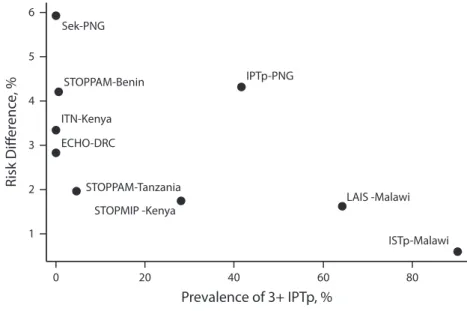
FIGURE 2—The Population Attributable Effect of Increasing Intermittent Preventive Therapy During Pregnancy Dosage to at Least 3 Doses for All Pregnancies, Stratified by the Prevalence of at Least 3 Doses of IPTp: Africa and Western Pacific, 1996–2015
studieshavefoundthatIPTp–SPremains associatedwithreductionsinLBWeven inareasofSPresistance.29,30Inaddition, womenwhomorefrequentlyaccess ante-natalcare,andsoreceivemoredosesof IPTp,arepotentiallyhealthierbecauseof associatedhealth-promotingbehaviorsand relatedsocioeconomicstatus.31
Limitations
Ourinabilitytocontrolforthesepotential unmeasuredconfoundersandselectionbiases indicatesthatourinterventioneffectsmaybe biasedandthattheimpactofIPTpmaynotbe asgreataswehaveestimated.Unmeasured healthybehaviorsthatarepromotedor in-terventionsthatareprovidedatthesame antenatalcarevisitsasSPprovisionmaybe reducingtheriskofLBWinsteadofSP; however,previousstudiesthatcontrolledfor thenumberofantenatalvisitswereconsistent withaneffectofSPthatisindependentofthe numberofantenatalvisits.32,33Furtherstudies arewarrantedtoelucidatethemechanismsof actionforSPandtountangletheeffectsof increaseddosagefromthepotentialselection biasrelatedtomorefrequentantenatalcare.
Inaddition,womenthatdidnothave informationonthenumberofIPTpdoses wereonaverageyounger,andhadlower prevalencesofanemia,malariainfection,and lowMUAC;onlyanalyzingwomenwith measuredIPTpcouldhaveledtoselection biasifthesefactorsmodifytherelationship betweenIPTpandLBW(TableH,available asasupplementtotheonlineversionofthis articleathttp://www.ajph.org).
Bene
fi
ts
of
Interventions
campaign targeted at women of reproductive age could potentially produce the changes in maternal malnutrition that we model. Future studies may wish to estimate impacts of hy-pothetical nutritional interventions that would improve gestational weight gain during pregnancy, which is a strong predictor of birth weight.37
In all analyses, the extent of unmeasured confounding is unknown. Potential un-measured confounders include helminth infection, sexually transmitted infections, environmental pollutants, or micronutrient deficiencies. In addition, all of the intervention effects reported are a function of background prevalences of the exposure of interest in each analysis; thus, they may not be generalizable to settings with dramatically different baseline prevalences. Figure 2 and Figure A (available as a supplement to the online version of this article at http://www.ajph.org) illustrate that the LBW risk difference associated with increasing IPTp dosage to 3 or more doses for all preg-nancies is greatest among studies with low levels of IPTp coverage and high levels of malaria prevalence at delivery.
Public Health Implications
In conclusion, of the interventions we evaluated, 3 or more doses of IPTp appear to offer the greatest potential for achieving the WHO’s Global Nutrition Target of a 30% reduction in LBW by 2025. Although the IPTp estimates were notably strong, hypo-thetical interventions to eliminate malaria infection at delivery or to increase MUAC at study enrollment did not appear to have strong impacts on population-level incidence of LBW. Although we cannot discount po-tential unmeasured confounding and selec-tion bias of the IPTp estimates, ourfindings suggest that IPTp–SP prevents LBW through mechanisms beyond malaria treatment and prevention.ACKNOWLEDGMENTS
The STOPPAM project,“Strategies to Prevent Preg-nancy Associated Malaria,”was supported by the Euro-pean Union’s Seventh Framework Programme; STOPPAM contract number: 200889 STOPPAM I (Benin) and STOPPAM II (Tanzania). The
Micronutriments-Sante de la Mere et de l’Enfant (FSP/ MISAME) study (Burkina Faso) was funded by Nutrition Third World, The Belgium Ministry of Development, Flemish Interuniversity Council, and French Ministry of Development. The ECHO study (Democratic Republic of the Congo) was funded by the Department of Epi-demiology, UNC Gillings School of Global Public Health. The International Lipid-Based Nutrient Sup-plements (iLiNS-DYAD) trial (Ghana) was funded by a grant to the University of California, Davis, from the Bill and Melinda Gates Foundation. Evaluations of Medica-tions Used in Early Pregnancy (EMEP) was partly sup-ported by the Malaria in Pregnancy (MiP) Consortium, which is funded through a grant from the Bill and Melinda Gates Foundation to the Liverpool School of Tropical Medicine, UK, and partly by the US Centers for Disease Control and Prevention (CDC), Division of Parasitic Diseases and Malaria, through a cooperative agreement with Kenya Medical Research Institute, Center for Global Health Research, Kisumu, Kenya. The Intermittent Preventive Treatment during Pregnancy Monitoring (IPTp-MON) study (Kenya) was partly supported by the MiP Consortium, which is funded through a grant from the Bill and Melinda Gates Foundation to the Liverpool School of Tropical Medicine, and partly supported by the CDC. The Insecticide-Treated Bed Nets (ITN) project (Kenya) was funded by the US Agency for International Development. The Special Health Support Fund from the Royal Netherlands Embassy (Nairobi, Kenya) pro-vided additional support for the study of the impact of insecticide-treated bed nets in pregnancy. The Kisumu study (Kenya) was funded by US Agency for International Development (grants AOT0483-PH1-2171 and HRN-A-00-04-00010-02) and the Netherlands Foundation for the Advancement of Tropical Research. The Intermittent Screening and Treatment or Intermittent Preventive Treatment for the Control of Malaria in Pregnancy (STOPMIP) study (Kenya) was funded by the MiP Consortium, which is funded through a grant from the Bill and Melinda Gates Foundation to the Liverpool School of Tropical Medicine. The Intermittent Screening and Treatment (ISTp) study (Malawi) was partly sup-ported by the MiP Consortium, which is funded through a grant from the Bill and Melinda Gates Foundation to the Liverpool School of Tropical Medicine, and partly funded by the European and Developing Countries Clinical Trials Partnership. The Lungwena Antenatal Intervention Study (LAIS) was supported by grants from the Academy of Finland (grants 79787 and 207010), the Foundation for Pediatric Research in Finland, and the Medical Research Fund of Tampere University Hospital. Azithromycin and its placebo were provided free of charge by Pfizer (New York, NY), which also provided funding for the poly-merase chain reaction testing of the sexually transmitted infections. The IPTp study (Papua New Guinea [PNG]) was funded by the MiP Consortium, through a grant from the Bill and Melinda Gates Foundation (46099); the Pregvax Consortium, through a grant from the EU FP7-2007- HEALTH (PREGVAX 201588) and the Spanish Government (EUROSALUD 2008 Programme); and Pfizer, through an investigator-initiated research grant (WS394663). The Sek study (PNG) was supported by the Australian Agency for International Development (AusAID; grant to PNG Institute of Medical Research), the National Health and Medical Research Council of Australia; Australian Research Council; Wellcome Trust; and Veterans Affairs Research Service. The Walter and
Eliza Hall Institute is supported by the National Health and Medical Research Council (NHMRC) Infrastructure for Research Institutes Support Scheme and Victorian State Government Operational Infrastructure Support. J. E. Cates was funded by the National Institute of Allergy and Infectious Diseases at the National Institutes of Health (Pre-doctoral Training in Infectious Disease Epidemiol-ogy grant 5 T32 AI070114).
As part of the Maternal Malaria and Malnutrition (M3) Initiative, the following contributors were involved in design and supervision of data collection of the parent studies: V. Briand and N. Fievet: UMR216-MERIT, French National Research Institute for Sustainable De-velopment, Paris Descartes University, Paris, France; I. Valea and H. Tinto: Unite de Recherche Clinique de Nanoro, Institut de Recherche en Sciences de la Santé-DRO; and Departement de Recherche Clinique, Centre Muraz, Bobo-Dioulasso, Burkina Faso; U. D’Alessandro: Medical Research Council Unit, The Gambia, and London School of Hygiene and Tropical Medicine, UK; S. H. Landis: Real World Evidence and Epidemiology, GlaxoSmithKline, Uxbridge, UK; A. Lartey: Department of Nutrition and Food Science, University of Ghana, Legon, Accra; K. G. Dewey: Department of Nutrition, University of California, Davis; F. O. ter Kuile, S. Dellicour, and A. M. van Eijk: Department of Clinical Sciences, Liverpool School of Tropical Medicine; M. Desai: Malaria Branch, Division of Parasitic Diseases and Malaria, Center for Global Health, CDC; M. Owidhi, A. L’Ianziva, G. Aol, V. Were, S. Kariuki, and J. Ayisi: Kenya Medical Research Institute/Centre for Global Health Research, Kisumu, Kenya; D. J. Terlouw: Department of Clinical Sciences, Liverpool School of Tropical Medicine, and Malawi-Liverpool-Wellcome Trust Clinical Research Programme, Blantyre, Malawi; M. Madanitsa, V. Mwapasa, and K. Maleta: School of Public Health and Family Medicine, College of Medicine, University of Malawi, Blantyre; P. Ashorn: Center for Child Health Research, University of Tampere, Faculty of Medicine and Life Sciences and Department for Pediatrics, Tampere University Hospital, Finland; I. Mueller: Walter and Eliza Hall Institute, Parkville, Victoria, Australia; D. Stanisic: Institute for Glycomics, Griffith University, Gold Coast, Queensland, Australia; C. Schmiegelow: Centre for Medical Parasitol-ogy, Department of Immunology and MicrobiolParasitol-ogy, Faculty of Health Science, University of Copenhagen, Denmark; and J. P. A. Lusingu: Centre for Medical Para-sitology, Department of Immunology and Microbiology, Faculty of Health Science, University of Copenhagen, and National Institute for Medical Research, Tanga Centre, Tanga, Tanzania.
Note.Thefindings and conclusions presented in this article are those of the authors and do not necessarily reflect the official position of the CDC. S. H. Landis is a full-time employee of GlaxoSmithKline and holds shares in GlaxoSmithKline.
HUMAN PARTICIPANT PROTECTION All studies received approval by their local ethics board and obtained informed consent from all participants.
REFERENCES
1. World Health Organization. Global Nutrition Targets 2025: Low birth weight policy brief. 2014. Available at: http:// www.who.int/nutrition/publications/globaltargets2025_ policybrief_lbw/en. Accessed August 17, 2015.
2. Black RE, Victora CG, Walker SP, et al. Maternal and child undernutrition and overweight in low-income and middle-income countries.Lancet. 2013;382(9890):427–451. 3. International Food Policy Research Institute. Global nutrition report 2014: actions and accountability to ac-celerate the world’s progress on nutrition. 2014. Available CONTRIBUTORS
at: http://cdm15738.contentdm.oclc.org/utils/getfile/ collection/p15738coll2/id/128484/filename/128695. pdf. Accessed August 17, 2015.
4. Abu-Saad K, Fraser D. Maternal nutrition and birth outcomes.Epidemiol Rev. 2010;32(1):5–25.
5. Desai M, ter Kuile FO, Nosten F, et al. Epidemiology and burden of malaria in pregnancy.Lancet Infect Dis. 2007;7(2):93–104.
6. Unger HW, Ashorn P, Cates JE, Dewey KG, Rogerson SJ. Undernutrition and malaria in pregnancy—a dangerous dyad?BMC Med. 2016;14(1):142.
7. Lartey A. Maternal and child nutrition in sub-Saharan Africa: challenges and interventions.Proc Nutr Soc. 2008; 67(1):105–108.
8. Cates JE, Unger H, Briand V, et al. Malaria, malnu-trition, and birthweight: a meta-analysis using individual participant data.PLoS Med. 2017;14(8):e1002373. 9. World Health Organization. WHO policy brief for the implementation of intermittent preventive treatment of malaria in pregnancy using sulfadoxine-pyrimethamine (IPTp-SP). 2013. Available at: http://www.who.int/ malaria/publications/atoz/policy_brief_iptp_sp_policy_ recommendation/en. Accessed August 13, 2015.
10. Steketee RW, Campbell CC. Impact of national malaria control scale-up programmes in Africa: magnitude and attribution of effects.Malar J. 2010;9(1):299. 11. van Eijk AM, Hill J, Alegana VA, et al. Coverage of malaria protection in pregnant women in sub-Saharan Africa: a synthesis and analysis of national survey data. Lancet Infect Dis. 2011;11(3):190–207.
12. World Health Organization. Factsheet on the World Malaria Report 2014. 2014. Available at: http://www. who.int/malaria/media/world_malaria_report_2014/en. Accessed December 9, 2015.
13. World Health Organization. WHO recommendations on antenatal care for a positive pregnancy experience. 2016. Available at: http://www.who.int/reproductivehealth/ publications/maternal_perinatal_health/anc-positive-pregnancy-experience/en. Accessed June 12, 2017.
14. Unger HW, Cates JE, Gutman J, et al. Maternal Malaria and Malnutrition (M3) initiative, a pooled birth cohort of 13 pregnancy studies in Africa and the Western Pacific.BMJ Open. 2016;6(12):e012697.
15. Greenwood AM, Armstrong JR, Byass P, Snow RW, Greenwood BM. Malaria chemoprophylaxis, birth weight and child survival.Trans R Soc Trop Med Hyg. 1992;86(5):483–485.
16. Villar J, Ismail LC, Victora CG, et al. International standards for newborn weight, length, and head cir-cumference by gestational age and sex: the Newborn Cross-Sectional Study of the INTERGROWTH-21st Project.Lancet. 2014;384(9946):857–868.
17. Anchang-Kimbi JK, Achidi EA, Nkegoum B, Sverremark-Ekstr ¨om E, Troye-Blomberg M. Diagnostic comparison of malaria infection in peripheral blood, placental blood and placental biopsies in Cameroonian parturient women.Malar J. 2009;8(1):126.
18. Ververs MT, Antierens A, Sackl A, Staderini N, Captier V. Which anthropometric indicators identify a pregnant woman as acutely malnourished and predict adverse birth outcomes in the humanitarian context? PLoS Curr. 2013;5:pii.
19. Kelly A, Kevany J, de Onis M, Shah PM. A WHO Collaborative Study of Maternal Anthropometry and Pregnancy Outcomes.Int J Gynaecol Obstet. 1996;53(3): 219–233.
20. Ahern J, Hubbard A, Galea S. Estimating the effects of potential public health interventions on population dis-ease burden: a step-by-step illustration of causal inference methods.Am J Epidemiol. 2009;169(9):1140–1147. 21. Westreich D. From exposures to population in-terventions: pregnancy and response to HIV therapy.Am J Epidemiol. 2014;179(7):797–806.
22. Ahern J, Colson KE, Margerson-Zilko C, Hubbard A, Galea S. Predicting the population health impacts of community interventions: the case of alcohol outlets and binge drinking.Am J Public Health. 2016;106(11): 1938–1943.
23. Greenland S, Pearl J, Robins JM. Causal diagrams for epidemiologic research.Epidemiology. 1999;10(1):37–48. 24. Efron B. Bootstrap methods: another look at the jackknife.Ann Stat. 1979;7(1):1–26.
25. Galea S. An argument for a consequentialist epide-miology.Am J Epidemiol. 2013;178(8):1185–1191. 26. Westreich D, Edwards JK, Rogawski ET, Hudgens MG, Stuart EA, Cole SR. Causal impact: epidemiological approaches for a public health of consequence.Am J Public Health. 2016;106(6):1011–1012.
27. Galea S, Vaughan R. A public health of consequence: review of the June 2016 issue ofAJPH.Am J Public Health. 2016;106(6):973–974.
28. Ernst GD, de Jonge LL, Hofman A, et al. C-reactive protein levels in early pregnancy, fetal growth patterns, and the risk for neonatal complications: the Generation R Study.Am J Obstet Gynecol. 2011;205(2):132.e1–132.e12. 29. Desai M, Gutman J, Taylor SM, et al. Impact of sulfadoxine-pyrimethamine resistance on effectiveness of intermittent preventive therapy for malaria in pregnancy at clearing infections and preventing low birth weight. Clin Infect Dis. 2016;62(3):323–333.
30. Walker PG, Floyd J, ter Kuile F, Cairns M. Estimated impact on birth weight of scaling up intermittent pre-ventive treatment of malaria in pregnancy given sulphadoxine-pyrimethamine resistance in Africa: a mathematical model.PLoS Med. 2017;14(2):e1002243. 31. Lassi ZS, Middleton PF, Crowther C, Bhutta ZA. Interventions to improve neonatal health and later sur-vival: an overview of systematic reviews.EBioMedicine. 2015;2(8):985–1000.
32. Desai M, Gutman J, L’lanziva A, et al. Intermittent screening and treatment or intermittent preventive treatment with dihydroartemisinin-piperaquine versus intermittent preventive treatment with sulfadoxine-pyrimethamine for the control of malaria during preg-nancy in western Kenya: an open-label, three-group, randomised controlled superiority trial.Lancet. 2015; 386(10012):2507–2519.
33. Madanitsa M, Kalilani L, Mwapasa V, et al. Scheduled intermittent screening with rapid diagnostic tests and treatment with dihydroartemisinin-piperaquine versus intermittent preventive therapy with sulfadoxine-pyrimethamine for malaria in pregnancy in Malawi: an open-label randomized controlled trial.PLoS Med. 2016; 13(9):e1002124.
34. Kayentao K, Garner P, van Eijk AM, et al. Intermittent preventive therapy for malaria during pregnancy using 2 vs 3 or more doses of sulfadoxine-pyrimethamine and risk of low birth weight in Africa: systematic review and meta-analysis.JAMA. 2013;309(6): 594–604.
35. Gamble C, Ekwaru JP, ter Kuile FO. Insecticide-treated nets for preventing malaria in pregnancy.Cochrane Database Syst Rev. 2006;(2):CD003755.
36. Ranson H, Lissenden N. Insecticide resistance in African Anopheles mosquitoes: a worsening situation that needs urgent action to maintain malaria control.Trends Parasitol. 2016;32(3):187–196.