Eating Disorder and Mental Health:
Anorexia Nervosa and Obsessive-Compulsive Disorder as Comorbidities
Cindy Kang
The University of North Carolina at Chapel Hill
Gillings School of Global Public Health
A paper submitted to the faculty of the University of North Carolina at Chapel Hill in partial
fulfillment of the requirements for the degree of Master of Public Health in the Department of
Nutrition
July 22nd, 2020
Approved by: Amanda S. Holliday MS, RD, LDN (Paper Advisor)
Date: July 24th, 2020
Introduction
Anorexia Nervosa (AN) is a psychiatric disorder that has the highest mortality rate among all mental illnesses.1 In the general population, about 1% of females and less than 0.5% of males suffer from AN in a lifetime.2 Although people of all ages, genders, ethnicities, sexual
orientations, and socioeconomic backgrounds can be affected, adolescents and young adults are found with increased risk. People with AN follow a rigid diet with severe calorie restrictions leading to significantly low weight for age, sex, growth trajectory, and physical health. These malnourished individuals typically have a very low body mass index (BMI) or BMI percentile and have a weight that is “less than minimally normal or expected.” Two subtypes of AN are the restricting type (AN-R) and the binge-eating/purging type (AN-BP). A diagnosis of AN-R requires the individual to not have engaged in recurrent binge eating or purging behavior (e.g., self-induced vomiting, misuse of laxatives, diuretics, or enemas) in the last three months. This subtype accomplishes weight loss by dieting, fasting, and/or exercising excessively. On the other hand, a diagnosis of AN-BP requires the individual to have engaged in recurrent binge eating or purging behavior in the last three months.1,2
Individuals with the following traits have a predisposition to AN: low self-esteem, high levels of perfectionism, social anxiety, and obsessive-compulsive traits. This life-threatening illness often originates from and is maintained by intense fear of weight gain, body image disturbances, extreme body dissatisfaction, and overcontrol of weight and eating. The development of AN typically begins with dieting behaviors driven by the sociocultural thin idealization. Many become vegetarians and only consume fruit, vegetables, and salad eliminating other foods. Picky eating is often accompanied by slow eating and taking small bites. Excessive calorie counting can also be observed in these individuals. Severe starvation associated with AN affect all systems of the body and result in an accumulation of damage over time. The following medical issues commonly result from starvation, weight loss, and malnutrition in AN:
dermatological (e.g., lanugo, brittle hair/hair loss, dry skin), low body temperature, cold
intolerance, cardiovascular (e.g., bradycardia, hypotension, cardiac arrhythmias), gastrointestinal (e.g., constipation, impaired gastric emptying), hematologic (e.g., leukopenia, anemia,
thrombocytopenia), skeletal (e.g., osteopenia, osteoporosis), and endocrine and metabolic (e.g., hypoglycemia, hypokalemia, hyponatremia, hypophosphatemia, transaminitis, high lipase level, amenorrhea).1,2,3
Obsessive-compulsive disorder (OCD), in a new DSM-5category called
“Obsessive-Compulsive and Related Disorders,”4,5 is one of the most prevalent psychiatric comorbidities of anorexia nervosa.1,6 In a lifetime, up 69% of individuals with AN present with OCD. When the diagnosis of AN in individuals with OCD was assessed, the lifetime prevalence ranged from 3% to 17%.7 Similar to AN, OCD is a severe psychiatric disorder that tends to appear in early ages with a lifetime prevalence of 1% to 3%. The two key features of OCD are obsessions and compulsions. Obsessions are unwanted, uncontrollable thoughts, urges, and impulses that occur repetitively and lead to anxiety. These obsessions drive people to engage in repetitive behaviors known as compulsions which are executed according to rigid rules and are intended to counteract the obsession-induced anxiety and distress. Common examples of obsessions include
to face the same direction) and counting (to a certain number before getting out of bed). In order to be diagnosed with OCD, the disorder has to cause significant distress, waste a minimum of one hour daily, or majorly disturb regular functioning.4,5
Although AN and OCD appear in separate diagnostic categories, they include similar cognitive, behavioral, and personality characteristics. Cognitively, both disorders share the feature of repetitive thoughts and fixations on feared stimuli. Individuals with AN are
preoccupied with food, weight, and body image while those with OCD are intensely concerned about contamination, symmetry, and order. These preoccupations are then compensated with certain behaviors, such as restriction, binging/purging, and compulsive exercise (AN) and handwashing and checking (OCD), to reduce anxiety. High prevalence of OCD has been consistently found to be associated with restrictive eating patterns, a key presentation of AN. People diagnosed with both AN and OCD suffer from depressed mood, emotional emptiness, social phobia and withdrawal, and low self-esteem. Specifically, research support an association between weight loss and depression. For instance, starvation affects mood substantially and patients who engage in more extreme degrees of starvation tend to be more depressed. Moreover, a strong risk factor shared by AN and OCD is personality traits of perfectionism and neuroticism that serve as main drivers of AN- and OCD-related behaviors.7,8,9
Linkage Between AN and OCD
Despite the scarce evidence on the specific relationship between AN and OCD, the existing literature examines the temporality of the disorders. Knowing which disorder began first helps us to understand if AN is a consequence of the OCD or a precursor to the OCD. Longitudinal and family studies provide strong evidence supporting the possibility of OCD being a risk factor for developing an eating disorder. The similarities in the underlying etiological factors may result in their high comorbidity rates.7 Some existing literature examining comorbidities between eating disorders and anxiety disorders (OCD previously identified as an anxiety disorder in DSM-4) found that most people with AN and OCD as comorbidities reported having the onset of OCD prior to the onset of AN. This may be due to childhood anxiety leading to anxiety about eating, body image, and weight, in turn resulting in the development of AN. In contrast, other studies show that this may not always be true. OCD may appear at the same time as AN or after its onset, addressing the potential for AN to produce or worsen anxiety.8 This association may be partly linked to effects of starvation. A classic scientific experiment known as the Minnesota Starvation Experiment10 showed groundbreaking findings on how starvation affects people’s physiological and psychological status. After healthy men were fed 3200 calories for three months, their intake was restricted to 1500 calories for six months. They engaged in intense exercise with a goal of 25% loss of their body weight. After accomplishing this goal, the men were divided into groups and rehabilitated using different types of diets for 12 weeks. Finally, they consumed without restrictions for the next 8 weeks. The completion of this experiment showed fascinating results. The men presented with all signs of starvation, such as lower metabolic rate, body temperatures, blood pressures and heart rate. In addition, there were surprising findings on the psychological impact. The study did not have eating disorder-related environmental exposures, temperamental traits, or societal thin ideal. Nonetheless, merely from low calorie intake, high energy expenditure, and significant weight loss, the men were highly depressed and emotionally distressed. Some even started self-harming. They became
symptoms that result from starvation and malnutrition in AN. This suggests that anxiety,
obsessions and compulsions related to OCD can be induced by the starved state related to AN.
Given the common characteristics shared by AN and OCD, it is not surprising that many medical professionals confuse one for the other leading to a misdiagnosis. Although OCD is a serious mental illness that presents as a common comorbidity for many conditions, it is frequently misdiagnosed due to variability in symptoms. The diagnosis of OCD can also be delayed by 8-10 years and be undertreated.4,5 Based on the obsessive and compulsive behavior linkage, it was even suggested that AN may be on the OCD spectrum. Thus, it can be a
beneficial component of the intervention process to screen for OCD when a person presents with AN.11 Individuals with OCD may have contamination concerns and engage in time-consuming rituals that interfere with adequate dietary intake. This may result in severe weight loss and emaciation commonly observed in individuals with AN. Conversely, there are people with AN that are engaging in food and weight-related obsessive-compulsive rituals like cutting or
weighing food. Due to the commonalities between the two disorders, it is important for clinicians to complete a meticulous examination of the exhibited behaviors and related motivations. People with AN predominantly fixate on physical appearance and intake restriction for weight loss. On the other hand, those with OCD tend to have non-food related drivers of intake restriction. The recommended treatment for individuals with both AN and OCD includes a combination of psychotherapy, family counseling, and medication. Interventions can involve introducing changes and increasing flexibility in rituals and behaviors. In the light of diagnosis, treatment, and management, it is important to distinguish true OCD manifestations from obsessive and compulsive thoughts and behaviors related to eating disorders. Knowledge and understanding of how different diseases co-occur will help clarify the differences in the diagnosis,
psychopathology, and etiology between comorbidities.1,12
Treatment and Management of AN
Individuals with a diagnosis of AN need a multidisciplinary treatment team, including
registered dietitian (RD), mental health professional, and primary care physician, collaborating to provide appropriate care that addresses the involved complications. Family members are also included as a part of the care team, particularly for children and adolescents. In the treatment team, the RD plays a crucial role in providing patient care. First, nutrition assessment is an important component that can contribute to treatment plans. The nutrition assessment will vary depending on the severity of illness and the type of treatment program (e.g., inpatient,
residential, outpatient). In general, nutrition assessment includes current dietary intake and patterns, food-related history, nutrient deficiencies, supplement use, risk of refeeding syndrome, beliefs and attitudes about food, binging and purging behaviors, and physical activity routines. In youth, finding out about family meals, the family member that is in charge of grocery shopping and cooking and is the primary caregiver provides important information that help with
weight status and the rate of weight gain during inpatient treatment can be used to predict outcome.2,13
In the inpatient setting, the goal of rehabilitation for malnourished individuals with AN revolves around weight restoration and normalization of eating behaviors through nutritional and psychological support and intervention. As part of the nutrition intervention, calculating and monitoring patients’ energy intake help to establish the weight gain goal. Calorie- and nutrient-dense beverages can supplement food intake to meet nutritional needs. Depending on the severity of the disorder and patient’s medical condition, a nasogastric tube (NGT) can be used to provide nutritional support when oral feedings are not adequate or when patients refuse to eat. After providing an intervention, weight gain should be monitored and evaluated to adjust nutrient intake accordingly for weight maintenance. The appropriate weight gain is recommended to be 1-1.5 kg/week. Initially, patients are prescribed with a diet consisting of 1000-1600 kcal/day (30-40 kcal/kg) with a gradual increase by 100-500 kcal/day depending on the severity of the illness. Eventually in the later course of weight restoration, the prescription is advanced to 3000-4000 kcal/day (70-100 kcal/kg) for female patients. The recommendation for macronutrient
distribution includes 50-55% of calories from carbohydrate, 15-20% from protein, and 30% from fat. For micronutrient intake, multivitamin and mineral supplements that provide 100% of the recommended dietary allowance (RDA) are recommended. Iron supplements should be avoided during initial refeeding stages and if the patient presents with constipation.2,14
In terms of the psychological management, the interventions aim to help patients understand, accept and change dysfunctional attitudes and behaviors pertaining to AN. Currently, there is no consistent evidence supporting one psychotherapy as the best treatment method. For adults, enhanced cognitive behavior therapy (CBT-E) seems to the predominantly recommended psychotherapy. This approach utilizes behavioral and cognitive principles for patients to modify dysfunctional thoughts and behaviors. For adolescents, the first-line psychological treatment and management recommended are based interventions. Current literature shows family-based therapy (FBT) as a very effective treatment method for AN in patients under 18 years old. FBT focuses on social support to promote patients’ care process. Typically, for children and adolescents with eating disorders, parents serve as a tremendous support system throughout recovery. Parental involvement benefits both the patient and the parents as family dynamics can be an environmental factor causing stress and exacerbating eating disorders. It is important to keep in mind that families are not the causative agent for the development of eating disorders. In addition to providing patient care, FBT can also serve to support families and caregivers. Too often, the burden placed on parents throughout their loved one’s recovery gets overlooked. In these instances, the RD can act as a support system for the parents by providing education on patient menu, refeeding, and weight status.2,3,8,13
Treatment and Management of OCD
Similar to AN, the most effective treatment for OCD is CBT with or without
paroxetine (Paxil), and sertraline (Zoloft) are also commonly recommended. However, since no one specific SSRI has been found to be superior, the type of SSRI selected should be
individualized and used as tolerated. According to the FDA recommendations to treat OCD, the starting dosage of fluoxetine is 20 mg/day with a target of 40-60 mg/day. The starting dosage of escitalopram is 10 mg/day with a target of 20 mg/day.4,5
Treatment and Management of AN and OCD
Studies have also examined treatment approaches that target eating disorders and OCD simultaneously. In 2013, a clinical trial aimed to examine a multimodal treatment program designed to address both eating disorders and OCD in a residential setting.15 The combination of CBT and ERP was used to treat OCD-related anxiety and rituals as well as the fears and
behaviors around food and body image. This multi-faceted treatment method was found to be highly effective as it resulted in a significant decrease in the severity of OCD, eating disorder and depression. Overall, as many individuals present with comorbidities, nutrition expertise and good understanding of the psychodynamics of eating disorders and OCD are necessary for effective care. Care coordination with professions in other disciplines as well as receiving specialized training can help advance knowledge and ability to guide patients throughout their treatment.
Case Presentation
Patient Background and History
Patient MK was a 17-year-old Caucasian female presenting with AN-R, OCD, social anxiety, and depression. She was a 11th grader on the road to recovery with the support of her mother, father, older sister, and dog. In elementary school and middle school, the patient started displaying obsessive thoughts and compulsive behaviors in addition to anxiety and depressive symptoms. She had a history of self-harming and suicide attempts. Her obsessions and
compulsions revolved around cleaning and safety, saying the right things, superstitions, fear of unintended harm to self and others, and repeated checking. The patient also displayed obsessions with food rituals, pregnancy fears, and mental rituals. Due to anxieties around making friends and depression, the patient tried to fill the void through eating resulting in weight gain. Her insecurities about her weight and body image amplified after gaining weight. In response, the patient began restricting her food intake and learned to deceive others in order to prevent them from noticing that she was starving herself. She was very practiced in hiding her true intake from her parents by consuming frequent small meals in minuscule bites. The patient had a family history of mental illnesses such as bipolar disorder and anxiety disorders. She had no history of cigarette, alcohol, or drug use. She also had no history of receiving an eating disorder treatment.
Hospitalization Prior to Current Admission: 5/14/20 – 5/19/20
During the five days of hospitalization at an outside hospital, the patient was newly
were resolved before discharge. She did not have an NGT placed and was eating by mouth. In the last 24 hours, her intake totaled to 1683 calories.
Admission to Children’s Hospital: 5/19/20
The patient was transferred to a Children’s Hospital on May 19th for medical instability, significant weight loss, and low BMI of 12 kg/m2 [weight: 35.8 kg, or 59.4% of target weight; height: 172.7 cm] (See Appendix) related to AN-R. At admission, the patient appeared
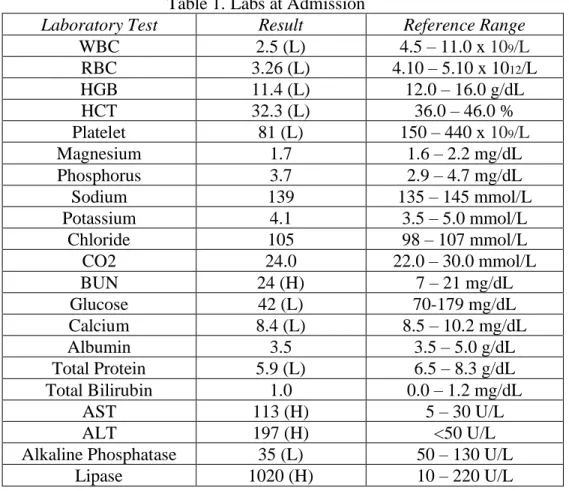
malnourished and cachectic on the physical exam presenting with bradycardia and hypotension, persistent hypoglycemia, elevated lipase (Table 1), chronic constipation and fatigue, hair loss, secondary amenorrhea, and cold extremities. The patient was continued on D5 IVF and low blood sugar was corrected with orange juice when the patient’s serum glucose declined below 65 mg/dL. She was administered with 200 mg calcium carbonate (Tums) 3 times a day, 400 IU vitamin D daily, 1 mg folic acid (Folvite) daily, multivitamin with minerals daily, 100 mg thiamine daily, 250 mg potassium and sodium phosphates (Neutra Phos, 2 packets) 3 times a day, and 220 mg zinc sulfate (Zincate) every 48 hours.
Table 1. Labs at Admission
Laboratory Test Result Reference Range
WBC 2.5 (L) 4.5 – 11.0 x 10⁹/L
RBC 3.26 (L) 4.10 – 5.10 x 10¹²/L
HGB 11.4 (L) 12.0 – 16.0 g/dL
HCT 32.3 (L) 36.0 – 46.0 %
Platelet 81 (L) 150 – 440 x 109/L
Magnesium 1.7 1.6 – 2.2 mg/dL
Phosphorus 3.7 2.9 – 4.7 mg/dL
Sodium 139 135 – 145 mmol/L
Potassium 4.1 3.5 – 5.0 mmol/L
Chloride 105 98 – 107 mmol/L
CO2 24.0 22.0 – 30.0 mmol/L
BUN 24 (H) 7 – 21 mg/dL
Glucose 42 (L) 70-179 mg/dL
Calcium 8.4 (L) 8.5 – 10.2 mg/dL
Albumin 3.5 3.5 – 5.0 g/dL
Total Protein 5.9 (L) 6.5 – 8.3 g/dL
Total Bilirubin 1.0 0.0 – 1.2 mg/dL
AST 113 (H) 5 – 30 U/L
ALT 197 (H) <50 U/L
Alkaline Phosphatase 35 (L) 50 – 130 U/L
Lipase 1020 (H) 10 – 220 U/L
Endocrinology Consultation: 5/19/20
recommended to continue blood glucose checks before each meal, at bedtime, and when required. The D5 IVF was continued and planned to wean when oral intake improved. If weaning D5 IVF was not possible, it was recommended to place an NGT for feeding. The diet plan was to have less than 40% of calories from carbohydrates to prevent continued
hypoglycemia. The plan of care for the patient’s risk for hypo- and hypernatremia was to monitor electrolytes daily and maintain strict inputs and outputs. For her risk of decreased bone mineral density and stress fractures, it was recommended to monitor vitamin D levels and to consider x-ray for back pain or other bone pain.
Nutrition Consultation: 5/19/20
Nutrition/Eating Disorder History
In June of 2019, the patient started eliminating sugary and salty foods and following a vegan diet after learning about animal cruelty in the food industry. After a few months, in October of 2019, she became concerned about her weight when realizing her weight had declined from 209 pounds to 105 pounds. In about two years, she lost 130 lbs (209 lbs to 79 lbs) by managing diet and exercise. Initially, the patient’s weight loss journey began with a healthful diet. Over time, her weight continued to decline from severe intake restriction. The patient utilized food journals and kept detailed logs of all her food to ensure that she was getting “enough.” She reported intakes of 1800-2000 calories per her journal, but her mother believed the patient to be overreporting. Feelings of control were extremely important to the patient, especially around meals. She reported eating “when she feels hungry.” During regular meals, she used small utensils such as a toddler feeding spoon to “feel in control.” The patient’s mother expressed guilt and reported that the patient’s weight-loss related behaviors may have stemmed from her
reinforcement of healthy nutrition practices to prevent the patient from further weight gain: “I was body shaming her.” The patient had a history of binge eating during 9th-10th grade, without further details. She reported engaging in regular exercise, typically spending 30 to 40 minutes on an indoor cycling bike at resistance of 10. This report was believed to be underreported
according to the patient’s mother.
Nutrition Care Process
The patient was admitted for her diagnosis of AN-R at a weight of 35.8 kg (59.4% of 50th percentile BMI-for-age), a BMI-for-age z-score of -7.86, and a significant weight loss of 34.4% of body weight within one year. At her current height, her highest weight was 81.4 kg (179 lbs) and her lowest weight was her admission weight. Using AND/ASPEN clinical characteristics, the patient met criteria for severe protein-calorie malnutrition. This malnutrition assessment was indicated by the following: body mass index (BMI)-for-age z score -3 or less, 10% weight loss of usual body weight, decline of 3 BMI z scores, and inadequate nutrient intake of less than or equal to 25% estimated energy and protein needs. Nutrition focused physical exam was
thiamine; discontinuing calorie count; monitoring phosphorus, magnesium, and potassium for risk of refeeding; and getting blind weights daily. The RD planned to follow-up one to two times per week and more frequently as needed.
Table 2. Dietary Information Food
allergies/dietary preferences
Garlic intolerance/vegan diet
Safe foods Sweet potato, bland, “easier to eat foods”
Fear foods Added sugars, saturated fats
Recall of Usual Dietary Intake at Home
Breakfast Bagel with avocado, vegan cream cheese
Lunch Banana, tortilla, peanut butter
Dinner Pasta or sweet potato with peanut butter and walnuts
Snacks None
Beverages Water, tea
Calories ~1800 (per patient report; possible overreporting according to mother)
*During initial provider visits upon the Children’s Hospital admission, the patient was very upset, tearful, and angry at the staff feeling trapped, out of control, and helpless. She was not compliant with the protocol as evidenced by her refusal to stop stretching in bed and by the unattachment of IV fluids and clave in her room.
Psychology Consultation: 5/20/20
OCD, Social Anxiety, & Depression History: Connection to AN
The patient began having obsessions and compulsions in 2nd grade with the need to touch the staircase or both ends of the rail then counting the tiles on the ceiling. She also started exhibiting concerns about contamination and getting sick, in turn washing hands excessively. She believed that she needed to carry out certain behaviors to prevent family members from harm. When these types of behaviors were mentioned to her pediatrician, the patient remembered being told that she had dry hands and to use moisturizer. She was reluctant to share her thoughts after this past interaction. The patient presented with social anxiety and depressive symptoms in middle school and had difficulty making friends. Furthermore, she started to express an intense fear of
becoming pregnant and remained concerned about the possibility of the event in the future. The patient “fell into a deep, deep depression” and used food as a coping mechanism. Specifically, she coped by binge eating which resulted in weight gain and body image issues. To regain control of her body and weight, she obsessively restricted calories and food intake, excessively exercised, and self-harmed. Despite the currently reported lack of suicidal ideation, the patient had previously cut herself on the wrist and thighs. The last suicide attempt was made two years ago by tying a rope around her neck to get her brain to “give [her] a reason for living.”
Pediatric Psychology Encounter
A licensed psychologist performed a psychiatric diagnostic evaluation for the patient’s diagnosis of AN-R. During the session, the psychologist also discussed how the patient’s
Additionally, they discussed the patient’s excessive intake of fluid and the patient admitted to sometimes using water as a safety net during meals. She was reportedly not obsessed with counting fluid numbers and meeting fluid goals. The patient denied any anxiety around meals noting that “food is my medicine” and quickly changed the subject when asked about fears of weight gain. From the age of 16, she saw three different therapists. She started seeing her current therapist in November of 2019 and the last visit was in March of 2020. These therapy sessions primarily focused on her anxiety symptoms rather than her eating disorder. During the session with the psychologist, the patient admitted “acting like a diva” yesterday as it felt wrong to have movement and fluid restrictions. Today, she understood the need for change and had accepted that she needed to follow the rules. She expressed desire to receive treatment and aimed to understand her body better and to not revert to past behaviors. The psychologist recommended the patient to continue the eating protocol while she was on the children’s unit. The plan was to refer the patient to the eating disorder inpatient program on the Eating Disorders Unit (EDU). Child Psychiatry was consulted for future care.
Children’s Unit Follow-Ups: 5/20/20 – 5/22/20
Medical
The patient’s blood glucose dropped to 45 mg/dL in the morning of May 20th but was elevated to 54 mg/dL with supplementation from D5 IVF. Due to continued hypoglycemia (BG<60 mg/dL), she was switched from D5 IVF to D10 IVF. Glucose checks were continued three times a day with meals and at bedtime. The patient’s oral fluid intake was further restricted from 2000 mL to 1500 mL for electrolyte management. Prior to the EDU transfer, the patient’s D10 IVF was discontinued due to improved hypoglycemia over 24 hours. A midnight snack was recommended to help maintain glucose level overnight. The patient’s electrocardiogram (ECG) showed sinus bradycardia with slight improvement. Cardiopulmonary status and orthostatic pressures were continuously monitored. By May 22nd, her bradycardia was resolved as evidenced by normal sinus rhythm on the ECG. After admission, her lipase level remained significantly elevated around 1000 U/L and her ALT and AST levels also remained elevated in the 130s-190s. Daily comprehensive metabolic panel was continued along with weekly lipase trend.
Nutrition
On May 20th, the patient had a negative weight trend of -0.68 kg potentially due to the last weight obtained after breakfast consumption and missed lunch during transfer from the outside hospital. Current meal plan of 1300 kcals (37 kcals/present kg) was increased to 1600 kcals (45 kcals/present kg) to support weight restoration of 1-2 kg/week. On May 21st, the patient’s weight continued to trend down by -0.354 kg and was recommended to increase meal plan to 1900 kcals (55 kcals/present kg). The RD noted the elevated lipase and liver function tests and planned to decrease calories as clinically indicated to support safe refeeding.
Psychiatry
and/or others.” The plan was to admit her to the inpatient psychiatric unit for safety, stabilization, and treatment.
Transition to EDU: 5/22/20
The patient was transferred to the EDU for further weight restoration and medical monitoring of refeeding for safety and stabilization. The EDU protocols included obtaining morning weights daily and vital signs twice a day, observation in day room for one hour after meals, activity restriction (no strenuous exercise or heavy lifting), supervised bathroom privileges,
group/individual CBT, family therapy, nutrition recommended by RD with goal of gaining 1-2 kg/week, and NGT placement if patient is unable to complete 100% of meal within provided time. The main treatment goals during current admission included reaching at least 80% of target weight, 48.2 kg (106 lbs) before discharging to a stepdown level of care (or reaching 85% of target weight before discharging to outpatient care) and regularly consuming 100% of nutritional exchanges orally as food rather than as supplement.
Significant Medical Trends: 5/23/20 – 7/7/20
On May 27th, the patient presented with a high phosphorus level of 5.6 mg/dL. Her phosphorus levels trended down to the normal range when phosphorus repletion was discontinued. Afterwards, the phosphorus level trended up to 5.4 mg/dL on July 6th. The patient’s lipase levels trended down to 384 U/L after EDU admission and continued until May 29th when it peaked to 471 U/L. The lowest lipase level was measured to be 221 U/L on June 15th. Based on her lipase levels, the patient’s calories were titrated down. The patient’s AST and ALT levels began trending down from the levels obtained upon admission to the Children’s Hospital. Beginning on June 2nd, her AST level remained within normal limits until June 7th when it fluctuated until discharge. From June 5th until discharge, her ALT levels remained within normal limits. In contrast to the dextrose-containing IVF management of the patient’s
hypoglycemia in the children’s unit, the EDU chose to orally supplement with glucose tabs, chocolate milk, or Ensure. The patient reported feeling much better about being able to eat orally rather than being hooked up to IV fluids. On June 24th, the patient’s hypoglycemia was resolved. Glucose tabs, chocolate milk, or Ensure was recommended if blood glucose was under 70 mg/dL.
EDU Psychiatric Follow-Ups: 5/23/20 – 7/7/20
The patient foresaw challenges in staying on the EDU away from home having to follow a strict protocol but wanted to make progress with treatment.Initially, the patient was not very compliant with orders from staff (e.g., standing up when asked to use wheelchair for
regarding her behavior in the beginning. After getting used to the protocol, the patient reported enjoying the EDU programming that allowed her to communicate with her peers.
The patient’s most reported mood was “nervous” about eating, fluid and exercise restrictions, and starting medication for OCD and depression. She reported recent obsessive thoughts about being scared and “disgusted” with the idea of becoming pregnant. The topic of pregnancy was an uncomfortable and frightening topic during childhood. Additionally, the patient reported
obsessive thoughts about saying “Talk to you tomorrow” at the end of every phone call to her parents due to fear of harm potentially coming to them. When patient’s past encounters with mental health professionals were discussed, it was revealed that a psychotherapist that was seen from January to November of 2019 told her parents that the patient did not have an eating disorder. The patient recalled being told that her condition would improve if she “ate the right foods.” When another therapist approached the thought of the patient having an eating disorder, the patient became defensive. She was in denial about her weight loss and became aggressive when the topic came up in conversations.
On June 9th, the SSRI Prozac was administered as a treatment for the patient’s OCD. On June 27th, the patient reported thinking about self-harming likely triggered after observing another patient’s attempt to use a straw for self-harm. Administration of Prozac was briefly on hold due to suicidal ideations. Due to ongoing headaches from Prozac, a new medication Lexapro was administered which was well-tolerated without significant side effects. In conjunction with the medication, the patient participated in various sessions of CBT and ERP exercises. Towards the end of her admission, she became more competent in identifying and stopping obsessive
thoughts. She spent less time thinking about her body image and recognized that she was still underweight. The patient was educated on coping strategies to reduce and manage her anxiety, AN, and OCD. She also learned about the relationship between eating disorders and OCD behaviors and the possibility of her anxiety increasing with improvement of AN. Her parents were included in the patient’s care plan and received education about anxiety-coping
mechanisms around food and psychological changes involved with eating disorders.
EDU Nutrition Follow-Ups: 5/25/20 – 7/7/20
The same RD followed the patient through the entirety of her current hospitalization from the children’s unit to the eating disorders unit. Upon the EDU admission, the parents used the
On June 29th, the patient began learning about the exchange system and menu planning as she will need to manage her own menu choices at the residential facility. The patient expressed difficulty with menu planning than expected and appeared anxious during the process as
evidenced by picking at her nails, running fingers up and down her arm, and placing hand on her face. The RD addressed concerns about exceeding prescribed fluid goal. The patient menu planned appropriately and included challenge foods like banana pudding, cake, cookie,
Quesadilla, and pizza. When the patient was inquired about inclusion of animal source proteins in her diet, the patient reported being comfortable only with fish proteins. Around discharge, the patient was consuming 3100 kcals/day (65 kcals/present kg) with three meals and three snacks. Her menu plan included 2800 kcals with additional 300 kcals from Benecalorie supplement (Table 3). Over the admission, the RD used visual aids and the teach-back method during nutrition education to address these fears. The patient’s dietary intake, anthropometric data, and electrolyte labs were continuously monitored to prevent refeeding syndrome.
Table 3. Exchange Breakdown 4 Milk
3 Vegetable 5 Fruit 11 Starch 8 Protein
8 Fat
2 Condensed Snacks 1 Benecalorie
Discharge: 7/8/20
The patient was determined as medically stable and appropriate for discharge to be admitted to the residential treatment program at Carolina House. At the time of discharge, the patient was consuming three meals and three snacks daily with a meal plan of 3100 kcals/day and fluid goal of 1800-3300 mL/day. Although she depended on the Benecalorie supplement to meet 100% of her estimated needs, she demonstrated ability to complete all of her meals and to manage her menus with the RD’s help. During her treatment, she gained a total of 11.2 kg (24.6 lbs) and was discharged at a BMI of 13.48 kg/m2 and a weight of 48.5 kg (80.6% of target weight) with a recommended maintenance weight range of 57.2-63.2 kg (125.8-139 lbs). Over the course of the treatment, the patient’s mood and anxiety improved with the help of psychotherapies and
antidepressant medications. Her phosphorus of 5.4 mg/dL, AST of 34 U/L, and lipase of 289 U/L were the significant lab values at this time. The patient felt nervous about her discharge but was ready to go to Carolina House for continued treatment. She expressed feeling healthier and more confident about her ability to manage thoughts and behaviors related to AN and OCD. At the end of her recovery, the patient hopes to teach yoga and attend college to pursue studies in
Psychology and Physiology and learn more about the mind-body interaction.
Discussion
Patient MK was an unexpectedly complex case due to the combination of complications associated with AN-R, OCD, depression, and anxiety. The patient was initially admitted for significantly low body weight and persistent hypoglycemia related to AN-R. She presented with severe malnutrition, bradycardia, hypotension, abnormal endocrine lab values, constipation, and amenorrhea. These active problems were caused by decreased nutrient intake and excessive exercise stemming from extreme fear of gaining weight and body image disturbance. The patient’s condition was complicated by a previous diagnosis of OCD. During admission, assessment of the patient showed findings consistent with her diagnosis of OCD. In addition to her obsessions and compulsions related to eating and body image, she presented with many of the common obsessive thoughts and compulsive behaviors in OCD, such as fear of losing control, contamination and pregnancy. In order to compensate for these thoughts, she repeatedly checked in on the safety of her family, spent a long time to wash hands, and counted the number of breaths taken during meditation. Furthermore, our patient’s temperamental traits overlapped with the traits presented in literature examining the reason why eating disorders and OCD co-occur. Individuals with both disorders share traits of perfectionism and neuroticism. The
mentioned characteristics displayed by the patient are many of the classic signs and symptoms of each disorder. Thus, her medical and psychological presentations seem to confirm the dual diagnosis of AN-R and OCD.
Despite being hospitalized for AN, a separate diagnosis of OCD was also addressed in treatment as the underlying mechanisms for these conditions were intertwined. The patient started engaging in OCD-related obsessions and compulsions in her pre-teens which then escalated to AN-related obsessions and compulsions during adolescence. Like many, our patient used her AN as a coping mechanism to soothe anxiety related to OCD and social phobia. The overlap between these comorbidities reveals that AN and OCD are disorders with a connection
Obession -s & Compulsi ons 2nd grade Middle School Depression & Social anxiety; Self-harm Last suicide attempt; Binge eating 9th grade January 2019 Started therapy for social anxiety Eliminatio-n of sugary/sal -ty foods; Veganism June 2019 October 2019 Became concerne -d about weight (209 lbs to 105 lbs) Diagnos -is of OCD April 2020 May 2020 Weight droppe -d to 79
lbs 1st Hospital admission; Diagnosis of AN-R
May 14th 2020
between mind and body. Similar to those presenting with these conditions, the greatest challenge for this patient was breaking the continuous cycle of obsessions and compulsions. She had been living with anxiety, weight concerns, obsessive thoughts and compulsive actions from a young age that put a firm wall between her and the rest of the world. A contributing factor to this social separation was medical and mental health professionals not being able to diagnose her eating disorder or OCD, due to unknown reason. Thus, the patient’s diagnosis of OCD was delayed until April of 2020 and AN-R until May of 2020. It was very unfortunate and infuriating that her OCD- and AN-R-related behaviors had been dismissed by medical professionals. During current admission, as the patient’s AN was being treated, her OCD and depressive symptoms resurfaced more strongly. Her only strategy for controlling OCD-related thoughts and behaviors was disappearing. Essentially, making progress with her AN was triggering her anxiety and OCD. Being admitted to the hospital served as a wake-up call for the patient and made her realize the severity of her condition.
During the patient’s admission, the EDU treatment team’s goals for nutrition care were consistent with the evidence-based recommendations. Her diet was initiated at 1300 kcal/day right on the midpoint of the recommended calorie range, advancing by 300 kcal based on weight trends to promote a weight gain of 1-2 kg/week. Compared to the literature, her weight gain during the first week was greater than recommended due to the changes in the provided nutrition interventions. Nonetheless, from the second week to discharge, her weight gain stabilized and remained consistent within the recommended range. By discharge, the patient was consuming 3100 kcal/day with three meals and three snacks per day. During her treatment, she was able to gain 11.2 kg (24.6 lbs) and was discharged to a residential facility which is typically the next less intrusive lower level of care. This progress was possible due to the nutrition therapy in
conjunction with the nutrition education provided by the RD. Providing opportunities for patients to ask questions regarding food and eating behaviors really helped this patient to obtain
evidence-based information. Overall, I believe that the provided nutrition interventions were evidence-based and appropriate for the patient’s condition.
In contrast to other patients on the EDU, this patient had a strong support system throughout her treatment. The patient participated in FBT with her parents providing social, emotional, mental, and even nutrition support through assistance with menu planning using the exchange system. The patient’s parents served as a lifeline for her during her inpatient treatment until discharge. I firmly believe that her parents not aligning with their child’s eating disorder
provided tremendous advantage to her care and recovery. The FBT was found to be impactful for the patient as suggested for adolescents with an eating disorder. Therefore, it would be a good idea for more hospitals and treatment facilities to consider integrating FBT as part of the eating disorders treatment. Although the patient’s treatment addressed signs and symptoms related to both AN and OCD, each condition was targeted using different approaches. Our patient’s EPR treatment primarily addressed her OCD-related thoughts and behaviors rather than also
at 10 mg/day which induced chronic headaches. Due to the intolerance, her medication was changed to 5 mg pf escitalopram which was better tolerated. These administered dosages were likely below the FDA recommendations due side effects, intolerance, and patient’s overall medical condition.
Discrepancy in Treatment: Hypoglycemia
Hypoglycemia related to AN-R is a serious medical complication believed to be the reason for cardiac arrest. This means that the heart stops when it no longer has an energy supply. Hence, hypoglycemia should be more carefully monitored than is presently done in medical clinics. In an individual with AN, the body experiences deprivation of carbohydrates due to calorie restriction. Since the brain normally only uses glucose as fuel, the body has to break down its own tissues when there is inadequate energy. In a starvation state, there is excessive break down of muscle and fat aiming to produce carbohydrate for the brain and an emaciated person cannot supply any more muscle mass. Under these conditions, the blood glucose levels begin to decline regularly, particularly between meals. AN-related hypoglycemia tends to be a starvation issue rather than an issue with insulin sensitivity like diabetes. When individuals with AN consume carbohydrates, their pancreas overstimulates insulin release to nourish starved cells. The high amount of insulin pushes glucose into the cells from the blood leading to hypoglycemia. When patients’ blood glucose is less than 70 mg/dL, they are administered with glucose in a rapidly absorbable form. Protein- and fat-free supplements like juice and glucose tabs can be given. When hypoglycemic after meals, milk or liquid supplements with protein and fat can be administered. Intravenous glucose can be administered when patients’ blood glucose level is “undetectable.”16
At admission, our patient presented with persistent hypoglycemia related to her AN-R. On the children’s unit, the patient’s hypoglycemia was treated with dextrose-containing intravenous fluid per endocrinology recommendation. At this time, her hypoglycemia was being treated as if she had diabetes. Her blood glucose level was checked four times a day until stable for 48 hours. If blood glucose declined below 65 mg/dL, orange juice was provided. This glucose management plan provided on the medical unit differed from the treatment provided on the EDU. On the EDU, hypoglycemia was managed through oral feedings and supplementation. The patient was given the choice of glucose tabs, chocolate milk, or Ensure to treat low blood glucose levels (latter two preferred as they provide protein and fat). According to the EDU RD, she preferred providing glucose orally rather than giving straight glucose through IV drips as the latter can cause insulin to spike significantly leading to further decrease of blood glucose.
Future Directions
If both AN and OCD are not addressed simultaneously, there may be a vicious cycle of AN-related obsessions and OCD-AN-related obsessions followed by anxiety-reducing compulsions. Addressing one disorder first puts the other disorder as secondary and suggests superiority of one condition over the other. Therefore, I believe that there is a need for better understanding of each disorder and the relationship between AN and OCD as comorbidities. Developing distinct criteria for common comorbid conditions and knowing the temporal pattern of the conditions (AN prior to OCD or OCD prior to AN) will help clinicians gain insight on the association to develop an effective treatment plan for their patients. Also, not addressing both disorders can interfere with the effectiveness of treatment progress. Due to the lack of clarity in treatment methods that address AN and OCD simultaneously, further research is needed for improved patient care.
In the near future, I would like to see complete acknowledgment of mental disorders and mindful treatment and management approaches both in hospitals and in homes. Eating disorders is a complex, multifaceted illness that needs to be addressed from all angles. In the presence of comorbid conditions, disregarding or missing one aspect may deconstruct the treatment received by patients. Thus, there needs to be more medical professionals communicating and
collaborating with nutrition experts as well as mental health professionals. In the home, particularly for children, dietary habits are frequently shaped by their parents. It is truly important for children’s home environment to be free of criticisms about body size and shape. Children learn through observation and do everything their parents do. Parents commenting about their own bodies or other people’s bodies in the presence of their child can insert a toxic ideation about body image. I recommend families to embrace food and to eat together. Teach kids that there are no “good” or “bad” foods and that eating different groups of foods will make them stronger. Grow and learn as a family and create a safe environment without any
judgements.
Conclusion
The case study patient presented with major characteristics of both AN-R and OCD that aligned with her diagnoses. The overlapping obsessive and compulsive preoccupations were consistent with findings from previous studies examining AN and OCD co-occurrence. Existing similarities between AN and OCD can make diagnosis and management difficult. Although her psychological and pharmacological treatments were comparable to the evidence-based
recommendations, different management plans were promoted by endocrinology and nutrition (Children’s Unit vs. EDU) to address hypoglycemia related to starvation. This supports the need for provider communication and education to be able to develop the most appropriate care plan based on patients’ overall status. It is common for physical illnesses to be treated by medical professionals while the mental illnesses are treated by a different group of professionals. A separation between the two disciplines continue to exist even though they are closely interconnected. Thus, a disconnection can be observed when care is crossed over between
disciplines. In the future, patients who have a dual diagnosis of AN and OCD would benefit from treatment programs that address both disorders simultaneously.
References
1. Herpertz-Dahlmann B. (2015). Adolescent eating disorders: update on definitions, symptomatology, epidemiology, and comorbidity. Child and adolescent psychiatric clinics of North America, 24(1), 177–196. https://doi.org/10.1016/j.chc.2014.08.003
2. Mahan, L.K. & Raymond, J.L. (2017). Krause’s food and the nutrition care process (14th ed.). St Louis, MO: Elsevier.
3. Treasure, J., Duarte, T. A., & Schmidt, U. (2020). Eating disorders. Lancet (London, England), 395(10227), 899–911. https://doi.org/10.1016/S0140-6736(20)30059-3
4. Fenske, J. N., & Petersen, K. (2015). Obsessive-compulsive disorder: diagnosis and management. American family physician, 92(10), 896–903.
5. Richter, P., & Ramos, R. T. (2018). Obsessive-Compulsive Disorder. Continuum (Minneapolis, Minn.), 24(3, BEHAVIORAL NEUROLOGY AND PSYCHIATRY), 828–844. https://doi.org/10.1212/CON.0000000000000603
6. Kaye, W. H., Bulik, C. M., Thornton, L., Barbarich, N., & Masters, K. (2004). Comorbidity of anxiety disorders with anorexia and bulimia nervosa. The American journal of psychiatry, 161(12), 2215–2221. https://doi.org/10.1176/appi.ajp.161.12.2215
7. Altman, S. E., & Shankman, S. A. (2009). What is the association between obsessive-compulsive disorder and eating disorders?. Clinical psychology review, 29(7), 638–646. https://doi.org/10.1016/j.cpr.2009.08.001
8. Pallister, E., & Waller, G. (2008). Anxiety in the eating disorders: understanding the overlap. Clinical psychology review, 28(3), 366–386.
https://doi.org/10.1016/j.cpr.2007.07.001
9. Pollack, L. O., & Forbush, K. T. (2013). Why do eating disorders and obsessive-compulsive disorder co-occur?. Eating behaviors, 14(2), 211–215.
https://doi.org/10.1016/j.eatbeh.2013.01.004
10. Keys A., Brozek J., Henshel A., Mickelson O., & Taylor H.L. (1950). The biology of human starvation, Volumes 1-2. Minneapolis, MN: University of Minnesota Press.
12. Neziroglu F. & Sandler, J. (2009). The relationship between eating disorders and OCD part of the spectrum. Retrieved from https://iocdf.org/expert-opinions/expert-opinion-eating-disorders-and-ocd/
13. Waterhous, T. & Jacob, M.A. (2014). Nutrition intervention in the treatment of eating disorders. American Dietetic Association. Retrieved from
https://www.willamettenutritionsource.com/img/nutrition_intervention.pdf
14. Marzola, E., Nasser, J. A., Hashim, S. A., Shih, P. A., & Kaye, W. H. (2013). Nutritional rehabilitation in anorexia nervosa: review of the literature and implications for
treatment. BMC psychiatry, 13, 290. https://doi.org/10.1186/1471-244X-13-290
15. Simpson, H. B., Wetterneck, C. T., Cahill, S. P., Steinglass, J. E., Franklin, M. E., Leonard, R. C., Weltzin, T. E., & Riemann, B. C. (2013). Treatment of obsessive-compulsive disorder complicated by comorbid eating disorders. Cognitive behaviour therapy, 42(1), 64–76. https://doi.org/10.1080/16506073.2012.751124
Appendix
Growth Charts
Weight-for-age Percentiles (Girls, 2 to 20 years)
*= outside organization data point [at current height, the patient’s highest weight was 81.4 kg (179 lbs)]
BMI-for-age Percentiles (Girls, 2 to 20 years)
*= outside organization data point [at current height, the patient’s highest BMI was 28 kg/m2]
Current Admission BMI: 12 kg/m2
% to Target Weight During Current Hospitalization
Date % to Target Weight
5/19/20 (Admission) 59.4% (35.8 kg) 5/20/20 58.3% (35.1 kg) 5/21/20 57.6% (34.7 kg) 5/22/20 60.3% (36.3 kg) 5/23/20 61.3% (36.9 kg) 5/24/20 62.0% (37.3 kg) 5/25/20 61.8% (37.2 kg) 5/26/20 62.5% (37.6 kg) 5/27/20 64.0% (38.5 kg) 5/28/20 63.6% (38.3 kg)
5/29/20 64.8% (39 kg)
5/30/20 64.8% (39 kg)
5/31/20 65.9% (39.7 kg)
6/1/20 65.8% (39.6 kg)
6/2/20 66.1% (39.8 kg)
6/3/20 65.9% (39.7 kg)
6/4/20 66.8% (40.2 kg)
6/5/20 67.3% (40.5 kg)
6/6/20 67.3% (40.5 kg)
6/7/20 67.9% (40.9 kg)
6/8/20 69.1% (41.6 kg)
6/9/20 69.3% (41.7 kg)
6/10/20 70.3% (42.3 kg) 6/11/20 69.9% (42.1 kg) 6/12/20 69.4% (41.8 kg)
6/13/20 69.8% (42 kg)
6/14/20 69.9% (42.1 kg) 6/15/20 70.4% (42.4 kg) 6/16/20 71.3% (42.9 kg) 6/17/20 70.9% (42.7 kg) 6/18/20 70.8% (42.6 kg) 6/19/20 71.6% (43.1 kg) 6/20/20 72.4% (43.6 kg) 6/21/20 73.4% (44.2 kg) 6/22/20 72.9% (43.9 kg) 6/23/20 72.9% (43.9 kg)
6/24/20 74.8% (45 kg)
6/25/20 75.6% (45.5 kg)
6/26/20 74.8% (45 kg)
7/1/20 76.7% (46.2 kg)
7/2/20 77.2% (46.5 kg)
7/3/20 78.7% (47.4 kg)
7/4/20 78.9% (47.5 kg)
7/5/20 79.7% (48 kg)
7/6/20 78.9% (47.5 kg)
7/7/20 79.2% (47.7 kg)