THE PRODUCTION OF CONSUMING LESS: ENERGY EFFICIENCY, CLIMATE CHANGE, AND LIGHT BULBS IN NORTH CAROLINA
Autumn Thoyre
A dissertation submitted to the faculty at the University of North Carolina at Chapel Hill in partial fulfillment of the requirements for the degree of Doctor of Philosophy in the Department
of Geography.
Chapel Hill 2014
Approved by:
Martin Doyle
Sherryl Kleinman
Elizabeth Havice
Scott Kirsch
ii
iii
ABSTRACT
Autumn Thoyre: The Production of Consuming Less: Energy Efficiency, Climate Change, and Light Bulbs in North Carolina
(Under the direction of Martin Doyle)
In this research, I have analyzed the production of consuming less electricity through a
case study of promotions of compact fluorescent light bulbs (CFLs). I focused on the CFL
because it has been heavily promoted by environmentalists and electricity companies as a key
tool for solving climate change, yet such promotions appear counter-intuitive. The magnitude of
CFL promotions by environmentalists is surprising because CFLs can only impact less than 1%
of U.S. greenhouse gas emissions. CFL promotions by electricity providers are surprising given
such companies’ normal incentives to sell more of their product. I used political ecological and
symbolic interactionist theories, qualitative methods of data collection (including interviews,
participant-observation, texts, and images), and a grounded theory analysis to understand this
case.
My findings suggest that, far from being a self-evident technical entity, “energy
efficiency” is produced as an idea, a part of identities, a resource, and a source of value through
social, political, and economic processes. These processes include identity formation and
subjectification; gender-coded household labor; and corporate appropriation of household value
resulting from environmental governance. I show how environmentalists use CFLs to make and
claim neoliberal identities, proposing the concept of green neoliberal identity work as a
iv
this seemingly easy energy efficient technology constitutes labor that is gendered in ways that
reflect and reproduce inequalities. I show how electricity companies have used environmental
governance to valorize and appropriate home energy efficiency as an accumulation strategy. I
conclude by discussing the symbolic power of CFLs, proposing a theory of green obsolescence,
and framing the production of energy efficiency as a global production network. I found that
promoting energy efficiency involves consuming less energy by consuming more technologies. This research contributes to understandings of how environmentalists become laboring subjects
in an era of neoliberalism and how energy companies are responding to the threat of climate
v
ACKNOWLEDGEMENTS
Thank you to my committee for your mentorship and enthusiasm throughout this research
process: Martin Doyle, Sherryl Kleinman, Elizabeth Havice, Scott Kirsch, and William Kinsella.
I especially appreciated the support of the Royster Society of Fellows and the UNC-Chapel Hill
Geography Department during my doctoral years. Thank you to the many who have read and
commented on versions of this work - early, later, and in-between - including Martin, Sherryl,
and Elizabeth, as well as Kim Engie, Elizabeth Hennessy, Mike Dimpfl, Conor Harrison, Mabel
Gergan, Pavithra Vasudevan, Victor Ray, Louise Seamster, Katie Akin, Amanda Gengler, Kevin
Fox, Yousuf Al-Bulushi, Tu Lan, Sara Safransky, Jordan Radke, Holly Straut Eppsteiner, and
others. Many of you helped me make the small and large connections that made this work
possible. Thank you to Turaj Faran, who inspired me to try to do this kind of research more than
six years ago. Thanks also go the interviewees who talked with me, literally making this research
possible. Finally, special thanks my family and friends who have been supportive in many ways
along this journey, especially Ben, who now knows more than anyone should about light bulbs,
and who was always there to mull over identity work while hiking in old-growth swamps,
consider labor’s gendering while birding at Mason Farm, and talk electricity policy shop while
vi
TABLE OF CONTENTS
LIST OF TABLES ... xi
LIST OF FIGURES ... xii
LIST OF ABBREVIATIONS ... xiii
CHAPTER 1: INTRODUCTION ... 1
Introduction ... 1
CFL Promotions as a Case Study ... 3
U.S. Policies and Utility-Sponsored Programs to Promote CFLs ... 4
CFL Promotions by ENGOs ... 6
CFL Production and Consumption ... 7
Environmental Impacts of CFLs ... 10
Theoretical Perspectives ... 12
Environmentalist Subjectivities ... 13
Identities and Labor ... 14
Technology Studies ... 15
Critical Political Economies ... 17
Research Methods ... 18
Interviews and Participant-Observation ... 20
Texts and Images ... 22
vii
CHAPTER 2: CONSTRUCTING ENVIRONMENTALIST IDENTITIES
THROUGH GREEN NEOLIBERAL IDENTITY WORK ... 27
Introduction ... 27
Conceptualizing Green Neoliberal Identity Work ... 28
Critical Perspectives on the Green Neoliberal Subject ... 29
SI Perspectives on Identity Work ... 31
Research Approach ... 33
Case Study ... 33
Data Collection and Analysis ... 34
Generic Patterns of Green Neoliberal Identity Work ... 36
1. Celebrations of Particular Technologies ... 37
2. Renunciations of Particular Technologies ... 39
3. Inclusive-Talk ... 40
4. Performing Moral Math ... 42
5. Technological Progress-Talk ... 44
Discussion and Conclusions ... 47
Green Neoliberal Subjects Form Themselves through Talk ... 48
Toward Critical Green Identity Work ... 50
CHAPTER 3: (NOT) “AS EASY AS CHANGING A LIGHT BULB”: USING CFLS AS GENDERED LABOR ... 54
Introduction ... 54
Theoretical Context ... 55
Research Methods ... 59
viii
Using CFLs as Easy ... 64
Using CFLs as Five Phases of Labor ... 65
When Using CFLs is Considered Work ... 70
Coding CFL Labor as Women’s Work ... 72
Visual Representations and Cultural Tropes ... 72
CFL Labor as the Type of Labor Typically Done by Women ... 73
Women’s Work Coded as Not Work ... 77
Implications ... 78
More Work for Women? ... 79
Supermom Anxiety ... 80
Narratives of Climate Change Responsibility ... 82
Conclusions ... 84
CHAPTER 4: “ENERGY EFFICIENCY AS A RELIABLE, VALUABLE RESOURCE”: NEOLIBERALIZING NEGAWATTS IN NORTH CAROLINA ... 87
Introduction ... 87
Neoliberal Natures ... 90
Neoliberalism, Electricity, and Energy Efficiency ... 92
Electricity in the U.S. as a Regulated Monopoly System ... 94
The Challenge of Energy Efficiency under Traditional Regulation ... 97
Effects of Energy Efficiency under Traditional Regulation ... 98
Governance to Encourage Energy Efficiency ... 100
Struggles over Who Accrues the Value of Energy Efficiency ... 102
Struggles to Valorize Negawatts ... 103
ix
Struggles to Claim Negawatts ... 115
Discussion ... 121
Appropriating Negawatts ... 121
Neoliberalizing Negawatts as Accumulation Strategy ... 124
Negawatt Spatiality ... 127
Conclusions ... 129
CHAPTER 5: CONCLUSIONS ... 134
Explaining Apparently Counter-Intuitive CFL Promotions ... 135
The CFL as a Flexible Symbol ... 136
The CFL as a Powerful Symbol of Ecological Modernity ... 139
Toward a Theory of Green Obsolescence ... 143
Cultural Green Obsolescence ... 144
Regulatory Green Obsolescence ... 146
Green Obsolescence ... 147
Implications: Toward Viewing the Production of Energy Efficiency as a Global Production Network ... 150
Directions for Future Research ... 156
Environmentalist Identities, Subjectivities, and Labor ... 156
Energy Efficiency Policies as Environmental Governance ... 159
Energy Efficiency Global Production Networks and Green Obsolescence ... 160
Energy Efficiency as a Relationship ... 161
APPENDIX: EFFECTS OF UTILITY-IMPLEMENTED ENERGY EFFICIENCY PROGRAMS UNDER REPS ... 164
x
Explaining the Figures ... 165
xi
LIST OF TABLES
xii
LIST OF FIGURES
Figure 1.1. EPA’S ENERGY STAR “Change a Light, Change the World”
Poster...4
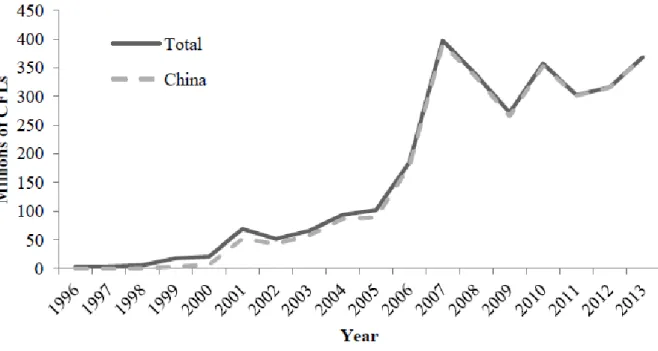
Figure 1.2. Imports of CFLs to U.S. from World and China, 1996-2013 ...9
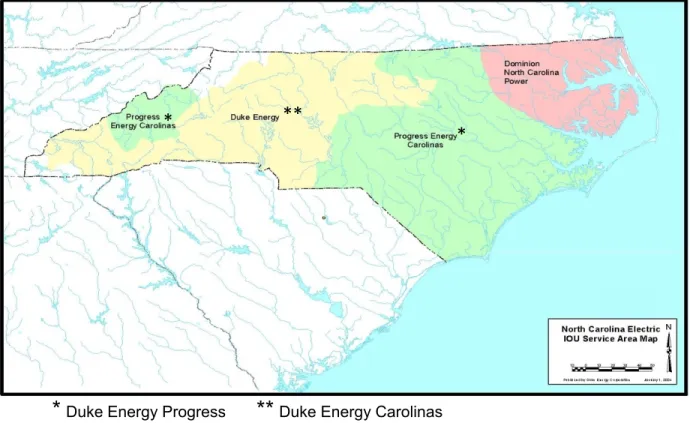
Figure 4.1. Map of Duke Energy’s NC Service Territory ...96
Figure 4.2. Effect of Customer-Implemented Energy Efficiency on an Electricity Provider’s Sales ...99
Figure 4.3. How Electricity Providers Change Prices to Respond to Customer- Implemented Energy Efficiency ...99
Figure 4.4. Effect of Customer-Implemented Energy Efficiency on an Electricity Provider’s Costs and Revenues ...99
Figure 4.5. Effect of Figure 4.4 on Average Customers’ Electricity Bills ...99
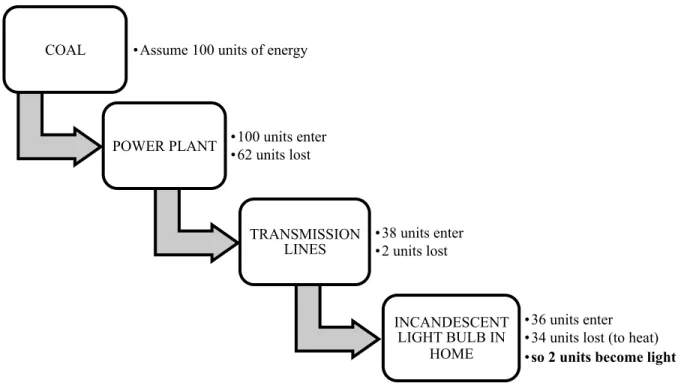
Figure 4.6. Model of Energy Losses in Electricity Systems ...110
Figure 5.1. Letter from Duke Energy Encouraging Household to use CFLs ...146
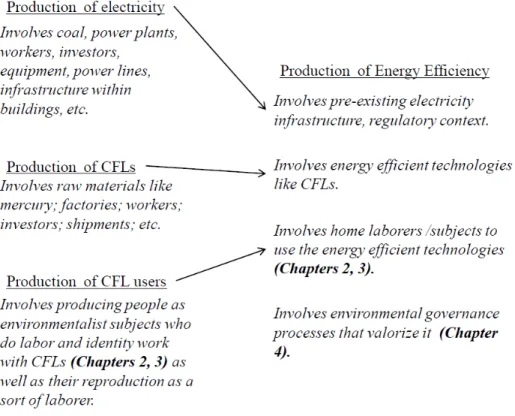
Figure 5.2. Broad Processes in the Production of Energy Efficiency ...152
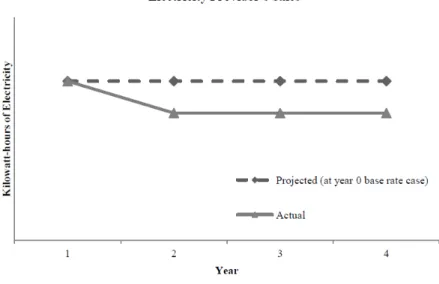
Figure A.1. Effect of Customer-Implemented Energy Efficiency on an Electricity Provider’s Sales ...166
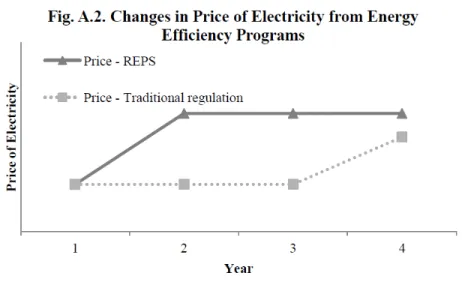
Figure A.2. Changes in Price of Electricity from Energy Efficiency Programs ...167
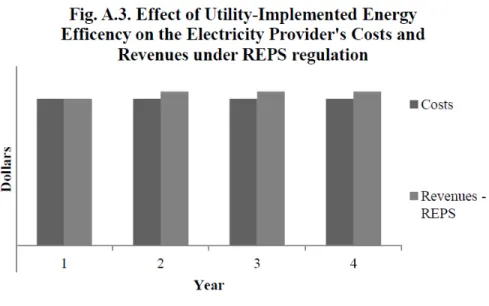
Figure A.3. Effect of Utility-Implemented Energy Efficiency on the Electricity Provider’s Costs and Revenues under REPS Legislation ...168
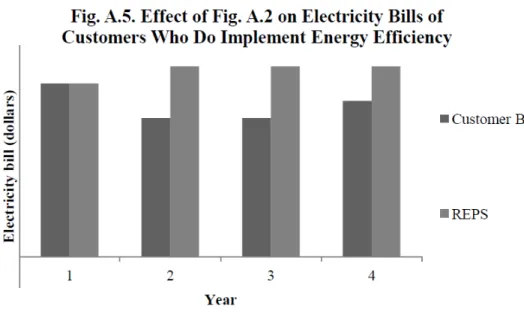
Figure A.4. Effect of Figure A.2 on Electricity Bills of Customers Who Do Not Implement Energy Efficiency ...168
xiii
LIST OF ABBREVIATIONS
AGO Attorney General’s Office
BLS Bureau of Labor Statistics
CFL Compact Fluorescent Light bulb
CHP Combined Heating and Power
DOE Department of Energy
DSM Demand-Side Management
EC European Commission
EDF Environmental Defense Fund
EE Energy Efficiency
EIA Energy Information Administration
EISA Energy Independence and Security Act
ENGO Environmental Non-Governmental Organization
EPA Environmental Protection Agency
EU European Union
FPE Feminist Political Ecology
FTS Feminist Technology Studies
GE General Electric
GHG Greenhouse Gas
GPN Global Production Network
GS General Statute
HTS Harmonized Tariff Schedule
xiv
IOU Investor-Owned Utility
LED Light-Emitting Diode
MoMA Museum of Modern Art
NCDENR North Carolina Department of Environment and Natural Resources
NC EMC North Carolina Electric Membership Corporation
NCGA North Carolina General Assembly
NCIPL North Carolina Interfaith Power & Light
NCLCV North Carolina League of Conservation Voters
NCPIRG North Carolina Public Interest Research Group
NC-RETS North Carolina Renewable Energy Tracking System
NCSEA North Carolina Sustainable Energy Association
NCUC North Carolina Utilities Commission
NCWARN North Carolina Waste Awareness and Reduction Network
ND No Date
OECD Organization for Economic Cooperation and Development
RAP Regulatory Assistance Program
REPS Renewable Energy and Energy Efficiency Portfolio Standard
RPS Renewable Portfolio Standard
SACE Southern Alliance for Clean Energy
SCOT Social Construction of Technology
SELC Southern Environmental Law Center
SI Symbolic Interactionism
xv
STS Science and Technology Studies
TNC The Nature Conservancy
UNDP United Nations Development Programme
US United States
1
CHAPTER 1: INTRODUCTION Introduction
This research is about how energy efficiency is produced as an idea, as a part of
identities, as a resource, and as a source of value. Energy efficiency is often defined as “physical,
long-lasting changes to buildings and equipment that result in decreased energy use while
maintaining the same or improved levels of energy services” (La Capra Associates 2006: iii). It
is usually framed as something that results from the use of a technology. This research focuses
on a case study of a prominent energy efficient technology, the compact fluorescent light bulb
(CFL). Such energy efficient technologies can be thought to produce “negawatts,”1 where a
negawatt is a unit of energy efficiency (Lovins 1989).
The CFL has been heavily promoted by environmentalists and electricity companies as a
key tool for solving climate change, yet such promotions appear counter-intuitive on the surface.
The magnitude of CFL promotions by environmentalists appears at odds with the fact that CFLs
can only reduce U.S. greenhouse gas emissions by less than 1% even in the best case scenario.
CFL promotions by electricity providers appear at odds with such companies’ normal incentives
to sell more of their product. This research began with the question, Given these counter-intuitive promotions, how and why has the CFL become a key tool of climate change mitigation for
environmentalists and electricity companies?
2
A central theme of this research is that rather than being an already-formed, self-evident
technical entity - as it is often treated by environmentalists, energy companies, and policymakers
- energy efficiency is produced through social, political, and economic processes. I will show
that these processes include identity formation and subjectification; gender-coded household
labor; and corporate appropriation of household value resulting from environmental governance.
A central finding is that energy efficiency promotions involve consuming less energy by
consuming more technologies. In these ways, this dissertation contributes to understandings of how environmentalists become laboring subjects in an era of neoliberalism and how energy
companies are responding to the threat of climate change by turning mitigation into an
opportunity for profits.
The dissertation proceeds as follows. In this introductory chapter, I begin by providing
background on the case of CFLs, including their political economic and environmental contexts.
I discuss my broad theoretical perspectives and research methods. Chapters 2, 3 and 4 represent the bulk of my findings and analyses, written as separate papers (with their own introductions,
theoretical frameworks, methods sections, findings, discussions, and conclusions). In Chapter 2, I show how environmentalists use CFLs to make and claim neoliberal identities; I propose the
concept of green neoliberal identity work as a mechanism through which neoliberal ideologies
are translated into individualistic, consumptive, techno-centric environmentalist practices. In
Chapter 3, I show how using even the seemingly easiest energy efficient technology, the CFL, constitutes labor that is gendered in ways that can reflect and reproduce inequalities. In Chapter 4, I show how electricity companies have used environmental governance to valorize and
appropriate home energy efficiency in ways that are an accumulation strategy. In the conclusion
3
proposing a theory of green obsolescence, framing the production of energy efficiency more
broadly, and discussing directions for possible future research.
CFL Promotions as a Case Study
In spring of 2010, many residents of North Carolina received two mailings that hint at a
convergence of views connecting an energy efficient technology, the CFL, with an
environmental problem, global climate change. The first mailing was from the Sierra Club, the
self-described “largest and most influential grassroots environmental organization in the United
States” (Sierra Club 2011); it itemized “Ten things you can do to help curb global warming”:
1. Drive Smart!
2. Buy Local and Organic
3. Support clean, renewable energy
4. Replace incandescent light bulbs with compact fluorescent bulbs 5. Saving energy at home is good for the environment and for your wallet 6. Become a smart water consumer
7. Buy energy-efficient electronics and appliances 8. Plant a Tree, protect a forest
9. Reduce! Reuse! Recycle!
10. Mount a local campaign against global warming [emphasis mine] (Sierra Club 2010)
The second mailing, from residents’ electricity provider, Duke Energy, was a coupon for six free
General Electric (GE)-brand CFLs to be collected at Wal-Mart. Text on the outside of this
six-pack linked these bulbs to climate change via greenhouse gas (GHG) emissions:
Did you know if every household used one six pack of GE Energy Smart® CFL’s [sic], over the bulbs’ lifetime [sic] they would prevent the emissions equal to 4.6 million cars being on the road. GE Energy Smart® bulbs save money and resources compared to incandescent bulbs. [emphasis mine]
Here lie strange bedfellows: a large environmental non-governmental organization (ENGO) and
a large electricity corporation agreeing that buying CFLs is an important action to prevent
climate change. In the rest of this section, I provide background on CFLs as a case study,
discussing CFLs promotions from policies, electricity providers, and ENGOs; CFL production
4
U.S. Policies and Utility-Sponsored Programs to Promote CFLs
CFLs have been promoted through several U.S. federal policies and programs; their
promotions have also resulted from state-wide policies in NC. At the federal level, CFLs were
incorporated into the U.S. labeling and quality-control program ENERGY STAR in 1999 to
address some of the early performance problems people experienced while using them (Sandahl
et al. 2006; U.S. DOE 2009). The Energy
Independence and Security Act (EISA) of
2007 phased out energy-inefficient light
bulbs like incandescents starting in 2012
(U.S. Congress 2007 HR 6/S. 1419),
following similar actions by Australia and the
EU (Di Maria et al. 2010).
In October 2007, the Environmental
Protection Agency (EPA) launched the
“Change a light, change the world” program
(ENERGY STAR N.D.(a)). Figure 1.1
shows an example of their advertising
materials, which urge the reader, “Help us
change the world, one ENERGY STAR light
at a time. Take the ENERGY STAR Change
5
pledge means agreeing to switch one light bulb from an incandescent to a CFL (ENERGY STAR
N.D.(a)); as of March 31, 2014, over 3 million people had made this pledge in the U.S.
(ENERGY STAR 2014). Their figures show that 69,000 North Carolinians have pledged to
install over 480,000 CFLs, which, they calculate, would translate into saving over 500 million
pounds of GHGs, $42,000, and 349 million kWh of electricity (ENERGY STAR 2014). As EPA
Administrator Stephen L. Johnson explained about the program in January 2008, “More and
more Americans are seeing the light – that protecting the environment, while saving money, is as
easy as changing a light bulb… Together, we are brightening our country’s future, one Energy
Star CFL at a time.” (Carter-Jenkins 2008)
Also in 2007, NC passed a Renewable Energy and Energy Efficiency Portfolio Standard
(REPS). A state law proposed in part to mitigate climate change, REPS requires electricity
providers to get a portion of their electricity from renewable energy or energy efficiency (S.L.
2007-397). NC has become a hotbed of energy and climate activism, and its REPS has frequently
been touted as the first in the Southeastern U.S. (NC Energy Policy Council 2010). Yet
promoting energy efficiency in NC is thought of as particularly challenging because electricity
consumption per capita is high, electricity prices are low, and the population is growing (Brown
et al. 2012). To meet their requirements under REPS, electricity providers in NC have given tens
of millions of CFLs to residential customers (Duke Energy 2011; RAP 2010). This research is
focused on the largest of these giveaways, which have been initiated by the Investor-Owned
Utility (IOU) Duke Energy. Now the largest electricity company in the nation, Duke Energy is
headquartered in Charlotte, NC (NC Energy Policy Council 2013).
Duke Energy’s CFL giveaways in NC are some of the latest in a history of
6
among brands of Edison’s incandescent bulbs and most households who used CFLs got them
from electric utility promotional programs, thought to have been one of the key drivers of the
CFL market (Sandahl et al. 2006). These promotions grew out of Demand Side Management
(DSM) programs implemented by state electricity regulators (Hirsch 1999). DSM is a way to
“help utilities match energy demand with generating capacity” (Gillingham et al. 2006), mainly
by shifting the times (rather than amounts) that electricity is consumed to spread out and dampen
peak demand.
CFLs are the public face of Duke Energy’s “Save-a-Watt” program, a program to meet
the requirements of REPS with energy efficiency (Downey 2010); such a public face can be
seen, for example, on the cover of Duke Energy’s 2007/2008 corporate Sustainability Report,
which shows a full-page drawing of a CFL with people walking along the curves of the bulb,
representing corporate sustainability efforts (Duke Energy 2007/2008). Duke Energy’s
“Save-a-Watt” program has offered discounted and free CFLs since 2009 (Duke Energy 2009). In
summer 2009, it gave customers discounts on Sylvania bulbs at Lowe’s (Duke Energy 2009). In
spring 2010 I received from Duke Energy (my electricity provider) a coupon for six free
GE-brand CFLs from Wal-Mart and in fall 2010 Duke Energy mailed me 12 more free Niagara
Conservation-brand CFLs in the mail. As detailed more in Chapter 4, these programs are paid for via rate increases for customers and Duke Energy is paid for each kWh saved (Duke Energy
2009). Over 200,000 CFLs have been given away in NC via these programs, saving over 40
megawatts of power plant capacity (Downey 2010). Duke Energy has undertaken similar
programs in SC, IN, and OH (NCDENR N.D.), giving away millions of CFLs in total (Duke
Energy 2011).
7
Many environmental groups promote CFLs prominently as a solution to climate change.
In analyzing the websites of the “Big Ten” U.S. ENGOs (see methods section below), I found
that nine of these groups portrayed using CFLs as a key action to mitigate climate change. Seven
ENGOs listed CFLs as one of top 4-12 things an individual can do to mitigate climate change,
and each time it appeared in those lists it was within the first four items. The Sierra Club excerpt
at the beginning of this chapter is one illustration of these lists, and also shows that the majority
of the other actions being promoted by these groups were consumptive, individual, and private.
Showing how much CFLs have come to symbolize energy efficiency, when famous
environmentalist Amory Lovins (1989) argued in a prominent forum in favor of negawatts as
climate change mitigation, he used CFLs as a key example, urging us to consider them to be tiny
power plants:
Think of such a compact bulb, with 14 watts replacing 75, as a 61 negawatt power plant. By substituting 14 watts for 75 watts, you are sending 61 unused watts – or negawatts – back to Hydro [a Canadian electricity company], who can sell the electricity saved to someone else without having to make it all over again.
Another example of the widespread use of CFLs as symbols of energy efficiency and climate
change mitigation can be seen in an image from the Sierra Club showing Rosie the Riveter
holding up a CFL, saying “We can do it!” over the text “Forging a clean energy future” (Sierra
Club 2008).
CFL Production and Consumption
The history of CFLs is marked by large corporate interests and partnerships. An
employee of GE invented the CFL in 1976 (Sandahl et al. 2006), an invention that some
researchers have argued was a response to the 1970s global energy crisis (Ramroth 2008: 5),
while others say it was a survival strategy for large light bulb manufacturers in an increasingly
8
short lifetimes, poor lighting quality, and a “flicker” that some researchers think caused many
consumers to form negative opinions of the bulbs (Sandahl et al. 2006). Partly as a result, U.S.
use of CFLs grew slowly, so that their share of the market for bulbs in their class2 was still only
1% in 2000 (U.S. DOE 2009).
After 2001, the U.S. market for CFLs changed dramatically, so that by 2007 their market
share had risen to 23% (U.S. DOE 2009). That year, the EU placed an anti-dumping tariff on
CFLs made in China and other countries (EC 2007), causing a “glut” of inexpensive CFLs to be
dumped onto the U.S. market (Sandahl et al. 2006). CFLs were promoted in California in
response to the energy crisis and rolling blackouts and in the Pacific Northwest due to droughts
that reduced hydropower capacity (Sandahl et al. 2006). The same year, Wal-Mart launched a
massive CFL promotion where they sold 162 million CFLs, which was over half the 290 million
sold that year in the U.S. (U.S. DOE 2009). Figure 1.2 shows that nearly all the CFLs sold in the U.S. are imported from China.
9
Figure 1.2. Imports of CFLs to U.S. from World and China, 1996-2013. Graph made by author, using data from the U.S. Department of Congress and International Trade Commission (2014); HTS (Harmonized Tariff Schedule) #8539.3100.60, which is the import code for “discharge lamps, other than ultraviolet lamps” which are “fluorescent, hot cathode” and “with a single screw-in base.”
At present, the global CFL market is led by three companies, GE, Osram-Sylvania, and
Philips (OECD and IEA 2006: 251), which have dominated light bulb manufacturing for roughly
a century (Menanteau and Lefebvre 2000). Headquartered in Europe and the U.S., they
manufacture bulbs mainly in China (Navigant Consulting Europe 2009: 8); the U.S. buys 29% of
the world market (OECD and IEA 2006: 256-7). TCP is another large CFL manufacturer, and
one of the few opening factories in the U.S. (Sheeran 2006). Home improvement stores
Wal-Mart, Lowe’s, and Home Depot have partnered with GE, Osram-Sylvania, and Philips,
respectively, to promote CFLs (Sandahl et al. 2006). As a result of the rise of CFLs, light bulb
factories have moved from the U.S. to China (Supply Chain Digest 2009) and incandescent sales
10
CFLs’ longer lifetime (Creyts et al. 2007: 36). While incandescents tend to be bought at grocery
stores, CFLs tend to be bought at large home improvement “big box” stores (U.S. DOE 2009).
On the surface, CFLs are a smart bulb choice for consumers. They save users money (Di
Maria et al. 2010) and can last eight times longer (Creyts et al. 2007: 35). Yet while some parts
of Europe see CFL adoption rates of 50-60%, only 11% of U.S. residential bulbs are CFLs
(Sandahl et al. 2006; U.S. DOE 2009). The average number of CFLs per household in the U.S. is
4.4 (North Carolina is 2.5-3) (U.S. DOE 2009). More CFLs are used in parts of the U.S. with
prior utility promotional programs such as California and Washington (U.S. DOE 2009). Studies
suggest adoption of CFLs is influenced by financial benefits, culture, electricity prices,
environmental motivations, and the meanings of lighting in different cultures (Urge-Vortsatz and
Hauff 2001; Sandahl et al. 2006; Wall and Crosbie 2009; Wilhite et al. 1996; Bladh and Krantz
2008). Slocum (2004b) has studied how some U.S. ENGOs use CFLs as a way to “bring climate
change home,” but little is known about how environmentalists in particular think about or use
technologies like CFLs.
Environmental Impacts of CFLs
Multiple Life Cycle Analyses have shown that “from cradle to grave,” CFLs produce
fewer GHG emissions than incandescent bulbs (OSRAM and Siemens 2009; Ramroth 2008;
Navigant Consulting Europe 2009; VITO 2009), yet Light-Emitting Diode bulbs (LEDs) are
potentially even better (OSRAM and Siemens 2009: 1). Studies have suggested that for the U.S.
as a whole and NC in particular, it is better in terms of toxic mercury emissions to switch from
incandescents to CFLs because although CFLs contain mercury, there is net more mercury
released into the air from burning coal to power incandescents (Eckelman et al. 2008). Lighting
11
global electricity demand for lighting is increasing (OECD and IEA 2006: 26). The best CFLs
use only one-quarter of the electricity to produce the same amount of light as incandescent bulbs
(U.S. EPA 2008).
Although it does not appear, on the surface, to be a complex calculation, no one has
publicly calculated the potential impact of CFLs on U.S. GHG emissions in the aggregate.
Instead, it is more common for ENGOs to write about the number of imaginary cars that are
removed from the road or imaginary houses electrified to equal the energy saved or GHGs
avoided from using CFLs. For example, the Environmental Defense Fund writes on their
website3, “If every household replaced just three 60-watt incandescent bulbs with efficient bulbs,
the pollution savings would be like taking 3.5 million cars off the road!”
I calculated the maximum percentage of U.S. GHG emissions that can be reduced in the
best case scenario if everyone changed all their home light bulbs to CFLs as follows. Note that
this figure is an upper limit that cannot be reached in practice because some people have already
changed some light bulbs to CFLs and because it is unlikely that every single light bulb will be
changed, particularly given the well-publicized stockpiling of incandescents. The calculation was
made by multiplying the following figures:
82.7%: The proportion of total U.S. GHG emissions (after changing all gases into equivalent
units of CO2, called “CO2eq”) that was due to CO2 in 2012 (U.S. EPA 2014: ES-8).
94.2%: The proportion of U.S. CO2 emissions that was due to fossil fuel combustion in 2012 (U.S. EPA 2014: ES-8).
14.3%: The proportion of U.S. fossil fuel combustion that was due to residential electricity in
2012 (U.S. EPA 2014: ES-11); the figure is a result of the author dividing the CO2eq emissions from residential electricity (725.8Tg CO2eq) by the total CO2eq emissions in the U.S. (5065.7 Tg CO2eq) within the category of fossil fuel combustion.
12
8.8%: The proportion of residential electricity use that was consumed in indoor and outdoor
lighting in 20014 (U.S. EIA 2001).
75%: The average percent less electricity that a CFL uses compared to an incandescent (U.S.
EPA 2008).
Multiplying these figures yields:
0.74%: the maximum theoretical proportion of U.S. GHG emissions that could be
reduced if every U.S. resident changed every home light bulb to CFLs.
In sum, the CFL is an energy efficient technology that has been highly promoted by U.S.
and NC policies and programs, electricity providers, and ENGOs. They are a symbol of energy
efficiency and climate change activism for utilities, policymakers, and environmentalists. Their
production networks range from factories in China to homes in the U.S. (and beyond in both
directions: “backward” along production networks to the extraction of raw materials and
“forward” to landfills) and involve multi-national corporate actors. Their consumption has been
growing in part due to policies and promotions and in part because they can save consumers
energy and money. Yet the magnitude of the environmental savings for CFLs has rarely been
calculated in the aggregate and is less than 1% of U.S. GHG emissions even in the best case
scenario.
Theoretical Perspectives
I used several broad “sensitizing perspectives” for my research which acted as “points of
departure” (Charmaz 2006: 17) for my assumptions, research questions, and methods. Political
ecology and symbolic interactionism (SI) are the perspectives most useful in this research, and
their emphases on context, power relations, inequalities, and how meanings are constructed shed
particular light on my project. For example, political ecologists have pointed me toward
understanding neoliberalism as a key political economic and environmental force, while
13
symbolic interactionism has sensitized me to the ways that people together make meanings
through identity work. Political ecologists see environmental problems as caught up in networks
of power, influence, inequality, and dynamic forces. They emphasize analytical questions of who
bears the benefits, who bears the costs, and how? SI scholars assume that together people create
meanings for themselves, others, and things (Blumer 1969: 2). As an explicitly social
constructionist perspective, SI scholars assume “the meaning of anything and everything has to
be formed, learned, and transmitted through…a social process,” (Blumer 1969: 12). These
perspectives are broadly compatible but have different emphases: political ecology has a rich
history of work on large political economic forces and subjectivities, while SI provides methods
and perspectives emphasizing everyday interactions and practices. In political ecology and/or SI,
I drew from theories on environmental subjectivities, identities and labor, technology studies,
and critical political economies to build my theories. I will outline the broad contours of these
theories here; their applications to the dissertation research are drawn out in more detail
especially within Chapters 2, 3, and 4. Environmentalist Subjectivities
Political ecologists and other critical theorists of environmental subjectivities view
multiple possibilities for the environmentalist as a political actor and connect to scholarship on
neoliberalism. By environmentalist subjects, I mean people who try to conserve natural resources
and “protect the environment” in small and large ways. Many researchers have suggested that
new subjects have formed with modernity (Foucault 1995), neoliberalism (Guthman and DuPuis
2006), and the rise of environmentalism (Slocum 2004a; Agrawal 2005; Robbins 2007). These
subjects seek to “shop for change” (Johnson and Szabo 2011) and see themselves as
14
capitalism and the neoliberaliszation of environmentalisms; see more below) have suggested that
“neoliberal notions of citizenship and social capital are [being] discursively repackaged in the
image of homo-economicus, the ideal, entrepreneurial, self-made individual,” in present
discourses (McCarthy and Prudham 2004).
These theorists signal the importance of viewing the environmentalist as a subject of
multiple political and economic forces, and produced through multiple processes (Hinchliffe
1996). “Turfgrass subjects” have been produced as caretakers of grass subject to neoliberal
logics, in part through community norms of lawn care (Robbins 2007: 130). Much of the
research on energy and climate change subjects uses the lens of governmentality to show how
governments create green subjects who focus on individualized reductions of GHG emissions
(Rutland and Aylett 2008), consumption of energy efficient products (Slocum 2004a), and home
energy conservation practices (Hobson 2013).
Identities and Labor
I draw from Symbolic Interactionist scholarship to think about identities. These scholars
conceptualize identities as ways people present themselves to claim characteristics that are tied
to self-esteem (Schwalbe and Mason-Schrock 1996). Environmentalist can be seen as a “moral identity.” In such an identity, “our belief in ourselves as good people depends on whether we
think our actions and reactions are consistent with that identity,” (Kleinman 1996: 5), so the
success people have in accomplishing this identity is tied to feelings of self-worth. Identity work
is “anything people do, individually or collectively, to give meaning to themselves and others”
(Schwalbe and Mason-Schrock 1996). Identity work is accomplished through talk (Snow and
15
Both groups and individuals can do identity work, since identities can be collective or personal
(Smith 2013; Snow and Anderson 1987; Schwalbe and Mason-Schrock 1996)
I use SI and feminist political ecology perspectives to understand environmental actions
as labor. Women are often the targets of environmental campaigns, “expected to be more diligent
[than men] in adopting time-consuming green practices like recycling and precycling,”
(MacGregor 2006: 69). This can increase women’s already-larger “care burden,” (Buckingham
and Kulcur 2009). Many kinds of household labors, from childcare to cooking, have historically
been labeled “women’s work” and therefore coded as non-work (Giminez 1990: 26). Federici
(2009) has traced the assigning of household labor to women and labor outside the home to men
to the beginnings of capitalism (53), where “work that women did at home was treated as
non-work and worthless” whether it was done “for a family or to make commodities to sell to others,”
(51). In dual-income households, women in the U.S. do more labor overall because of the
“second shift” of housework (Hochschild 2012).
Technology Studies
I draw on two main areas of technology studies: theories of the Social Construction of
Technology (SCOT) and Feminist Technology Studies (FTS).SCOT theorists see technologies
as inherently social, and that their development is not linear or inevitable. While several
traditional histories of light bulbs and CFLs have already been told (Menanteau and Lefebvre
2000; Sandahl et al. 2006; Hong et al. 2005: 22), they have tended to tell an atheoretical tale of
the development of the bulb into a seemingly inevitable present form. SCOT developed out of
the sociology of scientific knowledge, philosophy of science and technology, histories and
sociologies of technologies, and innovation studies (Pinch and Bijker 1987: 18-25). Its theorists
16
scientific knowledge theorist Bloor in insisting on symmetry: that “successful” technologies be
studied in the same way as “unsuccessful” ones (Pinch and Bijker 1987: 18, 28). The idea of
symmetry allows me to problematize the “success” of CFLs, so I can assume that “how and why
did CFLs arise in this form at this time and place?” is an unresolved question. SCOT theorists
also call attention to the “relevant social groups” that form around a technology and how they
often have different meanings for the same technology (Pinch and Bijker 1987: 29-34). Bijker
(1992) shows this in his history of early (non-compact) fluorescent lights. This concept allows
me to assume that CFLs will hold different meanings for different groups of environmentalists,
for different companies, and for different policy groups.
FTS scholarship has shown how gender and technology co-produce one another, so that
“gender relations can be thought of as materialized in technology, and masculinity and
femininity in turn acquire their meaning and character through their enrolment and
embeddedness in working machines,” (Wajcman 2010). It allows us to expect that the meanings
of the CFL as a technology used for climate change mitigation are partly constructed through
gender and gender inequalities. Cowan’s work (1983, 1999) on the history of domestic
technologies shows how as “labor-saving” appliances such as electric irons and washing
machines were invented and adopted by housewives in the 1920s U.S., the norms of cleanliness
changed (1999: 284), resulting in net “more work for mother” (1983). FTS scholarship also
suggests that the gender coding of CFLs is likely to be complex. Cockburn (1997) alerts us to the
correspondence of several binaries: technology, public, and masculine vs. (respectively)
non-technology, private, and feminine. Faulkner (2001) summarizes how different kinds of home
technologies can be gendered differently because of their “association” with men or women in
17
household matters for their gendering: are they low-tech (or “’soft’” tech, as Faulkner puts it),
about cleaning and cooking and routine tasks, or are they high-tech, about home repairs and
entertainment?
Critical Political Economies
I use critical political economic theories because they allowed me to assume that there are
interests behind political-economic arrangements like discourses, subjectivities, and governance.
As Castree (2002) explains, a political economic lens on environmental issues calls attention to
“the broad logics of production and the distributive consequences of these logics.” I focus on
geographers’ and others’ scholarship on green neoliberalism.Many geographers and others argue
that since the 1970s, the capitalist economic system has taken a particular form, neoliberalism,
representing a return (at least discursively) to laissez-faire economic ideologies (Heynen et al.
2007: 287) as a response to crises in profitability in multiple industries (Harvey 2005).
Neoliberal economies are characterized by movements toward free markets, de-regulation and
re-regulation, privatization, and commodification of natural resources (Harvey 2005; Bakker
2010).
Green neoliberalism generally refers to both the “greening” of capitalist institutions like
corporations and international trade organizations (Beder 2002: 177; McCarthy and Prudham
2004; McCarthy 2007) and the neoliberalization of environmental groups (Guldbrandsen and
Holland 2001; Slocum 2004b). Scholars of green neoliberalism have shown that in a neoliberal
era, nature and the environment have been repeatedly appropriated, privatized, and commodified
in ways that turn the value of ecosystem goods and services into new realms of profit. Scholars
have called attention to the ways corporations and international trade organizations have
18
when the appearance of environmentalism can expand markets (Beder 2002: 177; McCarthy and
Prudham 2004). Many of these theorists consider neoliberalizations of environmentalism and
environmental policy to have had negative impacts on the environment (Heynen et al. 2007: 289;
Prudham 2007), but Bakker (2007) offers evidence that in some configurations neoliberalism
may protect the environment. Such scholars suggest that the trend is often not toward complete
deregulation but is rather a reregulation that results in less transparency and more profits for
large corporations (Swyngedouw 2007: 56). These theories highlight the need to understand who
is driving economic or political processes and the impacts on various groups (Castree 2007:
283).
Related to this work on political economies of things, in the conclusion (Chapter 5) I draw on research on Global Production Networks (GPNs) to suggest some implications of the
research as a whole. Scholarship on GPNs “aims to reveal the multi-actor and multi-scalar
characteristics of transnational production systems through intersecting notions of power, value
and embeddedness” (Coe et al. 2008a). Such analyses began in the work of commodity chain
analyses, moved into analyses that included “governance structures in different global
industries,” and is now focused on global networks of commodities, labor, and governance (Coe
et al. 2008a). A “cultural political economy approach” to GPNs can be especially useful for the
current case of CFLs and the production of energy efficiency because it such an analysis
emphasizes the connections of global systems of production with people’s everyday lives and
identities (Hudson 2008; Coe et al. 2008b).
Research Methods
This research was inductive, multi-sited, and included qualitative data from interviews,
19
dynamics in North Carolina. Multiple methods were used because they are complementary
(Bryman 2004: 455) and to triangulate findings (Blee and Taylor 2002: 111). For example,
observing how people at these environmentally-oriented events talked about, presented, and
promoted CFLs in the context of larger environmental issues allowed me access to meanings that
may be more hidden in interviews (Becker and Geer 1957; Emerson et al. 1995: 12). Interviews,
on the other hand, are better for understanding personal and organizational histories or for asking
about topics people may not talk about regularly (Trow 1957). I concentrated analysis on
different types of data for different chapters. Broadly, my analysis for Chapters 2 and 3 focused on the interviews and participant-observation, supplemented with data from texts and images;
my analysis for Chapter 4 focused on texts, supplemented with data from interviews and participant-observation.
I followed Charmaz’s (2006) assumption that methods are technical and perspectival
when collecting data. While interviewing people, I assumed that the interviewee and I were
constructing meanings together. I assumed I could observe such meaning-constructing, but that it
was more difficult to observe the meaning-making processes that had happened in the past and
had already become stabilized in interviewees’ speech. I did not assume that what people tell me
is what they believe all the time. While observing, I assumed that I have a better insight than
during interviews into what meanings people might give CFLs, environmentalists, and climate
change in their everyday conversations, and how meanings are informally made, passed on,
interpreted, and negotiated. I was also able to see patterned absences. For example, despite how
much IOU and ENGO texts talk about CFLs in the context of climate change, I rarely observed
people connecting these two things verbally during participant-observation (in particular, I was
20
Given my other findings, I interpreted this patterned absence to be a result of both the
common-sense nature of this connection (so common it did not need to be said out loud) and ambivalence
about CFLs’ significance (see Chapter 5 for more on this ambivalence).
While collecting and analyzing public documents that IOUs, ENGOs, and policymakers
have produced, my approach was slightly different. These texts, unlike my field notes and my
interview transcriptions, were extant: I had no hand in making them, and in fact they were made
for some other purpose. I assumed that they do not represent the views of everyone at the time or
even everyone who made them at the time, since meanings are contested. However, they were
useful for understanding how meanings flow, move, encounter one another, are stabilized
momentarily, and otherwise change in public spheres. The policy and rulemaking documents
were especially important because they codify political economic relations.
Interviews and Participant-Observation
I conducted three kinds of interviews in this research: longer formal semi-structured,
in-depth interviews; short informal interviews as part of my participant-observation; and longer
semi-structured, in-depth interviews with key informants. All interviewees were given
pseudonyms in this dissertation. From November 2011 to January 2013, I formally interviewed
15 environmental activists in NC, all of whom performed multiple energy-related practices in
and outside of their homes “for the environment.” Six were leaders of environmental
organizations or committees and only two were not active within any such group. I gained access
to these individuals via participant observation and the “snowball” method (Lofland et al. 2006:
43). My sampling was theoretical rather than representative (Charmaz 2006: 96-7). Questions
focused on how the interviewees think climate change should be solved, what sorts of actions
21
Interviews were semi-structured, recorded, transcribed, and lasted 1-2.5 hours. Interviewees were
white, in their 20s-80s in age, and included: 5 men and 10 women; unemployed or retired (9),
part-time wage laborers (2), and full-time wage laborers (4); parents (10) and non-parents (5);
relatively wealthy (8), middle-class (4), and poor (3) people; from six different towns in central
NC; a fuller description of their demographics can be found in Table 3.1. Consent of interviewees was obtained.
To complement these interviews (Emerson et al. 1995: 12), I conducted 55 hours of
participant observation at public energy and environmental meetings and hearings in NC from
February 2011 to November 2012. The events included an Earth Day celebration, an energy
efficiency education fair, two climate activist rallies, three public utility commission hearings on
state electricity issues like rate increases, and five professional clean energy conferences. I used
these events and meetings as both a source of data itself and as the way I found interviewees.
During the participant observation, I briefly interviewed 37 energy and environmentalist
employees and volunteers at these events about their personal or their organizations’ views on
energy efficiency and/or CFLs. About half of these informal interviews were done with men and
half with women; all were white but one; and with people in their 20s-60s. They included:
nineteen employees or volunteers with ENGOs; three employees of NC IOUs (two
representatives of Duke Energy, one of Dominion); seven employees of clean energy businesses;
four employees of central NC universities; one city lawyer involved in energy efficiency; one
employee of the NC Utilities Commission Public Staff (which represents the electricity “using
and consuming public”); and one representative of La Capra Associates (the consulting group
that studied the potential for NC’s REPS policy). During participant-observation, I also observed
22
representative of Duke Energy, a leader of NCSEA (an ENGO in NC), a lawyer for the North
Carolina Utility Commission (that governs electricity companies), a representative of DSIRE (a
database on green energy policies), and others.
Finally, I formally interviewed four key informants who consented for me to use
identifying information (the organization they work at and their names, although I only used the
former in this dissertation) in February 2011. I originally intended to interview more such
informants, but was constrained by time in the present research. I interviewed the executive
director and director of governmental relations of the NC League of Conservation Voters, a
lawyer who serves as legal counsel for the ENGO NCWARN, and a senior policy analyst with
DSIRE (part of the NC Solar Center). These interviews were recorded and used primarily as
supplemental data in Chapter 4. Texts and Images
I collected four broad types of texts and images: I systematically collected (1) U.S.
ENGO websites, (2) google search images, and (3) REPS policy- and rule-making texts; I also
collected and used (4) a wide variety of miscellaneous texts as supplementary data. For the first
source of textual data, I collected websites, letters, and emails from what have been identified as
the “Big Ten”5 mainstream U.S. ENGOs (Center for Media and Democracy 2011) as well as
websites from the 35 other members of the U.S. Climate Action Network (US CAN 2010; see
References for full listing) in summer 2010. Using “screen captures,” I began at the homepage of each group, clicked on the “issues” or “programs” tab, then on “global warming” or “climate
change”; each group had some variation of this path. I then looked for links that indicated “what
you can do” or other calls for the reader/viewer to act. I followed those links until they
23
intersected with CFLs or until I found no evidence they talked about CFLs. I looked for patterns
among the ways that CFLs and climate change were linked and how the actions for mitigating
climate change were framed. I conducted a discourse analysis, looking at the “text in context,”
analyzing patterns and change in the way lighting technologies and CFLs in particular have been
linked to climate change in a qualitative, interpretive, and holistic way (Wodak 2008: 5-6). I
focused more effort on the “Big Ten” groups in my analysis, since they represent much of the
mainstream, national, public environmental discourses in the U.S. These groups have been
faulted as being too corporate and professionalized (e.g., Beder 2002); nonetheless, they
influence millions of environmentalists, collect billions of dollars in revenue, and, unlike smaller
groups, often have a voice in policy decisions. I used this data mainly in Chapters 2, 3 and 5. To understand the gender coding of CFLs, I collected a second set of textual data using
google searches. I analyzed the first ten photos and their accompanying articles when I searched
for several strings in Google (while signed out of google accounts like gmail). I searched for ten
different terms (“mom,” “dad,” “mother,” “father,” “man,” “men,” “woman,” “women,” “girl
scout,” “boy scout”), each paired with “CFL” once and with “compact fluorescent” once (using
both CFL and compact fluorescent was necessary because “CFL” is also a common abbreviation
for the Canadian Football League). For example, I searched for both “mom and CFL” and “mom
and compact fluorescent.” These 20 searches resulted in 200 items total that I analyzed mainly in
Chapter 3.
A third major source of textual data, mainly used in Chapter 4, were legislative and rulemaking documents. In particular I examined three groups of data. First, the NC General
Assembly commissioned a study of the potential for a Renewable Portfolio Standard in NC (La
24
others to the study when it was publicized in 20066. Second, I analyzed the REPS bill itself
(REPS of 2007) and its codification as a NC General Statute (G.S. § 62-133.8). Third, I analyzed
the docket (E-100, sub 113) through which the initial rules for implementing REPS were hashed
out among IOUs, ENGOs, the North Carolina Utilities Commission (NCUC), and others (more
details in Chapter 4). In this docket, the NCUC first asked stakeholders for their opinions on potential rules for implementing the REPS bill; those stakeholders and others who wanted to
participate filed comments officially through lawyers; then groups responded to each other; and
finally the NCUC made its initial rules. This docket consisted of 208 separate documents from
these different groups; the rulemaking docket goes beyond these 208 documents after the initial
rulemaking, but focuses mainly on non-energy efficiency concerns after these first 208. I
supplemented this textual data with a few documents that are part of the Save-a-Watt docket
(E-7, sub 831), which is the rulemaking proceeding through which Duke Energy’s energy efficiency
programs (including CFL giveaways) were proposed, debated, and approved. It was beyond the
scope of this research to analyze that entire docket (and its 338 separate documents) fully;
instead, I used comments from groups like the Attorney General’s Office, the City of Durham,
Duke Energy’s initial Save-a-watt proposal, and the NCUC’s ruling on Save-a-Watt to show the
directions of energy efficiency rules after the initial rulemaking docket.
My fourth source of textual data was not collected in the same “systematic” way as the
prior three sources of data, which is why I called it “miscellaneous” textual data. I collected this
data by picking up fliers, pamphlets, posters, etc. at events at which I conducted
participant-observation; I also received this type of document from people who knew about my research
sending me such texts that they encountered and by coming across such documents online
through my research. This miscellaneous data includes data from Duke Energy (its Sustainability
25
Reports and 10-K forms; websites on CFLs, energy efficient lighting, and energy efficiency; Jim
Rogers’ testimony before Congress promoting energy efficiency in 2007; letters, coupons, and
postcards to customers urging them to use CFLs), ENGOs located in NC (pamphlets, fliers,
emails from NCSEA, NCPIRG, NCWARN, NCLCV, NCIPL, and others), and others.
Analysis
Because of my focus on meanings and processes and my assumptions about
power/inequality, I used a feminist grounded theory approach to both data collection and
analysis. By “feminist,” I draw on approaches to field work (Kleinman 2007) that stress
ever-present power relations and inequality in social settings, and the need to see and analyze these in
any fieldwork (because they are already there). Feminist field work approaches have been
successful at unpacking “taken-for-granted” meanings, which were helpful in understanding
CFLs and energy efficiency. By “grounded theory,” I mean approaches to data collection and
analysis that are at times inductive and deductive, that are about interpretation, the construction
of data and theories, and constant comparison (between data and data, data and theory, theory
and theory) (e.g., Charmaz 2006; Becker 1958). Analysis was ongoing, including open coding
(Lofland et al. 2006: 200-1) and more holistic interpretation based on patterns among the
interviews (Kleinman et al. 1997: 486). Findings are analytically generalizable (Kleinman et al.
1997; Becker 1990) to processes and links between CFLs, cultures of environmentalism, and
political-economies.
During data collection, this feminist grounded theory approach meant that I had certain
assumptions about myself and my relationship to research participants: my positionality. I
assumed that I was not a “blank slate” (Kleinman et al. 1997): my experiences in the world, my
26
or research problem. Rather than trying to adopt a stance of seeing the world as if I had no
background or assumptions, I assumed that the best way to reduce my biases was by examining
them. While writing field notes, as Emerson et al. (1995) suggest, I assumed that it was
impossible for me to transcribe the world exactly as it is. All data is constructed, and inevitably I
constructed my data by filtering out certain things, deeming some important enough to jot down
and others not important at all, by not even noticing certain things and being sensitive to others.
This is inevitable for all researchers (both qualitative and quantitative), and I tried to reduce this
bias by writing as complete of field notes as possible for interviews and participant-observation.
Because of my own positionality in terms of class, gender, race, etc., I was more sensitive to
certain experiences (e.g., gendered experiences) and may not have even noticed or understood
others (e.g., racialized experiences). I assumed that only by being aware of my own privileges,
disadvantages, and experiences and how they might relate to other participants could I begin to
notice some of the power relations in the contexts I was studying. As Kleinman et al. (1997)
write, however, my positionality (anyone’s positionality) is not an insurmountable bias: it is
another source of data. How people reacted to me is how they are likely to react to other young,
white, middle class, grad student women.
I treated interviewing, observing, and collecting publications, what we often call
“methods,” as collections of techniques that are applied together, but can be applied in very
different ways based on a researcher’s approach. My approach, feminist grounded theory,
developed out of my initial research questions and my political ecological and symbolic
interactionist perspectives. Together, my data and analyses form the basis for the next three
27
CHAPTER 2: CONSTRUCTING ENVIRONMENTALIST IDENTITIES THROUGH GREEN NEOLIBERAL IDENTITY WORK
Introduction
The question of how people become environmentalists is important to building more
sustainable communities. Much of the research addressing this question has focused on the
“determinants” of pro-environmental behaviors (like recycling or voting “green”), including
demographics and holding particular values (e.g., Stern 2000; Bamberg and Moser 2007; Thoyre
2011). A separate line of research has focused on environmentalists as subjects within neoliberal
economic systems who focus their efforts on green consumptive practices (McCarthy and
Prudham 2004; Slocum 2004a; Rutland and Aylett 2008). But the question of how neoliberal ideologies become translated into people’s everyday environmentalist practices is not yet fully
understood (Agrawal 2005: 210; Barnett et al. 2008). In this paper, I use insights from symbolic
interactionist (SI) sociology to expand our understanding of the mechanisms through which green neoliberal subjects7 are formed. Using SI theories of identity work, I develop the concept
of green neoliberal identity work, a process through which groups and individuals construct and claim neoliberal environmentalist identities. Green neoliberal identity work can be seen as a
mechanism through which neoliberal ideologies become translated into environmental practices
as these subjects form themselves.
The paper proceeds as follows. I begin by building the concept of green neoliberal
identity work by weaving critical perspectives on neoliberalism and neoliberal subjects with SI
28
perspectives on identities and identity work. I explain my empirical research approach to further
examining the idea of green neoliberal identity work. Data from interviews, participant
observation, and texts about environmentalists’ promotions and uses of energy efficient light
bulbs revealed five generic patterns of such identity work. I close by discussing two implications
of using the concept of green neoliberal identity work to examine how people become
environmentalists. First, this concept illuminates the ways that neoliberal environmental subjects
form themselvesthrough talk, helping scholars better understand the mechanisms of neoliberal subject formation. Second, the concept of green neoliberal identity work opens up new ways of
thinking about resistance to neoliberal environmental projects, through micro-processes I call
critical green identity work.
Conceptualizing Green Neoliberal Identity Work
How do people become neoliberal environmentalists? In other words, how do neoliberal
ideologies translate into people’s everyday environmentalist practices such as buying
energy-efficient light bulbs and other green consumptive acts? I begin to answer this question using
critical perspectives on neoliberalism, where scholars have theorized current constructions of
neoliberal subjects, showing how they privilege capitalist class interests. Yet this literature has
not yet well-theorized “subject formation” (Agrawal 2005: 210), especially glossing over the
mechanisms through which these subjects are formed. Often the green neoliberal subject is said to be “enrolled,” or, following Althusser, they are “interpellated,” into the project of
neoliberalism without addressing how that process happens (c.f. Robbins 2007; Barnett et al. 2008). Identities are assumed to be already-formed and static. I turn to SI perspectives to
understand these mechanisms better, as SI theories highlight the processes through which
29
way to understand the question of agency within theories of green neoliberalism, illuminating
how people become neoliberal environmentalists, and how neoliberal ideologies get translated into everyday practices.
In building the concept of green neoliberal identity work, it is important to note the
relationship between concepts of subject and identity. When scholars study neoliberalizations of environmental discourses, people, and practices, they tend to view the environmentalist as a
subject (Guldbrandsen and Holland 2001; Slocum 2004a; Robbins 2007), whereas when scholars study everyday processes of making environmentalists, they tend to view the environmentalist as
an identity (Horton 2003; Saunders 2008). Little work has bridged the two, yet they are generally compatible perspectives. Both critical perspectives on neoliberalism and SI theories are social
constructionist and, although they do it differently, both are attentive to the interests served by
various processes and the ways that particular constructions of subjectivities/identities are
influenced by current power relations. SI work can complement that of green neoliberalism
scholars who have been conscious of power relations within capitalism. For example, Schwalbe
and Mason-Schrock (1996) emphasize that SI research on identity work analyzes “the place
where people, through expressive behavior and face-to-face interaction, both reproduce and
resist larger social arrangements.” They stress that the ways people make and claim identities
“are enabled and constrained by the conditions under which people act.”
Critical Perspectives on the Green Neoliberal Subject
Scholars of neoliberalism have shown that a range of groups are subject to neoliberal
economic ideologies. Neoliberalism is considered the form of the U.S. economic system since
the 1970s and a class project that seeks to restore rates of accumulation to elites at a time of
30
capital (Harvey 2005: 11), market forces over state decisions about resource allocation
(McCarthy and Prudham 2004), individuals’ rights and responsibilities, and private property
(Heynen et al. 2007: 10, 287). Much of the work on neoliberal subjectivities has its roots in
Foucauldian ideas of power as productive of subjects (2007) who self-discipline (1995), so that
even small, private actions like changing one’s light bulb are involved in power relations.
Broader neoliberal ideologies “of citizenship and social action are discursively repackaged in the
image of homo-economicus, the ideal, entrepreneurial, self-made individual,” (McCarthy and
Prudham 2004). Using Foucault’s ideas about power, subjectivity, and governmentality, scholars
have shown that neoliberalism has produced subjects who “shop for change” (Johnston and
Szabo 2011) and are encouraged to think of themselves as consumers first rather than other kinds
of citizens (Guthman and DuPuis 2006).
Green neoliberal subjects are a type of neoliberal subject oriented toward environmental
concerns, yet still subject to neoliberal ideologies of marketization, privatization, and
consumption-as-social-change. Green neoliberalism generally refers to both the “greening” of
capitalist institutions like corporations and international trade organizations (Beder 2002: 177;
McCarthy and Prudham 2004; McCarthy 2007) and the neoliberalization of environmentalist
organizations (Guldbrandsen and Holland 2001; Slocum 2004b). “Turfgrass subjects” have been
produced as caretakers of grass subject to neoliberal logics, in part through community norms of
lawn care (Robbins 2007: 130). Much of the research on energy and climate change subjects uses
the lens of governmentality to show how governments create green subjects who focus on
individualized carbon emissions reductions (Rutland and Aylett 2008), consumption of energy
efficiency products (Slocum 2004a), and home energy conservation practices (Hobson 2013).