PARENTING FOR THE LEARNER STAGE OF GRADUATED DRIVER LICENSING
Lawrence Erik Scholl
A dissertation submitted to the faculty at the University of North Carolina at Chapel Hill in partial fulfillment of the requirements for the degree of Doctor of Philosophy in the Department
Health Behavior in the Gillings School of Global Public Health.
Chapel Hill 2015
Approved by:
Susan Ennett
Clare Barrington
Vangie Foshee
Robert Foss
© 2015
ABSTRACT
Lawrence Erik Scholl: Parenting for the Learner Stage of Graduated Driver Licensing (Under the direction of Susan T. Ennett)
Background: The learner stage of graduated driver licensing provides an opportunity for
parents to provide teens with supervised driving experiences. However, teens typically receive
less practice time and exposure to challenging conditions than necessary in preparation for
independent driving. I aimed to explore differences among parents in how they prepare teens
during the learner stage. I analyzed data collected by the University of North Carolina Highway
Safety Research Center to examine differences in parents’ behavior and communication as well
as a subset of teens’ independent driving behaviors.
Study 1: I developed a typology of parenting practices by qualitatively analyzing data
from 352 interviews and 595 video clips. Guided by the Integrative Model of Parenting, I
examined whether parenting style and goals varied across the typology. Two groups, the
independence promoters and the conscientious adapters, possessed preferable constellations of parenting practices. In both groups, teens received more average driving practice than in the
three other groups. Teens whose parents were in the independence promoter group exhibited the
lowest proportions of several unsafe behaviors during the initial months of independent driving.
Conscientious adapter parents had the most desirable parenting style, with the highest average
levels of responsiveness and demandingness.
associated with significantly more driving practice, and setting a generic, unambitious goal for
the learner stage was associated with significantly less driving practice. However, individual
trajectories exhibited considerable within-person fluctuation. Counterintuitively, teens’ lack of
willingness to participate in supervised driving practice, and actual opportunities for driving
practice, contributed to within-individual fluctuation.
Conclusion: Parents are not a homogenous group in their supervision of driving practice.
Parents also differ substantially in their goals for the learner stage. Findings affirm the need to
account for the influence of teens on the quantity and quality of supervised driving. Adopting a
more nuanced understanding for intervening with parents, allowing for flexibility and
adaptability and the bidirectional parent-teen relationship, will help interventions be more
ACKNOWLEDGEMENTS
I am grateful for the tremendous support and guidance that I received during my doctoral
training and completion of my dissertation, and there are several individuals who I would like to
acknowledge. Susan Ennett, my academic advisor and Committee Chair, supported my
professional growth throughout my doctoral training and has been a mentor since I embarked on
this journey. I am thankful for Susan’s unwavering guidance and support, and I am grateful for
how she challenged me throughout my doctoral training and my dissertation research. I also want
to acknowledge my dissertation committee members, Clare Barrington, Vangie Foshee, Robert
Foss, and Carol Runyan. Thank you for your guidance, support, and excellent questions as I
developed and conducted my dissertation research. You challenged me and helped shape me as a
researcher, and I look forward to future collaborations with each of you.
In addition, I received tremendous support from the UNC Highway Safety Research
Center (HSRC). I am grateful to HSRC for providing me with access to data and resources I
needed to complete my dissertation research. I am thankful for the ongoing guidance and support
provided by Arthur Goodwin. Arthur provided me with an initial orientation to the data and
answered many questions as I explored the data and conducted my analysis. I also am grateful
for the discussions I had about the data with Stephanie Harrell, including her helpful questions as
I began my analysis.
I also want to acknowledge the outstanding support I received from staff at UNC’s Odum
and support as I completed each of several stages of my qualitative analysis. Paul was
instrumental in helping me conduct a thorough and rigorous analysis, and he helped me develop
my qualitative research skills during our ongoing meetings and his qualitative research working
group. I also want to thank Chris Wiesen at the Odum Institute. I appreciate Chris providing me
with guidance and support as I planned for and completed my quantitative analyses.
In addition, I would like to acknowledge the UNC Department of Health Behavior for
providing me with a foundation of rigorous training and support throughout my doctoral training
that helped me conduct my dissertation. Thank you for providing a challenging and inspiring
curriculum within the Department and access to additional courses and resources across campus.
I also would like to recognize the support provided by members of my doctoral cohort. I enjoyed
our time together in the classroom, our camaraderie throughout our training, and your ongoing
TABLE OF CONTENTS
LIST OF TABLES... xii
LIST OF FIGURES ... xiii
CHAPTER ONE: INTRODUCTION... 1
Problem Statement... 1
Specific Aims and Research Questions ... 2
Study Rationale... 4
Organization of the Dissertation... 7
CHAPTER TWO: BACKGROUND AND LITERATURE REVIEW... 8
Factors Affecting Novice Driver Motor Vehicle Crashes ... 9
Graduated Driver Licensing ... 11
GDL Effectiveness ... 14
Parental Influence on Teen Driving... 16
Limited Information about Learner Stage Experiences... 17
Parent-Teens Relationships and Key Constructs... 18
Parenting Style... 20
Parenting Goals... 22
Parenting Practices... 24
Teen Socialization... 26
Integrative Model of Parenting... 27
CHAPTER THREE: METHODS AND SELECTED FINDINGS FROM HSRC’S STUDY OF PARENTS AND TEENS ... 30
Intermediate Stage Data Collection... 31
Selected Findings from the HSRC Study of the Learner Stage... 32
Study Samples Derived for Addressing Dissertation Aims 1 and 2... 34
Study Samples Derived for Addressing Dissertation Aim 3 ... 34
Secondary Data Analysis... 36
CHAPTER FOUR: A TYPOLOGY OF PARENTING PRACTICES DURING THE LEARNER STAGE OF GRADUATED DRIVER LICENSING ... 37
Introduction ... 37
Background ... 38
Parent Involvement during Graduated Driver Licensing ... 39
Parenting Theory ... 40
Identifying Distinct Groups of Parents ... 44
Study Strengths and Gaps Addressed ... 44
Methods ... 46
Participants and the Original Research Study ... 46
Sample Characteristics ... 49
Analysis of Parenting Practices... 50
Analysis of Parenting Goals... 59
Analysis of Parenting Style ... 59
Time Spent Supervising Driving Practice... 60
Teens’ Independent Driving Behaviors... 61
Findings ... 62
Parenting Practices ... 62
Patterns of Parenting Practices to a Typology of Practices... 80
Comparing Parenting Style Dimensions across Parenting Practice Typology Groups... 100
Examining Supervised Driving Time across Parenting Practice Typology Groups ... 102
Exploring Teens’ Independent Driving Behaviors across Parenting Practice Typology Groups .... 102
Discussion... 104
Distinctive Parenting Practices ... 105
Typology ... 106
Potential Public Health Impact... 106
Integrative Model of Parenting ... 108
Considerations for Parenting Interventions... 114
Study Limitations ... 115
Avenues for Future Research ... 117
Conclusion ... 118
CHAPTER FIVE: SUPERVISED DRIVING PRACTICE TIME ACROSS THE LEARNER STAGE ... 120
Introduction ... 120
Background ... 121
Parenting Theory ... 123
Studying Predictors of Supervised Driving Time ... 127
Methods ... 130
Study Design and Sample ... 130
Measures ... 131
Analysis... 134
Results ... 136
Exploratory Data Analysis ... 136
Growth Curve Model Construction... 138
Post-hoc Tests ... 145
Discussion... 146
Findings Interpreted through the Lens of the Integrative Model of Parenting... 148
Within-Individual Fluctuation... 152
Study Limitations ... 154
Additional Research Needed... 155
Conclusion ... 156
CHAPTER SIX: SYNTHESIS OF FINDINGS, SIGNIFICANCE AND IMPLICATIONS FOR RESEARCH AND PRACTICE, AND DISCUSSION OF STRENGTHS AND LIMITATIONS... 158
Public Health Context... 159
Integrative Model of Parenting... 160
Avenues for Intervention and Research... 162
Strengths and Limitations... 164
Conclusion ... 166
APPENDIX A: QUALITATIVE ANALYSIS CODEBOOK... 168
APPENDIX B: SAMPLE OF CODED VIDEO CLIPS... 172
LIST OF TABLES
Table 2.1. Distribution of State Requirements for the Minimum………
Duration of the Learner Stage……….13
Table 2.2. Distribution of State Requirements for the Minimum……… Hours of Supervised Driving………...………13
Table 2.3. Domains where GDL could be Improved to Yield Greater Benefits.…...……….15
Table 3.1. Schedule of Semi-structured Telephone Interviews with Parents.…...……...………...32
Table 4.1 Schedule of Semi-structured Telephone Interviews with Parents……….………..…50
Table 4.2. Methods for Analyzing Data about Parenting Practices………...………..53
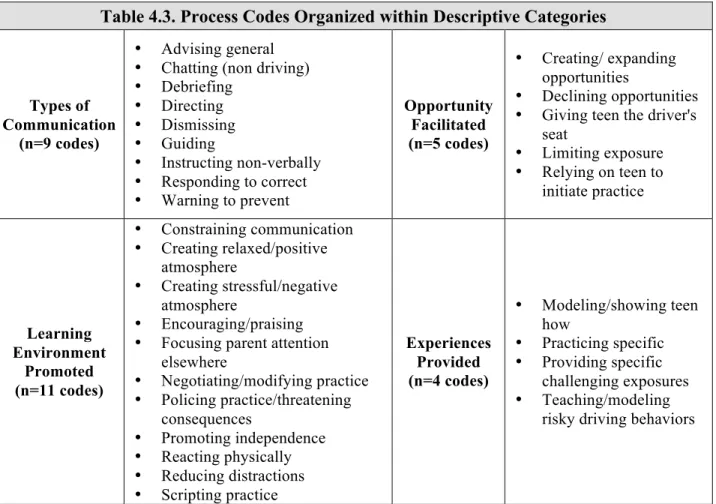
Table 4.3. Process Codes Organized within Descriptive Categories………...……56
Table 4.4. Summary of Parenting Practice Groups and Prevailing Practices…….……….90
Table 4.5. Facilitation Goals Across Parenting Practice Typology Groups………..………..96
Table 4.6. Learning Objective Goals Across Parenting Practice Typology Groups...………..100
Table 4.7. Independence-oriented Goals Across Groups...………..……….101
Table 4.8. Mean Parenting Style Scores Across Groups……….…...…………...102
Table 4.9. Average Weekly Hours of Supervised Driving Time Across the Learner Stage...……….….103
Table 4.10. Proportions of Teen Driving Behaviors Across Parenting Practice Typology...104
Table 4.11. Average Number of Seconds Teens Looked Away from the Road Across ..……….. Parenting Practice Typology Groups...………...………..105
Table 5.1. Schedule of Semi-structured Telephone Interviews with Parents……….………..132
Table 5.2. Distribution of Time-Invariant Parenting Goals...………...…….………...134
Table 5.3. Distribution of Family Characteristics ..………...……….….135
Table 5.4. Random and Fixed Effects for Models with and without Random Slopes…...…...….……141
Table 5.5. Fixed Effects for Random Intercepts Model with Parenting Goal and………. Family Characteristic Predictors…..……..……….…….…144
LIST OF FIGURES
Figure 2.1 Integrative Model of Parenting (Darling & Steinberg, 1993)………..………..28
Figure 2.2 Modified Integrative Model of Parenting (Jackson & Dickinson, 2009)………...………29
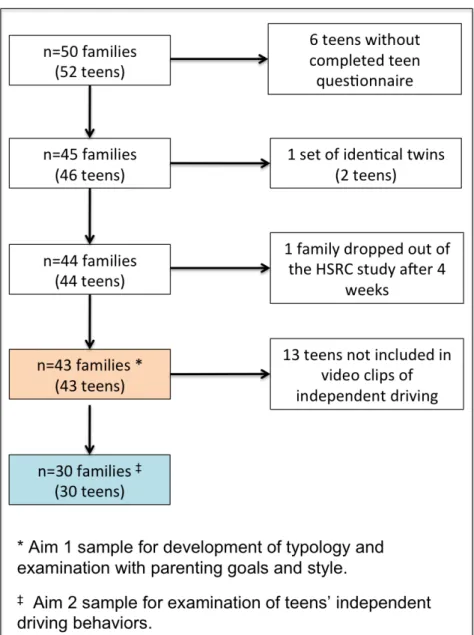
Figure 3.1 Study Sample for Aims 1 and 2……….……….36
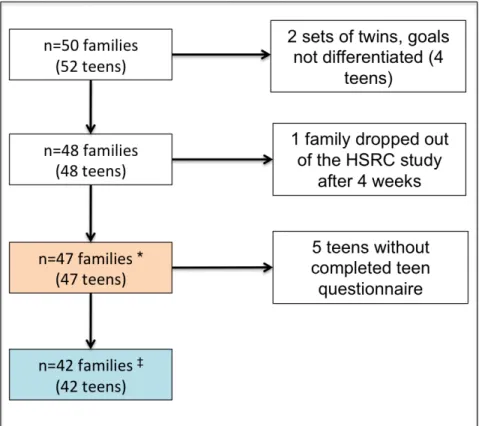
Figure 3.2 Study Sample for Aim 3………...………..37
Figure 4.1 Integrative Model of Parenting (Darling & Steinberg, 1993)………..………..42
Figure 4.2 Qualitative Analysis of Parenting Practices………...………52
Figure 4.3 Example of Relatively Stable Exposure to Challenging Driving Conditions across the Learner Stage………...73
Figure 4.4 Example of Fluctuating Exposure to Challenging Driving Conditions across the Learner Stage………..………74
Figure 4.5 Example of Build-up of Exposure to Challenging Driving Conditions across the Learner Stage…..………75
Figure 4.6 Example of Decreasing Exposure to Challenging Driving Conditions across the Learner Stage……..………76
Figure 4.7 Plots Comparing Parenting Practice Groups across Paired Concepts………92
Figure 4.8 Plots Comparing Parenting Practice Groups across Paired Concepts with Some Group Overlap………..……….93
Figure 5.1 Integrative Model of Parenting (Darling & Steinberg, 1993)………..………125
Figure 5.2 Plot of Average Hours of Supervised Driving across the Learner Stage……….………138
Figure 5.3 Plot of Individual Trajectories for Subsample of Participants……….…...….139
CHAPTER ONE: INTRODUCTION
Problem Statement
Graduated driver licensing (GDL) is a crucial strategy implemented to curb teen motor
vehicle crashes by providing a structure within which young drivers can progressively gain
experience necessary to develop safe driving habits (Foss, 2007; Waller, 2003).1 The initial of
three GDL stages, the learner stage requires that teens drive while supervised, typically by their
parents. The learner stage is followed by an intermediate stage during which teens can drive
without adult supervision but with specific restrictions. In the final stage, teens graduate to full
licensure with few if any restrictions (Foss, 2007; Foss & Goodwin, 2003; National Highway
Traffic Safety Administration, 2008; North Carolina Department of Transportation, 2014).
Parents have a critical role as driving supervisors during the learner stage of GDL because they
provide access to vehicles and opportunities for teens to gain experience (Simons-Morton &
Ouimet, 2006; Williams, 2013). Researchers have found that parents often do not take full
advantage of the time dedicated to supervising teen driving practice (Goodwin, Foss, Margolis,
and Harrell, 2014; Goodwin, Foss, Margolis, and Waller, 2010; Goodwin, Waller, Foss, &
Margolis, 2006; Tronsmoen, 2011), and teen crash rates peak during the start of the intermediate
stage as teens begin to drive independently (Lewis-Evans, 2010; Mayhew, Simpson, & Pak,
2003; Shope, 2013; Twisk & Stacey, 2007).
1
Specific Aims and Research Questions
My investigation of the learner stage focuses on the principal objective of the stage: to
prepare teens to drive safely when they begin to drive independently. By using both qualitative
and quantitative data, I aimed to gain a detailed understanding of how parents prepare teens
during the learner stage, and I applied Darling & Steinberg’s (1993) Integrative Model of
Parenting as the guiding conceptual framework. In conducting my research, I aimed to: 1)
determine whether a typology of parenting for supervised driving during the learner stage can be
defined such that groups of parents can be distinguished who share similar patterns of supervised
driving-specific parenting practices; 2) identify theory-guided relationships between these
parenting practice typology groups and parenting style and parenting goals; 3) assess whether
and how teens’ independent driving behaviors varies among the parenting practice groups; and
4) use growth curve modeling to examine the trajectory of time parents spent supervising teen
driving over the course of the learner stage. My study has three specific aims:
Specific Aim1: Develop a typology of parenting practices for supervised driving and examine it
relative to parenting style dimensions and parenting goals for supervised driving and the learner stage.
Research Questions:
1) Do patterns of parenting practices emerge that form a typology of parenting
practice groups for supervised driving during the learner stage?
2) How do parenting style dimensions and parenting goals vary across parenting
3) What factors promote and facilitate parenting practices for supervised driving
during the learner stage?
Specific Aim2: Examine relationships among parenting practice typology groups and teens’
independent driving behaviors during the start of the intermediate stage of GDL.
Research Questions:
1) How do teens’ independent driving behaviors during the start of the intermediate
stage vary across parenting practice typology groups?
2) Are teens with parents in certain typology groups better prepared than others for
independent driving during the start of the intermediate stage?
Specific Aim 3: Assess between-parent differences in the average trajectory of time spent
supervising teen driving practice across the learner stage.
Research Questions:
1) How much variability in driving practice time can be accounted for by
between-parent differences?
2) What is the shape of the average trajectory of hours per week parents spent
supervising driving practice?
3) What parenting goals are predictors of between-parent differences in the average
trajectory of the time parents spent supervising driving practice?
To achieve these aims and address these research questions, my study focused on
four months of the intermediate stage. I conducted an analysis of multiple sources of data from
the University of North Carolina Highway Safety Research Center (HSRC) driving study of 50
families in North Carolina conducted during 2007-2009 (Goodwin et al., 2010). These data
include parent and teen questionnaires, semi-structured parent interviews, and video clips of
teens driving with parents (during the learner stage) and independently (during the intermediate
stage of GDL). In addressing study aim 1, I conducted qualitative analysis of longitudinal parent
interview and video clip data to identify parenting practice patterns. I determined how parents
were distinguished into meaningful groups based on similar profiles of parenting practices and
assigned parents to the groups. I then examined relationships between parenting practice
typology groups and: a) parenting goals for the learner stage and b) parenting style dimensions.
To accomplish study aim 2, I identified a subset of driving behaviors to assess from video clip
data previously coded, and then examined proportions of teens observed to engage in those
behaviors across groups to assess potential differences. For study aim 3, I used quantitative
growth curve modeling to develop a base model examining between-individual differences in the
average trajectory of time spent supervising driving practice across the learner stage and the
patterns of supervised driving time across the learner stage. I examined parenting goals for the
learner stage to assess between-individual differences in the average trajectory of supervised
driving time.
Study Rationale
Teenage drivers are injured and killed at disproportionately greater rates when compared
to adult drivers (Ferguson, Teoh, & McCartt, 2007; Shope & Bingham 2008; Williams, 2003).
McKnight (2003) concluded that the majority resulted from failure to engage in routine safe
driving practices—much more often related to a lack of recognition of the danger in failing to
employ safe driving practices than deliberately taking risks. This helps underscore the point that
sufficiently mastering how to operate a motor vehicle safely requires substantial experience over
time (Foss, 2007; Gregersen & Bjurulf, 1996; Transportation Research Board, Board on
Children, Youth, and Families, 2007). Overall, novice drivers have limited hazard and risk
perception and judgment (Brooks-Russell, Simons-Morton, & Ehsani, 2014; Ferguson 2003;
Hedlund, 2007). This appears to be because they have not yet had sufficient exposure to a wide
range of driving scenarios to develop both an intuitive ability to recognize and respond
appropriately to potentially hazardous driving situations (Kinnear, Kelly, Stradling, & Thomson,
2013). Increasing exposure to driving practice in a variety of conditions and situations fosters the
development of these more efficient automated recognition and decision-making systems
(Gregersen, Berg, Engström, Nolén, Nyberg, & Rimmö, 2000).
Crash risk is substantially lower during the learner stage than during licensed driving
(i.e., without supervision) (Gregersen, Nyberg, & Berg, 2003), with the greatest risk to young
drivers manifesting during the immediate period after licensure to drive independently
(Lewis-Evans, 2010; Mayhew, Simpson, & Pak, 2003; Shope, 2013; Twisk & Stacey, 2007). Although
GDL has reduced young driver crashes, injuries, and deaths dramatically among high school age
drivers (Foss, Feaganes, & Rodgman, 2001; Masten, Foss, & Marshall, 2011; McCartt, Teoh,
Fields, Braitman, & Hellinga, 2010; Russell, Vandermeer, & Hartling, 2011; Shope 2007; Shope
& Molnar, 2003), the graduated approach to licensing has not delivered as expected on its
promise to create substantially better, safer young drivers (Masten & Foss, 2010; Masten,
supervisory role there is an urgent need to better understand, and improve, parents’ supervisory
behaviors during the learner stage.
Although some of the benefits of the supervised driving experience may be lost after the
learner stage concludes, some teens likely are prepared more thoroughly than others during the
learner stage. By design in modern young driver licensing systems, parents have both an
obligation and a unique opportunity to influence the driving of their teenage children. They may
have the ability to alter the course of driving in a way that is rare when compared to other
behaviors teens may engage in as they mature through adolescence into early adulthood (e.g.,
sexual behavior, substance use). Given this opportunity, there is a critical need to understand
further how parents interact with their teens during the learner stage. My study aimed to
determine whether there is merit in considering different types of parenting for the learner stage
rather than treating parents as a single, homogenous group. If the approaches parents take to
supervising their teens during the learner stage can be distinguished through a typology, such
that groups of parents who share similar approaches are identified, it will be informative to
consider whether teen driving differs across parent typology groups. If so, this would help
identify whether some parents might prepare teens more effectively during the learner stage
based on their patterns of behavior and communication.
Although a growing number of studies has examined interactions between parents and
teens during the learner stage (e.g., Goodwin, Foss, Margolis, and Harrell, 2014; Goodwin, Foss,
Margolis, and Waller, 2010; Goodwin, Waller, Foss, & Margolis, 2006; Mirman & Kay, 2012;
Tronsmoen, 2011), none has identified a typology of how parents supervise teens. Nevertheless,
these studies have been critical for gaining initial insights into the relationships between parents
distinctions between and commonalities across parents. My research also differs from these
earlier studies in applying theory to identify factors that might help explain differences between
parents and across groups of parents.
Understanding differences in how parents facilitate supervised driving exposure should
add to our understanding of how to help them take full advantage of the opportunity provided by
the mandatory learner stage in modern licensing systems. If parenting practices for the learner
stage differ in meaningful ways, this might help explain why some teens are more willing to gain
experience behind the wheel to develop their driving skills and why there are differences in
teens’ independent driving behaviors. Differences in parenting practices for the learner stage also
might support the development and implementation of interventions that can be adapted to
different types of parents and that account for differences between parents in their styles of
parenting and the goals they establish for the learner stage and supervised driving.
Organization of the Dissertation
My dissertation consists of six chapters. Following this brief overview in Chapter One,
Chapter Two synthesizes relevant literature in order to understand the context and theoretical
foundation for my research. Chapter Three describes the primary research study from which I
derived samples for addressing each of my study aims. Chapter Four reports findings from the
qualitative study, and Chapter Five reports findings from the quantitative study. Both Chapters
Four and Five are presented in manuscript format. Chapter Six provides a synthesis of findings
CHAPTER TWO: BACKGROUND AND LITERATURE REVIEW
Crash rates for young drivers are much greater than for older, more experienced drivers
(Insurance Institute for Highway Safety [IIHS], 2013a; Ferguson, Teoh, & McCartt, 2007;
Mayhew, Simpson, & Pak, 2003; Shope & Bingham 2008; Williams, 2003). Shope and Bingham
(2008) highlighted data showing that crash fatality rates per number of miles driven were
considerably and consistently higher for drivers aged 15 to 19 years than adults aged 45-54 years
between 1989 and 2004. Additional analysis of Fatal Analysis Reporting System (FARS) data
from the National Highway Traffic Safety Administration (NHTSA) identified that 16-19
year-old drivers sustained fatalities at a rate of 4.6 deaths per 100 million miles traveled in 2008
(IIHS, 2013a). This was the highest rate for any age group in 2008 other than drivers older than
79 years (IIHS, 2013a).
A 2003 review of teen driving risk (Williams, 2003) provided results from analysis of
several key national data sources (including FARS, the National Automotive Sampling
System/General Estimates System,2 National Personal Transportation Survey,3 the Federal
Highway Administration,4 and the U.S. Census). In general, Williams reported that younger
drivers aged 16-19 years in 1995 had higher crash rates than drivers in older age groups, with 16
2
The National Automotive Sampling System/General Estimates System provided a national probability sample of police-reported crashes.
3
year-old drivers having the highest rates of crashes and fatal crashes per million miles traveled
(Williams, 2003). Williams’ analysis also showed that 16 year-old drivers had the highest rates
of crashes per 1000 licensed drivers and the highest rates of fatal crashes per 100,000 licensed
drivers in 2000 (Williams, 2003). Nearly all of Williams’ analyses showed declining rates by age
group, with 19 year-olds having lower crash and fatality rates per number of licensed drivers and
million miles traveled than 16-year olds. Most of these analyses also found that 16 year-old
drivers had higher crash and fatality rates than drivers of any other age (Williams, 2003).
Subsequent analyses of data from these same sources yielded similar findings (Ferguson,
Teoh, & McCartt, 2007; Shope & Bingham 2008). Examining data for 2001 and 2002, Ferguson
et al. (2007) found that 16 year-old drivers drove the fewest average miles per year, yet they had
the highest fatal crash rates per million miles driven among teenage drivers. In addition, 16
year-old drivers had the highest rates of police-reported crashes per mile driven between 2001 and
2002, with an estimated 26 police-reported crashes per million miles driven compared to
approximately 14 crashes per million miles driven for 18-19 year-old drivers (Ferguson et al.,
2007).
Factors Affecting Novice Driver Motor Vehicle Crashes
Driving is a cognitively demanding activity (Foss, 2000) that comprises a complex set of
tasks, requiring coordination between psychomotor functioning, perceptual capacity, and the
ability to make and act on quick judgments about a wide variety of ever-changing driving
environments (Williams & Ferguson, 2002; Foss, 2007; Shope & Bingham, 2008). Sufficiently
mastering how to operate a motor vehicle safely requires substantial experience over time
Youth, and Families, 2007). Lack of experience is a major contributor to crashes of newly
licensed drivers, with crash rates declining after more miles driven (Groeger, 2000; McCartt,
Shabanova, & Leaf, 2003).
Due to their lack of sufficient exposure to highly varied, challenging conditions, novice
drivers have limited hazard recognition and risk perception abilities (Brooks-Russell,
Simons-Morton, & Ehsani, 2014; Ferguson 2003; Hedlund, 2007). Novice drivers are less equipped than
experienced drivers to assess road hazards and respond appropriately (Ferguson, 2003), and their
driving errors tend to involve poor judgment and decision-making, lack of hazard recognition,
judgment errors in assessing driving risks, poor decision-making under stress, and delayed
reactions following indecision (Hedlund, 2007). In contrast to more experienced drivers, novices
have not had sufficient exposure to a wide range of driving scenarios to develop both their
conscious ability to appraise varied scenarios and their automated or intuitive ability to recognize
potentially hazardous driving situations (Kinnear, Kelly, Stradling, & Thomson, 2013).
In addition to lack of experience as drivers, teens still are maturing neurobiologically and
have not fully developed their capacity for impulse control and self-regulation (Steinberg, 2004;
Dahl, 2008). Biological changes during adolescence precipitate an imbalance between teens’
heightened need for stimulation to achieve adequate subjective feelings of pleasure and their still
maturing self-regulatory capabilities (Steinberg, 2004). This imbalance can influence
adolescents’ abilities to attend to driving tasks and apply good judgment while driving
(Steinberg, 2004; Transportation Research Board, Board on Children, Youth, and Families,
2007; Dahl, 2008; Keating & Halpern-Felsher, 2008).
Coupled with (and perhaps because of) their limited experience and continued
speeding, tailgating, unsafe passing, failure to yield) (Jonah & Dawson, 1987; Ferguson, 2003;
Shope & Bingham, 2008). In part, young drivers’ perceptions of their skills are not aligned with
their limited driving abilities (Ferguson, 2003; Keating & Halpern-Felsher, 2008). However,
even with an appreciation of driving dangers and consequences, teens tend to be willing to accept
greater risk while behind the wheel (Lee, 2007). In comparison to drivers aged 26-49 years, teen
drivers in fatal crashes seem more likely to make driver errors, speed, or carry passengers
(Ferguson, 2007). A study of more than 20,000 novice drivers in Australia found that
self-reported risky driving behaviors (e.g., driving faster than the speed limit; texting while driving)
were associated with increased crash risk (Ivers, Senserrick, Boufous, Chen, Woodward, &
Norton, 2009).
Untangling the specific contributions to crashes resulting from inexperience and
developmental factors is a formidable challenge; however the intersection between these factors
highlights the need for interventions to promote safe driving for all young drivers (Williams,
2006). Of the many interventions developed to reduce teen crashes, graduated driver licensing
(GDL) has produced the largest effect.
Graduated Driver Licensing
GDL first was enacted in New Zealand in 1987 (Waller, 2003). GDL was implemented in
the U.S. initially in Florida in 1996 (Shope & Molnar, 2003), roughly 25 years after studies
conducted in North Carolina highlighted a need to develop a system for introducing young
novice drivers into the driving population (Waller, 2003). At its core, GDL is a method of
limiting young drivers’ exposure to risky driving situations, by instituting a phasing in of driving
controlled conditions (Waller, 2003; Foss 2007). The model typically provides three stages (IIHS
2013b; Williams & Shults, 2010; Hartos, Simons-Morton, Beck, & Leaf, 2005; Foss, 2000):
1) Learner Stage: Initially, beginning teens are allowed to drive while supervised (typically by a parent);
2) Intermediate (or Provisional) Stage: Teens are allowed to drive unaccompanied but with specific restrictions (primarily limits on passengers and nighttime driving hours); and
3) Unrestricted (full licensure) Stage: A largely unrestricted driver’s license allowing them to drive any time, under any conditions.
GDL provisions have evolved since initial adoption and vary by state (Foss, 2007; Foss,
2000; IIHS 2013b). Prior to GDL some states did not require a learner’s permit at all, and it was
not uncommon to have a learner’s permit for a very short duration (e.g., two weeks) (Goodwin,
Waller, Foss, & Margolis, 2006). As of February 2015 nearly all states and the District of
Columbia had a three-stage GDL system and required a learner’s permit, with most requiring a
minimum of six months for this initial driving stage (IIHS, 2015). However, there is at least
some evidence that six months may not be sufficient for supervised driving, with potential
benefits to starting drivers off with a 12-month learner’s stage with supervised driving (Foss,
2007). In addition, as of February 2015 all but four states required a minimum number of
supervised driving hours, with most states also requiring that a small proportion of supervised
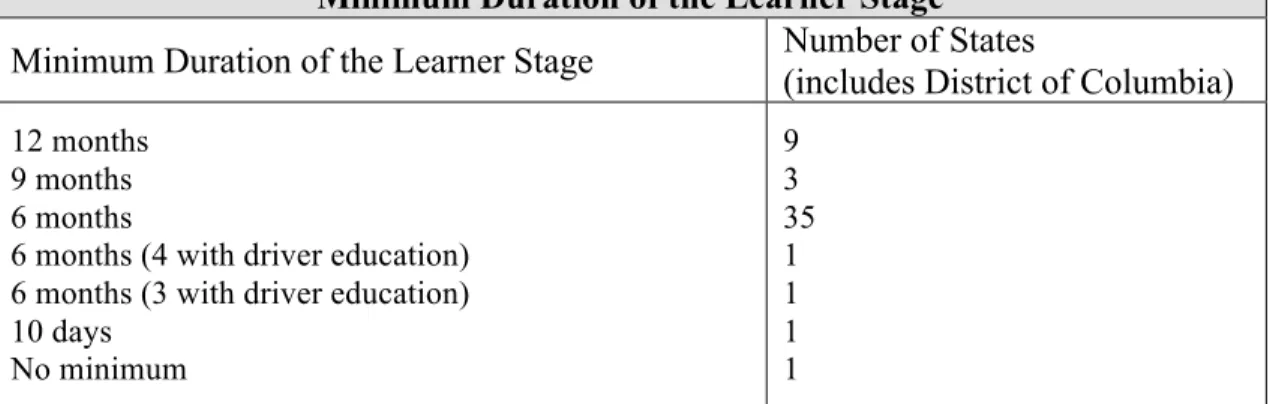
driving occur at night (IIHS, 2015). Tables 2.1 and 2.2 highlight the distribution of state
requirements for the minimum numbers of months for the learner stage and hours of supervised
Table 2.1. Distribution of State Requirements for the Minimum Duration of the Learner Stage
Minimum Duration of the Learner Stage Number of States (includes District of Columbia)
12 months 9 months 6 months
6 months (4 with driver education) 6 months (3 with driver education) 10 days No minimum 9 3 35 1 1 1 1
Source: (IIHS, 2015)
Table 2.2: Distribution of State Requirements for the Minimum Hours of Supervised Driving
Minimum Hours of Supervised driving Number of States (includes District of Columbia)
> 60 hours 60 hours 50 hours 45 hours 40 hours 30 hours 20-25 hours No minimum 2 3 24 1 11 4 2 4
Source: (IIHS, 2015)
GDL was enacted in North Carolina in 1997 (HSRC, 2001; Shope & Molnar, 2003).
Teens in North Carolina can obtain a learners permit at 15 years of age, they can obtain an
intermediate stage license to begin driving unsupervised (with restrictions) after 12 months of the
learner’s stage and upon reaching 16 years of age, and they can obtain a full, unrestricted drivers
license after six months of driving with an intermediate license (North Carolina Department of
Transportation, 2014). North Carolina currently requires 60 hours of supervised driving during
the learner stage, with at least 10 of those hours having to occur during nighttime hours.5 Only
5
one passenger younger than 21 years of age is allowed to ride with a driver during the
intermediate stage. Family members younger than 21 years of age are allowed to ride with the
intermediate stage driver, and a non-family passenger is not permitted if a family member
younger than 21 years already is a passenger. In addition, North Carolina restricts night driving
at 9:00 pm during the intermediate stage (North Carolina Department of Transportation, 2014).
GDL Effectiveness
The primary, if not sole, purpose of GDL is to provide a means for progressively building
driving experience for young drivers in gradually less supervised and restricted environments
(Waller, 2003; Foss, 2007). Although accounting for some specific risks to safe driving, GDL is
not intended to mitigate risk-taking behavior (Waller, 2003). Appreciating GDL’s effectiveness
necessitates the understanding that GDL is based on the principle of human learning that it takes
a considerable amount of practice to learn a complex and demanding skill (Foss, 2007). GDL
accounts for the notion that it takes multiple years of experience to develop reasonable
coordination of the psychomotor, perceptual, and decision-making functions that are necessary to
safely handle a vehicle in a wide variety of ever-changing driving environments (Foss, 2007).
Overall, GDL has reduced young driver fatal and nonfatal crashes (Shope 2007; Russell,
Vandermeer, & Hartling, 2011; Masten, Foss, & Marshall, 2011; McCartt, Teoh, Fields,
Braitman, & Hellinga, 2010; Shope & Molnar, 2003; Foss, Feaganes, & Rodgman, 2001).
However, crash risk is substantially lower during the learner stage than during licensed driving
(i.e., without supervision) (Gregersen, Nyberg, & Berg, 2003), with the greatest risk to young
drivers manifesting during the immediate period after licensure to drive independently
Providing teens with substantial varied experience over a sufficient period of supervised
driving is important given that young drivers will need to learn additional lessons that cannot be
grasped until they begin driving without supervision (e.g., self-regulation when solely
responsible for operating the vehicle) (Masten, Foss, & Marshall, 2011). Although more
supervised driving hours (e.g., more than 100 hours) may be more protective than fewer (Twisk
& Stacey, 2007; Gregersen, Berg, Engström, Nolén, Nyberg, & Rimmö, 2000), it is unclear what
minimum number of supervised driving hours is needed to produce a beneficial effect (O’Brien,
Foss, Goodwin, & Masten, 2013). Some findings suggest that a mandatory minimum number of
supervised driving hours has no effect on crash rates (Masten, Foss, & Marshall, 2011; O’Brien
et al, 2013; Simons-Morton, 2007). This may be because many parents are unaware of minimum
supervised driving requirements (O’Brien et al, 2013).
Although GDL has reduced crashes and injuries, additional gains should be possible
(Foss 2007; Foss & Goodwin, 2003), Table 2.3 highlights five domains where GDL could be
improved to yield greater benefits (Foss and Goodwin (2003).
Table 2.3. Domains where GDL could be Improved to Yield Greater Benefits 1) Structuring the system to provide maximum protection
2) Structuring the system to encourage compliance with provisions
3) Ensuring that the pertinent elements of the system are readily enforceable and enforced 4) Structuring the system to ensure that the most useful practical driving experience is obtained 5) Ensuring that parents play the most effective possible role
Source: (Foss & Goodwin, 2003)
The current research focuses predominantly on a combination of the fourth and fifth
domains by investigating the role parents play in helping to promote the most useful practical
Parental Influence on Teen Driving
Given their roles in teens’ lives, parents are positioned to be the most critical driving
mentors and gatekeepers of driving privileges for their teenage children (Preusser, Williams, &
Lund, 1985; Beck, Hartos, & Simons-Morton, 2002). Parents have an opportunity to increase
safe driving in their teens because they typically are involved in their teens’ driving experiences
from the beginning (Hartos, Shattuck, Simons-Morton, & Beck, 2004; Simons-Morton, Hartos,
& Leaf, 2002), and GDL offers parents leverage to influence their teens’ driving (Hartos et al.,
2005; Foss & Goodwin, 2003). Findings indicate that parents generally approve of existing teen
driver licensing requirements—including those that require more parent involvement (Williams,
Braitman, & McCartt, 2011; Brookland & Begg, 2011; Chaudhary, Williams, & Casanova, 2010;
McKay, Coben, Larkin, & Shaffer, 2008; Waller, Olk, & Shope, 2000). As one example, a study
found that parents approved of being required to participate in teen driver education courses
(Hartos & Huff, 2008). A national survey found that parents were in favor of a learner period
with at least 100 required hours of supervised driving (Williams, Braitman, & McCartt, 2011).
Although parents appear to support the idea of providing teens with substantial practice,
findings indicate that parents actually provide relatively little supervised driving (Goodwin, Foss,
Margolis, & Waller, 2010; McKay et al., 2008). It may be challenging for parents to find the
time to supervise their teens’ driving, with some parents seeing driving practice as a major time
commitment (Jacobsohn, García-España, Durbin, Erkoboni, & Winston, 2012). Some parents
don’t enter the learner stage with a specific plan for instructing teen drivers (Goodwin et al.,
2010), and they may not know what to teach to their children or what driving experiences they
should provide (Mirman & Kay, 2012). As a result, parents might not provide teens with an
exposure to more challenging driving situations and many seem to focus on vehicle handling
rather than the higher-order driving skills (e.g., scanning and hazard detection) that help teens
anticipate and avoid potentially dangerous situations (Mirman & Kay, 2012; Jacobsohn et al.,
2012, Goodwin et al., 2010; Simons-Morton & Ouimet, 2006).
Limited Information about Learner Stage Experiences
There is limited knowledge about what parents are doing during the learner stage
(Williams & Shults, 2010; Foss, 2007). Obtaining a better understanding of how parents
influence teenage driving was among five critical research areas identified during a 2008
meeting of the Transportation Research Board’s Subcommittee on Young Drivers (Williams,
2013). Among a set of five research questions described, two relate specifically to my
dissertation research (Williams, 2013):
• “What is the progression and variability of parent involvement in (a) teaching and
supervision of practice driving; (b) determining readiness for licensure; and (c) and
managing the early driving experience (including vehicle access, adherence to GDL
provisions, and driving privileges)?”
• “How does the variability in parental involvement in supervised practice driving, driver
education, and provisional licensure relate to teenage driving behavior and
performance?”
These research questions underscore the need to obtain a clearer understanding of what parents
are doing during the learner period and how, in turn, parent involvement affects teen driving.
Investigating this phenomenon will help elucidate whether certain experiences provided during
Since GDL and other teen driving provisions largely are self-enforcing (Foss &
Goodwin, 2003), there may be considerable variability between parents and the specific learner
stage experience provided to teens in different families. Therefore, one key question is whether a
learner stage experience that includes a lot of supervised driving overall with many hours spent
driving in diverse and challenging driving scenarios provides for a more prepared, perhaps safer
novice driver at the start of the intermediate stage of GDL. To address this question, research
studies should account for whether the quality and quantity of supervised driving during the
learner stage vary between parents in meaningful ways. In turn, it would be important to
determine whether any such meaningful differences have an impact on teen driving upon receipt
of their second stage licenses when teens can drive without a supervising adult.
Parent-Teens Relationships and Key Constructs
The parent-child relationship shares similarities of other close relationships, but it differs
in several important ways: 1) there is a heightened obligation of parent to child; 2) the
connection between parents and children is enduring with children not free to leave the
relationship during their childhood; and 3) there are ways in which parent-child relationships
evolve and adapt that are unlike other types of adult relationships (Maccoby & Martin, 1983).
Parents specifically have certain required duties that include providing for children’s basic needs,
deciding how and where children will spend their time, and acting on behalf of their children in
many types of circumstances (Maccoby & Martin, 1983). Of additional critical importance is the
role parents have in educating and socializing their children to help them learn to adopt
socially-acceptable behaviors and develop a sense of responsibility for their actions, thoughtfulness
(Maccoby & Martin, 1983). Parents and children exist within the family structure which, in turn,
functions within broader societal and cultural spheres (Maccoby & Martin, 1983). Parenting
evolves across the lifespan as children age and mature and reach different milestones and require
different types of parental support (Maccoby & Martin, 1983).
Although adolescence is a development period frequently thought of more for the
psychological and emotional distance between teens and their parents, teens benefit from a
balance between having structure and connectedness within the family and freedom to explore
and develop a sense of individuality (Baumrind, 1991). Developing one’s sense of individuality
during adolescence should not require teens to break from adherence to parental values or to seek
emotional distance from parents overall (Baumrind, 1991).
Parents play a key role in helping to guide the ongoing development of their children—to
socialize them through the delivery of specific experiences and parenting approaches that, at
least in part, are guided by a desire to have children internalize parenting goals and values and
exhibit desired behaviors (Spera, 2006; Grusec & Goodnow, 1994; Simons-Morton & Hartos,
2002). Different approaches to parenting can yield different effects with respect to children’s
emotional security, self-control, sense of independence, and internalized standards for their own
behavior (Spera, 2006; Grusec & Goodnow, 1994; Baumrind, 1991).
A growing body of literature continues to support the importance influence that parents
have teenage behaviors. This influence depends on what parents do and how they take action
(Burrus, Leeks, Sipe, Dolina, Soler, et al., 2012). Parents appear to have an important influence
on teenage behaviors during the adolescent stage of development when it is might be expected
that teens will be more likely to take risks (Steinberg, 2004; 2007). Therefore, healthy navigation
their development, provide adequate supervision and communication, help teens negotiate risks
and risky behavior, and continue to monitor and guide their teens (Burrus, et al., 2012; DeVore
& Ginsburg, 2005).
To understand the protective effects of parenting requires considering fundamental ways
in which parents influence their children. Children’s receptivity to their parents’ actions and
children’s achievement of goals are influenced by the goals parents set for their children's
achievements, how and what parents do to help their children reach those goals, and the
underlying emotional climate established for parent-child interactions (Darling & Steinberg,
1993; Hartos & Simons-Morton, 2006; Jackson & Dickinson, 2009; Simons-Morton & Hartos,
2002). Independently these factors are important, and they interact in various hypothesized ways
to yield specific outcomes. I first will review each of these factors independently, referencing
research that has explored and seen effects for each, and then I will present a model that ties
these factors together into a comprehensive approach.
Parenting Style
Maccoby & Martin (1983) and Baumrind (1991) were some of the initial researchers to
describe key facets of parenting posited to play important roles in how parents interact with their
children and how different approaches to parenting may result in different child outcomes.
Building on prior work, Maccoby & Martin (1983) and Baumrind (1991) provided a foundation
for distinguishing between types of parents, vis-à-vis the styles of parenting they used in
interacting with their children.
Parenting style is considered a broad global attribute that describes the overall emotional
climate and the tone parents set for how they interact with their children (Darling & Steinberg,
Parenting styles fundamentally are distinguished by relative differences across two primary
dimensions: parental responsiveness to and demandingness of children (Jackson & Dickinson,
2009; Jackson, Henriksen, & Foshee, 1998; Steinberg, Lamborn, Darling, Mounts, & Dornbush,
1994; Darling & Steinberg, 1993; Baumrind, 1991; Maccoby & Martin, 1983). As described by
Baumrind (1991), Maccoby & Martin (1983), and others researchers, responsiveness refers to
parents being affectionate and accepting toward their children in concert with parental attention
to children’s needs, academic and social development, individuality, regulation, and
self-assertion (Hartos, Eitel, Haynie, & Simons-Morton, 2000; Jackson, Henriksen, & Foshee, 1998;
Patrick, Hennessy, McSpadden, Oh, 2013; Simons-Morton & Hartos, 2002). In contrast,
demandingness refers to parental efforts to set and enforce specific standards of behavior,
maintain structure in the child’s daily life, monitor childrens’ activities, provide supervision and
discipline, and confront disobedience in an effort to compel children to integrate into the family
and behave in specific, preferable ways (Baumrind, 1991; Hartos, Eitel, Haynie, &
Simons-Morton, 2000; Jackson, Henriksen, & Foshee, 1998; Maccoby & Martin, 1983; Patrick,
Hennessy, McSpadden, Oh, 2013; Simons-Morton & Hartos, 2002). Baumrind proposed that
teens are likely to achieve a preferred balance between individuality and connectedness when
parents are both highly responsive and highly demanding, with an evolving balance between
freedom and control that is suited to the teen’s level of development (Baumrind, 1991).
Studies have found fairly consistent support for the combination of high demandingness
and high responsiveness being associated with improved child outcomes (e.g., emotional
stability; adaptive patterns of coping) (Power, Sleddens, Berge, Connell, Govig, et al., 2013;
Simons-Morton & Hartos, 2002; Jackson, Henriksen, & Foshee, 1998; Darling & Steinberg,
authoritative parenting style) has been associated with favorable child outcomes across a wide
range of developmental issues, such as adolescent school performance (Spera, 2006; Dornbusch,
Ritter, Leiderman, Roberts, & Fraleigh, 1987), substance use (Adalbjarnardottir & Hafsteinsson,
2001; Baumrind, 1991), sexual risk-taking behaviors (Huebner & Howell, 2003), and teen
driving (Simons-Morton & Hartos, 2002).
Specific to teen driving, Ginsburg, Durbin, García-España, Kalicka, & Winston (2009)
examined associations between parenting style and teen driving behavior. The investigators
identified that teens with highly responsive and demanding parents had a lower crash risk, were
less likely to drive after drinking, and were less apt to drive while using a cell phone than teens
whose parents were neither responsive nor demanding (Ginsburg et al., 2009). In comparison to
these teens, teens whose parents were highly demanding and highly responsive were more likely
to report using seatbelts and less likely to report speeding (Ginsburg et al., 2009).
An important question is whether demandingness and responsiveness should be studied
as distinct variables. As an example, a study of teen substance abuse behavior used the
Authoritative Parenting Index (Jackson, Henriksen, & Foshee, 1998) to measure the potential
protective effects of parent demandingness distinct from parent responsiveness (Piko & Balázs,
2012). The investigators found protective effects for responsiveness, although parents’
demandingness predominantly was not protective against teen substance use (Piko & Balázs,
2012). Given the potential for distinct effects of these two dimensions of parenting style, I
included demandingness and responsiveness as distinct variables in my analyses.
Parenting Goals
In addition to parenting style dimensions, investigators have focused on examining
states are broadly construed as outcomes, events, or processes” (Austin & Vancouver, 1996).
Parenting goals specifically are focused on skills, qualities, or attributes that parents would like
their children to obtain or adopt (Jackson & Dickinson, 2009; Simons-Morton & Hartos, 2002).
In contrast to parenting style, parenting goals may be specific to certain behaviors (e.g., to
develop safe driving habits) or focused more globally (e.g., to become a critical thinker; to
develop a healthy sense of independence) (Jackson & Dickinson, 2009; Darling & Steinberg,
1993; Simons-Morton & Hartos, 2002).
Parenting goals typically are at the foundation of interventions aimed at targeting
parenting style and parenting practices (Simons-Morton & Hartos, 2002). Parenting goals have
been associated with child outcomes across a range of developmental issues, such as adolescent
school performance (Spera, 2006), student motivation (Vedder-Weiss & Fortus, 2013), teen
employment (Runyan, Vladutiu, Schulman, Rauscher, 2011; Runyan, Schulman, Dal Santo,
Bowling, & Agans, 2009) and teen driving (Hartos & Simons-Morton, 2006). Specific to the
prevention of risky teen driving, parenting goals might be grounded in the expectation that teens
will be safe drivers, with goals related to increased teen driver safety and effective parental
management of teen driving (Hartos & Simons-Morton, 2006).
Parents might have goals for teens to obtain their driver’s licenses and begin driving
without having equivalent goals for training teens in a manner that provides them with sufficient
experience to be safer on the road while driving independently. Parents appear to vary with
respect to how they plan to approach the learner stage, what they want their teens to master
during supervised driving, what supervised driving experiences they should provide, and how
they should be involved in preparing young drivers (Goodwin et al., 2010; Guttman, 2012;
Some parenting goals for the learner stage might be focused on mastery of safe driving
behaviors—mastery goals being those developed for the purpose of gaining an in-depth
understanding of a subject or skill while developing and improving one’s level of competence of
the given subject or skill (Ames, 1992; Vedder-Weiss & Fortus, 2013). For these parents, they
might understand that it will take considerable time to develop competence as a safe driver with
considerable attention given to the quality of the learning experience for teens to gain some
degree of expertise (Ames, 1992). Other parents may not set such goals for their teens to gain
mastery as a safe driver; it may be that these parents are not aware of the time and experience
required for their teens to develop competence as safe drivers. Some parents might be more
focused on the potential benefits of teen licensure, hoping to gain some degree of freedom from
serving as a chauffeur to teens and even younger siblings (Goodwin et al., 2010; Hartos &
Simons-Morton, 2006). Therefore, I examined parenting goals that were specific to gaining basic
vehicle handling skills as well as goals focused on developing driving mastery. I assessed how
parenting goals differed with respect to those that were focused on skill development as well as
those focused on teen milestone achievement and parent independence.
Parenting Practices
In contrast to parenting style and parenting goals, parenting practices are the specific
actions parents take to help their children achieve the goals established (Jackson & Dickinson,
2009; Simons-Morton & Hartos, 2002; Steinberg & Silk, 2002). Parenting practices account for
what parents actually do, and parenting styles account for how parents take action (Patrick, Hennessy, McSpadden, Oh, 2013). Distinct from parenting styles, parenting practices are directly
observable and relate to parent behavior in specific contexts (e.g., supervised driving) (Power,
combination of motivating, monitoring, and managing behavior (Borawski, Ievers-Landis,
Lovegreen, & Trapl, 2003; Dishion & McMahon, 1998). Parental monitoring itself encompasses
supervision and communication between parents and children (DeVore & Ginsburg, 2005).
Parenting practices are associated with improved child outcomes, and studies have
identified relationships between parent involvement and desired changes in specific teen
outcomes, such as: academic performance (Spera, 2006; Stanton, Cole, Galbraith, Li, Pendleton,
et al., 2004); teen dating violence (Foshee, Reyes, Ennett, Cance, Bauman, & Bowling, 2012);
substance use (Bauman, Ennett, Foshee, Pemberton, King, & Koch, 2002; Borawski,
Ievers-Landis, Lovegreen, & Trapl, 2003; Griffin, Botvin, Scheier, Diaz, & Miller, 2000; Li, Stanton, &
Feigelman, 2000; Ryan, Jorm, & Lubman, 2010; Stanton, Cole, Galbraith, Li, Pendleton, et al.,
2004), risky sexual behavior (Borawski, Ievers-Landis, Lovegreen, & Trapl, 2003; Li, Stanton,
& Feigelman, 2000; Stanton, Cole, Galbraith, Li, Pendleton, et al., 2004), and risky driving
behaviors (Morton & Hartos, 2002; Morton, Hartos, & Beck, 2004;
Simons-Morton, Hartos, Leaf, & Preusser, 2006; Simons-Morton & Ouimet, 2006).
Specific to parenting practices during the learner stage, in general, more supervised
driving appears beneficial in contrast to less time behind the wheel (Gregersen, Berg, Engström,
Nolén, Nyberg, & Rimmö, 2000); however more driving time might be beneficial to an even
greater extent if teens receive more exposure to varied driving conditions (Twisk & Stacey,
2007). Driving is a task that occurs in complex, ever-changing environments (Foss, 2007);
therefore the conditions and situations to which teens are exposed during the learner stage are of
key importance. However, parents tend to facilitate driving practice in relatively safe conditions
to focus primarily on basic vehicle operation and on maneuvering skills and less on helping teens
independently (Goodwin et al., 2010; Simons-Morton & Ouimet, 2006). Parents who provide
teens with repeated exposure to varied and challenging driving conditions over time might do a
better job to prepare teens and reduce crash risk (Twisk & Stacey, 2007). How parents
communicate with their teens also is relevant to their preparation. Teens with parents who
co-drive might rely on feedback provided by their parents during supervised driving which in turn
might limit their development of scanning and other important safe driving habits during the
learner stage (Groeger, 2000; Simons-Morton & Ouimet, 2006). Parents might prepare teens
better for independent driving and decision making if they promote teen independent driving,
letting teens figure some things out for themselves during driving practice, rather than providing
ongoing instruction and co-driving (Simons-Morton & Ouimet, 2006). When parents do
communicate with their teens during driving practice, it might help teens to receive guidance
about higher-level concepts (e.g., hazard detection); however findings from several studies
revealed that parents do not typically discuss these topics with teens during supervised driving
practice (Goodwin et al., 2010; 2014; Mirman & Kay, 2012; Tronsmoen, 2011). Therefore,
parenting practices relevant to the learner stage might include a combination of the number of
supervised driving hours and how they are spent.
Teen Socialization
Although parents might develop a foundation for what they offer their children via
parenting style, goals, and practices, ultimately the objective is for children to be socialized to
internalize their parents’ goals and aspirations for behaving in specific ways (Darling &
Steinberg, 1993; Jackson & Dickinson, 2009). Therefore, teens are not passive actors, and
whether they behave according to parental desires depends greatly on whether they are willing to
Goodnow, 1994). Teen willingness to be socialized—to accept and internalize parenting goals
and adopt specific behaviors associated with desired outcomes—is influenced by parenting style,
goals, and practices and is associated with teen behavior (Jackson & Dickinson, 2009; Darling &
Steinberg, 1993). For example, teens whose parents exhibit high responsiveness and high
demandingness might be receptive to accept their attempts to socialize them to behave in a
specific fashion and, in turn, the teens may adopt desired behaviors (Darling & Steinberg, 1993).
Conversely, teens whose parents exhibit high demandingness in the absence of high
responsiveness might resist parents’ attempts to socialize them and, in turn, fail to adopt desired
behaviors (Darling & Steinberg, 1993).
Integrative Model of Parenting
Accounting for the interactions between key parent and teen variables, Darling and
Steinberg (1993) introduced an integrative model of parenting with specific hypothesized
relationships between the key constructs. Figure 2.1 provides the model introduced by Darling
and Steinberg in 1993.
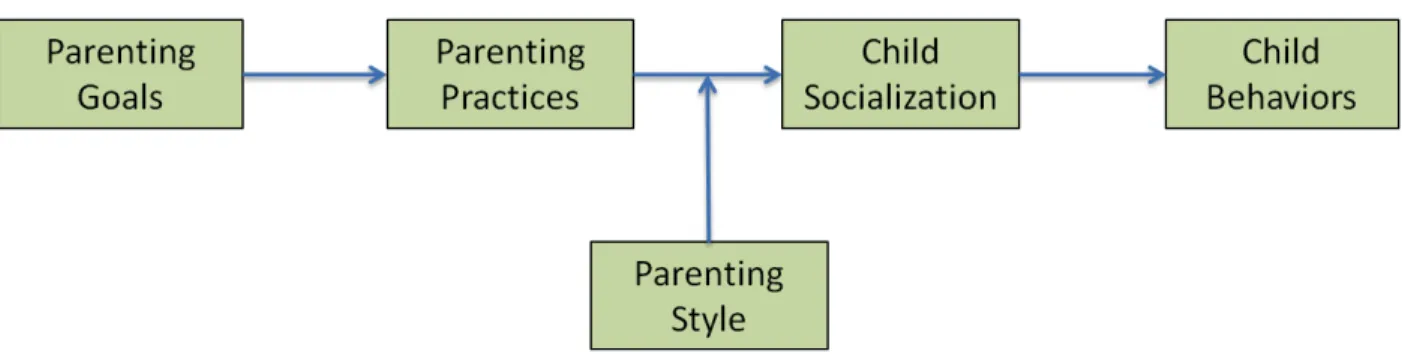
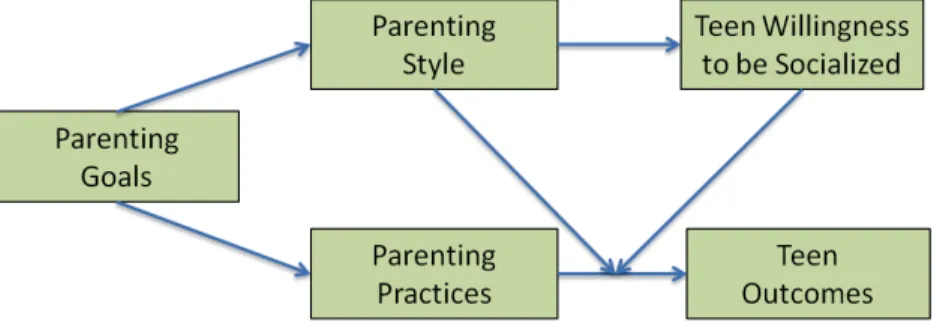
Figure 2.1 Integrative Model of Parenting (Darling & Steinberg, 1993)
As seen in Figure 2.1, Darling and Steinberg (1993) proposed a series of mediating and
• A relationship between parenting goals and adolescent outcomes that is mediated by
parenting practices.
• A relationship between parenting goals and adolescent willingness to be socialized that is
mediated by parenting style.
• Moderation of the relationship between parenting practices and adolescent outcomes by
parenting style and by adolescent willingness to be socialized.
As a modification to Darling’s & Steinberg’s (1993) model, Jackson & Dickinson (2009)
replaced the construct of teen willingness to be socialized for a broader construct of child
socialization. Child socialization is intended to capture children’s own beliefs, values, and
intentions as well as their access and exposure to various external socialization influences
(Jackson & Dickinson, 2009). Figure 2.2 provides the modified model developed by Jackson and
Dickinson (2009).
Figure 2.2 Modified Integrative Model of Parenting (Jackson & Dickinson, 2009)
As seen in Figure 2.2, Jackson and Dickinson (2009) proposed somewhat different relationships
between the constructs:
• A relationship between parenting goals and child socialization that is mediated by
parenting practices.
• Moderation of the relationship between parenting practices and child socialization by
parenting style.
The Integrative Model of Parenting provides a useful lens through which to examine
relationships between important aspects of parenting and teen outcomes, and the model provided
a salient conceptual framework for my study of parenting during the learner stage. Although the
specific mediated and moderated relationships differ between the original model presented by
Darling & Steinberg (1993) and the modification presented by Jackson and Dickinson (2009),
both illustrate particular influences of parenting on teen outcomes. In my research it was
important to consider the relationships between these variables, and my study is the first to use
the Integrative Model of Parenting to develop and examine a typology of parenting practices for
the learner stage. Findings from my analysis of parenting practice groups, additional parenting
factors, and the potential impact of parenting on teen driving behavior should lead to additional
CHAPTER THREE: METHODS AND SELECTED FINDINGS FROM HSRC’S STUDY OF PARENTS AND TEENS
This chapter provides a brief description of key methods employed during the University
of North Carolina at Chapel Hill’s Highway Safety Research Center (HSRC) driving study
(Goodwin et al., 2010), which is the source of the data for my research. Key findings from
HSRC’s study are presented. In addition, descriptions of my samples are presented for each aim
followed by a brief overview of my methods and data sources. Detailed methods for my
dissertation analyses are presented Chapters 4 and 5.
Learner Stage Data Collection
Between January 2007 and June 2008, HSRC staff collected data from 50 families for the
study of parents and teens during the learner stage of GDL (Goodwin et al., 2010). HSRC staff
recruited families from two North Carolina Division of Motor Vehicles offices (Goodwin et al.,
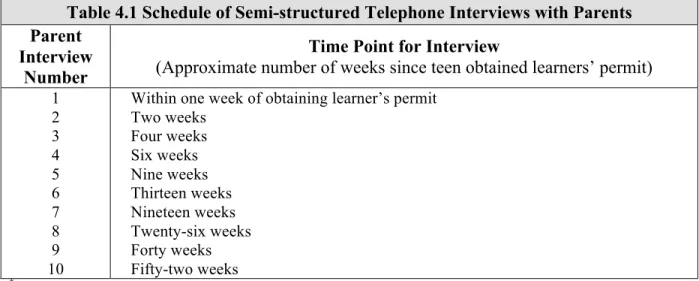
2010). HSRC staff conducted semi-structured telephone interviews with parents of all teens at
ten distinct time periods across the learner stage, and transcribed the recorded responses to the
interview questions (see Table 3.1 for a timeline of these interviews) (Goodwin et al., 2010).
These interview data provided the foundation for analyzing parenting practices reported across
the learner stage, and data from the first interview were analyzed to identify parenting goals.
HSRC also captured g-force event-triggered video clips of teens driving while supervised during
the 50 families and a range of 2 to 160 clips recorded per family (an average of 41.4 supervised
driving clips per family) (Goodwin et al., 2010). These data provided direct observation of
supervised driving that complemented the data analyzed from parent interviews.
Table 3.1. Schedule of Semi-structured Telephone Interviews with Parents
Parent Interview
Number
Time Point for Interview
(Approximate number of weeks since teen obtained learners’ permit) 1 2 3 4 5 6 7 8 9 10
Within one week of obtaining learner’s permit Two weeks Four weeks Six weeks Nine weeks Thirteen weeks Nineteen weeks Twenty-six weeks Forty weeks Fifty-two weeks
* Table based on from Goodwin et al., 2010 (with months converted to weeks for some data collection time points.)
HSRC staff also administered paper-pencil questionnaires to parents and teens at
baseline. Data were collected from parents about their driving behavior and family
characteristics. Questionnaires were administered to teens to assess parenting style using the
Authoritative Parenting Index (Jackson, Henriksen, & Foshee, 1998). Questionnaires were
completed by 46 teens from 45 families—including both siblings from a set of identical twins
(A. Goodwin, personal communication, December 6, 2013).
Intermediate Stage Data Collection
HSRC staff recorded g-force event-triggered video clips for a subset of 38 teens from the
learner stage study (Goodwin, Foss & O’Brien, 2011). These video clips captured teens driving
licenses. HSRC sampled and coded 5,845 video clips of these teens driving during the
intermediate stage (A. Goodwin, personal communication, December 6, 2013).
Selected Findings from the HSRC Study of the Learner Stage
Among several key findings from the HSRC study, the investigators reported that
(Goodwin et al., 2010):
• The majority of parents reported having some goals for supervised driving, with roughly
half of parents reporting they wanted their teens to have a lot of practice driving in
controlled conditions. Less than one-quarter of parents reported having plans to facilitate
supervised driving for their teens in a wide variety of conditions.
• Although parents seemed comfortable introducing teens to less challenging driving
conditions (e.g., residential neighborhoods) early on during the learner stage, parents
seemed to facilitate practice driving in more challenging conditions much more
gradually. Even when more challenging driving conditions were introduced, the video
data suggest that these conditions reflected a small proportion of practice driving.
• The majority of practice driving conditions observed from the video data showed that
parents were focused on the roadway and not distracted during practice driving.
Potentially serious driving events captured by the video recorder were rare. In very few
video clips, it appeared that a parent acted to help the teen prevent a crash.
• As the learner stage elapsed, parents reported giving teens less feedback and instruction,
with some parents reporting that they did not want to distract their teens or have feedback