ASSESSING FACTORS AFFECTING PARTICIPATION IN HIV CURE-RELATED RESEARCH: IMPLICATIONS FOR EFFECTIVE AND ETHICAL IMPLEMENTATION
Karine Dubé
A dissertation submitted to the faculty at the University of North Carolina at Chapel Hill in partial fulfillment of the requirements for the degree of Doctor of Public Health in the Department of
Health Policy and Management in the Gillings School of Global Public Health.
Chapel Hill 2016
ABSTRACT
Karine Dubé: Assessing Factors Affecting Participation in HIV Cure-Related Research: Implications for Effective and Ethical Implementation
(Under the direction of Sandra B. Greene)
The data collected and analyzed within the context of this dissertation project contribute to the emerging body of knowledge about factors affecting entry of people living with HIV in HIV cure-related research.
This DrPH dissertation project:
1) Examines whether perceived risks and benefits of studies act as deterrents and motivators of participation using a semi-structured survey;
2) Explores how various stakeholders perceive risks and benefits of HIV cure-related studies using qualitative methods;
3) Seeks to understand some of the pragmatic issues affecting participation in and implementation of HIV cure-related studies using qualitative methods.
Key survey findings include:
Willingness to participate in HIV cure-related research is high, but may not translate into
actual research participation.
Although HIV cure studies confer no expectation of direct benefit, potential volunteers may
still perceive the likelihood of benefits when deciding to join studies. Psychosocial factors, such as feeling good about contributing to the biomedical HIV cure-related research agenda, should not be under-estimated when planning studies.
Key qualitative findings include:
Factors affecting participation in HIV cure-related research are multi-faceted. Main
motivators related to the desire to contribute to HIV cure science. Altruism also plays a significant role.
It is possible to derive factors that facilitate recruitment and retention of study participants
in HIV cure-related studies, as well as effective and ethical implementation of research. Plan for Change
ACKNOWLEDGEMENTS
Several individuals have helped me throughout the preparation of the DrPH research and dissertation.
First and foremost, I am most grateful to all the study participants who couragesouly shared their experiences and perspectives.
I want to wholeheartedly thank Professor Sandra Greene, my dissertation Chair, for her most helpful feedback, encouragements and guidance, and for being willing to “take me on.” I feel so fortunate to have had such a wonderful Chair. I also thank Asheley Skinner for her all her support during the disseration process, particularly during the literature review class. Bryan Weiner provided expert input planning the key informant interviews and with the
implementation component of the dissertation. I also want to thank Stuart Rennie for his guidance on the ethical dimension of my dissertation and in-depth conversations about HIV cure-related research. Harsha Thirumurthy provided guidance on the survey and quantitative section. I am so lucky to have had the chance to work with the most amazing dissertation committee I could have ever hoped for.
Thank you, Committee!
I would also like to thank Jeff Taylor, my co-investigator, who serves tiredlessly on the Collaboratory of AIDS Researchers for Eradication (CARE) Community Advisory Board and who inspired me to do this work.
Finally, I wish to thank my husband, Shadi, and my family for all their wonderful support throughout the DrPH program and for giving me the mental space to do this work.I also want to thank Shadi for his assistance with the statistical analyses found in this
dissertation.
TABLE OF CONTENTS
LIST OF TABLES ... xiv
LIST OF FIGURES ... xvi
LIST OF ABBREVIATIONS ... xviii
CHAPTER 1 | BACKGROUND ... 1
HIV Cure-Related Research ... 3
HIV Cure-Related Research Modalities... 3
Participation in HIV Cure-Related Studies and Willingness to Participate ... 5
Conceptual Framework: Participation in HIV Cure-Related Research and Willingness to “Participate” ... 6
Significance ... 7
Effective Implementation ... 8
Ethical Implementation ... 9
Risks and Benefits ... 13
Therapeutic (or Curative) Misconception... 13
CHAPTER 2 | METHODS ... 17
Overview ... 17
Rationale for Mixed Design ... 20
Data Collection Methods: Quantitative Inquiry ... 21
Semi-Structured Survey (Potential Participants of HIV Cure-Related Studies) ... 21
Data Collection Methods: Qualitative Inquiry ... 23
Document Review ... 25
Inclusion/Exclusion of Study Participants and Delimitations ... 28
Study Participation Duration ... 29
Reliability and Validity ... 29
Strengths and Limitations ... 31
Confidentiality and Protection of Study Participants ... 31
Informed Consent ... 33
Institutional Review Board Approval ... 34
Compensation for Study Participation ... 34
Study Management ... 35
CHAPTER 3 | DATA MANAGEMENT AND ANALYSIS ... 36
Document Review ... 38
Quantitative Data Management and Analysis: Survey Data ... 38
Quantitative Data Management ... 38
Quantitative Data Analysis ... 40
Survey Variables ... 40
Survey Data Inclusion and Cleaning ... 40
Baseline (Descriptive) Quantitative Data Analysis ... 49
Presentation of Quantitative Results ... 68
Qualitative Data Management and Analysis: Key Informant Interviews ... 70
Qualitative Data Management ... 70
Qualitative Data Analysis ... 72
Presentation of Qualitative Data and Interpretation of Results ... 74
Reliability and Validity ... 74
Comparison between Quantitative and Qualitative Study Results ... 74
Descriptive Statistics ... 77
Bivariate Association Analyses ... 95
Multivariate Regression Analyses ... 111
CHAPTER 5 | QUALITATIVE STUDY RESULTS ... 129
Factors to Consider during Decision-Making ... 130
Motivators to HIV Cure-Related Research Participation ... 133
Deterrents to HIV Cure-Related Research Participation ... 137
Perceived Risks of HIV Cure-Related Research Participation ... 140
Clinical or Medical Risks ... 140
Social Risks ... 145
Financial Risks ... 146
No Perceived Risks ... 146
Riskiest HIV Cure-Related Research Modalities ... 147
Stem Cell Transplants/Gene Therapy ... 147
Latency-Reversing Agents ... 148
Combination Approaches ... 149
“Too Much” or Unacceptable Risks of HIV Cure Research Participation ... 149
Regulations and Clinical Holds ... 150
Patient-Participant Perspectives ... 151
Unacceptable Strategies ... 152
Treatment Interruptions and Associated Risks ... 153
“Healthy Subjects” ... 154
Beyond Clinical Risks: Social and Financial Risks ... 157
Concerns, Burdens and Barriers around HIV Cure-Related Research Participation ... 161
Perceived Barriers to HIV Cure Research Participation ... 166
Safest HIV Cure-Related Research Strategies ... 170
General Considerations ... 170
Perceived Safe HIV Cure Research Strategies ... 171
Perceived Benefits of HIV Cure Research Participation ... 172
No Expectation of Direct Benefits ... 173
Societal Benefits ... 173
Personal Benefits ... 174
“Risk-Benefit Ratios” and Equipoise in HIV Cure Research ... 177
Equipoise ... 180
Perceptions of Treatment Interruptions ... 185
General Attitudes around Treatment Interruptions ... 186
Motivations for Treatment Interruptions ... 188
Concerns around Treatment Interruptions ... 190
Considerations for Treatment Interruptions ... 191
Factors Facilitating Recruitment in, Retention in and Implementation of HIV Cure Studies ... 193
Expectations and Hopes in HIV Cure Research ... 200
Factors Facilitating Ethical Implementation of HIV Cure Research ... 203
General Considerations in HIV Cure Research ... 205
Justification for HIV Cure Research ... 205
Meanings of HIV Cure ... 206
Language of HIV Cure Research ... 208
CHAPTER 6 | DISCUSSION OF STUDY RESULTS ... 212
Discussion of Quantitative Findings ... 213
Discussion of Multivariate Study Results ... 217
Discussion of Qualitative Findings ... 219
Reflections on the Ethical Implementation of HIV Cure Studies ... 223
Principle of Respect for Persons ... 224
Therapeutic Misconception or Fallacy ... 229
Revisiting the Principle of Respect for Persons ... 233
Principles of Nonmaleficence and Beneficence ... 235
Risks in HIV Cure Research ... 236
Benefits in HIV Cure Research ... 239
Risk-Benefit Ratios ... 240
Equipoise ... 241
“Healthy Subjects” ... 243
Standard of Care and Treatment Interruptions ... 244
Scientific Uncertainty ... 244
Gaining Medical Knowledge and Returning Study Results ... 247
Principle of Justice ... 247
Reflections on the Effective Implementation of HIV Cure Studies ... 252
The Role of Implementation Research ... 256
Towards a Possible Implementation Ethics Framework in HIV Cure Research ... 259
Strengths and Limitations of Research ... 266
CHAPTER 7 | PLAN FOR CHANGE/LEADERSHIP/IMPLEMENTATION ... 271
Plan for Change Overview ... 271
Principles of Leading Change and Inspired Actions ... 274
Participative Processes ... 275
Guiding Leadership Theory: Servant Leadership [128] ... 277
Effective Implementation ... 277
Guiding Leadership Theory: Authentic Leadership [128] ... 279
Ethical Implementation, Moral Courage and Professional Issues ... 280
Guiding Leadership Theory: Ethical Leadership [128] ... 281
Plan for Change/Leadership/Implementation Deliverables ... 282
Dissemination of Research Findings ... 282
Journal Articles and Abstracts (Formal Channels) ... 282
Blog Posts (Informal Channels) ... 286
Community Engagement and Coalition Building/Strengthening ... 286
Engagement in and Contribution to Research and Policy and Implementation Dialogues and Development of Tools to Facilitate Research Implementation ... 287
Development and Implementation of HIV Cure Research Training Curriculum: The CUREiculum ... 293
Possible Avenues for Future Research ... 299
CHAPTER 8 | CONCLUDING REMARKS ... 302
APPENDIX 1: List of Recruitment Channels and/or Key Informants ... 306
APPENDIX 2: Sample Recruitment Emails/Scripts for Listservs (Approved by UNC IRB) ... 307
APPENDIX 3: Project Fact Sheet (Approved by UNC IRB) ... 309
APPENDIX 4: Informed Consent Forms (Approved by UNC IRB) ... 310
APPENDIX 5: Patient/Participant Questionnaire (Approved by UNC IRB) ... 316
APPENDIX 6: Key Informant Interview Guides (Approved by UNC IRB) ... 331
APPENDIX 7: grey literature reviewed and key informant interviews ... 336
LIST OF TABLES
Table 1. Requirements for Ethical Implementation of Clinical Research
that Affect Participants’ Recruitment and Participation ... 10
Table 2. Summary Statistics of the Dependent Variable ... 47
Table 3. Survey Sample Size ... 77
Table 4. Bivariate Association between Perceptions of Potential Benefits as Very Important Motivators and Willingness to Participate (WTP) in all Types of HIV Cure-Related Studies ... 97
Table 5. Bivariate Association between Perceptions of Potential Risks as Very Likely to Discourage Participation and Willingness to Participate (WTP) in all Types of HIV Cure-Related Studies ... 101
Table 6. Bivariate Association between Socio-Demographic Characteristics and Willingness to Participate in All Types of HIV Cure-Related Studies ... 106
Table 7. Multivariate Logistic Regression of Willingness to Participate in All Types of HIV Cure-Related Studies on Individual-Level Socio-Demographic Characteristics (Model 1) ... 112
Table 8. Odds Ratios of Willingness to Participate in All Types of HIV Cure-Related Studies and Perception of Potential Benefits as Very Important Motivating Factors for Considering Participation, Controlling for Socio-Demographic Characteristics in 21 Individual Logistic Models (Models 2 – 22) ... 117
Table 9. Odds Ratios of Willingness to Participate in All Types of HIV Cure-Related Studies and Perception of Potential Risks as Very Likely to Discourage Participation, Controlling for Socio-Demographic Characteristics in 35 Individual Logistic Models (Models 23 – 57) ... 120
Table 10. Multivariate Logistic Regression of Willingness to Participate in All Types of HIV Cure-Related Studies and the Number of Potential Benefits Deemed Very Important Motivators and Number of Potential Risks Deemed Very Likely to Discourage Motivation, Controlling for Socio-Demographic Characteristics (Model 58) ... 125
Table 11. Key Informant Interviews by Type of Informants ... 130
Table 12. Perceived Clinical – Medical Risks by Clinician-Researchers ... 142
Table 13. Perceived Clinical – Medical Risks by Policy-Makers/Regulators ... 144
Table 14. Concerns around Treatment Interruption ... 191
Table 16. Possible Recommendations to Facilitate Recruitment in HIV Cure Studies ... 194
Table 17. Possible Recommendations to Facilitate Retention in HIV Cure Studies ... 196
Table 18. Recommendations to Help Execute HIV Cure Studies Effectively ... 197
Table 19. Main Expectations from the Study Participation Experience ... 200
Table 20. Recommendations to Facilitate Ethical Implementation of HIV Cure Studies ... 204
Table 21. Recommendations for Informed Consent Forms in Early Phase Clinical Studies ... 232
Table 22. Types of Risks in HIV Cure Research and Ways to Tackle ... 237
Table 23. Ways to Tackle Benefits in HIV Cure Research ... 240
Table 24. Steps to Evaluate Risks and Benefits in Biomedical Research ... 241
Table 25. Alternatives to Equipoise Relevant to HIV Cure Research... 242
Table 26. Four Steps to Facilitate Decision-Making in Situations of Uncertainty ... 246
Table 27. Factors Relevant in the Effective Implementation of HIV Cure Research – Perspectives and Opportunities from the Implementation Science Literature ... 257
Table 28. Strengths and Limitations of Methods ... 267
Table 29. Ethical Principles under Conditions of Clinical Uncertainty... 281
Table 30. Possible Considerations for Stakeholders to Facilitate Effective and Ethical Implementation of HIV Cure Research ... 291
Table 31. Ethical Considerations for Various HIV Cure Research Modalities – The CUREiculum ... 298
LIST OF FIGURES
Figure 1. Conceptual Framework for Assessing Factors Affecting Participation in
HIV Cure-Related Research: Implications for Effective and Ethical Implementation ... 6
Figure 2. Logic Flow for Methods and Derivation of Samples ... 19
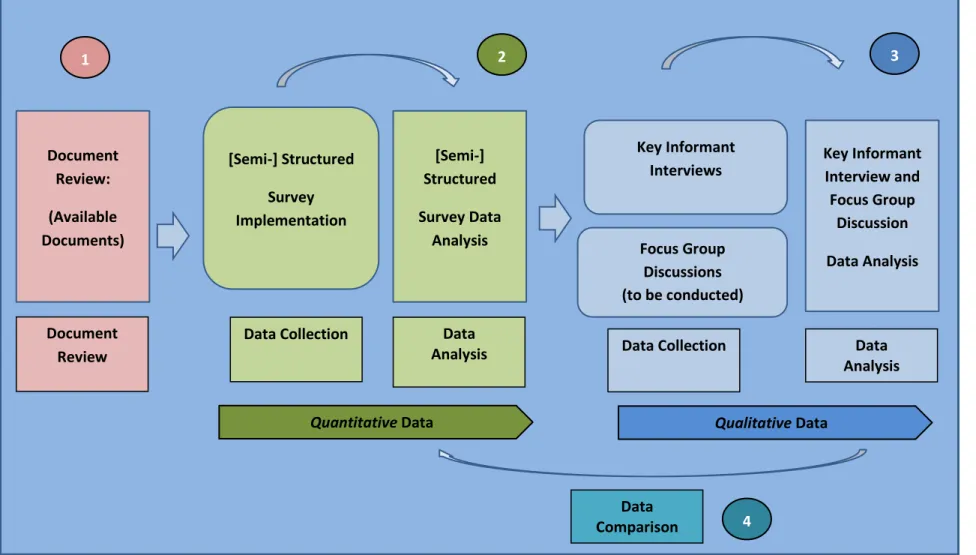
Figure 3. Logic Flow for Data Collection and Analysis ... 37
Figure 4. Distribution of Values of the Dependent Variable ... 47
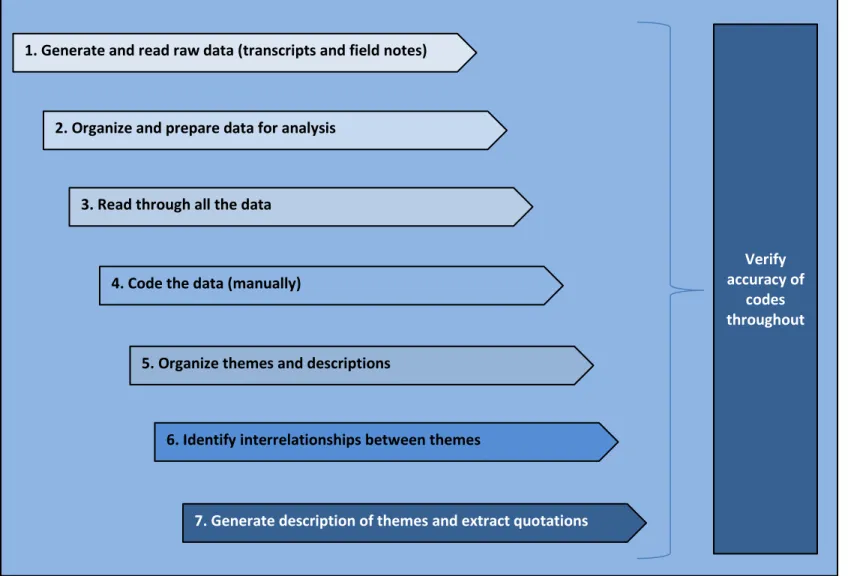
Figure 5. Flow of Qualitative Data Analysis (Adapted from Creswell, Chapter 9, Qualitative Methods, p. 197) ... 71
Figure 6. Gender of Respondents (n=400) ... 78
Figure 7. Age Group of Respondents (n=400) ... 78
Figure 8. Ethnicity of Respondents (n=400) ... 79
Figure 9. Highest Level of Education Completed (n=399) ... 79
Figure 10. Yearly Household Income (U.S. Dollars) of Respondents (n=399) ... 80
Figure 11. Residence of Survey Respondents (n=394) ... 80
Figure 12. Self-Reported Health Status of Respondents (n=400) ... 81
Figure 13. Respondents’ Feeling of Control over Health Care (n=400) ... 81
Figure 14. Percentage of Respondents’ Lifetime Living with HIV Diagnosis (n=394) ... 82
Figure 15. Respondents have Ever Been in or Volunteered for an HIV Cure Study (n=400) ... 83
Figure 16. Willingness to Consider Participating in HIV Cure-Related Studies ... 84
Figure 17. Total Number of Types of HIV Cure-Related Studies respondents are Willing to Consider Participating in (n=361) ... 85
Figure 18. Willingness to Consider Participating in HIV Cure-Related Studies after Having Previously Participated in Similar (HIV or non-HIV) Health Study in the Past ... 87
Figure 19. Importance of Factors to Motivate Considering Participating in HIV Cure-Related Studies ... 88
Figure 21. Willingness to Stop HIV Treatment as Part of an HIV Cure-Related Study (n=359) ... 91 Figure 22. Importance of Factors in Making a Decision about Considering
Participation in an HIV Cure-Related Study ... 92 Figure 23. How would Participants Most Likely Describe Themselves in they were to Participate in an HIV Cure-Related Study (n=348) ... 93 Figure 24. Personal Beliefs about an HIV Cure ... 93 Figure 25. How Many Years Do Participants Think it will take to Find a Cure for HIV (n=350) ... 94 Figure 26. What does a Cure Mean to Participants? (n=350) ... 94 Figure 27. Building Blocks for Proposed Plan for Change/Leadership/
LIST OF ABBREVIATIONS ACTG AIDS Clinical Trials Group
AIDS Acquired Immunodeficiency Syndrome ART Antiretroviral Therapy
ATI Analytical Treatment Interruption
AVAC Formerly the AIDS Vaccine Advocacy Coalition CAB Community Advisory Board
CAR Chimeric Antigen Receptor
CARE Collaboratory of AIDS Researchers for Eradication CCR5 C-C Chemokine Receptor Type 5
CD4+ Cluster of Differentiation 4 (T Helper Lymphocytes) CFAR Center for AIDS Research
CFR Code of Federal Regulations
CUREiculum HIV Cure Research Training Curriculum CXCR4 C-X-C Chemokine Receptor Type 4 DAIDS Division of AIDS
DHHS Department of Health and Human Services DNA Deoxyribonucleic Acid
DrPH Doctor of Public Health DSMB Data Safety Monitoring Board
EC Ethics Committee
FDA Food and Drug Administration GCP Good Clinical Practice
Ho Null Hypothesis
HAART Highly Active Antiretroviral Therapy HDACi Histone Deacetylase Inhibitor
HIPAA Health Insurance Portability and Accountability Act HIV Human Immunodeficiency Virus
HPM Health Policy and Management HPTN HIV Prevention Trials Network HSV Herpes Simplex Virus
IAS International AIDS Society
IC Informed Consent
ICH International Conference on Harmonization IPDAS International Patient Decision Aids Standards IMAP Intensively Monitored Antiretroviral Pause IND Investigational New Drug
IOM Institute of Medicine IRB Institutional Review Board IT Information Technology LRA Latency-Reversing Agent NIH National Institutes of Health NIMH National Institute of Mental Health PD-1 Programmed Cell Death Protein 1 PrEP Pre-Exposure Prophylaxis
RNA Ribonucleic Acid SAE Serious Adverse Event SAHA Suberanilohydroxamic Acid SCT Stem Cell Transplant(ation)
START Strategic Timing of AntiRetroviral Treatment TLR Toll-Like Receptors
UNC-CH University of North Carolina at Chapel Hill USD United States Dollars
CHAPTER 1 | BACKGROUND
The long-held assumption that HIV/AIDS is incurable is being challenged. There is one person who has been cured from HIV – Timothy Ray Brown, also known as the “Berlin patient” [1]. The Mississippi child – an infant who was seemingly cured of HIV in 2013 – was reported to have detectable levels of HIV in July 2014, after more than two years off treatment without evidence of the virus [2][3]. Timothy Brown inspired cautious optimism that it may be possible to cure HIV infection, but the relapse of the Mississippi child along with other case reports, such as the Boston patients [4], raised new questions and challenges for the field. While the advent of highly potent and well-tolerated antiretroviral therapy (ART) for HIV infection has substantially decreased AIDS-related morbidity and mortality worldwide, ART alone does not eliminate HIV infection. Patients must continue therapy throughout life at all stages of HIV disease. Millions of HIV-positive
individuals are now currently taking ART to remain alive. While HIV is no longer a fatal disease, the virus persists in the human body by establishing latent proviral reservoirs [5]. Furthermore, the highly innovative nature of HIV cure research and the prospect of ART interruption indicated in some study designs create unique implementation challenges and raise critical technical, regulatory and ethical questions for HIV clinical research scientists. These challenges are heightened because people living with HIV have access to highly effective antiretroviral therapy and most are able to lead normal lives.
In early 2016, there were more than 120 ongoing or completed HIV cure-related clinical studies conducted worldwide (http://www.treatmentactiongroup.org/cure/trials). This number is expected to grow in the coming year as HIV cure research progresses and novel compounds move through the drug development pathway [6]. On December 2, 2013, President Obama announced that $USD 100 million were redirected towards HIV cure research in the next three years. HIV cure research is a top scientific priority of the United States government and the United States National Institutes of Health (NIH). Furthermore, HIV cure research is a strategic priority of the International AIDS Society (IAS), which launched the “Towards an HIV Cure” initiative to promote
multi-disciplinary research for a safe and scalable HIV cure [7].
Despite major advances in HIV prevention and HIV drug development, including the
expectations and perceptions of HIV cure research, and understand the factors that affect their willingness to participate in HIV cure-related studies.
The literature on decision-making reveals that decisions to join clinical studies have two main elements: 1) a technical component, which requires knowledge of the risks, benefits and possible side effects associated with a study, and 2) a value component which requires input from patients about their values and preferences [12]. Besides evaluating technical aspects and
perceptions of participants, it is necessary to bridge these perceptions with the scientific and clinical realities of HIV cure research study implementation. As with other fields or diseases, such as cancer, several factors affect participation in clinical studies ranging from patients’ perceptions of studies to the practical and scientific aspects of specific interventions, inclusion/exclusion criteria for entry into clinical research as well as the physicians/researchers’ preferences for specific modalities. The perspectives of policy-makers and regulators – such as those working for Institutional Review Boards (IRBs) or Ethics Committee (ECs), are also important to take into consideration.
HIV Cure-Related Research
The Food and Drug Administration (FDA) defines HIV cure research as an investigation evaluating therapeutic interventions that would control or eliminate HIV infection to the point where no more HIV treatment would be needed to maintain health [13]. Two main approaches are being investigated: 1) a sterilizing cure, which would clear all latent viral reservoirs in the body (eradication); and 2) a functional cure, which would allow a person’s immune response to control HIV without medication [14]. A functional cure, or post-treatment control, may be much easier to achieve than a completely sterilizing cure.
HIV Cure-Related Research Modalities
explore several research pathways that will intersect. There are different types of HIV-cure research modalities being explored, as well as scientific and practical challenges and realities associated with each approach. Essentially, finding a cure for HIV will be a daunting task [15] and a long arduous journey [9]. Initial investigations towards an HIV cure should be framed as clinical experiments [11]. Early experiments will be used to direct future scientific and drug development efforts and pave the way for future HIV cure-related research efforts [13]. Very unlikely will these studies lead directly to a cure for HIV or even to substantial benefits for people living with HIV. Initial HIV cure research efforts will carry great risks, some of which remain unknown at this time [13].
Several approaches are being investigated in HIV cure research, including:
1. Reactivation of latent HIV from resting CD4+ T lymphocyte cells and other cellular and tissue compartments;
2. Early therapy as seen with pediatric HIV cure research (i.e. Mississippi child) or using HAART and megaHAART in acutely infected patients;
3. Intensification of ART;
4. Immune-based therapies to boost HIV specific immune responses (such as therapeutic vaccinations);
5. Gene therapy;
6. Autologous and allogeneic stem cell transplant (as seen with Timothy Brown); and 7. Combinatorial approaches.
Participation in HIV Cure-Related Studies and Willingness to Participate
Willingness to participate (WTP) refers to the state of readiness to participate in a clinical study. The study of WTP is usually divided between the consideration of the motivators and the barriers to participation [16]. In the context of clinical study implementation, motivators/facilitators to participation are any factors that would increase likelihood of eligible individuals to participate in studies. Barriers/inhibitors/deterrents to participation are any factor that would decrease likelihood of eligible individuals to participate in studies. The main criticism related to the WTP concept is that it relies on hypotheticals (or stated preferences). The WTP concept has predictive value nonetheless [16], especially in the initial exploratory phase. Some authors have studied the determinants of actual participation (or revealed preferences) in clinical studies [17] or conversely, determinants associated with refusal to participate [18].
Conceptual Framework: Participation in HIV Cure-Related Research and Willingness to “Participate”
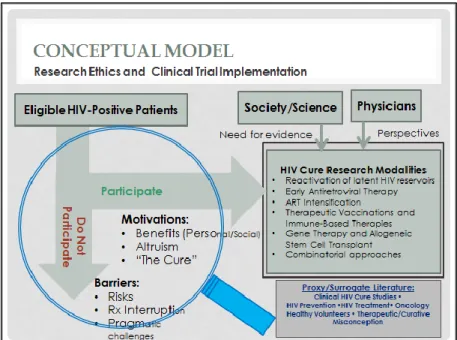
Figure 1. Conceptual Framework for Assessing Factors Affecting Participation in HIV Cure-Related Research: Implications for Effective and Ethical Implementation
The above conceptual framework provided the initial foundation to help identify motivators and barriers to participation in HIV studies. Broad sets of variables and their linkages were
Significance
Moving forward, it is essential that we pursue HIV cure-related research in a way that places the needs and perspectives of people living with HIV at the center of the process. In June 2013, the FDA launched an initiative on patient-focused drug development and HIV cure research.1To ensure successful implementation of HIV cure studies, it is necessary to engage people living with HIV in a significant and sustained dialogue to address the factors that affect their participation in HIV cure-related studies. People living with HIV should in turn help co-create the research implementation, regulatory and policy agendas about these studies. The research enterprise is thus an exchange of knowledge between the participants and the clinical researchers and an act of active collaborative knowledge building [19].
The topic of participation in HIV cure-related research is evidently ripe for future research. Social sciences related to HIV cure research should also keep pace with the exponentially growing translational and clinical sciences. Social scientists are in fact calling for “[A] proactive and multidisciplinary exploration of social dimensions of an HIV cure (…) [to] inform the conduct of clinical research studies and perhaps help ensure that an HIV cure is accurately perceived and appropriately implemented” [7]. Human studies in HIV cure are part of a nascent field that raises several complex implementation challenges as well as ethical issues related to participation. HIV cure studies will increase in scale and scope in the coming years concurrently with increased research funding. Understanding perceptions of risks and benefits of HIV cure research
participation and factors that affect decisions to participate can thus help inform study design and the development of ethical informed consent procedures, not to mention help determine the community acceptability of various methodologies.
1
Factors affecting willingness to participate in clinical studies have been extensively
examined in the context of HIV prevention, particularly HIV vaccine trials. Willingness to participate has also been described for HIV treatment trial participation, although to a much lesser extent. One could wonder whether the HIV prevention literature could help inform the HIV curative field since there are fundamental differences between HIV prevention interventions (aimed a higher-risk HIV-negative individuals) and HIV curative interventions (aimed at HIV-infected patients). Similarly, there can be similarities and differences between HIV treatment interventions and HIV cure interventions. The definitive test for a cure, however, will be the interruption of antiretroviral treatment [6].
Alternatively, in the absence of a robust ‘willingness to participate’ literature on HIV cure research, a proxy or surrogate literature can help inform the debate and provide helpful frames of reference. For example, oncology research is older than HIV cure research, but involves early-phase studies, risky interventions and overlapping themes. In fact, some of the compounds being tested in clinical studies to reactivate latent HIV, such as Vorinostat or SAHA (suberanilohydroxamic acid), Romidepsin and Panobinostat, are used as anti-cancer drugs, notably in the treatment of Hodgkin’s lymphoma [20]. Participation in HIV cure research is hitherto not emerging in a vacuum and may gain from a thorough assessment of applicable concepts found in the proxy medical research literature.
Effective Implementation
and colleagues developed a classification framework for translational researchers involving four categories: 1) T1 – development of applications and interventions; 2) T2 – development of evidence-based guidelines; 3) T3 – transition to practice; and 4) T4 – transition to improve population health [25]. Implementation of HIV cure research in human populations would thus correspond to the transition between T1 and T2. With its focus on collecting any vital information about any factor affecting successful implementation (including risks/benefits or deterrents/motivators), the attention to practical issues and the onus on planning proactively for change, implementation science can provide helpful considerations for the effective and detailed planning of HIV cure research execution. Aim 3 of this dissertation project seeks to explore some of these issues in more detail. We will revisit the topic of effective implementation in the discussion and plan for change sections.
Ethical Implementation
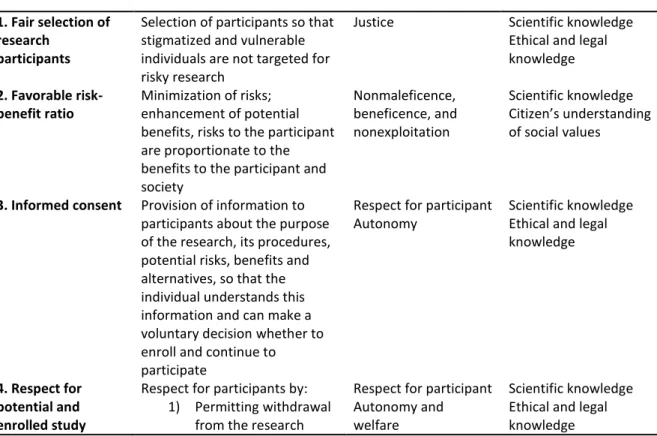
In their seminal article on “What makes clinical research ethical?” [27], Emanuel and colleagues outlined seven requirements that provide an ethical framework for clinical studies. Their ethical framework was drawn by synthesizing the literature on the ethics of research with human participants, including the Nuremberg Core (1947), the Declaration of Helsinki (1964, 1975, 1983, 1989, 1996), the Belmont Report (1979) and the International Ethical Guidelines for Biomedical Research Involving Human Subjects (1982, 1993), among others. The seven requirements include: 1) social and scientific value; 2) scientific validity; 3) fair selection of research participants; 4) favorable risk-benefit ratio; 5) independent review; 6) informed consent and 7) respect for potential or enrolled study participants.
Of the seven principles, four pertain specifically to the topic of recruitment/participation of people living with HIV in HIV cure-related studies:
Table 1. Requirements for Ethical Implementation of Clinical Research that Affect Participants’ Recruitment and Participation
REQUIREMENT EXPLANATION JUSTIFYING ETHICAL
VALUES
EXPERTISE FOR
EVALUATION
1. Fair selection of research
participants
Selection of participants so that stigmatized and vulnerable individuals are not targeted for risky research
Justice Scientific knowledge Ethical and legal knowledge
2. Favorable risk-benefit ratio
Minimization of risks; enhancement of potential benefits, risks to the participant are proportionate to the benefits to the participant and society Nonmaleficence, beneficence, and nonexploitation Scientific knowledge Citizen’s understanding of social values
3. Informed consent Provision of information to participants about the purpose of the research, its procedures, potential risks, benefits and alternatives, so that the individual understands this information and can make a voluntary decision whether to enroll and continue to participate
Respect for participant Autonomy
Scientific knowledge Ethical and legal knowledge
4. Respect for potential and enrolled study
Respect for participants by: 1) Permitting withdrawal
from the research
Respect for participant Autonomy and welfare
participants (and respect for community)*
2) Protecting privacy through confidentiality 3) Informing participants
of newly discovered risks and benefits 4) Informing participants
of results of clinical research
5) Maintaining welfare of participants
Knowledge of particular participant population
*Participation in clinical studies is not isolated from societal influences
Adapted from Emanuel Ej, Wendley D, Grady C. What Makes Clinical Research Ethical? Jama 2000; 283(20): 2701 – 11.[27]
care debate falls under the principles of respect or justice, because removal of the standard of care, as in the case of antiretroviral treatment interruption or intensively monitored antiretroviral pause (IMAP), may unfairly raise the burden of risks on study participants relative to those in the future who may benefit [35]. The principle of beneficence –or the converse, nonmaleficence – highlights the importance of maximizing possible benefits while minimizing possible harms (doing absolutely no harm being practically impossible) [34]. Finally, the principle of respect for autonomy demands that individuals should have the opportunity to act as “autonomous agents” [34]. Participants should evaluate the pros and cons and arrive at a considered decision about whether or not participate in research. It is important to note that these important considerations can also come into conflict and need to be managed. For instance, respecting autonomy can conflict with concerns about the risks participants take and the disproportional burdens they may bear.
The application of these principles for ethical implementation of research leads to considerations for informed consent, assessments of risks/benefits and the selection of study participants [34]. In the case of HIV cure research, the informed consent document should clearly state the lack of therapeutic – or curative – intent, as well as the unique requirements for the research (i.e. invasive procedures) and the associated risks and benefits (or lack thereof). Possible harms can include physical, psychosocial, legal, social as well as economic harms [34]. Finally, the principle of justice brings up moral requirements about what constitute fair procedures in the selection of study participants [34]. These principles must all be operationalized in the design, protocol development and implementation of HIV cure studies. Aims 2 and 3 of this dissertation research seek to explore some of these issues in more detail, such as perceptions of risks and
benefits. A qualitative design and interview approach confers a great way to begin exploring some of these elements in the formative stage of the research. We also revisit the topic of ethical
Risks and Benefits
Each clinical study or experiment has its own risks and benefits – some of which are known or unknown. Risks of clinical study participation include possibilities for harm or injury or negative consequences, such as a decrease in CD4+ count or increase in HIV viral load when taken off antiretroviral treatment. In turn, benefits are possible advantages gained from taking part in a clinical study – some of which are collateral benefits – such as access to state-of-the art medical “care.” There remains a controversy about whether these collateral benefits ought to be counted as weighing against the risks of the research. While IRBs tend to say that they ought not to count, participants may think that they do count and these may affect their decision to participate in studies. Risks and benefits provide an organizing framework for the entire dissertation research. Therapeutic (or Curative) Misconception
The topic of therapeutic misconception provides a valuable framework to conclude the background section. Appelbaum and colleagues first described therapeutic misconception in 1982 in the context of psychiatry [36]. One definition of therapeutic misconception, from the National Bioethics Advisory Commission, is “the belief that the purpose of a clinical trial is to benefit the individual patient rather than to gather data for the purpose of contributing to scientific knowledge” [37]. Therapeutic misconception occurs when a study participant does not fully understand the boundaries between standard clinical care and experimental or clinical research [37]. For example, a research participant can misestimate the likelihood of direct medical benefits, miscontrue the purpose of a study or join a study in order to obtain therapeutic benefit, when none should be expected [37]. Most of the therapeutic misconception literature draws from discussion in early-phase cancer experiments (i.e. gene therapy transfer, when no therapy should in fact be expected).
future people living with HIV should be separated from possible benefits to individual participants [38]. As stated before, most clinical experiments in HIV cure research at this juncture represent proof-of-concept activities with no direct expectation of positive clinical outcomes [11]. They remain a critical step in the translational research process, and allow us to transfer interventions into initial human testing [11]. Furthermore, the occurrence of concomitant clinical care and treatment should not be confounded with the scientific objectives of HIV cure studies [37]. It is thus imperative to understand the motivations, expectations and understandings of people living with HIV who would be eligible, willing or unwilling to participate in HIV cure-related research. Clinician-researchers and IRB members may also be subject to the therapeutic misconception [37]. It is also important to understand the extent HIV cure-related research participants will be prey to these misconceptions. Hopes to be cured could be a strong motivator, but one considered ethically dubious from the standpoint of having genuine informed consent.
Project Aims
Therefore, the main objective of this study is to help inform the planning of HIV cure-related research in the United States by exploring the factors that may affect participation in HIV cure-related studies. The study isolates, articulates and communicates opinions of people living with HIV, clinician-researchers and policy-makers (i.e. regulators), broadly defined, about participation in HIV cure-related studies, and derive possible considerations to propel the field forward.
My three specific research aims include:
Aim 1: Do the perceived risks/benefits from HIV cure-related research act as deterrents/motivators to participation?
I developed a semi-structured quantitative survey instrument based on my literature review of the reported risks and benefits (or surrogate clinical markers) of 14 different types of HIV cure-related research. For this aim, I surveyed adults living with HIV in the United States. The quantitative portion sought to provide descriptive statistics, distribution of responses and strengths of association and derive respondent profiles. This component also allowed to derive a sample of volunteers willing to be interviewed in more depth (aims 2 and 3).
Aim 2: Explore how various stakeholders perceive risks and benefits of HIV cure-related research using qualitative methods.
Aim 3: What are some of the practical or pragmatic issues affecting participation in HIV cure-related studies?
I conducted key informant interviews with people living with HIV and clinician-researchers in order to better understand the practical and pragmatic issues affecting
CHAPTER 2 | METHODS
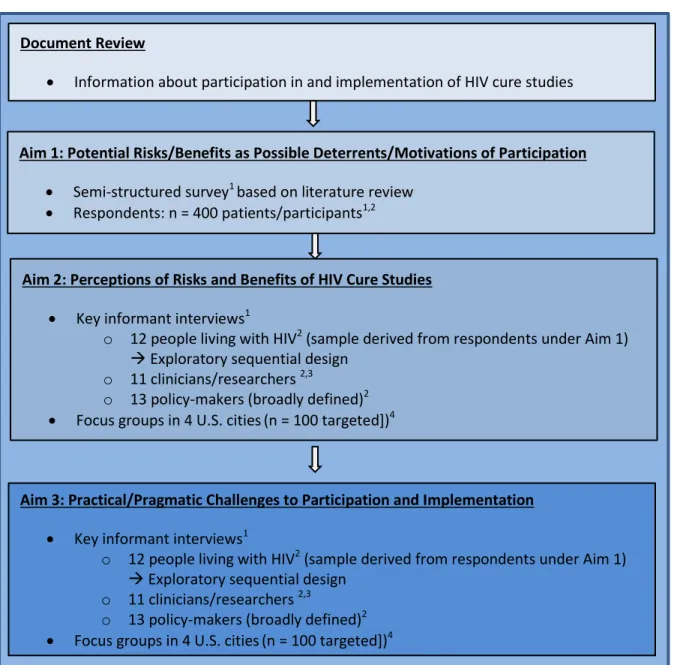
The literature review revealed the dearth of information regarding the factors that would influence people living with HIV to join cure-related studies – thus the need to borrow from the proxy fields of literature until more social sciences data are available. The purpose of this mixed-methods study is to obtain the perspectives of patient-participants, clinician-researchers and other stakeholders about factors influencing participation in HIV cure-related research. The study used a non-experimental, descriptive, mixed methods and exploratory sequential design. The schema below (Figure 3) illustrates the logical flow of the aims and methods.
Overview
Aim 2: Based on a sample of HIV-positive respondents derived from Aim 1, I interviewed key informants in order to better explore perceptions of risks and benefits of HIV cure-related research. I also interviewed people living with HIV, clinician-researchers and other stakeholders to derive meanings and deep understandings about perceived risks and benefits of HIV cure-related studies. Targeted respondents included 12 – 15 people living with HIV (n = 12 actual); 6 clinician-researchers (n = 11 actual) and 6 policy-makers/regulators (broadly defined) (n = 13 actual).2
Aim 3: During the key informant interviews, I also sought to better understand the practical and pragmatic issues affecting participation in HIV cure studies. The targeted respondents interviewed in Aim 2 were also asked questions related to this aim.3
Since aims 2 and 3 are more qualitative in nature and involved the same key informants, they are connected with one another. I attempted to make the information flow between the topics covered in aims 2 and 3 in the data analysis section, as themes were closely interconnected. While HIV-positive key informants were recruited via the survey instrument based on specific responses, I recruited clinician-researchers and policy-makers/regulators via individual formal requests for their time. Policy-makers were defined broadly to include regulators of HIV cure-related studies such as IRB representatives as well as known advocates and policy-makers in the field. I supplemented these primary data collection methods with a document review including peer-reviewed journal articles and documents from the grey literature on HIV cure-related research.
2
Beyond the scope of this dissertation, I am conducting focus group discussions in 4 U.S. locales (Seattle, San Francisco/Los Angeles, San Diego/Palm Springs and Chapel Hill). The plan for the focus group discussions was approved by the UNC IRB in January 2016 via an amendment to the main protocol and is part of my research but not my dissertation.
3Similarly, the focus group discussions that are taking place in four U.S. locales will be used to further
Figure 2. Logic Flow for Methods and Derivation of Samples 1Original, primary data
2
Actual sample size 3
Representing various HIV cure research modalities
4Part of research protocol but not DrPH dissertation; analysis deferred until completion Document Review
Information about participation in and implementation of HIV cure studies
Aim 1: Potential Risks/Benefits as Possible Deterrents/Motivations of Participation Semi-structured survey1 based on literature review
Respondents: n = 400 patients/participants1,2
Aim 2: Perceptions of Risks and Benefits of HIV Cure Studies Key informant interviews1
o 12 people living with HIV2 (sample derived from respondents under Aim 1)
Exploratory sequential design o 11 clinicians/researchers 2,3
o 13 policy-makers (broadly defined)2 Focus groups in 4 U.S. cities(n = 100 targeted])4
Aim 3: Practical/Pragmatic Challenges to Participation and Implementation Key informant interviews1
o 12 people living with HIV2 (sample derived from respondents under Aim 1)
Exploratory sequential design o 11 clinicians/researchers 2,3
Rationale for Mixed Design
This section provides a rationale for the use of a mixed methods approach. Since the social sciences in HIV cure-related research remains relatively nascent [7][41], there is a strong justification for combining and capitalizing on the strengths of both quantitative and qualitative methods within a single study. This design permitted both breadth and depth of understanding to occur [42]. The use of multiple methods and specifically the use of a quantitative method (survey) with qualitative methods (document review and key informant interviews4) provided better traction and insight into the topic of participation in HIV cure-related research than the use of a single method alone. This approach also helped compensate for the constraints of each method. In fact, the key to strong mixed methods research rests in the effective integration of the methods used. The explanatory sequential design allowed quantitative data to be collected first, followed by the collection of qualitative data that helped explain (or refute) the quantitative data.
Since my topic of inquiry involved participation in HIV cure-related research, it was important to understand contextual factors that would facilitate implementation, including the barriers and facilitators of entry into research. The use of mixed methods added validity to my inquiry, as multiple strategies for validation can be necessary to obtain accurate information [42]. Tensions between the results obtained from quantitative versus qualitative inquiry may themselves be revealing and lead to new insights. I analyzed results from the survey separately from the qualitative results, and then attempted comparisons to determine whether the findings confirmed or contradicted each other. Additionally, I attempted to compare, whenever possible, the
perspectives between patient-participants, clinician-researchers and policy-makers/regulators. This juxtaposition proved enlightening in some cases, especially where gaps, contrasts and contradictions were revealed (see Qualitative Analysis Section for details).
4
Data Collection Methods: Quantitative Inquiry
Quantitative methods emphasize the use of an objective, deductive and generalizing approach. Researchers use them to help prove or disprove a hypothesis based on a conceptual model. Quantitative methods also help obtain breadth, rather than depth, of understanding of the predictors of successful implementation, and yield numeric descriptions of opinions or attitudes of a study sample [42]. Survey instruments are efficient data collection tools and offer a uniform
modality to administer simple questions. They are also cost-effective and can be standardized. In my study design, the survey implementation further helped derive a study sample for later qualitative inquiry.
Semi-Structured Survey (Potential Participants of HIV Cure-Related Studies)
I implemented a semi-structured survey with potential HIV-positive participants (aim 1) developed to determine whether reported potential risks and benefits (or surrogate clinical endpoints) of HIV cure-related studies acted as deterrents and/or motivators for considering participation in HIV cure-related studies. The sample size reached was n = 400 (four times the initial target of n = 100 respondents), which, at a 95% confidence level, produced an interval of
approximately +/- 5%. The sample size was still limited due to time constraints to complete the study in the allotted time, and because of the difficulty of recruiting people living with HIV who were at least partly aware of HIV cure-related research. Nonetheless, the sample size obtained was satisfactory given the extensive length of the survey.
dichotomous (Yes/No), ordinal (i.e. on a Likert scale), categorical (i.e. groupings) or continuous (i.e. spectrum such as age). Most of the socio-demographic variables were categorical and/or
continuous, whereas the questions related to potential study participation (dependent variable) were dichotomous, and the questions related to perceptions of risks and benefits (key independent variables) were ordinal, on a Likert scale. Some of the variables were aggregated into newly
structured constructs (see Data Management and Analysis for details).
A quantitative analysis of the variables provided preliminary empirical evidence about which potential risks or benefits (or surrogate clinical endpoints) of HIV cure studies may act as deterrents or motivators to participation in HIV cure-related research. The results may lead to greater
discussion among researchers and policy-makers and a prioritization of which risks and/or benefits HIV cure research implementers must pay attention to during study design and implementation.
I administered the semi-structured survey online only, via the UNC-CH Qualtrics portal. The online survey was designed to use skip logic between questions and required responses to certain questions where necessary. Target respondents were adults living with HIV in the United States who were willing to answer questions around perceptions of HIV cure-related research. The sample was purposively derived using various HIV cure research listservs, such as the immune-based therapy (IBT) listserv, the Martin Delaney Collaboratories Community Advisory Board (MDC CAB) listservs, and other listservs of patient advocates (such as the AIDS Clinical Trials Group (ACTG)). We
the prize drawing. Please see Appendix II for the IRB-approved recruitment script that was disseminated via listservs and/or emails. I also provided a copy of the IRB-approved dissertation project fact sheet to prospective respondents (see Appendix III).
In order to establish content and construct validity, I asked members of the CARE Community Advisory Board to review the survey instrument. Main categories of questions comprising the survey instrument related to demographic characteristics, health perceptions, history with and willingness to participate in HIV cure-related research, perceptions around different HIV cure-related research modalities, personal benefits, personal risks, social benefits and social risks. The survey instrument also asked questions related to the risk of therapeutic/curative
misconception and barriers and facilitators of HIV cure-related research implementation. The survey was extensively reviewed with people living with HIV who provided feedback on the validity of constructs and terms used in the survey. One person suggested using the survey as a teaching opportunity and we therefore embedded basic definitions of difficult terms (e.g. allogeneic vs. autologous stem cell transplant) directly in the survey. The questionnaire was amended and IRB-approved in August 2015 in order to allow for community input and better validity of constructs (after initial IRB approval in May 2015). A copy of the final questionnaire can be found in Appendix V.
Data Collection Methods: Qualitative Inquiry
the topic of HIV cure-related research participation, I found it appropriate to integrate qualitative methods in order to obtain new knowledge and contribute to the body of research in a meaningful way.
In this dissertation, the emphasis on the voice of the patients and on participative and servant leadership as well community engagement created an intrinsic need for the utilization of qualitative methods. Additionally, qualitative inquiry proved helpful to understand the reasons behind deterrents and motivators to participation in HIV cure-related research, and behind successes or challenges of implementation. Qualitative research further helped inform the ethical and effective implementation of research.
The qualitative approach in aims 2 and 3 gave voice to and explored the lived experiences and perceptions of people living with HIV (as well as clinician-researchers and
sources, including data from the potential volunteer survey implemented in aim 1. For example, I selected key informants from survey respondents who were the most and least willing to participate in HIV cure-related studies, stratified by gender, in order to determine differences in perceptions and attitudes between these different groups.
Document Review
The document review included systematically written notes from conferences and meetings on the topic of participation in HIV cure-related research. I took notes methodically from
conferences and meetings as part of my work with the Collaboratory of AIDS Researchers for Eradication (CARE) from 2013 – 2015 in order to provide an unbiased way of capturing information. This included conference reports, meeting proceedings and working documents from subject matter experts relating to the topic of participation in HIV cure-related research, as available. For example, I reviewed notes from NIH meetings on the topic of the social sciences in HIV cure-related research and notes from conference calls with the Forum for Collaborative HIV Research – subgroup 3 on patient recruitment, education and informed consent. The reference section contains the list of documents reviewed. I also scouted for and reviewed policy documents related to HIV cure-related research, including meeting reports from FDA, such as The Voice of the Patient report [43]. I did not need to request permission to use these documents, as there was no custodian of the data or they were publicly available.
The document review served two purposes. First, it provided a secondary data source for possible deterrents and/or motivators of participation in HIV cure-related research as well as
collection and analysis, the summary informed possible considerations to ensure the effective and ethical implementation of HIV cure studies. Document review considerations are included in the discussion section instead of the qualitative results section. Further, as peer-reviewed articles became available on the topic of participation in HIV cure-related research during the study period, I incorporated them as well, to the extent possible.
Key Informant Interviews
I conducted key informant interviews with patient-participants, clinician-researchers and policy-makers/regulators to obtain their expert opinions and to better understand perceptions of risks and benefits (or surrogate clinical endpoints) of HIV cure-related studies. I also gained insights into the pragmatic challenges affecting implementation of these studies. Key informant interviews permitted the collection of information from knowledgeable individuals as well as the flexibility to explore emerging themes. I developed the key informant interview guides based my review of the literature. I refined them further as needed based on the semi-structured survey responses, on the document review and following discussions with seasoned community advisory board members who were willing to provide feedback. In order to establish content validity, I asked members of the CARE Community Advisory Board to review the interview guides prior to implementation. See Appendix VI for the IRB-approved interview guides with patient-participants, clinician-researchers and policy-makers, respectively.
qualitative inquiry. I derived the sample of patient-participant key informants from the survey. These selected patient-participants had indicated that they would be willing to be contacted to answer additional questions around the topic of participation in HIV cure-related research. Based on the results from the survey, the categories of key informants who were purposively interviewed corresponded to the following 4 groups: 1) male more willing to participate in HIV cure research; 2) male less willing, 3) female more willing and 4) female less willing. This selection was based on: 1) a separation of respondents between males and females; 2) an assessment of the number of types of HIV cure-related studies potential volunteers would be willing to participate in; 3) diversity of respondents by age, education and geography/location across the United States; 4) willingness to participate in the interviews. Further, I identified clinician-researchers and regulators/policy-makers using my experience working in the field of HIV cure-related research, from meeting lists and/or the relationships that I had built with colleague organizations. I selected these respondents purposefully and used recommendations from experts and a snowballing approach to identify additional key informants. I also strived to interview clinical research coordinators and study nurses who were in direct contact with people living with HIV and who were actual implementers of HIV cure research. The analysis section provides a summary of key informants.
I provided a copy of the informed consent form and interview guide in advance of the scheduled interview to give informants the time to think about their participation in the study and about each question. I also asked for their permission to record the interview – if not granted, I took notes systematically. I assigned a unique identifier code for each key informant interview (patient-participants: 101 and above; clinician-researchers: 201 and above; policy/makers/regulators: 301 and above). I transcribed all key informant interviews in order to have a deeper experience with the data (see Data Management and Analysis for details).
Inclusion/Exclusion of Study Participants and Delimitations
Inclusion criteria for participation in this study5 were: 1) persons living with HIV; 2) willingness to answer survey questions and/or participate in key informant interviews; 3) being at least 18 years of age; 4) living in the United States or its territories; and 5) willingness to provide informed consent. The survey was conducted amongst self-disclosed HIV-positive individuals. Interviews with people living with HIV were conducted with those who were willing to disclose their status to me.6 I also attempted to select study participants who were representative of the various HIV cure research modalities and who were diverse in gender, age, education, income and
geography/location, and had different degrees of willingness to participate in HIV cure-related studies. ART status did not affect participation in the study, meaning that those who were HIV-positive on ART or not on ART could be in the study. There was no exclusion criterion. In order to gain entry into the reality of people living with HIV and to secure permission to ask them sensitive research questions, I worked closely with the leader of the CARE Community Advisory Board and other Community Advisory Boards (i.e. DARE and defeatHIV) as they were important gatekeepers.
5
We added two inclusion criteria for the focus group discussions during the amendment in January 2016: 6) comfortable discussing HIV cure-related research with other people living with HIV and 7) willingness to keep information shared in the focus groups confidential.
6
Delimitations refer to the boundaries of the research. This dissertation project was
delimited to HIV cure-related studies implemented in the United States and focused on the Martin Delaney Collaboratories. The main reason was that the United States provided a research-rich environment to conduct HIV cure-related studies. There are much deeper ethical concerns with implementing HIV cure-related studies in resource-limited settings that are beyond the scope of this dissertation. Furthermore, I have focused most of my recent work with advocates located in the United States.
Study Participation Duration
The survey/questionnaire took most respondents between 15 minutes and 30 minutes to complete. Key informant interview lasted between 30 minutes to 1 hour for the most part. All key informant interviews were scheduled a few days in advance. As expected during study planning, the discussion of the perceptions of risks and benefits bled into topics related to the pragmatic
challenges of implementing HIV cure studies. I derived considerations related to the ethical
implementation of HIV cure-related studies and explicitly asked about them during the interviews. Reliability and Validity
Aim 1 of this dissertation intended to test the hypothesis of whether potential risks and benefits of HIV cure research acted as deterrents/motivators of participation in HIV cure-related studies. Aims 2 and 3 intended to generate knowledge and they were more descriptive and
exploratory in nature. Aim 2 explored how various stakeholders perceived risks and benefits of HIV cure-related studies. Aim 3 probed about the pragmatic issues affecting participation in and implementation of HIV cure studies, both using qualitative methods. As described earlier, I
for actual HIV cure-related studies. I tried to augment internal validity by minimizing bias in the selection of study participants and by the careful inference of conclusions related to the study findings. I tried to maximize external validity by obtaining a diverse, yet purposeful sample of people living with HIV. The discussion section explores the extent to which the results of the study can be generalizable to a wider sample. For qualitative study findings, I was reminded that particularity, rather than generalizability, was the hallmark of robust qualitative research and therefore attempted to avoid the generalizability fallacy [42].
I tried to reach construct validity by carefully selecting key themes and concepts, such as risks, benefits, deterrents and motivators. I developed the survey instrument and interview guides with the understanding and assumption that the potential burdens/risks and benefits of
participation in HIV cure-related studies extended beyond those inherent to specific studies, such as clinical endpoints. Taken together, I attempted to capture the complexity of factors that may influence decision-making and found out that factors extend way beyond considerations of risks and benefits. Furthermore, I designed the survey instrument and key informant interview guides in a stepwise process, using a comprehensive literature review, discussion with experts and community leaders in the field, drafting and re-drafting, review, pilot testing and revising. Furthermore, I attempted to reach reliability by attempting to make the research findings consistent and replicable as much as possible. I kept a log of notes after each key informant interview, and wrote the
Strengths and Limitations
The strengths and limitations of this dissertation project can be found in the Discussion section.
Confidentiality and Protection of Study Participants
This study was classified as “minimal risk.” No HIV testing or biomedical procedure was conducted with anyone involved in this research. HIV-seropositive statused were self-disclosed. I followed the utmost confidentiality and data security guidelines. Most potential participants were actively involved in HIV treatment and cure activism, had openly disclosed their seropositive status and were fairly knowledgeable about the topic of HIV cure-related research. Several HIV-positive patient advocates were also known and respected community leaders and spoke on behalf of other patients about HIV treatment and cure research issues.
extended to the broader scientific community, although no immediate benefits could be anticipated from the survey or key informant interview participation.
Every attempt was made to maintain the confidentiality of study participants.7 No study data were linked with personal identifiers under any circumstances. Where participant name was provided (e.g. in order to participate in the survey prize drawing or to volunteer for follow-up interviews), the names and contact information were extracted into a separate file (with no survey data) and deleted from the survey data files in order to anonymize the survey data. All
semi-structured survey data were kept on the password-protected UNC-CH Qualtrics system, which could only be accessed by myself using my UNC-CH Onyen and password. After my DrPH dissertation defense, the survey data downloaded into Excel and STATA (all of which do not include participant names or identifying numbers) and analyzed will be removed from the UNC-CH Qualtrics system to minimize any risk of data interception. I did not store any audio file electronically since my recording device did not permit downloading of audio files. My recording device is being kept under lock and key. After I successfully defend my DrPH dissertation, I will destroy the audio recordings. This will minimize the risks of linking any study data to an individual respondent.
Study results are presented as aggregate data, with no personal information. All names of study participants and key informants are kept confidential and private. Broad descriptors of study participants and key informants are included in the narrative; however, no unique personal identifier is included. I further stored all paper copies of the informed consent forms in a locked cabinet for written consents given. Access to electronic and hard copies of notes and study documents is restricted to myself and my dissertation committee only. The only inadvertent disclosure of information may include HIV status. To minimize risks, the online survey could be
7
completed anonymously (amongst self-disclosed adults living with HIV) without the need to share name or contact information. I only interviewed people living with HIV who were willing to disclosure their status to me.8 I transcribed all interview data verbatim. Please see Data Management and Analysis for further details regarding qualitative data analysis. Informed Consent
I requested informed consent from all study participants. For the online semi-structured survey, participants were prompted to read the informed consent form and to give their online consent before proceeding to the survey. For the key informant interview, informed consent was requested in writing if the interview was conducted face-to-face and was requested verbally if the interview was done by phone.9 Some informants interviewed by phone sent a signed, scanned consent form to be prior to the interview. All others provided verbal consent. Due to the minimal risk involved with this study, I sought to waive the requirement for written informed consent for the key informant interviews and this was granted by the UNC-CH non-biomedical IRB. All key
informants were sent a copy of the IRB-approved informed consent form together with a fact sheet describing the research project electronically ahead the time.
Prior to giving consent, participants were given the opportunity to ask any questions about the study. All study participants were consented and interviewed in English. All the study procedures were explained in detail so that participants were fully informed about their requirements for the study. All potential study participants were reminded that they were free to choose to participate in the study or not. For people living with HIV, decisions of whether or not to participate in this study did not affect the health care they normally received as well as their employment status or
8
Focus groups will be conducted with HIV-positive individuals who are willing to discuss their status within the focus group setting.
9
relationship with the Community Advisory Boards. Only those who consented to take part in the study were enrolled. Copies of the IRB-approved informed consent forms for the
patient-participants, clinician-researchers, policy-makers/regulators and focus group participants are included in Appendix IV.
Institutional Review Board Approval
The non-biomedical Institutional Review Board (IRB) and Human Research Ethics Committee of the University of North Carolina at Chapel Hill is the primary and sole IRB for this study. I filed the initial IRB application and obtained initial approval on May 18, 2015, before beginning any of the proposed research. In August 2015, I amended the survey prior to implementation and based on feedback received from patient advocates and obtained IRB approval on September 3, 2015. Survey implementation and key informant interviews were initiated thereafter in September 2015.10 Compensation for Study Participation
To reward participants who completed the survey, there was a random reward of $25 for each 25 completed survey respondents, in the form of a VISA gift card, TargetTM gift card or
StarbucksTM gift card. To participate in the drawing, respondents needed to complete the survey and specifically indicate they wanted to be included in the draw, providing a name and email address or phone number to be contacted upon winning a gift card.
10
There were 345 respondents who completed the necessary information, and thus 13 gift cards were awarded at random. There was no explicit compensation or non-monetary inducements for key informant interviews.11
Study Management
I, the Principal Investigator, managed the study, under the supervision of my DrPH dissertation chair, Dr. Sandra Greene, and the guidance of the dissertation committee.
11