Final
Notice to readers
The way in which the following report refers to Family &
Community Services (FACS) – Ageing, Disability and
Home Care (ADHC), was correct at the time of
publication. Any reference in the document to names by
which ADHC was previously known (Department of
Human Services, Department of Ageing, Disability and
Home Care) should now be read as FACS and ADHC. If
you are having difficulty accessing any of the content
within the report, please contact the Research and
Evaluation Unit on 02 8270 2381.
Version 1.0 Operational Performance Directorate Ageing, Disability and Home Care Department of Family and Community Services NSW May 2012
Jacqueline M. Roberts
With assistance from Greta Ridley
February 2004
Prepared for the Department of Ageing, Disability, and Home Care.
A Review of the Research to
Identify the Most Effective
Models of Best Practice in the
Management of Children with
Autism Spectrum Disorders
Autism Treatment Review
Acknowledgments: I would like to acknowledge the invaluable research assistance of Greta Ridley (Research Support Network), the support and guidance of Roger Stancliffe (Centre for Developmental Disability Studies) and the interest and feedback from Nancy Butterfield and Helen McFarlane (Department of Ageing Disability and Home Care).
Disclaimer
The Department of Ageing, Disability and Home Care has financially supported the production of this report.
Whilst every effort has been made to ensure that the information contained in the report is accurate and up-to-date at the time of publication, the Department does not accept any responsibility for any errors, omissions or inaccuracies in this report.
The report represents a review of the literature and is not intended as a statement of policy
The Department accepts no responsibility for any of the services or service providers listed in this report.
Suggested format for citation for reference:
Roberts, J. M. (2003). A review of the research to identify the most effective models of
best practice in the management of children with autism spectrum disorders. Sydney:
TABLE OF CONTENTS
Glossary of Terms iii
Executive Summary vi
Autism Treatment Review 1
Terms of Reference 2
Definition of Autism Spectrum Disorders 2
Incidence and Prevalence 4
Treatment & intervention models for children with 6 an autism spectrum disorder
Psychodynamic treatment/management 9
Biological treatments 11
Medication 11
Other biological treatments 13
Educational/Behavioural Interventions 15
Behavioural Interventions 18
Applied Behaviour Analysis 19
Naturalistic/Developmental Interventions 35
Combined Therapy Approaches 39
Sensory/Motor Treatments 43
Other interventions 49
TEACCH & Other Combined Approaches 53
Comparative Evaluation of Programs for Children with Autism 58
Cost Benefits of Treatment Programs 61
Family Support Models and Programs 62
Comprehensive supports 64
References 70 Table Two: Summary of Information about programs for children with 87
Autism
Table Three: A summary of available information re the Cost/Benefit of 90 Autism programs
Table Four: Cost Benefits of Autistic Spectrum Disorder treatment
In Australia 93
Appendix One: Services in Australia for children with autism and
Their families 109
Appendix Two: Lisa of Key Reviews 138
Appendix Three: Searches Performed 139
Glossary of terms
AAC Alternative and Augmentative Communication AANSW Autism Association of New South Wales ABA Applied Behavioural Analysis
ABC Aberrant Behavior Checklist AIT Auditory Integration Training ASD Autistic Spectrum Disorder
BCOHTA British Columbia Office of Health Technology Assessment CABAS Comparative Applied Behavioural Analysis to Schooling Program CARD Centre for Autism and Related Disorders based on the UCLA Young
Autism Project Lovaas and operating from Los Angeles with branches internationally
CDDS Centre for Developmental Disabilities Service CEO Catholic Education Office
DADHC Department of Ageing, Disability and Home Care DBC Developmental Behaviour Checklist
DET Department of Education and Training
DIR Developmental Individual-Difference, Relationship DLT Daily Life Therapy
DSM Diagnostic and Statistical Manual
DSP Developmental Social-Pragmatic model
DTT Discrete Trial Training
DT-TB Discrete Trial Traditional Behavioural EIBI Early Intensive Behavioural Interventions FAPC Fisher’s Auditory Problems Checklist
FC Facilitated Communication
FCT Functional Communication Training
HFA High Functioning Autism
IBI Intensive Behavioural Intervention ICD International Classification of Diseases ILT Incidental Language Teaching
IO Support Class for students with moderate intellectual disability (NSW DET)
IQ Intelligence quotient
ITTT It Takes Two to Talk JAFA Joy and Fun Assessment
LCDC Language and Cognitive Development Center
LEAP Learning Experiences: an Alternative Program for Preschoolers and their Parents
MADSEC Maine Administrators of Services for Children with Disabilities
MR Mental Retardation
MRC Medical Research Council
MTW More Than Words
NAS National Autistic Society NLP Natural Language Paradigm
NOS Not Otherwise Specified
NSW New South Wales
PBS Positive Behaviour Support
PCDI Princeton Child Development Institute Program PDD Pervasive Developmental Disorder
PECS Picture Exchange Communication System
PET Parent Education and Behaviour Management Training
PMA Prorated Mental Age
PRT Pivotal Response Training PS Parent Education and Support RCTs Randomised Control Trials
SCERTS Social-Communication, Emotional Regulation, and Transactional Support
SI Sensory Integration
SIB Self-Injurious Behaviour
S-P/D Social Pragmatic Development
SPELL Structure Positive Empathetic Low arousal Links
TEACCH Treatment and Education of Autistic and related Communications
Handicapped Children
UCLA University of California Los Angeles UCSF University of California San Francisco
UK United Kingdom
USA United States of America
VABS Vineland Adaptive Behaviour Scales WHO World Health Organisation
EXECUTIVE SUMMARY
Introduction
The purpose of this review of research literature relating to the management and
treatment of children with autism is to identify the most effective models of best practice. The review was commissioned by the Department of Ageing, Disability and Home Care (DADHC), NSW Government and completed by Jacqueline Roberts of The University of Sydney, Centre for Developmental Disability Studies (CDDS).
The review includes:
The definition of autism spectrum disorders
Autism is a life long neurological disability of unknown aetiology. The criteria for a diagnosis of autism are based on a triad of impairments in social interaction,
communication and a lack of flexibility in thinking and behaviour. There is a spectrum of autistic disorders which includes: Autistic Disorder (Some people with Autistic Disorder with IQ in the typical range may also be described as having High Functioning Autism, HFA), Asperger Syndrome (there is some dispute about the validity of the distinction between Asperger’s Syndrome and HFA), Retts Syndrome, Childhood Disintegrative Disorder, Pervasive Developmental Disorders Not Otherwise Specified (PDD-NOS), also known as Atypical Autism. The diagnosis of autism spectrum disorders, referred to throughout this review as autism, is made on the basis of observed behaviour. As a result there is some variability across professionals in the assessment and diagnosis of autism. There are also differences in the reported incidence and prevalence of the disorder which range from less than 4 per 10,000 to more than 100 per 10,000. There are several factors which are likely to contribute to this variation including the definition of autism and variability in diagnosis amongst professionals, however anecdotally there appears to have been a steadily increasing demand for services reported by agencies in NSW which is disproportionate to the growth in population. . The association between autism and intellectual disability is about 70% of the cases.
Comparative evidence supporting a range of treatment and intervention models, across the range of individuals included within autism spectrum disorders.
There are several important considerations which inform examination of the evidence for the range of treatments and programs available for children with autism and their
families:
• Cultural perceptions of the characteristics of autism and the validity of the autistic and non-autistic ways of perceiving the world
• The need for a multi-dimensional, multi-professional approach to the treatment and management of autism
• Individual differences in terms of the type of autism and individual characteristics of the child and their family
• Claims made by service providers in relation to potential outcomes of treatment and family expectations resulting from these
• Difficulty in measuring outcomes in an empirically valid and reliable way and • Lack of reliable information about the range of options and potential options
available to families.
Psychodynamic treatment/management
These therapies are based on the assumption that autism is the result of emotional damage to the child, usually because of failure to develop a close bond (attachment) to parents, especially the mother. Therapies include, Holding Therapy and Pheraplay.
Psychodynamic treatments are seldom used today, with the possible exception of Cognitive Behavioural Therapy (CBT) for high functioning adolescents and adults with autism. The evidence that autism is a developmental rather than an emotional disorder is strong and there is little convincing empirical evidence demonstrating the effectiveness of psychodynamic interventions.
Biological Treatments
There is no specific or universal medical treatment or cure for the core symptoms of autism, however, a number of biomedical approaches have been tried in an effort to treat particular symptoms or co-morbid disorders, and/or to increase the likelihood that the individual will benefit from concurrent educational or behavioural interventions. The following medications have been demonstrated to be somewhat effective for individuals with autism, though careful monitoring is required to measure effects and side effects: Neuroleptics/Antipsychotics, Risperidone, Selective Serotonin Reuptake Inhibitors (SSRIs), Antidepressants, Stimulants, Anticonvulsants.
The following medications have been demonstrated to be ineffective and/or harmful for children and adolescents with ASDs: Naltrexone, Secretin, Adrenocorticotrophin Hormone (ACTH). Other biomedical treatments not recommended due to minimal evidence and potential risks include: Vitamin and dietary supplements, Exclusion diets (casein and gluten-free diet), Anti-yeast therapies, Chelation.
Educational/Behavioural Interventions
Behavioural approaches:
Behavioural approaches are based upon the principles of learning theory, that is, the idea that human behaviour is learned and that it is governed by its antecedents and its
consequences. The theory assumes that children can learn new skills by modification of stimuli and the presentation of reinforcement. Behavioural strategies can be divided into three categories:
• Antecedentinterventions that are implemented before a target behaviour is likely to occur
• Consequenceinterventions that are implemented following the occurrence of a target behaviour
• Skill developmentinterventions designed to teach new skills and alternative, adaptive behaviours
It is essential to specify the nature of the behavioural intervention being discussed. Behavioural interventions may range from a social story to a discrete trial training program. Emerging trends in behavioural interventions include, positive behaviour support, functional assessment, and functional communication training.
Applied Behaviour Analysis (ABA)
Applied Behaviour Analysis (ABA) is the process of applying sometimes tentative principles of behaviour to the improvement of specific behaviours and simultaneously evaluating whether or not changes noted are indeed attributable to the process of application. The goal of ABA is to improve socially significant behaviours such as academics, social skills, communication, and adaptive living skills, to a meaningful degree. ABA is used to:
• Increase behaviours • Teach new skills • Maintain behaviours
• Generalize or to transfer behaviour from one situation or response to another • Restrict or narrow conditions under which interfering behaviours occur: • Reduce interfering or potentially harmful behaviours
Discrete Trial Training (DDT) is one of the instructional methodologies frequently used in ABA-based programs. In DTT each training trial, consists of four major components: Presentation of a brief, distinctive instruction or question (stimulus), the instruction is followed by a prompt, if the child needs one, to elicit the correct response, the child responds correctly or incorrectly (response), the teacher or therapist provides an
appropriate “consequence.” Correct responses receive a reward, which may be an edible treat, a toy, hugs or praise; incorrect responses are ignored and/or corrected, data are recorded.
(Early) Intensive Behavioural Interventions (EIBI/IBI)
Early, intensive behavioural intervention (IBI or EIBI) appears to be a generic term that refers to behavioural interventions that are intensive and comprehensive. Severe
behaviour disorders may be treated with intensive behavioural intervention. Proponents point out that children with autism typically do not learn from their environment
spontaneously, and therefore need to be taught virtually everything they are expected to learn. Intensive programs refer to the number of hours of treatment the child receives per week as well as the intensity of training, curriculum, evaluation, planning, and
coordination. IBI/EIBI intervention programs recommend between 30-40 hours of child: therapist sessions per week.
Key Behavioural intervention programs include: Douglas Developmental Disabilities Centre Program, Autism Preschool Program, Princeton Child Development Institute Program (PCDI), May Institute, Lovaas Program, In the Sydney metropolitan area, ABA programs are offered by four private service providers (Learning to Learn website, www.learningtolearnsydney.com.au, accessed August 2003.
There is universal agreement that behavioural interventions have produced positive outcomes for children with autism that are well supported by research. However, there continues to be a great deal of controversy about particular behavioural interventions and programs, concerns about methodological issues and differences in the interpretation of research findings. IBI/EIBI programs exemplified by the Lovaas program which use ABA and DTT are among the most controversial intervention strategies for children with autism. This controversy revolves around outcome claims, exclusivity, extensive use, and personnel. There is controversy as to whether ABA and DTT can lead to recovery. Controversy related to exclusivity pertains to whether ABA and DTT should be used to the exclusion of all other methods. While 40 hours of weekly DTT has been used, controversy exists regarding the extensive use of DTT and the appropriateness for some children and families.
Naturalistic/Developmental approaches
Generally naturalistic interventions follow a developmental approach, which is relationship based and aims to help the child to learn to ‘attend, relate, interact, experience a range of feelings, and, ultimately, think and relate in an organized and logical manner’ (Atchison et al., 1997, p. 50). Naturalistic interventions are also known as normalised interventions.
Developmental Social-Pragmatic Model (DSP).
This approach emphasises the importance of initiation and spontaneity in communication, following the child’s attentional focus and motivations, building on the child’s current communicative repertoire even if this is unconventional and using more natural activities and events as contexts to support the development of the child’s communicative abilities. The DSP approach differs from the contemporary ABA approach in its emphasis on sequences of language development and reduced emphasis on eliciting and measuring discrete trial behavioural responses. DSP focuses on successful participation in extended interactions as the measure of success with greater emphasis on enhancing
communication abilities within meaningful events and routines. Research indicates there are some advantages to this approach.
Floor time or the Developmental Individual-Difference, Relationship-Based Model
(DIR) is a developmental approach for early intervention with infants and children with a disability. The program includes interactive experiences, which are child directed, in a low stimulus environment. Proponents contend that interactive play, in which the adult follows the child’s lead, will encourage the child to “want” to relate to the outside world.
Relationship Development Intervention
Relationship Development Intervention (RDI) is a series of techniques and strategies built upon the typical developmental processes of social competence. The goal of RDI is to increase motivation and interest in social relating in individuals with autism and provide activities and coaching to assist them to enjoy and become competent in social relationships. There appear to be no independent peer-reviewed, published studies of RDI’s effectiveness.
Learning Experiences-An Alternative Program for Preschoolers and Parents (LEAP)
is a comprehensive preschool service, designed for both children with autism and typically developing children. LEAP has the components of an integrated preschool program and a behaviour skills training program for parents. The program contains aspects of behavioural analysis, but it is primarily a developmentally based approach. There appear to be no independent peer-reviewed, published studies of LEAP’s effectiveness for children with autism.
Communication Therapies
Visual Supports/Alternative and Augmentative Communication (AAC) There is
considerable research evidence to support the use of visual strategies and visually cued instruction for children with autism. Augmentative systems of communication in autism, are used not just to replace speech, but to assist learning and communication, regardless of the level of speech. Symbols, pictures, photographs and objects of reference, are all well established as helpful for people with autism in supporting the comprehension of what is said and in getting needs met.
Picture exchange Communication System (PECS) is a program that teaches children to
interact with others by exchanging pictures, symbols, photographs or real objects for desired items. The goals of PECS include the identification of objects that may serve as stimuli for each child’s actions and the learning of responses to simple questions with multi-picture systems. It is a highly structured program that uses behaviourist principles of stimulus, response and reward to achieve functional communication. There are some studies that have evaluated PECS and show positive gains for participants.
Facilitated Communication (FC)
Proponents of FC claim that autism is primarily a motor disorder involving difficulty producing voluntary movement, (apraxia) and therefore precluding the production of speech. Therapy involves teaching communication by physically prompting to form a pointing finger, supporting the hand as a point is made and assisting withdrawal from the point. Extensive research has been done to determine the efficacy of FC for people with autism. No evidence has been found of consistent, useful or spontaneous communication using this method.
Functional Communication training (FCT)
FCT is a behavioural strategy of teaching people with autism to use signs or other AAC techniques as substitutes for the ‘messages’ underlying their challenging behaviour. FCT
interventions teach the individual to communicate one or more functional messages, while at the same time they provide a positive alternative to his or her challenging behaviour(s). A review of FCT studies published between 1985 and 1996 (Mirenda, 1997) found that for those participants with autism, there was an immediate and
substantial reduction in challenging behaviour after the FCT interventions were initiated. Sensory/motor therapies
Sensory integration
Sensory Integration (SI) therapy is a sensory-motor treatment based upon theories that children with autism and other developmental delays experience dysfunction in which sensory input is not integrated or organized appropriately by the brain. Sensory integration is described as providing the child with planned and controlled sensory experiences that aim to produce adaptive and functional responses to sensory stimuli. Current research does not support SI as an effective treatment for children with autism, developmental delays or mental retardation; nor has the limited research to date been able to identify SI as an independent variable responsible for positive change in a child’s behaviours or skills. In at least one study, SI was shown to actually increase self-injurious behaviours.
Auditory integration training (AIT)
Auditory integration training is said to address the hearing distortions, hyperacute hearing, and sensory processing anomalies, which cause discomfort and confusion in people with disability, including autism. According to the American Academy of Paediatrics Committee on Children with Disabilities, current information does not support the use of auditory integration training and, therefore, its use is not yet warranted other than in research protocols.
Combined Approaches
TEACCH (Treatment and Education of Autistic and related Communication Handicapped Children)
This approach is one of the most widely used approaches in autism. The major feature of the TEACCH approach is structure. Some of the difficulties in autism, which the
TEACCH program identifies and addresses, are organisational difficulties, memory problems, difficulties with auditory processing and making transitions from one activity or topic to another. The environment is organised to help the child or adult understand and remind them what they are to do. The emphasis is on positive strategies of behaviour management and visually, rather than verbally, mediated teaching strategies. Types of intervention include structured teaching, communication training, leisure and social skill development and stress reduction. There is extensive research into the outcomes of the program however there are few peer-reviewed studies of outcome replications conducted by researchers not affiliated with TEACCH.
Autism Association NSW Satellite class program
The Autism Association of NSW satellite class program is a program designed to include children with autism in regular school settings, while meeting their specific needs. The content and delivery of the program is similar to the TEACCH model with heavy emphasis on visual supports, structure and routine, specific teaching of communication and social skills in the regular school setting. There is no empirical research into the outcomes of the satellite class program.
Other Therapies
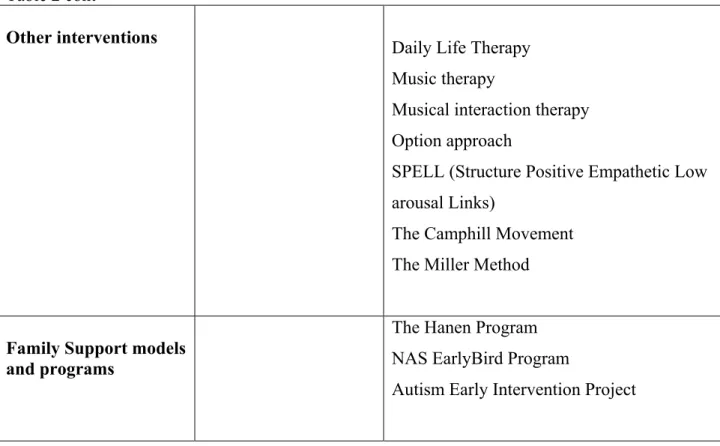
These include: Higashi/Daily Life Therapy, The Option Method (also known as ‘Son-Rise’), Connect Therapy (this is a derivative of the Options Program) and Music therapy. There is little if any empirically sound research evaluating outcomes of these programs Elements of successful programs.
Research suggests that program directors, regardless of philosophical orientation, describe the same key components of a successful program as follows:
• Autism specific curriculum content focusing on attention, compliance, imitation, language and social skills
• Need for highly supportive teaching environments and generalisation strategies • Need for predictability and routine
• A functional approach to problem behaviours • Transition from the preschool classroom • Family involvement
Therefore there is no one program that will suit all children with autism and their families. Research suggests that there are substantial short and long term benefits from early, intensive, family-based treatment programs, whatever their theoretical basis, so long as these are appropriately adapted to the child’s pattern of strengths and weaknesses and take account of family circumstances (Webster, Webster & Feiler, 2002).
Cost benefits
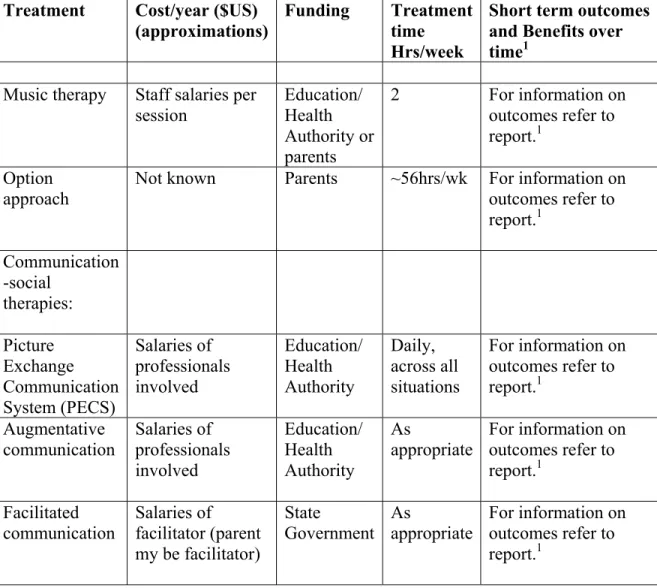
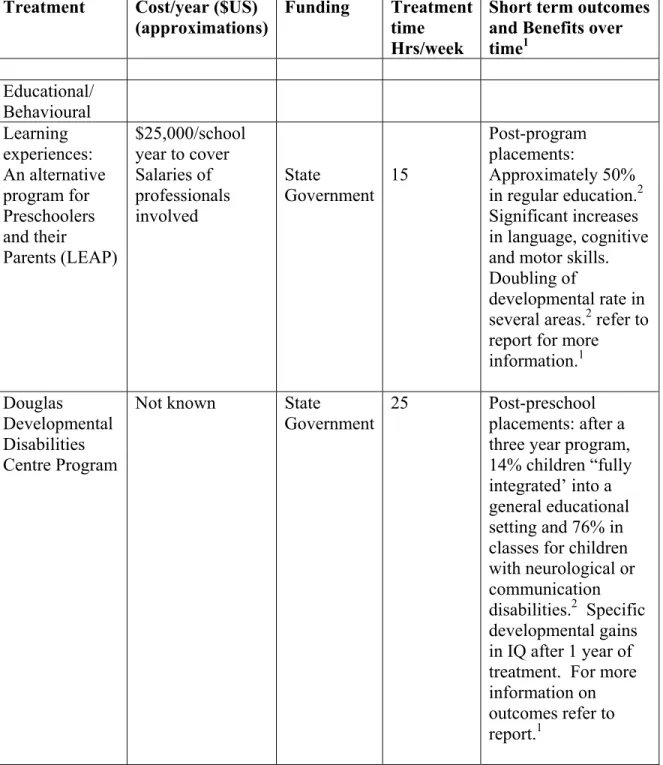
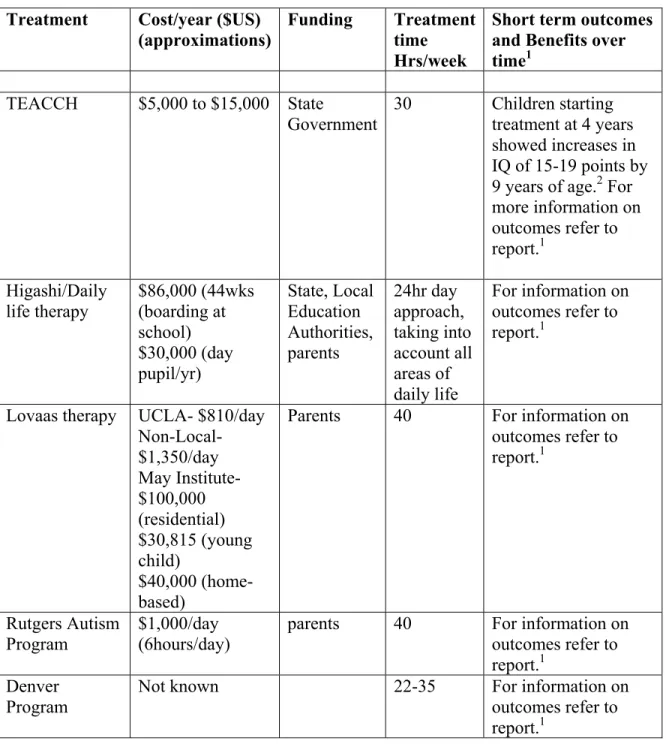
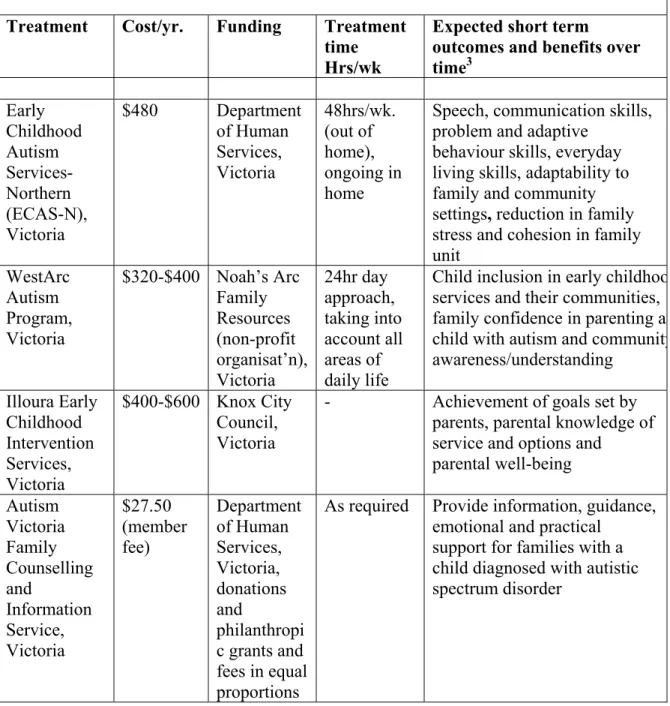
Information about the cost benefits of treatment programs in terms of funding, treatment times, short-term outcomes and benefits over time is reviewed. To date, no studies have reported on the cost benefits associated with treatment programs in terms of funding, treatment times, short-term outcomes and benefits over time. Rather, reviewers in this field have provided a description of the aims of the intervention or treatment program available, the target population, treatment times, associated costs and how the treatment was being funded. Information about costs provided by service providers in Australia and internationally are included in the review.
Supporting Families
The research is examined for evidence to support best practice models in supporting families at the time of diagnosis and assessment and an overview of the nature of
comprehensive supports that help reduce stresses that may be experienced by families of a child with autism and promote inclusion in community activities. Evidence to support best practice models to assist families at the time of diagnosis is scarce. Factors identified
as contributing to the reduction in stress experienced by families when receiving a diagnosis of autism, were identified as: early disclosure of a diagnosis, increased
understanding of autistic behaviour, the accumulated experience of how to communicate with their child and the existence of a self-care group to support parents.
Programs focusing on parents and families, increasing their knowledge of autism and building their competence and confidence through different strategies are reviewed. The research into outcomes for these programs is variable with little independent peer-reviewed research done by researchers unaffiliated to the programs, however what information there is about outcomes for these programs is positive.
Several programs designed to support and inform families are reviewed including:
The Help! Program (UK) is for parents of newly diagnosed children,
Family-centred positive behaviour support (PBS) programs, PBSis a collaborative, assessment-based approach to addressing problem behaviour. A number of studies have demonstrated the efficacy of combining family-centred intervention with PBS
NAS EarlyBird Program (UK and NZ), is a parent-focused model of early intervention.
The EarlyBird Program was utilized by the Leicestershire Education Authority as a service provided to support families of preschool children with autism. Parents reported several benefits from the program.
The Hanen Program ‘More Than Words’ is an intensive training program for parents of
pre-school children with autism. The program derives its theoretical framework from a social-pragmatic developmental perspective. The Department of Health at the University of Newcastle (UK) is currently conducting a longitudinal evaluation of the More Than Words Program. Preliminary results show an improvement in the interactive skills identified as impacting on children’s language development.
Autism Early Intervention Project (AUST) is a parent-focused model of early
intervention focusing on the provision of parent training and support. The program is currently being evaluated with initial results showing a significant improvement in mental health of parents participating in the intervention.
The review concludes with a description of autism programs in NSW and other States/Territories.
AUTISM TREATMENT REVIEW Introduction
The Centre for Developmental Disability Studies (CDDS), The University of Sydney was asked to undertake this literature review as part of the 2003 funded work plan with The Department of Ageing, Disability and Home Care (DADHC). Jacqueline Roberts was engaged by CDDS to undertake the review with support from Roger Stancliff of CDDS. The project was managed by the Prevention and Early Intervention Unit of DADHC. About the author
Jacqueline M.A. Roberts, BA (Hons), Dip. Teach, B Applied Science (Sp Path), Ph.D. Jacqueline is a consultant specialising in autism spectrum disorders. Jacqueline worked for the Autism Association of NSW for 20 years as a teacher, speech pathologist, school principal and Director of Services with overall responsibility for the provision of all professional services delivered by the Association. As a lecturer and educator Jacqueline has worked extensively in New South Wales and overseas delivering both specialised programs in autism, and general training in Special Education and Speech Pathology. Jacqueline has a Doctorate in Linguistics, Macquarie University (Sydney, Australia). Jacqueline currently works as an early intervention teacher with young children with autism, as a researcher and postgraduate supervisor and teaches the autism strand in the postgraduate program in Developmental Disability Studies at the University of Sydney and is the coordinator of the graduate program in autism in the Faculty of Education at the University of Canberra. She holds the position of Clinical Lecturer in the Faculty of Medicine, The University of Sydney and is a Clinical Associate.
Background
In recent years it has been suggested that there is an “epidemic” of autism spectrum disorders. There is also a strong indication that this group has very specific support needs and that early intervention is beneficial to building skills that will enable effective
participation within the community and increased independence throughout life. Areas of particular importance include the development of socio-communicative processes, the prevention of challenging behaviours and increased adaptive functioning within inclusive settings.
Concern also exists for the support needs of families where there is a family member with autism. There is a need to identify strategies that will help families through the
experience of diagnosis and assessment and to find the most effective way to provide information about available treatments. In addition, comprehensive service provision requires family centred practices that acknowledge the specific needs of individuals within families, for example fathers and siblings, and identify strategies to promote family participation in their community.
Brief from DADHC: Terms of reference
Identification of recommended best practice models for intervention and therapy is critical for DADHC. A strong evidence base will enable DADHC to build the capacity of the existing service system to cater for the needs of children and young people with autism spectrum disorders within a family centred framework.
This review of the key international articles and any ongoing research projects sets out to identify:
• The definition of autism spectrum disorders
• Comparative evidence supporting a range of treatment and intervention models, for example intensive behavioural interventions, naturalistic mainstreaming strategies, combined therapy support and parent training programs, across the range of individuals included within autism spectrum disorders.
• Cost benefits of treatment programs in terms of funding, treatment times, short-term outcomes and benefits over time.
• Evidence to support best practice models in supporting families at the time of diagnosis and assessment (including the provision of information) and an overview of the nature of comprehensive supports that help reduce stresses that may be experienced by families of a child / young person with autism spectrum disorder and promote inclusion in community activities.
• Review of autism policies and programs in other States/Territories. It is understood that this section of the review will be illustrative rather than exhaustive
Definition of Autism Spectrum Disorders.
What is autism?
Autism is a life long neurological disability of unknown aetiology (Volkmar, 1998). In terms of pathophysiology it is generally accepted that,
Taken together the available evidence in autism suggests that although certain aspects of brain functioning are often spared in autism, the syndrome never-the-less involves widespread brain dysfunction at both cortical and sub-cortical levels. The originating site of brain injury has not been identified (Bristol et al., 1996, p. 137).
The diagnosis of autism has been remarkably consistent and stable over the past several decades since its identification by Leo Kanner in the 1940’s (Kanner, 1943). Rutter (1996, p.257) suggested that there is …!a high degree of consensus on the diagnostic criteria for autism and consistency in the evidence on the validation of autism as a diagnostic category”.
Kanner (1943) referred to autism as ‘a disorder of affective contact’ and identified criteria in terms of deficits in interpersonal development, communication and imagination. Currently there are two major diagnostic systems in use which have common criteria for a diagnosis of autism based on a triad of impairments in social interaction, communication and a lack of flexibility in thinking and behaviour. These are DSM IV: American Psychiatric Association, (1994) and ICD 10: World Health
Organisation, (1992). The term ‘autism’ is synonymous with the term ‘autistic spectrum disorders’ (ASD) (Wing, 1996) and with the term used in DSM IV ‘Pervasive
Developmental Disorders’ (PDD). The autistic spectrum covers a number of different conditions with different diagnostic criteria, but which share those common
developmental difficulties described as the triad of impairments. Autistic Spectrum Disorders or Pervasive Developmental Disorders as defined in DSM IV (1994), include:
• Autistic Disorder (also referred to as Classic or Kanner’s autism. Some people with Autistic Disorder with IQ in the typical range may also be described as having High Functioning Autism (HFA)
• Asperger Syndrome (also known as Aspergers Disorder) There is some dispute about the validity of the distinction between Asperger’s Syndrome (AS) and HFA • Retts Syndrome
• Childhood Disintegrative Disorder
• Pervasive Developmental Disorders Not Otherwise Specified (PDD-NOS), also known as Atypical Autism
While current diagnostic formulations (DSM-IV: APA, 1994; ICD-10: WHO, 1992) support the concept of Asperger Syndrome as a distinct syndrome (Trevarthen, Aitken, Papoudi & Robarts, 1996) there is some debate in the research about the validity of a distinction between high functioning autism (HFA) and Aspergers Syndrome as two distinct conditions (Jordan, 2001). Wing (1996) has maintained that HFA and Aspergers syndrome are more alike than different and that educational distinctions between the groups may not be valid or helpful.
The diagnosis of an autistic spectrum disorder is based on the observation of behaviour in the three areas of the triad; social behaviour, communicative behaviour and repetitive or ritualistic behaviour/resistance to change. There is no definitive physiologically based test to reliably indicate the presence of autism and no one particular behaviour is a definitive indicator of autism. The diagnosis is predicated on the observation of behaviours in all clusters of characteristics described by the triad. In a review of
educational intervention for children with autism conducted in the UK Jordan, Jones and Murray (1998) discuss the difficulties associated with the assessment and diagnosis of autism spectrum disorders:
Because of difficulties in diagnosis, a range of descriptions might be used by professionals to describe a child on the autistic spectrum. Such descriptions will include 'autistic tendencies', 'autistic features', 'Kanner's Syndrome', 'Asperger Syndrome', 'autistic behaviours', 'atypical autism' and so on. Sometimes, one of the diagnostic features is emphasised ('semantic pragmatic disorder', for example,
or 'rigid and obsessional behaviour') and then it will be necessary to look at the other two classifying features to determine whether this is an autistic spectrum disorder or whether the difficulties are limited to that one area of functioning. Incidence and Prevalence
How common is autism?
The prevalence and incidence of autism continues to be an area of contention amongst researchers and service providers. Prevalence rate refers to the number of people with autism in a particular age range, living in a defined area. Birth Prevalence refers to the number of babies born with a particular condition in a prescribed area. Clearly it is not possible to establish birth prevalence for autism in the same way that it is possible to establish birth prevalence for Down’s Syndrome (Williams, 2003). Incidence refers to the number of new cases in a specified time in a specified population (Wing, 1996). The incidence rate is also difficult to study in autism because of the variable criteria for autism used by different researchers, for example studies which include Aspergers Syndrome will have a higher prevalence rate than those looking only at Autistic Disorder. DSM-IV lists the prevalence of autism at 2-5 cases per 10,000 people.
In a comprehensive review of the research Fombonne (1999) found that autism spectrum disorders were reported to affect between 0.7-21.1 per 10,000 children. Fombonne (2003, p.379) in a recent review of epidemiological studies reports that, “…autism is associated with intellectual disability in about 70% of the cases and is over represented amongst males (with a male/female ratio of 4.3:1) A comprehensive review conducted by the Medical Research Council (MRC) of the United Kingdom for the Department of Health (2001) found that autism spectrum disorders affect approximately 60 per 10,000 children under 8 years of age. In Victoria, in a recent report Crewther, Goodyear, Bavin, Lawson, Wingenfeild and
Crewther (2003) suggested that the prevalence rate of ASD in 2002 in Victoria was estimated at 27 per 10,000. Of these only 10% were reported to be HFA or AS. A recent report
commissioned by the Department of Developmental Services, State of California (2003) states that in the state of California in the four years from 1998 to 2002 the number of autism cases nearly doubled (increased by 97%). As of December 2002, estimated prevalence in California reached a high at 31.2 per 10,000 for birth year 1997. It is important to note that these figures are drawn from the department’s data collection of service demand and are not the product of a valid and reliable epidemiological research study. Wing (1996) has proposed that broadly defined autism spectrum disorders might be as prevalent as 100 in 10,000 children.
The MRC review suggests that differences in rates reported in the literature are likely to be the result of a number of factors: methodological differences between studies, changes in diagnostic practice, and increasing professional and public awareness of autism. What is not clear is whether there has been an actual increase in the prevalence of the disorder, and if indeed there has, whether the factors outlined previously are sufficient to account for the increase. It appears that the possibility of other aetiological factors cannot definitively be ruled in or out at this stage.
Currently there is no single known cause for autism or autism spectrum disorders. Most experts would contend that autistic symptoms are the result of a variety of aetiologies
affecting the developing brain (Gillberg & Peeters, 1999). It is well established that there is a genetic component to autism, (MRC report, 2001) although the mechanism is not yet
understood. Neither is it known how genetic susceptibility interacts with environmental factors.
TREATMENT AND INTERVENTION MODELS FOR CHILDREN WITH AN AUTISM SPECTRUM DISORDER.
Complexities and background considerations
Cultural Perceptions
The impact of cultural perceptions of autism needs to be taken into account in any discussion of intervention outcomes. Every disorder is perceived differently by society and different cultures may define and relate to a given disorder in different ways. The social definition of a particular disorder or aspects of that disorder may influence specific interventions and reflect different societal beliefs and values. For example differences in the amount and 'type' of eye contact, is subject to different cultural norms within
Australian society in different cultural groups. Lack of eye contact and/or unusual quality of eye contact are characteristic of autism. There is a view of autism as a feature of normal biological variation which may have evolutionary advantages as well as disadvantages (Jordan, 2001).
In addition many able adults with autism question the validity of imposing non-autistic or ‘neurotypical’ standards, beliefs, attitudes and judgements on ways of being in society.
Need for a Multi-Dimensional Framework
Autism itself is a condition that straddles many different disciplines in its definition, diagnosis, education and care. As a result it is inevitably best approached in a
multidisciplinary way (Jordan, 2001). When considering assessment and intervention for children with autism it is essential that we adopt a multi-dimensional framework
involving people working in different disciplines. It is essential that our understanding of autism is based on an ecological concept of the disorder and that intervention strategies include parents, teachers, peers, the person with autism and other professionals.
We are not dealing with a person in isolation,
All attempts at planning intervention and treatments should involve a close working relationship between the professional and the family, always keeping in mind the need to bridge the gap between science, beliefs, culture, and the
individual needs of children and their families (Schulman, Zimin & Mishori, 2001 p. 233).
Individual Differences
The range of the autism spectrum and individual variation in autism is a key issue. Is the autism spectrum a series of subgroups or a continuum? “The effects of autistic spectrum disorders are pervasive, affecting the way a person thinks, feels, understands and acts; but the effects are not uniform (Jordan, 2001). Given that the autism spectrum encompasses a wide range of age and ability, which is reflected in the often considerable, individual differences among children with autism, it is unlikely that one intervention will fit all.
Possible systems for classifying children with autism into subgroups based on their profiles …can be invaluable in planning more appropriate interventions in order to better service individuals with autism and their families (Schulman et al., 2001 p. 234).
Claims of ‘Cure’ and ‘Recovery’
Although autism is a life long pervasive developmental disorder, treatment programs exist that claim to provide a cure for autism. Howlin (1998) mentions a number of these therapies, including Holding Therapy, the Options or ‘Sonrise’ program (Kaufman, 1976), Auditory Integration Therapy (e.g. Bettison, 1996), Facilitated Communication (FC), and Applied Behavioural Analysis (ABA) (Lovaas, 1987).Despite being the subjects of a range of published testimonials (e.g. Maurice, 1993), internet articles, anecdotal accounts and research studies, none of these therapies and associated claims have been shown to be supported by adequate research (Howlin, 1998). It is clear that there is insufficient empirically sound research evaluating outcomes of programs for children with autism, despite the range of treatments available to parents and the claims made by the exponents of some of these programs.
The Challenges Inherent in Measuring Outcomes
This gap between program claims and empirically validated outcomes, the ‘research-clinic gap’ (Schopler, 2001) arises because the criteria for good science are based on rigorous experimental methods such as random assignment to experimental and control groups and tight control of dependant and independent variables. In order to provide compelling evidence for the effectiveness of a particular intervention, a range of experimental criteria must be met, however intervention programs cannot readily meet such empirical criteria, for example random assignment of subjects to an experimental and control group may not be feasible or even legal, and complex variables cannot be easily controlled for. ‘Superimposing artificial research criteria on intervention programs may not result in the most useful measures of treatment effectiveness’ (Schopler, 2001 p. 11). However without research to evaluate interventions outcome claims cannot be
substantiated. It is possible, although difficult, to design scientifically rigorous research to evaluate outcomes of intervention. The extent to which sound research criteria are met, in particular the replication of the research findings by different researchers, is an indicator of the confidence with which the findings can be treated. Unfortunately in the field of autism there is a tendency for research containing major errors in the selection and interpretation of the evidence to be used to substantiate claims for a particular
intervention, or in some cases claims are made in a "flagrant perversion or disregard for evidence" (Schopler, 2001, p. 13).
Historically the picture is clouded with decades of psychotherapy for families and children with autism occurring without any empirical evidence to support its efficacy. Today families are spending significant resources in terms of time and money on programs that have not been evaluated and which may even pose risks of harm to children with autism and their families. Examples of treatments that have potentially harmed children with autism include Facilitated Communication (Perry & Condillac, 2003) where research showed that the presence of the facilitator made the child more
passive and less likely to initiate communication, in addition in the USA in a number of schools or educational districts there was a major transfer of resources into Facilitated Communication to the detriment of the wider curriculum and children were transferred into mainstream classes on the basis of remarkable ‘facilitated’ typescripts resulting in unrealistic expectation of students and subsequent stress for all concerned (Howlin, 1997). There are also a range of biomedical treatments not recommended due to minimal evidence and potential risk (Perry & Condillac, 2003) including the administration of high doses of vitamin B6 and magnesium. A study by Pfeiffer, Norton and Shott (1995) found that 5% of participants demonstrated side effects such as sensory neuropathy, headache, depression, vomiting and photosensitivity.
Significant issues for any researcher looking at treatment outcomes are: • The variables measured to assess change
• The type of autism spectrum disorder of the participants involved in the evaluation
Variability or lack of precision in terms of the description of the nature of the autism spectrum disorder of participants, and variability in the outcome measures make comparison of studies of different treatment evaluations difficult. The challenge
addressed in this review is to summarise the research evidence available, to consider and discuss the empirical soundness or otherwise of this research evidence and where
possible to suggest how this research evidence might relate to the programs available in NSW for children with autism and their families. The goal of this chapter is to promote understanding of what has been done in terms of research into treatment and management of autism in children, and to highlight the need for more empirically sound research to inform families and professionals.
Classification of treatments
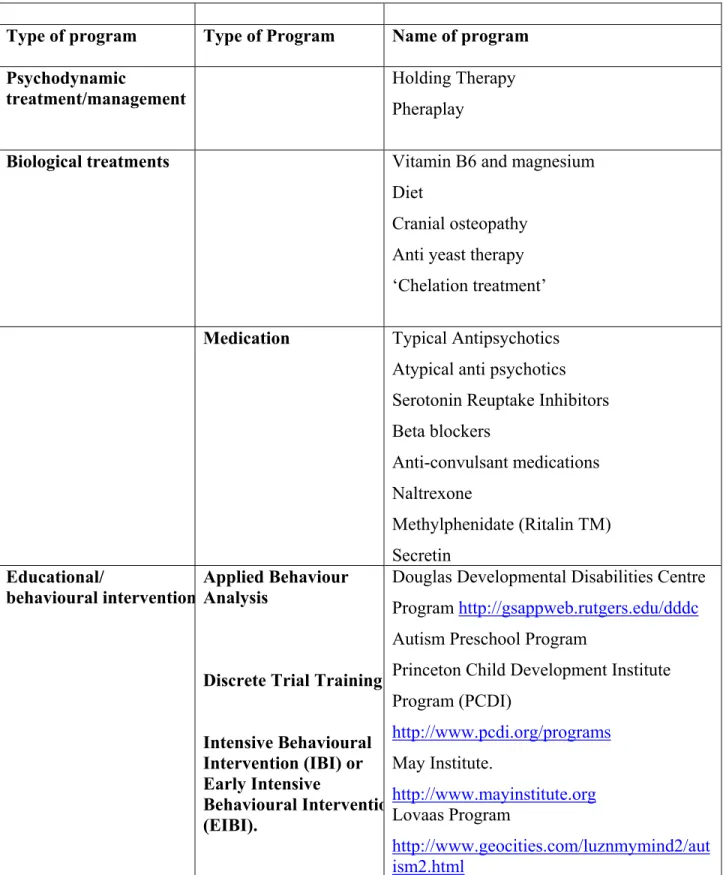
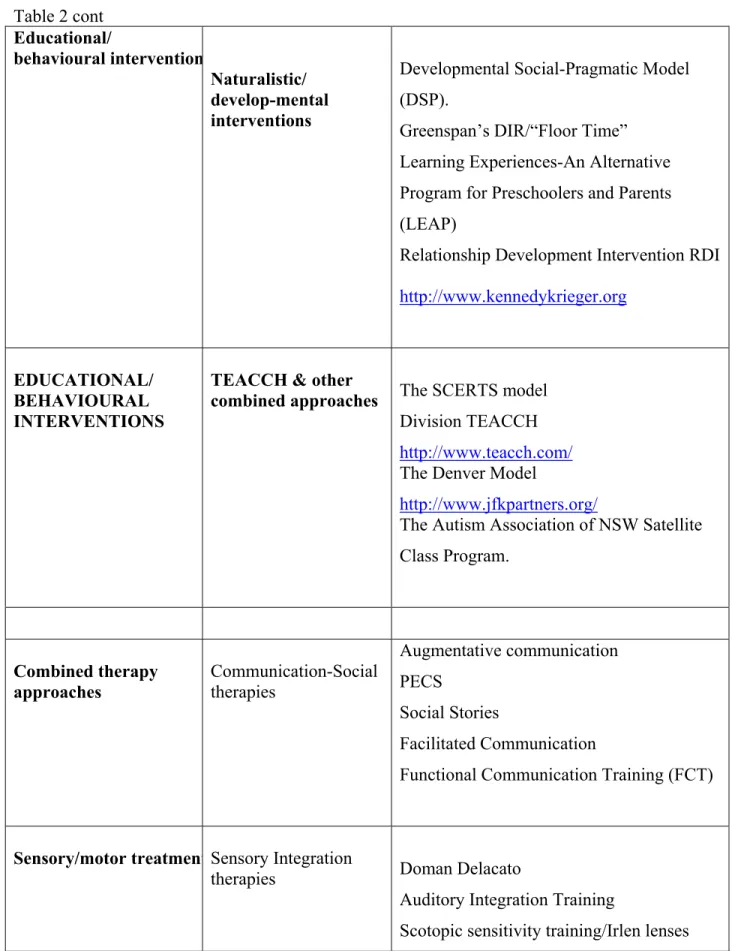
The range of treatments available for autism is extensive with treatments classified in several different ways by different authors. Mesibov, Adams & Klinger (1997), classify intervention approaches into three main groups:
• Psychodynamic • Biological
• Educational/Behavioural
This review will deal briefly with the psychodynamic and biological treatments and focus on the educational/behavioural interventions. While educational/behavioural
interventions are the primary focus of this review, brief reviews of the research into psychodynamic and biological approaches are included because it is likely that families will pursue more than one approach, often simultaneously, for example many children with autism in NSW are in educational programs and are also receiving one or more biological intervention such as medication, modified diet, or treatment for ‘heavy metal poisoning’. It is important to keep in mind the dilemma for families faced with many, often expensive and sometimes invasive, potential treatments for their child, especially when empirical evidence of the efficacy of these treatments is lacking.
PSYCHODYNAMIC TREATMENT/MANAGEMENT Introduction
When Kanner (1943) first described autism he initially speculated about potential biological/genetic aetiology. However he also commented on the lack of warmth shown by the parents of the children he studied and their tendency towards “mechanisation of human contacts”. Probably as a result of the prevailing psychoanalytic climate of the time, Kanner and other influential theorists, assumed that autism was an emotional disorder caused by emotionally ‘cold’ parents, especially mothers, who subconsciously rejected their off spring. This developed into the theory of ‘refrigerator parents’ or ‘refrigerator mothers’ despite the lack of empirical evidence to support the theory
(Jordan, 1999). These theories and the treatments that sprang from them were popularized by Bettleheim (1967) who was himself a concentration camp survivor. He had observed first hand the extreme symptoms of social withdrawal, anxiety, depression and
stereotyped behaviour resulting from trauma to the concentration camp inmates. When he observed similar behaviours in children with autism in America he assumed that these children had suffered a similar extreme trauma which could only have happened at home at the hands of the people the child spent most of his or her time with, their parents. Because parents were assumed to be the primary source of the child’s disorder, removal from the home and placement in residential institutions (‘parentectomy’) was often recommended as treatment.
There is some evidence that severely traumatised children demonstrate behaviours that are initially compatible with a diagnosis of autism. This was observed in children who had suffered severe abuse and deprivation in Eastern Europe before they were adopted into British families (Rutter, 1999), however, the response of these children to treatment showed a very different pattern to the treatment outcomes for children with autism. Severing all ties with their ‘toxic’ parents and psycho-dynamically oriented play therapy were key components in the psychodynamic therapeutic process (Mesibov, et al 1997). Although the psychoanalysts claimed dramatic cures and recoveries as a result of this treatment there is virtually no supporting evidence to support the efficacy of either removal from the parents or traditional play therapy (Jordan, 1999; Mesibov, 1997). There continues to be some support for a psychoanalytic approach to autism today from researchers such as Hobson (1990) who suggests it may be useful because of it’s
emphasis on object relations and affective contact. Howlin (1997) points out that for older more able individuals with autism individual psychotherapy or counseling may help them deal with anxiety and depression arising from recognition of their difficulties and differences. There is some evidence to support the effectiveness of Cognitive Behavioural Therapy (CBT) with some high functioning individuals with autism (Perry & Condillac, 2003), however unless therapy is combined with practical advice on how to deal with problems in a functional sense the outcome is unlikely to be effective.
Examples of Specific Psychodynamically Based Treatments/Therapies:
Holding Therapy.
This therapy based on the work of the Tinbergens (Tinbergen & Tinbergen, 1983) who claim that autism is caused by “an anxiety dominated emotional imbalance, which leads to social withdrawal and ….. a failure to learn from social interaction”. This imbalance was said to result from a lack of binding between mother and infant, which could be ameliorated by Holding Therapy. Howlin describes Holding Therapy as a “process [which] involves holding the child tightly, to ensure eye contact, with the aim of deliberately provoking distress, until he or she needs and accepts comfort.” (Howlin, 1997 p. 58).
Pheraplay.
This approach was developed by DesLauriers (1978), who essentially proposed that autism was a failure of emotional attachment compounded by sensory impairments. Pheraplay was advanced as the best way to provide stimulating experiences intense enough to overcome autistic children’s basic sensory deficits. The therapy focused on providing highly stimulating interpersonal interactions rather than learning specific play skills (Mesibov, et al 1997).
Summary
Today, clinicians in the field of autism infrequently use psycho-dynamically oriented approaches. The evidence that autism is a developmental rather than an emotional disorder is strong and there is now empirical evidence demonstrating the ineffectiveness of these interventions (Mesibov, et al 1997).
BIOLOGICAL TREATMENTS
Medication
Medication has been found to be useful in disorders such as epilepsy and depression. Although behavioural approaches to intervention are usually the most favoured form of treatment for younger children, consideration of the treat-ability of disorders such as anxiety and the biological nature of autism have resulted in hope that pharmacological treatments may be found to treat and possibly even cure autism. There have been
announcements of such treatments; such as secretin (a hormonal compound) (Dempsey & Forman, 2001) and a consequent rush to secure them by families. However, to date, with subsequent scientific examination, none of the claims for substantial treatment or cure have been substantiated (Sikich, 2001). While no medication has been found to affect the core symptoms of autism to date, there are often associated problems that may respond to pharmacological treatment. For example, there are times when because of severe
behavioural disturbance including aggression and self injurious behaviour, sleeping problems, over-activity, anxiety, depression or marked obsessive/compulsive behaviours, medication may be considered (Howlin, 1998). Gringas (2000) describes this as ‘a tailor made’ approach and stresses that the agents used do not impact on the primary social impairments that underlie autism. This is in contrast to the ‘one suit fits all’ approach when there is a belief that there is one underlying biological cause for autism and claims are made for treatments that impact on the core social impairments of autism (Gringas, 2000).
In the USA pharmacological interventions are very common. In a 1995 survey it was found that over 50% of the children studied were taking some form of drug or vitamin treatment (Aman, van Bourgondien, Wolford & Saphare, 1995). Ratings of parental satisfaction with the different forms of treatment indicated that anticonvulsants,
antidepressants and stimulants were the most popular. Least popular were the vitamins, mood stabilizers, neuroleptic, antihypertensives and sedative/hypnotic (Howlin, 1997). It is not known what the figure would be for pharmacological interventions in Australia, however a recent straw poll of 20 families in one of the Autism Association NSW services suggests that the figure is likely to be similar (50% +).
The major pharmacological treatments used in autism are summarised as follows:
Typical Anti-psychotics.
These were developed to treat schizophrenia. This class includes drugs such as
haloperidol, fluphenazine, thioxene and thioridazine. Empirically sound studies conclude that these drugs may be useful in modestly improving the overall functioning of children with autism however there are significant side effects on the extrapyramidal motor system associated with these medications including stiffness (dystonia), restlessness (akathisia) and involuntary movements (dyskinesias). Long-term use is not recommended because of the possibility of developing permanent tardive dyskinesia. If the medications
are to be stopped they should be gradually withdrawn to avoid withdrawal dyskinesias. (Sikich, 2001)
Atypical Anti-psychotics.
These have been developed in the last 20 years to minimise the effects on the
extrapyramidal system of the typical antipsychotics outlined above. This class of drugs includes: clozapine, risperidone, olanzapine, ziprasidone, quetiapine. These drugs have fewer extrapyramidal side effects than the typical antipsychotics. Clinical trials of risperidone with adults with autism show reduction in repetitive behaviours, aggression, irritability and anxiety. No changes in language or social behaviours were observed. Similar positive findings have been found for olanzapine but not for quetiapine, which suggests not all atypical antipsychotics are equally efficacious. The usefulness in children of this class of medications is not yet clear. The most common side effects in those on these medications are weight gain and sedation. (Sikich, 2001)
Serotonin Reuptake Inhibitors
This class of drugs was developed as antidepressant and has proved useful in the
management of obsessive-compulsive disorder. Serotonin reuptake inhibitors include the tricyclic antidepressant clomipramine, and the mixed antidepressant venlaflaxine and all selective serotonin reuptake inhibitors, fluxetine, sertraline paroxetine, fluoxamine, and citalopram. The effect of serotonin reuptake inhibitors in reducing the severity of the characteristics of autism is likely to be linked to serotonergic abnormalities in many people with autism, and altered patterns of brain serotonin synthesis. There is significant clinical evidence to suggest that this class of drugs is effective for many adults with autism. Mesibov et al (1997) suggests however that clomipramine should be used with caution because of an association with lowering of seizure thresholds. Evidence
supporting efficacy in children is more equivocal and no randomized control studies have been undertaken with this population. (See Sikich 2001 for a comprehensive review).
Beta blockers.
The use of beta-blockers to reduce anxiety and aggression in autism has not been well researched, however atenolol and propranolol are used to reduce anxiety in some people with autism. (Mesibov et al 1998)
Anti-convulsant medications.
It is estimated that up to 30% of people with autism have seizures, which often develop during adolescence (Mesibov, 1997). For those who do suffer from seizures
anticonvulsant medication is indicated in the same way as in any person affected. In the case of autism however there is one anti convulsant medication, carbaramazepine (Tegretal), which is sometimes used to modify aggression in highly aggressive people with autism who do not show signs of seizures (Mesibov, 1998).
Naltrexone.
Naltrexone is an opiate antagonist that has been hypothesised to be helpful in reducing the symptoms of autism by blocking endogenous opiods that may be released during self-injurious repetitive behaviours. Sikich (2001) suggests that there is fairly consistent
evidence that Naltrexone is possibly to probably efficacious in reducing hyperactivity and impulsivity to a limited degree in children with autism, however there have been
problems reliably replicating study findings and results for adults have been mixed and negative at times. Overall the results suggest that Naltrexone may be useful in some autistic children with significant hyperactivity who are able to tolerate the very bitter taste of the medication. Perry and Condillac (2003), suggest that Naltrexone has not been demonstrated to be effective.
Stimulants e.g. Methylphenidate (Ritalin TM)
Sikich (2002) suggests that because children with autism have significant problems with attention, hyperactivity and impulsivity, stimulants may be helpful in some cases. One clinical trial has been done which shows modest but statistically significant
improvements in hyperactivity. No adverse effects were demonstrated. Summary
In conclusion, psychopharmacologic research in autism is punctuated by initial case reports and open studies that demonstrate dramatic treatment benefits. However when these treatments have been examined more rigorously, the benefits appear much more modest and often cannot be substantiated in randomised controlled trials. The best treatments seem to work in only 50 – 60 % of participants. One issue is the lack of agreement on the standards of rating scales that are used to assess change. No treatment has yet been rigorously shown to change the core features of autism to a sufficient extent that the affected individual is able to achieve levels of functioning within the typical range. In general medications are most beneficial for people with autism who also exhibit levels of hyperactivity, aggressiveness, self-injurious behaviours, withdrawal, impulsive behaviours and anxiety that significantly interfere with daily functioning.
Other biological treatments
Secretin
Secretin is a peptide hormone secreted by the small intestine, which increases the pancreatic secretions. To date secretin has not been reported to have an activity in the brain. Reports of dramatic reductions in autistic symptomatology subsequent to treatment with secretin to assess the gastrointestinal function in some children with autism evoked extensive interest in secretin as a potential treatment for autism. However, clinical trials have failed to demonstrate its efficacy. Results are described in the Cochran review of research into the efficacy of Secretin in the treatment of autism (Williams, Wray & Wheeler, 2003). Perry and Condillac (2003), state that Secretin, Fenfluramine,
Naltrexone and Adrenocorticotrophin (ACTH) have been demonstrated to be ineffective and/or harmful for children and adolescents with autism
Vitamin B6 and magnesium.
Interest in mega doses of vitamins to treat autism arose from a 1960’s theory that some psychiatric disorders might be the result of relative deficiencies in certain vitamins and minerals. There has been particular interest in Vitamin B6 because it is involved in the synthesis of several neurotransmitters. Magnesium is administered with mega doses of
Vitamin B6 to reduce toxic side effects. The Cochran review of the research into the effect of this therapy did not find any studies that met the standard for clinical control trials (Nye & Brice, 2003). Sikich (2001), suggests that an overview of what research evidence there is, indicates that vitamin B6 and magnesium are possibly to probably efficacious in some autistic individuals. There are potential difficulties in administering the agents (bitterness) and the effect appears to be relatively small, even in individuals who do respond (Sikich, 2001). Howlin (1997) suggests that there are reported side effects such as sensory neuropathy, headache, depression, vomiting, and photosensitivity and urges caution in the use of large doses of vitamins.
Diet
It has been suggested that food intolerance or allergic responses may be responsible for at least some of the behavioural disturbance seen in autism (Howlin, 1997) While there are numerous anecdotal accounts of reduction in autistic symptomatology from families of children on gluten/casein free diets, there is no research to date to support this. A systematic review (Cochran) of gluten and casein free diets is being done; to date the authors have indicated that no RCTs (Randomised Control Trials) had been found.While there is growing literature describing the benefits of a range of dietary manipulations in the form of small group trials and anecdotal reports published in peer-reviewed journals, the scientific validity of these is questionable due to small sample size, lack of blinding and inconsistent outcome measures (Dr Katrina Williams, personal correspondence).
Cranial osteopathy
This involves very gentle manipulation particularly of the head. Treatment may last several months and effects are said to range from minor reductions in hyperactivity to major improvements in communication. However there are no adequate evaluative studies of this approach (Howlin, 1997).
Anti-yeast therapy,
This is based on the theory that autism may be caused by toxic effects of an over growth of yeast, particularly Candida, in the gut. Treatment involves the use of an anti-yeast agent such as ‘Nilstat’ to destroy the yeast in the gut to reduce the ‘toxic effects’. There appears to be no empirical research to support the presence of abnormally high levels of yeast in the gut of children with autism, e.g. Candida, or the efficacy of anti yeast treatment. Perry and Condillac (2003), in a review carried out for Children’s Mental Health, Ontario, state that exclusion diets (casein and gluten free) and anti-yeast therapies are not recommended due to minimal evidence and potential risk.
‘Chelation treatment’ for ‘heavy metal contamination’
This treatment is based on the theory that autism is caused by the accumulation of toxic heavy metals in the systems of children with autism. Practitioners claim that higher than normal levels of mercury and other heavy metals show up in hair and faecal analysis. It is recommended, by some medical practitioners in Sydney, as the next step for children who show only a little improvement on a gluten/casein free diet. (Dr Katrina Williams, personal correspondence). No research evidence or reference to ‘chelation’ treatment was found in any of the recent international reviews or journals.
EDUCATIONAL/BEHAVIOURAL INTERVENTIONS Introduction
The primary aim of this paper is to provide a synthesis of the published research for particular interventions and a description of the programs available in NSW and other Australian states. For this reason the primary focus of this section of the report will be on research relevant to programs currently available in NSW. However research into the efficacy of some other interventions is also summarised as intervention approaches from other countries may become available in Australia in the future. An example of this is the Options or ‘Son-Rise’ program, which has been available for many years in the USA but was only recently set up in South Australia. Similarly Connect Therapy, which appears to be a variant of the Options program, is now available in NSW. Dempsey and Foreman (2001), noted that sensory motor therapies, applied behaviour analysis, communication therapies, and multi treatment programs were available in New South Wales.
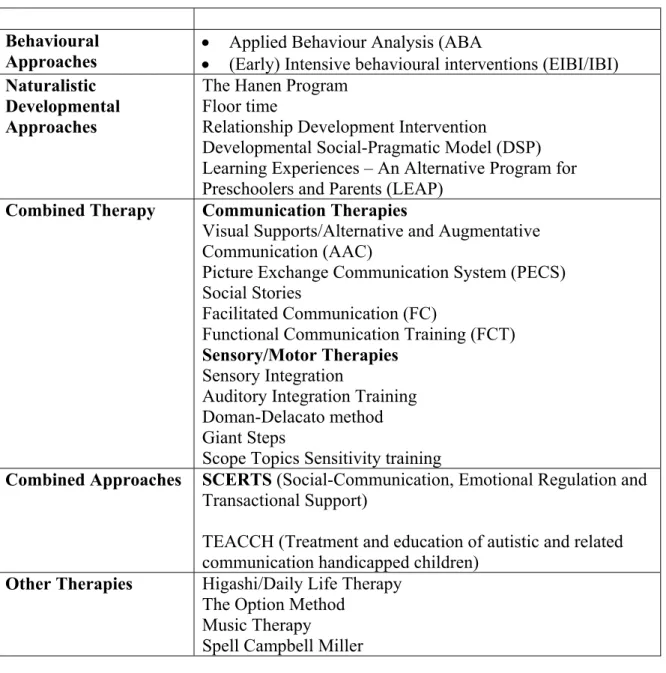
Table 1: Educational/Behavioural Interventions
Behavioural
Approaches •• Applied Behaviour Analysis (ABA (Early) Intensive behavioural interventions (EIBI/IBI) Naturalistic
Developmental Approaches
The Hanen Program Floor time
Relationship Development Intervention
Developmental Social-Pragmatic Model (DSP) Learning Experiences – An Alternative Program for Preschoolers and Parents (LEAP)
Combined Therapy Communication Therapies
Visual Supports/Alternative and Augmentative Communication (AAC)
Picture Exchange Communication System (PECS) Social Stories
Facilitated Communication (FC)
Functional Communication Training (FCT) Sensory/Motor Therapies
Sensory Integration
Auditory Integration Training Doman-Delacato method Giant Steps
Scope Topics Sensitivity training
Combined Approaches SCERTS (Social-Communication, Emotional Regulation and Transactional Support)
TEACCH (Treatment and education of autistic and related communication handicapped children)
Other Therapies Higashi/Daily Life Therapy The Option Method
Music Therapy
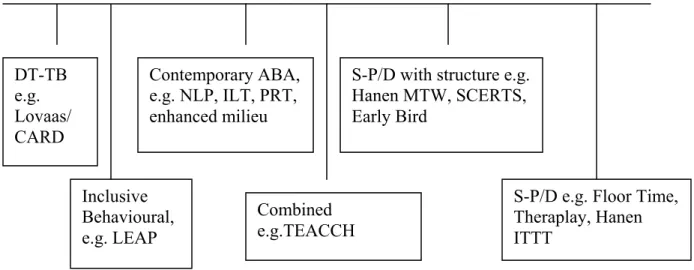
Educational/Behavioural treatments and programs can also be viewed in terms of their position on a continuum of discrete trial traditional behavioural approaches to the social pragmatic developmental approaches (Prizant & Wetherby, 1998) – See Figure 1. It is acknowledged that this is only one dimension of treatments and programs. While the continuum shown below may be an over simplistic generalisation, given the controversy and debate about the efficacy of one approach compared to another, it is useful to examine how significant these assumed differences are.
Figure 1: The Continuum of Discrete-Trial Traditional Behavioural to
Social-Pragmatic Developmental Approaches.1
Finally in this section comparative research on different approaches is discussed.
1 Key:
ABA Applied Behavioural Analysis
CARD Centre for Autism and Related Disorders based on the UCLA Young Autism
Project Lovaas and operating from Los Angeles with branches internationally
DT-TB Discrete Trial traditional Behaviour
ILT Incidental Language Teaching
ITTT Takes Two To Talk Finally in this section comparative research on different approaches is discussed
LEAP Learning Experiences: an alternative program for preschoolers and their parents
MTW More Than Words
NLP Natural Language Paradigm
PRT Pivotal Response Training
SCERTS Social-Communication, Emotional Regulation and Transactional Support
S-P/D Social Pragmatic Development
TEAACH Treatment and Education of Autistic and related Communications Handicapped Children
Inclusive Behavioural, e.g. LEAP DT-TB
e.g. Lovaas/ CARD
Contemporary ABA, e.g. NLP, ILT, PRT, enhanced milieu
Combined e.g.TEACCH
S-P/D with structure e.g. Hanen MTW, SCERTS, Early Bird
S-P/D e.g. Floor Time, Theraplay, Hanen ITTT