Abstract—Signal penetration in the 2.4 GHz band, in
terrains with thick foliage is known to be an issue. However, it is necessary to establish efficient wireless communication in this type of regions as well, both for the improved efficiency of sensor networks deployed for research and monitoring and also for the advancement in connectivity for socio-economic data networks.. A study is initiated and presented in this paper to analyse the actual effect of foliage on the 2.4GHz band, which is currently the most common signal frequency used for wireless connectivity. The study revealed a signal drop of more than 83% from the best case scenario, without obstacles or interference, to the worst case scenario in a jungle terrain with thick foliage and interference, as chosen for this study.
Index Terms— Zigbeen, Blueetooth, Signal Interferenes, Wireless Communication, foliage
I. INTRODUCTION
HE IEEE 802.15 standard has been developed to establish a roadmap for development of Personal Area Network which is meant for modest-sized geographical areas. Here we discuss two protocols for Personal Area Networks. The IEEE 802.15.1 is the standard for Bluetooth, which is the most widely used short range communication technology, initially originating as a short range cable replacement technology, boasting more than 2 billion devices making use of it worldwide. It is also a continuously evolving technology. The latest version at the time of this study, Bluetooth 4.0 with its high energy efficiency and high data rates of up to 24 Mbps, provides the best data sharing experience yet [20].
The IEEE 802.15.4 standard is for wireless personal area networks (WPAN) with low-power, low-cost, low-speed communication between devices. There is no underlying infrastructure to emphasize its low cost and low power consumptions. The basic framework conceives a 10-meter range with 250 Kilobits per second transfer rate. Physical medium is accessed through a Carrier Sense Multiple Access with Collision Avoidance (CSMA/CA) protocol [18].
Manuscript received Jan 06, 2016; revised Jan 19, 2016. This paper was supported in part by the Swinburne University of Technology, Sarawak Campus.
K. Mathew is with the Swinburne University of Technology, Sawarak Campus, Jalan Simpang Tiga, 93350, Kuching, Malaysia (phone: +60 82 260902, e-mail: [email protected]).
M. Tabassum is with the Swinburne University of Technology, Sawarak Campus, Jalan Simpang Tiga, 93350, Kuching, Malaysia (e-mail: [email protected]).
The 2.4 GHz is in the unlicensed spectrum. Because of this, most of the wireless related technologies operate in this spectrum, including WiFi, cordless phones, wireless peripherals, microwave ovens, etc. and Bluetooth and ZigBee are no exceptions. As a result the interference in this spectrum is also high. It has been studied that this spectrum is also susceptible to ambient weather and environmental conditions due to absorption of parts of this spectrum due to moisture and other obstacles like buildings, trees, shrubs, etc. In this paper, we wish to investigate the effects of environmental conditions on Bluetooth and ZigBee signal penetration covering both technological and environmental interferences on both. Conducting this research in Kuching, Malaysia will give us an excellent opportunity to apply both the technological interference and environmental constraints in order to chart a study on the signal penetration of Bluetooth and ZigBee.
The following are the objectives of the study:
To examine the effect of foliage on Bluetooth and ZigBee.
To examine the effect of the interference of one technology on another in those environmental conditions.
This paper is organized as follows. We start with some related work in this area under the Literature Review, followed by the Methodology, Experiment and Results and conclusion with some future works.
II. LITERATURE REVIEW
Some related work in this area is discussed as follows. The various standards are defined in their relevant standards document.
Wireless networks have two modes of operation, AdHoc and Infrastructure. Bluetooth [18] and Zigbee [17] protocols support the ad-hoc operation mode. The 802.11 standards [16] employ the Carrier Sense Multiple Access with Collision Avoidance (CSMA/CA) method for concurrent shared medium access [20].
Bluetooth operates in the frequency band of 2.45 GHz – the Industrial-Scientific-Medical (ISM) band, which ranges from 2,400 to 2,483.5 MHz in the US and Europe (only parts of this band are available in France and Spain), and from 2,471 to 2,497 MHz in Japan. Hence, the system can be used worldwide, if the radio transceivers can operate in the frequency band between 2,400 and 2,500 MHz and they can select the appropriate segment [4].
The older Bluetooth 1.0 standard was the first version and had a maximum transfer speed of 1 Megabit per second
Analysis of Bluetooth and Zigbee Signal
Penetration and Interference in Foliage
Kuruvilla Mathew and Mujahid Tabassum,
Member, IAENG
(Mbps). Version 2.0 worked at up to 3 Mbps and backward compatible with v1.0. With Bluetooth version 3.0 standards, the data transfers rates were able to reach up to 24Mbps. This improvement in data rate is attributed to the inclusion of 802.11 radio protocol (the 802.11 Protocol Adaptation Layer – PAL) providing for the increase in throughput. However, Version 3 has higher power consumption, which is due to the 802.11 radio that is combined with it in order to facilitate high data rates. Bluetooth 4.0 was later adopted in 2010, providing improvements power consumption. Newer forms of Bluetooth bring compatibility with NFC chips. Both Bluetooth versions 3.0 and 4.0 can talk to NFC hardware in phones and laptops to make pairing a simple process of tapping the two devices together. For example, Motorola's new Elite Sliver headset has this NFC pairing ability. [2]. Bluetooth version 4.1 is the latest Bluetooth version released in December, 2013.
The Bluetooth operates in The Basic Rate / Enhanced Data Rate (BR/EDR) and Low Energy (LE) modes. The BR/EDR simply operates at the symbol rate of 1 Megasymbol/second (Ms/s), supporting 1Mbps at BR and 2-3 Mbps at EDR. Devices use a specific frequency hopping pattern that can be adapted to exclude a portion of the frequencies that are used by interfering devices, thereby adapting co-existence with static no-hopping systems in the ISM band. LE mode employs two multiple access schemes, Frequency division multiple access (FDMA) with 40 physical channels 2 Mhz apart, and time division multiple access (TDMA) using time slots allotted to the devices. The system is capable of powering down secondary controllers in the Bluetooth core system to conserve power [3].
Zigbee is a wireless technology built on the IEEE 802.15.4 standards, to operate on low data rates, low power and low cost. Since sensors and actuators do not consume high power, Zigbee devices can provide long lifespan, by the decades, for the batteries installed. In short, Zigbee is known as ‘Wireless Control’, it comes from the term ‘Wireless Sensor Networking and Control’ [6]. The Zigbee architecture consists of several layers – Physical, Media Access Control, Network, Security and Application. However, Zigbee Alliance is only accountable for the Network, Security and Application Layers. The Physical and Media Access Control layers are not the responsibility of Zigbee Alliance and are based on the IEEE 802.15.4 standards [12]. The network layer is in control of anything that is involved in forming the network. This includes configuration of network and discovery of devices [8].
Microwave is generally defined as a kind of electromagnetic wave with frequency of 0.3GHz to 300GHz, having wavelength of 0.001m to 0.3m. Microwaves usually propagate in a straight line and do not diffract around obstacles. When it passes through obstacles, attenuation occurs. Normally, radio frequencies of longer wavelength (low frequency) are less susceptible to attenuation [14]. In wireless networking, Ultra-Wide Band (UWB) helps to obtain higher bandwidth using lower power consumption, at very short distances – up to a maximum of 230 feet [16]. On the other hand, UWB has the capability of transmitting signals through obstacles that reflects signal with more limited bandwidths and high power. This band is widely
used in WPAN and devices which uses wireless connectivity [9]. Interference of rain to the signals in the wireless communication is known as rain fade. Rain fade happens when the separation of the rain droplets is almost similar to the wavelengths of the signal [13]. Since the rainfall is not constant, rain fade is not permanent or constant as it depends on the rain and its intensity. Each WiFi channels overlaps 4 Zigbee channels. The interference levels are higher at the channels in the center frequency than the edges. These two technologies can coexist within short distances when there is a large difference in their center frequencies, otherwise they can coexist only in longer ranges [1].
Some experiments and measurements were done to quantify the interference effect of Zigbee devices on the throughput performance of the IEEE 802.11g and vice versa. The results presented state that the Zigbee interference has more effect on the IEEE 802.11g uplink rather than the downlink. Furthermore, the results also show how IEEE 802.11g is affected by Bluetooth more than Zigbee and how IEEE 802.11g affects the performance of ZigBee when the spectrum of the chosen channels of operation overlap [7].
The two methods for radio frequency modulation in the unlicensed 2.4 GHz ISM band are frequency-hopping spread spectrum (FHSS) and direct-sequence spread spectrum (DSSS). The DSSS systems have the most to lose because of the danger of overlapping with another DSSS system. A receive strength signal indicator (RSSI) can be used to proactively measure the amount of energy on the air and if that level is too high over a period of time switch to a clearer channel. A period of time is taken into account so as not to change channels if a FHSS system is passing through [5].
For the purpose of this study, we have made use of Bluetooth version 4.0 enabled smartphones and usb Zigbee dongles to carry out the experiments. This version has two main modes of operation BR/EDR and LE. These are explained in some detail in the following parts.
III. METHODOLOGY
This paper focus on analysis of the Bluetooth and Zigbee signal penetration in different environmental conditions and their interference effect on each other. We will follow a quantitative approach, to study the actual performances in the three scenario setups, as discussed below.
Bluetooth signal was measured using two smartphones running Bluetooth v4.0 with their backs facing each other. The signal strength was measured using an android app called Bluetooth Signal. Zigbee was studied using two laptops connected with USB zigbee device and Fluke Networks AirMagent Spectrum XT application was used to measure the signal strength.
𝑑𝑆𝑖𝑔 =
𝑇𝑥𝑆𝑆 −𝑅𝑥𝑆𝑆𝑇𝑥𝑆𝑆 - (Eq. 1.)1.
dSig: factorized Signal Degradation Value,
2.
TxSS: Transmission Signal Strength,
3.
RxSS: Received Signal Strength
[image:3.595.313.539.60.226.2]A. Zero Interference and Zero Obstacles
Fig. 1. Zero Obstacles – The Stadium
We found the Sarawak State Stadium parking lot in Kuching to be a zone with no RF signals in the 2.4GHz band and clear line of sight (no obstacles). Fig. 1. shows the picture of the location where the experiment was conducted.
[image:3.595.59.267.151.303.2]B. Zero Interference and Mild Foliage Obstacles
Fig. 2. Mild Foliage – The Village
This scenario was observed in a village setting on the outskirts of Kuching, Malaysia. The area did not have any RF signals in the 2.4 GHz band. The place was shrouded with growth of knee height foliage. There was a bunch of of banana trees standing in the middle of this area, which we could use for study of signal propagation behind this obstacle. The experiment was conducted in pleasant weather conditions with clear sky and no rain. Fig 2 shows the picture of the location where the experiment was conducted.
C. Zero Interference and Thick Foliage Obstacles
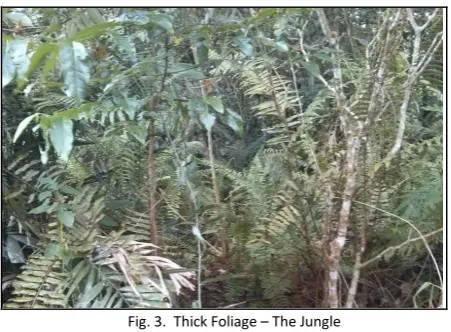
We found some area near the village with thick foliage, ideal for this scenario. The foliage was thick enough to make passage through the foliage difficult and no line of sight beyond a few meters due to the dense vegetative growth. It was fair weather with clear sky when the experiment conducted. Fig. 3. shows the picture of the location where the experiment was conducted.
Fig. 3. Thick Foliage – The Jungle
IV. EXPERIMENTS AND RESULTS
A. Bluetooth, Zero Obstacles and Interference
[image:3.595.312.542.366.529.2]With no spectrum interferences apart from the ambient weather conditions at the stadium, this provided best results for Bluetooth operation. In terms of coverage, the Bluetooth signal reaches a staggering 120m. For a short range data sharing technology the coverage of 120m is quite high, this is attributed to the Class 1 transmitting power of the device used which in our case is the Lumia 920 smartphone
Fig. 4. Bluetooth, Zero Obstacles – The Stadium
Fig. 4. shows that as the distance from the reference point increases the average degradation increases. This indicates that the signal strength gradually decreases as the distance increases. It was interesting to note that the Bluetooth signal could be detected over a distance of 120m from the reference point, even though it was originally designed to be less than 10m cable replacement technology.
B. Zigbee, Zero Obstacles and Interference
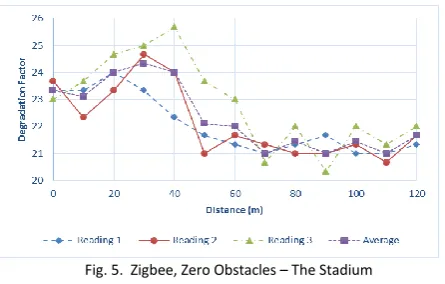
[image:3.595.63.276.385.544.2]Fig. 5. Zigbee, Zero Obstacles – The Stadium
C. Bluetooth with Zigbee as Interference, Zero
Obstacles
[image:4.595.308.545.179.324.2]Bluetooth and ZigBee technologies use the 2.4 GHz spectrum for its operation. The addition of interference in the form of ZigBee causes a considerable drop in the signal strength for Bluetooth (Fig. 6.). ZigBee uses DSSS modulation technique in which the data bits are spread to a larger bit stream, so that the data has a bigger bandwidth than the original data. This causes crowding of the spectrum and thus affects Bluetooth operation. As a result the coverage of Bluetooth is decreased.
Fig. 6. Bluetooth, Zigbee Interference, Zero Obstacles – The Stadium
D. Zigbee with Bluetooth as Interference, Zero
Obstacles
Fig. 7. Zigbee, Bluetooth Interference, Zero Obstacles – The Stadium
Zigbee signal was received beyond 80m. Since the signal for Bluetooth was detectable up to a maximum distance of 80m, the signal strength of Zigbee was also measured only up to 80m, even though it was detectable beyond this distance. By observing the data (Fig. 7.), it is seen that there is no perceivable change in the degradation pattern from what was observed in the previous scenario. However, the drop in degradation factor occurred much sooner than when Zigbee is operating alone without Bluetooth as interference.
E. Bluetooth, Mild Foliage and Zero Interference
[image:4.595.54.284.336.484.2]In this scenario, we can observe a big drop in the range for Bluetooth, with the signal reaching only up to 30m. This is attributed to the grass cover in the field. It can therefore be inferred that these shrubs limit the signal penetration. The taller obstructions in the area, namely the banana trees (as it can be seen in the picture) are signal killers because no Bluetooth signal is received behind them or even 10m behind them. The measurement presented is avoiding this obstacle.
Fig. 8. Bluetooth, Mild Foliage – The Village
F. Zigbee, mild foliage and zero interference
[image:4.595.309.543.426.615.2]Fig 9 shows the degradation factor of Zigbee with no obstacle. Comparing this to the stadium scenario, it is observed that there is a large increase in the degradation factor. By this, we can infer that the signal strength over the 30m for this scenario decreases by a great deal.
Fig. 9. Zigbee, Mild Foliage – The Village
[image:4.595.53.287.505.661.2]G. Bluetooth with Zigbee as interference, mild foliage
[image:4.595.312.541.543.736.2]Fig. 11. Bluetooth, Zigbee interference, Mild Foliage, no line of sight (obstruction) – The Village
Bluetooth, as expected shows an increased degradation factor, attributed to the added interference from Zigbee signals. There is a marked difference in the trend (Fig 10) as the degradation factor increases quite rapidly, indicating faster drop in signal strength compared to the previous scenario.
In the case of obstruction (Fig. 11), the signal was detected at 20m. This might be due to the surroundings (reflections etc.) or nature of the field. However, the signal received is noted to be too weak for any data transfer to take place. Hence we have left out this reading from the data analysed and presented, noting this variation as an observation only.
H. Zigbee with Bluetooth as Interference, Mild Foliage
and Zero Interference
From the average reading in Fig. 12, it is seen that the degradation factor is slightly increasing from 23.67 at reference point to 26.3 at 30m. This pattern is similar to the average reading of the stadium scenario.
[image:5.595.310.542.223.380.2]Fig. 12. Zigbee, Bluetooth interference, Mild Foliage, line of sight – The Village
Fig. 13. Zigbee, Bluetooth interference, Mild Foliage, no line of sight (obstruction) – The Village
With the Zigbee receiver behind the obstruction (the banana trees), there is a considerable increase in the degradation factor. As in the earlier scenario without Bluetooth as interference, it is seen that at point 20m, the average degradation factor of Zigbee in Figure 13 slows a slight increase. However, the degradation factor increases once again at 30m.
I. Bluetooth, Thick Foliage and Zero Interference
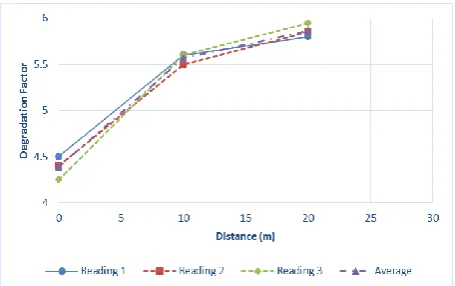
We notice the expected trend, with the degradation factor increasing with the distance. Since the variation of degradation factor was high, reading was taken at every 5m. It is interesting to note that the Bluetooth signal loss was very high and was not received after 20m.
Fig. 14. Bluetooth, Thick Foliage – The Jungle
J. Zigbee, Thick Foliage and Zero Interference
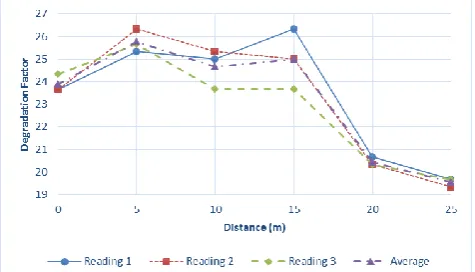
[image:5.595.314.547.440.591.2]We notice one again that degradation factor (Fig. 15.) dropped from 15-20m. However, after the 20m point it continues with the increasing degradation factor.
Fig. 15. Zigbee, Thick Foliage – The Jungle
K. Bluetooth with Zigbee as interference, thick foliage
[image:5.595.50.283.479.673.2] [image:5.595.308.545.607.764.2]We notice increased signal degradation as compared to the previous scenarios, attributed to the thick foliage in the forest environment. In effect, it resulted in loss of Bluetooth signal penetration from upto 120m in the open stadium parking to 20m in the jungle. When ZigBee is also operating, more degradation occurs, as the crowding of the spectrum utilised by zigbee causes additional signal loss.
L. Zigbee with Bluetooth as interference, thick foliage
[image:6.595.49.287.248.384.2]We observe from Fig. 17. that the Jungle scenario has a higher degradation as compared to the previous scenarios. At 20m, we once again noticed a sudden drop in degradation value. The drop in both village and jungle scenario happens at 20m where as in stadium there was a drop at 40m and another drop at 60m. The signal degradation is observed to be the highest in this scenario.
Fig. 17. Zigbee, Bluetooth interference, Thick Foliage – The Jungle
V. CONCLUSION AND FUTURE WORKS
The paper presents an analysis of the effect of foliage and interference on signal penetration in the 2.4 GHz RF band. We notice from the results, that foliage has significant effect on signal penetration. If there is any interference due to other signals in the same bandwidth, the signal penetration degrades further. The magnitude of this issue’s significance can be comprehended when we notice a signal penetration maximum distance drop from 120m to a mere 20m from the best case to the worst case scenario in our experiment, which is about 83% drop. Hence improvement in this area is an area of urgent research importance in order to improve the practicality of network communications in such environments.
The study also revealed an anomaly in the zigbee penetration pattern, as there was a slight increase in signal strength after some distance. Further study is needed to identify the reason for this unprecedented variation.
REFERENCES
[1] Atmel 2013, 'Atmel AT02845: Coexistence between ZigBee and Other 2.4GHz Products', September 2013, pp. 1-12.
[2] Bennet, B. 2013. The power of Bluetooth 4.0: It'll change your life. [online] Available at: http://news.cnet.com/8301-1035_3-57389687-94/the-power-of-bluetooth-4.0-itll-change-your-life/
[3] Core Version 4.0. 2010. Bluetooth 4.0 Specification. [online] Available at: https://www.bluetooth.org/en-us/specification/adopted-specifications
[4] Haartsen, J. and Mattisson, S. 2000. Bluetooth—A New Low-Power Radio Interface Providing Short-Range Connectivity. IEEE PROCEEDINGS OF THE IEEE, 88 (10), pp. 1651 - 1661.
[5] Gerrior, M. and Woodings, R. 2006. Avoiding Interference in the 2.4-GHz ISM Band. [online] Available at: http://www.eetimes.com/document.asp?doc_id=1273359&page_num ber=2
[6] Gislason, D 2008, Zigbee Wireless Networking, Newnes, United States of America.
[7] K.Shuaib, M. B., F.Sallabi, and A.Lakas (2006). Co-existence of zigbee and WLAN., A performance study. College of Information Technology, UAE University.
[8] Le, KT 2005, ZigBee SoCs provide cost-effective solutions, EE Times, viewed 29 November 2013, http://www.eetimes.com/document.asp?doc_id=1273396.
[9] Mitchell, B NA, UWB, About.com, viewed 1 December 2013, http://compnetworking.about.com/od/networkprotocols/g/ultra_wide_ band.htm.
[10] Mujahid Tabassum and Dr. Kartinah Zen, ‘Performance Evaluation of ZigBee in Indoor and Outdoor Environment’, 9th International Conference on IT in Asia (CITA 2015), 4th – 5th August 2015, Kuching, Malaysia.
[11] Natalie Lawrence Muda, Kuru Mathew, Mujahid Tabassum, ‘Interference Effects on Short Range Technology Zigbee Performance’, 19th International Conference on Transformative Research in Science and Engineering, Business and Social Innovation (SDPS 2014), 15th – 19th June 2014, in Kuching, Malaysia. [12] Rahmani, E 2005, ZigBee/IEEE 802.15.4, ECE Department –
University of Tehran.
[13] Rouse, M 2005, rain fade, TechTarget, viewed 1 December 2013, http://searchmobilecomputing.techtarget.com/definition/rain-fade. [14] Rouse, M 2006, Microwave, TechTarget, viewed 30 November 2013,
http://searchnetworking.techtarget.com/definition/microwave. [15] Rouse, M 2008, ultra wideband, TechTarget, viewed 1 December
2013, http://whatis.techtarget.com/definition/ultra-wideband. [16] Specification 802.11. 2005. IEEE Standards Association. [Online]
Available at: http://standards.ieee.org/about/get/802/802.11.html. [17] Specification 802.15.4. 2005. IEEE Standards Association. [Online]
Available at: http://standards.ieee.org/about/get/802/802.15.html. [18] Specification of the Bluetooth System v1.0A. 1999.Bluetooth.
[Online] Available at: https://www.bluetooth.org/en-us/specification/adopted-specifications.
[19] Suhail Ahmed, Mujahid Tabassum, Kuru Mathew, ‘Interference Effects on Short Range Technology BlueTooth Performance’, 19th International Conference on Transformative Research in Science and Engineering, Business and Social Innovation (SDPS 2014), 15th – 19th June 2014, in Kuching, Malaysia.