Performance Analysis of IC Engine by the Application of
Alternative Fuel
Sarthak Mukund Shukrey
1, Omkar Sanjay Kale
21,2
Student (M.E), Thermal Engineering, BITS-Pilani, Hyderabad Campus, Telangana-500078, India
---***---Abstract -In this paper, we have produced biodiesel from papaya, watermelon seed oil and sunflower oil by transesterification process using methanol and KOH (catalyst) and a new biodiesel blend was so produced. The new blend consists of WP oil which are in a ratio of 1 :1 and the final blend has 2:1 ratio of sunflower to WP oil mixture. The final blend was amalgamated with conventional Diesel to give B20 blend i.e. 20% of Biodiesel blend and 80 % of diesel. Then performance and emission test were performed with B20 blend to compare the same with conventional diesel.Keywords: Biodiesel, papaya, watermelon, sunflower, transesterification. Emission, etc.
1. INTRODUCTION
The discussion of this paper is related to application of so produced blend of biofuel from watermelon, papaya seed oil and sunflower oil. Also, the effect of this alternative biofuel on the performance of IC engine. The entire analysis can be divided into subcategories as follows:
(a) Collection of Unrefined sample of seed oil (watermelon, papaya and sunflower)
(b) Conversion of Raw oil into biodiesel by transesterification process.
(c) Investigation and utilization of new biodiesel blend in IC engine.
2. METHODOLOGY
2.1 Biodiesel Production
Oil collected from papaya, watermelon seeds and sunflower have higher viscosity and lower volatility. So, these issues/cons can be demeaned by converting these unrefined oils into biodiesel form whose performance and properties are analogous to that that of conventional diesel. The methods generally adopted to convert raw oil, into biodiesel are as follows:
1. Pyrolysis 2. Dilution
3. Micro-emulsification 4. Transesterification
Out of which transesterification is widely adopted because it is not much time consuming and economically viable compared to other processes.
Nomenclature
WP: Watermelon and papaya mixture in 1:1 ratio. B20: 20% WPS + 80% conventional diesel. BP: Brake power
Bsfc: Brake specific fuel consumption HC: Hydrocarbon
© 2019, IRJET | Impact Factor value: 7.34 | ISO 9001:2008 Certified Journal
| Page 883
Transesterification ProcessSteps involved in conversion of raw oil into biodiesel
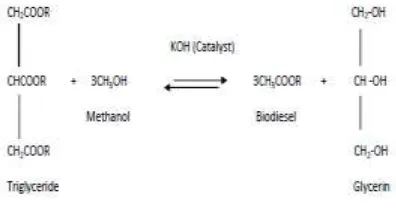
[image:2.595.196.394.173.278.2]It’s the process in which an animal fat or vegetable oil or reacts with a sample of alcohol to form glycerol and ester. It gets affected by the type of alcohol, temperature, reaction time, amount of catalyst and free fatty acid.
Fig -1 Transesterification Reaction
200 ml of sunflower oil, 150 ml of papaya oil and 90 ml of watermelon oil were taken in a beaker. The unrefined oils were preheated to 6000 C. Simultaneously, 2.8 g, 2.12 g and 1.23 g of KOH was taken for sunflower, papaya and watermelon oil
respectively. Also, 40 ml, 30 ml and 18 ml of methanol was taken for sunflower, papaya and watermelon oil respectively. This methanol and solution of KOH was mixed in a beaker and was stirred/rotated at 200 rpm using magnetic stirrer. Then, leave the mixture for 12hrs so that the glycerin settles down at the lower section of the container leaving the biodiesel at the top. Now, separate the biodiesel and glycerin. After separating the biodiesel from glycerin, wash the biodiesel in water in order to remove any remains of methanol or KOH.
Fig -2 Washing process of watermelon and papaya oil
[image:2.595.187.397.412.589.2]Fig -3 Washing process of Sunflower Oil.
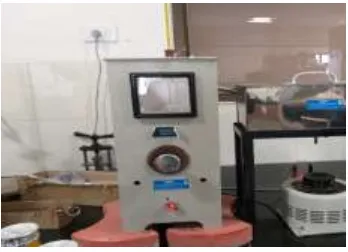
[image:3.595.195.385.105.269.2]2.2 Distillator
Fig -4 ASTM -86 Distillator (manual)
[image:3.595.208.382.326.452.2]2.3 Bomb Calorimeter
Fig -5. Setup for evaluating Calorific value
Fig-5 shows a setup which was used to calculate calorific value of our fuel. The bomb is situated in a calorimeter made up of copper which contains water with known mass amount. The calorimeter was provided with electrically operated stirrer and a thermocouple.
Water Equivalent = 503.76 Cal/°C
For finding the C.V value of fuel by bomb calorimeter
[image:3.595.193.396.522.655.2]© 2019, IRJET | Impact Factor value: 7.34 | ISO 9001:2008 Certified Journal
| Page 885
C.V ==
= 9749.14cal /kg = 40.79 MJ/kg.
2.4 Calculations
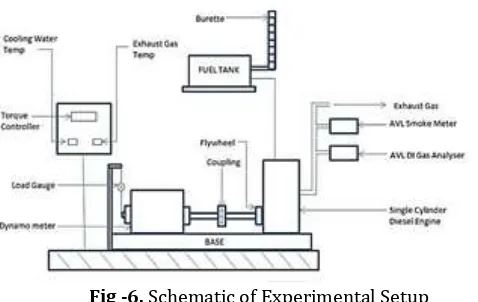
[image:4.595.168.407.248.399.2]A four-stroke single cylinder DI stationary diesel engine was used to study the performance, combustion and emission characteristics of new breed of biofuel.
Fig -6. Schematic of Experimental Setup
So, basically the load was enhanced from 0-100% with a percentage increase of 25% with the help of engine which was coupled to eddy dynamometer. The engine was made to warm up a little bit by the application of pure diesel. The load was varied from 0 to 3KW. Furthermore, a stop watch was used to note down 5 cc fuel consumption present quintessentially in a burette.
(here a= watermelon, b = papaya,
c= sunflower)
0.994493 g/
When above is mixed with diesel in 1:4 ratio, then?
= 0.8528 g/
Sample calculation (for 2kW)
1. BP = = = 1.97 kW
2.
3. = = 1.285 x kg /kW-sec
4. = 10.3198
5. = 19.08 %
6. = = 0.037 kg/sec
7. = = 0.371kW
8. =
9.
10. =
= 1.314kW
11.
= 7.1538 kW
12. * = 1.561 *
13. = 175.82
14.
= 5.86 * /s
15. = 6.68 *
16. Eff =
2.5 Emission measurement
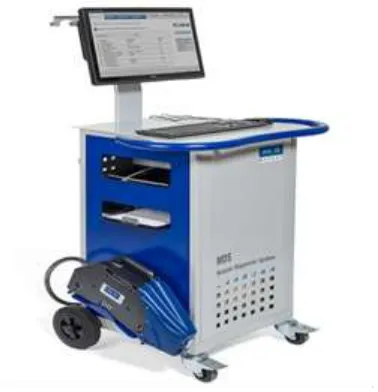
[image:5.595.205.394.536.732.2]Engine emission characteristics of gases like NOX, Carbon Monoxide (CO), Hydrocarbons (HC) and Carbon dioxide (CO2) emissions of biofuel were measured using AVL gas analyzer. AVL 437 C smoke meter was used to measure the opacity of smoke.
© 2019, IRJET | Impact Factor value: 7.34 | ISO 9001:2008 Certified Journal
| Page 887
Fig -8 Technical Specifications of AVL machine3. RESULTS AND DISCUSSION
3.1 Performance characteristics
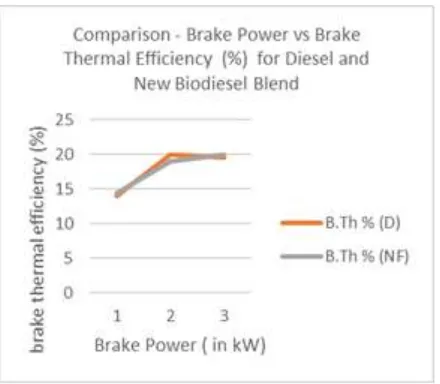
Chart -1 Brake thermal Efficiency v/s Brake power for Conventional Diesel and our Biodiesel
[image:6.595.197.417.499.691.2]Brake Power v/s Brake Specific Fuel Consumption
Chart -2. Brake specific Fuel Consumption v/s Brake Power (kW) for conventional Diesel and our Biodiesel.
As we can infer from the graph that as, BP value increases the value for NF decreases viz true for conventional diesel as well. The value of bsfc decreases by 8.23 % at 3kW.
Brake Power v/s Volumetric Efficiency
Chart -3. BP v/s Volumetric Efficiency for Diesel and our Biodiesel
3.2 Emission Characteristics
Exhaust Gas Temperature
© 2019, IRJET | Impact Factor value: 7.34 | ISO 9001:2008 Certified Journal
| Page 889
CO emissionChart -4. Comparison of CO Emission curve for conventional diesel and new biodiesel blend
NOx emission
Chart -5 Comparison of NOx Emission curve for conventional diesel and new biodiesel blend
HC emission
Chart -6. Comparison of HC Emission curve for conventional diesel and new biodiesel blend
4. CONCLUSIONS
Kirloskar 4-stroke DI engine was used to test the obtained blend of papaya, watermelon and sunflower oil. Emission and performance analysis combustion have been conducted and the results so obtained are as follows:
• CO emission for biodiesel and blend were less when compared to that of diesel at 100% load. The CO emission for diesel was much higher than our blend of so produced biodiesel (B20)
• HC emission for the blend B20 is lesser than that of the diesel viz yet another limelight of B20- WPS
• Due to presence of oxygen, the NOx emission of pure biodiesel is higher than that of diesel. But NOx emission of blend B20 is only 5% higher than that of diesel.
• The study summarizes that the combustion characteristics and performance of blend B20 of WPS
(i.e. Watermelon seed, papaya seed oil, sunflower oil biodiesel mixed in 1:1:2 ratio) is in near proximity to that of the diesel while the emission characteristic is better than diesel.
5. FUTURE SCOPE
By extracting oil in humungous quantity or by using state of the art technology so that the fuel cost can be reduced.
Thermal analysis of each element of engine can be performed.
Exhaust gases heat analysis can be done.
Improvement in NOx emissions could be implemented.
Different proportion of oils can be amalgamated to identify the best possible blend that can help in enhancing the brake thermal efficiency of an engine.
REFERENCES
[1] Saladini, F., Patrizi, N., Pulselli, F. M., Marchettini, N., & Bastianoni, S. (2016). Guidelines for energy evaluation of first, second and third generation biofuels. Renewable and Sustainable Energy Reviews, 66(September 2015), 221–227.
[2] Schweitzer C. Power to methanol in German and European context. Pre-conference workshop. Brussels: BSE Engineering; 2015.