University of Warwick institutional repository: http://go.warwick.ac.uk/wrap
A Thesis Submitted for the Degree of PhD at the University of Warwick
http://go.warwick.ac.uk/wrap/66433
This thesis is made available online and is protected by original copyright. Please scroll down to view the document itself.
How and why students blog:
a case study exploring the take up of blogging within a Child
Studies programme
Lin Armstrong
A thesis submitted in fulfilment of the requirements for the degree of
Doctor of Philosophy in Education
University of Warwick, Centre for Education Studies
March 2014
ii Table of Contents
CHAPTER 1. Introduction to this thesis ... 4
How and why this study developed ... 4
The research ... 7
What is blogging and why study it? ... 8
Where this study took place ... 13
Background of the participants ... 14
Distinct characteristics of the participants ... 15
The participants’ literacy skills ... 19
Methodology ... 19
CHAPTER 2. Review of Literature ... 23
How the review was carried out ... 23
Recording of literature ... 27
Properties and affordances of blogs ... 30
Blogs for identity building ... 31
Blogs for emotional support ... 34
Constraints on learners and their differentiated response to blogging ... 44
The role of the educator ... 49
Continual professional development (CPD) ... 55
Technology and change ... 60
Summary and discussion ... 61
CHAPTER 3. Methodology and methods ... 63
Methodology ... 63
Case study ... 63
The case in more detail ... 68
The cohorts ... 71
Cohort A ... 71
Cohort B ... 71
Cohort C ... 71
My relationship to the case ... 82
Methods ... 83
Participation rates ... 84
iv
Content analysis ... 86
Data collected from students themselves ... 93
Survey ... 93
Interviews ... 99
Learning outcome data ... 103
Quality criteria in case study research ... 106
Timetable of events ... 108
Ethical considerations ... 109
Summary ... 112
CHAPTER 4. Analysis of blogs ... 113
Rates of participation ... 114
Contributors, uncertain contributors and non contributors ... 121
Followers of blogs ... 126
Summary ... 134
CHAPTER 5. Results of content analysis of the blogs ... 135
Cohort A: content analysis ... 135
As regards study ... 138
As regards home ... 148
Findings from Cohort B ... 151
As regards blogging ... 153
As regards study ... 155
As regards home ... 170
Findings from cohort C ... 180
As regards blogging ... 182
As regards home ... 194
A comparison between the cohorts ... 201
Summary of chapter ... 203
CHAPTER 6. Findings from the questionnaires and interviews. ... 205
Awareness of blogs ... 209
Control, comfort and safety ... 210
Learning ... 219
The nature of the medium ... 223
vi
Summary ... 229
Chapter 7. Discussion ... 230
Who among these learners blog? ... 230
Why do students blog and what encourages them to do so? ... 233
Why students did not blog ... 238
Feedback: audience or lack of it ... 246
Optimism and pessimism about blogging and about technology ... 247
Chapter 8. Conclusion ... 252
Summary of research ... 252
The structure of the thesis ... 252
Strengths and weaknesses within the research ... 257
Personal significance of the research ... 260
Glossary ... 262
References ... 271
Appendix 1 Questionnaire ... 304
Appendix 2 Literature Review ... 307
Literature Section 2. Problems of Implementing Blogs ... 314
Literature Section 3. Recommendations to Teach with Blogs ... 318
Literature Section 4. Gaps in the Literature about Blogs ... 320
APPENDIX 3 Interview Transcript Examples ... 321
Contributors. ... 321
Uncertain Contributors ... 326
Interview excepts Cohort C ... 326
APPENDIX 4. Research Diary Extracts ... 331
viii
Figures
Figure 1. The frequency of posts to the blogs across all cohorts ... 122
Figure 2. Topics covered by bloggers in Cohort A ... 136
Figure 3. Mind map students image ... 146
Figure 4. Topics covered by bloggers in cohort B ... 152
Figure 5. Topics covered by bloggers in Cohort C ... 180
Figure 6. Student’s image ... 192
Figure 7. Comparison of cohorts A, B and C blog topics ... 203
Figure 8. Responses to comfort and safety questions ... 210
Figure 9. Survey responses in respect control questions about control ... 211
Figure 10. Survey responses in respect to learning ... 220
Figure 11. Survey responses in relation to the nature of the medium ... 223
Figure 12. Survey responses in respect to networking ... 226
Tables
Table 1. Dimensions of blogs ... 10Table 2. Excerpt from the literature review grid ... 29
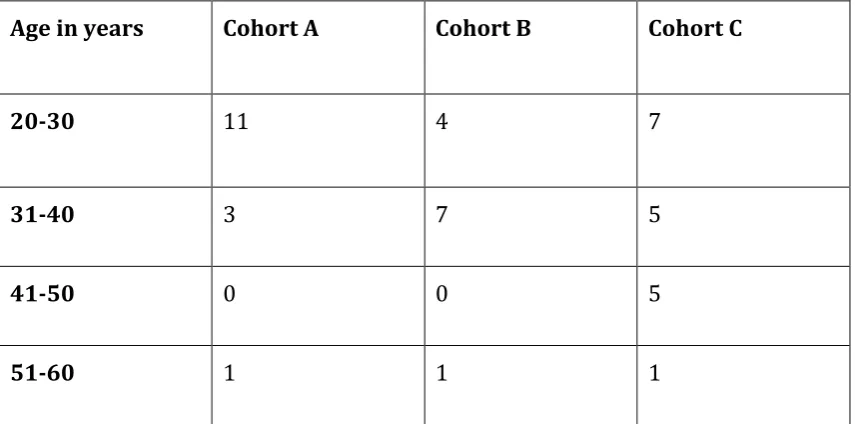
Table 3. The age distribution of each cohort ... 72
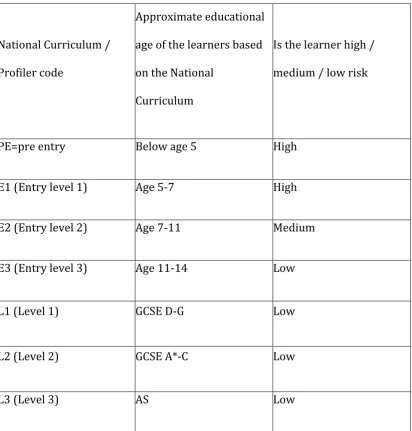
Table 5. Profiler tool and match against ‘educational age’ of learners ... 76
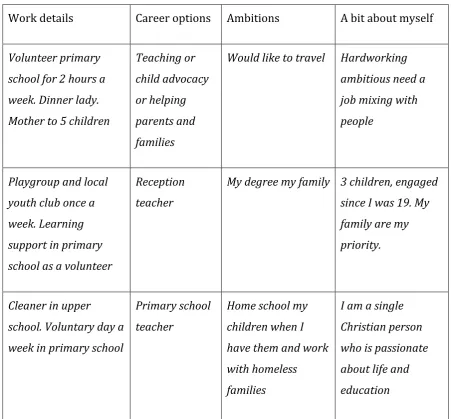
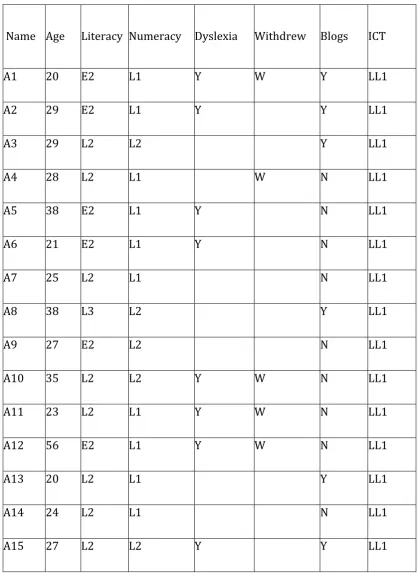
Table 6. Profile of Cohort A ... 78
Table 7. Profile of Cohort B ... 79
Table 8. Profile of Cohort C ... 80
Table 9. The Profiler scores for each cohort ... 81
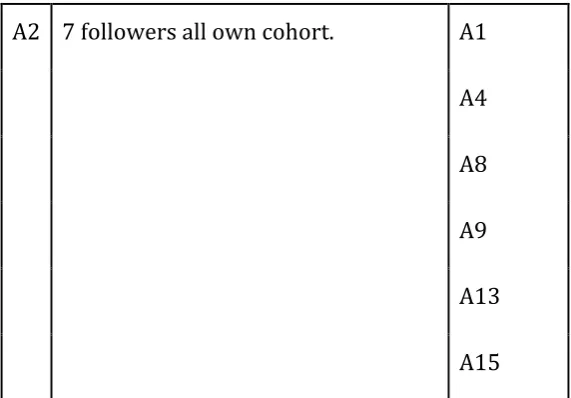
Table 10. Extract showing an example of data about followers of blogs ... 85
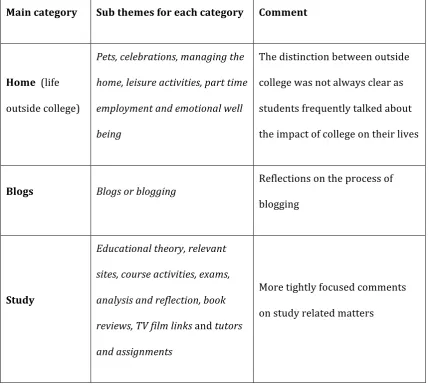
Table 11. Main categories and sub themes ... 92
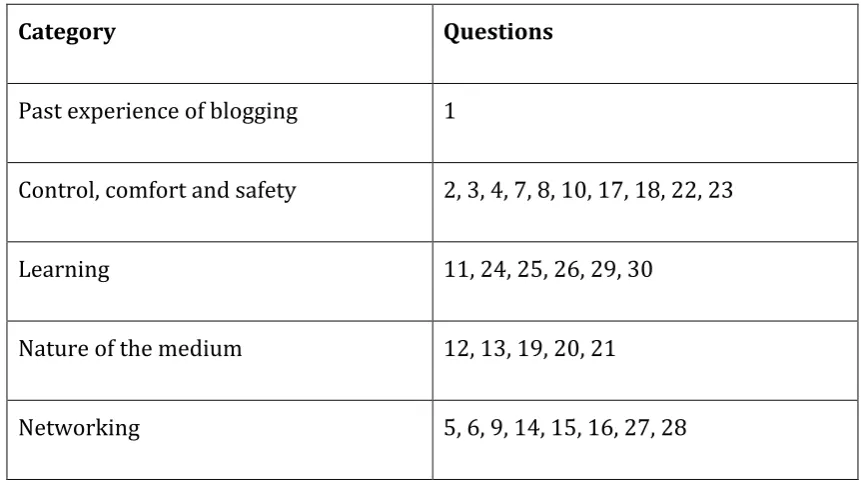
Table 12. Categories and questions ... 94
Table 13. Interviewees and frequency of blogging ... 103
Table 14. Timetable of research events ... 109
Table 15. Rates of participation Cohort A ... 116
Table 16. Rates of participation Cohort B ... 117
Table 17. Rates of participation Cohort C ... 118
Table 18. Mean number of posts and number of words for each cohort ... 119
Table 19. Contributors in cohorts A, B and C ... 120
Table 20. Comparison of Contributors and Non-contributors ... 123
Table 21. List of codes for each blogger. ... 123
x Table 23. Followers of blogs data for Cohort A, B and C ... 127
Table 24. Comparisons between the followers of cohorts A, B & C ... 133
Table 25. Questionnaire Data ... 205
Table 26. The Contributors’ profiles in regard to age and prior educational attainment.
Acknowledgements
Thanks to my supervisor Dr. Michael Hammond who did not give up in spite of my dyslexia, which was a challenge to the organization of every chapter.
Thanks to all the students who participated in this research, without whom this thesis would not have been possible.
Without the constant conversations with readers and writers on the net in particular the mighty CCk08 connectivism course, held in 2008, and the
inspiration of reading blogs throughout the blogosphere this piece of research would have been much poorer. Thanks to these connections for making me aware that anyone, even I can easily make a blog that opened new worlds to the learners and myself.
Whilst researching I have had the support of my colleagues at North
Warwickshire and Hinckley College who gave so generously of their time. Fiona Casserley, tutor and spiritual guide in the child studies department and Ihar Ivannou, the systems librarian and good friend. I would also like to thank these colleagues for years of conversations and ideas and making valuable suggestions for additions and readings. Their feedback has always been helpful.
xii
throughout this long period of study.
Last but not least my gratitude and deeply loving thanks goes to my family for having the same wishes as I do –to complete this journey through study with joy and interest and to walk beside me in life. Thanks to Gary who is the best friend and husband in every way. Special thanks to my oldest son Will who was 15 years old when I started this work and was in university himself when I finished it. My loving Harry who was nine years old and ‘Golden Boy’ Connor who was just 12 years old when I began this research. I have to thank you both for creating a balance between work and home life. Thank you for giving me such good reasons to leave the computer.
Declaration
Abstract
This thesis has analysed the use of blogging within a classroom based ‘2+2’ Early Childhood Studies course. As such the research involved ‘non-‐traditional’
learners in that they were mainly women returning to education, initially based in a further education (FE) context. This was an intervention, which aimed to provide practical support for learners as well as an opportunity to explore the value of networking through the production of blogs. A feature of the
intervention was that while students were encouraged to use unrestricted blogs they were free to write what they liked and when they liked.
The study took place over three years and involved three cohorts of learners (Cohort A n=18; Cohort B n=21; Cohort C n=13; Total n =52). It can be described as a case study on blogging in that the study was concerned to understand a phenomenon in a specific and bounded context. The consistency of findings across the three cohorts meant that the study was considered as a single case albeit differences between cohorts were signalled as and when they came up. The study used a mixed methods approach and reported data on participation rates, content analysis of blogs and the perception of learners through
interviews (n=17) and questionnaire responses (total n=32).
not contribute entries to their blogs, all students became followers of other blogs. Furthermore, all who created a blog succeeded in attracting followers, in some cases quite large numbers of followers.
Those who became bloggers were not especially skilled with technology or necessarily more academically able. Rather they tended to be people who saw the point of blogging and got satisfaction from blogging. Through their resilience they gained readers and received feedback on their blogs in ways in which uncertain bloggers did not. As for the reading of the blogs; students accessed blogs because they valued the content for throwing light on course material, extending the curriculum and offering multi-‐media formats. Gaining a sense of community was a big motivator for students to take the time to look at the blogs. Those who contributed the most (the Contributors) appeared to take on a special role within the group. They felt a particular concern for other people’s learning in some cases taking on a kind of mentoring role.
There were several explanations as to why students were constrained in their blogging or why they did not blog at all: pressure of time, difficulties in access, uncertain online literacy skills, a perceived lack of value, a feeling of being vulnerable or exposed. It was clear that there were both technical and literacy barriers to participation.
a tension between providing bloggers with high-‐direction, perhaps resulting in broader take up, against low-‐direction, perhaps resulting in narrower but more autonomous use. The asynchronous nature of blogs provides an opportunity for extended reflection, but also an opportunity to avoid responding and the anxiety of leaving permanent records of contributions. The study is carefully positioned as offering both encouragement and realism about blogging.
CHAPTER 1. Introduction to this thesis
This thesis presents a case study of blogging on an Early Years degree course to find out why and how learners blog. The introduction sets the scene by
explaining how this research emerged; what this research is about; the methodology used; and the structure of the reporting.
How and why this study developed
This study came about due to my concerns about the support offered for students on a 2+2 Early Childhood degree course. A 2+2 degree is one in which the first two years take place at a FE college and the latter two at university. Feedback showed learners felt they had not got to grips with the course
expectations and some students started their third year being unable to write in an academic style or reference their work. In addition, learners had reported feeling isolated and ill-‐prepared for the university. Communication between learners and teachers in the two institutions was very irregular and students often felt a lack of connection with other students following the same
programme. This was mirrored in the lack of communication between the three FE staff that taught on the course; each having little idea what was being taught by the other staff.
students could make their own connections outside college and communicate both formally and informally this might go some way to addressing a sense of isolation. However meetings were logistically challenging to organize as students lived in different locations. The majority of the students worked and had young families, which resulted in most of their home study occurring in the evenings after 9pm. The idea of an experimental intervention using online
resources to support learners therefore appeared a useful one. It was considered that writing blogs could support learners in ways that were not offered
beforehand. However, there also appeared to be obvious constraints, particularly that of time.
Looking at this intervention in my career biography, I became aware of a link between my interest in blogging and my commitment to pedagogy as inclusive practice. My work has been rooted in my social and community work
background and a concern to enable children, and their families, to be included in society. In my work as a manager in social services, in an area of high
deprivation, I was concerned about the exclusion of people from mainstream services such as education and could see how this narrowed their life chances. I wanted to take some of these concerns into my work in supporting adult
differences, and they may be struggling to manage their new learner identity and perceive themselves as worthy of being on a degree course.
I have, through my own career, a strong belief in personal agency and can see how agency is supported by group work. I believe that social situations are important to support individuals in life and this can be seen in my interest in online networks. This project was stimulated by the idea that creating online spaces could give an opportunity for learners to share the diversity and richness of their everyday lives in ways that are not possible in a more constrained environment. Moreover, I have also seen how a blog and connectivity to an online course has helped me to organize and remember knowledge, giving me greater confidence in my professional life.
computer and taught me how to make websites, and create wikis and search online. This friend sent me an invitation to join a large online e-‐learning course called ‘Connectivism’ run by Stephen Downes and George Siemans (2008).
For a year (2008-‐09) I ran a blog, joined in Moodle based discussions about teaching and learning and sent personal messages to many educators across the world. This was a catalyst for a change in my way of working. Newer theories about teaching and learning such as connectivism and constructivism were influencing the way I was designing courses and I was thinking about
collaboration with students in learning. Reflecting on these experiences gave me an understanding of the time needed to develop practice, of the, at times,
serendipitous nature of CPD, and a belief in computers as a support for curriculum change.
The research
This thesis concerns how adult learners on a degree level course used blogging in this case under the title of ‘Early Childhood Studies’ -‐ later renamed BA (Hons) Childhood Education and Society (2+2 pathway). In particular it aims to discover how blogging affected the non-‐traditional adult learner returning to education and to explore the value of blogging more generally.
Within these overarching goals the study aims to address three more precise sub-‐questions:
• What encourages or discourages students to blog?
The findings will be of value to other course leaders in similar circumstances and for example by enabling them to examine the roles they could play when
introducing blogging. The thesis also contributes to the research literature by offering a case study in an under-‐reported area and by exploring frameworks for discussing innovation in teaching.
What is blogging and why study it?
Blogging was a relatively new communications phenomenon when this research started. According to Blood (2002), the phrase ‘web log’ was introduced by Barger in 1997. The word ‘blog’ is a contracted word of the term ‘web log’ and Merlholz first used this shortened version in 1999 (Jacobs, 2003). Blog entries are usually in reverse chronological order, producing a type of ‘online diary’, but one that is in public view, albeit the blog owner has control over who views their posts. In addition, blogs provide an option for readers to post comments, making the blog interactive. Williams (2004) suggests ‘blogging’ is a form of
commentator. Thus blogs could be used for coursework and as an opportunity for readers to enter personal responses to articles in an unstructured and quite organic way.
The term blogging has gone through major transformation in recent years in terms of the content, the media and the technology used. For instance there are ‘mblogs’, which refer to blogging via mobile phones, and ‘photo blogs’, which refer to blog content mostly consisting of photos. The fastest growing form of blogging in recent years has been micro-‐blogging on tools such as Twitter. Blogs have evolved along similar lines to other forms of communication – they have been used because they are convenient to use and serve particular purposes. Group blogs, family blogs, community blogs and corporate blogs are defined by their content and by their audiences. Library blogs and ‘edublogs’ have begun to emerge in educational circles.
Blogs for teaching and learning can be shared by the whole class, or can belong to a single individual where other learners are invited to join as a reader or a commentator. Blogs can be structured or directed by tutors and can be used for academic purposes but can also be used for non-‐academic content for example documenting personal life (see table 1). Many blogs can be a hybrid of these three dimensions.
Table 1. Dimensions of blogs
Author Degree of direction Content
Individual blog Directed Academic
Whole class blog Undirected Non-‐academic
Affordances of the blog, forum/diaries are discussed in a later literature review but it is worth noting here that the study of blogs is in a state of flux; Dhakal’s view is understandably that ‘practices and expectations with blogs grow as the idea of adding cultural tools to classroom designs grow’ (Dhakal, 2007 P1). There are recurring debates about the value of blogs; these are covered in-‐depth in the literature review. There is also a debate about whether blogs generate new forms of literacy. Jacobsen (2002) argues that cyber-‐cultural practices have given rise to new discursive norms that distinguish blogging from both literate and oral practices. However he warns about the complexity of keeping up with the demands of networking; he sees blogs not as essays, but a discussion about context of the lives of learners. This suggests an informal way of learning or at least an invitation to make learning personal. However, Oblinger and Oblinger (2005), in discussing the attitudes and skills of the so called ‘digital generation’ or ‘net generation’, argues that young learners may be able to operate a
more positive and argue that young people can transfer their ICT skills and experience and can be creative and competent when experimenting with digital media. The emergence of ‘web 2.0’ technologies has led writers such as Williams and Jacobs (2004) to suggest that educational practices can be restructured to better afford learners’ control over their own learning and a blog is seen as offering more collaborative modes of learning (Williams and Jacobs, 2004).
Crook and Harrison see national policy in most of Europe moving away from educational thinking as a mass-‐production of skills, on the grounds that new jobs need critical thinking and the ability to create new knowledge through problem solving (Crook and Harrison 2008). The perception among some is that we have a generation of web 2.0 digital natives (Prensky 2001) who engage in an
advanced way in their own knowledge creation. However, if the use of
technology is motivated by recreational and vocational purposes, users may well draw on habits of passive interaction not the fully developed and advanced learning capabilities for which Clark et al. (2009) and others call. There is a ‘digital dissonance’ between the potential of web 2.0 as envisioned by researchers and practitioners as a tool for online creative and critical co-‐ production of learning artefacts. Clark writes that the institutions have been slow to realize the potential for collaborative learning ‘beyond the classroom walls’ (Clark et al. 2009:68). However almost as soon as they have been
December 2013).
Blogging is discussed in the literature review in great depth but it would be useful to share here a few questions or musings to contextualize this study. A big idea taken seriously in this thesis is that classroom education does not fit today’s learner; one who might want to pursue networking opportunities to be able to create their own knowledge using new technology. Traditional HE course design is often based on learning outcomes and emphasizes the teacher and the content as the central elements of education. It is often assumed that all learners acquire knowledge of the subject content in the same way. The course is written before the learners even enrol. The outcomes are on the module booklet and decided by the faculty. The design is handed down year-‐on-‐year with a few ‘tweaks’ to fit the tutor. Communication on such courses is generally between the individual
student and the tutor during the lecture if there is time, and sometimes brief conversations afterwards. Learner-‐learner interaction is very low in most part– time courses at the case study college due to college days in that all classes are held back-‐to-‐back on one day of the week.
when learners are introduced to an unrestricted approach to the use of technology through blogging, in their Early Years studies programme. An unrestricted approach is one in which students are asked to develop blogs on their initiative, and with little oversight or input by a tutor during students’ discussions. Students are responsible for deciding when and how they will interact. The thinking behind the approach is that this will push students into becoming active learners and through online discussion able to organise and process information.
Where this study took place
This study took place in an FE college in Warwickshire. It has two main
campuses and operates across two further, smaller, learning venues. It provides academic and vocational courses to approximately 20,000 learners, of which more than 2,500 are full-‐time (Ofsted, 2009). Three staff supported the course that was the focus for this thesis in 2008; two of the staff left by 2009, two new staff replaced them.
Moodle site, ‘hot potatoes’ and quizzes. This Ofsted assessment needed to be seen in context. In particular, outstanding use of technology seemed to consist of student access to a VLE with a tutor’s PowerPoint presentation on it. In fact this was a superficial assessment and did not consider how the tools for teaching and learning supported a course. Attitudes to teaching and learning with ICT had not fundamentally changed and this was evidenced when a colleague working in the college conducted a study of the college tutors’ use of ICT. Casserley (2012) reported that the majority of tutors used ICT only to show PowerPoint
presentation. On The Early Childhood Studies Moodle a few of the PowerPoint presentations had hyperlinks to multi-‐media, such as clips within ‘YouTube’. However blogs were still perceived as something strange and fanciful.
In order to look at the use of ICT in more depth, and to help in designing the project, I carried out a survey with learners following child studies programmes (n= 74 students and n=3 tutors). It was found that the use of Moodle was very one-‐sided, with tutors spending more time on it than learners. Further questions in this survey found that even the poorest families were often a multi-‐computer family -‐ exposing flaws in assumptions about the digital divide. Learners often reported younger family members used the technology but they personally were unable to use even widely used tools such as the texting facility on their own mobile phones. This survey demonstrated that ICT was not being used extensively in college or at home for teaching and learning.
Background of the participants
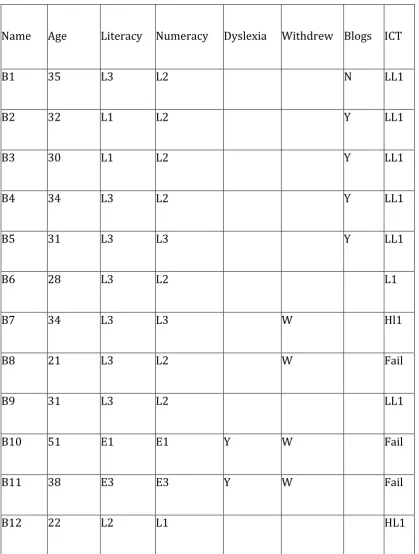
these are labelled cohorts A, B and C respectively in the text. A new cohort (D 2011) was not formally included in the study but, as they had worked on their blogs in the first week of term, while the study was being carried out, some of their experiences were noted in my research diary. Cohort A had 18 learners; B had 21; C had 13, at the start of each programme. The full population for the study is 52, predominantly women (3 were men). Not all joined in the blogging and interviews. The modal age group was 21 to 30, with 25 learners out of 52 falling into this category. Literacy Entry Levels varied from Entry Level 3
(equivalent to around age 7 years) to Level 3 (see Chapter 2 for full break down of levels and ages). All learners were returning to education to obtain a degree to enable them to become teachers or childcare workers. The strength of this course was that it offered everyone the opportunity to study at HE level, as no previous qualifications were required. This of course resulted in a mixed ability classroom.
Distinct characteristics of the participants
There was a clear problem with the Early Years degree in terms of drop–out, with only 10 out of 20 (50%) left from the year 2006/7 Cohort by the time these students started the university component of the programme. A theme in tutorial sessions was that learners found it difficult to meet the demands made on them as they lacked support and felt isolated.
strongly affects what is learnt and how it is learned. Students who have previously managed their adult identities and lives suddenly become less confident and start to suffer emotional disturbance due to a radical
reconstruction of identity, outlook on life and values as they begin study. The shock of being returned to education may inhibit learning by paralysing students’ critical faculties; such a shock can shape the students' perceptions of their fellow-‐students, their teachers and the academic environment in which they study. The return to learning can by contrast have the potential to enhance and open new possibilities. According to Griffiths et al. (2005: p3) ‘It may indeed be that learning shock is a feature of the most profound types of learning,
learning which involves a radical reconstruction of identity, outlook on life and values. The emotional experience of the shock, while never pleasant, may
become a milestone of an individual's life story, marking the moment of greatest crisis and despair but also the turning point of a new start; it may then mark the point where a trial turns into a triumph’.
Griffiths et al.’s research was based on adults returning to education as full-‐time MBA students (n=145) at Imperial College and showed that teaching and
learning strategies may trigger anxiety and performance failure. One of the key strategies recommended in this study to help learners return to learning was to talk to one’s peers as a coping mechanism.
students returning to HE as ‘recyclers’, ‘deferrers’ ‘returners’ and ‘early school leavers’. Defining types within the adult returners helps to show that students are very diverse, even within the same course. The learners described in this thesis are, on the whole, early school leavers who left school with very low grades but were now at a stage of returning to complete their life ambition of becoming a teacher or social worker. They mostly had no qualifications or had obtained a D to B in English and an F to B in Mathematics GCSE. The majority of the students were focused on their family and children and a large proportion of the students were single parents. Learners were differentiated in terms of background, experience, raw literacy tests, ethnicity, age, gender, and strategies for participation in their course, confidence, and competence with technology.
Of course, students on any course do not form a homogenous group but good use of ICT seems to play an important part in managing and supporting the
transition to HE. Research by Thema (2009) into the experiences of taught masters students at Oxford University suggested holding a positive attitude about technology will, more than any other single aspect of managing transitions to higher education, support the student’s growth and stability. Students who adopt a flexible approach to their new environment appear more likely to
succeed in making the adaption to being a degree student. Students’ expectations and their reaction to the use of technology for teaching and learning is inevitably an important, but difficult to measure, variable in any study.
on technology enhanced learning but also on how students used technology in their everyday lives, and the impact this may have on their attitudes and
approaches to learning. The findings were that negative emotional reactions to e-‐ learning had a detrimental impact on attitudes and levels of motivation to study. They suggested the tutor should listen to students’ voice in regard to technology and this itself can be facilitated using technology. It was further suggested that there were several under-‐researched aspects of e-‐learning which would merit further investigation including the ubiquitous use of social software, learner control issues and the emotional impact of technology use.
Academic difficulties of non-‐traditional students were also researched by
McCabe (1998) who concluded the students in his study had inadequate learning skills or academic skills. This, then, is not a new problem. The ‘at risk’ students were identifiable throughout his sample and he surmised that there was insufficient input or help from tutors to address the problem of drop-‐out and transfer from year-‐one to year-‐two. McCabe (1998) commented that laying the basis for lifelong learning was going be a major task and needed to address not only how people learn but also for what they learn. Learning styles are relevant to some extent for adult learners, but their life experiences will also affect their return to education and new skills in technology.
Gender is of particular importance for my study because out of 52 learners only three were men. Gender is a socio-‐economic and cultural construct for
learned roles, which change over time and vary widely within and across cultures. Gender is not fixed but evolves in response to other social, cultural, economic and political factors and is a key element in understanding many of the processes of social and economic change. Technology is often perceived as a male preserve while femininity is constructed in terms of technological incompetence leading to a situation in which technological products are
outcomes of production processes, which are dominated by men and reflect their interests. This means that men are generally perceived as ‘makers’ and women as ‘users’ of modern technology (Clarke, 2002).
The participants’ literacy skills
The tool ‘Profiler’ was used to assess all the respondents on this course and showed that many had low literacy and numeracy skills. The diagnostic reports are detailed in Chapter 3. All students gained extremely low scores in respect to ICT skills, many were new to computers. It is important to understand that within each cohort some students were at Entry Level 2 and Level 1 in literacy indicating a reading age of a seven year-‐old or even below. The majority of the ICT profiles were at Level 1 with a few fails showing skills were very limited, for example carrying out searches, changing fonts and cut and paste skills may have been beyond many students’ expertise.
Methodology
life’ (Yin 1984). This approach frequently faces criticism: case study research has been considered as ‘microscopic’ because it lacks a ‘sufficient number’ of cases (Harnel et al., 1993) and its conclusions are therefore not generalizable.
However the point of case studies is not their generalizability but the light they throw on processes and phenomena. In this way, even a single case could be considered acceptable, provided trends and themes could be identified and their relationship to each other explained.
The case study setting was selected on the grounds of access but is probably typical of many practitioner-‐led innovations taking place. The study follows three cohorts from 2007-‐08 to 2009-‐10. This is an exploratory rather than a hypothesis testing case, with a ‘bottom up’ approach, but not grounded theory as such. The research had an action research element, as the researcher is the instigator of the intervention and was evaluating her own practice. However, this was not ‘pure’ action research because it was as much concerned with a general exploration of blogging as addressing a problem of practice.
The structure of the thesis
The spine of this thesis is an exploration of the value of blogging based around the three research questions posed earlier. Chapter 1, this chapter, has
introduced the core research problem and background to the study. It has given an overview to the thesis, explained the setting, described the characteristics of the participants and dealt with the positionality of the researcher.
identity building, emotional support and instruction. There are also further questions about the role of the educator, the contribution of CPD and technology and change.
Chapter 3 discusses the methods used to collect data about the use of blogs and the participants. There is also a discussion of ethics. The study follows a mixed approach in that students’ behaviour is described more or less objectively (addressing the question of how they blog) and discussed in the light of the meanings attached to blogging by the students themselves (why they blog).
Chapter 4 provides a tally of the number of blogs broken down by individual, by cohort, by responses and by followers. This gives an indication of the extent of blogging, the different types of media used in blogs and the strongly
differentiated uptake of blogging among students.
Chapter 5 provides a content breakdown of the blogs around wider categories of
blogging itself; home; study. Each of these categories is sub-‐divided, for example home covered sub-‐themes of pets, celebrations, managing the home, leisure activities, part time employment and emotional well-‐being while study covered sub themes of educational theory, relevant sites, course activities, exams, analysis and reflection, book reviews, TV film links and tutors and assignments. It was found that the majority of posts were study focused and many examples of the nature and scope of the posts are given. There was a marked similarity in findings across cohorts.
rate was high (61%) and the findings are described in this chapter. In addition, a series of semi-‐structured interviews were carried out (N= 17). Data were
analysed around themes of control, comfort and safety, learning, nature of the medium and networking. The chapter shows the differentiated response of students in relation to these themes.
Chapter 7 explicitly addresses the three research questions and discusses the motivations of so-‐called Contributors (or ‘champions’ of blogs) as compared to Non-‐contributors. The chapter also draws out familiar constraints of time, organisation and direction and there is a high degree of overlap with these findings and the wider literature.
Chapter 8 summarises the research and draws out implications for different audiences. The thesis ends with the personal significance of the study.
The definition of terms is available after Chapter 8, just before the references, to describe the meaning of key terms used in this thesis.
Thus this introduction provides the setting for the study and the aims of the study; we turn now to the literature review.
CHAPTER 2. Review of Literature
This chapter reports on relevant literature in order to lay down the foundations for the research. The purpose is to bring together key concepts about blogs and users of blogs. The chapter has been divided into six sections: how the review was carried out; properties of blogs; blogging for emotional support; claims for blogging; learner differentiated response to blogging; the role of the educator.
How the review was carried out
A wide range of literature was consulted in order to get an overview of the field of teaching and learning with technology, this included some general literature on the use of ICT and some specific to the use of blogging. Whilst carrying out this research I came to see that the emphasis in many studies was very much on the practitioner’s perspective, often reporting action research or design
interventions, while , learners’ own perspectives about their understanding of the roles and relationships within an online learning network were only
Indeed while much more could have been done to access the learner perspective, my study does succeed in addressing a gap in the literature.
Studies about the learner’s voice (such as Entwistle et al. 2002 and Mason and Weller, 2000) show how complex the context of the learning can be given the nature of learners’ lives, how they use technology and the external factors which are present but over which the tutor has no control. However, taken together the literature provides useful examples of practice in eLearning and offers
recommendations that practitioners can adapt to their own context. For example Atak and Rankin (2002) provided a descriptive study of registered nurses using online-‐based nursing education programme in which structured blogs played a role in assessing learning. The findings demonstrated that eLearning provided both a ‘satisfactory and effective’ alternative learning medium. However the blogs were very much focused on learning outcomes rather than the
practitioner’s journey and there appeared to be very few peer reviewed papers about blogging by students following programmes within the early years sector.
As the study progressed, a growth of both academic and professional literature took place. In regard to the latter, web-‐sites have been set up for tutors to comment on teaching and learning and to share experiences of using a blog, for example Stephen Downes (2011). These sites often present blogs as wonderful, innovative happenings in education. Some impressions of these reported experiences are presented later in the review.
keywords ‘educational ICT’. This approach generated a wide range of papers, many of which were not seen as overly relevant to my context as they tended to cover particular types of software and hardware such as virtual learning
environments, discussion boards and, more recently, mobile devices (for example Attewell, 2005, Browne et al, 2006 and Sorensen and Takle, 2002).
learning about the technology but more on whether learners had the confidence in their ability to ‘cope with life, learning and technology’. Learners needed to know how to network with others and manage their time so that they could balance learning with work and family commitments.
Literature searches were then carried out more systematically using the precise keywords ‘educational blogs’. Typically the papers accessed in this way covered a mix of themes including the use of blogs for ‘identity building’ (for example Wang and Hsua, 2008); ‘blogs to support learners emotionally’ (for example YU-‐ Chih Sun, 2010); and ‘blogs as a tool for cognitive educational outcomes’ (for example Bresica and Miller, 2006 and Oravec, 2002).
The literature review was challenging because the context is a changing one. For example, earlier studies were concerned with problems of early adoption (as in Borja, 2005; Instone, 2005) and technical issues, which became less significant later on. As blogging became more mainstream, the research tended to shift focus to educators’ use and the contribution of technology to new innovative teaching. As the number of papers accessed accumulated, it became important to categorise them into themes. The studies came from different disciplines:
languages, teacher education, business studies, engineering, healthcare and sciences but I was more interested in the commonalities within the use of blogs. Papers covered both younger learners in schools and the adult learners in FE and HE. Through much trial and error the review became focused on the
class blogs improved their writing skills and learning (Chen and Bonk, 2008; Downes, 2004; Ellison and Wu, 2008; Leja, 2007; Tu, Blotcher and Roberts 2008). Blogs also were perceived as useful for students’ communication and class interaction skills (Davi et al. 2007; Dickey, 2004); addressing and
promoting learner reflection (Murry and Hourigan, 2005; Xie, Ke and Sharma, 2008) and developing a supportive community (Luehmann and Tinelli, 2008). A few studies reported some negative perceptions of, and reactions to, blogging -‐ in particular worries over time constraint and concerns about privacy; see for example Freeman et al. (2006).
Recording of literature
Perhaps appropriately I took the approach of recording my reading using a blog to record what was read and why it might be a part of this review. The papers were also filed online in ‘Drop box’ folders. I noticed that my blog posts started-‐ off as a record of an academic paper (Glenn, 2003):
Friday, 2 December 2011
Blogs for teaching
Glenn (2003) discusses at length some of the uses of blogs by academics and
scholars. He comments that some of the arguments in favor of blogging,
cited by academics, are the freedom of tone, opportunity to interact with
diverse audiences, and the speed of feedback. Glenn’s (2003) article provides
numerous examples from academic blogs – the URL is cited in the
Excerpts from research diary
http://linarmstrong.blogspot.co.uk/2011_05_01_archive.html
[Note the year of the entry is given here as 2011, this is because my original blog was closed down by the provider Prosperous.com. I cut and past entries to the new BlogSpot site but lost the original date of posting, albeit these dates were recorded separately.]
As time went on my blog became more reflective and, for example, showed better awareness of the implications of the literature for my study:
Most papers I have read about blogging have the tutor setting how much
blogging is to be done. ‘... a set of instructions prescribing how students
should perform in groups, how they should interact and collaborate and
how they should solve the problem’ (Dillenbourg, 2002, p. 63),
My study with blogs will actually have no rules because this could lead to
better more independent learners. Self-‐regulated learners take charge of
their own learning by choosing and setting goals, using individual strategies
in order to monitor, regulate and control the different aspects influencing
the learning process and evaluating his or her actions. Eventually, they
become less dependent on others and on the contextual features in a
learning situation.
Excerpts from research diary
[There are more excerpts from my personal blog in Appendix 4.]
As my reading became I created a literature review grid in order to provide an easier means of comparing and contrasting articles. An excerpt is provided in table 2. To create a critical and comprehensive review of blogs the grid had to be updated and refined throughout this study. Overall many of the papers provided optimistic perspectives on blogging and found value in blogs for emotional and academic support.
Table 2. Excerpt from the literature review grid
Study Participants Context of blog
Types of data Basic findings
Chen and Bonk (2008) 24 educators that had published work about blogs Students use it as a knowledge log
Survey Chen and Bonk (2008) concluded that blogs bring new possibilities for
educational assessment. They argued that compared with other technology blogs provide a clearer track of the authentic progress learners have made. However, they found that if blogs were used as a group assessment tool then one of the problems instructors had was to locate and give feedback on posts relating to a similar topic by different students as all the posts were intertwined. They recommended that further changes were required and
suggested that future studies might address personalisation of blogs for assessment purposes. Coutinho (2007) 23 under-graduate students in Portugal Students used the blog to reflect on learning and activities
Contents of blogs
Xie, Ke, and Sharma (2008)
Xie et al. suggest that to advance from surface to deep learning students need to make meaning of new information. Reflection is an important prerequisite for deep and meaningful learning
recommended using strategies such as journal writing that would not only promote reflection but also deep thinking and learning. Therefore, the most interesting and significant use of blogs in education may be to use it to promote reflective learning.
Deng and Yuen (2009)
Deng and Yuen (2009) concluded that students are likely to shoulder more responsibility if self-reflection is stressed. Students can use blogs as a journal or portfolio, recording their own thoughts, reflections and discussions on a subject.
Davi et al. (2007)
98 business students USA
Class blog to reflect and respond to others
Survey 73% said it increased interaction in class. 76% agreed blogging helped their learning females felt intimidated by the use of a blog as compared to male students.
Properties and affordances of blogs
Conole et al., (2008) similarly argued that a blog should assist self-‐expression and creativity. Blogs are very flexible and can be structured in different ways. Research papers gave two types of tasks set by the practitioners: 1) multi-‐
authored collaborative group blogging (Bloch, 2007; Efimova and de Moor, 2005; Richardson, 2006) and 2) single authored reflective blogging (Murry, Hourigan and Jeanneau, 2007 and Raith, 2009). The affordances of the blog exist in the opportunities which teachers and students perceive. Selwyn (2007) and Downes (2004) take this further and say that there is a wider context, for example the way assessment and teaching is carried out, which will influence these
perceptions.
The natural sciences have developed taxonomies and described the properties of animals, minerals and plants over hundreds of years. Blogging can be likened to a new genus of communication for which a body of work and a consensus of opinion has yet to be established. Researchers are carrying out work to find out about the properties of blogs, or more accurately, their affordances -‐ a desirable property of a user interface.Blogs can be a learning repository, a feedback tool (Dipplod, 2009), an assessment tool or a language development tool. Blogging allows the sharing of personal ideas but because they are public these ideas can be subject to questioning and discussion (Bressica et al. 2004). Central to this wide range of literature, however, is the idea that blogs can support identity building, support learners emotionally, and serve as a cognitive tool to promote learning outcomes.
According to Cameron and Anderson (2006), blogs can support students in constructing a social identity appropriate for participation within an academic programme. A sense of identity is a more difficult concept than at first
perceived. Lave and Wenger (1991) are more concerned with the idea of social identity i.e., ‘the process of being active participants in the practices of social communities and constructing identities in relation to these communities’ (Wenger 1998: p4). From this perspective learning can be considered as
something the individual does by interacting and joining in shared activity with others rather than the more traditional notion of learning as individual, brain activity. But, whatever the ideas associated with participation and identity, communicating with others within a class blog involves and requires social presence. It is believed that social presence affects participation and for Tu (2002) without a sense of presence of ‘being in a community’ and having people respond to one’s presence, participation is unlikely. Some of the barriers to presence concern lack of ego management, inappropriate patterns of
communication, a sense of a large, overwhelming community and most obviously time constraints (Wasko and Faraj, 2000).