Review Article
Research Highlights on the Evolution of Precambrian Crust of Peninsular
India: Constraints from Recent Zircon U-Pb Geochronological Results
Y J BHASKAR RAO*, NAMRATA KHADKE and T VIJAYA KUMAR
LAM-MC-ICPMS Facility, CSIR-National Geophysical Research Institute, Hyderabad, India
(Received on 05 June 2016; Accepted on 20 June 2016)
During the last quadrennial period, (2012-2016), many aspects of the Precambrian geology of the Indian peninsula were revisited by Indian geoscientists and their collaborators with the advantage of modern analytical techniques for geochronology as well as new perspectives on global geodynamics in space and time. Important contributions were made to the Archean and Proterozoic geological evolution of the Dharwar, Singhbhum, Bundelkhand and Bastar cratons, the granulite gneiss terrains, especially the Southern Granulite Terrain (SGT) and the Eastern Ghats Granulite Terrain (EGGT) and also the Proterozoic sedimentary Basins of peninsular India. Significantly, these studies have provided evidence for Paleo- to Eoarchean crustal remnants apart from placing precise age constraints on geological events. Most authors favoured the interpretation of Archean geodynamics in a plate tectonics conceptual framework for the assembly of Indian terranes in the supercontinent reconstructions, as reviewed on the basis of a short compilation of published research articles.
Keywords: Precambrian Crustal Evolution; Peninsular India; Geochronology; U-Pb Zircon Ages
*Author for Correspondence: E-mail: [email protected]
Introduction
Unravelling the geodynamic processes that underpin
the formation, destruction and stabilization of Earth’s
continental crust in deep-time is fundamental to
geosciences. Precambrian (>0.5 Ga) geodynamics has
gained immensely from advancements in analytical
technology relevant to radiometric age determination,
especially, the in-situ U-Th-Pb dating of accessory
minerals like zircon (ZrSiO
4) at a high spatial resolution,
typically <50 µm. The last quadrennial period witnessed
a proliferation of precise age and isotopic data
constraining the chronology of magmatism,
metamorphism and deformation of many Precambrian
rock units in peninsular India. New in-situ zircon
U-Pb ages along with
177Hf/
176Hf isotopic data and in
many cases zircon trace element compositions have
been obtained, using the Secondary Ionisation Mass
Spectrometry (SIMS), the Laser
Ablation-Multicollector Inductively Coupled Plasma Mass
Spectrometry (LA-MC-ICPMS) and LA-Quadruple
ICPMS (LA-QICPMS). Peninsular India (here
excluding the Himalayan region described elsewhere
deposited in diverse facies and environments.
Together, the rock units in these tectonic domains
record a geologic history spanning ~3.0 billion years
from ~3.5 to 0.5 Ga. Important contributions to the
geochronology of these terranes are summarised and
discussed briefly in the context of some current and
emerging views on global geodynamics, outlined
below.
It is well known that the Earth was formed
around 4.567 Ga (Giga aeons) ago, and in its earliest
stages witnessed dramatic events such as the giant
impacts, magma ocean, core-formation and
large-scale mantle differentiation and the formation of
primordial crust (for a review see Harrison et al.,
2009). A definite answer to the question; when did
the earliest terrestrial crust form? remains elusive
largely because of its poor preservation owing to
factors such as rapid recycling because of the possible
destruction of the early crust in asthenospheric
convection and heavy bombardment’ event during the
late Hadean (>4.0 Ga). In this regard, the Indian
peninsula has also been a target in the search for
early continental crust vis-a-vis the oldest crustal
components found in some parts of the world. The
oldest dated rock on Earth is ~4.030 Ga old, from the
Acasta gneiss complex, Slave craton, Canada (Mojzsis
et al., 2014 for a review). However, the most valuable
source of information on the Hadean Eon comes from
a few hundred detrital zircon grains that have been
dated upto ~4.4 Ga by high resolution U-Pb dating
methods, mainly using the Sensitive High Resolution
Ion Microprobe-SHRIMP (e.g., Wilde et al., 2001).
Most of these zircons are from a quartzite at Jack
Hills, Mt. Narryer, Western Australia. A smaller
population of Hadean zircons are sourced from Acasta
gneiss and 4.08 Ga inherited zircon cores from an
~3.83 Ga granodiorite gneiss from Akilia Islands, west
Greenland and a few Eoarchean TTG gneiss suites
such as the Itsaq gneiss, west Greenland, the
Saglek-Hebron gneiss complex, Labrador and the Anshan
gneiss, North China craton and some supracrustal
rocks that are tectonically interleaved in the
Eoarchean gneisses, e.g., the Nuvvuagittuq belt,
Quebec, Canada (Collerson et al., 1991; Nutman et
al., 1996; Mojzsis and Harrison, 2002; O’Neil et al.,
2007; Harrison, 2009). Although the origin of these
Hadean zircons remains equivocal, many authors
believe that they represent Hadean continental crust.
Search for Paleo- and Eoarchean remnants in
southern India have been partially successful as
described below.
It is now widely appreciated that as much as
73% of the Earth’s continental crust was extracted
from the mantle by the end of the Archean (Belousova
et al., 2010; Dhuime et al., 2012; Cawood et al.,
2013) and major events in the accretion of Archean
juvenile crust centred around 3.0 Ga and 2.7 Ga
(Condie et al., 2000; Voice et al., 2011). However,
the nature of the geodynamic process during the
Archean remains controversial. The common
question; when did plate tectonics begin on Earth?
remains enigmatic. Many researchers favour a view
that the late Paleoarchean/early Mesoarchean (ca.
3.3 to 3.0 Ga) marked a transition in the planet’s
geodynamic regime from a dominantly vertical (driven
by mantle upwelling) towards dominantly horizontal
(Phanerozoic-style plate tectonics) and that some form
of plate tectonics operated since at least ca. 3.2 Ga
(e.g., O’Neil et al., 2007; Condie and Kröner, 2008;
Arndt, 2013). However, others have argued that
modern style plate tectonics did not begin on Earth
until the Neoproterozoic (Bedard et al., 2013 and
references therein). It is also postulated that the
Archean accretionary orogens comprise a special
category of ‘ultra hot’ orogens (Chardon et al., 2011;
Gerya, 2014 and references therein). Archean plate
tectonic regimes may therefore be distinct compared
to Phanerozoic plate tectonics on several counts,
although many authors now believe that Archean plate
tectonic regimes may not have been very different
from the Phanerozoic plate tectonics. Such
considerations provide a useful framework in which
to interpret geological, geophysical and
geochronological data on Archean cratons, research
on the Indian cratons being no exception.
Growing evidence for Eoarchean (4.0-3.6 Ga) to
Paleoarchean (3.6-3.2 Ga) Crust from Peninsular
India
Dharwar Craton (WDC), Jayananda et al. (2015)
showed that much of the cratonic core in the
southwestern part records two major periods of crust
generation; ca. 3350-3280 Ma and 3230-3200 Ma.
During these intervals, TTG accretion was
pene-contemporaneous with greenstone volcanism and
sedimentation. During the earlier phase, both
high-and low-Al
2O
3TTG magmas were emplaced. Their
derivation involved melting of shallow and deep island
arc-type crust that may have formed during the
Eoarchean to Paleoarchean as indicated by their bulk
geochemistry and Sm-Nd (T
DM) and zircon Lu-Hf
model ages for the TTG suites. The
Eoarchean-Paleoarchean context is also reflected by detrital
(magmatic) zircons extracted from metasediments
deposited between ~3.3 and 2.7 Ga as well as from
modern stream sediments (Bhaskar Rao et al., 2008,
Maibam et al., 2016; Lancaster et al., 2014; Santosh
et al., 2014, 2015, 2016; Sarma et al., 2014; Hokada
et al., 2013). The interpretations are also consistent
with wholerock Sm-Nd isotopic systematics and model
ages (Jayananda et al., 2015; De et al., 2015 for
review). An interesting suggestion has been that the
Coorg block, along the south-western margin of the
WDC (Fig. 1) may comprise the oldest as well as an
exotic terrane in southern India (Santosh et al., 2014,
2015, 2016). This is based on new age data on both
meta-igneous rocks (granitoids, diorites, charnockites
and volcanic flows) related to ancient arc magmatism
and metasedimentary rocks (quartzite, ferruginous
quartzite, banded iron formation-BIF, and calcareous/
pellitic schists) considered as inter-arc shelf and
pelagic accretionary packages. The igneous suites
include multiple magmatic events around 3.5, 3.2, 2.7
and 2.5-2.4 Ga, while zircons from the metasediments
include multiple discrete populations between 3.4 and
1.3 Ga.
ε
Hfand T
C
DM
model ages of the ~3.5 and 3.2
Ga magmatic zircons from the Coorg rocks indicate
both juvenile and recycled crustal precursors of
Eo-Mesoarchean ancestry, upto ~3.7 Ga. A detrital zircon
grain from a ferruginous quartzite sample yielded Hf
T
CDM
age of 4031 Ma, an indication of a Neohadean
protolith in the provenance of the
Eoarchean-Mesoarchean metasediments (Santosh et al., 2014).
This result and the view that the Coorg may be an
exotic block in southern India warrant further study
with more data.
The geochronology of the Singhbhum craton also
received considerable attention in terms of the antiquity
of the Archean crustal components. The major crustal
units of the craton include greenschist- to
amphibolite-facies supracrustals of the Older Metamorphic Group
(OMG), tonalite of the Older Metamorphic Tonalite
Gneisses (OMTG), Tonalitie-Granite suites of the
Singhbhum Granite (SG) batholith and the greenschist
facies platformal sediments, mainly Banded Iron
Formations interlayered with mafic and felsic volcanic
rocks of the Iron Ore Group (IOG) (Mukhopadhyay
et al., 2008). Zircons from TTGs of the OMTG and
SG (Phases I, II, and III) reveal a polycyclic evolution
of the Archean crust (Upadhyay et al., 2014). These
authors showed that the tonalite and trondhjemite of
the OMTG were emplaced at ca. 3.45-3.44 Ga
together with Phase III of the Singhbhum Granite
pluton, while granite of the OMTG were emplaced at
ca. 3.35-3.32 together with Phase I and Phase II of
part of the craton prior to 2806 Ma; (5)
volcano-sedimentary and banded iron-formation rocks were
deposited during a third sedimentary cycle at ca. 2.8
Ga.
Several studies focused on the Eastern Dharwar
Craton (EDC) with the objective of deciphering the
chronostratigraphy of the greenstone belts and
establishing the chronology of granite gneiss and
granitoid components (Anand et al., 2014; Jayananda
et al., 2015; Maibam et al., 2015, 2016; Tushipokla
and Jayananda, 2013; Ram Mohan et al., 2014; Yang
and Santosh, 2015; Hokada et al., 2013). Newer
geochronology data are likely to appear in near future
to throw further light on the pertinent petrogenetic
problems.
Paleoproterozoic and Neoproterozoic cryptic
sutures and ophiolites from the Southern Granulite
Terrain (SGT), with its different crustal blocks
characterised by distinct structural and age specrtra
attracted considerable international attention, where,
in many cases, existing geological models were revised
in the light of new geochronological data. U-Pb zircon
ages and Sm-Nd depleted mantle model ages (T
DM)
of charnockites, associated migmatites and
metasedimentary rocks and a limited dataset of zircon
Lu -Hf isotopic data point to a complex genetic history
for the charnockites in the SGT (e.g., Tomson et al.,
2013; Brandt et al., 2014; Kröner et al., 2012; Plavsa
et al., 2012, 2014; Peucat et al., 2013; Glorie et al.,
2014; Bhattacharya et al., 2014; Taylor et al., 2015.,
Vijaya Kumar et al., 2016). For instance, the Sm -Nd
T
DMage data suggest involvement of ancient crustal
components (up to ~3.2 Ga) in the genesis of the
Proterozoic charnockites from the Madurai and
Trivandrum Blocks (Plavsa et al., 2012; Tomson et
al., 2013 and references therein). This has prompted
a considerable curiosity on: 1) the proportion and
distribution of Proterozoic ortho-gneisses with
juvenile magmatic precursors in the SGT (Kröner et
al., 2012, 2015; Taylor et al., 2015; Vijaya Kumar et
al., 2016) and 2) tectonic scenarios for the multiple
episodes of felsic magmatism responsible for crust
formation and recycling during the ~2 billion year
geologic record represented in the SGT south of the
PCSZ. In this regard, an interesting observation has
been that the Trivandrum and Nagercoil blocks include
vast stretches of charnockite gneisses whose protoliths
represent Paleoproterozoic juvenile magmatism at
~2.1-1.85 Ga (Kröner et al., 2012; 2015 and Vijaya
Kumar et al., 2016).
It was long known that the northern limit of the
SGT marks an unbroken prograde metamorphic
transition from amphibolite to granulite grade. Further
south, the N-S trending structural fabrics of the
Dharwar craton have been reworked by the E-W
trending mylonitic fabric of the crustal-scale shear
zone system, the Palghat-Cauvery Shear System
(PCSS), also referred to as the Cauvery Shear Zone
(CSZ). In recent years, the tectonic evolution of the
PCSS has been resolved broadly into two temporal
components, Palaeoproterozoic and Neoproterozoic
(spanning the Ediacaran-Cambrian), rather than a
single late Neoproterozoic-early Cambrian
deformation event inferred in the earlier studies. For
instance, around the Moyar-Salem-Attur shear zone
at the northern limit of the PCSS, Neoarchean
(3.0-2.5 Ga) basement protoliths were shown to be
affected by the granulite facies metamorphism during
the early Paleoproterozic ca. 2.5-2.48 Ga, (Anderson
et al., 2012; Brandt et al., 2014; Mohan et al., 2013;
Glorie et al., 2014; Plavsa et al., 2015). In this
northern part of the PCSS, many authors interpreted
the shear zone systems as cryptic sutures and
described several suprasubduction suites including the
layered meta-anorthosite and related rock suites of
Sittampundi, Bhavani and Gobichettipalayam and
other ultramafic-mafic bodies around Attapadi,
Kanjamalai and Wynad, considered by some workers
as dismembered Paleoproterozoic ophiolite complexes
(Yellappa et al., 2012; Santosh et al., 2012, 2013b;
Mohan et al., 2013; Collins et al., 2014b; Praveen et
al., 2014; Yang et al., 2016). Subsequent retrogression
have occurred along the Palghat-Cauvery Shear Zone
(PCSZ), in the southern part of the PCSS. Thus, while
the deformation in the dextral Moyar-Salem-Attur
shear zone of the PCSS is early Paleoproterozoic in
age, the PCSZ with dip-slip dextral transpression and
north side-up motion has been constrained to
ca.740-550 Ma. The northern part of the Madurai block may
have been deformed in four deformational events, and
three of which were contemporaneous to the
deformation along the PCSZ and associated with High
Pressure -Ultra High Temperature metamorphism and
deformation between ~550 and 500 Ma, interpreted
as the collisional orogeny of the southern margin of
the Azania microcontinent marking the closure of the
Mozambique ocean (Santosh et al., 2012; Collins et
al., 2014b; Plavsa et al., 2015).
Ultra-high temperature (UHT) metamorphism in
the EGGT and SGT
Both in the SGT and EGGT, several localities with
UHT (T>900°C) metamorphic assemblages are
known on a regional scale. During the last quadrennial
period, a few detailed studies attempted to link the
P-T-t evolution of the UHT rocks to the geodynamic
processes. In general, source of heat needed for UHT
metamorphic conditions on a regional scale has been
a subject of debate (see review by Harley, 2016).
One view has been that the UHT may record closure
and thickening of continental back-arc basins that are
characterized by domains of thinned lithosphere. High
mantle heat flow prior to orogenesis and thickening
of the hot crust could provide the heat source, while a
likely tectonic setting for the back-arc inversion is
continental accretion and collision of magmatic arcs.
A second view relates the UHT to high radioactive
heat production in the crustal column (with higher than
average content of heat producing elements; U, Th,
and K) involved in a collisional orogeny and crustal
thickening. Clark et al. (2015) studied UHT conditions
in the SGT in relation to the tectonics of amalgamation
of the Gondwana. New zircon and monazite ages
were presented and linked to the petrological evolution
based on phase equilibria in the Madurai Block. These
authors concluded that the duration of the high- to
ultrahigh- temperature metamorphism lasted for ca.
40 Ma with peak conditions achieved ca. 60 Ma after
the formation of an orogenic plateau related to the
collision of the microcontinent Azania with East Africa
at ca. 610 Ma. Similar studies in the EGGT reaffirm
an interval between 1130 Ma and 930 Ma
corresponding to a single prograde peak and retrograde
metamorphic P-T-t evolution trajectory characterised
by nearly isobaric cooling from peak UHT conditions
to lower solidi (Korhonen et al., 2013). Petrogenesis
of the charnockites and enderbites is consistent with
their emplacement into hot, subsolidus crust at ca.
980 Ma. Final melt crystallization at ~950 Ma suggests
maintenance of subsolidus conditions in the crust for
about 30 Ma (Korhonen et al., 2013; Clark et al.,
2013 unpbl. field guide of Intl. Conference on
Granulites and Granulites, Hyderabad).
Proterozoic magmatism in Peninsular India
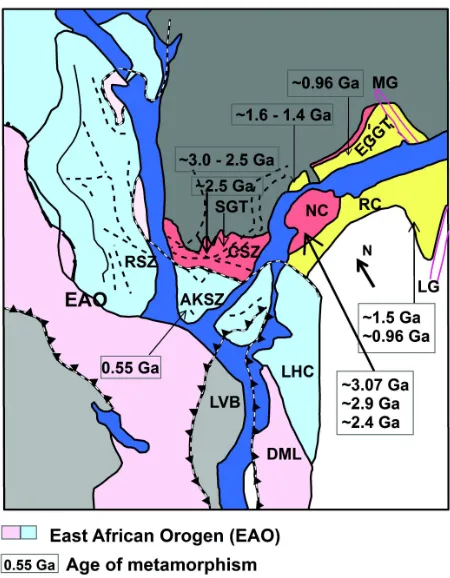
[image:6.612.67.292.326.615.2]An important development relates to the establishment
of
207Pb/
206Pb baddeleyite Thermal Extraction
-Thermal Ionization Mass Spectrometer method for
Fig. 2: A schematic of correlation of SGT and EGGT withhigh precision age determination of mafic rocks at
CSIR-NGRI (Kumar et al., 2014). Combined with
Paleomagnetic and geochemical data, the new
baddeleyite age data have contributed to the resolution
of emplacement ages of mafic dykes from Dharwar,
Bastar, Bundelkhand and Singhbhum cratons. For
instance, the identification of giant radial dyke swarm
emplaced at ~ 2367 Ma and ~2082 Ma with
implications for Paleoproterozoic continental
reconstructions and basin evolution (Kumar et al.,
2012, 2015; Shankar et al., 2014). Several other
researchers have provided new ages, geochemical
and paleomagnetic data on the multiple generations
of the mafic dyke swarms (e.g., Dash et al., 2013),
Proterozoic gabbro-anorthosite plutons (e.g., Kaur et
al., 2013; Dharma Rao et al., 2012; Koizumi et al.,
2014; Raith et al., 2014), alkaline complexes,
kimberlites and lamproites (e.g., Chalapathi Rao et
al., 2014; Santosh et al., 2014; Karmalkar et al., 2014;
Hippe et al., 2016; He et al., 2015) and a host of
granitoid plutons and felsic volcanism (e.g., Ashwal
et al., 2013; Dharma Rao et al., 2012, 2013; Meert et
al., 2013; Ravikant et al., 2014) from the different
tectonic provinces of peninsular India.
Chronostratigraphy, Provenance and Tectonic
Evolution of Purana Basins
Numerous Proterozoic sedimentary basins, well
known as Purana Basins overlie the >2.5 Ga Archean
crystalline basement in all the cratons of India. These
basins comprise thick cyclic successions of psammitic,
pelitic and calcareous sedimentary formations, locally
associated with mafic and felsic volcanic units. During
this quadrennial period there has been a spurt in detrital
zircon geochronological studies of major sedimentary
formations of the Purana Basins of India (e.g., Basu
and Bickford, 2014; Turner et al., 2014; Collins et al.,
2015; Joy et al., 2015) along with some Re-Os dating
of black shale (Tripathy et al., 2013), wholerock
Pb-Pb dating of carbonates (Gopalan et al., 2013 and
Rai et al., 2015) and Pb-Pb baddeleyite and zircon
dating of thermal events (mafic dyke swarms, Kumar,
2015 and granites, Ravikant et al., 2014) adjacent to
these basins. The data help in constraining the
chronology of opening and closing of sedimentation
in many Basins and an increased confidence in their
chronostratigraphy and correlations thereof. For
example, as summarised by Basu and Bickford (2014),
the Cuddapah Basin opened shortly before ca. 1900
Ma, while Ravikant et al. 2014; Kumar et al. 2015
opine that this basin formed at about 2000 Ma ago.
The Vindhyan Basin opened before ca. 1630 Ma, the
Khariar Basin likely opened around ca.1500 Ma and
the Chhattisgarh Basin opened around ca. 1400 Ma.
The Marwar Basin opened after ca. 750 Ma. The
Chhattisgarh Basin began to invert at ca. 1000 Ma
and closed shortly thereafter. The Indravati and the
Vindhyan Basins closed around ca. 1000 Ma. Collins
et al. (2015) presented new U-Pb detrital zircon ages
along with Hf-isotopic compositions and
39Ar-
40Ar
white mica ages for different Formations in the
Cuddapah-Kurnool Basin and inferred provenances
for the different stratigraphic Groups. The Papaghni
and lower Chitravati Groups were sourced from the
Dharwar Craton, the Nallamalai Group was
constrained to be deposited between 1659 ± 22 Ma
and ~1590 Ma, sourced from the Krishna Orogen
and the Ongole domain to the east of the Cuddapah
Basin and temporally correlatable to the Somanpalli
Group of the Pranhita-Godavari Valley Basin
(Amarasinghe et al., 2014 for comparison). The
Srisailam Formation also correlates with the
Nallamalai Group and is possibly sourced from within
the basin. The Kurnool Group was deposited during
the Neoproterozoic and sourced from the Dharwar
craton. The Gandikota Formation is traditionally
considered a part of the Chitravati Group. However,
the new detrital zircon ages indicate that this
Formation may have been deposited much later, after
1181 ± 29 Ma and possibly correlates with the Kurnool
Group. Thus, the new data support linking of
depositional events in these probable syn-orogenic
foreland basins to their orogenic hinterland and fill-in
a ‘missing-link’ in the tectonic development of the
peninsular India.
Ediacaran-Cambrian. The formation of these
sedimentary basins may be related to tectonics during
formation of the supercontinents of Columbia (Lower
Vindhyan), Rodinia (Upper Vindhyan) and Gondwana
(Marwar). The sedimentary sequences in the Marwar
Basin may be part of a large trans-Gondwana series
of basins that include the nearby Salt Range
(Pakistan), Huqf Supergroup (Oman) and Molo Group
(Madagascar).
Age of Ore Deposits
Beyond the well known regional framework of mineral
deposits and mineral provinces, future mineral
exploration would depend critically on the acquisition
of further data and the integration on the stratigraphic,
structural and tectonic controls with geophysical,
geochemical, geochronological and isotopic data. This
is because the linkage between deposit type and plate
margin processes is being increasingly appreciated,
for instance, orogenic gold, volcanic-hosted massive
sulphide, Mississippi valley type Pb-Zn deposits etc.,
which correlate well with supercontinent cycle and
continental assembly. Detailed age and isotopic studies
on the Indian ore deposits is gaining momentum, some
recent examples include: 1) Pb Sequential Leaching
(PbSL dating) of U-mineralised Vempalle dolomites,
Cuddapah Basin, which suggested that sedimentation
and syn-diagenetic U-mineralization occurred in a
short interval between ~2000 Ma and 1900 Ma (Rai
et al., 2015); 2) U-Th-Pb monazite dating of the
Rampura-Agucha and Rajpura-Dariba
metamor-phosed Zn-Pb deposits, Aravalli Belt, NW India
indicating Mesoproterozoic mineralization and
variations in Neoproterozoic metamorphism (Hazarika
et al., 2013); 3) wholerock Sm-Nd age of 3125 ± 120
Ma for the Nuggihalli chromite deposit (Mukherjee
et al., 2012); 4) Paleontological detrital zircon U-Pb
age constraint of 980 Ma for the Birmania phosphate
deposit marking a new episode of phosphogenesis in
NW India and a paleogeographic affinity between
India and South China (Hughes et al., 2015).
An Outlook
Although by no means complete or exhaustive enough,
this short review brings to fore the sustained interest,
national and international, on the evolution of the
Precambrian crust of peninsular India. Also the rigor
of research in this area is on the rise and this can be
ascribed to a greater access to modern laboratory
facilities encompassing many more researchers. It is
expected that the coming years would witness more
significant contributions to the Precambrian geology
and geochronology of peninsular India, propelled by
the setting up of new laboratories as National facilities
as well as the ongoing support to enhance the existing
laboratories and research funding in the country by
the various Government of India ministries and funding
agencies such as; UGC, DST, MoES, CSIR. This is
an opportune time for designing and executing major
(collaborative) research projects in geochronology and
related aspects of Precambrian crustal evolution in
India.
Acknowledgment
YJB’s work is supported by the Raja Ramanna
Fellowship from the Department of Atomic Energy.
We acknowledge help from S. Dinesh Kumar, M.
Sirisha and Soumendra Nayak with figure drafting
using GIS. Dr. Vadlamani Ravikant and an anonymous
reviewer are thanked for their critical reviews and
suggestions. We thank the Director, CSIR-NGRI for
support.
References
Amarasinghe U, Chaudhuri A, Collins A S, Deb G and Patranabis-Deb S (2015) Evolving provenance in the Proterozoic Pranhita-Godavari Basin, India Geosci Front 6 453-463
Anand R, Balakrishnan S, Kooijman E and Mezger K (2014) Neoarchean crustal growth by accretionary processes: Evidence from combined zircon-titanite U-Pb isotope studies on granitoid rocks around the Hutti greenstone belt, eastern Dharwar Craton, India J Asian Earth Sci 79 72-85
Anderson J R, Payne J L, Kelsey D E, Hand M and A S Collins M S (2012) High-pressure granulites at the dawn of the Proterozoic Geology 40 431-434
Arndt N (2013) The Formation and Evolution of the Continental Crust Geochemical Perspectives 2 405-533
Awasthi N, Ray J S, Laskar A H and Yadava M G (2013) Chronology of major terrace forming events in the Andaman Islands during the last 40 kyr J Geol Soc India 82 59-66
Basak K and Ghosh S (2015) Rb-Sr isotopic dating and metamorphism of a suite of migmatite and granites from Sandmata Granulite complex, Rajasthan: An evidence of mesoproterozoic thermal event J Geol Soc India 86 579-596
Basu A and Bickford M E (2015) An alternate perspective on the opening and closing of the intracratonic Purana basins in peninsular India J Geol Soc India 85 5-25
Basu A and Bickford M E (2014) Contributions of zircon U-Pb geochronology to understanding the volcanic and sedimentary history of some Purana basins, India J Asian Earth Sci 91 252-262
Bédard J H, Harris L B and Thurston P C (2013) The hunting of the snArc Precambrian Res 229 20-48
Belica M E, Piispa E J, Meert J G, Pesonen L J, Plado J, Pandit M K, Kamenov G D and Celestino M (2014) Paleoproterozoic mafic dyke swarms from the Dharwar craton; paleomagnetic poles for India from 2.37 to 1.88Ga and rethinking the Columbia supercontinent Precambrian Res 244 100-122
Belousova E A, Kostitsyn Y A, Griffin W L, Begg G C, O’Reilly S Y and Pearson N J (2010) The growth of the continental crust: Constraints from zircon Hf-isotope data Lithos 119 457-466
Bhaskar Rao Y, Griffin W, Ketchum J, Pearson N, Beyer E and chaean Western Dharwar craton, from zircon in situ U-Pb dating and Hf-isotopic compositions. Geochim. Cosmochim Acta Suppl 72 81
Bhattacharya S, Santosh M, Zhang Z, Huang H, Banerjee A, George P M and Sajeev K (2014) Imprints of Archean to Neoproterozoic crustal processes in the Madurai Block, Southern India J Asian Earth Sci 88 1-10
Bhowmik S K, Wilde S A, Bhandari A, Pal T and Pant N C (2012) Growth of the Greater Indian Landmass and its assembly in Rodinia: Geochronological evidence from the Central Indian Tectonic Zone Gondwana Res 22 54-72
Bickford M E, Saha D, Schieber J, Kamenov G, Russell A and Basu A (2013) New U-Pb ages of zircons in the Owk Shale (Kurnool Group) with reflections on proterozoic porcellanites in India J Geol Soc India 82 207-216
Bora S, Kumar S, Yi K, Kim N and Lee T H (2013) Geochemistry and U-Pb SHRIMP zircon chronology of granitoids and microgranular enclaves from Jhirgadandi Pluton of Mahakoshal Belt, Central India Tectonic Zone, India J Asian Earth Sci 70-71 99-114
Brandt S, Raith M M, Schenk V, Sengupta P, Srikantappa C and Gerdes A (2014) Crustal evolution of the Southern Granulite Terrane, south India: New geochronological and geochemical data for felsic orthogneisses and granites Precambrian Res 246 91-122
Cawood P A, Hawkesworth C J and Dhuime B (2013) The continental record and the generation of continental crust. GSA Bulletin; January/February 2013 125 14-32
Chalapathi Rao N V, Kumar A, Sahoo S, Dongre A N and Talukdar D (2014a) Petrology and petrogenesis of Mesoproterozoic lamproites from the Ramadugu field, NW margin of the Cuddapah basin, Eastern Dharwar craton, southern India Lithos 196-197 150 -168
Chalapathi Rao N V, Srivastava R K, Sinha A K and Ravikant V (2014b) Petrogenesis of Kerguelen mantle plume-linked Early Cretaceous ultrapotassic intrusive rocks from the Gondwana sedimentary basins, Damodar Valley, Eastern India Earth-Science Rev 136 96-120
Chardon D, Jayananda M and Peucat J J (2011) Lateral constrictional flow of hot orogenic crust: Insights from the Neoarchean of south India, geological and geophysical implications for orogenic plateaux Geochemistry Geophys Geosystems 12
Chatterjee P, De S, Ranaivoson M, Mazumder R and Arima M (2013) A review of the ~1600 Ma sedimentation, volcanism, and tectono-thermal events in the Singhbhum craton, Eastern India Geosci Front 4 277-287
Chattopadhyay S, Upadhyay D, Nanda J K, Mezger K, Pruseth K L and Berndt J (2015) Proto-India was a part of Rodinia: Evidence from Grenville-age suturing of the Eastern Ghats Province with the Paleoarchean Singhbhum Craton Precambrian Res 266 506-529
Clark C, Healy D, Johnson T, Collins A S, Taylor R J, Santosh M and Timms N E (2015) Hot orogens and supercontinent amalgamation: A Gondwanan example from southern India Gondwana Res 28 1310-1328
Collerson K D, Campbell L M, Weaver B L and Palacz Z A (1991) Evidence for extreme mantle fractionation in early Archaean ultramafic rocks from northern Labrador Nature
354 56-58
Collins A S, Clark C and Plavsa D (2014) Peninsular India in Gondwana: The tectonothermal evolution of the Southern Granulite Terrain and its Gondwanan counterparts Gondwana Res 25 190-203
and tectonic significance of the Cuddapah Basin, India Gondwana Res 28 1294-1309
Collins A S and Pisarevsky S A (2005) Amalgamating eastern Gondwana: The evolution of the Circum-Indian Orogens Earth-Science Rev 71 229-270
Condie K C (2005) Earth as an Evolving Planetary System Elsevier
Condie K C (2000) Episodic continental growth models: Afterthoughts and extensions Tectonophysics 322 153-162
Das S, Shukla D, Bhattacharjee S and Mitra S K (2015) Age constraints of Udayagiri Domain of Nellore Schist Belt by Xenotime dating around Pamuru, Prakasam district, Andhra Pradesh J Geol Soc India 85 289-298
Das S K (2015) Characteristics of zircon of Chhatrapur beach placer deposit, Ganjam District, Odisha J Geol Soc India
86 383-390
Dash J K, Pradhan S K, Bhutani R, Balakrishnan S, Chandrasekaran G and Basavaiah N (2013) Paleomagnetism of ca. 2.3Ga mafic dyke swarms in the northeastern Southern Granulite Terrain, India: Constraints on the position and extent of Dharwar craton in the Paleoproterozoic Precambrian Res
228 164-176
De Wall H, Pandit M K and Chauhan N K (2012) Paleosol occurrences along the Archean-Proterozoic contact in the Aravalli craton, NW India Precambrian Res 216-219 120-131
De S, Mazumder R, Ohta T, Hegner E, Yamada K, Bhattacharyya T, Chiarenzelli J, Altermann W and Arima M (2015) Geochemical and Sm-Nd isotopic characteristics of the Late Archaean-Palaeoproterozoic Dhanjori and Chaibasa metasedimentary rocks, Singhbhum craton, E. India: Implications for provenance, and contemporary basin tectonics Precambrian Res 256 62-78
Dey S, Nandy J, Choudhary A K, Liu Y and Zong K (2014) Origin and evolution of granitoids associated with the Kadiri greenstone belt, eastern Dharwar craton: A history of orogenic to anorogenic magmatism Precambrian Res 246 64-90
Dharma Rao C V, Santosh M and Dong Y (2012) U-Pb zircon chronology of the Pangidi-Kondapalle layered intrusion, Eastern Ghats belt, India: Constraints on Mesoproterozoic arc magmatism in a convergent margin setting J Asian Earth Sci 49 362-375
Dharma Rao C V, Santosh M, Kim S W and Li S (2013a) Arc magmatism in the Delhi Fold Belt: SHRIMP U-Pb zircon ages of granitoids and implications for Neoproterozoic convergent margin tectonics in NW India J Asian Earth Sci
78 83-99
Dharma Rao C V, Santosh M, Sajeev K and Windley B F (2013b) Chromite-silicate chemistry of the Neoarchean Sittampundi Complex, southern India: Implications for subduction-related arc magmatism Precambrian Res 227 259-275
Dharma Rao C V, Santosh M, Zhang Z and Tsunogae T (2013c) Mesoproterozoic arc magmatism in SE India: Petrology, zircon U-Pb geochronology and Hf isotopes of the Bopudi felsic suite from Eastern Ghats Belt J Asian Earth Sci 75 183-201
Dhuime B, Hawkesworth C J, Cawood P A and Storey C D (2012) A Change in the Geodynamics of Continental Growth 3 Billion Years Ago Science 80-335 1334-1336
Fei G, Zhou X, Duo J, Zhou Y, Wen C Q, Wen Q, He Y, Huo Y, Yang Z, Zhang J and Liu H (2015) Zircon U-Pb age and geochemical characteristics of ore-bearing granodiorite porphyry in the Duobuza porphyry copper deposit, Tibet J Geol Soc India 86 223-232
Fritz H, Abdelsalam M, Ali K A, Bingen B, Collins A S, Fowler A R, Ghebreab W, Hauzenberger C A, Johnson P R, Kusky T M, Macey P, Muhongo S, Stern R J and Viola G (2013) Orogen styles in the East African Orogen: A review of the Neoproterozoic to Cambrian tectonic evolution J African Earth Sci 86 65-106
Gerya T (2014) Precambrian geodynamics: Concepts and models Gondwana Res 25 442 -463
Glorie S, De Grave J, Singh T, Payne J L and Collins A S (2014) Crustal root of the Eastern Dharwar Craton: Zircon U-Pb age and Lu-Hf isotopic evolution of the East Salem Block, southeast India Precambrian Res 249 229-246
Gopalan K, Kumar A, Kumar S and Vijaya Gopal B (2013) Depositional history of the Upper Vindhyan succession, central India: Time constraints from Pb-Pb isochron ages of its carbonate components Precambrian Res 233 108-117
Gupta S, Jayananda M and Fareeduddin (2014) Tourmaline from the Archean G.R.Halli gold deposit, Chitradurga greenstone belt, Dharwar craton (India): Implications for the gold metallogeny Geosci Front 5 877-892
Harrison T M (2009) The Hadean Crust: Evidence from >4 Ga Zircons Annu Rev Earth Planet Sci 37 479-505
Hazarika P, Upadhyay D and Mishra B (2013) Contrasting geochronological evolution of the Rajpura-Dariba and Rampura-Agucha metamorphosed Zn-Pb deposit, Aravalli-Delhi Belt, India J Asian Earth Sci 73 429-439
113 812-825
Henderson B, Collins A S, Payne J, Forbes C and Saha D (2014) Geologically constraining India in Columbia: The age, isotopic provenance and geochemistry of the protoliths of the Ongole Domain, Southern Eastern Ghats, India Gondwana Res 26 888-906
Hippe K, Miller A, von Quadt A, Peytcheva I and Hammerschmidt K (2016) Zircon geochronology of the Koraput alkaline complex: Insights from combined geochemical and U-Pb-Hf isotope analyses, and implications for the timing of alkaline magmatism in the Eastern Ghats Belt, India Gondwana Res 34 205-220
Hokada T, Horie K, Satish-Kumar M, Ueno Y, Nasheeth A, Mishima K and Shiraishi K (2013) An appraisal of Archaean supracrustal sequences in Chitradurga Schist Belt, Western Dharwar Craton, Southern India Precambrian Res 227 99-119
Hughes N C, Myrow P M, McKenzie N R, Xiao S, Banerjee D M, Stockli D F and Tang Q (2015) Age and implications of the phosphatic Birmania Formation, Rajasthan, India Precambrian Res 267 164-173
Ishwar-Kumar C, Windley B F, Horie K, Kato T, Hokada T, Itaya T, Yagi K, Gouzu C and Sajeev K (2013) A Rodinian suture in western India: New insights on India-Madagascar correlations Precambrian Res 236 227-251
Jayananda M, Chardon D, Peucat J J and Tushipokla Fanning C M (2015) Paleo- to Mesoarchean TTG accretion and continental growth in the western Dharwar craton, Southern India: Constraints from SHRIMP U-Pb zircon geochronology, whole-rock geochemistry and Nd-Sr isotopes Precambrian Res 268 295-322
Jayananda M, Peucat J J, Chardon D, Rao B K, Fanning C M and Corfu F (2013a) Neoarchean greenstone volcanism and continental growth, Dharwar craton, southern India: Constraints from SIMS U-Pb zircon geochronology and Nd isotopes Precambrian Res 227 55-76
Jayananda M, Tsutsumi Y, Miyazaki T, Gireesh R V, Kapfo K U, Tushipokla Hidaka H and Kano T (2013b) Geochronological constraints on Meso- and Neoarchean regional metamorphism and magmatism in the Dharwar craton, southern India J Asian Earth Sci 78 18-38
Johnson T E, Clark C, Taylor R J M, Santosh M and Collins A S (2015) Prograde and retrograde growth of monazite in migmatites: An example from the Nagercoil Block, southern India Geosci Front 6 373-387
Joy S, Jelsma H, Tappe S and Armstrong R (2015) SHRIMP U-Pb zircon provenance of the Sullavai Group of Pranhita-Godavari Basin and Bairenkonda Quartzite of Cuddapah
Basin, with implications for the Southern Indian Proterozoic tectonic architecture J Asian Earth Sci 111 827-839
Karmalkar N R, Duraiswami R A, Jonnalagadda M K and Griffin W L (2014) Mid-Cretaceous lamproite from the Kutch region, Gujarat, India: Genesis and tectonic implications Gondwana Res 26 942-956
Kaur P, Chaudhri N, Hofmann A W, Raczek I and Okrusch M (2013) Geochemistry and Sm-Nd geochronology of the metasomatised mafic rocks in the Khetri complex, Rajasthan, NW India: Evidence of an Early Cryogenian metasomatic event in the northern Aravalli orogen J Asian Earth Sci 62 401-413
Koizumi T, Tsunogae T, Santosh M, Tsutsumi Y, Chetty T R K and Saitoh Y (2014) Petrology and zircon U-Pb geochronology of metagabbros from a mafic-ultramafic suite at Aniyapuram: Neoarchean to Early Paleoproterozoic convergent margin magmatism and Middle Neoproterozoic high-grade metamorphism in southern India J Asian Earth Sci 95 51-64
Korhonen F J, Clark C, Brown M, Bhattacharya S and Taylor R (2013) How long-lived is ultrahigh temperature (UHT) metamorphism? Constraints from zircon and monazite geochronology in the Eastern Ghats orogenic belt, India Precambrian Res 234 322 -350
Kröner A and Liu D (2012) Advances in high-resolution ion-microprobe geochronology Gondwana Res 21 717-718
Kröner A, Santosh M, Hegner E, Shaji E, Geng H, Wong J, Xie H, Wan Y, Shang C K, Liu D, Sun M and Nanda-Kumar V (2015) Palaeoproterozoic ancestry of Pan-African high-grade granitoids in southernmost India: Implications for Gondwana reconstructions Gondwana Res 27 1-37
Kröner A, Santosh M and Wong J (2012) Zircon ages and Hf isotopic systematics reveal vestiges of Mesoproterozoic to Archaean crust within the late Neoproterozoic-Cambrian high-grade terrain of southernmost India Gondwana Res
21 876-886
Kumar A, Parashuramulu V and Nagaraju E (2015) A 2082 Ma radiating dyke swarm in the Eastern Dharwar Craton , southern India and its implications to Cuddapah basin formation Precambrian Res 266 0-16
Kumar A, Nagaraju E, Srinivasa Sarma D and Davis D W (2014) Precise Pb baddeleyite geochronology by the thermal extraction-thermal ionization mass spectrometry method Chem Geol 372 72-79
Paleoproterozoic reconstruction Precambrian Res
220-221 123-138
Lancaster P J, Dey S, Storey C D, Mitra A and Bhunia R K (2015) Contrasting crustal evolution processes in the Dharwar craton: Insights from detrital zircon U-Pb and Hf isotopes Gondwana Res 28 1361-1372
Liu D Y, Wan Y S, Wu J S, Wilde S A, Zhou H Y, Dong C Y and Yin X Y (2007) Eoarchean rocks and zircons in the North China craton. In: Van Kranendonk M J, Smithies R H, Bennett V C (Eds.), Earth’s Oldest Rocks, in: Developments in Precambrian Geology. Elsevier, Amsterdam, 251-273
Maibam B, Gerdes A and Goswami J N (2016) U-Pb and Hf isotope records in detrital and magmatic zircon from eastern and western Dharwar craton, southern India: Evidence for coeval Archaean crustal evolution Precambrian Res 275 496-512
Maibam B, Sanyal P and Bhattacharya S (2015) Geochronological Study of Metasediments and Carbon Isotopes in Associated Graphites from the Sargur Area , Dharwar Craton/ : Constraints on the Age and Nature of the Protoliths J Geol Soc India 85 577-585
McKenzie N R, Hughes N C, Myrow P M, Banerjee D M, Deb M and Planavsky N J (2013) New age constraints for the Proterozoic Aravalli-Delhi successions of India and their implications Precambrian Res 238 120-128
Meert J G, Pandit M K and Kamenov G D (2013) Further geochronological and paleomagnetic constraints on Malani (and pre-Malani) magmatism in NW India Tectonophysics
608 1254-1267
Mohan M R, Sarma D S, McNaughton N J, Fletcher I R, Wilde S A, Siddiqui M A, Rasmussen B, Krapez B, Gregory C J and Kamo S L (2014) SHRIMP zircon and titanite U-Pb ages, Lu-Hf isotope signatures and geochemical constraints for ~2.56Ga granitic magmatism in Western Dharwar Craton, Southern India: Evidence for short-lived Neoarchean episodic crustal growth Precambrian Res 243 197-220
Mohan M R, Satyanarayanan M, Santosh M, Sylvester P J, Tubrett M and Lam R (2013) Neoarchean suprasubduction zone arc magmatism in southern India: Geochemistry, zircon U-Pb geochronology and Hf isotopes of the Sittampundi Anorthosite Complex Gondwana Res 23 539-557
Mohanty D P and Chetty T R K (2014) Possible detachment zone in Precambrian rocks of Kanjamalai Hills, Cauvery Suture Zone, Southern India: Implications to accretionary tectonics J Asian Earth Sci 88 50-61
Mojzsis S J and Harrison T M (2002) Establishment of a 3.83 Ga
magmatic age for the Akilia tonalite (southern West Greenland) Earth Planet Sci Lett 202 563-576
Mojzsis S J, Cates N L, Caro G, Trail D, Abramov O, Guitreau M, Blichert-Toft J, Hopkins M D and Bleeker W (2014) Component geochronology in the polyphase ca. 3920Ma Acasta Gneiss Geochim Cosmochim Acta 133 68-96
Mukherjee R, Mondal S K, Frei R, Rosing M T, Waight T E, Zhong H and Kumar G R R (2012) The 3.1Ga Nuggihalli chromite deposits, Western Dharwar craton (India): Geochemical and isotopic constraints on mantle sources, crustal evolution and implications for supercontinent formation and ore mineralization Lithos 155 392-409
Mukhopadhyay J, Beukes N J, Armstrong R A, Zimmermann U, Ghosh G and Medda R A (2008) Dating the oldest Greenstone in India, a 3.51-Ga precise U -Pb SHRIMPzircon age for Dacitic Lava of the Southern Iron Ore Group, Singhbhum Craton J Geol 116 449-461
Naqvi S M (2005) Geology and Evolution of the Indian Plate (From Hadean to Holocene-4 Ga to 4 Ka) Ca Publ Company New Delhi 450
Nelson D R, Bhattacharya H N, Thern E R and Altermann W (2014) Geochemical and ion-microprobe U-Pb zircon constraints on the Archaean evolution of Singhbhum Craton, eastern India Precambrian Res 255 412-432
Noack N M, Kleinschrodt R, Kirchenbaur M, Fonseca R O C and Münker C (2013) Lu-Hf isotope evidence for Paleoproterozoic metamorphism and deformation of Archean oceanic crust along the Dharwar Craton margin, southern India Precambrian Res 233 206-222
Nutman A, McGregor V and Friend C (1996) The Itsaq Gneiss Complex of southern West Greenland/ ; the world’s most extensive record of early crustal evolution Precambrian Res 78 1-39
O’Neil J, Maurice C, Stevenson R K, Larocque J, Cloquet C, David J, Francis D, Martin J, Van Kranendonk R S H and Vickie C B (2007) The geology of 3.8 Ga Nuvvuagittuq (Porpoise Cove) greenstone belt, Northeastern Superior Province, Canada., in: Developments in Precambrian Geology Elsevier 219-250
Ozha M K, Mishra B, Hazarika P, Jeyagopal A V and Yadav G S (2016) EPMA monazite geochronology of the basement and supracrustal rocks within the Pur-Banera basin, Rajasthan: Evidence of Columbia breakup in Northwestern India J Asian Earth Sci 117 284-303
Implications for the age of onset of sedimentation in Bijawar and Chattisgarh basins and uranium mineralisation J Geol Soc India 79 30-40
Pease V, Percival J, Smithies H, Stevens G and Kranendonk M Van (2008) When did plate tectonics begin/ ? Evidence from the orogenic record, 199-228
Peucat J J, Jayananda M, Chardon D, Capdevila R, Fanning M M and Paquette J L (2013) The lower crust of the Dharwar Craton, Southern India: Patchwork of Archean granulitic domains Precambrian Res 227 4-28
Pisarevsky S A, Biswal T K, Wang X C, De Waele B, Ernst R, Soderlund U, Tait J A, Ratre K, Singh Y K and Cleve M (2013) Palaeomagnetic, geochronological and geochemical study of Mesoproterozoic Lakhna Dykes in the Bastar Craton, India: Implications for the Mesoproterozoic supercontinent Lithos 174 125-143
Plavsa D, Collins A S, Foden J D and Clark C (2015) The evolution of a Gondwanan collisional orogen: A structural and geochronological appraisal from the Southern Granulite Terrane, South India Tectonics 34 820-857
Plavsa D, Collins A S, Foden J F, Kropinski L, Santosh M, Chetty T R K and Clark C (2012) Delineating crustal domains in Peninsular India: Age and chemistry of orthopyroxene-bearing felsic gneisses in the Madurai Block Precambrian Res 198 77-93
Prabhakar N and Bhattacharya A (2013) Paleoarchean partial convective overturn in the Singhbhum Craton, Eastern India Precambrian Res 231 106-121
Pradhan V R, Meert J G, Pandit M K, Kamenov G and Mondal M E A (2012) Paleomagnetic and geochronological studies of the mafic dyke swarms of Bundelkhand craton, central India: Implications for the tectonic evolution and paleogeographic reconstructions Precambrian Res 198 51-76
Praveen M N, Santosh M, Yang Q Y, Zhang Z C, Huang H, Singanenjam S and Sajinkumar K S (2014) Zircon U-Pb geochronology and Hf isotope of felsic volcanics from Attappadi, southern India: Implications for Neoarchean convergent margin tectonics Gondwana Res 26 907-924
Purohit R, Papineau D, Kroner A, Sharma K K and Roy A B (2012) Carbon isotope geochemistry and geochronological constraints of the Neoproterozoic Sirohi Group from northwest India Precambrian Res 220 80-90
Rai A K, Pandey U K, Zakaulla S and Parihar P S (2015) New 1.9-2.0 Ga, Pb-Pb (PbSL), Age of Dolomites from Vempalle Formation, Lower Cuddapah Supergroup, Eastern Dharwar Craton, India J Geol Soc India 86 131-136
Raith M M, Mahapatro S N, Upadhyay D, Berndt J, Mezger K
and Nanda J K (2014) Age and P-T evolution of the Neoproterozoic Turkel Anorthosite Complex, Eastern Ghats Province, India Precambrian Res 254 87-113
Rajesh H M (2012) A geochemical perspective on charnockite magmatism in Peninsular India Geosci Front 3 773-788
Rajgopal A (2012) Evolution of the Eastern Dharwar craton from the Perspective of New Isotope Data from the Hutti Greenstone-Granite terrane - Anand Rajgopal , Geological Survey of India , Bangalore Response of the Rivers in Himalaya to Late Pleistocene-Holocene Climate and J Geol Soc India 79 541-542
Ramakrishnan M and Vaidyanadhan R (2008) Geology of India J Geol Soc India 1 994
Rao D C V, Santosh M and Kim S W (2012) Cryogenian volcanic arc in the NW Indian Shield: Zircon SHRIMP U-Pb geochronology of felsic tuffs and implications for Gondwana assembly Gondwana Res 22 36-53
Rao C V D, Santosh M and Zhang S H (2014) Neoproterozoic massif-type anorthosites and related magmatic suites from the Eastern Ghats Belt, India: Implications for slab window magmatism at the terminal stage of collisional orogeny Precambrian Res 240 60-78
Rao N V C, Wu F Y, Mitchell R H, Li Q L and Lehmann B (2013) Mesoproterozoic U-Pb ages, trace element and Sr-Nd isotopic composition of perovskite from kimberlites of the Eastern Dharwar craton, southern India: Distinct mantle sources and a widespread 1.1Ga tectonomagmatic event Chem Geol 353 48-64
Rekha S, Bhattacharya A and Chatterjee N (2014) Tectonic restoration of the Precambrian crystalline rocks along the west coast of India: Correlation with eastern Madagascar in East Gondwana Precambrian Res 252 191-208
Renjith M L, Santosh M, Li T, Satyanarayanan M, Korakoppa M M, Tsunogae T, Subba Rao D V, Kesav Krishna A and Nirmal Charan S (2016) Zircon U-Pb age, Lu-Hf isotope, mineral chemistry and geochemistry of Sundamalai peralkaline pluton from the Salem Block, southern India: Implications for Cryogenian adakite-like magmatism in an aborted-rift J Asian Earth Sci 115 321-344
Ravikant V, Shakil H, Chatterjee C, Ji W Q and Wu F Y (2014) Initiation of the intra-cratonic Cuddapah basin: evidence from Paleoproterozoic (1995 Ma) anorogenic porphyritic granite in Eastern Dharwar Craton basement J Asian Earth Sci 79 235-245
Archaean-early Palaeoproterozoic granite-gneiss terrane J Geol Soc India 79 323-334
Saha D and Patranabis-Deb S (2014) Proterozoic evolution of eastern dharwar and bastar cratons, India - An overview of the intracratonic basins, craton margins and mobile belts J Asian Earth Sci 91 230-251
Samuel V O, Sajeev K, Hokada T, Horie K and Itaya T (2014a) Neoarchean arc magmatism followed by high-temperature, high-pressure metamorphism in the Nilgiri Block, southern India Tectonophysics 662 109-104
Samuel V O, Santosh M, Liu S, Wang W and Sajeev K (2014b) Neoarchean continental growth through arc magmatism in the Nilgiri Block, southern India Precambrian Res 245 146-173
Santosh M, Shaji E, Tsunogae T, Ram Mohan M, Satyanarayanan M and Horie K (2013) Suprasubduction zone ophiolite from Agali hill: Petrology, zircon SHRIMP U-Pb geochronology, geochemistry and implications for Neoarchean plate tectonics in southern India Precambrian Res 231 301-324
Santosh M, Xiao W J, Tsunogae T, Chetty T R K and Yellappa T (2012) The Neoproterozoic subduction complex in southern India: SIMS zircon U-Pb ages and implications for Gondwana assembly Precambrian Res 192 190-208
Santosh M, Yang Q Y, Ram Mohan M, Tsunogae T, Shaji E and Satyanarayanan M (2014) Cryogenian alkaline magmatism in the Southern Granulite Terrane, India: Petrology, geochemistry, zircon U-Pb ages and Lu-Hf isotopes Lithos
208 430-445
Santosh M, Yang Q Y, Shaji E, Mohan M R, Tsunogae T and Satyanarayanan M (2016) Oldest rocks from Peninsular India: Evidence for Hadean to Neoarchean crustal evolution Gondwana Res 29 105-135
Santosh M, Yang Q Y, Shaji E, Tsunogae T, Mohan M R and Satyanarayanan M (2015) An exotic Mesoarchean microcontinent: The Coorg Block, southern India Gondwana Res 27 165-195
Sarkar S C and Gupta A (2012) Crustal Evolution and Metallogeny in India Cambridge Univ Press Delhi 912
Sarkar T, Schenk V, Appel P, Berndt J and Sengupta P (2014) Two-stage granulite formation in a Proterozoic magmatic arc (Ongole domain of the Eastern Ghats Belt, India): Part 2. LA-ICP-MS zircon dating and texturally controlled in-situ monazite dating Precambrian Res 255 467-484
Sarma R S (2010) Cratons and Fold Belts of India Springer-Verlag Berlin Heidelberg 304
Shaji E, Santosh M, He X F, Fan H R, Dev S G D, Yang K F, Thangal M K and Pradeepkumar A P (2014) Convergent
margin processes during Archean-Proterozoic transition in Southern India: Geochemistry and zircon U-Pb geochronology of gold-bearing amphibolites, associated metagabbros, and TTG gneisses from Nilambur Precambrian Res 250 68-96
Shankar R, Vijaya Gopal B and Anil Kumar (2014) Precise Pb-Pb baddeleyite ages of 1765 Ma for a Singhbhum ‘newer dolerite’ dyke swarm Current Science 106 1306-1310
Shazia J R, Harlov D E, Suzuki K, Kim S W, Girish-Kumar M, Hayasaka Y, Ishwar-Kumar C, Windley B F and Sajeev K (2015) Linking monazite geochronology with fluid infiltration and metamorphic histories: Nature and experiment Lithos 236 1-15
Shimojo M, Yamamoto S, Sakata S, Yokoyama T D, Maki K, Sawaki Y, Ishikawa A, Aoki K, Aoki S, Koshida K, Tashiro T, Hirata T, Collerson K D and Komiya T (2016) Occurrence and geochronology of the Eoarchean, ~3.9Ga, Iqaluk Gneiss in the Saglek Block, northern Labrador, Canada: Evidence for the oldest supracrustal rocks in the world Precambrian Res 278 218-243
Srivastava R K and Gautam G C (2015) Geochemistry and petrogenesis of Paleo - Mesoproterozoic mafi c dyke swarms from northern Bastar craton, central India: Geodynamic implications in reference to Columbia supercontinent Gondwana Res 28 1061-1078
Srivastava S K, Hamilton S, Nayak S, Pandey U K, Mohanty R and Umamaheswar K (2015) Petrography , Geochemistry and Rb-Sr Geochronology of the Basement Granitoids from Umthongkut Area , West Khasi Hills District , Meghalaya , India/ : Implications on Petrogenesis and Uranium Mineralization J Geol Soc India 86 59-70
Tachikawa K and Elderfield H (2002) Establishment of a 3.83-Ga magmatic age for the Akilia tonalite (southern West Greenland) Earth Planet Sci Lett 202 563-576
Taylor R J M, Clark C, Johnson T E, Santosh M and Collins A S (2015) Unravelling the complexities in high-grade rocks using multiple techniques - the Achankovil Zone of southern India Contrib to Mineral Petrol 165
Tomson J K, Bhaskar Rao Y J, Vijaya Kumar T and Choudhary A K (2013) Geochemistry and neodymium model ages of Precambrian charnockites, Southern Granulite Terrain, India: Constraints on terrain assembly Precambrian Res
227 295-315
Trail D, Watson E B and Tailby N D (2013) Insights into the Hadean Earth from experimental studies of zircon J Geol Soc India 81 605-636
India Chem Geol 413 63-72
Tripathy G R, Singh S K and Bhu H (2013) Re-Os isotopes and major and trace element geochemistry of carbonaceous shales, Aravalli Supergroup, India: Impact of post-depositional processes Chem Geol 354 93-106
Turner C C, Meert J G, Pandit M K and Kamenov G D (2014) A detrital zircon U-Pb and Hf isotopic transect across the Son Valley sector of the Vindhyan Basin, India: Implications for basin evolution and paleogeography Gondwana Res
26 348-364
Tushipokla Jayananda M (2013) Geochemical constraints on komatiite volcanism from Sargur Group Nagamangala greenstone belt, western Dharwar craton, southern India: Implications for Mesoarchean mantle evolution and continental growth Geosci Front 4 321-340
Upadhyay D, Chattopadhyay S, Kooijman E, Mezger K and Berndt J (2014) Magmatic and metamorphic history of Paleoarchean tonalite-trondhjemite-granodiorite (TTG) suite from the Singhbhum craton, eastern India Precambrian Res 252 180-190
Valdiya K S (2010) The Making of India: Geodynamic Evolution Macmillan Publ 816
Venkateshwarlu M and Chalapathi Rao N V (2013) New palaeomagnetic and rock magnetic results on Mesoproterozoic kimberlites from the Eastern Dharwar craton, southern India: Towards constraining India’s position in Rodinia Precambrian Res 224 588-596
Verma S K, Verma S P, Oliveira E P, Singh V K and Moreno J A (2016) LA-SF-ICP-MS zircon U-Pb geochronology of granitic rocks from the central Bundelkhand greenstone complex, Bundelkhand craton, India J Asian Earth Sci 118 125-137
Vijaya Kumar T, Bhaskar Rao Y J, Diana Plavsa Alan S Collins, Tomson J K, Vijaya Gopal B, Babu E V S S K, Zircon U-Pb ages and Hf isotopic systematics of charnockite gneisses from the Ediacaran-Cambrian high-grade metamorphic terrains, southern India: constraints on crust formation, recycling and Gondwana correlations Bull Geol Soc Am (Under Revision)
Voice P J, Kowalewski M and Eriksson K (2011) Quantifying the timing and rate of crustal evolution: Global compilation of radiometrically dated detrital zircon grains J Geol 119 109-126
Wilde S A, Valley J W, Peck W H and Graham C M (2001) Evidence from detrital zircons for the existence of continental crust and oceans on the Earth 4.4 Gyr ago Nature 409 175-178
Yang Q Y and Santosh M (2015) Zircon U-Pb geochronology and Lu-Hf isotopes from the Kolar greenstone belt, Dharwar Craton, India: Implications for crustal evolution in an ocean-trench-continent transect J Asian Earth Sci 113 797-811
Yang Q Y, Santosh M, Pradeepkumar A P, Shaji E, Prasanth R S and Dev S G D (2015) Crustal evolution in the western margin of the Nilgiri Block, southern India: Insights from zircon U-Pb and Lu-Hf data on Neoarchean magmatic suite J Asian Earth Sci 113 766-777.
Yellappa T, Santosh M, Chetty T R K, Kwon S, Park C, Nagesh P, Mohanty D P and Venkatasivappa V (2012) A Neoarchean dismembered ophiolite complex from southern India: Geochemical and geochronological constraints on its suprasubduction origin Gondwana Res 21 246-265
Zhang Z, Xiang H, Dong X, Ding H and He Z (2015) Long-lived high-temperature granulite-facies metamorphism in the Eastern Himalayan orogen, south Tibet Lithos 212 1-15
Zhou J L, Shao S, Luo Z H, Shao J B, Wu D T and Rasoamalala V (2015) Geochronology and geochemistry of Cryogenian gabbros from the Ambatondrazaka area, east-central Madagascar: Implications for Madagascar-India correlation and Rodinia paleogeography Precambrian Res 256 256-270