Exploring Minority Student Perceptions of the Effects of Campus Culture on Minority Student Academic and Social Integration at a Predominately White Technical College: A
Mixed Methods Case Study
A Dissertation Submitted to the Faculty of Drexel University
by
Sara Hillis Ousby
in partial requirement of the requirements for the degree of Doctor of Education
Field of Educational Leadership and Management May 2015
© Copyright 2015
Dedications
To my parents - Calvin and Renee
You always told me I could accomplish anything I set my mind to. Thank you for your constant support in my various endeavors.
To my partner, spouse and best friend – Peter
You have always supported and encouraged the pursuit of my doctorate degree. Your calming influence and gentle prods to keep writing, even when I doubted myself, often kept me motivated to cross the finish line. I can’t imagine having accomplished this task
Acknowledgements
To my chair, Dr. Joyce Pittman: Even when I was discouraged, you were confident I was on the right track. Without your support, guidance and checking in, I may have never completed this process!
To. Dr. Roger Gonzalez: Thank you for taking the time to serve on my committee. I appreciated your many suggestions for appropriate literature that should be included in my study and your insights into appropriate statistical testing to improve the accuracy and validity of my work.
To. Dr. Jennifer McLean: Thank you for adding my dissertation committee to the continuingly growing list of responsibilities you have. I appreciated your support to continue to push forward and your encouragement when I was unsure of my next steps.
To my colleagues at Pennsylvania College of Technology: Thank you for your support over the past few years as I have worked toward this goal. I appreciate your flexibility with covering various events and functions when I had yet another obligation for my course work or needed extra time for writing.
Abstract
Exploring Minority Student Perceptions of the Effects of Campus Culture on Minority Student Academic and Social Integration at a Predominately White Technical College: A
Mixed Methods Case Study Sara Hillis Ousby, Ed. D.
Drexel University, May 2015 Chairperson: Joyce Pittman, Ph.D.
The purpose of this mixed methods study was to explore the effects of campus culture on minority students’ perceptions of their academic success at a predominately White technical college in Pennsylvania. Critical Race Theory (CRT) formed the
foundation for the study and defines the researches stances. In addition, retention models as identified by the literature, specifically Kuh and Love’s (2000) cultural perspective on student departure, and studies investigating campus culture at PWIs develop the second and third prongs of the conceptual framework. The study sought to answer the central research question: How do minority students perceive the effect of campus culture on their integration to campus?
Current students at the site institution participated in focus groups and responded to a qualitative open-ended questionnaire. Existing institutional campus climate
quantitative data was analyzed by race to determine if there was significant difference in feeling a sense of belonging between students of different racial backgrounds. Data were analyzed and coded to inform results. The findings revealed four major themes regarding minority student perceptions of the effect of campus climate on academic and social integration: (a) Campus Climate, (b) Campus Involvement, (c) Support of Faculty and
Staff, and (d) Positive Academic Experiences. The findings were situated within the literature to present three results of the study, (a) Participants perceive the campus
climate to be inhospitable, (b) Participants are very engaged in the academic experiences, and (c) Participants have had positive social engagement experiences through events and organizations that have provided a niche to minority students. The desired outcome of the study was to use the findings to guide future practice in the area of increasing retention and graduation rates of minority students through creating inclusive campus
environments.
Keywords: retention, academic integration, social integration, critical race theory, race, campus climate, predominately white institution, students of color, minority students
The Dissertation Committee for Drexel University
certifies that this is the approved version of the following dissertation:
Exploring Minority Student Perceptions of the Effects of Campus Culture on Minority Student Academic and Social Integration at a Predominately White Technical College: A
Mixed Methods Case Study
Committee:
Joyce Pittman: Supervisor
____________________________________ Roger Gonzalez
____________________________________ Jennifer McLean
Table of Contents
Abstract ... v
List of Tables ... x
List of Figures ... xi
Chapter 1: Introduction to the Research ... 1
Introduction of the Problem ... 1
Statement of the Problem ... 2
Purpose and Significance ... 4
Research Questions ... 5
Conceptual Framework ... 5
Researcher stances and experiential base. ... 6
Conceptual framework. ... 7
Definition of Terms ... 10
Assumptions, Limitations, and Delimitations ... 11
Summary ... 12
Chapter 2: The Literature Review ... 14
Stream 1: Critical Race Theory ... 15
Stream 2. Campus Culture and Climate ... 27
Discrimination and prejudice’s influence on student experiences. ... 31
Engagement’s effect on student experiences. ... 32
Summary. ... 33
Stream 3. Retention Models ... 34
Astin’s involvement model. ... 34
Bean and Eaton’s psychological model of college student retention. ... 36
Kuh and Love’s cultural perspective on student departure. ... 38
Tinto’s theory of student departure. ... 42
Summary. ... 46
Synthesis of the Research ... 46
Chapter 3: Research Methodology... 49
Site and Population... 50
Population description. ... 50
Site description. ... 53
Site access. ... 54
Research Methods ... 56
Data collection methods. ... 56
Stages of data collection. ... 57
Data analysis procedures. ... 59
Pilot Study ... 63
Site Description ... 63
Methodology ... 63
Reliability and Validity Procedures ... 65
Ethical Considerations... 65
Summary ... 67
Chapter 4: Finding, Results, and Interpretations ... 68
Participant Profiles ... 70
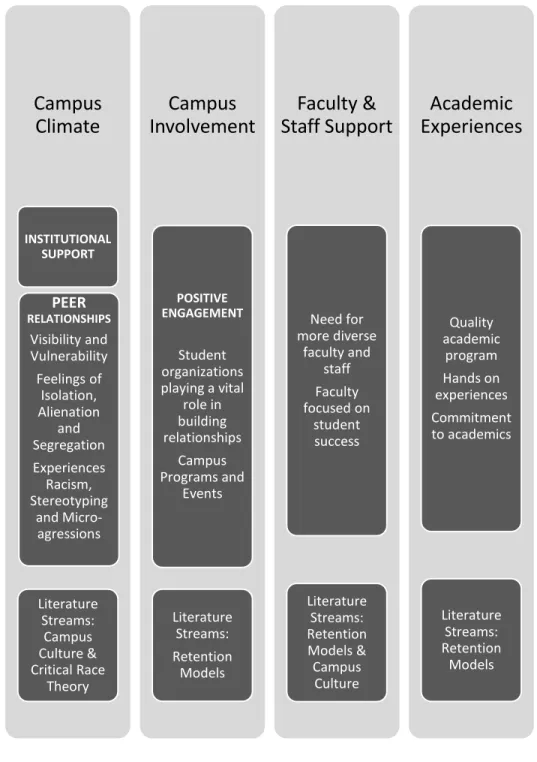
Findings ... 74
Campus Climate.. ... 75
Campus Involvement. ... 88
Faculty & Staff Support ... 93
Academic Experiences ... 96
Results and Interpretations ... 98
Summary ... 101
Chapter 5: Conclusions and Recommendations ... 103
Conclusions ... 104
Recommendations ... 107
Recommendations for future research ... 109
Summary ... 110
References ... 111
Appendix A: Questionnaire ... 118
Appendix B: Focus Group Protocol ... 119
Appendix C: Photo Collection and Description Protocol ... 121
Appendix D: Citi Certification... 122
List of Tables
Table 1. Institutional Demographics ... 52
Table 2. Data Collection Timeline ... 58
Table 3. Data Collection and Analysis ... 60
Table 4. Graduation Rates by Race... 68
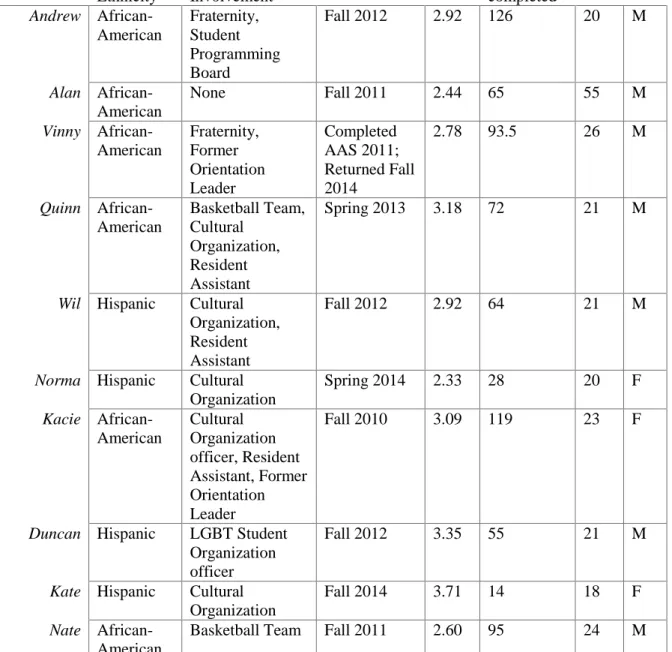
Table 5. Participant Profiles ... 73
Table 6. Campus Climate Assessment Items Relating to Campus Climate Theme ... 76
Table 7. Campus Climate Items relating to Campus Involvement ... 89
Table 8. Campus Climate Items Relating to Faculty and Staff Support Theme ... 94
List of Figures
Figure 1. Conceptual framework ... 8
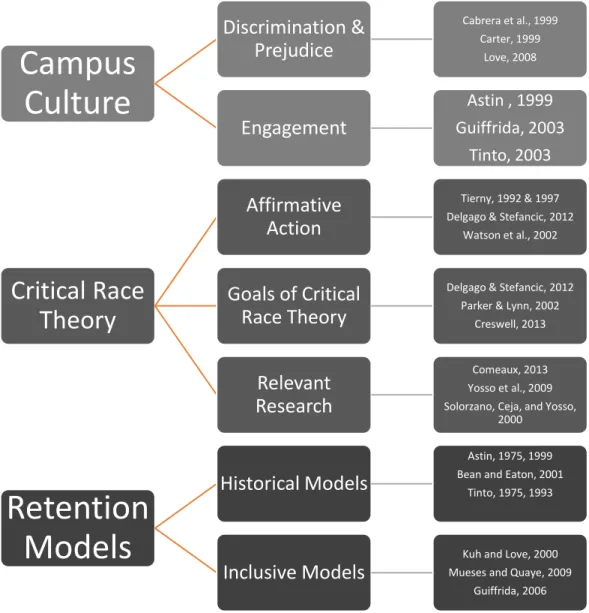
Figure 2. Literature map. ... 16
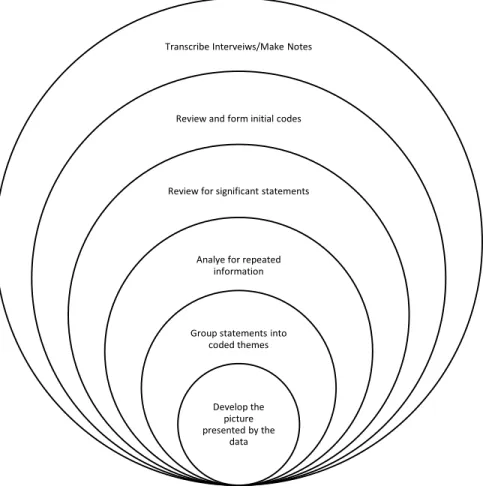
Figure 3. Graphical representation of the coding process. ... 62
Chapter 1: Introduction to the Research Introduction of the Problem
Just over half of students (58%) entering higher education complete a bachelor’s degree within six years at the institution in which they originally enroll (U.S. Department of Education, 2012). Low completion rates are accompanied by negative consequences for individual students and society as a whole. Students are taking on higher rates of debt to attend college and leave without a credential, but a large student loan payment (Choy & Li, 2005). Furthermore,
completion rates are significantly lower for students from historically underserved populations (Kuh et al., 2008; Thayer, 2000).
Among female undergraduates, Asian/Pacific Islander students had the highest completion rate within 6 years (70 percent), followed by White (63 percent), Hispanic (51 percent), Black (46 percent), and American Indian/Alaska Native students (42 percent). Among male students, Asians/Pacific Islanders again had the highest completion rates within 6 years (63 percent), followed by 57 percent of Whites, 44 percent of Hispanics, 36 percent of American Indian/Alaska Natives, and 35 percent of Blacks. (Aud, KewalRamani & Frohlich, 2011, p. 62) While access to education has increased for minority students, graduation rates have remained stagnant.
At the study site, a predominately White technical institution in north central
Pennsylvania, the retention rate of first-year Black students from the fall 2011 to spring 2012 semester was a mere 48.42%, compared to 75.54% retention rate for all first-year students, and a minority student retention rate of 61.8% (Pennsylvania College of Technology, 2012). Of the 95 Black students who enrolled at the institution for the first time in fall 2011, by spring 2012, 10
withdrew, 39 were academically suspended, and only 46 persisted to the spring 2012 semester. (Pennsylvania College of Technology, 2012).
While access to education has increased, the retention rates for minority students are still lower than the overall student population (Aud et al., 2011; Kuh et al., 2008; Thayer, 2000). A wealth of research exists regarding the success and persistence of minority students, but an increase in academic degree completion has not been achieved (Aud et al., 2011). Understanding the elements that shape minority student success is imperative to the future work force and ensuring educational equity. Throughout the literature, it is acknowledged that social integration and academic integration play a key role in the retention of college students (Astin, 1975; Bean & Eaton, 2000; Guiffrida, 2006; Kuh & Love 2000; Tinto, 1975). Exploring the campus climate for minority students is essential to understanding student behavior in regards to academic completion.
Statement of the Problem
The problem that provides the focus for this study is that little is known about how minority students perceive the effects on campus culture on their academic and social
integration. Many academic researchers present retention theories that demonstrate that academic and social integration is an essential component of student persistence (Astin, 1975; Bean & Eaton, 2000; Guiffrida, 2006; Kuh & Love 2000; Tinto, 1975). Most research on retention has simply served to test and validate Tinto’s (1975) theory of student departure, which posits that students enter the institution with characteristics and perceptions that influence their goals and institutional commitment. Students then interact with the institution through their academic experience, which modifies their commitment to the institution, as well as their perception of the value of their experience. Positive interactions increase their academic and social integration,
which leads to positive perceptions of the institution and its value. Negative experiences may lead to diminished commitment to the institution and trigger an early departure.
While some research has validated Tinto’s (1975) theory, other researchers have questioned “the validity of the model to fully and appropriately capture the experiences of nonwhite students, given that the model is based on an assimilation/acculturation framework” (Rendon, Jalomo, & Nora, 2000, p. 128). This study investigated the relationship between campus culture and minority students’ perceptions of success.
Most minority students enrolled in postsecondary education attend a predominately-white institution, or PWI. Nationwide, the completion rates for Black students at predominately white institutions (PWIs) are abysmal. Students of color are graduating at lower rates than their White peers. At 4-year institutions, only 35% of Black males and 44% of Hispanic males graduated within 6 years, compared to 57% of Anglo-Saxon male students. For females, only 46% of Black females and 51% of Hispanic females graduate within 6 years compared to 63% of Anglo-Saxon female students. (Aud, KewalRamani & Frohlich, 2011, p. 62). Seventy percent of Black
students enrolled at a PWI do not complete their degree, compared to only 20% at historically black colleges and universities, or HBCUs (Davis et al., 2004; Love, 2008). This study explored minority student perceptions of how campus culture influences student success.
One potential contributor to the low graduation rates for minority students is their
experiences while attending predominately white institutions. Campus cultures have the ability to influence students’ desires to engage in the campus community. According to critical race
theory, power structures still exist to favor the majority culture (Delgado & Stefancic, 2012). Minority students may easily notice the exclusion that occurs from this power differential and elect to disengage from the community or not be welcomed to integrate into the campus
community. Minority students may not integrate due to hostile campus environments where racial microaggressions and discrimination are perpetuated (Love, 2008).
A positive campus racial climate features: (a) the inclusion of Students, Faculty, and Administrators of Color; (b) a curriculum reflecting the historical and contemporary experiences of People of Color; (c) programs to support the
recruitment, retention, and graduation of Students of Color; and (d) a mission that reinforces the institution’s commitment to diversity and pluralism (e.g., Carroll, 1998; Guinier, Fine, & Balin, 1997; Hurtado, 1992, 1994). (Yosso, Smith, Ceja, & Solorzano. 2009, p. 664)
A failure to integrate into the campus, as noted later in the literature review, is a primary indicator of student departure.
Purpose and Significance
The purpose of this mixed methods study was to explore the effects of campus culture on minority students’ perceptions of their academic success at a predominately White technical college in Pennsylvania. Critical Race Theory (CRT) formed the foundation for the study and defines the researches stances. In addition, retention models as identified by the literature, specifically Kuh and Love’s (2000) cultural perspective on student departure, and studies investigating campus culture at PWIs develop the second and third prongs of the conceptual framework. The results of this study will contribute to the growing body of academic research on the experiences of minority students at predominately white institutions and speak to the larger issue of racism and power that continues to exist in society and on college campuses, as
explained by CRT and research describing minority student experiences at predominately white institutions. According to Yosso et al. (2009), little qualitative research exists that investigates
how racial microaggressions shape a negative campus climate. The results of this study help to fill that gap in research.
Both CRT and research on the experiences of minority students at PWI are described in more detail in the literature review, which will help build an understanding of societal issues such as privilege, oppression, and racial microaggressions that continue to affect the daily lives of minority students. The site institution will benefit through data analysis that may generate recommendations that have the potential to increase persistence and success of all students. Retention strategies that are effective for students in underrepresented populations are often discovered to succeed in increasing the persistence rates of the general campus population as well (Thayer, 2000).
Research Questions
A mixed methods approach was utilized to determine student perceptions of campus culture’s effect on their academic and social integration. The central question of the research study is: How do minority students perceive the effect of campus culture on their integration to campus?
The following sub questions are also explored:
1. What are minority students’ perceptions of campus culture?
2. How do minority students perceive campus culture’s effect on academic integration? 3. How do minority student perceive campus culture’s effect on social integration? The hypothesis of the study is that minority students will perceive that campus culture influences their success, including their academic and social integration. In addition, it is hypothesized that minority students will either not engage because they have not found an enclave where they feel comfortable, or because they perceive that they are not welcome in the campus community. Conceptual Framework
Researcher stances and experiential base. Critical Race Theory, CRT, is the
foundational theory of this study that explains and defines the researcher’s philosophical beliefs. According to Parker and Lynn (2002), as cited in Creswell (2013), CRT “focuses theoretical attention on race and how racism is deeply embedded within the framework of American society” (p. 31). CRT has three main goals: (a) to present stories about discrimination from the perspectives of people of color, (b) to argue for the eradication of racial subjugation while simultaneously recognizing that race is a social construct, and (c) to express other areas of difference, such as gender, class, or any inequities experienced by individuals (Parker & Lynn, 2002, as cited in Creswell, 2013). CRT provides the basis for the researcher’s philosophical assumptions, which include:
Ontological beliefs: Reality is based on power and identity struggles. Privilege or oppression exist and are based on race or ethnicity (as well as other areas of difference).
Epistemological beliefs: Reality is known through the study of social structures, freedom, and oppression, power, and control. Reality can be changed through research.
Axiological beliefs: Diversity of values is emphasized within the standpoint of various communities. (Lincoln, Lynham, & Guba, 2011, as cited in Creswell, 2013).
The researcher’s experiences develop this worldview, which is the perspective that is assumed through the research study. In addition, through interactions at the site institution, the researcher believes that racism and oppression do exist for minority students. However, majority culture students may be ignorant of the struggles and experiences of minority students. The use
of narratives and research may communicate the experiences and perspectives of minority students in a way that changes their reality at the institution.
Conceptual framework. The three streams of research serving as the foundation for the conceptual framework are retention models, CRT, and campus climate for minority students at PWIs. The conceptual framework is depicted in Figure 1. Many scholars have researched and developed theories to explain student persistence and retention. Some of the more well-known theories include Astin’s involvement model (1999) and Tinto’s theory of student departure (1975, 1993). In addition, research has shown that many of the retention models are not inclusive of minority students and do not consider students’ home cultures.
•Tinto, 1975 •Kuh & Love, 2000 •Museus & Quaye, 2009
Retention Models
•Delgago & Stefancic, 2012 •Yosso et al., 2009
•Parker & Lynn, 2002
Critical Race
Theory
•Solorzano, Ceja, & Yosso, 2000 •Guiffrida, 2003 •Cabrera et al., 1999
Minority Student
Experiences at
PWIs
Minority Student Perceptions Academic & Social IntegrationMinority
Student
Retention &
Graduation
Figure 1. Conceptual framework
Regardless of the retention model utilized, each student brings a unique set of characteristics and experiences to his or her college entry, including academic preparedness, social support, socioeconomic levels, motivation, and aspirations for degree attainment (Thayer, 2000). However, there are elements of retention where the institution can have a significant impact. Tinto (2006) argued that students depart the institution due to poor student-institution fit. For minority students attending a PWI, student-institution fit has a probability of causing
students difficulty in adjusting if the campus climate is not supportive of minority students. As identified by CRT, the social constructs of the environment have the potential to leave minority students feeling powerless and isolated. Racial microaggressions, discrimination, and social structures that favor the majority culture are a few examples of the obstacles that minority students must overcome to integrate into the campus environment, or integrate into those
enclaves of the campus culture where they are welcome. Unsupportive environments have the potential to negatively affect student social and academic integration.
As identified by the retention models outlined in the literature review, academic and social integration are key components of student success. Investigating student experiences during their time at an institution developed an understanding of campus climate and culture and determined how campus culture affects minority students’ perceptions of their ability to integrate to the institution both socially and academically. Campus culture and social and academic
integration are the key elements of “institution-fit” that can be explored to understand minority student perceptions’ of the effect of campus culture on success. The campus climate is
significantly impacted by the interactions of individuals within a society.
Much of the campus culture is defined by the culture of society where power differences and racism continue to exist.
Although greater numbers of minority students are entering college than in previous years, fewer earn degrees compared with non-minorities. Stagnant college completion rates unacceptable racial-ethnic gaps in college graduation rates coupled with external pressures for institutional accountability for student learning (Bok, 2006) have intensified the need to better understand the factors that influence student success in college. (Kuh, et al., 2008, p. 541)
Much of the early retention research “lacked complexity and detail” and initially only focused on the experiences of students from majority backgrounds (Tinto, 2006, p. 3). As equity and access have increased, research has evolved with an increased interest in the retention of minority populations in higher education, which feeds into the second stream of research, campus culture and climate for minority students at PWI.
Forty years ago, when the topic of student retention began to surface, initial thoughts were that persistence was a reflection of individual student attributes. However, in the 1970s theorists began to argue that the environment of the institution played a significant role in the student decision to stay or leave (Tinto, 2006). Institutional characteristics play a critical role in student persistence (Kuh et al., 2008; Tinto, 2006). The environment of a college campus has great potential to encourage student success, but also has the potential to play a detrimental role in student retention. For minority students, there is potential for the existence of racism and prejudiced systems at predominately white institutions that can create negative environments, which discourage success and persistence. Racial microaggressions hinder minority students’ academic and social acclimation to predominately white institutions of higher education (Solorzano, Ceja, & Yosso, 2000).
The second stream of research will be CRT, and the third stream of research for this study will be the effect of campus culture on students of color at predominately white
institutions. These two streams work together to develop the researcher’s understanding of the predominant issues facing minority students in order to develop an effective assessment instrument. CRT provides an understanding of the current issues of race and power in society, whereas minority student experiences use the “voice of color ” (Delgado & Stefancic, 2012, p. 10) to demonstrate the narratives of racism that exist on college campuses.
Definition of Terms
For the purposes of this study, the following definitions will be used.
Academic Integration: Academic integration refers to the degree that the student engages in basic academic behaviors, such as class attendance, completing assignments, meeting with faculty and academic advisers (Tinto, 1975).
Critical Race Theory (CRT): Deals with the concept that racism is built into the fabric of society. Scholars of CRT study the relationship between race, racism, and power, with the intent of transformation (Delgado & Stefancic, 2012). Parker and Lynn (2002) defined CRT as “a legal theory of race and racism designed to uncover how race and racism operate in the law and in society” (p.7).
Graduation Rates: Graduation rates refer to the rate at which students receive their degrees. Unless otherwise stated, graduation rates are for completion within six years (Aud et al., 2011).
Microaggressions: A transaction where a person of color is, consciously or
unconsciously, treated in a hostile or rude manner based on their race. A small act of racism (Delgado & Stefancic, 2012).
Minority students: Non-white students, specifically those that identify as Hispanic and Black. This definition is selected due to the campus population of the site institution, where there is not a significant population of other minority races to be considered in the definition. (Aud et al., 2011).
Predominately White Institutions (PWI): Colleges and universities where 50% or more of the student enrollment identifies as white. These institutions may also be understood to be
historically white, or exclusionary to non-white students, prior to 1964 (Brown & Dancy, 2010).
Retention: Retention refers to the rate at which students remain at the institution from their first to second year, unless otherwise specified.
Retention Models: Theories and models of retention, which explain why students matriculate through their academic experience as opposed to depart from an institution. Retention models from the leading researchers in the field have been identified for this study.
Social Integration: Social integration refers to the degree that the student is invested in their campus experience outside the classroom (Tinto, 1975).
Assumptions, Limitations, and Delimitations
As a current employee of the research site who has significant interaction with students, the researcher has developed assumptions about the culture of the institution.
As an open enrollment institution, minority and majority culture students enroll underprepared for college-level work. This has the most significant impact on retention.
Minority students have different experiences at PWI than majority culture students.
Peers and faculty, alike, marginalize minority students.
to discuss with a researcher.
A limitation of the study is that while the outcomes of the research may inform
professional practice, the results cannot be generalized to other campuses due to the emphasis on qualitative methods within the mixed methods design. As a qualitative researcher, bias and the researcher’s perspective are subject to surface through the study. As a qualitative researcher, it was imperative to take the necessary steps to ensure that the voices of the participants are made clear and not the researcher’s own perceptions. Through the Institutional Review Board process and creating a valid instrument, this limitation is reduced. In addition, this study is limited to applicability at only the site institution where the study is being conducted.
The main delimitation of this study is that only currently enrolled students will participate in the research. By limiting to only currently enrolled students, students that have had negative experiences and left the institution are not represented. Another delimitation is the limited demographic information about participants. Data such as high school GPA and socio-economic status were not taken into consideration for the study.
Summary
Low graduation and retention rates for minority students highlight the academic disparity that exists for students from historically marginalized backgrounds. Critical Race Theory
identifies this as one of the many pieces of evidence of the continuation of white supremacy and racial oppression. CRT also identifies how a culture is created where minority students feel powerless and isolated. Research regarding minority student experiences at predominately white institutions further develops the challenges that minority students face when entering higher education. Based on these challenges, it is not surprising that minority students would struggle to integrate into the campus culture. However, social and academic integration has been
demonstrated to be a key indicator of student success in higher education (Bean & Eaton, 2000; Guiffrida, 2006; Kuh et al, 2008; Museus & Quaye 2009; Tinto, 1975).
This study explored the perceptions that minority students have about the campus culture at predominately white institutions. In addition, the study reveals minority students’ perceptions of the effect of campus culture on their social and academic integration. It is imperative that educational institutions face the challenges of prejudice on college campuses head on. This study strives to illuminate the voices of minority students and share their narratives regarding their relationship between campus culture and social and academic integration.
Chapter 2: The Literature Review
Many scholars have researched and developed theories to explain student persistence and retention. Some of the more well-known theories include Astin’s involvement model (1999) and Tinto’s theory of student departure (1975, 1993). In addition, research has shown that many of the retention models are not inclusive of minority students and do not consider students’ home cultures. Critical Race Theory (CRT) postulates that racism and prejudice are engrained into the fabric of society, which serves as a possible explanation for the isolation and discrimination that students of color experience at predominately white institutions, or PWIs (Delgado & Stefancic, 2012).
Tinto (2006) argued that students depart the institution due to poor student-institution fit. For minority students attending a predominately white institution, student-institution fit has a probability of causing students difficulty in adjusting if the campus climate is not supportive of minority students. As identified by CRT, the social constructs of the environment have the potential to leave minority students feeling powerless and isolated. Racial microaggressions, discrimination, and social structures that favor the majority culture are a few examples of the obstacles minority students must overcome to integrate into the campus environment, or integrate into those enclaves of the campus culture where they are welcome (Delgado & Stefancic, 2012; Kuh & Love, 2000; Love, 2000; Yosso et al., 2009).
However, several researchers (Iverson, 2007; Tierney, 1999; Watson et al, 2002) have argued that rather than place the responsibility on students of color for their academic and social integration into the institution, colleges and universities are responsible for creating cultures where difference is acknowledged and embraced. Rather than individual subcultures or enclaves
providing support for students of color, institutions are responsible for creating an inclusive environment.
The literature review will construct a foundation for exploring minority student perceptions of campus culture and its relationship with academic and social integration. The three streams of research serving as the foundation for the conceptual framework are CRT, retention models, and campus climate for minority students at PWIs. The first stream of research, CRT, and the second stream of research, campus climate and students of color, will work
together to develop the researcher’s understanding of the predominant issues facing minority students in order to develop an effective assessment instrument.
CRT provides an understanding of the current issues of race and power in society, whereas minority student experiences use the “voice of color ” (Delgado & Stefancic, 2012, p. 10) to demonstrate the narratives of racism that exist on college campuses. The third stream of research, retention models, outlines the variety of theories related to student success and provides evidence that social integration and academic integration are key indicators of student success. Stream 1: Critical Race Theory
CRT is the foundational framework for this study and defines the researcher’s
assumptions about reality. CRT and the second stream of research, the experiences of students of color at predominately white institutions, will work together to demonstrate campus cultures oppress students of color, even if unintentionally, through societal pressures, policies, and structures. CRT emerged in the 1970s, primarily from the critical legal studies movement. According to Parker and Lynn (2002), CRT is the “legal theory of race and racism designed to uncover how race and racism operate in the law and in society - can be used as a tool through which to define, expose, and address educational problems” (p. 7). Historically, racism has been
understood to mean individuals’ acts of willful aggressions against other individuals based on their skin color and appearance. However, Critical Race Theory moves the discussion about racism from actions to an ideological understanding of racism, which allows discussion and research on how racism is embedded into American society as a system of oppression (Parker & Lynn, 2002).
Figure 2. Literature map.
Affirmative action and critical race theory. Tierney (1997) identifies the beginning of affirmative action when President Lyndon B. Johnson in 1965 issued an executive order
Campus
Culture
Discrimination &
Prejudice
Cabrera et al., 1999 Carter, 1999 Love, 2008Engagement
Astin , 1999 Guiffrida, 2003 Tinto, 2003Critical Race
Theory
Affirmative
Action
Tierny, 1992 & 1997 Delgago & Stefancic, 2012Watson et al., 2002
Goals of Critical
Race Theory
Delgago & Stefancic, 2012 Parker & Lynn, 2002
Creswell, 2013
Relevant
Research
Comeaux, 2013 Yosso et al., 2009 Solorzano, Ceja, and Yosso,
2000
Retention
Models
Historical Models
Astin, 1975, 1999 Bean and Eaton, 2001
Tinto, 1975, 1993
Inclusive Models
Kuh and Love, 2000 Mueses and Quaye, 2009
requiring “all Government contracting agencies…take affirmative action to ensure that
applicants are employed…without regard to their race, creed, color, or national origin” (p. 167). Hollinger (1996), as cited in Tierney (1997), argued that affirmative action needs a theory in current contexts to explain its need to continue to exist more than 50 years after the civil rights movement. Tierney posited that higher education “lacks an analytical framework with which to discuss affirmative action in academe and then to develop policies that support that idea” (p. 166). CRT should serve as the basis for understanding that Americans of color continue to experience racism and discrimination in postmodern society. While many may argue that it is a post-racial society, the research presented throughout the literature review highlights the experiences of students of color that continue to experience racism on their college campuses.
Tierney (1997) presented three justifications for the implementation of affirmative action: (a) compensation addresses previous discrimination; (b) correction relates to the alteration of present discrimination; and (c) diversification highlights the importance of creating a
multicultural society. Delgado and Stefancic (2012) cited Derrick Bell’s work on multiple occasions to argue that “civil rights advances for blacks always seemed to coincide with
changing economic conditions and the self-interest of elite whites” (p. 22), and further argue that the landmark case of Brown vs. the Board of Education to integrate schools was finally
successful, after multiple other attempts of desegregation, due to the political climate and the attempt to prevent an uprising following World War II and Vietnam. Specifically, Dorris (2009) argued that when New York replaced London as the financial center of the world following World War II, the motivation to create more equitable conditions for individuals of color following was based in the United States’ desire to continue be the dominant world financial
power since other countries were hesitant to do business with a country treating individuals of color as second class citizens.
Furthermore, Watson, Terrell, and Wright (2002) described how institutions of higher education espouse mission statements ripe with commitments to diversity, yet do not replicate their missions in action. Higher education has long recognized that diversity is beneficial to the learning environment, and as society becomes more pluralistic, there is a greater need to educate students from diverse backgrounds. Institutions have spent increasing time and resources over the past 30 years to provide programs and services designed to help students of color succeed and increase retention. However, efforts to address the multiculturalism and acceptance of diversity have been minimal (Watson et al., 2002). Watson et al. (2002) cited Cross (1991) in outlining three developmental stages that institutions go through regarding diversity. The first stage is a single culture that excludes students of color and other historically underrepresented groups; institutions allow the dominate culture to simply exclude these students from mainstream campus. The second phase allows for separate coexisting minority cultures. The institution may allow cultural programs and recognition months, but no other attempts are made to integrate students’ cultures. In the third stage, the “separate subcultures merge with the dominant campus culture to form an integrated campus community that respects the uniqueness of each subcultural group” (p. 11).
Watson et al. (2002) implied that campuses continue to struggle to move into the third stage, but doing so will increase retention for students of color. The concept of increasing retention through the integration of a singular multicultural campus culture is supported by Tierney (1999), who stated that students who are able to affirm their own cultural identities are more likely to persist and graduate. Tierney noted that this does not mean mere cultural
celebrations will result in increased persistence for students of color, rather, that if institutions make concerted efforts to affirm students’ cultural identities and structures their educational experience to involve a commitment to high academic and social goals, they stand to gain the students’ success through graduation.
Goals of critical race theory. CRT has three main goals: (a) to present stories about discrimination from the perspectives of people of color, (b) to argue for the eradication of racial subjugation while simultaneously recognizing that race is a social construct, and (c) to express other areas of difference, such as gender, class, or any inequities experienced by individuals (Parker & Lynn, 2002).
Use of narratives. The use of narratives to present stories about discrimination and racism from the perspectives of people of color is one of the key concepts of CRT. The use of narratives evolves from the legal background of CRT. “Storytelling constitutes an integral part of historical and current legal evidence gathering and findings of fact in racial discrimination
litigation” (Parker & Lynn, 2002, p. 10). The use of narratives makes CRT an appropriate theoretical framework for a case study, as the narrative is characteristic of case study research. Because of their different experiences with racism and discrimination, students of color may be able to communicate to majority culture students what they do not know. Minority status brings with it a presumed competence to speak about race and racism (Delgado & Stefancic, 2012).
Parker and Lynn (2002) argued that educational research has traditionally ignored marginalized groups by not addressing their concerns and deemphasized race by arguing that experiences of students of color can be understood via class or gender analyses and do not take into consideration race, culture, or language. Narratives utilized through case study research allows the voice of the student to speak for their experiences. Literary and narrative theory
maintain that we each maintain our own understanding of the universe that we do not easily modify. Narratives from the lives of students of color can bridge the gap between their worlds and the worlds of others. Engaging stories can help others understand their perspectives and invite others into an unfamiliar world (Delgado & Stefancic, 2012). Narratives also give a voice to those who may have previously been silenced and a name to discrimination so that once named, it can be combatted (Delgado & Stefancic, 2012).
The social construct of race. Race is a fluid social concept defined by political constructs and society (Parker & Lynn, 2002). Delgado and Stefancic (2012) stated that “races are
categories that society invents, manipulates, or retires when convenient” (p. 8). Individuals of different races have been subject to stereotypes that they are “less than,” due to their biological make up by dominant culture to ensure their subordination and rationalize oppression (Delgado & Stefancic, 2012). Psychological researchers have even attempted intelligence testing to argue differences between race are based on biological differences that cannot be explained by other environmental factors. However, the consensus from researchers in evolutionary biology and anthropology is that racial distinctions are not genetically discrete, are not reliably measured, and are not scientifically meaningful (Smedley & Smedley, 2005).
Intersectionality. CRT recognizes that individuals build their identity around many facets. Race is one lens through which an individual experiences life. However, gender, religion, socioeconomic status, and many other factors influence individuals’ world views and affiliations. Individuals cannot be understood through summarizing one aspect of their identity. When an individual falls into multiple categories of oppression, it may change their experiences and perspectives.
There are many emerging strands from which CRT borrows to expand itself to include other critical epistemologies and to seek intersections and conjunctions with other areas of difference to push a social justice agenda into the legal and public discourse on race and gender. (Parker & Lynn, 2002, p. 12)
Critical Race Theory in Research
Yosso et al. (2009) conducted a qualitative study utilizing focus groups to research how Latina/o students experience campus culture utilizing CRT as a conceptual lens for
understanding the data in the study. Thirty-seven Latina/o students participated in the study. Participants attended one of three elite, selective predominately white institutions classified as Carnegie Doctoral/Research Universities – Extensive. Participants self-identified at Latina/o and had completed at least one year of coursework. The open-ended interview protocol was designed to gather information regarding students experiences with regard to campus culture. The study utilized a grounded theory approach, which revealed racial microaggressions are a recurring theme in Latina/o student experiences. Three main types of racial microaggressions were identified: interpersonal microaggressions, racial jokes, and institutional microaggressions.
Interpersonal microaggressions are the verbal and nonverbal racial affronts directed at Latina/o students by peers, faculty, and staff. As racial microaggressions, jokes tended to surface in the presence of or directed at Latina/o students. The intentionality of these jokes distinguishes them from interpersonal microaggressions. The researchers defined institutional
microaggressions as “those racially marginalizing actions and inertia of the university evidenced in structures, practices, and discourses that endorse a campus racial climate hostile to People to Color” (p. 673). Institutional microaggressions appear to be approved and supported by
The researchers also outlined how for Latina/o students, Tinto’s (1993) theory that students experience three processes in their college adjustment – separation, transition, and
incorporation -does not apply. Instead, Latina/o students first experience rejection of their presence at the institution. The students respond through community building and critical navigation between multiple worlds. Yosso et al. (2009) did not ask questions specific to racial microaggressions; rather, the themes emerged from the data. Further research is needed to further understand racial microaggressions, as well as the intersectionality of identities. This study provides further evidence of the existence and power of racial microaggressions on college campuses. Further research is needed to understand how microaggressions affect students’ perceptions of campus climate.
Comeaux (2013) conducted a qualitative research study employing photo elicitation, whereby the researcher compiles selected photographs to stimulate responses from research participants. The study utilized photos of Black and White male students accompanied by a written vignette to elicit perceptions and attitudes of faculty. A random sample of 411 teaching and research faculty at a large research institution in the United States resulted in 137 usable instruments. The respondents represented various ranks and departments. Self-reported
demographic data for the participants was as follows: 102 (74.4%) male and 35 (25.6%) female, 77% White, 11% Asian, 6% Hispanic, 3% Black, 2% other, and 1% Native American. The random sample of 411 participants was sent an envelope through campus mail with a form asking for demographic data, a photo, and a prompt. The photo was of either a White or Black male dressed in a graduation gown receiving a diploma from a white male in academic regalia. The prompt stated: Please observe the picture and write your thoughts and feelings that come to mind. The picture represents a White/African American male student who received his
bachelor’s degree on time (4 years), and went on to become an accountant at a major Fortune
500 company. His major was accounting.
Of the 137 returned forms, 63 participants completed the form with the photo of the Black male student and 74 completed the form with the photo of the White male student.
Data analysis was conducted using hierarchical content analysis. Reponses were transcribed and immediately themes were identified in the transcripts. Major themes were then identified based on commonalities across responses. CRT was used as a framework to
understand the role of race and the subtle way that racial ideologies emerged from the data. Three themes were identified: supportive of academic accomplishments, race-neutral references,
and indirect references to race. The researcher reported that responses were slightly more supportive of White students (76%) than of the Black students (71%). According to the researcher, this difference is important because it evidences previous research that Black male students have been victims of negative stereotypes of their academic abilities (Comeaux, 2013). Seven percent of respondents responded in a colorblind manner, referring to race while denying its importance. All of the colorblind responses were from White faculty participants. Five percent of respondents shared responses with racially charged meanings.
Comeaux (2013) concluded that while relatively low numbers of faculty reported racially negative responses, this slight number have the potential to sustain White dominance and
legitimize Black subordination. In addition, the researcher reported that the study adds to the literature by adding to the research on understandings of relationships between faculty and students and highlights subtle ways that dominant racial ideologies affect Black male collegians experiences at PWIs, supporting research on campus racial climates. Comeaux made several recommendations for training and services to increase faculty understanding of racial ideologies.
The researcher argued that many institutions avoid the conversation as race, giving the
impression that America is a post racial society, while race remains a prevalent issue. Comeaux’s research offers a perspective not often represented in research regarding campus cultures.
Faculty are an imperative piece to understanding campus culture and are integral in creating supportive and inclusive learning environments.
Iverson (2007) conducted a study to examine, through the context CRT, how educational policies and practices produce particular realities for individuals of color at colleges and
universities. Iverson utilized CRT as an analytical framework to examine how racial inequality may be reproduced through educational policies. Iverson argued that administrators, faculty, and students composing diversity action plans are constituting the cultural reality for people of color on campus through the way they write about diversity. A blended critical approach to analyzing the diversity action plans combined critical race theory with traditional methods of critical analysis of policy making. The following questions guided the study:
What are the predominant images of diversity in diversity action plans?
How are problems related to diversity represented in diversity action plans?
How are solutions related to diversity problems represented in diversity action plans?
What discourses are employed to shape these images, problems, and solutions? Data were collected from 20 U.S. land grant universities. A web search determined the sample. Included institutions had a diversity committee, headed by a senior administrator, with at least one diversity action plan in the last five years. Inductive and deductive coding were used to conduct line-by-line analysis of 21 diversity action plans generated between 1999 and 2004. Codes were clustered according to common themes to generate image categories, which were used to identify identity positions from the images.
The purpose of the study was to understand how diversity policies frame ideas about diversity and what realities are produced by the discourses in the documents. Analysis revealed four discourses shaping images of people of color: access, disadvantage, marketplace, and democracy. Iverson (2007) argued that the discursive representations produce a relative subordination of people of color, even in those policies that have their focal point on diversity and/or race. The discourse of access coalesces to produce a reality where people of color are outsiders. Issues of access are addressed in issues of access that create an insider/outsider binary. The discourse of disadvantage is described in diversity access plans by descriptions of students of color being at risk before entering the institution, and remaining at risk once entering the institution. The marketplace discourse is characterized by institutions describing diversity as critical to the institution remaining relevant in an increasingly global marketplace.
Analysis identified diversity as useful for the benefit of the university and majority culture. This perpetuates the concept that benefits for historically unrepresented groups only come when it is utilized to benefit the self-interest of Whites. The discourse of democracy addressed diversity action plans calls to inclusion, opportunity, justice, fairness, etc. Equality is identified as the cornerstone of democracy. The concept of democracy and equality often leads to colorblind practices that discourage the utilization of affirmative action practices. CRT analyzed the use of colorblind policies as only being able to make incremental changes. Iverson stated that desired outcome of this research is to be able to engage individuals to be more aware of the potential discursive effects of policy and practice. The findings of the study were intended to encourage administrators to think differently about diversity policies.
Iverson (2007) advocated for the use of counter storytelling to facilitate dialogue for the purpose of strategic deployment of discourse to reframe the discussion of the problem and
facilitate shifts. Iverson stated that diversity actions plans are created by administration and faculty, sometimes with the use of outside consultants, but only tell one side of the story when developing policy. A key aspect of CRT is the centrality of experiential knowledge, amplified through stories told by people of color. Iverson cited several of the institutions in her sample that were provided directives to create diversity statements or diversity plans, but did not address the student issues that were occurring on those campuses, such as student activism to demand better race relations due to hate crimes on campus. The university policy filtered out the racial reality. Iverson argued that university policy conveys a whitewashed version that appears to be the only truth. Counter stories can bring to light the reality of racial climates through an act of
transparency. Counter stories can also be used to create dialogue across difference. Reframing the problem, Iverson stated, is needed due to the fact that programs and services have focused on education and tolerance, yet there has been little change in institutional environments.
Iverson utilized CRT as an analytic lens through which to analyze institutional diversity plans and policies that may be creating environments of exclusion and inequality, even with good intentions to create campuses that are more inclusive. Diversity actions plans in Iverson’s study use White racial (and male, middle-class) as the standard which to measure minority groups’ progress in higher education due to majority culture conformity to a taken-for-granted standard. Iverson advocated for diversity plans based on difference, rather than sameness. CRT offers a framework for practitioners and scholars to analyze standards and norms assumed neutral, but which systematically disadvantage racial minorities. Individuals responsible for diversity and inclusion policy and practice development can be more informed and critical of the ways in which such policies and documents are created, which opens the opportunity for
Summary. The research by Yosso et al. (2009), Comeaux (2013), and Iverson (2007) created an understanding that discrimination and marginalization on college campuses happens at multiple levels through the lens of CRT. Yosso et al. outlined and explained student
experiences with racial microaggressions. Comeaux discussed the existence of faculty
perceptions and bias and the potential effects on students. Iverson investigated the diversity plans and policies at 20 land grant institutions to reveal the expectation that people of color align with a white, male, middle class norm. The stream of research based in CRT recognizes that racism and prejudice are entrenched into American history and culture, which permeates the culture of colleges and universities.
Counter story telling is addressed as one effective means of revealing difference. Other strategies include moving institutions from excluding students of color or having multiple coexisting subcultures, to the creation of a singular inclusive campus community where students cultural histories are affirmed, which will lead to an increase in the engagement of students of color and their academic success (Tierney, 1999;Watson et al., 2002).
Stream 2. Campus Culture and Climate
Persons from families, communities and/or schools which are very different in behavior and norms from those of the college are faced with especially difficult problems in seeking to achieve membership in the communities of the college. Their past experiences are unlikely to have prepared them for the new life of the college in the same way as have those of persons who come from families that are themselves college educated. In the "typical" institution, one would therefore expect persons of minority backgrounds and/or from very poor families, older
adults, and persons from very small rural communities to be more likely to experience such problems than other students. (Tinto, 1988, p. 445)
Anyone who is different is likely to struggle with institution fit. At a PWI in rural Pennsylvania, this impact may be magnified for students of color. The first stream of research addressed CRT as the theoretical framework for this study. The second stream of research, which will consider the experiences of minority students at predominately white institutions, will relate closely to the stream of literature on CRT. Stream two, regarding the experiences of students of color at PWI, will expand upon the understanding of racism and cultural alienation at colleges and universities.
The second stream of research regarding the experiences of students of color will also have a strong correlation to the third stream of research address retention models, because campus climate has the potential to negatively affect student perceptions of institution fit. “Like all students, Black collegians need to feel valued, safe, and accepted in order to feel at home, thrive during their time in college, and further develop into academically and socially well-rounded individuals” (Woldoff, Wiggins, & Washington, 2011, p. 1048). The concept of
institution fit is presented in several of the retention models discussed later in the third stream of research. When considering minority students at predominately white institutions, campus culture becomes an even bigger consideration due to the possibility of culture shock. In addition, negative experiences due to an unwelcoming campus culture have the ability to negatively affect academic integration and social integration, which will be demonstrated in the third stream of research as essential to student success and retention. These factors each contribute to the success of minority students at predominately white institutions because of their strong relationship to retention models.
A 1975 study of dropouts revealed a correlation between institutional fit and persistence. According to the study by Astin (1999), students are more likely to persist at religious colleges if they are of a similar religious background, students from small towns are more likely to persist at small colleges, and Blacks are more likely to persist at Black colleges than at White colleges. This is likely due to the simple fact that it affects the student’s ability to identify with the institution. It is easier to integrate if you are familiar with the majority culture of the college. This translates to the experience of minority students at PWIs. In stream three, the research of Tierney (1999) will be examined to discuss that rather than expect students to acclimate to the majority culture, the institution is responsible for creating a more inclusive campus community that embraces difference and affirms students’ home cultures.
Minority students are more likely to succeed and have positive experiences when they are able to connect with individuals and communities with which they are familiar. When discussing retention models in the third stream, the need for students to be able to identify with enclaves that are similar to their pre-college culture will be a theme that resurfaces. Literature supports that the adjustment of minority students is associated with the student integrating successfully into the institution (Delgado, 1998; Feagin et al., 1996;, Freeman 2005; Smedley et al., 1993; Tinto, 1993; Woldoff et al., 2011).
Tinto (2006) argued that student persistence at an institution is a reflection of student institution fit. When Black students perceive discrimination and prejudice on campus, they struggle to adapt to campus culture and are less likely to interact with various campus
communities, their non-minority peers, faculty, and administrators (Cabrera et al., 1999). This environment creates an institution where minority students are less likely to be engaged.
According to Astin’s (1999) theory of student involvement, engagement increases commitment to the institution and persistence.
The academic domain is not the only or even necessarily the primary source of minority attrition. Indeed, research has shown that social adjustment significantly affects students’ overall college adjustment (Gerdes & Mallinckrodt, 1994) and that problems with social adjustment can be detrimental to Black students’ success at PWIs (Cabrera, Nora, Terenzini & Hagedorn, 1999; D’Augelli & Hershberger, 1993; Feagin et al., 1996). (Woldoff, Wiggins & Washington, 2011, p. 1050)
If a campus climate of prejudice and racism exists, students of color will experience stressors decreasing their ability to adapt to the new campus environment, which in turn negatively affects a student’s persistence at an institution.
Social interactions are the primary means through which individuals find meaningful memberships in social and intellectual communities that provide connection to the institution. Failure to connect to these communities may lead to a sense of isolation and lack of integration at the institution (Tinto, 1988). For minority students this integration is just as important for other students. However, the social interactions important to Black students have been shown to vary widely from that of white students. Black students look for parties where there is “good” music and the activities focus around dancing. While they may drink socially, Black students perceive that white students’ parties focus around drinking and conversation (Guiffrida, 2003). Even in a study utilizing at-risk students, the students who persisted were the ones who were able to transition successfully into their new college culture through establishing successful social connections (Tinto, 1988).
Discrimination and prejudice’s influence on student experiences. Research has shown that a significant factor affecting the difference between minority and non-minority student persistence is exposure to prejudice and discrimination in the classroom and campus culture. (Fleming, 1984, Hurtado, 1992, 1994; Hurtado, Carter, & Spuler, 1996; Smedley, Myers, & Harrel, 1993 as cited in Cabrera et al., 1999). Racial microaggressions hinder minority students’ academic and social acclimation to predominately white institutions of higher education
(Solorzano, Ceja, & Yosso, 2000).
For students coming to a campus where there are few people that look like them,
transition is difficult. When added to that environment, cultural insensitivity and alienation from the campus community happens quickly. "African-American students experience exclusion, racial discrimination, and alienation on predominantly white campuses" (Carter, 1999, p. 20). Perceived discrimination and alienation prevents black students from engaging in campus, which therefore decreases their chances of persistence. In addition, students that perceive prejudice on campus are unlikely to feel there is a good fit with the institution and will depart. A campus where prejudice exists is a negative learning environment for all students. A history of unequal treatment and inequality has existed for students of color.
Stereotypes are one of the identifiable factors that create unsupportive environments. Unsupportive environments lead to the attrition of minority students. In fact, Love (2008) cites a study by Mow and Nettles (1990), which found that 90% of Black students claimed that feelings of alienation and loneliness promoted reasons for dropping out. PWIs must ensure that a campus climate of inclusion to create an environment where students of color feel part of the campus community. Even if prejudice or discrimination is not overt, Black students report finding that their norms and values are incongruent with the white majority at PWIs (Guiffrida, 2003).
“Black students regularly perceive the climate of PWIs as alienating and view the campus as unconcerned with their needs (Woldoff et al., 2011; Feagin et al., 1996; Freeman, 2005; Smedley et al., 1993)” (Love, 2008, p. 41).
One way to create an inclusive campus environment is to offer resources that are uniquely desired or needed by the minority student community. PWIs may overlook these resources as a priority due to the small percentage of students of color on campus, or fail to recognize that minority students have needs and desires unique from the majority culture. However, institutions must refrain from being “ran by whites for whites” and offer the resources necessary to support students of color, with the benefit of increasing the recruitment and
retention of black students (Woldoff et al., 2011, p. 1051). Research consistently shows that minority students seek out enclaves and formal associations through student organizations to assist with their transition (Guiffrida, 2003; Kuh et al., 2008). Institutions must be aware of the differences in social interactions that facilitate success for minority students. Failure to offer minority students services that will increase their academic performance and self-efficacy will lead to student departure. The unique experiences of minority students must be considered when considering current retention models.
Engagement’s effect on student experiences. Engagement is simply the effort, both physical and psychological, that a student dedicates to the college experience and the more students are academically and socially engaged, the more likely they are to persist (Astin, 1999; Tinto 1993). While for White students most of their engagement on campus was through
informal social interactions, for Black students at PWI, social integration is more influenced by formal associations, notably those specifically for students of color (Guiffrida, 2003; Tinto, 1993). This involvement many times comes in the form of student organizations. These
organizations allow students of color to feel comfortable on campus in an ethnic enclave that allows them to retain and nurture a sense of ethnic identity on campus. It also assists with bridging the gap between their home communities and PWIs (Guiffrida, 2003).
Participation in such organizations also allows students of color to connect with faculty and staff of color who are able to offer support that differs from that of white faculty and
administrators (Guiffrida, 2003). Students of color may view White faculty and staff as culturally insensitive and have a hard time connecting with White faculty in meaningful ways (Guiffrida & Douthit, 2010). In addition, “many students believed that the more Blacks they know in positions of power, the better their chances are to be aligned with someone who is able, and even
obligated, to help them in the future” (Guiffrida, 2003, p. 308). In fact, for students of color, gains in analytical skills and appreciation of the fine arts are dependent upon positive interactions with faculty and peers (Cabrera et al., 1999). Regardless of the avenue of engagement, multiple studies demonstrate the correlation between Astin’s (1999) theory of involvement and student persistence for all ethnicities. Creating a campus where students of color can engage with faculty and peers by having meaningful experiences is imperative to the persistence and success of minority students.
Summary. Understanding the unique perspective that minority students have of a campus culture is imperative to understanding the success and integration of minority students into a campus. As evidenced by the research, minority students may encounter discrimination and prejudice on campus, which negatively affects their perception of the campus culture. In addition, minority students may need more formalized activities to facilitate their social integration into the institution. A strong understanding of minority students’ perceptions of campus culture is integral to increasing minority student success. This stream of literature serves
as a foundation of understanding the experiences of minority students that develop their academic and social integration into the institution.
Stream 3. Retention Models
Many theorists have created models to explain the phenomenon of student persistence and retention. For the purposes of this study we will consider: Astin’s (1999) theory of student involvement, Tinto’s (1993) theory of student departure, Bean and Eaton’s (2000) psychological model of student retention, and Kuh and Love’s (2000) cultural perspective on student departure, as well as proposed changes to these models presented by researchers specifically interested in making the models more inclusive of minority populations. However, Kuh and Love’s cultural perspective on student departure will be the key retention model considered when developing the framework for the study. One limitation of many of the primary retention models is a lack of adaptability or consideration of non-majority cultures. In addition, many of the retention models are based on outdated data. While these models may work for majority populations or may have been relevant 20 years ago, this section will investigate popular retention models and discuss the strengths and deficiencies specific to utilizing the models to outline minority student persistence in the 21st century.
Astin’s involvement model. According to Astin (1999) and Tinto (1993, 2006) involvement is a condition for student success, notably in the first year. Astin (1999) defined involvement as “the amount of physical and psychological energy that the student devotes to the academic experience” (p. 518). Astin further postulated that involvement is a behavior, rather than attitude. Students who are involved in their academic experience dedicate time to their studies, spend time on campus, and frequently interact with members of the campus community. The involvement theory has five basic assumptions: