A Case Study of the Conception of Curriculum
Internationalisation in a Secondary School in
Kazakhstan.
KHASSENEYEVA, ALIYAHow to cite:
KHASSENEYEVA, ALIYA (2018) A Case Study of the Conception of Curriculum Internationalisation in a Secondary School in Kazakhstan., Durham theses, Durham University. Available at Durham E-Theses Online: http://etheses.dur.ac.uk/12559/
Use policy
The full-text may be used and/or reproduced, and given to third parties in any format or medium, without prior permission or charge, for personal research or study, educational, or not-for-prot purposes provided that:
• a full bibliographic reference is made to the original source
• alinkis made to the metadata record in Durham E-Theses
• the full-text is not changed in any way
The full-text must not be sold in any format or medium without the formal permission of the copyright holders. Please consult thefull Durham E-Theses policyfor further details.
A Case Study of the Conception of Curriculum Internationalisation in a Secondary School in Kazakhstan.
By Aliya Khasseneyeva
First Supervisor: Dr Oakleigh Welply Second Supervisor: Dr Nicola Reimann
A Thesis Submitted for the Degree of Doctorate of Education
School of Education Durham University
2 Abstract
Curriculum internationalisation has been long associated with higher educational institutions (e.g. Knight, 2012, 2003; De Haan, 2013; Deardorff, de Wit & Heyl, 2012; Brewer, E. & Teekens, H., 2007; James, 2005; Wilkinson, 1998; Starr, 1979). However, globalisation and the growing interconnectedness of the world have led to the urgent need for internationalising the curriculum of national secondary education. Therefore, the importance of research in secondary education curriculum internationalisation has been recognised (Yemini, 2014). This thesis aims at exploring the perception of school curriculum internationalisation within one secondary school in Kazakhstan. In order to achieve that aim this research employed interpretative case study methodology to explore the phenomenon under examination. Thematic analysis of the interviews with the school stakeholders and the school policies was applied. The sampling was purposeful and included school stakeholders at different levels: senior management, local and international teachers, students and parents. The school policies and documents were selected on the basis of the interviews. The selected school is notable for being an experimental platform for educational reforms of secondary education in Kazakhstan. The research revealed that the perceptions can be divided into two converging definitions of school curriculum internationalisation in terms of the outcome: educating a global citizen and educating a competitive graduate. Those definitions were supplemented with the perceived strategies or aspects that can help achieve the aim of curriculum internationalisation.
Furthermore, the participants identified the challenges associated with curriculum internationalisation. Those challenges included tension between national identity and global citizenship education, the challenge of innovating a teaching and learning approach, and the difficulty in diversifying the staff and student body.
3 Table of contents
Abstract ... 2
Table of contents ... 3
List of the figures and tables ... 6
Glossary of acronyms ... 7 Declaration ... 8 Copyright statement ... 8 Acknowledgements ... 8 Introduction ... 9 1.1 Context ... 9
1.2 Rationale and significance ... 11
1.3 Research questions ... 11
1.4 Thesis organisation ... 12
Part 1 Substantive theoretical and methodological background ... 13
Review of the literature ... 13
2.1 Internationalisation of higher and secondary education ... 13
2.1.1 Internationalisation and globalisation ... 15
2.2 Curriculum internationalisation ... 20
2.2.1 Global citizenship education and internationalisation ... 27
2.2.2 Neoliberal ideology in education ... 36
Conclusion ... 42
The context of education in Kazakhstan ... 44
3.1 Kazakhstan and russification ... 44
3.2 The current language policy ... 45
3.3 Secondary education of Kazakhstan ... 46
3.4 Ethnic composition ... 48
Conclusion ... 49
Methodology and research design ... 51
4.1 Introduction ... 51
4.2 Research methodology and design ... 51
4.2.1 An interpretive research approach ... 51
4.2.2 Rationale for the research approach ... 52
4.2.3 Case study research design ... 55
4
4.3.1 The research site information ... 56
4.3.2 Research sample ... 57
4.4 Data collection methods ... 61
4.4.1 Interviews ... 61
4.4.2 Focus group interviews ... 62
4.4.3 Interview schedule and pilot interviews ... 64
4.4.4 Interview process ... 65
4.4.5 Documentary research ... 65
4.5 Data analysis ... 67
4.6 Research considerations: issues and reflections ... 70
4.6.1 Researcher position ... 70 4.6.2 Researching multilingually ... 70 4.6.3 Ethical considerations ... 73 4.6.4 Research trustworthiness... 76 Conclusion ... 78 Part 2. Findings... 79 Research question 1a ... 79
5.1 Competitive graduate education ... 80
5.1.2 Compliance of the school curriculum with international standards ... 85
5.1.3 Cultural diversity in the staff and student body ... 93
5.1.4 Teaching and learning improvement ... 95
5.1.5 Establishment of international partnerships ... 101
Conclusion ... 105
Research question 1b ... 109
6.1 Global citizenship education ... 110
6.1.1 Intercultural competence ... 115
6.1.2 Integrated educational programme ... 123
6.1.3 Cultural diversity in the staff and student body ... 126
6.1.4 Multilingualism ... 129
6.1.5 Patriotism and the Kazakh national identity development ... 131
Conclusion ... 134
Research question 2 ... 136
7.1 Cosmopolitanism versus nationalism ... 136
7.1.2 The national language revival ... 141
5
7.3 Cultural diversity in the staff and student body ... 153
Conclusion ... 156
Discussion and conclusion ... 159
8.1 Introduction ... 159
8.2 Contribution to knowledge ... 159
8.2.1 Research question 1 ... 161
8.2.2 Research question 2 ... 167
8.3 Implications and recommendations ... 169
8.3.1 Theoretical implications ... 169
8.3.2 Methodological implications ... 170
8.3.3 Implications for policy ... 174
8.4 Recommendations for future research ... 176
Bibliography ... 177
Appendix 1 Interview protocol for SMT ... 215
Appendix 2 Interview protocol for teachers ... 217
Appendix 3 Interview protocol for parents ... 220
Appendix 4 Interview protocol for students ... 221
Appendix 5 Ethics approval form ... 223
Appendix 6 Letter to the school head teacher ... 224
Appendix 8 School principal consent form ... 225
Appendix 7 Research Information statement. ... 226
Appendix 9 Informed consent form for the participants ... 227
a) Adults ... 227
6 List of the figures and tables
Figure 1 The relationship of the themesОшибка! Закладка не определена.
Figure 2 The location of the innovative schools in Kazakhstan ... 25
Figure 3 The perceived aspects of international education (adapted from Hayden, Thompson & Williams (2003) . Ошибка! Закладка не определена. Figure 4 The model of intercultural competence ... 30
Figure 5 Overview of the research methodology ... 52
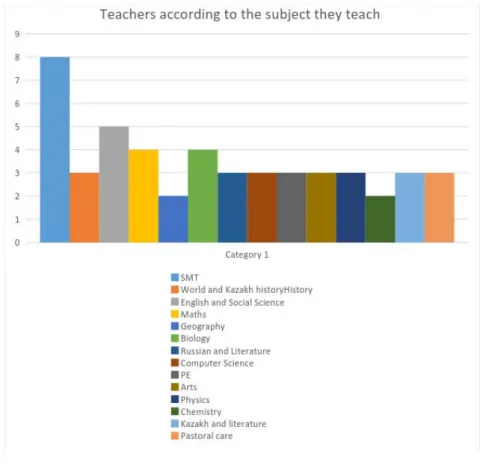
Figure 6 Subjects of the teachers ... 60
Figure 7 The term ‘internationalisaфtion’ in English, Russian and Kazakh .. 72
Figure 8 Internationalisation as global citizenship education ... 109
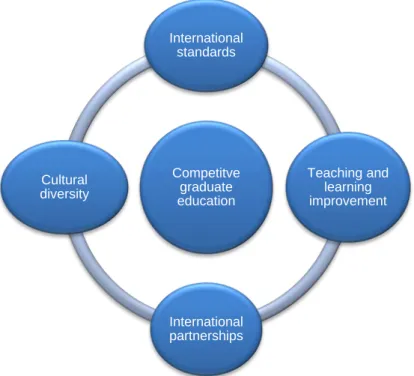
Figure 9 Internationalisation as competitive graduate education ... 80
Figure 10 Curriculum internationalisation challenges ... 136
Figure 11 The research findings ... 160
Table 1 Age group of the participants (SMT, teachers, students) ... 59
Table 2 Work experience (SMT, teachers) ... 59
Table 3 Experience of the school (SMT, teachers, parents, students) ... 59
Table 4 Timeline of data collection and data analysis ... 60
7 Glossary of acronyms
APID – Advanced Placement International Diploma APK – Assembly of the People of Kazakhstan CIE – Cambridge International Examinations CIS – Commonwealth of Independent States CIS – Council of International Schools
CLIL – Content Language Integrated Learning ELF – English as Lingua Franca
GCSE – General Certificate of Secondary Education IB DP – International Baccalaureate Diploma Programme
IBMYP – International Baccalaureate Primary Years Programme IBO – International Baccalaureate Organisation
IBPYP – International Baccalaureate Primary Years Programme ICT – Information and Communication Technology
IELTS – International English Language Test System L1 – First Language
L2 – Second Language L3 – Third Language
PISA – Programme for International Student Assessment SAT – Scholastic Aptitude Test
SET – Scientist Entry Test
SMT – Senior Management Team
TIMSS – Trends in Mathematics and Science Study TOEFL – Test of English as a Foreign Language USSR – Union of Soviet Socialist Republics WW2 – the World War II
8 Declaration
This thesis is the result of my own work and has not been submitted previously at this or any other university.
Copyright statement
“The copyright of this thesis rests with the author. No quotation from it should be published without the author's prior written consent and information derived from it should be acknowledged.”
Acknowledgements
My sincere gratitude goes to my supervisor Dr Oakleigh Welply for her constant support and encouragement during the research. She made me believe in myself and my research.
I am grateful to the participants of this research. This research would be impossible without them. Thanks for sharing your time, thoughts and opinions. Special thank you to my friends whose support helped me complete my studies. Thank you to those who encouraged and helped me enter Durham University. Thank you to those who has always been there for me for a friendly advice and support. Thank you to those who looked after my daughter so that I could attend conferences.
I would also like to thank my parents and my five siblings who supported me throughout my studies.
Finally, my deepest gratitude goes to my daughter, Aruzhan, who has been with me during my studies, supported and helped me. Thanks for being understanding and patient.
9 Introduction
1.1 Context
The purpose of this research was to explore the conception of curriculum internationalisation of secondary education in Kazakhstan. In the last few years there has been an increasing interest in secondary education internationalisation which can be explained by several factors: the growing interconnectedness of the people all over the world, the development of information technologies and Internet and the increasing rate of immigration and emigration (Yemini, 2014). Curriculum internationalisation is broadly viewed as a strategy to meet the demands of globalisation (Yan, Han & Cai, 2015; Mendis, 2007; Giulianotti & Robertson, 2006; Ross & Lou, 2005). However, this raises the question of what those demands are. On the one hand, globalisation leading to marketization of education and economic liberalisation (Henze, 2014; Myers, 2010; Bobrov, 2009) demands for educating a competitive graduate (Leask, 2015; Wiseman & Baker, 2015; Palmer & Cho, 2012). On the other hand, globalisation leading to the increased interaction between people and international conflicts being solved regardless of nationalities and religions requires global citizenship education in a secondary school (Doherty & McLaughlin, 2015; Leask, 2015; Ortloff, Shah, Lou & Hamilton, 2012; Andreotti, 2011a,b; Carber, 2009; Cambridge, 2002; Langley, Villarreal & Columbia, 1997). Thus, it can be concluded that curriculum internationalisation is associated with educating both internationally competitive and interculturally competent students. Though, it is not as straightforward as it seems. The complexity of the notion of curriculum internationalisation will be discussed below.
The literature on curriculum internationalisation shows at least two approaches to curriculum internationalisation as mentioned above. Those approaches reflect the juxtaposition of internationalisation and globalisation. Firstly, globalisation as the driving force of curriculum internationalisation represents neoliberal view on education. “Intensification of market competition in the new global economic order” (Wiseman & Baker, 2015, p. 9) has led to regarding internationalisation of education as a way to enhance the economic and academic competitiveness of the graduates and the country (Henze, 2014; Knight, 2010; Bobrov, 2009; Jonathan, 1997). Education is believed to
10
contribute significantly to the economic development of nations (Hannum & Buchmann, 2003; Benavot, 1992; Fuller & Rubinson, 1992; McMahon & Boediono, 1992). Therefore, the governments invest money in curriculum internationalisation of education. Kazakhstan is no exception. It has invested in the creation of a system of innovative schools that will pioneer the educational reforms in Kazakhstan. According to the President of Kazakhstan, the aim of education is to educate globally competitive graduates (Nazarbayev, 2007). The quality of education is now measured in terms of the students’ performance at the high-stakes tests (Wiseman & Baker, 2015). So, internationalisation is sometimes viewed as an attempt to copy the educational practice of the countries that perform better at the international tests (Wiseman & Baker, 2015). However, it is necessary to take into account the national context when internationalising the curriculum so that internationalisation is not turned into a form of imperialism and colonisation by wealthier countries.
Secondly, curriculum internationalisation is closely associated with providing global citizenship and international education (Doherty & McLaughlin, 2015; Leask, 2015; Ortloff, Shah, Lou & Hamilton, 2012; Andreotti, 2011; Carber, 2009; Cambridge, 2002). Until recently, the latter was believed to be limited to international schools because international education was believed to happen only in the culturally diverse environment (Hill, 2007a). This is especially difficult to achieve in the context of Kazakhstan as the overwhelming majority of the staff and student body is local students. Even if Kazakhstani secondary schools were open for international students, it is hard to attract international students to Kazakhstan. Firstly, it can be explained by the low economic status of Kazakhstan being a developing country. Secondly, Kazakhstan lacks an English-speaking environment which will make the life of English-speaking students harder. Thus, Kazakhstan is rarely a popular destination for international students to obtain secondary education. However, now it is argued that any national school can provide global citizenship education even with no or small percentage of international students (Hill, 2007a; Lucas, 1998). Henceforth, internationalisation of national systems of education has been gaining importance in recent years (Hayden, 2011).
11 1.2 Rationale and significance
The rationale for this study comes from the idea that international education is associated with providing quality education as it is believed to be “a reliable product conforming to consistent quality standards throughout the world” (Cambridge, 2002, p. 227). Internationalisation can help create an environment and conditions for international education to happen in a public secondary school. Therefore, it can be available for all the students regardless of their social status. This subsequently might help fight discrimination and segregation in education and increase students’ social mobility. An increased understanding of internationalisation may result in the change of the school practice. Therefore, it may improve education quality in national schools. Initially, internationalisation was the prerogative of higher education institutions. Therefore, the focus of research on curriculum internationalisation has been on higher education (e.g. Knight, 2012, 2010, 2004, 2003, 1997; De Haan, 2014; Deardorff, De Wit, Heyl & Adams, 2012; James, 2005). However, very few publications are available in the literature that address the issue of curriculum internationalisation of secondary education, especially in the context of post-Soviet countries. Hence, this research will shed light on the concept of curriculum internationalisation as perceived by the stakeholders of a secondary school in Kazakhstan.
It was anticipated that the knowledge discovered by this study can inform research on secondary education internationalisation. Moreover, the findings of this study can inform judgements and decisions of the practitioners and policy-makers concerning the reforms and improvement of the curriculum of secondary schools in terms of its internationalisation in Kazakhstan and post-Soviet Asian countries. Researching the perceptions and interpretations of curriculum internationalisation of secondary school stakeholders can shed light on teaching and curriculum development efforts within education internationalisation. Ultimately, this research can contribute to the understanding of how secondary schooling can prepare its graduates and staff members to meet the challenges of the 21st century.
1.3 Research questions
In seeking to understand the phenomenon of curriculum internationalisation in the context of a Kazakhstani secondary school, the study addressed the following research questions:
12
1. How is curriculum internationalisation of a secondary school perceived by the school stakeholders (senior management team members, teachers, students and parents) and conceptualised in the school documents and policies in Kazakhstan?
2. What are the perceived challenges of curriculum internationalisation of a secondary school in Kazakhstan?
1.4 Thesis organisation
This thesis is divided into two parts. Part 1 of this thesis focuses on the literature in the area of curriculum internationalisation in secondary education and explains the methodological background of this research. Within Part 1, Chapter 1 provides a review of literature on curriculum internationalisation. Chapter 2 presents contextual information about Kazakhstan and its education. Chapter 3 presents and discusses the methodology and research design of this study. Part 2 presents and discusses the research findings and concludes with the discussion, implications and contribution of this research. Within Part 2, Chapter 4 explores the definition of curriculum internationalisation as the competitive graduate education. Chapter 5 explores the perception of curriculum internationalisation as global citizenship education. Chapter 6 discusses the perceived challenges of curriculum internationalisation in secondary education in Kazakhstan.
13
Part 1 Substantive theoretical and methodological background Review of the literature
The purpose of this research is to explore the conception of curriculum internationalisation in a Kazakhstani secondary school through the perceptions of the school stakeholders and school documents and policies. This chapter is aimed at providing a review of the existing literature on curriculum internationalisation in order to situate the current research and identify the gap that this research is addressing. It is argued that there is a growing interest in internationalising national secondary education due to globalisation. However, to my knowledge, curriculum internationalisation has been scarcely investigated from the point of view of the stakeholders of secondary schools in Central Asia, not to mention Kazakhstan.
The chapter starts with discussing research on internationalisation both in higher and secondary education. The second section reviews the literature on curriculum internationalisation including the overview of the existing knowledge on the perceptions of (curriculum) internationalisation at secondary schools, internationally and in Kazakhstan, and on perceived challenges of (curriculum) internationalisation at secondary schools. The two sections have subsections on internationalisation from global citizenship and neoliberal perspectives which reflects the structure of the findings chapters. The chapter concludes with the identified gap in the existing research on curriculum internationalisation of national secondary education that this research can address.
2.1 Internationalisation of higher and secondary education
Guided by the aim of the research to explore the conception of curriculum internationalisation in a secondary school, this section will discuss research on internationalisation of higher and secondary education and the relationship between internationalisation and globalisation in order to identify the niche for this research. The research on higher education internationalisation was included due to the lack of research on internationalisation in national secondary schools.
A review of the literature shows that there has been huge research work in the field of internationalisation of higher education (e.g. Knight, 2012, 2010, 2004, 2003, 1994; De Haan, 2013; Deardorff, de Wit & Heyl, 2012; James, 2005) as well as in the field of international education and international schools (e.g.
14
Cambridge, 2012, 2002; Hill, 2007a,b, 2000; Cambridge & Carthew, 2007; Sylvester, 2002; Heyward, 2002; Matthews, 2002; Hayden & Thompson, 2001, 2000, 1997, 1995; Walker, 2000; Hayden & Wong, 1997). Since the 20th century, there has been a trend towards internationalisation of higher education in Western Europe and the USA. It started with diversifying the staff and student body and then turned to curriculum internationalisation (Leask, 2015). As for the USSR, during the Cold War, international higher education was viewed as the way to maintain the expansion and influence of the Soviet Union. The Soviet Union admitted international students from the countries that promoted socialist ideologies like Africa (Dolby & Rahman, 2008).
The most popular definition found in the research on internationalisation of higher education published in English is the one given by Knight (2003). She (ibid.) defined internationalisation as “the process of integrating an international, intercultural or global dimension into the purpose, functions or delivery of post-secondary education” (p. 2). Internationalisation focusses on cultural and linguistic diversity of the staff and student body, international research, intercultural teaching and learning and the development of intercultural competence (Rizvi, 2015; Jones & Killick, 2007; Hayden, Thompson & Williams, 2003; Nilsson, 2000; Langley, Villarreal & Columbia, 1997). In addition, De Wit, Hunter, Howard & Egron-Polak (2015) and Leask (2009) incorporated an idea of the service to the local society in the definition of internationalisation. In this view, internationalisation of education is perceived to incorporate citizenship education into curriculum. Students are supposed to organise and take part in charity events for the local community. Thus, they could feel connected to the local environment and culture. In this view, education internationalisation is believed to unite global and national citizenship education (Nussbaum, 1996; Appiah, 2006; Osler, 2011).
Concerning internationalisation of secondary education, as it was stated above, there is not much research on it. Therefore, the definitions presented above can be applied to secondary education as well (Yemini, 2012) at the moment because secondary schools can provide diversity, research and intercultural competence for the staff and students as well. Moreover, secondary schools are believed to have more power and facilities to develop students’ international and intercultural awareness, global education and global citizenship (Myers, 2010;
15
Loveland, Miyakawa & Hirayama, 2004; Tucker, 1991). This proves that secondary schools represent an appropriate platform for curriculum internationalisation. Furthermore, in the light of the current armed conflicts in Iran, Iraq, Syria, the increase of terrorist attacks in Europe and an intolerant politics of the USA president, students need to be educated in terms of intercultural awareness and global citizenship. Therefore, there is a need for internationalising secondary education (Palmer & Cho, 2012).
As it was mentioned in the beginning of this chapter, internationalisation and globalisation play an important role in internationalisation. The relationship between curriculum internationalisation and globalisation will be discussed below.
2.1.1 Internationalisation and globalisation
According to the literature on internationalisation of secondary and higher education, the tendency for curriculum internationalisation is influenced by two concepts: internationalisation and globalisation. There is a common belief that these concepts are dichotomous where internationalisation is viewed as ‘good’ and globalisation as ‘evil’ (Brandenburg & De Wit, 2011; Myers, 2010). This means that internationalisation is believed to promote the values of quality and excellence, cooperation and mobility, while globalisation is guided by a more competitive approach and leads to marketization of education (Van Vught, Van der Wende & Westerheijden, 2002; Cambridge, 2002; Gardner, 2000). Internationalisation is often juxtaposed to globalisation because the former is believed to oppose marketization, performativity and commodification of education which are considered to be the integral aspects of the latter (Killick, 2015; Cambridge, 2002). Both of these trends are believed to be present in internationalisation in Kazakhstan as the latter aims at educating global professionals and global citizens as is stated in the President’s addresses to the people of Kazakhstan (Nazarbayev, 2010, 2009, 2007, 2006, 2004). The government of Kazakhstan invests into reforming education in order to increase the competitiveness of Kazakhstan and Kazakhstani citizens on the global scale which is discussed in Chapter 2 (p. Ошибка! Закладка не определена.). The innovation of national secondary education in order to meet the requirements of the global society is delegated to the school where this study took place. There is more information about the school in Chapter 3 (p. 56).
16
Internationalisation can be closely associated with global citizenship education as it leads to a shift in thinking and attitudes of the students and staff making them more open and tolerant towards the diversity of cultures and opinions (Caruana, 2007). Furthermore, internationalisation is supposed to “extend beyond national or even supra-national boundaries, must equip our students with the ethical foundations for action among diverse peoples and in diverse contexts, and must contain some notion of making our way in the world in the ways which do not make it a better place for me/us at the expense of you/them” (Killick, 2015, p.18). Thus, internationalisation is believed to contribute to the development of global citizenship among the students and teachers (Killick, 2015; Henze, 2014) through cultural and linguistic diversity, international cooperation and an internationally minded outlook (Cambridge, 2002). It can be inferred that internationalisation is perceived as an idealistic approach to curriculum internationalisation designed to develop such graduate qualities as intercultural competence, international mindedness, tolerance and respect to others and cooperation and collaboration skills.
On the contrary, globalisation is viewed to be driven by neoliberal policies (Myers, 2010). It is advertised as being economically beneficial for everyone because it brings free markets, competition and economic liberalisation (Myers, 2010) as discussed on p. 33 later in this chapter. However, this view on globalisation has been contested. Globalisation is likely to contribute to the expansion of the hegemony of the USA and Western European universities as well as their values and graduate qualities (Killick, 2015; Leask, 2015). For instance, Chankseliani (2016) and Chankseliani & Hessel (2016a,b) discovered that the main destinations for the students from Soviet countries were post-Soviet countries, Europe and the USA. The students from Kazakhstan, particularly, targeted the UK universities (ibid.). It implies that there is a demand for secondary education to be internationalised in order to be able to educate graduates who meet the requirements of the universities of those countries. On the negative side, such neoliberal view on internationalisation can lead to an uneven distribution of social and economic goods between developed and developing countries (Leask, 2015) because globalised education “serves first and foremost the interests of developed, rather than developing, countries” (Feniger, Livneh & Yogev, 2012, p.333). Hence, higher education has become
17
one of the most profitable branches of the economy of the Anglophone developed countries (Bates, 2011; Bobrov, 2009; Haigh, 2002). For example, approximately £3 billion a year goes into the UK local economy due to undergraduate fees and expenditures (Chankseliani & Hessel, 2016b). In this context, globalisation can be associated with the imperialistic expansion of powerful nations and organisation and the imposition of their ideology on the rest of the world (Dervin, 2016; Palmer & Cho, 2012; Andrews & Ritzer, 2007). As for education internationalisation in the context of globalisation, it can be viewed as colonisation, as soft imperialism (Marginson, 1999), as westernisation (Al Farra, 2000). International education accompanying globalisation can lead to the promotion of the values and attitudes of the developed neoliberal countries which do not always correspond with Asian values and attitudes (Poore, 2005; James, 2005) especially of the post-Soviet countries. This issue has to be addressed by the developed countries when internationalising its education.
As a counterweight to the expansion of the influence of Western or Anglophone educational institutions there appeared a glocalisation theory. Glocalisation is defined as the reaction of the peripheral countries to globalisation (Mendis, 2007; Giulianotti & Robertson, 2006; Ross & Lou, 2005). According to it, the developing or less powerful countries seek to educate students who can successfully compete with others in the global arena (Palmer & Cho, 2012). According to the world systems theory, peripheries are economically disadvantaged countries (Chankesiliani, 2016). She (ibid.) states that the majority of the post-Soviet countries can be categorised as peripheral. So, educating competitive graduates is believed to help the peripheral nations resist the colonisation by richer countries (Al Farra, 2000). Yet, this can lead to quite controversial results because the credentials of Western higher education are an accepted index of competitiveness. This is supported by the increasing spread of the English language as the means of communication generally and as the instruction medium in educational institutions worldwide (Weenink, 2009; Carder, 2007; Mok, 2007; Andrews & Ritzer, 2007; Altbach & Teichler, 2001). Moreover, it is claimed that the development of peripheral countries is “extremely unlikely” (Chankseliani, 2016, p. 302) because the core countries (economically advanced countries) have all the resources and power to retain
18
their position as the leading countries in the world. However, the President of Kazakhstan believes that the investment in human capital through education can contribute to increasing economic competitiveness of the country (Nazarbayev, 2007, 2012, 2014, 2017). Thus, internationalisation of secondary and higher education can be viewed as a way to increase competitiveness of Kazakhstani graduates on the global scale.
Despite the differences between globalisation and internationalisation, both of them are believed to improve the quality of education (Leask, 2015; Henze, 2014; Krasnoshchyokov, 2014; Yemini, 2012; Bobrov, 2009; Mok, 2007; Haigh, 2002). Thus, they both are economically profitable for a country. Henze (2014) and Bobrov (2009) say that economic growth and competitiveness are one of the main rationales for education internationalisation. ”The double role of internationalization in furthering both cooperation and competition among countries is a new reality of our more globalized world” (Knight, 2010, p. 216). Internationalisation is becoming more influenced by the global knowledge economy which leads to a more competitive approach rather than cooperative (Teichler, 2004). In this respect, internationalisation and globalisation have the same target: the development of a competitive graduate which will be discussed later in this chapter. However, it cannot be separated from another aim of education – global citizenship education, which will be discussed on p.20. In terms of cultural encounters, there are different views on this in the context of globalisation and internationalisation. On the negative side, they are claimed to bring uniformity. Globalisation is named as the process “by which the peoples of the world are incorporated into a single world society, a global society” (Albrow, 1990, p. 9). Globalisation is not a neutral process (Room, 2000). Instead, it is a culturally loaded process. As a result, globalisation and internationalisation can threaten national identity of the students (De Wit & Adams, 2010; Cenoz, 2009; Byram & Grundy, 2002). Therefore, globalisation might be viewed as a form of westernisation because it might promote the so-called Western values (Hoppers, 2014; Wylie, 2011; Myers, 2010; Pieterse, 2006). Nevertheless, due the current interconnectedness of the world, it is hard to define what ‘Western’ and ‘Western culture’ actually mean (Sen, 2007). Culture is defined as fluid and socially constructed concept (Holliday, 2016;
19
Kelly, 2004; Crane, 1994) which is not always geographically and/or nationally restricted.
Indeed, the juxtaposition of the global and the national is often disputed (Welply, 2015). Globalisation is not a homogenous phenomenon. In fact, Appadurai (2006) argues that globalisation leads to heterogeneous dialogues between the local/national and the global. The effects of globalisation often depend on the contextual factors such as the local political and cultural economies (Appadurai, 2006). Therefore, globalisation may bring both oppressive and emancipatory opportunities. According to Rizvi & Lingard (2010), it is important to develop “ethical and responsible local citizens who appreciate the connections between the local, the national, and the global” (p. 31). Thus, it is necessary to accept the heterogeneous character of globalisation and to react to it in a proper way. Furthermore, the claim that globalization imposes cultural uniformity can be contested because internationalisation and globalisation are believed to promote cultural diversity and otherness (Streiwieser, 2014). Indeed, globalisation and the development of ICT have led to the increase in the cultural contact with people all over the world (Streiwieser, 2014; Myers, 2010; Appadurai, 2006). Hence, globalisation is believed to have emancipatory potential and can unite people all over the world and lead to the development of the global citizenship education (Appadurai, 2006; Weber, 2003) which is believed to be one of the main targets of internationalisation (Doherty & McLaughlin, 2015; Ortloff, Shah, Lou & Hamilton, 2012; James, 2005).
Another issue rooting from the misconception of globalisation is that some countries may justify their nationhood and national identity strengthening politics by the threat of globalisation (Appadurai, 2006). As schools often transmit the culture of the country where they are located, learning in the national schools might challenge the minor ethnic and national groups (Kelly, 2004). This is true in case of Kazakhstan. Such politics can lead to discrimination of the minorities living on the territory of Kazakhstan. For example, “The Trinity of Languages” emphasises the importance of the three languages only (Kazakh, Russian and English). Teaching the languages and cultures of the minorities living in Kazakhstan is a rare case. That is why, globalisation and the reaction to it need to be treated with caution. It is necessary to take into account the cultural
20
diversity of the classroom and the local community when researching and implementing internationalisation of secondary education.
2.2 Curriculum internationalisation
Before moving to curriculum internationalisation, it is helpful to give a brief overview of how curriculum is defined in this research. Curriculum includes “content, pedagogy, assessment, and competencies; planned and unplanned experiences; and intention and actuality” (Leask, 2015, p.7). Any school curriculum consists of formal, informal and hidden curricula. The formal curriculum is defined as a syllabus of the planned activities, the informal curriculum as the extracurricular activities organised by the school to support the learning process, and the hidden curriculum as the hidden ideology implicitly promoted by the school (Leask, 2015; Kelly, 2004, 1999) and the school culture (Banks, 2001). Overall, the curriculum of the secondary school in Kazakhstan consists of the formal school programme with an academic programme for each subject with the suggested content, learning outcomes and resources. There is a designated programme for extracurricular activities which includes exchange trips, voluntary and charity work, hobby clubs and social events. Finally, school stakeholders (senior management team members, teachers, students and parents) are considered as a part of the curriculum.
All these parts of the curriculum “define students’ present learning and develop the skills, knowledge, and attitudes needed to create future opportunities for them and others within an increasingly connected and globalized society” (Leask, 2015, p. 9). This highlights the importance of curriculum for students’ learning. Curriculum can contribute to the development of intercultural and international skills, knowledge and attitudes of the staff and students. Therefore, curriculum internationalisation is a paramount aspect of internationalisation of education.
Moving to the definition of curriculum internationalisation, it is often defined as the reaction of governments and educational institutions to globalisation (Yan, Han & Cai, 2015; Tudball, 2005). It is often associated with international education because it opens access to international higher education and global labour market (Resnik, 2012a,b; Cambridge, 2002). Although internationalisation of curriculum is a global trend nowadays (Yemini, 2012; Weenink, 2009), it is still quite an ambiguous topic. Leask (2009) defined the
21
aim of curriculum internationalisation as to educate the university graduates as global professionals and citizens through “internationally informed research and cultural and linguistic diversity” (p.209). Apparently, both internationalisation and curriculum internationalisation prioritise the role of cultural and linguistic diversity.
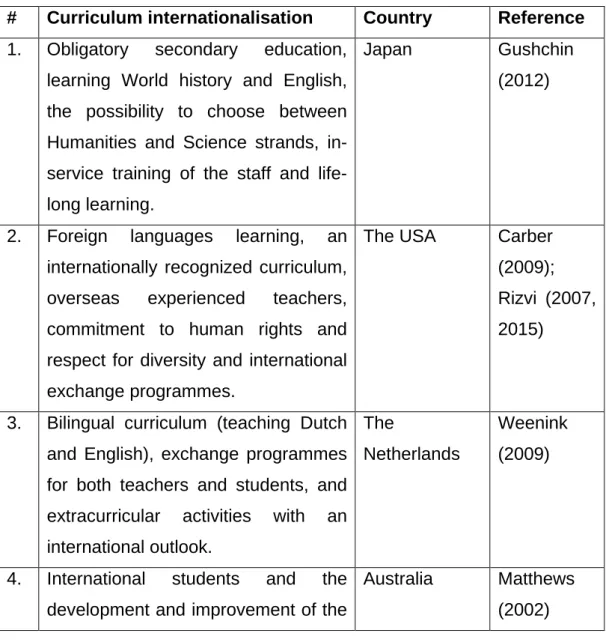
The existing literature highlights the features of internationalisation of secondary education in several countries. Bringing the examples of these countries can help shape the current situation with internationalisation of secondary education in the world and the role of curriculum internationalisation within it. These studies show that secondary education internationalisation prioritise the role of curriculum internationalisation moving away from relying only on international students and staff as presented in Table 1 below.
Table 1 International examples of curriculum internationalisation
# Curriculum internationalisation Country Reference
1. Obligatory secondary education, learning World history and English, the possibility to choose between Humanities and Science strands, in-service training of the staff and life-long learning.
Japan Gushchin
(2012)
2. Foreign languages learning, an internationally recognized curriculum, overseas experienced teachers, commitment to human rights and respect for diversity and international exchange programmes.
The USA Carber
(2009); Rizvi (2007, 2015)
3. Bilingual curriculum (teaching Dutch and English), exchange programmes for both teachers and students, and extracurricular activities with an international outlook.
The
Netherlands
Weenink (2009)
4. International students and the development and improvement of the
Australia Matthews (2002)
22 curriculum including teaching and learning.
5. The bilingual education and cultural diversity of the staff.
Jordan Al Farra
(2000)
In summary, these examples show the consensus on languages learning and the cultural diversity of staff and students as being aspects of curriculum internationalisation.
Languages learning and teaching is believed to be one of the curriculum’s aspects which has a big potential to promote international education (Hoskins & Sallah, 2011; Byram, 2006; Byram, Zarate & Neuner, 1997; Byram & Leman, 1990). “Language and culture are critical filters and lenses through which everything is experienced and learned” (Leask, 2015, p. 91). In order to understand somebody who speaks a different language we should learn their language (Bredella, 2003). But does languages learning necessarily lead to understanding those who speak that language? Languages learning goes along with learning the culture. It can contribute to educating a world citizen as it contributes to the development of attitudes of mutual tolerance and interest, of readiness for communication and exchange of viewpoints and lifestyles including the development of strategies for comprehension and interaction (Byram, Zarate & Neuner, 1997, p.48). Hoskins & Sallah (2011) also highlight the importance of learning languages, history and culture of different countries in order to develop intercultural competence which is one of the aims of international education. Ultimately, teaching languages and cultures is an important step in internationalising the curriculum of any educational institution (Rizvi, 2007). It can be summarised that curriculum development and innovation play a central role in internationalisation of secondary education.
As for Kazakhstan in particular, languages learning is a significant part of educational reforms there. The educational reforms in Kazakhstan are closely linked with curriculum internationalisation because the aim of the reforms is to bring the secondary education of Kazakhstan closer to the international standards of education. In connection with that, “The trilingual policy” has been created. This policy promotes the idea of the unity of the three languages: Kazakh, Russian and English. As a result, the schools in Kazakhstan are
23
required to teach the three languages. This is believed to turn Kazakhstani schools into multilingual and internationalised ones.
As for the diversity in the staff and student body, although in some countries, it is viewed as quite important, there is a growing tendency for internationalisation of the whole curriculum beyond solely staff and students’ cultural diversity. This type of internationalisation can also be referred to internationalisation at home (Nilsson, 2000). Obviously, national secondary schools do not attract many international teachers and students. Therefore, curriculum internationalisation is most likely to provide students with an opportunity to experience international education without having to go abroad or having international staff. Scholars agree that the most important aspects of curriculum internationalisation are internationally informed content, cultural and linguistic diversity, an opportunity to develop international and intercultural perspectives and high quality of learning, teaching and assessment (Leask, 2015; Hoskins & Sallah, 2011; DiYanni, 2007; Jones & Killick, 2007; Rizvi, 2015, 2007; Hayden, Thompson & Williams, 2003; Gellar, 2002; McKillop-Ostrom, 2000). These aspects within curriculum internationalisation can help prepare students to the current social and cultural changes (Kelly, 2004). To summarise, curriculum internationalisation combines the targets of pragmatic globalisation and idealistic internationalisation: to educate a competitive professional and a global citizen.
Judging by the aim of curriculum internationalisation defined by Leask (2009) which was given in the beginning of this chapter, we can infer that the concepts of global citizenship education and neoliberal policies are believed to be interlinked. This is currently central for Kazakhstani education as the educational reforms are guided by the aim of becoming one of the developed countries, as the President of Kazakhstan announced in his annual addresses to the peoples of Kazakhstan (Nazarbayev, 2017, 2014, 2012, 2007). He stated that the innovation of education can be successful only if the graduates of Kazakhstani schools and universities were in demand in any country of the world (Nazarbayev, 2007). This involves educating students to become both the global citizen and the global professional.
Interestingly, Leask (2009) differentiates between curriculum internationalisation and an internationalised curriculum. In her view, curriculum
24
internationalisation is a process leading to an internationalised curriculum which is the result of that process. Hence, the latter is an outcome of the former. An internationalised curriculum “will facilitate the development in all students of the skills, knowledge, and attitudes that will equip them, as graduates, professionals, and citizens of the world to live and work effectively in a rapidly changing and increasingly connected global society” (Leask, 2015, p. 12). Thus, an internationalised curriculum may contribute to the process of preparing graduates to live, study and work in the global society through the development of graduate attributes or graduate qualities (Leask, 2015; Haigh, 2002; Nilsson, 2000). Some Australian and UK universities include global citizenship and international perspectives as their graduates’ attributes (Leask, 2015). These graduate attributes can be applied to secondary school graduates as well. This implies that global citizenship and graduate perspectives are supposed to be among the skills of a secondary school graduate.
Although the adoption of globally branded curricula such as IBPYP, IBMYP, IB DP and GCSE is sometimes viewed as one of the main approaches to curriculum internationalisation (Doherty & McLaughlin, 2015; Carder, 2007), an internationalised curriculum is rarely based on any one national or international educational system or one teaching approach; it is usually a mixture of national and international practices (McKillop-Ostrom, 2000). Therefore, it is important to adapt culturally appropriate pedagogy instead of blindly copying international educational systems (Bartlett & Burton, 2012). The essence of curriculum internationalisation depends on the environment and the context of an educational institute (Leask, 2015).
Curriculum internationalisation has led to the creation of internationally minded schools where the diversity in the ethnic composition of the staff and student body is not necessary (Hill, 2000). These "schools with an ‘international mind-set’ might serve a local population without any formal ‘international’ definition, offering global or international values and goals rather than a locally oriented curriculum" (Yemini, 2012, p.153). Such schools are internationalised through learning about others and promoting so-called universal values (Hayden, Thompson & Walker, 2002). These values include the freedom from prejudices and stereotyping, understanding the value systems which differ from one’s own, empathy and sympathy, promotion of peace and prosperity regardless of the
25
skin colour, race, religion and nationality. Thus, internationalisation of curriculum in the light of international mindedness makes an attempt to fight any form of discrimination.
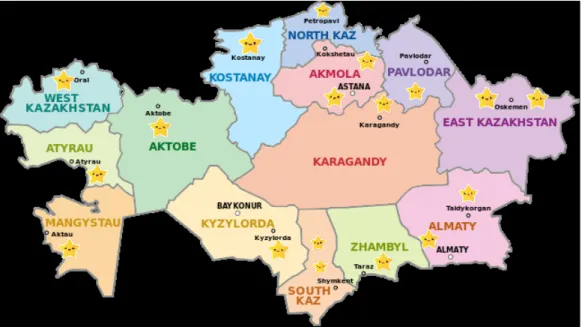
For example, internationalisation of public schools in Indonesia started when the policy of International Standard School was introduced, Fahmi, Maulana & Yusuf (2011) state. That project was aimed at improving the quality of education and providing better education for the community. One of the goals of that project was to establish at least one international standard school in a primary and/or secondary school in each province (Fahmi, Maulana & Yusuf, 2011). The same situation is in Kazakhstan. There is an innovative national educational project of reforming secondary education in Kazakhstan. The aim of the project is to establish an internationally accredited state secondary school in every geographically important city of Kazakhstan. The location of these schools is represented in Figure 2. The stars represent the schools. As we can see, every province has at least one such school. As Kazakhstan is a huge country (the 9th largest country in the world), such distribution of schools is supposed to cover the whole country and facilitate smooth translation of the accumulated experience to mainstream secondary schools in Kazakhstan.
Figure 1 The location of the innovative schools in Kazakhstan
Nevertheless, Hayden & Thompson (1995) argue that it is not the curriculum but the environment where the children are, who they play with and what they think about other people that play an important role in internationalisation. Thus, cultural diversity is a necessity in curriculum internationalisation because an
26
international curriculum is supposed to enable students from a variety of national backgrounds to study together and to provide education that would be acceptable in higher educational institutions worldwide (McKilopp-Ostrom, 2000). In further research, Hayden and Thompson (1995, 1997) found that both students and teachers regarded the exposure within and outside school to students from other nations and cultures as more important to experience an international education than a formally ‘international’ curriculum. Moreover, Gellar (2002) suggests that the concept of international education requires a curriculum which is aimed at developing students’ skills to achieve their aims as well as expanding the world perspectives through the inclusion of the subjects which are not provided in the national curriculum. As we can see, cultural diversity is significant for international education. This is one of the reasons why only international schools were believed to provide international education: international schools are designed for international students to be taught together by international staff.
As we can see, there are four main aspects of curriculum internationalisation: cultural diversity, formal and informal curricula and the local culture (Hayden, Thompson & Williams, 2003). In its turn, formal curriculum covers multilingualism, international standards in assessment, studying about one’s own and other cultures, study trips abroad including exchange trips, intercultural mindedness and learning English (Hayden, Thompson & Williams, 2003). Then, informal curriculum involves organizing international events and extracurricular activities, being exposed to other cultures, going abroad on exchange trips and inviting international guest speakers (Hayden, Thompson & Williams, 2003). Finally, the local culture means learning about the local culture where the school is situated including learning the local language and service to the local community (Hayden, Thompson & Williams, 2003). These ideas strongly resemble the structure of the IB curriculum and represent both idealistic and pragmatic (neoliberal) views on curriculum internationalisation that will be discussed below.
In this research, curriculum internationalisation is defined as the process leading to an internationalised curriculum. Such curriculum meets the international standards and is able to deliver global citizenship education. It enables the school students and teachers to appreciate cultural diversity and become global
27
citizens. In addition, such curriculum provides the school students and teachers with better opportunities in terms of further education and career. Therefore, the school teachers and graduates feel comfortable in any part of the world.
However, secondary schools face some problems with implementing the above-mentioned ideas. For example, Tucker (1991) discovered that there was a lack of international outlook and awareness among students and teachers in American national secondary schools. Other challenges include the lack of qualified teachers and problems with conceptualising such terms as internationalisation, intercultural and international awareness, intercultural competence, and others (Ortloff, Shah, Lou & Hamilton, 2012). Despite the growing tendency for curriculum internationalisation in secondary education, there is insufficient research on curriculum internationalisation of national secondary education and almost non-existent in non-Western countries. Therefore, it is necessary to move away from existing models of internationalisation (Maringe, 2010), taking into account the context of different cultures (Leask, 2015) which requires research on curriculum internationalisation of secondary education in non-Western countries. This is the gap that this research aims to address.
2.2.1 Global citizenship education and internationalisation
This section will explore and critique the concept of global citizenship education within the context of curriculum internationalisation. It includes the examination of the relationship between global citizenship and interculturality, and global citizenship and cosmopolitanism.
Internationalisation seems to be inseparable from the concepts of global citizenship education as it is argued that curriculum internationalisation aims at educating global citizens (Doherty & McLaughlin, 2015; Leask, 2015; Ortloff, Shah, Lou & Hamilton, 2012; Andreotti, 2011a; Carber, 2009; Cambridge, 2002). The concept of a global citizen in this research is viewed as an umbrella term including not only global citizenship but also intercultural citizenship and cosmopolitanism. This is explained by the belief that cosmopolitanism and interculturality are the key components of the global citizen (Leask, 2015; Rizvi, 2005). The relationship between these concepts will be discussed later on pages 28 and 29. This section will attempt to operationalise the definitions of
28
the above-mentioned concepts through a critical review of the relevant literature.
2.2.1.1 Global citizenship education
Globalisation is “a feature of late capitalism, or the condition of postmodernity, and, more important … the emergence of a world system driven in large part by a global capitalist economy” (Luke & Luke, 2000, p. 287). Globalisation, the development of IT and Internet, and the consequent increase of interaction between people have resulted in a growing demand for global citizenship (Jackson, 2011). Global citizenship presupposes non-violent solution of any conflicts and any environmental issues on the global scale which have become prominent due to globalisation. This idealistic aim can be achieved through educating global citizens. This view resonates with the top-down approach to international education suggested by James (2005) who believes that developing global citizens will help address global and national issues. Therefore, literature on global citizenship emphasises the importance of building appropriate capacities. Those capacities include international understanding, tolerance, acceptance, respect and cooperation, the ability to reflect on and analyse the world and oneself and the ability to understand power relations (Parmenter, 2011; Prashby, 2011; McIntosh, 2005; James, 2005; QCA, 1998). This approach also includes the development of international-mindedness which means elimination of any form of discrimination (James, 2005). Hence, it is clear that global citizenship education is closely connected with curriculum internationalisation (Leask, 2015) because it implies the development of critical thinking skills, intercultural competence, problem-solving skills and the ability to apply these skills in the real-life situations (Leask, 2015). Such education prepares the students to live in the interdependent world to solve global and international problems.
Schools are believed to have the power to promote global citizenship education (Tucker, 1991). Specifically, Kerr (2000) and Lawton (2000) support active citizenship education which means “educating the future citizen for active participation in a democratic society” (p.9). Active citizens are supposed to actively exercise their rights and responsibilities in the global society. Students need to understand the consequences and responsibilities that their behaviour involves. Gundara (2000) believes that global citizenship education is learnt
29
through the students’ “actual experiences at school which contribute to their understanding of their rights and responsibilities as future citizens” (p.15). Global citizenship education is supposed to “prepare students to be ethical and responsible citizens and human beings in this globalized world” (Leask, 2015, p. 30; Kerr, 2000) at the local, or national, and international, or global, levels (Rizvi & Lingard, 2010; Crick, 2000). This view is supported by Parmenter (2006) who argues that citizenship education is usually taught through the hidden curriculum, through the underlying culture of the school. In addition, Leask (2015) states that global citizenship is cultivated through education and experience. It includes History, Geography and Ethics learning (Osler & Starkey, 2003; Andrews, 1994). Accessing various international perspectives to be able to question the existing authority is believed to be another important aspect of global citizenship education (Bottery, 1992).
Judging by these conceptions of global citizenship education, it can be concluded that it has both local, or national, and international, or global, focusses. Consequently, global citizenship education can help establish positive relationship among people from various cultural backgrounds. Hence, global citizenship education requires interculturality and multiculturalism. The relationship between global citizenship and interculturality is discussed below.
2.2.1.2 Global citizenship and interculturality
Intercultural is often used when referring to “relationships between people from two different cultural backgrounds” (Gareis, 1995, p. 3). Although culture is common for people from the same socially defined and recognised group (Levine, Park & Kim, 2007), it is “not static and monolithic entities” (Witte & Harden, 2011, p.2). Instead, culture is a complex and dynamic notion. This means that intercultural is not limited to a person’s nationality, race, or ethnicity. Hence, it is necessary to accept the presence of multiple identities beyond a nation (Parmenter, 2006). Therefore, one of the views on interculturality argues that any communication between people is likely to be intercultural and depends on the degree of heterogeneity of the individuals’ background (Kim & Gudykunst, 1988). So interculturality is an integral part of curriculum internationalisation as it teaches students to communicate efficiently with people of various cultural backgrounds.
30
Being intercultural means being critical and reflective, being open to Others and Otherness, and being able to analyse one’s own intercultural experience with the subsequent actions (Alred, Byram & Fleming, 2006; Bredella, 2003). Therefore, intercultural citizenship involves experience, reflection and action on the basis of experience, and attention to values. “An intercultural approach does not mean abandoning value positions but it means recognising the importance of understanding and negotiation” (Alred, Byram & Fleming, 2006, p.8). This means that the authors believe in the union of intercultural and national identity. Indeed, intercultural citizenship promotes meta-awareness of identity and the fact that values can conflict (Fleming, 2006). Therefore, questioning one’s own values and one’s own culture is central in intercultural citizenship education (Fleming, 2006). This again demonstrates the tendency to adopt an international approach to education rather than nationalistic.
Intercultural competence is believed to be one of the main qualities of global citizens (Leask, 2015). There is no clear definition of intercultural competence because it depends on the context and subject (Witte & Harden, 2011). One of the definitions of intercultural competence which summarises other definitions determines it as “the culture-specific and culture general knowledge, skills, and attitudes required for effective communication and interaction with individuals from other cultures” (Paige, Jorstad, Siaya, Klein & Colby, 2003, p. 177). This definition is complemented by the model of intercultural competence developed by Byram (1997). He (ibid.) defined it as a unity of knowledge, skills and attitudes as presented in Figure 4 below.
Figure 2 The model of intercultural competence
Intercultural competence Knowledge Skills Interpretation and relation Discovery and interaction Critical cultural awareness Attitudes
31
As we can see from Figure 4, intercultural competence is viewed as the unity of knowledge, skills and attitudes. Knowledge means knowing the ways people see themselves and others, the ways the social identities develop and of the interconnectedness between social groups and social identities. Attitudes include an ability to reflect on one’s own beliefs, values and behaviours and being aware that there are different beliefs, values and behaviours. Judging by the model of intercultural competence, skills are categorised into three subskills: of interpretation and relation, of discovery and interaction and of critical cultural awareness. Skills of interpreting and relating imply an ability to interpret an event or a document from the point of view of another culture; skills of discovery and interaction imply being able to acquire new knowledge and apply it in the real-life situations; while critical cultural awareness means being able to evaluate perspectives, practices and products in one's own and other cultures (Byram, 1997).
The development of intercultural competence is one of the main tasks of intercultural citizenship education as well due to its aim to encourage cross-national communication taking into account cultural and linguistic differences and commonalities (Byram, 2006). There is a need for interpretation and mediation between the speakers with different linguistic and cultural backgrounds because even in lingua franca communication people from different cultural backgrounds can misunderstand each other because “interlocutors introduce their own understandings into the language” (Byram, 2006, p.113). Therefore, a global citizen is supposed to acquire the capacities of an intercultural speaker where multilingualism together with intercultural competence play a prominent role.
To sum up, intercultural citizenship education requires engagement and action at both national and international levels (Byram, 1997). Intercultural citizenship accepts the importance of local and national affiliations but advises to be aware of the consequences of such affiliations. Judging by the definition and the characteristic features of intercultural citizenship the link between global citizenship education and intercultural citizenship education is inferred. Global citizenship embraces the ideas of intercultural citizenship as it aims at uniting the aims of national and intercultural citizenship education. It aims at educating patriots and global citizens as the world has become interconnected and no
32
country may stand separately from others. In order to achieve that aim, global citizenship is believed to embrace the ideas of cosmopolitanism which will be discussed below.
2.2.1.3 Global citizenship and cosmopolitanism
Cosmopolitanism is claimed to be an antecedent of global citizenship education (Tarozzi & Torres, 2016). Cosmopolitan means a ‘citizen of the world’ in ancient Greek. A cosmopolitan was defined as “someone who was sophisticated, knew the ways of the world, and was open to other cultures, customs and ideas, and was not tied down to the traditions of his or her own nation or community” (Rizvi, 2005, p. 8). In other words, a cosmopolitan is believed to have a ‘homeless mind’ (Popkewitz, 2008). This means that a cosmopolitan refuses one’s own local, or national, affiliations unlike intercultural citizenship. The term is often used in opposition to nationalism. However, some scholars view cosmopolitanism as a negative notion, considering cosmopolitan as a man without roots (Rizvi, 2005). Roots, or local affiliation and national identity, are considered important for people, as found by Woodward (2002) and Gundara (2000). Nevertheless, Nussbaum (1999) argues that cosmopolitanism does not presuppose rejection of local affiliations. Moreover, local, or national, identity is believed to compose one of the circles of a cosmopolitan citizen (Nussbaum, 1996; Appiah, 2006). Osler (2011) claims that cosmopolitan citizenship education requires critical patriotism and solidarity with other people of the world.
In the field of education, cosmopolitanism is connected with global citizenship education (Langmann, 2011) because global citizenship promotes the values of cosmopolitanism counterfeiting ethnocentrism and nationalism (Marshall, 2011). The concept of ‘global cosmopolitan’ has been introduced as the union of the ideas of global citizenship and cosmopolitanism (Marshall, 2011). Consequently, global citizenship embraces the ideas of cosmopolitan citizenship education. However, cosmopolitanism seems too narrow because it focusses only on the difference between national citizenship and global citizenship. Meanwhile, global citizenship celebrates the unity of the global and local. It embraces the ideas of cosmopolitanism and interculturality because one needs to be cosmopolitan in order to accept the world as one’s own home and to be intercultural in order to keep local affiliations. Therefore, as this research
33
aims at exploring the phenomenon of curriculum internationalisation instead of mere juxtaposition of the global and the national, in this research I use the global citizen instead of the cosmopolitan.
2.2.1.4 Critique of global citizenship education
Overall, global citizenship education has two approaches: pragmatic and idealistic. From a pragmatic point of view, global citizenship is aimed at educating a competitive graduate with the relevant qualities that will help him/her successfully compete at the global level. However, there is an increasing concern over the growing hegemony of the legitimacy of the Western educational institutions. Andreotti (2011) and Parmenter (2011) claim that mainstream literature conceptualises global citizenship education from the Western point of view. This means that the graduate qualities needed to be competitive are mostly shaped by the so-called Western values and ideologies. For example, Palmer & Cho (2012) found that universities in South Korea provided an incentives scheme for the teachers teaching in English and/or having graduated from a Western university. In this case, global citizenship implies the universality of the Western values for the whole world. This understanding of the concept of global citizenship can lead to the promotion of neo-colonial or neo-liberal ideologies which prejudice the rights of the non-Western population (Tarozzi & Torres, 2016; Abdi, Shultz & Pillay, 2015; Andreotti, 2014; Camicia & Franklin, 2011; Prashby, 2011). Therefore, critical literacy is crucial for global citizenship education (Andreotti, 2014). Critical literacy is conceptualised as “a level of reading the word and the world that involves the development of skills of critical engagement and reflexivity: the analysis and critique of the relationships among perspectives, language, power, social groups and social practices by the learners” (Andreotti, 2014, p. 30). Thus, critical literacy will help the global citizens question the values and ideologies imposed on them by the Western world. Thus, it could result in the emancipatory potential of global citizenship education. This is crucial for this case study as Kazakhstan has already experienced colonisation from Russia. Therefore, the people of Kazakhstan treat internationalisation with caution. From an idealistic view, global citizenship education is supposed to unite both the general feeling of interconnectedness and respect for diversity and differences. So, instead of promoting the values and ideologies imposed by the
34
developed countries, global citizenship education celebrates diversity of cultures and opinions while having the feeling of belonging to the global society. Global citizenship education is supposed to educate for global social justice which promotes basic human rights of any citizen irrespective of his/her location (Tarozzi & Torres, 2016; Abdi, Shultz & Pillay, 2015; Khoo, 2011). This means that people are expected to define their own values, ideologies and paths of development on their own, basing on the peculiarities, concerns and the context of their own country and taking into account the wider context of the interconnected world. It demonstrates the unity of the global and the local promoted by global citizenship.
Camicia & Franklin (2011) categorise these opposing views as neoliberal cosmopolitanism and critical democracy which are not binary. “Students are being prepared as global citizens, but the meaning of this citizenship is complicated by a tension and blending between neoliberal and critical democratic discourses” (Camicia & Franklin, 2011, p.321). Neoliberal cosmopolitanism is guided by market rationality and promotes individual autonomy of the citizens while critical democracy is guided by the principles of social justice, multiculturalism, critical awareness of global power asymmetries and emancipation (Tarozzi & Torres, 2016; Andreotti, 2014; Camicia & Franklin, 2011; Khoo, 2011). The latter is believed to involve collaborative work for the common good (Khoo, 2011). Working for the common good is a familiar notion for Kazakhstan as it was one of the main driving forces of the Soviet regime and one of the main features of Soviet internationalism.
The Soviet internationalism promoted friendship between the countries of the USSR in order to build a powerful state under the pretence of the common good. However, it is argued that Soviet internationalism denied the right of the peoples to shape the future of their own country. All the policies of the USSR were issued by the civil servants located in Moscow. Moreover, the Soviet Union policies promoted the Russian language thus discriminating the languages of other states in the USSR. In this case, it follows the ideas of neoliberalism and neo-colonialism when a more powerful country uses education as a soft power to subordinate less powerful countries (Bennigsen, 1969).
One of the views on internationalisation states that neoliberal cosmopolitanism promoted by globalisation and the expansion of the English language as lingua