Eastern Illinois University
The Keep
Masters Theses Student Theses & Publications
2018
Assessment and Analysis of Receptive and
Expressive English Language Development in
Spanish Speaking ELLs and Native English
Speakers Using the Pre-KLBA
Candace LaPrairie
Eastern Illinois University
This research is a product of the graduate program inCommunication Disorders and Sciencesat Eastern Illinois University.Find out moreabout the program.
This is brought to you for free and open access by the Student Theses & Publications at The Keep. It has been accepted for inclusion in Masters Theses by an authorized administrator of The Keep. For more information, please [email protected].
Recommended Citation
LaPrairie, Candace, "Assessment and Analysis of Receptive and Expressive English Language Development in Spanish Speaking ELLs and Native English Speakers Using the Pre-KLBA" (2018).Masters Theses. 3489.
The Graduate
School~
F.,\, i I H_\ Ji Li0.1 ll\ l \<1\'Hh1'Y
Thesis Maintenance and Reproduction Certificate
FOR: Graduate Candidates Completing Theses in Partial Fulfillment of the Degree Graduate Faculty Advisors Directing the Theses
RE: Preservation, Reproduction, and Distribution of Thesis Research
Preserving, reproducing, and distributing thesis research is an important part of Booth Library's responsibility to provide access to scholarship. In order to further this goal, Booth Library makes all graduate theses completed as part of a degree program at Eastern Illinois University available for personal study, research, and other not-for-profit educational purposes. Under 17 U.S.C. § 108, the library may reproduce and distribute a copy without infringing on copyright; however, professional courtesy dictates that permission be requested from the author before doing so.
Your signatures affirm the following:
•The graduate candidate is the author of this thesis.
•The graduate candidate retains the copyright and intellectual property rights associated with the original research, creative activity, and intellectual or artistic content of the thesis.
•The graduate candidate certifies her/his compliance with federal copyright law (Title 17 of the U.S. Code) and her/his right to authorize reproduction and distribution of all copyrighted materials included in this thesis.
•The graduate candidate in consultation with the faculty advisor grants Booth Library the nonexclusive, perpetual right to make copies of the thesis freely and publicly available without restriction, by means of any current or successive technology, including but not limited to photocopying, microfilm, digitization, or internet.
•The graduate candidate acknowledges that by depositing her/his thesis with Booth Library, her/his work is available for viewing by the public and may be borrowed through the library's circulation and interlibrary loan departments, or accessed electronically. The graduate candidate acknowledges this policy by indicating in the following manner:
/Yes, I wish to make accessible this thesis for viewing by the public
_ _ _ No, I wish to quarantine the thesis temporarily and have included the Thesis Withholding Request Form
•The graduate candidate waives the confidentiality provisions of the Family Educational Rights and Privacy Act (FERPA) (20 U.S. C. § 1232g; 34 CFR Part 99} with respect to the contents of the thesis and with respect to information concerning authorship of the thesis, including name and status as a student at Eastern Illinois University. I have conferred with my graduate faculty advisor. My signature below indicates that I have read and agree with the above statements, and hereby give my permission to allow Booth Library to reproduce and distr~bute my thesis. My adviser's signature indicates concurrence to reprojut=e and distrib~e th~_,t~esis.
Graduate Candidate Signature
Ct.\.ni:Ll.l R
l "-
'\J
<'&'- ;· r \ ( l Printed NameSP.'-·'&-"
~ L~
v~
P""
~
t..,j
Graduate Degre~:a~ U
Please submit in duplicate.
Assessment and Analysis of Receptive and Expressive English Language Development in Spanish Speaking ELLs and Native English Speakers using the Pre-KLBA
BY
Candace LaPrairie
THESIS
SUBMITTED IN PARTIAL FULFILLMENT OF THE REQUIREMENTS FOR THE DEGREE OF
MASTER OF SCIENCE
IN THE DEPARTMENT OF COMMUNICATION DISORDERS AND SCIENCES, EASTERN ILLINOIS UNIVERSITY
CHARLESTON, ILLINOIS 2018
YEAR
I HEREBY RECOMMEND THAT THIS THESIS BE ACCEPTED AS FULFILLING THIS PART OF THE GRADUATE DEGREE CITED ABOVE
DATE THESISiHAIR
l)
f
/;tr;)t
g
DEPAR'VMENTCHAIR ~I
DATE THESIS COMMITTErnEMikR
~asdr
Assessment and Analysis of Receptive and Expressive English Language Development in Spanish Speaking ELLs and Native English Speakers using the Pre-KLBA
Candace LaPrairie Eastern Illinois University
ENGLISH DEVELOPMENT IN ELLS AND NATIVE ENGLISH SPEAKERS 2
Abstract
The purpose of this study is to examine the trends and differences in receptive and expressive English language development in native English speakers and Spanish-speaking English language learners (ELL). It also aims to analyze the relationship between auditory comprehension and narrative production skills and semantic skills and narrative production skills in native English-speakers and Spanish-speaking ELLs. Eighty-three preschool-aged children (17 Spanish-speaking ELLs and 66 Native English-speakers) were administered the
Pre-Kindergarten Language Benchmark Assessment (Pre-KLBA) in Fall 2015, Winter 2016, and Spring 2016. This study utilized a three by two ANOVA to evaluate and determine: 1) If there are differences in Pre-KLBA total scores (i.e., sum of auditory comprehension, expressive categorization, and narrative scores) for Spanish-speaking ELLs and Native English speakers across fall, winter, and spring 2) If there are differences in Pre-KLBA total scores between Spanish-speaking ELLS and the native English-speakers across the fall, winter, and spring testing times 3) If there is an interaction effect between Spanish-speaking ELLs and native English speakers and the testing time (i.e., fall, winter, and spring) on the language score. Fourteen Spanish-speaking ELL Pre-K students and 14 native English-speaking children were assigned to the Spanish-speaking ELL group and the native English-speaking group,
respectively, based on their native language. A contingency analysis was utilized to determine: 1) if auditory comprehension performance correlates with narrative productions and 2) if semantic skills correlates with narrative productions in Spanish-speaking ELLs and native English speakers. This study concludes that native English-speakers and Spanish-speaking ELLs both demonstrate overall language improvement, however, there continues to be a gap in
performance between the groups in which native English-speakers continue to perform higher than their same-aged Spanish-speaking ELLs. Understanding Spanish-speaking ELL and native
English-speaker English development can help shape assessment procedures and guide the · intervention process in order to better identify ELLs and native English-speakers that are at-risk
ENGLISH DEVELOPMENT IN ELLS AND NATIVE ENGLISH SPEAKERS
Acknowledgements
I would like to thank my thesis advisor, Dr. Anthony, for her guidance throughout my undergraduate and graduate career. I greatly appreciate her patience and support throughout this research process.
I would also like to thank my professors on my graduate thesis committee, Dr. Mulvey and Dr. Throneburg, for their constructive feedback and guidance in helping me to narrow down my ideas and navigate my statistics for the study.
Finally, I would like to thank my family and friends for their endless love and support throughout my undergraduate and graduate career.
List of Tables
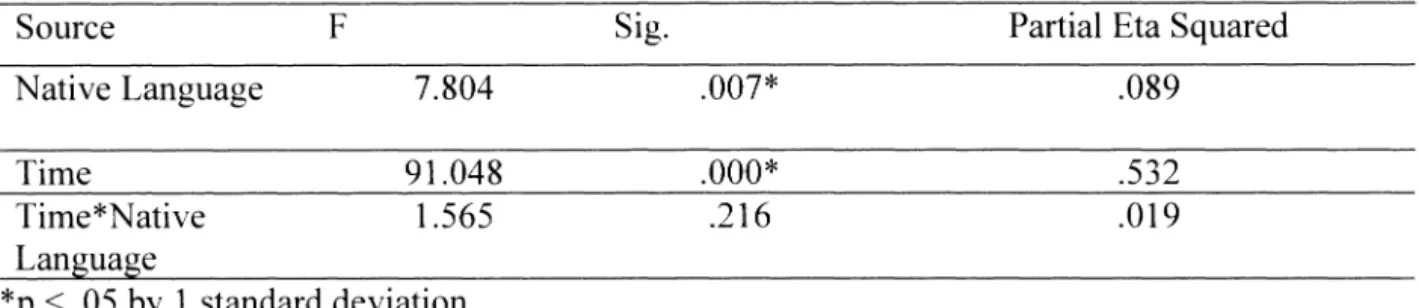
Table 1. Between-Subjects Effects ofNative Language, Tests of Within-Subjects Effects for Time, and Time*Native Language Interaction ... .45
Table 2. Independent tests of significance between native English-speakers and Spanish-speaking ELLs across fall, winter, and spring testing times ... .45
Table 3. Means and standard deviations for native English-speakers and Spanish-speaking ELLs at the fall, winter, and spring testing times ... .45
Table 4. Correlations between ability to answer WH questions and lower level narrative production skills, semantic skills and higher level narrative production skills in Native English-speakers ... 47
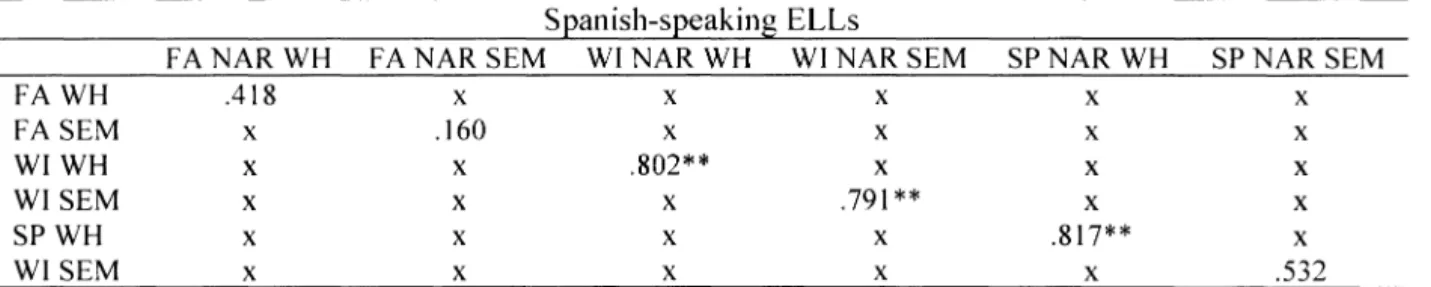
Table 5. Correlations between ability to answer WH questions and lower level narrative
production skills, semantic skills and higher level narrative production skills in Spanish-speaking ELLs ... 47
ENGLISH DEVELOPMENT IN ELLS AND NATIVE ENGLISH SPEAKERS 6
Table of Contents
Abstract. ... 2
List of Tables and Figures ... 5
Chapters I. Introduction ... 8
II. Literature Review ... .10
a. Development of English as a Primary Language ... 10
i. Receptive Language Development ... 10
11. Expressive Language Development. ... 11
111. Narrative Development ... 13
1v. Current Research on Relationships Between Language Measures ... 15
b. Development of English as a Second Language ... .21
i. Typical Stages and Timelines for Development ... 21
11. Influence of Classroom Instruction ... 22
c. Identifying Language Difficulties ... 29
i. General Assessment Processes ... 29
d. Rationale and Conclusion ... 32
III. Methods ... 36
a. Participants ... 36
b. Administration of the Pre-KLBA and Scoring ... 36
c. Reliability ... 40
d. Research Design and Data Analysis ... 40
11. Research Question 2 ... .41
n1. Answering WH Questions and Narrative Productions ... 41
iv. Semantic Skills and Narrative Productions ... 42
IV. Results ... 43 a. Research Question 1 ... .43 b. Research Question 2 ... .45 V. Discussion ... 48 a. Research Question 1 ... 48 b. Research Question 2 ... 50 c. Clinical Implications ... 51
d. Limitations and Future Research ... 52
e. Conclusion ... 53
References ... 55
Appendix A: IRB Approval.. ... 61
Appendix B: Research Question 2 Groups ... 62
Appendix C: Research Question 2 Individual Absent, Emerging, Mastered Identification Information ... 63
ENGLISH DEVELOPMENT IN ELLS AND NATIVE ENGLISH SPEAKERS
Chapter 1 Introduction
8
In the 2013-2014 school year, an estimated 4.5 million students in public school systems were English language learners (ELLs). The percentage of EL Ls in the public-school system has been increasing over the years; it has increased from the 2003-2004 school year (8.8 percent) and the 2012-2013 school year (9.2 percent) to the 2013-2014 school year (9.3 percent; National Center for Education Statistics, 2016). As the number of ELLs in the public-school systems grows, there is a need for language assessments that will effectively monitor children's English language growth and identify ELLs and native English speakers at risk for English language difficulties. Early identification of language difficulties can assist speech language pathologists and classroom teachers in supporting English language development. In order to develop these assessments to provide early support, there is a need for research that examines English language developmental trends in ELLs to advance the understanding of what it typical development and what is atypical development in ELLs.
Receptive and expressive language skills can be analyzed to assess current language skills and predict future language skills. There is a plethora of research that examines receptive and expressive English language development as a primary language in native English speakers. However, there is limited research that examines specific receptive and expressive language developmental trends in ELLs who are learning English as a second language. It is imperative that ELL English developmental patterns are understood in order to determine what is typical development and what is atypical and in need of intervention.
ELL second language development often follows a pattern of stage development which varies from typical monolingual English language development (Paradis, Genesee, & Crago,
2011). Consequently, it can be difficult to effectively assess native English speakers and native English speakers to identify those who may be at risk for language deficits.
There is a need for a better understanding of typical English development and growth in ELLs. Once these typical developmental trends are identified, assessments and procedures can be created that will accurately evaluate the receptive and expressive language skills of native
English speakers and ELLs. It is crucial that clinicians can understand typical ELL English language development and that language assessments can effectively identify children that are at-risk for future language and literacy difficulties without over-identifying language disorders in ELLs.
ENGLISH DEVELOPMENT IN ELLS AND NATIVE ENGLISH SPEAKERS
Chapter 2 Literature Review Development of English as a Primary Language
Receptive Language Development
10
Language development begins with receptive-knowledge. Auditory comprehension or listening comprehension "encompasses the multiple processes involved in understanding and making sense of spoken language" (Nadig, 2013, p. 1743). The processes may include distinguishing speech sounds, understanding word meaning, syntax, or prosody, and making inferences related to the content (Nadig, 2013). According to Buttery (2001), listening is "an active cognitive process which requires conscious attention to sounds in order to gain significant meaning from them" ( 181 ). Listening consists of attending behavior, acuity or hearing, auditory discrimination, and comprehension (Buttery, 2001 ). A child's ability to attend to and process auditory information is important for speech, language, social, and academic development.
Common milestones characterize the typical development of the ability to attend to and understand auditory information and respond appropriately (Flahive & Lanza, 2008). From birth to 3 months, a child discriminates speech sounds from non-speech sounds and smiles or quiets when spoken to. When a child is 3 to 6 months, a child listens to a speaker and watches his or her face when spoken to. At 6 to 12 months, a child is expected to recognize words for common items and listens with increased interest to new words. At 1-2 years of age, a child is expected to look in the appropriate direction in response to simple questions (e.g., "Where is the ball?"). When given a choice of two objects, the child will select one of the objects (e.g., "Do you want water or milk?"). They can point to named pictures in books and follow directions to find two familiar objects. Children at this age also begin to follow one-step directions when provided with cues. Children will answer "where" questions by pointing to the picture. They can answer
"What's this?" about familiar pictures and objects. Children will respond to "yes/no" questions through nodding or shaking gestures (Flahive & Lanza, 2008).
At 2-3 years of age, a child is expected to point to objects that are described (e.g., "What do you wear on your feet?"), respond to commands that involve body parts (e.g., "Show me your hand) and follow two-step directions (e.g., "Pick up your ball and give it to me."). Children follow directions that consist of an action+ verb and action + adjective (e.g., "Walk slowly" or "Give me the blue cup"). Children can answer simple wh- questions and critical thinking questions (e.g., What do you do when you are hungry?). They have the ability to answer
"Where ... ?", "What's that?", "What's ... doing?", "Who is ... ?" and "Can you ... ?" questions. At 3-4 years of age, children can understand simple wh- questions and simple questions that relate to activities in their environment. Their listening skills improve and they start to learn through listening. Children begin to answer complex "who", "why," "where," "how", and "If. .. what'' questions. They are expected to answer questions related to functions such as "Why do we wear hats?" When a child is 4 years-old, he or she can answer "when" and "how many" questions if the answer is not higher than the number four (Flahive & Lanza, 2008).
At approximately 4-5 years of age, children can listen to short stories and answer simple questions related to the story. They can follow simple commands that involve common objects. By 5-6 years of age, children are able to repeat sentences that consist of nine words. They can follow three-step directions and respond correctly to different forms of sentences (Flahive &
Lanza, 2008).
Expressive Language Development
As receptive language develops, expressive language begins to expand. A child's first words appear between 10 and 16 months of age. Typically, first words are related to names of
ENGLISH DEVELOPMENT IN ELLS AND NATIVE ENGLISH SPEAKERS 12
people or common nouns (e.g., "Dada" or "baba" for bottle), appearance, disappearance (e.g., "all-gone"), reappearance of objects and people (e.g., "bye-bye" or "more"), and affective attitudes (e.g., "no"). Children are expected to produce 200 to 500 words around 2 years of age. Once a child is approximately 2 Yz years of age, his or her vocabulary consists of 54% nouns, 7% verbs, 5% adjectives, and 5% adjectives (Kaderavek, 2011).
Once a child can produce 50 words, he or she begins combining words (e.g., "More ball"). Children do not begin to apply morphosyntax skills until around 2 to 3 years of age (e.g., adding -s to words when they are plural). Morphosyntax skills are word and sentence level grammar. Morphosyntax skills develop in complexity with time and practice. At 5 to 6 years of age, children begin to use prefixes, suffixes, and figurative language in academic settings. They also start to use root words, word relationships, and more complex vocabulary.
Expressive language becomes more complex through fast mapping and slow mapping processes. Fast mapping and slow mapping are processes utilized to make language connections. Fast mapping is a process in which a child learns to make a quick, rudimentary connection between a referent and the word that represents it (Cary & Bartlett, 1978). Fast mapping can occur with just a few repetitions (Deak, G.O., 2014). With more repetition and exposure to these words, more complex and in depth semantic connections and representations of a word are formed (Deak, G.O., 2014; Singlton & Shulman, 2014). These skills evolve and the child begins to build his or her semantic vocabulary system which contributes to a child's ability to categorize concepts and use complex language. These higher-level language skills allow a child to organize ideas, draw from associations, and make inferences about how things are organized. Lower level and higher-level language skills can be evaluated to assess for language difficulties. According to
Partyka and Kreschek (1983), there are significant differences in categorization skills between typically developing children and children with language delays in early-elementary.
According to Richard and Hanner (2007), typically developing children develop the following language skills in the language processing hierarchy: labeling, functions, associations, categorization, antonyms, synonyms, similarities and differences, multiple meanings, idioms, and analogies. As a child's language matures along the language processing hierarchy, his or her language skills become more complex and abstract. These language processing skills allow children to learn and organize receptive language for efficient information retrieval.
Narrative Development
The ability to categorize and organize information based on features, such as function, associations, similarities, and differences, lays the foundation for more complex language skills (Richard & Hanner, 2007). One important complex language skill is the ability to produce a narrative. According to Ozyildirim (2009), a narrative is a sequence of events that make up a story. Labov and Waletzky (1966) describe a narrative specifically as a sequence of verbal clauses that describes previous events. Narrative performance in the preschool years can be a precursor for future language and literacy skills (Snow & Dickinson, 1990). Age-appropriate preschool narrative skills can be predictors for typical reading and writing skills in the future. However, if a student demonstrates narrative difficulties in the early preschool years, then he or she may be at risk for future reading and writing difficulties (Snow & Dickinson, 1990).
In order to produce a narrative, a child must first have the core semantic,
morphosyntactic, and cognitive skills needed to organize a story. A child requires established receptive and expressive vocabulary skills to present and describe the parts of a story.
ENGLISH DEVELOPMENT IN ELLS AND NATIVE ENGLISH SPEAKERS 14
sentences that the listener can understand. Appropriate cognitive skills are crucial for organizing thoughts and selecting relevant information in a narrative. With the development of these skills, a child can begin to form organize and develop more mature narratives.
Narrative development follows a common language trajectory as well. At two-and-a-half to three years of age, children develop script and schema skills (Schwartz & Shaul, 2013 ).
Scripts or schemas provide children with the structure and foundation needed to organize and plan a narrative. Scripts are routine, organized series of events, people, and places associated with particular situations (Schank & Abelson, 1977). For example, if a child utilized a birthday party schema, he or she would expect balloons, gifts, cake, candles, games, and presents. A child's ability to categorize and process information is crucial in the organization of a script.
At three-and-a-half years of age children produce two-event narratives (McCabe &
Rollins, 1994 ). When a child is three to four years of age, his or her narrative productions mature and become more complex. When a child is approximately 4 years of age, the number of events that a he or she includes in a narrative will increase and become more consistent (Miller,
Andriacchi, & Nockerts, 2012). Children will sequence the events in chronological order and create end-at-high-point narratives that do not resolve the conflict (McCabe & Rollins, 1991 ). In the preschool years, children are first expected to produce narratives in descriptive sequences in which they describe the characters, setting, and actions without cause and effect relationships. Preschool children are then expected to produce narratives that follow an action sequence in which they list the actions in chronological order but do not show cause and effect. Following the action sequence narratives, preschool children produce narratives in a reactive sequence in which they describe the actions in a cause-and-effect sequence but do not demonstrate planning or a main goal of the story (Hughes, McGillivray, & Schmidek, 1997). Children begin producing
classic narratives around 6 years of age. Classic narratives include essential components such as characters, setting, time, climax, and resolution (McCabe & Rollins, 1991 ). At 6 years of age, children produce narratives with an abbreviated episode story structure. Narratives with this structure include the character's aims but does not explicitly state how the character plans to reach the end goal. As children grow older, their narratives include more information and become more complex. Performance of narrative skills can predict future literacy and, therefore, should be assessed (Griffen, Hemphil, Camp, & Wolf, 2004).
Current Research on Relationships Between Language Measures
Florit, Roch, and Levorato (2014) conducted a longitudinal study to examine lower- and higher-level semantic language components as predictors for future listening text comprehension skills and to describe the relationship between these predictors and listening text comprehension skills in preschool students. Lower-level semantic components included skills the child used to identify the meaning of a word and understand its relations to other vocabulary. These skills indicated a child's cognitive or verbal intelligence. Higher-level semantic components included the ability to integrate information and background knowledge, as well as the ability to use context and make inferences.
In the Florit, Roch, and Levorato (2014) study, 152 preschool-aged children completed the Test for Listening Comprehension (TOR 3-8) at two points in time. Time 2 occurred 7-8 months after Time 1. The participants were read two different short stories at Time 1 and Time 2. After each story, the participants were asked 10 questions. Five questions were explicit questions that could be found in the text. The other five questions were inference-based questions that required the participant to make inferences. Children were also given assessments to evaluate their lower-level semantic components skills (i.e., expressive and receptive word knowledge) and
ENGLISH DEVELOPMENT IN ELLS AND NATIVE ENGLISH SPEAKERS 16
their higher-level semantic component skills (i.e., inferential skills and ability to utilize context). To test for lower-level semantic components, the participants were administered two
assessments. The Vocabulary and Similarities subtests from the Verbal scale of the Wechsler Intelligence Scale for Preschool and Primary School evaluated expressive word knowledge skills. The Peabody Picture Vocabulary Test-Revised (PPVT-R) was administered to evaluate receptive word knowledge.
To test the higher-level semantic components, the participants were instructed to
complete tasks that required them to make inferences and use context. To test each participant's ability to make inferences, the examiner read five simple episodes consisting of two or three sentences that described routine events. After the examiner read the first part of each episode, he or she asked the participant an inferential question. The examiner asked the participant another inferential question after reading the second part of each episode. To test each participants' ability to use context to search for coherence, each participant was required to complete a task out of context and in context. The children were required to understand verbal sentences produced alone and then in the context with 2-3 more sentences two weeks later. The children were presented with four pictures and asked to select the picture that best represented the sentences stated by the examiner. The examiners also tested the participants' short term and working memory by instructing them to repeat five word lists that increased in length. For the short-term memory task, the participants repeated the words forwards. For the working memory task, the participants repeated the words backwards (Florit, Roch, & Chiara Levorato, 2014).
The results indicated that there were large and moderate correlations between listening comprehension and lower- and higher-level semantic components. The lower-semantic
correlated to listening comprehension at Time 1 (Expressive word knowledge, r
=
0.55*; Receptive word knowledge, r=
0.50**) and Time 2 (Expressive word knowledge, r=
0.52*;Receptive word knowledge, r = 0.49*). The higher-level semantic components of inferential skills and use of context also significantly correlated with listening comprehension at Time 1 (Inferential skills, r = 0.48*; Use of context, r = 0.34*) and at Time 2 (Inferential skills, r =
0.37*; Use of context, r
=
0.36*). The lower- and higher-level semantic components had direct and indirect effects on listening comprehension. The lower-level semantic components had significant indirect (Expressive word knowledge, r = .27*; Receptive word knowledge, r = .22*)and direct (Expressive word knowledge, r = .18*; Receptive word knowledge, r = .16*) effects on listening comprehension. Therefore, the expressive word knowledge strongly influenced listening comprehension, while receptive word knowledge also affected listening comprehension and future reading comprehension in preschool students. Higher-level semantic components such as the ability to use linguistic context indirectly influenced future listening comprehension. The use of context and inferential skills had significant indirect effects on listening comprehension (Use of context, r = .11 *;Inferential skills, r = .21 *). However, the use of context and inferential skills did not have a significant direct effect on listening comprehension (Use of context, r = .13; Inferential Skills, r = 0.01). Thus, the ability to make inferences and use context indirectly predicted listening comprehension skills. The results also indicated that there were significant associations between the lower level and higher-level components.
Although the higher-level semantic components effect on predicting future listening comprehension skills were lower than the lower-level semantic components effects, these results indicate that both lower- and higher-level semantic components are good predictors of future listening comprehension skills (Florit, Roch, & Chiara Levorato, 2014 ). This study indicated that
ENGLISH DEVELOPMENT IN ELLS AND NATIVE ENGLISH SPEAKERS
receptive and expressive word knowledge are related to and predictive of listening comprehension skills. Therefore, examining expressive semantic skills can be useful in
identifying children that may be at-risk for experiencing language or literacy difficulties in the future.
18
Tompkins, Guo, and Justice (2013) examined variables related to auditory
comprehension (i.e., inference generation, story comprehension, and language skills) in order to identify predictors of story comprehension. They analyzed the number of inferences made when narrating a story in order to 1) describe the on-line inferences made by children that are 4-5 years old, 2) examine the relationship between the number of inferences and story comprehension in preschoolers that are 4 to 5 years of age, and 3) determine whether children's inferences predict their story comprehension while controlling for age, vocabulary. and socioeconomic status (SES).
The 42 participants whose ages ranged from 46 to 70 months were seen for two to three sessions at preschool that each lasted approximately 20-30 minutes. Assessment measures consisted of the following: Receptive vocabulary. expressive vocabulary, print concepts, story comprehension, picture sequencing, and story generation. The participants were administered the Peabody Picture Vocabulary Test-4th edition (PPVT-4) to assess receptive vocabulary and the Expressive Vocabulary Test-2nd edition (EVT-2) to assess expressive vocabulary. To assess the participants' story comprehension, the experimenter read the story Sergio Makes a Splash and asked the participant a total of 10 comprehension questions throughout the reading and at the end of the story. Five of the questions measured the participant's literal comprehension of the story and the other five questions measured the participant's ability to make inferences. In order to test the participant's story generation skills, the examiner provided a wordless picture book, Frog
Goes to Dinner, and asked the participant to tell the story using the picture book (Tompkins, Guo, & Justice, 2013).
On average, the participants were found to make a variety of inferences types that correlated with their responses to the comprehension questions. Additionally, the authors analyzed the correlations between the inferences made during the story generation and the answers to the story comprehension questions. The relationship measure (r = .38) was
medium-sized and indicated a significant relationship between the participants' inferences and their story comprehension. The authors conducted a hierarchical regression analysis to determine whether the participants' inferences made while narrating the wordless picture book predicted their story comprehension performance at a later time. Although the total inferences (i.e., combination of 10 inference types: goals, actions, causal antecedents, causal consequences, activities, character states, character dialogue, character emotions, place, and objects) were not significant predictors of story comprehension, the specific inferences related to goal, action, and character state were significant predictors of story comprehension. The participants that produced a high number of inferences scored significantly higher on the story comprehension task than the participants who produced a low number of inferences (Tompkins, Guo, & Justice, 2013). Thus, a child's ability to answer questions and make inferences is related to and predictive of his or her story
comprehension. As a result, assessing a child's auditory comprehension, through measures of the ability to answer questions and make inferences about a story, can help determine if the student will have future language and literacy difficulties. (Tompkins, Guo, & Justice, 2013).
Senechal, Pagan, Lever, and Ouellette (2008) examined the effects of shared reading on vocabulary, morphological, syntax comprehension, and narrative skill development in 4-year-olds. They examined these language skills in 106 English-speaking 4-year-4-year-olds. More related to
ENGLISH DEVELOPMENT IN ELLS AND NATIVE ENGLISH SPEAKERS 20
this study, Senechal. Pagan, Lever, and Ouellette (2008) additionally examined the relationships between the relationship between specific receptive and expressive language skills. Each child was administered the Expressive Vocabulary Test the Grammatical Morphemes subtest of the Test for Auditory Comprehension of Language-3rd Edition (TACL-3), the Elaborated Phrases and Sentences subtest of the TACL-3, and the Edmonton Narrative Norms Instrument (ENNI). The ENNI required that the child tells a story using a picture book. Each child was also required to produce a personal narrative by telling a story about a real-life birthday party that they had attended or make up a story about a birthday party. They also completed the Animal Pegs subtest of the Wechsler Preschool and Primary Scale of Intelligence-Revised.
Regarding relationships between language skills, the researchers found that expressive vocabulary, morphological comprehension, and syntax comprehension all positively and significantly correlated with each other (Vocabulary and morphology, r = .58**; Morphology
and syntax, r = .42**; Vocabulary and syntax, r = .40**). These results support that receptive
and expressive child language development are related.
There were also statistically significant positive correlations between story grammar for book narratives and all child language measures (Expressive vocabulary, r = .38*;
Morphological comprehension, r = .42**; Syntax comprehension, r = .35**). Significant positive correlations between child language measures, both receptive and expressive, and book narrative productions indicate that there is a relationship between receptive and expressive language skills and book narrative productions. However, there were no significant relationships between story grammar for personal narratives and any of the child language measures indicating that the researchers did not find significant relationships between personal narrative productions and child language skills (Expressive vocabulary, r = 0.6; Morphological comprehension, r =
-.00; Syntax comprehension, r = .01). Knowledge of these relationships can be utilized to predict and evaluate receptive and expressive language skills in children.
Development of English as a Second Language Typical Stages and Time/in es for Development
English language development is different for children who are learning it as a second language. Understanding the stages of English development in ELLs can help distinguish the children who demonstrate typical challenges related to learning English as a second language from the children who demonstrate language deficits and are at risk for a language or literacy disorder.
Second language development occurs in four stages: 1) home language use, 2) the nonverbal period, 3) formulaic language use, and 4) productive language use (Paradis, Genesee,
& Crago, 2011 ). In Stage 1: Home Language Use, the child speaks his or her first language (L 1)
in English-speaking environments in which others use English (L2). The child enters Stage 2: The Nonverbal Period, after realizing that his or her Native-English speaking peers do not understand his or her native language. During Stage 2, the child does not use L 1 or L2. The child listens to other individuals speaking English and builds his or her receptive English knowledge. Stage 2 can last weeks to months. In Stage 3: Formulaic Language Use, the child starts using English through simple, predictable, formulaic sentences. The child begins to apply new vocabulary to formulaic phrases such as "I want_." Depending on the individual, a child may stay in Stage 3 for half a school year or longer. The child begins to produce complete sentences in English during Stage 4: Productive Language Use. With exposure to the English language, a child's English nouns, verbs, adjectives, and sentence construction repertoire develop in variety and complexity. At the final stage, the child can functionally and efficiently communicate in English even though he or she is not completely fluent.
ENGLISH DEVELOPMENT IN ELLS AND NATIVE ENGLISH SPEAKERS 22
While the time to achieve English proficiency varies for each individual, studies have investigated the approximate amount of time needed for children to become proficient in English. MacSwan and Pray (2005) conducted a study in which they examined how much time is required for school-aged second language learners (SLL) in a bilingual program to become proficient in English. They also investigated if older SLLs learn English at a faster rate than young children. Eighty-nine SLLs with Spanish-backgrounds from grades K-3 were selected for the study. The Bilingual Syntax Measure (BSM) was administered in this study to determine English language proficiency with a rating scale ranging from 1-6 (e.g., 1 =no English proficiency, 5-6 =proficient in English). Each student had at least two BSM scores in his or her file: an initial BSM score of 1 indicating no English proficiency and a later BSM score of 5 or 6 indicating that the student was proficient in English.
The results indicated that children required an average of 3.31 years to achieve English proficiency with a BSM score of 5 or 6 (SD = 1 .31 years). The minimum number of years was 0.92 and the maximum number of years needed was 6.50 years (range of 5.58 years). In 4 years, 68.5% of students achieved English proficiency and 92. 13% of students achieved English proficiency in 5 years. In order to determine if younger children developed English proficiency faster than older children, the examiners conducted a one-way ANOVA analysis examine the relationships between the grade at the initial administration of the BSM and the rate of language acquisition. They found the relationship to be significant indicating that older children develop English proficiency faster than younger children.
Influence o.f Classroom Instruction
There are also questions regarding whether students can improve English language skills while receiving instruction in their native language or if instruction in a language other than
English would inhibit English language development. Duran, Roseth, Hoffman, and Robertshaw (2013) conducted a longitudinal study to determine if native language instruction would facilitate ELL' s native language development without inhibiting growth in English. The authors randomly selected 31 Spanish-speaking preschoolers from two different Head Start classrooms. The students were evaluated in their preschool year and in their kindergarten year. One classroom utilized Predominantly English (PE) instruction. For the first year, the children received English-only instruction. In the second half of Year 2, the instruction shifted to 30% Spanish and 70% English. The other classroom utilized Transitional Bilingual Education (TBE) instruction in which the students were taught predominantly in Spanish in the first year. In the second year, the children were taught with predominantly Spanish for the first half of the year. In the second half of Year 2, the instruction shifted to 30% English and 70% Spanish to help the students learn and improve their English proficiency.
Receptive and expressive vocabulary, letter-word identification, alliteration and rhyming were measured in English and in Spanish. The researchers analyzed and compared the students' performance from preschool to first grade and found that there were no significant differences in English skills between the groups indicating that children receiving instruction in the TBE classroom, with primarily Spanish instruction, and the PE classroom performed the same in receptive and expressive language skills and phonological skills. Therefore, there were no negative effects of Spanish instruction on the development in English in Spanish-speaking ELLs. The findings of this study concluded that ELLs are able to use the language structure and content knowledge from the TBE instruction to support the transition to English as a second language.
Jackson, Schatschneider, and Leacox (2014) conducted a study in which they analyzed receptive vocabulary development in young Spanish-speaking ELLs from low-SES backgrounds.
ENGLISH DEVELOPMENT IN ELLS AND NATIVE ENGLISH SPEAKERS 24
They conducted hierarchical linear analysis of receptive vocabulary of 64 ELL children in order to predict growth trajectories and performance in kindergarten and analyze possible predictors of rate of receptive vocabulary growth. The language used in the classroom was 44% Spanish, 42% English, and 14% mixed English and Spanish. The participants' receptive vocabulary was assessed in English and Spanish during 2-5 testing sessions that were 6-12 months apart each until they reached second grade. The children were administered the Peabody Picture Vocabulary Test, Fourth Edition (PPVT-4) to measure their receptive vocabulary in English. The children were also administered the TVIP and Expressive One-Word Picture Vocabulary Test-Spanish Bilingual Edition to measure receptive vocabulary in Spanish.
The results indicated that for ELLs, average receptive vocabulary performance predicted that kindergarten English receptive vocabulary would be 2 standard deviations below the average for monolingual peers. There was significant growth in the ELLs' receptive vocabulary from preschool to 211d grade. However, their English average performance was below the average
performance of their monolingual peers. In contrast, there was a significant decrease in Spanish receptive vocabulary. Based on the scores, high early Spanish receptive performance predicted higher growth in English receptive vocabulary and decreased acceleration of growth in Spanish receptive vocabulary performance.
Overall, the authors predicted that ELLs from low SES families are likely to demonstrate lower English receptive vocabulary compared to same-aged monolingual peers. An ELL's Spanish receptive vocabulary is a good predictor of future English receptive vocabulary skills from preschool to 2nd grade. If an ELL demonstrates high receptive language skills in Spanish, then it is expected that he or she will experience more significant growth in English receptive vocabulary.
According to Jackson, Schatschneider, and Leacox (2014 ), EL Ls are expected to close the English receptive language gap as they progress from preschool to 2nd grade.
Uccelli and Paez (2007) studied English and Spanish expressive vocabulary and narrative development in bilingual low socioeconomic children to examine changes in oral proficiency related to English literacy. The longitudinal study included 24 bilingual Spanish and English speaking children with low socioeconomic status. All 24 children received English instruction. Eight of the children also had instruction in Spanish as part of a two-way English-Spanish program. Specific amounts of instruction time in each language were not reported. The children were assessed once in kindergarten and again in first grade. Each participant completed two 45-minute assessments: one in English and one in Spanish. Each assessment occurred on a different day. The participants were administered the Woodcock Language Proficiency Battery Picture Vocabulary subtest in English and Spanish. The participants were instructed to produce English narratives after being presented with a series of pictures. The same procedure was used to facilitate a Spanish narrative production using different pictures.
The study examined the following vocabulary and narrative areas: expressive vocabulary, narrative productivity. and English and Spanish narrative quality measures. Kindergarten and first grade expressive vocabulary was measured using the Picture Vocabulary subtests from the Woodcock Language Proficiency Battery-Revised in English and Spanish. The narrative
productivity was measured using total number of words (TNW) and the total number of different words (TDW). To measure narrative quality, each child was given a narrative quality score (NQ). The NQ is a combination of the story score (SS) and the language score (LS). The SS measured the following narrative components including story element coding, sequencing, and perspective. The LS measured language skills including syntax complexity, noun use, and the
ENGLISH DEVELOPMENT IN ELLS AND NATIVE ENGLISH SPEAKERS 26
clarity of references. The kindergarten scores were compared to the first-grade scores.
The results showed that bilingual Spanish and English speakers demonstrate different developmental trends in vocabulary and narrative between languages indicating differences in English language development and Spanish language development. Most of the participants continued to demonstrate low English vocabulary skills. There was significant improvement in English TDW scores indicating significant improvement in English vocabulary across most of the participants. Eight children produced TNW scores 3 Standard Deviations (SD) below the mean in the kindergarten assessment. Even with significant improvement in 1st grade, five of
those children continued to perform 3 SD below the mean. Although some children were still performing below average, there was significant improvement of TNW measurement for most children indicating significant improvement in English vocabulary overall. Children only showed improvement in Spanish narrative quality in the SS. All of the children demonstrated significant improvement across all English narrative measurements. The additional Spanish instruction received by eight of the participants did not appear to affect the children's English development because, similarly to their ELL peers who received English-only instruction, they also showed improvement in narratives. Additionally, the results indicated that there is a positive, moderate correlation between narrative quality and vocabulary within English and Spanish. Thus, the results indicate that higher vocabulary scores in a given language may indicate more complex narrative productions in that language.
There also was a correlation between narrative quality and narrative productivity. There was only significant improvement in SS for the Spanish narrative measurements. The children whom demonstrated higher Spanish story scores and narrative quality scores, also demonstrated higher English story scores and narrative quality score. Therefore, English improvement
paralleled Spanish improvement. The findings of this study indicated that Spanish-speaking children show improvement in English with both English-only and Spanish-English instruction.
Gutierrez-Clellen (2002) compared English and Spanish narrative development and language proficiencies in 33 typically developing bilingual children from a bilingual second grade. Of the participants, five received English-only instruction and 28 received both English and Spanish instruction. Percentage of instructional time in each language for the English-Spanish instruction was not reported. To determine each child's language proficiency, the parents and teachers were asked to complete a questionnaire about each child's language background including the languages spoken in each child's home, the child's and family
members' English and Spanish proficiencies, and the number of hours the child was exposed to both languages in order to exclude the possibility of a language disorder. Based on the results of the questionnaire, the participants obtained a English and Spanish rating of 3 or 4 from their parent or teacher and had more than 20% of exposure to English and Spanish at home
The examiner presented each child with wordless picture books and instructed him or her to produce a spontaneous narrative. The aim of the task was to determine English and Spanish language proficiencies. The examiner used the wordless picture book, Frog, Where Are You?, to elicit a spontaneous English narrative. The examiner used the wordless picture book, Frog Goes to Dinner, to elicit a spontaneous Spanish narrative. Each child's spontaneous narratives were evaluated. In order to examine sentence and word-level grammar patterns, a bilingual research assistant identified grammar units and T-units which is a main clause that includes all
subordinate clauses.
In addition, the children also completed narrative recall and story comprehension tasks to further examine language skills and proficiency in English and Spanish. A narrative recall task
ENGLISH DEVELOPMENT IN ELLS AND NATIVE ENGLISH SPEAKERS 28
requires a child to retell a previous story. For the narrative recall task, each child was instructed to read a story and then retell the story in his or her own wf>rds. The first story, The Tiger's
Whisker, was written in English and tested the child's ability to retell a story in English. The second story, El Naufragio, was written in Spanish and tested the child's ability to retell a story in Spanish. Each story recall was transcribed and coded for the following story components: Setting, initiating event, internal response, attempt, direct consequence, and reaction. For the story comprehension task, each child was expected to answer 16 factual questions and inferential questions about the two stories. The story comprehension task analyzed each child's ability to apply information, reflect, and make inferences.
All of the children in the study produced spontaneous narratives with age-appropriate grammar, story structure, and narrative quality in English and Spanish. The children included temporal and causal components and appropriately referred to past events across both languages. However, the children produced more utterances in their English narratives in comparison to their Spanish narratives as there was a significantly higher mean number of statements recalled produced in the English narratives than in the Spanish narratives. There was also a significant difference between story comprehension of stories in English and Spanish. Overall, the children demonstrated significantly higher narrative comprehension and narrative retell of the English stories in comparison to the Spanish stories. Some children performed significantly lower on the narrative recall task in comparison to the spontaneous narrative production tasks in either Spanish or English. Gutierrez-Clellen explained that this significant difference may have been due to the fact that the narrative recall tests may require different processing skills in English and Spanish.
While there are some studies that have investigated English developmental trends in ELLs, there is a need for research that examines narrative and overall language development in English language learners. It is crucial to consider and evaluate higher level receptive and expressive language skills in order. Further understanding of English language development in ELLs will help determine early predictors of future language difficulties and shape assessment procedures so speech-language pathologists can identify language difficulties early and provide students with the intervention needed to prevent future academic difficulties.
Identifying Language Difficulties General Assessment Processes
In order to determine if students are demonstrating language difficulties and are eligible for remedial or special education services, language assessments must be administered to
evaluate their language skills. Language assessments evaluate a child's performance on language tasks to analyze typical language development and language strengths and weaknesses. A child's performance on assessments that test receptive and expressive skills can guide and shape
intervention targets. Norm-referenced or criterion-referenced assessments can be administered to evaluate early language skills. Norm-referenced language assessments compare a child's
performance on a task the average performance of his or her same-aged peers. Criterion-referenced language assessments use qualitative analysis to describe a child's skills and performance. A criterion-referenced language assessment may use tools such as checklists to define and describe a student's language skills. Whereas norm-referenced assessments compare a student's performance to his or her same aged peers in order to identify students that are
performing below average, criterion-referenced assessments can be used to identify language deficits by measuring a student growth over time against themselves. While both
norm-ENGLISH DEVELOPMENT IN ELLS AND NATIVE norm-ENGLISH SPEAKERS 30
referenced assessments may identify children that are demonstrating below average language performance and exhibiting language difficulties, they only take "a snapshot" of the child's language skills at the moment in time. The evaluative measure tends to be "static" and does not provide the student with varying levels of support and, therefore, does not evaluate the student's potential performance at one time. In order to analyze a student's potential and identify whether or not he or she is at risk for language difficulties, Response to Intervention (R TI) can be
implemented.
Auditory comprehension tasks measure a student's ability to understand spoken language and respond in some way. Some auditory comprehension tasks purely assess a child's language comprehension by having the child respond nonverbally (e.g., pointing). For example, the Clinical Evaluation of Language Fundamental- Fifth Edition (CELF-5) includes a Sentence Comprehension Subtest which measures a child's ability to comprehend grammatical rules at the sentence level (Wiig, Semel, & Secord, 2013 ). The child demonstrates comprehension by
listening to a verbal stimulus and pointing to the correct picture from a field of four (e.g., "The girl has a big, spotted, black-and-white dog." 7 The child points to the picture of the girl with a big, spotted, black-and-white dog.). However, auditory comprehension tasks which require the child to understand the prompt and also produce a verbal answer to the prompt (e.g., answering a question with a spoken phrase or sentence) require both receptive and expressive skills. The CELF-5 Understanding Spoken Paragraphs subtest assesses a child's ability to understand the spoken prompt and answer questions about the paragraph. For example, the examiner would read a paragraph and ask the examinee "What happened after breakfast?" The child's answer must include either the words "basket" or "cat" to receive credit (e.g., ''Andy's father brought a basket into the kitchen" or "Andy's father brought a cat into the kitchen"). Thus, analyzing a student's
ability to understand verbal prompts and answer questions related to the content can be used to measure a student's auditory comprehension, but interpretation should consider the impacts of the need for expressive skills to accurately respond to the task.
Language assessments may include categorization tasks to evaluate a child's ability to expressively categorize objects. In the Language Processing Test 3 Elementary (LPT-3 Elementary) Subtest B: Categorization, the child is instructed to list at least three items that belong in a given category (Richard & Hanner, 2005). This task requires the child to utilize foundational language processing skills to process item labels, functions, associations, and categorization in order to name items that belong in a specific category. Categorization is but one crucial component of the expressive language system.
In order to assess an individual's ability to produce a narrative, the examiner can instruct the child to produce a produce a personal narrative by asking him or her to tell a story about a past event (Miller, AndriacchL Nockerts, 2012). For example, the examiner may ask the child to tell a story about a time he or she got hurt (KLBA; Anthony, Preschern, & Konikoff, 2015). The child's linguistic and story elements can be analyzed to evaluate narrative abilities. An examiner could also instruct a child to retell a story as another measure of narrative abilities.
When evaluating the English language skills of an ELL, it is important to consider the influence of the child's native language on his or her performance in understanding and
producing English. For example, morphosyntax rules, or the rules that dictate word and sentence-level grammar, may vary across different languages. The morphosyntax rules of the native language may affect how an ELL follows English morphosyntax rules. In turn, this could influence the student's performance on an English language assessment because assessments often require specific verbal with the appropriate morphosyntactic form. In the Spanish language,
ENGLISH DEVELOPMENT IN ELLS AND NATIVE ENGLISH SPEAKERS 32
there are some similarities and differences in morphosyntax rules between the English and Spanish language. In the Spanish language, speakers utilize prepositions to describe a
relationship between words. However, individual Spanish prepositions often have multiple uses. For example, the Spanish pronoun "a" has eight different uses including, but not limited to, indicating movement toward a specific place (e.g., "ir a la ciudad [go to the city] or describe location (e.g., "estar sentdos a la mesa" [to be seated at the table]) (Gordon & Stillman, 1999, p. 303-304). Whereas, prepositions vary, the present progressive form is utilized in both Spanish and English (e.g., "Estoy oyendo musica" [I am listening to music] (Gordon & Stillman, 1999, p. 131). Differences in morphosyntax rules between English and Spanish may influence a child's performance on an English language assessment. Therefore, these differences must be
considered by the examiner during the evaluation.
Rationale and Conclusion
It is crucial that language assessments accurately evaluate the language of native English speakers and ELLs to identify the children that may be at risk for language difficulties. Through early identification of language difficulties, children can receive early intervention to prevent future language and literacy difficulties. In order to develop methods to evaluate English language skills of ELLs, there is a need for research that develops understanding and identifies English patterns of development in ELLs and how these language skills influence each other. This knowledge can help develop language assessments and procedures that will accurately assess language skills in native English speakers and ELLs to ensure that those at risk receive effective additional instruction for academic success.
Receptive and expressive language skills can be evaluated to identify patterns of
future language and literacy and are, therefore, a valuable higher-level language skill to evaluate (Griffen, Hemphil, Camp, & Wolf, 2004 ). In order to produce higher level language skills such as narratives, children must meet receptive and expressive developmental milestones. Receptive skills such as auditory comprehension and expressive skills such as categorization play an important role in building connections and developing organization to foster more complex language skills (Schank & Abelson, 1977; Capone Singlton & Shulman, 2014). There is some research that supports that vocabulary and comprehension skills positively correlate with narrative skills (Senechal, Pagan, Lever, & Ouellette, 2008). However, there is limited research on which skills, particularly higher-level skills such as auditory comprehension and
categorization, influence narrative productions and to what degree they impact narrative performance in ELLs.
In addition to examining relationships of language skills in ELLs, there is still limited information on English developmental trends in this population. Non-English-speaking children require approximately 3.31 years to become proficient in English, with abilities ranging from 1 to 6.5 years. (MacSwan & Pray, 2005). There is evidence to support that ELLs show
improvement in English with Spanish instruction (Uccelli & Paez, 2007; Duran, Roseth, Hoffman, & Robertshaw, 2013). Other studies show that Spanish-speaking ELLs from low socioeconomic backgrounds show growth in vocabulary and narratives (Gutierrez-Clellen, 2002). ELLs from low SES families are likely to demonstrate lower English receptive vocabulary compared to same-aged monolingual peers but are expected to close the English receptive language gap as they progress from preschool to second grade. (Jackson,
Schatschneider, & Leacox, 2014). Research indicates that ELLs demonstrates different patterns of growth and often perform below their same-aged monolingual peers. However, studies also
ENGLISH DEVELOPMENT IN ELLS AND NATIVE ENGLISH SPEAKERS
find that Spanish-speaking ELLs show growth with time, exposure, and Spanish instruction. While there is some evidence to support these conclusions, there are still few studies that examine these areas.
34
There is a need for research that further investigates these patterns of growth in preschool ELLs in comparison to their same-aged native English-speaking peers receiving English
instruction. Additional studies should also examine the relationships of receptive and expressive language skills on narrative productions. The PRE-KLBA is a language benchmark assessment that aims to identify prekindergarten children that may be at risk for language and literacy difficulties. The PRE-KLBA evaluates skills in auditory comprehension, following directions, categorization, and narratives. By analyzing student Pre-KLBA auditory comprehension, categorization, and narrative subtests performances, this study seeks to examine English development in Spanish-speaking ELLs and native English-speakers and to determine if and to what degree higher-level receptive language skills (i.e., auditory comprehension) and expressive language skills (i.e., categorization) may correlate or influence narrative production skills in ELLs and native English speakers.
The following research questions will be examined:
1. Are there differences between the total scores (Auditory Comprehension as measured by verbal response to a question that requires appropriate form, Expressive Categories, &
Narrative)
a. Regardless of group, are there significant differences across the three time points. b. Regardless of time, are there significant differences between the scores of ELLs and native English speakers?
c. Are there any interactions between time and group?
2. What is the relationship of receptive and expressive language skills with narrative productions for native English-speakers and ELLs; more specifically:
a. What is the relationship with auditory comprehension as measured by verbal response to a question that requires appropriate form and narrative productions (i.e., story
components)?
I. In native English-speakers? II. In ELLs?
b. What is the relationship between expressive categorization and narrative productions (i.e., story components)
I. In native English speakers? II. In ELLs?
ENGLISH DEVELOPMENT IN ELLS AND NATIVE ENGLISH SPEAKERS
Participants
Chapter 3 Methods
36
Eighty-three preschool-aged children attended an elementary school in a Chicago suburb and participated in the current study. Of the 83 children, 17 of the students were identified as Spanish-speaking ELLs and 66 were identified as Native English-speakers. Children were identified as a Spanish-speaking English language learner if 1) Their primary language was Spanish and 2) They were in a bilingual classroom. The participant ages ranged from 3:0-5:1 with a mean age of 3 :4.
Fourteen Spanish-speaking ELL Pre-K students and 14 native English-speaking children were individually matched by age, gender, and total fall score and divided into the Spanish-speaking ELL group and the native English-Spanish-speaking group, respectively. The children in the Spanish-speaking ELL group were in the English as a second language classroom and received Spanish instruction for 90% of the school day and English instruction for 10% of the school day (See Appendix 2).
Administration of the Pre-KLBA and Scoring
The Institutional Review Board at Eastern Illinois University granted approval for this study (See Appendix). For a previous study, consent was obtained from the participants' legal guardians before the screenings were administered. Each participant was administered the Pre-Kindergarten Language Benchmark Assessment (Pre-KLBA) in Fall 2015, Winter 2016, and Spring 2016.
The Pre-Kindergarten Language Benchmark Assessment (Pre-KLBA) is a criterion-referenced benchmark assessment that evaluates preschool students' language skills in order to identify students that may be at risk for language and literacy difficulties. The Pre-KLBA is
intended to dynamically guide the RTI process. The Pre-KLBA can be routinely administered 3 times a year in the fall, winter, and spring. It evaluates auditory comprehension, following directions, categorization, and narrative skills and is appropriate for both ELLs and native English-speakers.
The Pre-KLBA is used to monitor changes in language performance with the designated language instruction by measuring the mean rate of growth throughout the year. The Pre-KLBA aims to identify students that continue to demonstrate language and literacy difficulties even after receiving supplementary instruction. The students that continue to demonstrate language difficulties after receiving instruction may be eligible for special education services in the future.
The Pre-KLBA evaluates auditory comprehension, the ability to follow directions, categorization, and narrative skills. In order to assess auditory comprehension, the examiner provided a student with a picture and read a short story consisting of a few sentences related to the picture. The examiner asked the student three questions (i.e., who, where and what doing) related to the story to test the student's comprehension. The student received one point for answering each question correctly. The who question required a correct plural noun for the "who" questions. The where question required a preposition+ location. In response to the what doing question, the student must use a correct verb+ ing ending. For example, the examiner showed the student a picture of a baby birds in a nest eating worms. The examiner read the short story, "The baby birds are in a nest. They are eating worms." Then, the examiner asked the following who, where, and what doing questions: "Who is the story about?", "Where are the birds?", and "What are the birds doing?". The student was awarded one point for answering the "who" question with "bird+ s-plural ending" (e.g., baby birds, birdies"). For the "where" question, the student must answer with a preposition and the word "nest" (e.g., "in the nest"). In
ENGLISH DEVELOPMENT IN ELLS AND NATIVE ENGLISH SPEAKERS 38
response to the "what doing" question, the student was expected to include "eating" with present progressive (e.g., "Eating worms") to receive a point. The student must complete two practice short stories and answer a total of 6 questions to earn a maximum of 6 points (i.e., two "who" questions, two "where" questions, two "what doing" questions).
To test a student's ability to follow directions, the examiner verbally gave the student directions to follow. The student received one point for following all parts of each two-step, unrelated direction. For example, the examiner instructed the student to "Clap your hands and say your name". The student received a point for following both parts of the direction in either order or at the same time. If the student was instructed to follow directions in a specific order (e.g., "Point to the dog, then point to the crayon"), then the student only received a point for completing the actions in the correct order. The student was given five sets of directions and could earn a maximum of 5 points.
In order to test a student's receptive categorical knowledge, the examiner pointed to and labeled three picture items and asked the student to point to the two items that go together best. The student received a point for pointing to the two pictures that go together best. For example, the examiner pointed to and labeled "shirt, pants, truck" and asked, "Which two go together best?". The student received a point for pointing to the "shirt" and "pants". To test a student's expressive categorical knowledge, the examiner then asked, "Why are they the same?". The student received a point for giving the correct reason by function, category, location, or attribute (even ifthe student received a 0 on the Receptive section). For the example used above, the student was expected to state either "They are both clothes" or "You wear them" to receive a point. The student was expected to complete 5 items each consisting of a receptive and an