Santa Clara Law Digital Commons
Faculty Publications
Faculty Scholarship
2007
Unwinding Unwinding
David M. Hasen
Santa Clara University School of Law, [email protected]
Follow this and additional works at:
http://digitalcommons.law.scu.edu/facpubs
This Article is brought to you for free and open access by the Faculty Scholarship at Santa Clara Law Digital Commons. It has been accepted for inclusion in Faculty Publications by an authorized administrator of Santa Clara Law Digital Commons. For more information, please contact [email protected].
Recommended Citation
57 Emory L.J. 871David Hasen*
"Unwinding" is a common, if not ubiquitous, feature of tax practice. In a successful unwind, parties to a prior transaction or arrangement back out of it
by means of a later transaction and are treated for tax purposes as having
engaged in no transactions at all. In a failed unwind, the parties undertake the later transaction, but it is not treated as nullifying the effects of the first transaction; rather, two separate transactions are deemed to have taken place, each with its own tax consequences.
This Article develops the first unified theoretical framework for analyzing tax unwinding. It also provides an organizing principle applicable to other kinds of corrective action that individuals or the government may undertake in the income tax context. These types include equitable recoupment, the tax benefit rule, and the claim of right doctrine. Each involves resolution of a different kind of excusable inconsistency in taxpayer or, sometimes, government conduct. In the case of unwinding, the inconsistency arises between the taxpayer's understanding of the circumstances in which she acts and the circumstances as they actually are; it concerns the possible efficacy of a chosen action to realize an end the taxpayer seeks to achieve. In some such cases, unwinding relief may be appropriate, but it is usually appropriate only where the relevant taxes are themselves transactionally based. In the non-transactional tax context, more stringent requirements apply to the nature of the taxpayer's error, and administrative considerations militate against an expansive unwinding doctrine.
. Assistant Professor of Law, University of Michigan. I thank Reuven Avi-Yonah, Evan Caminker, Steve Croley, Diane Eisenberg, Barbara Fried, Joel Hasen, Don Herzog, Stephen Lind, Kyle Logue, Don Regan and participants at various colloquia for helpful comments and criticisms. Victor Fleischer suggested the title. The Cook Endowment at the University of Michigan Law School provided research support for this Article. I remain solely responsible for any errors.
INTRODUCTION ... 873
I. UNW INDING ... 877
A. Unwinding in G eneral ... 877
B. IRS and Judicial Treatment of Unwinds ... 879
1. Com m ercial Unw inds ... 879
a. Rescissions ... 880
b. Retroactive M odifications ... 884
2. Reformations ... 885
3. Cancellation of a G ift ... 892
C. Sum m ary ... 894
II. U NW INDING AND ERRORS IN G ENERAL ... 895
A. Conceptual Underpinnings of Unwinding ... 895
1. Transactional Versus Incom e Taxes ... 895
2. Why the Income Tax Is Not a Tax on Transactions ... 897
a. H aig-Sim m ons Incom e Concept ... 897
b. "W hen" Versus "W hether". ... 899
3. Unwinding Under a Non-Transactional Tax ... 902
B. Tax Errors ... 905
1. Logical Error-Equitable Recoupment/Mitigation ... 907
2. Factual Error-Tax Benefit Rule/Claim of Right ... 910
a. Tax Benefi t Rule ... 910
b. Claim of Right ... 916
c. Observations on the TBR and Claim of Right ... 918
3. Purposive Error-Contextual Mistake ... 919
C. Observations ... 921
D . "Reasonable" Excuse G enerally ... 929
III. U NW INDING IN PRACTICE ... 932
A. Substantive Issues ... 933
1. M istake of Law ... 933
2. Tax M otivation ... 936
B. Tax Administration and the Problem of Government "W hipsaw". ... 940
INTRODUCTION
The problem of "unwinding," or nullifying, transactions has bedeviled the tax law from its inception. Simply stated, it is as follows: Under what circumstances should taxpayers be permitted to undo the tax consequences of previously consummated transactions, and under what circumstances not? Put more concretely, when will a transaction that purports to negate or unwind a prior transaction be respected as such, and when will it be treated as a separate transaction with its own separate tax consequences? In the former case, nothing has happened for tax purposes. In the latter case, two things have happened.
A simple example illustrates the issue.' Suppose that Seller (S) sells Blackacre to Buyer (B) for cash at time to. Sometime later, at time tl, the parties decide they want to "cancel" the sale and return themselves to the status quo ante. At that time, B reconveys Blackacre to S, and S transfers an amount of cash equal to the sales price (possibly plus interest) to B. From the parties' perspectives, the second transaction is intended as an unwind of the first, designed to render the original sale as far as possible a nullity-something that, in essence, never happened. From the perspective of the tax law, much hangs on whether effect is given to this intention. If the reconveyance is treated as an unwind, then there are no income tax consequences to the two transactions. S recognizes no gain or loss, takes her original basis in Blackacre, and tacks her holding period; B likewise recognizes no gain or loss, receiving her money back. If the reconveyance is not respected as an unwind, then two sale transactions have occurred, the first at to, and a second at ti, each with its own tax consequences.
2
The sale-cancellation case represents a common type of unwind, but it is by no means the only one. Other recurring unwind situations include retroactive modifications of divorce decrees,3 cancellations of dividends,4 and revocations
1 This example is the discussion model used in Sheldon I. Banoff's article, Unwinding or Rescinding a
Transaction: Good Tax Planning or Tax Fraud?, 62 TAXES 942,944 (1984) [hereinafter Banoff, Unwinding].
2 Under the facts of the example, the income tax consequences to B are likely to be less drastic than to S under any scenario. B could recognize gain on the sale if the transaction were not unwound if, for example, B had taken depreciation deductions on the property, but if the transaction were unwound, B would have to reverse the deductions anyway. Note that other taxes may be at issue as well, such as land transfer or property taxes.
3 See, e.g., Rev. Rul. 71-416, 1971-2 C.B. 83 (giving retroactive effect to modification nunc pro tunc of a divorce decree two years after the degree was entered, where the purpose of the modification was to correct a computational error).
of tax elections,5 among a host of others. Moreover, although the focus here is on the tax context, the problem of unwinds is ubiquitous throughout the law, and indeed beyond. For example, the transactions between B and S may raise the question of whether the law will view B as an owner in the chain of title, potentially liable for environmental or other torts that occurred on the property during or before the time that B held it.6 More generally, countless transactions purport to operate as cancellations of prior transactions or arrangements, and in principle the same questions arise in each case. Is the reconveyance of property to a bankruptcy estate the reversal of a preference or the separate transfer to it of ."new value"?7 Should the termination of a marriage be treated as an annulment or a divorce? Is the retraction of a promise reprehensible reneging or an excusable change of course? In each case, what is sought is some principle by which to determine when an effort to nullify a prior transaction or arrangement will or should be respected, and when not.
In the tax context, the availability of unwind treatment can bear significantly on the parties' conduct, both before they enter into the first transaction and as they consider any possible effort to unwind it through a second one. The parties may structure their initial transaction to keep the possibility of unwinding open, and they may alter their conduct after the first transaction to make sure that the second transaction does, or in some cases that it does not, qualify as an unwind. The dollars involved may be very large in any given case, and there is no doubt that in the aggregate a significant amount of tax revenue is at stake.8 Further, the efficiency costs of planning for unwinding and of doing it are likely to be substantial.9
4 Compare, e.g., Hanco Distrib., Inc. v. United States, 32 A.F.T.R.2d 73-5485 (D. Utah 1973) (not officially reported) (according unwind treatment to repayment of dividend made pursuant to scrivener's error),
with, e.g., Rev. Rul. 75-375, 1975-2 C.B. 266 (refusing to accord unwinding effect to voluntary repayment of a
dividend). See generally Sheldon 1. Banoff, IRS Disregards Taxpayer's Attempt to Unwind Dividend, 95 J.
TAX'N 188 (2001) (discussing dividend repayment authorities).
5 See, e.g., I.R.C. § 1362(f) (2006) (permitting waiver of inadvertent termination of S corporation status
in certain circumstances).
6 See Comprehensive Environmental Response, Compensation, and Liability Act (CERCLA) § 107, 42 U.S.C. § 9607 (2006); see also U.S. Postal Serv. v. Phelps Dodge Ref. Corp., 1997 WL 1068674, at *1 (E.D.N.Y. July 9, 1997) (noting one party's concern that it would be exposed to CERCLA liability if a judicial cancellation of a prior sale were effected as a reconveyance rather than a rescission of the original transaction).
7 See, e.g., I.R.S. Priv. Ltr. Rul. 81-49-043 (Sept. 9, 1981) (holding that the transfer and re-transfer of
property treated as, respectively, a fraudulent conveyance and nullification thereof for state law purposes constituted two separate transactions as between the parties for tax purposes).
8 An informal survey that the author conducted of approximately fifteen tax practitioners at large law firms and accounting firms suggests that dealing with efforts to unwind occupies one to two percent of the
Despite the ubiquity and significance of the unwinding problem, no general framework for the analysis of unwinds exists. In the tax context, the authorities have tended to evaluate unwind situations in ways that depend upon the type of transaction involved or on the presence or absence of putatively licit or illicit motives, rather than on the basis of features common to unwinds generally.10 As a result, in different areas the law has developed in ways that are hard to reconcile and that do not reflect any consistent theoretical approach or policy." The reversal of a sale may be given unwind effect, but a contractual reformation is unlikely to receive the same treatment.12 Marital annulments may undo the marriage for filing purposes,'3 but not for purposes of post-annulment transfers of property between the parties. 4 A tax-motivated
trust reformation' 5 may be denied unwind treatment, whereas a tax-motivated contractual rescission may not.16 In these and other cases, it is hard to identify a principle or policy goal that is consistently served by the different rules.
A paucity of academic commentary parallels the lack of coherence in the reported cases and rulings. There appears to be no sustained theoretical treatment-normative or positive---of the unwind phenomenon, despite the frequency with which it arises in practice. The only comprehensive discussion in the tax area is Sheldon Banoff s exhaustive, though now dated, article on the subject,17 which identifies general considerations that the IRS and the courts
typical tax attorney's billable hours. Estimates of the total dollars involved are not available. Another indicator of the significance of the unwinding issue is the fact that it is frequently the subject of continuing legal education seminars.
9 These costs may include inefficient structuring of the initial deal, inefficient conduct after it to keep the possibility of unwinding open, and, of course, inefficiently ensuring unwind treatment, or ensuring it does not apply, in connection with a second transaction. For a discussion of the efficiency losses associated with tax planning, see generally David A. Weisbach, Line Drawing, Doctrine, and Efficiency in the Tax Law, 84 CORNELL L. REV. 1627 (1999) [hereinafter Weisbach, Line Drawing].
10 Banoff, Unwinding, passim.
11 See id. at 993 ('To say the least, the state of the tax law with respect to the ability to retroactively
unwind transactions is somewhat confusing .. "). See infra Part I for a review of authorities.
12 Compare, e.g., Rev. Rul. 93-79, 1993-2 C.B. 269 (holding generally that unwind treatment does not
apply to judicial reformations of a "completed transaction"), with, e.g., Rev. Rul. 80-58, 1980-1 C.B. 1981 (Situation 1) (permitting unwind of sales rescission where the rescission occurred in the same year as the original sale). See also infra Part I.
13 See Rev. Rul. 76-255, 1976-2 C.B. 40.
14 See Temp. Treas. Reg. § 1.1041-1T(b), Q&A (8) (1984).
15 See, e.g., Estate of La Meres v. Comm'r, 98 T.C. 294,311-12 (1992).
16 See, e.g., I.R.S. Priv. Ltr. Rul. 98-29-044 (July 17, 1998) (treating a tax-motivated rescission of a stock transfer that defeated S corporation status as an unwind).
17 Banoff, Unwinding, supra note 1. More recently Banoff has published a detailed discussion of unwinding in the contractual rescission context. See Sheldon I. Banoff, New IRS Rulings Approve Rescission
have applied to putative unwinds and provides an overview of the authorities. It does not develop a theory of unwinding. Similarly, an array of shorter articles and commentary reviewing the law in particular settings is available, but these discussions also do not attempt any theoretical analysis.18
The purpose of this Article is to bring such a theoretical perspective to bear on the problem. The more synoptic view adopted here suggests that the availability of unwind treatment in any given case should hinge in the first instance on the type of tax involved. In the excise tax context, and more generally in any setting in which the event "itself' is what is subject to tax, unwinding generally should be available if the second transaction that "undoes" the first occurs. In the income tax context, the issues are considerably murkier, because the existence of the thing that is
taxed-income-does not depend upon the fact of a transaction. Rather, the
transaction provides the occasion for imposing the tax now rather than at some other time; the income (or loss), however, will generally be taken into account eventually.19 Hence, the availability of unwind treatment should not depend, even in the abstract, on the mere return to the status quo ante, because such a return does not mean that nothing giving rise to a tax has occurred. Instead, some additional set of considerations ought to apply to determine whether unwind treatment is appropriate in such a case, even if the second transaction effects a thoroughgoing return to the status quo ante.
In this Article, I argue that the additional considerations are analogous to those that apply in related circumstances involving different forms of error correction. That is, unwinding should be understood as one of a class of equitable remedies made available for various kinds of taxpayer error, each of• .,,20
which involves a kind of "unwinding. This perspective offers two
advantages. In the first place, it permits the development of a systematic
18 See, e.g., Note, Effect of State Court Decisions on Federal Tax Liability of Parties to the State
Proceedings, 59 HARV. L. REv. 948 (1946); Banoff, Rescission, supra note 17; Robert Willens, Rescission Doctrine Can Make a Transaction Disappear, 112 TAX NOTES 801 (2006). Like Banoffs original article,
most of these commentaries focus on the factors that a court or the IRS is likely to find significant in determining whether unwinding treatment applies in a particular factual setting. Most recently, David Schnabel has written on the consequences of attempts to unwind in the rescission, reformation and check-the-box contexts. See David H. Schnabel, Revisionist History: Retroactive Federal Tax Planning, 60 TA LAW. 685 (2007).
19 A major exception to the rule is for property passed at death. Under I.R.C. § 1014, the basis of
property held at death is set to its fair market value.
20 1 thank Barbara Fried for insight on the relationship of unwinding to remedies for other kinds of tax errors.
framework for the analysis of unwinding that eschews the ad hoc nature of the inquiry under current law. Secondly, and perhaps more importantly, it brings some order to the similarly unsystematic area of equitable remedies in tax.
Part I describes the generic features of unwinds and presents an overview of some of the legal authorities, focusing on several recurring cases. Part II develops a more systematic understanding of unwinding and situates unwinding in the larger framework of taxpayer and governmental errors and the remedies available for them. Part III examines practical considerations relevant to determining whether unwinding should be available in the context of both transactional and non-transactional taxes. A short conclusion follows.
I. UNWINDING A. Unwinding in General
According unwind treatment to a transaction that "undoes" a previously consummated transaction nullifies the tax effects of both; in essence, the person or persons involved in the earlier transaction are treated as though they had never engaged in either.21 For clarity, I use the term reversal to refer to the later transaction that factually undoes the first transaction in whole or part, and the term unwind to refer to the legal conclusion, which may or may not apply, that the reversal operates as a cancellation, for tax purposes, of the first transaction to the extent of the reversal. Thus, while the power to reverse a transaction ordinarily lies with one or more of the parties to it, the status of the reversal as an unwind depends upon legal principles. So defined, the general question is whether the tax law regards a reversal as an unwind.22 For example, the reconveyance of Blackacre from B to S23 is a reversal, and the tax law's treatment of the reconveyance as a nullification of the sale would be an unwind. Had B and S agreed that B would keep 70% of Blackacre but return the other 30%, the reconveyance likewise might be a reversal as to that portion,
21 Unwinds may nullify prior arrangements, rather than just transactions. Examples include marriage annulments and revocations of tax elections. For simplicity, I will generally speak of transactions, but the term "arrangement" should also be understood where appropriate.
22 Thus, many transactions will be reversals of prior transactions, but not all of them will be given unwind effect. That said, many reversals will be engaged in only if the parties believe that the reversal will be accorded unwind effect. Clarity in the law, then, would be of particular value to taxpayers whose reversal decision is motivated by the tax consequences.
but under the relevant authorities, it is unlikely that the transaction would be unwound to the extent of the reconveyance.24
At the outset it is important to distinguish a reversal from the more generic concept of a return to the status quo ante. In the case of a reversal, the parties return to the status quo ante because an unhoped-for event or condition occurs or becomes manifest as a result of or following the first transaction. In the absence of such an event or condition, there would be no plausible reason to treat the second transaction as "undoing" the first one. Rather, there would be
two transactions, each with its own purpose. For example, the ordinary
termination of a land lease is not a reversal, even though the termination re-vests possession in the owner of the fee. The purpose of the two transactions is to vest possession in the lessee for the lease term, but not for longer. Similarly, a shareholder's independent decision to reinvest a dividend is not an unwind, even though the investment of the dividend returns the dividend to corporate solution.25 These and similar situations do not involve any effort to nullify the first transaction on account of its failure to achieve its intended purpose.
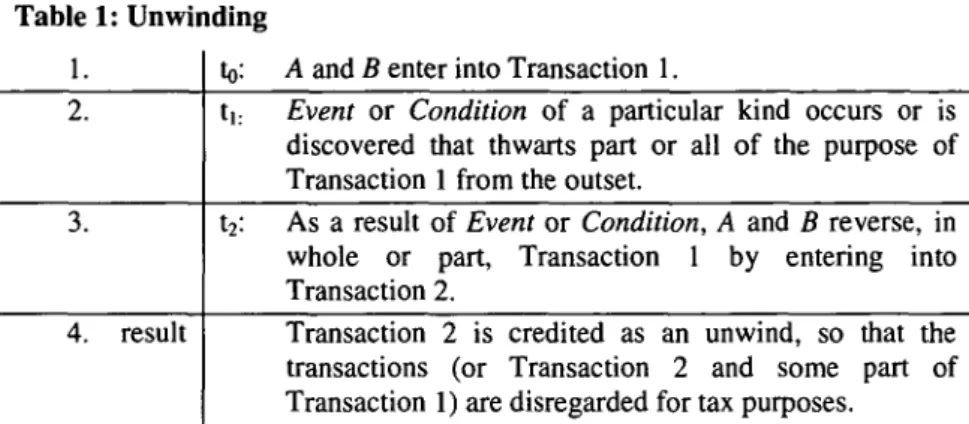
Table 1 presents a preliminary characterization of the generic form of an
26
unwind .2
24 See, e.g., Rev. Rul. 80-58, 1980-1 C.B. 181 (holding that unwind treatment requires restoration of status quo ante); see also infra Part I.B (discussing authorities dealing with these situations).
25 See Crellin's Estate v. Comm'r, 203 F.2d 812, 815 (9th Cir. 1953) (declining to unwind dividend
distribution following voluntary reinvestment by stockholders). 26 The characterization is refined infra Part H.
Table 1: Unwinding
1. to: A and B enter into Transaction 1.
2. ti: Event or Condition of a particular kind occurs or is
discovered that thwarts part or all of the purpose of Transaction 1 from the outset.
3. t2: As a result of Event or Condition, A and B reverse, in
whole or part, Transaction 1 by entering into Transaction 2.
4. result Transaction 2 is credited as an unwind, so that the
transactions (or Transaction 2 and some part of Transaction 1) are disregarded for tax purposes.
As suggested above, the situations in which parties may seek to have a transaction unwound are innumerable.27 They include not only cases in which the parties are restored fully to the status quo ante but also retroactive contractual modifications, purchase price adjustments, and other arrangements in which the parties seek to cancel only part of the original transaction, perhaps even substituting new terms in place of the cancelled terms.28 Each case,
however, bears the generic features set forth in Table 1.
B. IRS and Judicial Treatment of Unwinds
Unwind situations are part of the standard fare of most tax practices, and, not surprisingly, the authorities dealing with them are numerous. In order to give a flavor for the issues they present and a sense of how the courts and the IRS have dealt with them, this section reviews the law in three generic unwind situations: dispositions for value, or commercial unwinds; trust reformations; and gifts. As will become evident, it is difficult if not impossible to draw out a
set of consistent principles from these examples. 1. Commercial Unwinds
The examples discussed here involve reversals of transactions or arrangements entered into at arm's length, in an exchange of value for value. Because these cases involve parties dealing in a commercial context, at the
27 See supra notes 3-9 and accompanying text.
federal level they overwhelmingly raise the unwind question in the income tax context. As a general matter, two types of unwinds may arise in this setting. Commonly, the parties may attempt to back out of a transaction entirely through some sort of rescission. Here, the question is whether restoration of the parties to the prior status quo is sufficient to permit them to unwind. Other transactions involve retroactive modifications to previously consummated transactions. In these cases, the transaction itself is not cancelled; rather a portion of it is, and, in many instances, new terms are substituted for the cancelled terms. Modifications may be conceptually more complex since they can consist of both a reversal and the adoption of new terms.
a. Rescissions
The principal authorities governing the income tax treatment of rescissions are Penn v. Robertson2 9 and Revenue Ruling 80-58.30 In Penn, the taxpayer, Penn, participated in an employer-sponsored employee stock benefit plan in
1930 and 1931. As a result of shareholder suits, the plan was rescinded in 1931 for all participants who consented to relinquish their rights under the plan. Consenting participants received back in that year all contributions they had previously made. Penn consented, and the government sought to tax the amounts returned to him. The Fourth Circuit held that amounts received in respect of 1931 contributions were treated as though they were never contributed in the first place, but it refused to accord the same treatment to amounts received in respect of 1930 contributions. As to the 1930 contributions, the court ruled that the annual accounting principle prevented recomputation of the taxpayer's 1930 income after the close of the tax year.31 The annual accounting principle "requires the determination of income at the close of the taxable year without regard to the effect of subsequent events."32
In Revenue Ruling 80-58, the IRS applied the Penn framework to two situations involving Seller and Buyer, who were each calendar-year taxpayers. In both situations, Seller conveyed real property to Buyer in February 1978 for cash pursuant to a contract that permitted reconveyance of the property if
29 115 F.2d 167 (4th Cir. 1940). 30 1980-1 C.B. 181.
31 Penn, 115 F.2d at 175 ("A cardinal principle of federal income taxation requires annual returns and accounting.").
32 Id. The sanctity of the annual accounting principle had been established in several Supreme Court
cases. See, e.g., N. Am. Oil Consol. v. Bumet, 286 U.S. 417, 424 (1932); Burnet v. Sanford & Brooks Co., 282 U.S. 359, 363 (1931).
Buyer was unable to have the property rezoned within a specified time; Buyer
was unable to obtain rezoning and reconveyed the property pursuant to the contract, receiving his money back. In Situation 1, the time frame for obtaining rezoning was nine months, and the reconveyance occurred in October 1978. In Situation 2, the time frame for rezoning was one year, and the reconveyance occurred in February 1979. The ruling specified that in both situations, as a result of the reconveyance, Buyer and Seller were returned to the status quo ante and that the reconveyance operated as a rescission under state law. The IRS relied on Penn in concluding that unwind treatment applied only to the transactions in Situation 1. In Situation 2, Seller was required to report gain on the original sale and to treat the rescission as a separate purchase because the tax year for the original transaction had closed at the time of the rescission.33
The main teaching of Penn and Revenue Ruling 80-58 is that unwinding treatment for sales rescissions is available as long as the rescission occurs in the same taxable year as the original transaction.34 For this purpose, a
transaction operates as a rescission only if it effects a complete cancellation of the underlying transaction, extinguishing all rights and obligations between the parties and restoring them to the relative positions they held before the first transaction.35 As Revenue Ruling 80-58 indicates, the rescission right may be built into the original agreement, though its exercise probably cannot lie within the sole discretion of the party that seeks unwinding treatment.36 An unconditional right to rescind for the buyer is indistinguishable from a sale of the property plus a put option.
33 See also I.R.S. Tech. Adv. Mem. 78-02-003 (Sept. 28, 1977) (applying Penn v. Robertson to conclude that the taxpayer's repurchase of property sold earlier in the same year, pursuant to the purchaser's option in the original sales contract to reconvey the property to the taxpayer, effected a rescission that unwound the sale).
34 I BORIS I. BI'rKER & LAWRENCE LOKKEN, FEDERAL TAXATION OF INCOME, ESTATES, & GIFTS 4.4.8 (3d ed. 2003). In Rev. Rul. 80-58, the IRS also noted that the reconveyance operated as a rescission for state-law purposes, but it does not appear that state-state-law determinations operate as either necessary or sufficient conditions for unwinding treatment under the federal tax law. See Banoff, Unwinding, supra note 1, at 965-67 (discussing cases where valid rescissions under state law did not retroactively unwind transactions for federal taxation purposes).
35 See Rev. Rul. 80-58, 1980 C.B. 181.
36 The fact that the exercise of the rescission right was involuntary "weighs in favor of treating the whole
transaction as a nullity." I.R.S. Tech. Adv. Mem. 78-02-003. The reasoning on this point is, however, somewhat murky. The right to rescind appears to have rested in the sole discretion of the purchaser, a term that was agreed to by the seller. These issues are explored in detail in Part II, below.
Where the reversal does not restore the parties to the prior status quo, the IRS and the courts generally view unwinding treatment as inappropriate. For example, in Revenue Ruling 78-1 19,37 the IRS denied unwinding treatment to a transaction that reversed a corporate reorganization because the purchasers retained dividends that had been distributed while they held the acquired stock. In Dunlap v. Commissioner,38 the Tax Court denied unwind treatment to a contract cancellation where the overall effect of the parties' dealings was not a return to the status quo ante but the execution of a new sales contract with different terms. Similarly, the failure to satisfy the same-year requirement is generally fatal to the effort to obtain unwind treatment.
39
There are some instances in which courts have permitted (or the IRS has asserted) unwinding treatment where the requirements of Revenue Ruling
80-58 have not been met. For example, in one case the reconveyance occurred in
the same tax year of just one of the parties. The IRS sought to deny unwind treatment because doing so would violate the annual accounting principle for the other party, but the Tax Court treated the reconveyance as an unwind for
40
both. In another situation, the IRS permitted tacking of holding periods on
41
property reconveyed in a later taxable year. These cases, however, are
infrequent and generally have proceeded on the theory that a refusal to accord unwind treatment to the transactions would permit taxpayer abuse.
3 1978-1 C.B. 277.
8 74 T.C. 1377 (1980), rev'd on other grounds, 670 F.2d 785 (8th Cir. 1982). The parties had agreed to sell bank stock once they received approval for the sale from the Federal Reserve Board. Id. at 1381. Two years later, when approval was not granted, the contract was cancelled and the parties executed a new sales contract providing slightly different terms from the original. Id. at 1384-85. The Tax Court treated the putative rescission and the new sales contract as a single transaction modifying the original agreement. Id. at 1419-20. It should be noted that the reversal also failed to satisfy the same-tax-year requirement, though the court did not focus on this problem. See id. at 1384-85.
39 See Banoff, Rescission, supra note 17, at 7.
40 Fender Sales, Inc. v. C.I.R., 22 T.C. Memo 1963-119, rev'd in part on other grounds, 338 F.2d 924 (9th Cir. 1964).
4 I.R.S. Priv. Ltr. Rul. 80-20-140 (Feb. 26, 1980) (holding that a voidable sale by a trust of its property to the trustee, challenged by the trust beneficiaries and voided in a subsequent year, did not terminate the trust's holding period of the property for purposes of determining the character of gain on the subsequent sale to a third party by the trust).
In a pre-Penn case, Ripley Realty Co. v. Commissioner, 23 B.T.A. 1247, 1249 (1931), aff'd, 61 F.2d 1038 (2d Cir. 1932) (per curiam), the Board of Tax Appeals suggested in dicta that an effort to unwind undertaken after the close of the tax year might be effective. The Tax Court quoted this language favorably in its own dicta in a 1971 case, after the issue seemingly had been put to rest by Penn. See Hope v. Comm'r, 55 T.C. 1020, 1031 (1971), afftd, 471 F.2d 738 (3d Cir. 1973).
42
One such case is Guffey v. United States. The taxpayers initially sold their residence at a $700 loss to the buyers in 1951. In 1952, the buyers sued to rescind the transaction, and the property was ultimately returned to the sellers in 1954; they promptly sold it to a third party at an overall loss of approximately $6000. The sellers deducted the latter loss under alternative theories of a bad debt deduction (with respect to the initial buyers' failure to pay the full purchase price under the installment note) and that the second, non-rescinded sale was entered into for the purpose of realizing income. The IRS sought unwind treatment of the rescission. The Ninth Circuit held that the three transactions were essentially one, a sale of the residence to the ultimate purchasers, the initial sale and rescission being treated as nullities. No deduction was allowed.43
In the same vein, what counts as a complete rescission is not always clear, and the IRS sometimes has departed from the strict interpretation set out in Revenue Ruling 80-58. In at least one case, the IRS granted unwind treatment despite an ongoing indemnity agreement that the buyer and seller entered into in connection with the return of property to the original seller.44 The
indemnity covered the period during which the buyer held the property. Although such an arrangement clearly falls within the spirit of the status quo ante requirement, technically it represents a variation from the state of affairs prior to the original sale. Conversely, failure to create an indemnity obviously will not defeat unwinding treatment if the requirements are otherwise met.
The IRS has not stated an express rationale for the same-year rule, but one may assume it is that set forth in Penn: The same-year requirement reflects the perceived need to maintain orderly administration of the tax laws and could be considered to be mandated by early Supreme Court authority requiring annual accounting of gains and losses, absent an express Congressional override.45
42 339 F.2d 759 (9th Cir. 1964).
43 See id. at 759. A possible basis for distinguishing Guffey from Penn and Revenue Ruling 80-58 is that the court in Guffey did not regard the initial sale as a completed transaction at the time of the reconveyance.
Id. at 760-61. It is not clear what the court relied on as the basis for this claim, since the disposition of
property pursuant to an installment obligation occurs on the date of sale. I.R.C. § 453(b)(1) (2006). 44 See I.R.S. Priv. Ltr. Rul. 2005-33-002 (Apr. 28, 2005) (rescission of stock sale).
41 Penn, 115 F.2d at 173, 175 (4th Cir. 1940) (noting that annual accounting is both a "practical necessity" and a "cardinal principle" of federal income taxation).
b. Retroactive Modifications
In a retroactive modification, the parties to the original agreement do not cancel it entirely, but instead cancel a portion of it retroactive to the date of the original transaction. In many cases, new terms may be substituted for the
cancelled terms.46 Such a modification is to be distinguished from a
subsequent clarification of the meaning of the original agreement, though whether in any particular case the contractual change counts as such a
47
clarification or as a retroactive modification may be hotly contested. As an example, the parties to a long-term contract may specify in an amendment to the original agreement that work to be performed on a certain schedule will instead be performed on a different schedule. If the amendment explicates what the parties intended all along, it is not a modification; if it alters rightsS•48
and obligations originally set out in the agreement, it is.
As contrasted with the rule for rescissions, the IRS generally takes the position that contractual modifications granted retroactive effect between the parties will not be given retroactive effect for tax purposes, absent an express statutory provision to the contrary.49 The rationale offered, wholly apart from the need to respect the annual accounting principle, is that the government does
46 See Banoff, Unwinding, supra note 1, at 973 (discussing modification of terms).
47 See, e.g., Estate of Holland v. Comm'r, T.C.M. 1997-302 (finding that a scrivener's error failed to
reflect actual transfer). Internal Revenue Code section 108(e)(5) represents a Congressional override of factual disagreements on precisely this type of question. See I.R.C. § 108(e)(5) (2006). The provision requires a per se characterization of a reduction of purchase-money debt of a solvent debtor as a price adjustment if the reduction otherwise would qualify as income from cancellation of debt. Id. The Senate Finance Committee describes the provision as "intended to eliminate disagreements between the Internal Revenue Service and the debtor as to whether... the debt reduction should be treated as discharge income [i.e., akin to a reversal] or a true price adjustment [i.e., akin to a clarification]." S. Rep. No. 96-1035, at 16 (1980), reprinted in 1980 U.S.C.C.A.N. 7017, 7031. The term "modification" as used in this subsection also does not embrace a court-ordered change to contractual or other terms, which falls under the reformation heading, discussed infra Part I.B.2.
48 See Estate of Ballantyne v. Com'r, 341 F.3d 802, 807 (8th Cir. 2003) (denying retroactive effect to 1998 settlement of dispute between partners pursuant to which all of the partnership's 1994 sale proceeds were allocated to one partner). See generally Mikel v. Gourley, 951 F.2d 166, 169 (8th Cir. 1991) (distinguishing clarification from modification because the former "does not change the parties' original relationship, but merely restates that relationship in new terms") (citation omitted); McKay Nissan, Ltd. v. Nissan Motor Corp. U.S.A., 764 F. Supp. 1318, 1319 (N.D. I11. 1991) ("[The modifications must effect a material alteration of the parties' rights and obligations before it can be said that the parties intended a new contract or agreement.") (citations omitted).
49 Banoff, Unwinding, supra note 1, at 974; accord I.R.S. Field Serv. Adv. Mem. 2000-028-019 (Apr. 14, 2000), at 6 n.3.
not consider itself bound by agreements between the parties concerning the retroactive effects of the modification.50
This rationale is, to say the least, puzzling in light of the rescission rule, since rescissions may be the result of the parties' mere agreement. As Banoff points out, the true reasons for the refusal to give retroactive effect to modifications likely relate more to the greater opportunity for collusive, tax-motivated arrangements between the parties than are available in the rescission context.51 Bearing in mind that the question is not whether to respect the modification transaction itself but whether to give it retroactive effect, it often will be much harder to have confidence that the modification is a reversal (together with, in some cases, the addition of new terms) than a simple change of course. In addition, the opportunity for tax avoidance is much greater, because a contractual modification is less likely, in itself, to reflect a desire to back out of the changed terms than simply to change them in light of changed circumstances or, perhaps, purely for tax reasons. In other words, rescissions are usually reversals and modifications often are not, even with respect to the portion of the first transaction that is cancelled.
2. Reformations
In a reformation, the reversal happens pursuant to a court order that purports to "re-form" part or all of the first transaction retroactive to the date on which the parties entered into that transaction, in order to give effect to the parties' intentions.52
In contrast to the rescission and modification cases, the tax reformation authorities much more commonly involve donative transfers or arrangements than exchanges of value for value. Both the courts and the IRS have generally ruled that purportedly retroactive reformations will not be given retroactive effect for federal income tax purposes.53
50 See Van Den Wymelenberg v. United States, 397 F.2d 443, 445 (7th Cir. 1968) (stating that reformation does not affect rights acquired by non-parties, such as the government, from original agreements).
51 See Banoff, Unwinding, supra note I, at 974. 52 See id. at 975.
53 See Rev. Rul. 93-79, 1993-2 C.B. 270. A separate line of cases accords quasi-retroactive treatment to judicial constructions of trusts and other instruments that affect previously adjudicated tax liability. See, e.g., Blair v. Comm'r, 300 U.S. 5 (1937) (holding that a state court construction of trust instrument made after tax liability for relevant period was determined did not preclude that construction from applying to and re-determining taxpayer's tax liability for that period); Kelly's Trust v. Comm'r, 168 F.2d 198 (2d Cir. 1948) (same). The treatment is aptly termed quasi-retroactive because the interpretation purports to state what the relevant agreement or arrangement always was, not to change it to reflect what the parties intended but failed to do.
Two common reformation settings are trust arrangements and divorce decrees. Sinopoulo v. Jones54 is a typical trust case. The settlor-trustee formed two trusts in 1930 and transferred stock to them at that time and at various points thereafter.5 5 No formal declarations of trust were made until December 14, 1939.5' The trusts were intended to be irrevocable but contained no
language to that effect.57 After the settlor made the formal declarations of trust, Oklahoma passed a statute, effective August 21, 1941, providing that a trust would not be treated as irrevocable unless the trust instrument specifically stated as much.58 Concerned that the statute would be applied to the trusts to treat them as revocable, one of the beneficiaries instituted an adversary proceeding in state court against the settlor seeking a construction of the trust instruments and reformation of them, retroactive to 1939, to provide that they were irrevocable.59 The state court found that the trusts had been intended to be irrevocable from their formation, in 1930, and reformed them, retroactive to the date of declaration of the trusts, to conform to the requirements of Oklahoma law.60
The settlor then brought a suit in the Oklahoma federal district court seeking a refund of taxes paid on trust income for the years 1939, 1940, and 1941 .6 1 The district court held, however, that the reformations, to the extent they purported to apply retroactively, were ineffective with respect to the federal tax authorities, and the Tenth Circuit, relying in part on the common law of reformations, agreed:
The liability of appellant for the income tax chargeable to the income of the trusts for the years in question must be determined from the provisions of the trusts prior to their reformation by the state court. While the judgment of the state court made the reformation of the trusts retroactive and effective as of the date of the execution, this
14 154 F.2d 648 (10th Cir. 1946); see also M.T. Straight's Trust v. Comm'r, 245 F.2d 327 (8th Cir. 1957) (holding a state-court reformation decree not effective for federal income tax purposes); Van Den
Wymelenberg, 397 F.2d at 443 (amended trust agreement executed in 1963 did not retroactively affect the
federal gift tax consequences of 1961 gift in trust). But see Flitcroft v. Comm'r, 328 F.2d 449 (9th Cir. 1964) (permitting the retroactive reformation of a trust). The IRS expressly declined to follow Flitcroft in Revenue Ruling 93-79. See 1993-2 C.B. 269, 270. 55 See Sinopoulo, 154 F.2d at 649. 56 Id. " See id. at 650. 58 id. 59 Id. 60 id. 61 Sinopoulo, 154 F.2d at 648.
could not affect the rights of the government under its tax laws. It is a general rule that as between parties to an instrument a reformation relates back to the date of the instrument, but that as to third parties who have acquired rights under the instrument, the reformation is effective only from the date thereof. 62
The IRS's position on reformations, set forth in Revenue Ruling 93-79, rests on the same rationale.63
Revenue Ruling 93-79 involved reformation of a trust that was a shareholder in a corporation purporting to qualify as an S corporation.64
The trust failed to satisfy the definition of a "qualified subchapter S trust" because its terms did not require that any corpus of the trust distributed be distributed to the current income beneficiary.65 As a result, the trust was a prohibited shareholder, and the corporation failed to qualify as an S corporation.6 6 In order to rectify the problem, the trust beneficiaries executed an agreement, ratified by a state court, that retroactively reformed the trust to the date of its creation.67 The IRS held that the reformation lacked retroactive effect with respect to the government.68
Therefore, the trust was not a qualified Subchapter S trust from the date of its formation, but only from the date of amendment of the trust's terms.69
A similar rule applies in the typically adversarial setting of divorce-decree reformations.7
0 The reformation will not be accorded retroactive income tax effect unless the modification either purports to correct a failure of the original decree to reflect the intention of the court or was not legally valid at the time it
62 Id. at 650 (footnote omitted).
63 See 1993-2 C.B. 269; see also I.R.S. Tech. Adv. Mem. 93-47-003 (Aug. 5, 1993) (explaining that state
court reformations lack power to make gifts, initially revocable under state law, irrevocable on retroactive basis for purposes of federal gift and estate tax liability); I.R.S. Tech. Adv. Mem. 92-31-003 (Apr. 9, 1992) (same).
64 See 1993-2 C.B. 269; I.R.C. § 1361(a)(1) (2006) (defining "S corporation" as a "small business
corporation" for which an election has been made under I.R.C. § 1362(a)), 1361(b) (defining "small business corporation").
65 See 1993-2 C.B. 269. Specifically, the provisions of the trust violated the corpus distribution
limitation. I.R.C. § 1361(d)(3)(A)(ii).
66 1993-2 C.B. 269; see also I.R.C. § 1361(b)(l)(B) (providing that a corporation will not qualify as a
"small business corporation" eligible to elect S corporation status unless, among other things, its shareholders do not include trusts other than certain qualified trusts).
67 Rev. Rul. 93-79, 1993-2 C.B. 269. 6 Id. at 270.
69 Id.
70 See BrrTKER & LOKKEN, supra note 34, $ 77.1 Divorce-decree reformations may be non-adversarial where the purpose of the reformation is to increase the after-tax size of the parties' combined pie rather than to secure a greater allocation of income or property to one party at the expense of the other.
was entered.71 Among the rationales offered are the necessity of annual
computations of income72 and the concern that the government will be
deprived of its rights if it is not a party to the underlying state action.73 For
example, in Gordon v. Commissioner, the divorced spouses procured a state-court consent decree invalidating in part their earlier divorce settlement and re-characterizing a portion of the ex-husband's previously paid child support as alimony.74 The Tax Court refused to give the consent decree retroactive effect for federal tax purposes.75
The rationales for the reformation rule are hard to make out, both on their own terms and in light of the rescission rule. The IRS argues, and the courts have generally agreed, that the federal government is not bound by a state-court reformation to which it is not a party.76 The IRS has then refused to give retroactive effect to reformations on the ground that the possibility of collusive action by the parties permits two bites at the tax apple.77 Presumably the most
common abuse the government has in mind is taxpayers' use of information that can only become available after they have entered into their transaction to 71 See, e.g., Gordon v. Comm'r, 70 T.C. 525 530-31 (1978) (stating the general rule and the exception for an unlawful initial decree but declining to find the decree unlawful in the instant case); cf Muss v. Comm'r, T.C.M. 1970-171 (holding that subsequent state-court specification of breakdown of payments to ex-spouse clarified original decree and granting retroactive effect).
72 See Van Vlaanderen v. Comn'r, 10 T.C. 706,708 (1948).
73 See Guthrie v. United States, 264 F. Supp. 840,844 (W.D. Ark. 1967). 74 Gordon, 70 T.C. at 527-28.
71 Id. at 530.
76 See Sinopoulo v. Jones, 154 F.2d 648, 651 (10th Cir. 1946) (holding that a subsequent state-court reformation does not affect the rights of the federal government under federal tax laws); M.T. Straight's Trust v. Comm'r, 245 F.2d 327 (8th Cir. 1957) (holding a state-court reformation decree ineffective for federal income tax purposes).
The leading case on the related issue of the deference owed to state court adjudications for federal tax purposes is Commissioner v. Estate of Bosch, 387 U.S. 456 (1967), in which the Supreme Court held that federal tax authorities are not bound by state trial court adjudications of state substantive rights for purposes of determining federal estate tax liability. Id. at 457. The rationale, however, is not that federal authorities are entitled to disregard state law, but that only decisions of the highest state court provide authoritative determinations of state law; "proper regard" is to be accorded the decisions of lower state courts. Id. at 456. When no decision of the highest state court is available, federal authorities are to "sit[] as a state court," in order to arrive at their determination of how the state's highest court would rule on the question. Id. Bosch has been roundly and persuasively criticized as both overly deferential to potentially collusive state court judgments and insufficiently deferential to genuinely adversarial state court proceedings. See, e.g., Bernard Wolfman, Bosch, Its Implications and Aftermath: The Effect of State Court Adjudications on Federal Tax Litigation, 3 U. MIAMI INST. ON EST. PLAN. 2-1 (1969).
77 See, e.g., Estate of La Meres v. Comm'r, 98 T.C. 294, 311-12 (1992) ("[W]ere the law otherwise there would exist considerable opportunity for 'collusive' state court actions having the sole purpose of reducing federal tax liabilities."); Flitcroft v. Comm'r, 328 F.2d 449 (9th Cir. 1964) ("[Wlhere the state court judgment is obtained through 'collusion' for the purpose of avoiding tax liability, it has no binding effect.").
determine the tax consequences of their actions. A typical situation would be one in which the first transaction yielded uncertain consequences that would be resolved only subsequently, such as an installment sale for contingent
78
consideration. If the parties to the sale initially contemplated that most gain would be recognized in later years, but the gain turned out to be recognized earlier, they might seek reformation in order to account for the gain differently, such as by treating the transaction as the formation of a partnership or as some other arrangement.79 Finally, both the IRS and the courts have stated that a
retroactivity rule for reformations would undermine the value of finality, leaving tax liabilities unsettled far into the future.80
Each of these rationales for denying unwind treatment to reformations is open to question. Consider first the idea that the government is not bound by the reformation because it is not a party to it. The argument generally offered in support of the rule is that it is inequitable, and indeed "beyond the power of a [s]tate [c]ourt," to deprive the government of rights it has acquired under the original agreement. 8 This argument, however, presupposes that the question
of what the government's rights are has been settled. Indeed, the proposition is in tension with the normal operation of the tax law, which generally treats underlying entitlements and obligations established by state (or other) substantive law as determinative of the federal tax consequences of transactions. 8 Tax treatment does not hinge on whether the government is a
party, in one way or another, to a transaction, but on the transaction's economic (and to some extent legal) effects. For example, the parties may have believed that the execution of a trust agreement provided each with certain rights and obligations under state law. If it later turns out that the parties were mistaken, as a matter of law, about the legal effect of the trust document, it is not clear why a reformation of the instrument to provide those
78 See I.R.C. § 453 (2006) (providing for installment sale treatment of certain installment purchases); Temp. Treas. Reg. § 15A.453-1(c) (1981) (providing for treatment of contingent payment installment notes).
79 See generally Temp. Treas. Reg. § 15A.453-1(c)(1) (1981).
80 See, e.g., Van Den Wymelenberg v. United States, 397 F.2d 443, 445 (7th Cir. 1968) ("[F]ederal tax liablities would remain unsettled for years after their assessment if state courts and private persons were empowered to retroactively affect the tax consequences of completed transactions and completed tax years.");
see also I.R.S. Tech. Adv. Mem. 93-47-003 (Aug. 5, 1993) (citing Van Den Wymelenberg for this proposition); I.R.S. Tech. Adv. Mem. 92-31-003 (Apr. 9, 1992) (same).
81 M.T. Straight's Trust v. Comm'r, 245 F.2d 327, 329 (8th Cir. 1957).
82 See United States v. Irvine, 511 U.S. 224, 239 (1994) (explaining that federal tax "provisions are not to be taken as subject to state control or limitation"); Helvering v. Stuart, 317 U.S. 154, 162 (1942) ("Once rights are obtained by local law, whatever they may be called, these rights are subject to the federal definition of taxability."); see generally BrrrKER & LOKKEN, surpa note 34,S 4.1.
rights deprives the government of its rights. To say that the government is deprived of rights that have accrued under the original instrument is to assume what is to be established, which is that the original agreement deserves to be respected as having established the parties' rights and obligations for tax purposes.83 While that may be the case, no argument for it is presented in stating that reformations inequitably deprive the government of rights vested under prior agreements.
One might cast the "not a party to the action" argument slightly differently, as merely stating the point that the absence of court jurisdiction over the federal taxing authority means that ordinary substance-over-form principles, rather than a binding judgment of the court, govern the tax treatment of the reformation. On this interpretation, reformations are not retroactively binding because they are not, in substance, retroactive: The substance of a reformation is not a change to what happened in the past, which, technically, is not possible, but a prospective change designed to make the totality of what happens pursuant to the parties' arrangement reflect what they intended, in hindsight, to have happen. Therefore, it can be accorded retroactive effect only if everyone affected agrees. So viewed, the retroactive aspect of the reformation is purely fictional, and the IRS will not respect it as long as it is not compelled to by virtue of having been a party subject to the state court's jurisdiction. This argument, however, is similarly question-begging if it is
meant to defend any rule other than a general policy of no unwinding treatment at all. The same objection could be raised, after all, to a contractual rescission: It does not change what happened in the past. If a distinction on this point is thought to survive between rescissions and reformations, then one needs to know why some purportedly retroactive actions have substance and others do not. Further, the notion that respecting the retroactive nature of the state court's determination differs categorically from according respect to state law in effect at the time of the first transaction is unsupported. At bottom, respect for either is conventional; it rests on policy considerations. Therefore, no justification for refusing to respect the binding character of retroactive
adjudications is articulated merely by noting that the adjudication is retroactive rather than prospective in character or by asserting that the retroactive adjudication is formal rather than substantive. Whether it is "formal" or
83 The IRS has accepted this principle in the limited context of nunc pro runc orders modifying divorce decrees. See, e.g., Rev. Rul. 71-416, 1971-2 C.B. 83. The IRS position, however, seems to be confined to computational and clerical errors. See id; see also discussion infra Part I.B.3.
"substantive" depends on whether it is a good idea to respect retroactive adjudications of legal rights and obligations in the first place.
Difficulties also afflict the notion that the possibility of collusion between the parties requires a general rule of no unwinding for reformations. As an initial matter, the objection seems to rest on evidentiary grounds, not substantive ones.84 Some, perhaps many, reformations will result from collusive arrangements, but surely many will not; moreover, federal authorities-be they courts or the IRS-may independently determine what they believe should be the proper result under the substantive law, thereby ameliorating worries about the potentially binding effects of state
85
determinations. Therefore, one would expect a more flexible rule on reformations, rather than a policy of disregarding them except in narrowly circumscribed cases. Secondly, where the circumstances that might suggest tax collusion also would raise a concern for purposes of underlying substantive law, reformation ought to count as evidence for the opposite inference that the parties were not acting collusively. Thus, in some instances reformation should provide assurance rather than cause for concern.86 Finally, and most importantly, the collusion rationale is also basically inconsistent with the rescission rule. In both cases, the effort to alter the nature of the transaction may be tax-motivated.
This last point can readily be seen from the IRS's own stated ruling position on rescissions in Revenue Ruling 80-58, which, as noted, creates ample opportunity for tax planning.87 If the IRS is going to sign off on unwinding treatment for a rescission of that variety, it is unclear why the rule 84 In particular, see the discussion in Flitcroft v. Commissioner, 328 F.2d 449 (9th Cir. 1964), of collusion as an evidentiary problem to be addressed on a case-by-case basis. Id. at 453 nn. 9-10. Another case, Gallagher v. Smith, stated the point as follows: "[W]e think that the fact that the parties all favored the same result in the state court is relevant only so far as it is evidence of collusion .... " 223 F.2d 218, 225 (3d Cir. 1955). Although Gallagher's statement of the collusion point appears to reflect at least one strand (and, as argued below, the better strand) of current doctrine on the federal effect of state-court adjudications, the court further stated that even an erroneous state court adjudication of property rights required a federal court's "full faith and credit" as long as the decision was not collusive. Id. at 226. This position is contrary to the Supreme Court's subsequent holding in Commissioner v. Bosch's Estate, 387 U.S. 456 (1967), discussed infra notes 85-86 and accompanying text.
85 Bosch, 387 U.S. at 457 (holding that federal authorities are not bound by the state court determination
where the federal estate tax liability depends upon the character of a property interest held and transferred by a decedent under state law).
86 See id. at 481 (Harlan, J., dissenting) (arguing that the standard for whether state trial court judgments
have binding effect on federal authorities should be whether the proceedings are adversarial in nature and provide a full opportunity to air the issues).
for reformations should be different; conversely, if there is to be a blanket rule against unwinding a reformation on the ground that parties can choose their tax results, it ought to apply to rescissions as well.
Finally, the worry that according retroactive effect to modifications will undermine the policy of finality for determination of federal tax liability seems overstated. A more permissive retroactivity rule need not extend the retroactivity of reformations to closed tax years, which are generally those more than three years prior to the current year.88 Nor would such a rule require disregard of other relevant factors, such as collusion or tax motivation, or open the door to routine reformations. Most importantly, it would not prevent the IRS from looking to other factors that ought to guide the analysis of whether a reformation should be accorded retroactive effect.
3. Cancellation of a Gift
The last common unwind I examine is the cancellation of a gift.89 The majority of cases deal with the gift tax consequences of such cancellations, though a few have arisen under the income tax in connection with charitable contribution property.90 In the income tax context, courts will give retroactive
effect to documents purporting to change the terms of an earlier gift only where it is possible to show that the transaction as consummated did not represent a completed gift at the time it took place. If, instead, subsequent considerations motivate the reversal or cancellation, unwinding treatment generally will not apply, even if the later considerations relate to the state of affairs at or prior to the time of the original gift.
One line of cases exemplifying this approach addresses putative gifts larger than or different from what the donor intended. In Dodge v. Commissioner,91 a
case involving an income tax deduction for a charitable contribution, the Tax Court treated as void ab initio four-fifths of a charitable contribution made in 1960, where the donation of that portion of the amount originally contributed was the result of a scrivener's error.92 The Tax Court's decision rested on the
conclusions that donative intent was lacking with respect to the excess portion of the property originally transferred and that, under relevant common law
88 I.R.C. § 6511(a) (2006).
89 See Banoff, Unwinding, supra note 1, at 982-83, for a discussion of these cases. 90 See, e.g., Alice Phelan Sullivan Corp. v. United States, 381 F.2d 399 (Cl. Ct. 1967). 9' T.C.M. 1968-238.