Best Practice Guidance for
the Development of
Exercise after Stroke Services
in Community Settings
Catherine Best, Frederike van Wijck, Susie
Dinan-Young, John Dennis, Mark Smith, Hazel Fraser,
Marie Donaghy, Gillian Mead
November 2010
1
Content
Project group 3
Foreword 4
1. Executive Summary of the Best Practice Recommendations 5
2. Introduction 6
2.1 The need for a guideline 6
2.2 The remit of this guideline 6
2.3 Vision 7
2.4 Background 7
2.5 Guideline development 8
2.6 Scope 9
2.7 Target service providers 10
2.8 Target service users 11
3. The Best Practice Recommendations 12
3.1 Governance 12
3.1.1 Management/ working group 12
3.1.2 Involvement of the regional stroke Managed Clinical Network 14
3.1.3 Partnership agreement 14
3.1.4 Exercise after Stroke service co-ordinator 14
3.1.5 Location 15
3.2 Referral systems and the role of the health professional 15 3.2.1 Routes into the Exercise after Stroke service 16 3.2.1.1 Immediately following discharge from physiotherapy 16 3.2.1.2 Stroke survivors living in the community 17 3.2.2 Process of referral to an Exercise after Stroke service and the role
of the health professional 17
3.2.2.1 Pre-exercise assessment 19
3.2.2.2 Screening for absolute contraindications for exercise 19 3.2.2.3 Multidimensional pre-exercise assessment 20 3.2.2.4 Local Exercise after Stroke service inclusion criteria 22
3.2.3 Risk assessment and management 23
3.2.3.1 Risk of cardiac events 23
3.2.3.2 Risk of falls and fractures 25
3.2.3.3 Other exercise related risks 26
3.2.4 Barriers and motivators to exercise after stroke 27
3.2.5 Transfer of care 28
3.2.5.1 Role of the Exercise after Stroke service co-ordinator 28 3.2.5.2 Role of the referring health care professional 28
3.2.5.3 Transfer of responsibility 30
3.2.5.4 Transfer of information 30
3.3 Exercise after Stroke service organisation 33
3.3.1 Service co-ordinator/ liaison staff 33
3.3.2 Group exercise format 33
3.3.3 Ratio of instructors to stroke survivors 34
3.3.4 On-going service provision 34
3.3.5 Exercise after Stroke and the patient pathway 35 3.3.6 Promoting life-long participation in exercise 35
3.3.7 Signposting back to GP 36
3.4 Instructor training and qualification 36
3.4.1 Skills Active endorsed training for exercise instructors 37
2
3.5 The role of the exercise professional 39
3.5.1 Pre-exercise assessment 39
3.5.2 Individualised exercise programme 40
3.5.3 Physical activity plan 40
3.5.4 Personal exercise record 41
3.5.5 Social support 42
3.5.6 Change in medical status during the exercise programme 42 3.6 Content of the Exercise after Stroke programme 42
3.6.1 Warm up 43
3.6.2 Training section 44
3.6.2.1 Aerobic/cardiac component 44
3.6.2.2 Functional aerobic activities 44
3.6.2.3 Strengthening activities 45 3.6.2.4 Balance activities 46 3.6.3 Cool down 46 3.6.4 Programming variables 49 3.6.4.1 Duration 49 3.6.4.2 Intensity 49 3.6.4.3 Frequency 49
3.7 Record keeping and outcome evaluation 50
3.7.1 Data protection 50
3.7.2 Minimum data set 50
3.7.3 Outcome evaluation 51
3.7.4 Adverse events 52
3.7.5 Feedback to referrers 52
4. Other Good Practice Recommendations 53
4.1 Personal pre-session contact 53
4.2 Accompanying stroke survivors to their first session 53
4.3 In-service stroke awareness training 53
4.4 Orthotics assessment 54
4.5 Assistants 54
5. Temporary measures in the absence of community Exercise after Stroke services 55
6. Conclusion 56
Declaration of interest 56
Acknowledgements 57
Reference group 57
References 59
3
Project group
Dr Catherine Best PhD BSc University of Edinburgh
Dr Frederike van Wijck PhD MSc BSc MCSP FHEA Glasgow Caledonian University Dr Susie Dinan-Young PhD PGDip BEd University College London Medical
School
Mr John Dennis BSc MCSP BSc (Eng) NHS Greater Glasgow & Clyde Mr Mark Smith MPhil BSc(Hons) Grad Dip Phys
MCSP
NHS Lothian
Ms Hazel Fraser RGN, PG DIP NHS Fife
Professor M Donaghy BA (Hons) FCSP PhD FHEA Queen Margaret University Dr Gillian Mead MB B Chir MA MD FRCP University of Edinburgh
4
Foreword
I am delighted to launch this clinical guideline on Exercise after Stroke, which has been endorsed by the National Advisory Committee on Stroke. Stroke is still the major cause of disability in the community. There is mounting evidence that exercise training improves functional recovery and quality of life for stroke survivors. This guideline is the culmination of a Scottish Government funded project, which scoped the provision of exercise services after stroke, interviewed service providers, and scrutinised relevant UK clinical guidelines in stroke and exercise referral. Guideline development has been overseen by a multidisciplinary Reference Group of health and exercise professionals, the key stroke charities, patients and carers.
The guideline provides service providers with practical advice on how to set up community Exercise after Stroke services. It is applicable to the development of service throughout the UK. I would urge you to use this guideline to start to drive forward the development of Exercise after Stroke services. I have no doubt that the development of such services will have a major impact on the quality of life of stroke survivors.
Professor Martin Dennis
Chair, National Advisory Committee on Stroke, Scottish Government, and Founding President of British Association of Stroke Physicians
5
1.
Executive Summary of the Best Practice
Recommendations
The following recommendations are designed to be applied across all UK Exercise after Stroke services (Box 1). Each aspect of this service will be described in more detail in subsequent parts of this document. Appendix I includes a checklist for service providers, commissioners and stroke survivors.
Box 1 Summary of best practice recommendations for Exercise after Stroke services
SECTION ASPECT OF SERVICE RECOMMENDATION
3.1 Governance Exercise after stroke services should be overseen by a multidisciplinary working group
3.2 Referral systems and the role of the health professional
Referral into an exercise after stroke service should be undertaken by a health care professional within a robust, standardised, quality assured model, where stroke survivors are assessed for absolute
contraindications to exercise. Treadmill exercise testing is not considered necessary in most cases. 3.3 Exercise after Stroke
service organisation
The aim is to deliver a high-quality service that is safe, stroke-specific, evidence-based, person-centred, and enjoyable, with a view to encouraging a more active lifestyle where possible
3.4 Instructor training and qualification
Exercise professionals wishing to work with stroke survivors should undertake the Level 4 Register of Exercise Professionals accredited, endorsed national qualification
3.5 The role of the exercise professional
Exercise after stroke services need to be specifically adapted to the needs of stroke
survivors, and tailored to suit the needs and reduce the risks for the individual with stroke
3.6 Content of the exercise after stroke programme
The exercise programme should include evidence-based cardiovascular walking training with the following parameters:
Frequency: 3x per week Duration: 1 hour per session Intensity: moderate where possible 3.7 Record keeping and
outcome evaluation
Detailed records of attendance, adverse events and outcomes should be kept, according to guidance on confidentiality and data protection
4 Other good practice recommendations
pre-exercise session contact
accompany stroke survivors to their first session in-service stroke awareness training
orthotics assessment involving assistants
6
2.
Introduction
2.1 The need for a guideline
Stroke is the most common cause of complex disability (Adamson et al. 2004). There are over one million people in the UK who have had a stroke (Institute of Public Health, 2008) and it is estimated that around half of this population has a permanent stroke-related disability (World Health Organisation, 2004). It is well established that stroke survivors have low levels of physical fitness (Ivey et al. 2005) and muscle strength and, since many do not have the physical fitness necessary to perform common activities of daily living (Ivey et al. 2005), this impacts on their independence and community participation (Mayo et al. 1999).
There is good evidence that exercise can be effective in improving physical fitness and function after stroke (Saunders et al. 2009) and the importance of exercise after stroke is recognised in national clinical guidelines for stroke. In response to these guidelines and the needs of stroke survivors, new community-based Exercise after Stroke (EAS) services are emerging across the UK and around the world. However, there is little information about the content, structure or governance of these services, and to what extent they are evidence-based. Furthermore, until now, there was little guidance on how to improve existing or develop new community-based exercise after stroke services.
2.2 The remit of this guideline
In 2009, the Scottish Government‟s National Advisory Committee for Stroke commissioned the Exercise after Stroke project group to develop best practice guidelines for Exercise after Stroke services. The aim of the project was to facilitate the development of standardised, high quality services across Scotland and the UK, with the view to enhance the long term physical fitness, health and well-being of stroke survivors.
7
The remit of this project was to:
Scope the provision of Exercise after Stroke services in Scotland
Develop best practice guidelines for Exercise after Stroke services, based on current research evidence, clinical and exercise science, relevant guidelines and existing practice, which would be relevant to Scotland and the rest of the UK
Disseminate this information via our website www.exerciseafterstroke.org.uk
2.3 Vision
The aim of these best practice guidelines is to enhance current delivery and guide further development of Exercise after Stroke services, in Scotland and the rest of the UK, that are safe, evidence-based, effective and person–centred and that enable stroke survivors to improve their health and physical fitness in the long term.
2.4 Background
There is a growing body of evidence that exercise training, particularly cardiorespiratory training, improves physical function, fitness and quality of life after stroke (Saunders et al. 2009; Carin-Levy et al. 2009; Stuart et al. 2009). The role of exercise in stroke care is recognised in the Royal College of Physicians‟ National Clinical Guidelines for Stroke (2008) which, in the section on rehabilitation, recommends:
‘After stroke, all patients should participate in aerobic training unless there are contraindications unrelated to stroke’ (6.4.1.)
This guideline refers to aerobic training during rehabilitation. It is acknowledged in other guidance that the provision of supported exercise needs to extend beyond the course of usual health care. The Scottish Intercollegiate Guideline Network (SIGN) Guideline Number 108 (2008) states that:
8
„life long participation in programmes of Exercise after Stroke should be encouraged’ (p 49).
The development of services to support long-term participation in exercise after stroke is promoted in the Scottish Government‟s Better Heart Disease and Stroke Care Action Plan (2009). It recommends:
„NHS Boards, through their stroke Managed Clinical Networks (MCNs), should continue to work with leisure industry representatives to make best use of [the Exercise and Fitness Training after Stroke] training course to improve access to exercise and fitness training for people with stroke in their area.‟ (5.40)
The Department of Health‟s National Stroke Strategy (2007) also states that:
„Rehabilitation – support to regain well-being – requires rehabilitation specialists and continuing support from a wide range of community-based services, such as exercise classes….‟
SIGN Guideline 118 Management of patients with stroke: Rehabilitation, prevention and management of complications and discharge planning, was published after we had scoped the provision of exercise after stroke services in Scotland (Best et al. 2010). Section 5.6.4 of that guideline includes our best practice recommendations. Thus, it is clear that the policy drivers for the development of Exercise after Stroke are in place. These guidelines aim to provide structure for the implementation process.
2.5 Guideline development
The guidelines were developed in collaboration with a national, multidisciplinary group of experts in Exercise after Stroke.
The guideline recommendations are based on: evidence from the Cochrane review of physical fitness training for stroke patients (Saunders et al. 2009); their own randomised controlled trial (Mead et al. 2007); in-depth analysis of the content and
9
organisation of existing exercise services for ambulatory stroke survivors in Scotland; plus relevant stroke and exercise guidelines and National Occupational Standards for exercise professionals. Members of the project group have also drawn upon their direct experience of developing Exercise after Stroke services in Scotland and in training exercise professionals to deliver these services.
The evidence base for Exercise after Stroke is growing rapidly but in aspects such as the optimum frequency and intensity of exercise, evidence is sparse at present (Saunders et al. 2009). Realistically, the research evidence base is unlikely ever to be sufficiently comprehensive to support decisions about all aspects of service delivery and organisation. Therefore, some recommendations are based on expert consensus guided by the clinical reasoning and experience of the guideline development project group and our multidisciplinary Reference Group. The guideline project group also build upon knowledge of service models that have been demonstrated in practice to be feasible and acceptable to stroke survivors and upon the templates of other exercise pathways for long-term conditions e.g. falls prevention and cardiac rehabilitation.
As more research evidence becomes available, these guidelines will require to be reviewed.
2.6 Scope
These guidelines concern the development of the community-based services, which are positioned at the final stage of the rehabilitation process, i.e. the transition to self-management. They are services run by physiotherapists, stroke nurses and/or therapy assistants in outpatient settings, or by specialist exercise professionals in community venues such as leisure centres, health clubs, health centres or community halls.
Exercise and fitness related terms are often employed inconsistently; therefore for clarification the following definitions will be used in this document (see Box 2).
10
Box 2 Terms related to fitness
(adapted from Casparsen et al. 1985, and U.S. Department of Health and Human Services 2008)
2.7 Target service providers
These guidelines are aimed at organisations and professionals currently delivering Exercise after Stroke services or planning to do so in the future. In particular, they are aimed at organisations encouraged to develop or commission Exercise after Stroke services in the Scottish Government‟s Better Heart Disease and Stroke Care Action Plan and the Department of Health‟s National Stroke Strategy (p.38, para 15) i.e. local authority leisure services or leisure trusts and stroke Managed Clinical Networks (MCNs) or Stroke Care Networks. Organisations and individuals who currently run Exercise after Stroke services, or may do in the future, include Community Health Partnerships, stroke charities, private health and fitness clubs and public sector leisure centres and community centres.
Physical activity is „any bodily movement produced by skeletal muscles that
requires energy expenditure above that used at rest‟.
Physical fitness is a set of attributes that people have or achieve that relates to the ability to perform physical activity.
Physical fitness can be subdivided into health related and skill related physical fitness.
Health related physical fitness includes cardiorespiratory fitness, muscular endurance, muscular strength, body composition, and flexibility.
Skill related fitness includes agility, balance, coordination, speed, power and reaction time.
Exercise is physical activity that is planned, structured, repetitive, and purposive in the sense that improvement or maintenance of one or more components of physical fitness is an objective.
11
This document is also aimed at the multi-sector, multidisciplinary range of professionals involved in the organisation and delivery of exercise on referral. The referrers to Exercise after Stroke services include: general practitioners, physiotherapists, occupational therapists, stroke nurses, and practice nurses. It is also intended to be read by people who will design, deliver, adapt, tailor and progress the exercise sessions such as exercise professionals, physiotherapists and therapy and nursing assistants.
2.8 Target service users
These services will primarily be aimed at promoting physical activity in ambulatory stroke survivors. This is because most research to date has been conducted with ambulatory stroke survivors and we have evidence that exercise interventions will be beneficial for this group. There are large numbers of ambulatory stroke survivors in the community who have the capacity to be more active and improve their physical fitness, given appropriate support.
However, it is likely that services will need to evolve to provide Exercise after Stroke for non-ambulatory stroke survivors as the evidence base becomes stronger. For example, there is evidence of the benefit of seated exercise on both physical and mental health in the frail elderly (e.g. McMurdo and Rennie 1992), but whether this would generalise to non-ambulatory stroke survivors will need to be evaluated in clinical trials. If current Exercise after Stroke services wish to include non-ambulatory stroke survivors, there is accredited training and a qualification in seated/chair based exercise for health, exercise and social care professionals that should be undertaken when delivering chair-based exercises. Adaptations for stroke patients are outlined on this Later Life Training course.
12
3.
The Best Practice Recommendations
This section will describe each of the best practice recommendations listed in
Executive Summary in more detail. They are based on our comprehensive examination of all existing models of Exercise after Stroke service delivery in Scotland and mapped as closely as possible to research evidence, including meta-analyses of randomised controlled trials. After each recommendation, an indication of the rationale behind it is given.
3.1 Governance
Each local Exercise after Stroke service should be overseen, or supported by, a multidisciplinary working group consisting of local stakeholder organisations, stroke survivors and Stroke Managed Clinical Network/ Care Network representatives.
The structural /planning issues to be covered in this section include the: Management/ Working group (3.1.1)
Involvement of the regional Stroke Managed Clinical Network (3.1.2) Partnership agreement (3.1.3)
Exercise after Stroke Service Co-ordinator (3.1.4) and Location (3.1.5)
3.1.1 Management/ working group
Close multidisciplinary, multi-sector, multi-agency working is essential for the development of effective services. A local Working Group consisting of representatives from all relevant local organisations and professional groups should be convened to oversee development of Exercise after Stroke services. The Working Group will provide overall direction to service development and will oversee pathways into and out of the service. Figure 1 below shows the possible membership of the Management/ Working group. The Working Group should
13
include all local stakeholders in stroke service provision including: doctors, physiotherapists, specialist stroke and practice nurses, occupational therapists, speech and language therapists, orthotists, podiatrists, exercise professionals, health, leisure and voluntary sector service managers, social services, transport providers, stroke survivors and carers.
Rationale – this is based on the experience of existing Exercise after Stroke services. It also follows the national models of development by which the Cardiac and Pulmonary Rehabilitation and Falls Prevention services were established.
The work of the Scottish Government‟s Joint Improvement Team (2010) and the philosophy of Shifting the Balance of Care (2008) towards preventative community services support the move towards collaborative working between health and social care organisations to provide joint services for long-term conditions.
Fig. 1: diagram showing membership of the Management / Working group of an Exercise after Stroke service
Other stakeholders Core membership Service co-ordinator Stroke MCN or stroke network representative Stroke survivor Physiotherapist
Speech and language therapists Podiatrists Occupational therapists
Leisure and recreation service managers
Stroke charities Academic partners
Stroke physicians/ geriatricians
Exercise professionals Transport providers
Paid/unpaid carers
Social services
Partnership agreement with local community
physiotherapy team Rehabilitation co-ordinator Social care organisations Cardiologists Community Health Partnership/Primary Care Trusts Exercise physiologists/ exercise testers
14
3.1.2 Involvement of the regional Stroke Managed Clinical Network
The Stroke Managed Clinical Networks in Scotland or the Stroke Care Networks in England should be part of the Management/ Working Group and be involved in planning new Exercise after Stroke services to ensure that the service is integrated and coordinated with the rest of the patient pathway.
Rationale - this is based on the experience of existing services.
3.1.3 Partnership agreement
Close links between Exercise after Stroke services, physiotherapy teams and other health professionals are crucially important. At the inception of a new Exercise after Stroke service, a partnership agreement should be developed between all parties. Included within the partnership agreement should be a quality assurance framework, agreed standards and related performance indicators, and description of roles and responsibilities for all partners. This agreement will include on-going physiotherapy advice and input to the service in terms of workforce development and staff training. This would include provision of specific advice from physiotherapists about how to manage co-morbid medical conditions and how to tailor exercises for individuals. This is in addition to the Working Group who provides overall direction to the development and oversees pathways into and out of the service.
Rationale - this recommendation is based on the experience of existing services and highlights the importance of the close working relationships they have developed with local physiotherapy teams.
3.1.4 Exercise after Stroke service co-ordinator
Service planning, systems development and liaison, and the publicising and promotion of services to potential referrers and stroke survivors require dedicated time, expertise and experience. Resources should be allocated for a dedicated service co-ordinator to perform these tasks. This does not need to be a full-time post but can be included with other responsibilities. However, it does require a clearly
15
designated individual to be the main point of contact and act as the lynch pin and „champion‟ for the service.
In cases where it is not possible to create a new post, an individual needs to be identified from existing resources to co-ordinate service development. For example, in a number of services identified in Scotland, a senior exercise professional with a job title such as „Physical Activity Development Officer‟ or „Community Health Development Officer‟ takes on the role of Exercise after Stroke coordinator within a wider remit.
Rationale – The identification of service co-ordinators appears to work well for existing Exercise after Stroke services. The establishment of these posts in cardiac rehabilitation and falls prevention services has proved beneficial to service development (e.g. Dinan et al. 2005, Martin et al. 2000, Elley et al. 2008).
3.1.5 Location
When planning a new Exercise after Stroke service, transport and accessibility are central considerations. Lack of transport is likely to constitute a significant barrier to exercise participation. Services should be provided in accessible venues that meet health and safety regulations and have good public transport links.
Rationale – existing service providers reported to us that transport was a barrier to participation for many stroke survivors. In the research literature, lack of transport to venues is cited as a barrier to exercise participation (Rimmer et al. 2008).
3.2 Referral systems and the role of the health professional
To ensure that exercise professionals receive appropriate information regarding the medical and functional status of stroke survivors who wish to exercise, a robust referral system must be in place that aligns with Department of Health‟s (2001) National Quality Assurance Framework for Exercise Referral Systems. Stroke survivors who wish to exercise must first be assessed by a health professional to
16
determine whether they have any absolute contraindications to exercise. For more detail on this process, see Screening for absolute contraindications to exercise (section 3.2.2.2).
3.2.1 Routes into an Exercise after Stroke Service
Stroke survivors can access Exercise after Stroke via two possible routes. These are directly after discharge from secondary / tertiary health care (3.2.1.1) or via primary care (3.2.1.2).
3.2.1.1 Immediately following discharge from in- or outpatient physiotherapy
This will be the route for people who have recently had a stroke and have undergone a period of rehabilitation. The Royal College of Physicians (2008) in their National Clinical Guideline for Stroke recommend that aerobic exercise is incorporated into usual rehabilitation for stroke. Where this happens and aerobic exercise is included as part of rehabilitation, the physiotherapist will have information on individual stroke survivors‟ response to exercise and the duration and intensity of the aerobic training that can be tolerated. This information is important for the exercise professional who will be delivering exercise in the community setting. For this reason, the ideal referral route into an Exercise after Stroke service is from a physiotherapist who has worked with the stroke survivor on this aspect of their physical fitness.
Rationale – The Royal College of Physician’s National Clinical Guideline for Stroke (2008), recovery phase from impairments and limited activities: rehabilitation section recommendation 6.4.1 states:
‘After stroke all patients should participate in aerobic training unless there are contraindications unrelated to stroke’.
3.2.1.2 Stroke survivors living in the community
The other main route into Exercise after Stroke services is for stroke survivors already discharged from secondary health care services. All health professionals
17
who come into contact with stroke survivors should address the issue of exercise along with other lifestyle factors linked to secondary stroke prevention. Health professionals who have contact with stroke survivors should address personal, social and environmental barriers to exercise. Referral to an Exercise after Stroke service should be made wherever possible.
Stroke survivors who had a stroke some time ago or did not receive inpatient treatment can access Exercise after Stroke services through their General Practitioner or other appropriate health professional. This could be the practice nurse (delegated by GP), community physiotherapist, stroke specialist nurse or occupational therapist.
Rationale – The Royal College of Physicians’ National Clinical Guidelines for stroke in the section on secondary prevention (5.3.1) recommends:
‘All patients should be advised to take regular exercise as far as they are able: • The aim should be to achieve moderate physical activity (sufficient to
become slightly breathless) for 20–30 minutes each day.
• Exercise programmes should be considered and tailored to the individual following appropriate assessment....’
3.2.2 Process of referral to an Exercise after Stroke service and the role of the health professional
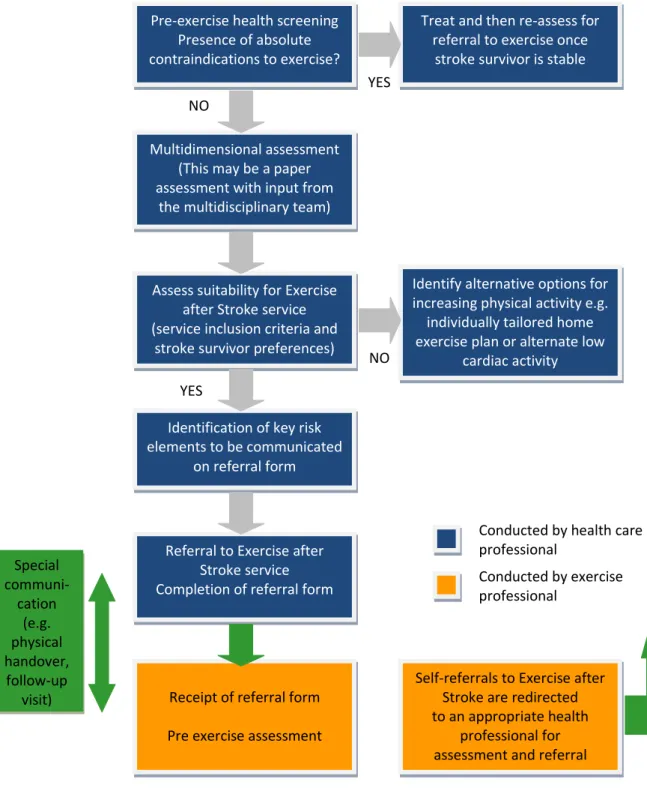
The diagram below shows the process of referral to an Exercise after Stroke service (Fig. 2). More information is given about each stage in the following sections.
18 YES
NO
NO YES
Assess suitability for Exercise after Stroke service (service inclusion criteria and
stroke survivor preferences) Pre-exercise health screening
Presence of absolute contraindications to exercise?
Multidimensional assessment (This may be a paper assessment with input from
the multidisciplinary team)
Referral to Exercise after Stroke service Completion of referral form
Identify alternative options for increasing physical activity e.g.
individually tailored home exercise plan or alternate low
cardiac activity Treat and then re-assess for
referral to exercise once stroke survivor is stable
Conducted by health care professional Conducted by exercise professional Special communi-cation (e.g. physical handover, follow-up visit)
Identification of key risk elements to be communicated
on referral form
Self-referrals to Exercise after Stroke are redirected to an appropriate health
professional for assessment and referral Receipt of referral form
Pre exercise assessment
19
3.2.2.1 Pre-exercise assessments
Pre-exercise assessment by a health professional prior to referral to an Exercise after Stroke service has four elements:
1. Screening for absolute contraindications for exercise (3.2.2.2) – to identify people who should not be exercising due to unstable medical conditions 2. Multidimensional assessment (3.2.2.3) to give the exercise professional a
global picture of the individual stroke survivor‟s medical and functional status, 3. Local Exercise after Stroke inclusion criteria (3.2.2.4) to ensure a match
between the stroke survivor and the Exercise after Stroke session and
4. Risk assessment and management (3.2.3) to highlight areas of the multidimensional assessment that require specific tailoring of the exercise intervention in order to ensure the maximum possible benefit from exercise.
The four elements are described in detail below as separate processes for sake of clarity but in practice there is a great deal of overlap between these elements, and they will usually all be completed within a single assessment session.
More information on these processes is given below.
3.2.2.2 Screening for absolute contraindications for exercise
The health professional will determine whether there are any absolute contraindications to exercise (Box 3). The main absolute contraindications to exercise are due to unstable heart disease.
20
Box 3 Absolute contra-indications
American College of Sports Medicine 2010: Absolute Contra-Indications to Exercise Testing; Dinan 2001; Mead et al. 2007)
Recent electrocardiogram changes suggesting recent myocardial infarction severe stenotic or regurgitant valvular heart disease
Uncontrolled arrhythmia, hypertension and/or diabetes Unstable angina
Third degree heart block or acute progressive heart failure. Acute aortic dissection
Acute myocarditis or pericarditis
Acute pulmonary embolus or pulmonary infarction Deep venous thrombosis
Extreme obesity, with weight exceeding the recommendations or the equipment capacity (usually >159kg [350 lb.])
Suspected or known dissecting aneurysm Acute infections.
Uncontrolled visual or vestibular disturbances
Recent injurious fall without medical assessment
3.2.2.3 Multidimensional pre-exercise assessment
The long-term effects of stroke are varied and wide-ranging so the exercise professional will need an overview of the stroke survivor‟s residual impairments in order to tailor the exercise programme to the individual. Once absolute contraindications to exercise have been excluded, the health professional should proceed to the multidimensional assessment of the stroke survivor, which should cover all domains shown in Box 4. This information must be communicated to the exercise professional in appropriate terminology, with support where needed. Each service will need to design its own form according to local requirements – a list of the required referral information is shown in Box 9. Most of this information would be available from the stroke survivor‟s medical records. This type of assessment is labelled “multidimensional” as one health professional may not be able to complete all relevant sections. If this is the case, input from other members of the multidisciplinary team or primary care team should be sought where necessary.
21
Box 4 Multidimensional pre-exercise assessment.
This information should be transferred to the exercise professional, once absolute contraindications to exercise have been ruled out, and the stroke survivor has given written informed consent to be referred. For an example of the content of a referral form see box 9.
General medical and stroke medical history
Information on any co-morbidity that might contraindicate or restrict exercise e.g. ischaemic heart disease, heart failure, respiratory disease, poor circulation,
uncontrolled epilepsy, joint replacements etc.
Medications and how these may restrict exercise ability
Pain status: stroke-related (central or shoulder), musculoskeletal or other Joint active and passive range of motion (particularly with relation to the risks associated with subluxation or poor control in shoulder movement – a common source of post stroke pain)
Problems with muscle tone
Motor control: coordination of joint stability, strength and power, protective reactions, movement involving single and multiple body segments, and functional activities.
Balance both in static and dynamic situations and recovery responses.
Gait (walking ability), addressing both neurological and biomechanical aspects of gait. Ideally, this should include different variations of gait (i.e. slow, fast, backward and side-stepping, turning, managing obstacles and stair climbing) in different
environments (i.e. rough and smooth ground, flat ground and slopes, different lighting and noise conditions).
Visuospatial problems, difficulties with body schema awareness
Functional abilities history and direct observations of functional tasks related to activities of daily living (ADLs),
Compensatory overuse of less affected side
Activity history including current physical activity status, interests, preferences, means and readiness to exercise. This indicates that the stroke survivor has agreed with the referring party that they are ready to exercise, are motivated enough to attempt a programme, and able to attend the intended exercise programme times. Communication: the stroke survivor‟s ability to understand and follow instructions and to communicate with the exercise instructor. This is particularly important when the individual has aphasia (dysphasia): a language disorder which has a variable effect on both understanding and expression of both speech and writing. Dysarthria is a motor speech disorder which can variably limit the intelligibility of speech and some stroke survivors may prefer to use alternative means to communicate during sessions.
Cognition: the presence of memory impairment, executive dysfunction, impaired insight or dementia, may require adapted communication strategies to allow the individual to participate or require the involvement of a communication assistant.
22
Rationale –Skills Active National Occupational Standards for exercise professionals working with people with stroke (Unit D516 Design, agree and adapt a physical activity programme with adults after stroke) and the syllabus of the Exercise and Fitness Training after Stroke instructor training course (Mead et al. 2010).
3.2.2.4 Local Exercise after Stroke service Inclusion Criteria
The health care professional will assess the stroke survivor‟s suitability for an Exercise after Stroke service in relation to the local service‟s inclusion criteria. The Exercise after Stroke service co-ordinator is responsible for ensuring that all the health professionals involved have clear information on the service inclusion criteria. Below is an example of Exercise after Stroke service inclusion criteria (Box 5). The emphasis of this part of the process is on inclusion. The inclusion criteria are not a repetition of the absolute contraindications to exercise. Instead, the inclusion criteria describe appropriate stroke survivors for referral into a particular service. This is based on the stroke survivor‟s clinical and functional characteristics, the type of exercise that will be provided and the level of expertise of the instructors.
Box 5 Example Exercise after Stroke inclusion criteria Able to sit in any seat independently (time unlimited)
Able to mobilise more than 5m with or without a walking aid, independently or supervised
In cases where the stroke survivor has aphasia, communication strategies in place to allow participation
No unstable angina/ acute heart failure No ongoing cardiac arrhythmia
Resting Heart Rate maximum of 100 bpm
Blood pressure maximum 180 mmHg systolic, 100 mmHg diastolic Tinetti score minimum 12 / 28
23
3.2.3 Risk Assessment and Management
Risk assessment and management concerns the risk of an adverse reaction during or immediately following exercise. The current available evidence suggests that the benefits of exercise outweigh the risks for the general population and for stroke survivors. For this reason, risk assessment should not be construed in a negative sense, raising fears about the participation of stroke survivors in exercise with the outcome of excluding individuals from Exercise after Stroke services. The process should however, focus on the more positive aspects with the aim of enabling stroke survivors to safely participate in exercise.
The risk assessment by the health care professional is there to assist the exercise professional to appropriately adapt and tailor the exercise (type, intensity, duration, limb angle etc) and to put in-place safety procedures and/or equipment to manage the identified risks. The risk assessment is part of a four stage process (see 3.2.2)
NB The health screening for absolute contraindications has already identified people who should not be exercising (3.2.2.2).
The service inclusion criteria are there to ensure the crucial match between included stroke survivors and the current service (3.2.2.4).
The final part of the pre-exercise assessment concerns the management of relative risks for exercise. The health professional should use the multidimensional pre-exercise assessment (3.2.2.3) as a basis for highlighting the presence of individual risk factors to the exercise professional.
The most significant risks to stroke survivors from participating in exercise are from cardiac events, falls, and fractures.
3.2.3.1 Risk of cardiac events
There is considerable co-morbidity between stroke and cardiac disease. It is estimated that around 75% of stroke survivors have co-morbid heart disease (Roth et al. 1993) and that between 20 and 40% of stroke survivors will test positive for
24
silent cardiac ischaemia (Adams et al. 2003; Ivey et al. 2005). In people with known coronary heart disease the primary cause of death after exercise is ventricular fibrillation. Nevertheless the overall risk from exercise is low, even in people with coronary disease, as in cardiac rehabilitation programmes (where exercise is tailored to minimise risk) cardiacarrests occur at a rate of 1 in 12 000 to 15 000 in people with cardiac disease (Zipes et al. 1998).
The American Heart Association (AHA) recommends that graded exercise testing with electrocardiac monitoring is a pre-requisite to referral for exercise (Gordon et al. 2004) because up to 75% of stroke clients will have underlying coronary artery disease which may be „silent‟. However, exercise testing itself may carry risks (e.g. many stroke survivors will not have sufficient balance or strength to undergo conventional treadmill testing), and other testing protocols (e.g. arm cycle ergometry) may not be practical. The AHA suggests that if an exercise test cannot be performed for practical reasons, lighter intensity exercise should be prescribed. However, The Scottish Intercollegiate Guidelines Network (2002) guidelines for ischaemic heart disease suggest that for most clients, clinical risk stratification based on history, examination and resting ECG combined with a functional capacity test such as a shuttle walking test or a six minute walking test will be sufficient. Exercise testing and echocardiography is recommended only for high risk clients.
The recommendation is that treadmill exercise testing is not necessary prior to referral to exercise after stroke services, and that a functional test such as the 6 minute walk, in combination with detailed referral information, is usually sufficient.
Rationale: SIGN guidelines for ischaemic heart disease (2002) and consensus opinion of Exercise after Stroke Reference group.
Once the contraindications to exercise have been ruled out for a stroke survivor, then assessment of level of cardiac risk should be a clinical decision. Factors to be considered (based on American College of Sports Medicine‟s (2010) relative contraindications to exercise testing and Scottish Intercollegiate Guidelines Network
25
Box 6 Cardiac risk factors to be evaluated
History of myocardial infarction complicated by heart failure, cardiogenic shock and/or complex ventricular arrhythmias,
Tachyarrhythmias or bradyarrhythmias High degree atrio-ventricular block
Angina or breathlessness occurring at a low level of exercise Cardiomyopathy
Moderate stenotic valvular heart disease Complex ventricular ectopy
Left main coronary artery stenosis
Where any of these signs and symptoms or other indications of cardiac disease are present then this should be communicated clearly to the exercise professional in the referral documentation.
3.2.3.2 Risk of falls and fractures
The other key risk for stroke survivors undertaking exercise is from falls and fractures. In their review of circuit class therapy to improve mobility after stroke, English et al. (2010) found in two studies reporting adverse events (i.e. falls) during therapy that there were more falls in the intervention group than the control group. The authors attributed this to the fact that balance is systematically challenged during these circuits compared to the control condition. None of the falls was serious but the risk of falls from participation in exercise should be carefully evaluated and session design measures (e.g. adaptations to pace, transitions between exercises and direction changes etc) introduced to minimise this risk for stroke survivors. The health professional should assess whether there is a risk of falls or fractures and it should be remembered that this is usually in the context of a group of stroke survivors. This is a clinical decision based on factors such as a history of falls, evidence of impaired balance, osteoporosis, or prescription of psychoactive medication. The Falls Management Exercise (FaME) trial (Skelton et al. 2005) demonstrated that an exercise intervention for older people at risk of falling could be delivered safely and effectively (with no falls during the intervention). Thus, exercise
26
can be delivered safely for these groups but the exercise professional needs to be aware of the stroke survivors‟ risk for falls in order to tailor the intervention effectively.
3.2.3.3 Other exercise related risks
Other systemic factors (based on the American College of Sports Medicine 2010 relative contraindications to exercise testing) that may lead to identified risks are shown in Box 7.
Box 7 Systemic risk factors to be considered Electrolyte imbalance
Systolic blood pressure >180 mm Hg Diastolic blood pressure >100 mm Hg
Mental or physical impairment leading to inability to exercise safely and adequately Uncontrolled metabolic disease (diabetes, thyrotoxicosis, or myxedema)
Chronic infectious disease (mononucleosis, hepatitis, AIDS, urinary tract infections). Hydration constipation
Medication toxicity
The risk assessment highlights areas of the multidimensional assessment that require particular attention and proactive adjustment of the exercise programme to ensure it is safe for the stroke survivor.
Following the risk assessment, health professionals should engage stroke survivors in a discussion of the relative risks of exercise versus inactivity and the benefits of exercise so that stroke survivors can make an informed decision on whether to be referred to an Exercise after Stroke service. At this time, written informed consent should be sought and obtained for a referral.
Rationale – American College of Sports Medicine’s guidelines on exercise testing and prescription (2010) suggest discussion of the risks and benefits of exercise for all exercise prescription (not specifically for stroke).
27
This section completes the four elements of the pre-exercise assessments conducted by the health professional
3.2.4 Barriers and motivators to Exercise after Stroke
Referring health professionals should explore barriers and motivators to exercise participation for each individual. Where stroke survivors are reluctant to engage in group-exercise, other options for increasing activity levels should be explored. Health professionals should consider the presence of depression as this may be a barrier to taking up a new physical activity programme. Ideally, most ambulatory stroke survivors will be referred to an Exercise after Stroke programme.
An indication of the individual‟s barriers and motivators to exercise should be included in the referral documentation, as this information is invaluable for the exercise professional receiving and using the referral as the basis for an individually tailored programme.
Rationale - we know that the majority of community-dwelling stroke survivors are inactive (Rand et al. 2009; Moore et al. 2010). It is necessary to explore individual physical, psychosocial and environmental barriers to exercise in order to overcome this (as suggested by Gordon et al. 2004 in the American Heart Association recommendations on physical activity and exercise for stroke survivors and in Damush et al. 2007; Mead 2009). The optimum methods for promoting physical activity after stroke are not known. However, we do know that repeated advice to be more active is probably not sufficient to change behaviour after stroke (Boysen et al. 2009). Therefore, examination of an individual’s physical, psychosocial and environmental barriers is recommended.
3.2.5 Transfer of care
The following processes will ensure the safe transfer of care from the health
professional to the exercise professional and the Exercise after Stroke service and includes.
Coordination by the Exercise after Stroke service co-ordinator (3.2.5.1) Referral from a health care professional (3.2.5.2)
28
Transfer of responsibility (3.2.5.3) Transfer of information (3.2.5.4)
3.2.5.1 Role of the Exercise after Stroke service co-ordinator
A designated professional should be the key contact for the Exercise after Stroke service. Ideally, this will be a dedicated stroke service co-ordinator (see also sections
3.1.4 and 3.3.1). Their role is to organise and review the referral for exercise and to ensure that the referral processes meet the relevant standards and indicators (see
3.2.2). This model of service co-ordination has been successfully employed in Cardiac Rehabilitation and Falls Prevention services.
Rationale – the service co-ordinator is accountable for ensuring the referral process meets the standards set out in the Department of Health’s National Quality Assurance Framework for Exercise Referral Systems (Department of Health 2001).
3.2.5.2 Role of the health care professional
Stroke survivors entering an Exercise after Stroke service must be referred by their general practitioner or hospital consultant or other pre-agreed health care professional e.g. physiotherapist, practice nurse, occupational therapist, stroke nurse specialist or stroke liaison nurse.
Rationale – Department of Health’s National Quality Assurance Framework for Exercise Referral Systems (Department of Health 2001).
29
The responsibilities are shown in Box 8 and include undertaking the pre-exercise assessments already described.
Box 8 Key responsibilities of the referring health professional
To assess the stroke survivor for absolute contraindications for exercise To complete a multidimensional assessment which will include: identifying
pathologies which are present, and ensuring that they (and their medications) are accurately and clearly communicated to the exercise professional
To highlight any way these may influence the safety or comfort of everyday physical activity e.g. susceptibility to angina or postural hypotension
To identify the most appropriate form of exercise for individual (for most stroke survivors this will be an EAS service) – based on current relevant evidence and clinical reasoning, local Exercise after Stroke service inclusion criteria and personal preferences of the stroke survivor
To identify any key risk elements for exercise that emerge from the multidimensional assessment e.g. risk of falls, cardiac events, prescribed
medications that will affect response to exercise- that require particular tailoring of the exercise session
To educate the stroke survivor in the early recognition of symptoms which might indicate that a part or the whole of the exercise programme was, in some way, unsuitable to them at that time. For example, people with osteoarthritic knees should be taught to recognise and respect an increase in pain, stiffness or swelling; stroke survivors who experience a severe increase in their habitual level of resting muscle tone etc, should be instructed to consult the exercise professional about the problem and only continue to exercise if the exercise can be appropriately tailored to resolve the problem/adverse effect.
To communicate that any problem with exercise e.g. worsening pain in arthritic knee, should be discussed with the exercise instructor and the GP and/or referrer.
Rationale- experience of project team, Department of Health’s (2001) National Quality Assurance Framework for Exercise Referral Systems, and Dinan (2001).
30
3.2.5.3 Transfer of responsibility
Once it has been agreed by the GP or physiotherapist that the stroke survivor is appropriate to be referred for exercise (i.e. pre-exercise health screen and multi dimensional assessment including risk assessment completed) and that the proposed exercise instructor and exercises and programme are suitable, the responsibility for the design and delivery of the exercise programme and the monitoring of the individual‟s response to the exercise passes to the exercise professional (Department of Health, 2001). (NB The long-term monitoring of the stroke survivor‟s health and well being in relation to the exercise programme remains with the general practitioner or referring health professional, or both, as appropriate).
This transfer of responsibility to the fitness sector includes the owner/manager of the fitness facility where the session takes place. The responsibilities of the fitness centre operator (i.e. manager) are to:
Ensure that there are adequate systems in place to support the process of patient referral (secure records/confidentiality etc.) and importantly to
Ensure the instructors are properly qualified (according to the Skills Active National Occupational Standards). The instructor should be sufficiently experienced to design, deliver and progress exercise for this patient group and to meet the conditions of their insurance cover.
All exercise professionals working with stroke survivors should be Register of Exercise Professionals registered or have evidence of working towards this registration as this is the recommended best practice indicator in the specialist field of exercise referral.
3.2.5.4 Transfer of information
Written, informed consent should be sought from the stroke survivor before referral and transfer of information.
Exercise after Stroke services should have procedures and supporting documents to ensure an adequate transfer of relevant medical information to the exercise professional from the referrer.
31
An example of the domains included in the referral form developed in NHS Greater Glasgow and Clyde for those already screened and who have no absolute contra-indications for exercise, is shown in Box 9.
32
Box 9: Exercise Referral Information
1. Name 2. Address 3. Date of birth 4. Telephone number 5. GP Details Name Address Tel number Fax number
Next of kin and contact details
6. Health Problems
Cardiac History – inc. left ventricular function deficits and any associated heart failure
Others e.g. o Respiratory History o Multiple sclerosis o Osteoarthritis o Rheumatoid Arthritis o Falls history o Fracture history o Back Pain o Joint Replacement o Osteoporosis o Diabetes o Epilepsy Stroke History
Time since stroke / date of stroke Functional levels post-stroke Chronic fatigue
Hearing impairment Visual impairment
Cognitive / perceptual impairment Use of aids (e.g. walking aids) 7. Medication
8. Has attended NHS Rehabilitation Service? Name and location of service
Dates
How many classes attended
Relevant tests completed and results Blood pressure
Agreed training heart rate
9. Personal exercise considerations and limitations Tone / spasticity
Contractures
Poor balance/strength Splinting
Difficulty moving on/ off equipment Ability to self monitor/ pace self Readiness to exercise
General physical activity levels (current and pre-stroke). Access to Transport
33
3.3 Exercise after Stroke service organisation
3.3.1 Service co-ordinator/ liaison staff
An important role of the service co-ordinator is to raise awareness of the service among referrers to ensure that stroke survivors are referred to the service. The role of the Exercise after Stroke service co-coordinators is to publicise the service to referrers. It is important to ensure referrers are aware of the service inclusion criteria and the content of the service through provision of clear written materials and through personal visits/presentations to potential referrers e.g. at weekly practice/management meetings. Emphasising the evidence base, the qualifications of the exercise staff, the close, ongoing links with the local physiotherapy teams, the quality assurance and evaluation mechanisms, appears to be effective. Many health professionals welcome the opportunity to visit an ongoing exercise session. Likewise, exercise professionals should aim to revisit rehabilitation sites to remind them of the complexities of presentation of stroke and the demands of the rehabilitation process after stroke.
Rationale - In the research literature, stroke survivors report ‘not knowing where to exercise’ as being a barrier to exercise participation (Rimmer et al. 2008). Physiotherapists report they are uncertain whether the exercise professionals delivering Exercise after Stroke sessions have sufficient training, knowledge and competence to work with these stroke survivors (Wiles et al. 2008).
3.3.2 Group exercise format
Where possible and appropriate, Exercise after Stroke Services should be delivered in a group format rather than individual gym sessions. Individual sessions and home exercise booklets can help to supplement the group sessions (see section 3.5.3 on Physical activity planning).
Rationale - There is evidence that group circuit training is effective in improving functional outcomes after stroke (Wevers et al. 2009). Stroke survivors report benefits from the social aspect of the group (Carin-Levy et al. 2009; Reed et al.
34
2010). Additionally, group exercise is likely to be more cost effective as indicated by the study by English et al. (2007), though more specific evidence will be available on completion of the on-going trial by van de Port et al. (2009)
3.3.3 Ratio of instructors to stroke survivors
Exercise groups should have a maximum of 1:8 instructors to stroke survivors ratio initially, although this will depend to some extent on case mix and the length of time stroke survivors have been exercising regularly. The ratio in each cohort should be jointly decided by the Exercise after Stroke co-ordinator and/or the health and exercise staff. The appropriate ratios are shown in the table below.
Table 1: Recommendations for staff to stroke survivor ratio for exercise after stroke services.
A “reserve” is an additional member of staff who may be required, depending on the group‟s level of functioning and experience with the exercise programme.
Stroke survivors
1-8 9-16 16+
Staff 1 (+1 reserve) 2 (+1 reserve) Not recommended
Rationale – Current recommendations in the Later Life Training Exercise and Fitness Training after stroke instructor course.
3.3.4 On-going service provision
Exercise after Stroke services should be on-going, not time-limited, as long term physical activity behaviour change is required. It should be recognised from the outset that a significant proportion of stroke survivors would not be able to move on to mainstream exercise provision.
Rationale - for on-going exercise - There is evidence for low retention of cardiovascular training effects after training finishes (Mead, et al. 2007). The Scottish Government’s physical activity strategy (2003) recommends that adults in later life ‘should be supported and encouraged to stay active in the community for as long as they choose’ (p. 55).
35
Rationale for specialist provision - National Quality Assurance Framework for Exercise Referral Systems (Department of Health 2001).
3.3.5 Exercise after Stroke and the patient pathway
Ideally, an Exercise after Stroke service will be an integrated part of a comprehensive patient pathway that begins with in- or outpatient treatment for stroke and covers the full range of physical activity options available in the local community. Stroke survivors will be assessed at entry to the physical activity pathway and reassessed at agreed intervals by the exercise professional to ensure that they are progressing appropriately.
Rationale – current good practice – e.g. there are multipathology services that have mapped out the patient pathway through their services so that stroke survivors can enter at a level appropriate to them and move through the system: from tiered intake classes (3 levels of sessions that are graded according to level of mobility and cardiovascular fitness required) and, as appropriate, onto long-term maintenance classes.
3.3.6 Promoting life long participation in exercise
Although life long participation in exercise is recommended in clinical guidelines, (e.g. SIGN 108 Management of patients with stroke or TIA: Assessment, investigation, immediate management and secondary prevention) there is little research evidence on how this can be achieved in practice. Several elements have been identified as contributing to enhanced motivation, enjoyment and long-term adherence and reducing attrition (drop out) in other community-based exercise for stroke survivor services. These include ensuring that, wherever possible:
36
The community sessions are at the same (or very similar) time; The sessions are in the same venue (or nearby);
The instructor remains the same as in the intake sessions (or is introduced to the stroke survivors and/or is involved in the teaching of the intake phase).
In-service training is given for all the professionals and support staff involved (including the reception staff). This could include free on-line training (www.strokecompetencies.org )
Transport should be provided for stroke survivors where possible, delivered by dedicated, well-briefed patient transport personnel.
Peer mentor interventions and peer mentor training also appears to be effective in increasing adherence to exercise sessions in both older and patient populations (Stewart et al. 2001). More research is needed into the effectiveness of peer mentoring interventions in increasing retention to Exercise after Stroke programmes.
3.3.7 Signposting back to GP
Exercise instructors must be able to recognise the signs/symptoms requiring signposting of stroke survivors back to their GP or other appropriate health professional, should the person‟s performance deteriorate beyond reasonable expectations or should new and/or exercise-contraindicated signs/ symptoms occur (section 3.2.2.2).
Rationale: National Quality Assurance Framework for Exercise Referral Systems, (Department of Health, 2001), Dinan (2001) and the professional experience of the project group.
3.4 Instructor training and qualification
Exercise professionals who work with stroke survivors must have appropriate training in order to be competent in the design, adaptation, tailoring, progression,
37
communication and evaluation of the exercise programme to individuals and groups. This should be a nationally recognised and accredited qualification.
Skills Active is the Sector Skills Council for Active Leisure, Learning and Well-Being. Exercise professional qualifications should map fully to the Skills Active National Occupational Standard Unit D516 (Design, agree and adapt a physical activity programme with adults after stroke). The qualification must be endorsed by Skills Active and recognised by the Register of Exercise Professionals (REPs) at Level 4 (Specialist Instructor) as providing the Stroke Specialist Exercise Instructor Category of Registration (http://www.exerciseregister.org/). It is essential to note that this is required for the validation of the instructor‟s insurance.
Other competency based-training is available (e.g. see section 3.4.2) but is not endorsed by Skills Active nor recognised by REPs and does not lead to a REPs recognised national qualification. However, competency based training may have a valuable role to play in providing Continuing Professional Development for professionals who have attained the Specialist Exercise and Fitness Training after Stroke qualification.
Existing Exercise after Stroke services should work towards all their instructors having a specialist instructor qualification within a realistic time-frame. As there is now a dedicated Level 4 Specialist Exercise and Fitness Training after Stroke qualification and instructor category on the REPs framework, this is essential to validate instructors‟ insurance. Existing services should be planning ahead to complete this standard within the next 2-3 financial years.
Rationale – National Quality Assurance Framework for Exercise Referral Systems, (Department of Health, 2001).
3.4.1 Skills Active endorsed training for exercise instructors.
The Exercise and Fitness Training after Stroke course, administered by LaterLife Training, is currently the only Skills Active endorsed, REPs recognised and university
38
validated Level 4 Specialist Instructor qualification in the UK (Fig. 3). It is also the only course that is aligned with the Curriculum Framework of the Chartered Society of Physiotherapy. This course, designed by the University of Edinburgh and Queen Margaret University, has been validated at Scottish Higher Education Level 2 (Scottish Credit and Qualifications Framework Level 8). The course is supported by all the key non-governmental organisations in this field: Chest Heart & Stroke Scotland, Northern Ireland Chest Heart & Stroke, Different Strokes and The Stroke Association.
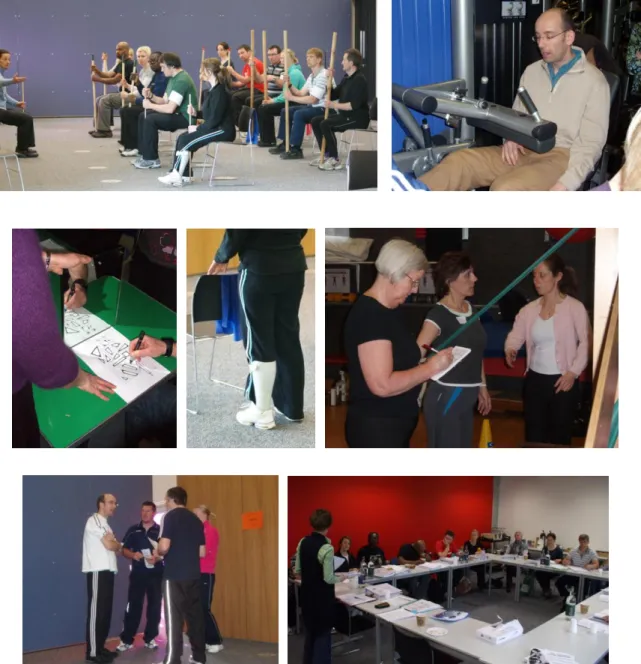
Fig. 3 The Exercise and Fitness Training after Stroke specialist instructor course. From top left: teaching workshop; tutor demonstration on gym equipment; simulation of
perceptual and motor impairments; student-led teaching workshop; problem solving exercise; seminar. Photos: John Dennis and Frederike van Wijck.